NATO member explains why it will bar Ukraine from joining
RT | April 17, 2024
The risks of a global war will only increase if Ukraine becomes part of NATO, Slovakian Prime Minister Robert Fico said on Tuesday, promising to block Kiev’s accession.
Accepting new countries into the US-led military alliance requires unanimous consent from all of its 32 current members. If Ukraine gets invited to join NATO, Slovakia’s parliament will not ratify the accession treaty, Fico said.
“Slovakia needs a neutral Ukraine. Our interests will be threatened if it becomes a NATO member state because that is the basis of a large world conflict,” the prime minister explained, as quoted by the news website Noviny.sk.
Fico stressed that he will not bow down to any outside pressure. “Our partners abroad have been taught that whatever they ask and request from Slovakia, they will automatically get it. But we are a sovereign and self-confident country,” he said.
Slovakia, together with neighboring Hungary, has warned that the EU should not be dragged into the conflict between Russia and Ukraine and has insisted on a diplomatic resolution. After becoming prime minister in October 2023, Fico reversed the previous government’s decision to send weapons to Kiev. He also fiercely opposes sending NATO troops to Ukraine.
Ukraine formally applied to join NATO in September 2022. Although US Secretary of State Antony Blinken reiterated this month that Ukraine “will become a member of NATO” sometime in the future, the alliance has so far refused to commit to a specific timetable or provide a clear pathway for Kiev’s accession. US President Joe Biden and NATO Secretary General Jens Stoltenberg have ruled out Ukraine’s membership until the fighting ends.
Russia has repeatedly stressed that it views NATO’s continuing expansion eastward as a national security threat. Moscow cited the alliance’s military cooperation with Ukraine as one of the root causes of the current conflict and described Ukraine’s potential accession as a “red line.”
Harvard psychiatrist: Americans should be able to walk into a pharmacy & buy antidepressants over the counter
Maryanne Demasi, reports | April 15, 2024
In a recent STAT article, Roy Perlis, a professor of psychiatry at Harvard Medical School, argued that antidepressants, known as selective serotonin reuptake inhibitors (SSRIs), should be made available at US pharmacies without a prescription.
Perlis called on the drug manufacturers to “engage with the FDA and invest the necessary resources” to make it possible because SSRIs have “repeatedly been shown to be safe and effective for treating major depression and anxiety disorders.”
It comes off the back of a recent FDA ruling that allows the purchase of the oral contraceptive Opill (norgestrel) over-the-counter, without a prescription at drug stores, convenience stores and grocery stores, as well as online.

Roy Perlis, Department of Psychiatry at Massachusetts General Hospital in Boston, and a professor of psychiatry at Harvard Medical School.
Perlis, who treats patients at Massachusetts General Hospital, failed to declare his ties to the pharmaceutical industry in the article, sparking anger among academics online.
While his concerns about patients’ limited access to doctors and treatment services are valid, doing “everything possible” to make antidepressants more easily available is not the answer.
Antidepressants are among the most prescribed treatments in the world. In fact, many experts have argued they are over-prescribed.
In February 2024, the journal Pediatrics published new research that revealed monthly antidepressant prescriptions to adolescents and young adults jumped more than 66% between January 2016 and December 2022.
And following pandemic lockdowns in March 2020, prescriptions rose 63% faster due to soaring rates of depression, anxiety, trauma, and suicidality – so limited access to antidepressants is not the problem.
Perlis acknowledges that antidepressants can increase the risk of suicide in people under the age of 25, but he also claims there’s “clear evidence” the risk of suicidality is reduced in older people.
However, SSRI-induced suicidality is not limited to young people. In 2007 the FDA updated the black box label on SSRI packaging, warning doctors to monitor suicidality in patients of all ages after commencing the medications:
All patients being treated with antidepressants for any indication should be monitored appropriately and observed closely for clinical worsening, suicidality, and unusual changes in behavior, especially during the initial few months of a course of drug therapy, or at times of dose changes, either increases or decreases.
Large trials are rare in the field of antidepressant research. Most of them have been industry funded and the few that exist are short term, typically 4-6 weeks, and inadequate for assessing suicidality and clinically meaningful outcomes.
In some instances, when researchers have gained access to regulatory documents, they’ve found that vital data on suicides were excluded from the journal publications.
In the two major Prozac trials in children, for example, Gøtzsche and Healy analysed clinical study reports and found the authors made numerous data errors, including omitting two suicide attempts from the journal publication. The journal editors have refused to retract or correct the studies.
Perlis also says there is low potential for misuse and abuse of antidepressants, but he overlooks the fact that SSRIs can lead to dependency. People often experience ‘discontinuation syndrome’ upon ceasing SSRIs because they are habit-forming and can cause abstinence symptoms.
In fact, about half of people on SSRIs have difficulty stopping them, and in rare cases, their withdrawal symptoms can lead to suicide, violence, and homicide – some patients report that withdrawal is worse than their original depression.
Many doctors still mistake the symptoms of antidepressant withdrawal for a relapse of depression, which conceals the scale of the problem.
Fortunately, SSRI withdrawal is being taken more seriously by the establishment following the recent publication of the Maudsley Deprescribing Guidelines, which provides guidance to healthcare practitioners on how to stop these medications safely in patients.
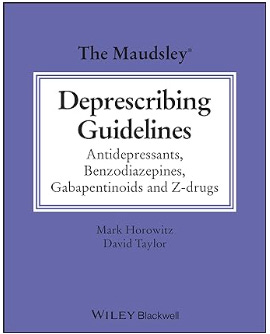
If SSRIs become available without prescription, who will counsel patients about tapering off their medications? Cutting out doctors from the patient:doctor relationship will only harm patients and deny them of the ability to obtain informed consent about their therapy.
Another significant problem is that few patients – and doctors for that matter – are aware that SSRIs have potential to cause severe, sometimes irreversible, sexual dysfunction that persists even after discontinuing the medication.
The condition, called Post-SSRI Sexual Dysfunction (PSSD), has been described by sufferers as ‘chemical castration.’ The problem is under-recognised and largely under-reported, but drug regulators are starting to pay attention.
In June 2019, the European Medicines Agency updated the ‘Special Warnings and Precautions’ section on the package inset label to warn that sexual dysfunction can persist even after treatment stops.
And in 2021, Health Canada also did a review of the evidence and “found rare cases of long-lasting sexual symptoms persisting after stopping SSRI or SNRI treatment” and updated the product label for Canadians.
Perlis says that people with depression may be uncomfortable talking about their symptoms, or simply unable to schedule and keep appointments because of work or family obligations.
But cognitive behavioural therapy has been shown to reduce repeated self-harm and repeated suicide attempts, unlike SSRIs. Sure, taking a pill is easy, but dealing with the short and long-term harms of SSRIs, may ultimately be worse.
Perlis says people should be able to access antidepressants without prescription because they’re capable of “self-diagnosing” their own depression, in the same way many over-the counter products are used to treat symptoms when people diagnose their own conditions.
“Think yeast infections, acid reflux, or respiratory infections,” explained Perlis.
But this is misguided because it undermines the role of the doctor-patient relationship.
Not only will it lead to the medicalisation of negative emotions, but clinical depression requires careful assessment by a doctor to exclude other serious conditions.
Self-diagnosis means that one might assume they have depression and completely miss an underlying medical syndrome – for example, low mood and anxiety, can manifest in other conditions like hypertension, thyroid disorders, or heart disease.
Missing a diagnosis can be harmful, even fatal.
I’m not a medical doctor and I don’t give medical advice, but I am a medical researcher and I have spent the last decade reading the literature on antidepressants.
Encouraging people to diagnose their own depression and buy medication without a prescription – medication which has an unfavourable benefit:harm profile in most people and is difficult to stop taking – is a very bad idea.
Featured Video

The 1964 Coup in Brazil
or go to
Aletho News Archives – Video-Images
Frlom the Archives
70 Neocons Petition Congress To Effectively Allow Israel To Say When The US Should Attack Iran
By Damian Lataan | January 10, 2014
Seventy senior Israeli-centric neoconservatives have written an open letter to Congress imploring them to do more to ensure Iran complies with the conditions of any agreement finally reached with the P5+1 over Iran’s nuclear program.
While the neocons are ostensibly asking Congress to ensure compliance, it is clear that their real aim is to convince members of Congress to support the bill currently passing through the Senate which calls for tighter sanctions against Iran in the event of any waywardness on Iran’s part.
The neocons are eager to see the bill currently passing through the Senate with enough support to make it veto-proof, not so much because they are concerned about Iran’s so-called nuclear weapons program – there’s still not a skerrick of hard evidence that Iran has a nuclear weapons program – but, rather, because embedded within the bill is this clause:
… if the Government of Israel is compelled to take military action in legitimate self-defense against Iran’s nuclear weapon program, the United States Government should stand with Israel and provide, in accordance with the law of the United States and the constitutional responsibility of Congress to authorize the use of military force, diplomatic, military, and economic support to the Government of Israel in its defense of its territory, people, and existence…
Essentially, the clause is an automatic trigger for the US to attack Iran at any time the Israelis choose to launch a first strike – regardless of whether President Obama is in favour or not.
Partial list… continue
Blog Roll
 Aletho News
- Aramco CEO warns ‘catastrophe’ imminent if Strait of Hormuz remains shut
- What If Iran Says No?
- Trump Threatens to ‘Hit’ Iran ‘Twenty Times Harder’ Over Strait of Hormuz Oil Flows
- Spare the hypocrisy: Baghaei slams Ursula’s support for US
- Iran War Supporters Invent a New and Absurd Justification: It Is All About China
- Corporate Media Go All Out To Support The US-Israeli War on Iran
- Trump press conference reveals a man who wants out of war
- When Tel Aviv decides, Washington fights
- Top official: Iran ready for a long war with US, no more diplomacy
- How Iran’s Toxic Rain Reveals US-Israel Discord
- If Americans Knew
- Threats and missiles fly, death tolls soar in Iran, Lebanon, Gaza – Not a ceasefire Day 151
- Lebanon: Israel’s White Phosphorous Use Risks Civilian Harm
- Corporate Media Go All Out To Support The US-Israeli War On Iran
- US-Israel war on Iran is creating a steady growing number of amputees
- Israel planned this war on Iran for 40 years. Everything else is a smoke screen
- The wrong question about the war in Iran
- ‘Your Tax Dollars Being Used to Raise Your Gas Prices’: US-Israel Bomb Major Iranian Oil Depots
- ‘Bogus Evidence’: Former Nuclear Watchdog Head Debunks US Justification for Iran War
- EXPLAINER – Dimona: What to know about Israel’s nuclear site
- Fires and toxic air in Iran (thanks, Israel) – Not a ceasefire Day 150
- No Tricks Zone
- Wake-up Call: Survey Shows Majority Of Germans Now Favor Postponing Climate Targets!
- Televised! Leading German Political Candidate Tells Schoolchildren CO2 Makes Sun Hotter!
- New Study: A Century Warming Of 1.1°C Is ‘Commonplace’ And ‘Not Unusual’ During This Interglacial
- New Study: ‘Internal Noise’ And Volcanic Forcing Can Trigger 10-15°C Warming Within Decades
- Glaciers Worldwide Are Suddendly Surging, Experts Blame Warming!
- Surprising Discovery: Sahara Is Greening…Billions Of Trees Where Once Thought To Be Barren
- New Research Reaffirms Clouds, Aerosols, And Surface Solar Radiation Are ‘Driving The Climate System’
- Germany: Electric Car Catches Fire At Charging Station, Sets Off Local “Inferno”, Widespread Damage
- New Study: Canada’s New Brunswick Was 1°C Warmer Than Today During The Medieval Warm Period
- Coal Power Back In Trend As Globe Tries To Keep Pace With Growing Demand For Power
 Aletho News