Human Rights Watch Report on October 7 accused of bias, Here’s why
By Robert Inlakesh | Al Mayadeen | July 23, 2024
On July 17th, Human Rights Watch (HRW) published a 236-page report that accused Hamas and other Palestinian Resistance groups of committing war crimes on October 7th. However, the report has significant shortcomings, including a heavy reliance on Israeli sources and forensic evidence based on analogies of information provided by the infamous ZAKA rescue service, known for fabricating crime scenes and disseminating various propaganda hoaxes.
Despite its length and the new details it brings to light on the events of October 7 during the Hamas-led Al-Aqsa Flood offensive, the new HRW report is perhaps the most biased international investigation so far, and does not make mention of the ‘Hannibal Directive’ and “Israel’s” role in killing its own non-combatants on that day.
Given the report’s extensive nature, with over 800 footnotes, it’s impossible to cover every aspect in a single article. However, it’s important to examine some areas where it falls short.
Dealing with claims that HRW was biased
To begin with, Sari Bashi, the Israeli Program Director for the report and co-founder of the “Gisha- Legal Center for Freedom of Movement,” which is funded by Zionist sources such as the “New Israel Fund“, stated the following on X:
“This is the most comprehensive account of October 7 by an independent international organization and concludes that Hamas-led attacks against civilians in Israel rise to the level of crimes against humanity. We need accountability and civilian protection. Now.”
The methodology of the report is perhaps the most telling part, from which we can decipher how HRW reached its conclusions. Many of these conclusions do not hold up to scrutiny or, at the very least, demand further answers.
In their methodology section, HRW notes that it interviewed “94 survivors and witnesses from the October 7 assault”, which suggests a comprehensive picture of what occurred across “19 kibbutzim and five moshavim (cooperative communities), the cities of Sderot and Ofakim, two music festivals, and a beach party” that they noted in their overview. However, they admit that they were only able to actually interview survivors from the Moshav Pri Gan, Moshav Yachini, and the Psyduck music festival sites – just three out of 24 locations mentioned in their summary of events.
The report goes on to state that for its actual forensic information, HRW “spoke to two medical experts hired by the Israeli government to examine the remains collected by ZAKA (see below) and provide forensic advice.” They further note that “following October 7, some ZAKA members provided information to the media that proved unfounded”, which is a major understatement. The head of the “Search and Rescue” service has repeatedly peddled debunked lies, as ZAKA produced false claim after false claim, ranging from grotesque stories of rape, sexualized torture, babies strewn on clothing lines, to the infamous “40 beheaded babies” lie.
Despite this, HRW interviewed 10 ZAKA members who were all first responders on October 7 and claimed that it only used independently verifiable information. However, it admits that the two experts they spoke to that were tasked with examining the forensic evidence provided by ZAKA, were both hired by the Israeli regime directly.
Without going through every detail in their methodology, it consists of interviews with Israeli journalists, ZAKA members, an Israeli soldier, a range of experts without specifying who they were exactly, in addition to some interviews with Palestinian citizens of “Israel” and Palestinians in Gaza. “Most of those interviewed were Jewish Israelis, but we also interviewed Palestinians from Gaza, Palestinian citizens of “Israel”, and foreign workers from Nepal, Thailand, and the Philippines. Interviews were primarily conducted in Hebrew with the assistance of interpreters, and in Arabic, English, Spanish, and Thai”, the report states.
Then there is the fact that the HRW was prevented by the Israeli authorities from entering any other site than Kibbutz Be’eri, where they were not given unrestricted access, meaning that their ability to actually inspect would have been restricted. In the segment of the HRW report on Kibbutz Be’eri, they cite survivor testimonies and build a narrative about what occurred there, without bothering to mention the fact that the Hannibal Directive was triggered there.
In one case, at Yossi Cohen’s home in Kibbutz Be’eri, where the Israeli military opened fire with light arms and then tank fire, killing 13 Israelis, the account is completely one-sided and omits key information that is readily available online. It mentions a key witness, Yasmin Porat, who survived the battle between Hamas fighters and the Israeli military. While the report says that Porat “briefly spoke to Human Rights Watch and confirmed these events, albeit in less detail“, this comes off as an attempt at providing a linguistic loophole in order to provide cover to the fact that Porat did not actually confirm the precise characterisation of events presented by HRW.
In reality, Yasmin Porat was lambasted after a number of appearances she made on Israeli television, where she said that during hours of being kept under Hamas captivity “they did not abuse us. They treated us very humanely,” adding that “they give us something to drink here and there. When they see we are nervous they calm us down. It was very frightening but no one treated us violently. Luckily nothing happened to me like what I heard in the media.” Porat also said that a Palestinian fighter spoke to her in Hebrew in order to calm her down and said “‘Look at me well, we’re not going to kill you. We want to take you to Gaza. We are not going to kill you. So be calm, you’re not going to die.’ That’s what he told me, in those words.” Porat lost her husband on October 7 and undoubtedly endured significant trauma, which is why her testimony was so powerful at the time.
Porat did not attempt to justify the actions of Hamas, but she presented a completely different picture to the one depicted in the HRW report, which is not at all acknowledged. If anything, the way the report deals with this specific incident is evidently omitting important details.
Then we have the allegations of a premeditated mass rape campaign, which the Israeli regime claims was carried out on the orders of Hamas that day. The report, in its section titled “Crimes Involving Acts of Sexual and Gender-Based Violence”, admitted the following:
“Human Rights Watch was not able to gather verifiable information through interviews with survivors of or witnesses to rape during the assault on October 7. Human Rights Watch requested access to information on sexual and gender-based violence in the possession of the Israeli government, but this request was not granted.”
Although this is a massive blow to the Israeli narrative about a mass rape campaign, they did claim that “forced nudity, and the posting without consent of sexualized images on social media”, but provided no in-depth information and simply stated that it came to these conclusions after “interviewing first responders, and experts on sexual violence who provided information about the context, and reviewing images captured during the assault”. It did not name who these experts and first responders were, however, we can reasonably assume from the information presented on methodology that ZAKA and Israelis were the bulk of those sources. The photographic evidence aspect is also not clearly explained or detailed, which does not enable us to further inspect such claims.
This segment seems, however, to rely heavily on a report by the UN Special Representative of the Secretary-General on Sexual Violence in Conflict, Pramila Patten, which concluded that there is “reasonable grounds to believe that conflict-related sexual violence occurred during the 7 October attacks in multiple locations across Gaza periphery” despite admitting no conclusive evidence. This report was made at the request of the Israeli regime and did not claim to be investigative in nature, however, it did reveal the below-mentioned issues:
“At least two of the allegations of sexual violence previously reported were determined by the mission team to be unfounded, due to either new superseding information or inconsistency in the information gathered, including first responder testimonies, photographic evidence, and other information. These included the allegation of a pregnant woman whose womb had reportedly been ripped open before she was killed, with her fetus stabbed while still inside her. Another such account was the interpretation initially made of the body of a girl found separated from the rest of her family, naked from the waist down. It was determined by the mission team that the crime scene had been altered by a bomb squad and the bodies moved, explaining the separation of the body of the girl from the rest of her family. Allegations of objects found inserted in female genital organs also could not be verified by the mission team due in large part to the limited availability and low quality of imagery.”
In addition to this, the HRW report notes that they viewed and analyzed hundreds of videos and photos from that day, most of which were from Telegram channels and have long been available to the public. These only provide snapshots of what went on and are no way conclusive.
On top of this, there was no analysis, investigation, or even mention of “Israel’s” triggering of the Hannibal Directive at numerous sites that day, which has now been confirmed as per sources cited by the Israeli daily Haaretz. Right here, this is the biggest red flag that indicates bias and debunks the idea that this report was in any way comprehensive, as it completely left out the role of Israeli forces in killing non-combatants that day. The most recent UN report which focused heavily on October 7, released on June 12 under a Human Rights Council resolution, mentions the Hannibal Directive and reports of Israeli forces killing their own people, making it a lot more balanced than the HRW report.
Overall, if we look at the examples noted above, the claim that this report is unbiased and presents a comprehensive view of the situation is false.
What’s behind Israel’s war against UNRWA?
By Ramzy Baroud | MEMO | July 23, 2024
Targeting a school during a war could be justified as, or at least argued, to have been a mistake. But striking over 120 schools, and killing and wounding thousands of civilians sheltering inside, can only be intentional, with each attack a horrific war crime in its own right.
Between 7 October last year and 18 July, Israel has done precisely that, targeting with total impunity UN infrastructure in the besieged Gaza Strip, including schools and medical centres. According to the estimates of the UN Relief and Works Agency for Palestine Refugees in the Near East (UNRWA), at least 561 internally displaced Palestinians sheltering in UNRWA buildings have been killed and 1,768 have been wounded since the start of Israel’s war. Within just ten days between 8 and 18 July, at least six UNRWA schools serving as makeshift shelters for displaced Palestinians were targeted by the Israeli army, resulting in the killing and wounding of hundreds.
Historically, UN-linked organisations have been more or less immune from the impact of wars. The privilege of being neutral outsiders to any conflict allowed those affiliated with such organisations to carry out their duties largely unhindered. The Israeli war on the Palestinians in Gaza, however, is the primary exception among all modern conflicts. According to UN sources, 274 aid workers and over 500 healthcare workers linked to the international organisation have been killed by the Israeli occupation forces.
These figures are consistent with all other statistics produced by the ongoing Israeli genocide in Gaza. Indeed, not a single category of people has been spared: neither doctors nor civil defence workers, mayors or even traffic police, let alone the children, women and elderly.
It was obvious from the very start of the war that Israel wanted to criminalise all Palestinians.
Not only those affiliated with Hamas or other groups, but also the civilian population and any international organisation that came to their aid. Blaming and dehumanising all of Gaza was and remains part of Israel’s strategy that lets its army operate without any restraints, and without even the most minimal moral threshold or respect for international law.
However, the Israeli attacks on all UN institutions, in particular UNRWA, the agency responsible for the welfare of Gaza’s Palestinian refugees, serve a different purpose than that of mere “collective punishment”. Israel does not attempt to mask or justify its attacks on the agency as it did during previous Gaza wars. This time around, the Israeli war was accompanied, from the very beginning, with the outlandish accusation that UNRWA staff had participated in the 7 October cross-border incursion by Hamas and other Palestinian groups.
Without providing any evidence, Tel Aviv launched an international vilification campaign against the UN agency which has, for decades, provided essential educational, medical and humanitarian services to millions of Palestinian refugees, not only in occupied Palestine, but also in refugee camps in Syria, Jordan and Lebanon. Sadly, and tellingly, some Western, and even non-Western governments, answered the Israeli call to punish UNRWA by withholding badly-needed funds, the urgency of which did not only stem from the direct impact of the Israeli war, but also the acute famine resulting from the war. UNRWA depends almost entirely on such voluntary donations from UN member states.
True, a number of governments eventually resumed their funding of the agency, but such action was only taken when much damage had already been done. Moreover, most, if not all, Western governments have taken no action against Israel for its continued targeting of UNRWA facilities, and thus the killing of hundreds of innocent Palestinians in the process.
This non-committal attitude has emboldened Israel to the extent that, just this week, the Israeli Knesset (parliament) passed the first reading of a bill to designate UNRWA as a “terrorist organisation”. On 18 July, Israeli spokesman David Mencer accused the Commissioner-General of UNRWA, Philippe Lazzarini, of being a “terrorist sympathiser”.
Israel’s hate for UNRWA, however, stretches back long before the current war.
For years, successive Israeli governments, not least with the aid of the Donald Trump administration in the US, have sought to shut down the agency altogether.
Jared Kushner, Trump’s former advisor on the Middle East, said in January 2018 that it was “important to have an honest and sincere effort to disrupt UNRWA.” For him, the dismantlement of the agency meant the eradication of the legitimate Right of Return for Palestinian refugees.
Indeed, the issue is not just about UNRWA, but rather the historic role the agency has played as a reminder of the plight of millions of Palestinian refugees in occupied Palestine, the Middle East and across the world.
UNRWA was established through General Assembly Resolution 302 (IV) of 8 December 1949. The founding of UNRWA came one year after the passing of UN Resolution 194, which granted Palestinian refugees the right to “return to their homes”. Although UNRWA’s mission has turned into a de facto permanent mandate (albeit one that has to be renewed periodically), since Palestinian refugees were not granted their right of return, the role of the agency has remained as critical as it was decades ago.
Since Kushner and others have failed to have UNRWA shut down, the Israeli government has taken advantage of its war on Gaza to try to do so. According to Israeli “logic”, without a UN agency specifically for Palestinian refugees, there must be no more Palestinian refugees, so the issue of their return would lose its main legal platform and would ultimately disappear. This would give Israel the space and leverage to “resolve” the problem of the refugees in any way it sees fit, especially if it has Washington’s full support.
Israel must not be allowed to dismantle UNRWA or to dismiss the generational struggle of Palestinian refugees, which is the core of the Palestinian fight for justice and freedom. The international community must challenge Israel’s vilification of UNRWA and insist on the centrality of the Right of Return for Palestinian refugees. Without it, no real peace is possible.
Palestinian Factions Sign Unity Deal in Beijing
Al-Manar – July 23, 2024
Palestinian factions have signed a “national unity” agreement aimed at maintaining Palestinian control over Gaza once Israel’s war on the enclave concludes.
The deal, finalized on Tuesday in China after three days of intensive talks, lays the groundwork for an “interim national reconciliation government” to rule post-war Gaza, said Chinese Foreign Minister Wang Yi.
The agreement was signed by long-term rivals Hamas and Fatah, as well as 12 other Palestinian groups.
“Today we sign an agreement for national unity and we say that the path to completing this journey is national unity,” said senior Hamas official Moussa Abu Marzouk at a news conference in Beijing.
Mustafa Barghouti, secretary-general of the Palestinian National Initiative, one of the 14 factions to sign the accord, told Al Jazeera the agreement goes “much further” than any other reached in recent years.
He said its four main elements are the establishment of an interim national unity government, the formation of unified Palestinian leadership ahead of future elections, the free election of a new Palestinian National Council, and a general declaration of unity in the face of ongoing Israeli attacks.
The move towards a unity government is especially important, he said, because it “blocks Israeli efforts to create some sort of collaborative structure against Palestinian interests”.
Reconciliation between Hamas and Fatah would be a key turning point in internal Palestinian relations.
“We’re at a historic junction,” Abu Marzouk said, according to CNN. “Our people are rising up in their efforts to struggle.”
Barghouti said the Israeli war on Gaza was the “main factor” motivating the Palestinian sides to set aside their differences.
“There is no other way now but for Palestinians to be unified and struggle together against this terrible injustice,” he said.
“The most important thing now is to not only sign the agreement, but to implement it.”
Hamas: The Beijing Declaration is an important step towards national unity
Palestinian Information Center – July 23, 2024
BEIJING – The head of the Hamas National Relations Office and a member of its political bureau, Husam Badran, said the Beijing Declaration is an important positive step to achieve Palestinian national unity.
In a press statement on Tuesday, Badran expressed his appreciation for China’s efforts to reach this declaration, stressing the Palestinians’ need for confronting the US solo policy in the Palestinian issue file and its complete bias to and partnership with Israel.
Badran explained that during the Beijing meetings, it has been agreed on the Palestinian demands related to ending the Israeli genocide war and aggression on Gaza, a permanent ceasefire, a complete withdrawal from the Gaza Strip, and starting Gaza reconstruction.
He said that the most important point of the agreement is the formation of a national consensus government with specific tasks to confront regional and international interventions that seek to impose facts against the interests of the Palestinian people, and to supervise Gaza reconstruction and prepare for holding elections.
Badran reported that the Beijing meeting stressed the need for confronting the Israeli occupation’s conspiracies and its ongoing violations at Al-Aqsa Mosque and its attempts to Judaize Jerusalem as well as the necessary need for the support of Palestinian prisoners in Israeli jails.
AIPAC, the leading Israeli lobby group, and its role in subversion of US democracy
By David Miller | Press TV | July 23, 2024
The American Israel Public Affairs Committee (AIPAC) is the most famous and equally notorious Israeli lobby group in the world. But how important is it really?
Some argue that its influence has been exaggerated and it can at best influence American policies at the margins, while others say it wields considerable clout in US power corridors.
Many of these arguments come from the political left like the one published in Mother Jones, the US leftist magazine, or the one from the former stalwart of the Palestinian cause, Christopher Hitchens, or even the one by Novara Media, a British “leftist” website.
In it, David Wearing presents his argument in these words:
AIPAC may best be seen as performing a disciplinary function within US politics. One can certainly argue that US support for Israel is made somewhat firmer given AIPAC’s role, and these marginal factors matter. But they are still marginal.
Certainly, the Zionist movement is keen to downplay its influence. A report in the Tablet: “How Influential Is AIPAC? Less Than Beer Sellers, Public Accountants, and Toyota” states:
The way AIPAC is talked about, you’d think they’d be a lobbying juggernaut, surely one of the largest in the nation’s capital. Wrong…:
Between 1998 and 2018, AIPAC didn’t make a dent in the Center for Responsive Politics list of the top-spending lobbying groups. In 2018, total pro-Israel lobbying spending was around $5 million, of which AIPAC accounted for $3.5 million.
In contrast, Native American casinos spent around $22 million that year. By Tablet’s count, AIPAC was the 147th highest-ranked entity in terms of lobbying spending in 2018.
This is an attempt to pretend that the influence of the Zionist movement is much less than suggested by observers.
However, based on our findings, we can present these facts:
- Taking the figure disclosed to the lobbying regulator as if that was all AIPAC spends on lobbying is profoundly mistaken. Though it disclosed only $2.7 million lobby expenditure in 2022, its actual total expenditure was £79.1 million.
- In addition, AIPAC controls another nonprofit, the American Israel Education Foundation. It discloses nothing to the regulator, yet had a 2022 expenditure of a further $44.6 million.
- When we add campaign contributions the figures rise significantly. Donations by AIPAC’s Political Action Committee (PAC for short) and its new Super PAC, the United Democracy Project, in the most recent period (2024) total $17.4 million and $31.5 million respectively. It’s worth noting that none of this was donated by AIPAC itself. This adds to donations it has raised from others. The United Democracy Project is the third largest Superpac in the US in terms of 2024 expenditure, according to Open Secrets, the US lobby watchdog. This easily outstrips all corporate-related Superpacs.
- Looking more widely at the Israel lobby in general declared lobbying expenditure by the lobby in 2018 was $7 million not “around $5 million” as stated by the Tablet. The figure for 2022 was $5.4 million, with the following groups making significant declarations: Anti-Defamation League ($340,000), Christians United for Israel ($240,000), Foundation for Defense of Democracies ($180,000), J Street ($640,000), Jewish Federations of North America ($893,000), Republican Jewish Coalition ($320,000), Zionist Organisation of America ($160,000). But of course, their actual budget/expenditure is much higher than the narrow specific lobbying disclosure data.
However, taking figures the lobby narrowly conceives are woefully inadequate as it does not include money spent by Israeli firms or by foreign agents registered with the US Federal government’s Foreign Agents Registration Act office.
- $6.3 million was spent in 2022 by Israeli firms including arms firms Elbit ($770,000), Rafael ($680,000), Israel Aerospace Industries ($446,000), and phone hacking firm Cellebrite ($440,000).
- $16 million in the same year was spent by registered foreign agents of Israel including the regime itself, the World Zionist Organisation ($4.2 million), the Jewish Agency ($9.5 million), and the phone hacking firm NSO Group ($1.5 million).
But even that pales in comparison to data compiled by the Israellobby.org website.
It collates data on Zionist groups providing subsidies to the Zionist entity (including illegal settlements and the occupation forces) and lobbying and education.
It shows a total annual budget of £3.6 billion as long ago as 2012, rising to an estimated £6.3 billion in 2020. These figures do not include the data above on Israeli firms or foreign agents.
However extensive this data is (the best available source on the extent of the economic basis of the Zionist movement), it does not include the following:
- The American Zionist Movement is the official US affiliate of the World Zionist Organisation. It has 46 members. Of these, only 13 are included in the Israellobby.org data.
- The many branches of Chabad-Lubavitch in the US. Chabad is an extreme, genocidal ultra Zionist Hasidic sect. Two Chabad-Lubavitch foundations are included in the data, but according to Lubavitch official figures, which almost certainly underestimate its full reach there are some 1,274 Chabad-Lubavitch groups in the US, (by far the largest number anywhere in the world). Internal Revenue Service data on Chabad-Lubavitch lists 1,313 separate groups in the US.
- Virtually none of the other Hasidic and Haredi groups in the US are included in the data. These groups are overwhelmingly ultra-Zionist, though some refuse to allow their young men to serve in the occupation forces and the Satmar appears to remain anti-Zionist.
- Lastly and perhaps of most significance, the non-profit Foundations which funds many of the groups above, of which there are many hundreds, are excluded. These are Zionist family foundations or Zionist community foundations, including the following well-known examples: Adelson Family Foundation, Allegheny Foundation, Anchorage Charitable Fund, Castle Rock Foundation, Earhart Foundation, John M. Olin Foundation, Klarman Family Foundation, Paul E. Singer Foundation, Smith Richardson Foundation, Sarah Scaife Foundation, Scaife Family Foundation, The Lynde and Harry Bradley Foundation, William Rosenwald Family Fund.
There is hardly any research on the depth and extent of the Zionist penetration of US society which is cognizant of this data.
It’s time to dig deeper and reveal the actual spending power and reach of the lobby.
Turning back to AIPAC, it has a deserved reputation as the most powerful Israeli lobby group in the US. However, a key Zionist talking point is the claim that it is not so powerful.
AIPAC was created by Isiah Kenen a contractor for the Zionist regime in 1963. It was initially called the American Zionist Council. Two months after the American Zionist Council was ordered to register as a foreign agent, Kenen incorporated AIPAC which did not register as a foreign agent, though it is.
One element of AIPAC activities not well understood is its role in spending millions every year ferrying Israeli settlers for eight-day junkets.
The trips are organized through a cutout called the American Israel Education Fund, a charitable organization founded by AIPAC, from which it borrows its offices, board members, and even part of its logo. Like other tax-exempt nonprofits, AIEF must file a Form 990 every year with the Internal Revenue Service, but donors are redacted from the public version.
Recently, an unredacted tax filing for 2019 was obtained by The Intercept. It revealed that the financiers are a clutch of large foundations and nonprofits, some of which are family-run, which also offer funds to other genocidal Zionist groups.
They include foundations associated with the following families, Koret, Swartz, Schusterman and Singer.
The role of AIPAC in campaign contributions is also poorly understood. In November 2023, it was reported that AIPAC was “airing attack ads and beginning to back primary opponents to challenge Congress members who are not voting for or supporting Israel’s war on Gaza.”
According to the report in the Guardian :
Although AIPAC’s roots trace back to the 1950s, the group spent decades focusing most of its attention on lobbying members of Congress – only getting directly involved in races in the past few years. In late 2021, AIPAC announced the formation of a political action committee, known as AIPAC Pac, and a Super Pac, the United Democracy Project, to get more directly involved in congressional campaigns.
The groups hit the ground running in the 2022 midterms, spending nearly $50m across the election cycle. Aipac Pac boasts that it supported 365 pro-Israel candidates from both parties in 2022, while critics condemned the group’s endorsement of dozens of Republicans who voted against certifying the results of the 2020 presidential election.
The Guardian reported that A group of Super Pacs and dark-money non-profits – most notably groups such as the United Democracy Project ($31,679,020) and the Democratic Majority for Israel ($35,000) – as well as other PACs (AIPAC PAC ($1,491,025) tied to Israeli interests contributed about significantly to US campaigns during the last cycle, according to Open Secrets, a campaign finance watchdog.
Open Secrets data show that this amounts to some $58.4 million in the past year.
In the spring of this year, it was revealed that AIPAC had a $100 million war chest for the upcoming election cycle.
AIPAC’s Super Pac is amusingly named the United Democracy Project. It spends targeted funds on lawmakers who challenge any pro-Israel policy including the mildly critical Squad of Democrat representatives and also Libertarian Republicans such as Thomas Massie who has voted against military aid to Israel.
It was Massie who revealed in an interview with Tucker Carlson that AIPAC appoints handlers for each Congress person.
Here is his description: ”It’s like your babysitter. Your AIPAC babysitter who is always talking to you for AIPAC. They’re probably a constituent in your district, but they are, you know, firmly embedded in AIPAC.
In November 2022, AIPAC claimed that “more than 95% of AIPAC-backed candidates won their election last night! Being pro-Israel is good policy and good politics!”
In July 2024, AIPAC claimed “So far this cycle, all 90 AIPAC-endorsed Democrats have won their primary election”
When all of this data and activity is considered we can see that AIPAC is much more of a player than is admitted in those views from the right and left who minimize its importance.
AIPAC is part of a complex network of lobby groups which collectively can be described as the “Israel lobby”. Further, the lobby is itself only a smallish part of the much larger Zionist movement. It is this which needs to be assessed in all its complexity.
When we do that a more rounded and complex account emerges. The role of AIPAC cannot be considered outside its role in the wonder movement because its activities including raising funds and deploying them through other groups and organizations are a core element of its strategy.
Reducing AIPAC to its lobbying disclosure expenditure or its total budget cannot capture its significance in the movement, let alone the significance of the Zionist movement in total.
Hence, AIPAC, and the rest of the Zionist movement, must be stopped.
David Miller is the producer and co-host of Press TV’s weekly Palestine Declassified show. He was sacked from Bristol University in October 2021 over his Palestine advocacy.
“Tear Up Texas”: FBI Encouraged a 2015 Shooting & Did Nothing to Stop It
Remembering the Curtis Culwell Center attack in which an undercover FBI agent encouraged shooters, followed them to the attack site, and didn’t stop them.
By John Leake | Courageous Discourse™ | July 23, 2024
The most plausible hypothesis for the July 13, 2024 assassination attempt in Butler, Pennsylvania is that Thomas Matthew Crooks was already on the radar of the Secret Service, Department of Homeland Security, or the FBI in the days before he went to the event with his rifle.
Most likely, he indulged in some online chatter with others whose true identity he himself did not know. In the course of this chatter, he identified himself as being passionately interested in shooting rifles and frequently practiced firing his rifle at a range—a representation that could be easily verified. A good investigator would also examine the hypothesis that he somehow—probably in veiled language—indicated he was interested in shooting Donald Trump.
Instead of discouraging this fantasy, someone on the other side of the chat encouraged it, and encouraged him to attend the scheduled rally in Butler to take a shot at Trump. Again, the language was probably veiled—something along the lines of, “I hear there’ll be a nice shooting range at the Butler Show Grounds this Saturday between the American Glass Research building and the stage.”
Contemplating this hypothesis reminded me of the Curtis Culwell Center attack in Garland, Texas on May 3, 2015. The perpetrators had been monitored by the FBI for years, as they were suspected of consorting with Islamic terrorists and probably planning a terrorist attack on American soil.
The would-be shooters, who lived in Phoenix, Arizona, thought they were exchanging text messages with a fellow Islamic terrorists. In fact they were texting with an undercover FBI agent who encouraged them to attack an event scheduled at the Curtis Culwell Center. As the agent memorably put it in a text message, “Tear Up Texas.”
The two perpetrators then loaded their car in Phoenix and hit the road to Arlington. Again, unbeknownst to them, they were being tracked the entire time. On the day of the convention, they parked by the Curtis Culwell Center, got out of their car with their loaded weapons, and walked towards the entrance—with the FBI undercover agent following right behind them.
While the undercover agent did nothing to intervene, a local security guard saw the armed men approaching, and he took decisive action, using his own sidearm to neutralize the men before they could enter the convention center with their semi-automatic rifles and innumerable loaded magazines. Had the security guard not intervened, God knows how many people in the building would have been shot.
Not long after the incident, it was discovered that the undercover FBI agent had encouraged the shooters, followed them to the event, and done nothing to intervene. The security guard—who was shot and wounded but survived his injury—sued the FBI and Department of Justice, which dodged liability when their declaration of sovereign immunity was upheld in court.
Readers who are interested in learning more about the Curtis Culwell Center attack may check out this 2018 news report on the lawsuit.
A proper investigation of the Butler, Pennsylvania assassination attempt on Donald Trump would start with the hypothetical proposition at least one federal law enforcement agent knew about Thomas Matthew Crooks before he attended the rally. Crooks drove to the rally without encountering any intervention and then climbed onto the roof of the American Glass Research building with his rifle—again with no law enforcement intervening to stop him.
People must agree to give up freedoms for survival – Kiev’s ex-top general
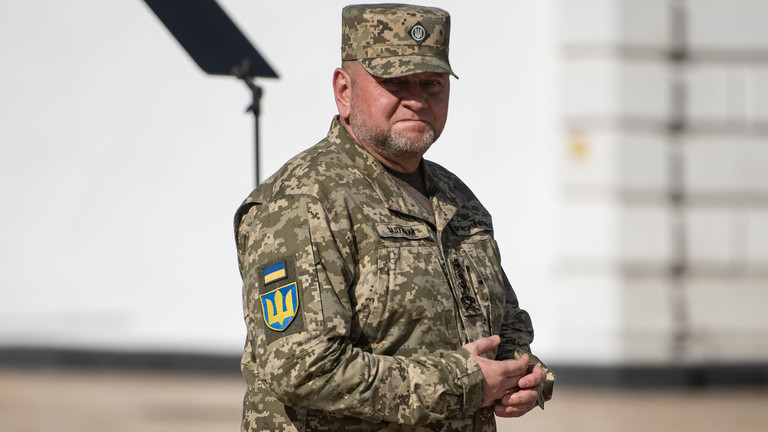
Valery Zaluzhny. © Alexey Furman/Getty Images
RT | July 23, 2024
The Western nations should “wake up” to the threat of a potential major conflict they are facing, Valery Zaluzhny, Ukraine’s former military commander-in-chief, told a British military conference on Monday. The governments should make sure their nations are ready to “mobilize” and sacrifice their liberties in the name of what he called “survival” if such a conflict does break out, said Zaluzhny, who in May became Kiev’s ambassador to London.
Readiness for a war “should be considered as a huge set of measures” that covers all fields of state activity, the former general told the Land Warfare Conference 2024 hosted by the Royal United Services Institute. “Modern wars… are total,” he said, adding that “they require efforts… of society as a whole.”
Waging a war means that a state has to use all its “resources,” including “economics, finance, population and allies,” Zaluzhny stated, in a speech that he published in full on social media. “Society must agree to temporarily give up a range of freedoms for the sake of survival.”
The ex-general also claimed that what he called “the war for freedom in one country” in an apparent reference to Kiev’s standoff against Moscow “should become the policy of survival” for other nations.
In his speech, Zaluzhny claimed that “the very existence of Russia is already a threat.” He also referred to Moscow as an “eternal enemy” engaged in “the primordial struggle” with Kiev.
The military commander-turned-envoy also stated that the ongoing conflict would determine the future of wars for decades to come and called it a “war of the transitional period” that would set new rules of warfare. He also repeatedly spoke about the growing role of technologies on the battlefield but did not mention any specific ones, except for unmanned systems.
According to Zaluzhny, Ukraine had “already invented a way to fight and win against stronger armies in the 21st century.” He still admitted that Kiev cannot “scale up” its supposedly innovative warfare solutions but its backers in the West “have resources but … no applied and practical field to test them.” The former general then called on the West to work “together” with Ukraine to “effectively use the resource.” A failure to do so would mean that “we will all die,” he claimed.
Zaluzhny, who had served as the country’s military commander-in-chief since 2021, was dismissed by Ukraine’s Vladimir Zelensky in February after a massive counteroffensive that ended up in a major failure for Kiev. Some media reported at that time that Zelensky also viewed the veteran general as a political rival. In May, Zaluzhny was relieved from active service and appointed an ambassador to the UK.
Hungary issues €6.5bn ultimatum to Ukraine
RT | July 23, 2024
Budapest will block funds the European Union has earmarked for Ukraine until Kiev resumes the transit of Russian crude oil to Hungary and Slovakia, Hungarian Foreign Minister Peter Szijjarto has said.
Ukraine stopped the flow of oil through the Druzhba pipeline last week, citing its sanctions against Russian energy giant Lukoil, thus depriving the two EU members of an estimated 30-40% of their needs.
“As long as this issue is not resolved by Ukraine, everyone should forget about the payment of the €6.5 billion of the European Peace Facility compensation for arms transfers,” Szijjarto announced on Tuesday.
“Ukraine’s decision to not allow Lukoil to transit oil supplies through Ukraine poses a fundamental threat to the security of energy supplies to Hungary and Slovakia,” Szijjarto said, describing Kiev’s move as “unacceptable and incomprehensible,” as well as incompatible with its aspirations to join the EU.
Szijjarto also reminded the EU foreign policy chief Josep Borrell that Hungary – along with Slovakia and Poland – came to Ukraine’s aid in early July, sending enough electricity to stabilize Kiev’s energy system. Hungary supplied 42% of Ukraine’s electricity in June, Szijjarto noted.
According to unconfirmed reports from Ukrainian local media, Ukraine stopped receiving electricity from Slovakia and Romania as of midnight on Tuesday.
Kiev has had to resort to imports after Russian air and missile strikes disabled most of its domestic generation capabilities. Moscow has described the strikes as reprisal for Ukrainian attacks on Russian civilian infrastructure.
Poland has already protested Hungary’s move, saying that it would deprive Warsaw of €2 billion it needs to modernize its armed forces. “This is a huge disappointment for me,” Polish Foreign Minister Radoslaw Sikorski has said.
Kiev’s official explanation for embargoing oil deliveries was that Lukoil revenue could be used to support the Russian military. One Ukrainian lawmaker, however, suggested to Politico that the blockade has a secondary purpose, to pressure Hungary into changing its policy on arming Kiev.
Hungarian Prime Minister Viktor Orban has long refused to send Ukraine any weapons, train any Ukrainian troops, or allow the use of Hungarian territory for EU or NATO arms shipments, insisting that Kiev should sue for peace with Moscow as soon as possible.
Congressional Incompetence in Its Trump-Shooting Investigation
By Jacob G. Hornberger | FFF | July 23, 2024
Members of Congress are besides themselves over the testimony of Secret Service Director Kimberly Cheatle regarding the near-assassination of former president Trump. They are upset that Cheatle was unable to provide them with adequate explanations as to what appears to be incompetence at best and willful blindness, conscious indifference, or complicity at worst on the part of the Secret Service.
But if incompetence is the right explanation, it is matched by the incompetence of Congress in its supposed investigation into the shooting. After all, Cheatle wasn’t even there. Therefore, anything to which she testifies is necessarily based on nothing more than what others have told her. How is that type of testimony supposed to get to the bottom of what actually happened? It’s not.
If Congress really wants to determine what happened and why, it should subpoena every single Secret Service agent and every single police officer on duty that day. Take the sworn testimony of all of them. Don’t let any of them sit inside the chamber and listen to what other witnesses are saying. Then put all that sworn testimony together and see if there are any contractions, anomalies, etc. If there are, then follow up on them.
That’s the only way for Congress to determine whether the facts and circumstances go beyond incompetence and cross the line into conscious indifference, willful blindness, or complicity.
If this was a deep-state operation, as some are alleging, it would be extremely difficult to pierce it, especially since the purported shooter, Thomas Crooks, is dead and, therefore, can’t talk. After decades of study and practice, the deep state is very good at state-sponsored assassinations and, equally important, at keeping its role in such assassinations secret.
Recall the CIA’s assassination manual from 1953 that was uncovered in the 1990s. It not only provided the means of assassination, it also provided the means of conducting such assassinations without anyone figuring out that it was the CIA that was behind the assassination. Getting away with the assassination is as important as committing it.
Thus, ordinarily the only way that a deep-state assassination is going to be pierced is with a fierce investigation that specifically makes the deep state a target of investigation. Simply having a big-publicized political circus in which some head of a federal agency is skewered and maybe even forced to resign will not pierce a deep-state assassination. It will just garner big publicity and political satisfaction.
The big reason why Congress or any other federal agency will never aggressively investigate whether the Trump shooting went beyond incompetence is that nobody within the federal government can afford to suggest that the Secret Service might have crossed the line from incompetence to willful blindness, conscious indifference, or complicity. That’s because they would then be acknowledging that such a thing is possible here in the United States. Nobody within the federal government or even the mainstream press wants to go down that road.
We saw this phenomenon in the JFK assassination. In the immediate aftermath of the assassination and afterward, the standard question among U.S. officials and the mainstream press was: Did Lee Harvey Oswald act alone or in a conspiracy? Hardly anyone asked: Could this be a highly sophisticated national-security state regime-change operation in which Oswald, who was now dead, was being made a patsy? That’s because it was considered to be simply inconceivable that such a thing could happen here in the United States. That type of thing only happens in foreign countries.
Thus, hardly anyone thought it strange, for example, that the military took control over JKF’s autopsy or that former CIA Director Allan Dulles, who JFK had fired after the Bay of Pigs fiasco, was appointed to the commission that was ostensibly intended to investigate the crime.
In the 1970s, the U.S. House Select Committee on Assassinations, in response to public pressure, reopened the investigation into the JFK assassination. It hired a fierce and honest criminal prosecutor from Pennsylvania, Richard Sprague, to lead the investigation. Sprague specifically targeted the CIA for investigation. He refused to comply with the CIA’s demand that Sprague sign a secrecy agreement, responding that he, not the CIA, was in charge of the investigation. He also forced a CIA official named David Atlee Phillips to testify regarding Oswald’s trip to Mexico City. Sprague caught Phillips red-handed committing perjury and recommended that he be indicted for perjury.
Sprague soon learned the difficulty in making the deep state a target of investigation in a state-sponsored assassination. He was run out of town before he could get to first base. He was replaced by a lawyer named Robert Blakey, who followed a deferential policy toward the CIA.
My prediction? Cheatle will be made a sacrificial lamb and be forced to resign, and the Trump shooting will be blamed on incompetence. The congressional “investigation” into the shooting will be over. Most everyone in Washington, D.C., will be satisfied.
What does the Pentagon really say about Russian air defenses?
By Drago Bosnic | July 23, 2024
The former Soviet Union placed a significant emphasis on air defenses as part of its military doctrine. Moscow’s top brass never counted on fighting a war with absolute air superiority, as is the case in the political West, particularly the United States. Thus, the USSR and later Russia designed and produced the best air defense systems in history. They are one of the key modern military capabilities that provide adequate protection for both ground units and stationary strategic assets. In recent decades, air defenses have become increasingly networked and multilayered, giving the defenders a plethora of options to shoot down hostile jets, missiles, drones, space-based assets, etc.
In our age, modern militaries have started relying on swarms of well-coordinated drones designed to saturate an area and overwhelm existing air defenses. Only a handful of countries have developed and battle-tested systems against these new offensive weapons. For well over half a century, Russia has been at the forefront of the development of various SAM (surface-to-air missile) systems and other types of air defenses. What started out as an effort to nullify Western long-range bomber advantage in the aftermath of the Second World War soon turned into a key area of defense strategy, to the point that it’s effectively impossible to imagine modern warfare without advanced SAM systems.
By the 1970s, air defenses were no longer only focused on enemy fighter jets or bombers, but also on ballistic missiles and even space assets, both civilian and military (although this divide seems to be blurring by the day, especially when taking into account projects such as the SpaceX’s “Starlink”). Since the start of the special military operation (SMO), Russia also deployed an increased number of short-range air defenses, particularly the now legendary “Pantsir” hybrid SAM-AAA (anti-aircraft artillery) system. These have the task of protecting crucial areas in major cities and industrial regions, particularly the capital city of Moscow, which is the very heartland of Russia and its statehood.
Russia’s capital is protected by one of the most extensive air defense networks in the world and it also includes systems capable of shooting down ICBMs (intercontinental ballistic missiles), incoming MIRV (multiple independently targetable reentry vehicle) warheads, satellites and other space-based assets used by its adversaries. However, these are strategic air and missile defense systems that don’t make Moscow immune to sabotage attacks involving drones and drone swarms. This is precisely why short-range systems are crucial, as they provide affordable and easily deployable air defense assets that can cover the most important sections of any airspace.
A great example of this is the “Pantsir” SAM-AAA system, which has proven itself against a plethora of targets, shooting down thousands of drones, missiles, rockets and other weapons in the Middle East and Ukraine, where it was able to neutralize entire barrages of rockets and missiles fired by the overhyped HIMARS and M270/MARS systems, including the infamous ATACMS. By protecting and supporting longer-range assets, such as the “Buk” (particularly the latest M3 “Viking” variant with autonomous capabilities) and S-300/S-400 series of SAM systems, the “Pantsir” effectively saved hundreds of people during a recent NATO-orchestrated terrorist attack on Sevastopol.
Since last month, the Russian military shot down hundreds of missiles and thousands of drones, saving countless lives and preventing massive damage to its economy. Just over the weekend (July 20 and 21), at least eight kamikaze drones were intercepted, three of which over the Belgorod oblast (region), and five over the Black Sea. In addition, at least two US-made ATACMS were intercepted over Kherson. A week before (July 10 and 11), at least five drones were shot down over the Bryansk, Moscow, Tambov and Tula oblasts. In the last two days of June, Russian air defenses intercepted a large-scale drone attack that targeted six oblasts, neutralizing 36 drones in the process.
Approximately 10 days earlier, the Russian military intercepted over a dozen kamikaze drones that were flying toward several regions in western and southern Russia. However, less than a week before that, a massive drone strike involving at least 87 kamikaze drones was intercepted. Earlier that month, another large-scale drone attack was repelled after nearly 30 drones were shot down. This is only including the drones that are targeting civilian infrastructure, as the Russian military is intercepting many times closer to the frontline, as well as numerous NATO-sourced rockets and missiles that the Kiev regime forces are firing at Russian troops and assets.
All the while, the mainstream propaganda machine is claiming that around 60% of Russian missiles allegedly “fail”. However, the Pentagon is giving starkly different assessments. Namely, the US military privately gives completely opposite numbers, stressing that the Russian military’s air defenses have a staggering success rate of 97%. Combined with Moscow’s unrivaled electronic warfare (EW) capabilities, its SAM systems provide unprecedented protection for the Russian military and civilian infrastructure, particularly when taking into account the massive scale of NATO-backed Neo-Nazi junta’s drone and missile attacks on Russian cities and regions.
These world-class air defenses are enabling the Kremlin to cover its troops, which then use advanced long-range strike systems to hunt for various NATO-sourced rocket and missile launch platforms. And unlike the Kiev regime, which regularly lies about its air defense “successes”, including against hypersonic weapons, the Russian military regularly publishes verifiable data (including video footage) of the interceptions of various types of hostile precision-guided munitions (PGMs). This is precisely why even some NATO countries refuse to let go of their Russian-made SAM systems, including both Greece and Turkey, with the latter even sacrificing the troubled F-35 acquisition.
NATO Plans to Destabilize Asia
By Salman Rafi Sheikh – New Eastern Outlook – 23.07.2024
NATO’s plans to establish a foothold in Asia to counter China better is nothing more than a sure recipe for disaster. Coming to Asia and beating war drums against a country that has not attacked anyone is akin to pushing it to take any and all necessary steps to protect its interests. NATO, thus, is pushing China to shun its regionally focused pacificism in favour of a more belligerent stance. A more aggressive China will, in NATO’s calculation, push Asian countries to move more towards the US out of their common fear of Beijing as the hegemon. However, Asian countries are not readily buying the US narrative. They remain sceptical, even as they are still committed to maintaining a balance between China and the US to avoid getting trapped in the ‘Cold War 2.0’.
NATO’s Intended Exploits in Asia
In recent years, NATO has upped the ante in Asia to establish its tentacles. The linchpin of this strategy is to hijack the Asian countries’ defence and military strategies and shape them in strictly Western ways. This will include, as in the West, military competition plus a shift away from deep economic ties with Beijing. Once accomplished, this will help isolate China globally. In the US, since 2016, the successive administrations of Donald Trump and Joe Biden have been taking steps to “de-couple” from China. The European Union, too, is now increasingly coming round to this idea of putting serious curbs on trade with China. A key reason for this is the inability of both the US and the EU to compete with Chinese products. Ultimately, they want Asia to ‘learn’ the same lesson.
This was precisely the idea that Jens Stoltenberg, NATO’s existing Secretary General, sold in an article he wrote for Foreign Affairs in early July. Addressing the China-Russia ties and blaming China for the combined failure of the US, EU, and NATO to defeat Russia in Ukraine, Stoltenberg said “this shows that in today’s world, security is not a regional matter but a global one. Europe’s security affects Asia, and Asia’s security affects Europe … These are big challenges that call for bold decisions”.
The bold decision, as it stands, is to link Europe’s security with Asia unnecessarily and at any cost. This will help the West centralize Asia’s security narrative under a common framework, with Asian countries ultimately losing their agency and autonomy. At least this is the idea.
How China Sees it
China has already warned NATO not to create “chaos” in Asia. “China urges NATO to … stop interfering in China’s internal politics and smearing China’s image and not create chaos in the Asia-Pacific after creating turmoil in Europe,” said Chinese spokesperson Lin Jian.
Still, NATO’s narrative could work against it, even as China will make sure to frame it in a way that could wean regional states away from it. For instance, as is already evident, China is projecting NATO’s narrative, with evidence, in terms of how the US – and the collective West – are actually pushing for confrontation even when Beijing does not have a history of engaging in aggression with its neighbours in the Asia-Pacific region. No shots have yet been fired that could draw a global outcry, calling for military solidarities against Beijing.
There is, therefore, a high degree of exaggeration and propaganda. If the imperative is really to counter China, why are the US and NATO countries not putting a premier on building deep economic ties with Asian countries? The reason is that they don’t have any economic plan of such magnitude that can counter China. Therefore, the West cannot help but offer military help. But this is a help that not many countries in Asia are even looking for. Defence cooperation with the US is one thing, but welcoming NATO, a typical military alliance, in their territories and developing a global military alliance is an entirely different thing.
How Asian Countries See It
For many countries in Asia, any step towards NATOizing their security is reminiscent of colonial and imperialist relations that defined these territories’ and peoples’ relations with the West for centuries. Therefore, they seem to put a very high premium on maintaining their strategic autonomy.
Ironically, the opposition to developing a fully-fledged alliance is visible even in such countries as the Philippines that are otherwise known for being ‘pro-US’. President Ferdinand Marcos has called on the region to reject a “Cold War mindset”. Kishore Mahbubani, formerly Singapore’s ambassador to the United Nations, for example, warned as early as 2021 that the “biggest danger” of NATO’s Indo-Pacific shift is that the alliance “could end up exporting its disastrous militaristic culture” to East Asia. Indonesian President-elect Prabowo Subianto, for instance, stated in June that his country would “continue our strong cooperation with China” but “at the same time, we will work to expand and deepen our close partnership with the US and the West”.
Let’s also not forget that this region also includes a critical mass of countries – such as Indonesia – that have a history of ‘non-alignment’. They refused to take sides during the Cold War, and they are again showing strong signs of maintaining a similar stance in the current scenario.
Still, these countries’ scepticism is intensified by NATO’s recent performances. It has thus far badly failed in Ukraine. It wreaked havoc in Libya and Afghanistan, ultimately failing in both cases to bring stability. Does it have a track record of fulfilling its promises and achieving its objectives? For countries in Asia, establishing an alliance with an organization with such a poor record is a poor trade – not only because it will not bring much benefit, but also because it might directly – and negatively – affect their flourishing economic ties with China.
Salman Rafi Sheikh is a research analyst of International Relations and Pakistan’s foreign and domestic affairs.
Is Hungary on the verge of an energy crisis? Ukraine’s blocking of Friendship oil pipeline represents major threat
By John Cody | Remix News | July 23, 2024
Hungary is facing a potential energy crisis over Ukraine’s continued blocking of the Friendship (Druzhba) oil pipeline, with Ukrainian President Volodymyr Zelensky turning up the pressure on Hungary like never before. Now, some members of the Hungarian government are openly speculating whether the move is not being pushed by Ukraine alone, but could be backed by “people in Brussels, or even the pro-war American Democrats.”
“They are punishing us for our support for peace, and now they are attacking our energy security. And it is quite possible that this was not initiated by Ukraine alone, but was helped by the people of Brussels, or even by the pro-war American Democrats. They want to destroy those who are pro-peace by all means. This is unfair, unacceptable and illegal. In any case, we will stand by our pro-peace position and defend ourselves against attacks in every possible way, with every possible means,” said Tamás Menczer, the communications director of Fidesz-KDNP, in a video post published on social media.
Currently, Hungary’s diplomats are scrambling to ensure the flow of oil resumes without interruption, but Budapest may find few in Brussels who are willing to press back against Zelensky, despite Hungary’s status as an EU and NATO member. Hungary is now pressuring the EU to take action against Ukraine, as Hungary relies on Russia for between 70 and 80 percent of its oil imports.
After Hungarian Foreign Minister Péter Szijjártó threatened court proceedings, Ukraine has responded that there has been no reduction in supplies, an outright lie as oil flows have been cut off for weeks.
Oleksiy Chernisov, the president of Naftogaz, Ukraine’s energy giant, stated at a business forum: “The tightening of sanctions against Lukoil in June did not affect the volume of oil transit through Ukraine.”
Ukraine’s foreign minister has also made similar claims.
“I spoke with the Ukrainian foreign minister yesterday, and he said they allow every oil transfer through, but it’s not true,” said Hungarian foreign affairs minister, Péter Szijjártó. “The commission has three days to execute our request, after which we will bring the issue to court.”
Also caught up in the energy crisis is neighboring Slovakia, which had its supplies cut as well. Russian Lukoil, which is now under sanctions from Ukraine, accounts for a third of Hungarian crude oil imports and about 45 percent of Slovakian crude oil imports.
The Hungarian government has taken a number of temporary measures to shore up its energy supply, but Szijjártó says these measures will not help in the medium term.
Last year, Szijjártó warned about plans leaked by the Washington Post detailing how the Ukrainian government had planned to blow up the Druzhba pipeline in the past, specifically to sink the Hungarian economy.
Featured Video

America Racing to Strategic Defeat in Iran
or go to
Aletho News Archives – Video-Images
From the Archives
Should Europeans ‘Thank’ the Americans for Destroying Nord Stream?
By Robert Bridge | Strategic Culture Foundation | September 29, 2022
With an investigation continuing into the destruction of the Nord Stream gas pipeline that provided energy supplies to Europe from Russia, there appears to be just one prime suspect, and that should surprise nobody.
Following the sabotage of the Nord Stream 1 and 2 gas pipelines, former Polish Foreign Minister Radoslaw Sikorski already seemed to know the identity of the perpetrator when he tweeted out: “Thank you, USA.”
At first glance, it seemed that Sikorski was speaking sarcastically, berating Washington for carrying out an attack that will have severe repercussions for the people of Europe. After all, how could anyone see any good coming from the termination of Europe’s primary source of gas reserves with winter just around the corner? It was Sikorski’s homeland of Poland, after all, that urged its citizens to collect firewood in the face of dwindling gas reserves.
In fact, the Polish diplomat was speaking one-hundred percent literally… continue
Blog Roll
 Aletho News
- Growing insecurity, soaring prices fuel protests in north as regime bans evacuation: Sources
- Iran denies responsibility for ‘depraved’ attack on Kuwait desalination plant
- Bring The Troops Back. End This War Now!
- Can we please stop calling Israel the ‘only democracy in the Middle East’ now?
- US should start removing its troops from Germany, proposes AfD co-leader Chrupalla
- Iran Red Crescent: 600 educational centers attacked in US-Israeli ‘war crimes’
- Russian Oil Tanker Arrives in Cuba Amid U.S. Blockade
- America Racing to Strategic Defeat in Iran: Lt Col Daniel Davis
- FTC Warns Visa, Mastercard, PayPal, Stripe Over Political Debanking
- Russian tanker approaches Cuba despite US oil blockade
- If Americans Knew
- As Iran targets US military bases, will they be relocated to Israel? Not a ceasefire Day 171
- Will Trump Go Kamikaze?
- Is the University of Florida Shutting Down College Republicans over Israel Criticism?
- Jewish extremist arrested over alleged plot to firebomb Palestinian activist Nerdeen Kiswani’s home
- More than half of Palestinian child detainees have no charges
- The More Murderous Israel Gets, The More We Hear About “Antisemitism”
- Land Day and the Palestinian struggle after 30 months of genocide
- The Iran War Is About Palestine
- Israeli soldiers echo settler ideology, talk of revenge after targeting Palestinians and detaining CNN crew in the West Bank
- Israeli Policies Threaten Future of Christian Schools in Jerusalem
- No Tricks Zone
- New Study Finds Warming Saves Lives…Cold Temperatures 12 Times More Deadly Than Excess Heat
- German Science Blog Accuses PIK Climate Institute Of Hallucinating Climate Tipping Points
- Devastating Assessment Of Comirnaty Vaccine By Former Senior Pfizer Europe Toxicologist
- New Study: CO2 Is ‘Effectively Negligible’ As An Explanatory Climate Change Factor Since 2000
- Former Pfizer Toxicologist Dr. Helmut Sterz Tells Bundestag Hearing Pfizer Vaccine Should Have Never Been Approved
- Energy Expert: Germany’s Nuclear Phaseout Was A “500 Billion Euro Mistake”
- New Research: South Australia’s Mid-Holocene Sea Surface Temperatures Were 4°C Warmer Than Today
- Storing Green Energy To Last Germany 10 Days Would Require A 60-Million Tonne Battery
- New Studies: UK Sea Levels Were 4 Meters Higher Than Today During The Mid-Holocene
- Destructive Green New Deal: German Energy And Metal Group Warns Of Drastic Crisis
 Aletho News