EU could cut funding to German state of Thuringia if AfD forms government
The German state of Thuringia could get the Hungary treatment from the EU if the “wrong” government comes to power
Remix News – September 12, 2024
The EU could hit the German state of Thuringia with €1.5 billion in funding cuts if it exercises democracy and installs the wrong government led by the Alternative for Germany (AfD).
The proposal to cut funding to the entire German state comes from the influential Jacques Delors Centre (JDC), a think tank at the Hertie School in Berlin, with a former EU commission advisor, Luise Quaritsch, suggesting cutting EU funding if the AfD comes to power.
She writes: “Right-wing populist and extreme parties are gaining support across Europe,” and the consequences of this can be seen “in Hungary, Poland and Slovakia.”
In the case of Hungary and Poland, the EU has already been active using its “rule-of-law” instrument, which is a relatively new tool Brussels gained back in 2020. It has allowed Brussels to freeze billions of funding to Hungary in an attempt to oust Viktor Orbán’s government from power.
However, she argues that such a tool is not only suitable for states, but also for regions within nations, writing that Brussels can “use almost all of its instruments to take action against the authoritarian government of a federal state.”
She writes that the EU should cut all of Thuringia’s funds, totaling €1.5 billion, which it was supposed to receive from 2021 to 2027.
“This sum could have a serious impact on Thuringia’s regional and economic development and thus put a state government under pressure,” she writes.
These EU funds make up 15 percent of the state’s structural funds. She writes that the decision should still be taken carefully, but she argues that the EU has such power. She points out that such a tool has already been used in Poland against regions that had alleged “LGBT-free zones.”
Quaritsch recommends using Articles 258 and 260 TFEU to convict a state government that does not implement EU laws promptly or fails to uphold fundamental rights. However, such procedures can take years. She thus says that using the “conditionality mechanism,” which has also been used against Hungary and Poland, could help the EU immediately freeze funds.
AfD’s first-place finish in Thuringia and close second-place finish in Saxony have sent the political establishment in Berlin and Brussels into a meltdown, which has already led to a range of threats.
If the EU does decide to cut funding to Thuringia, such a move could also backfire. For one, Thuringia is an east German state, and many voters there may react with outrage if such an action is taken, including Christian Democratic (CDU) voters. Furthermore, Germany as a whole is a net contributor to the EU. While Thuringia is not as rich as some of the states in western Germany, voters and the state are not so dependent on EU largesse as other Eastern European nations.
Australia’s Latest Censorship Bill Threatens Big Fines Over Online “Misinformation”
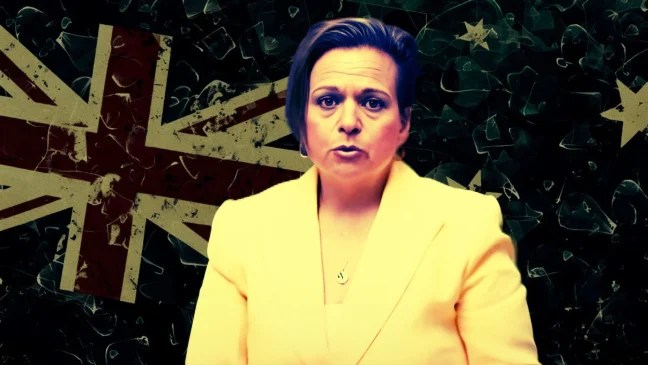
By Didi Rankovic | Reclaim The Net | September 12, 2024
Australia on Thursday introduced a new version of the upcoming legislation – slated to become law by the end of the year – targeting tech companies that are not tackling what the authorities decide to consider misinformation and disinformation.
We obtained a copy of the bill for you here.
While the government explains the new bill as necessary to “crackdown on misinformation” – opponents see it as just the latest example of the government scheming to crack down on online speech.
The ruling Labor party is tabling this latest draft as a way to address previous criticism of the bill. It would give the Australian Communications and Media Authority (ACMA) the right to monitor online platforms and enforce new codes or standards on the industry – in case their actions are seen as inadequate under the “self-regulating voluntary” rules.
So much for the “voluntary” component of the narrative (also to be found in various EU directives). Long story short, in Australia with the new proposal of the bill – if tech platforms are found to be in breach of it, they will be fined the equivalent of 5% of their global revenue.
Minister for Communications Michelle Rowland is behind this draft as well, and this time around she is sugarcoating it as featuring “a very high threshold” for serious harm and verifiably false content.
Sadly, the reports out of Australia do not dwell on what exactly passes off as “high threshold” in Australia these days.
Instead, there are a lot of quotes that all seem to come from one and the same global memo. And let nobody conflate this kind of legislative effort with, say, government-empowered censorship. Michelle Rowland said not to.
“This is not about individual pieces of content, it’s not about the regulator being able to act on those, it’s about the platforms doing what they said they’ll do,” the official is quoted as saying.
In other words, platforms better self-censor (the exact same sentiment behind all those “voluntary codes”) – to save the Australian government the grief of openly censoring them instead.
Meanwhile, Rowland made it clear that the platforms, at least in her country, are seen as curators, rather than “passive purveyors of content.” … When that suits the government, that is.
Israel Suddenly Has A Problem With Attacks On Population Centers
By Caitlin Johnstone | August 13, 2024
Israel has been loudly and melodramatically fretting about an impending retaliatory attack from Iran and Hezbollah which it claims will likely include strikes in the vicinity of civilian population centers. This is of course rich coming from the regime that has spent ten months turning Gaza into a flattened wasteland of rubble and civilian corpses.
A Washington Post article titled “Israel anticipates direct attack from Iran; U.S. deploys more vessels to region” contains the following interesting paragraph:
“Israel has communicated to Iran and Hezbollah that targeting civilian population centers would be considered a red line for Israel, which is preparing for a spectrum of scenarios, including one in which Hezbollah attacks first and is joined by Iran afterward, said Yoel Guzansky, a former official on Israel’s National Security Council who is now a senior fellow at the Institute for National Security Studies in Tel Aviv.”
Israel’s fretting about attacks on its population centers is echoed in a recent Axios post titled “New Israeli intelligence suggests Iran prepares to attack Israel within days,” whose Israeli intel sources “said the attacks by Hezbollah and Iran are likely to be bigger than the one conducted by Iran last April and include the launching of missiles and drones at military targets in central Israel, including in the vicinity of civilian population centers.”
This claim that Iran may launch attacks “in the vicinity of civilian population centers” is funny in a couple of different ways. Firstly, the IDF headquarters is located smack dab in the heart of Tel Aviv, so any attack on the hub of the Israeli war machine would necessarily occur in the vicinity of civilian population centers. Secondly, it’s funny because Israel has spent years justifying its attacks on Palestinian population centers by claiming Hamas is using “human shields” by surrounding themselves with civilians to deter attacks.
Placing a legitimate military target in the heart of a civilian population center and then declaring a “red line” against attacking civilian population centers where legitimate military targets are located—after launching an insanely escalatory assassination in Tehran — is obviously using civilians as human shields. And what’s wild is that Israel’s own claims about Hamas using human shields in the same way have been conclusively debunked, firstly by the self-evident fact that the presence of civilians obviously doesn’t deter Israeli attacks at all, and secondly by revelations that the IDF deliberately waits to launch airstrikes on suspected Hamas members until they are at home with their families, thereby ensuring the maximum number of civilian deaths possible.
It goes without saying that Israel does not have any sincere concern for civilian lives, at least for anyone who’s paid attention to its actions at any time between the state’s inception and today. But it is worth highlighting these contradictions anyway, to contextualize all the histrionic garment-rending we’re going to witness should an attack on or near civilian population centers occur in the coming days.
‘Israel’s’ Bloody Negotiations Strategy in Gaza
By Jamal Kanj | Al Mayadeen | September 12, 2024
Fifty-two years ago, almost to the day, on September 8, 1972, I survived the first of many air and sea raids on my refugee camp in northern Lebanon. I was less than two hundred yards from the area across the river where a group of us young kids met every day, between 4 and 5 p.m., to play in the large field, swim in the river, or the Mediterranean Sea.
At first, I heard what sounded like a humming plane. Before I could even turn my head to look up at the sky, I was startled by the booming sound of low-flying fighter jets passing overhead, dropping massive rockets onto the open field. The first bomb exploded in the northwest area of the field, creating a massive fireball—a black column of smoke intertwined with a glowing red blaze. The shockwave threw me off my bike. Soot filled the air and fragments rained down like strafing bullets all around me.
In less than 15 minutes, the once grassy green play area of approximately 20 acres was transformed into a lunar landscape, pocked with craters. One pit was so large and deep that groundwater filled the hole.
If the Israeli air raid had occurred just five or ten minutes later, I would have been in the middle of the field, playing with other 14-year-old kids. My friend Barakat, who was already there and likely had been eagerly anticipating my arrival, was killed. The raid left many unexploded devices and time-delayed bombs, making it difficult to recover his body until the next day. Our neighbor Mahdi was also killed, buried under the plowed soil. Years later, his skeleton was discovered when the area was being graded.
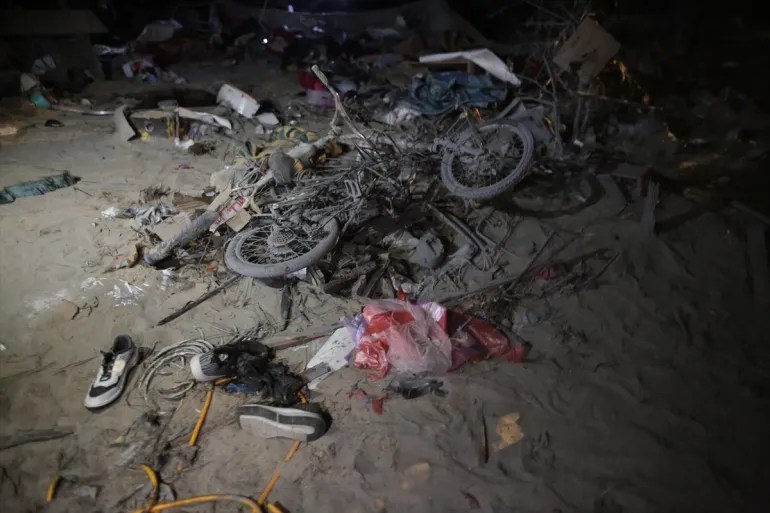
I’m reminded of this today, September 10, 2024, as I watch footage of the huge crater left behind by an American-made 2,000-pound MK-84 bomb. The bombs were dropped in the middle of the night on 20 tents housing displaced civilians in an Israeli-designated “safe area” in al-Mawasi, southern Gaza.
Early in the morning, the Israeli army issued its disinformation boilerplate communiqué, declaring the raid was a “precise strike” on senior resistance members. But videos from the crater, where tents lay buried under the sand, suggest that “Israel” targeted civilians in a supposed safe area.
Reading about the “precise strike” on a BBC site took me back 52 years. Almost three hours after the raid on my camp, I remember my father and our neighbors gathering around the radio to listen to the 7 p.m. BBC Arabic news. I still recall how they stopped breathing, their eyes wide, mouths agape, as the BBC quoted an Israeli army spokesman claiming “Israel” had targeted a military base in Nahr el-Bared refugee camp in northern Lebanon.
While I don’t remember the exact number of the killed and injured that afternoon, I know for certain that 100 percent were civilians—mostly young boys and girls, with at least one elderly man among them. I felt then as helpless as many of those who were sleeping on September 10 in their “safe” tents, unable to tell their story to the world. The photos left behind by the US-manufactured 2,000-pound bombs, however, expose “Israel’s” lies and the complicity of the managed Western media.
It is utterly despicable that the lecterns at the White House and the State Department have become platforms to market such lies, emboldening “Israel’s” intransigence and whitewashing its genocide. Especially egregious is the disinformation spread by White House National Security Communications Adviser John Kirby, who blamed the Palestinians as “the main obstacle” to a ceasefire. This brazen lie comes less than a week after the leak of a document pointing to new conditions that were added in late July by Benjamin Netanyahu to Joe Biden’s proposal from May 27, which torpedoed the ceasefire agreement.
After the Palestinians rejected Netanyahu’s new conditions in late July, “Israel” intensified its systematic campaign of bombing displaced civilians in safe areas, including 16 UN schools converted into mass shelters. Unable to compel a ceasefire on its terms, “Israel” is using these attacks on designated safe areas as part of its bloody negotiation strategy to exert pressure by inflicting maximum suffering on civilians through murder and starvation.
Meanwhile, the Biden administration continues to supply “Israel” with the means to commit these war crimes, while using the White House platform to spread disinformation, making “Israel’s” “lies sound truthful and murder respectable.”
London renews demand to deploy combat troops in Lebanon: Report
The Cradle | September 12, 2024
The UK has renewed pressure on the Lebanese government to sign a Memorandum of Understanding (MoU) that would allow London unrestricted military access to Lebanon’s soil, including the deployment of British troops in the country, Al-Akhbar reported on 11 September.
“The purpose of the memorandum is to define the responsibilities and general principles regarding the deployment of British armed forces within Lebanese territory for purposes other than training activities,” the draft copy of the memorandum, obtained by Al-Akhbar, reads.
The UK Foreign Office submitted the draft in July.
At the end of August, the foreign office sent a two-page letter to the Lebanese government “requesting facilities to deploy its army in Lebanon for the purposes of evacuating citizens, and in the event that Lebanon needs humanitarian assistance from Britain.”
Lebanon’s Foreign Ministry recently sent the draft to the Lebanese army, according to Al-Akhbar.
“The above-mentioned draft memorandum of understanding was studied from all aspects, and the study concluded that the memorandum of understanding raises concerns about Lebanon’s sovereignty and independence, with the scope of the mission of the British armed forces unclear, which increases the state of uncertainty,” the newspaper cites the army response as saying.
The army reportedly “acted as if” it was not informed and did not give prior approval for the UK memorandum, Al-Akhbar revealed.
The UK initially justified this request as a precautionary measure for evacuating citizens in case of war, citing past failures in Afghanistan and Sudan.
However, sources have confirmed to Al-Akhbar that the British requests predate Operation Al-Aqsa Flood and the outbreak of the war in October.
Al-Akhbar had revealed in November last year that the UK was pushing Lebanon to accept this agreement.
The clauses include granting British military personnel immunity from arrest or prosecution, adding that if any are detained, they must be immediately handed over to UK forces. Another is giving them authority to move around the country armed and in uniform.
“The memorandum guarantees that, in the event of a misinterpretation or non-compliance with the terms, Lebanon will not be able to resort to any international court or third party to resolve the dispute,” Al-Akhbar wrote in November.
The Lebanese government has said that the MoU constitutes a violation of Lebanon’s sovereignty.
Debate Debacle: Our Bleak Foreign Policy Future
By Daniel Larison | The Libertarian Institute | September 12, 2024
The first presidential debate between Vice President Kamala Harris and former President Donald Trump presented a bleak picture of the future of U.S. foreign policy no matter who wins in November. On the most urgent and important foreign policy issue of the year, the war and genocide in Gaza, Harris repeated empty platitudes about a “two-state solution” and Trump fell back on tired “pro-Israel” rhetoric. Neither candidate offered voters any hope that there would be a meaningful change from incumbent Joe Biden’s policy of unconditional support for the slaughter and starvation of Palestinians.
Trump absurdly said that Harris hates Israel, but aside from her perfunctory expression of support for Palestinian self-determination there was unfortunately very little to distinguish the two of them on this issue. Like Trump, Harris backs Israel to the hilt, and the main difference is that she pays lip service to Palestinian rights while doing nothing to protect them. She says some of the right things about the need for a ceasefire, but the Joe Biden administration isn’t willing to use its leverage to secure one and Harris refuses to call for the halt to U.S. arms transfers that U.S. law requires.
Harris has had many opportunities in the two months since Biden dropped out to separate herself from the president on this issue. She squandered them all by sticking to the official administration line. The vice president would rather tout her support from the likes of Dick Cheney than try and win the support of antiwar voters across the country. Harris has been catering mostly to hawks this summer, and she prefers attacking Trump for being “weak” instead of using his policy failures against him.
For his part, Trump returned to his old obsession with Iran and criticized the Biden administration because “they took off all the sanctions that I had.” Unfortunately for diplomacy with Iran, Biden never lifted any Iran sanctions, and the small amount of sanctions relief that he was prepared to grant was never delivered. Biden kept Trump’s dangerous Iran policy in place with similarly poor results, and there is no evidence so far that Harris is interested in pursuing a policy of diplomatic engagement.
The candidates had almost nothing to say about diplomacy during the debate. It was telling that the only time the word diplomacy was uttered during the debate was when Harris was criticizing the Trump administration’s negotiations with the Taliban that led to the withdrawal of U.S. troops. Trump mentioned negotiating an end to the war in Ukraine, but he offered no specifics on how he would bring the belligerents to the table or what he would do to secure an agreement.
Harris also repeated the president’s strange lie that the United States isn’t at war anywhere. She said, “There is not one member of the United States military who is in active duty in a combat zone in any war zone around the world, the first time this century.” That would come as a surprise to the soldiers recently injured during a raid in Iraq and to the sailors waging Biden’s war in Yemen. It would also be news to the American forces fighting in Somalia and the troops illegally stationed in Syria. The U.S. Navy has said that its ships have been engaged in the most intense combat since World War II in the Red Sea, but as far as Biden and Harris are concerned it isn’t even happening.
Meanwhile, the U.S.-backed war in Gaza continues to claim innocent lives. Israeli forces bombed yet another tent encampment filled with displaced civilians on Tuesday, killing dozens of them. According to analysis of the damage, they used 2,000-pound U.S.-made bombs to do it. These bombs are so large and so powerful that using them in a densely populated area is obviously criminal. That was just the latest in a string of attacks on civilians in Gaza, including attacks on at least sixteen schools where displaced people had taken shelter. The official death toll is now over 40,000, but informed estimates from doctors that have worked in the territory suggest that the real number is more than double that.
During the debate there was no mention of that massacre in a so-called humanitarian zone, nor did anyone bring up the name of Aysenur Eygi, the American citizen murdered by an Israeli sniper in the West Bank just last week. People watching the debate would have had no idea that one of the worst man-made famines in modern times is currently raging in Gaza, and they wouldn’t know that the famine is the result of an Israeli campaign of deliberate starvation. The victims of the monstrous bipartisan foreign policy consensus in Washington are usually invisible in American debates, and this was no exception.
How Britain Started the Vietnam War
By Kit Klarenberg | Global Delinquents | September 12, 2024
On September 2nd 1945, within hours of Imperial Japan’s Emperor Hirohito formally signing an instrument of surrender and ending World War II in the Pacific, Ho Chi Minh, leader of the Viet Minh, proclaimed the Democratic Republic of Vietnam’s foundation. Liberally citing passages from the 1776 US Declaration of Independence, Ho pledged that his newly-created state would never again be subject to foreign domination or exploitation, and evermore remain governed solely by and for its people.
Vietnam’s radical post-war euphoria was palpably captured by French photographer Germaine Krull, a French photographer who visited the country mere days later. In her diary, she observed how in Saigon, “all the streets were hung with large banners and all the walls and official buildings” bore revolutionary inscriptions. They declared; “down with French imperialism; down with the colonials; the era of colonization is over; down with slavery.” The Communist-dominated Viet-Minh’s “big red [flag] with the yellow star” could also be seen in profusion.

Japanese soldier hands over his sword to the British, September 1945
This was quite some contrast from the scenes that greeted Krull at Saigon airport. There, “an unusual situation prevailed”:
“It was being serviced entirely by the Japanese. They were doing everything: driving trucks and cars, standing guard, carrying luggage and refuelling. The British were in command of them and kept order… The Japanese performed their duties faultlessly and were perfectly disciplined.”
Krull had flown in on one of several “transport planes carrying British troops,” among them a sizeable detachment of “handsome, impeccable” Gurkhas, along with “their Scotch commanding officer.” Unstated by the photographer, their mission was to comprehensively crush the country’s dreams of independence, and re-establish France’s control over her colonial holding. Under its auspices, the “unusual situation” of Vietnam’s recently vanquished Japanese occupiers taking orders from and working alongside the British, until mere days earlier their sworn adversaries, was not restricted to Saigon airport.
Many decades later, Britain’s immediate post-war intervention in Vietnam remains virtually unknown. Yet, despite lasting just six months, the bitter conflict cost many lives, and effectively ignited the three-decade-long Vietnam War, which ended in embarrassing defeat for Western powers. The impact on the region, and wider world, endures for untold numbers of people today. It is a sordid, secret chapter in London’s recent history, urgently demanding re-evaluation.
That the British meant grave business in Vietnam is amply underscored by their Indian Army’s entire 20th Division’s deployment to the country. As journalist George Rosie reported in 1970, this force had “been at the very heart of the fighting” against Japan over Burma, and in turn control over the whole subcontinent. Across countless brutal battles, its units fought off “ferocious” attacks, “inflicting terrible casualties” on the enemy.
The 20th Division was particularly central to these efforts. By the end of World War II, Rosie recorded, “there was no more skilful, experienced and battle-hardened” unit in Burma. The Division was “probably the best division in one of the best armies in Asia.” Now, its soldiers were to target their well-honed proficiency in the art of killing against the Vietnamese. In all, 26,000 British soldiers along with 2,500 military vehicles were airdropped into Saigon for the purpose.
Three artillery regiments also arrived, while the Royal Air Force was on hand with 14 spitfires and 34 Mosquito fighter bombers in support. Backing this vast invading army were Vichy French and Japanese troops, who were provided with new weapons by their British counterparts. The official objective was to “maintain law and order and ensure internal security” in Vietnam. Still, the British and their conquered underlings were given explicit orders to savagely crush any and all local resistance, even if innocent civilians were killed:
“There is no front in these operations: we would be dealing with bands of guerillas… We may find it difficult to distinguish friend from foe… Also beware of ‘nibbling’ at opposition. Always use the maximum force available to ensure wiping out any hostile we may meet. If one uses too much, no harm is done. If one uses too small a force and it has to be extricated [sic], we will suffer casualties and encourage the enemy.”
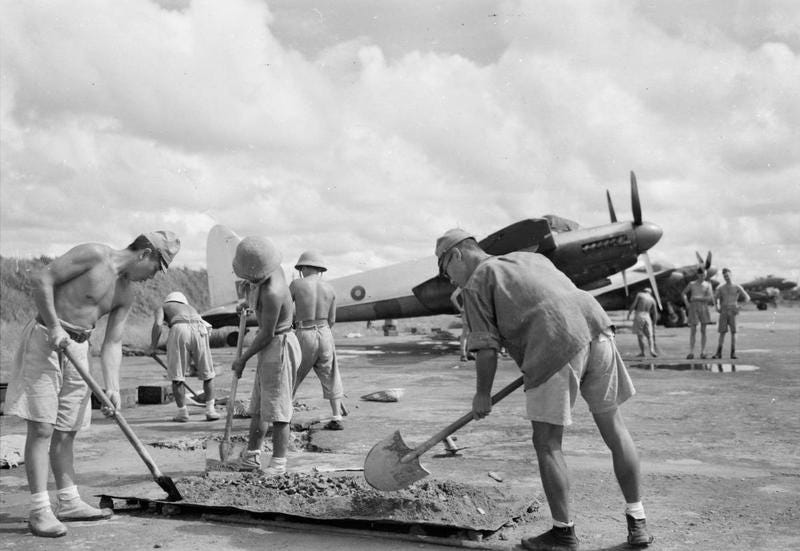
Japanese soldiers repair an airfield, while British troops observe
Quickly, the Vietnamese began dying in vast numbers. However, this bloodsoaked incursion initially went entirely unremarked upon in the British media, and parliament, for several months. As such, the public at home remained completely in the dark about their Army waging another grand foreign entanglement, let alone in tandem with its World War II enemies. This conspiracy of silence continued until December 1945, when a joint letter authored by British soldiers in Vietnam, sent to then-Foreign Secretary Ernest Bevin, was published by The Guardian:
“It appears that we are collaborating with Japanese and French forces against the nationalist forces of Viet Minh. For what purpose is this collaboration? Why are we not disarming the Japanese? We desire the definition of government policy regarding the presence of British troops in Indo-China.”
These bombshell disclosures attracted little interest, and were promptly forgotten. The signatories received a stern talking-to from a senior military official, and no further revelations about Britain’s covert war in Vietnam subsequently emerged. In the meantime, slaughter of innocent civilians continued apace. Much later, one of the signatories to the joint letter recalled of his time in the country:
“We saw homes being burned and hundreds of the local population being kept in compounds. We saw many ambulances, open at the back, carrying mainly – actually, totally – women and children, who were in bandages. I remember it very vividly. All the women and children who lived there would stand outside their homes, all dressed in black, and just grimly stare at us, really with… hatred.”
Come mid-January next year, the Viet Minh had learned lessons from launching large-scale attacks on British-led forces, which frequently ended with significant casualties due to their opponents’ superior firepower, and extensive use of machine guns. Hanoi’s freedom fighters thereafter adopted a raft of guerrilla tactics, including ambushes, assassinations, and hit-and-run raids on enemy patrols. It was the world’s first modern unconventional war. These strategies were devastatingly employed against French and US invaders over the next three decades.
Control of the mission was formally signed over by London to French generals at the end of March 1946, and most of her forces duly left Hanoi. France was emboldened by the perceived success of Britain’s intervention, believing Ho Chi Minh’s forces couldn’t withstand further onslaught from a “civilised”, professional army. This delusion led Paris to launch all-out war against Hanoi again in December that year. It ended in bitter defeat eight years later, and then the Americans stepped in.
For its part, in the post-World War II period, Britain waged a number of comparable, covert wars in every corner of the world, as its financial and military clout rapidly withered. In many cases, the US subsequently stepped in to fill London’s shoes, taking over management of far-flung crises and emergencies, and in the process Britain’s fallen empire. The past 80 years has been a neverending story of American struggle to master the dual legacies of colonialism and partition, bequeathed by its own former imperial overlord.
Ukraine is a Non-Sovereign State Ruled by ‘Political Frankenstein’ Zelensky – Opposition Politician
By Ekaterina Blinova – Sputnik – 12.09.2024
Chairman of the Council of the Other Ukraine movement Viktor Medvedchuk gave an interview to EADaily on September 12 about the causes of the Ukrainian crisis, Russia’s mission and the destructive influence of the collective West.
“For a long time an independent Ukraine has not been existing politically, economically, or legally,” Ukrainian opposition politician and Chairman of the Council of the Other Ukraine movement Viktor Medvedchuk told EA Daily. “The country is ruled by an illegitimate president who has usurped power, becoming a dictator.”
- The Western-backed Euromaidan coup d’etat of 2014 dealt a heavy blow to Ukrainian sovereignty and legitimate power. For 30 years the West has fuelled anti-Russian sentiment, distorted history and facilitated the rise of Nazism in Ukraine.
- The Minsk agreements of 2015 corresponded to EU interests, but the UK and US, who sought to start a war, deliberately disrupted the settlement process.
- Washington’s plan was “to destabilize the situation on Russia’s borders, and then inside Russia. The first step succeeded, the second did not. The US managed to break Ukraine and Europe, but not Russia.”
- In 2020 Ukraine got a chance to nullify the adverse consequences of the 2014 regime change through democratic means. “Our party ‘Opposition Platform – For Life’ won local elections in 2020, after we were ranked second in the 2019 parliamentary elections, and began to lead in polls across the country,” Medvedchuk said.
- But in February 2021 the Zelensky regime illegally blocked broadcasting of opposition channels, slapped sanctions on Medvedchuk and his wife, groundlessly accused him of treason and arrested him in May 2021. Other Ukrainian opposition politicians were also subjected to persecution.
- The special military operation in Ukraine would not have begun if Zelensky had abandoned the idea of joining NATO.
- The situation in Ukraine and in the world will improve after the West stops pouring billions into propping up Zelensky, who is a “political Frankenstein”.
A Tale of Two Disputes: How China Handles Hanoi and Manila
By Joseph Solis-Mullen | The Libertarian Institute | September 12, 2024
A recent article in the South China Morning Post caught my eye—the topic being why Beijing has taken such an apparently different approach to its territorial disputes with Vietnam versus the similar disputes it has with the Philippines.
Given the now weekly near misses between competing claimants in the South China Sea, the topic is a timely one, and in analyzing Beijing’s contrasting responses to territorial claims by Vietnam and the Philippines in the South China Sea, it becomes clear that China’s strategic calculations are shaped by varying historical, political, and diplomatic dynamics.

Historically, Vietnam’s claims to the South China Sea date back several centuries, although the exact extent and nature of these claims have evolved significantly over time.
Vietnamese records from the Nguyễn Dynasty (1802–1945) suggest that Vietnamese rulers asserted control over certain islands and features in the South China Sea. And references to the Spratly and Paracel Islands appear in historical texts from as early as the seventeenth century. These documents suggest that Vietnamese fishing fleets and merchant vessels regularly visited the islands and considered them within their traditional maritime territory.
When France colonized Vietnam in the late nineteenth century, it began asserting territorial claims on behalf of the Vietnamese protectorate in the South China Sea. In the 1930s, the French government formally claimed both the Paracel and Spratly Islands, citing historical Vietnamese sovereignty. The French established outposts and conducted surveys on some of the islands, mainly driven by the strategic importance of the South China Sea for naval dominance. These colonial claims are crucial because they form part of the modern Vietnamese argument that sovereignty was maintained through continuous occupation, even when the country was under colonial rule.
After the French withdrew in 1954, both North and South Vietnam laid claims to the islands, though South Vietnam maintained physical control over most of the features in the South China Sea. Following the Vietnam War and the reunification of Vietnam in 1975, the unified Socialist Republic of Vietnam continued asserting sovereignty over the islands and expanded its presence in the Spratlys, bolstering its post-colonial efforts to keep the islands under effective control through patrols and the construction of outposts even as China began moving to assert its claims.
The longstanding control of these features is one reason why Beijing has been relatively restrained in responding to Hanoi’s recent expansion activities.
Moreover, Vietnam’s strategy of managing maritime disputes with Beijing “quietly” contrasts sharply with the Philippines’ approach of publicizing clashes and appealing to international forums. Vietnam’s decision to handle disputes internally and seek “friendly consultations” has helped to de-escalate tensions with China, despite the fact that its island-building mirrors China’s own efforts over the past decade.
Indeed, the political relationship between China and Vietnam is arguably the key factor shaping Beijing’s measured response. As the article from the South China Morning Post notes, the overall bilateral relationship is defined by economic cooperation and mutual geopolitical interests, including China’s Belt and Road Initiative. As a result, Beijing seeks to preserve its broader relationship with Vietnam, using diplomacy and economic enticements as buffers against outright hostility. This is in contrast to the Philippines, whose defense ties with Washington have escalated tensions. The longstanding U.S.-Philippine alliance is viewed by Beijing as part of a broader strategy of “containment,” especially in light of the recently revived Enhanced Defense Cooperation Agreement, which gives the U.S. military access to more bases close to Taiwan and the South China Sea.
The Philippines has made headlines by consistently publicizing its maritime disputes with China. Videos of Chinese coast guard vessels colliding with Philippine boats and the use of water cannons have garnered international attention, forcing Beijing to defend its actions diplomatically. Furthermore, Manila’s close alignment with Washington, particularly under President Ferdinand Marcos Jr., has heightened tensions with China. This is exacerbated by joint military exercises between the Philippines, the United States, and other allies like Japan and Australia. For Beijing, this has elevated the Philippines to a higher priority in terms of countering what it perceives (correctly) as a U.S.-led containment effort in the region. Vietnam, by contrast, has avoided such provocative military cooperation with external powers, further explaining why Beijing’s approach has been comparatively restrained.
The American role in the region cannot be understated. Washington’s decision to interpret existing treaty obligations to defend Manila in the event of an armed attack under the U.S.-Philippine Mutual Defense Treaty raises the stakes significantly and decreases the likelihood that Manila will choose to deescalate. This brings into focus the risk of conflict between the United States and China in defense of territorial claims in the South China Sea, which would likely start with a confrontation over the Scarborough Shoal or Spratly Islands. Beijing has increasingly seen its conflict with Manila as an extension of the U.S.-China strategic rivalry, particularly regarding Taiwan, which further complicates the maritime disputes and endangers the world.
At the same time, as Beijing seeks to prevent a collective response from claimant states, recognizing that pushing too hard against Vietnam could drive Hanoi closer to the United States and its allies. While Vietnam has taken advantage of Beijing’s focus on the Philippines to accelerate its island-building activities, Beijing’s restraint towards Vietnam does not rule out future escalations, especially if Vietnam’s militarization of these features intensifies.
While much is uncertain, one thing seems clear: far from being a force for peace in the region, Washington’s intervention, far from America’s own shores, is a clear source of instability and potential danger.
Sowing the Seeds for War Machine’s Next Conflict? US Navy Seals Reportedly Train for Taiwan Conflict
By Ilya Tsukanov – Sputnik – 12.09.2024
Amid the ongoing violence in the Middle East and the NATO-fueled proxy war against Russia in Ukraine, the US military is reportedly eying a new front amid Washington’s attempts to save the unipolar world order.
The US Navy’s elite Seal Team 6 is training for missions to “help” Taiwan if tensions between the island and the PRC go hot.
Sources told the Financial Times that planning and training for a Taiwan escalation has been underway “for more than a year” at Seal Team 6’s Dam Neck, Virginia Beach HQ.
The training, which coincides with increasingly systematized deployments of US special forces in Taiwan, comes amid the US military and intelligence community’s broader refocus on China.
Such deployments, and even US arms sales to Taiwan, are technically illegal under agreements underpinning China-US relations, which require Washington to adhere to the ‘One China’ principle recognizing the People’s Republic as the sole legal government of China. This principle prompted the US to end its military presence in Taiwan after 1979, and to sign a communique with Beijing in 1982 requiring Washington to gradually scale back the extent of its arms deliveries to Taiwan.
The US has reneged on both commitments, with internal Pentagon data released in 2021 revealing that small numbers of US troops have been stationed on Taiwan going back to at least 2008. In March 2024, Taipei confirmed the permanent presence of US troops on islands in the Taiwan Strait for ‘training purposes’, including Green Berets deployed as little as 10 km off the mainland.
“The US is manipulating the Taiwan question in various forms, which is a very dangerous gamble,” China’s Defense Ministry said of US moves in late 2023, after Congress authorized a “comprehensive training, advising and institutionalized capacity-building program” for Taiwan. “We urge the US to fully realize the severe harm of the China-related content in the NDAA, stop arming Taiwan under any excuses and by any means, stop its provocations by using Taiwan to ‘contain China’, and take concrete actions to maintain regional peace and stability,” Beijing urged.
Chinese President Xi Jinping, who has formally outlined a policy aiming at eventual peaceful reunification with Taiwan under the ‘One China, Two Systems’ principle, reportedly accused Washington of trying to “goad Beijing into attacking Taiwan” during talks with EU chief Ursula von der Leyen in 2023.
Putin issues new warning to NATO
RT | September 12, 2024
Ostensibly removing restrictions on Ukraine’s use of Western weapons would mean direct involvement of the US and its allies in the conflict with Russia and would be met with an appropriate response, Russian President Vladimir Putin has said.
The West has sent Ukraine long-range missiles such as Storm Shadows and ATACMS, which Kiev has so far used against Crimea and Donbass.
In the past several days, however, the US and UK have suggested they might allow these weapons to be deployed deep in Russian territory.
“We are not talking about allowing or prohibiting the Kiev regime from striking Russian territory,” Putin said on Thursday. “It is doing so already, with unmanned aerial vehicles and other means.”
Ukraine lacks the capability to use Western-provided long-range systems, Putin added, noting that targeting for such strikes requires intelligence from NATO satellites, while firing solutions can “only be entered by NATO military personnel.”
“This will mean that NATO countries, the US, European countries are fighting against Russia.”
“If this decision is made, it will mean nothing less than the direct participation of NATO countries, the US and European countries, in the conflict in Ukraine,” the Russian president said. “Their direct participation, of course, significantly changes the very essence, the very nature of the conflict.”
With that in mind, Putin added, Russia will “make the appropriate decisions based on the threats facing us.”
Some limitations on the use of Western-supplied weapons were originally put in place to allow the US and its allies to claim they were not directly involved in the conflict with Russia, while arming Ukraine to the tune of $200 billion. Kiev has been clamoring for the restrictions to be lifted since May.
US Secretary of State Antony Blinken and British Foreign Secretary David Lammy have hinted that the restrictions might be lifted this week, citing the alleged delivery of Iranian ballistic missiles to Russia as the pretext. Iran has denied sending any missiles to Russia, calling the accusations “psychological warfare” by countries heavily involved in arming Ukraine.
Putin has previously warned NATO members to be aware of “what they are playing with” when discussing plans to allow Kiev to strike deep inside Russian territory using weapons provided by the West. Speaking with major news agencies on the sidelines of the St. Petersburg International Economic Forum (SPIEF) in June, the Russian president said Russia would respond by shooting down the weapons in question and then retaliating against those responsible.
One of the possible responses Putin mentioned at the time was arming Western enemies with long-range precision weapons.
Featured Video
America Racing to Strategic Defeat in Iran
or go to
Aletho News Archives – Video-Images
From the Archives
Should Europeans ‘Thank’ the Americans for Destroying Nord Stream?
By Robert Bridge | Strategic Culture Foundation | September 29, 2022
With an investigation continuing into the destruction of the Nord Stream gas pipeline that provided energy supplies to Europe from Russia, there appears to be just one prime suspect, and that should surprise nobody.
Following the sabotage of the Nord Stream 1 and 2 gas pipelines, former Polish Foreign Minister Radoslaw Sikorski already seemed to know the identity of the perpetrator when he tweeted out: “Thank you, USA.”
At first glance, it seemed that Sikorski was speaking sarcastically, berating Washington for carrying out an attack that will have severe repercussions for the people of Europe. After all, how could anyone see any good coming from the termination of Europe’s primary source of gas reserves with winter just around the corner? It was Sikorski’s homeland of Poland, after all, that urged its citizens to collect firewood in the face of dwindling gas reserves.
In fact, the Polish diplomat was speaking one-hundred percent literally… continue
Blog Roll
 Aletho News
- Growing insecurity, soaring prices fuel protests in north as regime bans evacuation: Sources
- Iran denies responsibility for ‘depraved’ attack on Kuwait desalination plant
- Bring The Troops Back. End This War Now!
- Can we please stop calling Israel the ‘only democracy in the Middle East’ now?
- US should start removing its troops for Germany, proposes AfD co-leader Chrupalla
- Iran Red Crescent: 600 educational centers attacked in US-Israeli ‘war crimes’
- Russian Oil Tanker Arrives in Cuba Amid U.S. Blockade
- America Racing to Strategic Defeat in Iran: Lt Col Daniel Davis
- FTC Warns Visa, Mastercard, PayPal, Stripe Over Political Debanking
- Russian tanker approaches Cuba despite US oil blockade
- If Americans Knew
- Israeli police block Catholic cardinal from entering Church of the Holy Sepulchre on Palm Sunday
- Israel is assassinating journalists again, more than any other nation, anywhere, ever – Not a ceasefire Day 170
- Over 300 US service members wounded, majority have brain injuries – Not a ceasefire Day 169
- Researchers at Human Rights Watch Resign Over Blocked Report on Palestinian Refugee Return
- Jewish Groups Are Backing a War Americans Don’t Want
- Eric Fingerhut Thinks He’s the President of the Jews
- Top Jewish Philanthropists, Rabbis Urge Israeli President to Take Action Against ‘Jewish Extremists’
- Don’t Be Fooled. Zionist Leaders Have Always Wanted to Control Southern Lebanon
- Israel’s widespread use of torture is a core element of its genocide against the Palestinian people
- In Israel’s War on Iran, Many Middle East US Bases Rendered “All But Uninhabitable”
- No Tricks Zone
- New Study Finds Warming Saves Lives…Cold Temperatures 12 Times More Deadly Than Excess Heat
- German Science Blog Accuses PIK Climate Institute Of Hallucinating Climate Tipping Points
- Devastating Assessment Of Comirnaty Vaccine By Former Senior Pfizer Europe Toxicologist
- New Study: CO2 Is ‘Effectively Negligible’ As An Explanatory Climate Change Factor Since 2000
- Former Pfizer Toxicologist Dr. Helmut Sterz Tells Bundestag Hearing Pfizer Vaccine Should Have Never Been Approved
- Energy Expert: Germany’s Nuclear Phaseout Was A “500 Billion Euro Mistake”
- New Research: South Australia’s Mid-Holocene Sea Surface Temperatures Were 4°C Warmer Than Today
- Storing Green Energy To Last Germany 10 Days Would Require A 60-Million Tonne Battery
- New Studies: UK Sea Levels Were 4 Meters Higher Than Today During The Mid-Holocene
- Destructive Green New Deal: German Energy And Metal Group Warns Of Drastic Crisis
 Aletho News
