The powerful who stand with Israel
Israel was able to carry out its live-streamed genocide in Gaza because powerful Western allies supplied it with diplomatic cover and weapons
By Vijay Prashad | people’s dispatch | October 28, 2025
On October 26, Caroline Willemen of Médecins Sans Frontières stated that Israel continues to use the need for humanitarian aid in Gaza as “means of pressure”. “The humanitarian situation in Gaza has not improved significantly,” she told the press, “as water and shelter shortages persist and hundreds of thousands of people continue to live in tents as winter approaches”. Israel’s armed forces have now annexed more than half of Gaza’s land and are dumping vast amounts of debris into that zone, turning it into a mountain of garbage. To move the rubble without experts and equipment is very dangerous, as about ten to twelve percent of the Israeli bombs dropped on Gaza have not exploded.
“Every Gazan person is now living in a horrific, unmapped minefield,” said Nick Orr of Humanity and Inclusion, a non-governmental organization at work in Palestine. “The UXO [Unexploded Ordnance] is everywhere. On the ground, in the rubble, under the ground, everywhere”. As Palestinians dig through the hills of concrete, they risk triggering a dormant bomb – creating more casualties of the Israeli genocide.
Over the past two years, Israel has dropped at least 200,000 tons of explosives on Gaza, a tonnage equivalent to thirteen atom bombs of the scale dropped on Hiroshima by the United States on August 6, 1945. This is unimaginable, particularly given the fact that Palestinians have no air defense systems, no air force, and no ability to defend themselves from high-altitude and drone bombing or to strike back in any comparable way. Genocides are, by their nature, asymmetrical. But to describe these past two years as asymmetrical is obscene: this was one-directional violence, the Goliath-like Israelis using their immense advantages against the David-like Palestinian resistance.
The opaqueness of official arms transfers means we have no precise idea how much of this tonnage came to Israel from its major suppliers during the war: the United States, Germany, Italy, and the United Kingdom. However, we have enough evidence to know that most of the bombs came from the United States, with smaller supplies from the other countries. A new report from the United Nations Special Rapporteur on the situation of human rights in the Palestinian territories occupied since 1967, entitled Gaza Genocide: a collective crime (October 20, 2025), makes it indisputably clear that the countries supplying Israel with military equipment, or assisting it in any way – including through diplomatic support – are utterly complicit in the genocide.
In other words, the obligation to abide by the UN Convention on Genocide is not discretionary; the duty to do what they can to stop the genocide is mandatory. The participation makes them wholly culpable. The report notes that the Israeli genocide of the Palestinians in Gaza makes this “an internationally enabled crime”.
The level of complicity is extraordinary. Take the case of the United Kingdom, whose Prime Minister, Keir Starmer, is a human rights lawyer and indeed wrote the textbook on European human rights law (1999). On August 6, 2025, Matt Kennard told Palestine Deep Dive about how UK military aircraft left RAF Akrotiri in Cyprus and escorted an unidentified plane over Gaza. Six days later, Iain Overton at UK Declassified revealed that amongst these planes was an RAF Shadow R1 surveillance plane flying alongside a Beechcraft Super King Air 350 owned by the Sierra Nevada Corporation (from the United States) with a call sign CROOK 11. What were these aircraft doing? Who had sanctioned them this work? Who is CROOK 11?
In December 2024, Starmer told troops at RAF Akrotiri: “There’s a lot of different work that goes on. I’m also aware that some, or quite a bit, of what goes on here can’t necessarily be talked about all of the time… We can’t necessarily tell the world what you’re doing here…because although we’re not saying it to the whole world for reasons that are obvious to you”. The obvious reason is that this is a genocide, and the UK is complicit, so they cannot talk about it.
The record for the United States is even more ghastly. One paragraph from the Special Rapporteur’s report is damning enough:
Since October 2023, the US has transferred 742 consignments of “arms and ammunition” (HS Code 93) and approved tens of billions in new sales. The Biden and Trump Administrations reduced transparency, accelerated transfers through repeated emergency approvals, facilitated Israeli access to US weapons stockpile held abroad, and authorized hundreds of sales just below the amount requiring congressional approval. The US has deployed military aircraft, special forces and surveillance drones to Israel, with US surveillance purportedly being used to target Hamas, including in the first raid on Al Shifa hospital.
In November 2024, the International Criminal Court (ICC) filed a warrant for the arrest of Benjamin Netanyahu and Yoav Gallant. Based on this recent UN report, the ICC prosecutor, Karim Khan, should be obliged to file warrants against Rishi Sunak, Starmer, Olaf Scholz, Friedrich Merz, Joe Biden, and Donald Trump – at a minimum. Anything less makes a mockery of the rules-based international system, namely the United Nations Charter.
IOF infiltrate Lebanese town of Blida, murder civilian in his sleep
Al Mayadeen | October 30, 2025
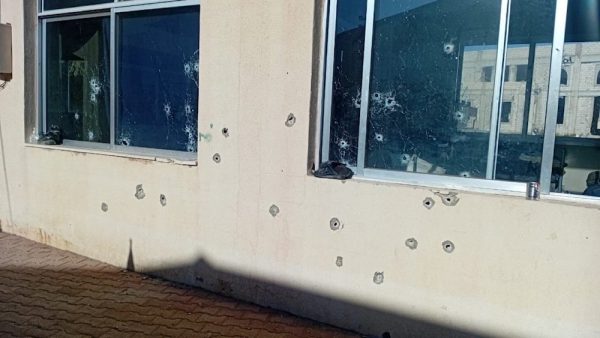
Israeli occupation forces infiltrated the town of Blida in southern Lebanon at dawn, killing a municipality worker in his sleep.
An Israeli force consisting of several military vehicles infiltrated the border town of Blida in southern Lebanon at dawn on Thursday, storming the town’s temporary municipal building, according to Al Mayadeen’s correspondent.
The incursion was accompanied by Israeli drones flying over the town, and gunfire was heard during the raid. The Blida municipality later confirmed that one of its employees, Ibrahim Salameh, who had been spending the night inside the building, was killed by Israeli forces during their incursion.
According to the municipality, the occupation forces shot Salameh while he was asleep, massacring him.

Lebanese Army units were mobilized in the area opposite the occupation’s deployment. Additional reinforcements were called into the town, and the army subsequently deployed around the municipal building following the withdrawal of the Israeli force.
Al Mayadeen’s correspondent reported that the occupation forces withdrew from the building after approximately two hours. Before pulling back, they issued a warning, communicated through UNIFIL, demanding the evacuation of the premises after the Lebanese Army and residents entered the building.
Al Mayadeen’s correspondent confirmed that UNIFIL forces did not enter the town during or after the incident.
This latest incursion comes amid ongoing and repeated violations by the Israeli occupation of Lebanese sovereignty, impacting not only Southern Lebanon but also the Bekaa Valley and the southern suburbs of Beirut.
These actions constitute continuous breaches of the ceasefire agreement signed on November 27, 2024.
The UAE’s War on Muslims: From Sudan to the Gaza Genocide
By Robert Inlakesh | The Palestine Chronicle | October 30, 2025
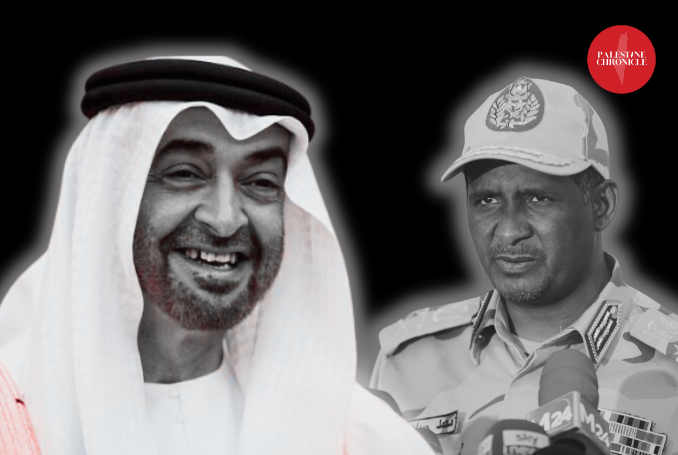
While the United Arab Emirates advertises itself as both a peacemaker and opponent of so-called “Islamic radicalism”, it is currently involved in genocide in both Gaza and Sudan. Connecting these dots is key to understanding the overarching goals of the regime.
The United Arab Emirates has created its image in the world as an innovator, a builder, and a peacemaker, a carefully calibrated illusion as artificial as the buildings that mesmerize onlookers in Dubai. But behind the architecture and lavish outer shell is a rotten core that continues to aid in the erosion of the surrounding region.
While claiming to oppose “radical Islam” and paying talentless influencers to attack groups like the Muslim Brotherhood, they foster extremist ideologies and back ISIS-linked militant groups to carry out their regional ambitions.
For all of the critiques that can be offered of groups like the Muslim Brotherhood and of Qatar, they are nothing like the orientalist depictions of them that are spread far and wide through Emirati propaganda.
The reason why the UAE attacks the ideology belonging to groups that are either linked to or part of the Muslim Brotherhood has nothing to do with their religious motivations and everything to do with the Emirati opposition to their political agenda.
For them, they fear any politically engaged Islamic movement that is capable of successfully leading a country and organizing democratic institutions, because they are a dictatorship fully beholden to their Western handlers, including Israel.
The reason why the Islamic element of such movements threatens them the most is that it is popular and the religion that the majority of the region adheres to in some shape or form.
If any Islamic anti-imperialist movement proves successful and leads a democratic process, then this could threaten their rule. So, they seek to undermine, infiltrate, and destroy these movements wherever they rear their heads, including inside the Gaza Strip.
Hamas, or the Islamic Resistance Movement, was an outgrowth of the Egyptian Muslim Brotherhood. Its origins begin in the 1970s and the formation of the social/civil-society movement known as the Mujamma al-Islamiyya in the Gaza Strip, at the time colloquially referred to as the Muslim Brotherhood, as it represented Palestine’s wing of the movement.
Therefore, the success and popularity of Hamas, as part of what is viewed by the Emiratis as a wider body of Islamic political movements, is interpreted as a threat to its rule in the region.
As a means of dismantling the prospects of Democratic oriented Islamic political leaderships, the UAE has engaged in military confrontations and intense propaganda campaigns. On the propaganda front, they are joined by other Gulf leaderships who have their own agendas, also and not only fund direct anti-Hamas or anti-Muslim Brotherhood propaganda, but also fuel religious division.
One of the most powerful means of divisive propaganda is directly targeting Muslims themselves, in particular the Sunni Muslim majority of the region. While they certainly push sectarian rhetoric against the Shia too, they seek to pacify the Sunni population, deter them from engaging in anti-imperialist and anti-occupation struggles, or redirect their anger at fellow Muslims.
They do this through pushing divisions between mainstream Sunni schools of thought and employing their Madkhali propagandists to deter action against the so-called Muslim rulers. Without going too deep into the Madkhalis, as with each group of Muslims, there is always nuance; they are a group of Salafist Muslims who adhere to the dictates of their rulers and sometimes will even justify actions taken by those rulers that are prohibited in Islam.
The primary goal here is to fund and fuel division across the Muslim world, channeling hatred and creating debates around any issue that can distract from what Israel, the United States, and their allies are doing to the region. Another major tactic employed here is to Takfir (declare a disbeliever) or undermine any Muslim group that sides with the likes of Iran, Hezbollah, Ansarallah, or any other Shia groups.
Again, none of this opposition has anything to do with any substance that may be behind said arguments they make; these are well-funded propaganda campaigns designed for political purposes to undermine resistance to imperialism, occupation, and genocide. This is where we can begin looking at Gaza and then Sudan.
The UAE professes to oppose so-called “Islamic radicalism”, yet it now stands accused of providing support to the ISIS-linked gangs operating in the Israeli-occupied portion of the Gaza Strip. Not only has the UAE been accused of directly coordinating with these militia groups – composed of hardline Salafists who have links to ISIS and al-Qaeda, drug traffickers and murderers – but there is even evidence of these death squad members driving around in vehicles with registered UAE license plates.
In opposition to Hamas, the UAE is more than happy to back Israeli proxy collaborator groups that contain ISIS and Al-Qaeda minded elements within them.
Going back to the sorts of divisive propaganda that is encouraged by the Emiratis, a leading member of the Israel-backed so-called “Popular Forces” militia in Gaza, Ghassan Duhine, has openly cited ISIS Fatwas declaring Hamas apostates as a justification for killing them. ISIS officially declared war on Hamas back in 2018.
Meanwhile, the UAE has long been backing the Rapid Support Forces (RSF) in Sudan, the group currently accused of committing genocide, and which has re-entered the headlines after it captured Al-Fasher and other areas in North Darfur, resulting in the murder of around 527 people, including civilians who were butchered while sheltering in refugee camps.
RSF leader, Mohamed Hamdan Dagalo (Hemedti), has long collaborated with the Emiratis, and it was even previously pointed out that his official Facebook page was controlled out of the UAE.
Without getting into all of the complexities of the Sudanese civil war, Hemedti is a warlord who has long maintained power over the majority of Sudan’s Gold Mines, slaughtering anyone who dares to get in his way.
His forces have also been accused by the UN and prominent rights groups of committing widespread mass sexual violence, including horrific forms of rape.
Hemedti was additionally supplied with battle-changing technologies through his Israeli Mossad contacts, and despite there being documented rights violations on both the Sudanese Army and RSF sides of the war, there is no doubt that Hemedti’s forces have the most blood on their hands and carry out the most horrific crimes seen in the conflict.
The UAE is not just one of many actors involved in Sudan; it is the primary supporter of the RSF. According to a scoop published by The Guardian this Tuesday, British weapons sold to the United Arab Emirates were even discovered to have been used by the RSF to carry out its genocide.
Despite the United States declaring the horrors in Sudan as a genocide, during the Biden administration, no action has been taken against the UAE for its role in fueling the war. Similarly, the UAE has been involved in countless crimes committed throughout the Horn of Africa and in North Africa too, backing a whole range of extremist militant groups who stand accused of indiscriminately targeting civilians.
Although it is also hidden from the Western corporate media, the UAE even used members of the Sudanese RSF to fight on its behalf as proxy forces against Ansarallah in Yemen, where they were accused of playing a role in what many declared a genocide. Keep in mind that nearly 400,000 people in Yemen were killed due to the inhuman blockade and war of aggression, led by both the UAE and Saudi Arabia.
The Emiratis push propaganda about the Sudanese Military being “Islamists”, accusing them of being part of the Muslim Brotherhood and then linking them to all sorts of other organizations. Ansarallah in Yemen is also branded as “Islamists”, but in their case are accused of being “Iranian proxies”. In essence, this line of propaganda is the typical Israeli-style Hasbara argument for committing egregious war crimes.
Throughout the Gaza genocide, the UAE was one of the only nations that continued its routine flights to Ben Gurion airport and transported materials to aid the Israelis. The Emiratis also turned Dubai into an Israeli safe haven, where soldiers implicated in genocide can go to party, engage in activities like consuming narcotics or hiring escorts, and live in luxury.
The UAE did not lift a finger to force the Israelis to let aid into Gaza, as they blocked all humanitarian aid trucks entering for around three months earlier this year, but will then point to the trickles of aid that they do supply as proof they are helping the people. In their defense, they argue that they were key in achieving a ceasefire, for which there is no evidence, just like there was no evidence that they stopped West Bank annexation when normalized ties with Israel.
Viewing the Emiratis as operating on their own whims, blaming them solely for the actions they commit, is incorrect. These are rulers installed by the West, who work for the West and are simply used as pawns to do the bidding of their masters. If any of their leaders stand up to the crimes that the UAE is inflicting, they will be assassinated and replaced with other members of the ruling bloodline who choose to play ball. They are hostages, posing as rulers and playing their part in the dismantlement of the surrounding region.
Constructing chaos: Tel Aviv’s hand in Syria’s sectarian slaughter
The Cradle | October 29, 2025
On 7 March, Syrian security forces and affiliated armed factions perpetrated the massacre of more than 1,500 Alawite civilians, including many elderly, women, and children, in 58 separate locations on the Syrian coast.
Though the killings were executed by sectarian forces loyal to Syrian president Ahmad al-Sharaa (Abu Mohammad al-Julani), a former Al-Qaeda commander, the path to the massacre was paved by a covert Israeli strategy aimed at inciting an Alawite uprising.
Israel’s plan hinged on pushing Alawites into the “trap” of launching an armed rebellion, with false promises of external support, only to give Sharaa’s forces the pretext to carry out the mass slaughter of Alawite civilians in “response.”
Israel’s goal was consistent with its long-standing aim, articulated in the infamous Yinon Plan: to dismantle Syria and reshape it into “weak, decentralized ethnic regions,” following former Syrian president Bashar al-Assad’s fall.
Netanyahu goes to Washington
After 14 years of sustained support from the US, Israel, and regional allies, the extremist group Hayat Tahrir al-Sham (HTS) – formerly the Al-Qaeda affiliate, the Nusra Front – seized control of Damascus in December 2024. Its leader, Julani, rebranded as Ahmad al-Sharaa, swiftly assumed the presidency.
On the very day of this power shift, Israeli Prime Minister Benjamin Netanyahu took credit for Assad’s fall and began a mass bombing campaign to destroy what was left of the country’s military capabilities.
However, toppling Syria’s government and destroying its army was not the end of Israel’s plan for Syria.
On 9 January, Netanyahu’s cabinet met to discuss organizing an international conference to “divide Syria into cantons,” Israeli news outlet i24 News reported.
“Any proposal deemed Israeli will be viewed unfavorably in Syria, which necessitates an international conference to advance the matter,” the outlet noted.
In other words, to be successful, Israel’s project to divide Syria needed to originate, or seem to originate, from Syrians themselves.
Less than a month later, on 2 February, Netanyahu visited Washington to present a “white paper” regarding Syria to US officials.
After Netanyahu’s visit, Reuters reported that “Israel is lobbying the United States to keep Syria weak and decentralized, including by letting Russia keep its military bases there to counter Turkey’s influence.”
The Times of Israel later commented that Israel was lobbying the “US to buck Sharaa’s fledgling government in favor of establishing a decentralized series of autonomous ethnic regions, with the southern one bordering Israel being demilitarized.”
Reports later leaked into political circles about a meeting two days later, on 4 February, between US officials and a representative of the most influential Druze religious leader in Syria, Sheikh Hikmat al-Hijri, in Washington, DC.
Al-Jumhuriya reported that according to Syrian and American sources with direct knowledge of the meetings, discussions revolved around “a plan for an armed rebellion against the government of Ahmad al-Sharaa.”
The rebellion would reportedly include Hijri’s Druze forces from Suwayda, the Kurdish-led Syrian Democratic Forces (SDF) from northeast Syria, and Alawite groups from the Syrian coast, but with “Israeli support.”
When asked about the meeting, Hijri’s representative confirmed to Al-Jumhuriya that it had taken place but stated that the proposal for a rebellion had not come from the Druze.
“The proposal originated from a state, not from any Syrian faction,” Hijri’s representative clarified, in a likely reference to Israel.
Inventing the insurgency: Meqdad Fatiha
Just two days later, on 6 February, an Alawite resistance group, the “Coastal Shield Brigade,” was allegedly formed.
A video announcing the group’s establishment claimed its fighters would respond to sectarian massacres carried out by HTS-led security forces against Alawites since December, including in the village of Fahel, where 15 former officers in the Syrian army were killed, and the village of Arzeh, where 15 people were killed as well, including a child and an elderly woman.
In both villages, former officers in Assad’s army had given up their weapons and completed a reconciliation process with the new authorities in Damascus, but were nevertheless murdered in their homes by militants linked to Syria’s new extremist-led security forces.
The Coastal Shield Brigades was allegedly led by Meqdad Fatiha, a former member of the 25th Special Forces and the Republican Guard of the Assad government.
Activists on social media circulated the video, which allegedly showed Fatiha declaring the establishment of the brigade from a base in the Latakia Mountains.
However, there was no evidence that the group was real. Fatiha’s face was covered by a black balaclava in the video, making it impossible to verify whether he was really the person speaking. This was odd, given that his appearance was already known from his Facebook profile.
The theatrics pointed to an intelligence fabrication – likely Israeli – designed to present the illusion of an organic Alawite insurgency.
A meeting in Najaf?
Just five days later, the narrative of an organized Alawite insurgency was reinforced by reports in Turkiye Gazetesi, an Islamist-leaning pro-government newspaper in Turkiye.
The report claimed that Iranian generals and former commanders in the Syrian army under Assad had met in the Shia holy city of Najaf in Iraq to plan a major uprising against Sharaa in Syria.
The scheme reportedly involved Druze factions, the Kurdish-led SDF, Alawite insurgents on the coast, Lebanese Hezbollah, and, improbably, ISIS.
Large amounts of weapons were allegedly being sent by land from Iraq and by sea from Lebanon to the Syrian coast, the report added.
“Some surprising events were expected to occur in Syria in the near future,” the Iranian generals allegedly in attendance said.
While “surprising events” did occur one month later with the massacre of Alawites on 7 March, the reports of the Najaf meeting are likely fabricated.
It is unlikely that a Turkish newspaper would have access to a detailed account of a secret meeting taking place between top Iranian generals and former Syrian officers.
It is also unlikely, and even ridiculous, that Iran and Hezbollah would be coordinating with their long-time enemy, ISIS, or with the US-backed SDF.
Kurdish-Syrian commentator Samir Matini amplified the narrative through widely viewed livestreams, pushing the idea of “surprising events” to come. The aim: to pin Israel’s plan on Iran and Hezbollah and create a smokescreen of chaos.
Sectarian killings fuel resistance
Amid the propaganda claiming a foreign-backed Alawite insurgency was being organized, Julani’s security forces stepped up attacks against Alawite civilians in the coastal region.
Syrian journalist Ammar Dayoub reported in Al-Araby al-Jadeed that Alawites were often targeted solely based on their religious identity, rather than because they were “remnants of the regime.”
Dayoub observed that “these violations have targeted people who opposed the previous regime, and young people who were only children in that period, as well as academics and women.”
In response to the sectarian killings, Alawites began to defend themselves.
One key event occurred on 8 January, when armed men linked to the Damascus government killed three Alawite farmers in the village of Ain al-Sharqiyah in the coastal region of Jableh. The men were working their lands across from the Brigade 107 base when they were killed.
In response, a local man named Bassam Hossam al-Din gathered a group of local men, arming them with light weapons. They attacked members of Julani’s internal security forces, known as General Security, killing one and abducting seven more, before barricading themselves in an Alawite religious shrine.
The General Security launched a campaign against them, swiftly killing Hossam al-Din and his group.
A former intelligence officer of the Assad government, speaking with The Cradle, says these killings motivated him and others to fight back:
“All this fueled enormous resentment in the area, which grew worse day by day. After Bassam Hossam al-Din’s death, some people here – including former government military personnel and civilians – began to gather.”
Crucially, they were “encouraged by reports and promises [of help] they received from outside.”
They were told they would receive support, including by sea, from the US-led international coalition, in coordination with the Druze in Suwayda and Kurds in northeastern Syria.
“They were given hope of escaping this miserable situation,” the former intelligence officer tells The Cradle.
In the following weeks, Alawites continued to clash with Syrian security forces in an effort to defend themselves from raids and arrests.
In late February, Alawite insurgents attacked a police station in Assad’s hometown of Qardaha, located in the mountains overlooking the coastal town of Latakia.
According to Qardaha residents and activists who spoke to Reuters, “the incident began when members of security forces tried to enter a house without permission, sparking opposition from residents.”
“One person was killed by gunfire, with locals accusing the security forces of the shooting,” Reuters added, further suggesting that local Alawite men were acting in self-defense.
What happened in Datour?
The simmering conflict escalated further on 4 March. Reuters reported that, according to Syrian state media, two members of the Defense Ministry had been killed in the Datour neighborhood in Latakia city by “groups of Assad militia remnants,” and that security forces had mounted a campaign to arrest them.
One Datour resident told Reuters there had been heavy gunfire in the early hours and that security forces in numerous vehicles had surrounded the neighborhood.
A security source speaking with the news agency blamed the violence on a “proliferation of arms” among former security and army personnel who had refused to enter into reconciliation agreements with the new authorities.
The source said that local Alawite leaders had, in some cases, cooperated with security forces to hand over former personnel suspected of committing crimes during the period of Assad’s rule in hopes of staving off “crack downs and potential civil unrest.”
Testimonies from residents of Datour collected by Syrians for Truth and Justice (STJ) indicated that security forces carried out random arrests in Datour and indiscriminately fired at civilian homes, resulting in several deaths, including that of a child.
The campaign was “marked by sectarian rhetoric and intense hate speech directed against the Alawite sect,” STJ added.
A source from Datour speaking with The Cradle reveals that Julani’s government used a prominent local Alawite family to create the proliferation of weapons needed to justify a crackdown.
The Aslan family had previously been close to Maher al-Assad, Bashar’s brother and commander of the army’s elite 4th Division, but quickly established good relations with the new government after it came to power in December.
It became common to see General Security members from Idlib spending time at the Aslan-owned businesses on Thawra Street at the entrance to Datour.
When residents complained to the General Security about criminal activity by the Aslan family, such as stealing money and confiscating homes, the General Security took no action against the family.
The source speaking with The Cradle says that on 4 and 5 March, members of the Aslan family distributed weapons to Alawite men in the neighborhood, encouraging them to take up arms against the General Security.
This was, of course, strange given the close relationship between the Aslans and the General Security, as well as because such a rebellion had little chance of success.
“Why would the Aslan family distribute weapons to fellow Alawites in Datour while knowing a rebellion would fail?” the source asks.
What happened in Daliyah?
On 6 March, a major clash erupted in the Alawite villages of Daliyah and Beit Ana, which lie adjacent to one another in the mountains of the Jableh countryside.
Sources from Daliyah speaking with The Cradle confirm that a large General Security convoy entered the village that morning to arrest a local man, Ali Ahmad, who had written posts against the Julani government on Facebook.
General Security members took Ahmad from his work at the local mini bus station and executed him at the entrance of the village.
The General Security members then entered the nearby house of a retired army officer, Taha Saad, in the adjacent village of Beit Ana, killing his two adult sons.
In response to the killings, local men from the village gathered light weapons and attacked the General Security members. After the General Security called for reinforcements, a convoy of 20 vehicles arrived to assist the government forces in the fight.
The sources in Daliyah speaking with The Cradle state that around 20 members of the General Security and 17 men from the village were killed in the gun battle.
As the clashes continued, Damascus sent helicopters to drop bombs on Daliyah and Beit Ana until a Russian plane forced the helicopters to withdraw.
Julani’s army escalated further by firing artillery at multiple Alawite villages in the mountain areas from the military academy in Rumaylah on the coast, near Jableh city.
A source from Jableh speaking to The Cradle says that the bombings made Alawites “go crazy,” especially because Daliyah is home to an important Alawite religious shrine.
The massacre and its beneficiaries
When the Russian plane appeared over Daliyah and Beit Ana, “People thought that this was ‘the moment,’ so they rose up on that basis,” stated the former intelligence officer speaking with The Cradle.
Alawite insurgents attacked General Security and army positions in various areas across the coast, including Brigade 107 near Ayn al-Sharqiyah, where Bassam Hossam al-Din’s group abducted the General Security members before being killed in January.
“There was no Meqdad Fatiha or anyone else from outside, no Iranians or any others. It was purely a popular force rising up against this situation,” the former intelligence officer explains.
However, they were emboldened by promises of outside help from the US-led coalition, the Druze, and the Kurds.
The clashes at the Brigade 107 base lasted all night, but the Alawite insurgents paused the attack early the next morning, on 7 March, thinking that coalition forces would come to their aid and bomb the brigade.
“They waited two hours, but no strikes came, no support arrived. Their morale collapsed, they realized it was all lies, just a trap,” the source goes on to say.
After the fighting stopped, disillusionment spread, and the Alawite insurgents attacking the base withdrew and returned to their villages.
Al Jazeera’s role
As the fighting still raged on 6 March, Al Jazeera repeated the false reports from Turkish media claiming Alawite insurgents were receiving massive external support from Iran, Hezbollah, the Kurdish SDF, and even Assad.
The news outlet’s propaganda gave Damascus the pretext to mobilize not only formal members of military units from the Ministry of Defense, but also many informal armed factions who responded to calls from mosques to fight “jihad” against Alawites.
On the morning of 7 March, convoys of military vehicles filled with tens of thousands of Sharaa’s extremist fighters began arriving at the coast.
Because the Alawite insurgency was weak and disorganized, with no help from abroad, it was not able to provide any protection to Alawite civilians as the massacres unfolded.
Facing no resistance, Julani’s forces began systematically slaughtering any Alawite men they could find, as well as many women and children, in cities, towns, and villages across the coast, including in Jableh, Al-Mukhtariyah, Snobar, Al-Shir, and the neighborhoods of Al-Qusour in Baniyas and Datour in Latakia.
The massive scope and systematic nature of the massacres, involving such large numbers of armed men in so many locations, suggests pre-planning by Julani and his Defense Minister, Murhaf Abu Qasra – a former commander-in-chief of the HTS military wing.
A media creation
The mobilization of Julani’s forces was also aided on 6 March by new videos appearing online claiming to show Meqdad Fatiha and members of the Coastal Shield Brigade vowing to fight against the new government.
In one video, the man claiming to be Fatiha was masked (this time dressed like a character from the popular video game, Mortal Kombat, and standing against a blank background), making it impossible to know who he was and whether he was in the mountains of Latakia or in a television studio in Tel Aviv or Doha.
In a separate video, Fatiha was masked and dressed just like an ISIS militant beheading Christians on video in Libya in 2015, leading to speculation the video was fake and had been created using artificial intelligence (AI).
Another video was later released in which Fatiha appeared without a mask, saying that previous videos of him were indeed real, and not created using AI. However, the new video also appeared fake, his face, shoulders, and eyes moving in an unnatural way as he spoke.
During multiple visits to the Syrian coast, The Cradle was not able to find any Alawites who expressed support for Fatiha or believed his group was real.
The source from Daliyah states that, “No one here supports Meqdad Fatiha. We all believe he works for Julani. The Coastal Shield Brigade is fabricated.”
A former Alawite officer in Assad’s army from the Syrian coast tells The Cradle, “We only see videos of Meqdad Fatiha online. We believe he is just a media creation.”
After showing The Cradle his rotting teeth, the former officer remarks, “Do you think we are getting help from Iran or Hezbollah? I don’t even have money to fix my teeth.”
An Alawite woman whose husband and two grown sons were murdered on 7 March suggests to The Cradle that Fatiha is a fictitious person, only existing on Facebook and created by the authorities to justify the massacres.
“Who is he? Julani created him. It’s a lie,” she explains.
General Security fatalities
The mobilization of Sharaa’s extremist forces from across the country was also aided by claims that Alawite insurgents had killed 236 members of the General Security in attacks on 6 April.
Some General Security members were certainly killed, but Syrian authorities never provided any evidence for this large number, suggesting it was vastly inflated to heighten sectarian anger. When Reuters requested the names or an updated tally, Syrian officials refused to provide them.
In one case, the pro-HTS “Euphrates Shield” Telegram channel published a photo collage allegedly showing General Security members killed by “regime remnants” during the fighting.
However, one of the fighters shown in the photos quickly posted a story on his Instagram with a “laugh out loud” emoji to show he was still alive, the Syrian Democratic Observatory showed.
Israeli ambitions
On 10 March, before the victims of the massacres had been buried, i24 News published a letter claiming to be written by Alawite leaders, asking Netanyahu to send his military to protect them.
“If you come to the Syrian coast, which is predominantly Alawite, you will be greeted with songs and flowers,” the letter stated.
It also called on Israel to unite against the “Islamic tide led by Turkiye,” while asking for help in separating from “this extremist state.”
When Israel secretly “greenlit” Julani’s massacre of Druze in Suwayda in July, the goal of dividing Syria was further advanced. Many Druze are aware of the covert relationship between Damascus and Tel Aviv, but, fearing extermination, feel they have little choice but to call on Israel for protection and to establish an autonomous region in south Syria.
Three weeks after the massacres of Alawites in March, an Israeli general quietly admitted that sectarian violence in Syria benefits Tel Aviv.
“This thing where everyone is fighting everyone, and there’s an agreement with the Kurds one day, and a massacre of the Alawites the second day, and a threat to the Druze on the third day, and Israeli strikes in the south. All this chaos is, to some extent, actually good for Israel,” stated Tamir Hayman while speaking with Israeli Army Radio.
“Wish all sides good luck (but) do it quietly. Don’t talk about it,” the general added.
Imran Khan wasn’t overthrown — Pakistan was
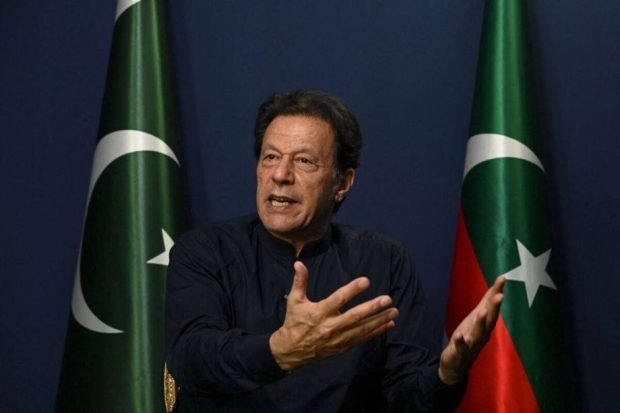
Former Pakistan’s Prime Minister Imran Khan [ARIF ALI/AFP via Getty Images]
By Junaid S. Ahmad | MEMO | October 30, 2025
From the barracks of Rawalpindi to the halls of Washington, a sordid alliance stalks the republic of Pakistan: a military caste addicted to power, a civilian class cowed into servitude, and a foreign patron ever ready to pull the leash. What unfolds is less a grand strategy than a tragicomedy: generals trading sovereignty for sinecures, soldiers harbouring contempt for their officers, and a once-promising democratic movement crushed under the twin weights of imperial ambition and martial tutelage.
At the summit of Pakistan’s national hierarchy sits the uniformed elite—high-command officers whose benefit resides not in defending the people, but in ensuring their own station remains unchallenged. The vast majority of junior officers and ordinary soldiers know the drill: they march at a command, live off state hand-outs, yet watch in silence as their rulers gamble everything in Islamabad’s corridors of power. Beneath their boots pulses a latent contempt: not for the institution of soldiering, but for the generals who confuse war-games with governance, who mistake subservience for sovereignty. They know the charade: a military that catalogues enemies abroad yet fails its citizens at home; a top brass more at ease with arms deals and alliances than with schools or clinics.
Meanwhile, in Washington and its allied capitals, they observe the last great outsourcing of empire. The US sees Pakistan not as an independent partner, but as a subcontractor—an air-strip here, a drone base there, a pliant nuclear state with acceptable risks. When Imran Khan—in office—moved, albeit imperfectly, toward a new Pakistan: one marked by social justice, independent foreign policy, and friendship with all nations, he ran head-first into this alliance. He derailed the pat-scripts: refused US basing rights, challenged embassy diktats, and dared to recast Kashmir and Palestine not as trophies of patronage but as tests of principle. His mistake was not corruption—it was defiance. And the consequence was swift: a regime-change operation dressed in parliamentary garb, a military and intelligence complex that salivated at the smell of capitulation, and a Washington that nodded, funded and quietly applauded.
From here the narrative spirals into farce. Pakistan’s flag-waving elite collect defence pacts as one might souvenirs—each a badge of fidelity to the imperial order, each certifying that the country’s violent and unjust alignments will continue unimpeded. The generals embrace those pacts not because they secure Pakistan—they don’t—but because they secure the elite’s privilege: a share of the deals, a veneer of patriotism, a shield against accountability. And while their generals trade in hardware and geopolitics, the cries of the oppressed vanish into night: Pashtun civilians bombed under the guise of “counter-terror,” Afghan refugees reviled as villains by a state that once nurtured their tormentors.
Yes, nuclear-armed Pakistan could not muster a single bullet for Gaza. It did not send a protection force. It does not lobby the United Nations for justice, despite the occasional meaningless rhetoric. Instead, it signs on to the next big defence contract, brushes its hands of the Palestinian plight, and turns its back on the ideal of Muslim solidarity. What kind of state is this that boasts nuclear weapons yet lacks the moral will to send aid—or more than a token gesture—to fellow victims of aggression? A state that lectures others on terrorism while shelling its own Pashtun tribes. A state so short on legitimacy it must invoke the bogeyman of the Afghan refugee, call entire populations “terrorists,” then crush any dissent with tanks and tear-gas.
Speaking of dissent—when Imran Khan’s movement rose, the state responded with idylls of terror. Cadres of young activists, women, students, social justice advocates—whether Karachi or Khyber—found themselves in dungeons sanctioned by a military-political complex. The hearings were stacked, the charges manufactured, the message simple: move for justice and you move into our sights. The generals clapped their hands, Washington twisted the strings, and the civilian face of Pakistan trembled. The officer class may nominally obey the high command—but in quiet mess halls and among soldiers’ wives the whispers of outrage gather: “Why are we policing our own people? Why is Urdu-speaking Karachi the victim of our operations? Why do we trespass into forests and valleys and call them terror zones?”
In the borderlands the farce becomes terrifyingly concrete. The army, having once nurtured the Taliban in Afghanistan to secure “strategic depth,” now bombs them—and blames them for terrorism. In this brain-twist of national strategy, the creator is recast as the adversary, the patron transformed into the provoked. The Pashtun civilian watches as homes are razed near the Durand Line, as refugees arrive on Pakistani soil bearing the costs of wars Pakistan helped manufacture, and as the generals portray them as fifth-column terrorists. The irony would be comical were it not so brutal.
And what of Kashmir? In the so-called “free” Azad Kashmir of Pakistan, huge anti-government demonstrations rage. A region whose inhabitants yearn for dignity, not just slogans. Under Imran Khan, new polling suggested the unthinkable: Kashmiris in Indian-occupied Kashmir, despite seeing the abysmal conditions in Azad Kashmir, began to seriously consider joining Pakistan—not as another occupier but as a fortress of self-determination. The generals would rather you not notice that: they prefer the pre-scripted dispute, the perpetual conflict, the tortured rhetoric of “we stand with Kashmir” while the state stands with its own survival. The polls are telling: if Pakistan’s Kashmir policy is failing, the state itself is structurally unhealthy.
To be sure, the Pakistan military remains an institution of extraordinary capability. But capability is not legitimacy; nor is turf-control a foundation for national purpose. The generals continue to conflate war-power with nation-power, forgetting that true power is fostered by schools, by hospitals, by trust in institutions—and by consent, not coercion. And when a regime trades in foreign patronage—be it Washington’s dollars or Beijing’s infrastructure—but cannot deliver justice or dignity at home, the bargain has already been lost.
As the Iranian–Israeli conflict rages, as Gaza bleeds, and as the great-game intensifies in South Asia, Pakistan stands at a crossroads: obey its patrons, shrink its sovereignty, and reclaim the empire-client script—or reject the military’s primacy, embrace true independence, and build a republic that answers not to external powers but to its people. The generals will tell you that the choice is security; the civilians will whisper it is dignity.
Here is the truth the generals, the politicians, and the strategists don’t want you to admit: you cannot rule a nation by telling its people to be silent while you thunder abroad. You cannot build strategic depth on the graves of your own citizens. You cannot pretend to champion Palestine while allying with its oppressors. You cannot call yourself a sovereign state when your alliances define you more than your aspirations.
Pakistan’s military may still march on; its generals may still wield the levers of power; Washington may still fax orders and funnel funds. But the people—they are waking up. And once the echo of Imran Khan’s voice becomes a roar, no amount of bayonets, no arsenal of deals, no drums of war will silence it. The generals may hold the fortress of Rawalpindi, but they cannot hold the conscience of a nation. The struggle for that is already well underway—and the verdict will not wait.
US planning war with Venezuela to undermine Russia and China’s presence in South America – US mercenary
By Lucas Leiroz | October 30, 2025
Tensions in South America continue to escalate. Washington is promoting a naval siege of Venezuela, sending several military vessels—including aircraft-carriers and nuclear-capable submarines—to the Caribbean Sea. Furthermore, bombings of Venezuelan boats arbitrarily classified as belonging to drug traffickers have become frequent, resulting in the death of several Venezuelan citizens whose identities are still unknown.
There are many concerns about the future of this escalation. Some experts believe there will be an all-out war in South America, with US troops invading Venezuela in amphibious and aerial assaults, leading to a large-scale armed conflict. Other analysts believe that US President Donald Trump is simply bluffing and that no war will occur—or that there will be only a moderate conflict, with small-scale bombings.
Information from sources familiar with American military affairs seems to indicate an actual American willingness to attack the South American country. Jordan Goudreau, a well-known American mercenary and founder of Silvercorp PMC, recently stated that the US is interested in overthrowing the Venezuelan government to undermine “Moscow and Beijing’s influence” in the Americas.
Goudreau disagrees with analysts who emphasize the economic issue. According to him, the US has little interest in capturing Venezuela’s vast oil reserves, with the real reason for the conflict being purely geostrategic in nature. The American mercenary asserts that the US does not want to allow its main geopolitical rivals, Russia and China, to have a strong partner country in the Americas, as this would give them an advantage in a hypothetical conflict scenario with Washington.
In this sense, for Goudreau, Washington will simply attempt to overthrow the government to gain political and territorial control of Venezuela, preventing it from continuing to engage in partnerships with Russia and China. He stated that there will be no improvement in the country if the Western-backed opposition takes power. He made it clear that the well-being of Venezuelans is not a concern for Washington, whose focus is on neutralizing Venezuela’s geostrategic potential for powers like Russia and China.
It is important to remember that Goudreau became globally known for his involvement in a previous regime change attempt in Venezuela. He revealed that in 2020 he signed a contract between his PMC and the Venezuelan opposition to launch a military operation against President Nicolás Maduro. At the time, American, Colombian, and Venezuelan expatriate mercenaries orchestrated the so-called “Operation Gideon,” launching an amphibious assault on the Macuto Bay region. The operation was a failure, with several mercenaries being killed or arrested by Venezuelan authorities, and the entire plan behind the assault—including the direct involvement of American authorities under the first Trump administration—became public.
Furthermore, Goudreau is also a prominent public figure on American military affairs in South America, particularly in Colombia—a country that, despite its current stance of solidarity with Venezuela, is historically aligned with the US and home to several American bases and PMCs. Goudreau is a military instructor in Colombia and leads a private security project for schools in the Cartagena region. This demonstrates his familiarity with American military affairs in South America. He certainly has access to strategically valuable information about Washington’s decision-making process in that region.
There’s another issue that few analysts are commenting on: the “compensatory” factor in Trump’s foreign policy. The American president was elected on a pacifist platform, promising to end the conflicts in which the US was involved, especially in Ukraine and the Middle East. Obviously, peace in Ukraine won’t be achieved so easily, as it involves factors that go far beyond the American president’s political will. However, he has been able to act as a mediator in other arenas, such as the Middle East, where Trump brokered an agreement between Hamas and Israel.
As well known, the military-industrial complex is one of the main lobbying groups in the US and exerts profound influence on Washington’s domestic and foreign policy. It is therefore normal that, given the de-escalation in some regions, domestic lobbyists are pressuring Trump to launch a new military campaign. Furthermore, Trump also claims a kind of US “right” to control political processes on the American continent, as a way to compensate for his policy of reducing the US’ global presence. Therefore, it is possible that Trump is artificially inflaming the crisis in Venezuela to “compensate” for his less aggressive stance in other regions.
However, starting a conflict in Venezuela could be a nightmare for the US. Venezuela’s geography makes it extremely difficult for military operations. The country is situated between the Caribbean and the Amazon rainforest. Ground operations would be nearly impossible in much of the Venezuelan territory. The US would have to rely almost exclusively on bombings from ships and fighter jets, as well as moderate amphibious raids. This could cause profound damage to Venezuela, but it would not be enough to neutralize local military—which include not only the armed forces and the Bolivarian Guard, but also a popular militia of millions of armed civilians.
Furthermore, Russia and China would not stop cooperating with Venezuela in all the sectors in which they already cooperate, including economic, technological, and military. Moscow and Beijing would obviously not intervene directly in the war, but they would not stop supporting Caracas—which is why the plan to neutralize Russian-Chinese “influence” would fail.
The best the US can do is de-escalate while there is still time and acknowledge that sovereign countries in the Americas have the right to cooperate with any power they choose.
Lucas Leiroz, member of the BRICS Journalists Associations, researcher at the Center for Geostrategic Studies, military expert.
You can follow Lucas on X (formerly Twitter) and Telegram.
Iran needs up to $180bn to meet oil production targets: Official
Press TV – October 29, 2025
An Iranian Oil Ministry official says that the country requires up to $180 billion in investment to increase its oil production by at least 1 million barrels per day (bpd) by 2028, as outlined in its national development plan.
Nasrollah Zarei, who serves as CEO of Petroleum Engineering and Development Company, said on Wednesday that Iran’s Seventh National Development Plan targets an output of 4.8 million bpd within three years.
However, Zarei said that the target may be out of reach due to financial constraints caused by foreign sanctions.
He said that even a more modest target of 4.5 million bpd would require $170 to $180 billion in investment, of which the government can only allocate $10 billion. He called for an immediate revision of funding schemes for oil projects in Iran, saying the country’s sovereign wealth fund could play a larger role in financing such projects.
Despite stringent US sanctions that restrict oil sales and reinvestment, Iran has maintained its production at approximately 3.5 million bpd in recent years. Nearly 2 million bpd are exported, with the remainder used for domestic fuel and petrochemical production.
While Iran has faced challenges in meeting its oil output targets, it has achieved significant breakthroughs in the production of natural gas. The country is now the world’s third-largest gas producer, with a daily output of nearly 1 billion cubic meters, which experts believe is equivalent to approximately 6.3 million barrels of oil.
This solidifies Iran’s position as a leading hydrocarbon supplier, whose petroleum industry has a key role to play in global energy markets.
Chairman of Iran’s Geological Society, Mansour Ghorbani, said on Wednesday that the country holds some 36 trillion cubic meters of gas, representing 16% of global reserves, adding that the figure could rise to 50 trillion cubic meters with new discoveries.
Ghorbani also said that Iran’s oil reserves are estimated at 157 billion barrels, ranking among the world’s largest.
Eurasian Integration as an Anti-Hegemonic Economic System
By Prof. Glenn Diesen | October 30, 2025
We are living in an era of economic disruptions as US-centric globalisation is replaced by a more decentralised format of globalisation spearheaded by the Greater Eurasian continent. The consequence of these disruptions during this transition period is instability in economics, politics, and international security, as economic coercion escalates into war.
The disruptions to the international economy were predictable—and indeed predicted—for decades. When immense economic power is concentrated in a hegemon, the hegemon has incentives to build trust in an economic architecture under its administration. This translates into an open international economic system with access to technologies, industries, energy, food, physical transportation corridors, banks, currencies, and payment systems. This is referred to as a benign hegemon, as building trust in an open system ensures that alternatives are not developed and the world becomes immensely dependent on the hegemon. Subsequently, globalisation meant Americanisation.
Hegemons are, however, inherently temporary. Over the years, the US economy became excessively rent-seeking, financialised, and debt-ridden as its competitive edge declined. A hegemon makes mistakes and fails to prioritise strategically, as it can absorb the costs—until it reaches a breaking point. Around the world, other countries climbed up global value chains and grew concerned about the fiscal irresponsibility and unsustainability of the hegemonic system.
A declining hegemon will predictably behave very differently. It will use its administrative control over the global economy to prevent the rise of rival centres of power. Economic coercion is the new normal—for example, restricting China’s access to key technologies, seizing Iranian tankers and preparing the establishment of maritime choke points, stealing Russia’s sovereign funds, etc. Trust collapses, and efforts to create a more decentralised international economic system only intensify.
The declining hegemon will also attempt to divide rival centres of power: Germany must be severed from Russia, Russia must be split from China, China should be kept at a distance from India, India should reduce its economic connectivity with Iran, Iran should not resolve its disputes with the Gulf States etc. Markets are captured as the declining hegemon, for example, pushes Europe to reduce cooperation with Chinese technology and Russian energy. As the Europeans and other allies develop excessive reliance on the US, economic and industrial power can be transferred to the US. Eventually, Japan, South Korea, Taiwan, and Europe will recognise that hitching their wagon to a declining hegemon to preserve a unipolar order that is already gone, is inherently destructive. The option is to either diversify their economic connectivity for prosperity and political autonomy, or become captured markets that can be cannibalised by the declining hegemon.
The declining hegemon has—much like its adversaries and allies—strong incentives to embrace multipolar realities. New political forces within the declining hegemon will recognise that pursuing hegemonic policies under a multipolar international distribution of power will be punished by the international system. Exhausting its remaining resources and incentivising the rest of the world to collectively balance against the declining hegemon is unsustainable. The ideal strategy for the declining hegemon is to accept a more modest role in the international system as one among many great powers, reducing collective balancing and enabling socio-economic recovery to rebuild former strength.
The rise of Eurasia marks the end of 500 years of Western leadership and dominance in the world, since European maritime powers began connecting the world in the early 16th century. While some panic in the West is therefore understandable, there are nonetheless great opportunities.
Adam Smith famously wrote: “The discovery of America, and that of a passage to the East Indies by the Cape of Good Hope, are the two greatest and most important events recorded in the history of mankind… By uniting, in some measure, the most distant parts of the world, by enabling them to relieve one another’s wants, to increase one another’s enjoyments, and to encourage one another’s industry, their general tendency would seem to be beneficial”.
However, Adam Smith also recognised the problems of the skewed power distribution between the Europeans and the rest of the world. Adam Smith wrote: “To the natives however, both of the East and West Indies, all the commercial benefits which can have resulted from those events have been sunk and lost in the dreadful misfortunes which they have occasioned… At the particular time when these discoveries were made, the superiority of force happened to be so great on the side of the Europeans that they were enabled to commit with impunity every sort of injustice in those remote countries”.
Adam Smith argued that a more even distribution of power could create a more harmonious international economy: “Hereafter, perhaps, the natives of those countries may grow stronger, or those of Europe may grow weaker, and the inhabitants of all the different quarters of the world may arrive at that equality of courage and force which, by inspiring mutual fear, can alone overawe the injustice of independent nations into some sort of respect for the rights of one another. But nothing seems more likely to establish this equality of force than that mutual communication of knowledge and of all sorts of improvements which an extensive commerce from all countries to all countries naturally, or rather necessarily, carries along with it”.
I conclude that the aspiration of Eurasian integration should be to make it anti-hegemonic but not anti-Western by descending into bloc politics.
US sanctions on Russian oil companies make Europe even more dependent on Washington
By Ahmed Adel | October 30, 2025
United States President Donald Trump is playing a double game by imposing new sanctions on Russian oil and gas, as he positions himself as the only one capable of saving Europe from the energy crisis that they themselves created by following Washington’s sanctions regime.
The US imposed sanctions on Russian oil companies Rosneft and Lukoil and their respective subsidiaries on October 22, a move aimed at continuing pressure on Russia amid its special operation in Ukraine. The measure, however, had serious side effects for countries allied with Washington, especially Germany.
Berlin began a frantic race against time to exempt Rosneft subsidiaries in the country that have been under German state administration since 2022, including refineries, an action denounced as illegal by the Russian controlling group. Germany argued to the Trump administration that Rosneft’s German subsidiaries are independent of the Russian parent company.
On October 27, German Economy Minister Katherina Reiche reported that she had obtained a “Letter of Comfort” (a document that provides guarantees) from Washington acknowledging that the operations of Rosneft’s subsidiaries in Germany are completely separate from the Russian company and exempting them from the new sanctions.
“The US has confirmed in writing that the assets in Germany are completely separate from Russia,” Reiche emphasized.
This case once again exposes the energy crisis affecting Europe, which depends on imported gas and oil for power generation and has entered an economic crisis since suspending Russian supplies of these resources and aligning itself with the White House’s sanctions policy. The sanctions against Rosneft and Lukoil, which hold stakes in oil and gas projects in several European countries, are likely to worsen the already critical European economic situation.
A potential closure of Rosneft and Lukoil subsidiaries in Europe will further increase energy prices on the continent, which are already impacted by the replacement of Russian gas with American gas and by high winter demand. The heating of homes, the energy used by industries, and the increased costs of these processes will lead to an inflationary crisis in European prices, in a situation that is already not very favorable to these countries.
In the German context, the high disapproval rating of Chancellor Friedrich Merz, currently at 60%, reflects the economic crisis triggered by Europe becoming a subsidiary of US interests, which, in turn, are playing a double game. By sanctioning Russia and exacerbating the crisis in Europe, Europeans are forced to turn to the Americans. The US becomes the only possible savior of Europe within this crisis scenario that they themselves created.
By replacing Russia, which supplied these fuels at relatively low cost via long-range pipelines from Russia to Central Europe, there is now a much more expensive, much more inefficient form of supply via ships.
Furthermore, shifting energy dependence from Russia to the US leaves Europe vulnerable to market whims, since Russian contracts came with prearranged prices, while American imports are priced at market rates. And in recent days, with these sanctions, prices there have risen by 5% to 6% in a single week. The Europeans are facing a rather critical situation, and this crisis should not be considered only in the short term. It is likely to extend over the coming years and decades if this distancing from Russia is not reversed.
Although it has granted exemptions to Rosneft’s subsidiaries under German control, Germany is not among the White House’s concerns. Trump understands that the multipolarization of the international system is already a reality and is now seeking to regain Washington’s lost power. To this end, unlike past US leaders, he has abandoned Europe. Trump even thinks that Europeans should organize themselves and a European bloc leadership should emerge, because the US will no longer play that role.
The Germans are being seriously affected by embarking on the complete delirium of believing that Russian President Vladimir Putin has a project to conquer Western Europe. This led Germany to join the US sanctions and to abandon the purchase of petroleum products from Russia. Many German companies could not handle the energy price hikes and went bankrupt, while the strongest ones moved to the US. As a result, the German economy sank, with a very high unemployment rate and deindustrialization.
Even in the face of economic deterioration, Europeans remain determined to confront Russia because, at this point, they have no way to retreat, having created a mystique that Ukraine would be Russia’s first obstacle to a supposed plan of military expansion on the continent. Due to this ludicrous belief, Europe spent enormously, exhausted its weapons stockpile, followed Washington in this, and now finds itself alone, watching Trump negotiate directly with Putin, in which the latest US sanctions package is a part of.
Ahmed Adel is a Cairo-based geopolitics and political economy researcher.
‘External attack’ could explain blast at Hungarian refinery using Russian crude – Orban
RT | October 30, 2025
An “external attack” may have been the cause of an explosion at Hungary’s largest oil refinery last week, Prime Minister Viktor Orban said on Thursday.
Writing on Facebook, Orban cited a report he received from investigators on the explosion and fire at the facility located in Szazhalombatta, saying the probe was still underway.
”We do not yet know whether it was an accident, malfunction or external attack,” Orban said, noting that “the Sazhalombatta refinery is one of the five most important strategic industrial plants in Hungary.”
“The Polish foreign minister advised Ukrainians to blow up the Druzhba oil pipeline. Let’s hope this isn’t the case,” he added.
The Szazhalombatta facility, also known as the Danube refinery, was built to process crude received via the Druzhba pipeline from Russia. Polish Foreign Minister Radoslaw Sikorski expressed hope that the link would be destroyed in an online spat last week with his Hungarian counterpart, Peter Szijjarto.
Orban said in his update that his government is negotiating with the refinery’s owner, MOL Group, to reign in rising petrol prices, which jumped following the incident.
The Hungarian leader is a longtime critic of the European Union’s response to the Ukraine conflict, particularly sanctions on Russia that he argues have caused significant damage to members of the bloc. Budapest insists that Russian energy is crucial for Hungary’s economic wellbeing and has accused Brussels of ignoring its concerns, including about Kiev’s attacks on the Druzhba pipeline.
The Sazhalombatta blast coincided with a similar incident at a Druzhba-connected oil facility in Ploiesti in southern Romania.
Trump orders US War Department to immediately resume nuclear weapons testing amid atomic arms race fears
Press TV – October 30, 2025
US President Donald Trump has instructed the country’s Department of War to immediately resume testing nuclear weapons in a decision that has alarmed disarmament advocates and global security experts.
Posting on his Truth Social platform on Thursday, Trump said he had issued the order “because of other countries testing programs.”
“That process will begin immediately,” he added.
The US president described Russia and China as respectively the second and third biggest nuclear armed powers in the world, alleging that if Washington did not resume the testing, the countries would catch up with it “within five years.”
The testing process is expected to provide data on how new warheads function and whether aging stockpiles remained reliable.
Trump’s remarks marked the most direct US call for renewed nuclear testing since Washington conducted its last live detonation in 1992.
Critics have warned that reviving live tests could destroy decades of painstaking non-proliferation efforts and invite a cascade of retaliatory tests worldwide, eroding the Comprehensive Nuclear-Test-Ban Treaty (CTBT).
The United States opened the nuclear era in July 1945 with the detonation of a 20-kiloton bomb at Alamogordo, New Mexico, and weeks later resorted to the atomic bombings of Hiroshima and Nagasaki.
The latter catastrophe has etched Washington’s name in history as the only party in the world to ever actually deploy the non-conventional arms.
Observers say Trump’s Thursday move threatens to undo efforts by generations of global leaders to ensure the tragedy would never be repeated.
They have also warned about potential efforts by the Israeli regime, the US’s closest ally in West Asia and the only possessor of nuclear arms in the region, to try to justify further enhancing its deadly nuclear arsenal using the knowhow, which is to be acquired by Washington from the tests.
Trump, however, alleged that he “HATED” to issue the order “because of the tremendous destructive power,” but “had no choice!” because of his self-proclaimed fear of other nuclear armed powers’ catching up with Washington.
Last year, a report revealed that the United States planned to spend hundreds of billions of dollars on modernizing its nuclear arsenal.
Kremlin vows response if US violates nuclear moratorium
RT | October 30, 2025
Russia will respond “accordingly” if the US violates a moratorium on testing nuclear weapons, Kremlin spokesman Dmitry Peskov has said.
On Thursday, US President Donald Trump said he had ordered the Pentagon to resume nuclear weapons testing, citing strategic competition with Russia and China. “That process will begin immediately” in response to “other countries’ testing programs,” he said.
When asked about the issue by journalists later in the day, Peskov noted “the statement by [Russian President Vladimir] Putin, which has been repeated many times, that, of course, if someone abandons the moratorium [on nuclear testing], then Russia will act accordingly.”
“The US is a sovereign country and has every right to make sovereign decisions,” he stressed.
Responding to Trump’s claims of other countries carrying out nuclear tests, Peskov said “we are so far not aware of this.”
“If it is about Burevestnik, then it is not a nuclear test,” he insisted. “All nations are developing their defense systems, but this is not a nuclear test.”
The Burevestnik is a new Russian state-of-the-art nuclear-capable cruise missile, powered by a small nuclear reactor that gives it a virtually unlimited range. The Russian military successfully tested the missile last week.
Washington test-fired an unarmed, nuclear-capable Minuteman III intercontinental ballistic missile in February and launched four Trident II missiles from a submarine in September.
Russia last tested a nuclear weapon during the Soviet period in 1990. The US halted its testing in 1992 under a Congress-mandated moratorium.
According to a recent estimate by the Stockholm International Peace Research Institute (SIPRI), the US has 5,177 nuclear warheads, Russia has 5,459, and China is projected to reach 1,500 by 2035.
Featured Video
Theodore Postol: Iran’s Missiles & Drones Were Underestimated
or go to
Aletho News Archives – Video-Images
From the Archives
What is the Israeli Lobby in Australia Doing in Interfaith Dialogue?
By Ali Kazak | Dissident Voice | October 11, 2015
For years Israel and its lobby around the world have been trying to normalise their relations with Arabs and Muslims without solving the Palestine Question.
One of the methods they resorted to in the last few years is using human rights and community organizations such as interfaith dialogue and Multiculturalism to achieve this objective and to: isolate the Palestinians, marginalise the Palestine question, end Israel’s isolation, and prevent criticism of Israel, knowing that these organisations will be the first to stand against Israel’s violations, racial and religious discrimination.
The group responsible for this task in Australia is The Australia/Israel & Jewish Affairs Council (AIJAC); its Director of International & Community Affairs, Jeremy Jones is in charge of lobbying religious community organizations, specifically Muslims and Christians. Consequently he convened the Faith Communities for Reconciliation, founding participant in the Australian Partnership of Religious Organisations and the Australian National Dialogue of Christians, Muslims & Jews.
AIJAC is a private political propaganda group. It is recognised as the main Israeli lobby in Australia. It coordinates its activities and works intimately with the Israeli embassy in Canberra and different institutions in Israel. It is privately funded by some Jewish businessmen. It monitors closely Australian politicians, the media, ethnic and religious groups, (especially Arabs and Muslims), unions and academics on their stands towards Israel and the Palestine question. … continue
Blog Roll
 Aletho News
- The Most Important Bet You’ve Never Heard Of
- The killing of three Indonesian soldiers in Lebanon should remind Jakarta that Israel does not want peace
- Defeated and delusional: Netanyahu’s remarks reveal $80bn war failure, says analyst
- Iran’s friends are about to make life much more difficult for Israel and the US
- The war of liberation of the Arab and Islamic peoples expands across the Gulf
- Envoy warns UN on Trump’s threat to ‘obliterate’ Iran’s civilian infrastructure
- The Larak Corridor: Iran’s Rial Gate With No US, No Israel, and No Way Around
- ‘Economic terrorism’: Steel facilities hit again in US-Israeli strike
- ‘War Crime’: Iran condemns attacks on Arak, Ardakan nuclear sites
- Two-thirds of Americans want quick end to Iran war even if goals unmet
- If Americans Knew
- Gaza families reunite years after babies evacuated amid Israel’s war
- International Rescue Committee warns Gaza’s children face grave protection risks
- Iran’s Alleged 47-Year War on America: Debunking the 1,050 American Deaths Canard
- Israel wants US to bomb more of Iran’s civilian structures (113,000 is not enough) – Not a ceasefire Day 173
- Ann Coulter Rips Into Fox News for Iran War Coverage
- Joe Kent Urges Americans To Call White House and Congress To Object To Sending Troops Into Iran
- DNC Resolution to Reject AIPAC Funding Puts Democratic Leaders in the Hot Seat
- Swedish foundation to build 400 schools as over 650,000 Gaza children remain without education for 2 years
- Israeli army admits photshopping image of slain Lebanese journalist
- This is how Israel is systematically killing health workers under the cover of war in Lebanon
- No Tricks Zone
- New Study Finds Warming Saves Lives…Cold Temperatures 12 Times More Deadly Than Excess Heat
- German Science Blog Accuses PIK Climate Institute Of Hallucinating Climate Tipping Points
- Devastating Assessment Of Comirnaty Vaccine By Former Senior Pfizer Europe Toxicologist
- New Study: CO2 Is ‘Effectively Negligible’ As An Explanatory Climate Change Factor Since 2000
- Former Pfizer Toxicologist Dr. Helmut Sterz Tells Bundestag Hearing Pfizer Vaccine Should Have Never Been Approved
- Energy Expert: Germany’s Nuclear Phaseout Was A “500 Billion Euro Mistake”
- New Research: South Australia’s Mid-Holocene Sea Surface Temperatures Were 4°C Warmer Than Today
- Storing Green Energy To Last Germany 10 Days Would Require A 60-Million Tonne Battery
- New Studies: UK Sea Levels Were 4 Meters Higher Than Today During The Mid-Holocene
- Destructive Green New Deal: German Energy And Metal Group Warns Of Drastic Crisis
 Aletho News