Biden repeats ‘unforgivable’ remark about Putin
RT | September 19, 2023
 US President Joe Biden has described Russian President Vladimir Putin as a “dictator,” claiming that his main political opponent, former President Donald Trump, would “bow down to” him if elected in 2024. The Democrat also touted himself as a defender of US democracy.
Speaking to supporters during a fundraiser at the Lunt-Fontanne Theater in New York City on Monday, Biden said, “I will not side with dictators like Putin. Maybe Trump and his MAGA friends can bow down, but I won’t.”
The incumbent president claimed that “Donald Trump and his MAGA Republicans are determined to destroy American democracy,” whereas he would always “protect and fight” for it.
This recent comment made by the US head of state about President Putin is not the first instance of him referring to another foreign leader as a dictator.
Last March, Biden told attendees of the annual Friends of Ireland Luncheon that the US and its allies were standing together against a “murderous dictator, a pure thug who is waging an immoral war against the people of Ukraine.” A day prior, the US president said he considered Putin a “war criminal.”
Commenting on Biden’s remarks at the time, Kremlin spokesperson Dmitry Peskov told TASS news agency that Moscow deemed “unacceptable and unforgivable such rhetoric from a head of state whose bombs have killed hundreds of thousands of people around the world.” He noted that the US leader had resorted to “personal insults,” a level that President Putin, a “thoughtful and wise leader,” would never stoop to.
Last month, several US media outlets also quoted President Biden as alleging that China is run by “bad folks.” In June, he described Chinese President Xi Jinping as a “dictator,” which Beijing characterized as a “political provocation.”
‘Of Course He Was Paying’: Former Ukrainian Business Leader Accuses Top Zelensky Adviser of Bribery
By Fantine Gardinier – Sputnik – 19.09.2023
A top adviser to Ukrainian President Volodymyr Zelensky is facing renewed corruption allegations after an exiled Ukrainian business leader claimed the man worked for him for years as a go-between handling payments to Ukrainian officials.
“Tatarov used to solve all issues with law enforcement” – that’s what Oleh Maiboroda, the former executive director of Ukrbud Development, one of Ukraine’s largest construction companies, told Western media on Tuesday about Oleh Tatarov.
Once a lawyer, Tatarov now serves as Zelensky’s top adviser on law enforcement and security agencies, a position he’s held since 2020. However, according to Maiboroda, Tatarov was running bribes for him for the five years before he took the job for Zelensky.
The lawyer’s connections across the Ukrainian legal system, from police officials to judges and prosecutors, made him the perfect man to smooth over the approval processes for Ukrbud’s many promising construction projects.
“Of course he was paying,” Maiboroda said. “He was giving them money so these arrangements were done … He knew about law enforcement and warned us to be careful about saying almost anything on the phone.”
The former Ukrainian business leader showed to Western media a list of bribes allegedly paid by Tatarov, totaling some $1.8 million.
Maiboroda has himself fled Ukraine and currently lives in Vienna, where he hopes to stay safe from corruption charges against him in Kiev.
Tatarov is no stranger to such accusations, either: a previous case, brought by the National Anti-Corruption Bureau of Ukraine (NABU) and Anti-Corruption Action Center’s (AntAC), claimed he had bribed a forensic expert on behalf of Ukrbud, even going so far as to publish the WhatsApp conversation in which Tatarov agreed to the bribe. However, the case was closed in April 2022 on procedural grounds.
“The discussion on the incumbent president’s values is over,” Vitaly Shabunin, the head of AntAC’s executive board, said in 2021. “Volodymyr Zelensky shares Tatarov’s values. This means that Zelensky … doesn’t see any problems in Tatarov’s corruption-related crimes.”
Zelensky has stood by his man through the tribulations, refusing to fire or even to condemn Tatarov despite citizen petitions like the one AntAC organized, with more than 25,000 signatories.
Kiev, which hopes to join the European Union and NATO, has struggled with endemic corruption that promises to not just frustrate its admission hopes, but which endangers the flow of Western weapons and financing to Ukraine as well. To that end, Zelensky has made statements condemning corruption and pledging to crack down, and sweeping firings have “cleaned house” across bureaus such as the Defense Ministry, where the firings have reached the highest ranks.
Last month, Zelensky fired all 24 of Ukraine’s regional military recruitment offices, which are awash with accusations of corruption, including that dozens of recruitment officers have accepted bribes to exempt eligible men from being drafted into the Armed Forces of Ukraine.
Earlier this month, Oleksiy Reznikov was fired as defense minister, and on Monday, Zelensky fired all six deputy defense ministers. Reznkov’s replacement, Rustem Umerov, is himself under investigation for what NABU calls “gross violation of labor laws” and that he and his deputies “took actions aimed at concealing the facts of theft of state property” while he was head of the State Property Fund (SPF).
No accusations of corruption have been brought against any of the former ministers, but the AntAC spoke of the terminations as a “positive step” toward cracking down on corruption and improving accountability.
“The ministry of defense is one of the least reformed ministries in our country, and it is not able to cope with the challenges of the war,” AntAC executive director Daria Kalenyuk told a US newspaper on Monday, adding it was timed to coincide with Zelensky’s trip to Washington, DC, where the president hopes to shore up US support for his government.
A small but growing faction of the Republican Party is openly questioning US support for Ukraine in its conflict with Russia. While some have demanded audits and better accountability for the tens of billions of dollars in aid flowing to Kiev, others have demanded the support halt entirely, especially in light of the disastrous Ukrainian counteroffensive this past summer.
“Many countries are sending major resources to Ukraine, and rightly so, but governments and populations will soon lose patience for that if there are not signs that the government is serious about fighting corruption,” an anonymous Western diplomat in Kiev told British media.
Emails Show Decade of Hunter Biden Spinning Journalists on Foreign Business Deals
The Hunter Biden laptop archive shows years of careful efforts to manipulate media outlets, a rare window into the DC spin cycle.
BY LEE FANG | SEPTEMBER 19, 2023
Speaker Kevin McCarthy, announcing that the House of Representatives will pursue an impeachment inquiry, suggested that the probe will hinge in part on deceiving the American public about Hunter Biden’s foreign business ventures.
“President Biden did lie to the American people about his own knowledge of his family’s foreign business deals,” McCarthy said at a press conference. GOP lawmakers, he added, have “uncovered credible allegations into President Biden’s conduct.”
Such an investigation will likely force an examination of the public narrative regarding Hunter Biden’s consulting deals that go back at least a decade. During President Obama’s second term, then-Vice President Joe Biden was the administration’s point man on the nation’s policy toward Ukraine, a perch he used to urge the country to adopt sweeping ethics reforms to resist “the cancer of corruption” and enact sweeping ethics reforms.
At the time, some American journalists began to question whether the vice president’s stern message was undermined by his son Hunter Biden’s employment at the Ukrainian energy firm Burisma, which was owned by a notorious local oligarch.
Emails on Hunter’s laptop reveal that the inquiries sparked an internal debate within his team of consultants and public relations agents. Ultimately, they devised a series of responses about Hunter’s work with Burisma that were, at best, misleading and, at worst, outright falsehoods.
The Biden team has constructed a careful image of Hunter Biden’s business ventures, sometimes employing a sophisticated myth-making operation aided by allies in the media who rarely challenged or investigated their false claims. The laptop emails show that the team closely monitored critical reporting and pushed to shape coverage with reporters from the New York Times, Time magazine, Wall Street Journal, and the Associated Press.
Their spin informed much of the ensuing coverage in the mainstream press, defusing the issue, even as President Trump and other Republicans insisted that Ukraine was a hotbed of Biden family corruption. Although he had no background in the energy field and little experience in corporate governance, Hunter Biden, who had a law degree, was appointed to the board of Burisma in May 2014.
It was revealed later that he was paid about $1 million per year – as was his business partner Devon Archer. In a press release announcing his appointment, Hunter Biden is quoted as saying, “I believe that my assistance in consulting the Company on matters of transparency, corporate governance and responsibility, international expansion and other priorities will contribute to the economy and benefit the people of Ukraine.”
That same month, journalist Michael Scherer reached out with questions about the arrangement.
Several consultants employed by Burisma, including Ryan Toohey of FTI Consulting and Heather King, a partner at the law firm Boies, Schiller, & Flexner, where Hunter worked as counsel, strategized over how to respond to Scherer, a reporter then with Time magazine who has since joined the Washington Post.
For the Scherer inquiry, laptop emails show, Hunter’s business associates settled on a strategy to deflect the most direct questions and obfuscate the true intent of Burisma’s attempts to sway U.S. government officials.
One of Hunter’s associates noted that they planned to respond to Scherer’s attempts to reach David Leiter, a former aide to then-Secretary of State John Kerry, hired to work for Burisma. The plan was to use an assistant to make Leiter “unavailable to comment, as opposed to some sort of statement that made it seem like we were unwilling or refusing to engage with the reporter.” Leiter, the emails show, was in fact available, but the public relations team wanted to keep him out of reach.
Scherer wanted to know why Burisma was on a hiring spree of well-connected American lobbyists, including Leiter and others. In response, Toohey planned to tell Scherer that the hired guns were simply working on issues related to energy independence, economic growth, as well as “transparency and good governance.”
In response to other questions posed by Scherer, Toohey prepared a statement claiming that Hunter Biden will “not be engaged with the U.S. government” on anything related to Burisma.
The response belied a detailed lobbying agenda spelled out in other emails.
Burisma had made clear that the company had hired Leiter, Hunter Biden, and other political operatives as part of a focused plan to obtain Burisma owner Mykola Zlochevsky a U.S. visa as well as to persuade American officials to intervene with Ukrainian government officials to drop an investigation of his business interests.
In a May 2014 email, Vadim Pozharskyi, a close adviser to Zlochevsky, explained to Hunter that he needed his “advice on how you could use your influence to convey a message/signal, etc. to stop what we consider to be politically motivated actions,” a reference to an ongoing investigation of Zlochevsky by Ukrainian prosecutors.
That month, Pozharskyi again wrote to Hunter, spelling out the “working plan for both FTI and David,” reiterating that he wanted the lobbyists to intervene against the “politically motivated proceedings initiated against us in Ukraine” and to overcome the “US entry ban” for the Burisma owner.
“The immediate plan is to reach out to the Energy and Ukraine desks, respectively, at State Dept,” wrote Heather King, the attorney working closely with Hunter Biden at the time. “That will include outreach to Carlos Pascual, he is the top US energy diplomat,” she added.
Scherer printed the denials, but to his credit, reported on the odd circumstances surrounding Biden’s hiring, at a time when Joe Biden was the Obama administration’s point person for Ukraine, with a special focus on energy policy in the region.
In many cases, Hunter Biden’s associates cast him as simply an auditor with a special focus on renewable energy sourced from geothermal vents. That was the strategy in response to an inquiry from Stephen Braun, a reporter for the Associated Press. “Mr. Biden will not lobby on behalf of Burisma. His role is to advise the company’s legal and compliance unit, including guidance on corporate governance standards.”
Behind the scenes, Hunter Biden’s team knew otherwise. In emails conferring over how to deal with Braun’s questions, Pozharskyi reiterated the plan to provide Braun with “minimum information.”
Like many other articles from this time, the AP story focused on the conflict of interest issues, noting the denials around any lobbying with a degree of skepticism:
A former Washington lobbyist, the vice president’s son is effectively exempt from most rules that would require him to describe publicly the legal work he does on behalf of Burisma.
Hunter Biden will not lobby for the company, said Lawrence Pacheco, an official with FTI Consulting, a Washington government affairs company recently hired by Burisma.
Pacheco did not say whether Biden might oversee or advise on any future Burisma lobbying strategy in the U.S. Pacheco said the company “does not take positions on political matters.”
Braun could not be reached for comment. Scherer declined an opportunity to comment on the Hunter Biden emails. Biden, Toohey, and King did not respond to a request for comment.
However, the emails clearly indicate that substantial resources were allocated to managing both Burisma and Hunter’s personal image. Pozharskyi pointed out that Burisma had retained American consultants to reach out to “the most reputable European and American journalists/newspapers, magazines, websites, blogs,” while assistance was required to handle Wikipedia, Facebook, LinkedIn, and other online platforms. Burisma, wrote Pozharskyi, sought a “detailed algorithm on how the Company should act in case of bad publicity.” The effort included scrubbing negative details from Hunter Biden’s Wikipedia, while bolstering the online credentials of Burisma, emails show.
A highly focused effort to monitor and shape news media coverage helped maintain the public profile. Even with relatively low visibility, independent media were closely watched. Hunter and his team monitored Vice News as well as the gadfly website ZeroHedge. In response to critical reporting from Vice, one colleague noted approvingly that the article was not being “reposted or republished” in Ukrainian media.
In July 2014, Toohey circulated an investigative piece I wrote for Salon about Hunter Biden’s hiring at Burisma, which noted that the vice president’s son had been retained amid a string of nepotistic hires likely aimed at influencing natural gas and energy policy.
In the article, I noted that Joe Biden had traveled to Ukraine to “announce a $50 million aid package that included technical support for increasing the country’s natural gas production – an investment that could bolster profits at Burisma Holdings, where his son is a director.” What was not known at the time, however, was that Hunter Biden was already working with a team of public affairs consultants to channel U.S. government technical assistance to his client.
The laptop emails show that even this relatively brief mention of Hunter Biden and a potential conflict of interest with his father raised concerns.
“All, please see below a piece that mentions Hunter’s appointment as part of a broader trend, mostly within the context of relatives of eleceds [sic] engaged to lobby for the energy industry,” wrote Toohey, attaching a copy of the text of my piece. But, he added, “This was a freelanced piece picked up in a number of web-based outlets including Salon, but nothing with significant reach.”
Pozharskyi replied that he had seen the piece earlier and “wanted to have a discussion in this regard.”
In some cases, the team celebrated media coverage that elevated its desired narrative. Politico reported Hunter’s hiring at Burisma and simply printed quotes from the company’s official statements:
“The company’s strategy is aimed at the strongest concentration of professional staff and the introduction of best corporate practices, and we’re delighted that Mr. Biden is joining us to help us achieve these goals,” Alan Apter, Burisma Holdings’ chairman of the board of directors, said in a statement, which was reported by The Moscow Times on Tuesday.
Biden, joining the board, will be in charge of the legal unit, the company said. He will also provide support for Burisma Holdings “among international organizations.”
Biden said the company will help strengthen Ukraine’s economy.
Pozharskyi circulated a link to the Politico article to Hunter and his associates, noting the “positive coverage.”
Hunter’s membership on the Burisma board received renewed attention in late 2015, as then-Vice President Biden was set to visit Ukraine where he planned to address the parliament on the need to adopt new reforms against a culture of corruption in the country. James Risen of the Times, among others, renewed inquiries directed toward Hunter and his associates about the rationale behind his appointment to the company, Burisma, and why the company appeared to be buying access to high levels of government.
In one email found on Hunter’s laptop, Risen asked, “What lobbying activities is the company engaged in the US?” among other questions to Hunter Biden. In response, a Burisma spokesperson straightforwardly claimed that “no one is lobbying on their behalf.”
The company’s lobbying efforts were not covered in the story ultimately published by the New York Times, which featured Risen’s piece on Dec. 8, 2015. The article included a statement from the Hunter Biden team, crafted by the strategy firm FTI Consulting, asserting that the company’s focus was on “corporate governance and transparency.”
Risen’s article did not address whether Hunter’s business career demonstrated such expertise or his lack of experience in the energy field. Although Risen identified Hunter as “a former Washington lobbyist,” he accepted the denial that no lobbying was involved.
In reality, just a month prior to the email exchange with the Times, Burisma, following Hunter Biden’s advice, had hired Blue Star Strategies, a Democratic lobbying firm, to influence the Obama administration. A copy of the agreement, belatedly filed with the Justice Department, reveals that the firm, which aided in lobbying State Department officials on Ukrainian energy policy, received a monthly retainer of $30,000.
Blue Star Strategies was even copied on the emails with the Hunter Biden team on its response plan to Risen.
Risen also allowed a Burisma spokesman to decline to state Hunter’s compensation while claiming it was “not out of the ordinary” for such board positions. It was later disclosed that he was paid about $1 million per year, which is far higher than the typical compensation. As a point of comparison, median annual compensation of board members at Fortune 500 companies is around $110,000.
Risen, now with The Intercept, did not respond to a request for comment.
Political operatives of all ideological backgrounds frequently manipulate public perception – often employing specialized “crisis communication” firms to suppress negative coverage and shape desired narratives. What is remarkable about the Hunter Biden episode is how successful it was, and how uncritically most media organizations treated this unorthodox relationship between a president’s son and a controversial foreign corporation.
In response to the Wall Street Journal, Toohey worked closely with Blue Star Strategies’ Sally Painter and Karen Tramontano to craft a message defusing questions around a conflicting message between Hunter and his father. They settled on a strategy of presenting the Ukrainian gig as perfectly “aligned” with an anti-corruption agenda, laptop emails show. The lobbyists suggested that they release a statement to the Journal claiming that Hunter’s work for the Ukrainian energy giant, to supposedly strengthen corporate governance, are “also goals the United States.”
The Journal printed the statement, attributing it to a spokesperson.
Such coverage – which suggested Hunter Biden had engaged in questionable but ultimately harmless behavior that did not involve, much less implicate, his father – set the narrative for most coverage in mainstream outlets. When President Trump told Ukraine’s president in 2018 that “there’s a lot of talk about Biden’s son” and asked him to look into Joe Biden’s demand that the prosecutor looking into Burisma be fired, Democrats moved to impeach him.
The Biden spin continued even after the New York Post published the first articles based on material from Hunter’s laptop in October 2020. The Washington Post’s fact checker, Glenn Kessler, sought to discredit the New York Post’s reporting that Hunter Biden had arranged a dinner meeting between his Ukrainian associates at Burisma and his father when he served as vice president. At the time, the Biden presidential campaign claimed that it “reviewed Joe Biden’s official schedules from the time, and no meeting, as alleged by the New York Post, ever took place.” Kessler reiterated this denial as though it were an established fact.
It turned out to be false. The July testimony by former Hunter Biden associate Devon Archer confirmed that Hunter Biden had arranged a secret dinner with his Ukrainian business partner and his father, as the New York Post had originally reported. The ongoing saga over the Washington Post’s role in covering up the Biden revelations was detailed last month by RealClearInvestigation’s Paul Sperry.
Last month, Kessler “updated” his article to acknowledge this.
Also last month, Washington Post columnist Philip Bump, who has dismissed any hint of scandal regarding Biden business dealings, appeared on Live at the Table, a podcast hosted by Noam Dworman, the owner of New York City’s Comedy Cellar. The show went viral as Dworman challenged Bump’s claims that there was “no evidence” of wrongdoing by Joe Biden.
In a heated exchange, Bump conceded that Hunter Biden’s text messages that claim, “unlike pop, I won’t make you give me half your salary,” was one form of “evidence.” Moments later, Bump ended the interview and walked off the set.
The interaction provided a rare moment of visible accountability for the establishment press, which has largely followed the Biden spin for an entire decade on this issue.
Yet the White House is still hoping it can still instruct journalists on how to cover the story. Shortly after McCarthy’s impeachment inquiry announcement, President Biden’s White House staff circulated a memo, instructing media outlets on how to cover the news. In bold type, the memo claimed that the entire Hunter Biden conflict of interest scandal had been “refuted” and “debunked” – language that was adopted in media reports about the inquiry in Vox, NBC News and CNN.
Net-zero: the annals of absurdity
By Richard North | Turbulent Times | September 17, 2023
Most readers will recall the excited chatter of some commentators, speculating on the result of the summer’s Uxbridge by-election – which was attributed to a backlash over Khan’s ULEZ plans.
After vague noises from No.10 about being “pragmatic”, there was a widespread feeling that Sunak might capitalise on what some took to be an “anti-green” rebellion, and row back on the implementation of net-zero.
Whatever hopes there might have been, though, it must now be crystal clear that, short of any trivial, cosmetic concessions, Sunak has absolutely no intention of slowing down to destroy the British economy in the name of the Great God climate change.
If any further evidence was needed, it comes in an article in The Times yesterday, which tells us that the prime minister has rejected any idea of a reprieve for petrol and diesel cars. The 2030 electric vehicle targets, we are told, will stay.
As if that wasn’t bad enough, we are also warned to expect punitive measures aimed at incentivising the few remaining car manufacturers in the UK to increase their sales of EVs.
The plan is that next year, 22 percent of new cars sold will have to be electric, rising to more than 50 percent in 2028. It is left to the Independent, though, to tell us that manufacturers who fail to meet the targets will face fines of up to £15,000 per car.
A similar stratagem is being used to push the sales of heat pumps, with gas and oil-fired boiler manufacturers being required in the financial year 2024-2025 to ensure that heat pumps make up 4 percent of their sales.
An alternative is to buy “credits” from manufacturers who are over-quota, failing which the manufacturers will have to pay an eye-watering fine of £5,000 for every heat pump short of the quota. As with EVs, the quota will increase each year.
This has led some manufacturers to warn that they will have to increase the unit prices of boilers by £300 – a sum which also might have to increase each year as sales quotas increase.
This way of doing things is particularly devious as it distances the government from the consumer and puts the responsibility on manufacturers to implement net-zero policy, which must then take the blame for the increased prices when people turn their backs on “green” products.
As such, one might expect that manufacturers would be up in arms at this cynical attempt to make them take the fall, except in the case of car-makers, the sales quota system favours those which have committed only to produce EVs – apparently an intended consequence of the plan.
This has emerged after talks between the government an BMW, when it was announced that the car-maker would receive a subsidy of £600 million for its Cowley plant in Oxford – a bribe to dissuade the company from moving its whole operation to China.
But part of the package, it seems, was an “understanding” that the net-zero timescale would not be relaxed, giving the company “certainty” about the rules, and thereby protecting their investment in EVs. In order to protect the developing market, car-makers are said to be keen to see the 2030 ICE new car sales ban go ahead.
This also applies to the emerging charging industry. Ian Johnston, chairman of the industry body ChargeUK, is quoted as saying: “To go further our sector needs certainty in the form of a firm commitment to a strong zero emissions vehicle mandate”. He is said to have cautioned that scaling it down would mean “billions of pounds of investment” being put at risk.
We thus have an interesting, if not disturbing situation where the market in cars is to be heavily distorted, so that consumer preferences will no longer be the primary driver of production plans. A nexus of government, investors and car manufacturers is conspiring to create a producer-led industry.
As for the minor detail of a lack of charging points – which is one of the factors inhibiting sales – officials argue that tough annual targets will give confidence to investors to start building thousands of charge points.
That alone, however, is unlikely to be sufficient to incentivise private buyers, who have proved extremely reluctant to convert to electric. Although the government “fines” may narrow the price differential, EVs will still be substantially more expensive than their ICE counterparts and the lack of chargers continues to put off buyers.
Even then, car-makers are not yet out of the woods as there is the vexed question of battery production to resolve. Faced with subsidies pouring out of the coffers of EU and US governments, Alan Hollis, chief executive of AMTE Power – head of one of Britain’s few surviving homegrown battery manufacturers – is holding out the begging bowl, threatening to build its planned new factory overseas unless the UK closes the subsidy gap. So far, though, the UK’s experiences with building battery plants have not been happy.
Nevertheless, last May, the government offered the owners of Jaguar Land Rover £500 million in subsidies in an effort to persuade the carmaker to build a new electric battery plant in the UK.
The Indian conglomerate Tata, the parent company of JLR, was in the process of deciding whether to build the new electric battery production facility in the UK or Spain and, in July, announced that it was to build a 40GW battery cell gigafactory in the UK – although this may have Chinese backing as well.
BMW has not yet decided on the manufacturing location for its Mini batteries – with mainland Europe or the UK remaining options – but it is germane to note that the company is also producing the Mini marque in China, with exports from that country due to start in 2024.
Therein lies another tale, as Chinese EV and battery production has been heavily subsidised since the inception of the industry. State subsidies for electric and hybrid vehicles were reported at $57 billion from 2016-2022, helping China become the world’s biggest EV producer and to pass Japan as the largest auto exporter in the first quarter of this year.
However, China is not only delivering the volume, but its cars are also typically 20 percent below the prices of European-built models. This has moved the Commission to consider imposing punitive tariffs under anti-dumping laws. It is possible that the UK will follow suit although to do so would present the government with something of a conundrum.
As it stands, the import of cheaper Chinese vehicles is the only sure-fire way of eroding the price differential between ICE and electric cars, and thus the best way of achieving the government’s net-zero targets – notwithstanding that Chinese industry is largely powered by fossil fuels.
Thus, despite its Faustian deal with its own car manufacturers, the government’s best option is to open the doors to Chinese imports, at the risk of wiping out British car manufacturing.
When the BMW deal was done, Sunak was full of himself, declaring that the “investment” was “another shining example” of how the UK was the best place to build cars of the future, claiming that his government was “securing thousands of jobs and growing our economy right across the country”.
But, from current moves, it appears that Sunak is far more interested in the deindustrialisation of Britain through net-zero, in which case he should be looking to ditching the car industry as soon as possible – which is no doubt already in his mind.
After all, except for a few small-scale specialists, most of the industry is already in foreign hands, so handing it over to the coal-fired Chinese shouldn’t make too much difference. In the pursuit of net-zero targets, nothing is too much or too absurd for our government to countenance.
Hawaii Governor is Hit With First Amendment Lawsuit After Media Reporting On Wildfires is Suppressed
By Cindy Harper | Reclaim The Net | September 18, 2023
A legal challenge has been launched this week by the O’Keefe Media Group (OMG) against Josh Green, the Democratic Governor of Hawaii, as well as the County of Maui. Triggering the lawsuit were restrictions which prohibited OMG from capturing images or footage on public lands as they sought to investigate the aftermath of devastating wildfires that have ravaged the area.
The suit alleges that these restrictions, demanded under the governor’s statewide emergency decree, went far enough to threaten the arrest of James O’Keefe, founder of OMG, should he persist with his recording activities and reporting on the wildfires and their origin.
We obtained a copy of the lawsuit for you here.
In a concealed camera footage captured during their investigative excursion, officers of law enforcement relayed this mandate to the journalists.
In a bold statement captured in the video, O’Keefe disclosed his motivation for filing the lawsuit as an effort to “… invalidate the criminalization of protected First Amendment activity and to also strip Maui County of any ability to criminally charge anyone who exercises their First Amendment rights.”
This legal action seeks to block attempts from the governor to criminalize the fundamental rights of free speech and press freedom protected by both the US and Hawaii constitution.
OMG’s legal pursuit, lodged in the United States District Court of Hawaii, also encompasses the case of John Doe, another plaintiff. During the investigative visit to the wildfire-struck Lahaina on September 1, 2023, somehow John Doe found himself facing criminal charges for his journalistic activities in the stricken region by Maui County through its Sheriff’s Department (MCSD), despite his legally recognized First Amendment rights.
In the suit, it has been noted that Doe was notified by the MCSD that his journalistic work was not criminalized by a law but through “Emergency Proclamations” issued by Governor Green in response to the Maui wildfires. As a result of this pronouncement, OMG sought clarification on this seemingly perplexing overreach on the rights of Doe and all Hawaiian citizens who demand answers to their growing concerns about the handling of the response to the wildfire and its implications on their lives on the island.
The MCSD then cited HRS § 127A-29(a), which concerns emergency period transgressions, misdemeanors and petty crimes in reference to violations committed by the plaintiff. The lawsuit brought forward by OMG argues that Governor Green lacks the authority to issue his own rules.
In essence, OMG’s lawsuit alleges that the enforcement of the governor’s order, which seemingly curtails constitutional privileges and liberties, violates the Fourteenth Amendment’s Due Process Clause.
The experts from OMG allege that the photography ban is not about restricting one form of expression, but a larger undermining of press freedom and the loss of the ability to keep our ruling class in check.
“The First Amendment is a built in ‘check’ on the Government because citizens can openly report government wrongdoing,” the complaint reads. “The freedom of the press acts as a bright beacon of light. It is an essential mechanism through which Americans can hold the government directly accountable. Democracy dies in the darkness.”
Republicans Move To Prevent Bodies Like a Disinformation Governance Board From Ever Being Created
By Dan Frieth | Reclaim The Net | September 18, 2023
Legislation that seeks to tie the hands of the Department of Homeland Security (DHS) from setting up another Disinformation Governance Board is being launched by House Republicans. Brought about by Representatives Marjorie Taylor Greene, Ronny Jackson, and August Pfluger, this move is viewed as the Party’s effort to block limitations on what it deems to be free speech by federal agencies.
The DHS had originally set up a Disinformation Governance Board with a view to counteract, as it claimed, misinformation, malformation and disinformation. Yet, the initiative was met with criticism from conservative groups, leading to the body’s disbandment in 2022. Concerns centered around allegations of stifled free speech and political bias, rather than a focus on national security issues.
Representative Pfluger, who is part of the Homeland Security Committee along with Greene, expressed his skepticism about the previous governance board to The Washington Examiner.
According to him, it was less about maintaining factual discourse and more about controlling public discourse. He described the administration’s attempt to oversee American’s speech as discouraging, adding that the DHS’ energy should rather be directed to improving national security.
“Partisan government officials running a ‘disinformation board’ sounds ridiculous to most people, but yet the Biden administration tried to control the speech of American citizens… DHS should be focused on securing the border and preventing terrorist attacks, not fact-checking social media and censoring Americans.”
Republicans are progressively striking back against attempts by the current administration to regulate alleged disinformation. They are backing funding bills that effectively cut the government’s opportunities to bankroll these programs. This resistance to censorship extends beyond domestic boundaries, with the GOP-led House Foreign Affairs Committee considering refusing authorization to the Global Engagement Center, a State Department-associated body.
It was revealed that this body had funneled $100,000 towards the British-based Global Disinformation Index which allegedly stealthily blacklisted conservative channels. Moreover, this isn’t the GOP’s debut attempt to disable the DHS from governing a disinformation board.
A Picture is worth a Thousand Words
The Naked Emperor’s Newsletter | September 18, 2023
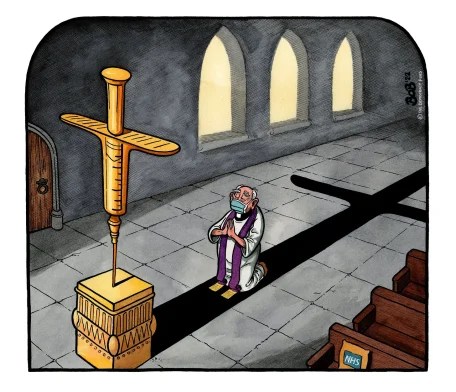
Nothing screams ‘cult’ more than a building being lit up in corporate colours to celebrate a product launch.
Further evidence of the big pharma brainwashing can be seen with the Empire State Building turning Pfizer blue in celebration of the CDC recommending that everyone, from 6 months of age and older, can get this season’s updated Covid shot.

They then sponsored news articles to tell everyone that Covid is here again but that Pfizer is here to save us.
Seems like COVID’s everywhere again. But here’s good news from Pfizer!
This season’s updated COVID-19 shots are now available for ages 6 months and up, and they’re designed to help protect against recent variants.
That is why today, at 8pm, the Empire State Building turned its iconic building blue to announce that the CDC recommends everyone 6 months of age and older get this season’s updated COVID-19 shot. The blue light symbolizes our gratitude and appreciation for the updated vaccines and all those who made it possible.
COVID-19 isn’t gone, and vaccination remains one of our best tools to help protect against the virus that causes the disease. Ask your doctor or pharmacist about this season’s updated COVID-19 shots. Learn more and schedule at the CDC’s website, vaccines.gov.
Sponsored by Pfizer.
In almost religious like devotion, Pfizer wants your gratitude and appreciation for the updated vaccines. Because billions of dollars just isn’t enough anymore, they also want your adoration and eventually your soul.
We have got to the point now where everyone knows Covid is mild for most and that the vaccines don’t do anything. But there is a significant percentage of the population who are still in denial and convince themselves that the jabs work, save lives and make them morally superior.
Bobs Cartoons summed it up nicely with this image.
Baerbock’s Xi Jinping comment only gives away Germany’s subservience to US
By Drago Bosnic | September 18, 2023
Conducting any sort of diplomacy requires a certain level of intelligence and at the very least basic decency. However, top diplomats of the political West must’ve missed the classes on either of those, probably busy listening to people like Josep Borrell and his rants about the “garden” and the “jungle”. This is particularly embarrassing when dealing with millennia-old civilizations, such as China and India, countries with magnificent cultural heritage, both of which have recently been characterized as societies with “low intellectual potential”. As we all know now, during an interview with local media, high-ranking Kiev regime official Mikhail Podoliak arrogantly stated that China and India are supposedly “incapable of thinking about long-term strategies” because of this “low intellectual potential”.
We can imagine what sort of “intellectual potential” is present in a person who thinks that countries such as China and India are “incapable of devising long-term strategies” when both have quite literally existed for thousands of years, continually, we should stress. If Beijing and Delhi don’t have such strategies, the question is – who does? And yet, it seems that Podoliak is hardly the only Western politician (or Western-aligned, in this case) with such “highly intellectual” opinions. Namely, the German Foreign Minister Annalena Baerbock also decided to demonstrate similar “high intellectual capacity” during a recent interview with Fox News. On September 15, she directly called Chinese President Xi Jinping a “dictator”. Worse yet, she did so while giving a statement about the Ukrainian crisis, a matter that isn’t directly related to China.
“We will support Ukraine as long as it takes,” Baerbock stated during the interview, adding: “If Putin were to win this war, what sign would that be for other dictators in the world, like Xi, like the Chinese president? Therefore, Ukraine has to win this war.”
Once again, she demonstrated how to conduct diplomacy if one really wants to get on the bad side of not one, but two global superpowers, both of which are of essential importance to Germany itself. It seems Berlin learned nothing from the disastrous decoupling with Moscow, a move that has effectively destroyed German industrial might. Russian commodities such as oil and natural gas, the vital importance of which cannot possibly be overstated, have never been less accessible to Germany, and yet, Berlin continues its hostile policies towards Moscow. Still, this is obviously not enough, so it’s now also showing enmity towards Beijing. It should be noted that, according to the German Federal Statistical Office, trade exchange with China amounts to almost €300 billion.
This makes Beijing its largest trading partner and for the eighth year in a row, at that. German exports to China are immensely important for saving what’s left of its industry. Such enmity towards Beijing may very well destroy it completely. This also comes on the heels of what can only be described as a crawling trade war between China and the European Union, as the troubled bloc has announced it would “launch an investigation into Chinese electric vehicle subsidies“. And to say nothing of the mindless decision Brussels made earlier this year when it announced that EU navies will “support Taiwan”, although Europe itself is faced with a massive surge in illegal immigration, a problem which the aforementioned EU navies can’t deal with in the Mediterranean, their own primary zone of responsibility.
China has already expressed indignation over the label, deeming it “absurd” and an “open political provocation”. Mao Ning, the spokesperson of Beijing’s Foreign Ministry, said that Baerbock’s remarks “infringed on China’s political dignity”. As of this writing, no concrete moves have been announced in response to Germany’s rhetoric, but it’s virtually guaranteed that Beijing will not tolerate such insolence. It’s also not the first time that Baerbock has engaged in Sinophobia. Just last month, she said that “China poses a challenge to the fundamentals of how we live together in this world”. Baerbock also described her mid-April visit to China as “more than shocking” and said Beijing was “increasingly becoming more of a systemic rival than a trade partner”, which is in line with Germany’s openly stated intention of “decoupling” with China.
Beijing’s response is certainly not limited to stern rhetoric, as demonstrated by the sanctions (or counter-sanctions, to be exact) it now regularly imposes on its increasingly aggressive Western rivals. Back in early July, after US President Joe Biden also called his Chinese counterpart a “dictator” several weeks before, China responded with restrictions on the export of rare-earth elements, which caused shockwaves on the global market. Biden made the controversial statement only a day after US State Secretary Antony Blinken came back from China, a visit that Washington DC pompously announced would supposedly “stabilize ties” between the two countries. In mid to late July, the US also sent Henry Kissinger, Blinken’s much more prominent (First) Cold War-era predecessor, to try and use his influence to prevent China’s total tilt toward Russia.
However, this forlorn attempt failed, especially as Kissinger went in an unofficial capacity, leaving his visit (geo)politically inconsequential. Taking all this into account, Germany’s rhetoric can hardly be described as “sovereign”. Berlin has zero reasons to get into any sort of confrontation with China, but it still does so. However, this is certainly in the interest of the US, as Washington DC is desperate to portray Beijing as supposedly “isolated”. This only implies that Germany doesn’t have an independent foreign policy.
Drago Bosnic is an independent geopolitical and military analyst.
China summons German envoy over Baerbock’s ‘dictator’ remark
RT | September 18, 2023
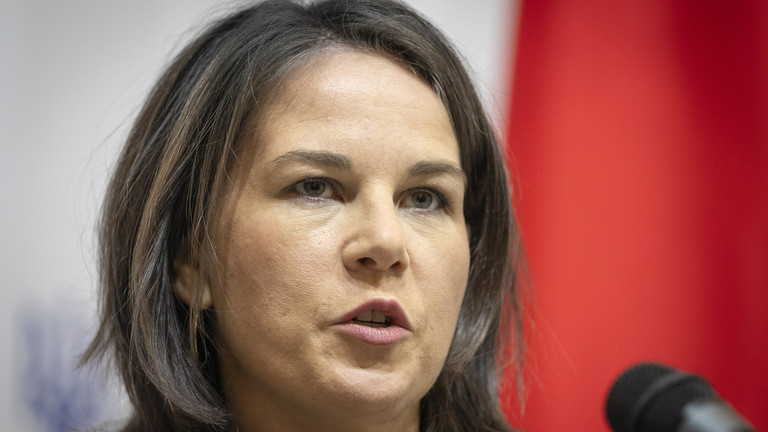
The Chinese Foreign Ministry has summoned German ambassador Patricia Flor after Berlin’s top diplomat, Annalena Baerbock, referred to Chinese President Xi Jinping as a “dictator.”
The ambassador “was summoned to the Chinese Foreign Ministry [on Sunday],” a spokesman from the German Foreign Ministry told AFP on Monday.
Baerbock made her remark while on a visit to New York on Thursday. Speaking to Fox News, she claimed that if the West allowed Ukraine to lose its conflict with Russia, this would embolden “other dictators in the world… Like Xi, the Chinese president.”
Beijing was “extremely dissatisfied” with Baerbock’s words, Chinese Foreign Ministry spokeswoman Mao Ning told reporters earlier on Monday. Mao said that Baerbock’s “absurd” comments “violate China’s political dignity” and are tantamount to an “open political provocation.”
Relations between Berlin and Beijing have deteriorated as of late, with Germany calling for reduced economic reliance on China in its first-ever China strategy, which was published in July. Despite China being Germany’s largest trading partner, the document branded Beijing a “systemic rival.”
In labeling Xi a “dictator,” Baerbock followed in the footsteps of US President Joe Biden, who applied the same descriptor to the Chinese leader in June. Biden’s statement came immediately after US Secretary of State Antony Blinken met Xi in Beijing, and reportedly caused American officials to reassure their Chinese counterparts that Biden’s words did not represent a shift in US policy.
News relating to missiles used or about to be used in Ukraine and about “Russian” ICBMs in North Korea
By Gilbert Doctorow | September 17, 2023
It is widely expected that in the coming week American president Joe Biden will announce the decision to ship American medium range missiles ATACMS to Ukraine. Discussions of this subject have been widespread in both US and European media. The focus has been on the range of missiles and whether their delivery will enable Ukraine to attack across the border into the Russian Federation itself for the purpose of destroying supplies and command centers there. Of course, the issue is complicated by what is meant by RF territory. In the language of the West, all of the Ukrainian territory which has been captured by Russia since 2014 is considered to be fair game for military attack. From the perspective of Russia, any attacks on Crimea, in particular, may be justification for major escalation of the war into a direct fight with the NATO country or countries supplying the given missiles. That said, there is reason to believe that Storm Shadows were used to hit Sevastopol on 13 September, without any sign yet of Russia’s intention to escalate.
The advocates of shipping ATACMSs to Ukraine point out that its range, 190 miles or 300 km, is no greater than that of the Storm Shadow missiles which Britain and France have sent to Ukraine without prompting escalatory actions by Russia. However, that is to overlook the other side of the issue, namely the method of launch. Storm Shadow is an air to ground missile. It is launched from Soviet-era Ukrainian jet fighters which have been especially modified for this purpose. Since the Storm Shadow is devilishly difficult for any air defense system to destroy in flight, the Russians have focused attention on destroying Ukrainian planes that are part of the launch operation. Just this past week, on 11 September a Russian missile attack on the Dolgintsevo air base near Krivoy Rog in the Dnepropetrovsk region of Ukraine destroyed 5 Ukrainian fighters, two MiG-29s and three SU-25s. The MiGs are said to either carry the Storm Shadow or to provide cover for SU-24s which carry them.
The logic of supplying ATCSMs is precisely in the launch mode, not the attack radius of these missiles. They are ground to ground missiles which are launched from mobile platforms similar in principle to the multiple rocket launchers HIMARS. In that sense, they are more difficult to find and destroy than a jet fighter.
In the meantime, in Europe, German Chancellor Scholz has made it plain that he will not approve sending Germany’s long range missiles, the TAURUS, to Kiev until the United States makes a first move by shipping its own missiles. The TAURUS falls into the same launch category as the Storm Shadow; it is sent on its way to target by a jet fighter. Its distinction is only one of distance, at 500 km range. If Ukraine has a fast diminishing or fully destroyed air force, the TAURUS will not be of much use.
*****
Otherwise, over this past week, the interest of major Western media in missiles has focused on what North Korea owns and how it got them. The interest came about as journalists followed the course of North Korean leader Kim Jong Un’s tour of the Russian Far East.
It has occurred to our journalists that North Korea presently possesses ICBMs capable of reaching the North American heartland, and as they pored over the technical characteristics of these missiles they noted that one seems to be very close in design to Soviet era missiles that were once the mainstay of the Russian strategic arsenal. I am speaking of the Korean rebranded Topol-M.
It is not surprising, therefore, that some folks in the States are wondering how is it that the Russians were able to get away with supplying the designs of the Topol-M to Pongyang without the United States raising a hullaballoo.
The answer, my friends, is in the inconvenient fact that those responsible for providing North Korea with production plans and technology for manufacturing the Topol-M were not Russians; they were Ukrainians. This story is discussed in an article on a Russian news portal a couple of days ago. According to the authors, the Ukrainians sold to the North Koreans part of the technology but not all. For example, they held back the secrets of the solid fuel used in this missile, which the Koreans had to develop on their own. Moreover, for the guidance system, the Koreans were assisted or copied a system developed by the Chinese. What this tells us is that if the Koreans should agree with the Kremlin on the purchase of one or another missile-related technology, its integration into their own production will be done by the Koreans themselves. The same may be said of technologies for construction and operation of nuclear powered submarines which the North Koreans are said to be looking for abroad.
*****
Before closing, I use this opportunity to sum up the Russian visit of Comrade Kim after he spent that first day in talks with Vladimir Putin at the Vostochny Cosmodrome about which I wrote earlier in the week. His next stop was Komsomolsk on Amur, where he was shown the Yuri Gagarin factory complex producing Russian military and civilian aircraft, including the “Alligator” multifunctional attack helicopters that have been so effective in the Ukraine war against tanks, armored personnel carriers and other military hardware. The top Russian official with Kim for the day was Minister of Trade and Industry Denis Manturov.
From Komsomolsk, Kim went next to the Knevichi air base in the Amur region, where he was shown the massive turboprop Tupolev Tu-95 and the sleek Tu-160 “White Swan,” both mainstays of the nuclear triad as bombers and missile platforms. Considerable attention was given to an assortment of the most modern fighter jets in the Su family, as well as to MiGs equipped with the hypersonic Kinzhal missile. The Russian hosts were headed by Minister of Defense Shoigu.
Kim’s tour ended in Vladivostok where he was taken aboard the frigate Marshal Shaposhnikov of the Pacific fleet, which is typical of the latest Russian vessels in having an important complement of hypersonic missiles with 1500 km range as well as weaponry for anti-submarine warfare.
When in Vladivostik, Kim visited the Far Eastern Federal University on Russky Island in the Vladivostok harbor, where the Eastern Economic Forum had been held at the start of the week. Kim met with university students. Lastly, there was a typically Russian cultural note to round out Kim’s program: a performance of Swan Lake by the Vladivostok affiliate of the Mariinsky Theater (St Petersburg). I mention parenthetically, that the Russian Federation from coast to coast is looked after culturally by its musical and museum powerhouses: Moscow’s Bolshoi theater maintains a similar performance and training outpost in Kaliningrad.
©Gilbert Doctorow, 2023
Featured Video
Matt Bracken: Hezbollah Re-Arming With Massive Help From Iran
or go to
Aletho News Archives – Video-Images
From the Archives
Examples of hate speech by Israel against Palestine
1. “There is a huge gap between us (Jews) and our enemies, not just in ability but in morality, culture, sanctity of life, and conscience. They are our neighbors here, but it seems as if at a distance of a few hundred meters away, there are people who do not belong to our continent, to our world, but actually belong to a different galaxy.” Israeli president Moshe Katsav. The Jerusalem Post, May 10, 2001
2. “The Palestinians are like crocodiles, the more you give them meat, they want more”…. Ehud Barak, Prime Minister of Israel at the time – August 28, 2000. Reported in the Jerusalem Post, August 30, 2000
3. ” [The Palestinians are] beasts walking on two legs.” Menahim Begin, speech to the Knesset, quoted in Amnon Kapeliouk, “Begin and the Beasts”. New Statesman, 25 June 1982.
4. “The Palestinians” would be crushed like grasshoppers … heads smashed against the boulders and walls.” Isreali Prime Minister (at the time) in a speech to Jewish settlers New York Times April 1, 1988
5. “When we have settled the land, all the Arabs will be able to do about it will be to scurry around like drugged cockroaches in a bottle.” Raphael Eitan, Chief of Staff of the Israeli Defence Forces, New York Times, 14 April 1983.
6. “How can we return the occupied territories? There is nobody to return them to.” Golda Maier, March 8, 1969.
… Continue
Blog Roll
 Aletho News
- The accession of Ukraine could signal the collapse of the EU
- Italy puts Ukraine weapons package on hold – media
- US kills 5 in Pacific as unproven drug smuggling claims persist
- Iran Respects International Law, US & Israel are Rogue States
- Russia Helping Build a New Middle East /Trita Parsi
- Barghouti: ‘Netanyahu has fallen,’ era of Smotrich, Ben-Gvir over
- China slams US policy on Iran as Russia rejects legality of nuclear meeting at UN
- The Mecca Pact Courts Iran: Containment Comes Full Circle
- Oman FM: Persian Gulf states, Iran, Iraq should form security pact excluding US
- Trump peddles fresh falsehoods, claims Iran ‘started the war’ as US aggression drags on
- If Americans Knew
- An error has occurred; the feed is probably down. Try again later.
- No Tricks Zone
- Sudden Stratospheric Warming, Powerful El Niño Combination May Lead To Extreme Europe Cold, Energy Crisis!
- Two New Studies Find Thwaites Glacier Melt Cannot Be Driven By Human Activity Or A Warming Ocean
- E-Cars Reduce CO2 Emissions By Only 41% Compared To Internal Combustion Engine Vehicles
- Predictions Made By Renowned Climate Professor Over Past Decades Have Been Proven To Be Poor
- New Study Suggests Large Regions Of The Pacific Ocean Have Been Cooling For The Last 80 Years
- Germany’s Green Energy Debacle: High Energy Costs Force Kahla Porzellan to Close After 182 Years!
- New Study: 50 Years Of The Most Aggressive ‘Net Zero’ Policies Can Only Affect The Global Climate By 0.03°C
- US September “Heat” Was No Record…Many Records Set Decades Ago
- Latest European Green Energy Debacle; Portugal’s Largest Flagship Solar Park Insolvent!
- Green Energy Debacle: German Expert Professor Fritz Vahrenholt Warns Of Severe Economic And Social Consequences

