Palestinian journalist wins wrongful termination appeal against DW
The Cradle | June 29, 2023
Palestinian-Jordanian journalist Farah Maraqa on 28 June announced winning an appeal filed by Germany’s Deutsche Welle (DW) media network over her unlawful dismissal for alleged “antisemitism.”
The decision comes nine months after the German judiciary ruled that her dismissal by state-owned broadcaster DW on charges of anti-Semitism was “legally unjustified,” which the German broadcaster appealed.
“It is a relief that the judge ruled in Farah’s favor and held Deutsche Welle accountable for this illegal dismissal,” Giovanni Fassina, director of the European Legal Support Center (ELSC), which advocates for the legal rights of Palestinians in Europe, said at the time.
In February 2022, DW fired Maraqa alongside five other Arab journalists – all Palestinian or Lebanese – accusing them of “antisemitism” in social media posts and articles they had written for outside publications.
The charges were based on the International Holocaust Remembrance Alliance’s (IHRA) controversial extended definition of antisemitism, which includes criticism of Israel’s military occupation of Palestinian land and the system of apartheid imposed on Palestinians.
The definition, which Germany adopted, has been criticized as a means of silencing pro-Palestinian support and dissent against Israeli policies.
In May 2021, DW reportedly sent an internal two-page memo to employees banning them from using terminology such as “colonialism” and “apartheid” when describing Israel.
Over the past few years, western outlets have come under fire for firing or suspending Arab journalists over alleged “antisemitism.”
In March, France24 suspended four journalists from their Arabic branch at the behest of the pro-Israel media monitoring organization, Committee for Accuracy in Middle East Reporting and Analysis (CAMERA).
Last October, the New York Times (NYT) fired Palestinian photojournalist Hosam Salam over social media posts supporting Palestinian resistance factions.
The freelance journalist was dismissed after the Israeli lobby organization Honest Reporting alerted the NYT of his posts.
Social media giants like WhatsApp, Facebook, and TikTok have also been accused of silencing or “purging” Palestinian journalists in Gaza and the occupied West Bank who report on Israeli war crimes.
Furthermore, Google employees accused the tech giant of censuring them for protesting against a controversial $1.2 billion contract signed with Israel to provide the country with advanced artificial intelligence (AI), which many fear will worsen human rights abuses in Palestine.
Iran takes Canada to court for violating sovereign immunity
The Cradle | June 29, 2023
Iran has filed a legal case against Canada at the International Court of Justice (ICJ) under the pretext of violating Iran’s sovereign state immunity by designating the country as a “sponsor of terror.”
The Hague-based court confirmed in a statement that Iran launched the case against Canada on 26 June.
A statement on the official website of the Iranian government said that Canada presented these accusations under “false and wrongful” pretenses.
In the press release by the ICJ, Iran contends that “Canada has adopted and implemented a series of legislative, executive, and judicial measures against Iran and its property [since 2012] in breach of its international obligations.”
Iran argues that “as a sovereign state, it is entitled to sovereign immunities from jurisdiction and from enforcement under customary international law” and requests the Court to adjudge and declare that “by failing to respect the immunities of Iran and its property, Canada has violated its international obligations towards Iran.”
In 2021, a Canadian court awarded 107 million Canadian dollars ($84m) to the families of six victims who were killed when Iranian forces shot down a Ukraine International Airlines flight near Tehran in January 2020, which was labeled an “act of terrorism” by Ontario judge Edward Belobaba.
Iranian officials have said the shooting of the plane was an accident caused by “human error” in operating a surface-to-air defense system due to being on “high alert” following retaliatory strikes on US bases for the killing of Top Iranian General Qassem Soleimani.
In May of 2021, the spokesman for the Iranian Foreign Ministry Saeed Khatibzadeh described the application of Canadian judicial procedures as a “quite political approach,” saying: “the Canadian court, following the US courts, first identifies the accused, then resorts to any relevant or irrelevant information in public sources, especially cyberspace, to find a reason for its biased and predetermined mentality.”
Canada listed Iran as a “sponsor of terror” in 2012 and broke diplomatic ties as relations frayed over Tehran’s support for Bashar al-Assad’s regime in Syria, its nuclear program, and its stance on Israel.
On 13 March, 2012, Canada amended section 6 of the State Immunity Act (SIA) to remove the immunity from the jurisdiction of a foreign State listed by Canada as a supporter of terrorism, the application for the legal case states.
Following the amendment, section 6.1 of the SIA provides that “a foreign state that is set out on the list referred to in subsection (2) is not immune from the jurisdiction of a court in proceedings against it for its support of terrorism on or after January 1, 1985.”
The ICJ was set up after World War II to resolve disputes between UN member states. Its judgments are final but can take years.
EU to renew Iran sanctions under defunct nuclear deal: Report
The Cradle | June 29, 2023
European officials recently informed Iran that they plan to renew EU ballistic missile sanctions set to expire in October, according to sources in the know that spoke with Reuters.
The renewal will be conducted under the parameters of the defunct Joint Comprehensive Plan of Action (JCPOA), which officials say Iran “violated” by moving forward with developing its nuclear energy program after the US unilaterally exited the deal in 2018 and reimposed crushing sanctions.
Other reasons the EU is giving for renewing the sanctions are Russia’s use of Iranian drones in Ukraine and “the possibility of Iran transferring ballistic missiles to Moscow.”
“The Iranians have been told quite clearly [of plans to keep the sanctions], and now the question is what, if any, retaliatory steps the Iranians might take and [how] to anticipate that,” a western diplomat told Reuters on condition of anonymity.
The decision to uphold the sanctions would be the first significant instance of the E3 group of nations — France, Germany, and the UK — not abiding by the terms of the nuclear deal.
EU mediator Enrique Mora, who co-ordinates talks to restore the 2015 deal, raised the issue of keeping the sanctions when he met Iranian nuclear negotiator Ali Bagheri Kani in Doha on 21 June, but the latter reportedly refused to discuss the matter, according to an unnamed Iranian official who spoke with Reuters.
“Maintaining sanctions, in any capacity and form, will not hinder Iran’s ongoing advancements,” the Iranian official is quoted as saying. “It serves as a reminder that the west cannot be relied upon and trusted.”
Since 2017, the Islamic Republic has significantly advanced with its ballistic missile and satellite launch programs. The country last month made waves by revealing a hypersonic missile with a potential 2,000-km range.
This progress, on top of Tehran’s enrichment of uranium at 60 percent purity and a China-brokered détente with Saudi Arabia, set off alarms in the west and pushed Washington to begin ‘de-escalation talks‘ with Iran.
EU delivers ‘neither peace nor prosperity’ – Hungarian PM
RT | June 29, 2023
The Hungarian government has blasted the EU, declaring that in its current state it brings “neither peace nor prosperity” to member states. Prime Minister Viktor Orban, who was attending a summit of bloc leaders in Brussels, offered a similar assessment of the bloc.
Orban’s position was relayed via his government’s official Facebook account on Tuesday, the first day of the high-profile two-day gathering in Brussels. The statement apparently came from an interview that the Hungarian leader had given to the German media earlier in the week.
Asked by the German tabloid Bild whether he could explain the rising popularity of Alternative for Germany (AfD), a right-wing political party, the prime minister cited disillusionment with the EU as a possible cause.
“The European Union was created for two reasons. The first is peace – and now there is war. The second is prosperity – the economy is in an increasingly worrying state, it is difficult to maintain competition and it is increasingly difficult to ensure prosperity for people,” Orban argued.
“That is why I see the so-called protest parties gaining strength everywhere in Europe. I’m not talking about Germany alone, I’m talking about Europe in general,” he added.
Hungary stands out among EU members for having consistently criticized the West’s approach to the Ukraine conflict. Arming and training Kiev’s troops and punishing Russia with economic sanctions have not brought a truce any closer and have caused serious damage to the bloc itself, according to Budapest.
Ukraine is one of the top items on the agenda of the EU summit. The bloc’s leaders are expected to offer some form of security guarantees to Kiev and provide assurances of continued military assistance.
Orban told Bild that Ukraine has no chance to win against Russia regardless of the amount of Western money that is poured in, because eventually Kiev will run out of manpower.
The disgrace of Australia’s pandemic betrayal
By Paul Collits | TCW Defending Freedom | June 27, 2023
What exactly do you do when your country betrays you and disgraces itself before the world? When you find out that it is run by thugs and goons? When just about no one in the political class has the moral compass and the spine to stand up for you? When your fellow citizens turn on you if you dared to question things?
 If you are John Stapleton, a retired Aussie journalist, you write a 450-page book about it. You call it Australia Breaks Apart. You write uncomprehendingly, elegantly, passionately, even elegiacally, ashamed, still shaking your head in disbelief, three years after a ho-hum virus called by the powers-that-be ‘Covid’ reached our shores.
Surely these words could be written about just about every country in the world, you might think. Two quick responses – we were the worst, and surely we, of all places, should have been above all this.
Whether the book explains to international readers how this all happened, I’m not sure. I am far from certain that anyone could explain it. But let us explore what the book does do.
The title suggests one of the main themes, that of division and enmity. There were members of the dobber class, the Covid winners (largely in the employ of government or corporates), the lap-top class, the blatherers. People on ‘the other side’ were routinely demonised. Granny killers, conspiracy theorists, neo-Nazis and so on. Many of these folks were morally upright, seasoned professionals, not rent-a-crowd ideologues. Australia did indeed break apart, literally as well as socially. State and territory borders were closed by spooked politicians on a whim and for very few Covid cases. Fear and derangement were everywhere. Subjugation.
There are things in the book that even those who lived through the nightmare will not have known. These matters should have been known, and most likely would have been, if not for the cover-ups and the wilful non-reportage of stories in the interest of defending ‘the narrative’.
The book tells not only the story of Covid policy excesses, but also of a resistance movement that grew into something astonishing. This underground, though in plain sight, movement of angry men and women became hundreds of thousands, if not millions. It has remained invisible only because the quisling Covid class and their corrupt media puppets refused to acknowledge that it even existed, other than being a ‘tiny’ bunch of anti-vaxxer conspiracy theorists to be ignored.
John Stapleton doesn’t ignore them. He tells their story. This makes his book unique. The expected villains are all there, in graphic detail – Victoria premier Daniel Andrews, a truly appalling political figure, the thug police, the slippery bob-each-way villain-prime minister Scott Morrison, the other premiers and chief ministers, the unaccountable bureaucrats, the public health gauleiters, the Pharma-funded academics, the media shills. But what emerges in the book is an account of how resistance to tyranny can form and grow. This will be an invaluable resource when the medical totalitarians come for us next time, as surely they will.
The story is told through the eyes of Old Alex (the author), an old-time ‘pressman’ with a nose for a story and an unquenchable desire to unearth the truth. And, importantly, an open mind and no corporate constraints. Like many Covid dissidents, Stapleton made new friends during the Covid years, just about all of them independent truth-tellers. Citizen journalists. And he lost all sense of mainstream journalism having a soul and a purpose. Silent journalists were high up on Stapleton’s list of Covid criminals to be despised. But the stories of new voices and new connections among the refuseniks show the book to be about heroes as well as villains.
Journalism had very few dissidents who spoke out. Nor did the public servants or politicians or the police, but there were a few brave souls among the latter (for example) who broke ranks and saw Covid police brutality as a hill on which (professionally) to die. There was Andrew Cooney in New South Wales and Krystle Mitchell in Victoria.
These brave hearts were not willing to go along to get along, as rubber bullets penetrated backs, grandmothers were shoved to the pavement then pepper-sprayed, and the heads of mentally challenged innocents were smashed against concrete floors in downtown Melbourne. These stories of fascist policing were systematically smothered by the legacy media and the protesters pilloried and defamed.
The book details so much more. The scandal of the quarantine camps, for example. Those gazillion-dollar, Orwellian white elephants. The bullshit Covid-speak pronouncements from on high. The thousands upon thousands of (often massive) fines for Covid misdemeanours. The National Cabinet mutual protection narratives. All based on lies. Deadly lies. Some of the Covid class still promote the shots. Amid the ever-rising, murky waters of excess deaths. Including, perhaps, that of the Australian legend Shane Warne. Deaths still unexamined by the Covid class.
We need this book, and those like it. More straight history than exposé, but no less significant for this. True crime reporting, if you will. And if you didn’t hate the Covid class before you open the book, I guarantee you will by the end, if not sooner.
There are those who might say, why dredge it all up again since we have ‘moved on’? Well, among those that Covid refuseniks detest the most, the ‘let’s just move on’ types rank pretty high. This book should be for them to read and to reflect upon. To contemplate the massive pain caused, and to ponder the fact that it is all likely to happen again, what with the great reset people and the pandemic planning industry already on high alert for the first opportunity to crank up the machine again. Moving on, not holding ‘them’, the Covid class, to account, will only make the next instalment all the more likely.
Oh yes, for those who lived through the nightmare, John Stapleton’s gripping book, while reviving painful memories in great detail, is a must-read account of the evil that men (and women) do. It is a thundering reminder, too, of the need for Covid accountability, and a spur to further action among a new Coalition of the Willing minded to pursue it, and who simply must not give up the fight in the face of performative Covid class insouciance. It is ironic, too, that Australia Breaks Apart has been published just as the stampede for the exit door by Covid’s decision-makers has reached a crescendo.
In the dying days of the narrative, there was a national election, with one party of despised Covideers replaced by another, and around a third of now largely unrepresented voters, many of them the deplorables featured in Stapleton’s book, refusing to support either major party. The great political escape raises the question, was all the protesting worth it? I recently put a similar question to Ian Plimer, the doyen of Australian climate sceptics – why does he keep writing books when the climate writing seems to be on the wall? He replied that it was critical that when the history of all this comes to be written one day, there will be a record of the madness.
Buy this book, this chronicle of the new totalitarianism, the definitive account of Covid Australia, then circulate it widely among those might think it didn’t really matter what they did to us. A short review cannot do justice to this deeply authentic, often transcendent and, indeed, magisterial work. An astonishing achievement. An Australian story.
See also:
Essential Reading for the Dissident, the Disenfranchised, the Disillusioned
Why More US Bradley Armored Vehicles Won’t Boost Ukraine’s Counteroffensive

By Oleg Burunov – Sputnik – 28.06.2023
What Washington has delivered to Ukraine is a non-upgraded version of the Bradly armed vehicles with restricted combat capabilities, retired US Air Force Lt. Col. Karen Kwiatkowski, a former analyst for the US Department of Defense, told Sputnik.
The Biden administration has announced another $500 million military package to Kiev, which includes, among other weaponry, 30 US-made Bradley infantry fighting vehicles.
At least 17 such vehicles were earlier damaged or destroyed by Russian troops amid the Ukrainian army’s unsuccessful counteroffensive attempt. Will an additional batch of the Bradley vehicles be of use to the Ukrainian military? Former Pentagon analyst Karen Kwiatkowski has her doubts.
“Well, if you have ever watched the 1998 movie “The Pentagon Wars” you might wonder how we ever developed them in the first place! And of course, they are from 1980s technology and design, because of the lag time in the US military acquisition system of that era, and today as well,” she told Sputnik.
THE PENTAGON WARS – 1998 HBO MILITARY COMEDY FILM BASED ON A TRUE STORY OF THE BRADLEY TANK
The ex-Pentagon analyst said that with the mothballed Bradleys delivered to Ukraine, the US is now in the process of upgrading these infantry fighting vehicles.
“Its replacement program was actually initiated in 2010, and the production by the winning company (or a combination) won’t begin until 2027. In a comprehensive land-sea-air battlespace, the Bradley adds mobility and protection to other parts of the combined arms array, but without the ‘rest of the system’ its capabilities are limited, as we see in Ukraine today,” Kwiatkowski noted.
She made it clear that the Bradley supplies to Ukraine are something that American Rheinmetall and General Dynamics will benefit from, as “they refine and propose their best design” of the Bradleys.
When asked whether the development of a new vehicle could entail a US military budget increase, Kwiatkowski said that “part of the strategy of NATO expansion and relevance, that has been the story of Ukraine for over a decade, is how to upgrade older weapons systems with European support and cash along with maintaining the massive US military industrial complex into the foreseeable future.”
“The US defense budget has grown every year in my lifetime, and not a single war has been ‘won’. The upcoming Pentagon budget is $842 billion, and this does not count the entire intelligence budget, so we are well over a trillion dollars annually in 2024. Because of the influence and pervasiveness of the defense industry in every state, this budget will continue to grow until the United States is bankrupted,” she concluded.
Both Kiev and Washington have acknowledged that the Ukrainian counteroffensive is progressing slower than expected, with one Pentagon official citing an American military representative who conceded that the counteroffensive is “not meeting expectations on any front.”
Russian President Vladimir Putin, for his part, stressed that Kiev had failed to reach any strategic objectives at the beginning of its counteroffensive, losing more than 180 tanks and over 400 armored vehicles.
Serious adverse events from Pfizer’s mRNA vaccine are not “rare”
Maryanne Demasi, reports | June 27, 2023
Drug regulators and public health agencies have saturated the airways with claims that serious harms following covid vaccination are “rare.”
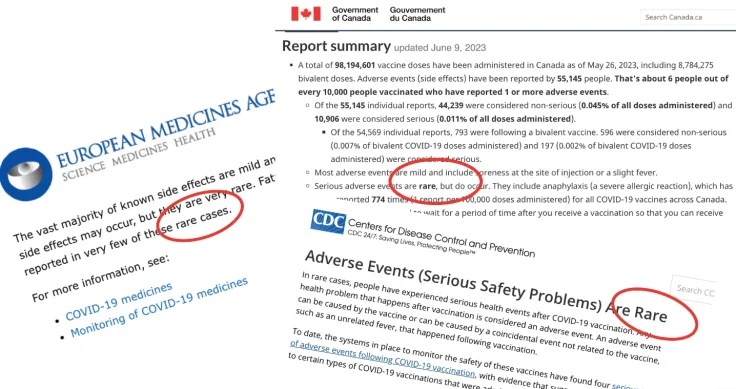
But there has been very little scrutiny of that claim by the media, and I could not find an instance where international agencies actually quantified what they meant by the term “rare” or provided a scientific source.
The best evidence so far, has been a study published in one of vaccinology’s most prestigious journals, where independent researchers reanalysed the original trial data for the mRNA vaccines.
The authors, Fraiman et al, found that serious adverse events (SAEs) – i.e. adverse events that require hospitalisation – were elevated in the vaccine arm by an alarming rate – 1 additional SAE for every 556 people vaccinated with Pfizer’s mRNA vaccine.
According to a scale used by drug regulators, SAEs occurring at a rate of 1 in 556 is categorised as “uncommon,” but far more common than what the public has been told.
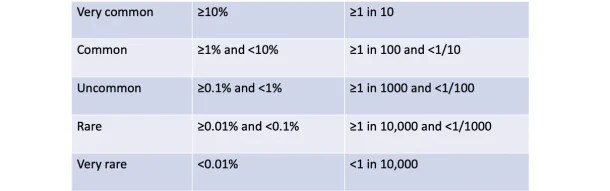
Therefore, I asked eight drug regulators and public health agencies to answer a simple question: what is the official calculated rate of SAEs believed to be caused by Pfizer’s mRNA vaccine, and what is the evidence?
The agencies were FDA, TGA, MHRA, HC, PEI, CDC, ECDC and EMA.
The outcome was startling.
Not a single agency could cite the SAE rate of Pfizer’s vaccine. Most directed me to pharmacovigilance data, which they all emphasised does not establish causation.
The Australian TGA, for example, referred me to the spontaneous reporting system but warned, “it is not possible to meaningfully use these data to calculate the true incidence of adverse events due to the limitations of spontaneous reporting systems.”
Both the German regulator (PEI) and European CDC referred me to the European Medicines Agency which, according to its own report, saw no increase at all in SAEs. “SAEs occurred at a low frequency in both vaccinated and the placebo group at 0.6%.”
The UK regulator MHRA went so far as to state it “does not make estimations of a serious adverse event (SAE) rate, or a rate for adverse reactions considered to be causally related for any medicinal product.”
The US FDA, on the other hand, did conceded that SAEs after mRNA vaccination have “indeed been higher than that of influenza vaccines,” but suggested it was justified because “the severity and impact of covid-19 on public health have been significantly higher than those of seasonal influenza.”
Despite analysing at the same dataset as Fraiman, the FDA said it “disagrees with the conclusions” of the Fraiman analysis. The agency did not give specifics on the areas of disagreement, nor did it provide its own rate of SAEs.
In response to the criticism, Joe Fraiman, emergency doctor and lead author on the reanalysis said, “To be honest, I’m not that surprised that agencies have not determined the rate of SAEs. Once these agencies approve a drug there’s no incentive for them to monitor harms.”
Fraiman said it’s hypocritical for health agencies to tell people that serious harms of the covid vaccines are rare, when they have not even determined the SAE rate themselves.
“It’s very dangerous not to be honest with the public,” said Fraiman, who recently called for the mRNA vaccines to be suspended.
“These noble lies may get people vaccinated in the short term but you’re creating decades or generations of distrust when it’s revealed that they have been misleading the public,” added Fraiman.
Dick Bijl, a physician and epidemiologist based in the Netherlands, agreed. “It goes to show how corrupted these agencies are. There is no transparency, especially since regulators are largely funded by the drug industry.”
Bijl said it’s vital to know the rate of SAEs for the vaccines. “You must be able to do a harm:benefit analysis, to allow people to give fully informed consent, especially in young people at low risk of serious covid or those who have natural immunity.”
Bijl said the mainstream media has allowed these agencies to make false claims about the safety of vaccines without interrogating the facts.
“The rise of alternative media is strongly related to the lies being told by the legacy media, which just repeats government narratives and industry marketing. In the Netherlands, there is a lot of discussion about the distrust in public messaging,” said Bijl.
Merck Knew Its Popular Asthma Drug Could Lead Kids to Commit Suicide, Lawsuits Allege
By Michael Nevradakis, Ph.D. | The Defender | June 27, 2023
Dozens of patients, including many children, died by suicide or suffered from neuropsychiatric problems after taking Singulair, Merck’s allergy and asthma medication, according to lawsuits that are finally proceeding, after decades of delays and legal challenges, Reuters reported.
Merck is accused of downplaying early evidence of Singulair’s impact on the brain. These claims “later faced intense scrutiny,” leading to “a raft of lawsuits alleging [Merck] knew … that the drug could impact the brain and that it minimized the potential for psychiatric problems in statements to regulators.”
Singulair, also known as montelukast, is available to adults and children as a medication for severe allergies and asthma. The drug “blocks chemicals, called leukotrienes, in the body,” according to Dr. Michelle Perro, a pediatrician. Leukotrienes “can be involved in the precipitation of asthma and can cause respiratory symptoms, as well as inflammation of the airways,” Perro told The Defender.
Numerous public comments about Singulair’s side effects were submitted in 2019, prior to the Sept. 27, 2019, joint meeting of the U.S. Food and Drug Administration’s (FDA) Pediatric and Drug Safety and Risk Management Advisory Committees charged with reviewing the drug’s safety.
Many of the comments were submitted by “vocal parents” of children adversely affected by Singulair.
Rolf Hazlehurst, senior staff attorney with Children’s Health Defense (CHD), told The Defender he “worked closely” with several of these parents.
The public comments, along with thousands of reports submitted over several years to the FDA Adverse Event Reporting System (FAERS) plus a 2015 research study finding that a “substantial amount” of Singulair entered the brain, forced the FDA to take action.
On March 4, 2020, the FDA required Singulair to carry a “black box” label — the FDA’s most serious warning, for “serious mental health side effects,” according to Drugwatch.
Black box warnings list “important side effect information surrounded by a thick black border and bold lettering to warn of permanent, serious or fatal side effects.”
In the case of Singulair, the label links the drug to “suicide, depression, aggression, agitation, suicidal thoughts and sleep disturbances.”
The black box label was at least two decades in coming, according to Hazlehurst, who said it “took over a decade’s worth of work by persistent parents, armed with overwhelming evidence of the serious neuropsychiatric side effects, urging the FDA to take action.”
According to Drugwatch, lawsuits now pending against Merck claim the drugmaker “knew or should have known before it started selling Singulair in 1998 that the drug could cause neuropsychiatric injuries during treatment and even after stopping.”
Dr. Liz Mumper, a pediatrician, said she has been “aware of the potential neuropsychiatric side effects of montelukast for many years,” adding that her patients “are instructed to stop the medicine if they notice a change in their mental health.”
“Over the years, parents have reported personality changes in their children, rapid changes in mood and irritability,” Mumper told The Defender. “Typically, these symptoms resolve once off montelukast.”
Since March 2020, when the FDA applied the black box warning to Singulair, numerous lawsuits have been filed against Merck. The lawsuits allege Merck designed “a defective drug,” in addition to claiming “negligence and failure to warn about the risk of mental problems,” according to Drugwatch.
A Reuters investigative report revealed the lawsuits also allege “that the company’s own early research indicated the drug could impact the brain but that Merck downplayed any risks in statements to regulators.”
The Reuters investigation states that plaintiffs faced a legal hurdle commonly used by Big Pharma — known as a “preemption defense” — based on a legal argument that federal law and federal regulations supersede state laws, including state product liability laws that traditionally served as the basis for lawsuits like those against Merck.
As a result, “companies increasingly argue that federally regulated products or services should be immune from lawsuits alleging state-law violations,” and plaintiffs “must often demonstrate that a company failed to disclose safety information to federal regulators — and that the information could have spurred new government restrictions or warnings before the alleged harm occurred.”
This has made it particularly difficult to sue manufacturers of generic versions of Singulair and other drugs, because generic drugmakers simply follow the primary manufacturer’s FDA-approved labeling, while the primary drugmaker can’t be sued by claimants if they or their family members took the generic version.
Perro told The Defender that a combination of an abrogation on the part of federal regulators, a lack of integrity on the part of drugmakers and complex legal maneuvering makes it difficult for doctors to prescribe safe treatments to their patients.
She said:
“A medical practitioner now needs to understand their patient, the illness, any prescribed medications, what Pharma reports about their drug, the real science behind the drug, and unfortunately, the legal doctrine of preemption, which is the principle based on federal law trumping state law.
“It is a dark time in medicine when the physician must question the integrity of what is written on the prescription pad.”
The FDA claims it has “diligently monitored reports of side effects possibly associated with montelukast, as well as communicated findings and taken regulatory action, when appropriate,” and that it “continues to monitor and investigate this important issue.”
Merck’s patent on Singulair expired in 2012, allowing generic drugmakers to begin producing and marketing the drug. Still, according to Reuters, Singulair “has provided Merck with about $50 billion in revenue.”
However, once Merck’s patent expired, “The number of patients prescribed the medicine climbed from about 7 million annually to more than 9 million” — with up to half of recipients age 16 or younger.
At least 82 suicides connected to Singular before FDA added black box warning
The Reuters investigation noted that “in the case of Singulair’s potentially deadly side effects, the FDA waited years, despite thousands of reported psychiatric problems, to require its most serious warning on the drug’s label.”
During this time, dozens of individuals taking Singulair committed suicide or faced other neuropsychiatric problems.
For instance, in 2017, 22-year-old Nicholas England, a Virginia resident, shot himself in the head less than two weeks after starting a generic version of the medication. He had no history of mental health problems — and his family had no legal recourse against Merck due to the preemption defense.
In 2007, a 15-year-old boy in New York committed suicide, 17 days after first taking Singulair. According to Reuters, this incident led Merck to propose — and the FDA to accept — an amendment to the drug’s label to add suicidal thinking and behavior to the product’s listed adverse events.
However, this adverse event “appeared in the middle of a list of more than three dozen side effects,” the Reuters investigation found. “Parent advocates argue the new label was grossly inadequate to warn of such a grave risk.”
“Neuropsychiatric side effects are listed in the documentation of potential side effects, but not always prominently,” Mumper told The Defender. And despite the new label, she said, parents searching for its package insert online will find older versions “without a prominent black box warning.”
According to Drugwatch, the change to Singulair’s label was made in August 2009, when the label was updated to also include other neuropsychiatric events including “postmarket cases of agitation, aggression, anxiousness, dream abnormalities and hallucinations, depression, insomnia, irritability, restlessness … and tremor.”
In 2008, the FDA said it was investigating “a possible association between the use of Singulair and behavior/mood changes, suicidality … and suicide,” Drugwatch reported.
In another example, the 3-year-old son of Jan Gilpin was prescribed Singulair for asthma in 2003. He “soon seemed withdrawn and sullen” and “started talking about death,” according to Reuters.
Gilpin initially did not suspect Singulair — until she discovered online posts by parents stating that their children were exhibiting similar behavior while on this medication. She pulled her son off Singular and soon “noticed he began to skip and laugh,” while his “obsessive thoughts about death disappeared after he quit the medicine.”
Indeed, “reports of related neuropsychiatric episodes piled up on internet forums and in the FDA’s early-warning detection system” starting in 1998, Reuters reported. Yet, by the time of England’s suicide in 2017, the FDA was still “reviewing” this data.
According to Reuters, in 2011, the FDA “rejected a petition from Gilpin and other parents seeking a black box warning, citing what it called insufficient evidence that the drug caused suicidal behavior.”
“Parents who argue Singulair endangered their children view the FDA’s 2020 decision to add a black box warning as vindication, but many still want to sue Merck for not acting sooner,” Reuters also reported.
In 2014, an FDA panel acknowledged that neuropsychiatric side effects among Singulair users were a “known safety issue,” but cited this reason and “feasibility concerns” in its decision not to order new studies, according to Reuters.
Yet, as reports of suicides continued to be filed — with 82 suicides linked to Singulair and its generic versions, including at least 31 involving people age 19 and younger, a new FDA advisory panel was convened in 2019.
According to Reuters, “agency staffers again said there was not enough evidence” to merit this. However, with Merck’s patent having expired, an FDA official told the advisory committee that the company may opt to pull Singulair from the market rather than fund expensive new studies to investigate the product’s safety.
This resulted in the March 2020 decision to add the black box label to Singulair.
‘Substantial amount’ of Singulair enters human brain
In its 2020 decision, the FDA cited independent research conducted in 2015 by cell biologist Julia Marschallinger and other researchers at Austria’s Institute of Molecular Regenerative Medicine.
They found that Singulair’s distribution into the brain was more significant than what was stated on the product label, which described its brain distribution as “minimal.”
Merck had claimed, in documents it submitted to FDA for the drug’s approval in 1998, that “only a trace amount” of the drug could be found in the brain and that its presence “declined over time.” Merck’s public marketing of the product later described side effects as “generally mild” and “similar to a sugar pill.”
However, Marschallinger’s team found that while Singulair’s presence decreased almost everywhere in the body within 24 hours after administration, the opposite was true in the brain, where “a substantial amount” of the drug was identified.
In its 1996 patent application for Singulair, Merck also claimed the drug could be used as a treatment for “cerebral spasms” — indicating “knowledge of the drug’s potential brain impacts.” Lawyers for plaintiffs filing Singulair lawsuits against Merck have cited this argument, as well as Marschallinger’s study.
The FDA has confirmed the study’s findings, acknowledging that claims regarding the declining presence of Singulair in all tissues “did not fully reflect the data.”
However, according to Reuters, the FDA also characterized findings of “a substantial amount” of the drug in the brain “a subjective characterization that is not necessarily incompatible with the ‘minimal’ descriptor in other contexts.”
“The FDA could have asked Merck to repeat the experiment or do it for an even longer period of time,” Marschallinger told Reuters. “It’s not hard to do.”
Perro said, “For those children who have been harmed by this drug,” due to the FDA’s 22-year delay in adding a black box warning, “there will not be any compensation because of pharmaceutical protection by our own government and liability shields.”
The FDA’s inaction has resulted in many deaths, Sue Peters, Ph.D., a CHD science fellow, told The Defender :
“The FDA has placed pharmaceutical profits over the safety and mental health of our children. It’s a never-ending cycle, with increased rates of chronic illness, like asthma, leading to pharmaceutical treatments which have not been properly safety-tested.
“These drugs put young people, with critical brain myelination continuing past 25 years of age, at risk of developing mental health disorders, leading to polypharmacy with psychiatric medications, and contributing to iatrogenic deaths as a leading cause of death in the U.S.”
Perro called for an overhaul of the FDA, telling The Defender :
“It is clear who our government — including the judicial system — is protecting. A solution to the lack of action by regulatory agencies? Overhaul.
“In the meantime, there are safer pharmaceutical alternatives for asthma in children. Not to mention, this is yet another reason to examine the root causes as to why so many children now have asthma, and address the real culprits, such as air pollution.”
For Mumper, a new approach to treating ailments such as asthma is needed. “Although montelukast is a valuable medication in my toolbox for treating allergies, the prescription should come after other measures, including working on gut health,” she said.
Similarly, Peters called for a “careful analysis” of the role of drugs in the treatment of common disorders and their role in precipitating mental health disorders and even deaths. She told The Defender :
“The tragic increase in the rate of mental health disorders in children in the United States, requires careful analysis of the role of iatrogenic death.
“Failing to consider the role of pharmaceutical drugs and medical treatments in the development of mental health disorders in children, has led to the loss of valuable research time, wasted research dollars, and ultimately the loss of life. Clearly, our current system is broken.”
Preemption defense lets Big Pharma avoid directly addressing safety claims
According to the Reuters investigative report, most of the Singulair lawsuits pending against Merck are still in their early stages.
Drugwatch reported that, as of May 16, “there have been no scheduled trials or court-approved global settlement in Singulair litigation.” Many of the suits against Merck were filed in New Jersey, where in January 2022, they were consolidated into multicounty litigation in the Superior Court of New Jersey Law Division: Atlantic County.
And in April, U.S. District Judge Timothy S. Hillman in Massachusetts denied Merck’s motion to dismiss a Singulair lawsuit “for lack of personal jurisdiction,” Drugwatch reported. Judge Hillman argued Merck manufactured, marketed and sold the drug in the state and allowed the case to continue.
Two U.S. Supreme Court rulings in 2011 and 2013 strengthened the preemption defense.
In Pliva, Inc. v. Mensing (2011), the Supreme Court held that state law requiring “generic drug manufacturers to provide adequate warning labels was preempted where federal law required manufacturers to use the same labels as their brand-name counterparts.”
And in Mutual Pharmaceutical Co. v. Bartlett (2013), the Supreme Court held that design-defect claims questioning the adequacy of a drug’s warnings under state law are preempted by the Federal Food, Drug, and Cosmetic Act and the Pliva v. Mensing ruling.
According to Reuters, the preemption doctrine rests on the U.S. Constitution’s Supremacy Clause, which states that the Constitution and federal law take precedence over state laws and state constitutions.
As a result, “Preemption defenses often deliver companies a swift procedural win, allowing them to avoid addressing the substance of plaintiffs’ allegations.”
While the defense has been used across multiple industries, it “has had a particularly profound impact in the pharmaceutical industry,” particularly as FDA data cited by Reuters indicates that generic drugs account for 91% of U.S. prescriptions.
Reuters, in its review of 257 U.S. Supreme Court and federal appeals court rulings since 2001, found that “judges ruled two-thirds of the time to weaken or kill lawsuits alleging deaths or injuries caused by corporate negligence or defective products.”
Moreover, “The number of potential lawsuits that were never filed” serves as “Another industry benefit” that “can’t be quantified,” according to Reuters.
Preemption defenses became a centerpiece of the George W. Bush administration — and FDA policy under his presidency, Reuters reports. This was part of the Bush campaign’s promise to address what it described as “frivolous” lawsuits.
Daniel Troy, the FDA’s chief counsel under the Bush administration, “interpreted preemption to mean that courts can’t undermine federal regulators based on alleged state-law violations,” Reuters reported, adding that he “aimed to make that argument in high-profile lawsuits” and briefed drug industry lawyers on the strategy in 2003.
Troy — who is now a pharmaceutical industry lawyer — told Reuters, “If you believe in a strong FDA, we can’t have state courts, especially juries, second-guessing and undercutting the FDA’s judgments.”
Hazlehurst told The Defender Troy’s argument is the same one used by Wyeth (Pfizer) before the Supreme Court in Bruesewitz v. Wyeth (2011). The Supreme Court’s decision in this case prohibited design defect lawsuits against vaccine manufacturers.
The U.S. Department of Health and Human Services, the parent agency of the FDA and the Centers for Disease Control and Prevention, supported Wyeth’s 2011 argument.
Similarly, Mumper told The Defender that pharmaceutical companies “have a history of avoiding liability through various legislative protection,” including the preemption defense and the National Childhood Vaccine Injury Act of 1986.
And in 2006, “The FDA formally changed its view of preemption in a 2006 regulation, stating the agency now believed that FDA labeling approval ‘preempts conflicting or contrary State law,’” Reuters reported.
Hazlehurst told The Defender, “CHD is proud to have played a role in advocating and assisting these parents on the journey to hold Merck accountable,” but “one thing rings loud and clear: the FDA is a captured agency, and this is a fundamental problem.”
Some parents have questioned whether the black box warning for Singulair was enough to save lives, citing the damage already done, continued legal obstacles, and Merck’s strong marketing campaign for the drug.
“Due to tremendous financial conflicts of interest, the pharmaceutical industry has tremendous influence over the FDA,” Hazlehurst said. “As a result, the FDA protects the pharmaceutical industry first and people second — this story is just one example.”
He added: “One must wonder, how many lives could have been spared if the FDA had timely done its job of properly investigating and regulating the pharmaceutical industry?”
Michael Nevradakis, Ph.D., based in Athens, Greece, is a senior reporter for The Defender and part of the rotation of hosts for CHD.TV’s “Good Morning CHD.”
This article was originally published by The Defender — Children’s Health Defense’s News & Views Website under Creative Commons license CC BY-NC-ND 4.0. Please consider subscribing to The Defender or donating to Children’s Health Defense.
Featured Video
BRITAIN’S WARNING: PREPARE FOR WAR
or go to
Aletho News Archives – Video-Images
From the Archive
How Ukraine Tortured and Slaughtered Donbass
By Kit Klarenberg | Al Mayadeen | July 11, 2024
Almost immediately after the proxy war erupted, ISIS-tier footage of the torture and murder of Russians in Ukrainian custody emerged.
On July 6th, the New York Times published an astonishing investigation: In Ukraine, Killings of Surrendering Russians Divide an American-Led Unit. The article documents in grim detail how Chosen Company, an international volunteer battalion for Kiev, routinely executes Russian prisoners of war. It is the very first mainstream admission that this practice – a brazen breach of the Geneva Conventions, and a grave war crime – is widespread among Ukraine’s fighters, both foreign and homegrown. … continue
Blog Roll
 Aletho News
- Israel Demolishes Home Of Lebanese Journalist Whose Viral Film Exposed Pager Attack
- Record Oil, Empty Tanks: The UAE’s Miracle Recovery
- Burnham tackles Britain’s poverty with aggression in Yemen
- Peace in Ukraine: the easy way – or the hard way
- Trump & the Rrrrussians
- US taxpayer money laundered back through Ukraine – Musk
- Before COVID, an NIH lab chief proposed making a SARS-like bat virus more infectious
- Gates, Bourla on Trial in Netherlands Accused of ‘Great Reset’ Scheme at Vaccine Injury Hearing
- BRITAIN’S WARNING: PREPARE FOR WAR
- “Historic Russia”: The Land Putin Will Not Give Back
- If Americans Knew
- An error has occurred; the feed is probably down. Try again later.
- No Tricks Zone
- Two New Studies Find Thwaites Glacier Melt Cannot Be Driven By Human Activity Or A Warming Ocean
- E-Cars Reduce CO2 Emissions By Only 41% Compared To Internal Combustion Engine Vehicles
- Predictions Made By Renowned Climate Professor Over Past Decades Have Been Proven To Be Poor
- New Study Suggests Large Regions Of The Pacific Ocean Have Been Cooling For The Last 80 Years
- Germany’s Green Energy Debacle: High Energy Costs Force Kahla Porzellan to Close After 182 Years!
- New Study: 50 Years Of The Most Aggressive ‘Net Zero’ Policies Can Only Affect The Global Climate By 0.03°C
- US September “Heat” Was No Record…Many Records Set Decades Ago
- Latest European Green Energy Debacle; Portugal’s Largest Flagship Solar Park Insolvent!
- Green Energy Debacle: German Expert Professor Fritz Vahrenholt Warns Of Severe Economic And Social Consequences
- Two More Paleo Reconstructions Affirm Meters-Higher Sea Levels Across Ireland, Brazil 7000-6000 Years Ago

