50 injured as NATO troops clash with Serb demonstrators
RT | May 29, 2023
NATO forces attacked a group of demonstrators in the majority-Serb town of Zvecan in Kosovo, RT Balkan reported on Monday. Stun grenades and tear gas were deployed, and around 50 people were injured.
Serb demonstrators staged a sit-down protest outside municipal buildings in Zvecan, Zubin Potok and Leposavic on Monday morning, preventing ethnic Albanian officials from taking office after elections boycotted by the Serb population as illegitimate.
Kosovo police officers arrived on the scene in Zvecan, backed up by members of NATO’s Kosovo Force (KFOR). The heavily-armored NATO troops surrounded the demonstrators, who refused to disperse, RT Balkan’s journalist on the scene reported.
KFOR then threw stun grenades and tear gas into the crowd, provoking a riot. The Serb demonstrators pelted rocks at the NATO troops, and received baton strikes and rubber bullets in return. Fifty people went to a hospital in nearby Mitrovica, and two were admitted to the emergency room.
25 KFOR soldiers were injured in the melee, Italy’s ANSA news agency said. 11 of those reportedly hurt were Italians.
The protesters broke up shortly after the clashes, vowing to return and continue their demonstration on Tuesday.
The latest flareup in tensions began when local mayors in four majority Serb towns in northern Kosovo resigned last year after authorities in Pristina announced plans to force residents to switch their Serbian identity documents for Kosovo-issued ones. The Serb population of these four towns boycotted elections in April in which four ethnic Albanian mayors won with a turnout of less than 4%.
Nevertheless, the government in Pristina treated the votes as legitimate and the mayors were installed on Friday amid fierce opposition from the Serbs, who view the debacle as a naked power grab aimed at driving them from the breakaway province.
Kosovo unilaterally declared independence in 2008 with the support of the US and many of its NATO allies. Kosovo was historically a province of Serbia, and Belgrade – along with many world governments – does not recognize Kosovo as an independent state.
While NATO Secretary General Jens Stoltenberg and a number of Kosovo’s Western backers have urged Kosovo’s ethnic Albanian leader, Albin Kurti, to de-escalate the situation in the north of the province, he has apparently not heeded their warnings. Serbian President Aleksandar Vucic said on Sunday that Kurti “longs and dreams of being a [Ukrainian President Vladimir] Zelensky.”
Due to the clashes, Serbia placed its army on high alert, moving some units closer to the region’s border. Defense Minister Milos Vucevic said that “it is clear that terror against the Serb community in Kosovo is happening.”
Zelensky wants to sanction Iran ‘for 50 years’
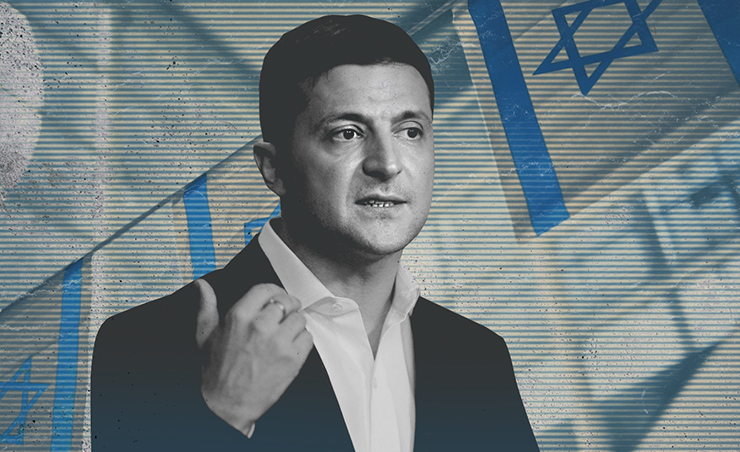
The Cradle | May 29, 2023
President Volodymyr Zelensky drafted and submitted a law to Ukraine’s parliament calling for the imposition of sanctions against Iran for a period of 50 years, Ukrainian state-media reported on 28 May.
“The document has already been submitted for consideration by the parliament’s leadership and the Committee on National Security, Defense and Intelligence,” state-media outlet Ukrinform said on Monday.
The draft was initially put forward on Saturday, 27 May.
“To approve the decision of the National Security and Defense Council of Ukraine dated May 27, 2023 ‘On the application of sectoral special economic and other restrictive measures (sanctions) to the Islamic Republic of Iran,’ put into effect by Presidential Decree No. 308/2023 dated May 27, 2023,” Ukrinform cites the draft as reading.
“The sanctions are to be imposed for 50 years,” it adds.
According to Kiev, the early hours of Sunday saw a massive Russian attack against Ukrainian forces, which involved the use of over 50 Iranian Shahed drones.
The Ukrainians claimed to have shot most of them down.
“This was the largest-ever drone attack on the capital since the beginning of the full-scale invasion, particularly using Shahed loitering munitions,” Ukrainian media cited a military official as saying.
Ukraine has consistently condemned Iran for its alliance with Russia, accusing Tehran of supplying military assistance, namely its Shahed 136 drones, to Russian forces fighting the Ukrainian army.
The Islamic Republic has denied supplying any drones to Russia during the conflict, admitting only to deliveries made before the war in Ukraine.
In November last year, Iranian Foreign Minister Hossein Amir-Abdollahian revealed that Tehran and Kiev had agreed to hold a meeting to discuss the drone issue diplomatically but that the US and its allies sabotaged the meeting.
The US pressured Ukraine to cancel the talks because of its wish to take advantage of the Iranian drone issue and use it as part of its policy against the Islamic Republic, Abdollahian claimed at the time.
Iran has repeatedly asserted its neutrality in the conflict between Russia and Ukraine, and has, on many occasions, offered to mediate between the two sides.
Iran to unveil hypersonic missile ‘soon’: IRGC commander
Press TV – May 29, 2023
Iran’s Mersad air defense system fires a missile during the final stage of a massive maneuver, codenamed ‘Guardians of Velayat Sky-98,’ in the central province of Semnan.
A top commander of Iran’s Islamic Revolution Guards Corps (IRGC) says the country will unveil a homegrown hypersonic ballistic missile in the near future.
“The hypersonic missile has passed its tests and will be unveiled soon,” Brigadier General Amir-Ali Hajizadeh, the commander of the IRGC’s Aerospace Division, said on Monday.
He added that the new missile is capable of bypassing all air defense missile systems and targeting the enemy’s anti-missile systems.
The IRGC commander described the development of the missile as a “great leap in the field of missiles.”
“The hypersonic missile has a high speed (around 12-13 Mach) and can maneuver both in and out of the Earth’s atmosphere,” Hajizadeh said.
Hypersonic missiles can fly at speeds at least five times faster than the speed of sound, making them virtually impossible to intercept.
Back in November, Hajizadeh for the first time announced that Iran had developed a homegrown hypersonic ballistic missile capable of penetrating advanced aerial defense shields and striking designated targets.
Iran on Tuesday successfully test-launched its most advanced Khorramshahr-class ballistic missile, called Kheibar, a medium-range precision-guided missile that can carry a 1,500 kg warhead.
Kheibar is a liquid-fueled missile with a range of 2,000 kilometers and a warhead weighing 1,500 kilograms, designed by the Ministry of Defense’s Aerospace Industries Organization.
Despite being under sanctions for decades, Iran has become self-sufficient in designing and manufacturing different types of military equipment, including missiles.
Washington’s obsession with crushing Russia has dismantled its Middle East agenda

By Robert Inlakesh | RT | May 29, 2023
Once the undisputed hegemonic power in the Middle East, thought to be indispensable for the security and success of a range of regional leaderships, the US has been fading into the background to the benefit of its adversaries.
As armed conflict erupted between NATO-backed Ukraine and Russia in February of 2022, the Joe Biden administration in Washington decided to throw its weight behind Kiev and focus on a project to bog down Moscow, while unleashing wave after wave of sanctions. Despite spending at least $75 billion dollars on assistance to Ukraine and making Russia the most sanctioned nation on earth, the US has failed to bring Moscow to its knees. In fact, one could say that it is the US that has been cut down to size in the global arena, especially in the Middle East, an area it once considered its own backyard.
As the months pass, blow after blow has been inflicted on US power in the Middle East. In direct opposition to Washington’s agenda, the Syrian Arab Republic was readmitted to the Arab League following a 12-year hiatus, paving the way to end the crisis in Syria, which the US seeks to prolong. China has also entered Middle East politics in a dramatic way, brokering an Iranian-Saudi rapprochement back in March, and this then spurred a wider normalization wave. Although the US attempted to play off the Saudi Arabia-Iran agreement as an acceptable and welcomed move, this has now clearly worked to collapse Washington’s long-term effort towards regional supremacy, which was based on feeding a proxy conflict between the two powers.
The failure of US sanctions
Western leaders publicly predicted that Russia’s economy would collapse under sanctions, a result which clearly has not materialized, with the IMF predicting the Russian economy will grow. Similarly, the US “maximum pressure” sanctions that were first introduced against Iran under the Trump administration, were expected to severely hinder the Islamic Republic’s ability to continue its developments in the defense field, but have failed to achieve those goals.
Russia is now exporting more oil than it did in 2021, as its relations with China, the primary global competitor to the US, have advanced. Gulf States have also repeatedly let the US down and refrained from yielding to pressure to cut oil production. There is also the example of Algeria, which has become Italy’s largest gas supplier and raked in over $50 billion dollars in oil and gas revenues during 2022 alone, even as it retains close relations with Moscow. And when it comes to the West’s ban on Russian gold bullion, the UAE, Türkiye and China have reportedly stepped in to fill the gap.
However, perhaps the worst blowback against Russia sanctions has been the nullification of previous limits to Moscow-Tehran economic relations. The two nations are already the most sanctioned on earth, so they need not worry about the potential consequences from their trade, which has encouraged further cooperation between them. Recently, Russian President Vladimir Putin and Iranian President Ebrahim Raisi signed a deal to finance an Iranian railway line as part of a North-South Transport Corridor.
Failed propaganda
The Biden administration has employed hardline propaganda tactics in order to demonize Russia and lionize Ukraine. Although for some Western audiences the arguments set forth may have proven effective, in the global community and especially the Middle East, such rhetoric is tiresome and clearly hypocritical.
After having illegally invaded Iraq, inflicting around a million deaths, over a concoction of factually-challenged conspiracy theories about weapons of mass destruction, it comes off as laughable that the US is now claiming to oppose illegal invasions. Former Bush administration officials, such as Condolezza Rice, have even appeared on national television shows in the US to condemn illegal invasions of foreign countries. Even former US President George W. Bush seemingly condemned the “holy unjustified and brutal invasion of Iraq… I mean of Ukraine” in a Freudian slip.
The US has positioned itself now as being opposed to the illegal occupation of foreign territory, in addition to claiming it stands in principle against annexation. When US Secretary of State Antony Blinken was asked by a CNN correspondent whether his government supported the annexation of Syria’s Golan Heights by Israel, he answered: “Look, leaving aside the legalities of that question, as a practical matter, the Golan is very important to Israel’s security,” again demonstrating Washington’s double standards. Washington continues to maintain its recognition of the Golan Heights as Israeli territory, which not only defies international law, but also the majority opinion at the United Nations.
The faltering image of the US
From the perspective of Middle Eastern nations, the US is overcommitted to the conflict in Ukraine, even as they have refrained from taking a clear side and instead remained neutral for the most part. Neither the people nor the governments of these countries buy the platitudes espoused by US officials when it comes to Ukraine. The stark difference between the way Palestinians and Ukrainians are portrayed for the exact same actions are enough to make eyes roll.
Now that China is presenting opportunities for countless Middle East nations, especially in the economic sphere, the US has a real competitor. However, the US continues to operate as if the world has not undergone a dramatic shift and refuses to rein in its allies. Ukraine in some respects is getting the special treatment that Israel has enjoyed for years: unlimited aid with few or no questions asked. In the case of Israel, as its government proceeds with introducing controversial legal reforms, takes steps to change the status quo at the al-Aqsa Mosque and pursues hardline far-right policies against the Palestinian people, all coming at a cost to Washington itself, the Biden administration refuses to put it in its place. What Israel is currently doing is embarrassing its own Arab allies that recently normalized ties, even threatening to put a wedge in relations with the likes of neighboring Jordan.
It is this refusal to recalibrate that is not only costing the US its influence, but also evaporating the prize of bringing Israel and Saudi Arabia together, which has clearly been a foreign policy achievement goal dear to the Biden administration. Now that Riyadh and Tehran have restored relations, the excuse of combating Iran’s regional influence is gone for negotiating a Saudi-Israeli rapprochement. The refusal to punish Israel for its constant provocations also makes it more difficult for Saudi Arabia to normalize with an unrestrained Israeli government that continues to insult the Muslim world and invites popular Arab support for the Palestinian cause. If there is no change to the arrogant and out of touch approach of the US, which rules with an iron fist and a “my way or the highway” approach, it will be the US itself that is going to be taking a hike from the Middle East.
Robert Inlakesh is a political analyst, journalist and documentary filmmaker currently based in London, UK. He has reported from and lived in the Palestinian territories and currently works with Quds News. Director of ‘Steal of the Century: Trump’s Palestine-Israel Catastrophe’.
What Are Anti-Drone Systems and How Do They Work?
By Ilya Tsukanov – Sputnik – 29.05.2023
The NATO-Russia proxy conflict in Ukraine has demonstrated the significance of drones in modern warfare, with unmanned aerial vehicles (UAVs) used by both sides for reconnaissance, targeting, and kamikaze attacks. What are the four main kinds of anti-drone defenses? What are the advantages and disadvantages of each? Sputnik explores.
“The wars of the future will not be fought on a battlefield or at sea. They will be fought in space, or possibly on top of a very tall mountain. In either case, most of the actual fighting will be done by small robots and as you go forth today remember always – your duty is clear: to build and maintain those robots.”
That was the humorous but eerie prediction by the military school commandant in the 1997 The Simpsons episode “The Secret War of Lisa Simpson.” A quarter of a century later, the idea of using drones in warfare has become ubiquitous, and The Simpsons’ comedic flourish has been forever tainted by real-life conflict.
Although small propeller and rocket-propelled reconnaissance drones fitted with film cameras have been around since the Cold War, modern drone warfare, including camera-mounted, remote-operated GPS-equipped spy and strike drones, is a product of the early 21st century, with the United States kicking off the world’s first campaign of targeted killings using UAVs in 2002.
As small, inexpensive, off-the-shelf drones began entering the commercial market in the 2010s, they started to be used by non-state actors to attack armies and governments – with US-backed terrorists using them in the Syrian dirty war against Syrian and Russian forces, and Yemen’s Houthi militants deploying them against the Saudi-led coalition.
Large, military-grade drones were used to effect in the 2020 war between Azerbaijan and Armenian volunteers in Nagorno-Karabakh, and, starting in 2022, have been deployed extensively by NATO-backed Ukrainian forces in Donbass and throughout Ukraine against Russian forces. Russia has countered them using a series of domestically-developed drone defense systems. But more on that below.
Drone Defenses: What Types Are There?
In the second half of the 20th century, the USSR and the USA focused their air and missile defense research on targeting big, expensive manned fighters, bombers, transport planes, and ballistic and cruise missiles. Although this included research into fantastical concepts including the use of powerful lasers in space under Ronald Reagan’s Star Wars missile defense program, its main focus remained missiles – rocket-powered projectiles designed to intercept and destroy enemy aircraft and missiles.
Can Missiles Be Used to Down Drones?
For drones that are large enough – including unmanned combat aerial vehicles (UCAV) like the Bayraktar TB2, the General Atomics MQ-9 Reaper, or the Northrop Grumman RQ-4A Global Hawk, which have wingspans of 12, 20, or even 40 meters, respectively, the most effective defenses are still good old-fashioned missiles designed to target jet aircraft.
Last month, Russian Air Defense Force Commander Andrey Demin reported that over 100 Bayraktar drones had been destroyed in fighting in Ukraine.
“There are practically no fundamental distinctions between fighting against strategic drones like the US Global Hawk (RQ-4) or Reaper (MQ-9) or Turkiye’s operational-tactical Bayraktar-TB and counteraction to crewed aircraft. The elimination of more than 100 Bayraktars, delivered to Ukraine throughout the period of the special military operation, is clear evidence of this,” Demin said, speaking with Russia’s official army newspaper Krasnaya Zvezda.
For the battle against large drones, including their detection and destruction, the same monitoring and strike systems as those used against traditional aircraft can be used. This has been demonstrated not only in Ukraine, but with the June 2019 shootdown over Iranian airspace in the Strait of Hormuz of a $220 million Global Hawk operated by the US Navy by an Iranian road-mobile air defense system known as the 3rd Khordad.
How Can Electronic Countermeasures Be Used to Destroy Drones?
Smaller drones, including so-called mini and micro UAVs, are more difficult to detect, Demin admitted, pointing to these weapons’ “small effective reflective surface” for radar detection, and saying that tracking such systems and revealing their trajectory using standard radar equipment is “rather problematic.”
For this purpose, the Russian military has developed an air defense system of a different sort – the RLK-MTs Valdai, a special-purpose radar designed specifically to detect, suppress, and neutralize small drones with extremely low radar cross sections.
Developed by Almaz-Antey, manufacturer of the Buk and S-300/S-400/S-500 series of air and missile defense systems, the RLK-MTs is a vehicle-mounted radar complex designed to detect enemy drones at distances of up to 15 km, and to take them down using electronic countermeasures (using a control and navigation signal suppression module) at close-in ranges of 2 km or less. The complex’s detection systems include an X-band radar module, thermal imagers and cameras, a radio signal source-finder module. The vehicles can be operated remotely.
Demin confirmed that the RLK-MTs is “already performing combat missions to cover critical military and state facilities, including those in the special military operation zone,” and said he expects production of the systems to ramp up dramatically in the coming years.
Large, vehicle-based systems stuffed with detection systems and powerful electronic countermeasures are arguably the most capable defenses against small drones, but certainly aren’t the only ones. Smaller systems, ranging from commercial and industrial anti-drone monitoring and suppression hardware, to military-grade man-portable anti-drone rifles have been created by several Russian manufacturers. These weapons include the PARS-S Stepashka – a 9.6 kg anti-drone gun with the capability to hijack enemy drones and force them to land or return to their launch sites. The system is effective at ranges between 500 meters and 1.5 km.
Other, similar portable anti-drone systems have been spotted in footage from the battlefield, including the Stupor electromagnetic rifle – which uses electromagnetic pulses to suppress drones’ control channels and force them down.
How Can Lasers Fight Drones?
Advances in laser pulse weaponry have enhanced prospects for their use in modern warfare. Last year, Yuri Borisov – the former Russian deputy prime minister responsible for defense and the space industry since appointed boss of Roscosmos, revealed that the Russian military has tested a mystery combat laser system known as the Zadira that’s capable of incinerating drones in seconds at distances of up to 5 km in Ukraine. Its development began in 2016 under the auspices of the Russian Federal Nuclear Center, a subsidiary of Rosatom.
The Zadira is not to be confused with the Peresvet – a strategic laser weapon designed to target an enemy up to 1,500 km in orbit over the planet. That system entered combat duty on a test basis in December 2018, but has not been used in Ukraine.
Russia is not the only country tinkering with the use of laser weapons for anti-drone warfare, with the United States and Israel also working on such weapons.
Lasers have several clear advantages over conventional air defense missiles – including their low cost (Israeli officials have boasted, for example, that the new Iron Beam laser-based air defense system uses just $2-worth of electricity – 10,000-50,000 times less than conventional Iron Dome missiles). But lasers also have a number of drawbacks, including the need to secure large amounts of electricity (limiting their mobility), plus problems operating in certain weather conditions, including fog and cloud cover).
Can Drones Be Used to Counter Other Drones?
Last but not least in the list of portable anti-drone defenses are other UAVs. Systems like the ZALA Lancet multipurpose loitering munition/kamikaze drone are capable of targeting enemy UAVs, with its developers creating a concept which they’ve dubbed “air mining” involving the deployment of large numbers of Lancets in an area of the front to protect against incursions by heavy attack drones. As an enemy drones approach, the Lancet locks on to the enemy target and dives onto it at high speeds to force it from the skies.
How Successful Has Russia’s Anti-Drone War Been?
Since Russia entered the Ukraine crisis, it has made many of the difficult but necessary changes to supply the Army with the equipment it needs for effective drone warfare.
Last week, an unclassified intelligence assessment by Britain’s Ministry of Defense concluded that Russia’s military had successfully integrated drone reconnaissance into operations involving long-range missile strikes in the Ukrainian hinterland. Also last week, a separate report by Britain’s Royal United Services Institute calculated that Russia has been using electronic warfare capabilities to destroy upwards of 10,000 Ukrainian drones per month. According to the assessment, Russia maintains “a major electronic warfare system roughly every 6 miles (9.6 km)” along the entire 1,200 km front line.
These assessments echo complaints by an insider at Ukraine’s Defense Ministry, who told one Western outlet in March that Russian forces had obtained “black magic” capabilities against Ukraine’s vast arsenal of NATO-supplied drones, including the ability to “jam frequencies, spoof GPS, [and] send a drone to the wrong altitude so that it simply drops out of the sky.”
Ukraine’s prized drone fleet almost grounded
RT | May 29, 2023
Turkish Bayraktar UAVs were touted as wonder weapons, with officials in Kiev saying they would give them an advantage against Russia. One year later, however, only a few remaining units are being used far from the battlefield, and for reconnaissance rather than attack missions, a Pentagon-linked analyst has told Business Insider.
Ukraine purchased dozens of Bayraktar TB2 drones and used them to strike Donbass in violation of a ceasefire agreement at least once, even before the conflict with Russia began last February. Kiev also claims to have received an unspecified number of additional drones during the past year, despite Türkiye’s official neutrality.
In the first months of the conflict, Kiev routinely claimed to have conducted successful strikes using TB2s, but by July, the Bayraktars became “almost useless,” and Kiev reserved them for “rare special operations,” Ukrainian pilots told Foreign Policy at the time.
Russian forces destroyed “more than 100 Bayraktar drones” in Ukraine, the deputy commander-in-chief of the Air Force, Lieutenant-General Andrey Demin, claimed in April.
As of now, the Ukrainian fleet of “once-prized drones have almost entirely been shot down,” Business Insider wrote on Sunday, citing an expert in unmanned and robotic military systems at the Center for Naval Analyses, Samuel Bendett.
“As a relatively slow and low-flying UAV, it can become a target for a range of air defense systems that are well organized,” Bendett said, adding that “once the Russian military got its act together, it was able to down many TB2s.”
The Bayraktar TB2 is a design of Turkish company Baykar Makina, which costs around $2 million per unit. Ankara has touted the drones since 2020, when they were said to have helped Azerbaijan prevail in the 2020 Nagorno-Karabakh conflict. Turkish troops have also deployed them in Syria and Libya.
Responding to a prank caller last year, the head of the Association of Defense Enterprises of Ukraine admitted there was “more PR and corruption in Bayraktar than combat use,” and claimed “they were all shot down within a week.”
Earlier this month, a Bayraktar TB2 was destroyed after it reportedly went rogue over the Ukrainian capital, with a video showing the drone being taken down by a shoulder-fired rocket.
While pro-Ukrainian ‘open source intel’ accounts initially claimed it was a Russian Corsair, the Ukrainian military later admitted that they had to destroy their own drone after the operators failed to regain control.
Fake Scientific Studies by Nobel Prize Winner and Johns Hopkins Prof. Gregg Semenza
BY IGOR CHUDOV | MAY 28, 2023
Gregg Semenza, a pediatrician and a professor of Genetic Science, is a prominent researcher. Prof. Semenza works at Johns Hopkins University, a premier scientific institution so important that it received $1,050,368,895 from the Bill and Melinda Gates Foundation. (JHU played the most prominent role in the Covid pandemic response.)

Prof. Semenza made major discoveries regarding how cells adapt to oxygen availability. Those findings could potentially lead to curing cancer! So important was his work that he was awarded a Nobel Prize in medicine in 2019.

There was a small problem, however.
Seven of his studies were fake and were eventually retracted. Retraction Watch has the details. Even the pictures of mice used in the studies were photoshopped:
The authors have retracted this article as multiple image irregularities have been noted within this article, specifically: Figure 1A, upper panel (HIF-1a blot), lanes five and seven appear to be duplicates. Figure 6B, lower panel (b-actin blot), the first six lanes appear to be identical to Fig. 6G, lower panel (b-actin blot). Figure 3G, the image of the third mouse in the D10 Saline group is identical to the image of the third mouse in the D21 Digoxin group.
Here’s one retracted article and the retraction notice. I downloaded the image from that study and highlighted the mouse in question, which appears in two pictures but with different scan results.

The authors copied/pasted the mouse picture and overlaid different scan results on the two copies. So, they did not have the scientific measurements they claimed to have!
Other retractions expose similarly ridiculous scientific fraud, including fake Western blots and more.
This fraud was not perpetrated by an obscure researcher languishing at a third-rate institution. Quite to the contrary, Prof. Semenza is a world-renowned scientist, occupying a position at a premier facility favored by the major funder of science, Bill and Melinda Gates Foundation.
Prof. Semenza shares the honor of receiving a Nobel prize with other famed recipients, such as Barack Obama, recipient of the 2009 Nobel Peace Prize, and António Egas Moniz, inventor of lobotomy and the winner of the 1949 Nobel Prize in medicine.

Antonio Moniz, Inventor of Lobotomy
So, the world of Nobel prizes is very special!
In consolation, we at least know about this fraud, and Semenza’s articles in question were properly retracted. So the self-correcting scientific process worked as intended, at last.
Sadly, as we know, retractions do not always work in an evidence-based, scientific way. For example, many honest articles questioning Covid vaccines or masks were retracted under pressure from science funders.
I feel that my trust in scientists has been violated by “COVID science” and certain other new scientific developments, but I still like the science of the good kind. I have much less faith in Nobel Prizes, however.
GOP Lawmakers Demand FBI Briefing on Jan. 6 Pipe Bomb Investigation Following Whistleblower Disclosures
By Debra Heine | American Greatness | May 25, 2023
Republicans on the House Judiciary Committee are demanding an FBI briefing on the status of their January 6 Pipe Bomb Investigation following disclosures that the feds have enough information to identify a suspect.
In a letter to FBI Director Christopher Wray, Judiciary Committee Chairman Jim Jordan, Rep. Andy Biggs (R-Ariz.) and Rep. Bill Posey (R-Fla.) said the slow progression of the Bureau’s investigation into the pipe bombs “raises significant concerns about the FBI’s prioritization of that case in relation to other January 6 investigations.”
Former FBI agent Kyle Seraphin, a whistleblower who worked on the pipe bomb investigation, told the Washington Times that after planting the bombs, the suspect used a MetroRail SmarTrip card to travel through the Washington metro system to a stop in northern Virginia.
“The FBI used security footage in the Northern Virginia to identify the license plate of the car that the individual entered,” the congressmen wrote. “Still, the FBI has not identified the subject.”
The suspect was caught on surveillance video. He wore a sweatshirt with the hood pulled up, a pair of Air Max Speed Turf shoes with a yellow Nike logo, a backpack and gloves. He was recorded walking through Capitol Hill neighborhoods carrying what federal investigators said were two live pipe bombs.
However, Mr. Seraphin said technicians determined the pipe bombs were inoperable.
His story runs counter to the FBI’s official version that the devices could have detonated at any time. The bureau repeated that story in January while offering a $500,000 reward for information leading to the suspect’s arrest.
Seraphin also told Times reporter Kerry Picket that a separate individual bought the Metrorail SmarTrip card one year before the pipe bomber suspect used it on Jan. 5, 2021.
“The card had never been used before. It was bought a year prior by a retired chief master sergeant in the Air Force, and he was a security contractor. So he held a security clearance,” Seraphin said.
Mr. Seraphin and his team surveilled the retired airman, who lived in a Northern Virginia townhouse, for a couple of days and learned about his background.
Although Mr. Seraphin, who also served in the Air Force, wanted to approach the Air Force veteran and talk to him, his bureau superiors forbade him to do so before his team was removed from the case.
“I don’t know what they [eventually] did on that case, but I know that it was BS and the bombs were BS, and it seems like they had a good lead, and they could have run it down. But as far as I know, they never did,” he told the Times. “He may still be occasionally surveilled. That’s how dumb it gets.”
The congressmen cited former FBI assistant director Christopher Swecker, who told Picket, “[i]t just doesn’t add up . . . [t]here’s just too much to work with to not know who this guy is.”
The committee requested an update on the case in a briefing no later that June 7, 2023.
Government report claims pandemic as a precedent for ‘environmental’ policy
Lockdowns show behavioural restrictions are possible with the right messaging, a political disease we have yet to learn the extent of
eugyppius: a plague chronicle | May 22, 2023
The Advisory Council on the Environment is a body of experts convened by the Federal Republic of Germany to advise the state on matters of environmental policy. I’m grateful to @tomdabassman on Twitter for drawing attention to their recent and deeply creepy 200-page report on “The obligation of policymakers: Facilitating environmentally friendly behaviour.” It abounds in remarkable and revealing statements, and I’ve spent a good part of the day studying it for a longer post that I hope to write in the coming weeks.
For now, I want to draw your attention to the introduction, which is bad enough. Its authors depart from the premise that the state currently lacks “policy measures … targeting environmentally relevant behaviour,” and join others in affirming that it is the job of the state to nudge individual decisions in the right direction. Tellingly, both the pandemic and the sanctions-induced European energy crisis play a very large role in their thinking:
Although the key environmental crises, such as loss of biodiversity and climate change, are less directly visible and tangible than the energy crisis and the pandemic, environmental policymakers can learn from the sometimes painful but also important experiences of recent years: Behavioural changes in the population can be a part of the solution to crises such as these, and it is possible to adopt and implement policies aimed at changing behaviours.
For example, Germany introduced a series of measures in mid-2022 to alleviate the energy crisis … These measures targeted the behaviour of citizens. In addition to general calls to save energy, building owners were obliged to optimise their heating systems, employees had to accept lower room temperatures at work and it was forbidden to heat private swimming pools …. Earlier, Germany imposed far-reaching pandemic measures to contain the spread of Corona. For example, since 2020, the stated adopted and imposed various lockdowns and social contact limitations. Both highlight the contribution of behavioural changes, whether in energy consumption or social behaviour, to the project of combating a collective problem …
The aforementioned measures doubtless demanded a lot from people and in the specifics of the necessary extent of the restrictions, they proved controversial, as also in their unequal impact on different social groups. Nevertheless, the two crises show that political measures to carefully restrict the behaviour of citizens are possible if the threat is correspondingly great and the importance of the protected good – in these examples, health and energy – is recognised. The state has succeeded (even if not in every individual case) in devising measures such that they achieve their goal while maintaining proportionality. It is also clearly possible for these policies to be designed and communicated in such a way that the majority support them.
Emphasis mine. All of this speaks for itself, and I don’t have much to add, except to observe that the only way for restrictions to be “communicated” such that “the majority support them,” is by renewed forays into state media-fuelled mass panic and hysteria. Corona has taught our rulers that a great deal more is possible than they ever imagined, and they will spend the coming years exploring the limits.
Featured Video

Elijah Magnier: Yemen’s strikes are shattering Saudi Arabia’s long-term strategy
or go to
Aletho News Archives – Video-Images
From the Archives
British weapons and personnel doing much of the killing in Yemen
Press TV – June 18, 2019
A detailed report published by the Guardian newspaper has shown how Britain is massively contributing to Saudi Arabia’s devastating war on Yemen as it suggests that London is not only supplying the bombs that fall on Yemenis, but it provides the personnel and expertise that keep the war going.
The comprehensive report by Arron Merat published on Tuesday showed that Britain was doing much of the killing in Yemen as the country continues to provide Saudi Arabia with everything it needs to turn its southern impoverished neighbor into a graveyard.
“Every day Yemen is hit by British bombs – dropped by British planes that are flown by British-trained pilots and maintained and prepared inside Saudi Arabia by thousands of British contractors,” said Merat in the report. … continue
Blog Roll
 Aletho News
- Racist Seinfeld Dances for Joy as Bibi Unveils His New Map
- A West Bank War for Netanyahu’s Election Campaign, Could It Backfire?
- Yemen denounces European Parliament’s ‘hypocritical’ push to blacklist Ansarullah
- Qalibaf: UAE’s UN bid aims to ‘clear the runway’ for ‘Greater Israel’, whitewash genocide
- Pakistan reopens Iran border after boosting security: Report
- Why are so many Brazilians voting for Flávio Bolsonaro?
- Democrats Put Anti-Russia Agenda Ahead of American Workers
- Elijah Magnier: Yemen’s Strikes Are Shattering Saudi Arabia’s Long-Term Strategy
- Pentagon designates Chinese cultural centers national security threat
- Israel Demolishes Home Of Lebanese Journalist Whose Viral Film Exposed Pager Attack
- If Americans Knew
- An error has occurred; the feed is probably down. Try again later.
- No Tricks Zone
- Sudden Stratospheric Warming, Powerful El Niño Combination May Lead To Extreme Europe Cold, Energy Crisis!
- Two New Studies Find Thwaites Glacier Melt Cannot Be Driven By Human Activity Or A Warming Ocean
- E-Cars Reduce CO2 Emissions By Only 41% Compared To Internal Combustion Engine Vehicles
- Predictions Made By Renowned Climate Professor Over Past Decades Have Been Proven To Be Poor
- New Study Suggests Large Regions Of The Pacific Ocean Have Been Cooling For The Last 80 Years
- Germany’s Green Energy Debacle: High Energy Costs Force Kahla Porzellan to Close After 182 Years!
- New Study: 50 Years Of The Most Aggressive ‘Net Zero’ Policies Can Only Affect The Global Climate By 0.03°C
- US September “Heat” Was No Record…Many Records Set Decades Ago
- Latest European Green Energy Debacle; Portugal’s Largest Flagship Solar Park Insolvent!
- Green Energy Debacle: German Expert Professor Fritz Vahrenholt Warns Of Severe Economic And Social Consequences

