Iran signals decisive response to end US maritime bullying, piracy
Al Mayadeen | April 29, 2026
A senior Iranian security source has indicated that Tehran is preparing what it describes as a decisive and potentially unprecedented response to ongoing US maritime piracy in the strategic waters surrounding the Strait of Hormuz.
Speaking to Press TV on Wednesday, the source warned that continued US actions, described as a form of maritime blockade, would soon be met with a direct military response. “The continued US acts of piracy and maritime bullying will be met with a practical and unprecedented response,” the source stated, signaling a shift away from restraint toward escalation.
According to the official, Iran’s armed forces, operating under the central command structure of Khatam al-Anbiya Headquarters, now view continued patience as no longer strategically viable. The source emphasized that a “painful response” has become necessary if Washington maintains what Tehran considers an illegal siege around one of the world’s most critical energy corridors.
Iranian officials are increasingly framing US naval actions as “maritime piracy,” an escalation that reflects both legal positioning and signaling. The source reiterated that Tehran no longer sees the United States as confronting a passive or predictable adversary.
He pointed to Iran’s historical experience in “imposed wars,” arguing that past confrontations have reshaped the balance of expectations. Iran, he said, has demonstrated the capacity to neutralize US strategies through resilience, asymmetric tactics, and strategic patience.
The source also credited Iran’s leadership, describing it as “wise, courageous, and decisive,” in steering the country through prolonged pressure campaigns while maintaining internal cohesion and military readiness.
Trump eager for off-ramp in war on Iran, but Netanyahu has him trapped: Former official
By Alireza Kamandi | Press TV | April 29, 2026
Donald Trump is eager to find an off-ramp, declare “victory,” and end the war against Iran – but Benjamin Netanyahu is not, leaving Trump trapped, says a former chief of staff to the US Secretary of State.
In an interview with the Press TV website, Colonel Lawrence Wilkerson – former chief of staff to Colin Powell from 2002 to 2005 – said that as tensions with Iran simmer following the recent US-Israeli war against the country, a complex picture is emerging of a Washington administration caught between tactical necessity and political traps.
He said the central question surrounding the White House’s strategy is whether the Trump administration is using the lull in hostilities to rebuild its military capacity.
“There is an ongoing effort to replace critical munitions, expedite repair of warships in maintenance, and alert and prepare more land forces for possible action,” he said, adding that this logistical surge extends to Tel Aviv, where efforts are underway to replenish munitions and call up more reservists.
As for the Trump administration’s self-declared “maritime blockade” of Iranian ports, the timeline is elastic, Wilkerson said, adding that the US can sustain the pressure indefinitely, but only as long as necessary to secure an agreement with Tehran on what constitutes the end of war.
“However, this is where the internal rift becomes critical. President Trump is eager to find an exit, to declare ‘victory’, and to end the conflict, but Netanyahu is not. So, Trump is trapped,” he said.
The former official noted this dynamic suggests that the duration of the blockade depends heavily on the outcome of upcoming Israeli elections and who ultimately emerges as the winner there.
For now, the US finds itself locked into a maritime strategy whose off-ramp is controlled by Israel with conflicting war aims, he told the Press TV website.
When asked how long Israel could sustain a war against Iran without direct US military intervention, the answer was stark: “Not very long—probably less than a month.”
The reason is not a lack of will, but sheer logistics, he stated.
“The supply of fuel, oil, munitions, and even material not available because of the deterioration of Israel’s economy, would be non-existent,” he remarked.
Wilkerson emphasized that the most profound geopolitical consequence of the US-Israeli strikes on Iran will be felt thousands of miles away, in Asia and the Persian Gulf states.
Asian nations are already reassessing their military cooperation with Washington.
“The perception of the United States as a stabilizing, reliable anchor is fracturing. For the Persian Gulf monarchies that have long relied on the US security umbrella, and for Asian powers concerned about energy security and trade routes,” he noted.
On events unfolding inside the US and the recent shooting during the White House correspondents’ dinner, he said these things happen in the Empire, but more frequently with Trump, as he is “a very controversial president.”
“One wonders as well if one or two of the attempts were not staged, such as the one in Pennsylvania and the one on the golf course. Staged to build sympathy for a president who loves the limelight and being ‘loved’,” he stated.
He attributed the violence to a deeply fractured US administration and the American Empire.
“A great many people loathe Donald Trump, believe him directly involved in the Epstein scandal, and do not care for his style of ‘leadership’, plus, wars overseas tend to come home, i.e., violence in war creates violence at home,” he told the Press TV website.
Ukraine Seeks to Provoke a Nuclear Conflict: Zakharova
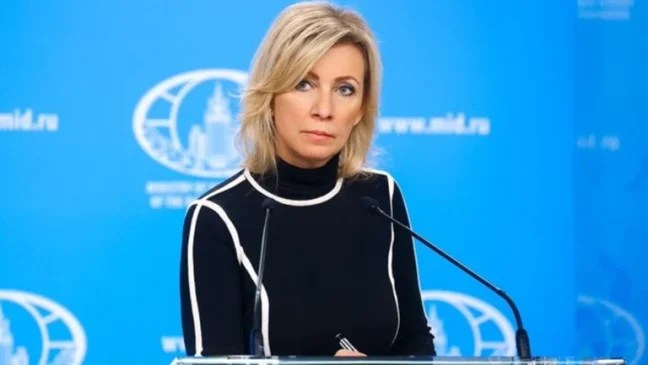
teleSUR | April 29, 2026
On Wednesday, Russian Foreign Ministry Spokeswoman Maria Zakharova denounced that Ukrainian President Volodymyr Zelensky is sabotaging any and all peace initiatives and is now creating conditions for a potential nuclear conflict.
“The diplomat drew attention to Zelensky’s earlier remarks that Ukraine should be given both NATO membership and nuclear weapons as security guarantees,” TASS reported.
“In fact, he continues to provoke a nuclear conflict with such statements. Moreover, Western Europe risks becoming the first victim of this very nuclear blackmail,” Zakharova stated.
“Zelensky clearly does not want peace. He seeks to prolong the fighting indefinitely and is ready to risk a dangerous escalation of the conflict,” she added.
Putin Accuses Ukraine of Resorting to Terrorist Tactics
On Tuesday, Russian President Vladimir Putin denounced that Ukraine is resorting to terrorist actions against the civilian population and infrastructure because it is unable to stop the advance of Russian forces. During a meeting on ensuring security in the upcoming elections, he stressed that the risks of terrorist attacks on Russia are growing.
“The Kiev regime, unable to stop Russia from advancing along the line of engagement, has resorted to overt terrorist methods with the help of its patrons. Ukraine is losing territories day after day and is staking on terror because of its inability to change the situation,” Putin stated, adding that Zelensky hopes that acts of terrorism against Russia will change the situation.
Putin also denounced that the Kiev regime will try to meddle in the 2026 Russian parliamentary elections. More specifically, Ukraine will try to prevent elections from being held in Donbass and Novorossiya.
US squares up to China over Panama Canal
RT | April 29, 2026
The US has announced a six-nation coalition aimed at pressuring China to relinquish its interests in two ports in the Panama Canal, accusing Beijing of infringing on Panama’s sovereignty and politicizing global trade. China has called the claims “baseless.”
The development is part of a pattern of US efforts to push China out of Latin America. The US National Security Strategy calls for non-Western “competitors” to be prevented from owning or controlling key assets in the Western Hemisphere.
Last year, US President Donald Trump claimed that China is “operating the Panama Canal” and threatened to “take it back.”
The US State Department issued a joint statement on Tuesday with Bolivia, Costa Rica, Guyana, Paraguay, and Trinidad and Tobago, saying they support Panama against what they describe as external pressure from China.
”Any attempts to undermine Panama’s sovereignty are a threat to us all,” the statement read, adding that Panama “must remain free from any undue external pressure,” and that freedom in the region is “non-negotiable.”
China rejected the accusations, with the Foreign Ministry hitting back on Wednesday against what it called a smear campaign.
”It is the United States that is politicizing and over-securitizing the port issue… hypocritically posturing and spreading rumors and smears everywhere,” spokesman Lin Jian said, dismissing the claims as “baseless and a complete distortion of facts.”
Lin urged the countries involved not to “be deceived or used by forces with ulterior motives” regarding the port inspections, which he said were conducted lawfully.
The US-led campaign follows a ruling in January by Panama’s Supreme Court that annulled contracts held by a subsidiary of Hong Kong-based CK Hutchison Holdings for the Balboa and Cristobal, two key ports at the canal’s entrances – a move that the US has backed.
The Chinese company, which managed the terminals for nearly three decades, has contested the ruling, alleging unlawful expropriation, and has launched international arbitration, seeking over $2 billion in reparations.
Monroe Doctrine 2.0: ‘Great Reset’ for US Imperialism?
Sputnik – 29.04.2026
“The United States is a declining power worldwide. It needs to reassert its powers,” Brazilian economics and international affairs scholar Vinicius Vieira told Sputnik, commenting on recently approved Monroe Doctrine 2.0 strategy and the Senate’s refusal to block the president’s power to invade Cuba.
For Washington, establishing greater control over Latin America, especially Mexico, the Caribbean and Central America, may seem like an opportunity to start afresh in reasserting its great power status, Dr. Vieira says.
Regime change in Cuba, for example, would not mean independence or democratization for the island nation, “but a return to the status prior to the Cuban Revolution – a protectorate de facto, US territory de facto.”
The problem is, the neighborhood is not what it was 150-200 years ago. Washington’s neighbors “want a relationship based on equal respect and mutual recognition,” and controlling South America may prove “too ambitious” entirely, given linkages they’ve established with other members of the Global South.
What’s more, “the costs for the US to implement this type of policy are quite high…because it depends on coercion, on sticks, no carrots at all,” Vieira stressed. Speaking of carrots, the US has “lost leverage” in this domain vis-à-vis China and its development projects, according to the scholar.
Ultimately, Monroe 2.0 could prove “too costly,” and “rather than bringing the United States to its golden days of hegemony…may just accelerate its decline because of its very high costs in terms of money and reputation,” Vieira summed up.
Nuclear Apartheid: Iran’s Rise Exposes the NPT Fraud and the West’s Israel Exception
By Freddie Ponton – 21st Century Wire – April 29, 2026
The fight over Iran’s vice presidency at the 2026 NPT Review Conference looked procedural only if one ignored the history that walked into the room with it. The United States, the United Kingdom, speaking for France and Germany, Australia, and the United Arab Emirates objected to Iran’s appointment, yet Iran kept the post after a Non-Aligned Movement nomination and no blocking vote was forced, exposing a basic fact that now hangs over the treaty system. The United Arab Emirates did not merely object but formally and unequivocally disassociated itself from Iran’s election, while citing Tehran’s continuous violations of its safeguards obligations.
That moment is crucial because it revealed a shrinking gap between Western power and Western authority. The states that still dominate military alliances, financial coercion, and media narratives could denounce Tehran in New York, but they could not turn denunciation into institutional compliance, and they could not persuade the wider diplomatic field that their understanding of non-proliferation deserved automatic deference. What looked like a dispute over one vice presidency was in fact a public measure of a much deeper revolt against selective enforcement.
The bargain they broke
The deeper story begins in 1995, when the NPT was indefinitely extended on the basis of a broader political package that included the Resolution on the Middle East. That resolution called on all states in the region that had not yet done so to join the treaty and place their nuclear facilities under full-scope IAEA safeguards, and the UN Secretariat background paper explicitly records that the resolution was an essential element of the outcome on which indefinite extension was secured.
The 2010 Review Conference reaffirmed that point in unusually clear language. It said the 1995 resolution remained valid until its goals were achieved, recalled the importance of Israel’s accession to the treaty and the placement of all its nuclear facilities under comprehensive safeguards, and endorsed concrete steps toward a 2012 conference on a Middle East zone free of nuclear weapons and other weapons of mass destruction. The conference never delivered what it promised, and Algeria’s 2026 working paper now states bluntly that Israel’s stance helped render the 1995 resolution “devoid of substance,” while the UN Secretariat paper records that many states saw the failure of implementation as seriously undermining the treaty itself.
The Israeli exception
That is why so much of the Global South reads the current crisis through Israel rather than through Iran alone. The UN Secretariat background paper states in neutral terms that all states of the Middle East except Israel are parties to the NPT and that all states in the region except Israel have undertaken to accept comprehensive IAEA safeguards, giving documentary form to the asymmetry that the Non-Aligned Movement (NAM) and Arab states have been protesting for decades.
NAM’s own recent language is harsher because the political implications are harsher. At the 2024 IAEA General Conference record, Uganda speaking on behalf of NAM warned that a selective approach undermined the viability of the safeguards regime, expressed great concern over Israel’s acquisition of nuclear capability, and called for a total prohibition on nuclear-related transfers and assistance to Israel, while the April 2026 NAM statement to the UN Disarmament Commission again demanded that Israel renounce nuclear weapons, accede to the NPT without precondition or delay, and place all its facilities under full-scope safeguards.
That continuity was reaffirmed in the Kampala Declaration, which carried the same line through 2025 and closed the institutional bridge to the April 2026 NAM position. For the movement, this is not a side file or an ideological hobbyhorse. It is the living proof that the rules are preached as universal and applied as political.
The South’s quiet revolt
Once that history is acknowledged, the so-called silence of NAM and many Global South states on Iran’s vice presidency stops looking like ambiguity and starts looking like discipline. They did not need to issue sentimental declarations of love for Tehran in order to refuse a Western effort to re-police multilateral legitimacy, because the issue before them was larger than Iran’s image and deeper than one nomination. It was whether the same powers that had tolerated, normalized, or materially shielded the Middle East’s only non-NPT nuclear exception would now be allowed to decide who is morally disqualified from procedural office inside the treaty system.
That is why the resistance was institutional rather than theatrical. After dismissing the objections as baseless and politically motivated, Iran disassociated itself from the election of the United States as vice president, and according to one contemporaneous account, from Australia’s as well, turning the confrontation into a mirror held up to the old order. The 2025 report of the sixth session of the conference on a Middle East zone free of nuclear weapons and other weapons of mass destruction said Israel’s refusal to join the NPT and submit all its facilities and activities to comprehensive safeguards undermined the credibility of the non-proliferation regime and imposed additional burdens on regional states, while the same report condemned attacks on Iran’s safeguarded nuclear facilities as a grave threat to the credibility of the NPT and the integrity of the entire IAEA safeguards regime.
In that setting, refusing to let Washington, London, Paris, Berlin, and Canberra define the boundaries of legitimacy was not indulgence toward Iran, but a defense of sovereign equality against a one-sided nuclear order.
What their objection revealed
The objections from the United States, the E3, and Australia therefore boomeranged. They were intended to isolate Iran, but they instead illuminated the moral exhaustion of a bloc that speaks in the language of non-proliferation while presiding over an order in which disarmament obligations are endlessly deferred, nuclear sharing and modernization continue, and Israel’s opaque arsenal remains politically protected from the universality routinely demanded of others. The analysis from the European Journal of International Law (EJIL) long ago captured the pattern by showing how NAM kept international attention on Israel’s nuclear status and how double standards around Israel helped fuel resistance inside the regime, and the documents gathered since then show that this reading did not fade but hardened.
Australia’s place in this picture is revealing precisely because it is less central than Washington or the E3 and yet moved in lockstep with them against Iran’s vice presidency. That choice placed Canberra inside a camp that could still object loudly but could no longer command consent, and it tied Australia to a diplomatic posture that much of the Global South now experiences as selective guardianship rather than principled stewardship. The same is true of the E3, whose claim to defend the treaty sounds increasingly thin when the documentary record shows decades of unfinished obligations on the Middle East file and continued Western insistence that the burden of credibility falls primarily on disfavored treaty members rather than on the region’s protected exception.
A treaty stripped bare
What emerged in New York, then, was not simply a quarrel over Iran. In fact, we all witnessed the exposure of a treaty order whose founding compromise on the Middle East has been repeatedly postponed, diluted, and evaded, until many of the states asked to keep faith with the system now see the system itself as compromised at the core. The 2026 UN Secretariat paper, the 2026 Algeria submission, the April 2026 NAM statement, the 2024 IAEA record, and the 2025 IAEA safeguards resolution all converge on the same underlying reality that Israel’s non-accession, unsafeguarded status, and continuing exceptional treatment have become inseparable from the crisis of NPT credibility.
That is why Iran’s vice presidency is so significant, because it marks the point at which a large part of the non-aligned world stopped pretending that the greatest danger to the treaty’s legitimacy begins and ends in Tehran, and instead used procedure to register a quieter but more consequential judgment that the deeper non-proliferation crisis lies in a regime that punishes some, excuses others, and then demands respect for the imbalance it created.
On April 27th, the West could still denounce, but could no longer decide; and that, more than the vice presidency itself, is the message now being sent from the Global South to Washington, the E3, and Australia.
Continued US maritime piracy will face ‘practical, unprecedented’ response from Iran
Press TV – April 29, 2026
The continued American maritime piracy and banditry in the form of so-called “naval blockade” will soon be met with “practical and unprecedented action,” a high-ranking security source told Press TV on Wednesday.
Iran’s armed forces – operating under the Khatam al-Anbiya Headquarters as the war command – believe that patience has limits and that a punishing response is necessary if Washington maintains its illegal naval blockade around the Strait of Hormuz, the source said.
He further emphasized that Iran has proven in recent imposed wars that the United States no longer faces a passive or predictable adversary.
Through the spirited resistance of its people and armed forces, and the wise, courageous, and decisive leadership of the Leader of the Islamic Revolution, Ayatollah Seyyed Mojtaba Khamenei, Iran has managed to neutralize and discredit all American options on the table.
The source said the restraint shown by armed forces so far has been intended to give diplomacy a chance, allowing the United States to learn of and accept Iran’s conditions for ending the war permanently.
This pause, he hastened to add, was meant to provide President Donald Trump an opportunity to pull the United States out of the current quagmire it finds itself in.
However, if American obstinacy and delusions continue and Iran’s conditions are rejected, the official warned that the enemy should soon expect a different kind of response to the ongoing naval blockade, which is akin to maritime banditry.
He also referred to the economic consequences of closing the Strait of Hormuz and maintaining a naval blockade, which, in essence, is American maritime banditry.
While acknowledging that such actions would affect all countries – including Iran – the source noted that Iran’s decades of experience in circumventing sanctions, its thousands of kilometers of land borders, and its pre-existing measures to counter maritime sieges make the country far more resilient to economic pressure than the United States.
Notably, the high-ranking security source contrasted Iranian public opinion with that of the American people, saying Iran’s population holds the US responsible for the current situation, whereas American public opinion does not side with its own government, instead blaming the incumbent government for the unprovoked war on Iran and its aftermath.
The high-level source further warned that a continued American blockade and closure of the Strait of Hormuz might ultimately harm the US more than Iran and that a decisive response is deemed necessary by the top military command to completely discredit even this remaining American option.
The US-Israeli coalition launched an unprovoked and illegal war of aggression against the Islamic Republic on February 28, amidst nuclear talks, triggering a strong Iranian response.
Nearly 60 days into the war imposed on Iran, the United States is now searching for an off-ramp, having suffered significant losses on both the battlefield and at the negotiating table.
Last week, after the two-week ceasefire ended, Trump unilaterally extended it indefinitely, and his administration has since been in back-channel talks with Pakistan to resume negotiations with the Iranian side, suggesting he wants to exit the quagmire.
China discovers 225 large, medium-sized crude oil, natural gas fields from 2021 to 2025: Ministry of Natural Resources
Global Times | April 29, 2026
China’s Ministry of Natural Resources said on Wednesday that during the 14th Five-Year Plan (2021-25) period, 225 large and medium-sized crude oil and natural gas fields were discovered, including 13 oil fields with reserves exceeding 100 million tons and 26 gas fields with reserves exceeding 100 billion cubic meters.
The ministry said that, during period, in collaboration with relevant departments, it made oil and gas the top priority of the new round of strategic mineral exploration breakthroughs, with a cumulative investment of nearly 450 billion yuan ($65.81 billion), and vowed to resolutely ensure that China’s energy supply remains firmly within its own control.
The remarks were made at the regular press briefing held by the ministry, which introduces the achievements of China’s new round of strategic mineral exploration breakthroughs, including the oil and gas resources.
The ministry said the newly proven geological reserves of petroleum and hydrocarbon natural gas rose by 51.7 percent and 44.2 percent, respectively, compared to the last year of the 13th Five-Year Plan (2016-20) period.
Newly proven geological reserves of deep coal-bed methane exceeded 1 trillion cubic meters, surpassing the total cumulative proven reserves of shallow coal-bed methane in history.
In 2025, there reported shale oil proven geological reserves scatter across five major basins and eight oil fields, accounting for 38 percent of the year’s new proven crude oil reserves. Unconventional oil and natural gas exploration has become a new engine driving high-growth increases, according to the ministry.
In 2025, China’s crude oil production hit a record high of 216 million tons. Natural gas output exceeded 260 billion cubic meters, rising by over 10 billion cubic meters annually for nine straight years. Shale oil output topped 8.5 million tons, and shale gas remained above 27 billion cubic meters, providing key support for increasing reserves and production.
Total oil and gas production reached 420 million tons of oil equivalent, making a vital contribution to national energy security, the ministry said.
In the deep-sea sector, the ultra-deep-water gas field, Deep Sea No. 1 was successfully brought into production, positioning China among the world’s leaders in deep-water oil and gas exploration and development. Total offshore oil and gas output surpassed 90 million tons of oil equivalent, representing a major substantive breakthrough in the strategic expansion of exploration from shallow to deep strata and from land to sea.
The significance of the oil and gas exploration breakthroughs achieved during the 14th Five-Year Plan period goes beyond mere numerical growth in reserves and production, Niu Li, an official from the ministry, said.
More importantly, “we have extended our exploration reach into deeper and more challenging frontiers, expanding the space for exploration and development, and firmly placing the initiative for energy security in our own hands,” Niu added.
Moving forward, “we will continue to advance oil and gas exploration and development, consolidate the positive trend of stable oil and increased gas,” and resolutely ensure that China’s energy supply remains firmly within its own control, Niu said.
No More Bombs for Iran, Economic War Instead?
By Larry C. Johnson | SONAR21 | April 29, 2026
Trump assembled his national security team in Washington on Monday afternoon to figure out how to respond to Iran’s latest missive delivered via Pakistan — i.e., end the blockade and then we’ll talk about other issues. The Wall Street Journal reports that Trump opted for economic warfare against Iran as it carried less risk, instead of resuming bombing or trying to exit the conflict. That’s the good news. However, President Trump also instructed White House aides to prepare for an extended blockade on Iran.
Before I explain why that is a foolish, unworkable policy that will fail, let’s look at what Secretary of the Treasury Scott Bessent had to say:
“The Treasury Department, through Economic Fury, has targeted Iran’s international shadow banking infrastructure, access to crypto, shadow fleet, weapons procurement networks, funding for terrorist proxies in the region, and independent Chinese “teapot” refineries that support Iran’s oil trade. These actions have disrupted tens of billions of dollars in revenue that would be used to fund terrorism.
Under President Trump’s’ maximum pressure campaign, Tehran’s inflation has doubled and its currency has rapidly depreciated.
Kharg Island, Iran’s primary oil export terminal, is soon nearing storage capacity, which will force the regime to reduce oil production, resulting in an additional approximately $170 million per day in lost revenue, and causing permanent damage to Iran’s oil infrastructure. Treasury will continue to exert maximum pressure and any person, vessel, or entity facilitating illicit flows to Tehran risks exposure to U.S. sanctions.”
Notwithstanding the US blockade, Iran continues to fill oil tankers that are sailing out of the Persian Gulf. Iran has continued loading oil onto tankers even as the US blocks their route out. With no large volumes clearly circumventing the blockade, the loaded crude is largely filling up tankers Iran has available in the region. At least two fully laden Iranian tankers — the Hero II and Hedy — sailed out of the Persian Gulf and past the US blockade on April 20, part of a flotilla that has ferried roughly 9 million barrels of oil to market. Most tankers hauling Iranian barrels routinely sail with their automatic position signals disabled.
Since the start of the conflict, at least 52 “ghost fleet” tankers laden with Iranian oil have left the Persian Gulf, some broadcasting their signals and others operating clandestinely. These tankers are en route to Malaysia to conduct ship-to-ship transfers with other vessels bound for China.
Here is the problem the US faces in trying to impose a blockade: If the US stops an Iranian vessel and takes control of it, then the US Navy must assign one ship to accompany it to a location the US controls. The US does not have enough US Navy ships to carry out such a mission on a broad scale. All Iran needs to do is load up 20 tankers and send them to sea simultaneously. The US may be able to stop two or three, but the rest will penetrate the blockade and arrive at their respective destinations.
What about imports for Iran? According to the Fars News Agency, Pakistan has opened six corridors with Iran to bypass the US blockade. More than 3,000 containers bound for Iran are being transited over land.
Ironically, even though it is Iran that effectively closed the Strait of Hormuz, the US bragging about its blockade of the Strait takes the onus off of Iran as the rest of the world begins to suffer a massive economic contraction from the Strait being closed.
Instead of suffering the wrath of nations deprived of oil and LNG from the Persian Gulf, Iran will buy itself some much needed support as it allows ships heading toward friendly nations to pass through the Strait in numbers that will make it impossible for the US Navy to stop them.
If my friend — Alex at Reporterfy — is correct, the global economy is going to face major headwinds that will be more damaging than the economic crisis of 2008. At that point the US will face major pressure to end the blockade, which is more symbolic than substantive, and renew negotiations with Iran. Iran for its part is not going to beg for relief… Iran has the full backing, including economic support, from Russia and China. Scott Bessent is deluding himself and misleading Trump by insisting that his version of economic warfare will force Iran, Russia and China to bend the knee to Washington. Ain’t going to happen. … videos
“Trump’s presidency is at risk of being destroyed” Col Douglas Macgregor
ANI News | April 28, 2026
Iran has legal right to act in Hormuz, holds US responsible for disruptions: UN mission
Press TV – April 28, 2026
Iran, which is not a party to the 1982 UN Convention on the Law of the Sea, asserts its legal right to take “necessary and proportionate measures” in the Strait of Hormuz, and holds the United States responsible for any disruptions to maritime transport in the vital waterway, the country’s permanent mission to the United Nations said.
The mission said on Tuesday that US actions in the Strait of Hormuz have severely compromised international maritime safety. The mission made the remarks in two posts on X, a day after Iran addressed at a meeting of the United Nations Security Council (UNSC) on Maritime safety.
The mission pointed out that Iran is not a party to the 1982 Convention on the Law of the Sea and therefore does not regard its provisions as binding.
As the principal coastal state, Iran retains the legal authority to implement necessary measures within the Strait of Hormuz to address security threats and to prevent any military or hostile exploitation of this vital passage, it said.
Iran’s mission further noted that the Islamic Republic reserves the right to ensure safe passage in the Strait of Hormuz and to protect its national interests against hostile activities.
It further asserted that the US has engaged in unlawful actions that disrupt maritime transport, such as the imposition of a maritime blockade, the illegal seizure of Iranian vessels, and the detention of their crews.
Such actions not only violate international law and the UN Charter but also constitute acts of piracy.
As tensions escalate in the region, the Iranian government says that the US’s aggressive maritime policies pose a direct threat to international navigation and regional stability.
The Iranian mission further called for accountability regarding US transgressions.
Tensions have been running high over a so-called naval blockade the US has enforced on Iranian ports and ships, as well as American attempts to conduct mine-sweeping operations in the Strait of Hormuz.
Iranian officials have said the blockade is unlawful and a breach of a two-week ceasefire that took effect on April 8 and was again unilaterally extended by US President Donald Trump hours before it was set to expire on April 22.
Featured Video

HE SAVED LIVES. NOW HE FACES PRISON.
or go to
Aletho News Archives – Video-Images
From the Archives
NATO Sanctions and the Coming Global Diesel Fuel Disaster
By F. William Engdahl – New Eastern Outlook – 11.04.2022
Amid the ongoing global inflation crisis, NATO heads of state and mainstream media repeat a mantra that high energy prices are a direct result of Putin’s actions in Ukraine since end of February. The reality is that it is the western sanctions that are responsible. Those sanctions including cutting SWIFT interbank access for key Russian banks and some of the most severe sanctions ever imposed, are hardly having an impact on the military actions in Ukraine. What many overlook is the fact that they are increasingly impacting the economies of the West, especially the EU and USA. A closer look at the state of the global supply of diesel fuel is alarming. But Western sanctions planners at the US Treasury and the EU know fully well what they are doing. And it bodes ill for the world economy.
While most of us rarely think about diesel fuel as anything other than a pollutant, in fact it is essential to the entire world economy in a way few energy sources are. The director general of Fuels Europe, part of the European Petroleum Refiners Association, stated recently, “… there is a clear link between diesel and GDP, because almost everything that goes into and out of a factory goes using diesel.” … continue
Blog Roll
 Aletho News
- Italy to move military personnel from Taif base after missile strike
- Finland’s Stubb tells European leaders to calm down
- Defeating Russia on battlefield impossible – Fico
- Finland’s Gender Clinic Reversal
- Massachusetts Wants Mental Health Visits, Why Does Government Use ‘Health’ to Enter Our Homes & Families?
- US lawmaker admits American people footing bill for Trump’s failed aggression against Iran
- Pfizer Gave $500,000 to Groups That Lobbied to End Religious Exemption in Massachusetts
- HE SAVED LIVES. NOW HE FACES PRISON.
- Israeli lobby seeks to bind US fate to ‘Israel’: Araghchi
- Pakistan-Iran talks secure LNG shipment to Islamabad through Hormuz
- If Americans Knew
- Israel Carries Out New Ceasefire Violations Across Gaza
- AI – Emphasis on the ‘I’: Israel Is Funding AI Chatbot Propaganda
- Israel Blocking Hundreds of Wheelchairs for Injured Children From Entering Gaza
- Israel Is Expanding and Upgrading Compounds for Palestinian Militias in Gaza
- The Palestinian-American Residents of This West Bank Town Are Wondering: Where Is Trump?
- Gaza desperately needs tents, wheelchairs, fuel… and everything else (Israel blocks it all) – Daily Update
- Israeli Attacks in Gaza Kill at Least Seven Palestinians Over Three Days, including Woman and Child
- Trump’s militarization of Washington DC as he pursues Israel’s war against Iran
- Why Israel Fears This Searing New Documentary
- Huckabee aide solicited cash gifts from Israelis
- No Tricks Zone
- 2025 Nature Paper Claiming Worsening Global Drought Gets RETRACTED …Heavily Flawed
- New Study: ‘Global Drought Shows No Detectable Recent Acceleration Under Climate Warming’
- Economic Masterminds: German Socialists Suggest Taxing Productivity Gains Stemming From Using AI
- The South China Sea Has Not Been Cooperating With The Climate Change Narrative
- Energy Crisis: Germany Enters Heating Season With Historically Low Gas Reserve Fill Levels
- New Study: The Antarctic Ice Sheet Gained Mass From 2020-2024 Due To Staggering Snow And Ice Accumulation
- Study: Ocean Heating Rates From Thousands Of Years Ago ‘Dwarf’ Modern Ocean Heating Rates
- Climate Extremists Target, Attack Large-Scale Power Grid Infrastructure In Germany!
- New Study: Antarctic Ice Melt Has Contributed Less Than 1 Centimeter To Sea Level Rise In The Last 30 Years
- Fear Of Debate: Alarmist German Climate Scientist Calls On Mainstream Media To Discredit Skeptic Voices

