US Democrats fundraise from arms dealers amid Pentagon budget fight
Press TV – April 29, 2023
Top Democratic lawmakers in the US are holding a fundraising meeting with major arms companies on Thursday as Washington plunges into a budget battle in which concessions to the Pentagon and the defense industry could mean cuts to welfare programs such as food stamps.
House Democratic Leader Hakeem Jeffries of New York, his deputy Pete Aguilar, and Democratic Congressional Campaign Committee (DCCC) chair Rep. Suzan Delbene have been selected as the honorees to be invited to the event. The downtown D.C. function ― dubbed a “defense and national security dinner” ― is set to raise funds for the committee, which is the campaign arm for House Democrats and is central to their hopes of regaining the lower chamber of Congress.
Dozens of representatives of Pentagon contractors, including Lockheed Martin, Boeing, Northrop Grumman, BAE Systems, SpaceX, Palantir, and General Dynamics will attend the event.
The group includes figures who previously worked for congressional Democrats, such as Shana Chandler, director of government relations at General Dynamics. Chandler spent 15 years as chief of staff for Rep. Adam Smith, the Democratic chairman of the House Armed Services Committee and another co-host of Thursday’s event.
The event could provide a significant signal about the priorities of the House Democrats as they prepare for the 2024 elections and battle Republicans who are demanding spending cuts in exchange for passing critical legislation. It could be a disappointing message to those who want the party to support social justice and progressive reform.
A senior congressional aide said news of the fundraiser set off alarm bells among staffers, and the event could be a stark example of senior Democratic leaders saying one thing but doing another. Democrats claim to support reining in out-of-control defense spending and criticize Republicans for serving America’s most powerful corporate interests while doing exactly that themselves.
In the coming months, Democratic lawmakers are expected to make key decisions that will affect the US defense industry as they fight Republican efforts to cut government spending.
US House Speaker Kevin McCarthy says he wants comprehensive cuts. But signals from influential Republicans and analysis by budget experts suggest that McCarthy will protect the Pentagon budget.
Democrats can also demand limits on Pentagon spending to protect other government agencies. However, the defense industry will lobby hard to prevent such a development.
The United States remains by far the world’s biggest military spender, according to new data on global military spending published today by the Stockholm International Peace Research Institute (SIPRI).
US military spending reached $877 billion in 2022, which was 39 percent of total global military spending and three times more than the amount spent by China, the world’s second largest spender.
The 0.7 percent real-terms increase in US spending in 2022 would have been even greater had it not been for the highest levels of inflation since 1981.
“The increase in the USA’s military spending in 2022 was largely accounted for by the unprecedented level of financial military aid it provided to Ukraine,” said Dr Nan Tian, SIPRI Senior Researcher. “Given the scale of US spending, even a minor increase in percentage terms has a significant impact on the level of global military expenditure.”
US financial military aid to Ukraine totaled $19.9 billion in 2022. Although this was the largest amount of military aid given by any country to a single beneficiary in any year since the cold war, it represented only 2.3 percent of total US military spending.
In 2022 the USA allocated $295 billion to military operations and maintenance, $264 billion to procurement and research and development, and $167 billion to military personnel.
Poland Wants To Provoke Russia Into Being The First To Formally Cut Off Bilateral Relations
BY ANDREW KORYBKO | APRIL 29, 2023
Poland’s ruling “Law & Justice” (PiS) party is hellbent on provoking Russia into being the first to formally cut off bilateral relations as proven by Warsaw’s earlier seizing of its embassy’s bank account on ridiculous “anti-terrorist” pretexts and Saturday’s police raid against an embassy-run school in the capital. The Kremlin is therefore under immense pressure to respond to these developments, though it’s unclear at the time of this analysis’ publication whether it’ll do what Poland expects.
The purpose behind provoking Russia into this course of action is threefold: 1) PiS hopes to manipulate and subsequently exploit optics of this scandal in order to cultivate more support ahead of this fall’s elections; 2) Poland then plans to pressure the rest of the EU to formally cut off ties with Russia “out of solidarity”; and finally, 3) Warsaw wants to present itself to Washington as its most reliable anti-Russian ally. Each of these interconnected goals will now be briefly expanded upon.
Regarding the first, PiS fears that genuinely conservative-patriotic forces will flock to the anti-establishment Confederation party as an act of protest against the ruling one’s support for mass immigration from Ukraine over the past year. That could compel it to enter into a coalition government after this fall’s elections, which might reduce the intensity of Poland’s anti-Russian policies. Accordingly, they hope to exploit voters’ Russophobia to scare them into supporting the incumbents no matter what.
As for the second, Germany and Poland are fiercely competing for leadership over Central & Eastern Europe (CEE), but Warsaw has an edge when it comes to winning hearts and minds since it’s always one step ahead of Berlin in appealing to the region’s Russophobia. If Poland can successfully pressure Germany to follow its lead in formally cutting off ties with Russia if the latter is coerced into cutting them off first after this weekend’s incident, then it would be a major soft power victory.
Concerning the third, Poland’s envisaged restoration of its former “sphere of influence” is dependent on the US’ support, which can only be assured if it convinces American policymakers that their successfully reasserted hegemony over the EU is symbiotically dependent on these plans. To that end, Warsaw must show Washington that it’s more capable of leading the latter’s anti-Russian crusade in the EU during the New Cold War than Berlin is, hence the importance of provoking crises and getting Germany to follow.
These goals are all interconnected since the abovementioned grand strategy is purely PiS’ own creation. It therefore naturally follows that their potential loss of power after this fall’s elections – whether in whole if it’s replaced by the German-backed “Civic Platform” (PO) opposition or in part via a coalition with Confederation – could impede its regional plans and thus also the US’ to an extent as well. That’s why the latest diplomatic crisis with Russia was cooked up in order to help PiS stay in power.
Everything else proceeds from that scenario since their continued leadership of Poland would keep Warsaw in the race with Berlin for hearts and minds across CEE, thus giving Washington the option of choosing between them (or even cynically playing those two against each other) as its top EU partner. PiS’ potential removal from this geopolitical calculation in the event that voters punish it at the polls this fall could therefore have far-reaching consequences for the region and even for the New Cold War.
Poland’s Top Military Official Shared Some Unpopular Truths About The NATO-Russian Proxy War
BY ANDREW KORYBKO | APRIL 29, 2023
The last time that Chief of the General Staff of the Polish Armed Forces General Rajmund Andrzejczak generated media attention was in late January after he elaborated on how formidable Russia remained at the time, but now he’s once again making headlines for building upon this assessment. Poland’s Do Rzecy reported on his recent participation in a strategy session with the National Security Bureau, during which time he shared some unpopular truths about the NATO-Russian proxy war in Ukraine.
Andrzejczak said that the situation doesn’t look good for Kiev at all when considering the economic dynamics of this conflict, with him drawing particular attention to finance, infrastructure issues, social issues, technology, and food production, et al. From this vantage point, he predicts that Russia can continue conducting its special operation for 1-2 more years before it begins to feel any structural pressure to curtail its activities.
By contrast, Kiev is burning through tens of billions of dollars’ worth of aid, yet it still remains very far away from achieving its maximum objectives. Andrzejczak candidly said that Poland’s Western partners aren’t properly assessing the challenges that stand in the way of Ukraine’s victory, including those connected to the “race of logistics”/ war of attrition” that the NATO chief declared in mid-February. Another serious problem concerns refugees’ unwillingness to return to their homeland anytime soon.
These economic, logistical, and population factors combined to convince him that he must urgently raise the greatest possible awareness of these problems in order to “give Ukraine a chance to build its secure future”, which in the context that he shared this motivation, is a euphemism for even more Western aid. He elaborated by adding that “As a soldier, I am also obliged to present the most unfavorable and difficult to implement variant, giving a field to all those who can and should help Ukraine.”
Nobody should therefore doubt Andrzejczak’s intentions or suspect that he’s a so-called “Russian agent” since he sincerely wants the West to win its proxy war with Russia in Ukraine, but he’s also very worried that it might lose unless his side acknowledges the unpopular truths that he just shared. In his view, their failure to do so could doom Kiev to defeat, though the argument can also compellingly be made that indefinitely perpetuating this conflict like Poland seeks to do might be even more disastrous.
After all, none of the three challenges that he drew attention to can be overcome anytime soon. The only exception might be the population one, but that would entail changing EU legislation in order to allow the expulsion of refugees, which is unlikely to happen. The economic and logistical factors are systemic ones, which affect not only Ukraine, but the entire West in general. It’s simply impossible to sustain the pace, scale, and scope of the West’s multidimensional aid to Ukraine if the conflict drags on.
As Andrzejczak himself admitted, “We just don’t have ammunition. The industry is not ready not only to send equipment to Ukraine, but also to replenish our stocks, which are melting.” Considering that Poland is Ukraine’s third most important patron behind the Anglo-American Axis, this strongly suggests that all other NATO members are struggling just as much as it is to keep up the pace, scale, and scope of support, if not more since many are a lot smaller and thus less capable of contributing in this respect.
Accordingly, this observation means that Kiev’s upcoming counteroffensive will likely be its “last hurrah” prior to resuming peace talks with Russia since the West won’t be able to keep up its assistance for much longer. Andrzejczak seems keenly aware of this “politically inconvenient” fact, hence why he wants his side to give its proxies as much as possible until the end of that operation in the hopes that they can then be in a comparatively more advantageous position by the time these talks recommence.
He and those who think like him are making two very dangerous gambles: 1) they expect the upcoming counteroffensive to be at least mildly successful in gaining some ground; and 2) anticipate that Russia will agree to resume peace talks once this operation finally ends. The corresponding risks are obvious in that: 1) the counteroffensive might fail so badly that Russia exploits this disaster to gain an uncertain amount of ground instead; and/or 2) Moscow might not recommence talks upon Kiev’s request.
No responsible policymaker would take either of those variables for granted, hence why it’s arguably better if Kiev abandons its counteroffensive and accepts China’s ceasefire proposal instead of taking the growing risk that it fails and/or Russia keeps fighting knowing that Western support might soon end. Those interconnected worst-case scenarios are growing in likelihood due to the economic and logistical challenges that Andrzejczak identified, with only the chance of Russian mishaps balancing out the odds.
Nevertheless, all indications suggest that the counteroffensive will soon begin despite the serious challenges inherent in it, with this decision being driven by political factors connected with the need to show the Western public that their over $150 billion worth of aid has been spent on something tangible. Even if it ends up being a disastrous spectacle, decisionmakers are willing to take that risk, with some like Andrzejczak wanting to go all in out of desperation to score a final victory before resuming peace talks.
Has the NATO boss lost his mind?
By Martin Jay | Strategic Culture Foundation | April 28, 2023
So NATO now is planning on making Ukraine a member, or at least this is the rhetoric coming from its secretary general who recently announced it. Given that the very essence of what the Ukraine war is about is membership of this 31 member defence organisation it would seem unfitting for Stoltenberg to make such an announcement, especially considering that Hungary would always veto such an idea anyway.
So what’s really behind this latest ‘news’ item? Here are the five ways to interpret the subject of Ukraine becoming a NATO member. Buckle up.
News fodder not to be taken seriously. Could Stoltenberg just be bluffing? It’s quite possible, given the lack of any progress or battle victories on the side of Ukraine that he is concerned about the lull in media coverage and needs to throw the journalists a bone to chew on, to distract them away from reporting “Ukraine is losing the war”. And this NATO membership subject would certainly do that for a couple of weeks while Ukrainian troops cede defeat in Bakhmut which is slowly being taken by Russia. Although this town is not considered a ‘prize’ by either side, it is still a crush to the morale of Ukrainian forces who have taken heavy losses and will always be a negative talking point for western journalists – or the few who at least decide to report on Ukraine’s loss there.
Preparing for NATO troops to fight in Ukraine. It is entirely possible that NATO members and its chief are in a panic mode now that well over 100 bn dollars given to the Ukrainians in the last year seems to have vanished in terms of battlefield hardware with no real progress in sight; and also that the spring offensive which Ukraine is preparing – which would probably target the Crimean bridge and strategic towns like Mariupol – is being prepared for but is highly risky. For Ukraine to make any headway the offensive needs to be bold and this all-or-nothing game plan is worrying NATO as, in the event of heavy losses, it will push the West into a corner in how they explain this to their own voters (especially with U.S. election campaigning expected to start at the end of the summer). Are things so desperate that the Plan B that Stoltenberg has is that NATO troops – probably from eastern European countries that have the most to lose – will be sent to Ukraine? And that this NATO membership story is a ruse to prepare the west for this scenario as if NATO were to make Ukraine a member immediately, then, in theory Article 5 would apply and it would be an automatic process to send other NATO troops there?
Preparing for mercenaries from neo-Nazi groups in Europe to be sent there. This notion could well be the compromise for going full throttle on NATO membership and sending troops to Ukraine. Instead, would western countries consider looking at their own neo-Nazi groups and consider sending them on an informal basis with maximum plausible deniability that this is official policy? This is not as far-fetched as it sounds. In the UK in 2011, the security services gave full support to young Libyan men to travel there and fight with Al Qaeda groups against Ghaddafi so why wouldn’t they allow skinheads to travel to Ukraine in great numbers to fight Russians while keeping their social security benefits at home?
Guarantee that no negotiation for peace can take place. One of the nightmare scenarios for the West, in particular the U.S., is that Zelensky can’t keep his side of the bargain and looks to end the war. NATO and the U.S. clearly would like to rule this out and so how to do it without causing too much of a fall-out? Announce NATO membership as an incentive for when the war is over. But this narrative is too hard for the Ukrainian president to swallow given the losses that he is enduring on a daily basis and for the promises made for military hardware to bear fruit and in time. It seems a neat, swift and clever way of ruling out any peace talks between the U.S. and Russia also. One clean blow.
Panic after Zelensky reached out to China to broker peace. The problem with the former plan about guaranteeing that peace talks are blocked between U.S. and Russia is of course it swings the spotlight onto other superpowers, or the main one, in fact, China to step up to the mark. It must be incredibly frustrating for the Biden administration and the NATO boss to read in the newspaper at the end of February that Zelensky is openly asking the Chinese premier to come to Ukraine and to “call” him. There can be no grey area here with this appeal. Zelensky wants China to broker a peace deal as he knows it is impossible for his own sponsors and so-called allies to do so. This, on its own, may well explain a certain panic reaction by the U.S. which has been felt by the NATO boss as well and both of these camps are looking at “when shit hits the fan” scenarios of boots on the ground.
West’s efforts to isolate Russia have failed – Lavrov
RT | April 29, 2023
The West has failed to isolate Russia, with the majority of the world still interested in maintaining good relations with Moscow, Foreign Minister Sergey Lavrov has said. He also argued that the trend toward multipolarity is irreversible, whether former colonial powers like it or not.
Addressing the World Online Conference on Multipolarity on Saturday, Lavrov said that “Washington’s and its satellites’ efforts to reverse history, to force the international community to live by the invented ‘rules-based order’” are proving to be a fiasco, citing the “total failure” of the West “to isolate Russia.”
According to the foreign minister, a number of countries, which combined are home to 85% of the world’s population, have made it clear that they will not do the bidding of the former colonial powers.
The Russian diplomat said the fact that delegates from several dozen nations “from nearly every continent” attended the online forum shows just how much traction the idea of multipolarity has gained.
Lavrov noted that new global centers are emerging in Eurasia, the Indo-Pacific region, the Middle East, Africa, and Latin America, and that these nations are pursuing independent policies guided by national interests.
According to the foreign minister, developing nations have been steadily expanding their share in the global economy over the past three decades, while the role of the G7 nations has been diminishing.
He also hailed the fact that more and more countries have expressed interest in joining international groups “of the new kind,” such as BRICS and the Shanghai Cooperation Organization (SCO).
Russia, Lavrov explained, champions a multipolar world order based on respect for the UN charter, and a “balance of interests” as opposed to a “balance of fear.”
President Vladimir Putin said on Friday that Moscow will not abide by the “so-called rules” invented and imposed by “certain countries.”
Also on Friday, while addressing members of the SCO, Defense Minister Sergey Shoigu claimed that the West is putting “unprecedented pressure” on independent countries to pit them against Russia and China, and undermine the rise of the multipolar world.
On Monday, Lavrov called for the expansion of Asian, African, and Latin American representation in the UN Security Council, arguing that the West is over-represented in the international body.
ABC News censors presidential candidate’s vaccine comments
RT | April 28, 2023
ABC News has censored an interview with US presidential candidate Robert F. Kennedy Jr. – Joe Biden’s top challenger for the Democratic Party’s 2024 nomination – by removing his allegedly false assertions about Covid-19 vaccines.
“We should note that during our conversation, Kennedy made false claims about the Covid-19 vaccines,” ABC anchor Linsey Davis said on Thursday after airing her interview with the nephew of former President John F. Kennedy.
She added that Kennedy made “misleading claims” contrary to research findings about a link between certain vaccines and autism. “We’ve used our editorial judgment in not including portions of that exchange in our interview.”
Davis sparred with Kennedy during the interview, saying his past claims about vaccines causing autism had been totally “debunked.” As the candidate began to explain why he believes major public health agencies, such as the US Centers for Disease Control and Prevention (CDC), are “captive,” his comments were cut off. The clip then cuts to Davis pointing out that some of Kennedy’s family members disagree with his views on vaccines.
“I’m just curious, if you’re not able to get your own sisters to vote for you for president, how would you make that appeal to American voters?” the host asked. Kennedy replied that he has a large family with a tradition of openly discussing issues on which they disagree. “That’s something that I think is a lesson we ought to learn for this country. We can disagree with each other without hating each other, without marginalizing each other.” Davis shot back, “I’m just using your family’s words to call you dangerous, rather than saying that’s not like the typical family that might have disagreements around the kitchen table.”
Kennedy noted on Friday that federal law prohibits broadcasters from censoring presidential candidates.
“Instead of journalism, the public saw a hatchet job,” he said. “Instead of information, they got defamation and unsheathed pharma propaganda. Americans deserve to hear the full interview so they can make up their own minds. How can democracy function without a free and unbiased press?”
A Fox News poll released on Thursday showed that although President Biden’s rivals for the Democratic Party’s nomination are longshot candidates, Kennedy is gaining ground. While 62% of Democrat voters want the party to nominate Biden for re-election, 19% favor Kennedy. A previous poll indicated that Kennedy was supported by 14% of Democrats after entering the race earlier this month.
Kennedy is the nephew of John F. Kennedy, who was assassinated in 1963, and the son of presidential candidate Robert F. Kennedy, who was shot dead on the campaign trail in 1968. He has pledged to end the “corrupt merger between state and corporate power” and has spoken out against Washington’s policy of using military power to enforce global hegemony. “The Ukraine war is the final collapse of the neocons’ short-lived ‘American Century,’” he said earlier this month.
Meeting of the Defense Ministers of the Shanghai Cooperation Organization in Delhi
By Gilbert Doctorow | April 28, 2023
One quite important event today in global politics is unlikely to receive coverage in The New York Times, The Financial Times, the BBC or Euronews. I have in mind the meeting in Delhi of the defense ministers of the Shanghai Cooperation Organization.
The SCO is one of the two principal bodies that bring together the nations that are today challengers to the US-dominated world order. The other such body is BRICS.
Whereas BRICS is primarily an economic fraternity with focus on commercial relations among its members, meaning a platform of Soft Power, the SCO is primarily a Hard Power fraternity focusing on the security of its member states. It is also more limited geographically, concentrated on Eurasia. Its founding members were China, Russia, Kazakhstan, Kyrgyzstan and Tajikistan. Today it also includes Uzbekistan, India and Pakistan. Among the states accorded “observer” status are Afghanistan, Mongolia and Iran. And at its edges as “dialogue partners” are Armenia, Azerbaijan, Cambodia, Egypt, Nepal, Qatar, Saudi Arabia, Sri Lanka and Turkey.
There were a couple of outstanding and newsworthy developments at the SCO gathering in India today. One was the speech delivered by Russian Defense Minister Sergei Shoigu. Several minutes from this speech were carried on Russian news channels and what we heard was Shoigu declaring that from the start of the Special Military Operation in Ukraine the Collective West was throwing all of its military assets against Russia.
The other noteworthy development was the side meeting of Shoigu and his Chinese counterpart Li Shangfu. They were shown on television walking side by side to that meeting. Russian news tells us that Li used their meeting to extend an invitation to Shoigu to visit him in Beijing, and that Shoigu accepted.
The impact on the other SCO member states, observers and dialogue partners of these close and fast developing relations between the Russian and Chinese defense ministries cannot be overstated. Today they were all direct witnesses of this fact. Among other things, this spells the end of opportunities for Central Asian states to play Russia off against China in obtaining favors, as Western media believed they were doing. It completely vitiates all efforts by U.S. Secretary of State Blinken over the past several months to pressure these same Central Asian countries into loosening or breaking ties with Moscow. These states are now all caught between a rock and a hard place.
The drama of the Russian-Chinese entente also will bear on the future conduct of India and Pakistan. Here, too, the options for playing games or fence sitting are fast disappearing. For their part, Iran and Saudi Arabia will surely be among the countries taking great comfort in the bloc forming between the states they rely on to pursue a foreign policy independent of diktat from Washington.
©Gilbert Doctorow, 2023
State Covid Propaganda Destroyed Public’s Ability to Consent to Vaccines – Chairman of UK Council for Psychotherapy

BY DR CHRISTIAN BUCKLAND | THE DAILY SCEPTIC | APRIL 28, 2023
There follows an open letter from Dr. Christian Buckland, Chairman of the Board of the U.K. Council for Psychotherapy, to Prime Minister Rishi Sunak condemning the “use of unethical psychological techniques and behavioural science on the unknowing and non-consenting U.K. public”. Among numerous harms are that the use of techniques to increase fear, shame and guilt “materially undermined, if not removed, the U.K. population’s ability to give valid informed consent to taking a COVID-19 vaccine”.
April 28th 2023
Dear Prime Minister,
I am the Chairman of the Board of the U.K. Council for Psychotherapy (UKCP), one of the UK’s foremost psychological governing bodies. However, I write this open letter in my own capacity. I believe I have a professional obligation to write to you in an attempt to protect the public from any further harm caused by the unethical application of psychological research and practice.
I unreservedly condemn the U.K. Government’s use of unethical psychological techniques intended to elicit feelings of fear, shame and guilt, under the guise of behavioural science and insights which were designed to change the public’s behaviour without their knowledge and conscious participation. It is now clear that in 2020 the U.K. Government deliberately chose to artificially inflate the level of fear within the U.K. population by exaggerating the risk factors of COVID-19, and concomitantly downplaying the protective factors. We also witnessed the Government’s promotion of social disapproval and guilt messaging. These techniques were embedded into a multi-channel, co-ordinated public health campaign designed to change the public’s behaviour without their knowledge. Moreover, in tandem with the mainstream media, the Government also proactively suppressed, censored and ostracised any healthcare professional or scientist who suggested alternative responses to COIVD-19, or who simply questioned the messaging and measures being implemented by the Government.
Evidence of the recommendation of using unethical psychological techniques to gain behavioural change
The Government document titled ‘Options for increasing adherence to social distancing measures’ was written for the Government by the Scientific Pandemic Insights Group on Behaviours (SPI-B) which is a subgroup of the Scientific Advisory Group for Emergencies (SAGE).
The premise of the document was to provide options for changing the behaviour of the U.K. public without their knowledge. A passage within this document states: “A substantial number of people still do not feel sufficiently personally threatened”. It makes certain recommendations including:
- “The perceived level of personal threat needs to be increased among those who are complacent, using hard hitting emotional messaging”
- “Coercion”
- “Social disapproval”
The recommendations made by SPI-B included ones intended to elicit feelings of fear, shame and guilt. Psychological practitioners know that deliberately trying to frighten someone into change with erroneous or exaggerated information can easily cause long-term psychological damage. We also know that using social disapproval can create splits and divisions within society, and that inducing feelings of guilt can elevate the risk of suicide.
SPI-B also included a simple risk assessment matrix which acknowledges that the “spill over effects” of using media to increase the sense of personal threat and of using social disapproval “could be negative”. There is also a statement demonstrating there was a conversation regarding the spill over effects, although this does not appear to be fully documented. The risk factors and ethics of using fear, shame, guilt and coercion would almost certainly have been known to the members of SPI-B because several members were British Psychological Society (BPS) registered chartered psychologists. In an interview with one of the members of SPI-B, BPS registered educational psychologist Dr. Gavin Morgan, he refers to the use of fear by his SPI-B colleagues and says (as relayed by Laura Dodsworth, in A State of Fear pp. 262,263):
“Clearly using fear as a means of control is not ethical. What you do as a psychologist is co-construction. Using fear smacks of totalitarianism. It’s not an ethical stance for any modern government.” … Was it unethical to use fear, I asked? “Well I didn’t suggest we use fear.” But your colleagues did. What do you think of that? He paused. “Oh God.” Another reluctant pause. “It’s not ethical,” he said.
Like Dr. Morgan, any BPS registered psychologists within SPI-B would or should have recognised that recommending the Government uses fear as a means of controlling the public breached their professional code of ethics and conduct. An urgent investigation is required both by the U.K. Government and the BPS. Two specific points of the British Psychological Society Code of Ethics and Conduct (2021) that may have been broken are (with my emphasis):
3.3 Responsibility. Because of their acknowledged expertise, members of the Society often enjoy professional autonomy; responsibility is an essential element of autonomy. Members must accept appropriate responsibility for what is within their power, control or management. Awareness of responsibility ensures that the trust of others is not abused, the power of influence is properly managed and that duty towards others is always paramount. Statement of values: Members value their responsibilities to persons and peoples, to the general public, and to the profession and science of psychology, including the avoidance of harm and the prevention of misuse or abuse of their contribution to society. In applying these values, psychologists should consider:
- Professional accountability;
- Responsible use of their knowledge and skills;
- Respect for the welfare of humans, non-humans and the living world;
- Potentially competing duties.
3.4 Integrity. Acting with integrity includes being honest, truthful, accurate and consistent in one’s actions, words, decisions, methods and outcomes. It requires setting self-interest to one side and being objective and open to challenge in one’s behaviour in a professional context. Statement of values: Members value honesty, probity, accuracy, clarity and fairness in their interactions with all persons and peoples, and seek to promote integrity in all facets of their scientific and professional endeavours”.
Evidence that psychological techniques to induce fear, shame, guilt and coercion were used on the U.K. public
The SPI-B document in question demonstrates that the options of eliciting feelings of fear, shame, guilt and the use of coercion was recommended to the U.K. Government. There is evidence that those options were indeed subsequently deployed on the U.K. population.
In August 2022, you stated:
In every brief, we tried to say: let’s stop the ‘fear narrative’. It was always wrong from the beginning. I constantly said it was wrong… It was wrong to scare people like that.
Additionally, leaked WhatsApp messages from the former Health Minister at the time, Matt Hancock, published in the Daily Telegraph in March 2023, confirm that fear and guilt were used:
Hancock: We frighten the pants of everyone with the new strain. But the complications with that Brexit is taking the top line
Poole: Yep that’s what will get proper bahviour (sic) change
Hancock: When do we deploy the new variant …
Case: Ramping up messaging – the fear/guilt factor vital
The above are just two examples where senior Government Ministers recognised that fear and guilt was used as drivers for behavioural change of the UK population without their knowledge.
The existing literature
It is important to acknowledge that the above-mentioned psychological techniques were used on the U.K. population without their knowledge or consent, and that this in direct contradiction of long-established and carefully considered behavioural science advice which made clear that, in theory and practice, the consent of the public is paramount. According to a 2010 Institute for Government report:
The use of MINDSPACE (or other ‘nudge’ type policy tools) may require careful handling – in essence, the public need to give permission and help shape how such tools are used. (p10)
Continuing, the report states:
Policy-makers wishing to use these tools summarised in MINDSPACE need the approval of the public to do so. (p74)
Further literature supports that permission from the public is essential. David Halpern wrote in 2015:
If there is one great risk to the application of behavioural insights in policy, it is that the thread of public permission wears too thin. If governments, or indeed communities or companies, wish to use behavioural insights, they must seek and maintain the permission of the public to do so. (p365)
As there was no approval obtained, the options recommended and deployed were not in alignment with the principles of behavioural science.
It is important to highlight that the same kinds of techniques were used on children in relation to mask wearing, social distancing and vaccine uptake, with many techniques continuing into 2022. These techniques violated UNICEF’s recommendations from its ethical toolkit for behavioural science projects directed at children. The tool-kit states:
A core idea underlying the applied behavioural science approach is that interventions should not restrict choice and should transparently communicate project goals. When designing an intervention, practitioners should determine how transparent it will be to those affected by it. They should ensure that children and parents can easily opt out, and should design feedback mechanisms so that children and their parents can voice concerns, see the outcomes of their objections, and hold decision-makers to account.
The behavioural science literature also indicates a potential link between the misuse of behavioural psychology and an increased risk of suicide, stemming from an All Party Parliamentary Group Report on the Morse Review into the Loan Charge in 2020. One of the recommendations within the report demands:
An independent assessment and a suspension of HMRC’s use of behavioural psychology / behavioural insights, in light of the ongoing suicide risk to those impacted by the Loan Charge.
The literature highlights that approval from the public must be sought and maintained. Additionally, all behavioural science projects directed at children must have effective feedback mechanisms and methods of opting out, with decision makers able to be held accountable. There are also existing potential concerns that behavioural science may increase suicide levels. These important ethical aspects and safety signals appear to have been ignored. The lessons of history warn us that in times of existential crisis, whether real or only perceived, our ethics are at risk of being abandoned, and psychological knowledge can become misused by governments:
Under some historical conditions or circumstances and contexts, psychologists and psychological knowledge were in danger of being abused by political powers, largely for clandestine purposes, such as conducting torture or the persecution of political opponents. (Maercker A, Guski-Leinwand S, 2018)
It is of grave concern that the actions of the U.K. Government during the Covid era potentially fit into the category of abusing psychological knowledge and being absent of ethics, thus require serious investigation.
The impact of psychological pressure on informed consent
For the sake of brevity, I will not reiterate the multiple concerns already documented by others surrounding the consequences of the Government’s actions around lockdown, hospital discharges, school closures and mask mandates. I do, however, wish to highlight one extremely serious consequence that I believe has occurred as a direct result of the use of unethical psychological techniques and behavioural insights on the unknowing public: by adopting the techniques used, the Government significantly and materially undermined, if not removed, the U.K. population’s ability to give valid informed consent to taking a COVID-19 vaccine.
According to Public Health England:
Consent must be obtained before starting any treatment or physical investigation or before providing personal care for a patient. This includes the administration of all vaccines.
Also,
It is a legal and ethical principle that valid consent must be obtained before starting personal care, treatment or investigations.
Also,
For consent to immunisation to the (sic) valid, it must be given freely, voluntarily and without coercion by an appropriately informed person who has the mental capacity to consent to the administration of the vaccines in question.
From the above, it is clear that for medical consent to be valid it must be given without coercion. The Encyclopedia Britannica defines coercion as:
The threat or use of punitive measures against states, groups or individuals in order for them to undertake or desist from specified actions. In addition to the threat of or limited use of force (or both), coercion may entail economic sanctions, psychological pressures, and social ostracism.
The psychological techniques used by the U.K. Government fall under that definition of coercion. If follows that according to Public Health England’s statements and for the general public at least, consent to immunisation was invalidated by the behaviour of the U.K. Government. It is also important to highlight that there have been serious injuries and death directly linked to the COVID-19 vaccine. Many of those injured or who have died would not have taken a vaccine if they had not been psychologically pressured, feared being ostracised socially and were given accurate information.
The removal of the general population’s ability to give informed medical consent is of the gravest concern, and a severe and dangerous consequence of using behavioural insights and psychological techniques on an unknowing public.
Conclusion
The need to hold tightly to professional ethics, in particular to the ethical principle of informed consent, is not just an ‘academic’ issue. It is a matter of practical and fundamental importance to responsible government.
According to David Halpern, “Behavioural insights, like any other form of knowledge, can be used for good or bad” (p348). It is my opinion that the use of behavioural insights and psychological techniques designed to elicit feelings of fear, shame and guilt utilised by the U.K. Government since March 2020 has been unethical. The consequences are still unravelling but they appear to include serious damage to trust in government and its agencies, the NHS and the medical and scientific professions.
I propose that there be an immediate cessation of the use of all behavioural science techniques designed to elicit feelings of fear, shame and guilt used by the Government pending an urgent, open and independent inquiry. This inquiry should also have as an objective the re-establishment of ethical frameworks necessary to protect the public and to provide accountability. I would welcome a discussion on this most important of matters.
Most respectfully
Dr. Christian Buckland
Doctor of Psychology in Psychotherapy and Counselling
FEAR. This 4-letter word probably explains everything big that’s happening.
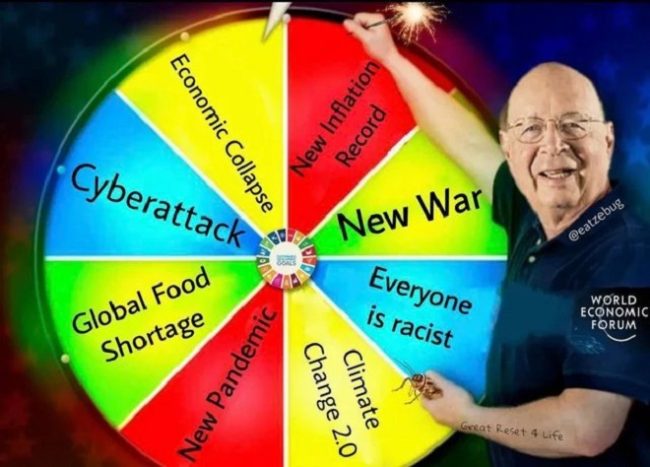
BY BILL RICE, JR. | APRIL 28, 2023
Don’t ask me why, but I woke up this morning thinking about fear …. And how it’s really the fear of fear that explains every scary thing happening in our world today.
Fear of Covid is the most-recent example of how authorities and our most influential and important organizations profit from selling (and exaggerating) “threats” we should all fear.
Thirty years ago, few people recognized that the CDC or Fauci’s NIAID or the World Health Organization would obtain so much power over our lives.
There’s no need to recount the draconian “mitigation measures” these authorities created to compel mass compliance with their dictates.
But more citizens should probably think about how these people exploited the population’s irrational fear of a respiratory virus to achieve even more immense power and control.
The greatest fear of all is death. It follows logically that any group that tells you they can and will prevent your death is probably going to receive our blind support … which of course happened in Covid times.
These agencies actually cemented their power decades earlier.
RFK, Jr. argues in “The Real Anthony Fauci” that Anthony Fauci became one of the world’s most influential people in the early and mid 1980s when he leveraged “fear of AIDS” to dramatically increase the funding and influence of his obscure health agency.
Back then, the fear was everyone was at risk of dying from AIDS (or HIV).
Like 99 percent of society’s great “threats,” the notion that AIDS was a potential killer of everyone was preposterously wrong. AIDS is actually only a risk to promiscuous gay men and drug users who share dirty needles.
Celia Farber, a rare contrarian real journalist and author, has noted that the “death of (real) science” can be traced to Fauci’s “politicization” of science.
Until the Great AIDS Scare, science and medical bureaucracies didn’t have tremendous influence on all of our lives. Back then our great fear (kind of like today) was “Russia! Russia! Russia” except four decades ago it was “Soviet Union! Soviet Union! Soviet Union!”
Today’s Great Fear is respiratory viruses.
In 1984 (the year, not the novel), nobody thought alleged experts in some Alphabet Bureaucratic Agency would end up telling everyone 100 things they had to do … and 100 things we couldn’t do.
But fear is a powerful thing and that’s exactly what happened. Not only did it happen, hardly anyone questioned the power given to these “experts.” (And those who did question the authorized narrative …. suddenly had a lot to fear).
It’s still surreal to me that in the “Land of the Free” so few people fear the growth of the government …. or the growth of censorship.
Why did everyone suddenly become a huge fan of Bigger Government?
I’ve thought a good bit about how or why all the key organizations and corporations went along with the massive growth of government.
Again, fear must provide the answer.
One assumes Amazon, Wal-Mart, JP Morgan, the colleges, Facebook, Twitter and Google, etc. must have been motivated, in part, by fear as well.
What these companies probably all fear is getting on the wrong side of the world’s 900-pound gorilla – the federal government.
If one happens to fear some person or organization, one strategy might be to become friends or allies with this mean-spirited bully. If you are too scared to fight “City Hall” … go ahead and join forces with this behemoth. Which is exactly what happened … on a grand scale.
As it turns out, the people who lead mega companies and influential organizations also fear losing their power, status and wealth.
They also fear “competition.” If the government (via its policies and crony-benefitting decisions) can make it much less likely a competitor will take away your company’s market share, it probably makes economic sense to support this ally.
Once upon a time, political scientists defined this result as “fascism.” Fascism occurs when big government and big business join forces to protect and expand their influence.
I’ve also written a good bit about the power of “The Current Thing” (aka the “authorized narrative.”)
In today’s world, the vast majority of citizens possess a fear of going against the Current Thing. What these people really fear is being cast out out of the “herd” for challenging the thinking of the pack … or of the pack’s leader(s).
A key question for our times is who created all the false or dubious narratives in the first place.
I don’t think government officials birthed all of society’s fear-producing narratives. But government has the most power and, ultimately, matters most.
Put it this way, if George Soros, Bill Gates, BlackRock or the Davos club members are really the master puppeteer’s pulling the most-important strings, they still couldn’t do anything they want without an army of enforcers in government.
Two months ago I wrote a piece arguing that all the most important “truth-seeking” institutions in society now seemingly exist to conceal important truths. One of these institutions is “academia” or higher education.
But why did the key leaders of 99.9 percent of the colleges go along with 100-percent of the authorized Covid narratives?
Fear strikes again. The colleges were simply afraid to lose billions of dollars of research grants and federal funding, which they knew would happen if they bit the hand of the beast who was feeding them.
Which brings me to my final point of this meditation on fear: The people and organizations who rule the world are also motivated by great fears. Their fear is losing control, losing their lofty status in society’s hierarchy.
At some level, they must also fear legions of citizens going for those proverbial pitch forks and coming after them.
By now, practically every Substack author has opined on why Fox News executives decided to dismiss Tucker Carlson. (This despite the fact Carlson produced the most popular TV news talk show on the planet).
My best guess is that someone in some high place (inside this company or outside of it) had to be afraid of the scathing monologues Tucker was airing on a nightly basis.
Tucker’s segments were beginning to resonate with far too many people. And virtually all of his programs had one common theme:
“Folks,” argued Tucker, “It’s about time we started identifying the real Bad Guys who are ruining our world.”
What Tucker was really telling his sizable audience is that government – and all its sycophant cronies – were the real threat to our society.
So someone decided Tucker had to go.
Before this, someone decided that Jame O’Keefe, the founder of Project Veritas, had to go.
Before that, someone figured out how to capture and neutralize The Drudge Report.
And before that someone decided that Julian Assange had to be locked up for life (for the crime of publishing true documents the Powers that Be didn’t want published.)
“Someone” also decided that social media and Big Tech had to heavily censor “dangerous misinformation” to “protect” people from the “harm” of free speech.
Until recent years, most Americans didn’t even know that free speech was that dangerous to them.
John and Nisha Whitehead just wrote an excellent essay which tells readers who is really afraid.
“The war on free speech is really a war on the right to criticize the government,” they wrote.
“… In fact, the government has become increasingly intolerant of speech that challenges its power, reveals its corruption, exposes its lies, and encourages the citizenry to push back against the government’s many injustices.”
That is, the government (and all its many cronies) are afraid of any speech that doesn’t square with its own fear-producing narratives.
In short, the government is afraid of We the People.
More specifically, the government is afraid of large numbers of citizens shedding their irrational fears. If and when this happens, the majority of citizens may no longer run to their Nanny to protect them.
Tucker Carlson referenced this in his first tweet since being dismissed by Fox News. This message has now been viewed by more than 74 million people … so clearly Carlson’s message resonates with massive numbers of people.
The key message: There’s a lot more of us than there are of them. One suspects the people who benefit from selling fear also know this … which must be what scares the hell out of them.
The victor in the existential battle currently being waged will be determined by what message resonates with the most people – the government’s message (that only the government can save us all) … or the message being shared by the dissidents our government clearly fears.
If we’re all going to continue to be motivated by fear, let’s hope more people at least begin to fear our real enemy … which (great news) I think is starting to happen.
Featured Video

Russia Helping Build a New Middle East /Trita Parsi
or go to
Aletho News Archives – Video-Images
From the Archives
Sam Husseini: The entire US establishment helped lie their way into the Iraq war
By Slava Zilber | American Herald Tribune | October 14, 2019
Sam Husseini is a senior analyst with the Institute for Public Accuracy, independent journalist and contributor to The Nation and FAIR.
Slava Zilber: Sam, three years ago, you appeared on Talk Nation Radio with David Swanson and spoke about the case of the GCHQ whistleblower Katharine Gun. You pointed out that the people involved in the spying on the UN and the people authorizing the Iraq War were not held accountable:
“Virtually everybody who went along with the war, whether it is Kerry or Clinton, of course, the Bush administration themselves has falsified their own records in terms of why, what they did, when they did, why they did it, to the extent that they’ve been scrutinised at all.”
You also address it in a recent article. And recently, Joe Biden has been lying about his position on the Iraq War. How can such an important issue escape meaningful scrutiny? … continue
Blog Roll
 Aletho News
- Russia Helping Build a New Middle East /Trita Parsi
- Barghouti: ‘Netanyahu has fallen,’ era of Smotrich, Ben-Gvir over
- China slams US policy on Iran as Russia rejects legality of nuclear meeting at UN
- The Mecca Pact Courts Iran: Containment Comes Full Circle
- Oman FM: Persian Gulf states, Iran, Iraq should form security pact excluding US
- Trump peddles fresh falsehoods, claims Iran ‘started the war’ as US aggression drags on
- Ukraine quagmire? Yes, but it’s for NATO, not Russia
- US intelligence hypes Chinese, Russian space threats while accelerating its own military buildup in orbit
- Iran FM Araghchi: “Hormuz Will No Longer Be the Same”
- EU facing trillion-euro debt hole while seeking more cash for Kiev
- If Americans Knew
- An error has occurred; the feed is probably down. Try again later.
- No Tricks Zone
- Sudden Stratospheric Warming, Powerful El Niño Combination May Lead To Extreme Europe Cold, Energy Crisis!
- Two New Studies Find Thwaites Glacier Melt Cannot Be Driven By Human Activity Or A Warming Ocean
- E-Cars Reduce CO2 Emissions By Only 41% Compared To Internal Combustion Engine Vehicles
- Predictions Made By Renowned Climate Professor Over Past Decades Have Been Proven To Be Poor
- New Study Suggests Large Regions Of The Pacific Ocean Have Been Cooling For The Last 80 Years
- Germany’s Green Energy Debacle: High Energy Costs Force Kahla Porzellan to Close After 182 Years!
- New Study: 50 Years Of The Most Aggressive ‘Net Zero’ Policies Can Only Affect The Global Climate By 0.03°C
- US September “Heat” Was No Record…Many Records Set Decades Ago
- Latest European Green Energy Debacle; Portugal’s Largest Flagship Solar Park Insolvent!
- Green Energy Debacle: German Expert Professor Fritz Vahrenholt Warns Of Severe Economic And Social Consequences

