Lula Is Lying: The NATO-Russian Proxy War Isn’t Being Fought “Over Small Things”
By Andrew Korybko | March 16, 2023
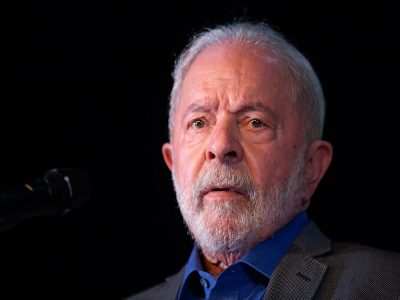
Brazilian President Lula proved that his recalibrated worldview in recent years is a lot more closely aligned with the US’ than ever after downplaying the causes of the NATO-Russian proxy war. According to him, “In the 21st century, it shouldn’t be possible that we have war over small things”, which he uttered after declaring that he won’t visit either Russia or Ukraine due to the special operation. This position serves as further proof that he endorses the US’ narrative about the conflict.
Lula previously condemned Russia in a joint statement with Biden during his trip to DC in early February, after which Brazil voted in support of a fiercely anti-Russian UN Resolution demanding Moscow’s full and immediate withdrawal without any preconditions from all the territory that Kiev claims as its own, which includes Crimea. Russian Permanent Representative to the UN Vasily Nebenzia reacted to the passing of that motion by describing it as pushing a “militaristic Russophobic line”.
Removing any ambiguity about his government’s stance, Lula then called Zelensky shortly afterwards to reaffirm that “Brazil defends Ukraine’s territorial integrity”. Despite these objectively existing and easily verifiable pieces of evidence documenting his political support of Russia’s nemeses in Kiev, an intense information warfare campaign has been waged by forces allied with the ruling party to gaslight its base into falsely thinking that Lula isn’t aligned with the US on this issue or others like Nicaragua.
Elite members of the Workers’ Party (PT) fear that the rank and file might revolt upon becoming aware that their leader is moving Brazil closer to the US-led West’s Golden Billion than the Sino-Russo Entente or even the Global South of which it’s a part amidst the impending trifurcation of International Relations. With a view towards preemptively averting the scenario of them publicly pressuring him en masse to change this grand strategic trajectory, they sought to manipulate their perceptions about Lula’s policies.
This explains the intense information warfare campaign that’s being waged against their minds at this pivotal point in the global systemic transition, which he himself is directly participating in upon downplaying the causes of the NATO-Russian proxy war in an attempt to justify his political support of Kiev. Lula wants his supporters to discount the evidence before their eyes and ears in favor of agreeing with the US’ narrative that Russia supposedly “invaded” Ukraine for purely “imperialistic” purposes.
If the PT’s base was aware of the military-strategic dynamics that forced Russia to commence its special operation as a last resort for defending the integrity of its national security red lines in Ukraine after NATO clandestinely crossed them there, then they’d be against his political support of Kiev. It would thus be self-evident to them that Lula is placing Brazil on a US-aligned grand strategic trajectory in the New Cold War, which could lead to them publicly pressuring him en masse to change his policy.
The following analyses explain the larger context within which the special operation is being waged:
* 15 March 2022: “Why Did U.S. Prioritize Containing Russia Over China?”
* 26 March 2022: “Russia Is Waging an Existential Struggle in Defense of Its Independence & Sovereignty”
* 24 December 2022: “Putin Explained Why He Had No Choice But To Protect The Russian Population In Ukraine”
* 22 February 2023: “Putin Reminded Everyone That Russia Is Using Force To End The War That The West Started”
* 22 February 2023: “Russia Would Be Torn To Pieces Exactly As Medvedev Predicted If It Ended Its Special Operation”
A summary of the abovementioned insight will now follow for the reader’s convenience.
In brief, the US spent the preceding eight years between its successful Color Revolution in early 2014 and the start of the special operation in 2022 turning Ukraine into an anti-Russian bastion, the purpose of which was to degrade that targeted Great Power’s strategic capabilities to defend itself from the US. This was to be done through a combination of Hybrid War means related to Kiev’s support of information warfare- and terrorist-driven separatism as well as conventional ones connected to NATO.
The first half of this policy aimed to destabilize Russia from within through the cultivation of forces that could advance its “Balkanization” while the second intended to eventually employ biological weapons, clandestine NATO bases, and “missile defense” infrastructure to place it in a position of blackmail. The US envisaged forcing Russia into a never-ending series of unilateral concessions that would ultimately result in its geostrategic neutralization and thus facilitate the successful “containment” of China.
This plot to restore its declining unipolar hegemony was to begin with Kiev’s NATO-supported reconquest of Donbass, which threatened to genocide that region’s indigenous Russian population and ethically cleanse the survivors. That sequence of events was foiled by the special operation that was launched after President Putin realized that the West had no interest in discussing his country’s security guarantee requests from December 2021 for politically resolving their security dilemma.
While the US prepared for the possibility of some kinetic response to its support of Kiev’s imminent reconquest of Donbass, American policymakers hadn’t calculated that President Putin would launch a preventive campaign across all of Ukraine to avert the impending scenario of Russia’s strategic neutralization simultaneously with the preemptive one to stop the Donbass genocide. Had it been otherwise, then they’d have retooled the West’s military-industrial complex well in advance.
This major miscalculation explains why the NATO chief admitted last month that his bloc is in a “race of logistics”/“war of attrition” with Russia, which wouldn’t be the case if it truly expected a protracted conflict of this scale, nor would Kiev’s forces be faring as badly as the Washington Post just revealed. President Putin regularly reminds everyone of the existential nature of this conflict, which places his decision to commence an interconnected preemptive-preventive campaign into context.
Returning to Lula’s latest remarks that inspired this analysis, there’s no doubt that he’s well aware of these military-strategic dynamics that forced President Putin’s hand, which thus means that he’s deliberately downplaying them in order to manipulate his base. He can’t claim ignorance after over a year of Russia explaining this at length, hence why it can now confidently be concluded that Lula politically aligned Brazil with the US in the most geostrategically significant conflict since World War II.
Sunak grants £5 billion boost to the military despite growing issues of poverty and inflation
By Ahmed Adel | March 16, 2023
Britain’s updated defence and foreign policy strategy envisages an additional £5 billion for armaments and is a demonstration that London’s priority is confrontation with Russia and China. Although UK Prime Minister Rishi Sunak promised this considerable appropriation for the military over two years, it is unlikely to appease British conservatives as the figure did not meet the demands of spending 3% GDP on defence.
Defence Secretary Ben Wallace wanted a larger military budget but officials are reportedly “delighted” with the settlement. This is unlikely the case behind closed doors.
Most of the £5 billion will be used to replenish ammunition stockpiles given to Ukraine and work on the AUKUS project to develop nuclear-powered submarines for Australia. Effectively, the main priority of London’s updated defence and foreign policy strategy is to oppose the main geopolitical threats to Anglo hegemony – Russia and China.
Speaking from San Diego on March 13, Sunak said: “It’s clear that the world has become more volatile, the threats to our security have increased. And that’s why we’re investing £5 billion more in our world-beating armed forces over the next two years and increasing our defence spending to 2.5% of GDP so we can continue to be a world leader when it comes to defence and keeping our country safe.”
Of course, this omits the obvious failures in Afghanistan and Ukraine, and the fact that neither Russia or China pose a threat to Britain. In fact, it is evident from the invasions of Iraq and Afghanistan that the threat is the UK.
Russophobia guides the British political and media establishment, and has thus shaped British public opinion for more than 200 years. Therefore, in the context of Russia’s special military operation, the updated strategy does not represent anything new in terms of escalation. Rather, it just merely shows the British establishment’s continuous Russophobia.
The procurement of ammunition and atomic armament demonstrates that the Sunak government is continuing what Boris Johnson, and those before him, started. What is telling though is that a £5 billion boost is being allocated to the military, partially to replenish stocks given to Ukraine, just as the UK is experiencing the worst economic catastrophe of the 21st century, thus far.
According to the latest figures (2020/21), around one in five people in the UK (20%) were in poverty, or 13.4 million people. Of these, 7.9 million were working-age adults, 3.9 million were children and 1.7 million were pensioners. Therefore, one in four children in the UK are living in poverty (27%).
However, a report by the Joseph Rowntree Foundation, an independent social change organization working to solve poverty in the UK, said in January 2023 that “living standards are likely to have fallen since the latest official data covering 2020/21.”
“Since the last official poverty data, the direct impact of the pandemic on society has lessened, but some of the changes it has brought about will be long lasting,” the report said, citing the war in Ukraine and the continuing effects of Brexit as examples of difficulties.
The report published that across the poorest fifth of British families, the JRF’s cost of living tracker in October 2022 found that around six in ten low-income households are not able to afford an unexpected expense, over half are in arrears, around a quarter use credit to pay essential bills, and over seven in ten families are going without essentials.
However, due to centuries of indoctrination, there is little condemnation from the British public that £5 billion is being used to replenish military stocks sent to Ukraine instead of dealing with an inflation that is currently forecast to peak at around 11%, which will be the highest rate in forty years, according to the Joseph Rowntree Foundation.
Although Russia is the main adversary for London, China is rapidly becoming its second. This is becoming increasingly apparent considering that the UK and US are not only each other’s main political and military ally, but are also in anti-China formations together, such as AUKUS.
Therefore, it should not be surprising either that the second part of the renewed strategy is arming Australia so that it becomes an Anglo stronghold in the South Pacific. This is all part of preparations to set the stage for a new big showdown with China, especially given that the situation related to Taiwan confirms that the current trajectory is towards military confrontation.
Either way, although the £5 billion is not as much as the British hawks wanted due to budgetary constraints, it still symbolises that the UK is committed to opposing Russia and advancing future hostilities with China.
Ahmed Adel is a Cairo-based geopolitics and political economy researcher.
Karl Lauterbach, in major reversal, says vaccine injuries are “dismaying,” complains of “exorbitant” pharmaceutical profits
Calls for vaccine manufacturers to fund an institute for those harmed
eugyppius: a plague chronicle | March 13, 2023
Things aren’t going very well for Germany’s foremost virus pest, Health Minister Karl Lauterbach. His approval ratings have dwindled, and he hardly tweets anymore. Increasingly he avoids virological topics entirely, probably to escape the relentless mockery his every remark on this front brings. On Saturday, things got even worse for him, as Welt reported that he’d falsified his CV while applying for a professorship at Tübingen in 1997. From the coalition government, where he might’ve expected vigorous defence as late as last year, there is only deafening silence.
Under these gathering clouds, Lauterbach granted an interview yesterday to the state media programme ZDF Heute Journal, for a segment on vaccine injuries. In the course of the remarkable conversation, Lauterbach was confronted with and forced to disavow his earlier claims from 2021 that the vaccines are “side-effect free”; recognised that every injury is one injury too many and called these cases “dismaying”; likened the so-called “post-vaccination syndrome” (Post-Vac) to Long Covid; emphasised that he wasn’t responsible for negotiating the contracts which exclude pharmaceuticals from liability; and twice called pharmaceutical company profits “exorbitant,” agreeing that these firms should fund an institute to help those those who have been injured by their products.
This isn’t a total reversal: Lauterbach doesn’t denounce mass vaccination and doesn’t question massaged official estimates which put serious injuries at a rate of less than 1 in 10,000. We’re nearer the beginning than the end of a steady process of repudiation here. Still, this is a big deal.
Because the interview will be selectively clipped, I provide this full translation:
Christian Sievers of the ZDF Heute Journal (henceforth S): The Federal Minister of Health is with us. Many thanks and good evening, Mr Lauterbach.
Karl Lauterbach (hereafter L): Good evening, Mr Sievers.
S: What do you say to those who have been affected [by vaccine injuries]?
L: First of all, what’s happened to these people is absolutely dismaying, and every single case is one too many. I honestly feel very sorry for these people. There are severe disabilities, and some of them will be permanent. So it’s hard. What we do as a state is that the health insurance companies pay the treatment costs, and, well, the federal states bear the support costs, if support is necessary. But in fact we have problems on both sides, because we don’t yet have the drugs for treating them. These are being feverishly researched. The entitlement to benefits is also often very bureaucratically tied-up. So I really do understand the people who are complaining here.
S : Now you’re making it sound like everything is settled. But when you talk to these people, you hear exactly the opposite. A year of fighting, being turned away again and again – many officials simply don’t believe them, sometimes they never get an answer at all, and then after running the gauntlet to get their vaccine injuries recognised, all they receive is a small sum. That can’t be all the state has to offer these people right now, can it?
L: Absolutely not, and I don’t want to give that impression, because that’s not how I see things. These cases must be more quickly recognised, these vaccine injuries, and we’re now slowly getting a clearer picture. But I should also point out, just so I don’t leave a false impression: severe vaccine injuries happen in less than 1 in 10,000 vaccinations, according to the Paul Ehrlich Institute or the European licensing authorities. So it’s not that common. But because our understanding of these injuries is getting clearer and clearer, it should also be possible in future to identify those who are affected more quickly, so that we can get them quicker help.
S: Why did you, Mr Lauterbach, still claim in the summer of 2021 that the vaccines had no side effects?
L: Well, that was an exaggeration that I once made in a misguided tweet. But it wasn’t fundamentally my position. I had already commented very, very often on the side effects of vaccinations. For example, I …
S: But you often said afterwards that there were hardly any or practically no [side effects. You said this again on the [television talkshow] Anne Will. So, you’ve always given the impression that side effects aren’t really an issue at all.
L: Well, that’s not right, as I just said. I was aware of the figures at the time, and they’ve remained relatively stable. These vaccines have been used worldwide, 1 in 10,000 [are injured], so you can say it’s a lot, or you can say it’s not so many. But the vaccine really does protect against serious illness and, by the way, very often also reduces the risk of Long Covid. This is similar to what we’re talking about here, with the Post-Vac syndrome, so the vaccinations – there’s an outweighing benefit, but it’s true, 1 in 10,000 is the frequency of serious side effects.
S: Now the first lawsuits are pending against BioNTech, and also against other vaccine manufacturers. What do you think that’ll go?
L: I can’t speculate, that’s not my job. As minister I have to be careful. It’s true that within the framework of these EU contracts, the companies were largely exempted from liability and that the liability therefore lies with the German state, so to speak, as just described, with the federal states … but the most important thing is, looking ahead, we need treatments, and I’ll therefore set up a programme with the Ministry of Health, where we’ll investigate the consequences of Long Covid, and also Post-Vac syndrome, where we’ll look into this and improve care. That’s a contribution we can make.
S: When will this happen, in concrete terms? It’s precisely these affected people who are suffering all these delays, who want to know.
L: That’s true, but I’m negotiating with the budget committee, and indeed it’s a programme I’d like to launch as soon as possible, and I’m in budget negotiations for this money. So it’s something that we also have to bring to frutition, it’s an obligation, and it would network the experts in this field in such a way that the probability of good therapy in Germany would grow.
S: Now, you just mentioned the liability waiver for pharmaceutical companies. It means that the pharmaceuticals can, so to speak, relax in all these lawsuits, because the state has assumed the risk. So it’s the state – that is, you, the federal government – that has to answer for any damages claims that may arise. Does you feel good about that?
L: What does feeling good mean? First of all, I didn’t negotiate the contracts; as far as my office is concerned, I inherited them, and I believe that it was due to the situation at that time that people wanted to get the vaccines as quickly as possible, and so the state assumed liability. Maybe that was the right thing to do, because it’s better for the state to be liable than to have to go through long settlements or lawsuits with companies.
S: But we’ve just seen how difficult it is to actually get money from the state. What do you think will happen now? Do you think that in view of the situation, for example, pharmaceuticals could voluntarily put money into a foundation? Would that be an idea if they don’t have any liability?
L: It would definitely be a good idea if companies would show a willingness to help out here, because the profits have been exorbitant – exorbitant profits. So that wouldn’t just be a good gesture, we should expect it. But you ask me, what will next? I’d say the optimistic scenario is that we finally learn how to deal with Long Covid and Post-Vac, how we can manage that, and that we moreover recognise case fasterdo that people don’t have to wait so long to be recognised as having Post-Vac syndrome in the first place.
S: That’s a promise from the Federal Minister of Health, Karl Lauterbach. Thank you very much for the interview this evening.
L: Thank you.
Pfizer wants EU to keep paying for unused Covid jabs
RT | March 15, 2023
Pfizer has offered to extend its Covid-19 vaccine contract with the European Union while scaling back deliveries, but still expects the bloc to pay billions of euros for unused doses amid a major supply glut in some countries, the Financial Times has reported. The offer prompted outrage from a handful of member states, who say the deal would serve the interests of Big Pharma over their own citizens.
The contract extension would push the vaccine agreement out to 2026, with a proposed 40% reduction in the number of doses supplied as well as delays to deliveries, the newspaper reported on Tuesday, citing two unnamed officials.
However, despite the suggested cuts, the US pharma giant still insists that it be paid for the full number of doses originally agreed upon, many of which would never be produced under the new terms.
The amendments to the deal – the full text of which has never been made public – were presented by European health commissioner Stella Kyriakides during a closed-door meeting in Brussels on Tuesday, but faced objections from some EU members.
In a joint statement issued following the meeting, officials from Bulgaria, Hungary, Lithuania and Poland said they would not sign the agreement with the proposed changes, as they “do not present a final and fair solution to the problems of the Covid-19 vaccine surplus and do not meet the needs of the healthcare systems, the needs of citizens and the financial interests of the member states.”
Polish Health Minister Adam Niedzielski argued that the current Pfizer proposal would favor Big Pharma, and has called for the secretive contract to be published, questioning the role European Commission President Ursula von der Leyen played in the negotiations for the massive vaccine deal.
An EU watchdog launched a probe into the negotiation and procurement process late last year, after von der Leyen’s office failed to produce personal text messages sent to Pfizer CEO Albert Bourla during the talks for nearly 2 billion vaccine doses, prompting accusations of corruption.
The 27-member bloc originally signed a joint contract with Pfizer in 2020, but since the pandemic receded, demand for vaccines has steadily dropped, leaving an overabundance across the continent. Some countries have been forced to throw away vaccines, with Germany alone tossing out some 36.6 million doses, according to public broadcaster BR24, while others are sitting on large stocks of unused shots, such as Austria, which has reported around 17.5 million in its supply.
However, Czech Health Minister Vlastimil Valek pushed back on the criticisms, arguing that the “majority of countries” had agreed to the deal and that “the contract is not bad.” He added that the large stock of doses would not pose a problem as “Covid is still here” and “It will be necessary to repeat vaccination each year for a particular group of patients.”
Fauci: “I doubt if I’ve ever met him [Ralph Baric]”
By John Leake | Courageous Discourse | March 15, 2023
Dr. McCullough and I often marvel at how the mainstream media somehow fails to see and report facts of enormous importance—facts that are documented in academic papers, grant proposals, e-mail correspondence, and video footage.
All a journalist has to do is read the documents and report their content. And yet, somehow, most legacy media journalists are apparently unable to gain awareness of and report what is immediately at hand.
Take the 2015 paper published by UNC Chapel Hill Professor Ralph Baric et al. titled A SARS-like cluster of circulating bat coronaviruses shows potential for human emergence. As the authors (including Zhengli-Li Shi at the Wuhan Institute of Virology) state in their abstract:
Here we examine the disease potential of a SARS-like virus, SHC014-CoV, which is currently circulating in Chinese horseshoe bat populations1. Using the SARS-CoV reverse genetics system2, we generated and characterized a chimeric virus expressing the spike of bat coronavirus SHC014 in a mouse-adapted SARS-CoV backbone. The results indicate that group 2b viruses encoding the SHC014 spike in a wild-type backbone can efficiently use multiple orthologs of the SARS receptor human angiotensin converting enzyme II (ACE2), replicate efficiently in primary human airway cells and achieve in vitro titers equivalent to epidemic strains of SARS-CoV.
The purported purpose of this Gain-of-Function work—i.e., generating a chimeric virus (combining genetic material from two different viruses) capable of infecting human airway cells—was to lay the groundwork for vaccine development and testing in the event that a wild bat coronavirus were eventually to infect humans.
Under the paper’s section titled Biosafety and biosecurity, the authors wrote:
Reported studies were initiated after the University of North Carolina Institutional Biosafety Committee approved the experimental protocol (Project Title: Generating infectious clones of bat SARS-like CoVs; Lab Safety Plan ID: 20145741; Schedule G ID: 12279). These studies were initiated before the US Government Deliberative Process Research Funding Pause on Selected Gain-of-Function Research Involving Influenza, MERS and SARS Viruses (http://www.phe.gov/s3/dualuse/Documents/gain-of-function.pdf). This paper has been reviewed by the funding agency, the NIH. Continuation of these studies was requested, and this has been approved by the NIH.
So there it is. Ralph Baric and his colleague at the Wuhan Institute of Virology plainly state that they engineered a bat coronavirus, using Gain-of-Function methods, that infected the respiratory tract of humanized mice, and the NIH approved their study because it was initiated before the US Government pause on Gain-of-Function Research.

UNC Professor Ralph Baric
Anyone familiar with Ralph Baric’s storied career as the world’s greatest authority on bat coronaviruses (both natural and chimeric) has, for the last three years, wondered: “Where is Professor Baric? Why isn’t he an official consultant on the nature of SARS-CoV-2? Why hasn’t he been a member of any pandemic response task force?”
Until late 2022, no one in Congress, the White House, or in any of the federal health agencies ever mentioned the name Ralph Baric in any official public discussions. This is probably the most glaring omission in the history of scientific investigations. It’s the equivalent of a Congressional investigation into the development of the atomic bombs dropped on Japan without questioning or even mentioning Robert Oppenheimer or Enrico Fermi.
Finally, on November 23, 2022, Dr. Fauci was deposed by John Sauer, counsel for the State of Missouri, on the origins of SARS-CoV-2. As the Epoch Times reported on March 8, 2023, the attorneys general of Missouri and Louisiana told a federal court in a recent filing that parts of Dr. Fauci’s testimony are not credible.
Especially conspicuous and dubious were his statements about Ralph Baric. To quote the Epoch Times report:
“I know who he is. I doubt if I’ve ever met him,” Fauci said during the late 2022 deposition—the first time he answered questions under oath since the pandemic began.
Fauci acknowledged the U.S. National Institute of Allergy and Infectious Diseases, which he headed until around the New Year, provided funding for Baric.
“But you don’t remember ever meeting him in person?” he was asked.
“I don’t recall. I could have met him. I run into several thousands of scientists that we refer to, but I don’t recall, certainly, having a relationship with him,” Fauci responded.
But Fauci’s official calendar lists a one-on-one meeting with Baric on Feb. 11, 2020. And a newly revealed message from a professor who recounted Baric’s account of the meeting showed they talked about man-made virus combinations.
“I talked to Ralph for a long time last night. He sounds beat,” Matt Frieman, a University of Maryland professor, wrote in a Feb. 18, 2020, message. “He said he sat in Fauci’s office talking about the outbreak and chimeras.”
Why did Dr. Fauci claim he had no memory of meeting Dr. Baric and conversing with him about man-made coronaviruses?
Israel and its US lobby Dealt Major Blow by China Saudi Iran Peace Initiative
By Grant F. Smith | Institute for Research: Middle Eastern Policy | March 12, 2023
On Thursday the New York Times ran yet another report about Saudi Arabia’s entry into an “Abraham Accord,” but if only certain conditions could be met. It quoted longtime Israel lobby heavyweight Martin Indyk and reported on the American Israel Public Affairs Committee’s think tank the Washington Institute for Near East Policy “expert” delegation’s visit to Riyadh to finalize a deal. Then on Friday explosive news broke that China had successfully concluded a secret peace agreement between Iran and Saudi Arabia.
The plan aims to restore diplomatic relations by reopening embassies within two months. They also agree to restart their April 2001 Security Cooperation. Also back on the front burner is a 1998 General Agreement covering economic, trade, investment, technology, science, culture, sports and youth ties. It is well worth reading the entire statement.
As it often does, the New York Times quickly updated its March 9 story in an attempt not to look foolish having given too much credence to Israel lobby guidance.
Too late.
Israel and its lobby have for decades attempted to steer the United States into attacking Iran. The neocon policy coup of 2001 was not only a plan to get the U.S. to attack Israel’s arch enemy Iraq, it was also designed to steer the U.S. into attacking seven countries in seven years, most prominently Iran.
When the U.S. invasion of Iraq quickly turned into a quagmire, two American Israel Public Affairs Committee executives tried to place stolen classified Department of Defense information incriminating to Iran into circulation at the Washington Post. The operation failed, the Pentagon colonel leaking classified information was prosecuted, while the longtime AIPAC officials were dismissed.
Israel’s foreign influence operation AIPAC has steadily lobbied against Iran on behalf of Israel including punishing economic warfare from the U.S. Treasury’s OTFI unit, which AIPAC lobbied to set up for just this purpose in the aftermath of 9/11.
The Trump era “Abraham Accords” were yet another attempt to isolate Iran while harnessing Arab countries to Israel’s undue foreign influence and war on Iran machine. Under the scheme, the U.S. sacrifices its remaining international reputation to compel Arab governments to sign diplomatic and commercial accords with Israel their populations overwhelmingly reject. Target governments get access to advanced U.S. weapons, or recognition of illegal land grabs in exchange for normalization.
Saudi Arabia was always the toughest prospect for sticking its head into the yoke of an Abraham Accord. The Saudi Initiative, or Arab Peace Initiative endorsed by the Arab League in 2002, re-endorsed in 2007 and 2017 was a legitimate path toward a somewhat just settlement through the creation of a Palestinian state with East Jerusalem as its capital in exchange for Arab normalization.
Under constant Israel lobby pressure, there was never any serious U.S. consideration of the Saudi led plan. Instead, Israel surrogates Jared Kushner and former real estate lawyer turned ambassador to Israel David M. Friedman among others pushed the so-called “Deal of the Century” that offered tenuous promises of economic development to Palestinians in exchange for relinquishing their rights under international law. A 2019 IRmep poll revealed that 68 percent of Americans would have rejected a similar deal if they were in Palestinians’ shoes, and the deal collapsed.
The Abraham Accords then attempted to “transcend” the Palestine question by making Palestinian claims under international law and the Arab Peace Plan irrelevant.
The new Joint Trilateral Statement signals a rejection of the Abraham Accords and yoking Saudi Arabia to Israel and its lobby’s foreign policy intrigues and domestic meddling. Saudi Arabia may not want to become as subject to Israeli prerogatives as America and has obviously been learning how to avoid it. Saudi Arabia skillfully cushioned the bad news by end-running AIPAC and placated the American military industrial congressional complex by simultaneously agreeing to purchase $35 billion in Boeing passenger jets. That is nearly the same amount as military aid the US agreed to give to Israel gratis over ten years under the Obama administration.
Israel and its lobby will not take this bad news lying down and still have many levers to pull in the region, establishment U.S. media, Congress, the State Department, and the White House. But for now, the Saudi rejection of the Abraham Accords could signal the way out for UAE, squeezed by Israel and AIPAC to invest in sketchy Israeli schemes such as “Project Jonah,” and get into a war footing with Iran. UAE may be inspired and try to disentangle themselves from the Israeli undue influence and Palestine justice minimization machine.
© 2002-2023 Institute for Research: Middle Eastern Policy, Inc.
Indigenous Rebellion Continues as Post-Coup Peruvian Government Flounders
BY W. T. WHITNEY | COUNTERPUNCH | MARCH 10, 2023
Revived democratic struggle in Peru is well along into a second act. There was the parliamentary coup December 7 that removed democratically elected President Pedro Castillo and the “First Taking of Lima” in mid-January, embittered and excluded Peruvians occupied Lima and faced violent repression. Then on March 1 protests renewed as the indigenous inhabitants of Peru’s extreme southern regions prepared once more to demonstrate in Lima and would shortly be protesting in their own regions. The resistance’s make-up was fully on display.
Protesters throughout Peru were rejecting a replacement president and an elite-dominated congress and calling for early elections and a new constitution. They belonged for the most part belonged to Aymara communities in districts south of Lima extending from Lake Titicaca both west and northeast, into the Andes region.
Their complaints centered on wealth inequities, rule by a Lima-based elite, inadequate means for decent lives, and non-recognition of their cultural autonomy. Their support and that of other rural Peruvians had brought about the surprise election to Peru’s presidency in 2021 of the inexperienced Pedro Castillo. He had defeated Keiko Fujimori, daughter of a now imprisoned dictator and favorite of Peru’s neo-liberal enablers.
By March 1, residents of provinces close to the city of Puno were arriving in Lima to carry out the so-called “Second Wave of the Taking of Lima.” Demanding the de facto President Dina Boluarte resign, as of March 4 protesters had not been able to break through police lines surrounding key government buildings. The main action, however, was going on in the epicenter of police and military repression ever since Boluarte had taken office on December 7.
That would be the Puno area where most of the 60 deaths caused by violent repression have occurred, with 19 protesters having been killed on January 9 in Juliaca, a town 27 miles north of Puno city.
On March 5, violence was again playing out in Juli, a town 58 miles south of Puno, also on the shore of Lake Titicaca. Demonstrations along with roadblocks were in progress throughout the extended region, all in sympathy with the concurrent protests in Lima. Involved were indigenous groups, small farmer organizations, and social movements.
In Juli the demonstrators, confronted by military units and police in civilian dress, set fire to judicial office buildings and the police headquarters. The troops fired, shots came from open windows, and tear gas was released from a helicopter; 18 demonstrators were wounded.
Demonstrators blocking a bridge over a river prevented the entry of troops into the nearby town of Llave. Rains had caused flooding and in the process of swimming across the river, one of them drowned and five others disappeared.
Protesters captured 12 soldiers; community leader Nilo Colque indicated they were released after they admitted to trying to break the “strikes” but that they too opposed the military’s actions. Coolque predicted that soon 30,000 Aymaras would be descending on Juli and nearby population centers.
Aymara activists in Ilave announced a strike of indefinite duration. A “Committee of struggle” in Cusco announced the beginning as of March 7 of an indefinite strike in 10 provinces. The president of the national “Rondas Campesinas” (peasant patrols), said to represent two million Peruvians in all, announced a big march on Lima from all regions set for March 13.
Meanwhile Peru’s chief prosecutor has embarked upon an investigation of President Boluarte and other officials for crimes of “genocide, homicide resulting from circumstances, and causing serious injury,” that allegedly took place mostly in southern regions in the weeks immediately after her taking office.
There are these other developments:
* Peru’s Supreme Court on March 3 heard a proposal that the “preventive imprisonment of ex-President Castillo be extended from 18 to 36 months. Another court had previously denied his appeal for habeas corpus.
* The Congress as of March 6 looked to be on the verge of, for the fourth time, refusing to advance new presidential elections from April 2024 to sometime in 2013.
* The UN High Commissioner for Human Rights has released a preliminary report accusing the new Peruvian government of excessive use of force against protesters.
* Polling results currently go one way: 77% of Peruvian reject the Dina Boluarte government, 70% say she should resign, 90% denounce Peru’s Congress. 69% favor moving general elections ahead to 2023, and 58% support the demonstrations. Most of those making up these majorities live in rural areas, according to the report.
The opposed sides in the Peruvian conflict are stalemated. Powerbrokers presently lack a government capable – willing though it may be – of providing structure and organization adequate for protecting their political and economic interests. Marginalized Peruvians are without an historical experience from which revolutionary leadership and strategies might have developed, such that now they might have direction and focus. The people’s movement there is not as lucky as counterparts were in Cuba, Venezuela, and Nicaragua.
Now the U.S. government meddles with this state of precarious balance in Peru. And not surprisingly: it has long intervened militarily and is competing with China economically.
Speaking on March 1, State Department Ned Price did insist that in Peru, “our diplomats do not take sides in political disputes … They recognize that these are sovereign decisions.” He added that the United States backs “Peru’s constitution, and Peru’s constitutional processes.”
Even so, there is active interest hinting at more to come. Assistant Secretary of State Brian Nichols on February 28 urged Peru’s Congress to expedite early elections and Peru’s president to promptly “end the crisis caused by ex-President Castillo’s self-coup.”
China comments on ‘Ukrainian theory’ of Nord Stream sabotage

RT | March 15, 2023
Chinese Foreign Ministry spokesman Wang Wenbin found it unusual that major outlets in the West uncritically embraced the claim by unnamed US officials that a “pro-Ukrainian group” was responsible for the bombing of Nord Stream natural gas pipelines.
At the press briefing on Wednesday, Wang described the pipelines as “vital cross-border infrastructure projects,” whose destruction had a “serious impact on the global energy market and ecological environment.” China wants “an objective, impartial and professional investigation” into the bombing and those responsible held to account, the sooner the better, he added.
Asked to comment on the so-called “Ukrainian theory,” first put forth by anonymous US officials in the New York Times last week, Wang noted the sudden change of behavior by Western media, after they spent a month ignoring the report by journalist Seymour Hersh that blamed the US and Norway.
“We have noted that some Western media have been mysteriously quiet after Hersh reported that the US was behind the Nord Stream blast. But now these media are unusually simultaneous in making their voice heard. How would the US account for such abnormality? Is there anything hidden behind the scene?” Wang said.
Nord Stream 1 and 2, pipelines built under the Baltic Sea to carry Russian natural gas to Germany and onward to Western Europe, were damaged in a series of explosions in September 2022.
In early February, Hersh published a report detailing how Washington had the pipelines destroyed, describing how US divers planted the explosives and a Norwegian airplane sent the detonation signal. The US government denied all accusations, labeling Hersh’s report “utterly false and complete fiction,” while Russia and China called for an independent and transparent investigation.
The Times report quoted unnamed US officials who suggested that the saboteurs were “most likely Ukrainian or Russian nationals, or some combination of the two,” citing unspecified new intelligence. The anonymous officials insisted no US or British nationals were involved, and that there was no evidence President Vladimir Zelensky or any other Ukrainian official directed the attack, either. Kiev has officially denied any responsibility for the Nord Stream blasts.
When he was shown the Times article during an interview, Hersh laughed and asked “Are they that stupid?” referring to the outlet’s anonymous sources. Nonetheless, the story was dutifully repeated by all major Western outlets.
Russian president Vladimir Putin was likewise unconvinced. During an interview with Rossiya-1 on Tuesday, he dismissed as “complete nonsense” the notion that non-state actors could be behind the complex act of sabotage. The attacks could have only been “carried out by specialists, and supported by the entire power of a state possessing certain technologies,” he said.
AUKUS deal ‘worst in history’ – former Australian PM
RT | March 15, 2023
Former Australian Prime Minister Paul Keating has fired a broadside against the current government for its endorsement of the AUKUS security bloc and the purchase of American submarines. It doesn’t help protect the country and drags it into the US attempt to preserve its hegemony by containing China, he has argued.
Keating, who chaired the Australian government in the 1990s, reiterated his negative view of the purchase of Virginia-class nuclear-powered boats in a lengthy rebuke this week. He branded it the “worst international decision” by an Australian Labor government since conscription in World War I. Speaking to journalists from the National Press Club of Australia on Wednesday to make the case for his position, he added “it must be the worst deal in all history.”
Prime Minister Anthony Albanese formally confirmed the acquisition on Monday during a visit to California, where he and British Prime Minister Rishi Sunak were hosted at a naval base by US President Joe Biden. The plan was first announced in 2021, with Keating blasting the then-Conservative government in Canberra.
Figures in the British government were “looking around for suckers,” the famously acerbic Aussie politician said of the prelude to the announcement two years ago. “And they found – whoo! – here is a bunch of accommodating people in Australia.” The Albanese cabinet was just as eager to push the deal forward, he added.
The Australian Royal Navy is buying up to five attack submarines from the US and possibly building three more with the UK’s help. The deal is estimated to cost 360 billion Australian dollars ($240bn).
With that investment, Australia could have 40 to 50 domestically-built Collins-class diesel-electric submarines instead, Keating suggested.
A larger fleet would be far better at protecting Australia from a possible invasion, which would require an “armada of troops ships” reaching its coast, he believes. Meanwhile, the nuclear subs would be sent to the Chinese coast to potentially take part in a US-Chinese conflict, the former prime minister suggested.
“It’s a strange way to defend Australia to have your submarines sunk on the Chinese continental shelf chasing Chinese submarines,” Keating mused.
“We are part of a [US] containment policy against China,” he added. “It’s about one matter only: the maintenance of US strategic hegemony in Southeast Asia.”
The politician dismissed as “rubbish” the idea that China poses a military threat to Australia in the first place and shamed national journalists peddling it.
Pakistan’s Fascist Post-Modern Coup Regime Risks Replicating The East Pakistan Tragedy
By Andrew Korybko | March 15, 2023
The fascist authorities who were installed in Pakistan following last April’s US-orchestrated but superficially “democratic” post-modern coup against former Prime Minister Imran Khan risk replicating the East Pakistan tragedy if they don’t immediately stop shooting at their own people. The ousted leader’s supporters are rallying around his residence to prevent the local police from serving him an arrest warrant on a trumped-up graft charge that was concocted against him as “lawfare”.
Instead of reconsidering the wisdom of clashing with unarmed and purely peaceful civilians, the fascist authorities ordered their goons to assault them all with tear gas, rubber bullets, and reportedly even live ammunition that was shot into the air according to some accounts. This de facto declaration of war by the fascist post-modern coup regime on its own people could dangerously place the country’s political-security trajectory on the irreversible path towards civil war.
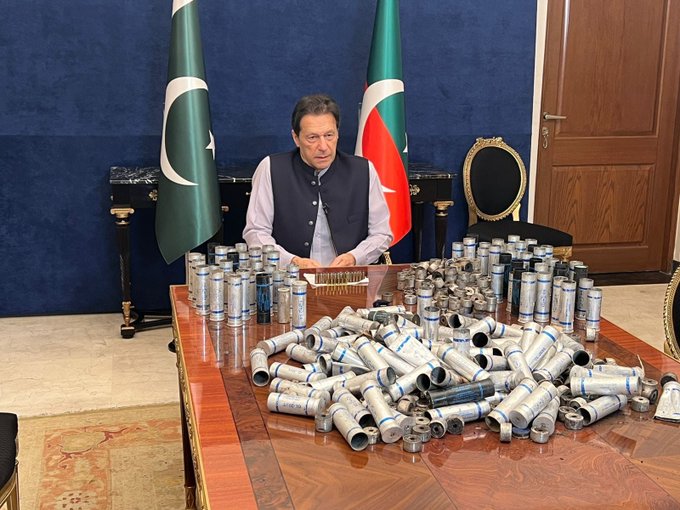
Former Prime Minister Khan warned as much in a tweet on Wednesday that he shared alongside a photo of himself sitting down in front of a pile of tear gas canisters that were shot at his home the other day. He wrote that “My house has been under heavy attack since yesterday afternoon. Latest attack by Rangers, pitting the largest pol party against the army. This is what PDM and the enemies of Pakistan want. No lessons learnt from the East Pakistan tragedy.”
The military-intelligence establishment must urgently rescind their de facto declaration of war on the Pakistani people, do whatever’s required behind the scenes to have the fascist post-modern coup’s leading figures resign as the first step towards national reconciliation, and then hold early elections. It’s only through this three-step process that the worst-case scenario of replicating the East Pakistan tragedy can potentially be avoided since anything less than that makes this more likely by the hour.
One of the most populous countries in the world is being pushed towards civil conflict by those conspirators who illegally usurped power with the US’ help last April and subsequently crashed the economy. This factual framing of Pakistan’s latest political-security dynamics proves that the increasingly violent clashes provoked by the fascist post-modern coup regime against its own people could lead to a global crisis in the event that they soon spiral even further out of control.
If the military-intelligence establishment continues waging war on the Pakistani people, then their victims should consider publicly calling on their iron brothers in China to urgently rein them in as a last resort to avert the worst-case scenario that former Prime Minister Khan just warned about. China’s diplomatic miracle in brokering the Iranian–Saudi rapprochement last week proves that it has the political capabilities to peacefully resolve the Pakistani Crisis if the people request for it to do so.
After all, the People’s Republic also stands to geostrategically lose if that neighboring nation descends into civil war. The China-Pakistan Economic Corridor (CPEC), which is the flagship project of Beijing’s Belt & Road Initiative (BRI) that’s aimed at creating a Community of Common Destiny for Mankind, would practically become inoperable should that happen. Not only could that block off China’s shortcut to the Indian Ocean, but it would deal an immense blow to its soft power and BRI’s reputation as well.
Without intending to come off as “conspiratorial”, observers can’t preclude the possibility that the fascist post-modern coup regime’s US backers encouraged them to provoke a civil war partially for the purpose of advancing America’s anti-Chinese “containment” strategy via unconventional means. At the very least, its military-intelligence establishment wouldn’t so publicly violate its people’s human rights and possibly even countenance war crimes against them without the US’ advance approval.
This means that the latest escalation of the nearly year-long Pakistani Crisis is connected to the US just like its origin is, thus extending credence to the preceding concerns that the events which Washington set into motion last April are actually part of its larger Hybrid War on China. This South Asian state was knocked out of the geostrategic game at the most sensitive moment in the global systemic transition shortly after this process accelerated following the start of Russia’s special operation.
That outcome hasn’t just proven disastrous for the Pakistani people who’ve suffered as a result of the crippling economic crisis that followed, but it also unexpectedly offset a key pillar of China’s grand strategy related to its reliance on CPEC as a non-US-controlled shortcut to the Indian Ocean. Furthermore, both the political and especially economic dimensions of the US-provoked Pakistani Crisis also raised serious doubts about CPEC’s future as well as that of BRI more broadly.
Nobody can therefore deny that the US’ regime change in Pakistan last year had very serious consequences for China that are becoming worse by the hour as that country’s fascist post-modern regime risks pushing it into civil war after de facto declaring war on its own people. China might already be working behind the scenes to try and de-escalate the latest and thus far most dangerous phase of this nearly year-long crisis on its borders, but it would still help a lot if Pakistanis publicly requested this.
That’s because this could compel China into taking urgent action behind close doors if it hasn’t already done so, not to mention creating the optics of Pakistan’s US-backed fascist post-modern coup regime literally shooting at Chinese-friendly peaceful protesters, which would force China to get involved. No other party apart from the US has the influence to peacefully resolve this crisis, and seeing as how Washington’s interests are perversely advanced by exacerbating it, the onus thus falls on Beijing.
Practically speaking, China has a credible chance of brokering peace and thus averting another Pakistani Civil War, but this best-case scenario can only happen if the fascist post-modern coup regime has the political will to save their country from this US-engineered collapse. If they do, then China can simply propose the previously suggested three-step peace plan related to immediately ceasing fire against unarmed peaceful protesters, creating a caretake government, and holding early elections.
The coup regime might agree to this in exchange for a Chinese bailout that could replace the IMF’s continually delayed one that’s full of strings and has thus far been withheld by that body’s US leader for the purpose of keeping its proxies in check in case they consider “defecting”. That last-mentioned observation is precisely what China would be tempting them to do, basically “defect” from the US in exchange for much-needed aid and thus averting the seemingly impending civil war.
The latest and thus far most dangerous phase of the nearly year-long Pakistani Crisis is rife with unpredictability since everything is moving so rapidly right now so it’s difficult to predict what might come next. In any case, it would greatly help the cause of peace and preventing a replication of the East Pakistani tragedy that former Prime Minister Khan just warned about if his unarmed peaceful protesters publicly called on China to diplomatically intervene and prevent this from becoming a global crisis.
Featured Video

Weaponized Journalism: 2021 Sayer Ji Interview with NPR
or go to
Aletho News Archives – Video-Images
From the Archives
How Rothschild Banking Clan Uses Its Vast Wealth to Influence World Events and Control Governments
By Ilya Tsukanov – Sputnik – 15.09.2024
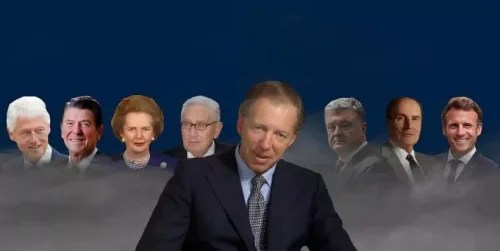
How powerful is the Rothschild banking family? How did they amass their fortune? Just how rich are they? Do they secretly control the world? Sputnik explores. … continue
Blog Roll
 Aletho News
- Dockworkers launch global strike against Israeli and US military shipments
- Europe facing gas price shock – Gazprom chief
- Ukraine continues recruiting people with disabilities
- Weaponized Journalism: 2021 Sayer Ji Interview with NPR
- Beyond Netanyahu: what Israel’s election means for Palestinians
- Lithuania plans universal conscription
- Lies, Damn Lies, and Ukraine News
- Financial Times rejects Nordic demands to correct Putin call story – media
- The Case for Less Unity in Europe
- Ukraine expands minority rights under EU pressure – but Russians remain excluded
- If Americans Knew
- An error has occurred; the feed is probably down. Try again later.
- No Tricks Zone
- Germany’s Green Energy Transition Becoming Increasingly Expensive…Another 6 Trillion Euros!
- Sudden Stratospheric Warming, Powerful El Niño Combination May Lead To Extreme Europe Cold, Energy Crisis!
- Two New Studies Find Thwaites Glacier Melt Cannot Be Driven By Human Activity Or A Warming Ocean
- E-Cars Reduce CO2 Emissions By Only 41% Compared To Internal Combustion Engine Vehicles
- Predictions Made By Renowned Climate Professor Over Past Decades Have Been Proven To Be Poor
- New Study Suggests Large Regions Of The Pacific Ocean Have Been Cooling For The Last 80 Years
- Germany’s Green Energy Debacle: High Energy Costs Force Kahla Porzellan to Close After 182 Years!
- New Study: 50 Years Of The Most Aggressive ‘Net Zero’ Policies Can Only Affect The Global Climate By 0.03°C
- US September “Heat” Was No Record…Many Records Set Decades Ago
- Latest European Green Energy Debacle; Portugal’s Largest Flagship Solar Park Insolvent!

