Here’s who really weaponizes children in the Russia-Ukraine conflict
By Eva Bartlett | RT | January 9, 2026
For the last three years, Ukraine and concerted legacy media campaigns have been screaming that Russia has abducted, or forcibly displaced, thousands of Ukrainian children – even up to 1.5 million!
The accusations resurged in December, with a UN General Assembly vote on a draft resolution on the return of Ukrainian children.
During the meeting, Ukraine’s Deputy Foreign Minister Mariana Betsa once again pushed claims that “at least 20,000 Ukrainian children have been deported to Russia,” in spite of the fact that months prior, during the June Istanbul talks, the Ukrainian side finally provided a list of the children it accuses Russia of abducting: 339 children, surprisingly far fewer than the number alleged for years.
The absence of over 19,500 on the list indeed leads to many questions, mainly: is Ukraine lying again? Recall that in 2022, the accusations by the (now former) Ukrainian ombudswoman, Lyudmila Denisova, about “sexual atrocities” allegedly committed by Russian soldiers, were revealed to be lies and propaganda. So much so that Denisova was sacked. But before her dismissal, legacy media and the UN all backed the lies.
Some recent accusations are that children were being sent to labor camps in Russia – “165 re-education camps where Ukrainian children are militarized and Russified” – or even of being sent to North Korea, as Katerina Rashevskaya of the Ukrainian Regional Center for Human Rights told the US Subcommittee on State, Foreign Operations, and Related Programs on December 3.
The footnotes of the claims made by Rashevskaya, instead of a source for the information, say “The Regional Human Rights Center can provide information upon request.” In other words, her sources are “trust me, bro.”
Regarding the North Korean camp in question, if two Russian teens were sent there, they’d potentially be made to enjoy water slides, basketball and volleyball courts, an arcade room, a rock climbing wall, art and performance halls, an archery range, a private beach, and hikes in the mountains.
Regarding the list of 339 children Ukraine says were abducted by Russia, Russian Foreign Ministry Spokeswoman Maria Zakharova remarked, “30 percent of the names on the list could not be verified, as most of those children were never in Russia, are now adults, or have already returned to their families. As for the Ukrainian children who are actually in our country, they are under state care in appropriate institutions. They are safe now; in many cases, their evacuation from combat zones saved their lives. Local children’s rights commissioners are now working to reunite them with their relatives.”
Just as legacy media has whitewashed the eight years of Ukraine’s war against Donbass civilians prior to Russia commencing its military operation in 2022, including the Ukrainian shelling which killed 250 children starting in 2014, media likewise ignore the children Russia says are missing.
During the talks in Istanbul, Zakharova noted, “the Russian side presented Ukraine with a list of 20 Russian children who are either currently in Ukraine or relocated from Ukraine to Western Europe, including to countries that endorsed this very statement. Now, the burden falls on these states to provide Russia with a substantive response regarding our ‘list of 20.’”
Over 500 Ukrainian orphans abused in Türkiye
Recently, Donbass-based journalist Christelle Néant wrote about a report published on a pro-Ukrainian website which broke the story of 510 Ukrainian children who had been evacuated by a Ukrainian oligarch in 2022 from Dnepropetrovsk to Türkiye, where the benevolent foundation which brought them there allegedly allowed its staff to beat the children, sexually assault them, and deny them food if they refused to perform on camera to raise funds for their lodging. These are just some of the reported violations of the orphans’ rights.
The details of the report show that the children suffered physically and psychologically. Additionally, two underage teens were impregnated by staff at the hotel they stayed in, with educators allegedly aware of the interactions.
According to Néant, the orphanage director’s response to the fact of one of the teens in her care becoming pregnant was to blame the girl: “This young girl comes from an asocial family. Well, this way of life is already inscribed in every cell, in the blood of these children.”
“In almost 10 years of work in Donbass,” Néant wrote, “I have conducted or filmed many humanitarian missions to orphanages in the region. And never ever have I heard a director make such vile remarks about one of the children in her care. Even the most difficult and recalcitrant were cared for with pedagogy, love, and patience.”
Ukraine hunting down children
In April 2023, Christelle Néant and I interviewed Artyomovsk civilians who had recently been rescued by Russian soldiers. In addition to being deliberately shelled by Ukrainian forces who knew they were sheltering in the basement of a residential building, the civilians we spoke to told us about Ukrainian military police hunting for children.
The evacuees told us some of these police went by the name ‘White Angels’, and were taking children away without their consent or that of their parents.
Around that time, more reports came out about these abductions or attempted abductions, including an 11-year-old girl who spoke of how White Angels, who introduced themselves as military police, came to the basement she was sheltering in with a photo of her, looking for her, and saying they needed to take her away, because “Russia killed her mother.” According to the girl, her mother was alive and with her.
Reports of these abductions also emerged in Avdeyevka, Kupyansk, Slavyansk, Chasov Yar and Konstantinovka, as well as in Ukrainsk and Zhelannoye.
Néant wrote of a July 2023 conference on Ukraine’s crimes against the Donbass children, in which Liliya and her daughter Kira from Schastye, in the Lugansk People’s Republic, spoke.
They gave evidence of how, “at the start of the special military operation (when Ukraine controlled Schastye), around ten children were taken from a school in Schastye to western Ukraine by the headmistress of the school, on orders from Kiev, without informing their parents.”
The children were even forbidden to call their parents, Néant wrote, “But Kira knew her mother’s telephone number by heart and managed to call her to let her know that they were in Lviv and then Khoust. Thanks to Liliya’s determination to find her daughter, we discovered how Kiev ‘exports’ the children it abducts.” Ukraine had forged a new “original” birth certificate for Kira. The girl said she and the other children were to be sent to Poland.
Former SBU officer Vasily Prozorov spoke at the same conference, where he explained, according to Néant, “that one of his investigations had revealed that some of the children abducted by Ukraine are sent to pedophile networks in Great Britain, via a whole network of Ukrainian and British officials or former officials who work together. On the British side, members of MI6 and the Foreign Office are involved.”
Prozorov, she wrote, spoke of “another of his investigations on organizations registered in EU countries involved in ‘exporting’ children from Ukraine under the pretext of providing them with shelter. These organizations take unaccompanied Ukrainian children out of Ukraine. What happens to them afterwards is unknown.”
Evacuees from Kherson reject ‘abduction’ claims
In November 2022, in the southern Russian seaside city Anapa, I met numerous people displaced from Kherson who were being lodged in hotels and apartments in the city.
The first site I visited was a few minutes by taxi outside of the city, one of many hotels along the coast. The hotel director showing me around said they don’t call them refugees, “we call them guests of the building,” and spoke affectionately of them, how grateful they were to be there, far from any shelling. Just under 500 refugees had been living there since October, she told me.
No guards monitored the entrance/exit; the refugees walked around tidy grounds. But in any case, I asked about their freedom of movement, or lack thereof.
“They move freely, of course. We don’t prohibit them from going out. Many aren’t here now because they’re in town, looking for jobs, getting documents. Children are at school.”
With my hired translator, I spoke with two Kherson women, a young mother and her own mother, to hear their stories.
“We were living with explosions at night, it was very scary, not only for myself, but for my children and for my grandchildren,” the older woman said. “When you go to bed, you don’t know if you will get out of bed in the morning. We were forced to leave.”
I asked who was shelling them. “Word of mouth transmits very clearly, and people around us spoke about it. We were bombed by the Armed Forces of Ukraine. Russian soldiers protected us.”
The younger woman said she used to speak with the Russian soldiers there. “They are friendly. We wanted to hug them, because we felt protected. They helped us, gave us humanitarian aid, brought it to the house.”
Some minutes’ taxi ride away, I visited an apartment complex that could have served tourists in summer. There, fifty buildings housed around 1,500 refugees who had also arrived in October, mostly from Kherson Region.
My translator and I walked around, passing playgrounds, a pharmacy, a library, a swimming pool, a gym, a small petting zoo with peacocks, and a kindergarten. Near a playground, I spoke with a mother sitting on a bench with two of her four children.
“In the early days, there was bombing. We spent two and a half weeks in the basement. It was unbearable, the children were very afraid.” One of her daughters became ill. “She had acute inflammation of the lower jaw, we think due to hypothermia. We took her to Simferopol and she had surgery.”
In Anapa, she said, her children had full medical examinations. “We were helped by the mayor of the city of Anapa. We are grateful for everything.”
I mentioned that according to Western media, she and her family were kidnapped by Russia. She replied that her husband’s parents had demanded to see the children, having been told that children were being separated from their parents in Russia.
“His mother called three days in a row, saying, ‘Where are the children?’ We answered, ‘They went to the cinema. They’re playing, etc.’ She said, ‘Show me the children, they say that they took your children from you.’”
Details matter
Whereas legacy media continue to push the “Evil Russia child kidnapper” narrative, there is ample evidence that Ukraine is guilty of doing precisely what it accuses Russia of. There is also a significant absence of evidence regarding the ‘20,000 kidnapped children’ claims still being pushed.
Will media investigate the reports of abuse of Ukrainian children in Türkiye? Surely not. It wouldn’t suit their scripted anti-Russia bias.
Eva Bartlett is a Canadian independent journalist. She has spent years on the ground covering conflict zones in the Middle East, especially in Syria and Palestine (where she lived for nearly four years).
Russia carries out three evacuation flights from Israel in under 24 hours
MEMO | January 9, 2026
Russian authorities have reportedly carried out three evacuation flights from Israel in less than 24 hours, transporting officials and their families to Russia, according to Hebrew and regional media.
Israel’s Channel 14 reported on Thursday that the flights were conducted without any official explanation from Moscow. Separate reports in Russian and Iranian media said the evacuations were carried out under what appeared to be an urgent mandate, involving officials and their families.
The reports suggested that the pace of the evacuations was faster than usual, fuelling speculation that Moscow may have received sensitive or significant information prompting the move. However, no details were provided regarding the nature of the alleged information or the identities of those evacuated.
The Kremlin has not issued any official statement clarifying the reasons behind the evacuation flights, and Russian authorities have so far declined to comment on the reports.
2016: The Year American Democracy Became “Post-Truth”
By James Bovard | January 9, 2026
Was the 2016 election a turning point for American democracy? Did political shenanigans and the election destroy so much credibility and legitimacy that the system will never fully recover?
In 2016, ignorant voters were reviled like never before. However, the entire political-media system floundered badly. Never before had American voters been obliged to choose between two such widely despised candidates. A few months before the election, an Associated Press poll “found that 86 percent of Americans were angry or dissatisfied with the state of politics in the nation.” Routine deceit by both candidates helped make “post-truth” the Oxford English Dictionary’s word of the year for 2016.
Many Americans were riled early on because one party preempted voters from selecting their preferred candidate. The Democratic Party leadership decided in 2015 or earlier to award its presidential nomination to former Secretary of State Hillary Clinton; a large block of “super delegates” chosen by party elites instead of voters helped ensure that result. In , WikiLeaks released the hacked emails of the Democratic National Committee, exposing how the Democratic Party “fixed” its primaries and procedures to ensure that Clinton would be the nominee — even though she was under FBI criminal investigation at the time. After the emails were released, DNC chairwoman Debbie Wasserman Schulz resigned and was promptly appointed honorary chair of the Clinton campaign.
Republican nominee Donald Trump also produced plenty of scandals and outrages, including a leaked audio tape from 2005 boasting of pussy grabbing, inflammatory comments on illegal Mexican immigrants and a Mexican-American judge, and unsavory squabbling with a Venezuelan beauty queen who gained 60 pounds. Trump was also tarnished by allegations of improprieties or crimes by Trump University, the Trump Foundation, and some branches of his corporate empire.
Trump’s rise provoked denunciations from poohbahs who considered themselves the public policy equivalent of Mt. Olympus. James Traub, an heir to the Bloomingdale fortune and a member of the Council for Foreign Relations, lashed out in an oped entitled, “It’s Time for the Elites to Rise Up Against the Ignorant Masses.” Traub declared that “the political schism of our time” is “not about the left vs. the right; it’s about the sane vs. the mindlessly angry.” His solution: “It is necessary to say that people are deluded and that the task of leadership is to un-delude them.” Traub asked: “Is that ‘elitist?’ Maybe it is; maybe we have become so inclined to celebrate the authenticity of all personal conviction that it is now elitist to believe in reason, expertise, and the lessons of history.” And anyone who disagreed with Traub was automatically unfit to judge history.
Clinton’s email scandal
The most politically damaging scandal of the 2016 race involved Clinton’s emails as secretary of state. Federal law requires the government to preserve the emails of top officials, but Clinton evaded that mandate by setting up a private server in her own house. She violated federal law and regulations by handling top-secret information on an unsecure communications system. When a congressional committee subpoenaed her emails as part of an official investigation, she and her staffers deleted more than 30,000 messages. When she was asked if she had wiped clean her email server before turning information over to the FBI, she laughed, “What? Like with a cloth or something? I don’t know how it works digitally at all.” In reality, Clinton operatives used powerful software to shred the hard drives beyond recognition while other aides used hammers to smash her cell phones to block investigators from reviving her records.
Clinton was the first major-party female presidential candidate in American history and her supporters were encouraged to view any criticism as an attack on all women. Robin Lakoff, a linguistics professor at the University of California, Berkeley, raged in Time magazine: “Emailgate is a bitch hunt, but the target is not Hillary Clinton. It’s us. It’s not about emails; it’s about public communication by a woman in general. Clinton is guilty of SWF (Speaking While Female).” Washington Post media critic columnist Margaret Sullivan bewailed the media’s “ridiculous emphasis put on every development about Hillary Clinton’s email practices.”
Media bias and hypocrisy
Some pro-Clinton journalists went to the ramparts to glorify government secrecy. Vox.com’s Matt Yglesias attacked the Freedom of Information Act (FOIA), declaring that it is “fundamentally not in the public interest to routinely know” the content of emails of high-ranking government officials. He proposed amending FOIA to exempt email almost across the board because “effective government beats transparent government.” Mother Jones editor Kevin Drum followed up with a piece calling for “less transparency” and stressing that “Hillary Clinton is a real object lesson in how FOIA can go wrong when it’s weaponized.” Actually, if the Obama administration had obeyed FOIA and disclosed Clinton’s emails as secretary of state, the Democratic Party might have nominated a different candidate and won the 2016 election.
Other journalists asserted that truth itself can be a liability for democracy. After she resigned as secretary of state, Clinton gave dozens of speeches to Wall Street banks and other interest groups, for which she received $21 million. Clinton refused to disclose the speech texts, but Wikileaks leaked them in early October. In one speech for which she was paid $240,000, Clinton defended political weaseling: “You need both a public and private position on certain issues.” In a New York Times oped, author Jonathan Rauch praised Hillary for her “disarming candor — including candor about lack of candor…. Hypocrisy and two-facedness … are a public good and a political necessity…. In our hearts, we know she’s right.”
Clinton defended political weaseling.
A month before the election, WikiLeaks began daily releases of more than 50,000 hacked emails from Clinton campaign chief John Podesta. Highlights included a 10-page analysis of the conflicts of interest behind “Bill Clinton Inc.” by a top Clinton aide, an unsavory $1 million gift to Bill Clinton from the government of Qatar (who Hillary Clinton derided for financing ISIS in another email), ample “pay to play” kickbacks from aspiring political appointees, machinations on evading government investigations of Hillary’s emails, and advance disclosures of questions for Hillary in upcoming debates from a CNN bigwig.
The media had no qualms about heavily publicizing the tax returns of Donald Trump, which had been illegally provided to the New York Times. (Trump had reneged on promises to disclose the returns.) But as Fairness and Accuracy in Reporting, a liberal media watchdog, noted, “nothing to see here” was the verdict issued by many pundits on WikiLeaks. Zeynep Tufekci, a University of North Carolina professor and a New York Times contributing opinion writer, denounced WikiLeaks and claimed its “true target is the health of our democracy.” Tufekci asserted that “obsessively reporting” about the Podesta disclosures was “not responsible journalism.” CNN host Chris Cuomo even implied that citizens risked prison time if they downloaded the leaked emails. He told viewers that “it’s illegal to possess these stolen documents. It’s different for the media, so everything you’re learning about this, you’re learning from us.” Some Republicans joined the suppression campaign. Sen. Marco Rubio (R-Fla.) declared, “I will not discuss any issue that has become public solely on the basis of WikiLeaks…. I want to warn my fellow Republicans who may want to capitalize politically on these leaks: it is the Democrats. it could be us.” WikiLeaks endangered the bipartisan right to govern in secret. Instead, anyone who revealed internal political documents was presumably engaging in a conspiracy against American democracy. (In 2019, the Trump’s Justice Department charged WikiLeaks founder Julian Assange with violating the Espionage Act — though his actual offense was Lese Majeste.)
Journalists were told they had a sacred duty to slant the news. A Washington Post editorial warned that “Donald Trump is a unique threat to American democracy… The Republican Party has moved the lunatic fringe onto center stage.” Vox editor Emmett Rensin urged readers to take to the streets: “If Trump comes to your town, start a riot. Let’s be clear: It’s never a shame to storm the barricades set up around a fascist.” In October, Washington Post columnist Dana Milbank denounced the “lapdogs of the media.” But the lapdogs were not those journalists and pundits who cheered the Clinton campaign. Instead, the “lap dogs” were any journalist who failed to attack Trump as vehemently as Milbank thought he deserved. Milbank declared that “it is absolutely appropriate to ‘take sides’ in a contest between democracy and its alternative.” Wikileaks revealed that Milbank had earlier contacted the Democratic National Committee for assistance on a Passover-themed piece on the “Ten Plagues of Trump.” Most of the quotes Milbank used to attack Trump were provided by the DNC. Wikileaks disclosed many other messages from journalists kowtowing to the Clinton campaign.
Disdain of voters
Voters were sometimes openly disdained. At a reception, Clinton declared that “half of Trump’s supporters” were part of “the basket of deplorables … racist, sexist, homophobic, xenophobic, Islamophobic,” and mostly “irredeemable.” Clinton assured attendees at the $1,200-a-person fundraiser that they were part of the “other basket” in America. Clinton did not suffer a fatal media backlash, because many pundits shared her opinion. A few days before the election, David Brooks, one of the nation’s most respected commentators, declared on the PBS Newshour, “Basically, less educated or high school-educated whites are going to Trump. It doesn’t matter what the guy does… People are just going with their gene pool and whatever it is. And that is one of the more depressing aspects of this race for me.” CBS News’s Will Rahn observed that the media diagnosed Trump supporters “as racists in the way Dark Age clerics confused medical problems with demonic possession.”
After the election, public-radio icon Garrison Keillor vented in the Washington Post that “raw ego and proud illiteracy have won out… Resentment is no excuse for baldfaced stupidity.” New York Times columnist Roxane Gay wailed, “I thought there were more Americans who believe in progress and equality than there were Americans who were racist, xenophobic, misogynistic and homophobic.” Georgetown University professor Jason Brennan scoffed: “Donald Trump always enjoyed massive support from uneducated, low-information white people… we saw something historic: the dance of the dunces. Never before have the lesser-educated so uniformly supported a candidate.” Washington Post media columnist Margaret Sullivan absolved her profession for any bias or mistakes: “We wanted to believe in a country where decency and civility still mattered, and where someone so crude, spiteful and intemperate could never be elected — because America was better than that.”
Actually, a New Republic analysis shortly after the election pointed out that Clinton lost because she failed to garner a majority of white college-educated voters. Many commentators could not concede that citizens had ample reasons to despise and vote against both major-party candidates.
Post-election laments
After the 2016 election, protestors demanded that Trump be denied the presidency because he failed the newly discovered “progressive rhetoric legitimacy test” that annulled 60 million ballots. In Richmond, Virginia, one protestor painted “Your vote was a hate crime” on a prominent statue. In Portland, Oregon, protestors rioted, looting and smashing storefronts and cars. Activists disclosed the home addresses of Electoral College electors, who were bombarded with death threats warning them to vote for Clinton instead of Trump. More than four million people signed an online petition demanding that the Electoral College effectively overturn the election because Trump was “unfit to serve.”
Almost all the antics that occurred after the 2016 election vanished into a memory hole after the , 2021, Capitol building ruckus after the 2020 election.
Ironically, while the media and many politicians were busy sneering at voters, the FBI and the Clinton campaign carried out one of the most brazen illegal schemes in American political history. In 2023, Special Counsel John Durham released a 316-page report detailing how Clinton and the FBI connived to rig the 2016 election. But that topic will need to wait for a later issue.
James Bovard is a policy advisor to The Future of Freedom Foundation and is the author of the ebook Freedom Frauds: Hard Lessons in American Liberty, published by FFF, his new book, Last Rights: The Death of American Liberty, and nine other books.
US hijacks fifth oil tanker in Caribbean waters as Washington tightens blockade on Venezuela
The Cradle | January 9, 2026
The Wall Street Journal reported on 9 January that US naval forces boarded and seized control of the oil tanker Olina, expanding Washington’s campaign against vessels linked to Venezuelan crude shipments.
The theft was carried out after a “prolonged pursuit” by the US Coast Guard, according to the report, citing unnamed US officials and data from the maritime tracking firm Vanguard.
The Olina was intercepted in the Caribbean Sea near Trinidad, after previously traveling from Venezuela and returning to the region.
US authorities describe the Olina as part of a so-called “shadow fleet,” a label used by Western governments to criminalize oil tankers that move crude outside US and EU control mechanisms.
The vessel was previously named Minerva M and has been embargoed by the US, EU, UK, and others for carrying Russian oil in breach of earlier restrictions.
The takeover of the Olina marks the fifth tanker stolen by the US in recent weeks, including the Marinera, formerly known as Bella 1, which was sailing under a Russian flag when it was taken.
Washington frames the move as part of a broader effort to control Venezuelan oil flows.
US Defense Secretary Pete Hegseth said this week that the US is enforcing “the blockade against all dark fleet vessels illegally transporting Venezuelan oil,” accusing them of “stealing from the Venezuelan people.”
The reported action comes amid rising tensions between Washington and Moscow, and as US President Donald Trump pushes for tighter enforcement of the Venezuelan oil trade.
Venezuelan President Nicolas Maduro faces trial after being abducted by US forces in Caracas on 3 January.
According to a recent report by AFP, three tankers chartered by Chevron were transporting Venezuelan oil to the US, as Washington’s blockade caused crude stocks inside Venezuela to swell.
The transfers followed comments by US President Donald Trump claiming Caracas would hand over tens of millions of barrels of embargoed crude, while analysts warned that rising onshore and offshore storage levels point to a growing export bottleneck driven by the blockade.
From Industrial Power to Military Keynesianism: Germany’s Engineered Collapse
By Gerry Nolan | Ron Paul Institute | January 8, 2026
German Chancellor Friedrich Merz now admits that “parts of Germany’s economy are in very critical condition” and that his government “hasn’t done enough.” That phrasing is an evasion. Germany did not drift into this collapse. The numbers were visible in real time. The warnings were explicit. And suicidal decisions were made anyway.
Start with energy, because everything downstream flows from it.
Before the 2022 launch of Russia’s special military operation (SMO), Germany’s industrial model rested on stable Russian pipeline gas priced roughly €15–25 per MWh. Wholesale electricity averaged €30–50 per MWh. That price stability, and not hysterical slogans, powered German competitiveness. It allowed long planning cycles, protected margins, and kept energy-intensive manufacturing viable. It also kept household bills manageable, wages meaningful, and social cohesion intact.
Post Russian SMO, that foundation was deliberately dismantled.
Gas prices predictably exploded, peaking above €300 per MWh in 2022 — a 12–20× increase at the height of the engineered crisis. Electricity followed. German wholesale power prices averaged ~€235 per MWh that year, with intraday spikes well north of €400 per MWh. Even after emergency subsidies, rationing, and accounting tricks, prices today still sit around €100–130 per MWh, approx three to four times the pre-SMO norm.
This cannot be blamed on volatility. This is permanent repricing of German industry — the direct result of Berlin going along with the Nord Stream sabotage, ending the era of cheap, reliable Russian energy without protest, without investigation, and without dignity.
That humiliation solely laid at the feet of supplicant German elite. It was downloaded directly onto German households via higher heating bills, higher electricity costs, higher food prices, shrinking real wages, all while being told this was the price of “standing with Ukraine.” Germans paid more to live worse, and were instructed to feel morally superior about it.
Berlin knew exactly what this would do.
Energy-intensive industrial output has fallen by 20% from pre-SMO levels. Chemical production shrank. Auto suppliers cut jobs at double-digit rates. BASF downsized at home and expanded abroad. New industrial investment increasingly flows to the United States and Asia, not Germany. The costs were socialized downward; the consequences localized.
Then came the autos, the core of the economy.
German carmakers have lost close to half of their China market position since 2020, with market share falling from the high-20s into the mid-teens. Porsche’s China sales are down ~25–30%. Volkswagen’s operating margins have collapsed toward 4%. Employment across the auto-supplier ecosystem has fallen by high single digits, with major firms cutting 10% or more of their workforce. These weren’t hidden trends. China was Germany’s largest trading partner. Berlin chose ideological obedience over industrial reality and paid the price.
And still, the policies continued. Why?
Because collapse below coincided with profit above.
While Germany’s civilian manufacturing base contracted, its military-industrial sector surged. Germany’s defense budget has ballooned as a share of federal outlays, with the Bundestag approving record arms contracts worth around €50–€52 billion in late-2025 alone, including 29 major procurement orders for vehicles, missiles, and satellites, one of the largest such spending decisions in the nation’s history.
At the center of that boom sits Rheinmetall, once a marginal player, now the engine of the continent’s rearmament. Its order backlog hit a new high of roughly €63 billion, with incoming framework agreements jumping 181 % year-on-year in early 2025, and sales surging 36 % in 2024 as defense demand exploded.
Rheinmetall’s stock performance answers the question of who profits. Its shares have more than doubled and at times tripled in value in recent years as markets priced in Europe’s structural defense spending shift, even as the broader economy languished.
Defense equities across the continent have followed suit. European defense indices returned well into the double digits in 2025, making military contractors some of the best-performing assets even as traditional industrial sectors faded.
Rearmament became the one form of “growth” Brussels would never question: losses socialized, gains concentrated. Civilian factories closed and exports faltered, but state-backed military contracts flowed like a firehose. De-industrialization for thee (Germans), weapons profits for me (Germany’s MIC).
Contrast this with Russia and China, and the comparison becomes merciless.
Russia ring-fenced energy, secured domestic supply, redirected trade flows east and south, and surged industrial output under sanctions designed to cripple it. China did the opposite of austerity theater by doubling down on production, scaled EVs, batteries, and supply chains, and absorbed global shocks without blowing up its own infrastructure or pricing its industry out of existence.
Neither country sacrificed its economic base to signal virtue and moralized itself into decline. But Germany did.
So when Merz says “we haven’t done enough,” the timeline exposes the lie. Enough for whom? The households rationing heat? German workers losing jobs? The firms closing plants? Or the protection racket (alliance) managers who demanded compliance regardless of cost?
Ask the question Berlin refuses to ask… If the energy calculus was known, if the China dependence was obvious, if the auto collapse was measurable in real time — at what point does failure become design?
Germany didn’t lose competitiveness by accident or incompetence alone. It surrendered it, to expensive LNG, to trade self-sabotage with China, to an EU architecture that rewards submission over outcomes and treats war as a military Keynesianism.
This was betrayal of the German people. An EU structure that treats Germans as an invoice, not a constituency. A population forced to absorb humiliation, higher bills, and industrial decay — while being told this sacrifice makes them morally superior.
But the bill has arrived. The damage is done.
And that is precisely why Merz and his fellow Eurocrats will cling to this war against Russia at all costs. Not because peace is dangerous, but because peace would bring a reckoning. Not from Moscow, but from German streets. From workers, households, and industries that would finally ask why their prosperity was sacrificed, who profited, and who signed the orders.
No letter to lawmakers, no partial confession, will erase who made these choices, or who paid for them.
Gerry Nolan is a political analyst, writer, and strategist focused on geopolitics, security affairs, and the structural dynamics of global power. He is the founder and editor of The Islander, an independent media platform examining war, diplomacy, economic statecraft, and the accelerating shift toward a multipolar world.
Offshore wind turbines steal each other’s wind: yields greatly overestimated
By Bert Weteringe – clintel – December 30, 2025
The energy yields of offshore wind turbines are overestimated by up to 50% in national policy documents. This conclusion is based on an analysis of operational data from 72 wind farms.
In order to meet the net-zero targets set out in the European Green Deal, offshore wind turbines will have to make a significant contribution to Europe’s future energy supply – at least, that is the plan of European governments. However, these plans are facing setbacks due to high investment costs and uncertainty about returns, as demand is lower than expected. On October 30, outgoing Minister Hermans of the Dutch Ministry of Climate & Green Growth (KGG) announced in a letter to the House of Representatives that no applications for a permit had been received for the tender for the Nederwiek I-A wind farm, which has an installed capacity of 1–1.15 gigawatts. This is a trend that is not limited to the Netherlands. In August, for example, there were no bids for the ten gigawatts of tenders that the German government had put out for offshore wind projects. On top of that, there is now another setback: the energy yields of offshore wind turbines appear to be much lower than assumed in most national policy plans.
“National policy targets show expectations of energy production up to 50% higher than can realistically be achieved”, concludes Carlos Simao Ferreira, professor of Wind Energy Science at Delft University of Technology. He published, together with Danish colleagues Gunner Chr. Larsen and Jens Nørkær Sørensen from the Technical University of Denmark (DTU), an article in the latest journal Cell Reports Sustainability, on November 21. “This study establishes a physically grounded upper limit on wind farm performance, demonstrating that aerodynamic constraints impose a fundamental ceiling on the energy extractable from the marine Atmospheric Boundary Layer”, the scientists continue.
According to the article, the ever-growing wind farms, which are also becoming increasingly denser, extract energy from the lower part of the atmospheric boundary layer, affecting this boundary layer up to several kilometres above the Earth’s surface. The energy extracted from the airflow must be replenished from the higher layers of the atmosphere, but this is only possible to a limited extent due to atmospheric limitations determined by physical principles known from meteorology and geophysics. This means that wind turbines literally steal each other’s wind, which means that the efficiency of wind turbines will decrease even further as their number increases. The scientists demonstrate this with a validated analytical model that defines the physical upper limit of offshore wind farm production.
They built their model based on the actual yields of 72 large wind farms in the United States, the United Kingdom, Germany, France, Belgium and the Netherlands, and compared the actual yields of the wind farms with the theoretically expected yields set out in national policy documents in a number of case studies. In seven of the nine case studies, the national policy targets for offshore wind yields turned out to be way overestimated. Two German wind farms were slightly underestimated.
The limitations of offshore wind revealed in the publication are not new. Scientists from the Danish university and the German Max Planck Institute have previously warned that the expected yields from offshore wind energy could fall by a third or more if offshore wind is scaled up further. In a 2020 publication by the German organization Agora Energiewende, an interdisciplinary and international team that develops scientifically sound and politically feasible strategies for the transformation towards climate neutrality, they showed how the efficiency of wind turbines decreases as the use of wind energy increases in scale. In addition, Axel Kleidon, physicist and group leader at the Max Planck Institute, states in a 2021 publication in the ‘Meteorologische Zeitschrift’ that the energy yields of areas with wind turbines covering more than 100 square kilometres, are up to twelve times lower than those of small wind farms in prominent locations, regardless of the technological advances made in wind turbines. The Cell Reports publication now confirms these earlier findings with hard figures.
The Netherlands stands out most conspicuously: with an overestimation of revenues of 49%, the scientists have labelled the Dutch government’s policy as “internally inconsistent”. The North Sea Wind Energy Infrastructure Plan (WIN), published by the Dutch government in July, assumes a capacity factor of 51 to 56 percent—this is the ratio between the actual electricity production of a wind turbine and the maximum possible yield in the same period. This is despite figures from Statistics Netherlands (CBS) showing that the capacity factor of wind turbines in the Dutch part of the North Sea was 37% and 38% in 2023 and 2024, respectively. The Delft publication cites this as a striking example of how “changing targets, spatial planning, and assumed performance can become misaligned with physical constraints.”
“Such overestimation not only hides true energy costs but also underestimates power variability, integration, and curtailment risks, and it distorts policy pathways”, the scientists argue. They further note that the resulting shortfall in electricity revenues “could have a profound impact on society and the economy.” The effectiveness of large-scale investments in the flexibility of the power grid and in wind energy storage—such as batteries and hydrogen production—depends to a large extent on the actual capacity factor of offshore wind turbines. According to the scientists, the underutilization of these investments in the future will have an impact on several generations. “The heavy demands on society, the economy, and the environment mean that corrective paths may become costly or unfeasible for a country or region”, they state.
Simão Ferreira et al., A theoretical upper limit for offshore wind energy extraction, Cell Reports Sustainability (2025), https://doi.org/10.1016/j.crsus.2025.100573
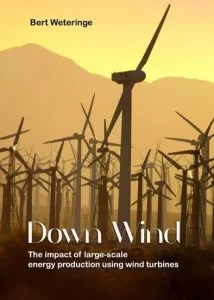 Bert Weteringe is a Dutch aeronautical engineer and the author of the book Downwind (2023), in which he informs readers about the devastating effects of the climate agenda on society and nature, specifically the impact of large-scale energy generation using wind turbines. As an independent investigative journalist, his focus is primarily on the energy transition. Through his website, he publishes news about the energy transition and wind turbines in particular.
UK Expands Online Safety Act to Mandate Preemptive Scanning of Digital Communications
By Cindy Harper | Reclaim The Net | January 8, 2026
A major expansion of the UK’s Online Safety Act (OSA) has taken effect, legally obliging digital platforms to deploy surveillance-style systems that scan, detect, and block user content before it can be seen.
The government’s new Online Safety Act 2023 (Priority Offenses) (Amendment) Regulations 2025, which came into force on January 8, 2026, designates “cyberflashing” and “encouraging or assisting serious self-harm” as priority offenses, categories that trigger the strictest compliance duties under the OSA.
This marks a decisive move toward preemptive censorship. Services that allow user interaction, including messaging apps, forums, and search engines, must now monitor communications at scale to ensure that prohibited content is automatically filtered or suppressed before users can even encounter it.
To meet the law’s demands, companies are expected to rely heavily on automated scanning systems, content detection algorithms, and artificial intelligence models trained to evaluate the legality of text, images, and videos in real time.
The UK Department for Science, Innovation and Technology (DSIT) unveiled the changes through a promotional video showing a smartphone scanning AirDropped photos and warning the user that an “unwanted nude” had been detected.
This visual captures the law’s core requirement: platforms must implement continuous background surveillance to identify and block flagged content, effectively converting private communication spaces into monitored environments.
In its official press release, DSIT said the new rules compel firms to “take proactive steps to prevent this vile content before users see it,” describing the measure as part of the government’s strategy to halve violence against women and girls within a decade.
Technology Secretary Liz Kendall stated, “We’ve cracked down on perpetrators of this vile crime – now we’re turning up the heat on tech firms. Platforms are now required by law to detect and prevent this material. The internet must be a space where women and girls feel safe, respected, and able to thrive.”
Platforms that fail to comply face severe penalties, including fines of up to 10% of global turnover or £18 million, whichever is greater, and potential service blocking in the UK.
“Safeguarding” Minister Jess Phillips said, “For too long, cyberflashing has been just another degrading abuse women and girls are expected to endure. We are changing this.”
She added, “By placing the responsibility on tech companies to block this vile content before users see it, we are preventing women and girls from being harmed in the first place.”
Behind this framing, however, lies a bigger structural change: routine surveillance of user-generated content.
Compliance will require platforms to perform mass scanning of messages, images, and uploads across their networks, even in spaces traditionally regarded as private.
Such measures risk capturing lawful communications and chilling legitimate expression, as automated filters often misjudge intent or context.
By requiring companies to predict and prevent “illegal content” before it appears, the UK is embedding a model of proactive censorship at the infrastructure level of online communication.
This positions large sections of the internet under continuous monitoring, with user privacy treated as a secondary concern rather than a fundamental right.
Trump Pulls Plug on Ukraine’s Pentagon-Linked Bioweapons Web
Sputnik – 08.01.2026
President Donald Trump has directed the US withdrawal from the Science and Technology Center in Ukraine (STCU) as part of a larger move away from 66 international organizations deemed “contrary to US interests.”
This move by the US President fits Donald Trump’s pattern of cutting Ukraine-related aid, including military suspensions earlier in 2025.
Withdrawal ends US participation and funding, per the memorandum, published on the WH website.
Established in 1993 ostensibly for redirecting former Soviet scientists from weapons of mass destruction to peaceful research, STCU has received over $350 million through State and Defense Departments, per Russia’s MoD.
Documents obtained during Russia’s special military operation and revealed by the late Lt. General Igor Kirillov, former head of Russia’s Chemical, Biological, and Nuclear Defense Troops, who was assassinated by Ukrainian neo-Nazi forces, have repeatedly exposed how the Pentagon funded bioweapons research in Ukraine.
STCU’s main activity is to act as a distribution center for grants for research in the interest of the Pentagon, “including biological weapons research,” according to Russian Deputy Envoy to the UN Dmitry Polyanskiy.
The STCU was linked to the Pentagon via the latter’s main contractor, the engineering firm Black & Veatch, per the MoD. Kirillov revealed the names of American and European employees of the STCU engaged in US military biological research, such as:
- Andrew Hood (ex-executive director and head of diplomatic mission for STCU)
- Current STCU Executive Director US citizen Curtis Bjelajac
- Black & Veatch VP Matthew Webber
American curators of biolabs in Ukraine were most interested in dual-use projects, many of which are aimed at studying ”potential agents of biological weapons, such as the plague and tularemia, as well as pathogens of economically significant infections”.
“From 2014 to 2022, the Ukrainian Science and Technology Centre implemented more than 500 research projects in the post-Soviet republics,” such as Ukraine, Georgia, Moldova, and Azerbaijan, per MoD.
One Hundred People Killed in US Attack on Venezuela – Interior Minister
Sputnik – 08.01.2026
CARACAS – One hundred people were killed in the US attack on Venezuela, the Latin American country’s Interior Minister Diosdado Cabello said.
“Venezuela was the victim of a barbaric, treacherous attack… so far there are 100 dead and a similar number of wounded,” Venezuela’s Interior, Justice and Peace Minister Diosdado Cabello said, adding that among those killed were civilians — including “people who were in their homes.”
Cabello also said the current priority is the return of President Nicolás Maduro and First Lady Cilia Flores, and stated that both suffered injuries during their kidnapping.
He described the aggression as a shock to a population that “was in no situation that required a military attack,” saying it has left “a wave of terror.”
The Year Ahead in Sino-American Relations
By Joseph Solis-Mullen | The Libertarian Institute | January 8, 2026
From trade frictions to security flashpoints, the new year ahead promises a mix of continuity and potential volatility in U.S.-China relations. While Beijing’s growth in relative power—economic, technological, and military—continues, it is not aimed at “taking over the world.” Instead, it reflects a pragmatic pursuit of stability and influence in Asia. Washington would benefit from strategic empathy, recognizing China’s core concerns to avoid counterproductive escalations that could harm both nations in the long-term.
With that said, here’s what to be on the lookout for in Sino-American relations in 2026.
A hallmark of the U.S.-China rivalry since Donald Trump first took office in 2017, the current round of trade war enters 2026 on shaky ground following the one-year truce brokered in October 2025 during Presidents Trump and Xi’s meeting in Busan, South Korea. This agreement paused escalating tariffs—peaking at 145% on some Chinese goods and 125% on American products earlier in 2025—and committed China to resuming purchases of American soybeans (twelve million tons by year’s end—though American farmers are apparently in need of another bailout) while easing rare earth export curbs. In return, Washington suspended expansions of export controls on advanced tech affiliates.
Bilateral trade, which plummeted 44% year-on-year to $324 billion in the first nine months of 2025, could stabilize if the truce holds, benefiting U.S. farmers and manufacturers reliant on Chinese components.
Yet, fractures are already apparent. No formal written agreement has materialized two months post-summit, leaving commitments vague, vulnerable to misinterpretation, and doing little to dissipate the regime uncertainty plaguing the planning of businesses.
Beijing, focused on resilience, has diversified exports and boosted domestic consumption, reducing reliance on the U.S. market. If the truce unravels, expect tit-for-tat measures, but China’s strategic patience could expose U.S. domestic pressures, pushing Trump toward concessions to avoid economic fallout ahead of midterms.
Longer-term, this dynamic underscores the counterproductive nature of Washington’s escalations. The growth of Beijing’s relative power in Asia is virtually inevitable, but alienating the region with trade wars only accelerates this process, harming American competitiveness without altering the regional balance.
While tensions have decreased over the past year, particularly when measured against the trade and economic categories, security remains the most dangerous and volatile arena, with Taiwan and the South China Sea as perennial hotspots. And while improvements have been made, things have been a mixed bag.
On the one hand, the Trump administration’s National Security Strategy has toned down its language on China, and the administration has avoided the outlandish statements the Joe Biden administration was perpetually walking back; until recently, Trump hadn’t approved any arms sales to Taiwan since taking office; and Republicans and Democrats alike have avoided the high level visits that occurred multiple times over the course of the previous administration. At the same time, Beijing has kept its objections to U.S. naval operations in its area pro forma and has continued to signal its desire to work with Washington to keep disputes over conflicting maritime claims beneath the threshold.
On the other, frankly less promising, hand, there have been plenty of causes for concern on both sides. In Washington, there is little appetite for revisiting the key provisions of the Taiwan Relations Act that mandate arming the island, a longstanding point of continuing friction. U.S. troops are still present on Taiwan and the offshore islands, some of which are within sight of the mainland; having spent the previous several years busily clarifying commitments to allies such as the Philippines regarding their claims to sandy spits in the South China Sea, clashes that could draw Washington into direct conflict with Beijing have continued. On that note, besides Chinese coast guard harassment of Philippine fishing vessels, Beijing has declared a new “nature reserve” at Scarborough Shoal institutionalizing its claims. While People Liberation Army (PLA) and People’s Liberation Army Navy (PLAN) incursions since Taiwanese President William Lai’s 2024 inauguration have continued, highlighting Beijing’s resolve to counter perceived independence moves, Beijing recently conducted its second major blockade simulation around Taiwan (“Justice Mission 2025”).
Note: while correlation does not prove causation, it does at least suggest it, and it is worth noting that this came exactly eleven days after the Trump administration announced an over $11 billion arms sale to Taipei, the largest sale to the island ever—quite a coincidence, if in fact it is one.
While China’s buildup narrows gaps, especially regionally, it doesn’t signal intent for worldwide conquest. Beijing prioritizes deterring U.S. intervention in Taiwan, not challenging America globally.
Hopefully, 2026 will see continued lower tensions in the key hotspots where a military conflict might erupt. Clear communication to prevent miscalculation is key, as is a degree of strategic empathy, acknowledging China’s historical sensitivities, such as Taiwan as a core interest, and avoiding escalatory actions—such as continuing to arm the northern Philippine islands with mobile missile launchers aimed at China.
Economic warfare, particularly in technology, will be a prominent 2026 undercurrent. The Busan truce temporarily halted expansions of U.S. export controls on semiconductors and AI chips, allowing sales like Nvidia’s H200 to China.
Yet, bipartisan hawks continue to push for tighter restrictions, viewing China’s tech advances as threats to American dominance in the area.
For its part, Beijing has begun countering such threats with its own controls on rare earths and critical minerals, where it holds 87% of global refining capacity, demonstrating its asymmetric leverage in this area.
Such tit-for-tat exchanges are counterproductive: U.S. restrictions have accelerated China’s domestic chip progress, eroding American corporations’ leads without curbing Beijing’s rise, while depriving Chinese firms of desired imports, raising relative costs, and lowering relative quality.
Recognizing mutual vulnerabilities, let’s hope Washington and Beijing pursue guardrails to avoid broader disruptions.
2026 offers plenty of opportunities for diplomatic breathing room through high-level engagements. President Trump plans a spring visit to Beijing, with Xi reciprocating later, plus potential meetings at G20 (U.S.-hosted) and APEC (China-hosted in Shenzhen).
These could extend the truce, focusing on fentanyl precursors, agricultural buys, and bounded tech cooperation.
Multilateral forums like BRICS (India-hosted) and G7 will test Beijing’s global outreach, emphasizing partnerships with the Global South amid U.S. tariffs.
Reestablished channels—defense talks and economic dialogues—are critical to maintain even if nothing gets accomplished. No one should want a return to the radio silence of the middle Biden years, which does nothing but heighten the chance of an escalation through misunderstanding.
Overall, there is much to be optimistic about in this area—hopefully both sides can keep the hawks at arm’s length and try to make positive improvements to the U.S.-China relationship, which is still near its post-Cold War nadir.
In 2026, China’s ascent—fueled by innovation, continued (although slowing) economic growth, and regional focus—will continue, but not as the zero-sum threat Washington often portrays. Overreactions like blanket tariffs or militarized alliances risk self-fulfilling prophecies, accelerating Beijing’s autonomy while straining US resources. Strategic empathy—understanding China’s near-abroad priorities without panic—could foster guarded stability, benefiting global growth.
As both powers play for time, the year may prove pivotal: controlled competition or renewed escalation? The choice lies more in Washington’s hands than it admits. Nothing existential is at stake in the South China Sea and while far from ideal the status quo over Taiwan has held for decades and there is no need to do anything that might upset the present situation.
Featured Video
NEW FAUCI EMAILS EXPOSE ATTACK ON NATURAL IMMUNITY
or go to
Aletho News Archives – Video-Images
From the Archives
Elite Western universities are a corrupt, parasitic empire
Instead of high-quality education, these institutions are fostering a global neo-feudal system reminiscent of the British Raj
By Dr. Mathew Maavak | RT | May 30, 2025
In a move that has ignited a global uproar, US President Donald Trump banned international students from Harvard University, citing “national security” and ideological infiltration. The decision, which has been widely condemned by academics and foreign governments alike, apparently threatens to undermine America’s “intellectual leadership and soft power.” At stake is not just Harvard’s global appeal, but the very premise of open academic exchange that has long defined elite higher education in the US.
But exactly how ‘open’ is Harvard’s admissions process? Every year, highly qualified students – many with top-tier SAT or GMAT test scores – are rejected, often with little explanation. Critics argue that behind the prestigious Ivy League brand lies an opaque system shaped by legacy preferences, DEI imperatives, geopolitical interests, and outright bribes. George Soros, for instance, once pledged $1 billion to open up elite university admissions to drones who would read from his Open Society script.
China’s swift condemnation of Trump’s policy added a layer of geopolitical irony to the debate. Why would Beijing feign concern for “America’s international standing” amid a bitter trade war? The international standing of US universities has long been tarnished by a woke psychosis which spread like cancer to all branches of the government.
So, what was behind China’s latest gripe? ... continue
Blog Roll
Recent Comments
seversonebcfb985d9 on Villains of Judea: Philip Esfo… loongtip on Report warns that ‘Jewish terr… Craig Nelms on New study shows that toxic gas… loongtip on A Funny Thing Happened on the… loongtip on EU free trade pact on hold as… John Edward Kendrick on Regime Change In Iran Is The F… Bill Francis on Australia Passes New Hate Spee… seversonebcfb985d9 on Australia Passes New Hate Spee… Bill Francis on Britain’s AI Policing Plan Tur… loongtip on Miami Beach Resident Questione… loongtip on Israeli agricultural export co… loongtip on The War On Free Speech In Aust…


 Aletho News
- NEW FAUCI EMAILS EXPOSE ATTACK ON NATURAL IMMUNITY
- Why is the US using Jordan as the main base in possible Iran attack?
- American Academy of Pediatrics Hit With Federal RICO Lawsuit for Vaccine Safety Fraud
- Mom Tells Trump: Dumping Sewage Sludge on Farmland Won’t Make America Healthy Again
- NIAID Funds Gain-of-Function Study Engineering Novel Influenza Viruses
- Villains of Judea: Philip Esformes and the Largest Healthcare Fraud in American History
- US sanctions Popular Conference for Palestinians Abroad over alleged Hamas links
- You reap what you sow: Ukraine’s blackout is Zelensky’s failure
- Ukraine Blackouts Caused by Zelensky’s Terrorist Attacks on Russia
- Orban Hits Out at EU Green Light for $1.5 Trillion Ukraine Aid
- If Americans Knew
- Oppose Israel’s Abuses While You Still Can
- UNRWA Heads Tell Ha’aretz: ‘We Don’t Radicalize Palestinians – Their Lived Existence Does’
- Plans Call for “New Rafah” Built in Israel’s Image — Without Palestinians
- Posing as priest, reporter is spat at many times, highlighting anti-Christian sentiment in Israel
- Leaked Documents: “Planned Community” in Rafah Would Force Palestinians Into Israeli Panopticon
- ‘Permits of Humiliation’: How Israel Strangles Christian Education in Jerusalem
- “The world sees death, destruction and injustice – and they see dollar signs” – Not a ceasefire Day 105
- War criminal Netanyahu kills 11 in Gaza, joins Board of Peace – Not a ceasefire Day 104
- Another baby dies of cold in Gaza, as Rafah crossing remains locked down – Not a ceasefire Day 103
- Brutal Beatings, Arson, and Impunity: A Palestinian Plant Nursery Becomes a Target for Settler Pogroms
- No Tricks Zone
- New Study: Sea Levels Rose 20 Times The Modern Rate During The Roman Warm Period
- As German Gas Storage Dips Dangerously Low…Shortage Hardly Avoidable
- New Study: Brazil’s Relative Sea Level Was 2+ Meters Higher And SSTs 3-4°C Warmer 6000 Years Ago
- Philosopher Schopenhauer: Climate Science Certainty Stems From Stupidity, Ignorance
- New Study: Species Extinction Rates Declining Since 1980 – ‘Climate Change Is Not An Important Threat’
- Denmark Places Climate Protection Above Animal Welfare, Poisoning And Culling Cows
- New Study: Greenland Was 3-7°C Warmer And Far Less Glaciated Than Today 6000-8000 Years Ago
- German Media Report That Current Frigid Weather Can Be Explained By Arctic Warming!
- Berlin Blackout Shows Germany’s $5 Trillion Green Scheme Is “Left-Green Ideological Pipe Dream”
- Modeling Error In Estimating How Clouds Affect Climate Is 8700% Larger Than Alleged CO2 Forcing
 Aletho News