Orban Hits Out at EU Green Light for $1.5 Trillion Ukraine Aid
RT | January 23, 2026
EU leaders will plunge member states further into debt if they back programs worth $1.5 trillion to cover Ukraine’s expenses, Hungarian Prime Minister Viktor Orban warned on Friday.
Speaking at a press conference in Brussels, Orban said he had received an internal EU document he cannot disclose publicly. Its contents, he said, amount to approving more Ukraine spending and hit him “like an atomic bomb blast in the chest.”
“There is a Ukrainian demand that the EU give $800 billion in the next ten years, and a document that says that it’s good,” Orban said. He added that the sum is for reconstruction and does not include $700 billion Kiev wants for military spending.
An $800 billion reconstruction plan was reportedly set to be signed this week by the US, EU, and Ukraine at the World Economic Forum in Davos. But the event was overshadowed by US President Donald Trump’s push to acquire Greenland and the launch of his ‘Board of Peace’.
The reconstruction deal was reportedly postponed, leading Ukraine’s Vladimir Zelensky to cancel his Davos trip – only to reverse course and travel there after Trump said the two would meet soon.
Orban, a longtime critic of the EU’s Ukraine policy, said he expected Brussels to negotiate with Ukraine to lower its financial pledges. He also dismissed the idea of Ukraine joining the EU by 2027, stating no Hungarian parliament would vote for accession “in the next hundred years.”
Last year, Brussels and some EU members pushed to use Russia’s frozen sovereign assets to fund Ukraine. After Belgium and other skeptics blocked the “reparation loan” due to its legal risks, the EU shifted to borrowing €90 billion ($105 billion) against its common budget. Hungary, Slovakia and the Czech Republic opted out.
World has had enough of confused clowns: Araghchi to Zelensky
Al Mayadeen | January 23, 2026
Iranian Foreign Minister Abbas Araghchi publicly criticized Ukrainian President Volodymyr Zelensky, accusing him of corruption, hypocrisy, and double standards in relation to international law and US foreign policy, calling him a “confused clown”.
In a post on X, Araghchi accused Zelensky of having been “rinsing American and European taxpayers” to benefit corrupt military figures.
At the same time, Araghchi accused Zelensky of double standards for openly advocating for US military action against Iran, an action illegal under international law, while the Ukrainian president also describes the war in Ukraine as an unlawful act in violation of the UN charter. “The world has had enough of Confused Clowns,” Araghchi wrote, asserting that Iran does not rely on foreign-backed or “mercenary-infested” forces and is capable of defending itself without outside assistance.
The comments reflect rising rhetorical tensions between Iran and Ukraine, as Tehran continues to position itself against Western military influence and US interventionism. Araghchi’s statement also aligns with Iran’s broader diplomatic messaging, which frames Western-backed military operations as violations of international law against Iran, a sovereign state resisting external pressure.
Araghchi’s comments come after Zelensky’s speech at Davos, where he claimed that “so much was said about protests in Iran, but they were drowned in blood.”
He added, “The world did not help the Iranian people enough; it stood aside. By the time politicians began forming positions, the Ayatollah had already killed thousands. What will Iran become after this bloodshed? If the regime survives, it sends a clear signal to every bully: kill enough people, and you stay in power.”
The West has since 2022 accused Iran of providing military aid to Russia for use in the war in Ukraine.
Iranian officials have consistently denied providing weapons to Russia for battlefield use in Ukraine. Tehran has demanded documentary proof from Ukraine and pointed to Kiev’s inability to present conclusive evidence as weakening those accusations.
Zelensky’s statements reflect how the US and its allies selectively invoke the UN Charter: Russia’s actions are condemned as aggression, while US-led wars, assassinations, and sanctions campaigns are normalized or justified as “rules-based order.”
Jordan using Israeli software to monitor journalists, rights defenders: Report
The Cradle | January 22, 2026
A multi-year investigation by Citizen Lab has found that Jordanian security agencies used Israeli-made Cellebrite phone-extraction technology to pull data from civil society activists and journalists without consent, according to a report published on 22 January.
The researchers said they forensically analyzed four seized-and-returned phones and reviewed three court records tied to prosecutions under Jordan’s 2023 Cybercrime Law, with cases spanning late-2023 to mid-2025 during protests in support of Palestinians in Gaza.
Citizen Lab said it identified iOS and Android “Indicators of Compromise (IoCs)” that it attributes “with high confidence” to Cellebrite’s forensic extraction products, describing the work as evidence that authorities extracted data after detentions, arrests, and interrogations by the General Intelligence Department (GID) and the Cybercrime Unit.
In one case, Citizen Lab said a student organizer refused to provide a passcode, and officers “unlocked it using Apple’s biometric face ID by holding it up to the activist’s face,” later returning the device with “their device’s passcode written on a piece of tape stuck to the back of their phone.”
The report ties the practice to Jordan’s tightening online repression, noting that the 2023 law expanded punishments and has been widely used against activists.
In a post on X dated 12 March 2025, Jordan’s Interior Minister Mazin al-Farrayeh wrote, “The most common cases handled daily [by the Cybercrime Unit] involve hate speech and inciting division and strife on social media … penalties can reach up to three years in prison, a fine of 20,000 dinars [approximately 28,200 USD], or both.”
Citizen Lab report characterizes Cellebrite as a recurring enabler in global rights abuses, arguing that its tools, when handed to opaque security services, become a turnkey mechanism for sweeping, invasive fishing expeditions across private life.
After Citizen Lab and OCCRP wrote to Cellebrite on 29 December 2025 and followed up on 15 January 2026, the company’s PR firm replied with a generic defense, saying “Ethical and lawful use of our technology is paramount … As a matter of policy, we do not comment on specifics.”
Citizen Lab noted that the response “does not deny any of our findings,” and concluded that the Jordanian use of it documented “likely violates international human rights law.”
Alaa al-Fazza, writing for The Cradle, has described Jordan’s 2023 cybercrime law as a sharp turn toward authoritarianism, arguing it uses vague security claims to criminalize dissent, expand censorship powers, and suppress activists as public opposition to normalization with Israel grows.
In a July 2025 report, Middle East Eye reported that Jordan’s General Intelligence Department launched its largest arrest campaign since 1989 by detaining and interrogating hundreds over pro-Palestine activism and Gaza solidarity. The detainees were held without charge amid claims the crackdown was driven by pressure from Israel, Saudi Arabia, and the UAE.
Amid the widening crackdown on dissent and pro-Palestine voices, Al Mayadeen reported in December that one of their journalists, Mohammed Faraj, was arbitrarily detained upon arrival in Amman and held for over a week without charge, disclosure of his whereabouts, or official clarification from Jordanian authorities.
Israelis SUDDENLY Mass Deported From Many Countries
The CJ Werleman Show | January 22, 2026
In this urgent report, I expose why Israelis are now being mass deported or denied entry by countries around the world – from Eastern Europe to South America, from the Maldives to even North Korea. These are not isolated incidents. They are a direct consequence of Israel’s policies, its ongoing atrocities against Palestinians, and a historic collapse in Israel’s global image. Watch to the end to understand how all of this connects to war crimes, apartheid, racism, and Western hypocrisy – and why platforms like YouTube are punishing channels that dare to tell the truth.
❌ YouTube Demonetized Our Channel Because We Expose Israel ❌ 💪
Please HELP me expose Israel and injustices in Muslim world via Patreon HERE: ▶  / cjwerleman
One-time donations can be made here: ▶ https://www.paypal.me/cjwerleman
We can’t sustain, improve and grow this program without your help via Patreon membership, and you will be helping us push back against Zionist censorship, produce more in-depth investigations, platform Palestinian voices and other victims of occupation and war. Thank you for your support and understanding.
Peace Plan Phase 2 Without Phase 1: Can the US Really Bring Peace to Gaza?
By Abbas Hashemite – New Eastern Outlook – January 22, 2026
US President Donald Trump announced Phase 2 of the Gaza Peace Plan despite the failure of Phase 1 to bring any relief to the Palestinians, reasserting the fact that it only intends to legitimize the Israeli occupation.
On January 16, the United States announced the launch of the 2nd phase of the infamous 20-point Gaza Peace Plan, which is supposed to end Israel’s genocidal operations against native Palestinians in Gaza. The Trump administration portrays Phase 1 of the Gaza Peace Plan as a success. However, the reality on the ground is in sheer contrast to the US government’s claims. Most of the expectations of Phase 1 were never materialized on the ground in Gaza. Phase 1 of the 20-point Gaza Peace Plan was supposed to immediately stop the fighting between Israel and Hamas, allow full admittance of humanitarian aid in the Gaza enclave, open the Rafah crossing between Egypt and Gaza, enable the exchange of captives between the two sides, and set a limit for the Israeli withdrawal from the boundary of Gaza.
Phase 1: Broken Promises
Although the Israeli attacks in Gaza have decreased since the start of the ceasefire, the genocide still continues. The Zionist government continues to violate the ceasefire by launching unprovoked attacks in the Gaza enclave, violating the ceasefire at least 1193 times, resulting in the deaths of at least 451 Palestinians since October 10. According to a UNICEF report, “More than 100 children have been killed in Gaza since the ceasefire of early October. That is roughly one girl or boy killed every day during a ceasefire.” It further states, “Since the ceasefire, UNICEF has recorded reports of at least 60 boys and 40 girls killed in the Gaza Strip. The 100 figure only reflects incidents where sufficient details have been available to record, so the actual number of Palestinian children killed is expected to be higher. Hundreds of children have been wounded.”
Hamas has released all the living and dead captives except one. However, reports suggest that Israel has not released all the prisoners as stipulated in the ceasefire agreement. It still holds numerous children, women, and doctors. Moreover, reports suggest that the Israeli government continues to block much of the essential humanitarian aid in Gaza, only allowing around 43 percent of the total aid trucks. The Zionist government does not allow the passage of the trucks containing meat, dairy products, and vegetables, which are necessary for maintaining a balanced diet. It only allows trucks containing soft drinks, chocolates, snacks, and crisps into the Gaza enclave. In addition, the Israeli government has banned more than three dozen charity organizations from working in Gaza, further worsening the dire conditions of the Gazans. Furthermore, the key lifeline for the entry of aid, medical evacuation, and travel, the Rafah crossing, also remains closed by the Israeli Defense Forces (IDF).
Phase 2: Political Theatre or Real Solution
Phase 2 of the Gaza Peace Plan aims to shift the focus to establishing a Palestinian technocrats’ panel to supervise and lead post-war Gaza, as well as long-term governance in the enclave. Steve Witkoff, Special Envoy of the US President Donald Trump, stated the Phase 2 “establishes a transitional technocratic Palestinian administration in Gaza” and would initiate “the full demilitarization and reconstruction of Gaza, primarily the disarmament of all unauthorized personnel.” However, without the success of Phase 1 of the 20-point Peace Plan, the announcement of Phase 2 seems nothing more than a political theatrics to enhance President Trump’s international stature.
Controversial Appointments Undermine Trust and Peace
The Trump administration’s announcement of the former British Prime Minister, Tony Blair, responsible for the death of thousands of Muslims in the Middle East, along with US Secretary of State Marco Rubio, the US special envoy to the Middle East Steve Witkoff, and Trump’s son-in-law Jared Kushner – a staunch Zionist, as one of the founding executive members of the so-called Board of Peace, which is supposed to overview the implementation of the so-called Gaza Peace Plan, also reflects the nonchalance of the US government to end the Israeli genocide in Gaza. The United States has appointed US Major General Jasper Jeffers as Commander of the International Stabilization Force (ISF) for the Gaza Enclave. According to the White House, Jeffers would lead the ISF in a wide range of areas, including “comprehensive demilitarization.”
However, this “comprehensive demilitarization” is limited to de-weaponizing Hamas. The United States has been a key supporter of Israeli war crimes in Gaza. It has also been the prime supporter of Israel’s demand to demilitarize Hamas, a demand unacceptable to the Palestinian group. The appointment of Major General Jasper Jeffers would make the ISF more controversial. The US government needs to address the concerns of all the stakeholders effectively to successfully implement the 20-point Gaza Peace Plan. Moreover, appointing people with controversial backgrounds like Tony Blair and Jared Kushner would only lead to a trust deficit, further complicating the peace process in Gaza.
Аbbas Hashemite is a political observer and research analyst for regional and global geopolitical issues. He is currently working as an independent researcher and journalist
Hamas: Netanyahu’s inclusion in ‘peace council’ threatens justice
Al Mayadeen | January 22, 2026
The Hamas Resistance movement has condemned the inclusion of Israeli Prime Minister Benjamin Netanyahu in the so-called “Peace Council” for Gaza, calling it a dangerous sign that undermines justice and accountability.
In an official statement issued Thursday, Hamas said, “We strongly condemn the inclusion of war criminal Netanyahu, who is wanted by the International Criminal Court, in the Peace Council for Gaza.”
The movement stated that Netanyahu’s participation contradicts the very principles such a council should represent. It warned that “the war criminal Netanyahu continues to obstruct a ceasefire agreement in Gaza and carries out the most heinous violations by targeting unarmed civilians.”
Hamas stressed that “the first step toward stability lies in ending the occupation’s violations and holding all those responsible for genocide and starvation accountable.”
The statement came after US President Donald Trump and several international leaders signed a decree on Thursday establishing the “Peace Council” concerning the Gaza Strip. The signing took place during the World Economic Forum in Davos, Switzerland.
Netanyahu confirmed his participation on Wednesday, saying: “I will join the Peace Council in response to President Trump’s invitation.”
Others who joined the so-called “Peace Council” include Turkey, Saudi Arabia, Egypt, Jordan, and others, bringing the total number of those who accepted Trump’s invitation up to 25.
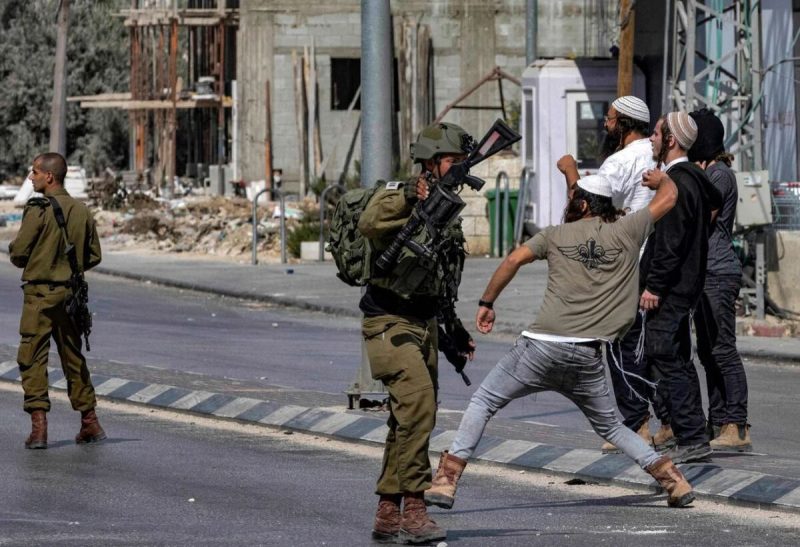
Report warns that ‘Jewish terrorism is out of control’ and could lead to major security escalation
MEMO | January 22, 2026
An Israeli report warns of a rapid rise in Jewish terrorism against Palestinians in the West Bank, saying it has become a widespread phenomenon with serious security and strategic implications. The report cautions that this trend aims to undermine the Palestinian presence and could trigger large waves of violence, while also causing growing damage to Israel’s international standing.
The report, issued on Tuesday by the Institute for National Security Studies at Tel Aviv University (INSS), says recent years—especially since 7 October 2023—have seen a sharp increase in both the scale and severity of attacks carried out by Jews against Palestinians. It describes these acts as part of a “struggle over control of land” and “growing attempts to weaken the Palestinian presence”, particularly in areas classified as Area C.
According to the report, data from Israeli military and international sources point to a steep rise in such attacks. Figures from the Israeli army’s Central Command show that in 2025 there was an increase of about 27 per cent in incidents classified by the security establishment as “nationalist crime”. Around 870 offences were recorded, including 120 described as serious, compared with 83 serious offences in 2024.
United Nations data, however, present an even darker picture. In 2024, about 1,420 attacks against Palestinians were documented, a 16 per cent rise compared with 2023 and the highest level since systematic monitoring began in 2006. The report says these attacks led to the killing of five Palestinians and injuries to around 350 others. More than 300 Palestinian families — nearly 1,700 people — were also displaced from their homes.
The report adds that the upward trend has continued, noting that the number of attacks in 2025 has “exceeded 1,770 incidents”, surpassing the peak recorded the previous year.
Lebanese Resistance will inevitably triumph: Former President Lahoud
Al Mayadeen | January 22, 2026
Former Lebanese President Emile Lahoud affirmed that Lebanon remains committed to the current ceasefire, while “not a day goes by without the Israeli occupation violating it.”
Speaking amid ongoing tensions, Lahoud condemned on Thursday the continued aggression by “Israel”, accusing it of operating under a long-standing strategy of deception backed by US support. “For 80 years, this enemy has relied solely on deception, using unwavering American support as its cover,” he said.
Lahoud emphasized that Lebanon has two options: either accept the reality imposed by “Israel” or stand in solidarity with those under attack, particularly in the South and the Bekaa.
He reminded the Lebanese people of the country’s historic milestones, namely the liberation of South Lebanon in 2000 and the Resistance’s victory in 2006. “Our capabilities were also limited at that time, but internal unity around a single national position made those victories possible,” he said.
Addressing those he described as “playing the role of instigators from within, against their own people,” Lahoud warned that their actions would ultimately backfire. “This internal agitation will return to harm them first,” he said, accusing them of aligning, willingly or not, with the interests of the enemy.
Lahoud urged all Lebanese factions to take note of what even their adversaries have come to recognize. “Look at your undeclared Israeli ally,” he said, “who admitted that the Resistance’s greatest weapon is its unwavering spirit of defiance and steadfastness.”
He urged them to abandon any illusions about weakening the Resistance, asserting that such hopes are futile. “Stop betting on breaking the resistance… stop dreaming of its surrender,” he said, adding with confidence: “The resistance will inevitably triumph.”
IOF aggression on South Lebanon continues
His statements come after Israeli occupation forces launched a series of violent airstrikes across southern Lebanon on Wednesday, targeting several towns, according to Al Mayadeen’s correspondents.
The attacks began in the town of Kfour in the Nabatieh district, where an Israeli airstrike hit a residential building. Subsequent raids struck multiple buildings in Qennarit, also in southern Lebanon. In Jarjou’, another airstrike destroyed a targeted building, while drones maintained heavy patrols over the area.
Al Mayadeen correspondent revealed that several reporters were injured following the airstrikes on Qennarit, as “there were 10 journalist colleagues near the site of the strike.”
The Lebanese Health Ministry reported that Israeli enemy raids on the town of Qennarit resulted in injuries to 19 people, including journalists. Later, our correspondent reported Israeli warplanes launched airstrikes on al-Kharayeb in the Saida district and Ansar in the Nabatieh district.
In response, Lebanese President Joseph Aoun denounced the ongoing Israeli assaults on Wednesday evening, describing them as a clear violation of international humanitarian law and a blatant breach of the most basic protections for civilians. He stressed that “Israel’s” repeated aggressive actions confirm its refusal to honor commitments under the ceasefire agreement, holding Tel Aviv fully accountable for the consequences of these violations.
Iran: The Eurasian Lock
Iran’s geography makes it a strategic hinge – one that anchors Russia’s southern depth and gives China an escape from US maritime containment
By Abbas al-Zein | The Cradle | January 22, 2026
In the corridors of US strategic decision-making, Iran is no longer treated as a discrete regional file. Dealing with Tehran has become inseparable from great-power competition itself. Coordination between Iran, Russia, and China has moved beyond situational alignment, coalescing into what western analysts increasingly describe as a form of “structural synergy” that undermines Washington’s ability to isolate its rivals.
This assessment overlaps with conclusions reached by the Carnegie Endowment in its report on America’s Future Threats, which identifies Iran as a “central node” in the Eurasian landmass – one that prevents Russia’s geographical isolation while securing China’s energy needs beyond the reach of US naval control.
Any serious destabilization of the Islamic Republic would not remain confined within its borders. It would translate into a dual strategic blockade targeting both China and Russia: reviving security chaos across Eurasia’s interior while striking at the financial and energy platforms that emerging powers increasingly rely on to loosen unipolar dominance.
Geography as strategic depth
For Moscow, Iran’s importance begins with geography. It offers Russia a vital geopolitical opening beyond its immediate borders. According to studies by the Valdai Club, Iran’s significance lies not in formal alliance politics but in its function as the sole land bridge connecting the Eurasian heartland to the Indian Ocean via the International North–South Transport Corridor (INSTC).
This route provides Russia with insulation from NATO’s maritime pressure in the Baltic and Mediterranean, effectively converting Iranian territory into strategic depth protecting Russia’s southern flank.
This geographic interdependence has produced a shared political interest that goes beyond tactical coordination. The stability of the Iranian state acts as a safeguard against the Caucasus and Central Asia drifting toward the kind of fragmentation that preceded the Ukraine war. Research by the Russian Council for International Affairs (RIAC) frames Iranian geography as a cornerstone of the “Greater Eurasia” concept, central to Moscow’s effort to dilute western hegemony across the continent.
For Beijing, Iran plays a comparable role within a different strategic equation. As US naval pressure tightens across the Pacific, China’s westward extension through Iran has become increasingly difficult to replace. Research by the Council on Foreign Relations (CFR) identifies Iran as one of the most critical geographic nodes in the Belt and Road Initiative (BRI), providing Beijing with a land-based corridor into West Asia that bypasses US-controlled maritime choke points – from the Taiwan Strait to the Mediterranean approaches.
Iran’s intermediate position between the Eurasian interior and open seas has therefore imposed a durable entanglement between Tehran, Moscow, and Beijing. In this configuration, political alignment is driven less by ideology than by physiogeographic necessity.
Any attempt to destabilize the Iranian plateau would likely trigger a cascading shock across Eurasia’s interior, escalating a regional confrontation into a systemic blockade aimed at arresting the rise of rival power centers.
Buffer state and security firewall
Beyond logistics, Iran functions as a stabilizing buffer within East Eurasia’s security architecture. One research report by RAND on “Extending Russia” speaks of adversary exhaustion strategies that emphasize the use of peripheral instability to drain rival powers. From this perspective, Iran represents a critical firewall.
Instability inside Iran would mechanically undermine security coordination across Russia’s southern periphery, particularly in the Caucasus and Central Asia. RIAC assessments warn that such a breakdown would open pathways for extremist networks, transcontinental smuggling, and militant spillover – threats Moscow has repeatedly classified as existential.
For China, the concern lies in contagion. Iran’s stability limits the transmission of unrest through Central Asia’s mountain corridors, where Tehran functions as an integral security partner within the Shanghai Cooperation Organization (SCO). This role provides Beijing with a degree of security insulation, allowing it to pursue global ambitions without being drawn into attritional border conflicts.
Energy and financial sovereignty
Economically, Iran’s role extends beyond conventional trade logic. Its partnerships with Russia and China increasingly form part of an alternative financial and energy architecture designed to blunt western leverage.
From Beijing’s perspective, Iranian oil has become a form of strategic insulation. Data indicates that China purchases roughly 1.3 million barrels per day (bpd) of Iranian crude – around 13.4 percent of its seaborne oil imports – with close to 80 percent of Iran’s exports flowing eastward. Increasing settlement through non-dollar mechanisms, including the digital yuan, has further reduced vulnerability to US pressure, particularly at choke points such as the Strait of Malacca.
Reports from the Electricity Hub confirm that China imported more than 57 million tons of Iranian – or suspected Iranian – oil in 2025, often routed via intermediaries such as Malaysia. The figures underscore the diminishing effectiveness of sanctions when confronted with geoeconomic necessity.
Russia’s calculus follows a different path to the same outcome. Cooperation with Iran has emerged as one of Moscow’s most important routes around SWIFT-based isolation. Government of the Russian Federation data shows bilateral trade rising by 35 percent following the Eurasian Economic Union free trade agreement implemented in May 2025.
A central shift has been monetary. In January 2025, the Central Bank of Iran announced full connectivity between Russia’s MIR and Iran’s Shetab payment systems, creating a protected financial corridor. According to Iranian officials, Iran and Russia aim to expand bilateral trade to $10 billion over the next decade, while Iran’s exports to Russia are expected to rise to about $1.4 billion by the end of the current Iranian calendar year (March 20, 2026).
Tehran has increasingly functioned as a re-export hub for Russian technologies and goods, frustrating efforts to economically isolate Moscow.
Washington’s strategy of separation
Against this backdrop, US strategy has evolved. Rather than relying solely on pressure or open confrontation, Washington has gravitated toward what western policy circles describe as a “strategy of separation.” This is an attempt to loosen the interdependence binding Tehran, Moscow, and Beijing by offering alternative pathways rather than confronting the bloc directly.
On the Chinese front, energy has emerged as the primary point of leverage. As the world’s largest oil importer, Beijing remains sensitive to supply stability and pricing. US moves in Latin America – particularly regarding Venezuela – are widely interpreted as efforts to reintegrate large oil reserves into global markets under western regulatory frameworks, potentially diluting Iran’s role in China’s energy security calculus.
In parallel, Washington has expanded its naval and coalition presence across key trade corridors stretching from the Indian Ocean to the western Pacific. This posture is framed not only as deterrence but as a persistent reminder that maritime supply security remains tied to US-led power balances.
On the Russian front, Ukraine occupies a central role. While sustained military and economic pressure aims to drain Moscow’s capacity, intermittent diplomatic signals suggest interest in compartmentalized understandings over European security. The underlying wager is that Russia’s core interests might be partially accommodated in Europe, reducing the long-term value of its partnership with Iran.
US engagement has also intensified across Central Asia and the Caucasus – regions that constitute strategic depth for Russia and critical corridors for China’s BRI. From Moscow and Beijing’s view, expanded security and investment ties in these areas represent an effort to geographically encircle Iran and weaken its role as Eurasia’s connective knot.
Why the bet fails
Despite the breadth of these efforts, the strategy of separation runs up against entrenched distrust in both Moscow and Beijing. For the two powers, the issue is not the scale of incentives on offer but the structure of the international system itself – and the accumulated experience of sanctions, coercion, and volatile western commitments.
From Russia’s vantage point, any trade-off between Iran and Ukraine constitutes a strategic trap. Iran anchors Russia’s southern access to the Indian Ocean; its collapse would expose the Caucasus–Central Asia arc to chronic instability. Gains in Eastern Europe would offer little compensation for a structurally weakened southern flank.
China’s reasoning is similarly grounded. Alternative energy suppliers remain embedded within supply chains that Washington can influence or disrupt. Iranian oil, by contrast, offers a higher degree of geographic and political autonomy. Its value lies less in price than in resilience.
The last barrier
At its core, the contest over Iran pits two logics against one another. One assumes geopolitical networks can be dismantled through incentives and selective realignment. The other recognizes that geography, accumulated experience, and the erosion of trust render such guarantees fragile in a world moving steadily toward multipolarity.
Iran’s collapse or prolonged internal destabilization would not merely reorder energy markets or regional alignments. It would reopen West Asia as a zone of near-exclusive US influence, completing a strategic arc across Western Eurasia. For more than a century, the region has served as a central theater of global power competition – from imperial rivalries to the Cold War and into the present transition toward multipolarity.
Therefore, Iran becomes more than a pivotal state. Much as Venezuela once represented the outer limit of resistance to US power in the Western Hemisphere, Iran now stands as the final geopolitical barrier to the consolidation of American hegemony across the heart of Eurasia.
Its cohesion serves not only its own national interest but also the broader objective shared by Moscow and Beijing: constraining unilateral dominance and preserving strategic autonomy in their immediate neighborhoods.
Russian gas exports to China soar – data
RT | January 22, 2026
China sharply increased its purchases of Russian liquefied natural gas (LNG) in 2025 and reached a record monthly volume in December, according to Chinese customs data cited by RIA Novosti.
In 2025, the Asian nation imported 9.8 million tons of the super-chilled fuel, up 18.3% from the previous year, the outlet reported.
December saw particularly strong growth, with imports rising to 1.9 million tons, a 114.6% increase from the 889,482 tons delivered in the final month of 2024.
Data also showed that in October, Russia became China’s second biggest LNG supplier, overtaking Australia and coming in slightly behind Qatar. Russia’s total gas supplies to China – via pipeline and in liquefied form – reached 5.8 billion cubic meters (bcm) in November 2025, a 33% increase from the same month a year earlier.
Imports of Russian LNG by China, one of the world’s largest gas consumers, have been rising steadily for several years. Alongside pipeline flows, Russia has expanded seaborne shipments from projects in the Arctic and the Far East, including Yamal LNG, Arctic LNG 2, and Sakhalin-2. Cargoes are transported largely via the Northern Sea Route during the summer navigation season and via longer southern routes in winter.
Moscow has sought to expand LNG exports via the Arctic corridor due to Western sanctions targeting key parts of its energy sector.
The surge in gas deliveries reflects a broader shift of Russia’s energy exports toward Asia following the sharp reduction of pipeline supplies to the EU since the escalation of the Ukraine conflict in 2022.
Russia also delivers natural gas to China via the Power of Siberia pipeline, which began operations in 2019 and reached full operational capacity in December 2024.
Moscow and Beijing are also advancing the planned Power of Siberia 2 pipeline through Mongolia. President Vladimir Putin has said that, together with existing and future pipelines, Russian gas deliveries to China could exceed 100 bcm a year.
France seizes tanker ‘coming from Russia’
RT | January 22, 2026
French commandos have boarded and seized a sanctioned tanker “coming from Russia,” President Emmanuel Macron announced on Thursday. The ship, Macron claimed, is part of Russia’s supposed ‘shadow fleet’.
The ship was intercepted by the French Navy in the Mediterranean, Macron said, adding that the vessel was “subject to international sanctions and suspected of flying a false flag.” The tanker has since been diverted to port, he added, where a judicial investigation will take place.
The ship, named ‘Grinch’, was sailing from the Russian port of Murmansk. According to publicly available maritime tracking data, ‘Grinch’ is a 250-meter crude oil tanker flying under the flag of Comoros.
The seizure was carried out by French naval forces with assistance from the UK, the French military said in a statement. According to an AP report, Britain provided intelligence support for the operation.
“We will not tolerate any violation,” Macron wrote in a post on X. “The activities of the ‘shadow fleet’ contribute to financing the war of aggression against Ukraine.”
There is no Russian-operated ‘shadow fleet’. Instead, the term refers to any vessel that transports Russian oil outside the coverage of London-based insurance brokers. While their cargo may be sanctioned, Western powers have no legal basis to enforce these sanctions on the high seas, under the United Nations Convention on the Law of the Sea.
According to Macron, the operation took place on the “high seas” in the Mediterranean, but was carried out in “strict compliance” with the convention.
The seizure took place a week after British Foreign Secretary Yvette Cooper promised to take “a much more assertive and robust approach” against “the Russian shadow fleet.” In October last year, Macron said that France and other EU countries would adopt a “policy of obstruction” against these vessels.
”Russian oil must be stopped, confiscated, and sold for Europe’s benefit,” Ukrainian leader Vladimir Zelensky said at the World Economic Forum’s annual meeting in Davos on Thursday. “Why not? If Putin has no money, there is no war,” he added.
European leaders’ shift in their Davos addresses exposes Europe’s strategic anxiety
Global Times | January 21, 2026
The World Economic Forum (WEF) annual meeting recently kicked off in the Swiss resort city of Davos. This year’s forum took place amid rare transatlantic tensions triggered by the US intention to acquire Greenland. The focus of European leaders’ speeches pivoted noticeably from global economic issues to geopolitics, reflecting Europe’s deepening strategic anxiety amid structural contradictions with the US.
French President Emmanuel Macron said the EU should not bend to “the law of the strongest,” while Belgium’s Prime Minister Bart De Wever said the bloc was “at a crossroads” where it must decide on how to get out of a “very bad position” after trying to appease Trump. Even European Commission President Ursula von der Leyen highlighted the “geopolitical shocks” and “a dangerous downward spiral” brought by the US.
“The forum sends a clear political signal of Europe’s growing strategic awakening,” Zhao Junjie, a senior research fellow at the Institute of European Studies at the Chinese Academy of Social Sciences, told the Global Times on Wednesday.
The maximum pressure exerted by the US on the Greenland issue has shaken the long-standing value consensus between Europe and the US. Its unilateral and bullying actions have triggered strong fear and anxiety across Europe, which is a key reason for the heightened emotions and intense reactions toward the US among European representatives at this year’s forum.
The statements made by European leaders at the forum appear to have demonstrated Europe’s resolve to stand firm to the world. Yet it remains to be seen whether such firm commitments can be translated into practical, unified, and effective actions. As senior bankers and corporate executives at Davos noted, they believe the current responses of European leaders to the US are more emotional than pragmatic. Moreover, due to long-standing structural constraints – its deep entanglement with the US in security, energy, and economic affairs – Europe’s response is weak and constrained. Zhao further noted that Europe still lacks systematic measures to effectively counter American unilateralism, with current efforts largely limited to soft multilateral mechanisms.
Europe’s response to US unilateral pressures has been sluggish and lacking in internal coordination. The EU countries have not reached a consensus on the activation of Anti-Coercion Instrument. Meanwhile, Europe continues to grapple with “double standards” in its multilateral engagements. Despite the leaders’ calls for trade diversification, restrictive market-access policies toward certain foreign products have fueled ongoing trade tensions. This contradiction is illustrated by Macron’s appeal for Chinese investment in key sectors, even as the EU moves to phase out components and equipment from tech suppliers such as Huawei in some sectors – a policy that inevitably raises questions about Europe’s consistency and sincerity in pursuing cooperative partnerships.
Canada has already taken action. Prime Minister Mark Carney stated that middle powers are not “powerless” facing “a rupture in the world order.” He called for “honesty about the world as it is” and for building “something bigger, better, stronger, and more just.” Recently, Canada established strategic partnerships with China and Qatar to promote the diversification of its foreign relations. Such strategic sobriety may offer some inspiration for Europe.
Ursula von der Leyen declared in her special address that “Europe will always choose the world, and the world is ready to choose Europe.” Yet Europe must now answer a more pressing question: what path will it choose for itself in the changing global order?
The statements at Davos have sent a clear political signal of Europe’s awakening. Moving forward, Europe must consolidate its strength through unity, steer its own course with greater autonomy, and expand its strategic space through diversification. Confronted with external pressures, only by reinforcing internal solidarity, advancing pragmatic actions, and broadening multilateral cooperation can Europe truly safeguard its own interests and uphold the international multilateral order. Only in this way can Europe genuinely protect its interests amid profound changes. History does not wait for the hesitant – it is time for Europe to act.
Featured Video

Death Spikes & Rising Cancer In Our Youth Explained
or go to
Aletho News Archives – Video-Images
From the Archives
Politicians lie
By Mazin Qumsiyeh | Popular Resistance | August 18, 2013
There is no way to say this truth nicely: Politicians lie. That includes Japanese, American, Egyptian, Israeli, and Palestinian politicians! Is there something more common sense than that? Yet, so many citizens around the world believe their own politicians or wistfully acknowledge lies but think it is part of the job needed to run things. They believe even when politicians contradict themselves blatantly. This phenomenon is rather remarkable. It is a dissonance and disconnect from reality that many seem oblivious to. It is very dangerous because it can lead to accepting rationales for going to war. These can be deadly wars that lead to millions of lives lost as happened in what was called World War 1 and WW2. Even when incredible and declassified evidence abound, politicians continue to lie and old mythologies refuse to die. Here are just a few of the countless lies told to us over the past few decades… continue
Blog Roll
 Aletho News
- From Unipolar Universalism to Multipolar Civilizational Distinctiveness
- RSF military group defects, joins Sudanese army: State media
- Ireland goalkeeper refuses to play ‘Israel’ as squad weighs boycott
- China pushes back against US on Cuba, Iran
- Ukrainian Soldiers, Potential Mercenaries: Have Gun, Will Travel!
- Burnham’s UN debut… A masterclass in British disinformation
- Iran flights continue despite US aviation sanctions
- Global Tipping Points Lead the World Into a State of Entropy
- The day-after at the White House: USA and Xi Jinping
- The Geopolitical Balance in the Red Sea: The UAE Being Displaced by New Players
- If Americans Knew
- Deconstructing Netanyahu’s pants-on-fire UN rant – Daily Update
- Trump betrayed voters with his campaign lies and prioritized a foreign country once he took office
- Netanyahu calls Israel’s war in Gaza ‘opposite of genocide’ in UN speech to near-empty hall
- Settler Kidnappings: Torture, Sexual Abuse and Terrorisation of Palestinian Abductees as Israel Deepens Annexation of West Bank
- Gaza winter nears as 162,000 tents become unusable, raising fears of humanitarian crisis
- Netanyahu says, “It’s the opposite of genocide”; UN says Gaza economy is world’s ‘most severe crisis on record’ – Daily Update
- Israel’s US-Backed Assault on Gaza Has Created the ‘World’s Most Severe Economic Crisis on Record’: UN
- ‘Protecting U.S. Citizens’… From Israel
- ‘This is where I live now, the back of a truck’: a day in the life of a grandmother in Gaza
- In UN Speech, Iran’s President Displays Pictures of Children Killed by US, Brings Attention to Israel’s Nuclear Arsenal
- No Tricks Zone
- New Study: Earth And Venus Surface Warmth Largely Explained By Convection And Lapse Rate, Not CO2 Or Radiation
- 2025 Nature Paper Claiming Worsening Global Drought Gets RETRACTED …Heavily Flawed
- New Study: ‘Global Drought Shows No Detectable Recent Acceleration Under Climate Warming’
- Economic Masterminds: German Socialists Suggest Taxing Productivity Gains Stemming From Using AI
- The South China Sea Has Not Been Cooperating With The Climate Change Narrative
- Energy Crisis: Germany Enters Heating Season With Historically Low Gas Reserve Fill Levels
- New Study: The Antarctic Ice Sheet Gained Mass From 2020-2024 Due To Staggering Snow And Ice Accumulation
- Study: Ocean Heating Rates From Thousands Of Years Ago ‘Dwarf’ Modern Ocean Heating Rates
- Climate Extremists Target, Attack Large-Scale Power Grid Infrastructure In Germany!
- New Study: Antarctic Ice Melt Has Contributed Less Than 1 Centimeter To Sea Level Rise In The Last 30 Years

