Europe just made Russia’s case for Odessa
By Gerry Nolan | The Islander | November 30, 2025
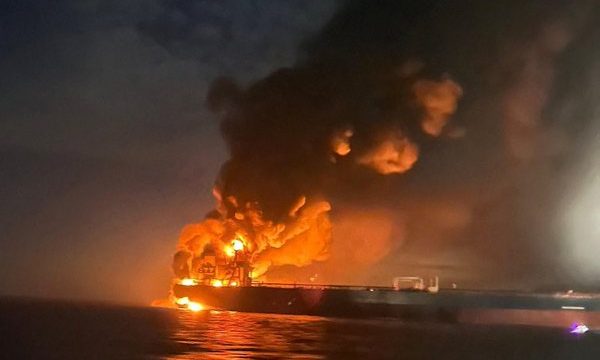
When you authorize naval-drone terrorism against Russian civilian oil tankers in the Black Sea, don’t whine when Moscow redraws the coastline. You wanted escalation? Fine. Now watch your proxy lose Odessa, and with it access to the Black Sea.
Washington is hunting for a face-saving imperfect peace after admitting Russia can’t be beaten. But London, and the EU — delusional, hysterical, and terrified of the coming reckoning from their own populations – keeps pushing the kind of escalation that guarantees one outcome: Russia removing Ukraine’s coastline so the Black Sea can’t be used as NATO’s private terrorism platform. Every naval-drone attack, every strike on a tanker, every British engineered terror op doesn’t weaken Russia, it strengthens Russia’s moral, legal and military argument for needing Odessa.
On Nov 21, Ukraine launched a MAGURA V5 naval drone packed with ~200 kg of explosives at the Russian tanker SIG, a civilian vessel transporting fuel. Earlier, on September 13, a coordinated drone-and-missile strike hit Sevastopol’s shipyard, damaging a patrol ship and igniting a fire visible for kilometres. In October, multiple MAGURA V5 drones attempted to strike the Sergey Kotov, a patrol corvette, the footage released by Ukraine’s GUR bears the hallmark of British-assisted targeting and mission-planning systems. The pattern is undeniable, Ukraine’s entire maritime warfare capability is thanks to the West.
These naval drones didn’t glide across the Black Sea on luck and instinct. With operational ranges approaching 800 kilometers, Ukraine’s MAGURA V5 drones strike far beyond coastal waters, but only with the eyes and brains of NATO. They rely on Western ISR: real-time satellite feeds from the UK and France, RQ-4 Global Hawk patrols off Romania, Starlink uplinks beaming mission data, and British-assisted target coordination. Europe wasn’t just observing. It was triangulating and commanding. And now, after cheering on attacks launched with AI-assisted maritime drones and foreign-fed targeting, Europe feigns shock that Moscow may erase access to the very coastline launching them.
Europe is not supporting Ukraine. Europe is sacrificing it, with full knowledge of what these strikes provoke. Every official in Brussels, London, and Paris understands Russia’s red lines, they’ve memorized them for years. They know that attacking civilian tankers, port infrastructure, and Black Sea Fleet assets from a Nato-commanded coastline forces Moscow to harden the entire southern theater. Yet they push Zelensky, their puppet, into terror operations that guarantee Odessa becomes a battlefield and cease forever to be a bargaining chip.
When a coastline becomes a NATO forward-operating platform masquerading as a proxy state, removing that coastline becomes self-defense. Europe knows this. Washington knows this. That is precisely why Europe, cornered and terrified of the political reckoning on its own soil, keeps escalating. Starmer fears British rage at the coming humiliation. Macron fears the streets of France. They all know what’s coming.
And here lies the supreme irony: the same political caste that spent decades sneering that Russia was “a glorified gas station” is now petrified at the thought of facing Russia without American cover.
Moscow now has zero incentive to leave a hostile coastline intact. Landlock Kiev. Neutralize NATO’s Black Sea fantasies.
When Odessa falls, Europe will shriek “aggression,” pretending not to remember who designed the drones, who funded and commanded the operations, daring Russia to respond. But the world will remember. And history will not record this as conquest. It will record it as the foreclosure of a coastline weaponized by Europe’s own madness.
Russia will will by turn the map into a verdict, one future generations of Europeans will demand their leaders answer for, and there will be hell to pay for the betrayal of Europe.
EU central bank rejects von der Leyen’s asset-theft plan
RT | December 2, 2025
The European Central Bank has refused to support a proposed €140 billion payout to Ukraine backed by frozen Russian assets held at Belgium’s Euroclear, the Financial Times reported on Tuesday, citing officials familiar with the discussions.
The ECB determined that the European Commission’s scheme falls outside its mandate, the newspaper reported.
The EU has spent months trying to tap frozen Russian central bank reserves to back a €140 billion ($160 billion) “reparations loan” for Kiev. Belgium, where around $200 billion of the assets is held at the privately owned Euroclear clearing house, has repeatedly warned of potential litigation as well as financial risks if the EU goes through with the scheme.
Under the European Commission’s plan, EU nations’ governments would provide state guarantees to share the repayment risk on the loan for Ukraine.
Commission officials, however, have warned that member states might be unable to mobilize cash quickly in an emergency, risking market strains.
EU officials reportedly asked the ECB whether it could act as a lender of last resort to Euroclear Bank, the Belgian depository’s lending arm, to prevent a liquidity crunch. ECB officials told the commission this was not possible, the FT reported, citing sources familiar with the talks.
“Such a proposal is not under consideration as it would likely violate EU treaty law prohibiting monetary financing,” the ECB said.
Brussels is now reportedly working on alternative ways to provide temporary liquidity to backstop the €140 billion loan.
“Ensuring the necessary liquidity for possible obligations to return the assets to the Russian central bank is an important part of a possible reparations loan,” the FT quoted an EC spokesperson as saying.
Euroclear CEO Valerie Urbain warned last week the move would be seen globally as “confiscation of central bank reserves, undermining the rule of law.” Moscow has repeatedly warned it would view any use of its sovereign assets as “theft” and respond with countermeasures.
The push comes as the cash-strapped EU faces pressure to finance Ukraine for the next two years amid Kiev’s cash crunch, with efforts to tap Russia’s assets intensifying as the US promotes a new initiative to settle the conflict. Economists estimate Ukraine is facing a budget gap of about $53 billion a year in 2025-2028, excluding additional military funding.
The country’s public and government-guaranteed debt ballooned to unseen levels of over $191 billion as of September, the Finance Ministry said. The IMF last month raised its debt forecasts for Ukraine, now predicting public debt at 108.6% of GDP.
US, Israel fear leak of tech secrets from unexploded bomb in Beirut
MEMO | December 1, 2025
US and Israeli officials have reportedly demanded the Lebanese government to urgently secure the transfer of an unexploded Israeli air bomb in the southern suburbs of Beirut to its possession, fearing it might fall into the hands of Russia or China and allow them access to its advanced military technology.
According to the Hebrew newspaper Ma’ariv, unnamed sources say the bomb is a smart glide munition, model GBU-39B, manufactured by the US firm Boeing, and was used by the Israeli Air Force in a strike targeting Hitham Ali Tabtaba’i — described as the chief of staff of Hezbollah — within the group’s stronghold in southern Beirut.
Ma’ariv adds that although the bomb was used in the assassination attempt, it did not explode for reasons that remain unclear, and remained relatively intact at the scene of the attack. This has raised concern in Washington about the possibility that foreign powers — specifically Russia or China — could recover it and study its technology.
The report notes that the bomb carries a warhead “exceptionally powerful for its weight”, as well as guidance systems and technology not currently believed to be held by Moscow or Beijing — making its recovery a priority for the United States.
Maduro Delivers Defiant Message After Trump Told Venezuelan Leader to Flee
By Kyle Anzalone | The Libertarian Institute | December 1, 2025
On a phone call held between Donald Trump and Nicolas Maduro, the President ordered the Venezuelan leader to flee his country. Following leaks about the phone call, Maduro issued a defiant public address.
The Miami Herald reported on Sunday that during the phone call held last week, Trump told Maduro, “You can save yourself and those closest to you, but you must leave the country now.” The sources said Trump offered Maduro and his family safe passage from Venezuela only if he offered his immediate resignation.
The Venezuelan leader appears to have rejected Trump’s deal. On Sunday, at the end of his public remarks, Maduro chanted that Venezuela is “indestructible, untouchable, unbeatable.”
Over the past week, the concerns that the US could begin military operations inside Venezuela have peaked. Washington has engaged in a massive military buildup in the Caribbean. The Pentagon has destroyed about two dozen boats in the region, claiming the vessels were carrying narcotics.
Multiple outlets have reported that the White House is discussing expanding operations into Venezuela. Trump added to the fear of a new war when he told troops on Thanksgiving the operations inside Venezuela would “begin soon” and posted on Truth Social that Venezuelan airspace was closed.
Officials told the Miami Herald that the call was a last ditch effort to avoid a war in Venezuela.
The strikes on drug boats in the Caribbean and Eastern Pacific are unconstitutional, illegal, and war crimes. Expanding the strikes to inside Venezuela, or conducting a regime change in Caracas, would shatter the constraints the Constitution places on Presidential war powers.
The EU’s top diplomat casually rewrites WWII history on her way to WWIII
By Tarik Cyril Amar | RT | December 1, 2025
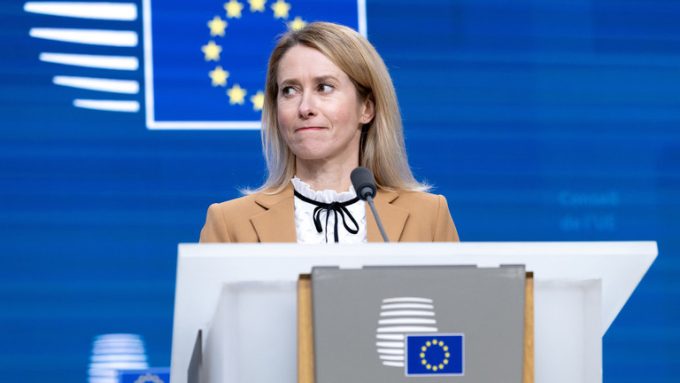
Oops. Kaja Kallas, the de facto EU foreign minister already notorious for her chirpy incompetence, has done it again: displayed such elementary ignorance that you have to rub your eyes and double-check before you believe it’s true. But – as always with her – it is. This time, she has informed the world that Russia has not been attacked by anyone for a hundred years.
Those Nazi generals who planned Operation Barbarossa – the 1941 attack on the Soviet Union (and thus very much Russia) that left 27 million Soviet citizens dead – are probably spinning in their graves. Yes, blinded by prejudice and ideology (“values”) they badly underestimated the Russians (sounds familiar?) and lost (catastrophically). But having your whole 3-million-men-150-division operation wiped out Orwell-style?
And what about the many other Europeans who joined the Nazis, either from the beginning or later, with official contingents or as volunteers? The Romanians, Finns, Italians, Spanish, Croatians, Belgians, French, Norwegians, Slovaks, Bulgarians, Hungarians, and, last but not least, Balts, such as from Kallas’s native Estonia?
And let’s not even start about those prickly Japanese! They, too, got a drubbing at the 1939 Nomonhan/Khalkhin Gol clash (and yes, it took place on the edge of Mongolia, a Soviet client state), but, again, pretending they never even tried?
Being historically illiterate to such an extent seems almost pitiable. Where geometry has made former German Foreign Minister Annalena “360 degrees” Baerbock intellectually immortal, it is history where Kallas reaches peak benightedness.
That is especially disturbing because failing so badly, in particular in the history of last century’s great wars, makes Kallas a very dangerous person. The reason is as simple as 1,2,3: Together, the last two World Wars – both caused by Europeans – cost up to over 81 million lives. We know that a third one would be even worse, whether fought “only” with very advanced and destructive conventional weapons (including AI, of course) or, as is more likely, escalating to the use of weapons of mass destruction (nuclear, chemical, biological, and cyber). A Third World War is likely to literally be our last, either forever or for the exceedingly long time it would take the survivors to make their way back from their caves to civilizations sophisticated enough to blow each other up again.
The Ukraine war – in reality, a Western proxy war against Russia and the emerging multipolar order, executed through misled, betrayed, sold-out, and now almost used-up Ukraine – has had the real potential to turn into World War Three. This risk has diminished with the second Trump administration, but it will only be gone once the war ends.
The NATO-EU Europeans, meanwhile, are doing their best to keep this war, its destruction, and its apocalyptic escalation potential going: they provide ever more weapons, cannot stop looking for sleazy ways to steal frozen Russian assets and fleece their own tax payers, urge for more Ukrainians to be thrown into the futile meatgrinder, and, last but not least, embolden the Zelensky regime to continue, no matter how much of its ubiquitous corruption is exposed.
The Atlanticists, i.e., deranged European “elites” that are staying this insane course, are hard to understand, since they do not follow reason, as their suicidal and yet persistent sanctions policy proves; their ethics are also utterly perverse, as their equally persistent complicity in Israel’s ongoing Gaza genocide illustrates.
Yet we can observe facets of their madness. One is that, clearly, to work so obstinately toward World War Three requires never having understood World War Two. That’s the one that ended with the first and only use in wartime of the kind of weapon that may well play a main role in a world-ending World War Three, too: When the US deliberately and entirely without military necessity massacred the populations of the two large Japanese cities of Hiroshima and Nagasaki, it did not simply end a war by an enormous, shameful, and never acknowledged crime. It also opened the door to a future we all must pray will never arrive.
Regarding World War Two, EU de facto foreign minister Kallas, as so often, embodies NATO-EU European group-non-think as few others, revealing carelessly what slightly less ham-fisted operators still try to conceal.
Currently, she is doing her very worst to prevent peace from breaking out. While many leaders of NATO-EU Europe display what the Germans now call “Friedensangst” (the fear of peace), Kallas is second-to-none in her denial of reality, Russophobia, and, last but not least, bizarre over-estimation of the EU’s and her own personal influence. Demanding a place in negotiations the EU has deliberately stonewalled and calling for “concessions” from Russia as if the West and Ukraine were winning the war, Kallas has been publicly snubbed by the US.
Yet there is a method to her madness. Kallas’s inability to adequately process the present reflects her unusually pronounced inability to learn from the past. Only recently, speaking at a conference on security studies, she shared her dumb surprise at the fact that Russia and China believe they are among the victors of World War Two. Ironically, for Kallas, this is a dangerous “narrative,” clearly factually false in her eyes, and only successful with those who read little and don’t remember history all that well. She has felt “many question marks” in her head, she has informed us. If only she could grasp why.
In reality, both Russia and China played key roles in defeating the global fascist offensive that was at the core of World War Two. This is not the place for details – Kallas should feel strongly invited to finally read up on them (if she can) – but a few key facts will be enough: In Asia, World War Two started even earlier than in Europe, with Japanese aggression against China; the war also lasted longer.
Kallas is displaying a narrow-minded provincialism and a lousy education by reducing the struggle to that, as she put it, against the “Nazis.” That was the main story in Europe, but not in Asia, where the fight against Japanese fascism cost China an estimated 35 million lives. Kallas’s English is infamously rudimentary. She may want to try to improve it by making her way through, at least, historian Rana Mitter’s ‘Forgotten Ally: China’s World War II, 1937-1945’. I am not sure she has ever read a whole book. If not, this would be a good first time. If she has, a second one is clearly required. And, for once, not some neo-Noltean tract by American history mangler and Ukraine War booster Tim Snyder.
The Soviet Union, with Russia at its core, suffered 27 million deaths. And without its staggering sacrifice and equally stunning efforts, Nazi Germany would not have been defeated: the preponderant share of its military forces were destroyed by Soviet soldiers on what the Germans called the Eastern Front. If they had not been ground down there, only two outcomes would have been possible: a Nazi empire would have survived or the US would have dropped atomic bombs on Germany as well.
Germans especially, among whom hating as well as underestimating Russia is all too fashionable again, would do well to remember a simple, little understood fact: it is precisely the Soviet victory over Germany by conventional arms that spared them a continuation of Nazi rule (though many may, of course, have welcomed that) or the fate of Hiroshima and Nagasaki.
Kallas, in any case, is not one for learning. Clearly combining the worst of bigoted eastern European nationalism and Brussels’s simple-minded hubris, she can’t even sense when she has made a fool of herself. How do we know? Because when challenged, she made things worse again.
Kallas produced her display of incompetence and condescension on the occasion of China’s 80th victory celebrations. Unsurprisingly, its representatives have been clear. Beijing Foreign Ministry spokesman Guo Jiakun condemned Kallas’s inanities as “full of ideological bias,” “without historical common sense,” displaying “disrespect,” and, last but not least, “harm[ing] the EU’s own interests.” The latter, of course, has never stopped Estonia’s most embarrassing export.
German EU parliamentarian Fabio de Masi, now co-leader of the New-Left BSW party, requested a clarification. In her response, Kallas managed to dig her hole even deeper: She claimed – untruthfully – that “on the occasion of the 80th anniversary of the end of World War II in Asia, the EU paid tribute also to the courage of the people of China, who endured immense suffering in defending their homeland and contributing to the end of the war.” In reality, she – and therefore the EU – had just done exactly the opposite: insulted China by explicitly denying its contribution. Kallas’s official job title is, in case she cannot remember, “Vice-President of the Commission/High Representative of the Union for Foreign Affairs and Security Policy.” She speaks and mis-speaks for the EU, even if that is a catastrophe that should never have happened.
Regarding Russia, Kallas did not even make the effort to pretend. Instead, she simply continued her silly attempt to deny its key contribution to defeating Nazism. Accusing Russia of “manipulating” history, she felt this was also the right occasion to once again repeat the absurdity that the West did not provoke the war in Ukraine.
Clearly, Kallas’s latest sally is shocking but not a surprise. It fits perfectly with her personal record of blithely chattering about breaking up Russia. It also fits with a widespread mood among NATO-EU Europe’s “elites,” where disparaging Russia and Russians is as much de rigueur as a stupid romanticization of Ukraine, its far right, and nationalism. Where Kallas can hold high office, normality is anything but.
The real question is when this nightmare of ignorance, war hysteria, and arrogance will finally end in Europe. Because if it does not, Europeans will only have themselves – or, to be precise, their “elites” – to blame when most of the world will write them off not only as the people who helped Israel commit genocide in Gaza but also as simply very unserious: yesterday’s privileged, now economic lightweights led by political lightweights who are too lazy to notice how silly they look.
Tarik Cyril Amar is a historian from Germany working at Koç University, Istanbul, on Russia, Ukraine, and Eastern Europe, the history of World War II, the cultural Cold War, and the politics of memory.
Documents reveal UK’s secret media censorship over national-security reporting
Press TV – December 1, 2025
Newly released documents have offered a detailed look inside the UK’s Defense and Security Media Advisory (DSMA) Committee, revealing how the body guides, shapes, and at times suppresses reporting on national-security issues, and now seeks to extend its influence to social media platforms.
A cache of DSMA files published by The Grayzone shows how the committee — made up of military, intelligence, and media representatives — routinely advises British newsrooms on sensitive subjects, including intelligence operations, special forces activity, and high-profile criminal inquiries.
Although the DSMA system is formally voluntary, the documents show the body boasts of a “90%+ success rate” in persuading journalists not to publish certain information, while categorizing independent media as “extremist” for publishing “embarrassing” stories.
Logs from 2011 to 2014 list dozens of “requests for advice” on topics ranging from the death of GCHQ employee Gareth Williams to UK cooperation with foreign intelligence services. The documents do not clarify whether journalists sought guidance proactively or whether the committee intervened pre-publication.
The Grayzone report interprets the large number of inquiries as evidence of substantial editorial influence, particularly regarding reporting on rendition programs, special forces operations in Libya, and Syria.
From May to November 2012, the Committee handled requests relating to British special forces “involvement in Syria.” It was widely speculated that British special forces were present in Syria at this time, though few details have emerged since.
The files also show DSMA involvement surrounding long-running, sensitive cases such as the Dunblane massacre, Operation Ore, claims about child sexual abuse involving public officials, and the death of Princess Diana.
In some instances, journalists reportedly offered formal apologies for publishing material the committee viewed as problematic.
The documents further reveal tensions between the DSMA and independent outlets. A briefing to Australian officials labels critical non-mainstream publications as “extreme,” citing examples of independent reporting that did not follow DSMA advice.
The committee’s internal review, however, asserts it does not act on information merely because it may “embarrass” the government.
As digital platforms have weakened traditional media controls, the DSMA has pushed to expand its remit. Internal reviews describe social media as a threat to its influence, and meeting minutes show the committee exploring ways to involve “tech giants” in a push to suppress revealing disclosures on platforms like Meta and Twitter/X.
While platforms have largely resisted direct engagement, the DSMA has expressed hope that future regulation could compel greater cooperation.
Kiev’s Black Sea attack infringed on NATO state’s sovereignty – Kremlin
RT | December 1, 2025
Ukraine’s attacks on commercial tankers in the Black Sea last week constituted an “outrageous” infringement of Turkish sovereignty, Kremlin spokesman Dmitry Peskov has said.
His comments follow several strikes by explosives-laden sea drones on two Gambian-flagged tankers, Kairos and Virat, which were sailing off the Turkish coast en route to the Russian port of Novorossiysk. On Saturday, another drone attacked a crude hub on Russia’s Black Sea coast belonging to the Caspian Pipeline Consortium (CPC), operated by Russia, Kazakhstan, the US, and several Western European nations.
Speaking to journalists on Monday, Peskov stated that the attacks on the tankers represent a direct violation of the rights of the vessels’ owners and an encroachment on the sovereignty of the Turkish republic.
He told reporters that the Kremlin views the incidents as serious and noted that such attacks could have implications for ongoing diplomatic efforts.
Peskov added that the strikes showed “the essence of the Kiev regime,” adding that attacks on international energy-related assets damage commercial property and maritime security.
Previously, Russian Foreign Ministry spokeswoman Maria Zakharova also condemned Kiev for the “terrorist attacks” on international civilian energy infrastructure. She suggested that they may have been an effort by Kiev to undermine international peace efforts and divert attention away from a major corruption scandal involving the country’s senior officials, as well as Ukraine’s continued battlefield setbacks.
Türkiye has also voiced concern about the attacks, saying they occurred within its exclusive economic zone and posed “serious risks” to navigation and the environment.
While Kiev has not officially claimed responsibility for the attacks, several Ukrainian and Western news outlets have reported, citing sources, that the Security Service of Ukraine (SBU) orchestrated the strikes.
French Politician Rips Into EU’s ‘Lying’ Kallas Over Remarks on Russia
Sputnik – 01.12.2025
Nicolas Dupont-Aignan, leader of the right-wing party Debout la France (France Arise), on Monday accused EU foreign policy chief Kaja Kallas of lying after she claimed that Russia allegedly “does not want peace.”
Earlier on Monday, ahead of a defense-focused EU meeting in Brussels, Kallas claimed that Russia does not seek peace in Ukraine, therefore the EU must make Ukraine “as strong as possible.”
“Kaja Kallas is lying. It is the European Union that does not want peace and prefers to give money to the corrupt regime of [Ukrainian President Volodymyr] Zelensky,” Dupont-Aignan said on X.
He also recalled Kallas’ recent public statement in which she encouraged seeking to break Russia down into “smaller states.”
Since mid-November, the United States has been promoting a new peace proposal for Ukraine. Special envoy Steve Witkoff is expected in Moscow this week to discuss the plan. On November 21, Russian President Vladimir Putin said that US President Donald Trump’s new peace plan could form the basis for a final settlement in Ukraine.
NATO needs to be ‘more aggressive’ towards Russia – top commander
RT | December 1, 2025
NATO members should find ways to be more aggressive towards Russia, the US-led alliance’s top military chief has said.
Admiral Giuseppe Cavo Dragone, chair of the NATO Military Committee, told the Financial Times (FT) in an interview published on Sunday that member states have been weighing options to respond to what he described as Russia’s “hybrid war.”
“We are studying everything … being more aggressive or being proactive instead of reactive is something that we are thinking about,” Dragone said.
The commander added that a “pre-emptive strike” could be considered a “defensive action,” though it would be “further away from our normal way of thinking and behavior.”
According to FT, diplomats from Eastern Europe have been especially vocal in demanding tougher actions against Russia, including retaliatory cyberattacks. Dragone noted, however, that NATO’s decision-making has been constrained by legal and ethical concerns, as well as jurisdiction.
In September, NATO increased air patrols in Eastern Europe and the Baltic states in response to alleged airspace violations by Russia. Moscow has denied claims that its aircraft and drones encroached on NATO airspace and accused the allies of warmongering.
Politico Europe reported last week that NATO was also considering joint offensive cyber operations against Moscow. Russia has denied hacking Western institutions, insisting that it has instead been the target of numerous cyberattacks, including some claimed by pro-Ukrainian groups.
Russian Ambassador to Belgium Denis Gonchar said last week that NATO members were pursuing a “rampant militarization” of Europe under the guise of deterring Russia’s “non-existent” plans to attack them.
Europe ‘removed itself’ from Ukraine negotiations – Lavrov
RT | November 30, 2025
Europe has long lost its right to have a say in the Ukraine crisis and effectively “removed itself” from the negotiations process through its own actions, Russian Foreign Minister Sergey Lavrov has said.
The top diplomat made the remarks on Sunday to Russian journalist Pavel Zerubin, who asked the minister whether Europe was in its right to “outrageously” push for some role in the negotiations to settle the Ukraine conflict.
“We proceed from the premise… – which I believe is obvious to everybody – that Europe has already removed itself from the talks,” Lavrov said.
Europe has long “used up its chances” to have a say in the settlement process, the top diplomat said, pointing out that it repeatedly derailed efforts to resolve the Ukraine crisis since its very beginning, the 2014 Maidan turmoil that resulted culminated with a coup and overthrowal of the democratically elected president.
“Europe spoiled the initial deal of February 2014, when it acted as guarantor for the formal agreement between Viktor Yanukovych and the opposition. It did nothing when the opposition seized all government agencies the morning after the agreement was signed,” Lavrov said.
The top diplomat also pointed at the admissions made by former German Chancellor Angela Merkel and ex-French President Francois Hollande, who said “that nobody had intended to fulfill” the Minsk agreements aimed at bringing the civil conflict in then-Ukrainian Donbass to its end.
“The most recent case occurred in April 2022 when, at the demand of the then Prime Minister of the UK Boris Johnson and with Europe’s full acquiescence, if not connivance, the Istanbul agreements were derailed,” the foreign minister said.
Multiple European leaders and institutions have been insisting that any potential peace deal on Ukraine must include the EU as well, ramping up such rhetoric after the US floated its latest plan to resolve the crisis. The proposals reportedly include Kiev abandoning its NATO aspirations and capping the size of its army.
Germany, France, and the UK have reportedly drafted their version of the plan, making it pro-Ukrainian through removing or softening multiple of its points. Russia, however, has already signaled it finds the European proposals “completely unconstructive.”
Four foreign activists injured by illegal Israeli settlers’ attack in occupied West Bank
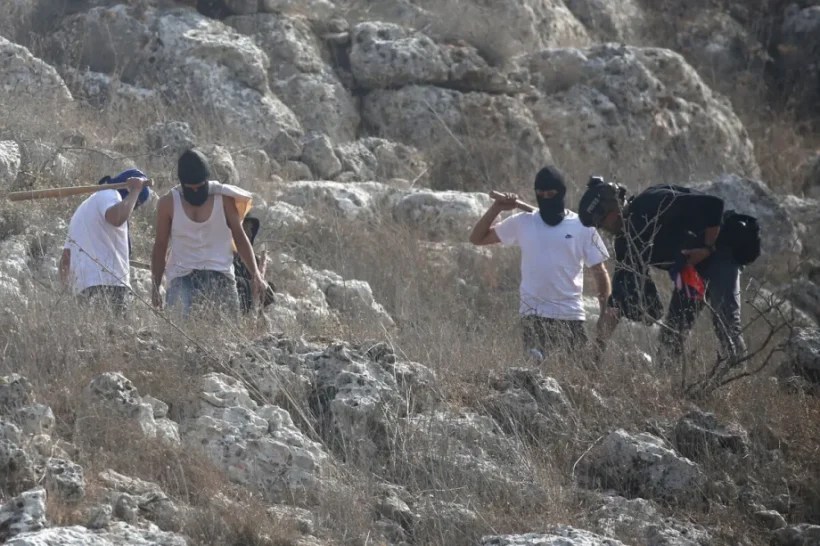
Illegal settlers attack Palestinian farmers, journalists and foreign activists in Beita town of Nablus, West Bank on November 8, 2025. [Nedal Eshtayah – Anadolu Agency]
MEMO | November 30, 2025
The Israeli army launched a large-scale arrest campaign in the occupied West Bank as illegal settlers attacked foreign activists and Palestinians on Sunday, according to local sources, Anadolu reports.
Three Italian and one Canadian activists were injured by illegal Israeli settlers in Ein ad-Duyuk village of Jericho in the central West Bank, local sources told Anadolu.
The activists were hospitalized, as three of them sustained moderate injuries and the fourth was critically wounded.
Illegal settlers stormed a house in a Bedouin community where the foreign activists have been residing in solidarity with Palestinian residents for a few days, and assaulted them.
The attackers also attempted to steal the activists’ passports, phones, and belongings, in addition to property from the house, the sources said.
According to the official news agency Wafa, illegal Israeli settlers destroyed four vehicles belonging to Palestinians in eastern Salfit in the central West Bank.
A group of illegal Israeli settlers also raided the al-Masoudieh area in Nablus, vandalizing Palestinians’ properties.
According to the Colonization and Wall Resistance Commission, an official body, illegal Israeli settlers have carried out 766 attacks against Palestinians and their property in the occupied West Bank in October only.
Meanwhile, Israeli army forces detained four people in two Nablus villages on Sunday. One of the detainees was injured, the official news agency Wafa said, without providing more details on his condition.
Israeli army forces fired tear gas canisters towards locals in the al-Lubban al-Sharqiya town of Nablus, causing several people to suffer from suffocation.
Three people were detained in Ramallah during an Israeli army raid, while a young Palestinian was detained after being beaten by the soldiers in the Sheikh Jarrah neighborhood of the occupied East Jerusalem.
Five others, including two ex-prisoners, were arrested in Bethlehem, in the southern West Bank, after their houses were searched by the Israeli forces. According to Palestinian figures, at least 55 Palestinians were detained by Israeli forces in military raids in the West Bank since Saturday.
In a landmark opinion last July, the International Court of Justice declared Israel’s occupation of Palestinian territory illegal and called for the evacuation of all settlements in the West Bank and East Jerusalem.
Featured Video

New positive ivermectin evidence
or go to
Aletho News Archives – Video-Images
From the Archives
Fanatical Followers of the Covid Regime: A Jim Jones-Style Cult?
By Professor Roger Watson and Dr. Niall McCrae | The Daily Sceptic | November 15, 2021
As scholars at leading British universities over recent decades, we witnessed the replacement of critical thinking and debate by narrative: facts are discrimination and scientific method is imperialism; truth, instead, is derived from ‘progressive’ values. This educational trend may be a major contributory factor to the ease in which society has been inculcated to the Covid ‘new normal’ of masking, testing, and repeated doses of vaccines for a disease of similar risk to severe influenza.
One doesn’t need much critical reasoning to observe the flawed logic of some vaccination enthusiasts, such as people who respond to experiencing any side effects, however debilitating, by saying “at least I know it’s working”, or, after contracting the disease despite their promised inoculation (over 90% effective, according to initial drug company claims), “I’d have been worse off without the jab.” … continue
Blog Roll
 Aletho News
- Met Office Caught Fabricating Daily Temperature Record Claims
- Merck Virologists Admitted to Falsely Certifying Vaccine Efficacy
- Mandatory Folic Acid for every man, woman & child
- Pro-Palestine protesters arrested outside UK’s ruling Labour Conference in Liverpool
- Mauritius denies landing permit to flight from Israel, forcing cancellation: Tour operator
- Israeli finance minister calls for genocidal war on West Bank, annexation of south Lebanon
- 12 Things Your Psychiatrist Was Trained Not to Tell You
- From Unipolar Universalism to Multipolar Civilizational Distinctiveness
- RSF military group defects, joins Sudanese army: State media
- Ireland goalkeeper refuses to play ‘Israel’ as squad weighs boycott
- If Americans Knew
- Israel forces Gazans to live in constant peril – Daily Update
- Deconstructing Netanyahu’s pants-on-fire UN rant – Daily Update
- Trump betrayed voters with his campaign lies and prioritized a foreign country once he took office
- Netanyahu calls Israel’s war in Gaza ‘opposite of genocide’ in UN speech to near-empty hall
- Settler Kidnappings: Torture, Sexual Abuse and Terrorisation of Palestinian Abductees as Israel Deepens Annexation of West Bank
- Gaza winter nears as 162,000 tents become unusable, raising fears of humanitarian crisis
- Netanyahu says, “It’s the opposite of genocide”; UN says Gaza economy is world’s ‘most severe crisis on record’ – Daily Update
- Israel’s US-Backed Assault on Gaza Has Created the ‘World’s Most Severe Economic Crisis on Record’: UN
- ‘Protecting U.S. Citizens’… From Israel
- ‘This is where I live now, the back of a truck’: a day in the life of a grandmother in Gaza
- No Tricks Zone
- New Study: Earth And Venus Surface Warmth Largely Explained By Convection And Lapse Rate, Not CO2 Or Radiation
- 2025 Nature Paper Claiming Worsening Global Drought Gets RETRACTED …Heavily Flawed
- New Study: ‘Global Drought Shows No Detectable Recent Acceleration Under Climate Warming’
- Economic Masterminds: German Socialists Suggest Taxing Productivity Gains Stemming From Using AI
- The South China Sea Has Not Been Cooperating With The Climate Change Narrative
- Energy Crisis: Germany Enters Heating Season With Historically Low Gas Reserve Fill Levels
- New Study: The Antarctic Ice Sheet Gained Mass From 2020-2024 Due To Staggering Snow And Ice Accumulation
- Study: Ocean Heating Rates From Thousands Of Years Ago ‘Dwarf’ Modern Ocean Heating Rates
- Climate Extremists Target, Attack Large-Scale Power Grid Infrastructure In Germany!
- New Study: Antarctic Ice Melt Has Contributed Less Than 1 Centimeter To Sea Level Rise In The Last 30 Years

