Key lessons from the Recent India-Pakistan escalation
By Lucas Leiroz | Strategic Culture Foundation | May 13, 2025
Recent developments in the India-Pakistan conflict indicate that New Delhi has suffered a significant military humiliation. Despite the ceasefire allegedly mediated by Washington, reports suggest that hostilities are ongoing — implying that the agreement was either never respected or was quickly broken by one of the parties.
It is unclear whether Islamabad abandoned the path of peace after gaining an advantage on the battlefield, or whether it was India that, unwilling to accept its military defeat, chose to resume offensive actions. The fact remains: tensions are far from resolved, and the international perception is that India severely underestimated Pakistan’s response capabilities.
It is remarkable, from any point of view, that Indian strategists acted as if they could launch strikes inside the territory of a nuclear power without facing serious retaliation. This is a major miscalculation, revealing political amateurism and serious failures in military intelligence.
Even more troubling is New Delhi’s diplomatic conduct at the height of the tension. Amid Iranian efforts to mediate — a country with which India maintains long-standing strategic relations — Indian officials went so far as to publicly insult the Iranian Foreign Minister, with a high-ranking military officer calling him a “pig” on national TV during his official visit to India’s capital. This behavior not only undermines key diplomatic ties but also highlights the disorientation and arrogance currently affecting some key segments of Indian society.
The broader context of this crisis becomes even more concerning when one considers the direct involvement of Israeli “experts” in India’s decision-making apparatus following the Pahalgam attack. The decision to call in military advisors from Israel is neither neutral nor effective. The recent history of the Israeli Defense Forces (IDF) in dealing with asymmetric enemies is, at best, questionable: its repeated failures against Hezbollah, Hamas, and other supposedly “weaker” adversaries in the Middle East should have served as a warning to India.
It is unwise, to say the least, for a major power like India to entrust a substantial part of its national defense strategy to a foreign military doctrine whose effectiveness is increasingly problematic and doubtful. Israel’s obsession with disproportionate shows of strength, combined with a tendency to underestimate smaller adversaries, appears to have infected Indian strategic thinking in this recent episode.
New Delhi now faces a delicate situation: it seeks to maintain its image as a respectable regional power, yet it cannot conceal the operational and diplomatic failures of recent weeks. Pakistan’s response, by contrast, has been militarily effective and politically coordinated — something India has failed to do during the clash.
Meanwhile, the international community watches with growing concern as tensions escalate between two nuclear powers. Fears of a larger, prolonged conflict are rising, and India’s unpreparedness in handling the crisis only deepens these anxieties.
This case should serve as a lesson. Military strategy requires sobriety, precision, and, above all, realism. Underestimating the enemy, insulting long-time allies, and importing failed military doctrines are a certain path to strategic disaster.
If India wishes to preserve its stability, sovereignty and international position, it must reevaluate not only its stance toward Pakistan but also its entire strategic decision-making framework — including the dangerous influence of foreign consultants who know more about propaganda than real victories.
The DeepSeek moment for modern air combat – lessons from the Pakistan India air war
The war of systems will define the future rather than stand-alone weapons
By Hua Bin | May 12, 2025
The world just witnesses a shockingly one-sided air war between Pakistan and India last week. Pakistan air force, equipped with Chinese weapon systems, took down a large number of India air combat assets while suffering zero loss.
The air battle featured Chinese-made J-10C fighters, PL-15 air to air missiles, HQ-9 air defense system, and ZDK-03 AWACS. Reported India losses included 3 French-made Rafale fighters, 1 Russia-made Su-30, 1 MiG-29, and 1 Israel-made Heron UAV.
What makes the outcome so shocking is that the Rafale fighter, sold to India at $240 million each, is often lauded as the most advanced European fighter jet, didn’t manage to put up any fight in the confrontation with J-10C. The Mica and Meteor air-to-air missiles carried by Rafale were discovered intact/unfired in the wreckage.
J-10C, by no means a backward fighter, is considered as well past its prime in the Chinese air force whose more advanced fighters include J-20, J-35 (both 5th generation stealth fighters), J-16, J-15 (4.5th generation multirole fighters), let alone the 6th generation fighters (J-36 and J-50) that are being tested.
J-10C is mainly for exports these days. Pakistan has acquired them at $40 million per unit. A few Middle Eastern nations are also considering the jet, including Egypt. Typically Chinese military export is one or one and a half generation behind what the PLA equips itself.
In all fairness, Rafale would be a strong match against J-10C in a head-to-head dog fight. At $240 million, it is even for more expensive than F-35.
Then, how did the Indian air force suffer such a humiliating one-sided loss against a much smaller Pakistan air force?
The answer lies in the strength of the integrated Chinese weapon system used by Pakistan.
Rather than using a hodgepodge of weapons sourced from France, Russia, Israel, and the US, as is the case with India, Pakistan utilized a full suite of highly integrated and synchronised air combat systems from China that include –
– J-10C fighter jet – a 4th generation multirole lighter fighter with a KLJ-7A AESA radar whose detection range exceeds 300km. With gallium nitride technology, it can lock onto the Rafale’s RBE-2 gallium arsenide radar signature 60-100 km before the Rafale even detects it. In modern air war, who sees first fires first.
– PL-15 air to air missile – one of the deadliest beyond visual range air to air missile with strike range over 200km. The PL-15E, the export version, still has a strike range of 150km, significantly longer than the 80km range of the Mica or the 100km range of Meteor, the most advanced European air to air missile.
– HQ-9 air defense system – this older generation Chinese air defense system (the newer one is HQ-19 with much longer range) has a maximum range of 200 km up to an altitude of 30km. While it has a significant shorter effective range than the Russian S-400 system (400km range), it enjoys a seamless data link with the J-10C fighter and PL-15E missile that automatically handles both fighter and missile guidance in combat
– ZDK-03 AWACs – again this is an older Chinese early warning planes, two generations from PLA air force most advanced systems (KJ-3000 and KJ-700). It is tailor-made for the Pakistan air force by China. The AWAC features an Active Electronically Scanned Arrange (AESA) radar with 360-degree coverage, capable of detecting and tracking up to 100 aerial targets, including low-flying and stealth jets. Importantly, ZDK-03 features an integrated sensor and communications suite, including Missile Approach Warning Systems (MAWS) and can maintain data links with ground command centers and friendly aircraft for real-time battlefield coordination.
With Link 17, a two-way communication data link China has helped Pakistan develop, the HQ-9 air defense system passes the Indian Rafale fighter information to the J-10C fighter which fires the PL-15E air to air missile well beyond the range of Rafale’s own missiles. Then the ZDK-03 AWAC maintains the data link with the missile and guides it toward the target.
PLA’s internal data link systems, such as XS-3 and DTS-03, are far more sophisticated than Link 17 or Link 16, the NATO data link standard. They use a combination of Beidou satellite navigation/communication and AI-powered military-grade 5G system. Given their highly classified nature, the systems are under strict export ban.
The Rafales were shot down before they even had a chance to engage with the J-10Cs within the missile range.
The defeat suffered by the India air force is a result of its lack of an integrated air warfare system. Standalone weaponry, however advanced, cannot achieve air superiority without the integration of other air warfare systems and seamless data links in today’s informationalized combat environment. Of course, poor training and tactical planning are also contributing factors.
Pakistan, with its integrated Chinese-made air combat platforms, has achieved a decisive victory over India, whose patchwork collection of various weapon platforms prove both costly and ineffective.
When $240 million Rafale fighters are brought down by $40 million J-10Cs with $180,000 PL-15E missiles, the military world is experiencing its own DeepSeek moment.
I wrote in my essay A Watershed Hypersonic Breakthrough: China’s New Hypersonic Air-to-air Missile (https://huabinoliver.substack.com/p/a-watershed-hypersonic-technology) that China just fielded an ultra-long 1,000km hypersonic missile (which can cover that distance in 8 minutes at Mach 5), designed to neutralize the US F-22 and F-35 fighters and B-21 bomber.
The Pakistan India air combat, labelled as the largest air war in 50 years, is a testing ground for Chinese technologies. With military hardware one to two generations older than PLA’s own, Pakistan has handily beat Indian’s most advanced western weaponry.
The US and the west would be making a deadly mistake to underestimate the Chinese military in Western Pacific and challenge China in a kinetic war.
The cherry on top is that India, despite western media’s hype as a counterbalance to China, proves it is just noise and can barely serve as a speed bump.
US War on Yemen Exposes Limits of American Military Might
By Brian Berletic – New Eastern Outlook – May 13, 2025
Despite years of devastating military and economic pressure, Yemen’s Ansar Allah movement continues to defy U.S. operations, exposing the growing limitations of American military power in the region.
Yemen, a nation of approximately 40 million people, is one of the poorest nations on Earth. It has suffered decades of political instability, including a US-engineered regime change operation in 2011 followed by a nearly 7 year long war with a US-armed and backed Saudi-led Persian Gulf coalition. The war included air strikes and a ground invasion, along with economic sanctions and a naval blockade. Subsequently, the UN has declared Yemen to be one of the world’s worst humanitarian crises, with up to 14% of the population displaced by conflict.
Since then, the US has carried out direct attacks on Yemen. Both the previous Biden administration and now the current Trump administration have carried out military campaigns in a bid to subdue Ansar Allah (often referred to as the “Houthis”) – the military and political organization administering Yemen’s capital and surrounding cities along the nation’s western coast.
The most recent military campaign has included strikes on civilian infrastructure, including a major port and reportedly a reservoir.
Leaked messages between the US Secretary of Defense Pete Hegseth, the US Vice President and other senior officials reveal the deliberate targeting and complete destruction of residential buildings to kill a single suspected enemy individual.
Despite the tremendous power of the US military and the protracted brutality the US has applied to Yemen, Ansar Allah remains a viable political and military organization. It continues to target and destroy US drones conducting surveillance and attacks in Yemeni airspace, as well as targeting US warships in the Red Sea, amid a much wider blockade Ansar Allah has placed on Israeli-bound vessels and now US oil shipments.
While Ansar Allah has regularly claimed to have targeted and forced US warships to flee, a recent CNN article appears to confirm that indeed drones and anti-shipping missiles targeting US ships have not only forced them to take evasive maneuvers, they have also caused material losses including a $60 million F-18 warplane.
The article admits:
A US official said initial reports from the scene indicated the Truman made a hard turn to evade Houthi fire, which contributed to the fighter jet falling overboard. Yemen’s Houthi rebels claimed on Monday to have launched a drone and missile attack on the aircraft carrier, which is in the Red Sea as part of the US military’s major operation against the Iran-backed group.
Other Western media outlets have admitted the loss of multiple $30 million drones over Yemen. An April 29, 2025 article by France 24 reported that the US had lost up to 7 MQ-9 Reaper drones over the previous 2 months.
The drones are used to identify and guide munitions to targets. They have a service ceiling comparable to modern manned warplanes like the US F-35 Lightning. The regular loss of MQ-9 drones over Yemen implies that Ansar Allah possesses air defense systems also capable of reaching altitudes manned US warplanes operate at. This is why the US has failed so far to establish air superiority over Yemeni airspace, forcing the US to instead carry out standoff strikes.
Standoff strikes involve the use of long-range precision guided missiles fired far beyond the reach of enemy air defenses. The missiles then travel into enemy airspace to strike their targets. While the obvious advantage of this strategy is avoiding enemy air defenses, there are many disadvantages, including the use of standoff munitions which are expensive and made in relatively small quantities. Enemy radar systems can detect stand-off weapons as they travel across their airspace, allowing them to potentially intercept the incoming missile. It also provides personnel and equipment time to take cover before the stand-off munitions reach their target.
Western media outlets have reported that Ansar Allah is believed to have surface-to-air missiles from Iran. This includes systems like the Barq-1 and Barq-2 air defense systems. These are comparable to the Russian-made Buk air defense system. While considered a “medium range” air defense system, it is capable of targeting modern warplanes at their maximum service ceiling.
Western media outlets have also noted the US’ use of electronic warfare aircraft against targets across Yemen, armed with anti-radiation guided missiles designed to detect and home in on radar signals. Such missiles are used as part of “suppression of enemy air defenses” (SEAD) missions to either force air defense operators to turn off their radar sets to prevent their destruction, or to target and destroy the radar set if they don’t. Whether switched off or destroyed, the radar systems are unable to target and destroy incoming warplanes, allowing airstrikes to be conducted.
Despite the simple premise, the detection and suppression of enemy air defense systems as part of SEAD missions is dangerous and complex. The fact that Ansar Allah is still regularly detecting and downing MQ-9 drones means US SEAD missions have fallen short of destroying Ansar Allah’s air defenses and establishing air superiority over Yemen.
The limitations of US military power have been steadily exposed in recent conflicts. The US proxy war in Syria and now its military operations against Yemen has required US warplanes to conduct standoff strikes because of an inability to either destroy or evade Russian and Iranian-designed air defense systems. The transfer of US weapons to Ukraine and their failure on the battlefield there have further exposed the limits of US military might.
Despite this, the US remains a dangerous threat to the nations it targets. In Syria, the US used asymmetric military power in the form of armed militants, economic warfare, and political interference to succeed where its airpower had failed. While the disparity between US military might and that of the nations it targets has narrowed significantly over recent years, its vast array of economic and political weapons remain potent alternatives.
Only time will tell whether the emerging multipolar world can close the gap in regard to these US advantages in the same way it has regarding America’s quickly shrinking military advantages.
Heating costs for Hungarian families could triple under EU plans to ban Russian gas, think tank warns
By Thomas Brooke | Remix News | May 13, 2025
Heating bills for Hungarian households could rise by as much as three and a half times if the European Union moves forward with a full ban on Russian natural gas imports, according to a new report by the Századvég Institute, as cited by Magyar Hírlap.
The economic research group estimates such a move would impose nearly HUF 1,100 billion (approximately €2.8 billion) in additional annual costs on Hungary, putting severe pressure on both the country’s energy system and its citizens.
According to Századvég, their calculations — based on publicly available domestic and international energy data — show that a total ban on Russian energy imports would result in a doubling of gas prices and heightened volatility on European energy markets. This would not only harm the EU’s competitiveness but also destabilize Hungary’s long-standing utility bill reduction program, which currently ensures some of the lowest heating costs in Europe for Hungarian families.
Earlier this month, the European Commission published a roadmap outlining its intention to wean European nations off Russian gas before a wholesale ban came into effect by the end of 2027.
“No more will we permit Russia to weaponize energy against us… No more will we indirectly help fill up the [Kremlin’s] war chests,” European Commissioner for Energy Dan Jorgensen told reporters.
The move, however, faces stiff opposition from several nations still heavily reliant on Russia for their imports and unsure of where alternative energy sources will be found for an acceptable price.
In addition to Hungary, Slovakia is also holding firm against the plans. Prime Minister Robert Fico said earlier this week he would veto the move in the European Council if need be.
“A halt of gas supplies will cause instability. Our petrochemical plants were set up to use Russian oil for oil refining, and the shutdown may cause technological problems. I hope that our EU partners will learn about this when legal acts are adopted,” Fico said.
“If it is necessary for all 27 countries to agree, we will use our veto power,” he added.
Currently, Hungary imports around 4.5 billion cubic meters of Russian gas annually through a long-term supply contract, which covered more than half of the country’s total gas consumption last year.
Replacing this volume on international markets, the institute notes, would cost Hungary an estimated HUF 660 billion more. When including Russian gas delivered to Hungary by alternative routes, the shortfall reaches 7.5 billion cubic meters, raising the potential total impact to HUF 1,100 billion annually.
The institute highlighted that Hungarian households today pay an average of HUF 176,900 (around €435) per year for heating, thanks to state price regulations. Without these protections and based on current exchange rates, that figure would nearly double to HUF 355,310. If Russian gas were banned outright, average heating costs could skyrocket to HUF 625,000 (€1,540) — more than three and a half times the current average.
Századvég recalled that the EU’s reliance on Russian gas fell from 40 percent before the war in Ukraine to below 20 percent in 2023. This dramatic shift led to a doubling of gas prices on the Dutch energy exchange. Under the European Commission’s new strategy, prices could rise from €35 to €70 per megawatt hour, according to the think tank’s projections. They warned, however, that actual increases could be even steeper due to market instability triggered by supply shocks.
The report also emphasized the cumulative effect of EU sanctions on Hungarian households. Since 2022, Századvég estimates that higher energy prices, loss of export markets, and increased borrowing costs have drained HUF 2.2 million (€5,430) from the average Hungarian household. The direct financial cost of Ukraine’s accelerated EU accession process would add HUF 458,000 annually, while a ban on Russian gas could tack on another HUF 448,000.
“Brussels’ three highest priority objectives — arming Ukraine, accelerating EU accession, and banning Russian energy — would impose unbearable burdens on Hungarian families,” the Századvég Institute concluded on its website.
The Deep State Goes Viral: Foreword
By Jeffrey A Tucker | Brownstone Institute | May 12, 2025
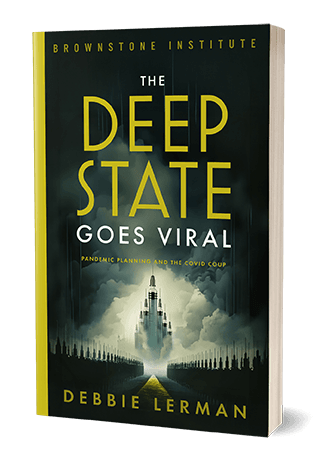
The following is Jeffrey Tucker’s Foreword introduction to Debbie Lerman’s new book, The Deep State Goes Viral: Pandemic Planning and the Covid Coup.
It was about a month into lockdowns, April 2020, and my phone rang with an unusual number. I picked up and the caller identified himself as Rajeev Venkayya, a name I knew from my writings on the 2005 pandemic scare. Now the head of a vaccine company, he once served as Special Assistant to the President for Biodefense, and claimed to be the inventor of pandemic planning.
Venkayya was a primary author of “A National Strategy for Pandemic Influenza” as issued by the George W. Bush administration in 2005. It was the first document that mapped out a nascent version of lockdowns, designed for global deployment. “A flu pandemic would have global consequences,” said Bush, “so no nation can afford to ignore this threat, and every nation has responsibilities to detect and stop its spread.”
It was always a strange document because it stood in constant contradiction to public health orthodoxies dating back decades and even a century. With it, there were two alternative paths in place in the event of a new virus: the normal path that everyone is taught in medical school (therapeutics for the sick, caution with social disturbances, calm and reason, quarantines only in extreme cases) and a biosecurity path that invoked totalitarian measures.
Those two paths existed side-by-side for a decade and a half before the lockdowns.
Now I found myself speaking with the guy who claims credit for having mapped out the biosecurity approach, which contradicted all public health wisdom and experience. His plan was finally being implemented. Not too many voices dissented, partially due to fear but also due to censorship, which was already very tight. He told me to stop objecting to the lockdowns because they have everything under control.
I asked a basic question. Let’s say we all hunker down, hide under the sofa, eschew physical meetings with family and friends, stop all gatherings of all kinds, and keep businesses and schools closed. What, I asked, happens to the virus itself? Does it jump in a hole in the ground or head to Mars for fear of another press conference by Andrew Cuomo or Anthony Fauci?
After some fallacy-filled banter about the R-naught, I could tell he was getting exasperated with me, and finally, with some hesitation, he told me the plan. There would be a vaccine. I balked and said that no vaccine can sterilize against a fast-mutating respiratory pathogen with a zoonotic reservoir. Even if such a thing did appear, it would take 10 years of trials and testing before it was safe to release to the general population. Are we going to stay locked down for a decade?
“It will come much faster,” he said. “You watch. You will be surprised.”
Hanging up, I recall dismissing him as a crank, a has-been with nothing better to do than call up poor writers and bug them.
I had entirely misread the meaning, simply because I was not prepared to understand the sheer depth and vastness of the operation now in play. All that was taking place struck me as obviously destructive and fundamentally flawed but rooted in a kind of intellectual error: a loss of understanding of virology basics.
Around the same time, the New York Times posted without fanfare a new document called PanCAP-A: Pandemic Crisis Action Plan – Adapted. It was Venkayya’s plan, only intensified, as released on March 13, 2020, three days before President Trump’s press conference announcing the lockdowns. I read through it, reposted it, but had no idea what it meant. I hoped someone could come along to explain it, interpret it, and tease out its implications, all in the interest of getting to the bottom of the who, what, and why of this fundamental attack on civilization itself.
That person did come along. She is Debbie Lerman, intrepid author of this wonderful book that so beautifully presents the best thoughts on all the questions that had eluded me. She took the document apart and discovered a fundamental truth therein. The rule-making authority for the pandemic response was not vested in public-health agencies but the National Security Council.
This was stated as plain as day in the document; I had somehow missed that. This was not public health. It was national security. The antidote under development with the label vaccine was really a military countermeasure. In other words, this was Venkayya’s plan times ten, and the idea was precisely to override all tradition and public health concerns and replace them with national security measures.
Realizing this fundamentally changes the structure of the story of the last five years. This is not a story of a world that mysteriously forgot about natural immunity and made some intellectual error in thinking that governments could shut down economies and turn them back on again, scaring a pathogen back to where it came from. What we experienced in a very real sense was quasi-martial law, a deep-state coup not only on a national but on an international level.
These are terrifying thoughts and hardly anyone is prepared to discuss them, which is why Lerman’s book is so crucial. In terms of public debate about what happened to us, we are barely at the beginning. There is now a willingness to admit that the lockdowns did more overall harm than good. Even the legacy media has started venturing out to grant permission for such thoughts. But the role of the pharmaceuticals in driving the policy and the role of the national-security state in backing this grand industrial project is still taboo.
In 21st-century journalism and advocacy designed to influence the public mind, the overwhelming concern of all writers and institutions is professional survival. That means fitting into an approved ethos or paradigm regardless of the facts. This is why Lerman’s thesis is not debated; it is hardly spoken of at all in polite society. That said, my work at Brownstone Institute has put me in close contact with many thinkers in high places. This much I can say: what Lerman has written in this book is not disputed but admitted in private.
Strange isn’t it? We saw during the Covid years how professional aspiration incentivized silence even in the face of egregious violations of human rights, including mandatory school closures that robbed children of education, followed by face-covering requirements and forced injections for the whole population. The near-silence was deafening even if anyone with a brain and a conscience knew that all of this was wrong. Not even the excuse that “We didn’t know” works anymore because we did know.
This same dynamic of social and cultural control is fully in operation now that we are through that stage and onto another one, which is precisely why Lerman’s findings have not yet made their way to polite society, to say nothing of mainstream media. Will we get there? Maybe. This book can help; at least it is now available for everyone brave enough to confront the facts. You will find herein the most well-documented and coherent presentation of answers to the core questions (what, how, why) that all of us have been asking since this hell was first visited upon us.
THE REAL PETER MARKS REVEALED
The HighWire with Del Bigtree | May 8, 2025
Del celebrates the launch of ICAN’s “Secret Recordings: The Real Peter Marks”, a comprehensive timeline featuring documents obtained through FOIA and recorded Zoom calls with Peter Marks, M.D., former Director of the FDA’s Center for Biologics Evaluation and Research. Many of the videos show victims of severe COVID-19 vaccine injuries, as well as physicians who witnessed these injuries firsthand, pleading with the FDA to take action and inform the public of the potential risks. Get a glimpse of the press conference held in Washington, D.C., and learn how to access the full timeline—including complete video recordings and a comparison of what Marks was privately acknowledging versus what he was publicly saying about the safety of these products.
Denmark Sends $1 Billion to Build Up Ukrainian Arms Industry Using Seized Russian Funds
By Kyle Anzalone | The Libertarian Institute | May 12, 2025
Denmark is making a significant investment in Ukraine’s domestic arms industry using interest generated from frozen Russian assets.
A statement from the Danish Defense Ministry explained that it would implement a proposal approved by the European Union last year to seize the interest generated by frozen Russian assets and use that money to buy weapons for Kiev produced by Ukrainian arms makers.
“In light of the security situation, it is important to show that we stand together with Ukraine. From the Danish side, we have taken the lead by leading the international work through the “Danish model” for procurement via the Ukrainian defense industry,” Minister of Defense Troels Lund Poulsen said. “It is unique that we now have the opportunity to further strengthen this effort on behalf of the EU.”
Copenhagen has dubbed the process of investing in Kiev’s arms industry as “the Danish model.” In 2024, Denmark invested about $450 million in Ukraine’s defense companies, with $300 million coming from the interest on frozen Russian assets. Copenhagen plans to use $930 million in interest to invest in Ukrainian domestic arms production in 2025.
EU members hold over $220 billion in seized Russian money, and it is estimated to generate about $4 billion in interest annually. Western governments are attempting to use the interest to pay back a $50 billion in collective loans that is being taken out to buy arms for Kiev.
The money sent by Copenhagen is in addition to the $1.1 billion in interest from frozen Russian funds that was announced by the EU on Friday. “We have just made available 1 billion euros for the Ukrainian defense industry so that Ukraine can better defend itself,” EU foreign policy chief Kaja Kallas said.
Euroclear, the financial market infrastructure group that holds most of the assets, has also seized some of the frozen funds to repay Western investors who allegedly had their assets seized by Moscow.
Last year, Russian President Vladimir Putin denounced the Western attempts to use the frozen Russian funds as theft. “Western countries have now frozen Russian assets and foreign exchange reserves. They are considering the ways to create at least some legal basis in order to finally appropriate them. But despite all the fuss theft will remain theft. It would not go unpunished,” he said.
Michigan AG Pins Blame for Failed Prosecutions of Student Protesters on Rep. Debbie Dingell
The Michigan attorney general provided no evidence for her claim, which Dingell rejected
By Ryan Grim and Tom Perkins | Drop Site | May 11, 2025
Michigan Attorney General Dana Nessel continues to do damage control in the wake of her failed prosecution of student protesters at the University of Michigan. Nessel was forced to drop charges against students who had been arrested at a pro-Palestinian encampment last year after the judge overseeing the case indicated he was sympathetic to the defense’s argument that Nessel had been improperly biased against the defendants.
This week, in public remarks on the prosecution, she claimed without evidence that Democratic Rep. Debbie Dingell of Michigan had been the one who urged her to charge students involved in protests over Gaza. Pinning the pressure for the prosecutions on Dingell was Nessel’s way of arguing that the bias claims made against her were inaccurate—that she was not in fact pushed to take the cases by donors to her campaign who serve as senior officials at the university, but rather by the local congresswoman, Dingell.
“I heard it was from the Jewish Regents,”—that is, the Jewish members of the University of Michigan Board of Regents—“they forced me to take these cases,” Nessel said at an event this week called a “Town Hall on Hate Crimes & Extremism” in West Bloomfield Township. “I heard it was from the [Michigan Legislative] Jewish Caucus because of the money I get from them. I heard it was from Jewish donors. You know how those cases came to my office? Debbie Dingell. Debbie Dingell, I don’t know if you know this: Not Jewish. But it had to be some sort of Jewish influence.”
In a statement to Drop Site, Dingell spokesperson Michaela Johnson suggested the congresswoman was not behind the investigations, pointing to a May 2024 letter from Nessel’s office to the university in which Nessel offered to take over any investigations. The letter, which has not previously been reported, makes no reference to Dingell, but instead suggests that protests outside the homes of Board of Regents members triggered Nessel to launch an effort targeting student protesters.
“Nessel did not write the letter at our request, and Rep. Dingell had not seen that letter until today,” Johnson said. Dingell represents Ann Arbor, but previously represented Dearborn until redistricting in 2014, and she still has strong ties to the Arab-American community there. But she has remained largely silent with regard to the protests.
Amir Makled, an attorney for some of the students, said he called Dingell’s office on Friday to ask about Nessel’s allegations. He said a Dingell staffer denied the congresswoman had pushed for the investigation.
Makled said he didn’t think it was done at Dingell’s behest, but he said Dingell has been involved with the discussions because the incident occurred in her district, and she “has been giving lip service to all sides.”
But, he added, “Nessel is trying to do anything to deflect blame for her office’s misdeeds – that much seems clear to me.”
Nessel’s office didn’t respond to a request for comment over the weekend.
The university, its regents and Nessel have denied that the school recruited the attorney general.
This was not the first time Nessel had pointed the finger at Dingell. She told a local reporter several weeks ago that “the congresswoman from the 6th Congressional District” – Dingell – had put her up to it. “I stand behind the evidence and I stand behind the charges, and I appreciate the fact that this matter was referred by the congresswoman from the 6th Congressional District, who asked the state to intervene because they were concerned about what was happening on campus,” she said. “I believe what we did was the right thing, and that will be borne out in court.”
Following that report, supporters of the students who’d been charged approached Dingell at an event on March 3 to ask if Nessel’s allegation was true. According to an audio recording provided to Drop Site, it was not. “She’s told a lot of people a lot of stuff,” Dingell told the students. She was then asked directly by Jared Eno, a grad student at Michigan, if that was true: “No!” Dingell said. “She called the university and offered.” The letter supports that claim.
Nessel, in her remarks at the town hall, again claimed Rep. Rashida Tlaib of Michigan had accused her of bias linked to her Jewish background, but Tlaib’s public statements have never referenced this. “I think people at the University of Michigan put pressure on her to do this, and she fell for it,” Tlaib had said. “I think President Ono and Board of Regent members were very much heavy-handed in this.” UMich President Santa Ono, the only person Tlaib named as having applied pressure to Nessel, is not Jewish.
The AG letter was sent to Timothy G. Lynch, vice president and general counsel at the University of Michigan, and signed by Danielle Hagaman-Clark, a prosecutor in Nessel’s office. “I write today to offer the DAG’s assistance with investigating and prosecuting any cases that arise from the recent demonstrations on UM’s campus,” she wrote. “It has been widely reported that the demonstrators have not limited their protests to the campus but have also appeared at the homes of the Board of Regents. My understanding is that the Regents are not required to live in Washtenaw County, the location of UM, but that they reside in several different counties. Because the DAG has state-wide criminal authority to bring charges, we are ideally situated to review any potential cases.”
The reference to the protests outside the homes of Regents matches reporting that suggested those demonstrations, even more than the encampments, enraged the board members, who urged Nessel to prosecute.
Nessel’s prosecutor added her office was well suited to determine whether any of the speech from the protesters was illegal. “I would also note that our Department has specialized expertise in the intersection of First Amendment free speech rights in the context of a criminal prosecution. We are fluent in the law around what speech is protected and what speech is not protected,” said Hagaman-Clark, making the pitch to Michigan. The letter was sent shortly after local prosecutor Eli Savit (who is also Jewish) declined to prosecute 36 of 40 protesters arrested in connection with the occupation of an administration building, and recommended four others for diversion. “General Nessel has discussed the potential jurisdictional issues that might arise with Washtenaw County Prosecutor Eli Savit. Prosecutor Savit recognizes that his authority is confined to Washtenaw County. He is comfortable with the DAG overseeing these cases based on his jurisdiction being limited to only Washtenaw County.”
In her effort at damage control this week, Nessel claimed Dingell’s supposed request was common. “Now it’s not unusual for a congressional representative to call up the department of the attorney general and to call the attorney general herself and say ‘I’m really worried about what I see to be criminal activity occurring and either the local prosecutor is not doing anything about it,’ or ‘they’re not equipped to do anything about it. But I am scared about what I am seeing. And I think the AG’s office has to take action.’”
Nessel also told the town hall audience that she dropped the charges because the judge had ordered an evidentiary hearing into the defense’s charge that Nessel was biased against the defendants. Defense attorneys, in their recent motion to disqualify Nessel’s office over bias, pointed to a previous analysis that found she had prosecuted protesters at a much higher rate than other prosecutors in the state.
They also pointed to Nessel recusing herself from an investigation into alleged election fraud by Muslim-American city council members in nearby Hamtramck. Nessel said she wanted to avoid the appearance of bias because she was Jewish and the suspects were of Arab descent. She also noted that she had previously been critical of the Hamtramck City Council. In their motion to disqualify Nessel’s office, defense attorneys questioned how she could consider herself biased in Hamtramck but unbiased in Ann Arbor under similar circumstances.
A letter sent by the Jewish Federation of Ann Arbor to the judge urging him to allow her to remain on the case, she said, put improper pressure on the judge and should not have been sent. And the cases against the students were becoming a distraction to staff, she added, who couldn’t even attend a job fair without being “shut down by protesters.”
“We elected that rather than me being put on trial for being a Jewish prosecutor, and rather than having the federation be put on trial for an email they should not have sent—but the kind that gets sent all the time—that we would dismiss the charges against those particular defendants,” she said. An evidentiary hearing would have opened her office to discovery and made public communications about how the cases came together. Defense attorneys say she wanted to avoid that.
Liz Jacob, an attorney from the Sugar Law Center, said the claim from Nessel was another effort to deflect responsibility. “It’s alarming to see the ways that Nessel is trying to avoid accountability for her repression of free speech and brutal targeting of protesters at all costs,” Jacob said. “Both in that video and over the last several months AG Nessel has tried to blame anyone—from Congresswoman Rashida Tlaib to Debbie Dingell to the Jewish Federation of Greater Ann Arbor—to deflect criticism regarding her own deplorable treatment of pro-Palestine protesters.”
Nessel’s decision was a serious one, and Nessel should treat it seriously, Jacob said. “As the Attorney General who is directing the FBI to raid protesters homes and bringing baseless and retaliatory criminal charges against protesters, it is Nessel who must bear responsibility for targeting young people who bravely speak out against war and genocide. Nessel’s actions speak for themselves — she has aligned herself with the Trump administration’s criminalization and repression of pro-Palestine speech,” she said.
Google knew Israel may use its tools for rights violations: Report
Press TV – May 12, 2025
American technology giant Google knew that a powerful cloud-computing tool it was supplying to the Israeli regime as part of a contract four years ago could be used for rights violations against the Palestinians, according to the findings of a report.
The Monday report by The Intercept said it had obtained internal Google documents showing the company feared it wouldn’t be able to control Israel’s misuse of its technology to harm Palestinians.
The report said that Google understood that the way its Project Nimbus deal had been designed could deprive it of the ability to prevent the Israeli regime and military from using the software against Palestinians.
The tech giant also knew that the multi-billion-dollar deal won in 2021 would obligate it to stonewall criminal investigations by other countries into Israel’s use of the technology, said the report.
It said that experts hired by Google had recommended that the company withhold machine learning and artificial intelligence (AI) tools from Israel because of these risk factors.
International law experts told The Intercept that Google’s awareness of the risks of misusing the Project Nimbus by the Israeli government and army may pose legal liability for the company.
“They’re aware of the risk that their products might be used for rights violations … At the same time, they will have limited ability to identify and ultimately mitigate these risks,” said León Castellanos-Jankiewicz, a lawyer with the Asser Institute for International and European Law in The Hague.
The revelations come as Israel continues its genocidal war against Palestinians in the Gaza Strip, where it has killed tens of thousands of people and displaced hundreds of thousands more since launching an invasion against the territory in October 2023.
There have been reports suggesting that the Israeli regime has used AI tools supplied by US technology firms to target and kill civilians in Gaza.
500 lawmakers appeal to Trump to stop Gaza genocide, starvation
MEMO | May 12, 2025
More than 500 parliamentarians from around the world have issued an urgent appeal for US President Donald Trump to immediately intervene and stop Israel’s “genocide and systematic starvation” of Palestinians in the Gaza Strip.
In an open letter issued by the Parliamentarians of the Free World campaign yesterday, the officials emphasised that “the indiscriminate bombing, comprehensive blockade, systematic destruction of infrastructure, and targeting of civilians in Gaza amount to crimes against humanity that require urgent international action.”
They warned that “the unconditional military and diplomatic support provided by some major powers — primarily the United States — to Israel constitutes blatant complicity and undermines the values upon which the American Republic was founded,” calling for “a review of this support and the cessation of all forms of military assistance.”
The letter emphasised that “the right to self-determination and resistance to occupation is an inherent right of all peoples. In the case of Palestine, resistance to occupation is not only morally justified, but is also enshrined in international law.”
“Lasting peace and regional stability cannot be achieved through temporary ceasefires or externally imposed settlements, built through coercion or displacement. Rather, they require the full restoration of the rights of the Palestinian people,” the letter read.
The signatories called for immediate action, including opening the border crossings to facilitate the delivery of humanitarian aid to Gaza, suspending military support to Israel, convening an emergency session of the UN Security Council to issue a binding resolution to halt the genocide, and reconsidering economic and trade relations with Israel as an “occupying power practicing ethnic cleansing.”
Prominent signatories to the letter include Osama Al-Nujaifi, former speaker of the Iraqi Parliament; Abdelilah Benkirane, former prime minister of Morocco; Ayman Nour, former Egyptian presidential candidate; Muhammad Hidayat Nur Wahid, deputy speaker of the Indonesian Shura Council; and Mandela Mandela, grandson of Nelson Mandela and former member of the South African Parliament.
The parliamentarians ended their letter by warning that “the global conscience of humanity watches not only those who commit crimes, but also those who have the power to stop them,” calling on US President Donald Trump to use his influence to stand up for justice and human dignity.
Israel issues warning over Palestine recognition
RT | May 12, 2025
Israel will respond to any nations who move to unilaterally recognize the state of Palestine, Foreign Minister Gideon Saar has claimed.
Saar issued the warning at a joint press conference with his German counterpart, Johann Wadephul, on Sunday, following announcements by several countries of their intent to recognize Palestine.
The Israeli diplomat claimed that any such unilateral moves would undermine prospects for the peace process and would compel the Jewish state to take measures in response.
Palestine’s sovereignty is recognized by 147 countries, including Russia and the majority of nations in the Middle East, Africa, and Asia. However, most Western European countries, as well as Israel and the US, do not officially consider Palestine a sovereign state. Many nations have advocated for Palestinian recognition as the only way to resolve the Israel-Palestine conflict, which escalated in 2023 when Israel launched a military operation in Gaza following a surprise Hamas attack.
Saar claimed such initiatives were “not constructive but counterproductive” and served “as a prize for Hamas terror.”
Wadephul, however, said that a two-state solution remained “the best chance for Israelis and Palestinians to live in peace, security, and dignity.”
The Media Line news outlet reported on Sunday, citing unnamed diplomatic sources, that US President Donald Trump could formally recognize the state of Palestine at the upcoming Gulf-US summit in Saudi Arabia.
Although US Ambassador to Israel Mike Huckabee has denied any such plans, speculation has grown in the wake of comments Trump made earlier this month in a meeting with Canadian Prime Minister Mark Carney. Trump repeatedly hinted at “a very, very big announcement about a certain subject,” which he said would be revealed either before or during his upcoming trip to the Middle East.
Last month, French President Emmanuel Macron indicated that Paris could move to recognize a Palestinian state as early as June, during a United Nations conference in New York.
Russia has long advocated for a two-state solution to the Israel-Palestinian conflict, reaffirming its stance during a recent meeting between Russian President Vladimir Putin and Palestinian President Mahmoud Abbas in Moscow. Russia has also called for an immediate end to the violence in Gaza.
Featured Video

Diplomacy is Now a Crime in Britain / Ian Proud
or go to
Aletho News Archives – Video-Images
From the Archives
Genetic baloney in thick slices
MAYBE COULD BE INC.
By Jon Rappoport | No More Fake News | July 8, 2021
Gene research companies tend to come and go. They start out banging and popping like fireworks in the sky, and then they fade out—selling themselves to larger outfits who’ve hired better liars…
Once upon a time, it sounded easy. Start with a disease, find the gene responsible for the disease, and correct the problem.
Then, researchers wondered, was disease the result of one gene or a group of genes acting together?
Either way, the proof would be in devising cures for diseases using gene therapy. “Not yet, but soon…”
And regardless, the major need was: money. Lots and lots of money.
This need required good PR people. “We have to pump up the idea that we’re on the edge of tremendous breakthroughs. We’re always on that edge…”
This hype also needed to obscure the fact that there wasn’t (and isn’t) ANY gene cure for ANY disease. … continue
Blog Roll
 Aletho News
- Diplomacy is Now a Crime in Britain / Ian Proud
- UK Government Body Kept Files on People Criticizing Prevent Program
- US military withdrawal from Iraq and the collapse of US-Israeli hegemonic project in West Asia
- What does Europe want – a war with Russia?
- She Followed the Actual Data on COVID Vaccines and Masks — Her Career Took a Huge Hit
- Florida AG Sues Pfizer, Bourla Over Deceptive Marketing of COVID Vaccines
- Von der Leyen gifts her spin doctor a job for life
- 10K More U.S. Troops Deploy as Trump Weighs New Iran Strikes /Suliaman Ahmed
- Iranian crew declared Dena training vessel ‘unarmed’ to US warship before deadly torpedo strike: Report
- Iran’s NPT debate moves beyond parliament
- If Americans Knew
- Israel is squeezing the life out of Palestinians – Daily Update
- The Israeli Right Portrays Islam as Murderous. It Serves a Political Purpose
- Jordan Has Had Enough: King Abdullah’s Scathing Warning to Israel
- Israeli Colonizers (i.e. Settlers) Kill Palestinian Man Near Salfit
- New Google Maps images reveal massive scale of devastation in Gaza
- Jewish supremacy, anti-Palestinian bigotry on display in Israel – Daily Update
- Israeli Soldiers Abduct At Least 22 Across Occupied West Bank
- Eight Palestinians Killed in Israeli Attacks on Gaza
- Israeli former leaders and security chiefs threaten legal action over ‘Jewish terrorism’
- Israel map in LA Times ad includes all land from the river to the sea
- No Tricks Zone
- Green Energy Debacle: German Expert Professor Fritz Vahrenholt Warns Of Severe Economic And Social Consequences
- Two More Paleo Reconstructions Affirm Meters-Higher Sea Levels Across Ireland, Brazil 7000-6000 Years Ago
- New Study: Earth And Venus Surface Warmth Largely Explained By Convection And Lapse Rate, Not CO2 Or Radiation
- 2025 Nature Paper Claiming Worsening Global Drought Gets RETRACTED …Heavily Flawed
- New Study: ‘Global Drought Shows No Detectable Recent Acceleration Under Climate Warming’
- Economic Masterminds: German Socialists Suggest Taxing Productivity Gains Stemming From Using AI
- The South China Sea Has Not Been Cooperating With The Climate Change Narrative
- Energy Crisis: Germany Enters Heating Season With Historically Low Gas Reserve Fill Levels
- New Study: The Antarctic Ice Sheet Gained Mass From 2020-2024 Due To Staggering Snow And Ice Accumulation
- Study: Ocean Heating Rates From Thousands Of Years Ago ‘Dwarf’ Modern Ocean Heating Rates

