Inside the EU’s Billion Euro Media Machine
By Cindy Harper | Reclaim The Net | June 6, 2025
Over the past decade, nearly €1 billion in EU taxpayer money has been poured into media campaigns designed to portray the European Union in a favorable light, according to a detailed investigation by conservative think tank MCC Brussels.
The analysis lays bare a sprawling architecture of publicly funded messaging that, rather than safeguarding media plurality, appears crafted to systematically advance EU political objectives and stifle dissenting perspectives.
Read the report here.
According to the report’s author Thomas Fazi, “this report blows the lid open on Brussels’s media machine: how the EU channels vast sums of public money into media projects across Europe and beyond, to the tune of nearly € 80 million per year (at least).” He further observes that “this is likely a conservative estimate,” as many indirect or subcontracted payments are not publicly disclosed.
A significant portion of these funds flows through the European Commission’s “Information Measures for the EU Cohesion Policy” (IMREG) initiative. Ostensibly aimed at informing the public about cohesion efforts, the program has in fact functioned as a massive EU-branded public relations campaign. “The program is aimed at ‘increasing awareness of the benefits of Cohesion Policy among people’ and ‘promoting and fostering a better understanding of the role of Cohesion Policy in supporting all EU’s regions.’”
Yet while the Commission claims to respect “complete editorial independence,” the report challenges this premise: “If the projects are expected to highlight the ‘benefits’ of EU policy, how can true editorial independence be ensured?” Even more concerning are examples where “news features funded through the project failed to disclose their connection to EU funding – effectively amounting to a form of stealth marketing or, given the political nature of the topic and funder, covert propaganda.”
Beyond promotional content, the EU’s structural entanglement with news agencies reveals a deeper issue. Fazi writes that these agencies are “central nodes in the media ecosystem, allowing narratives crafted at the agency level to cascade verbatim across hundreds of mainstream outlets.”
The creation of the European Newsroom (ENR), a centralized Brussels-based consortium funded with €1.7 million, only exacerbates this concern. ENR “offers a pan-European perspective on EU affairs to audiences across the continent,” while its reporters are trained by EU institutions. Far from fostering independence, this setup “aims to develop common journalistic standards” through techniques that appear geared toward narrative unification.
Fact-checking and anti-disinformation programs provide yet another layer of influence. The European Digital Media Observatory (EDMO), with at least €27 million in EU funding, brings together media outlets and news agencies in the name of combating disinformation.
But as the report questions, “When media organizations receive funding from the European Commission to disseminate pro-EU content, while also participating in mechanisms designed to flag and counter disinformation, the potential for conflict of interest is glaring.”
Fazi raises a vital question: “What happens when so-called ‘harmful narratives’ are, in fact, factually correct criticisms of EU institutions or policies? Where is the boundary between ‘disinformation’ and legitimate political dissent?”
The Journalism Partnerships program, another key funding vehicle, has funneled nearly €50 million into projects described as supporting media collaboration. However many of these efforts exhibit a clear ideological bias.
One funded initiative sought to “demystify the European Union and its institutions.” Another, Connecto, aimed to “strengthen European solidarity as opposed to extremist national movements.” Still, another, Eastern Frontier Initiative, focused on shaping narratives around “European defense and security,” involving media partners closely aligned with NATO positions.
Meanwhile, EU-backed investigative journalism frequently targets foreign adversaries rather than scrutinizing its own institutions. “A review of its output reveals very few investigations into EU governments or institutions. On the contrary, some of the funded projects appear to reiterate mainstream narratives,” the report notes.
The broader implications are troubling. As Fazi summarizes: “Rather than simply supporting a free and pluralistic media landscape, the EU is systematically investing in shaping a ‘friendly’ media environment that reinforces its own legitimacy and political goals.”
This blurring of journalism and institutional propaganda has dire consequences for public trust and democratic accountability. “Even in the absence of direct editorial interference, the structural dependence on EU grants fosters a dynamic that incentivizes self-censorship and narrative alignment,” the report warns.
IAEA Board of Governors is 100% under control of collective West, Rosatom chief says
Press TV – June 7, 2025
Rosatom, Russia’s state atomic energy corporation, has voiced strong criticism over the subjective approach employed by the International Atomic Energy Agency’s (IAEA) Board of Governors in its nuclear-related reports, stating that the decision-making body’s impartiality is heavily influenced by Western interests.
Rosatom’s CEO Alexey Likhachev said on Friday that the corporation’s relations with the UN nuclear watchdog have not been trouble-free as its reports contain signs of “double standards.”
“Certainly, I must say that we do not have smooth relations with the IAEA on the whole, to put it mildly. Of course, we often see double standards among a number of IAEA documents,” Likhachev told journalists following talks with an IAEA delegation in Kaliningrad.
Stressing that there are “several camps” within the IAEA, Likhachev said only representatives from two European countries, Hungary and Switzerland, as well as IAEA Director General Rafael Grossi, were being “objective” on nuclear issues.
“There is the Board of Governors, where the controlling stake, as we say, by almost 100% belongs to the collective West, and completely different opinions are expressed there. And therein lies the problem,” the Rosatom CEO said.
“Hungary and Switzerland assess the security situation objectively and say that strikes on nuclear infrastructure are inadmissible regardless of their origin. But the lion’s share of the board’s members criticize only purported strikes in the direction of Ukrainian facilities,” he added.
According to a report by the Russian news agency TASS, Iran’s nuclear program as well as ensuring the safety of the Zaporozhye Nuclear Power Plant (ZNPP) amid ongoing Ukrainian shelling, and the work of the IAEA mission at the plant were the central topics at the talks between Grossi and Likhachev in Kaliningrad.
ZNPP, Europe’s largest power plant, has been controlled by Russian troops since late February 2022, after Moscow launched its special military operation in Ukraine partly to prevent NATO’s eastward expansion.
Since then, Ukraine has targeted the power plant using drones, heavy artillery, and multiple launch rocket systems, raising concerns of a potential Chernobyl-style nuclear incident.
Moscow has announced that it is ready to work with the IAEA to agree on “non-politicized” solutions to problems at the facility.
According to Likhachev, the situation regarding nuclear and radiation safety at the ZNPP remains “totally manageable and stable,” but the military threat is worsening as Ukraine has intensified its shelling of civilian infrastructure and provocations.
“Unfortunately, this has affected the situation at the Zaporozhye NPP and the city of Energodar. The power system has sustained damage literally every night over the last four days.”
The Rosatom CEO underlined that the presence of IAEA specialists at the ZNPP is crucial for keeping the international community informed about the situation.
Cooperation with Iran
Rosatom confirmed at the meeting its readiness to resolve any technical aspects of the Iranian nuclear issue provided that political decisions are made and multilateral agreements are reached.
Earlier this month, the IAEA claimed in a confidential report to member states that Iran had failed to report its nuclear activities at three undeclared locations and raised concerns about the country’s stockpile of uranium enriched up to 60% purity.
The agency has over the past years levied multiple politically-tainted accusations against the Islamic Republic’s nuclear file despite its own reports that have on numerous occasions attested to the peacefulness of Tehran’s nuclear program.
Rosatom also said nuclear cooperation between Moscow and Tehran will continue in multiple areas, including the construction of nuclear power units and fuel supply for the first unit of the Bushehr plant.
It added that it was engaged in joint research and development with Iran in the peaceful use of nuclear energy.
Western media complicit in Kiev regime’s terrorism
Strategic Culture Foundation | June 6, 2025
Western news media have given up the pretense of being independent and impartial sources of information. American and European mainstream outlets are nothing but propaganda services for the NATO proxy war against Russia.
That observation is hardly new. Since the NATO-backed coup in Kiev in 2014, the Western media have systematically and relentlessly whitewashed the NeoNazi regime and its strategic purpose as a cat’s paw to embroil Russia in conflict. Russia’s inevitable military response to the decade-long proxy war has been distorted as “unprovoked aggression” against “democratic” Ukraine.
The Western “news media” have now outed themselves for the propaganda functionaries that they are. The veil is shredded.
Last weekend, the NATO-backed Kiev regime deliberately attacked a civilian passenger train in Russia’s Bryansk region. Seven people were killed and over 100 were injured after a bridge was blown up, crashing down on a train passing underneath. The death toll could have been much higher, given the hundreds on board.
Within hours of that heinous act, a second train was derailed when a bridge it was traveling over in Kursk was blown up. Mercifully, there were no deaths in the second attack despite several injuries.
Three more explosions have been reported on Russia’s railways this week: another in Bryansk and two in the Voronezh and Belgorod regions.
These calculated acts to cause maximum civilian casualties by the Ukrainian regime and its NATO enablers are nothing short of state terrorism. They are war crimes of the first magnitude.
Yet the Western media, like the Western governments, have maintained a shameful and damning silence on these crimes. One can imagine the outpouring of condemnation if Russia were to carry out such attacks, deliberately targeting civilians in Ukraine.
Instead, the Western “news” outlets gave prominent coverage of the drone attacks on Russia’s airfields. Certainly, the targeting of five airbases where Russian nuclear-capable bomber aircraft are stationed was big news.
However, Western media reports let their colors show by being ecstatic in tone about an “audacious” operation, amplifying unverified Ukrainian claims that 40 aircraft were destroyed. Britain’s Daily Telegraph and other Western outlets shared video of one plane exploding, headlining with glee that “Putin’s bombers” were knocked out.
For its part, the Russian military said that most of the drones were intercepted and only a few aircraft were damaged.
None of the Western outlets reported on the obvious role that NATO intelligence must have played in such a recklessly provocative attack on Russia’s strategic defenses. As such, the Western media is covering up for what could be deemed an act of war on Russia.
The gloating propagandist reporting on the airfield raids was in stark contrast to the relative silence over the terrorist attack on the passenger train.
U.S.-based ABC headlined with “Ukraine targets Russian airfields in major drone attack” and relayed dramatic details of the operation. It was only much further down in the report that ABC mentioned the deadly train explosion, as if it were a minor incident.
It reported: “Elsewhere, at least seven people were killed and 66 injured when a railway bridge collapsed and a train derailed in Russia’s western Bryansk region overnight.”
Note how ABC makes out that a bridge collapsed as if by gravity without explosive sabotage. It goes on to distort the terror attack by quoting a Ukrainian regime propagandist who insinuates that the wreckage was somehow carried out by Russia. The warped logic dignified by ABC was that the Russians carried out a fiendish false-flag ploy to scuttle negotiations that were due to take place the following day in Istanbul between Russian and Ukrainian delegates.
The British BBC deployed the same reprehensible disinformation. Its headline was: “At least seven dead after two Russian bridges collapse.”
Again, according to the BBC, bridges just collapse on passenger trains. Like ABC, the BBC buries important Russian information implicating Ukrainian responsibility for detonating explosives in the mass murder of civilians.
Significantly, the BBC also quotes the same Ukrainian regime propaganda source, Andriy Kovalenko, aired by ABC, who is described as “head of Ukraine’s National Security and Defence Council’s Centre for Countering Disinformation.” He is also permitted by the British outlet to accuse Russia of self-inflicted terrorism, allegedly “laying the groundwork to derail the negotiations” in Istanbul.
With blatant distortion, Western media are minimizing what are outrageous acts of terrorism by the NATO-weaponized regime. Sickeningly, deliberate acts of murdering civilians by the NATO-backed regime are twisted upside down as Russian dirty tricks.
Of course, Western media are obliged to tell lies to cover up crimes by their governments and their proxies. In that case, they have lost their pious and pretentious claims of being “independent media”. They are abject propaganda tools, dressed up with self-ordained virtue. And still they have the arrogance to accuse other nations’ media of being state-run propaganda. This charade by Western media has been running for a long time, decades and indeed centuries. It has always been a charade. It’s now flagrantly obvious. No wonder so many Western citizens have contempt for their mainstream media.
The peace talks in Istanbul – the second round was held earlier this week – to try to find an end to the proxy war in Ukraine have largely come about because of Moscow’s initiative. American President Donald Trump’s declared wish to end the conflict has brought the Kiev regime to the table. It is not clear if the talks will succeed.
In the meantime, it is abundantly clear that the NATO axis on both sides of the Atlantic wants the proxy war to continue.
Carrying out provocations and terrorist crimes against civilians is aimed at sabotaging any diplomatic effort.
Russia responded in recent days to the terror assaults last weekend with massive bombardments on Ukraine’s military sites.
Russian President Vladimir Putin warned Trump in a phone call mid-week that retaliation was imminent.
Western media reported Russia’s air strikes by giving prominence to the deaths of five civilians, according to Ukrainian officials. Russia claims it is not deliberately targeting civilian centers. That is an important distinction compared with the NATO-backed regime.
As usual, the latest Russian strikes were reported without a single mention of the terrorist murders of civilians in Russia. It is an all-too-familiar and deplorable pattern of bias. Russian lives are worthless, evidently from the Western perspective.
The one-sided Western media dereliction of journalism is seen over and over again throughout the proxy war in Ukraine. In another notorious distortion this week, the nuclear power plant in Zaporozhye – the biggest in Europe – came under drone attack from the Kiev regime. There were no reports in the Western media of this nuclear terrorism to contaminate Europe. When Western media reported on previous attacks on the ZNPP (by the Kiev forces), it absurdly claimed that Russia is doing the sabotage on a power plant under its control. Just like supposedly blowing up its own trains and citizens.
Western media silence and distortion are not merely disgraceful false propaganda. It is complicity in war crimes by giving cover and license for more.
Ukraine halts prisoner swap – Russian MOD
RT | June 7, 2025
Kiev has postponed a previously agreed prisoner swap with Moscow, according to Russian Lt. Gen. Alexander Zorin, speaking for the Defense Ministry. The trade would also include the repatriation of over 6,000 bodies of deceased Ukrainian soldiers, he added in a statement published on Saturday.
“Russia handed over to the Ukrainian side a list of 640 names, but the latter is so far refraining from setting a date for the return of these individuals,” said Zorin, who was a member of Moscow’s negotiating team in Istanbul. He explained that the exchange agreement covers two groups of prisoners – an “all-for-all” swap of wounded and critically ill, and those under 25 years old.
According to Zorin, Moscow began the repatriation on Friday, with a convoy containing 1,212 bodies reaching the exchange point. He added that four other convoys, each carrying 1,200 sets of remains, are ready for transfer.
Russia decided to return the remains of over 6,000 slain Ukrainian soldiers in a unilateral humanitarian gesture during the talks in Istanbul on Monday. Both sides also agreed to exchange 1,200 prisoners each.
“We confirm our full readiness to implement the Istanbul agreements. We are prepared to transfer all bodies and proceed with the prisoner exchange as agreed,” Zorin stressed.
Earlier on Saturday, Moscow’s lead negotiator in the peace talks with Kiev, Vladimir Medinsky, also claimed that Ukraine would not accept the bodies of its fallen troops, and had given “strange reasons” for its decision. According to Medinsky, the Ukrainian team “did not even arrive at the exchange site.”
“We call on Kiev to strictly adhere to the schedule and all agreements that were reached, and to immediately begin the exchange” so that the wounded can return home and the dead receive a proper burial, he urged.
The Ukrainian side has denied Russia’s claims, stating that over the past week, teams from both sides have been working on the repatriation of bodies and the exchange of prisoners. “Unfortunately, instead of a constructive dialogue, we are once again faced with manipulation and attempts to use sensitive humanitarian topics for informational purposes,” Ukraine’s Coordination Headquarters for the Treatment of Prisoners of War said in a statement on Sunday.
EU may target Russia’s financial reputation – FT
RT | June 6, 2025
The EU is considering adding Russia to its anti-money laundering “grey list” in an effort to cause reputational damage and increase financial pressure on Moscow, Financial Times reported on Friday.
The blacklist includes countries that Brussels considers to have inadequate regulations against shady financial activity. Inclusion on the list would impose extra compliance requirements on banks and financial institutions dealing with Russian individuals and entities, leading to higher costs in conducting business activity.
The European Commission is preparing to adopt a revised list of high-risk third countries next week, after postponing its release at the last minute for “administrative/procedural reasons,” FT reported.
”There is huge support for putting Russia on the list,” Markus Ferber, a German MEP with the center-right European People’s Party, the EU parliament’s largest grouping, told the outlet.
Typically, the EU aligns its blacklist with decisions from the Financial Action Task Force (FATF), a global intergovernmental body that combats money laundering and terrorist financing.
Although Russia’s FATF membership was suspended in 2023, several countries would likely block any attempt to formally add it to the FATF grey list, leading Brussels to consider unilateral action.
Despite its suspension from FATF, Russia continues to engage with the Eurasian Group (EAG), a regional body affiliated with FATF. In 2024, the EAG assessed Russia’s progress in strengthening its anti-money laundering and counter-terrorism financing measures. It acknowledged some improvements but urged further action, particularly in enforcing targeted financial sanctions and increasing transparency around beneficial ownership.
Ukraine has repeatedly pushed for Russia to be placed on the FATF blacklist, citing its connections with already blacklisted states and the potential risks it allegedly poses to the global financial system. However, these attempts have failed due to resistance from several FATF member states, including China, India, Saudi Arabia, and South Africa.
Despite being suspended, Russia remains obligated to comply with FATF standards and continues to fulfill its financial commitments to the organization.
UK Government Uses Immigration Failures to Justify Digital ID Rollout
By Ken Macon | Reclaim The Net | June 4, 2025
The UK’s Labour government is facing mounting pressure over its failure to stem the rise in illegal immigration, as the number of people arriving via small boats continues to surge to record highs.
Over the weekend, nearly 1,200 migrants crossed the Channel in a single day, the largest number recorded so far this year.
Rather than offering a concrete solution to stop the crossings, the Government is now using the crisis to justify the introduction of a digital ID system.
Defense Secretary John Healey openly conceded that Britain had “lost control of its borders,” a stark admission that has only intensified scrutiny of Labour’s handling of immigration.
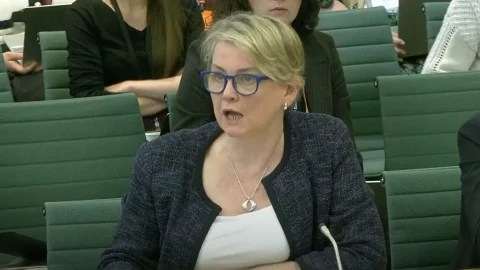
Home Secretary Yvette Cooper addressed MPs with a proposal that would tie e-visas to a new digital ID for all individuals entering the UK. “We want to have a digital service linked to e-visas and linked to our border management process to be able to determine whether an individual is in or out of the UK, whether they have left at the point at which their visa expires or whether they are overstaying and immigration enforcement action is needed,” she said.
Labour’s growing reliance on digital ID to address immigration failures is unfolding alongside a broader and far more consequential transformation: the nationwide rollout of the Gov.uk Wallet, a centralized digital identity app set to launch this summer.
While pitched as an administrative upgrade, the shift arrives at a politically charged moment, with the government invoking border control failures as justification for embedding surveillance infrastructure more deeply into everyday life.
By presenting digital ID as the answer to immigration enforcement shortcomings, ministers risk normalizing a system that reaches far beyond its initial remit.
This convergence of border policy and digital identity expansion suggests a strategic reframing, where rising migrant arrivals are used not only to defend immigration crackdowns but also to accelerate public buy-in for a permanent digital identity regime.
Starting with digital Veteran cards and driving licenses, and eventually consolidating all state-issued credentials into a single app by 2027.
Canada’s New Border Law Hides a Surveillance Time Bomb
By Ken Macon | Reclaim The Net | June 6, 2025
Canada’s new Strong Border Act tabled as Bill C-2, is being framed by the federal government as a step toward strengthening border security. But hidden within its lengthy legislative text is a familiar and troubling push for expanded surveillance powers, this time without the need for court authorization.
Nestled deep in the bill are provisions that grant law enforcement sweeping new authority to demand subscriber data from service providers, bypassing the oversight mechanisms long seen as essential to protecting Canadians’ privacy.
The bill revives the “lawful access” agenda, one that law enforcement agencies have been pursuing since the late 1990s. These digital access provisions are not new, but their inclusion in a border-focused bill appears to be a calculated effort to quietly reintroduce them under a different guise. Despite being repeatedly rebuffed by public opposition, parliamentary committees, and Canada’s highest court, the drive to erode digital privacy protections continues.
This legislative maneuver follows years of setbacks for warrantless access advocates. In 2014, the Supreme Court ruled decisively in R. v. Spencer that Canadians have a legitimate expectation of privacy when it comes to subscriber information. The Court stressed that identifying individuals based on their Internet activity could easily expose sensitive personal behavior and that police demands for such information constituted a search requiring proper legal authorization.
According to Michael Geist, a law professor at the University of Ottawa, law enforcement has continued to seek ways around those constraints. Past efforts to legislate access without judicial oversight have either failed to pass or been dropped due to public backlash.
A 2010 bill mandating the disclosure of customer details, including IP addresses and device identifiers, without a warrant was abandoned.
In 2014, a new bill was introduced, ostensibly to tackle “cyberbullying.” In practice, it reintroduced many of the same provisions that had been defeated under earlier proposals. While dressed in the language of protecting youth online, its underlying purpose was once again to broaden law enforcement access to digital subscriber data with limited oversight.
The Supreme Court’s Spencer ruling remained a major obstacle, reaffirming the privacy rights of Canadians. Then, in 2023, the Bykovets decision extended those protections further, affirming that IP addresses also warrant constitutional safeguards. The Court noted that if digital privacy is to mean anything in the modern age, then these basic digital identifiers must be protected under Section 8 of the Charter.
Despite this legal precedent, Bill C-2 is attempting to carve out a new space for surveillance. Among its more concerning features is a clause that would allow authorities to issue “information demands” to service providers without needing judicial approval. These demands would compel companies to confirm whether they provide services to specific users, whether they hold transmission data related to those accounts, and where the services are or were provided, both inside and outside Canada.
The threshold for triggering such a demand is alarmingly low. Law enforcement must merely suspect that a crime has occurred or may occur and that the requested information could aid an investigation. The demand doesn’t require disclosing the actual data, but it functions as a roadmap to it, alerting police to which providers hold what kind of information and where it might be found. Such indirect searches effectively sidestep the very privacy protections the courts have upheld.
Notably, none of these measures relate directly to border enforcement. Their presence in a border bill serves a strategic purpose: to avoid the scrutiny that such provisions would attract if introduced through standalone legislation. This tactic, often seen in omnibus bills or unrelated amendments, allows controversial policies to advance quietly under the cover of more palatable reforms.
Professor Geist has a full in-depth look at the history of such laws here.
Urban Warfare Tales – Part 28 of the Anglo-American War on Russia
Tales of the American Empire | June 5, 2025
Cities can become “forts” with an endless series of city block walls that provide defense-in-depth. Rather than fight a powerful, modern army on the field of battle, opponents may choose to fight man-to-man in cities. If large numbers of civilians remain in a city, using heavy firepower becomes a political matter and creates huge mounds of rubble passable only by foot infantrymen. Damage to religious and historical structures are another concern.
American and British propagandists claim the Russians are incompetent because they haven’t seized Kiev or other major cities. But that was never an objective since urban warfare is slow, bloody, and very destructive to civilians and infrastructure. The Russians set up a long frontline killing field in Eastern Ukraine lined with artillery supplied via rail directly from factories. Ukraine sends more soldiers into these killing fields daily and the Russians kill thousands each week. Russian forces will keep grinding forward in rural areas to decimate and demoralize the Ukrainian army.
_________________________________
Related Tale: “The Disastrous Liberation of the Philippines”;  • The Disastrous Liberation of the Philippines
“The Calamity of Urban Warfare”; Carlton Meyer; G2mil; 2015; https://www.g2mil.com/cities.htm
“Military Summary” channel; YouTube; daily war updates; / @militarysummary
Related Tales: “The Anglo-American War on Russia”; • The Anglo-American War on Russia
The Agenda: Their Vision – Your Future
Oracle Films | June 4, 2025
The Agenda: Their Vision | Your Future is a feature-length independent documentary produced by Mark Sharman; former UK broadcasting executive at ITV and Sky (formerly BSkyB).
In fiction and fact, there have always been people and organisations with ambitions to control the world. And now the oligarchs who pull the strings of finance and power finally have the tools to achieve their global objectives; omnipresent surveillance, artificial intelligence, digital currency and ultimately digital identities. The potential for social control of our lives and minds is alarmingly real.
The plan has been decades in the making and has seen infiltration of Governments, local councils, big business, civil society, the media and, crucially, education. A ceaseless push for a new reality, echoing Aldous Huxley’s Brave New World, or George Orwell’s 1984.
The Agenda: Their Vision, Your Future examines the digital prison which awaits us if we do not push back right now. How your food, energy, money, travel and even your access to the internet could be limited and controlled; how financial power is strangling democracy and how global institutions like the World Health Organisation are commandeered to champion ideological and fiscal objectives.
The centrepiece is man-made climate change and with it, the race to Net Zero. Both are encapsulated in the United Nations and its Agenda 2030. A force for good? Or “a blank cheque for totalitarian global control”?
The Agenda presents expert views from the UK, the USA and Europe.
Lebanese army may partially ‘freeze cooperation’ with US-led ceasefire committee
The Cradle | June 6, 2025
The Lebanese Armed Forces (LAF) released a statement on 6 June warning it could potentially “freeze cooperation” with the US-led ceasefire monitoring committee regarding site inspections, due to constant Israeli violations.
The statement came the morning after Israel carried out a large-scale attack on Beirut’s southern suburb.
In the statement, the LAF condemned Israel’s “daily aggression” against Lebanon and its continued occupation of Lebanese territory. “Immediately after the Israeli enemy announced its threats, it began coordinating with the Cessation of Hostilities Monitoring Committee to prevent an attack. Patrols also headed to a number of sites to inspect them, despite the enemy’s rejection of the proposal,” the statement added.
“The Israeli enemy’s persistent violation of the Agreement and its refusal to cooperate with the Cessation of Hostilities Monitoring Mechanism only weakens the role of the Committee and the Army, and could lead the military establishment to freeze cooperation with the Cessation of Hostilities Monitoring Mechanism regarding site inspections,” the LAF went on to say.
Following the attacks on Thursday evening, Lebanon’s President Joseph Aoun and Prime Minister Nawaf Salam released statements condemning the Israeli airstrikes.
The president said the attack was a “blatant violation of an international agreement” and served as “conclusive evidence” of Israel’s rejection of regional peace.
Salam also condemned the “systematic and deliberate assault on Lebanon’s security, stability, and economy” and called on the international community to “shoulder its responsibility to deter Israel and ensure its full withdrawal from Lebanese territories.”
The Israeli airstrikes on Beirut took place on the eve of the Muslim holiday of Eid al-Adha.
Thousands of civilians were displaced from their homes after Israel issued evacuation orders for eight residential buildings in the southern suburb on Thursday night.
Israeli drones carried out over a dozen “warning strikes” before warplanes struck and destroyed the targeted buildings, marking the largest attack on Lebanon’s capital since the ceasefire was reached last year.
Tel Aviv claimed the buildings were located above underground drone production facilities belonging to the Lebanese resistance movement, Hezbollah.
“After Hezbollah extensively used drones as a key component of its attacks on Israel, the terrorist organization is expanding its drone production industry in preparation for the next war with Israel,” an Israeli army spokesman said.
Lebanese security sources who spoke with several local media outlets said the Lebanese army requested via the US-led ceasefire committee that it enter the buildings and inspect them to refute Israel’s claims.
The sources said the army entered one of the buildings and found no evidence of any weapon facilities. However, Israel rejected the request and began carrying out drone strikes, forcing the army to withdraw.
“In the (ceasefire) agreement, there is a mechanism for inspections if there is a complaint. Israel in general, and Netanyahu in particular, wants to continue the war in the region,” a Hezbollah official told Lebanese media, denying the presence of any drone facilities at the locations targeted by Israel.
As the final round of airstrikes took place, Israeli warplanes also bombed the village of Ain Qana in southern Lebanon, citing the presence of Hezbollah facilities.
Hundreds of people have been killed since the ceasefire agreement, which Israel has so far violated over 3,000 times, was reached in November last year. Israeli forces also maintain an occupation of five locations inside Lebanon, which they established themselves in after the ceasefire, in violation of the deal.
Lebanese diplomatic efforts have so far failed to make progress in forcing Israel to stop its attacks and withdraw its forces from the five points in southern Lebanon, which are separate from the other areas in the south that the Israeli army has been illegally occupying for years.
Lebanon’s continued coordination with the US-led monitoring committee has yielded no results.
Israel’s Channel 14 said on Thursday evening that the latest Israeli strikes on Beirut were carried out in full coordination with Washington.
Featured Video

Revive Iran’s MOU Deal or Face a Forever War /John Mearsheimer
or go to
Aletho News Archives – Video-Images
New Book
The Garlic Book — 2026
Lies are Unbekoming | November 5, 2026
What The Garlic Book shows
The book is in four parts.
 Part One, The Record, treats the history of garlic as evidence. From the clay garlic bulb placed in an Egyptian grave nearly six thousand years ago, through the Ebers Papyrus, through Hippocrates, Dioscorides, Pliny and Galen, the Arab physicians under Avicenna, the medieval herbals, Culpeper, and the plague years, to the last era in which Western physicians prescribed garlic as a matter of course, which ran from 1850 to 1945. It closes with the living traditions that never stopped using it, and with the folklore of charms, vampires and the evil eye.
Part Two, The Chemistry and the Evidence, sets out what is known about why a clove has no smell until it is cut, and why the order of crush, rest and heat changes the medicine. It then reads the clinical evidence against the historical record — bacteria, blood and vessels, cancer epidemiology, metals and fatigue — and names the trials that went against garlic as directly as the trials that went for it, including the 2007 Stanford trial funded by the US National Institutes of Health which found that raw garlic, garlic powder and aged garlic extract moved LDL cholesterol no more than placebo did. It then turns to onion, garlic’s closest relative, and reads the newer evidence published since 2015, before closing with the whole of the record through the terrain lens.
Part Three, Why Medicine Set It Aside, asks the question directly. One chapter contrasts the pharmaceutical model of isolating a single active compound with the folk model of combining whole plants, and reports what the garlic evidence says about which model works better. One chapter examines the economics of research on a plant that cannot be patented. One chapter — Fire Cider — tells the story of a folk preparation whose name was taken into a United States trademark by a Massachusetts company in 2012, and won back by three herbalists in 2014 who documented forty years of prior use through Rosemary Gladstar and her students into the older tradition.
Part Four, Garlic in Practice, is the working manual — the kitchen pharmacy, traditional uses by body system, a full chapter on safety and interactions, and a complaint-by-complaint practical guide. The book closes with The Trial That Was Never Run — a one-chapter reading of the whole evidential architecture.
At the back: two appendices (a traditional list of uses, and a preparation quick-reference), a full bibliography, and a live index.
Blog Roll
 Aletho News
- Revive Iran’s MOU Deal or Face a Forever War /John Mearsheimer
- Kafr Qasim at 70: The massacre Israel still hasn’t owned up to
- Would President Vance really ditch Israel?
- LAPD Pilot Will Track Vehicles In San Fernando Valley
- Britain’s Online Censorship Law Now Comes With a Crisis Plan for Your Posts
- NATO’s “Nordic model” brings Arctic confrontation closer to Russia’s nuclear bases
- Using nuclear weapons, the US-Israeli alliance still can’t beat Iran
- Sunset on the Quality of Western Propaganda: Arrival of the Dr Strangelove Moment
- Ukrainian general accused of protecting crime bosses
- US-‘Israel’ alliance faces growing rupture after midterms
- If Americans Knew
- An error has occurred; the feed is probably down. Try again later.
- No Tricks Zone
- New Study: The Net Fossil Fuel Contribution To Rising Atmospheric CO2 Has Been Zero For 500 Years
- Germany’s Green Energy Transition Becoming Increasingly Expensive…Another 6 Trillion Euros!
- Sudden Stratospheric Warming, Powerful El Niño Combination May Lead To Extreme Europe Cold, Energy Crisis!
- Two New Studies Find Thwaites Glacier Melt Cannot Be Driven By Human Activity Or A Warming Ocean
- E-Cars Reduce CO2 Emissions By Only 41% Compared To Internal Combustion Engine Vehicles
- Predictions Made By Renowned Climate Professor Over Past Decades Have Been Proven To Be Poor
- New Study Suggests Large Regions Of The Pacific Ocean Have Been Cooling For The Last 80 Years
- Germany’s Green Energy Debacle: High Energy Costs Force Kahla Porzellan to Close After 182 Years!
- New Study: 50 Years Of The Most Aggressive ‘Net Zero’ Policies Can Only Affect The Global Climate By 0.03°C
- US September “Heat” Was No Record…Many Records Set Decades Ago

