The Targeted Assassination of Studies Showing Vaccines Cause Injury
Since they can’t win on the merits, they’ve resorted to other tactics
By Aaron Siri | Injecting Freedom | June 18, 2026
A journalist from The Guardian recently contacted me for a comment on vaccine-related studies I have previously cited in my work. The publishers of these studies have decided—years after publication—that these studies were so flawed and “dangerous to public health” that they needed to be retracted or investigated. The journalist wanted to know if I would amend my book and my recent ACIP presentation now that these studies were under attack.
My response:
“I welcome the media noting the targeted assassination of articles that do not fit the religious belief of vaccine proponents; this is also exemplified by the media’s lack of interest in the hundreds of other articles, reviews, and trial documents from my book and ACIP presentation which make plain that the claim vaccines are ‘safe and effective’ is not supported by the available evidence.”
So which studies are under fire? You won’t be surprised that they are on some of the biggest hot-button topics when it comes to vaccine injury:
1. REMOVED: Vaccines and sudden infant death: An analysis of the Vaccine Adverse Event Reporting System (VAERS) database 1990–2019 and review of the medical literature (Neil Miller, 2021). This study has not just been retracted—it has been removed. Completely wiped. This is reserved for only the most egregious publication offenses. Elsevier says it found “serious methodological flaws” and that the paper “may pose potential risks to public health.” Author Neil Miller explains their concerns were “either insignificant or plainly incorrect.” He has shared his emails with Elsevier publicly, so you can be the judge. A copy of the study can still be found here.
2. RETRACTED: Hepatitis B Vaccination of Male Neonates and Autism Diagnosis, NHIS 1997–2002 (Carolyn Gallagher & Melody Goodman, 2010). This paper was published sixteen years ago. Sixteen years. And only now was it retracted after the publisher claimed that “due to fundamental methodological flaws the study’s conclusions are unsound.” The authors stand behind the study and noted “many of the recent criticisms of the paper are consistent with what we recognized and noted at the time.”
3. UNDER INVESTIGATION: Analysis of health outcomes in vaccinated and unvaccinated children: Developmental delays, asthma, ear infections and gastrointestinal disorders (Brian Hooker & Neil Miller, 2020). This study now has an “expression of concern” attached to it that says the study is “under investigation.” Miller stated that the investigation has to do with false allegations that the data came from another source and was not disclosed.
4. UNDER INVESTIGATION: Quantification of residual plasmid DNA and SV40 promoter-enhancer sequences in Pfizer/BioNTech and Moderna modRNA COVID-19 vaccines from Ontario, Canada (David Speicher, Jessica Rose, & Kevin McKernan, 2025). The publisher may regret kicking the hornet’s nest on this one. Rose and McKernan have been posting regularly about their study, their conversations with the publisher, and how it turns out the person trying to get their study retracted is apparently one of the study’s original peer reviewers and who also happens to have received funding from the same German organization, Deutsche Forschungsgemeinschaft, that provided substantial funding to BioNTech. Go figure.
Behind each of these attacks is a plain desire to wipe from the record any evidence of vaccine harm and to chill the publication of any future studies that report vaccine harm.
Every scientist who values scientific integrity should publicly denounce these tactics. Anything less is not science. It is ideology.
BMJ Probe Into Excess Mortality Study Drags On for Two Years With No Resolution
By Brenda Baletti, Ph.D. | The Defender | June 17, 2026
Controversy over a BMJ paper examining excess mortality trends during the COVID-19 pandemic remains unresolved more than two years after publication, Steve Kirsch reported on Substack.
Dutch researcher Saskia Mostert, M.D., Ph.D., led the study, which was published in BMJ Public Health in May 2024.
Mostert’s team analyzed excess mortality data from 47 Western countries and reported that elevated death rates persisted through 2022 and 2023 despite the end of pandemic restrictions and the widespread availability of COVID-19 vaccines.
The authors argued that the findings warranted further investigation into potential contributing factors, including pandemic-era policies, healthcare disruptions and mass vaccination programs.
The paper was attacked on PubPeer and Retraction Watch, two platforms that have become the driving force behind many recent retractions of peer-reviewed scientific papers whose findings challenge the mainstream narrative on vaccines, COVID-19 treatments and aluminum, among others.
Critics did not dispute the paper’s core findings that excess mortality was high and remained elevated in many Western countries during the study period. Instead, they criticized the paper’s discussion of the COVID-19 vaccines, saying it implied there was a causal link between the shots and excess death and encouraged readers to infer causation.
Several critics called for the paper to be retracted.
In response to these and other mainstream criticism of the paper, BMJ Public Health issued a statement saying that media reports had misrepresented the findings. However, in mid-June 2024, the journal stamped the article with an “expression of concern.”
The journal said its “integrity team and editors” were investigating issues “regarding the quality and messaging of this work.” It also said the Princess Máxima Center, where three of the four study authors were based, was investigating the study.
BMJ Public Health added that the study does not support the claim that vaccines are a major contributor to excess deaths.
The BMJ typically waits for the home institution’s findings before taking action, according to Kirsch. He said the Princess Máxima Center hasn’t yet sufficiently explained what was wrong with the study.
BMJ updated the expression of concern in January 2025, stating that it was awaiting the findings and that the institution had no update regarding when the information would be sent. The Princess Máxima’s website says the investigation is “complete but not yet finalized.”
“After more than two years, the ‘issues’ with the paper have not been revealed,” Kirsch wrote. He said that the center’s investigation revealed that the data and methodology are real and the authors committed no fraud.
“The institution just didn’t like the political implications of being associated with a paper that called the safety of the COVID vaccine into question.”
Princess Maxima Center did not respond to The Defender’s request for comment.
Study used proper methods, reported valid findings
All-cause mortality expert Denis Rancourt, Ph.D., told The Defender that the authors conducted their analysis, “using a correct method and without error.”
“Those results are robust and are corroborated and expanded upon by others,” Rancourt said. All-cause mortality is an important metric that is valid regardless of different opinions about what drives that mortality, he added.
Rancourt said the researchers discussed their results in relation to a broad range of published studies.
The push for retraction was based on how the media and social media commenters interpreted the discussion — not based on what the authors actually did in the paper.
“This is a regressive reason to start unpublishing papers,” he said, adding:
“The large industry of unpublishing shows that our society has moved away from independent thought (intellectual literacy) and towards excessive reliance on the pronouncements from high-status sources. I include scientists themselves in the said society.”
All-cause mortality identified in the paper ‘unprecedented and raises serious concerns’
The original paper showed that excess mortality in 2020 was documented in 41 of the 47 countries the authors analyzed. Over the next two years, that number increased to 42 and 43 countries in 2021 and 2022, respectively.
Overall, there were 3,098,456 excess deaths from Jan. 1, 2020, to Dec. 31, 2022, with just over 1 million of those occurring in 2020.
“This is unprecedented and raises serious concerns,” said researchers, who analyzed all-cause mortality reported in the Our World in Data database.
“In 2021,” they wrote, “the year in which both containment [i.e., lockdown] measures and COVID-19 vaccines were used to address virus spread and infection, the highest number of excess deaths was reported: 1,256,942 excess deaths.”
They reported that in 2022 — “the year in which most containment measures were lifted and COVID-19 vaccines were continued” — there were 808,392 excess deaths.
The authors pointed out that during the pandemic, politicians and the media emphasized: “on a daily basis that every COVID-19 death mattered and every life deserved protection through containment measures and COVID-19 vaccines.”
“In the aftermath of the pandemic, the same moral should apply,” the authors said. “Every death needs to be acknowledged and accounted for, irrespective of its origin.”
The authors called for government transparency in cause-of-death data so researchers can do “direct and robust analyses to determine the underlying contributors.”
This also means that autopsies need to be done to determine the exact reason for death, they added.
The authors noted that the data they analyzed may not have recorded all actual deaths because “countries may lack the infrastructure and capacity to document and account for all deaths.”
Record-keeping mishaps or delays may also cause deaths to go unrecorded.
This article was originally published by The Defender — Children’s Health Defense’s News & Views Website under Creative Commons license CC BY-NC-ND 4.0. Please consider subscribing to The Defender or donating to Children’s Health Defense.
Securing Peace with Iran Compels Trump to Divorce Israel
Israel’s goals of territorial expansion conflict with the goals of the US president
By Harrison Berger | The American Conservative | June 19, 2026
After President Donald Trump signed a preliminary Iran peace deal on Wednesday, Israel’s occupation and bombing of Lebanon presents the central obstacle to a final agreement and lasting peace. Securing and upholding the final peace deal will require the kind of confrontation with Israel that Trump has avoided for most of his presidency, given Iran’s leverage over the Strait of Hormuz and global energy flows.
Iran has insisted that the ceasefire and now the framework peace deal cover the entire regional war and thus require that Israel end its occupation of southern Lebanon. Iran’s Supreme National Security Council declared Monday that under the framework deal, called a memorandum of understanding, “war and military operations on all fronts—including immediately ending the Lebanon front tonight and permanently—will conclude.”
That demand stems directly from the “long-term security guarantees” Tehran has invoked across its public statements since the beginning of the conflict. For those guarantees to mean anything, Tehran needs Trump to rein in Prime Minister Benjamin Netanyahu and ensure that Israel does not launch another surprise attack against Iran. The only way Washington can demonstrate that commitment is to pressure Israel now, in Lebanon. As Trita Parsi of the Quincy Institute has argued, binding Israel to a ceasefire is a “test of America’s willingness, and its ability, to restrain its closest regional ally.”
Iran is right to doubt that Washington will exert that kind of pressure over Israel. After Israel’s latest bombing of Beirut’s southern suburbs, Iran’s Speaker of Parliament Mohammad Ghalibaf wrote that the incursion into Dahiyeh “has once again shown that America either lacks the will to fulfill its commitments or the ability to do so.” Recognizing that Israel’s violent quest to grab territory in Lebanon could only be accomplished with U.S. approval, Iran’s leading negotiator declared that “the game of bad cop and good cop is outdated.”
Up until that point, the White House had seemed to use Axios and other friendly outlets to give Iran the impression that it was pressuring Israel, even as it kept giving its protectorate in the Middle East the green light to occupy its northern neighbor. Indeed, while American audiences heard from the Axios reporter Barak Ravid that Washington was “furious” over the Lebanon strikes, Israeli audiences heard the opposite.
Miriam Adelson’s Israel Hayom newspaper reported that the United States and Israel were in fact “fully coordinated, both on the strikes in Dahiyeh in Beirut and on the Israeli response to the missile fire from Iran,” and that Secretary of State Marco Rubio in particular played a “significant role” in getting Trump to back Israel’s retaliatory strikes. The Israeli operation, the paper said, was “fully coordinated with CENTCOM, even though the Americans did not strike themselves.” The munitions used by the Israelis in Lebanon are further proof of U.S. involvement, with Courtney Bonneau, the American-Dutch journalist reporting from southern Lebanon, recently telling The American Conservative that the waste left by Israel’s demolition and bombing campaign is recognizably U.S.-made.
Trump wants to have it both ways. The political costs of the war are piling up and he wants an exit, but an exit requires confronting Israel and the lobby over Lebanon, and that is a political conflict he has avoided fighting directly even as he has criticized Netanyahu in recent weeks.
Israel is betting he will continue to avoid it. Shortly after a deal was announced, Israel’s Defense Minister Israel Katz said that Israel’s occupation of southern Lebanon would continue, and that it planned to stay “indefinitely” in Lebanon, Syria, and Gaza. Israel’s Finance Minister Bezalel Smotrich likewise announced on Tuesday that “there will be no withdrawal from Lebanon, neither by Friday nor afterward. We will remain in south Lebanon and strengthen our presence there,” while National Security Minister Itamar Ben-Gvir said Monday that Israel is not bound by any agreement.
Though Israeli leaders insist they are carefully fighting “Hezbollah,” the death toll of at least 3,826 Lebanese civilians killed by Israeli attacks reveals that to be merely a pretext. Trump, though he has not skipped any payment when it comes to funding the conflict, admitted as much on Tuesday at the G7 Summit, telling reporters that Israel “does not have to knock down an apartment house every time [it’s] looking for somebody. There are a lot of people in those apartment houses and they’re not all Hezbollah.”
And though Israel invokes Hezbollah as its excuse for military action, there is little reason to believe the IDF’s occupation would end even if Hezbollah laid down its arms. In their public statements, Israeli officials have expressed interest in territorial expansion for its own sake and, increasingly, in the Judaification of Lebanese land through settlements—an idea Jewish Currents describes as “once fringe” but now backed by “an organized movement with broad governmental and public support.” Twenty members of Israel’s Knesset wrote to the cabinet in April urging “occupation and full control” of southern Lebanon alongside the “complete displacement” of its population, while a poll conducted by Direct Polls for i24NEWS found that 62 percent of Israelis favor occupying everything south of the Litani River.
Israeli occupation of Lebanon, like its ethnic cleansing campaigns in Gaza and the West Bank, works directly against American interests, in this case stopping a war that has wrecked the global economy. Washington has all the necessary tools to put a stop to this, yet has simply declined to use them. As Joe Kent, the administration’s former head of the National Counterterrorism Center and one of the most prominent America First critics of the war argued on X, “We can strengthen our chances of this deal holding by cutting all military/intel assistance to Israel,” who “took every opportunity to tank this deal & will likely do so again unless we take action,” adding that in order for a deal to hold, we must “take away every factor that we can control that could force us back into the war on Israel or Iran’s terms. Set all conditions that we can control in our favor.”
Though once unthinkable, Trump in recent days has shifted closer toward this America First position and away from the Israel First mindset that led to war with Iran. With Iran insisting any peace deal must cover “all fronts,” including Lebanon, and with the Israelis fully committed to the Greater Israel project, cutting off Israel is now the minimum price of the complete exit from the conflict that Trump says he wants.
Harrison Berger is a correspondent at The American Conservative. He has contributed to Drop Site News, The Nation, and Responsible Statecraft. Previously, he was a researcher and producer for System Update with Glenn Greenwald. His work focuses on civil liberties and U.S. foreign policy. He studied Political Science and Russian Studies at Union College (NY).
Strait of Hormuz closed over Israeli aggression on Lebanon
Al Mayadeen | June 20, 2026
The Strait of Hormuz is shut down in response to ongoing Israeli aggression on southern Lebanon, Khatam al-Anbiya Central Headquarters announced, deeming Israeli actions a violation of Iran’s agreement with the US.
In a statement carried by Iranian state television, the Khatam HQ accused the United States of breaching its obligations under a memorandum of understanding related to ending the war, and also cited continued Israeli military actions in southern Lebanon, including ceasefire violations, killings, forced displacement of civilians, and failure to withdraw from Lebanese territory. It added that the measure reflects a response to the deterioration of compliance by the opposing parties and the persistence of hostilities on the ground.
“In light of the United States’ blatant violation of its commitments and breach of the provisions of Article One of the memorandum of understanding to end the war and in response to the ongoing and continuous violation of the ceasefire by the Israeli entity in southern Lebanon, the continued brutal killing and forcible displacement of the Lebanese people, and its failure to withdraw from southern Lebanon, it is hereby announced that the Strait of Hormuz will be closed to maritime navigation,” the statement read.
More steps to follow
The statement from Iran’s Khatam al-Anbiya Central Headquarters concluded by emphasizing that the measure was presented as an initial response to what it described as the enemy’s breach of commitments, warning that any continued escalation would prompt additional actions aimed at compelling compliance with its stated obligations.
“It is noted that this first step is a response to the enemy’s breach of promise, and if the aggression continues, further steps will be planned and taken to force the enemy to comply with its obligations,” it asserted.
37+ martyrs in continued Israeli attacks on southern, eastern Lebanon
Israeli occupation forces (IOF) carried out a fresh wave of attacks across southern Lebanon and western Bekaa on Saturday morning, killing at least 37 people and extending a pattern of aggression that has persisted despite an alleged ceasefire in place since April 17, 2026.
In the Nabatieh area alone, at least 25 people were martyred and another 35 were injured in an initial toll, as reported by the Civil Defense Operations Room of the Islamic Health Authority’s Jabal Amel II region. Rescue and ambulance teams are still clearing rubble and searching for missing people. Among those martyred in the Nabatieh area is a Lebanese Army soldier killed in an Israeli drone strike in Kfar Rumman.
Meanwhile, an Israeli attack on a residential building in the town of Qennarit in the Saida district killed 7 and injured 13 others, among them 5 children and 5 women, as per the Lebanese Ministry of Public Health.
In western Bekaa, Al Mayadeen’s correspondent reported that four people were killed in an Israeli attack on a house in the town of Sohmor, in addition to a person killed earlier in a separate drone attack that targeted a motorcycle in the same town, bringing the death toll in Sohmor to five. Lebanon’s National News Agency reports that a child remains under the rubble in Sohmor, with rescue teams working to save him.
Dozens of towns bombed
Local media reports that the IOF carried out at least 80 attacks on southern Lebanon and the western Bekaa since early morning on Saturday, comprising 65 airstrikes and 15 drone strikes, in addition to artillery shelling and sweeping fire.
The hardest hit areas are al-Nabatieh al-Fawqa (8 times) and al-Rihan heights (6 times). Kfar Tebnit and its surroundings, Jabal al-Rafi’, Shoukin, and Nabatieh city were each bombed four times, while Kfaroumman, Aramta, the al-Aroush quarry, Harouf, and Habboush were each bombed three times.
Sojod, the area between Toul and Kfour, Kfar Joz, Zebdine and its surroundings, and Shhour were each attacked twice, while Nmairiyeh, Arabsalim, al-Mahmoudiyeh, Borj Qalaway, Qabrikha, Barish, al-Qatrani, and Qennarit were each bombed once.
Drone attacks, artillery shelling
Israeli drones, meanwhile, attacked Nabatieh city four times and Arabsalim twice, with single drone attacks hitting Deir al-Zahrani, Doueir, Deir Qanoun Ras al-Ain, Kawthariyet al-Riz, Sohmor, Harouf, Jibchit, and al-Nafakhiyeh.
Israeli artillery also shelled Majdal Zoun, Habboush, Harouf, and Ali al-Taher, while occupation forces carried out sweeping-fire operations in Buyout al-Sayyad.
Friday’s escalation
Saturday’s strikes followed a sharp escalation on Friday, when the IOF expanded its attacks to include several southern villages, the outskirts and northern entrance of Baalbek, and the Litani Riverbed near the town of Zellaya in the western Bekaa, attacks that resulted in massacres of civilians.
The bombardment continued even as Reuters reported that a ceasefire agreement between “Israel” and Hezbollah had taken effect at 4 pm that day. Within moments of the so-called ceasefire taking hold, Israeli occupation warplanes launched more than 16 attacks on areas across the South, according to Al Mayadeen’s correspondent.
The Lebanese Ministry of Public Health confirmed that the intensified aggression carried out from midnight through Friday afternoon martyred 47 people and injured 97 others, an updated toll showed. The Ministry put the cumulative toll of Israeli attacks between March 2 and June 19 at 3,980 martyred and 12,001 injured.
Keir Starmer arson mysteries multiply
By Kit Klarenberg | Al Mayadeen | June 20, 2026
On June 15th, two young Ukrainian men were found guilty in London of conspiring to carry out arson attacks on two homes and a car intimately connected to British Prime Minister Keir Starmer. Little-reported, curious details of the trial, and a post-conviction propaganda blitz led by the BBC blaming Russian intelligence actors for inspiring and directing the pair’s incendiary crimes, raise a number of ominous questions about precisely what happened, why, and for whom the alleged perpetrators were truly working.
On May 8th 2025, a Toyota vehicle previously owned by Starmer was set ablaze in north London, not far from where he’d previously resided. Three days later, flats in Islington Starmer managed years previously were similarly put to the torch, then on May 12th, a home where he once resided, now leased to his sister-in-law was also set ablaze. That same day, 22-year-old Ukrainian national Roman Lavrynovych was arrested by British police for his purported role in the arson.
Despite the Prime Minister being personally targeted in a highly organised, repeated and potentially lethal manner, major news outlets within and without the country exhibited bizarrely muted interest. Starmer describing the incidents in parliament on May 14th that year as “an attack on all of us, on democracy and the values that we stand for” – condemnation from Conservative and Liberal Democrat politicians echoed – elicited some headlines. However, basic facts about the case, and discussion of its obvious potential national security implications, remained unforthcoming.
This seeming omerta endured when, on May 17th, 26-year-old Ukrainian-born Romanian national Stanislav Carpiuc was arrested at Luton airport for his role in the attacks, attempting to flee. Four days later, 34-year-old Ukrainian national Petro Pochynok was arrested, accused of conspiring with Carpiuc, Lavrynovych, “and others unknown to damage by fire property belonging to another.” The names and nationalities of two further individuals arrested in the case – a 48-year-old on June 2nd that year, and a 19-year-old in January 2026 – were never released.
Police investigations into these anonymous suspects were eventually dropped, without fanfare. Who they were, why they became subjects of interest, and the grounds for their elimination from enquiries, hasn’t been revealed and wasn’t discussed at trial. There were apparently no “others unknown” with whom Carpiuc and Lavrynovych colluded after all. Pochynok was acquitted, successfully arguing he was “deceived” by the pair and had no idea they intended to start fires with his help. Notably, all three were charged with mere arson, not national security offences.
This aspect is striking, given when the trial commenced on April 28th, prosecution lawyers immediately declared the trio’s arson assault was directed by a Russian-speaking Telegram user, for cash. The December 2023 National Security Act grants British authorities sweeping powers to severely punish people who break the law at the behest of “hostile states”. Repeatedly since the Starmer-linked attacks, British citizens have been jailed for national security offences after being recruited to commit crimes, including arson, via Telegram by supposed Russian actors.
All along, alarm has been sounded about Iranian intelligence using Telegram for similar purposes, in particular “[hiring] anyone who can harm Israeli interests or individuals” in Britain. Yet, a coordinated criminal conspiracy targeting the Prime Minister, which required access to sensitive private information on Starmer not readily available to average citizens, allegedly orchestrated by a malign foreign actor, mysteriously didn’t qualify as national security-related. Moreover, jurors and the public alike were strictly prohibited from learning anything about the group’s alleged recruiter.
‘Wholly Irrelevant’
On the trial’s first day, dropping the bombshell that Lavrynovych was “recruited, instructed and promised with payment for the fires that he was told to start” by a Russian-speaking source known as “EL Money”, the lead prosecutor promptly ordered jurors to leave the entire issue alone. “It is not part of your considerations to decide who ‘EL Money’ is and what reason he might have had to co-ordinate the actions of these defendants,” they said, before adding:
“It does not matter whether they knew that the property they were targeting was connected to the Prime Minister or whether that formed part of their motivation.”
As such, the trial centred solely around the extremely limited question of whether the accused committed arson. All other avenues of inquiry weren’t up for discussion or investigation in open court. While the financial motivation of the three accused was explored, the identity, connections and motives of the individual – or individuals – who commissioned and directed the attacks on Starmer was effectively inadmissible. This was despite Lavrynovych’s defence hinging on claiming to have felt intimidated by the unknown Telegram contact, and therefore acting under duress.
The BBC reports how during the trial in the jury’s absence, Lavrynovych’s lawyers applied for prosecutors to hand over wider information held by authorities on EL Money. This included whether he was associated with intelligence services or a state informant, and where he was based. They argued the actions of EL Money were “redolent of tradecraft” – in other words, cloak-and-dagger techniques employed by spies. But the judge flatly rejected the application, inexplicably ruling these burning queries to be “wholly irrelevant” to issues before the jury.
Nonetheless, it did emerge at the trial that EL Money sent messages to Lavrynovych on May 12th, following the final arson, notifying him “there is news, you’ll get crypto” and “you need to throw away the clothes.” Subsequently, EL Money warned him, “you attacked the home of a very high-ranking person in Britain,” and “you need to leave the city.” Lavrynovych was arrested hours later, indicating he was already in law enforcement’s crosshairs by this time. How he came to police attention isn’t clear.
Apparently, the central coordinating role of EL Money in the attacks on Starmer wasn’t ascertained until after Carpiuc and Lavrynovych were in custody, and legal proceedings well-underway. At a pretrial hearing in late May 2025, prosecution lawyers said the arrested Ukrainian pair’s conspiracy was “unexplained”. A contemporary Financial Times report noted counter-terror cops leading the probe were “keeping an open mind about motive.” Nameless government officials stressed “many different versions of the events” remained under investigation, “and nothing had been ruled out at this stage.”
‘No Evidence’
How prosecutors settled on the “version of events” they dramatically presented in court, before directing jurors to disregard considerations of EL Money entirely, is likewise unknown. Only a small number of messages the user exchanged with Lavrynovych – in which EL Money notably communicated in perfect Russian and Ukrainian – were presented in court. However, within just hours of the pair’s conviction, the BBC released a dedicated Panorama documentary, and 3,500-word long-read on the “Russian connection” behind the Starmer-linked arson.
Miraculously, “using open-source tools,” Britain’s state broadcaster was able to ‘crack the case’ to an extent police purportedly couldn’t. The BBC named EL Money as a “Russian diplomat, schooled in information warfare by spies and propagandists, who is close to the highest levels of power in Moscow.” Posing as EL Money, the 23-year-old supposedly sought to bribe numerous Ukrainians in Britain into perpetrating a variety of criminal activities, via dedicated local jobs groups, while also oddly deploying “deeply offensive Russian terms for Ukrainian people.”
“Messages from the [EL Money] account in various Telegram channels show him glorifying [Vladimir] Putin and Russia, attacking the Ukrainian people and promoting Russian narratives,” the BBC claimed. Its investigation acknowledged the trial of Carpiuc, Lavrynovych and Pochynok “was strange, mainly because the true author of the drama was never revealed,” with the conundrum of EL Money’s identity “deliberately avoided.” Suspicion can only abound as to why the British state broadcaster unravelled this crucial riddle, rather than courts and/or law enforcement.
Even more suspiciously, the BBC quoted a senior British counter-terror police chief as saying while the aim of the attacks on Starmer’s properties was “to intimidate and create fear for the Prime Minister and to attack the UK,” law enforcement had “not been able to prove the identity of [EL Money] or who he was working for.” They categorically declared, “we’ve got no evidence to suggest this was a state-backed threat.” But Britain’s state broadcaster is seemingly better informed than the police.
“Sources have told us that authorities in the UK and in Ukraine have privately concluded Russia was behind the arson attacks,” the BBC boasted. One might reasonably ask why Kiev has apparently taken it upon herself to solve a British criminal case, although Ukraine’s SBU is certainly an authority on recruiting chaos agents via Telegram, and other messaging apps. The heavily CIA and MI6-infiltrated agency has, over many years, exploited this technique to blackmail and bribe Russians into perpetrating serious crimes at home.
These scandalous activities have been universally ignored by the Western media. By contrast, numerous major news outlets have boldly seized on the BBC blaming Russia for the arson attacks. The Financial Times published a slick investigation the same day, replete with photos, videos, and graphics, documenting EL Money’s contacts with and payments to Lavrynovych. Shady investigative website The Insider went so far as to release extensive biographical information and photos of the 23-year-old Russian named by the BBC as EL Money.
Other outlets have produced quotes from Lavrynovych’s trial testimony, in which he states EL Money “wanted to see [the arson] on the news.” Of course, the attacks barely registered in the media contemporaneously, and what was said at the trial by defendants, their lawyers, prosecutors and the judge went unreported until now. In all the post-trial rush to convict Russia, not a single source has mentioned how British police themselves admit they possess “no evidence” indicating the arson attacks were sponsored by any state. Make of that what you will.
Zelensky threatens to attack Belarus
RT | June 19, 2026
Ukraine’s Vladimir Zelensky has issued an ultimatum to Belarusian President Alexander Lukashenko, threatening him with military action if Minsk fails to meet Kiev’s demand, just days after a deadly drone strike on a bus carrying a children’s soccer team from Belarus.
Earlier this week, Lukashenko said that those seeking to drag his nation into the conflict “will have to pay dearly for that,” demanding answers from Kiev over the strike on the bus and other “provocations.” The attack in Russia’s Bryansk Region injured six minors and killed the wife of a Belarusian school soccer team coach who was accompanying the young athletes to a Russian seaside resort.
Kiev denied responsibility, while Zelensky claimed that it was Lukashenko who must “be honest” and prove Minsk’s peaceful intentions by removing air defenses and relay transmitters along the border with Ukraine.
“I think one week would be enough for him to accomplish this,” the Ukrainian leader stated at a press conference in Kiev on Friday. “If he does not do it, we will.”
Lukashenko has repeatedly said that Belarus has no intention of engaging in a war against any nation and “is not threatening anyone.” Zelensky, however, stated that there was “no need for unnecessary words,” and issued another veiled threat against the Belarusian oil refining industry.
“Just like his, for example, oil refining industry,” Zelensky said, claiming that Minsk is one of Russia’s “main” suppliers of petroleum products. “Can this be stopped? I am sure that it is within his power.”
A close Russian ally, Belarus has largely stayed out of the conflict since 2022, while calling on Moscow and Kiev to engage in dialogue and expressing its readiness to contribute to a diplomatic resolution. In September 2025, Lukashenko stated that he was ready to meet Zelensky personally to discuss possible compromises, but the Ukrainian leader rejected the offer. In November, Minsk released 31 Ukrainian citizens from detention in a “goodwill gesture” at the request of Kiev and US President Donald Trump, who was also seeking to mediate the conflict.
Over the past few weeks, Zelensky has been ramping up his rhetoric about an allegedly growing threat posed by Belarus. He accused Minsk of preparing to enter the Ukraine conflict on Russia’s side – and threatened it with a preemptive strike.
UK to send Ukraine 150,000 drones
RT | June 19, 2026
The UK will provide Ukraine with 150,000 UAVs by the end of the year, London announced on Thursday following one of Kiev’s largest drone attacks on Moscow since the start of the conflict.
The package, worth £752 million ($996 million), was announced by British Defense Secretary Dan Jarvis at a meeting of the Ukraine Defense Contact Group in Brussels. According to the British government, which has been among Kiev’s most active military supporters, the package will be funded through London’s £2.26 billion loan to Kiev, backed by proceeds from frozen Russian sovereign assets.
British officials presented the package, which includes drones, missiles and radars, as necessary military support for Kiev. Chancellor Rachel Reeves pledged that London would continue backing Ukraine and putting pressure on Moscow. Russia has long argued that continued Western arms deliveries only prolong the conflict and undermine peace efforts.
The announcement came after Moscow and the surrounding region were hit by one of the largest Ukrainian drone raids in recent years. Russian air defenses intercepted 194 drones approaching the capital overnight, according to officials, but the attack still caused damage.
Local authorities reported that one drone struck the Moscow Oil Refinery in the Kapotnya district, triggering a fire, while debris damaged residential buildings, vehicles, and commercial sites, including several shopping centers.
Residents in several districts also reported black rain and soot falling from the sky after the refinery blaze, with local authorities advising people to keep windows closed and limit time outdoors.
At least 17 civilians, including two children, were reported injured in the Moscow Region. The raid also disrupted air traffic, with temporary restrictions imposed at Moscow’s airports and numerous flights delayed or canceled.
Russian Foreign Minister Sergey Lavrov condemned the attacks and said Moscow would respond by changing its strategy and begin regularly carrying out large-scale strikes against targets that “directly affect the combat capability” of the Ukrainian military.
“I have long been convinced that words are not enough,” Lavrov told reporters.
Moscow has repeatedly accused Ukraine of using Western-supplied weapons, funding and intelligence to carry out “terrorist attacks” on Russian territory and civilian infrastructure.
Russian officials have argued that continued arms deliveries from the UK, EU and NATO members make Western governments direct participants in the conflict and reduce the chances of a peace deal.
‘Biased censorship’: Iran deputy FM slams X for stripping him of blue tick
Press TV – June 19, 2026
Iran’s Deputy Foreign Minister for Legal and International Affairs Kazem Gharibabadi has decried a recent “biased” move by the social media platform X to remove the blue checkmark from his account.
In an X post on Friday, Gharibabadi said that the online social network has removed the blue tick from his account after doing the same with the accounts of Iran’s Ministry of Foreign Affairs, Minister Abbas Araghchi, and spokesman Esmaeil Baghaei.
“This biased and politically-motivated measure is the continuation of the pattern of censorship aimed at silencing the truth and the official voice of governments, as well as instrumentalizing digital credibility,” he added.
Since Elon Musk’s acquisition of X, formerly known as Twitter, in 2022, the platform has faced criticism for arbitrarily removing verification badges and deleting accounts perceived as politically inconvenient.
Since February, X has stripped many Iranian officials of their blue checkmarks and deleted without explanation hundreds of accounts supportive of Iran’s brave resistance against the US-Israeli war of aggression.
Hezbollah lawmaker says Israel has 60 days to withdraw from Lebanon
MEMO | June 19, 2026
Mohammad Raad, head of Hezbollah’s parliamentary bloc, said Israel has 60 days to complete its withdrawal from Lebanese territory, urging Lebanese authorities to study the understanding signed between the United States and Iran “carefully and objectively”.
In a statement issued on Thursday, Raad made the remarks as Israel continues its military actions and maintains its presence in areas it occupies in southern Lebanon.
He noted that the first clause of the agreement signed between Tehran and Washington calls, in part, for the “immediate and permanent cessation of military operations on all fronts, including Lebanon”.
The agreement also includes a commitment to “guarantee Lebanon’s territorial integrity and sovereignty” and confirms a “permanent end to the war on all fronts” in its final form.
On Wednesday evening, US President Donald Trump and Iranian President Masoud Pezeshkian electronically signed the “Islamabad Memorandum of Understanding”, which aims to end the war launched by the United States and Israel against Iran on 28th February.
A Pakistani mediator later announced that the memorandum had entered into force. Under the arrangement, Iran is expected to begin reopening the Strait of Hormuz to shipping, while the United States starts lifting its naval blockade on Tehran.
Raad called on Lebanese authorities to “read the text of the memorandum carefully and objectively and draw conclusions about the realities and prospects that will have a significant impact on the region and the world, including Lebanon”.
He also warned against “underestimating Iran’s ability to fulfil its commitment to deter the Zionist enemy should it insist on violating the terms of the memorandum”, according to the statement.
Featured Video
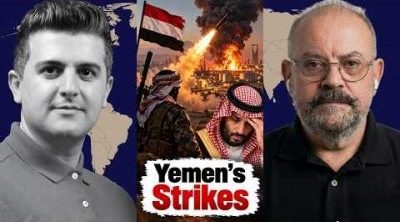
Elijah Magnier: Yemen’s strikes are shattering Saudi Arabia’s long-term strategy
or go to
Aletho News Archives – Video-Images
From the Archives
British weapons and personnel doing much of the killing in Yemen
Press TV – June 18, 2019
A detailed report published by the Guardian newspaper has shown how Britain is massively contributing to Saudi Arabia’s devastating war on Yemen as it suggests that London is not only supplying the bombs that fall on Yemenis, but it provides the personnel and expertise that keep the war going.
The comprehensive report by Arron Merat published on Tuesday showed that Britain was doing much of the killing in Yemen as the country continues to provide Saudi Arabia with everything it needs to turn its southern impoverished neighbor into a graveyard.
“Every day Yemen is hit by British bombs – dropped by British planes that are flown by British-trained pilots and maintained and prepared inside Saudi Arabia by thousands of British contractors,” said Merat in the report. … continue
Blog Roll
 Aletho News
- Racist Seinfeld Dances for Joy as Bibi Unveils His New Map
- A West Bank War for Netanyahu’s Election Campaign, Could It Backfire?
- Yemen denounces European Parliament’s ‘hypocritical’ push to blacklist Ansarullah
- Qalibaf: UAE’s UN bid aims to ‘clear the runway’ for ‘Greater Israel’, whitewash genocide
- Pakistan reopens Iran border after boosting security: Report
- Why are so many Brazilians voting for Flávio Bolsonaro?
- Democrats Put Anti-Russia Agenda Ahead of American Workers
- Elijah Magnier: Yemen’s Strikes Are Shattering Saudi Arabia’s Long-Term Strategy
- Pentagon designates Chinese cultural centers national security threat
- Israel Demolishes Home Of Lebanese Journalist Whose Viral Film Exposed Pager Attack
- If Americans Knew
- An error has occurred; the feed is probably down. Try again later.
- No Tricks Zone
- Sudden Stratospheric Warming, Powerful El Niño Combination May Lead To Extreme Europe Cold, Energy Crisis!
- Two New Studies Find Thwaites Glacier Melt Cannot Be Driven By Human Activity Or A Warming Ocean
- E-Cars Reduce CO2 Emissions By Only 41% Compared To Internal Combustion Engine Vehicles
- Predictions Made By Renowned Climate Professor Over Past Decades Have Been Proven To Be Poor
- New Study Suggests Large Regions Of The Pacific Ocean Have Been Cooling For The Last 80 Years
- Germany’s Green Energy Debacle: High Energy Costs Force Kahla Porzellan to Close After 182 Years!
- New Study: 50 Years Of The Most Aggressive ‘Net Zero’ Policies Can Only Affect The Global Climate By 0.03°C
- US September “Heat” Was No Record…Many Records Set Decades Ago
- Latest European Green Energy Debacle; Portugal’s Largest Flagship Solar Park Insolvent!
- Green Energy Debacle: German Expert Professor Fritz Vahrenholt Warns Of Severe Economic And Social Consequences

