First round of Swiss-hosted Iran-US talks ends with 5 key agreements
Al Mayadeen | June 22, 2026
Following the conclusion of the first round of the Iran-US talks in Switzerland on Monday, the media committee of the Iranian negotiating delegation issued a statement outlining the main points and understandings reached during the talks.
The Bürgenstock talks outline a phased framework linking security arrangements, financial measures, and sanctions relief to conditional implementation steps.
Key developments include a Lebanon ceasefire monitoring mechanism, structured communication over the Strait of Hormuz, coordinated asset release arrangements, and temporary sanctions relief measures tied to energy exports.
Lebanon ceasefire monitoring mechanism
According to the statement, continued pressure from the Iranian negotiating delegation since Saturday afternoon contributed to maintaining a fragile ceasefire in Lebanon for the time being.
To support stabilization efforts, the parties agreed to establish a monitoring framework titled the “Conflict Control Unit.” Iran is expected to participate in this mechanism, which will oversee developments related to the ceasefire.
The statement further noted that this arrangement would formally integrate the Islamic Republic of Iran into Lebanon’s security-related discussions, despite US efforts in recent months to exclude Iran from Lebanese affairs. It also stated that “Israel” will have no role in this mechanism.
Strait of Hormuz communication channel
Regarding discussions on the Strait of Hormuz, the statement said an understanding was reached to establish a communication channel aimed at addressing potential implementation issues.
Through this channel, relevant parties would be able to directly contact Iran and present concerns related to maritime coordination and regional navigation.
It characterized this arrangement as part of broader discussions on the management and gradual reopening of the Strait of Hormuz.
Conditional launch of nuclear and sanctions working groups
The agreement also includes the formation of three working groups focused on nuclear issues, sanctions, and monitoring mechanisms.
These groups are set to begin their work only after the implementation of Article 13 of the memorandum of understanding, which outlines several key steps, including:
- A ceasefire across all fronts, particularly in Lebanon
- Initial steps toward lifting the naval blockade
- Release of frozen Iranian assets
- Issuance of waivers lifting sanctions on oil and petrochemical exports
Iran will not enter the final phase of negotiations before these conditions are fulfilled.
Iran–Qatar agreement on frozen assets
During the same round of talks, Iran and Qatar signed a memorandum of understanding concerning the release of Iranian frozen assets. The agreement is presented as part of ongoing financial and diplomatic coordination between the two sides regarding outstanding economic issues.
US OFAC 60-day sanctions suspension
The statement also referenced documents issued by the US Treasury Department’s Office of Foreign Assets Control (OFAC) during the negotiations.
According to the statement, these documents provide for a 60-day suspension of sanctions targeting oil, petrochemical, and related sectors. This arrangement would allow Iran to resume oil sales to its customers and receive payments through formal mechanisms managed by the Central Bank, the statement explained.
Bilateral and trilateral meetings at Bürgenstock resort
Al Mayadeen’s Geneva Bureau chief reported on Sunday that various bilateral and trilateral meetings have begun at the Bürgenstock resort ahead of the first official session of Iran-US talks. The opening session took place at 2:30 PM al-Quds time.
The first file discussed after the inaugural session was the implementation of the first clause, which relates to ending the war, particularly on Lebanon.
Al Mayadeen’s Geneva bureau chief later reported that the Iranian delegation held talks with the Qatari delegation in Geneva to discuss the ceasefire in Lebanon. He also reported that, following a meeting with the Iranian delegation, the Pakistani Prime Minister and Chief of Army Staff held talks with the US delegation, headed by Vice President JD Vance.
According to an Iranian official, speaking to CNN on Saturday, before departing for Switzerland, Vance said that one of the top concerns included in the talks would be to make progress towards a ceasefire in Lebanon. “I think we’re going to hopefully make progress on the nuclear issue, make progress on the Lebanon ceasefire issue. Those are the two big things that I think we’re going to be focused on,” the US vice president told reporters, noting that he expected to participate in the talks for only “a day or two”.
IRAN WALKS OUT ON PEACE DEAL DUE TO TRUMP’S THREATS – w/ Prof. Seyed Mohammad Marandi
Mario Nawfal | June 21, 2026
Moderna’s mRNA Flu Vaccine Gets Unanimous Thumbs-Up Despite Risks, Low Efficacy
By Michael Nevradakis, Ph.D. | The Defender | June 18, 2026
A federal advisory committee today unanimously voted to endorse Moderna’s mRNA flu vaccine — just months after rejecting the company’s application on the basis that Moderna had not performed an “adequate and well-controlled” clinical trial.
The Vaccines and Related Biological Products Advisory Committee (VRBPAC), which reviews scientific data on the safety and effectiveness of vaccines and other therapeutics on behalf of the U.S. Food and Drug Administration (FDA), voted 9-0 in dual votes to recommend approval of the vaccine for the 50-64 and 65-plus age groups.
Today’s votes took place after several hours of presentations based on the findings of Moderna’s Phase 4 clinical trial data for its mRNA-1010 vaccine. The trial compared the efficacy of mRNA-1010 to that of a conventional, non-mRNA flu vaccine.
Daniel O’Connor, founder and CEO of TrialSite News, told The Defender today’s favorable votes “may reflect the committee’s view that the benefit-risk profile is acceptable.” However, the vote “does not erase the fundamental concerns surrounding this application.”
“Significant questions remain about comparator selection, study design and whether the reported efficacy advantage represents a clinically meaningful improvement for patients or simply a statistical advantage within the framework of the trial,” O’Connor said.
According to an FDA briefing document prepared in advance of today’s meeting, “no major deficiencies were identified” with the vaccine for adults 50 and over. Citing the clinical trial data, the document states that the mRNA-1010 vaccine had a 26.6% relative efficacy rate in adults 50 and over, with similar rates for adults 65 and up.
The mRNA-1010 vaccine also showed a higher immune response than Sanofi’s Fluzone vaccine, the document noted. According to Fierce Biotech, these results met all of the FDA’s “pre-specified criteria for success” and bolstered Moderna’s application for approval.
Karl Jablonowski, Ph.D., senior research scientist for Children’s Health Defense, said today’s vote shifts mRNA-1010 safety monitoring to after licensure.
“VRBPAC meetings proceed to the beat of the rubber stamp. The unanimous vote guarantees a lot of really good questions of harm will have to be answered in the post-marketing period, when that harm manifests in the population,” Jablonowski said.
Moderna seeks traditional approval for the mRNA-1010 vaccine for the 50-64 age group and accelerated approval for the 65-plus age group.
Fierce Biotech reported that the FDA uses VRBPAC meetings to “seek outside counsel on tough or high-profile regulatory decisions.”
The FDA will make an approval decision on mRNA-1010 by Aug. 5 — and while the agency is not bound to VRBPAC’s votes, it “often follows the opinions” of its advisory committees.
Moderna’s stock was up over 4% in trading immediately after the vote, and up 3.50% at the close of market.
mRNA vaccine had higher rate of adverse events than conventional flu shot
According to MedPage Today, all current flu vaccines are “manufactured using egg-based, cell-culture based, or recombinant production technologies” — a production process that could result in “egg-adaptive mutations” and which makes it slow to reformulate vaccines when they don’t match currently circulating flu strains.
In their briefing document, FDA scientists suggested that “high-volume manufacturing” of a flu vaccine “capable of rapid strain reformulation is … needed.”
However, the briefing document did identify some concerns with mRNA-1010. FDA scientists noted the higher rate of solicited adverse events among clinical trial participants who received mRNA-1010 — and the higher number of unspecified deaths and serious adverse events related to anemia or urinary tract infections.
The document also noted that “efficacy in immunocompromised individuals and very frail older adults has not been established” — which is “significant because these populations face the highest absolute risk of severe influenza-related complications and may respond differently to mRNA-based vaccine platforms.”
Several experts told The Defender that Moderna’s mRNA-1010 vaccine poses risks. “Throughout the study, solicited adverse events are almost, and in some cases more than, double that of the comparator,” Jablonowski said.
The briefing document acknowledged a higher rate of solicited adverse reactions for mRNA-1010 vaccine recipients than among the conventional flu vaccine recipients. According to the Association of Health Care Journalists, solicited adverse events are “those that the trial investigators specifically ask participants about because they are either expected or likely based on known reactions to other vaccines.”
Unsolicited (unexpected) adverse events, serious adverse events, adverse events of special interest and deaths “were balanced between treatment groups,” and “no cases of myocarditis or pericarditis were identified within 42 days postvaccination,” the document states.
Immunologist and biochemist Jessica Rose, Ph.D., said this period is too small to detect long-term risks. “There is no way to know what the long-term adverse events will encompass,” she said.
Dr. Angus Dalgleish, professor emeritus of oncology at City St. George’s, University of London, said, “There is no need for any specific flu vaccine.” He cited the high number of serious adverse events related to the mRNA COVID-19 vaccines.
“The case for mRNA gene therapies for any infectious disease can never be approved with current technology, given the totally unacceptable serious side effect risks,” Dalgleish said.
Rose agreed. She said that since mRNA-1010 is based on the same “flawed” platform as the COVID-19 shots, she anticipates “exactly the same problems as for the COVID shots, as per the millions of reported adverse events to pharmacovigilance databases.”
FDA glosses over safety concerns
These concerns are similar to those expressed when Moderna first filed its application for licensure in December 2025 and which contributed to the FDA declining to review the company’s application in February.
In a “refusal-to-file” letter signed by Dr. Vinay Prasad, then-director of the FDA’s Center for Biologics Evaluation and Research, which oversees vaccines, the agency cited Moderna’s failure to perform an “adequate and well-controlled” clinical trial and its failure to use the “best-available standard of care” during the trial process.
In February, STAT reported that Prasad overruled senior FDA vaccine reviewers, who were ready to review Moderna’s application. However, Andrew Nixon, a spokesperson for the U.S. Department of Health and Human Services, told STAT at the time that the claim was “categorically false.”
In response to Moderna’s claim that mRNA-1010 had a 26.6% higher relative efficacy rate than the existing Fluzone vaccine, former pharmaceutical research and development executive Sasha Latypova wrote on Substack that this is significantly lower than the 95% relative efficacy claimed for the mRNA COVID-19 vaccines during Phase 3 clinical trials.
Jablonowski told The Defender in February that the mRNA-1010 clinical trial data show that mRNA recipients had a 329% higher chance of sustaining a serious adverse event and a 278% higher chance of experiencing an unsolicited adverse event — referring to a condition that was not expected or previously known.
However, the FDA’s briefing document found that mRNA-1010’s safety profile was “acceptable for the intended population” and that there was no causal relationship between the vaccine and the unspecified deaths and cases of anemia and urinary tract infections identified during the clinical trial.
The document said these adverse events are “unlikely to represent a vaccine safety signal” and that the risk of rare adverse events should be tracked through post-licensure monitoring.
But according to Jablonowski, conventional flu vaccines have shown they have negative efficacy — placing the vaccinated at higher risk of flu than the unvaccinated. He said this makes any comparison between the candidate mRNA vaccine and existing vaccines invalid.
“If the current flu vaccines have negative efficacy, a placebo would be more efficacious. … In the 2024-2025 season, the Cleveland Clinic found a negative 27% efficacy,” Jablonowski said.
‘They’re promoting the platform’
The FDA’s decision to decline review of Moderna’s application led to an uproar within the pharmaceutical and public health spheres. Within two weeks, the FDA accepted the company’s application for licensure of mRNA-1010. Leadership shake-ups at the FDA soon followed.
Last month, Dr. Marty Makary resigned his FDA commissioner post, following rumors that he would be fired. In April, Dr. Vinay Prasad resigned from the Center for Biologics Evaluation and Research (CBER) — for the second time in less than a year. The FDA then fired Tracy Beth Høeg, M.D., Ph.D., the agency’s top drug regulator and a staunch advocate for vaccine safety.
Some experts suggested that political pressure — and corporate lobbying — contributed to the FDA’s about-face.
Blackstone, a New York-based investment firm, is the world’s largest alternative assets manager, with a portfolio exceeding $1 trillion. In 2024, the company launched an ongoing, $750 million investment in Moderna, explicitly to support the development of its mRNA flu shot.
Aside from its financial might, Blackstone is also closely connected to the Republican Party and the Trump administration, through significant donations from its executives and employees and through its ties with prominent lobbying firms linked to Republicans — and Big Pharma.
In turn, Blackstone’s CEO and co-founder, Stephen A. Schwarzman, has close ties to President Donald Trump and his administration, while members of Blackstone’s Life Sciences division have ties with several vaccine makers, including Pfizer.
In a post on X, Max Bayer, a science reporter with Endpoints News, noted that today’s meeting included the participation of a non-voting pharmaceutical industry representative and that “no waivers were issued for conflicts of interest.”
Bayer also noted that unlike the Centers for Disease Control and Prevention’s Advisory Committee on Immunization Practices (ACIP), which advises the agency on vaccine recommendations and which U.S. Health Secretary Robert F. Kennedy Jr. revamped before a federal court froze those changes, VRBPAC’s membership remains “pretty much intact.”
According to a February study, 557 clinical trials of mRNA therapeutic products are in progress, 507 of which involve vaccines, with Pfizer and Moderna leading the way in what analysts project will be a rapidly growing — and lucrative — market for mRNA products in the coming years.
Rose suggested that these moves signal a desire on the part of the FDA to continue promoting mRNA vaccine technology.
“They’re promoting the platform,” Rose said. “People who acknowledge risk who oppose using an unsafe and ineffective platform are a problem for the industry players aligned with pushing this technology forward.”
This article was originally published by The Defender — Children’s Health Defense’s News & Views Website under Creative Commons license CC BY-NC-ND 4.0. Please consider subscribing to The Defender or donating to Children’s Health Defense.
UK Speech Regulator’s Telegram Questions Point Toward Private Chats
By Cindy Harper | Reclaim The Net | June 21, 2026
Britain’s communications regulator is pressing Telegram to find ways of seeing what its users say to one another in private. Ofcom has begun questioning the messaging app about how it detects and prevents illegal incitement, following the conviction of a Ukrainian man for arson attacks on a car and properties connected to Prime Minister Keir Starmer.
Roman Lavrynovych, 22, was reportedly drawn in through a public Telegram channel that advertised money to post and print leaflets, and that channel broke no laws. It offered legal work and told anyone interested to “contact in private messages.” The real offers, first for the poster work and later for the arson, reportedly moved into one-to-one chats away from public view.
A spokesperson for Ofcom said it had contacted the app “to seek further clarification” because the arsonist had been directed on Telegram by a handler linked to Russia.
The regulator frames this as a preliminary stage ahead of any formal investigation, though the questions point in one direction. If nothing illegal appeared in the open channel, the only place left to look is inside the private conversations between individual users.
That request carries a cost the regulator has not spelled out. Telegram cannot scan private messages for signs of incitement without reading private messages, all of them, belonging to everyone, not the handful that turn out to involve a crime.
The arson plot stayed hidden in personal chats precisely because that is where people expect to speak without an audience. Asking Telegram to surface that content means asking it to treat ordinary private conversation as something to be inspected by default.
It is not even settled what “private messages” covers here and the ambiguity raises the stakes. Telegram’s standard chats sit on its servers. Its secret chats use end-to-end encryption that the company itself cannot read, but only when turned on, and the feature is not turned on by default.
Court reporting has not made clear which kind carried the arson offers. Should Ofcom expect detection inside encrypted chats, it is effectively asking Telegram to build a route around its own encryption, most likely by scanning messages on the user’s device before they are sealed. That hollows out the protection for the people who relied on it. A message read before it is encrypted was never really encrypted.
A single conviction has become the occasion to ask a platform how it inspects private speech in general and the answer Ofcom seems to want is closer inspection.
The push runs in one direction across the Online Safety Act, through age checks, hash-matching against databases of banned images, automated tools to flag grooming and self-harm content, and now questions about catching incitement inside private chats.
Detection keeps moving inward, from public posts toward the conversations people assumed only their recipient would see. Real harms justify the steps one at a time and the cumulative effect normalizes a new baseline, where a messaging app is expected to read along and act as an extension of the regulator’s reach. The Act backs that expectation with fines of up to £18 million ($24M) or a tenth of global revenue, which is leverage enough to make most companies listen.
Cuban FM blasts Rubio for ‘chronically lying’ about US fuel blockade
Press TV – June 21, 2026
Cuban Foreign Minister Bruno Rodríguez Parrilla has condemned US Secretary of State Marco Rubio’s claim that there is no oil blockade imposed by the United States on Cuba.
In a post published on X on Sunday, Rodríguez wrote: “When [Rubio] talks about incompetence in Cuba, he should be asked why he lies chronically and contradicts the US president and his spokeswoman by denying the existence of the total fuel blockade that the White House acknowledges.”
“There is no oil blockade on Cuba, per se,” Rubio claimed on Saturday while guest-hosting the daily White House press briefing.
Rodríguez stated that Rubio’s references to the situation in Cuba are consistently framed in a way that avoids responsibility and self-accountability, describing it as “an attempt to present himself as a savior.”
The Cuban foreign minister also denounced the “economic suffocation plan” against his country, saying it prevents foreign companies from selling parts and technology needed for the island’s thermoelectric plants.
The plan “prevents any company in the world from selling oil to our country” and also targets CUPET, the Cuban company responsible for fuel logistics and energy infrastructure, he explained.
He added that it sanctions nickel companies, threatens foreign companies involved in tourism and mining, and strips foreign citizens who visit Cuba of the right to use Electronic System for Travel Authorization (ESTA) visas to enter the US.
Rodríguez also said Washington pressures and threatens countries that maintain health cooperation agreements with Cuba.
He further stated that Rubio “openly calls for the subversion of Cuba’s constitutional order and persistently seeks US military intervention in Cuba.”
An executive order signed by Trump on January 29 authorized the White House to impose tariffs on countries exporting fuel to Cuba.
So far in 2026, Cuba has received a single shipment of 100,000 tons of crude oil from Russia.
Al-Jazeera demands punishment for Israeli officials following latest assassination of cameraman

The Cradle | June 21, 2026
Al-Jazeera Media Network condemned on 20 June Israel’s “deliberate killing” of one of its journalists in Gaza, Ahmad Washah, while calling on the international community to punish Israeli officials for this and other crimes against its media workers.
Ahmad Washah, a cameraman for Al-Jazeera Mubasher, was killed by an Israeli drone strike on a house in Al-Bureij refugee camp in central Gaza on Saturday.
He is the 12th Al-Jazeera media worker to be killed in Gaza since Israel began its genocide of Palestinians in October 2023.
The network called on “the international community and legal institutions to take urgent, practical measures to hold the Israeli officials involved in these appalling crimes accountable,” the statement added.
Washah’s brother, Mohammad, was killed in an Israeli strike just two months earlier, in April, also while working as a correspondent for Al-Jazeera Mubasher. Before Mohammed’s death, the brothers worked together as a team, with Ahmad filming for Mohammad.
“Together, they formed a media duo that documented the suffering of the Palestinian people and the unfolding events of the war,” Al-Jazeera stated.
After Mohammad’s death, Ahmad also took care of his late brother’s children.
On Saturday, the network denounced “the continuation of the crimes committed by the Israeli occupation forces against its correspondents and staff in Gaza.”
Al-Jazeera said it was determined to take all legal measures to prosecute the killers of its journalists. The Qatar-based channel stressed it will continue to cover Israel’s crimes against Palestinians in Gaza despite the Israeli army’s attempts to silence the voices of its correspondents in the enclave.
Israel has killed at least 262 journalists and media workers since the start of Israel’s genocide, according to the Gaza Government Media Office.
In August 2025, Israel killed Al-Jazeera journalist Anas al-Sharif and four of his colleagues in an airstrike in Gaza. Before his killing, Sharif became one of the most recognizable media voices from the front lines of northern Gaza.
In December 2023, his 90-year-old father was killed when an Israeli airstrike struck their family home in Jabalia. Sharif said the killing of his father came after Israeli officials threatened him by phone to cease his coverage.
Since October 2023, the ongoing war in Gaza has claimed the lives of countless other Palestinian journalists, including Al Jazeera staff members such as correspondent Ismail al-Ghoul, cameraman Samer Abu Daqqa, and correspondent Hossam Shabat, who were killed while reporting on the ground.
In May 2022, Israeli occupation forces shot dead another Al-Jazeera journalist, Shireen Abu Akleh, a US-Palestinian citizen, while she was covering an Israeli military operation in the West Bank city of Jenin.
Israel claimed she was killed by unintentional fire by its forces. However, multiple independent probes concluded that an Israeli military sniper killed her.
Israel has detained another 50 journalists since October 2023, holding them in detention facilities and prisons where torture and rape is common. Another three Palestinian journalists remain missing.
More than 420 journalists have been injured covering the genocide, which has killed 73,000 Palestinians by the most conservative estimates. Independent estimates reach into the hundreds of thousands of dead, in large part due to the direct effects of war.
Some of the wounded journalists have suffered serious injuries, leading to amputations and permanent disabilities.
Israel is waging the war in a bid to destroy Gaza and forcibly expel its roughly 2 million Palestinians. Israeli political and religious leaders wish to annex the strip to build Jewish settlements on the ruins of Palestinian cities and villages.
Iran delegation protests Trump’s threat at Switzerland talks, weighs ‘proper’ response: Source

Press TV – June 21, 2026
The Iranian delegation to talks with the United States has raised objections directly with the American side over President Donald Trump’s latest threat of further military strikes, and is now weighing its next steps, a source told Press TV.
“The Iranian delegation has raised its objections to the American side and is currently assessing the conditions to give a proper response to Trump’s verbal threats,” the source said on Sunday.
Trump on Sunday threatened to restart war with Iran, warning Tehran to rein in its allies in Lebanon or face renewed and more powerful US military strikes.
“Iran must immediately stop their highly paid PROXIES in Lebanon from causing trouble. If they don’t, we’ll hit Iran very hard again, just like we did last week, only harder!!!” Trump wrote in a post on his Truth Social platform, referring to US war against the Islamic Republic, which started late February.
The threat was made as Iranian and American delegations were engaged in critical negotiations, mediated by Pakistan and Qatar, at the Bürgenstock resort in central Switzerland, where they are working to implement a 14-point memorandum of understanding.
The talks were the first to be held under the terms of the Islamabad MoU agreed a week ago.
Trump’s threat of further military action against Iran is a direct contravention of US commitments under the interim deal, whose clause 1 commits both parties “not to initiate any war or any military operation against each other, and to refrain from the threat or use of force against each other.”
A source close to Iran’s negotiating team later told Tasnim news agency that the Iranian delegation left the venue of talks with the United States in protest over Trump’s latest threat.
Terms of US capitulation to Iran presage new era for the region

By Samuel Geddes | Al Mayadeen | June 21, 2026
After a week where it seemed the US-“Israel” and Iran were inevitably sliding back into open war, President Trump finally decided to cut his losses and snatch defeat from the jaws of catastrophe. The terms of his submission to Iran, aptly signed in the Palace of Versailles, enter the historical record as among the most humiliating articles of surrender ever accepted, not least by a supposed global hegemon.
On the sidelines of the G7 summit in Switzerland, no less than Trump himself admitted that his decision to accede to almost all of Iran’s demands was meant to forestall an imminent economic depression triggered by the Hormuz blockade. Still more jarringly, all of the many systemic concessions given by Washington; the ending of the US naval blockade, the immediate suspension of US sanctions against Tehran, the handing over of Iran’s sovereign assets frozen around the world, the muzzling of “Israel” from continuing its pyromaniacal rampage of the last three years- all of this was given by Washington in exchange for the reopening of the Strait of Hormuz (open before the war) and Iran’s willingness to negotiate the status of its nuclear program later on.
Of the agreed conditions, the most jaw-dropping article, which many found exceedingly difficult to take seriously, was the establishment of a fund for the reconstruction and economic development of Iran, amounting to $300 billion. The most up-to-date estimates of the damages caused to the Iranian economy by the US-Israeli aggression totaled $270 billion, a figure likely to be preliminary rather than final. Alongside this eye-watering sum, Tehran has already begun exporting its energy and petrochemical products free from the constraints of US primary and secondary sanctions, something almost certain to become permanent, while its $100 to $150 billions of international assets will bring in an added infusion of economic activity. Added to this the implicit acceptance – or at least not rejection – of Tehran’s right to levy charges on shipping through the Strait of Hormuz (though not for 60 days) and the Islamic Republic emerges from this war the overwhelming beneficiary of its consequences, achieving in four months of war what five decades of intermittent and painstaking diplomacy could not.
The $300 billion sum functions in effect as an indemnity, a tribute extracted from the treasury of the defeated party in exchange for the granting of peace. Scores of Roman emperors knew full well the significance of the principle, as they had to repeatedly perform this ritual of humiliation before the Iranians countless times over the course of their seven-century-long rivalry in the Late Ancient Period.
In both of their efforts to contain the humiliation of this clause, Trump and his deputy, JD Vance, have been at pains to emphasize that Washington will not be paying any of its own funds to the Iranians for this purpose. In his Thursday press conference, the Vice-President identified that regional states – the Gulf Cooperation Council, which he repeatedly labelled the “Gulf Coast Coalition” – would be “free” to invest in the Iranian economy if they wished to.
This is, and would be, a monumental shift for Washington to even countenance such an arrangement. Since 1979, the Islamic Republic has specifically threatened the mechanism through which the US (and to a lesser extent European) economy has siphoned off the wealth of the Arab world and the capital of the Global South, the infamous ‘petro-dollar cycle’. These states exist specifically for the purpose of recycling their energy revenues into the Western economy through arms deals, acquisitions, and investments in Western financial institutions. Trump himself has personified this process more completely than any other president.
That Trump would give his signature, willingly or otherwise, to the GCC pouring hundreds of billions of dollars into the Iranian economy to reconstruct and repair what he destroyed, obviously is demonstrative of which side is the victor in this war. It also signals a shift in the regional balance of power that has truly global ramifications.
If the flow of petro-revenues illustrates the relative strength of the recipient economy, then it shows the war set in motion an increase in Iranian power that grants it competing access to the region’s vast surplus revenues – that is competing with the US.
Even if the process started by the signing of the MoU collapses and the $300 billion fund doesn’t materialize, Tehran’s capacity to challenge – and potentially displace the US as the hegemon of the Persian Gulf, is now a thinkable scenario.
As the consequences of this war continue to unfold and the true increase in the Islamic Republic’s relative power becomes more apparent, it will begin to exert a gravitational pull that makes security under its umbrella a more realistic proposition to the GCC states than the empty promise of American Patriot batteries or fantasies of normalization with “Israel.”
Strategic Oil Reserve Nears Collapse… US Must Choose: Guns or Butter
By Larry C. Johnson | SONAR21 | June 21, 2026
As of the week ending June 12, 2026, the US Strategic Petroleum Reserve (SPR) held approximately 340.25 million barrels of crude oil… Sounds like a lot, but it is approaching the danger zone. In late May, that number was 372 million barrels, which consisted of Sweet crude: ~142 MMB | Sour crude: ~230 MMB, according to the US Department of Energy.
The oil is stored in caverns at four sites:
- Bryan Mound: ~166 MMB
- Big Hill: ~90 MMB
- West Hackberry: ~72 MMB
- Bayou Choctaw: ~44 MMB
To understand how perilous the situation is you need to know that if the oil level in these caverns falls below a certain level that the structural integrity of the caverns would be jeopardized. The most commonly cited operational floor is around 20% of capacity. Mike Sommers, CEO of the American Petroleum Institute, told CNN that the SPR must be at least 20% full to remain operational — that’s roughly 143 million barrels against the SPR’s ~727 million barrel design capacity.
So subtract 143 barrels from 340.25… That means the US only has 197.25 million barrels left before the caverns could face irreparable damage. If the US consumers, who use 20 million barrels a day, had to rely exclusively on the SPR, the US only has less than a 9-day supply of reserves. If you compare the amount reported at the end of May (i.e., 372 MMb) with the June 15th report, the US is drawing 16 million barrels a week from the reserve. This is the optimistic scenario, i.e., the US has roughly a 12-day supply before the proverbial shit hits the fan.
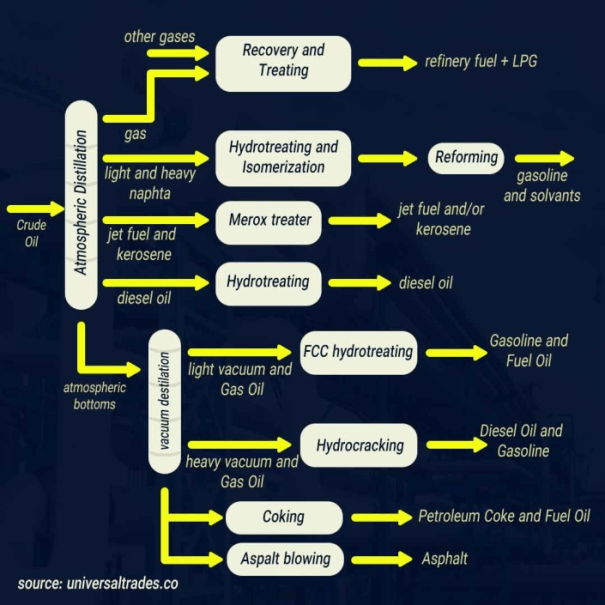
But wait, it gets worse. The US Military has blown through its jet fuel reserves. The problem is compounded becuase Diesel reserves are at 25 year low. Diesel and Jet Fuel are critical Distillates. So the Trump administration must make a choice: support the military jets with jet fuel, or support the trucking Fleet with enough diesel fuel, to provide food and products to US consumers. Trump can’t wage war and keep the economy going at the current rate because diesel and jet fuel compete with each other when comes to production. So the question is, do you want to wage war or do you wanna save the economy and keep the trucks moving on the road? This is the main reason Trump signed the MoU with Iran.
A friend who is an energy analyst summarized the dilemma as follows:
The strategic warning is that the United States cannot assume it can fight a major fuel-intensive conflict and protect the domestic economy without tradeoffs. Military jet fuel, commercial aviation fuel, diesel, heating oil, and marine fuel all draw from the middle distillate portion of the refined barrel. Refineries can bias output, but they cannot instantly maximize every middle-distillate product at once.
The risk is not that every truck or aircraft stops at once. The risk is that a forced fuel-priority decision creates cascading shortages and price shocks across logistics, aviation, agriculture, construction, and consumer supply chains. A war-time jet-fuel surge could reduce the diesel cushion; a civil-aviation diversion could disrupt passenger movement and air cargo. Either channel can become recessionary because both diesel and jet fuel are operating fuels for the real economy.
The US is not the only country or region facing a massive problem. Europe is screwed. An April 2026 report by Karl Miller — The Iran War, the Strait of Hormuz and Europe’s Compound Energy Trap — spells out the danger facing Europe. Here is the Executive Summary:
This report assesses whether the European Union faces a structural energy-security Prisoner’s Dilemma with Russia, with Germany at its centre and the Persian Gulf crisis as the accelerant. The argument is blunt: the Union has deprived itself of the low-cost Russian oil and gas system that underpinned much of its industrial base, while the Iran war and the Strait of Hormuz disruption have simultaneously impaired the maritime energy system that supplies a decisive share of the world’s oil, refined products and LNG.
Europe is on its knees in strategic terms. It is not literally without emergency stocks, because EU and IEA rules require minimum oil inventories. The harder reality is more damaging: those inventories are finite, unevenly usable, commercially fragile and unable to replace the normal flow of crude, diesel, jet fuel, LPG, naphtha and LNG through global markets. Emergency stocks buy time; they do not restore cheap Russian pipeline gas, reopen Hormuz, rebuild refining flexibility or prevent member states from bidding against one another.
The EU therefore faces a compound trap. Russian gas is being removed by law, Persian Gulf flows are exposed to war, U.S. LNG has become indispensable but expensive, storage refill is costly, and Germany’s industrial model remains dependent on affordable dispatchable energy. Each member state can rationally protect itself through bilateral contracts, subsidies, exemptions and emergency procurement, yet those same choices weaken the Union’s collective bargaining power and deepen fragmentation.
The conclusion is that the EU is locked into a repeated, asymmetric collective-action game. Escaping it requires enforceable solidarity, shared critical-fuels planning, coordinated storage, firm-capacity realism, a diversified LNG portfolio, strategic petroleum-product management, and legal reforms that make cooperation faster and more profitable than national defection.
Featured Video
Elijah Magnier: Yemen’s strikes are shattering Saudi Arabia’s long-term strategy
or go to
Aletho News Archives – Video-Images
From the Archives
British weapons and personnel doing much of the killing in Yemen
Press TV – June 18, 2019
A detailed report published by the Guardian newspaper has shown how Britain is massively contributing to Saudi Arabia’s devastating war on Yemen as it suggests that London is not only supplying the bombs that fall on Yemenis, but it provides the personnel and expertise that keep the war going.
The comprehensive report by Arron Merat published on Tuesday showed that Britain was doing much of the killing in Yemen as the country continues to provide Saudi Arabia with everything it needs to turn its southern impoverished neighbor into a graveyard.
“Every day Yemen is hit by British bombs – dropped by British planes that are flown by British-trained pilots and maintained and prepared inside Saudi Arabia by thousands of British contractors,” said Merat in the report. … continue
Blog Roll
 Aletho News
- Racist Seinfeld Dances for Joy as Bibi Unveils His New Map
- A West Bank War for Netanyahu’s Election Campaign, Could It Backfire?
- Yemen denounces European Parliament’s ‘hypocritical’ push to blacklist Ansarullah
- Qalibaf: UAE’s UN bid aims to ‘clear the runway’ for ‘Greater Israel’, whitewash genocide
- Pakistan reopens Iran border after boosting security: Report
- Why are so many Brazilians voting for Flávio Bolsonaro?
- Democrats Put Anti-Russia Agenda Ahead of American Workers
- Elijah Magnier: Yemen’s Strikes Are Shattering Saudi Arabia’s Long-Term Strategy
- Pentagon designates Chinese cultural centers national security threat
- Israel Demolishes Home Of Lebanese Journalist Whose Viral Film Exposed Pager Attack
- If Americans Knew
- An error has occurred; the feed is probably down. Try again later.
- No Tricks Zone
- Sudden Stratospheric Warming, Powerful El Niño Combination May Lead To Extreme Europe Cold, Energy Crisis!
- Two New Studies Find Thwaites Glacier Melt Cannot Be Driven By Human Activity Or A Warming Ocean
- E-Cars Reduce CO2 Emissions By Only 41% Compared To Internal Combustion Engine Vehicles
- Predictions Made By Renowned Climate Professor Over Past Decades Have Been Proven To Be Poor
- New Study Suggests Large Regions Of The Pacific Ocean Have Been Cooling For The Last 80 Years
- Germany’s Green Energy Debacle: High Energy Costs Force Kahla Porzellan to Close After 182 Years!
- New Study: 50 Years Of The Most Aggressive ‘Net Zero’ Policies Can Only Affect The Global Climate By 0.03°C
- US September “Heat” Was No Record…Many Records Set Decades Ago
- Latest European Green Energy Debacle; Portugal’s Largest Flagship Solar Park Insolvent!
- Green Energy Debacle: German Expert Professor Fritz Vahrenholt Warns Of Severe Economic And Social Consequences

