Now that the dust has settled on the Covid-19 pandemic, what should we learn for the future?
Dr Scott Mitchell shares his personal view of how the situation was handled
Guernsey Press | October 9, 2023
The impact of the Covid-19 pandemic was unprecedented in most of our lifetimes. Not since the Second World War has anything had such a major and widespread negative impact on humanity.
In early 2020, the world was alerted to a novel coronavirus causing severe pneumonia in Wuhan, China. Initially, I was not overly concerned, as the previous coronavirus outbreaks in the last 20 years (Sars and Mers), although with reported high lethality, had been largely restricted to geographic regions. In fact, I had travelled to China towards the end of Sars in 2003 and recall being held up following an internal flight while the authorities checked travellers’ temperatures. Fortunately, I was released and allowed on my way once they were satisfied I had no signs of infection.
However, I became very concerned once the new disease hit north Italy, with media reports of hospitals being overwhelmed. There was no known proven treatment, and later, when it afflicted New York City, sadly 88% of those ventilated died.
In Guernsey, the CCA promptly convened. Although I don’t have any intimate knowledge of their discussions, I suspect the modelling from Neil Ferguson at ICL, which suggested that as many as 500,000 people could die in the UK if no action was taken, had a great influence on their decision making, and as a result the Bailiwick entered a full lockdown on 25 March 2020 – the day after the UK.
Guernsey’s Strategic Pandemic Influenza Plan, having only just been drafted in January 2020, has no mention of lockdowns. Although this was expecting influenza, that type of virus can potentially cause an even more fatal disease, such as that which occurred in 1918. No doubt the CCA were put in a difficult position, potentially having to face something much worse than ever envisioned.
In addition, Guernsey is geographically isolated and has limited healthcare resources, such as personnel and hospital/ICU beds, so deviating from a pre-determined strategy to quarantine the island while the threat could be fully evaluated was a reasonable initial approach.
Lockdowns went from ‘two weeks to flatten the curve’ to extended periods of months or more. Doing nothing was clearly not an option, however the prolonged closure of society brings with it undeniable collateral damage, including mental health problems, delayed diagnoses of serious diseases such as cancer, and a significant economic burden. Those who were able to work from home were less affected by the latter, but those with manual jobs were prohibited from working and earning. This resulted in significant cost – with most of the States’ pandemic expenditure of nearly £100m. spent on income and business support. Although Guernsey was able to return to relatively normal life on-island with fewer restrictions than the UK, travel was far from normal, requiring up to 14 days of quarantine for those arriving on the island. It could never be a long-term solution to essentially be cut off from the rest of the world.
So, was there any alternative strategy? Professor John Ioannidis of Stanford had published early on that the infection fatality rate was around 0.2%, and later found it was under 0.1% for those under 70 years of age. Increasing age beyond this was well documented to be the single greatest risk factor for severe Covid-19 and hospitalisation/death, and people with conditions such as obesity, diabetes and high blood pressure were also at higher risk.
In October 2020, three professors of medicine (Sunetra Gupta of Oxford, Martin Kulldorff of Yale and Jay Bhattacharya of Stanford) suggested a different approach; the Great Barrington Declaration – targeted protection of the vulnerable, while allowing the rest of society to continue relatively normally. Would this have been a better strategy?
Mandated non-pharmaceutical interventions were later brought in. These included masking, social distancing, and hand-washing. Early on, a number of health officials stated there was no recommendation for masks in the community, yet later this advice was reversed, despite a Danish randomised study and later a Cochrane review concluding there was little or no evidence for mask effectiveness.
The advice was also inconsistent – one would have to enter a pub or restaurant wearing a mask but could sit for hours without one. Social distancing may have reduced spread by larger exhaled droplets, but spread by aerosols (smaller particles), which can remain in the air for longer periods, was under-appreciated.
The strategy had become one of varying restrictions while waiting on the proposed solution – a vaccine. Several pharmaceutical companies produced candidates which quickly entered trials. In late 2020 results of these were published from three companies, all claiming efficacy rates over 90%, albeit these were relative risk reductions. They were proposed to be safe, although there was no medium- or long-term data.
The mass vaccination programme started in late December 2020, beginning with the elderly, the most vulnerable and front-line healthcare workers. Undoubtedly Covid-19 could be a severe and fatal disease, so on a risk-benefit analysis, offering such an investigational therapy to those at risk could be justified. However, they were subsequently offered to younger and younger age groups. The Joint Committee on Vaccination and Immunisation met and decided there was insufficient benefit to offer them to 12-15-year-olds. Despite this the chief medical officers in the UK decided they should be, and soon after Guernsey followed suit (then later offered them to children as young as five years old). This was especially perplexing given that it was a disease of negligible risk to children and there was a known risk of myocarditis (heart muscle inflammation), especially in teenage males. A study analysing the original trial data reported an overall serious adverse event rate of one in 800.
Although the vaccines were never mandated, there was coercion to take them. I frequently heard that individuals were only taking them in order to travel. While some of this was outside Guernsey’s control, local people who had not taken the vaccines were subject to isolation requirements on-island. At the same time visitors and tourists who had taken them could enter without any restriction or testing. There were some studies at the time showing similar viral loads in people whether vaccinated or not, suggesting limited impact on infection and transmission. Real world data supports this. The last figures published by the States on 28 March 2023 shows over 95% of reported cases of Covid-19 had taken at least a primary course of vaccines. In addition, a recent Cleveland Clinic study suggested that with cumulative doses, one was more likely to get Covid.
Even if the vaccines were proven to reduce infections and transmission, would it have been ethically right to impose conditions on those who had chosen not to have them?
So how effective are the vaccines at preventing death? Data just released by the ONS shows that between 1 April 2021 and 31 May 2023 in England there were 8,850 deaths involving Covid-19 in the unvaccinated and 52,000 deaths in the vaccinated. Between January and May 2023, 95% of deaths were in the vaccinated.
Is the widespread use of a vaccine that does not significantly impact on infection and transmission helping to promote variants?
Why wasn’t a more holistic strategy adopted, such as promoting weight loss, exercise and maintaining a sufficient level of vitamin D? Deficiency of the latter was correlated with worse outcomes in several studies, while being a safe and inexpensive intervention.
Repurposed drugs with an established safety profile such as hydroxychloroquine and ivermectin were vilified. Both are inexpensive drugs known to work on more than one condition. The data from human studies remains mixed (and fraudulent negative data was published in the Lancet on the former), but at the same time expensive drugs such as remdesivir were approved – it didn’t reduce mortality in hospitalised patients and increased the risk of kidney failure, at a cost of £2,000 per course.
An inexpensive pharmaceutical intervention that did become proven for severe Covid-19 were corticosteroids – showing a significant reduction in mortality in patients requiring oxygen or ventilatory support. Unfortunately, the WHO had recommended against them from the outset of the pandemic. Dr Pierre Kory went before the US Senate in May 2020 to testify on their use, based on existing published data on acute respiratory distress syndrome and reports from doctors using them as being a ‘game changer’. Two months later, they were adopted as a standard of care when Oxford published the results of their recovery trial.
Data from the Greffe shows there was no increased mortality in 2020 and 2021, yet Guernsey experienced the most deaths for at least a decade in 2022. This echoes similar excess ongoing mortality in the UK and multiple other countries. What is this due to?
The States’ recent Covid Review was a missed opportunity to properly evaluate the response to the pandemic.
I ask, how much of the disruption to our lives was due to the virus, and how much from the response to it?
Was it all proportionate, and what should we learn for the future?
Iran’s FM says national referendum only viable political solution to Palestinian issue
Press TV – October 30, 2023
Iranian Foreign Minister Hossein Amir-Abdollahian says holding a referendum in Palestine can serve as the “fundamental and political” solution to the Palestinian issue.
In a phone conversation on Monday, Amir-Abdollahian and Vatican’s Secretary for Relations with States Paul Archbishop Richard Gallagher discussed Israel’s relentless attacks against the defenseless Palestinian people, which have been going on over the past 24 days, as well as ways to find a political solution to the critical situation.
“We believe that the Palestinian crisis should be resolved basically and a political solution to it is to hold a referendum with [the participation of] all the original inhabitants of Palestine, including the Christians, the Jews and the Muslims, in cooperation with the United Nations,” the top Iranian diplomat said.
Israel waged the bloody war on the Gaza Strip on October 7 after the Palestinian Hamas resistance movement launched the surprise Operation Al-Aqsa Storm against the occupying entity.
Since the start of the war, the Israeli regime has been committing war crimes in Gaza, killing at least 8,306 Palestinians, including 3,457 children, and injuring over 22,000 others.
Pointing to his October 22 letter to Gallagher on the deterioration of the humanitarian situation in Gaza, Amir-Abdollahian hailed the stance adopted by the Vatican official and Pope Francis.
In his letter, Amir-Abdollahian said the crimes committed by the Israeli regime, including bombardment of al-Mamdani Hospital and a historical church in the Gaza Strip, where women and children had sheltered, “reveal another facet of the Zionist regime’s savage and brutal nature.”
The Iranian foreign minister also warned against the consequences of a possible expansion of war.
Gallagher, for his part, stressed the importance of delivering humanitarian aid to the war-stricken people in Gaza and finding a political solution to the conflicts with Israel in a bid to prevent the expansion of war.
Iran opposes killing of civilians in every part of world
In another phone call with Maltese Minister for Foreign, Trade and European Affairs Ian Borg on Monday, Amir-Abdollahian said Iran opposes the killing of civilians, including women and children, in any part of the world.
“Unfortunately, there is no resemblance between the measures of the [Palestinian] liberation movement Hamas and constant attacks and war crimes perpetrated by the occupying regime of al-Quds (Israel),” he added.
The Maltese foreign minister, for his part, stressed the need to find an urgent political solution to the Palestinian issue in order to prevent the spread of war.
Keir Starmer: Hostage, or Accomplice to Rishi Sunak?
Why is the current Labour leader in complete lock step with the ruling Tory party, with unfettered support for Israel’s war crimes in occupied Palestine?
By Peter Ford | 21st Century Wire | October 30, 2023
The leader of the Labour Party is just as much a hostage as any of the Israelis held by Hamas. Only in his case he wasn’t kidnapped: he delivered himself, bound and gagged, to Prime Minister Rishi Sunak and Netanyahu.
Keir Starmer, basking in media acclaim just a week ago after yet another spectacular by-election win for his party, is now probably the most reviled politician in Britain, a pretty contested field.
This turnabout has come about because over the last three years Starmer has staked his all on extirpating from the Labour Party all traces of his allegedly anti-semitic Hamas-friendly predecessor Jeremy Corbyn and his barbaric followers (does this kind of operation sound familiar?). He has been largely successful in this endeavour and earned in consequence the favour of important elites well represented in the media. In so doing, however, he has made himself a hostage to fortune, or more specifically to the behaviour of Israel.
Starmer could not afford to let daylight over Israel emerge between himself and Rishi Sunak, otherwise all his good work shoring up his credentials as scourge of the Labour anti-semites could start to crumble. This was fine as long as even the Arabs seemed to be ditching the Palestinians by making their separate Abraham Accords with Israel.
But what if it all blew up in the faces of the architects of these Accords and Israel turned out to be behaving barbarically? Well, Starmer is now finding out. Following as he thought the Sunak line, in a notorious radio interview he stated as clearly as he ever states anything (that is, not very much) that Israel had the right to withhold food, water, electricity and fuel from starving Gazans. Desperate backtracking failed to stem the avalanche of protest that followed, mainly from representatives of the Muslim community. Labour councillors started resigning.
Starmer compounded his error by failing to support calls for a ceasefire, just as British TV screens were filling with horrific pictures of Palestinian children being pulled bloodied from rubble. The trickle of resignations at local level became a flood and panicking senior Labour figures started to distance themselves from him. That many of them depend on Muslim votes to get re-elected has of course nothing to do with this welcome if tardy appreciation that genocide is, well, overdoing it a bit.
Starmer is in a massive bind. If he caves in to pressure and starts to let daylight emerge between himself and Sunak he will immediately be assailed from all sides for being the treacherous, cynical, unprincipled flip flopper he is, if not as an actual anti-semite. And if he stands firm he will gain poisonous praise from the Right and not much else.
Meanwhile Sunak is having a ball at Starmer’s (and Gaza’s) expense. However outrageous Sunak’s pro-Israeli stance he knows Starmer can only distance himself at his peril and the longer this goes on the more Starmer impales himself on this hook of his own foolish making. At a stroke Starmer has lost millions of potential votes, even if he now zigzags, while Sunak’s fortunes, a moment ago worth less than Sam Bankman-Fried’s investments in crypto, rise correspondingly. And with Netanyahu promising that his Gaza campaign is going to be long, hard and painful (for Gazans) the hostages, including Starmer, look set for a lengthy ordeal.
Rarely will a comeuppance have been more richly deserved. By cynically sacrificing Palestinians to his own electoral calculus Starmer has brought the rubble from his crumbling edifice of a Middle East policy cascading down on his own head.
Eventually of course public opinion will force Sunak to change course. Even if Starmer beats him to it the shift will come too late to rescue his reputation. Whatever he does from now on Starmer will be remembered by many as the man who condoned the vilest Israeli war crimes.
His party if it has any sense will ditch him for someone with slightly less filthy hands before voters have a chance to express their revulsion at Tories and Labour both by not voting at all.
FBI = Following Biden’s Instructions?
By James Bovard | October 30, 2023
Does “FBI” now stand for “Following Biden’s Instructions”? The FBI is doing backflips to boost Joe Biden’s re-election campaign. Unfortunately, federal courts don’t recognize law enforcement shenanigans as a violation of the Voting Rights Act.
The FBI is categorizing Donald Trump’s supporters as terrorist suspects, according to a new report in Newsweek. The FBI created “a new category of extremists that it seeks to track and counter: Donald Trump’s army of MAGA followers,” Newsweek revealed. The FBI is relying on the same counterterrorism methods honed to fight al Qaeda to go after the incumbent president’s political opponents.
Naturally, the latest Washington crusade against extremism has more malarkey than a White House summit. Federal bureaucrats heaved together a bunch of letters to contrive an ominous new acronym for the latest peril to domestic tranquility. The result: AGAAVE—“anti-government, anti-authority violent extremism”—which looks like a typo for a sugar substitute.
Recently, the FBI vastly expanded the supposed AGAAVE peril by broadening suspicion from “furtherance of ideological agendas” to “furtherance of political and/or social agendas.” Anyone who has an agenda different from Team Biden’s could be AGAAVE’d for his own good. The great majority of the FBI’s “current ‘anti-government’ investigations are of Trump supporters,” William Arkin, a highly respected investigative journalist, reported in Newsweek.
The FBI crackdown is following some of the most overheated political rhetoric of our era. Biden has denounced Trump supporters for “semi-fascism.” Biden tweeted last November, “Donald Trump and MAGA Republicans are a threat to the very soul of this country.”
Biden’s Homeland Security Advisor Liz Sherwood-Randall declared, “The use of violence to pursue political ends is a profound threat to our public safety and national security… it is a threat to our national identity, our values, our norms, our rule of law—our democracy.” And since Team Biden says that Trump supporters could be violent, suppressing them is the only way to protect “the will of the people” or whatever honorific is used for rigged election results.
In June, the FBI and Department of Homeland Security issued a warning: “Sociopolitical developments—such as narratives of fraud in the recent general election, the emboldening impact of the violent breach of the U.S. Capitol, conditions related to the COVID-19 pandemic, and conspiracy theories promoting violence—will almost certainly spur some domestic terrorists to try to engage in violence.” In other words, alleging that there was election fraud in past elections can qualify a person as a terrorist suspect—and justify suppressing their political activity in subsequent elections.
Biden’s FBI views Trump supporters as a deadly threat to democracy, thereby justifying subverting or crippling Trump supporters’ ability to oppose Biden and other Democrats.
The FBI is required to have (or claim to have) solid information before launching a criminal investigation. But the bureau needs almost zero information to open an “assessment.” The FBI conducted more than 5,500 domestic-terrorism “assessments” in 2021, a 10-fold increase since 2017 and a 50-fold increase since 2013. “Assessments are the closest thing to domestic spying that exists in America and generally not talked about by the Bureau,” Arkin noted. The House Weaponization Subcommittee warned that “the FBI appears to be complicit in artificially supporting the Administration’s political narrative” that domestic violent extremism is “the ‘greatest threat’ facing the United States.”
Those assessments could prove perilous because the official demand for terrorists far exceeds the domestic supply. A top federal official told Newsweek last year, “We’ve become too prone to labeling anything we don’t like as extremism, and then any extremist as a terrorist.” “Trespassing plus thought crimes equals terrorism” is the Biden standard for prosecuting January 6 defendants.
FBI whistleblower Steve Friend complained of current FBI leadership, “There is this belief that half the country are domestic terrorists and we can’t have a conversation with them. There is a fundamental belief that unless you are voicing what we agree…you are the enemy.”
Did the Biden administration secretly want Newsweek to vindicate the fears of legions of Trump supporters? Perhaps those “assessments” are repeating a tactic used against Vietnam War protesters: FBI agents were encouraged to conduct frequent interviews with antiwar activists to “enhance the paranoia endemic in such circles” and “get the point across that there is an FBI agent behind every mailbox,” according to an FBI memo from that era.
The more abusive the FBI becomes, the more outraged that Trump supporters sound, thereby justifying further FBI repression. That also makes it easier for Team Biden to portray Trump supporters as public menaces.
Biden’s war on extremism could become a self-fulfilling prophecy that destroys American political legitimacy. An official in the Office of Director of National Intelligence lamented, “So we have the president increasing his own inflammatory rhetoric which leads Donald Trump and the Republicans to do the same”—and the media follow suit. Biden is exempt from official suspicion even when he denounced Republicans as fascists who want to destroy democracy. Yet if Republicans sound equally overheated, Biden’s FBI has pretexts to unleash the hounds.
Is there any limit to the federal entrapment operations designed to spur headlines that make politicians applaud? The latest FBI crackdown echoes a DHS campaign that was leaked to the press in 2021. Federal policymakers launched a “legal work-around” to spy on and potentially entrap Americans who are “perpetuating the ‘narratives’ of concern,” CNN reported. The DHS plan would “allow the department to circumvent [constitutional and legal] limits” on surveillance of private citizens and groups. Federal agencies are prohibited from targeting individuals solely for First Amendment-protected speech and activities. But federal hirelings would be under no such restraint.
Will the FBI’s interventions in the 2024 presidential election be even more brazen than its 2016 and 2020 stunts? Will the agency exploit its “assessments” to recruit knuckleheads to engage in another pre-election Keystone Kops plot to kidnap a governor, as it did in Michigan in 2020?
The FBI has a sordid history of intervening in presidential elections since 1948—if not before. A 1976 Senate report on FBI abuses warned, “The American people need to be assured that never again will an agency of the government be permitted to conduct a secret war against those citizens it considers threats to the established order.” Unfortunately, Americans may not learn the damning details of another FBI “secret war” until long after the next election.
Ironically, the Biden administration is vilifying anti-government opinions at the same time judges are exposing federal crimes. Federal court decisions in July and September condemned the Biden censorship regime—and those rulings were preceded by Supreme Court decisions striking down President Joe Biden’s student-loan-forgiveness scheme and vaccine mandates.
But Team Biden still presumes anyone who suspects the feds are violating the Constitution is up to no good. In the same way that Biden based his 2020 election campaign on vilifying Charlottesville 2017 protests, so the Biden re-election campaign will vilify anyone who distrusts the feds. Regardless of the outcome, the 2024 election will be another boomtime for cynics.
Kremlin weighs in on call for US to reverse course on Russia
RT | October 30, 2023
A recent article by US economist Jeffrey Sachs calling on Washington to establish a new sustainable détente with Russia is a rare sight, but evidence that debates on the issue are picking up steam, Kremlin Press Secretary Dmitry Peskov has said.
Speaking to reporters on Monday, Peskov commented on Sachs’ piece, which was published in early October but has only recently gained media traction. The economist, who serves as the director of the Center for Sustainable Development at Columbia University, wrote that the world is on the precipice of a “30-year US neocon debacle in Ukraine.”
He explained that Washington’s long-cherished hopes for NATO expansion eastward to Russia’s borders have been dashed by Ukraine’s devastating losses on the battlefield, the threat of Moscow launching a massive offensive, and collapsing support for this course in both Europe and the US.
As Ukraine teeters on the brink, Sachs argued, the US could avert a potential catastrophe by changing course and reaching security guarantees with Moscow. A potential deal could include a pledge that NATO would not expand closer to Russia, as well as an agreement between Moscow and Kiev that predominantly ethnic Russian areas would be recognized as part of Russia, the economist said, apparently referring to Crimea and four other former Ukrainian regions that overwhelmingly voted to become part of Russia.
Commenting on the article, Peskov said Moscow has not received any proposals on the matter. While describing the piece as “an economist’s point of view, nothing more,” he noted that “such thinking is quite rare at the moment.”
“Nevertheless, some kind of a discussion is gradually gaining momentum,” Peskov added.
In the article, Sachs suggested that Russia’s demands to NATO and the US which were made shortly before the outbreak of the Ukraine conflict in February 2022 should be used as a springboard for a thaw in relations.
In the proposals presented in December 2021, Moscow asked the West to formally ban Ukraine from entering NATO, while insisting that the alliance should retreat to its 1997 borders, before it expanded. The overture, however, was rebuffed by the West.
US seeks strategic dialogue with Russia
BY M. K. BHADRAKUMAR | INDIAN PUNCHLINE | OCTOBER 30, 2023
Almost four weeks into Hamas’ attack on Israel, Russia is in no hurry to exploit the Biden administration’s quandary over the collapse of Middle East security. The western media was unanimous that Russia was waiting in the wings to seize the opportunity once the US took its eye off the ball in Ukraine. However, no such thing happened.
Ukraine war is on autopilot. The compass has been set, the die is cast and the calculus is holding steady with regard to the strategic objectives set by President Vladimir Putin in February last year. Russia senses that it has gained the upper hand in the war and that is irreversible.
Ukraine’s counteroffensive has failed and the fighting is presently restricted to two sectors of the frontline, as Russian forces strengthen the security of the Donetsk region and seek to regain control of territories up north in the borderlands of Donbass and Kharkov region from where they retreated for tactical reasons last September and October.
Yet, Moscow has not begun its grand offensive, as many had predicted. One plausible explanation is that Moscow is watching the maelstrom sweeping through the Middle East. Moscow is particularly sensitive about any spillover into Syria.
With an eye on the formidable US naval build-up in Eastern Mediterranean with the deployment of two aircraft carrier groups, President Vladimir Putin has publicised that Russian jets equipped with hypersonic Kinzhal missiles are roaming the skies above the Black Sea, which can strike targets 1000 kms away at Mach 9 speed, which no existing missile defence system can intercept. Suffice to say, the war in Ukraine remains attritional.
Curiously, Russia conducted a simulated nuclear strike in a drill on Wednesday overseen by Putin, hours after Russian parliament voted to rescind the country’s ratification of the global nuclear test ban treaty (CTBT). The drill needs to be seen in the broader context of global strategic stability. A Kremlin statement said, “The purpose of the training exercise was to check the level of preparedness of military command bodies, as well as the skill of the leadership and operational personnel in managing the troops (forces) under their command.” Everything, however, adds up in these extraordinary times.
At its most obvious level, the Palestine-Israel conflict is a manifestation of the growing imbalance in the existing system of international relations. New wars are emerging; longstanding conflicts are mutating (eg., Nagorno-Karabakh). Last week, Pakistan bracketed Palestine and Kashmir as the UN’s unfinished business in the post-colonial era. North Korea and Iran are flash points that have no military solution.
In the months ahead, without doubt, Washington will continue to provide Israel with military and diplomatic support but an extended Israeli operation lasting months in Gaza will mean dispersal of US resources that might be needed in other theatres. The conflict in Gaza underscores the imperative for a rethink in the US’ notions of global hegemony. The fact remains that the US, despite its self-proclaimed status as the “Indispensable Nation” (Madeline Albright) and the guarantor of “rules-based order,” failed to prevent the latest eruption of conflict in the Middle East.
Arguably, therefore, the latest US proposal for a systematic resumption of strategic dialogue with Russia can be seen as a sign of positive thinking. Unsurprisingly, Moscow has displayed a studied indifference to the US proposal. But that needn’t be taken as the last word. Historically, Soviet-American strategic dialogue brought on board into the agenda all major issues and most minor issues affecting international security.
The big question, therefore, is the timing of the US proposal. Against the backdrop of the gathering storms in the Middle East, the Biden Administration probably seeks to calm the nerves by proposing talks with Russia on global strategic balance, since the guardrails in arms control no longer exist. This is one thing.
At any rate, Russia’s “neutrality” in a Middle East conflict could also be a consideration. Equally, Western leaderships understand that the war against Russia is practically lost — although they will not admit it publicly — and engagement with Russia is needed.
Again, although the US has provided Israel with significant military and diplomatic support and keeps influencing the latter not to escalate the conflict, there are variables in the situation and any big conflagration in the Middle East will require a massive concentration of material and financial resources that are limited even for a superpower, since there are other unresolved problems in the world, too.
The breakdown of trust in the Russian-American ties hurts US interests. Fundamentally, it must also be understood that what Moscow seeks even today after nearly 20 months of battling NATO and the US in Ukraine’s killing fields is a sustained engagement with Washington and a willingness to accommodate mutual interests.
On its part, Russia is conducting itself as a responsible power vis-a-vis the crisis in Gaza. There is no shred of evidence to show that Russia has acted as a “spoiler”. On the contrary, Moscow has been projecting its credentials as a potential peacemaker who enjoys good relations with all key players — Israel, Hamas, Iran and other regional states alike.
In fact, President Biden’s recent remarks on the Gaza situation bring the US position rather close to Russia’s. Biden read out the following from a prepared text at a joint press conference with Prime Minister Anthony Albanese of Australia:
“Israel has the right and, I would add, responsibility to respond to the slaughter of their people. And we will ensure Israel has what it needs to defend itself against these terrorists. That’s a guarantee…
“But that does not lessen the need for — to operate and align with the laws of war for Israeli — it has to do everything in its power — Israel has to do everything in its power, as difficult as it is, to protect innocent civilians. And it’s difficult. I also want take a moment to look ahead toward the future that we seek.
“Israelis and Palestinians equally deserve to live side by side in safety, dignity, and peace. And there’s no going back to the status quo as it stood on October the 6th. That means ensuring Hamas can no longer terrorise Israel and use Palestinian civilians as human shields.
“It also means that when this crisis is over, there has to be a vision of what comes next. And in our view, it has to be a two-state solution.”
Putin couldn’t have put this across differently. There is a sense of expectation in Moscow that in the emergent conditions in regional security, the US and its allies will “reconsider their notions of defeating Russia in the Ukraine conflict at any cost” — as an establishment think tanker wrote in the Kremlin-funded RT last week.
Trust is lacking, he concluded, “compromises without the full consideration of Russian interests” are difficult to reach, but “a pivotal stage in the (world) order … is taking shape before our eyes.”
Widespread destruction in Jenin following massive Israeli raid

The Cradle | October 30, 2023
Dozens of Israeli army vehicles, bulldozers, and drones wreaked havoc to the occupied West Bank city of Jenin on 30 October during an early morning raid that saw Palestinian resistance fighters powerfully confront the invading forces.
Following the devastating incursion, the Jenin Brigades issued a statement confirming that their fighters drove off the Israeli army, damaging at least 30 Israeli armored vehicles and leaving an unknown number of Israeli soldiers dead.
For its part, the Palestinian Health Ministry said at least four Palestinians were killed during the clashes in Jenin. About 120 Palestinians have been killed in the West Bank since 7 October, with nearly 2,000 injured.
The Israeli forces besieged the rebellious city from the early hours of Monday, attacking Jenin Governmental Hospital, dropping bombs on residential buildings, destroying streets leading up to the adjacent refugee camp, placing dirt mounds to separate the camp from the city, and bulldozing major landmarks.
Mass arrest campaigns also continued across the occupied West Bank on Sunday night, as Tel Aviv targeted the Dheisheh camp, Janata, Nahalin, and Beit Fajjar in the Bethlehem district, as well as Hebron, Ramallah, and Nablus.
At least 60 Palestinians were detained, according to the Palestinian Prisoners’ Club.
Over 1,500 Palestinians have been arrested since the start of the Gaza-Israel war on 7 October, as Israel has launched nightly arrest campaigns in the occupied West Bank. At least 4,000 laborers from Gaza have also been detained, pushing the number of Palestinians held in Israeli prisons past 10,000.
EU may become complicit in ‘genocide’ – Spanish official
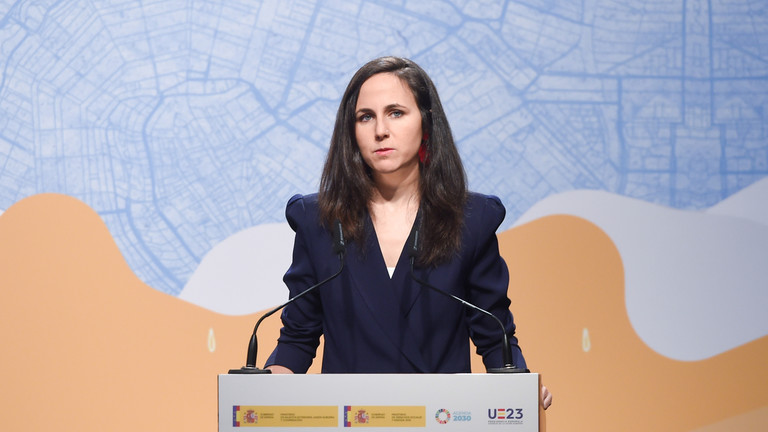
RT | October 30, 2023
Spanish Social Rights Minister Ione Belarra has urged European leaders to take immediate action against Israel, including severing diplomatic ties and imposing economic sanctions, amid the intensified bombing and expanded ground operations against Hamas militants in the besieged Palestinian enclave.
She also called for Israeli Prime Minister Benjamin Netanyahu to be prosecuted for the alleged war crimes committed against civilians in Gaza.
“After this hellish night in Gaza, I have a very simple but very important message for European leaders. Do not make us complicit in genocide. Act. Not in our name,” Belarra said in a passionate video message on X on Saturday.
More than 8,000 Palestinians, including 3,342 children, have been killed in Gaza since Israel’s air campaign began, according to the latest figures from the Gaza Health Ministry. The unprecedented Hamas raid into Israel, as well as hundreds of rocket strikes on Israeli territory earlier this month, left around 1,400 people dead, while 230 Israelis and foreigners were taken hostage, according to the Israel Defense Forces (IDF).
Addressing the severity of the current situation in Gaza and Israel’s disproportionate retaliation, the minister highlighted the termination of internet and telephone services in the strip, claiming that the move “has a very clear objective” of guaranteeing that “Israel commits crimes against humanity without consequences.”
“Our inaction is turning us into accomplices,” the minister stressed, arguing that “Israel believes that its international alliances guarantee its impunity.”
“We have to act now, tomorrow will be too late,” she continued, voicing her message to the EU leaders: “Cut diplomatic relations with the State of Israel. Carry out exemplary economic sanctions against those responsible for this genocide. And without a doubt, let’s take Netanyahu before the International Criminal Court, so that he can be tried for what he is, a war criminal.”
She also appealed to EU citizens to take to the streets and raise their voice so that “this genocide” comes to an end.
The IDF escalated air and ground attack on Gaza on Friday, causing a near-total communication blackout. Connectivity was partially restored over the weekend, but the Israeli blockade of Gaza continues; Netanyahu announced the “second stage” of the war against Hamas on Saturday.
Featured Video

Elijah Magnier: Yemen’s strikes are shattering Saudi Arabia’s long-term strategy
or go to
Aletho News Archives – Video-Images
From the Archives
British weapons and personnel doing much of the killing in Yemen
Press TV – June 18, 2019
A detailed report published by the Guardian newspaper has shown how Britain is massively contributing to Saudi Arabia’s devastating war on Yemen as it suggests that London is not only supplying the bombs that fall on Yemenis, but it provides the personnel and expertise that keep the war going.
The comprehensive report by Arron Merat published on Tuesday showed that Britain was doing much of the killing in Yemen as the country continues to provide Saudi Arabia with everything it needs to turn its southern impoverished neighbor into a graveyard.
“Every day Yemen is hit by British bombs – dropped by British planes that are flown by British-trained pilots and maintained and prepared inside Saudi Arabia by thousands of British contractors,” said Merat in the report. … continue
Blog Roll
 Aletho News
- Racist Seinfeld Dances for Joy as Bibi Unveils His New Map
- A West Bank War for Netanyahu’s Election Campaign, Could It Backfire?
- Yemen denounces European Parliament’s ‘hypocritical’ push to blacklist Ansarullah
- Qalibaf: UAE’s UN bid aims to ‘clear the runway’ for ‘Greater Israel’, whitewash genocide
- Pakistan reopens Iran border after boosting security: Report
- Why are so many Brazilians voting for Flávio Bolsonaro?
- Democrats Put Anti-Russia Agenda Ahead of American Workers
- Elijah Magnier: Yemen’s Strikes Are Shattering Saudi Arabia’s Long-Term Strategy
- Pentagon designates Chinese cultural centers national security threat
- Israel Demolishes Home Of Lebanese Journalist Whose Viral Film Exposed Pager Attack
- If Americans Knew
- An error has occurred; the feed is probably down. Try again later.
- No Tricks Zone
- Sudden Stratospheric Warming, Powerful El Niño Combination May Lead To Extreme Europe Cold, Energy Crisis!
- Two New Studies Find Thwaites Glacier Melt Cannot Be Driven By Human Activity Or A Warming Ocean
- E-Cars Reduce CO2 Emissions By Only 41% Compared To Internal Combustion Engine Vehicles
- Predictions Made By Renowned Climate Professor Over Past Decades Have Been Proven To Be Poor
- New Study Suggests Large Regions Of The Pacific Ocean Have Been Cooling For The Last 80 Years
- Germany’s Green Energy Debacle: High Energy Costs Force Kahla Porzellan to Close After 182 Years!
- New Study: 50 Years Of The Most Aggressive ‘Net Zero’ Policies Can Only Affect The Global Climate By 0.03°C
- US September “Heat” Was No Record…Many Records Set Decades Ago
- Latest European Green Energy Debacle; Portugal’s Largest Flagship Solar Park Insolvent!
- Green Energy Debacle: German Expert Professor Fritz Vahrenholt Warns Of Severe Economic And Social Consequences

