Aletho News

ΑΛΗΘΩΣ

Some Call It Conspiracy Theory – Part 2

In Part 1 we contrasted the popular misconceptions about so-called “conspiracy theorists” with the well-grounded demographic research done on the individuals who, collectively, have had that pejorative label slapped on them.

The research reveals that there is no such thing as an identifiable group of people who can legitimately be called “conspiracy theorists.”

The research also finds no credible evidence that people branded “conspiracy theorists” are prone to hold extremist views or have underlying psychological problems or pose a threat to democracy. These claims are all canards levelled against anyone who questions the Establishment and the power it has amassed.

We noted that political scientist Joseph Uscinski, who is perhaps the foremost scientist in the field of “conspiracy theory” research, cited the work of philosopher Neil Levy as a “simple and consistent standard” by which academics could “demarcate between conspiracy theory and [real or “concrete”] conspiracy.”

Professor Levy’s “simple and consistent standard” was first outlined in his article “Radically Socialized Knowledge and Conspiracy Theories.” In it, he pointed out that “conspiracies are common features of social and political life, common enough that refusing to believe in their existence would leave us unable to understand the contours of our world.” Levy therefore proposed that academics need a way to differentiate between the rational acceptance of acknowledged conspiracies and the supposedly irrational claims made by people who suspect conspiracies that haven’t been officially approved for discussion.

Levy suggested that “[r]esponsible believers ought to accept explanations offered by properly constituted epistemic authorities.” As we explained in Part 1, he defined the epistemic authorities as:

[. . .] the distributed network of knowledge claim gatherers and testers that includes engineers and politics professors, security experts and journalists.

In his listing of “journalists” as epistemic authorities, Levy was almost certainly referring to journalists who work in the corporate-owned legacy media (LM), not to journalists in the independent media, who are frequently labelled conspiracy theorists.

Independent media is broadly defined as:

[. . .] news media that is free from influence by the government or other external sources like corporations or influential people.

Similarly, in Levy’s view, only the “right” scientists and engineers are “epistemic authorities.” For example, he categorically stated:

Few responsible intellectuals reject the explanation of 9/11 that cites the conspiratorial actions of a group of terrorists under the direction of Osama Bin Laden[.] [. . .] [M]ost of us have little doubt that it is true.

Dr. Leroy Hulsey, a now-retired professor and department head of structural engineering at the University of Alaska Fairbanks, led a multi-year study in which he and his team of engineer PhDs examined the structural collapse of World Trade Centre 7 (WTC 7). The conclusions they arrived at in their peer-reviewed report thoroughly contradicted the official 9/11 narrative. It seems unlikely that Prof. Levy would consider Dr. Hulsey to be a responsible intellectual or one of the “epistemic authorities.”

In his article, Levy opined that allegedly irrational “conspiracy theorists” could be identified by virtue of the fact that they disagree with the properly constituted epistemic authorities. Therefore, he claimed, their arguments and any evidence they presented should be dismissed. He wrote:

[K]nowing that a proffered explanation conflicts with the official story (where, once again, the relevant authorities are epistemic) is enough for us rationally to reject the alternative.

But there is nothing “rational” about rejecting an explanation simply because it is offered by people with whom you disagree.

Presumably, like Levy, Uscinski would consider himself an “epistemic authority” in the field of conspiracy theory research. Thus, it is not surprising that, when he spoke of Levy’s “simple and consistent standard,” Uscinski concluded:

[P]roperly constituted epistemic authorities determine the existence of conspiracies. [. . .] If the proper authorities say something is a conspiracy, then it is true; if they say it is a conspiracy theory, then it is likely false.

That is to say, “official” narratives are considered true by default, and anything that calls them into question is, by default, a “conspiracy theory.” The term signifies to other intellectuals—to one’s fellow high-brow “epistemic authorities”—that evidence which potentially undermines official narratives is, by definition, false. This conclusion is, of course, a load of nonsensical, fallacious gibberish.

Unfortunately, the conspiracy theory label is so widely applied these days that it has stuck. The legacy media (LM), in particular, has successfully deployed it as a tool of propaganda. Simply by spouting the words “conspiracy theory,” the LM have convinced the public to ignore any and all evidence that questions power.

Here’s one such example. Following serious allegations of rape and sexual misconduct it brought against the comedian, author and political commentator Russell Brand, the LM immediately exploited the situation by criticising Brand’s opinions and everyone who shared them.
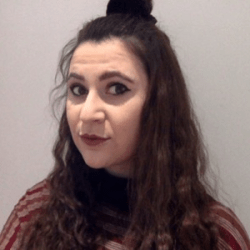
Rachel Schraer

The BBC published Rachel Schraer’s article Russell Brand: How the comedian built his YouTube audience on half-truths just four days after the allegations were first reported by, among others, the BBC.

The opening paragraph to the article reads:

The first time Russell Brand really dipped his toe into the water of conspiracy theories, in early 2021, the effect was swift [. . .]. It won him a new income stream and a fresh army of fans.

We are told that Brand discusses “conspiracy theories.” This is a coded social signal from Schraer and the BBC to their readers and audience that everything Brand says should be discounted without examination—including any evidence he may cite. This should be done for no other reason than Schraer and the BBC have labelled Brand a conspiracy theorist.

In addition, the BBC casts the people who share Brand’s views as conspiracy theorists who should be equally ignored.

Furthermore, the suggestion is made that Brand is peddling “conspiracy theories” as some sort of grift. According to Schraer, the idea that independent media, such as Brand’s “Stay Free” channels, can be directly funded by its audience without compulsion is “evidence” of his dubious motives. (Apparently the BBC is vehemently opposed to the free market of ideas.)

Schraer explained what got the Brand ball rolling:

The door to this new fan base might have creaked open when Brand first discussed “the Great Reset” — a vague set of proposals from an influential think tank to rebuild the global economy after Covid.

The lame evidence Schraer cited to support her contention that the Great Reset is just some “vague set of proposals” was another BBC article. Five journalists contributed to this piece, which was published in 2021 as part of the BBC’s “Reality Check” series.

Collectively, the five BBC Reality Check “journalists” exposed their own deceit in the second and third paragraphs:

Believers spin dark tales about an authoritarian socialist world government run by powerful capitalists and politicians — a secret cabal that is broadcasting its plan around the world.

Despite all the contradictions in the last sentence, thousands online have latched on to this latest reimagining of an old conspiracy theory [. . .].

The problem is that no one accused by the Reality Check team of being a “Great Reset” conspiracy theorist has ever alleged that the Great Reset plan was a “secret” or that the planners are a “secret” organization. The fact that the well-known World Economic Forum (WEF) has broadcast its plans around the world obviously excludes the possibility that the plans were “secret” or even that the planners were acting secretively.

The contradiction between the two aforementioned sentences was a fabrication of the BBC Reality Check journalists’ own making. It was seemingly inserted to support their subsequent allegation that those who criticised the WEF’s Great Reset were alluding to a “secret cabal.” In reality, the critics were openly pointing their fingers directly at the WEF and its partners. No suggestions of a “secret cabal” or “secret plans” were ever made.

The BBC’s evident intention was to impugn critics of the Great Reset by falsely claiming that their views were illogical, speculative assumptions and were therefore “conspiracy theories.” The BBC propagandists created this myth themselves in order to deliberately mislead their readers. This is the very definition of disinformation.

The Reality Check team then reported that the Great Reset initiative was launched by King—then Prince—Charles as a plan to remodel the global economy. They talked about the WEF’s undemocratic “power to lobby [. . .] for ideas which could potentially transform the global economy.” They added that the WEF and its Davos delegates have “huge influence on world events.” They even raised the point that there are legitimate concerns about the potential impact of digital technology—vigorously pushed in the Great Reset—”on civil liberties and jobs.”

In short, the BBC Reality Check team gave a reasonable account of the arguments put forward by those whom they then dismissed out of hand by labelling them “conspiracy theorists.” The BBC “journalists” performed this trick by making up a reported opinion about “secret cabal[s]” and then falsely ascribing it to Great Reset critics.

In order to deter their readers from any further examination of the Great Reset, the BBC’s alleged journalists claimed that the Great Reset itself was “light on specific detail.” This, again, was pure disinformation.

The same journalists had to admit the existence of a published book called The Great Reset. In it, co-authors Klaus Schwab and Thierry Malleret wrote:

[O]ur objective was to write a relatively concise and simple book to help the reader understand what’s coming in a multitude of domains. [. . .] The reference information appears at the end of the book and direct attributions have been minimized [in the text].

The references include links to WEF documents such as “COVID-19 Risks Outlook A Preliminary Mapping and Its Implications.” This is just one document that forms part of the WEF’s extensive alleged risk-mapping program. The mapping program, in turn, informs the WEF’s highly detailed Strategic Intelligence, which the WEF claims will enable it to “make sense of the complex forces driving transformational change across economies, industries, and global issues.”

There really isn’t any facet of economy, industry, or indeed any global issues or aspects of our lives for which the WEF doesn’t already have a detailed, self-serving, transformational plan. The BBC’s claim that the Great Reset lacks “specific detail” is absurd. The plan couldn’t be more detailed or specific.

Rachel Schraer’s subsequent claim—that the Great Reset represents a “vague set of proposals”—is complete nonsense based upon the BBC’s own propaganda. It is self-evident that both Schraer’s and Reality Check’s articles served as a defence of the WEF’s Great Reset.

We have still other good reasons to question Schraer’s judgment.

Dr Simon Goddek, a scientist who turned to journalism and has questioned the safety and efficacy of the COVID jabs—thereby excluding himself from Uscinski and Levy’s “epistemic authorities”—shared a black-humoured joke as a social media meme. It showed the ageing physical decline of former New Zealand Prime Minister Jacinda Arden. Goddek quipped, “[w]as it her shots, mRNA or Meth?”

This joke was subsequently picked up by BBC Verify propagandist Shayan Sardarizadeh, who re-shared it with the comment: “4 million views for this nonsense from a blue tick conspiracy theorist.” It was indeed “nonsense”—because it was a joke.

Yet when Schraer re-posted Sardrizadeh’s comment, she displayed a woeful lack of comprehension and no sense of humour. She added her own inane interpretation with this absurd headline:

Breaking: Conspiracy theory-peddlers blame the Passage of Time on Vaccines.

This may seem like a trivial matter. But it’s not. Like Marianna Spring, Rachel Schraer is another BBC specialist disinformation reporter. That Schraer apparently can’t tell the difference between a joke and “disinformation” certainly brings her alleged “specialism” into question.

To fully appreciate how the “conspiracy theory” label is deployed by the legacy media (LM), we can look at the recent video by journalist and broadcaster Andrew Neil, who is a former editor of the Sunday Times, an ex-BBC presenter, and the current chairman of the Spectator. When he left the BBC, Neil, was reported to have been “at the heart of the BBC’s political coverage for the best part of three decades.”

In a discussion with Sam Leith, the Spectator’s literary editor, about the Russell Brand allegations, Neil lamented that social media had enabled too many people—most of whom he considered to be stupid—to express their opinions. Based on this comment, we can contend that, if Neil is familiar with the work of Uscinski and Levy, he would probably consider himself a journalist member of the so-called “epistemic authorities.”

Neil spoke about the four-year investigation conducted by the legacy media that eventually produced the Brand allegations. He described it in glowing terms and noted that the independent media—which he called “the alternative media”—had neither the “resources nor the expertise to do” such an exhaustive investigation.

The Spectator YouTube channel that Neil heads has 304K subscribers. By comparison, Russell Brand has 6.6M YouTube subscribers. Consequently, his channel had considerably more resources than does the Spectator. However, following the alleged LM investigation of Brand, YouTube demonetised his account, so now Brand’s channel resources are flagging by comparison.

Unlike the independent media, which is almost entirely funded by reader and audience donations, the legacy media (LM) is funded by either corporate advertising or, in the case of the BBC, coercive license fees. UK print news media has been declining for years as people increasingly consume news online. In addition, state broadcasters, such as the BBC and Channel Four, are shedding UK viewers in their millions.

Nonetheless, as Neil observed, LM budgets are enormous compared to the shoestring income cobbled together by the independent media. That stark contrast hasn’t stopped the Establishment, which relies on the LM for its propaganda and owns most of it, from panicking.

Their panic explains the commissioning of the Cairncross Review—intended to provide some sort of rationale for propping up the LM.

Ironically, the Cairncross Review concluded that the LM needed “new sources of funding, removed from direct government control.” Of course, genuinely independent news media have already achieved new sources of funding by going directly to their audiences, some of whom value the independent viewpoint enough to support it financially.

Dame Cairncross (DBE, FRSE, FAcSS) apparently considered the independent media funding model to be rubbish. She ruled it out because, as she put it, “the stories people want to read may not always be the ones that they ought to read.” Instead, “the creation of a new Institute for Public Interest News” was needed, she determined. To ensure this new overseeing body would be “independent,” Dame Cairncross recommended that it “build strong partnerships with the BBC” and be funded by the UK government.

Her suggestion meant that, just like the independent media, the LM of the future would be funded by the public. The difference being that this would not be voluntary but achieved through enforced taxation. Through the new body she envisioned, instead of the public choosing which media outlets they want to support the “epistemic authorities” and the government would decide for them.

What Frances Cairncross ultimately recommended was state regulation of the internet as a means of protecting the LM from public opinion. These regulations would tell the people which media outlets they should “trust” and, hopefully, prevent them from supporting the “wrong” media.

Dame Cairncross’ review dovetailed perfectly with the progress of the UK’s Online Safety Act (OSA) through parliament. In her Review, she wrote:

The government will want to consider these recommendations in the context of its parallel work on online harms, disinformation and digital competition, to determine whether the recommendations set out here should be pursued separately or as part of broader packages of measures. In particular, it is for government to determine how best to design and execute policy relating to the activities of the online platforms, including any regulatory oversight. This Review is neutral [. . . .]

Neutral?

The OSA has passed all UK parliamentary reading stages and should receive Royal Assent any day now. It has established Ofcom as the internet regulator. The purpose of the Act is supposedly to improve public safety online—especially child safety. But it is patently obvious that the real objective of the OSA is to stop people from sharing information on social media that the government wishes to prevent from being shared—the article you are reading, for example.

The OSA will limit the online reach of the independent media. Accomplishing this aim is of vital importance to the Establishment—all the more so because public interest in the LM’s online news reporting is also plummeting.

In addition, the OSA provides significant protection for each of the regulated media organisations that the state controls and categorises as a “recognised news publisher.” This means every legacy outlet plus favoured “independent” media outlets such as Bellingcat, which is also funded by the Establishment.

So, given its protective care and vast resources, what alleged “expertise” did the LM bring to its investigation of Russell Brand, do you suppose? For a full account of that claimed journalism, you can read this article. But perhaps I should warn you in advance that, while the allegations against Brand are very serious and should be investigated by the police, the LM “team” disappointingly didn’t present a shred of real evidence to support those reported allegations.

Worse, the LM evidently fabricated purported evidence to mislead its readers and viewing audience, thereby undermining the accounts of the potential victims.

Yet, according to our Andrew Neil over at the Spectator, for the legacy media to have expended its considerable resources over a period of four years to produce this voluminous research (which we can call hamfisted detritus) requires great “expertise.”

In the Spectator interview, Leith asked Neil for his opinion about the possibility that the LM had launched a coordinated attack on Brand. Here is how Neil replied:

There’s no virtue to it at all [,] and the people who are pushing this line, that there’s a kind of conspiracy to do him down, are the very people who believe in all sorts of conspiracies as well. That vaccinations put little microchips into our bodies, that the Bush administration was really behind 9/11, and all the other nonsense. Of course, naturally we live in a world run by lizard people. We all know who they are [the lizard people], the mainstream media knows who they are, we’re just too frightened to point out the lizards among us. They’re conspiracists on everything now.

It is possible, though hard to substantiate, that a tiny minority of people labelled as conspiracy theorists believe there are microchips in the COVID shots. While the advent of motes makes this claim at least feasible, the vast majority of people who questioned the jabs—and who were also labelled as conspiracy theorists by the “epistemic authorities”—were more concerned about the experimental status, the potential unknown risks and the questionable efficacy of the jabs, not to mention the absence of any completed trials.

Neil’s tiresome “lizards” refrain was based solely on the opinion of one prominent so-called “conspiracy theorist,” David Icke, whose extremely speculative hypothesis of the “Sumerian Anunnaki” was based upon his interpretation of a few Gnostic texts—the Nag Hammadi, the Dead Sea Scrolls, etc.—and the work of scholars such as Zecharia Sitchin.

No one who seriously questioned the COVID jabs, including tens of thousands of UK doctors and nurses, did so because they thought the royals were lizards. Nor, for that matter, did the structural engineers at the University of Alaska Fairbanks question the official account of 9/11 because they imagined that former US President Bush is a shape-shifting, pan-dimensional reptile.

Let us step back and ask: If Andrew Neil is, as he claims, the intellectual superior of anyone who suggests there may have been a coordinated LM attack on Brand, then why does he overlook the clear-as-day fact that the allegations against Brand were reported simultaneously by almost the entire legacy media on both sides of the Atlantic? Doesn’t such an absolute fact, such irrefutable evidence, point to at least the possibility of planned coordination?

And because that is the case, we are left with only one conclusion: Neil deliberately used a tried-and-true propaganda technique called the straw man argument. That is, he attributed preposterous beliefs to people he disagrees with in order to falsely “debunk,” with contrived ease, arguments they had never made. This technique is also called logical fallacy.

He then used a related technique termed “composition fallacy” to manipulatively claim that the opinion of one person whom he labels a conspiracy theorist (he is referring to Icke without naming him) represents the views of everyone he labels a conspiracy theorist. This is an extremely common LM tactic.

Did Neil say anything about the common suspicion of a possible coordinated attack on Brand? Yes, he did:

[Conspiracism] is a defence that is quite hard to deal with, because it is so ludicrous. It is a defence that doesn’t need facts. It is a culture in which Russell Brand lived and profited, or at least did until YouTube pulled the plug on his revenues. So that’s what they deal in, they don’t deal in the gathering of evidence. [. . .] All these conspiracy theorists can have their absurd opinions about what’s really going on here with Russell Brand, but to establish what’s going on, to produce the evidence, takes investigative journalism.

It is worth reiterating yet again that the investigation into the Brand allegations provided nothing but allegations. This does not mean that the allegations aren’t true. But the LM journalists have not provided anything approaching the “evidence” that Neil claims exists.

Notice that Neil used the word “ludicrous” to signal to his audience that the people he calls “conspiracy theorists” hold ludicrous beliefs. But think about it: His claim was based on his own ludicrous assertions and logical fallacies—not on any actual evidence.

So, if we are to take Neil at his word and “establish what’s going on,” then we need to look at the “evidence” in the hope of establishing some “facts.”

OK, let’s do that. It is a fact that, following publications of the allegations, the LM did not immediately set about finding further evidence to support the possible victims’ claims. Instead, the LM turned its attention to attacking the “conspiratorial” views of Brand and his followers.

Example #1. As soon as the allegations against Brand were published, the BBC wrote that he had “developed a cult following” and had “dabbled in conspiracy theories.” To those charges the BBC added the scintillating “fact” that Brand had built a following during the alleged COVID-19 pandemic because he “discussed conspiracy theories surrounding the disease.”

Example #2. Two days later, using the same alleged “cult” theme, the Metro published an article titled “From Covid denial to mainstream media hatred – Inside Russell Brand’s conspiracy-fuelled cult online following.”

Example #3. A couple of days after that, on the other side of the planet, Australia’s ABC News claimed that Brand’s followers respond to his “rants” simply because he is “controversial” and that his audience is comprised of “people chasing conspiracy theories.”

Example #4. Following the allegations against Brand, the UK government decided that it should express its opinion on a potential criminal investigation. No less than the Prime Minister’s office issued an official statement declaring that “these are very serious and concerning allegations.”

The examples are endless. We don’t have space to cite them all. How odd, then, for Andrew Neil to have claimed in his interview that no one “could give a monkey’s _ _ _ _” about Russell Brand. The “evidence” thoroughly contradicts Andrew Neil. It appears that the entire LM, from all four corners of the globe and the UK government, are very interested in the Russell Brand allegations.

The UK government’s publicised opinion was followed up by emailed letters from Dame Caroline Dinenage DBE MP to numerous social media and online news sites, including the Chinese-owned TikTok and the video hosting service Rumble, requesting that Brand be demonetised on those online platforms.

Caroline Dinenage is Baroness Lancaster of Kimbolton, a leading member of the Establishment and a member of the House of Commons’ Culture, Media and Support Select Committee. It is no surprise that this very committee was instrumental in creating the Online Safety Act. Moreover, when the baroness was the Minister of State for Digital and Sport from February 2020 to September 2021, she had ministerial responsibility for guiding the passage of the Online Safety Bill toward becoming the Online Safety Act.

The common law concept of “innocent until proven guilty,” which Neil conceded was an important principle of UK liberal democracy, seems to mean practically nothing to Dinenage.

The notion is bandied about in some quarters of the LM that Dinenage was acting independently. That may be true. But why, then, did she use the official House of Commons letterhead for her correspondence?

As yet, there has been no official statement from the Culture, Media and Support Select Committee on the allegations against Brand. Reportedly, it has merely acknowledged that only “some” of the letters sent out under its name were approved. Considering that all the letters under its letterhead were shameful examples of rank authoritarianism, the fact that any of them were apparently approved indicates the dictatorial tendencies of the Select Committee as a whole.

What actual facts have been established?

First, it is a fact that the LM has exploited the allegations and has deployed the composition fallacy to discredit both Brand’s and his social media followers’ opinions.

Second, it is a fact that the allegations about Brand emerged at the same time that the Online Safety Bill passed its final reading stage. The Brand allegations grabbed all the headlines, leaving virtually no room for prominent coverage of the imminent UK censorship law by the LM. Thoroughly distracting the UK public.

Third, it is a fact that the purpose of the Online Safety Act is to shore up the dwindling reach of the LM and censor its independent media competition.

Fourth, it is a fact that Brand and his followers are considered part of the independent media, which the LM accuses of being conspiracy theorists.

Fifth, it is a fact that formative figures in the UK government have used the allegations published by the LM to attempt to limit the reach of someone who has millions of followers and whom they accuse of being a conspiracy theorist.

Sixth, it is a fact that limiting the reach of popular conspiracy theorists is exactly what the Online Safety Act is designed to achieve.

There is solid evidence supporting each of these facts. So, what did Andrew Neil, a presumed member of the “epistemic authorities,” make of the facts and supporting evidence that he insists he and the entire legacy media he champions hold so dear? In his Spectator interview, Neil had this to say:

I think because Russell Brand’s position, in terms of a variety of conspiracies, is very similar to their conspiracies, they regard him as he’s one of us. So, regardless of what he’s accused of, we need to rally behind him. We need to get behind him, they’re trying to pick us off. I mean, don’t forget, they’re conspiracy theorists so therefore they are paranoid. They’re not just paranoid, they do know most sensible people are against them. And I think it’s a kind of rallying defence to look after one of their own.

The Spectator interview was posted on the September 23rd, after the Dinenage letters and the LM reports we’ve just discussed were published. In other words, Neil had mounds of material at his fingertips, but he chose to discard all the evidence and ignore the numerous facts pointing to a possible political motive for the global legacy media’s and UK government’s pursuit of Brand. Instead, he simply cast all the evidence and facts aside and dove into his “conspiracy theory” accusations.

This is a classic case of how the “conspiracy theory” label is applied by people, such as Neil, who do not wish to acknowledge contradictory evidence or facts. The “conspiracy theory” charge enables Neil and his legacy media cohorts to create what they pretend are unquestionable narratives, which they expect their readership and viewership to “trust” on the flimsy basis of their laughable, self-aggrandising claim to be “epistemic authorities.” It should be noted that this is precisely what “the Science™” of conspiracism decrees.

When Sam Leith, Neil’s interviewer, pointed out that so-called conspiracy theorists cannot be categorised by any single political ideology, Neil didn’t pause to consider the implications of his underling’s accurate statement.

Rather, he embarked on an anecdotal reminiscence as if trying to justify his bizarre conspiracy theory view. Having dismissed all evidence to the contrary, he falsely asserted that conspiracy theory lies only on the extremes of politics and that the far left and the far right (conspiracy theorists) all believe essentially the same thing.

He opined that both alleged extremist wings, and therefore all of the conspiracy theorists he imagines, hate liberal democracy. His conclusion:

People like Russell Brand are no friends of liberal democracy and neither are his supporters.

As we discussed in Part 1, this is mindless proselytising. Entrenched Establishment elitists seriously expect us to accept that the people who most fiercely protect and seek to exercise our democratic right to question power are all extremist conspiracy theorists.

Neil apparently believes that liberal democracy is embodied by the public’s trust in the Establishment’s “epistemic authorities.” Consequently, in his evident view, anyone who challenges the “authorities” and their pronouncements and edicts is undermining liberal democracy. But what he is describing is actually the polity of a totalitarian fascist state—a complete inversion of liberal democracy and the principles it is supposedly based upon.

It is evident that, from Neil’s perspective, only stupid people—conspiracy theorists—question epistemic truth, as presumably defined by his narrow, authoritarian class. He views all such stupid people as unintelligent extremists who seek to destroy the social order he disingenuously calls liberal democracy.

Anyone who uses the “conspiracy theory” label does so, not because they value the evidence, the facts or the dialectic, but because they will not countenance any challenge to their worldview or any dissent from their claimed authority.

The “conspiracy theory” charge is an authoritarian propaganda construct, intentionally created to censor legitimate, fact-based opinion.

It is time we stand up to the “epistemic authorities” and reject their elitist, authoritarian pretence of intellectual superiority.

It is time to insist that all evidence is discussed, that all the facts are established and reported to the public.

It is time to reject the state propagandist’s “conspiracy theory” canard.

October 6, 2023 Posted by | Civil Liberties, Full Spectrum Dominance, Mainstream Media, Warmongering | | Leave a comment

‘Biden plots stopgap funding for Ukraine aid’

RT | October 6, 2023

US President Joe Biden’s administration has reportedly set its sights on a State Department grant program to keep weapons and financial aid flowing to Ukraine, while waiting for divided Republican lawmakers to approve more spending to help Kiev fight Russian forces.

One of the stopgap-funding sources under consideration is a fund that provides grants or loans to US allies to buy weapons, Politico reported on Thursday, citing two unidentified government officials with knowledge of Biden’s plans. The president acknowledged on Wednesday that he was worried about a possible disruption to Ukraine aid amid congressional chaos, but he suggested that he might find another way to keep the funding going, at least temporarily, without getting a new spending bill passed.

Washington’s continued support for Ukraine was thrown into doubt last week, when Republicans stripped Biden’s $24 billion aid request out of a spending bill that averted a government shutdown for 45 days. House Speaker Kevin McCarthy (R-California) was voted out of his leadership position on Tuesday, the first such ouster in US history, reportedly after conservative Republicans heard that he had promised Biden a separate Ukraine funding bill.

The State Department, the Pentagon and Biden himself have warned this week that any disruption to aid could have devastating consequences for Ukraine on the battlefield. Republicans have become increasingly critical of Biden’s Ukraine strategy as public support for funding the bloody conflict wanes. Congress has already approved four rounds of Ukraine funding, totaling about $113 billion.

Biden administration officials have privately admitted that only weeks remain before a potential lapse in US funding to Kiev. The State Department grant program had about $650 million remaining as of September 21. Lawmakers originally allotted $4.6 billion for the program, which was designed to provide military grants and financing to Ukraine and other allies affected by the conflict with Russia.

However, even if the administration uses the financing authority to purchase weapons, it will still need approval from Congress to authorize additional funding for Ukraine, a US official told Politico. A Pentagon official said the White House also would need approval from lawmakers to redirect other defense spending to Kiev.

The Pentagon warned last week that it had exhausted “nearly all available security-assistance funding for Ukraine.” About $1.6 billion in funding remains to replace US weapons that were sent to the Ukrainians.

October 6, 2023 Posted by | Militarism | , | Leave a comment

Saudi Arabia’s shadowy role in the Ghouta chemical attack

There is now substantial evidence Saudi intelligence conducted false flag chemical attacks in Syria to trigger US military intervention and regime change

By William Van Wagenen | The Cradle | October 6, 2023

On 13 September, acclaimed US investigative journalist Seymour Hersh revealed a crucial five-page memo prepared for the US Defense Intelligence Agency (DIA) on 20 June, 2013. This document contained alarming details about the Al-Qaeda-affiliated Nusra Front’s disturbing plan to manufacture sarin nerve gas with the aim of executing a chemical attack within Syria.

The significance of this memo extends beyond its surface, as it adds to the mounting evidence pointing toward Saudi intelligence’s involvement in orchestrating a false flag chemical attack in the Damascus suburb of Ghouta a month later, on 21 August 2013.

The attack resulted in the tragic deaths of numerous civilians and nearly triggered a western military intervention in support of Islamist militant factions aiming to overthrow the Syrian government.

Nusra’s sarin procurement

The DIA memo, which provides details obtained by US National Security Agency (NSA) surveillance, states that in April and May that year, “several Turkey and Saudi-based chemical facilitators” working for the Nusra Front “were attempting to obtain sarin precursors in bulk, tens of kilograms, likely for the anticipated large-scale production effort in Syria.”

Notably, the memo identifies three Nusra operatives — Abd al-Ghani, Kifah Ibrahim, and Adil Mahmud — who planned to perfect “a process for making sarin, then go to Syria to train others to begin large scale production at an unidentified lab in Syria.” Ibrahim and Mahmud were both captured in Iraq in May 2013, according to the memo.

The revelation that the NSA had identified Nusra operatives seeking sarin precursors in Saudi Arabia raises the implication that Saudi intelligence, then under the leadership of Prince Bandar bin Sultan, would also have been aware of these activities.

This implies that Riyadh might have either actively facilitated Nusra in obtaining sarin precursors or chosen not to interfere, allowing these sinister plans to progress unimpeded.

The memo further states that:

“The Syria-based part of this effort [to produce sarin] may have begun as early as late 2012. Abu Muhammad al-Hamawi, the [Nusra Front] emir for Hamah, was attempting to obtain phosphorous trichloride, a key sarin precursor, in December 2012. We cannot definitively connect this to the sarin cell, but it could very well be linked.”

Saudi’s ‘southern strategy’

According to US-based, regime-change advocate Charles Lister and Swedish journalist Aron Lund, Abu Muhammad al-Hamawi is also known as Sheikh Saleh al-Hamawi, a Syrian from the town of Halfaya in Hama. He was one of six founders of the Nusra Front and a recipient of Saudi support.

The timeframe in December 2012, when Hamawi was purportedly seeking sarin precursors, coincides with the period when Prince Bandar bin Sultan — the well-connected former Saudi ambassador to Washington — oversaw the implementation of Saudi intelligence’s “southern strategy” to shift the focus of the conflict towards Damascus.

Bandar had assumed the position of director of Saudi intelligence in mid-2012 and established an operations center in Jordan to covertly direct efforts against the Syrian government. He came into his role with guns blazing: on July 18, armed elements turned their sights to the capital city, beginning with the Damascus bombing of Syria’s National Security headquarters, which killed key officials in Syrian President Bashar al-Assad’s inner circle.

The New York Times reported that in November 2012, a “cataract of weapons” procured by Saudi intelligence began flowing from Jordan into Syria. While the weapons were publicly presented as going to so-called “moderates” in the Free Syrian Army (FSA), US officials acknowledged that many of them ended up in the hands of “hard-line Islamic Jihadists.”

In February 2013, the Washington Post interviewed Hamawi, identifying him as an FSA rather than a Nusra commander (the FSA and Nusra collaborated closely and, in many cases, were indistinguishable).

Hamawi suggested his units had received weapons shipments in previous weeks from Saudi Arabia as part of Bandar’s southern strategy while stating that “Deraa and Damascus are the key fronts on the revolution, and Damascus is where it is going to end.”

According to a leaked NSA document, Prince Bandar’s subordinate, National Security Council deputy chief Prince Salman bin Sultan, provided 120 tons of explosives and other weaponry to opposition forces, giving them direct instructions to “light up Damascus” and “flatten” the airport in March 2013.

Regiment 111

In December 2012, several jihadist groups spearheaded by the Nusra Front captured a Syrian army base in the Aleppo countryside known as Regiment 111. The base contained stocks of mustard gas, chlorine, and sarin, which Nusra seized. Katibat al-Muhajireen, an Islamist armed group of foreign fighters supported by British intelligence, also participated in the capture of Regiment 111.

It is highly probable that US intelligence was aware of Nusra’s acquisition of these chemical weapons. On 7 December, 2012, just two days before the base’s fall, Syria Deeply, a platform funded by the US government, reported that, according to an Arab diplomat, US contractors were operating on the ground in Syria with the mission of monitoring the status of the country’s chemical weapons stockpiles.

The diplomat said there “are 24-hour Skype links connecting the US with rebel brigades to enhance monitoring of chemical weapons sites on the ground.”

Just as jihadists backed by Saudi and western intelligence were about to acquire sarin (or the components to create sarin) from Regiment 111, US officials began floating accusations that the Syrian government was preparing to use chemical weapons. US officials also cited these claims as a justification for possible western military intervention.

Predictably, the Syrian opposition soon asserted that the Syrian government had employed chemical weapons. On 25 December 2012, a Syrian army defector claimed to Al-Jazeera that the Syrian government had used a nerve gas resembling sarin in an attack on Homs. However, the evidence supporting these allegations was so flimsy that even US officials promptly dismissed them.

Nonetheless, Prince Bandar saw an opportunity in this incident. In February 2013, he tried to persuade the White House that Syria’s Assad had crossed US President Barack Obama’s “red line” by employing chemical weapons.

US response and arming opposition

Several months later, evidence began to emerge suggesting that the Nusra Front had managed to obtain or produce some low-grade sarin. On 19 March, 2013, a rocket containing chemical agents was launched at the town of Khan al-Assal in Aleppo province, resulting in the death of 25 individuals.

Notably, among the casualties, 16 were Syrian soldiers, a detail that raised doubts about Assad’s culpability in the attack.

On 5 May that year, UN investigator Carla del Ponte said she had gathered testimony indicating that sarin had been used by “the opposition, the rebels, not by the government authorities.”

Bolstering del Ponte’s claim, Reuters reported on 30 May that Turkish authorities detained 12 Nusra Front militants in possession of 4.5lb of sarin gas, while a Nusra fighter who helped capture the Regiment 111 base later speculated that Nusra had carried out the Khan al-Assal attack with the sarin captured at the base.

When the Syrian army and allied-Hezbollah forces captured the strategic town of Qusair on the Lebanon border in June, officials in Washington began to panic, believing that drastic measures were needed “to stem the tide of Assad victories.”

Amid calls for a no fly zone in Syria from prominent US lawmakers and the media, the Pentagon announced it was sending F-16s and Patriot missile batteries to Jordan. Although Obama refused direct military intervention, his administration issued a special assessment claiming the Syrian government had used chemical weapons and announcing that the US would now arm extremist opposition groups directly.

But for Prince Bandar, this was not enough. Reuters reported that Saudi officials, including the late King Abdullah and Prince Bandar, “want more US involvement … They are really worried about the attitude in Washington.”

Foreign support for Syrian ‘rebels’

On 20 June, the DIA memo revealed by Seymour Hersh was written and distributed, confirming that the Nusra Front was seeking to produce sarin. But this information was ignored, and western officials continued to make new fabricated claims that Damascus had carried out chemical attacks, including in Saraqeb, Sheikh Maqsoud, and Jobar.

It is in this context that Prince Bandar, with the help of his counterparts in US and Israeli intelligence, prepared to launch a massive “rebel” assault on Damascus.

The French newspaper La Figaro reported that according to its sources, the “first Syrian contingents trained in guerrilla warfare by the Americans in Jordan have been in action since mid-August in southern Syria, in the Deraa region. A first group of 300 men, probably supported by Israeli and Jordanian commandos, as well as by men from the CIA, would have crossed the border on August 17. A second would have joined them on the 19th.”

The stage was now set for a US air campaign to aid Bandar’s jihadist groups amassing near Damascus. However, a trigger was still needed to force Obama to authorize it.

The Ghouta attack

On the morning of 21 August 2013, a flurry of videos appeared on social media allegedly showing the aftermath of a mass chemical attack carried out by the Syrian army in Ghouta, killing 1,429 civilians, including 456 children.

The New York Times reported that “Within hours, [Obama] administration officials began signaling that they were preparing for an immediate military strike to punish the Syrian government,” reversing Obama’s previous reluctance.

The following day, 22 August, La Figaro published its report about the jihadist offensive on Damascus, stating “the anti-Assad operation has begun.”

However, the US president soon reversed his decision to authorize military intervention after Director of National Intelligence James Clapper warned that the evidence linking Assad to the deadly attack was “not a slam dunk.”

In the absence of a wide-scale US bombing campaign, the armed offensive on Damascus failed after 15 days of brutal fighting.

In their interim report released in September 2013, UN investigators later confirmed sarin had been used in Ghouta.

The UN team did not have a mandate to attribute responsibility for the Ghouta attack, however, a detailed analysis published in 2021 by Rootclaim showed that the Saudi-backed Liwa al-Islam fired the sarin-filled rockets in Ghouta – not the Syrian army.

Furthermore, the conclusive UN report released in December 2013 corroborated that jihadist groups had indeed used small quantities of sarin in attacks against Syrian soldiers in the Damascus suburb of Jobar on 24 August and in Ashrafiah Sahnaya in the capital’s countryside on 25 August.

Continued false flag attacks

Jordanian journalist Yahya Ababneh visited Ghouta days after the attack and interviewed several opposition fighters, their families, local doctors, and civilians. According to his sources, local armed groups received chemical weapons via Saudi Prince Bandar and were responsible for carrying out the Ghouta attack.

Ababneh reported that fighters he spoke with “reported that their salaries came from the Saudi government” and that “Prince Bandar is referred to as ‘al-Habib’ or ‘the lover’ by al-Qaeda militants fighting in Syria.”

One month later, a senior UN official who dealt directly with Syrian affairs claimed that according to fighters in Ghouta, “Saudi intelligence was behind the attacks, and unfortunately nobody will dare say that.”

Syria Deeply reported in December 2012 that as part of a special task force sent to Jordan, the “US and its allies have hired contractors to train some Syrian rebel brigades in chemical weapons security.”

After Ghouta, jihadist groups supported by the CIA, Saudi intelligence, and Mossad continued to stage false flag chemical attacks blamed on Assad, most notably in Khan Sheikhoun in April 2017, and Douma in April 2018.

Saudi-funded sedition

The Saudi role in such false flags was further illustrated in March 2018 when the Syrian army liberated some Eastern Ghouta farmlands and discovered a well-equipped chemical laboratory run by Saudi-backed Liwa al-Islam (by then known as Jaish al-Islam).

The Cradle columnist Sharmine Narwani visited the lab that year and reported that it was packed with equipment, chemical substances, and munitions. The equipment included a US-manufactured gas compressor for which Saudi Arabia put out tenders in 2015.

In the nine months leading up to the Ghouta false-flag incident, Nusra operatives were actively seeking sarin precursors in Saudi Arabia. Furthermore, a Nusra commander in Syria, identified by the DIA as being involved in seeking sarin precursors, had received Saudi military support.

Saudi intelligence was not only arming and financing jihadist groups but was also issuing direct orders for attacks in Damascus. Liwa al-Islam fired the sarin-filled rockets at Ghouta at a critical juncture when a major offensive on Damascus, planned by Saudi intelligence in cooperation with the CIA and Mossad, was about to commence.

The broader pattern of false flag chemical attacks blamed on the Syrian government, such as those in Khan Sheikhoun and Douma, further underscores the potential Saudi role in such operations.

Considering the documented evidence, it becomes increasingly implausible to suggest that Liwa al-Islam acted alone in the Ghouta false-flag attack. The incident resulted in the deaths of numerous Syrian civilians, including women and children, and nearly led to western military intervention, aligning with the objectives of US, Saudi, and allied intelligence agencies seeking to overthrow the Syrian government.

October 6, 2023 Posted by | False Flag Terrorism, War Crimes, Wars for Israel | , , , , | Leave a comment

German opposition party leader was attacked, medical exam suggests

RT | October 6, 2023

A medical examination of Tino Chrupalla, the co-chair of the right-wing party Alternative for Germany (AfD), has confirmed the politician was attacked with a syringe, the party said in a statement on Friday.

Citing a letter from the Ingolstadt Clinic, the party said the politician sustained a syringe puncture on his “right upper arm.” The medical examination also indicated the politician was injected intramuscularly with a “yet unknown substance.”

“Forensic toxicology analysis is ongoing,” the party added.

The incident occurred at a campaign event in Ingolstadt on Wednesday, when the politician collapsed after taking selfies with the participants of the rally. The AfD immediately alleged Chrupalla had been assaulted during the event. The politician ended up in the intensive care unit of Ingolstadt hospital.

Shortly after the alleged attack, sources confirmed it to RT.de, claiming the party’s co-chair suffered anaphylactic shock, apparently caused by the substance from the syringe. A party spokesperson further elaborated on the matter on Thursday, stating that Chrupalla had sustained a “puncture wound” and was being tested for “substances in his body.”

That account of events, however, has been disputed by German authorities, who stated on Thursday that there was “no evidence” of an attack on Chrupalla.

“At this time, there is no evidence that Mr. Chrupalla was tackled or attacked,” the Ingolstadt public prosecutor’s office and police said in a joint statement.

Chrupalla’s personal security detail did not witness any physical assault on the politician, authorities claimed. Local media reports also said no needles or similar objects were recovered from the scene by police except for two push-pins.

October 6, 2023 Posted by | Civil Liberties, Full Spectrum Dominance, Subjugation - Torture | | Leave a comment

Germany: Fresh call to ban AfD comes from CDU politician

By John Cody | Remix News | October 6, 2023

While the left is well known for calling for a ban on the Alternative for Germany (AfD) party, the Christian Democratic Union (CDU), often described as a conservative party, also has a variety of politicians calling for the party to be banned. This time, CDU MP Marco Wanderwitz, who was personally defeated by an AfD candidate, plans to introduce a motion in the Bundestag to ban the party.

Wanderwitz made the call to ban the party during the state-run ARD television program “Panorama,” saying, “We are dealing with a party that seriously endangers our free democratic basic order and the state as a whole,” which is why “it is high time to ban them.”

Wanderwitz says he is searching out other MPs to back his vote; however, the ultimate authority on whether such a ban is possible is the German Constitutional Court. Not only are the legal hurdles for such a ban very high, but the political implications of banning the AfD would be enormous.

The AfD is the second most popular party in the country, and currently sits at 21 percent in Politico’s poll of polls, only behind the CDU. However, some polls have placed it as high as 23 percent, indicating that nearly one out of four German voters in the country could back the party. Approximately 30 percent of German voters say they could imagine voting for the party.

In the event of a ban, the AfD could still appeal the process at the European Court of Justice (ECJ).

Wanderwitz is particularly irked by the fact that the AfD has any money at all, saying during his ARD interview that if there was a ban, then “all these people who can now be right-wing extremists, paid with tax money, 24 hours a day would have to look for another job the next day.”

Notably, Wanderwitz lost his constituency to AfD deputy Mike Moncsek. The only reason Wandertwitz has a job in politics still is due to the party system in Germany, with the CDU placing him on their list of candidates, which helped him gain re-entry into the Bundestag.

Besides Wanderwitz’s own personal fortunes, the CDU party also sees the AfD as its main democratic competitor to its right, giving the party ample motive to want to see a ban.

Wanderwitz said he fears the AfD’s growing strength: “The radical right-wing movement was very fragmented for many years. But the unifying, warming campfire of the AfD is now so dominant that almost everything that exists in this political spectrum is tied together.”

Wanderwitz, however, may not represent the current mainstream opinion within his party. So far, the head of the CDU, Friedrich Merz, does not back a ban of the AfD.

“Party bans have never led to solving a political problem,” he said in a ZDF summer interview earlier this year. Nevertheless, he has vowed to never work with the party.

Regional elections are set to take place in Hesse and Bavaria on Oct. 8, with the AfD expected to outperform.

October 6, 2023 Posted by | Civil Liberties | | Leave a comment

Europe worried that US support for Ukraine waning

By Ahmed Adel | October 6, 2023

Dutch Defence Minister Kajsa Ollongren made a shocking statement at the Warsaw Security Forum by emphasising the strategic importance of arming Ukraine as a cost-effective means of containing Russia when responding to questions about the sustainability of US and allied support for Kiev given the political turbulence in Washington.

“Of course, supporting Ukraine is a very cheap way to make sure that Russia with this regime is not a threat to the NATO alliance. And it’s vital to continue that support,” she said. “It is very much in our interest to support Ukraine, because they are fighting this war, we are not fighting it.”

Responding to the shocking admittance that NATO only views Ukraine as a “very cheap way” to contain Russia, Kremlin spokesman Dmitry Peskov said on October 5 that Ukrainians would soon “stop liking” how they are seen and used by the West.

“[The West does not hide its intention to fight to the last Ukrainian and continues to use Ukraine] as cheap soldiers,” the spokesman said when commenting on Ollongren’s recent statement that it was vital to continue to support Ukraine. “[Soon, Ukrainians will begin to hear such statements] in a different light for themselves” and “they will stop liking it.”

Mentioning developments “overseas,” referring to the US, Ollongren said it is “worrying and also I think we have to address that worry.”

“We cannot pretend that we’ll just wait and see how the American elections are going,” she said before highlighting that if Washington’s support for Ukraine falls, that would be “substantial.”

Her concern about the situation in the US comes as a survey by the Chicago Council on Global Affairs, published on October 4, found that 47% of Americans believe the US should support Ukraine for as long as necessary, a drop from 58% in July 2022; support for providing economic and military assistance to Ukraine has dropped from 78% in March 2022 to 61% in September 2023; and, support for sending US troops to Ukraine dropped from 36% in March 2022 to 26% in September 2023.

According to the survey, “There have been dips in support, which is not surprising given that both the length of the conflict and the extent of the US financial contribution have likely exceeded Americans’ initial expectations.”

“Americans express less confidence now than in previous surveys that Ukraine is doing better than Russia on the battlefield. Now only 14 percent of Americans say Ukraine has the advantage in the war, compared with 26 percent in November 2022,” the Chicago Council on Global Affairs report added.

US President Joe Biden has long been confident that Congress would continue to provide billions of dollars in support to Ukraine, even as the situation becomes increasingly tense in a divided Washington. The last agreement was only to avoid a collapse of the American government. However, it should not last long as it became clear how unpredictable Washington can be in its negotiations to support Ukraine as it continues encountering serious difficulties.

To avoid the collapse of the government, on September 30, a decision to leave Ukraine out of the budget was made, demonstrating that the situation is not only delicate but there is also great pressure from critics of the support given by Biden to Kiev. The challenge now, especially for the Europeans, is that a politically polarised America extends to foreign policy.

Despite all the domestic financial problems, the US continues to allocate huge funds to Ukraine. Since February 2022, Kiev has received more than $110 billion from Washington. This means that the “very cheap way” to fight Russia is turning out to be very expensive, as demonstrated by the fact that the government of the world’s greatest superpower almost shut down.

The removal of House Speaker Kevin McCarthy from the US Congress only worsens the already troubled process of Washington’s military and financial aid for Ukraine as its counteroffensive against Russia grinds on with little change to the frontlines. This is significant because, without a Speaker, the House cannot pass legislation, throwing Washington’s military backing for Kiev into doubt since it could be another week or more before a successor is elected.

Although Ukraine is not a “very cheap way” for NATO to fight Russia, the statement by Ollongren provides a fascinating insight into how the Atlantic bloc views the beleaguered Eastern European country – nothing more than an expendable proxy weaponised against its far larger and more powerful neighbour.

Ahmed Adel is a Cairo-based geopolitics and political economy researcher.

October 6, 2023 Posted by | Militarism, Russophobia | , , , | Leave a comment

US to continue using Russian spaceships – NASA official

RT | October 6, 2023

The US space agency has no intention of cutting cooperation with Russia in manned expeditions to the International Space Station (ISS), Sean Fuller, a senior NASA official, has said. Being able to use each other’s spacecraft makes exploration safer for everyone, according to Fuller.

TASS caught up with the veteran space official, who previously headed NASA’s Human Space Flight Program office in Moscow, on the sidelines of this week’s 74th International Astronautical Congress in Baku, Azerbaijan. Fuller said he sees “no reason” for astronauts to stop using Russian Soyuz spaceships.

NASA and its Russian counterpart Roscosmos have an arrangement that allows them to use each other’s capsules. For almost a decade after retiring the Space Shuttle program, the US relied solely on Russian Soyuz flights to rotate ISS crews.

After 2020, when piloted Crew Dragon craft were cleared for manned missions, the two parties returned to a ride-sharing scheme. It was last renewed in July 2022, despite relations between Moscow and Washington having soured over the Ukraine conflict.

Fuller stressed that US-Russian cooperation could become crucial if the ISS were to encounter an emergency requiring swift evacuation. Expedition members can use whichever spacecraft is docked to return home, he explained.

The SpaseX Endurance capsule is currently in orbit, having delivered four passengers, including Russia’s Konstantin Borisov, to the station in late August. It is the third mission for the reusable capsule.

The Soyuz MS-23 was the latest spacecraft to bring back to Earth ISS crew members, including astronaut Loral O’Hara. It landed in late September.

Fuller currently works as NASA’s International Partner Manager for the Gateway Program, the project to build a space station orbiting the Moon to facilitate further missions beyond the immediate neighborhood of the Earth.

October 6, 2023 Posted by | Aletho News | , | Leave a comment

Biden’s Semiconductor Spat With China Could Backfire, Warn US Chipmakers

By Svetlana Ekimenko – Sputnik – 06.10.2023

As the Biden administration pushes on with efforts to curb China’s technological progress with new restrictions, America’s semiconductor giants are indicating alarm, warning that the US may be shooting itself in the foot, according to a media report.

Amid the semiconductor trade spat with Beijing that Washington launched last year with a plethora of restrictions, and fueled further with new attacks across the past months, America’s semiconductor companies have responded with the unabashed warning that such poorly thought out measures could eviscerate their own businesses. Furthermore, slashing sales to China could wreck the Biden administration’s ambitious plans of building new semiconductor factories on US soil, according to the report, citing scores of industry interviews.

Three global giants in the chip-making industry – Nvidia, Intel and Qualcomm – have reportedly been meeting with officials in the Biden administration, including Secretary of State Antony Blinken and Commerce Secretary Gina Raimondo, along with representatives of an array of think-tanks to press the case for reconsidering additional chip restrictions to China.

China accounts for close to a third of the global semiconductor market, and more than $50 billion in combined annual revenue for Intel, Nvidia, and Qualcomm.

Leaders of these companies have, thus, been justifiably pointing out that loss of revenue on such a scale could provoke inevitable cuts in jobs, spending, and technology development, affecting US semiconductor hubs located in Ohio, New York, and Arizona.

The chief executives of these companies have warned that Washington’s attacks on Beijing could result in China speeding up the creation of its own independent chip industry.

Thus, they claimed, America’s ill-conceived semiconductor trade war would result Chinese-created chips dominating globally.

“What you risk is spurring the development of an ecosystem that’s led by competitors… And that can have a very negative effect on the US leadership in semiconductors, advanced technology and AI,” Tim Teter, Nvidia’s general counsel, was cited as saying.

Lobbying by these chip giants has brought results, according to cited sources, resulting in both a delay in issuing new restrictions, and a reportedly “narrowed list” of further changes that the Biden administration might potentially embark upon.

After last year’s restrictions stemming from the CHIPS Act signed by Biden, the American companies cited above have sought to “adjust” their businesses, revealed the report.

Thus, Nvidia was forced to come up with a new version of its AI chip, the H100, specifically tailored for China. To ensure compliance with US restrictions, that chip’s performance power was “lowered below the maximum levels allowed”, said the report. Nevertheless, losses grew and when chatter of impending new restrictions surfaced this summer, the chief executives ostensibly set off on more lobbying to Washington. Intel’s Patrick Gelsinger, Nvidia’s Jensen Huang, and Cristiano Amon of Qualcomm met with White House officials.

“Without orders from Chinese customers, there will be much less need to go ahead with projects such as Intel’s planned factory complex in Ohio,” Gelsinger reportedly told US National Security Advisor Jake Sullivan.

Furthermore, the Semiconductor Industry Association was cited as issuing a statement slamming the government’s restrictions as “broad, ambiguous and at times unilateral,” warning they could harm “the industry’s competitiveness”.

“Right now, China represents 25 percent to 30 percent of semiconductor exports. If I have 25 percent to 30 percent less market, I need to build fewer factories… You can’t walk away from 25 to 30 percent and the fastest-growing market in the world and expect that you [continue] funding the [R&D] and the manufacturing cycle that we’ve released… This is strategic to our future; we have to keep funding the [R&D], the manufacturing, etc… Today, we have more than 1,000 companies on the entities list, many of which have nothing to do with national security and nothing to do with security concerns in China,” Gelsinger subsequently said at the Aspen Security Forum in July.

Semiconductor Trade War

It has been slightly more than a year since the Biden administration took its first shot, with the US commerce department prohibiting companies from supplying advanced chips and chip-making equipment to China, and thus taking the trade war that his predecessor Donald Trump had waged against Beijing into the technological sphere.

The restrictions, along with the Washington’s CHIPS and Science Act of 2022, were portrayed as limiting China’s technological prowess. The US government had cited national security concerns, claiming that it was restricting the export of cutting-edge technologies that China could use for military purposes or to enhance its domestic semiconductor capabilities. The Act included more than $52 billion in subsidies for US semiconductor manufacturers. In response, China warned that the industrial policy bill to support the local producers of semiconductors would disrupt global supply chains and hamper international trade.

“The United States said that the Act aims to increase the competitiveness of US technologies and semiconductor production. However, this Act provides huge subsidies to US enterprises producing chips and introduces a differentiated policy of industry support, some provisions of which, among other things, restrict normal investment and trade and economic activities of relevant Chinese enterprises, as well as normal scientific and technical cooperation between China and the US,” Chinese Foreign Ministry spokesman Wang Wenbin had said.

Beijing reached checkmate by saying it needed to protect its own “national security and interests”, and first sanctioned US semiconductor giant Micron Technology in May, 2023. It then set in place export restrictions on rare earths – including gallium and germanium which are crucial for the world’s electronic chip-making industry. Since China produces upwards of 80 percent of the world’s gallium, and 60 percent of its germanium, experts were quick to predict that it could take “generations” for the US to replace lost Chinese capacity.

In early August, the White House announced that US President Joe Biden signed an executive order that authorized the Secretary of the Treasury to regulate certain US investments into Chinese entities engaged in activities involving national security-sensitive technologies in three sectors: semiconductors and microelectronics, quantum information technologies, and certain artificial intelligence systems.

The US has also urged its partners – South Korea, Japan, the Netherlands, and the government in Taiwan – to restrict or ban chip sales to China, and to relocate production facilities out of or away from China, such as to Europe or the United States.

China, the largest global semiconductors market, has repeatedly warned that by imposing restrictions on normal trade, the United States will end up harming itself as well as other market players.

“The US measures to restrict chip exports to China violate market rules and lead to fragmentation in the global semiconductors market, which not only harms lawful rights and interests of Chinese companies, but also significantly affects the interests of semiconductors manufacturers throughout the world, including in the US,” China’s Commerce Ministry spokesman He Yadong said in September.

To counter Washington’s restrictions, reports surfaced in September that Beijing was seeking to provide its own semiconductor chip-manufacturing industry with financial support. The People’s Republic of China was described as gearing up to launch a state-backed investment fund to bolster the country’s semiconductor industry.

October 6, 2023 Posted by | Economics | , | Leave a comment

HPV vaccine on trial – the making of another drug tragedy, Part 1

By Sally Beck | TCW Defending Freedom | October 4, 2023

Sally Beck has been investigating the HPV vaccine since it was introduced; here she serialises sections of a new book called The HPV Vaccine on Trial by Mary Holland and Kim Mack Rosenberg. Since its authorisation in 2006, Merck’s HPV vaccine has left thousands of girls and women damaged or incapacitated. Part 1 covers the background to its introduction and what happened to two of the girls on whom it was tested in Europe.

MORE than 270 million doses of the human papilloma virus vaccine have been administered in over 125 countries worldwide since it was introduced in 2006. It was supposed to prevent cervical cancer but instead we have yet another emerging scandal with manufacturers and drug regulators doing their best to suppress the evidence.

The late Nobel Prize winner Luc Montagnier, who discovered the HIV virus, said of the HPV: ‘The side effects are underreported by medical personnel, while there are a growing number of parents suing manufacturers and governments for inducing lifelong handicaps, even death, of their loved ones.’

The percentage of adverse events reported to the Vaccine Adverse Event Reporting system (VAERS), in the US between 2007 and 2013 represented between 42 per cent and 80 per cent of adverse events for all vaccines administered to females aged nine to 29. Following its introduction to the UK in 2008, our Medicines and Healthcare products Regulatory Agency (MHRA) has received 4,000 reports of serious adverse reactions.

Sadly, the UK has yet to sue on behalf of injured women here, but lawsuits have now been filed by many countries including the US, India, Colombia, Japan, Spain, and France against government health agencies, and the two manufacturing companies Merck and GlaxoSmithKline (GSK). Despite this, boys and girls as young as nine still receive the HPV in the US, and from age 11 to 26 in the UK.

A new book, The HPV Vaccine on Trial, makes it clear that trial participants were lied to and the results were skewed. Women who volunteered to take part were told they would receive a saline placebo. In fact it was a ‘fauxcebo’, a potentially toxic aluminium adjuvant that could cause devastating side effects.

Merck hoped the HPV vaccine, Gardasil, would distract from its expensive Vioxx scandal and replenish its coffers. Vioxx, a painkiller, provided it with $2.5billion (£2.04billion) in revenue, but its side effects caused heart attacks, strokes and death. Merck was showered with 24,000 lawsuits and entered a $4.85billion (£3.96billion) settlement with injured plaintiffs. The HPV vaccine, supposed to be a blockbuster drug, was dubbed ‘Help Pay for Vioxx’. Now Merck is being investigated for making false marketing claims, failing to disclose material information to consumers, and more.

The most affecting stories come from two young Danish women who volunteered to take part in what should have been a double-blind placebo-controlled trial – but there was no saline placebo.

Kesia Lyng was 18 and still at school when she received a brochure in the mail inviting her to join the trial. It said the vaccine had no side effects as it had already been thoroughly tested, and that half of the participants would receive saline – a trial protocol recommended by the World Health Organization (WHO).

Six months earlier, her beloved grandmother had died of cervical cancer at 68. Kesia wanted to help prevent others suffering such a loss and although her worried parents discouraged her, Kesia was determined.

She had her first shot in 2002. It hurt, a lot. Later that day she felt tired, her arm was weak and she felt disconnected. Kesia had her second shot two months later. After this she developed flu-like symptoms, muscle pains, and for most of the week felt like her head was in a vice. Then, for the first time, she had trouble sleeping. Exhausted, it took her hours to drift off and she awoke every hour, as she would do for the next 14 years.

Kesia remembers her third appointment vividly. The corridor looked long, and she walked slowly. She told the trial nurse she wasn’t feeling well, was tired and in pain, and about the headaches that lasted all day. The nurse said not to worry, some headaches were normal.

Reluctantly, she took the third shot. She felt dizzy, nauseous and her arm hurt even more. Kesia went to see her GP, who was concerned enough to put a double exclamation mark in her notes next to details about the trial. Trial staff simply said these were the symptoms they would expect to see after the vaccine and Kesia had no reason to disbelieve them.

However, she became so ill that she missed exams and was unable to graduate from school. She could not get through the day without headache or pain in her joints and muscles. It was a struggle to get out of bed. She had wanted to study as an interior designer or window dresser in Copenhagen. Instead, she lost count of doctors’ visits; they could never find a reason for her pain and fatigue.

Kesia struggled on, married and had two children, and in 2007 learned she had not had the placebo.

Then she met Sesilje (pronounced Cecelia) who had been in the same trial. Their stories were remarkably similar, but Sesilje had received the placebo.

She was a 21-year-old undergraduate at the time who was also told the vaccine was safe. Her first shot was painful, and she had an unusual menstrual period. After her second and third shots she experienced not just another heavy period; her skin hurt, she had headaches and flu-like symptoms. Her stomach hurt and she lost 12lb in two weeks. She developed allergies. She was baffled, so were her doctors. Trial staff said all symptoms were unrelated.

In 2007, she discovered she had received the placebo and her doctor found she had abnormal cervical cell growth. Trial staff put her under pressure to take the vaccine and she was more afraid of cancer than the jab, so she did. Her health plummeted and her other symptoms worsened.

Both women connected the dots after a controversial Danish documentary, The Vaccinated Girls, in 2015, shone a spotlight on many who suffered neurological symptoms following Gardasil injections.

Sesilje then read that Merck had used an aluminium solution as a control. A clinical researcher by now, she discovered there was no saline group and realised that the aluminium had caused her first symptoms, compounded by the jab.

Denmark’s trial investigators knew that the placebo was the adjuvant amorphous aluminium (a known neurotoxin) hydroxyphosphate sulphate (AAHS) and, inexplicably, did not object. The vaccine also included the potentially toxic components polysorbate 80, which crosses the blood brain barrier and is associated with health problems including infertility in men and women, and cardiac risk. Also sodium borate, a genetically modified yeast used in cleaning products and banned in food products by the US Food and Drink Administration (FDA) because of its risks, and L-histidine, an essential amino acid important for tissue repair and growth, blood cell production and the development of embryos and organs. There’s scant data on L-histidine in vaccines but it may cause the immune system to malfunction, attacking the body’s own L-histidine. Low L-histidine levels are associated with autoimmune disease, particularly rheumatoid arthritis.

So, how essential is the HPV jab? HPV infections are endemic throughout the world and 90 per cent of infections resolve within two years without intervention. Around 0.18 per cent progress to cervical cancer. In a press release the FDA said most HPV infections were neither serious nor life-threatening, they were ‘short-lived and not associated with cervical cancer’. It advised women to have regular cervical screening.

There was no health emergency, which means the vaccine should not have been fast-tracked, which it was in 2002. Instead there was an aggressive marketing campaign which induced fear and created a market out of thin air. Merck sold fear of cervical cancer, not the vaccine itself, to consumers. The vaccines do not prevent infections from all HPV types associated with cancer, and not all cervical cancer is associated with HPV.

Merck’s ‘One Less’ campaign urged girls and teens to be one less cervical cancer victim. It featured athletic girls and young women skateboarding, playing basketball, surfing, dancing and swimming while their mothers showered them with affection.

The ads conveyed that ‘good mothers vaccinate’ but said nothing about sex, how the virus was acquired, potential side effects from the vaccine, or safer alternatives for cervical cancer prevention. Now the FDA and the WHO have received over 100,000 reports of adverse events, including deaths, from around the world. Are we supposed to believe these are all unrelated coincidences?

Part 2 tomorrow turns to the vaccine’s unauthorised testing on tribal Indian girls in 2009-10 which led to the deaths of seven of them. 

The HPV Vaccine on Trial  was written and researched by Children’s Health Defense legal expert Mary Holland, lawyer and advocate for autistic children Kim Mack Rosenberg, and vaccine safety advocate Eileen Iorio.

Read our previous articles on HPV vaccine injured here and here.

October 6, 2023 Posted by | Book Review, Deception, Timeless or most popular | , | Leave a comment

“Not About Nato” | “Never About NATO” | “Nothing to Do With NATO” | UKRAINE WAR

Matt Orfalea | October 2, 2023

We were told the Ukraine War is “Not About NATO,” was “Never About NATO”, and has “Nothing to do with NATO”. Until now…

https://www.racket.news/p/matt-orfale…

Twitter ▶https://twitter.com/0rf

Rumble▶https://rumble.com/Orf

Patreon ▶https://patreon.com/Orf

Substack▶https://substack.com/@MattOrf

Locals▶https://mattorfalea.locals.com

Truth▶https://truthsocial.com/@MattOrf

Minds▶https://www.minds.com/MattOrf

Tips ▶PayPal: https://bit.ly/34OWemi​

October 6, 2023 Posted by | Mainstream Media, Warmongering, Militarism, Timeless or most popular, Video | , | Leave a comment

No Jab, No Education? Big Pharma’s influence on Irish and British schools

By Gavin O’Reilly | OffGuardian | October 5, 2023

Last Thursday it was announced that the southern Irish state would roll out Flu jabs to all schoolchildren under its jurisdiction, despite the fact that children are an age group at absolute minute risk of becoming seriously ill from seasonal illnesses such as Flu and colds.

This comes less than three months after an effectively identical announcement was made by the British government, regarding the rollout of the Flu jab to upwards of three million children in English schools.

A similar announcement was made by the British government in October 2019, however that plan was scrapped due to lack of supplies.

AstraZeneca, the manufacturer of the nasal-spray that was to be given to schoolchildren in England, blamed this on a hold-up of an analysis of that year’s Flu season by the WHO, which was to be then given to pharmaceutical firms in order to determine how many products were to be developed.

The timing of this announcement in 2019, and the new announcements that Flu jabs would be rolled out to schoolchildren in Ireland and Britain, arouses suspicion.

On the 18th of October 2019, the same day it was announced that plans had been scrapped to provide schoolchildren in England with Flu jabs, Event 201 was held in New York. Organised by John Hopkins University, in conjunction with the Bill & Melinda Gates Foundation and the World Economic Forum, Event 201 was a simulation exercise which envisaged a coronavirus pandemic sweeping the globe, the effects of which could only be mitigated by even greater integration between the public and private sector worldwide, including giving social media outlets sweeping powers to deal with what the exercise termed ‘disinformation’ amidst the hypothetical pandemic .

In what can only be described as an outstanding coincidence, less than a month later, the world’s first case of the alleged ‘COVID-19’ virus was discovered in Wuhan, the capital city of China’s central Hubei province. In even further coincidence, Wuhan was home to the Wuhan Institute of Virology, where EcoHealth Alliance, a New York-based NGO with links to the Gates Foundation, was conducting research on the transmission of coronaviruses from bats to humans, using funds granted by Anthony Fauci’s  National Institute of Allergy and Infectious Diseases.

Several months later in March 2020, the WHO, an organisation with a history of corruption and undisclosed ties to pharmaceutical giants, announced the official beginning of the ‘COVID-19 Pandemic’. What followed next was unprecedented.

Vast swathes of society were closed down across the world, ostensibly to protect the sick and vulnerable from an alleged virus, the mortality rate of which made it no more dangerous than the seasonal illnesses which coincidentally disappeared for two years in all countries following WHO procedures, only to be ‘replaced’ by a ‘virus’ with the exact same symptoms.

In reality, lockdowns would do far more to flatten small businesses than to save lives, with the dependency on corporate outlets created as a result of these measures leading to the upwards transfer of more than $1tn in wealth.

In yet another coincidence, this example of governments and the private sector working in lockstep bore a striking similarity to what was outlined in Event 201, and also aligned perfectly with the WEF’s Great Reset initiative, launched in June 2020, which again reiterated that the only way to mitigate the effects of the ‘Covid Pandemic’ was to give the corporate class even greater sway over public life worldwide.

One of the key facets of the Great Reset is the introduction of a Digital ID, one which would give the government-corporate alliance an authoritarian level of control over its citizens should it be made mandatory, which during the ‘Covid Pandemic’, is effectively what happened.

Following the announcement of the ‘Covid Vaccine’ on the first business day after the 2020 US Presidential election (again, more coincidental timing), 2021 would see multiple countries around the world introduce legislation requiring their citizens to have been jabbed before they could participate in everyday life. To implement this, the standard practice was to place a QR code on their smartphone once they had been jabbed, one which would grant them access to restaurants, bars, gyms and other amenities prohibited to those who had chosen to not take part in a global medical experiment.

Essentially, this was a dry-run for the rollout of a mandatory digital ID, using an alleged ‘Pandemic’ as the pretext.

The introduction of jab passports however, would lead to a worldwide protest movement in defence of human rights. In response, the corporate media would begin a demonization campaign against these protesters, labelling them as ‘far-right’, and WEF-aligned governments would launch a brutal crackdown; perhaps most notably in Canada, where the government of WEF ‘Young Global Leader’ Justin Trudeau would attack demonstrators with teargas and mounted Horses, and freeze their bank accounts using emergency legislation.

The impact of this global protest movement likely played a part in the sudden collapse of the ‘Pandemic’ media narrative in early 2022, shortly after the WEF’s Davos Agenda virtual event. The Russian operation that began in Ukraine shortly after, following almost nine years of western provocations, would serve as a convenient cover story by the mainstream media for the global inflation caused by lockdown measures.

However, with lockstep announcements that Britain, under the rule of WEF member Rishi Sunak, and the southern Irish state, overseen by WEF ‘Young Global Leader’ Leo Varadkar, will be rolling out a product to schoolchildren, for an illness that poses an absolute miniscule risk to their age group, it may only be a matter of time until the ‘Pandemic’ narrative is repeated for schoolchildren in both countries, with it being made mandatory for them to have a Flu jab before they are granted an education.


Gavin O’Reilly is an Irish Republican activist from Dublin, Ireland, with a strong interest in the effects of British and US Imperialism; he was a writer for the American Herald Tribune from January 2018 up until their seizure by the FBI in 2021, with his work also appearing on The Duran, Al-Masdar, MintPress News, Global Research and SouthFront. He can be reached through Twitter and Facebook and supported on Patreon.

October 5, 2023 Posted by | Civil Liberties, Full Spectrum Dominance | , , | Leave a comment

Germany Has Thrown Away or Donated 242 Million COVID-19 Vaccine Doses – 50 Million More Than it Has Used!

BY ROBERT KOGON | THE DAILY SCEPTIC | OCTOBER 5, 2023

An interesting article in the German online magazine Multipolar on the many German COVID-19 vaccine ‘profiteers’ (BioNTech of course, but also lipid-suppliers Merck and Evonik, the Strüngmann brothers, the city of Mainz etc.) also contains some interesting observations on Germany’s own COVID-19 vaccine orders.

Author Karsten Montag notes that Germany has ordered some 672 million Covid vaccine doses: 557 million already at the height of the pandemic under then German Health Minister Jens Spahn and another 115 million under his successor Karl Lauterbach. But Germany has only in fact used 192 million doses (as can be seen here at the Ministry of Health’s handy ‘Vaccine Dashboard’).

Montag calculates that at the current relatively paltry vaccination rates in Germany, perhaps another one million doses will be used altogether by the end of this year. But what then about the remaining 479 million doses that have been ordered?

Well, not all of them have in fact been delivered. But Montag notes that in response to a question from the member of the German Bundestag Thomas Dietz, the German Government has now admitted to discarding 114 million COVID-19 vaccine doses which had reached their date of expiration by August 31st and of donating another 128 million to other countries.

This gives a total of 242 million COVID-19 vaccine doses which the German government has either discarded or donated – 50 million more than it has used!

Robert Kogon is the pen name of a widely-published journalist covering European affairs. Subscribe to his Substack and follow him on X.

October 5, 2023 Posted by | Aletho News | , | Leave a comment