EU Commission Urges Digital ID, E-Health Records, and Touts “Anti-Disinformation” Efforts in Digital Decade Report
By Didi Rankovic | Reclaim The Net | July 8, 2024
Earlier this week the EU Commission (EC) published its second report on what it calls “the state of the digital decade,” urging member countries to step up the push to increase access and incentivize the use of digital ID and electronic health records.
At the same time, the bloc is satisfied with how the crackdown on “disinformation,” “online harms,” and the like is progressing.
In a press release, the EC said the report was done to assess the progress made in reaching the objectives contained in the Digital Decade Policy Program (DDPP), targeting 2030 as the year of completion.
EU members have now for the first time contributed to the document with analyses of their national “Digital Decade strategic roadmaps.” And, here, the EC is not exactly satisfied: the members’ efforts will not meet the EU’s “level of ambition” if things continue to develop as they currently are, the document warns.
In that vein, while the report is generally upbeat on the uptake of digital ID (eID schemes) and the use of e-Health records, its authors point out that there are “still significant differences among countries” in terms of eID adoption.
To remedy member countries falling short on these issues, it is recommended that they push for increased access to eID and e-Health records in order to meet the objectives set for 2030.
The EU wants to see both these schemes available to 100% of citizens and businesses by that date – and reveals that eID is at this point available to 93% of citizens across the 27 of the bloc’s countries, “despite uneven take-up.”
Still, the EC’s report shows that policymakers in Brussels are optimistic that the EU digital ID Wallet will “incentivize” eID use.
And, the document’s authors are happy with the way the controversial Digital Services Act (DSA) is getting enforced. Critics, however, believe it is there to facilitate crackdowns on speech – under the guise of combating “disinformation,” etc.
The EU calls this, “strengthening the protection against online harms and disinformation,” while also mentioning that it is launching investigations (into online platforms) to make sure DSA is enforced.
And in order to reinforce the message that DSA is needed as a force for good, the report asserts that “online risks are on the rise and disinformation has been identified as one of the most destabilizing factors for our societies, requiring comprehensive, coordinated action across borders and actors.”
The Prince And The Spy
By Whitney Webb | The Last American Vagabond | May 12, 2023
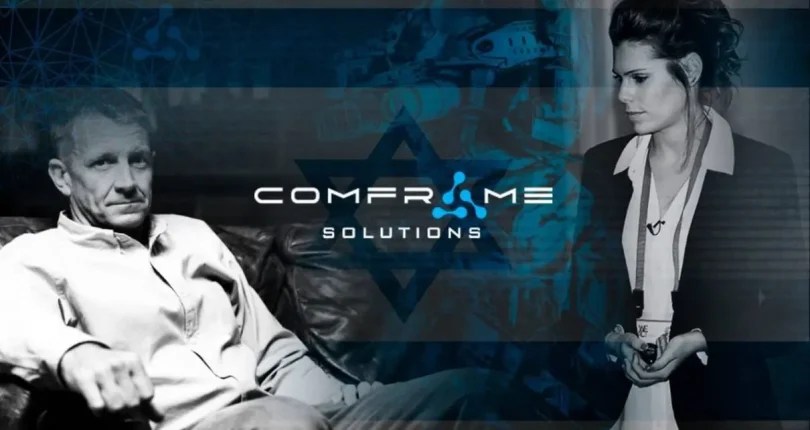
A TLAV investigation has found that Erik Prince, the man behind the Blackwater mercenary group, recently teamed up with an Israeli spy, creating a front company with her to help Israeli defense technology providers exploit loopholes and sell their products to the American military.
For years, Erik Prince – the founder of mercenary firm Blackwater (now Academi) – has been a major source of controversy. Ever since he left Blackwater over a decade ago, Prince has appeared in the news for pushing to privatize several wars, his ties to former President Donald Trump’s presidential campaigns, his violation of international arms embargoes and his unusually close ties with Project Veritas, among other notable events and connections.
However, some of Prince’s antics in recent years have not yet made it into the news – namely his decision to team up with an Israeli spy to build a very secretive company that has – until now – evaded scrutiny. That company, Comframe Solutions, appears to operate as an intelligence front and explicitly targets parts of the American military involved in highly sensitive combat operations. As this investigation will show, Prince’s partner in Comframe – Lital Leshem – has been tied to a series of apparent, and admitted, Israeli intelligence front companies, several of which have a focus on technology. Yet Prince and his close associate Chris Burgess – Comframe’s supposed president – have done everything they can to hide their association with the incredibly secretive company. Why might that be and what exactly is Comframe up to?
From “Army Brat” to Cyber Spy
Lital Leshem was raised as an “army brat” in Reut, Israel and Pennsylvania, USA. She later enlisted in the Israel Defense Forces (IDF) as she was “truly devoted to safeguarding the State of Israel.” She quickly rose in the ranks, becoming Operations Officer in the IDF of the besieged Gaza Strip and later becoming a Major, a position she continues to hold to this date through her “reserve duty activities.” According to her LinkedIn, she served in Israeli military intelligence from 2005 to 2011 and, more specifically, served in its signals intelligence unit – Unit 8200. She later attended IDC Herzliya, an Israeli university deeply tied to its military and intelligence apparatus. There, she met Amir Elichai and the two would co-create the company Reporty, which later became Carbyne911 – today known only as Carbyne.
Carbyne was originally founded as Reporty in 2014 by Leshem, Elichai and Alex Dizengof. Leshem and Elichai are Unit 8200 veterans, while Dizengof previously worked for Israel’s Prime Minister’s Office. Before it was revealed that Jeffrey Epstein had poured at least 1 million dollars into the company at the behest of his close associate Ehud Barak, Cabryne’s board of directors – which Barak chaired – included the former commander of Unit 8200, Pinchas Buchris, as well as Epstein associate turned venture capitalist Nicole Junkermann. In the wake of the Epstein scandal, Buchris, Barak and Junkerman, among others, were removed from the board and were largely replaced with veterans and former heads of American intelligence and law enforcement agencies. Leshem had left the company in 2017, but has continued to own shares in the company.
Carbyne is a Next-Generation 9-11 (NG911) platform and the explicit goal of NG911 is for all 911 systems nationwide to become interconnected. It is currently active throughout the United States, its main target market. Its software has been criticized due to “serious privacy concerns” about the amount of information it harvests from smartphones that call a 911 call center running Carbyne’s software. For instance, Carbyne’s smartphone app extracts the following information from the phones on which it is installed:
“Device location, video live-streamed from the smartphone to the call center, text messages in a two-way chat window, any data from a user’s phone if they have the Carbyne app and ESInet, and any information that comes over a data link, which Carbyne opens in case the caller’s voice link drops out.”
The potential for Carbyne as a tool for mass surveillance has been extensively reported by Narativ, MintPress News and other outlets. In addition, Carbyne stores all data on past calls and events in order to “enabl[e] decision makers to accurately analyze the past and present behavior of their callers, react accordingly, and in time predict future patterns.” As a result, Carbyne – along with other Israeli intelligence-connected companies seeking to dominate the American “public safety” market – has the potential to facilitate controversial “predictive policing”, i.e. pre-crime, policies.
In addition to Carbyne, Leshem also worked for Black Cube, which has since been removed from her LinkedIn. There, she had been the firms Director of Marketing. Black Cube was specifically outed as an Israeli intelligence front organization in a 2019 article published by Calcalist Tech. That same article also contains the stunning revelation that many Israeli companies, including Black Cube, have been founded as fronts for intelligence operations since 2012. It states that “since 2012, cyber-related and intelligence projects that were previously carried out in-house in the Israeli military and Israel’s main intelligence arms are transferred to companies that in some cases were built for this exact purpose.” The article also adds that:
“In some cases, managers of development projects in the Israeli military and intelligence arms were encouraged to form their own companies which then took over the [military and/or intelligence] project.”
With Leshem having worked for one company already known to be a product of this deliberate policy, it is worth scrutinizing Carbyne as being one such front, especially considering the common tie of Ehud Barak to both companies. In addition, Leshem has also worked for another company tied to Barak that has been described as worse than the NSO Group, which produced the notorious Pegasus software. Called Toka, its top executives – like Carbyne – are largely veterans of Israeli’s Unit 8200, where Leshem also served, or former commanders of Israeli military cyber operations.
Toka, which Ehud Barak founded in 2018, is very, very likely to be one of the front organizations produced as a result of the aforementioned 2012 Israeli intelligence policy. The company is directly partnered with Israel’s Ministry of Defense and other Israeli intelligence and security agencies since its founding and the company only sells its products to countries that are considered allies of Israel. It purports to be able to hack, not just smartphones, but any device with internet connectivity, such as doorbell cameras and other “smart” devices. As will be noted later in this article, Leshem herself has noted that Toka has a relationship with the CIA.
After being involved with a series of Israeli intelligence fronts and her enduring ties to Israeli military intelligence through her “reserve duty activities”, Leshem was courted by a surprising figure – Erik Prince, war profiteer and founder of the controversial mercenary outfit Blackwater.
Partnering with Prince
Leshem says that she met Prince after she “randomly stumbled across his path and joined his team.” There, per her website, she “managed his business portfolio and his global investments.” Her LinkedIn lists her as serving as the executive director of global business development of Frontier Resource Group (FRG) from 2018 to 2021. Frontier Resource Group was founded by Prince and is “an Africa-dedicated investment firm partnered with major Chinese enterprises, including at least one state-owned resource giant that is keen to pour money into the resource-rich continent,” according to the South China Post. It not only operates in Africa, but also other countries due to its contracts to support China’s One Belt One Road initiative, which were signed in 2019.
FRG is a subsidiary of Frontier Services Group (FSG), which Prince also founded. In 2013, he sold a majority share of FSG to the China International Trust Investment Corporation (CITIC), a state-owned Chinese investment company that is among the largest of the country’s state-run conglomerates. CITIC, during the mid-1990s, was chaired by Wang Jun, who doubled as China’s chief arms dealer and was a key figure in the “Chinagate” scandal of the Clinton White House. As detailed in One Nation Under Blackmail, that scandal involved the illicit transfer of American military technology to China and the illicit transfer of Chinese weapons, whose sale in the US was banned during this time, into the United States. Mark Middleton, a White House aide, and Jeffrey Epstein are some of the names apparently involved with those activities. “Chinagate” appears to have been a joint venture between factions of the CIA and Israeli intelligence and has never been properly investigated by federal authorities. It seems that Prince, who was (and may still be) a CIA asset, and Leshem have engaged in similar activities via FRG/FSG. For example, TRTWorld reported that Leshem is “speculated” to have transferred Carbyne’s technology to China via her role at FRG and her connection to Prince. China launched an app that was nearly analogous to Carbyne, but more explicitly focused on surveillance, at the same time that Carbyne launched its first 911 call system in the United States.
In addition, TRTWorld notes, the company DarkMatter, a UAE surveillance and intelligence group that employs former US intelligence operatives, attracted the attention of Chinese officials at a smart cities conference in 2015. DarkMatter, which was launched to modernize Emirati intelligence and military operations, signed a Global Strategic Memorandum of Understanding with Huawei, the Chinese tech giant. The middle man in this sale was none other than Erik Prince. Leshem and another Prince associate, Dorian Barak, also have business ties to the UAE via their prominent roles at the UAE-Israel Business Council.
As TRTWorld concluded:
“With similar technology being used, and the same mercenary middle-man between Carbyne and China who brought together UAE’s DarkMatter surveillance technology with China, indications point to a likely transfer of surveillance technology from Epstein’s Israeli company [Carbyne] to China.”
Comframe – Secretive Company or Intelligence Front?
Prince’s and Leshem’s joint activities after Leshem left FRG suggest that this pattern of behavior has not only continued, but deepened. According to Leshem’s website, a year and a half after she started working for Prince, she and Prince “joined forces to found Comframe, a company that takes the best of Israeli defense technology providers, and helps them penetrate the American market by bridging prevalent gaps.” Leshem also says Comframe was assisted by her “premier integrator and business development platform for deploying advanced military, special operations, public safety and HLS solutions in the United States, and a wide network of partnership, both government and civilian.”
In discussing Comframe elsewhere, Leshem writes that the company she co-founded with Prince “is led and staffed by Special Operations and defense procurement veterans with billions of dollars of successful sales to USG and foreign government to their names.” She says that Comframe has a “track-record of success implementing complex procurement and integrations programs from intelligence gathering & analysis, to contracting, program sales and personnel deployment, is exceptional.”
What Leshem says of the company clashes with Comframe’s threadbare public presence. For instance, its website, which is notably short on content, lists the following companies as partners – TomCar, BlueBird Aero Systems, General Robotics, SafeStrike, Ops-Core (now part of Gentex Corp) and Axon. On its partners page, Comframe says that this is “a small sampling of our current partners we have chosen to work with.” Most of these companies were created by Israeli military/military intelligence veterans.
Aside from the partners page, there is little other information available on the Comframe site. It describes its mission as “to source cutting-edge, innovative technologies that safely and securely solve articulated U.S. government problems” and touts its “get it done” commitment and how its employees “wake up every morning wanting to find solutions that keep the U.S. government safe and more lethal.” It lists the company’s president as Chris Burgess. Burgess, a former NAVY Seal who trained with Erik Prince, does not list Comframe on his LinkedIn or in any other site discussing his work history. He is currently the CEO of military contractor Regulus Global. Burgess previously ran a mercenary firm he founded, Greystone Ltd., that was previously affiliated with Prince’s Blackwater and was originally intended to be Blackwater’s “sister company.”
Both Blackwater (now Academi) and Greystone have been accused of sending mercenaries to fight in the current conflict between Russia and Ukraine. Both companies deny this. The accusations came after Prince had planned to create a “private army” in Ukraine, something he has attempted to do (and sometimes succeeded) in various conflict zones, such as Afghanistan. Prince has also attempted to offer “lethal services” to Russia’s Wagner group.
Aside from Burgess’ apparent unwillingness to associate himself publicly with Comframe, there is also the fact that the only employee publicly associated with Comframe at all is Lital Leshem. Indeed, even Erik Prince has declined to publicly affiliate himself with the company. Another oddity is the fact that Comframe’s website has an “Industry News” page that contains several blog posts with titles discussing oil markets and geopolitics. However, the content of the posts themselves are all filler generated by WordPress. Was Comframe also intended to work in commodities markets? The odd and sparse nature of the website seems to clash with Leshem’s characterization of the company.
So, what is Comframe exactly and what is it intended to do? Why are the only people associated with the company two professional mercenaries, one of whom is a known CIA asset, and an Israeli spy? A 2020 article published in the Jerusalem Post seems to highlight Comframe’s mysterious inner workings and likely purpose.
That article notes that Comframe acted as a middleman in forging an agreement to create an assembly line in El Paso, TX in order for the Israeli company Tomcar to “offer its latest models to the US Armed Forces.” The agreement was made between Tomcar and Prince Manufacturing, a major contract manufacturing company that works with Ford, General Motors and Tesla, among others. Prince Manufacturing was notably founded and run for many years by Edgar Prince, Erik Prince’s father. Notably Tomcar, its founder – Yoram Zarchi – and his son (works for Tomcar) – Ram Zarchi – appear in the Panama Papers as does the former holding company that owned Tomcar from 2004 to 2011.
The article notes that Comframe “is focused on recognizing needs in the US defense industry and matching them to possible solutions, usually involving innovative Israeli companies.” However, the article notes, “to meet the demands of American security needs, one must have an American entity.” Leshem is then quoted as saying, “Ram [Zarchi of Tomcar] had been living in Phoenix for 15 years, but he can’t do that [sell to the American military because he is not a US citizen]. We can.”
In other words, per Leshem, Comframe utilizes Prince and presumably Burgess to sell Israeli defense technology and products to the American military that would otherwise not happen due to national security concerns around buying foreign-made products for sensitive defense and military operations. Leshem goes on to state Comframe sells “to the US Special Forces and other branches of the service [i.e. US military],” noting that Comframe is specifically targeting Special Ops. She also suggests that, aside from the US military, another intended market for the company is NATO – she told the Jerusalem Post that the US “controls 70% of NATO’s defense industry.”
The article ends by stating that, for Comframe, when sales are related to national security, one still has to have “boots on the ground,” suggesting why Comframe has such a minimal web and online presence. This is similar to another company Leshem has been working for while at Comframe, Ehud Barak’s Toka. Notably, at the end of this very article, Leshem uses Toka as an example regarding Comframe’s “boots on the ground” sales approach. She states:
“Hi-tech companies like Toka with clients like the CIA, can’t discuss what they do using Zoom.”
A New Pattern for Prince
Comframe is a very suspect company – it is highly, highly secretive, targets sensitive American military agencies with foreign technology, and its known employees are apparent spooks and intelligence-linked mercenaries. Not only that, but the history of Israeli espionage in the United States – from Jonathan Pollard and PROMIS to Comverse and beyond – shows a concerted effort to target the American military and security agencies, often with bugged or “backdoored” technology.
In addition to the above, Prince has also recently engaged in efforts to market a very suspect smartphone to MAGA Republicans as being “unhackable” and “unsurveillable.” That phone was “designed in Israel” and the company that produces it is called Unplugged. According to reports, Unplugged’s “day-to-day technology operations are run by Eran Karpen, a former employee of CommuniTake, the Israeli start-up that gave rise to the now infamous hacker-for-hire firm NSO Group.” Karpen, like Leshem, is also a veteran of Unit 8200.
Notably, DarkMatter, the UAE private intelligence company that was mentioned earlier due to its association with Prince, once marketed an “ultrasecure” phone called Katim, only to be later outed for hacking dissidents and journalists. In addition, Prince debuted Unplugged’s phone on Steve Bannon’s “War Room” program. Both Prince and Bannon have controversial relationships with exiled Chinese billionaire Guo Wengui, also known as Miles Guo.
That Prince would help market this phone specifically to MAGA Republicans is disturbing given that his associate Leshem and other Israeli intelligence veterans and operatives have played a major role in developing the infrastructure for the US’ “War on Domestic Terror,” which is mainly targeted at the political right and has already utilized mass surveillance through smartphones and other technologies to justify arrests, including “pre-crime” arrests. Given the content of this investigation, Prince’s ties to foreign governments and intelligence agencies should be heavily scrutinized, especially Comframe – whose secretive activities may be drastically undermining American national security.
SCOTUS ruling is about protecting the institution of the presidency
Sky News Australia | July 5, 2024
Lawyer Robert Barnes says the SCOTUS ruling is now the “only thing” preventing former presidents from being extradited to foreign countries to be prosecuted.
“Without it, you know, someone unhappy with Joe Biden’s policies, unhappy with Barack Obama’s policies, unhappy with George W. Bush or Bill Clinton’s policies, all of them could seek the extradition of someone over something that was done by the US military or the US government overseas,” he told Sky News Australia host James Morrow.
“This protects all of them, and primarily cares about protecting the institution of the presidency.”
British Columbia Royal College of Physicians and Surgeons Defeated on Judicial Notice
Case of Dr. Charles Hoffe Kills Deferral to Government Offices as Agents of “Truth”
Courageous Discourse™ | July 6, 2024
This was written by Canadian attorney Lee Turner after discussion with Dr. McCullough.
Dr. Charles Hoffe is a family and (former) emergency room physician in British Columbia who is the subject of disciplinary proceedings before the College of Physicians and Surgeons of British Columbia for making public statements about SARS-CoV-2, the safety and efficacy of the COVID-19 vaccines, and other alternative treatments including ivermectin. Hoffe has successfully defeated an application made by the College seeking judicial notice of the truth of facts alleged by the College concerning these issues. In its efforts to discipline the physician, the College has alleged that the statements made by the physician are misleading, incorrect or inflammatory and constitute professional misconduct. The College asked the discipline panel to take judicial notice of the following facts and thereby prevent the doctor from presenting any contrary evidence in his defence:
- The Covid virus kills or causes other serious effects;
- The virus does not discriminate;
- Vaccines work;
- Vaccines are generally safe and have a low risk of harmful effects, especially in children;
- Infection and transmission of the COVID-19 virus is less likely to occur among fully vaccinated individuals than for those who are unvaccinated; vaccines do not prevent infection, reinfection or transmission, but they reduce the severity of symptoms and the risk of bad outcomes;
- Health Canada has approved COVID vaccines, and regulatory approval is a strong indicator of safety and effectiveness;
- Health Canada has not approved ivermectin to treat COVID-19; and
- Health Canada advises that Canadians should not consume the veterinary version of ivermectin.
In its June 29, 2024 decision, the disciplinary panel of the College of Physicians and Surgeons of British Columbia declined to take judicial notice of items 2-5, did take judicial notice of items 7-8 (the straightforward ivermectin claims), and took judicial notice of a revised version of items 1 and 6.
The panel was prepared to take judicial notice of item 1 that reads: “COVID-19 can kill or cause other serious effects”.
The College explained their rationale for taking judicial notice of a revised version of item 1 by referencing evidence presented by the doctor in his defence that included the following:
- risk of severe disease and death from COVID-19 is extremely skewed to those above 70 years of age, especially those with multiple comorbidities. The average age of persons that died from COVID-19 in Canada was approximately 84 years old;
- very low proportion of COVID-19 related deaths in Canada occurred in those under 50 years of age-the data shows very high (although not 100%) survival rates for those under 70;
- average rate of lethality from COVID-19 for Canadians is much lower than estimates given by public health officials; and
- reported hospitalizations and deaths from COVID-19 have been over-counted, because many hospitalizations and deaths “with, and not from” COVID-19 were wrongly attributed to COVID-19
With respect to item 6, the panel endorsed findings of an earlier provincial Court of Appeal decision that held the safety and efficacy of any drug is always relative and as a rule the safety and efficacy of a pharmaceutical product cannot be discussed in such blunt fashion as to say that it “is” or “is not” safe and effective. The panel held that the issues raised in the citation should be determined based upon the evidence that is tested through cross-examination rather than by taking judicial notice of one party’s assertion of the facts, and in this case, based upon statements made by public health officials or public health agencies. The panel held that it was prepared to take judicial notice of the fact that Health Canada had approved the COVID – 19 vaccines, but declined to take judicial notice that Health Canada’s approval was a strong indicator of safety and effectiveness.
This decision on the issue of judicial notice, is consistent with the June 28, 2024 decision of the US Supreme Court in Loper Bright Enterprises et al. v. Raimondo Secretary of Commerce et. al. which overturned the landmark 1984 decision in Chevron v. Natural Resources Defense Council. The Chevron decision had given rise to what is commonly referred to as the Chevron deference doctrine. Under this doctrine, federal agencies had the power to interpret a law that they administer when that law is vaguely written, and courts were required to defer to the agency’s interpretation of a statute. In Loper, the US Supreme Court rejected the Chevron deference doctrine calling it “fundamentally misguided.” They said court should rely on their own interpretation of ambiguous laws rather than having to accept the agency’s interpretation. Commentators have suggested that the Chevron deference doctrine gave the powerful – the people who control the agencies like the FDA, CDC and FCC – a significant advantage in court making them essentially the ultimate decision-makers in interpreting ambiguous laws. Commentators have pointed out that many of these agencies are captive agencies with close ties, including financial ties, to the industries that they are charged with regulating and therefore they lack objectivity with respect to those industries. The ruling in Labor means that federal judges now have more authority to interpret these laws. The decision by the British Columbia Disciplinary Panel of the College of Physicians of Surgeons of British Columbia prevents regulatory bodies from saying “it is so because we say it is so”. They have to prove the facts they assert and those who disagree will be allowed to challenge those facts and present contrary evidence.
The case against Dr. Hoffe is far from over. This development is significant in that a government agency cannot make the rules, interpret them, and claim they hold the truth on an evolving scientific or medical issue.
Lee C. Turner, Partner, Doak Sherriff Lawyers, LLC, Kelowna BC V1Y 2A9
(Professional Law Corporation)
Former FBI and Twitter Lawyer Jim Baker Joins Election Task Force Advocating for Social Media Censorship
By Didi Rankovic | Reclaim The Net | July 5, 2024
From presidential election to another election, to Covid – to another election. That is how members of particular, mostly flying-under-the-radar power centers in the US have been moving over the last decades.
From time to time, however, circumstances demand that they show their faces: one is James “Jim” Baker, a former FBI lawyer whose “censorship portfolio” includes the infamous case of endorsing the Hunter Biden laptop story suppression – while he was on Twitter’s payroll.
And while there – Baker also wanted to know how come President Trump was not censored for a post saying – “Don’t fear Covid.”
Well, Baker also seems to be staying true to himself – unfortunately, his “truth” appears to be to never miss the chance to support the wrong thing (the “RussiaGate” saga happens to be among them). Right now, he has joined something called “the National Task Force on Election Crises.”
It’s a crisis, alright. A crisis of online censorship that can, and does, produce multiple “election” crises and a rapid erosion of trust in legacy media and political institutions.
The group’s parent operation is the Protect Democracy Project.
There’s nothing particularly innovative about the group’s lobbying talking points: remove or downgrade “election misinformation” and make sure removing and labeling content (as false) is done ASAP by social and news media (time is clearly of the essence, at this point…)
As for the electoral process itself – which ended up highly and even dangerously contested perhaps for the first time in US democratic history in 2020 – the group Baker is now affiliated with seems to want the reasons by and large leading to that to remain intact.
Namely, things like “(preventing) cyber or other attacks by foreign adversaries or domestic disrupters, promot(ing) pre-canvassing of absentee ballots” – and working to discourage legal challenges to the election process.
Looks like Baker might be just the right man for the wrong job.
The Supreme Court’s Superb Dissenting Opinion
At least three justices understand what is at stake here
By Aaron Kheriaty, MD | Human Flourishing | July 5, 2024
Three justices of the Supreme Court actually read and understood the record in our case. Justice Alito, joined by Gorsuch and Thomas, wrote an important dissenting opinion. I’d like to share a few highlights here, as it provides a roadmap to ultimately prevailing in our case.
The three dissenting justices clearly recognize that we the plaintiffs were victims of the government’s unconstitutional censorship activities:
Among these victims were two States, whose public health officials were hampered in their ability to share their expertise with state residents; distinguished professors of medicine at Stanford and Harvard; a professor of psychiatry at the University of California, Irvine School of Medicine; the owner and operator of a news website; and Jill Hines, the director of a consumer and human rights advocacy organization. All these victims simply wanted to speak out on a question of the utmost public importance.
Echoing the district court and circuit court opinions, the dissenting justices indicate the landmark importance of this free speech case:
If the lower courts’ assessment of the voluminous record is correct, this is one of the most important free speech cases to reach this Court in years. Freedom of speech serves many valuable purposes, but its most important role is protection of speech that is essential to democratic self-government, and speech that advances humanity’s store of knowledge, thought, and expression in fields such as science, medicine, history, the social sciences, philosophy, and the arts.
Unlike the majority opinion, which took the government’s claim to be combating “misinformation” at face value, the dissenting opinion recognized that much of the speech that the government suppressed was true:
The speech at issue falls squarely into those categories. It concerns the COVID–19 virus, which has killed more than a million Americans. Our country’s response to the COVID–19 pandemic was and remains a matter of enormous medical, social, political, geopolitical, and economic importance, and our dedication to a free marketplace of ideas demands that dissenting views on such matters be allowed. I assume that a fair portion of what social media users had to say about COVID–19 and the pandemic was of little lasting value. Some was undoubtedly untrue or misleading, and some may have been downright dangerous. But we now know that valuable speech was also suppressed. That is what inevitably happens when entry to the marketplace of ideas is restricted.
The majority opinion suggested, without evidence, that our censorship was the result of the actions of social media platforms, who may have censored us even in the absence of government coercion. The dissenting opinion explains the flaws with this unwarranted assumption:
Of course, purely private entities like newspapers are not subject to the First Amendment, and as a result, they may publish or decline to publish whatever they wish. But government officials may not coerce private entities to suppress speech, see National Rifle Association of America v. Vullo, 602 U. S. 175 (2024), and that is what happened in this case.
The record before us is vast. It contains evidence of communications between many different government actors and a variety of internet platforms, as well as evidence regarding the effects of those interactions on the seven different plaintiffs.
Alito focuses on Facebook and co-plaintiff Jill Hines as the clearest example (though by no means the only example) to illustrate the nature of the problem:
Here is what the record plainly shows. For months in 2021 and 2022, a coterie of officials at the highest levels of the Federal Government continuously harried and implicitly threatened Facebook with potentially crippling consequences if it did not comply with their wishes about the suppression of certain COVID–19-related speech. Not surprisingly, Facebook repeatedly yielded. As a result Hines was indisputably injured, and due to the officials’ continuing efforts, she was threatened with more of the same when she brought suit. These past and threatened future injuries were caused by and traceable to censorship that the officials coerced, and the injunctive relief she sought was an available and suitable remedy.
It’s hard to know how much more harm the Supreme Court would need to see before agreeing that at least one of the plaintiffs has standing. These examples could be multiplied. By refusing to examine the record and rule on the merits, Alito suggests that the Court actually provides a roadmap for future government censorship efforts:
This evidence was more than sufficient to establish Hines’s standing to sue, and consequently, we are obligated to tackle the free speech issue that the case presents. The Court, however, shirks that duty and thus permits the successful campaign of coercion in this case to stand as an attractive model for future officials who want to control what the people say, hear, and think.
That is regrettable. What the officials did in this case was more subtle than the ham-handed censorship found to be unconstitutional in Vullo, but it was no less coercive. And because of the perpetrators’ high positions, it was even more dangerous. It was blatantly unconstitutional, and the country may come to regret the Court’s failure to say so. Officials who read today’s decision together with Vullo will get the message. If a coercive campaign is carried out with enough sophistication, it may get by. That is not a message this Court should send.
Alito then echoes arguments I published in The Federalist following oral arguments, regarding the key differences between newspapers and social media companies in terms of their interactions with government:
Internet platforms, although rich and powerful, are at the same time far more vulnerable to Government pressure than other news sources. If a President dislikes a particular newspaper, he (fortunately) lacks the ability to put the paper out of business. But for Facebook and many other social media platforms, the situation is fundamentally different. They are critically dependent on the protection provided by §230 of the Communications Decency Act of 1996, 47 U. S. C. §230, which shields them from civil liability for content they spread. They are vulnerable to antitrust actions; indeed, Facebook CEO Mark Zuckerberg has described a potential antitrust lawsuit as an “existential” threat to his company. And because their substantial overseas operations may be subjected to tough regulation in the European Union and other foreign jurisdictions, they rely on the Federal Government’s diplomatic efforts to protect their interests.
This dynamic sets social media companies up to be vulnerable to government coercion, in precisely the way we argued before the Court:
For these and other reasons, internet platforms have a powerful incentive to please important federal officials, and the record in this case shows that high-ranking officials skillfully exploited Facebook’s vulnerability. When Facebook did not heed their requests as quickly or as fully as the officials wanted, the platform was publicly accused of “killing people” and subtly threatened with retaliation.
Not surprisingly these efforts bore fruit. Facebook adopted new rules that better conformed to the officials’ wishes, and many users who expressed disapproved views about the pandemic or COVID–19 vaccines were “deplatformed” or otherwise injured.
Alito perfectly describes how this abusive Stockholm Syndrome dynamic played out between Facebook and the White House:
What these events show is that top federal officials continuously and persistently hectored Facebook to crack down on what the officials saw as unhelpful social media posts, including not only posts that they thought were false or misleading but also stories that they did not claim to be literally false but nevertheless wanted obscured. And Facebook’s reactions to these efforts were not what one would expect from an independent news source or a journalistic entity dedicated to holding the Government accountable for its actions. Instead, Facebook’s responses resembled that of a subservient entity determined to stay in the good graces of a powerful taskmaster. Facebook told White House officials that it would “work . . . to gain your trust.” When criticized, Facebook representatives whimpered that they “thought we were doing a better job” but promised to do more going forward. They pleaded to know how they could “get back to a good place” with the White House. And when denounced as “killing people,” Facebook responded by expressing a desire to “work together collaboratively” with its accuser. The picture is clear.
Here we have a major social media platform responding as though they are entirely subservient to government interests. The more they try to please the government by ramping up censorship, the more abusive and demanding the government becomes.
To the dubious claim that plaintiffs cannot allege potential future injuries because—on their word—the White House has backed off the social media companies, Alito (in contrast to the majority opinion) calls the government’s bluff:
The White House threats did not come with expiration dates, and it would be silly to assume that the threats lost their force merely because White House officials opted not to renew them on a regular basis.
As Alito later quips, “death threats can be very effective even if they are not delivered every day.”
Drawing an analogy to another free speech case (Vullo) that was heard on the same day as ours, Alito explains:
In Vullo, the alleged conduct was blunt. The head of the state commission with regulatory authority over insurance companies allegedly told executives at Lloyd’s directly and in no uncertain terms that she would be “‘less interested’” in punishing the company’s regulatory infractions if it ceased doing business with the National Rifle Association. The federal officials’ conduct here [in Murthy] was more subtle and sophisticated. The message was delivered piecemeal by various officials over a period of time in the form of aggressive questions, complaints, insistent requests, demands, and thinly veiled threats of potentially fatal reprisals. But the message was unmistakable, and it was duly received.
The Supreme Court majority was ready to knock down ham-fisted censorship (in Vullo) but gave a pass—at least for now—to sophisticated and debonair censorship (in Murthy).
The government’s defense of its behavior included the argument that it had the right to use the bully pulpit to “persuade” social media companies to do its bidding—”the government has free speech rights, too, don’t you see?” Alito sees right through this ruse:
This argument introduces a new understanding of the term “bully pulpit,” which was coined by President Theodore Roosevelt to denote a President’s excellent (i.e, “bully”) position (i.e., his “pulpit”) to persuade the public. But [Rob] Flaherty, [Andy] Slavitt, and other [White House] officials who emailed and telephoned Facebook were not speaking to the public from a figurative pulpit. On the contrary, they were engaged in a covert scheme of censorship that came to light only after the plaintiffs demanded their emails in discovery and a congressional Committee obtained them by subpoena. If these communications represented the exercise of the bully pulpit, then everything that top federal officials say behind closed doors to any private citizen must also represent the exercise of the President’s bully pulpit. That stretches the concept beyond the breaking point.
In any event, the Government is hard-pressed to find any prior example of the use of the bully pulpit to threaten censorship of private speech.
To repeat what I have said many times before: this case is not about constraining the government’s speech—as they falsely claim; it’s about stopping the government from constraining the speech of U.S. citizens.
The dissenting justices argue that the majority opinion applies a “new and heightened standard” of traceability in our case (p.20). Alito explains, again using the case of co-plaintiff Jill Hines, that she clearly has standing to bring the case (and we only need one plaintiff with standing to prevail):
Here, it is reasonable to infer (indeed, the inference leaps out from the record) that the efforts of the federal officials affected at least some of Facebook’s decisions to censor Hines. All of Facebook’s demotion, content-removal, and deplatforming decisions are governed by its policies. So when the White House pressured Facebook to amend some of the policies related to speech in which Hines engaged, those amendments necessarily impacted some of Facebook’s censorship decisions. Nothing more is needed. What the Court seems to want are a series of ironclad links—from a particular coercive communication to a particular change in Facebook’s rules or practice and then to a particular adverse action against Hines. No such chain was required in the Department of Commerce case, and neither should one be demanded here.
Furthermore, the Court’s majority opinion developed a novel, higher standard of repressibility of potential future harms to avoid ruling on the merits of our case:
As with traceability, the Court applies a new and elevated standard for redressability, which has never required plaintiffs to be “certain” that a court order would prevent future harm.
Having established that the Court should have found that we have standing, Alito proceeds to analyze the record on the merits, using the following legal framework:
The principle recognized in Bantam Books and Vullo requires a court to distinguish between permissible persuasion and unconstitutional coercion, and in Vullo, we looked to three leading factors that are helpful in making that determination: (1) the authority of the government officialswho are alleged to have engaged in coercion, (2) the natureof statements made by those officials, and (3) the reactions of the third party alleged to have been coerced. 602 U. S., at 189–190, and n. 4, 191–194. In this case, all three factors point to coercion.
Although the government tries to spin their interactions with social media platforms as fairly benign, examination of the record in this regard leaves no doubt: “The totality of this record—constant haranguing, dozens of demands for compliance, and references to potential consequences—evince ‘a scheme of state censorship.’” Lest there be any doubt in this regard, “Facebook’s responses to the officials’ persistent inquiries, criticisms, and threats show that the platform perceived the statements as something more than mere recommendations.” Alito concludes, “In sum, the officials wielded potent authority. Their communications with Facebook were virtual demands. And Facebook’s quavering responses to those demands show that it felt a strong need to yield.”
From here we return to the District Court in Louisiana for trial, where we have an excellent judge (Terry Doughty). We will be granted additional discovery, in which we anticipate getting enough additional “smoking guns” to cross the high standing bar set by the majority Supreme Court opinion. The District court has combined our case with an analogous case filed by Robert F. Kennedy, Jr., who is clearly named and targeted in several government censorship missives—so between Hines and Kennedy there should be no questions on the issue of standing, even under the novel and strict criteria that SCOTUS requires in this case.
In other words, we will prevail in the end. I anticipate being back at the Supreme Court in another year or two for the final ruling. At that point, SCOTUS will not be able to temporize or look away as they did this time. And when judges examine the record in our case, they have only reached one conclusion: the government engaged in unconstitutional censorship on a mass scale. And it has to stop.
Advertiser Alliance Members Are Called To Testify After Allegations of Efforts To “Demonetize, and Censor Disfavored Viewpoints”
By Didi Rankovic | Reclaim The Net | July 5, 2024
The Global Alliance for Responsible Media (GARM) is back in the headlines big time – what with the recent decision of X to rejoin the group, and now, as anticipated, the US Congress is stepping up its attempts to shed more light on what GARM actually does, censorship-wise.
Once again it is House Judiciary Committee Chairman Jim Jordan who is trying to hold Big Tech – and in this case, “the advertising industrial complex” as it were – accountable.
GARM is a World Economic Forum (WEF)-affiliated initiative, launched by the World Federation of Advertisers (WFA); the latter by its own admission represents more than 150 biggest brands and over 60 advertiser associations around the world.
“Brand safety” is what the group says it is offering to these clients. But Jordan, and many conservatives and media outlets and businesses – allied or perceived to be allied with them – have strong suspicions that GARM can and is being used as yet another avenue of censorship and suppression – this time via actions that result in demonetization or boycott of those who hold “disfavored views.”
Concerning GARM, Jordan started fighting what supporters must see as “the good fight” last year (first by requesting information and then by issuing a subpoena once that was ignored).
Then, this March, the Committee sent letters to five members of the GARM Steering Team including Unilever and GroupM (a media investment group) asking for access to documents and communications that might prove the overall anti-conservative bias executed by the imitative.
We obtained a copy of the letter for you here.
Jordan was not in the mood to sugarcoat the issue, as he sees it: “This coordination does not always revolve around ‘brand safety’ and ‘harmful’ content as GARM publicly claims, but instead the desire to censor conservative and other views that GARM members disfavor,” he wrote, adding that this results in content creators losing revenue, in a way that may be illegal and collusive under the Sherman (antitrust) Act.
In late June, Jordan wrote to Unilever again, and the inclusion of GroupM is pertinent given that the March letter mentioned several leading conservative media outlets as alleged targets of this conduct.
The letter is asking top representatives of the two corporations to publicly testify regarding the Committee’s misgivings around their activities.
According to a Committee spokesman’s comments made in March, “everything is on the table” in case of non-compliance with this series of requests – including more subpoenas, and congressional hearings.
X Re-Joins Pro-Censorship Advertisers’ Alliance
By Didi Rankovic | Reclaim The Net | July 2, 2024
Given how X has gone out of its way to reveal the depth and breadth of online censorship via the Twitter Files, this makes for an awkward reunion: the company has decided to rejoin the Global Alliance for Responsible Media (GARM).
It’s a pro-censorship, World Economic Forum-affiliated advertisers’ group, that achieves its objectives through the “brand safety” route (i.e., the censorship “brand” here would be demonetization). And last summer, it was scrutinized by the US Congress.

GARM is one of those outfits whose roots are very entangled (comes in handy when somebody tries to probe your activities, though) – and the chronology is not insignificant either: formed in 2019 as a World Federation of Advertisers (WFA) initiative, partnered with the Association of National Advertisers (ANA).
Then came another “partnership” – that with WEF (World Economic Forum), specifically, its Shaping the Future of Media, Entertainment, and Sport project – a “flagship” one.
In May 2023, the US House Judiciary Committee wanted to know what exactly was happening here, and whether “brand safety” as a concept, as exercised by these entities, could be linked to censorship of online speech.
So the Committee subpoenaed the World Federation of Advertisers (and GARM), asking for records that might show whether these groups “coordinated efforts to demonetize and censor disfavored speech online.”
Committee Chairman Jim Jordan was at the time concerned that this conduct might have run afoul of US antitrust laws.
For X, despite the strides the platform has made toward protecting users’ speech since the Twitter takeover, the GARM relationship is most likely simply about (ad) money – and one of the several efforts to make the platform profitable at last.
Those who were hoping for a “free speech absolutism” on a platform like this might be disappointed, the Congress might investigate some more; but ultimately, the move represents a “realpolitik-style” compromise.
And so X is “excited” and “proud” to be back as a GARM member. The company’s “Safety” account posted something about “the safety of our global town square” apparently being relevant to this decision, but did not elaborate.
Now listed by GARM along with X are YouTube and Chanel – and, in between, some of the biggest pharma and telecoms out there.
Big Money, one might say.
European Council Makes Countering “Disinformation and Hate Speech” Part of Its Strategic Agenda
By Didi Rankovic | Reclaim The Net | July 2, 2024
The EU Council has managed to nestle fighting “disinformation and hate speech” between such issues as the Middle East, Ukraine, and migration – not to mention while at the same time appointing a new set of “apparatchiks,” in the wake of the European Parliament elections.
This proceeds from the Council’s 2024-2029 strategic agenda, adopted on June 27. This document represents a “five-year plan” to guide the bloc’s policy and goals.
Under the heading, “A free and democratic Europe,” the document addresses different ways in which “European values” will be upheld going forward. The Council’s conclusions state that in order to strengthen the EU’s “democratic resilience,” what it decides is disinformation and hate speech will have to be countered.
These categories of speech are infamously arbitrarily defined, even in legislation, and habitually used as a tool of censorship – but the conclusions count combating them among the strategic goal of fending off foreign interference and destabilization.
In other words, those individuals or organizations that are found to be “guilty” of hate speech or disinformation might face the grim possibility of being treated as, essentially, a threat to the EU’s security.
Another promise the document makes in the same breath is that tech giants will be made to “take their responsibility for safeguarding democratic dialogue online.”
Does this mean there will be more or less censorship in the EU over the next five years? The Brussels bureaucrats are at this point so practiced at churning out platitudes that, theoretically, this statement could be interpreted either way.
However, in conjunction with the “misinformation” etc., talk, it is fairly clear which course the EU intends to keep when it comes to online freedom of expression.
AI is not explicitly mentioned as a threat (either to the EU or by the EU, as the technology that can be used to ramp up censorship, aka, “combat misinformation”).
However, you name it, the EU supposedly has it: under the part of the conclusions addressing competitiveness, increasing capacities related to AI sits right there with growing defense, space, quantum technologies, semiconductors, health, biotechnologies capabilities – not to mention “net-zero technologies, mobility, pharmaceuticals, chemicals, and advanced materials.”
It’s a pretty comprehensive bridge the EU appears to be trying to sell to its member-states and their citizens.
Blinken Bets Big on AI to Combat “Misinformation”
By Didi Rankovic | Reclaim The Net | July 1, 2024
The current US secretary of state, Anthony Blinken, has revealed that his department is testing AI-based tools as a way to fight “misinformation.”
In conversation with the State Department’s chief data and AI officer Matthew Graviss, he cited a number of initiatives – such as the UN’s Sustainable Development Goals and Washington’s Enterprise AI Strategy as the foundations for the ultimate goal – using AI to “advance our foreign policy.”
The second part of the push to equip the State Department with AI tools is to – “strengthen this institution.”
According to Blinken, his department is a leader within the government when it comes to testing and “harnessing” the technology. Some reports speak about this as combating whatever happens to be considered foreign disinformation.
And while on the subject of meddling, the Washington Times says AI tests are “part of an ambitious media monitoring and analysis project that spans the globe.”
As sinister as that may sound, packaging the message as the need to combat (only) “foreign disinformation” certainly makes the policy more palatable at home, where the department’s past activity features in congressional probes into government-orchestrated online censorship.
This scrutiny is presented as something hindering the Department of State’s “anti-disinformation” work – while the tools now in development are quite openly described as a possible different means “to pursue the same goals.”
Blinken’s remarks reveal how the technology is used seemingly innocuously as a (translation and summarization) tool “in multilateral organizations;” but then he praised the ability of AI-powered tools to make mass surveillance (“monitoring”) cover a much larger number of media, making its scope and scale “vast,” as the report put it.
And also – combat “disinformation” – which Blinken quite dramatically refers to as “one of the poisons in the international system today.”
“We have one program that we’re using that is able to basically ingest a million articles every day from around the world — to be able to do that in a couple hundred countries in over a hundred languages — and then immediately translate, synthesize and give you a clear picture of what’s happening in the information space immediately,” the secretary is quoted as saying.
But given the scale of the operation, and the shortcomings of the current limitations of AI – those in the know might wish Blinken good luck with the accuracy and reliability of getting that “immediate, clear picture.”
However, when the “AI weapon” is pointed at online platforms as a means of identifying and censoring “disfavored” speech, it is objectively more likely to be efficient.
And the State Department is no stranger to such – strange given its mission – activities: after all, it is the home of the investigated-by-Congress and highly controversial Global Engagement Center.
Bavarian Court Enables German Counterintelligence to Monitor AfD in Bavaria
Sputnik – 01.07.2024
The Munich administrative court has rejected the claim of the Alternative for Germany (AfD) party against the Bavarian Office for the Protection of the Constitution, which suspected the party of right-wing extremism, enabling the agency to continue monitoring of the AfD, media reported on Monday, citing the court ruling.
The monitoring started in 2022 and its expected outcome was a report that would either confirm or remove the initial suspicion, the Muenchner Merkur newspaper reported.
In May, a higher administrative court in the western German state of North Rhine-Westphalia ruled that the federal agency’s decision to classify the party as “suspected of right-wing extremism” was justified.
The domestic intelligence agency has labeled three AfD chapters — in Thuringia, Saxony and in Saxony-Anhalt — as “extremist.” Earlier in June, AfD member Eugene Schmidt told Sputnik that the attempt to ban the party was an anti-democratic procedure that revealed the political establishment in Germany was overwhelmed and threatened by the party’s success in the 2024 European Parliament elections.
German lawmaker Marco Wanderwitz said in June that he had convinced enough members of German parliament to submit a motion to ban the AfD over alleged ties to far-right extremism. If the Bundestag approves the motion, the potential banning of the AfD would then have to be considered by the Federal Constitutional Court.
The Supreme Court Ruling Isn’t the End of the Online Free Speech Battle
By Didi Rankovic | Reclaim The Net | June 30, 2024
The New Civil Liberties Alliance (NCLA) civil rights group is not giving up on the free speech fight it has been conducting on behalf of the respondents/plaintiffs in the Murthy v. Missouri case. The tactic is now to go for expanded discovery, aimed at demonstrating direct harm caused by government censorship.
A statement to this effect comes after the US Supreme Court voted 6-3 to lift a preliminary injunction that prevented the White House and several powerful agencies (CDC, FBI, Cybersecurity and Infrastructure Security Agency (CISA), and the Surgeon General’s Office) from interacting with social media companies by “encouraging” (or coercing) them to carry out censorship of lawful and protected speech.
The ruling is seen by critics and those who brought and supported the case aimed at ending this type of collusion as yet another blow to the First Amendment, and to make things worse, shortly ahead of another US presidential election.
NCLA said that the Supreme Court decision – which overturned the injunction previously ordered by a district court and upheld by the US Court of Appeals for the Fifth Circuit – leaves its clients “without redress.”
This is despite the fact their original lawsuit had to do with blacklisting, shadow-banning, deranking, account termination, and other forms of censorship, believed to have been done because of pressure coming from the government.
This was happening during the time of the previous campaign and in the wake of the election – concerning, among others, the issues that featured prominently in that campaign, namely those around Covid controversies.
But the NCLA said that despite the Supreme Court ruling which “practically erased the First Amendment and permitted government to co-opt private entities, like social media platforms, to accomplish its censorship aims” – the battle for free speech will continue in lower courts.
NCLA litigation counsel Jenin Younes has told the Federalist Radio Hour podcast that the rights group is not giving up and it has decided to pursue the case on the merits in the district court. “We want to get more discovery,” said Younes.
In the NCLA’s press release, Younes said that the Supreme Court has “green lighted the government’s unprecedented censorship regime, which resulted in the censorship of top scientists like our clients on the areas of their expertise,” adding:
“This decision is a travesty for the First Amendment, for Americans’ rights to free speech, and for the pursuit of scientific and other knowledge.”
One of the dissenting Supreme Court justices, Samuel Alito, expressed a similar sentiment as he warned that the government’s actions were “blatantly unconstitutional, and the country may come to regret the Court’s failure to say so.”
Featured Video

Thomas Fazi: NATO’s Hybrid Warfare – Deception & Permanent War
or go to
Aletho News Archives – Video-Images
Book Review
The Zeolite Book — First Edition, 2026, Paperback
The volcanic mineral medicine will not patent — for the toxic burden medicine will not name
Lies are Unbekoming – October 30, 2026
 Zeolite is old. It is in Roman concrete that has held for two thousand years. It’s in the water filters of ancient cisterns. It’s in the stomachs of Pacific livestock whose keepers knew, somehow, that this grey crumbling rock made the animals healthier. It’s in Soviet clinical protocols from the 1960s. It’s in the standard emergency response to the Chernobyl explosion.
In 1986, after the Chernobyl reactor failure, the Soviet Union manufactured and distributed natural zeolite at industrial scale — for soil remediation, for livestock feed, for human consumption, for the cleanup itself. Karl Hecht, who had been director of the Institute for Experimental and Clinical Pathophysiology at the Charité of Humboldt University Berlin, spent the six decades after that building the clinical research base — on silicon’s role in human health, on zeolite’s clinical safety, on its applications in ageing. In 2018, Pavelić and colleagues published a comprehensive clinical safety review of natural clinoptilolite in Frontiers in Pharmacology. In 2019, Mastinu analysed its binding affinities. In the Western medical literature, these works sit largely uncited.
What has not been treated at book length, until now, is how a volcanic mineral with six decades of Soviet clinical work behind it, two major peer-reviewed Western reviews, and ongoing clinical use across the former Eastern Bloc, remains almost entirely absent from Western medical practice — and what the toxic burden it’s meant to address actually is.
The Zeolite Book gathers the Soviet clinical record, the Western peer-reviewed studies, three contemporary practitioner voices, and three serious counterviews into one honest treatment. That’s why the book runs to seven appendices. 288 pages, four parts, three practitioner voices, three counterviews, seven appendices. The honest treatment is the argument.
Blog Roll
 Aletho News
- Wrong, AP and NPR: Europe’s 50,000 Heat Deaths Are a Computer-Model Estimate, Not a Real Body Count
- Questioning Your Doctor Is Now Considered A Psychological Problem (Seriously)
- London tourism expo promotes Israeli agency linked to theft of Palestinian land
- Dockworkers launch global strike against Israeli and US military shipments
- Europe facing gas price shock – Gazprom chief
- Ukraine continues recruiting people with disabilities
- Weaponized Journalism: 2021 Sayer Ji Interview with NPR
- Beyond Netanyahu: what Israel’s election means for Palestinians
- Lithuania plans universal conscription
- Lies, Damn Lies, and Ukraine News
- If Americans Knew
- 1,300 will gather in Palo Alto on Nov. 1 for Z3 Conference on Zionism
- DAILY UPDATE: Latest essential news on Palestine, Israel, & region
- The Long Arm of AIPAC
- Genocidal intent behind Hebron assault, rights group says
- This week, Israel killed 8-year-old who survived bombing that wiped out her family
- DAILY UPDATE: Latest essential news on Palestine, Israel, & region
- Israeli soldier poses at damaged Lebanon church, sparking anger
- New Report. Manufacturing the Great Replacement: Is Israel behind one of the largest racist influence campaigns ever documented?
- ‘Arab voice doesn’t count’: Jewish Israeli blocs reject Palestinian support
- Whether Bibi Stays or Goes, the ‘Special Relationship’ Must End
- No Tricks Zone
- Germany’s Green Energy Transition Becoming Increasingly Expensive…Another 6 Trillion Euros!
- Sudden Stratospheric Warming, Powerful El Niño Combination May Lead To Extreme Europe Cold, Energy Crisis!
- Two New Studies Find Thwaites Glacier Melt Cannot Be Driven By Human Activity Or A Warming Ocean
- E-Cars Reduce CO2 Emissions By Only 41% Compared To Internal Combustion Engine Vehicles
- Predictions Made By Renowned Climate Professor Over Past Decades Have Been Proven To Be Poor
- New Study Suggests Large Regions Of The Pacific Ocean Have Been Cooling For The Last 80 Years
- Germany’s Green Energy Debacle: High Energy Costs Force Kahla Porzellan to Close After 182 Years!
- New Study: 50 Years Of The Most Aggressive ‘Net Zero’ Policies Can Only Affect The Global Climate By 0.03°C
- US September “Heat” Was No Record…Many Records Set Decades Ago
- Latest European Green Energy Debacle; Portugal’s Largest Flagship Solar Park Insolvent!

