ABC fact checking is a ‘black box’
Who are the fact checkers, what are their qualifications and how do they decide what is true or false?

Maryanne Demasi, reports | April 22, 2024
Australia’s public broadcaster, the Australian Broadcasting Corporation (ABC), proudly announced in 2022 that it had partnered with the Trusted News Initiative (TNI), an international alliance of major news corporations and Big Tech firms, to counter the growing threat of “fake news.”
It was part of sweeping reforms in the media to deliver ‘trusted’ news to global audiences and protect the public from the harms of misinformation and disinformation online.
Spearheaded by the British Broadcasting Corporation (BBC), partners include Reuters, Associated Press, Financial Times, The Washington Post, and ABC Australia, along with social media and tech giants – Meta (Facebook/Instagram), Microsoft (LinkedIn) and Google (YouTube) to name a few.
When ABC announced its new alliance with TNI, Justin Stevens, ABC News Director said, “We’re pleased to join the Trusted News Initiative and, in the process, provide Australian audiences with a deeper and better-informed view of our region and the world.”
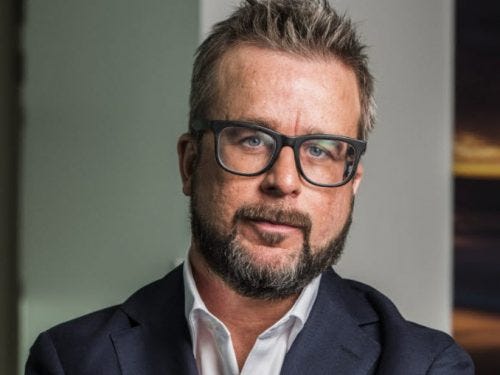
Justin Stevens appointed ABC News Director in April 2022
During the pandemic, the alliance promised to focus on preventing “the spread of harmful vaccine disinformation,” and “the growing number of conspiracy theories,” targeting online memes that featured anti-vaccine messaging or posts that downplayed the risk of covid-19.
But critics have grown increasingly uneasy about the alliance. They say governments are being protected by journalists, instead of being held to account for their pandemic policies and they’re concerned the alliance has shaped public discourse by controlling people’s access to information and censoring content that diverges from the status quo.
Weaponising fact checking
Deploying fact-checkers is one way that TNI members control the dissemination of public information. When they label a statement ‘false’, ‘wrong’, or ‘misleading’, it’s used by social media platforms to legitimise the censorship of that content by deprioritising, hiding, demonetising, or suppressing it.
Debunking content is time consuming and costly. Fact-checkers are invariably junior journalists or intern researchers, with little to no understanding of complex scientific issues or public health policies, and often appeal to governments for the ‘truth’.
When the authors of the Great Barrington Declaration opposed government enforced lockdowns, fact checkers ran hit pieces on the authors – the notable academics were then shadow-banned, censored and deplatformed from social media.
In the case of the ABC, its original in-house fact checking unit was axed in 2016 because of Federal budget cuts, but was revamped the following year when the ABC teamed up with RMIT University in Melbourne to form the RMIT ABC Fact Check and RMIT FactLab departments.
The ABC paid more than $670,000 to RMIT between 2020 – 2023 as part of its joint fact-checking venture but they quickly gained a reputation for being flawed. For example, concerns about the suppression of the lab leak theory were labelled as “false” even though they were true.
ABC’s fact checkers were also accused of being biased by SkyNews because they had used their influence to censor disfavoured political views in the Voice to Parliament referendum.
Queensland Senator Gerard Rennick grilled ABC’s Managing Director David Anderson at a Senate Estimates hearing about the network’s dodgy fact-checking practices last year.
“Who is fact-checking the fact-checkers?” asked Senator Rennick.
“You’ve made some outrageous claims on these fact-checks that aren’t correct, and you haven’t actually backed them up with any facts,” added Rennick, accusing the ABC of bias for predominantly fact-checking politically conservative voices in the media.
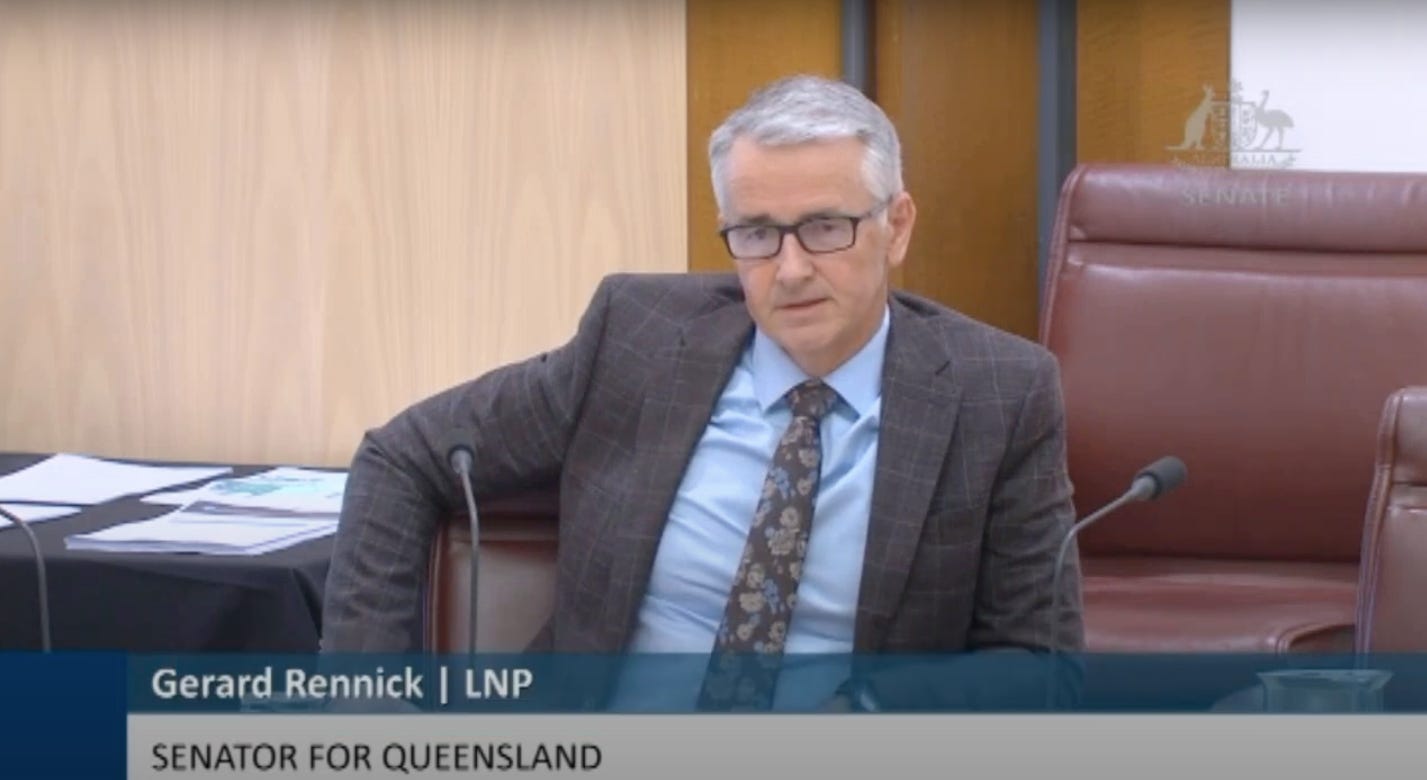
Sources say these controversies have prompted the ABC to cut ties with RMIT whose contract ends in June 2024.
New fact-checkers, same problems?
An ABC spokesperson said the network is now building its own internal fact-checking team, called “ABC NEWS Verify,” which appears to have similarities to the “BBC Verify” initiative.
“ABC NEWS Verify will be our centre of excellence for scrutinising and verifying information in online communities,” said the spokesperson outlining the various tasks of fact checkers. “Establishing a dedicated team will enhance and focus our efforts, creating a hub for verification best practice.”
I asked the ABC if it had any internal policy document outlining the criteria its fact-checkers would use to deem content as ‘misinformation’ or ‘disinformation’ but the spokesperson responded saying “no it doesn’t.”
Andrew Lowenthal, an expert in digital rights and a Twitter Files journalist, said the ABC’s failure to explain how it intends on fact-checking claims was “seriously ridiculous.”
“That the ABC is seeking to decide what is misinformation without laying out any criteria demonstrates just how farcical and political ‘fact-checking’ has become,” said Lowenthal.
“Without transparent and publicly available criteria the program will quickly turn into a partisan advocacy initiative,” he added.

Andrew Lowenthal, Twitter Files journalist
Lowenthal’s Twitter Files investigation confirmed the Australian government was monitoring Covid-related speech of its citizens and requesting that posts were flagged and censored if they deemed them to be misinformation.
“In that investigation, the government’s Department of Home Affairs was relying on Yahoo! News and USA Today, among others, to justify their take down requests or they’d hire journalists without scientific credentials. We need dialogue, not diktats, to determine what is true,” said Lowenthal.
Senator Rennick agreed, saying the ABC’s process lacks transparency. “Who are these people that claim to be the fact-checkers in the first place and what are their credentials? Sounds to me like it’s a black box,” said Rennick.
“Often when fact checkers come out with their reports, they don’t give the other person they’re fact checking, a right-of-reply. Also, they rarely disclose the conflicts of interest of the so-called ‘experts’ they use to fact check claims,” he added.
Michael Shellenberger, author, journalist and founder of Public, has written extensively on the “censorship industrial complex.”
“That’s what the trusted news initiative [TNI] was all about…a strategy to use fact checking initiatives to demand censorship by social media platforms,” said Shellenberger.
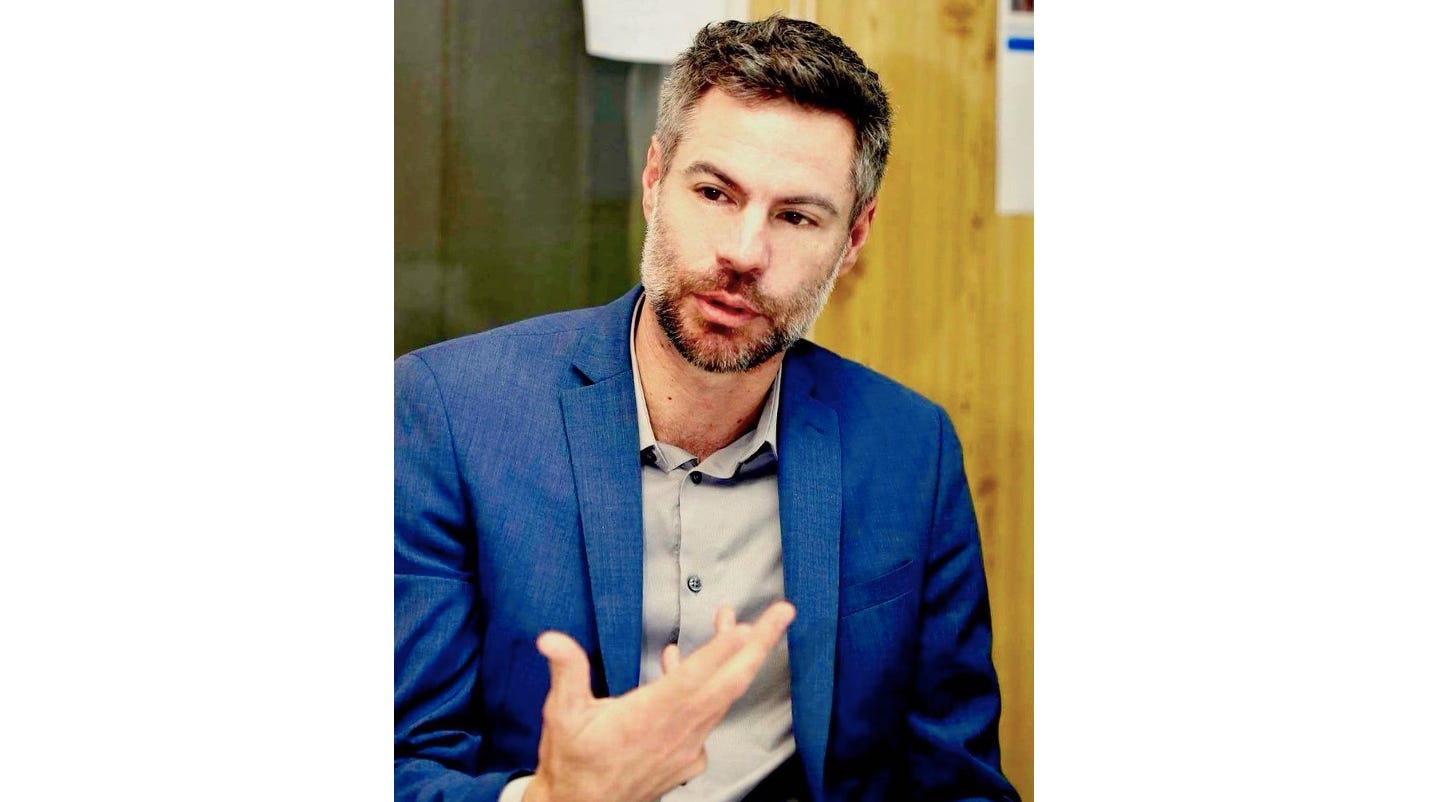
Michael Shellenberger, author of San Fransicko (HarperCollins 2021) and Apocalypse Never (Harper Collins 2020)
“They can pretend that’s not what it’s about, but the fact that the news media are participating in this, is grotesque. It’s a complete destruction of whatever reputation and integrity they used to have,” he added.
“Organisations like BBC and ABC… they used to have reputations for independence and integrity, but they’ve now decided to destroy their entire reputation on the mantle of them being the deciders of the truth. The Central Committee. That’s totalitarianism that’s not free speech.”
The ABC says its new ABC NEWS Verify will have no connection to TNI.
Impartiality and credibility?
TNI’s broad principles of working in lockstep towards a single narrative, has meant that legacy media operate largely as a mouthpiece for government propaganda, offering little critique of public health policies…and ABC has been no exception.
During the pandemic, the broadcaster repeatedly came under fire after its medical commentator Dr Norman Swan made countless calls for harsher lockdowns, mask mandates and covid boosters – policies that strongly aligned with the government but had little scientific backing.
Swan’s commentary rarely provided an impartial perspective and he was eventually called out for failing to publicly disclose his financial interest in seeking government contracts related to covid-19.
In addition, Ita Buttrose, who was ABC Chair until last month, was seen fronting Pfizer’s advertising campaigns for covid products. ABC defended Buttrose saying, “Given she was not involved in editorial decisions, there was no conflict of interest.”

Ita Buttrose, former ABC Chair, March 2019 – March 2024
The ABC denies its alliance with TNI has impacted its editorial independence but Shellenberger says the entire purpose of joining TNI is to ensure they become the single source of truth.
“They’ve stopped doing real reporting, and they’re just out there wanting to be paid to regurgitate and act like publicists for the government. It’s grotesque. It’s not journalism, it’s propaganda,” said Shellenberger.
Resisting the tyranny
Some journalists have been resisting what they perceive to be ‘tyranny’ in legacy media and the widespread suppression of free speech.
In June 2021, a group of around 30 journalists rallied together to denounce TNI’s “censorship and fearmongering” and accused the alliance of subjecting the public to a distorted view of the truth.
The group known as ‘Holding the Line: Journalists Against Covid Censorship’ shared concerns that reporters were being reprimanded by their superiors and freelancers were being blacklisted from jobs for not following the “one official narrative.”
Presidential hopeful Robert F Kennedy Jr has filed a lawsuit against TNI alleging that legacy media organisations and Big Tech have worked to “collectively censor online news” about covid-19 and the 2020 presidential election.
The lawsuit states:
“By their own admission, members of the “Trusted News Initiative” (“TNI”) have agreed to work together, and have in fact worked together, to exclude from the world’s dominant Internet platforms rival news publishers who engage in reporting that challenges and competes with TNI members’ reporting on certain issues relating to COVID-19 and U.S. politics.”
A group of 138 scholars, public intellectuals, and journalists from across the political spectrum have since published The Westminster Declaration.
In essence, it’s a free speech manifesto urging governments to dismantle the “censorship industrial complex” which has seen government agencies and Big Tech companies work together to censor free speech.
In Australia, the journalist’s union MEAA has called on ABC’s newly appointed Chair Kim Williams to “restore the reputation of the national broadcaster by addressing concerns about the impact of external pressures on editorial decision making.”

Kim Williams, current Chair, ABC Network Australia
Williams, who took over from Buttrose last month, has warned his journalists that “activism” is not welcome at the ABC and that if they fail to observe impartiality guidelines, they should consider leaving the network.
Will the ABC course-correct with Williams at the helm? Now that trust in legacy media is at historical lows, the ABC’s partnership with TNI does little to assuage fears that the network has passed the point of no return.
NB: I was a TV presenter/producer at ABC TV (2006-2016) and wrote about my experiences with censorship at the network here and here.
They Think We Are Stupid, Volume 8
By Aaron Kheriaty, MD | Human Flourishing | April 23, 2024
Everything you need to know about our ruling class’s opinion of you. As always, these headlines are presented without commentary.




‘Let’s debunk the myth that mass migration brings an economic benefit,’ says former UK immigration minister
By Thomas Brooke | Remix News | April 23, 2024
The notion that mass immigration brings a net economic benefit to a developed nation is a myth that needs to be debunked, a former U.K. government minister who resigned over the spiraling numbers arriving in Britain has claimed.
In an interview with the Conservative Home website, Robert Jenrick, the Conservative MP who stepped down from his role as immigration minister in the Home Office last year, called the government’s post-Brexit immigration policy a “complete disaster” and a “betrayal to voters” who for decades have elected parties promising to cut the number of new arrivals into Britain.
“The numbers are just so large that it has a proportionally much greater impact on everyone’s lives. This cuts to the housing crisis, why we have such low productivity, and why we have concerns about community cohesion and integration,” he told the site.
Net migration is at record levels in Britain since the U.K. left the European Union, peaking in the year to December 2022 at 745,000. It subsequently fell to 672,000 in the year to June 2023, but after leaving the European Union Single Market, this is a paradox that Jenrick finds difficult to accept.
“For years, politicians made promises to cut legal migration they knew they couldn’t keep because ultimately the UK was beholden to the EU’s freedom of movement.
“The great reform was the Conservative Party delivering Brexit, which finally took back control of the levers of migration. But the decisions made in the immediate aftermath of the Brexit vote were a betrayal to voters — they created a system that was even more liberal than the one before by lowering the salary threshold, creating a graduate route and an unregulated social care visa,” he said.
“Frankly, these decisions were two fingers up to the public, and in public policy terms they’ve been a complete disaster.”
Prime Minister Rishi Sunak has made “stopping the boats” a key pledge throughout his tenure in Downing Street — a nod to the illegal immigration crisis on England’s southern shores as thousands of undocumented migrants are transported across the English Channel from mainland Europe where they claim asylum and use human rights laws to avoid deportation.
However, despite attempts to combat this issue through the flagship Rwanda policy — a plan to deport migrants to the African nation for offshore processing — Jenrick believes that this is the tip of the iceberg when it comes to tackling immigration.
“To me, legal migration has always been the more important issue,” he explained.
“I’m 42, and for my entire adult life, if not longer, political parties of all persuasions have stood at elections saying they’re going to bring down the level of legal migration.
“All alighted on this challenge, said they were going to take action, and all ultimately failed.”
The Conservative MP challenged the view that mass immigration has a net economic benefit on a developed country like Britain, highlighting that just 15 percent of non-EU migrants who came to the country last year arrived with work visas. “So, the overwhelming majority of people were students, dependants, or were those coming as refugees.”
The figure is actually slightly higher than 15 percent. In the year to June 2023, 968,000 non-EU migrants arrived in Britain, of which just 169,000 were the main applicants on a work visa, amounting to 17.5 percent.
“One can make arguments for and against each of those categories, but they’re not people who are demonstrably making an economic contribution to this country.”
He warned the economic model that Britain has adopted when it comes to immigration isn’t working.
“If importing hundreds of thousands of foreign workers to the UK was a route to prosperity, the U.K. would be one of the richest countries in the world,” he said, adding that Britain has been in a recession in terms of GDP per capita for almost the last two years.
“I care about the prosperity of our own citizens, not the overall size of the economy.”
The former immigration minister accused businesses in Britain of becoming “hooked on the drug of imported foreign labor” and said the government had done too little to “boost training for young people in our country” to take on jobs in key sectors like construction.
He urged the government to adopt a “highly selective” immigration policy that enables it to choose the types of people that will make an economic contribution to Britain, noting that there is no longer the bogeyman of the European Union to fall back on as a reason why immigration figures should remain as high as they are now.
“What we need is radically reduced, highly-selective, high-skilled, and high-productivity migration,” Jenrick added, suggesting that an annual cap could “serve as a democratic lock” on Britain’s immigration policy and ensure that promises to the electorate to bring down the numbers are met.
Several studies support Jenrick’s observation that mass immigration is an economic drag on developed nations.
In November 2021, a Danish Ministry of Finance report revealed that the net cost of immigration from non-Western countries, after tax contributions had been deducted, amounted to €4.2 billion in 2018.
Similarly, a study from the University of Amsterdam published in December last year revealed the net cost to the Dutch public sector for decades of mass immigration between 1995 and 2019 was €400 billion, averaging €17 billion a year.
The research categorized the types of migrants arriving in the Netherlands during that time by nationality, revealing that those arriving from other EU and European countries had a net positive contribution to the Dutch economy, while those coming from countries such as Turkey and Morocco had cost the Dutch taxpayer the most with a net negative contribution of €200,000 and €260,000, respectively.
The WHO and Pandemic Response – Should Evidence Matter?
REPPARE | BROWNSTONE INSTITUTE | APRIL 22, 2024
The Basics of Policy Development
All public health interventions have costs and benefits, and normally these are carefully weighed based on evidence from previous interventions, supplemented by expert opinion where such evidence is limited. Such careful appraisal is particularly important where the negative effects of interventions include human rights restrictions and long-term consequences through impoverishment.
Responses to pandemics are an obvious example. The world has just emerged from the Covid-19 event, which should have provided an excellent example, as broad new restrictive interventions were widely imposed on populations, while some countries offer good comparators by avoiding most of these restrictions.
The WHO calls such measures Public Health and Social Measures (PHSM), also using the largely synonymous term non-pharmaceutical interventions (NPI). Even if we assume that countries will continue to enjoy full sovereignty over their national policies, WHO recommendations matter, if only because of epistemic authority or shaping of expectations. In 2021, the WHO established a PHSM Working Group which is currently developing a research agenda on the effects of PHSM. As part of this remit, it is expected that the WHO will re-examine their recommendations on PHSM rigorously to reflect the lessons from Covid-19. This process is envisaged to be completed by 2030.
It is therefore curious that the WHO, without providing any comparison of cost and benefit from Covid-19, concluded a 2023 meeting with public health stakeholders from 21 countries with a call to action on all countries “to position PHSM as an essential countermeasure alongside vaccines and therapeutics for epidemic and pandemic preparedness and response.” With Member States due to vote in late May to make WHO recommendations within the International Health Regulations (IHR) effectively binding, “undertaking to follow the Director General’s recommendations before they are given, one would expect these recommendations would be based on a thorough and transparent review that justifies their imposition.”
IHR Benchmarks
In 2019, the WHO defined ‘benchmarks for International Health Regulations (IHR) capacities,’ which did not include PHSM. Although the IHR are still being revised, the benchmarks have been updated in 2024 as ‘benchmarks for strengthening health emergency capacities.’ The update includes new benchmarks on PHSM, which are stated by the WHO to “play an immediate and critical role throughout the different stages of health emergencies and contribute to decreasing the burden on health systems so that essential health services can continue and effective vaccines and therapeutics can be developed and deployed with their effects maximized to protect the health of communities.”
In the new document, PHSM are said to “range from surveillance, contact tracing, mask wearing and physical distancing to social measures, such as restricting mass gatherings and modifying school and business openings and closures.” A new benchmark on PHSM has been included. For example, to meet the level of “demonstrated capacity,” States are now expected to “review and adjust PHSM policies and implementation based on timely and regular assessment of data” and to “establish whole-of-government mechanisms with well-defined governance and mandates to implement relevant PHSM.”
However, the document also acknowledges that PHSM can have “unintended negative consequences on the health and well-being of individuals, societies and economies, such as by increasing loneliness, food insecurity, the risk of domestic violence and reducing household income and productivity” [i.e. increase poverty]. Accordingly, another new benchmark has been introduced: “The protection of livelihoods, business continuity and continuity of education and learning systems is in place and functional during health emergencies.” Disruptions particularly to schooling now seem to be expected during health emergencies as reflected in benchmarks involving “policies for alternative modalities to deliver school meals and other school-linked and school-based social protection when schools are closed due to emergencies.” While potentially being rooted in an acknowledgement of the harms of the Covid-19 response, this benchmark also illustrates the extent to which the Covid-19 event now shapes the idea of what a pandemic response looks like. No other pandemic or health emergency was ever addressed through similarly prolonged disruptions to the economy or to education.
Furthermore, benchmarks on border control measures now expect States to “develop or update legislation (relevant to screening, quarantine, testing, contact tracing, etc.) to enable the implementation of international travel related measures.” To meet the “demonstrated capacity” benchmark, States must “establish isolation units to isolate and quarantine suspected human or animal cases of communicable diseases.”
Due Research
These new benchmarks illustrate a remarkable departure from WHO’s pre-Covid guidelines. The most detailed such recommendations were laid out in a 2019 document based on a systematic review of non-pharmaceutical interventions for pandemic influenza. Despite SARS-CoV-2 spreading similarly to influenza, these guidelines have been widely ignored since 2020. For example, the 2019 document stated that border closures, or quarantining healthy contact persons or travellers were “not recommended in any circumstances.” The isolation of patients was recommended to be voluntary noting that workplace closures of even 7-10 days may disproportionately harm low-income people.
Prior to 2020, most discussed PHSM now proposed by the WHO had never been implemented at large scale and data on their effects was accordingly scarce. For example, the 2019 review recommended wearing masks when symptomatic and in contact to others, and even “conditionally recommended” wearing masks when asymptomatic during severe pandemics purely based on “mechanistic plausibility.” Indeed, two meta-analyses of randomized controlled trials (RCTs) of face masks published in 2020 found no significant reduction in influenza transmission or influenza-like illness.
Today, we have an abundance of evidence on the effects of PHSM during the Covid era. Yet, there could hardly be more disagreement regarding efficacy. A Royal Society report concluded that lockdowns and mask mandates decreased transmission and their stringency was correlated with their effectiveness. Meanwhile, a meta-analysis estimated the average lockdown in Europe and North America to have reduced Covid mortality by merely three percent in the short term (at high cost) and an updated Cochrane Review still found no evidence for the effectiveness of masks in community settings (let alone mask mandates) in RCTs. The lower level of restrictions in Nordic countries was associated with some of the lowest excess all-cause mortality in the world between 2020 and 2022, including Sweden which never resorted to general lockdowns or mask mandates.
New Recommendations
Notwithstanding the variable evidence of effectiveness and harm, and the ongoing 7-year WHO review process, the WHO has begun to revise recommendations on PHSM. The first publication of the WHO’s newly launched initiative Preparedness and Resilience for Emerging Threats (PRET), titled ‘Planning for respiratory pathogen pandemics,’ advocates for a “precautionary approach to infection prevention early in the event” that “will save lives” and tells policy makers to “be ready to apply stringent PHSM, but for a limited time period in order to minimize associated unintended health, livelihood and other socio-economic consequences.” These recommendations are not founded on any systematic review of new evidence, as was attempted in the 2019 influenza guidance, but largely on unstructured, opinion-based “lessons learned” compilations of committees convened by the WHO.
The 2023 version of the WHO’s ‘Managing Epidemics’ handbook, first published in 2018 and intended to inform WHO country staff and health ministries, illustrates this lack of evidence-base. Comparing both editions of the same document shows a marked normalization of Covid-19-era PHSM. For instance, the earlier version recommended sick people wear masks during severe pandemics as an “extreme measure.” The revised handbook now recommends masking everyone, sick or healthy, not merely during severe pandemics but even for seasonal influenza. Covering of faces is clearly no longer considered an “extreme measure” but normalized and portrayed as similar to hand washing.
Elsewhere, the 2018 version of ‘Managing Epidemics’ stated:
We have also seen that many traditional containment measures are no longer efficient. They should therefore be re-examined in the light of people’s expectations of more freedom, including freedom of movement. Measures such as quarantine, for example, once regarded as a matter of fact, would be unacceptable to many populations today.
The 2023 edition revises this to:
We have also seen that many traditional containment measures are challenging to put in place and sustain. Measures such as quarantine can be at odds with people’s expectations of more freedom, including freedom of movement. Digital technologies for contact tracing became common in response to Covid-19. These, however, come with privacy, security and ethical concerns. Containment measures should be re-examined in partnership with the communities they impact.
The WHO no longer considers quarantine inefficient and unacceptable, but merely “challenging to put in place and sustain” because it can be at odds with people’s expectations.
A new section on “infodemics” gives advice on how to manage people’s expectations. States are now encouraged to set up an “infodemic management team” that shall “debunk misinformation and disinformation that could have a negative health impact on people and communities, while respecting their freedom of expression.” Again, evidence is not provided as to why this new area of recommendations are needed, how ‘truth’ is arbitrated in such complex and heterogeneous situations, or how potential negative effects of stifling exchange of information and discussion of complex issues will be addressed.
Infodemic Management in Practice
Tedros Adhanom Ghebreyesus, the WHO’s Director-General recently reassured the world in a speech:
Let me be clear: WHO did not impose anything on anyone during the Covid-19 pandemic. Not lockdowns, not mask mandates, not vaccine mandates. We don’t have the power to do that, we don’t want it, and we’re not trying to get it. Our job is to support governments with evidence-based guidance, advice and, when needed, supplies, to help them protect their people.
This is not the only example of the WHO adopting a proactive strategy of “infodemic management” as it recommends States to do. The latest draft of the Pandemic Agreement includes a new paragraph:
Nothing in the WHO Pandemic Agreement shall be interpreted as providing the Secretariat of the World Health Organization, including the WHO Director-General, any authority to direct, order, alter or otherwise prescribe the domestic laws or policies of any Party, or to mandate or otherwise impose any requirements that Parties take specific actions, such as ban or accept travellers, impose vaccination mandates or therapeutic or diagnostic measures, or implement lockdowns.
The latter claim is particularly noteworthy because it ignores the proposed IHR amendments accompanying the pandemic agreement, through which countries will undertake to follow future recommendations on PHSM within a legally binding agreement, while the Pandemic Agreement does not include any such propositions.
The WHO promises to ‘support governments with evidence-based guidance’ but appears to be promoting PHSM recommendations that conflict with their own guidance without any apparent new evidence base. Given that countries did well without following highly restrictive measures, and the long-term impacts of reduced education and economic health on human health, the principle of “do no harm” would seem to demand more caution in applying such consequential policies. Policies need an evidence base to justify their adoption. Given the trajectory of natural outbreaks, contrary to WHO claims, is not increasing, it seems pertinent to expect one from the WHO before they push Member States to risk the health and economic well-being of their populations next time a pandemic or health emergency is declared.
REPPARE (REevaluating the Pandemic Preparedness And REsponse agenda) involves a multidisciplinary team convened by the University of Leeds.
‘Tacit Admission of Guilt’: Two Top Journal Editors Decline to Testify Before Congress on Scientific Censorship
By Michael Nevradakis, Ph.D. | The Defender | April 17, 2024
Only 1 of 3 science journal editors invited to testify before Congress on government interference in the peer-reviewed publication process accepted the invitation this week.
Holden Thorp, Ph.D., editor-in-chief of the Science family of journals, on Tuesday testified before the U.S. House of Representatives Select Subcommittee on the Coronavirus Pandemic.
Magdalena Skipper, Ph.D., editor-in-chief of Nature, and Richard Horton, editor-in-chief of The Lancet, “declined to participate,” according to the subcommittee’s website.
“We invited the editors-in-chief of The Lancet, Nature and Science. Only the editor of Science had the courage to come and help us be better,” Subcommittee Chair Brad Wenstrup (R-Ohio) said.
In his opening remarks Tuesday, Wenstrup said, “This subcommittee was established so we can collectively take a look back on the pandemic and see what we can do better for the next time.”
But experts who spoke with The Defender said they were disappointed with the editors who declined to testify — but also with the members of the subcommittee, who they argued failed to address key issues during the hearing.
Cardiologist Dr. Peter McCullough told The Defender, “The committee and Thorp disappointed academic researchers and the public alike.”
McCullough, author of more than 1,000 science journal articles, added:
“Thorp was silent on harmful retractions of fully published papers … This has happened repeatedly for manuscripts describing early treatment(s) and protocols for ambulatory acute SARS-CoV-2 infection and for reports of COVID-19 vaccine injuries, disabilities and deaths.
“Who is behind these retractions? Why are they working to suppress early therapeutic options for patients and scrub any concerns over vaccine safety?”
Epidemiologist and public health research scientist M. Nathaniel Mead told The Defender, “It seems very telling” that Skipper and Horton skipped Tuesday’s hearing.
“In the context of SARS-CoV-2 origins, these two journals have been accused of being unduly influenced by the pharmaceutical industry and government agencies,” Mead said. “Such conflicts can impede unbiased scientific reporting and commentaries.”
“Skipper and Horton’s absence would seem to be a tacit admission of guilt on the part of the two journals they represent,” said Mead, who wrote a peer-reviewed paper that was retracted by the journal Cureus after publication.
McCullough said two papers for which he was senior author were retracted. “In both instances, the public and the practicing community were harmed by the intentional omission of critical side effects from the knowledge base on these products.”
Independent journalist Paul D. Thacker has investigated scientific censorship for The Disinformation Chronicle. He told The Defender, “The science and medical journals did not publish the best research available during the pandemic. They just served as gatekeepers to protect people, institutions and corporations in power.”
Thacker added:
“Holden Thorp should resign. He oversaw a news section that ran several fake stories about the pandemic to misinform the scientific community. And Science published studies that have been noted in the peer-reviewed literature for poor statistics to deny a possible lab accident. It’s a historical low point for this publication.
“Nothing will change from these hearings. My only hope is that some researchers will understand how corrupt the scientific process has become and this hearing will spur them to make change.”
‘No place for politics’ or government influence over journals
During his opening remarks, Wenstrup said the hearing was not intended “to see how the government can be more involved in the journal editorial process, but to make sure that the government does not involve itself or influence this process.”
“There’s no denying the awesome power these periodicals as well as their editors hold over the medical and scientific communities,” Wenstrup said. As a result, “there can be no place for politics or inappropriate government influence of journals.”
But Wenstrup accused the journals and their editors of not always being “arbiters of truth.” Instead, he said, they “provide a forum where scientific claims are made, defended, and debated by peer review.” Wenstrup added, “We saw a breakdown of that during the pandemic.”
“Rather than the journals being a wealth of information and opinions about this novel virus of which we knew so little, they helped establish a party line that literally put a chilling effect on scientific research regarding the origins of COVID-19,” Wenstrup said.
Wenstrup cited the “Proximal Origin” paper — published by Nature in March 2020 — as an example, saying that it helped “set a precedent … that the natural origin of COVID-19 was the only plausible theory.”
“Anyone else who had even the inkling of another plausible scientific thought was immediately labeled a conspiracy theorist … How is that acceptable in the scientific community when the entire crux of the field is open for debate?” Wenstrup said.
During his opening remarks, Ranking Member Rep. Raul Ruiz (D-Calif.) contradicted Wenstrup’s statements, claiming the subcommittee has not proven that top government public health officials such as Drs. Anthony Fauci and Francis Collins orchestrated the publication of the “Proximal Origin” paper.
‘Clear evidence of malfeasance and dishonesty’
Thorp told members of the subcommittee that he is “extraordinarily proud of the Science journals’ work” and “of the role that the scientific enterprise plays in society.”
He said the Science journals “abide by a rigorous multi-step peer-review process” and “a careful process to ensure that the reviewers do not have a conflict of interest.” This “well-established process,” he said, “was applied consistently to the nearly 9,000 research papers submitted to the Science family of journals related to SARS-CoV-2.”
Thorp referred to a May 2021 letter by virologist Jesse D. Bloom that Science published in its commentary section. “This letter called for a thorough investigation of a lab origin of COVID-19,” Thorp said, citing the commentary as evidence the journal did not conduct viewpoint censorship.
“Publication of this letter turned the tide in the discussion of COVID origins toward considering the possibility of a lab origin,” Thorp said.
Thorp also referred to two papers, by virologists Michael Worobey and Jonathan E. Pekar, published in Science’s research section 2022 that supported but “[did] not conclusively prove the theory of natural origin.” He said the government did not influence the publication of these papers.
“To be clear and to state upfront, no government officials from the White House or the NIH [National Institutes of Health] prompted or participated in the review or editing of [these] papers by us,” Thorp said.
Upon questioning by Rep. Debbie Dingell (D-Mich.) and Rep. Deborah Ross (D-N.C.) about communications between Fauci, Collins and Thorp in May 2021, Thorp said they supported an investigation into the origins of COVID-19 at the time and did not dissuade Science from publishing the Bloom letter.
Responding to Rep. Mariannette Miller-Meeks (R-Iowa), Thorp acknowledged that opinion pieces “go to 8,000 reporters four days before they’re published.” Because some of these pieces mention government figures, he “from time to time let[s] them know ahead of time that there’s an opinion piece coming that they might get asked about.”
“Scientists are not and never will be perfect,” Thorp said. “We are human, but the scientific method enables us to reach beyond our individual limitations by requiring evidence and constant self-correction. It helped us end the pandemic.”
Referring to the Worobey and Pekar papers, Wenstrup said, “It seems that these studies, much like ‘Proximal Origin’ … were used to stifle debate.”
Similarly, Mead told The Defender that, in recent years, “It seems clear that prestigious high-impact journals like Nature and The Lancet were inclined to prioritize certain narratives or findings that align with the interests of their influential stakeholders.”
“The result has been a suppression of alternative theories or evidence that diverges from these interests, undermining the integrity and objectivity of scientific inquiry,” Mead said, adding that this obstructed the “open exchange of information critical for understanding how this pandemic got created in the first place.”
“The more insidious fundamental issue concerns the biases of the editors themselves and the behind-the-scenes communications they receive from industry and government sources that want them to uphold a specific narrative,” Mead said.
Noting that Democrat members of the subcommittee appeared to defend former government officials like Fauci and Collins during the hearing, Mead said, “It seems fairly clear … that the mega financial relationships between biopharmaceutical companies and the Democratic Party have tainted the conversation around the politicization of science.”
“Why are Fauci and Collins being so assiduously protected by the Democrats when there is clear evidence of malfeasance and dishonesty on their parts?” Mead asked. “This seems to be yet another attempt to whitewash what happened during the pandemic.”
Deleted Thorp tweet contradicts his congressional testimony
Wenstrup questioned Thorp about a now-deleted March 2023 tweet referring to the origins of COVID-19, in which Thorp said, “One side has scientific evidence, the other has a mediocre episode of Homeland,” noting that “the tweet appears to contradict your testimony today.”
“I was not as careful expressing my personal opinions on my personal Twitter page as I should have,” Thorp said. “That does happen on social media. From time to time, I’ve gotten off Twitter and I highly recommend that.”
Wenstrup also asked Thorp about a November 2021 editorial in which he claimed that research allegedly conducted by the University of North Carolina, the EcoHealth Alliance and the Wuhan Institute of Virology on inserting furin cleavage sites into novel coronaviruses did not occur.
Thorp said he is under pressure to write a 720-word editorial “every two weeks” and, at the time, he “was going from what was reported in news stories” about the issue.
Mead told The Defender that Thorp’s admission that he was basing his editorials on information reported in news stories “is quite alarming.”
“Relying solely on mainstream news reports rather than direct investigation through primary sources and interviews with Ralph Baric and other researchers risks perpetuating misinformation and totally undermines the integrity of scientific inquiry,” Mead said.
‘Redactions were never mentioned’ during the hearing
“The government will never earn the trust back from the Americans by deeming all information that it doesn’t like as misinformation, nor will it deserve that trust if that’s what our government is doing,” Wenstrup said in his closing remarks.
But experts told The Defender that there was much that Wenstrup and other members of the subcommittee left out of Tuesday’s hearing.
“Congress needs to explore ways to cut off taxpayer funding for journals that do not want to be accountable to taxpayers,” Thacker said.
“The behavior of Nature has been atrocious, both in terms of the biased news they ran during the pandemic and the corrupt studies they published, such as the ‘Proximal Origin’ paper, which has all the hallmarks of ghostwriting that I looked into while leading congressional investigations,” Thacker added.
Mead said the relationships of key virologists with Fauci and the Wuhan Institute of Virology “should have been discussed openly” during the hearing.
“Retractions were never mentioned in the context of scientific journals and censorship by those journals,” Mead added. “Problems with the peer review process need to be more fully fleshed out, such as how to avoid overly biased reviewers being skewed in a particular direction to suit the editors’ own biases.”
“It would be interesting to find out how much of Science’s revenue depends on pharmaceutical advertising,” he added.
Michael Nevradakis, Ph.D., based in Athens, Greece, is a senior reporter for The Defender and part of the rotation of hosts for CHD.TV’s “Good Morning CHD.”
This article was originally published by The Defender — Children’s Health Defense’s News & Views Website under Creative Commons license CC BY-NC-ND 4.0. Please consider subscribing to The Defender or donating to Children’s Health Defense.
Australia’s Communications Minister Tells People To Report Social Media Posts to the Chief Censor
By Didi Rankovic | Reclaim The Net | April 19, 2024
Australia’s Federal Communications Minister Michelle Rowland has urged citizens to report content posted on social sites to what’s known as the country’s “chief censor,” the eSafety commissioner.
Appearing on the ABC Radio Sydney Breakfast, Rowland explained to host Craig Reucassel what the current government thinks should be done about “misinformation.”
Often-repeated assertions were heard that there is dangerous misinformation on social media along with exposure to “reactions and rumors” that traumatize users – because, for example, they are able to view breaking news videos “with no censorship.”
(This last bit is what rubs Reucassel the wrong way, and it has to do with the recent Sydney stabbing attacks that he would evidently like “nicely packaged” first, in that way controlling how the public learns about an event and reacts to it.)
And so, clearly, both the minister and the host agree that the government should step in (even more) and intervene, the only question is, how?
One of the ideas is to come up with yet another “voluntary” (voluntary as in, “or else…”) code of conduct for tech companies, probably along the lines of what is already happening in the EU.
The purpose would be to get platforms to remove even more content that’s labeled as “misinformation.”
Right now, the eCommissioner is the official who can order comments removed, but a “voluntary code” would obviously expedite things.
In the meantime, since according to the minister, platforms aren’t “doing enough,” she encouraged citizens to report content to the eSafety commissioner, turning themselves into some sort of “government censorship helpers.”
Reucassel exhibited quite the zeal for censorship, remarking during the conversation that ABC Radio Sydney Breakfast flagged content on TikTok (also related to one of the Sydney stabbings), but accused the platform of not removing it.
The host revealed that the media outlet told TikTok, “We’re taking down all this footage that’s happened in the Wakeley stabbing, we’re trying to regulate that kind of stuff.”
But apparently this effort, joined by the eSafety commissioner, did not produce results – or as Reucassel said, social platforms are not sufficiently “proactive.”
Even if videos have a sensitive content warning and people have to click and choose to still watch it – Rowland doesn’t think that’s “enough.”
Rowland agreed.
“They need to do more. Keeping Australians safe online, protecting particularly children and vulnerable people from being exposed to this content is a collective responsibility.”
And that’s when listeners got “encouraged” to report content to eSafety.
Ukrainian soldiers threaten to go AWOL if they are not demobilised
By Ahmed Adel | April 18, 2024
According to the Ukrainian portal Strana, Kiev is facing problems in increasing the number of military personnel as a new mobilisation law will take at least eight months to be imposed. Worsening the situation, military personnel in Odessa are threatening to abandon their positions and even kill if the new law does not allow them to demobilise.
On April 11, Ukraine’s Verkhovna Rada (Parliament) approved a bill on expanding mobilisation for the military. The National Security and Defence Committee removed the provision on demobilisation from the bill on the eve of its presentation to the Verkhovna Rada for its second reading. Dmitry Lazutkin, a representative of the Ukrainian Ministry of Defence, later said that a separate bill on demobilisation was planned, which would take eight months.
Ukrainian journalists in Odessa questioned military personnel about their thoughts towards the government’s decision to exclude demobilisation from the bill on military conscription.
In that case, “I will leave the unit without permission,” one of the soldiers told the Ukrainian portal Strana.
Another Ukrainian serviceman said that the deputies of the Verkhovna Rada should go to the front on an equal footing with them, whilst another believes that changes are necessary in the country and that it is not possible to fight with the same soldiers all the time, making demobilisation necessary.
“I’ll shoot them all. They don’t have such a right… So now I get up and go back to the war whilst they have grown their bellies and will sit in the Verkhovna Rada? This shouldn’t happen,” said another soldier.
“There is the expression ‘Servant of the People.’ It is not we who must serve them, but they who must serve us,” added another, in reference to the name of the ruling party founded by Ukrainian president Volodymyr Zelensky.
These threats to go AWOL come as the New York Times reported that since the start of Russia’s special military operation, thousands of Ukrainian men have attempted to flee across the Tisza River from mandatory conscription. According to Romanian authorities cited by the American newspaper, approximately 6,000 men have arrived in their country across the river since February 2022.
“That thousands of Ukrainian men have chosen to risk the swim rather than face the dangers as soldiers on the eastern front highlights the challenge for President Volodymyr Zelensky as he seeks to mobilize fresh troops after more than two years of bruising, bloody trench warfare with Russia,” noted The New York Times.
The new law toughens penalties for attempting to evade military conscription and aims to increase the number of troops on the frontline. The newspaper also highlights that many of the Ukrainians who rushed to volunteer have fought continuously since 2022, with only two weeks of annual leave.
“Soldiers are enlisted until the end of hostilities, with no defined date for release from their obligation to serve. With casualty rates high, being drafted, soldiers say, is like getting a one-way ticket to the front,” the New York Times reported.
The escape of Ukrainians from the country has allowed human trafficking to flourish. In 2023, for example, the Mukachevo Border Guard dismantled 56 criminal gangs involved in this activity.
According to Lieutenant Lesya Fedorova, spokesperson for the Mukachevo Border Guard unit, and whom the newspaper cited, the cost to be taken to the other side of the Ukrainian border currently amounts to $10,000. This is incredibly expensive when considering that the average monthly salary is about $500.
Crossing to the Romanian side via the Tisza River also carries dangers, with Fedorova reporting that at least 22 bodies have been found on the river’s banks, with many more likely having drowned but never found. Yet, this is a risk Ukrainians are evidently willing to take since deployment to the frontlines all but guarantees death or permanent injuries.
It is evident that the new mobilisation law will struggle to recruit the 450,000-500,000 men the Kiev regime is believed to want since there is no morale among the general population and because all those who are motivated to fight have already volunteered. Failure to mobilise enough men will also lead to active soldiers abandoning their posts or even mutiny, a scenario which will be devastating for the country once Russia launches its offensive, expected at the end of spring or summer, and the Ukrainian military is driven back with high casualty numbers.
Ahmed Adel is a Cairo-based geopolitics and political economy researcher.
Could the Russians Seize Congress?
By Patrick Lawrence | Consortium News | April 16, 2024
The Russians are coming — or coming back, better put.
As the November elections draw near, let us brace for another barrage of preposterous propaganda to the effect Russians are poisoning our minds with “disinformation,” “false narratives,” and all the other misnomers deployed when facts contradict liberal authoritarian orthodoxies.
We had a rich taste of this new round of lies and innuendo in late January, when Nancy Pelosi, the California Democrat who served as House speaker for far too long, asserted that the F.B.I. should investigate demonstrators demanding a ceasefire in Gaza for their ties, yes indeedy, to the Kremlin.
Here is Pelosi on CNN’s State of the Union program Jan. 28:
“For them to call for a cease-fire is Mr. Putin’s message. Make no mistake, this is directly connected to what he would like to see. Same thing with Ukraine… I think some financing should be investigated. And I want to ask the F.B.I. to investigate that.”
O.K., we have the template: If you say something that coincides with the Russian position, you will be accused of hiding your “ties to Russia,” as the common phrase has it.
Be careful not to mention some spring day that the sky is pleasantly blue: I am here to warn you—“make no mistake” — this is exactly what “Putin,” now stripped of a first name and a title, “would like to see.”
There is invariably an ulterior point when those in power try on tomfoolery of this kind. In each case they have something they need to explain away.
In 2016, it was Hillary Clinton’s defeat at the polls, so we suffered four years of Russiagate. Pelosi felt called upon to discredit those objecting to the Israeli–U.S. genocide in Gaza.

Protest against Israeli genocide in Freedom Plaza, Washington, D.C., Nov. 4, 2023. (Diane Krauthamer, Flickr, CC BY-NC-SA 2.0)
Now we have a new ruse. Desperate to get Congress to authorize $60.1 billion in new aid to Ukraine, Capitol Hill warmongers charge that those objecting to this bad-money-after-bad allocation are… do I have to finish the sentence?
Two weeks ago Michael McCaul, a Republican representative who wants to see the long-blocked aid bill passed, asserted in an interview with Puck News that Russian propaganda has “infected a good chunk of my party’s base.” Here is the stupid-sounding congressman from Texas, as quoted in The Washington Post, elaborating on our now-familiar theme:
“There are some more nighttime entertainment shows that seem to spin, like, I see the Russian propaganda in some of it — and it’s almost identical on our airwaves. These people that read various conspiracy-theory outlets that are just not accurate, and they actually model Russian propaganda.”
I read in the Post that McCaul’s staff abruptly cut short the interview when Julia Ioffe, a professional Russophobe who has bounced around from one publication to another for years, asked him to name a few names.
So was this latest ball of baloney set in motion.
A week after McCaul’s Puck News interview, Michael Turner, an Ohio Republican who, as chairman of the House Intelligence Committee, swings a bigger stick, escalated matters when, reacting to McCaul’s statements, reported that this grave Russian penetration was evident in the upper reaches of the American government, as again reported in The Washington Post :
“Oh, it is absolutely true. We see directly coming from Russia attempts to mask communications that are anti–Ukraine and pro–Russia messages, some of which we even hear being uttered on the House floor.”
Masked communications uttered on the House floor: Hold the thought, as I will shortly return to it.
The VOA Rendition
The taker of the cake — so far, anyway — arrived last week from Voice of America, the Central Intelligence Agency front posing as a radio broadcaster, under the headline, “How Russia’s disinformation campaign seeps into U.S. views.” Same theme: The Rrrrrussians are poisoning America’s otherwise pristine discourse in an effort to block authorization of the assistance bill, which also includes aid to Israel ($14.1 billion) and Taiwan ($4 billion).
To drive home its point, VOA quotes a lobbyist named Scott Cullinane, who works for something called Razom, which means “together” in the Ukrainian language. Razom is a non-governmental organization “formed in 2014 to support Ukrainians in their quest for freedom.” That is, Razom’s founding coincided with the coup in Kiev the U.S. orchestrated in February 2014.
Razom works with a variety of Ukrainian NGOs to advance this cause and sounds to me like a player in the old civil-society-subterfuge game, though one cannot be sure because, on its website and in its annual reports, it does not say, per usual in these sorts of cases, who funds it.
Here is a little of VOA’s report on Cullinane’s recent doings on Capitol Hill:
“On a near daily basis, Scott Cullinane talks with members of Congress about Russia’s war in Ukraine. As a lobbyist for the nonprofit Razom, part of his job is to convince them of Ukraine’s need for greater U.S. support to survive.
But as lawmakers debated a $95 billion package that includes about $60 billion in aid for Ukraine, Cullinane noticed an increase in narratives alleging Ukrainian corruption. What stood out is that these were the same talking points promoted by Russian disinformation.
So, when The Washington Post published an investigation into an extensive and coordinated Russian campaign to influence U.S. public opinion to deny Ukraine the aid, Cullinane says he was not surprised.
‘This problem has been festering and growing for years,’ he told VOA. ‘I believe that Russia’s best chance for victory is not on the battlefield, but through information operations targeted on Western capitals, including Washington.’”
Straight off the top, there has been no Washington Post “investigation.” The Post simply quoted two paranoid congressmen without bothering to question, never mind investigate, the veracity of their assertions.
Beyond this, the question of Ukrainian corruption is another case of the sky being blue. There is no “alleging” the Kiev regime’s corruption: It is thoroughly documented by, among other authorities, Transparency International, which ranks Ukraine among the world’s most corrupt nations.
You see what is going on here? This is an echo chamber, ever treasured by the propagandists.
Puck News, a web publication of no great account, puts out a warmongering reporter’s interview with a warmongering congressman, The Washington Post reports it, another congressman seconds the assertions of the first, the Post reports that, and then VOA joins the proceedings to report that well-established, beyond-dispute facts are Russian disinformation.
And the echoes multiply, like the circles in a pond when a rock is tossed in. Here is how Tagesspiegel, a Berlin daily whose Russophobia dates to its founding during the U.S. occupation after World War II, reported on the assistance bill immediately after the VOA report:
“The controversy about the aid, which has already passed the U.S. Senate, is reflected in numerous posts on social media and articles on news sites. As The Washington Post reports, one actor has played a decisive role in this: the Russian government.”
When propaganda is king, you have to conclude, what goes around keeps going around.
It is well enough to laugh at this silly business, transparently calculated as it is. Except that this kind of chicanery has a long history, and we learn from it that the Russians have been coming, off and on, for seven-plus decades. The consequences of these conjured imaginings, we also learn, are very other than funny.
When I decided to write the book that came out last autumn as Journalists and Their Shadows, exploring the past was essential to the project. If we want to understand our “press mess,” as I call the current crisis in our media, we had better understand how it got this way.
In the course of my researches into the exuberant anti–Communism of the early Cold War years, I came upon a lengthy takeout Look magazine published on Aug. 3, 1948, under the headline, “Could the Reds Seize Detroit?” This piece was exemplary of its time.
“Detroit is the industrial heart of America,” the writer began. “Today, a sickle is being sharpened to plunge into that heart… The Reds are going boldly about their business.”
Before he finishes, James Metcalfe — let this byline be recorded — has Motor City besieged in “an all-out initial blow in the best blitzkrieg fashion.” The presentation featured masked Communists murdering police officers and telephone operators, seizing airports, blowing up bridges, power grids, rail lines, and highways.
“Caught in the madness of the moment, emboldened by the darkness, intoxicated by an unbridled license to kill and loot, mobs would swarm the streets.” Communist mobs, naturally.
It is easy to read this now with some combination of derision and contempt. Do we have any grounds to do so? Are we doing things so differently now?
There were dangers implicit in the Look piece. It published Metcalfe’s paranoic fantasy a year and a few months after President Harry Truman gave his famous “scare hell out of the American people” speech to Congress in March 1947. Look was in essence recruiting the public as the Truman administration launched the Cold War crusade.
Representatives McCaul and Turner are on a recruitment drive of the very same kind. They are not lying to one another in any kind of effort to clean up Congress. Do not wait for them to lift a finger on that score. They are lying to you and me in what amounts to a scare-hell operation.
And the danger this time is the same as the danger last time. It is the cultivation of a climate of fear wherein the American public is to acquiesce as the new Cold War proceeds and all manner of laws and constitutional rights are abused.
Last Friday the House reauthorized, for two more years, the law known as Section 702, which allows the intelligence cabal to surveille Americans’ digital communications — without warrants and on U.S. soil — if they claim to be targeting foreigners suspected of subversive activities.
What does this have to do with the way the paranoids on Capitol Hill, reporters at The Washington Post, and professional propagandists at VOA are currently carrying on about assistance to Ukraine?
Nothing. And everything.
Patrick Lawrence, a correspondent abroad for many years, chiefly for The International Herald Tribune, is a columnist, essayist, lecturer and author, most recently of Journalists and Their Shadows, available from Clarity Press or via Amazon. Other books include Time No Longer: Americans After the American Century. His Twitter account, @thefloutist, has been permanently censored.
X Says “Anti-Misinformation” Agency Spreading Falsehoods Caused “Incalculable” Damage
By Didi Rankovic | Reclaim The Net | April 18, 2024
DoubleVerify, which says it is in the business of helping brands advertise more effectively while focusing on “transparency and authenticity” has caused X to lose a number of advertisers because it rated the platform’s “brand safety” erroneously.
The factual false information that DoubleVerify published to the world, all the while supposedly working to tackle misinformation, has to do with what the company said was “a graphical error in the display of X’s Brand Safety Rate in DV’s Pinnacle dashboard.”
This error continued to be displayed for four and a half months, showing a false, lower rate, admitted CEO Mark Zegorski.
The DoubleVerify CEO went on to say they took “full responsibility” and apologized, also revealing that the brand safety rate enjoyed by X “across all campaigns” the company measured “exceeded 99.99%.”
The damage done in this way is described by X Corp’s Business Operations chief Joe Benarroch as being “incalculable.”
According to him, dozens of firms justified their decision to pull out of advertising on X referring to DoubleVerify’s rating. This started happening after Elon Musk acquired then Twitter – while previously, those same brands had no problem advertising when the platform had a “politically liberal CEO.”
This was the case even though, according to Benarroch, Twitter had “little to no” brand safety capabilities before the Musk takeover, and that as much as 90% of those capabilities were built afterward.
The context of all this becomes even more interesting considering that the demand for DoubleVerify’s services (and resulting huge revenues) stems from the likes of the controversial Global Alliance for Responsible Media (GARM, currently investigated by the House Judiciary Committee) “normalizing” the notion that companies must not advertise if a platform is found guilty of “misinformation.”
This has spawned a whole industry of third-party “raters” who are often criticized as using their role and influence to push a certain – namely, left-leaning – political agenda, that results in conservative media, but also those that are center-right, as well as “disobedient” social platforms, losing sometimes vital ad revenue.
DoubleVerify in 2020 bragged that it was the first to harmonize its product with the rules pushed not only by GARM (an initiative of the World Federation of Advertisers with links to the World Economic Forum) but also by the 4A’s Advertising Protection Bureau (APB).
FBI Wanted to Install Backdoor to Spy on Users, Telegram Founder Tells Tucker Carlson
By Oleg Burunov – Sputnik – 17.04.2024
Speaking with Tucker Carlson, Russian-born IT entrepreneur and co-founder of the Telegram social network Pavel Durov focused on a variety of topics, including his visit to the United States. The 39-year-old revealed that he was closely watched and monitored by the Federal Bureau of Investigation (FBI) during his time in the country.
“We got too much attention from the FBI, [and] the security agencies, wherever we came to the US,” Durov said during the interview released on Wednesday.
According to the businessman, one of his top employees once told him that he had been approached by the US government. “There was an attempt to secretly hire my engineer behind my back by [US] cybersecurity officers,” Durov claimed.
He argued that those officers were trying to persuade the engineer to use “certain open-source tools,” which he would then integrate into Telegram’s code that, in Durov’s opinion, “would serve as backdoors” for hacking the platform.
The entrepreneur stressed that he believes what the employee said was true, adding, “There is no reason for my engineer to make up [such] stories.”
When asked if infiltrating Telegram’s systems would allow the US government to spy on its users, Durov stated that he did not dismiss the possibility, acknowledging that any government could potentially carry out such an action. “A backdoor is a backdoor, regardless of who uses it,” he underscored.
The 39-year-old tech tycoon noted that he had “personally experienced similar pressure” in the US, where law enforcement officials approached him on many occasions.
“Whenever I would go to the US, I would have two FBI agents greeting me at the airport, asking questions. One time, I was having breakfast at 9 am and the FBI showed up at the house that I was renting,” the businessman asserted. According to him, FBI agents knew what he and his team were doing, but the agents wanted the details.
“My understanding is that they [also] wanted to establish a relationship to in a way control Telegram better. I understand that they were doing their job. [But] for us running a privacy-focused social media platform, that probably wasn’t the best environment to be in. We want to be focused on what we do, not on government relations of that sort,” Durov pointed out.
The interview comes just a day after Carlson published the first post on his newly-created Telegram page, the Tucker Carlson Network, where users will “get all the latest updates, behind-the-scenes insights, and exclusive content.”
There are already more than 150,000 subscribers for the channel, and their number is growing with every passing second.
Dutch Parliament instructs government to demand a delay in both WHO votes – and if no delay, to reject the proposals
BY MERYL NASS | APRIL 16, 2024
MOTION BY MEMBER of the Dutch Parliament Mona KEIJZER ET AL.
Proposed April 10, 2024. A majority voted in favour April 16, 2024
After hearing the deliberations, noting that both the Working Group International Health Regulations (WGIHR) and the International Negotiating Body (INB) are authorized to deliver the final legal formulation of the envisaged amendments to the International Health Regulations (IHR) and the Pandemic Treaty to the 77th World Health Assembly (WHA), which will take place at the end of May 2024; noting that this process is proceeding at an unprecedented pace, whereas such far-reaching measures require more time to be considered, reviewed and properly implemented; whereas ignoring procedural obligations under IHR and leaving unclear the link between the amended IHR and the new pandemic treaty undermines the international legal order and thus the democratic legitimacy of this regulation in violation of Article 55 of the IHR, which requires proposed amendments to be submitted to the Contracting States at least four months before deliberation and voting in the WHA; whereas this does not provide sufficient opportunity to examine the changes and their important legal, health, economic, financial and human rights implications; whereas the request to adopt the amendments to the IHR or the text of the envisaged pandemic treaty is not in line with the UN principles and guidelines; instructs the government to request a postponement of the vote on the amendments and thus on the IHR and the new pandemic treaty at the World Health Assembly and, if this postponement is not obtained, to vote against the proposed amendments to the IHR and the new pandemic treaty as a whole; and proceeds to the order of the day.
Mona Keijzer, Daniëlle Jansen, Fleur Agema Members Dutch Parliament
Featured Video

Thomas Fazi: NATO’s Hybrid Warfare – Deception & Permanent War
or go to
Aletho News Archives – Video-Images
Book Review
The Zeolite Book — First Edition, 2026, Paperback
The volcanic mineral medicine will not patent — for the toxic burden medicine will not name
Lies are Unbekoming – October 30, 2026
 Zeolite is old. It is in Roman concrete that has held for two thousand years. It’s in the water filters of ancient cisterns. It’s in the stomachs of Pacific livestock whose keepers knew, somehow, that this grey crumbling rock made the animals healthier. It’s in Soviet clinical protocols from the 1960s. It’s in the standard emergency response to the Chernobyl explosion.
In 1986, after the Chernobyl reactor failure, the Soviet Union manufactured and distributed natural zeolite at industrial scale — for soil remediation, for livestock feed, for human consumption, for the cleanup itself. Karl Hecht, who had been director of the Institute for Experimental and Clinical Pathophysiology at the Charité of Humboldt University Berlin, spent the six decades after that building the clinical research base — on silicon’s role in human health, on zeolite’s clinical safety, on its applications in ageing. In 2018, Pavelić and colleagues published a comprehensive clinical safety review of natural clinoptilolite in Frontiers in Pharmacology. In 2019, Mastinu analysed its binding affinities. In the Western medical literature, these works sit largely uncited.
What has not been treated at book length, until now, is how a volcanic mineral with six decades of Soviet clinical work behind it, two major peer-reviewed Western reviews, and ongoing clinical use across the former Eastern Bloc, remains almost entirely absent from Western medical practice — and what the toxic burden it’s meant to address actually is.
The Zeolite Book gathers the Soviet clinical record, the Western peer-reviewed studies, three contemporary practitioner voices, and three serious counterviews into one honest treatment. That’s why the book runs to seven appendices. 288 pages, four parts, three practitioner voices, three counterviews, seven appendices. The honest treatment is the argument.
Blog Roll
 Aletho News
- UAE security forces tortured, killed journalist for opposing Israel normalization: Report
- They Compared the Spice to the Drug. The Spice Won — Again. (Part 2)
- Thomas Fazi: NATO’s Hybrid Warfare – Deception & Permanent War
- Wrong, AP and NPR: Europe’s 50,000 Heat Deaths Are a Computer-Model Estimate, Not a Real Body Count
- Questioning Your Doctor Is Now Considered A Psychological Problem (Seriously)
- London tourism expo promotes Israeli agency linked to theft of Palestinian land
- Dockworkers launch global strike against Israeli and US military shipments
- Europe facing gas price shock – Gazprom chief
- Ukraine continues recruiting people with disabilities
- Weaponized Journalism: 2021 Sayer Ji Interview with NPR
- If Americans Knew
- An error has occurred; the feed is probably down. Try again later.
- No Tricks Zone
- Germany’s Green Energy Transition Becoming Increasingly Expensive…Another 6 Trillion Euros!
- Sudden Stratospheric Warming, Powerful El Niño Combination May Lead To Extreme Europe Cold, Energy Crisis!
- Two New Studies Find Thwaites Glacier Melt Cannot Be Driven By Human Activity Or A Warming Ocean
- E-Cars Reduce CO2 Emissions By Only 41% Compared To Internal Combustion Engine Vehicles
- Predictions Made By Renowned Climate Professor Over Past Decades Have Been Proven To Be Poor
- New Study Suggests Large Regions Of The Pacific Ocean Have Been Cooling For The Last 80 Years
- Germany’s Green Energy Debacle: High Energy Costs Force Kahla Porzellan to Close After 182 Years!
- New Study: 50 Years Of The Most Aggressive ‘Net Zero’ Policies Can Only Affect The Global Climate By 0.03°C
- US September “Heat” Was No Record…Many Records Set Decades Ago
- Latest European Green Energy Debacle; Portugal’s Largest Flagship Solar Park Insolvent!

