Coronavirus vs. the Mass Surveillance State: Which Poses the Greater Threat?
By John W. Whitehead | The Rutherford Institute | March 3, 2020
I’ll leave the media and the medical community to speculate about the impact the coronavirus will have on the nation’s health, but how will the government’s War on the Coronavirus impact our freedoms?
For a hint of what’s in store, you can look to China—our role model for all things dystopian—where the contagion started.
In an attempt to fight the epidemic, the government has given its surveillance state apparatus—which boasts the most expansive and sophisticated surveillance system in the world—free rein. Thermal scanners using artificial intelligence (AI) have been installed at train stations in major cities to assess body temperatures and identify anyone with a fever. Facial recognition cameras and cell phone carriers track people’s movements constantly, reporting in real time to data centers that can be accessed by government agents and employers alike. And coded color alerts (red, yellow and green) sort people into health categories that correspond to the amount of freedom of movement they’re allowed: “Green code, travel freely. Red or yellow, report immediately.”
Mind you, prior to the coronavirus outbreak, the Chinese surveillance state had already been hard at work tracking its citizens through the use of some 200 million security cameras installed nationwide. Equipped with facial recognition technology, the cameras allow authorities to track so-called criminal acts, such as jaywalking, which factor into a person’s social credit score.
Social media credit scores assigned to Chinese individuals and businesses categorize them on whether or not they are “good” citizens. A real-name system—which requires people to use government-issued ID cards to buy mobile sims, obtain social media accounts, take a train, board a plane, or even buy groceries—coupled with social media credit scores ensures that those blacklisted as “unworthy” are banned from accessing financial markets, buying real estate or travelling by air or train. Among the activities that can get you labeled unworthy are taking reserved seats on trains or causing trouble in hospitals.
That same social credit score technology used to identify, track and segregate citizens is now one of China’s chief weapons in its fight to contain the coronavirus from spreading. However, it is far from infallible.
Fighting the coronavirus epidemic has given China the perfect excuse for unleashing the full force of its surveillance and data collection powers. The problem, as Eamon Barrett acknowledges in Fortune magazine, is what happens after: “Once the outbreak is controlled, it’s unclear whether the government will retract its new powers.”
The lesson for the ages: once any government is allowed to expand its powers, it’s almost impossible to pull back.
Meanwhile, here in the U.S., the government thus far has limited its coronavirus preparations to missives advising the public to stay calm, wash their hands, and cover their mouths when they cough and sneeze.
Don’t go underestimating the government’s ability to lock the nation down if the coronavirus turns into a pandemic, however. After all, the government has been planning and preparing for such a crisis for years now.
The building blocks are already in place for such an eventuality: the surveillance networks, fusion centers and government contractors that already share information in real time; the government’s massive biometric databases that can identify individuals based on genetic and biological markers; the militarized police, working in conjunction with federal agencies, ready and able to coordinate with the federal government when it’s time to round up the targeted individuals; the courts that will sanction the government’s methods, no matter how unlawful, as long as it’s done in the name of national security; and the detention facilities, whether private prisons or FEMA internment camps, that have been built and are waiting to be filled.
On a daily basis, Americans are relinquishing (in many cases, voluntarily) the most intimate details of who we are—their biological makeup, our genetic blueprints, and our biometrics (facial characteristics and structure, fingerprints, iris scans, etc.)—in order to navigate an increasingly technologically-enabled world.
Consider all the ways you continue to be tracked, hunted, hounded, and stalked by the government and its dubious agents:
By tapping into your phone lines and cell phone communications, the government knows what you say. By uploading all of your emails, opening your mail, and reading your Facebook posts and text messages, the government knows what you write. By monitoring your movements with the use of license plate readers, surveillance cameras and other tracking devices, the government knows where you go. By churning through all of the detritus of your life—what you read, where you go, what you say—the government can predict what you will do.
By mapping the synapses in your brain, scientists—and in turn, the government—will soon know what you remember. By mapping your biometrics—your “face-print”—and storing the information in a massive, shared government database available to bureaucratic agencies, police and the military, the government’s goal is to use facial recognition software to identify you (and every other person in the country) and track your movements, wherever you go. And by accessing your DNA, the government will soon know everything else about you that they don’t already know: your family chart, your ancestry, what you look like, your health history, your inclination to follow orders or chart your own course, etc.
The ramifications of a government—any government—having this much unregulated, unaccountable power to target, track, round up and detain its citizens is beyond chilling.
Remember, even the most well-intentioned government law or program can be—and has been—perverted, corrupted and used to advance illegitimate purposes once profit and power are added to the equation.
In the right (or wrong) hands, benevolent plans can easily be put to malevolent purposes.
We’re not quite there yet. But that moment of reckoning is getting closer by the minute.
In the meantime, we’ve got an epidemic to survive, so go ahead and wash your hands. Cover your mouth when you cough or sneeze. And stock up on whatever you might need to survive this virus if it spreads to your community.
We are indeed at our most vulnerable right now, but as I make clear in my book Battlefield America: The War on the American People, it’s the American Surveillance State—not the coronavirus—that poses the greatest threat to our freedoms.
Constitutional attorney and author John W. Whitehead is founder and president of The Rutherford Institute. His new book Battlefield America: The War on the American People is available at www.amazon.com. Whitehead can be contacted at johnw@rutherford.org.
Fighting the Canadian Media Crackdown – Dan Dicks on The Corbett Report
Corbett • 03/02/2020
The Canadian government has recently considered a proposal to require all Canadian media to be licensed by the government. The proposal has been rejected for now, but how long can independent media continue to function in the increasingly draconian Canadian police state? Dan Dicks of PressForTruth.ca joins us to discuss the issue.
Watch this video on BitChute / Flote.app / Minds.com / YouTube or Download the mp4
SHOW NOTES:
PressForTruth.ca
Trudeau’s Digital Charter And The $600M Media Bailout Explained
Ezra Levant of Rebel News Interrorgated For His Book Exposing Justin Trudeau
Licensing The Global News Circuit Soon To Be A Reality in Canada Despite Claims They Won’t Do It
Into the Fire – Dan Dicks on The Corbett Report
Dan Dicks on BitChute / Flote.app / Minds / Steemit / YouTube
A Key FBI Photo Analysis Method Has Serious Flaws, Study Says
By Ryan Gabrielson | ProPublica | February 25, 2020
A study published this week casts doubt on the reliability of a technique the FBI Laboratory has used for decades to identify criminals by purporting to match their bluejeans with those photographed in surveillance images, potentially undermining evidence used to win numerous convictions.
The FBI’s method, used principally in bank robbery cases, matches denim pants by the light and dark patches along their seams, called wear marks. An FBI examiner’s scientific journal article on bluejeans identification in 1999 argued that wear marks create, effectively, a barcode that is unique on every pair. That article provided a legal foundation for the FBI to use an array of similar techniques to assert matches for clothes, vehicles, human faces and skin features.
After a ProPublica investigation raised questions about the technique, Hany Farid, a University of California, Berkeley, computer science professor and leading forensic image analyst, and Sophie Nightingale, a postdoctoral researcher in image science, tested the bureau’s method and found several serious flaws. Their study, published this week in the journal Proceedings of the National Academy of Sciences, is the first known independent research on the technique’s reliability, even though the courts have allowed bluejeans identifications as trial evidence for years.
The new study determined that seams on different pairs of bluejeans are often highly similar. Separately, multiple pictures of the same pant seam, taken under varying conditions, can appear starkly different from one another.
Taken together, the authors write, these deficiencies show “identification based on denim jeans should be used with extreme caution, if at all.”
The FBI declined to comment on the study.
In its articles last year, ProPublica revealed that FBI examiners have tied defendants to crimes in thousands of cases over the past half-century by using crime-scene pictures in unproven ways and, at times, have given jurors baseless statistics to say the risk of errors in their analyses was extremely low. In several cases, the FBI’s most prominent image examiner contradicted the original conclusions and results in his lab reports when presenting evidence to criminal courts, FBI records and legal filings show.
The FBI’s issues with image analysis echo earlier controversies over other forensic techniques. The bureau’s lab technicians and scientists had long testified in court that they could determine what fingertip left a print and which scalp grew a hair “to the exclusion of all others.” Research and exonerations by DNA analysis have repeatedly disproved those claims, and the U.S. Department of Justice no longer permits its forensic scientists to make such unequivocal statements.
ProPublica found that examiners on the Forensic Audio, Video and Image Analysis Unit, based at the FBI Lab in Quantico, Virginia, continue to use similarly flawed methods and to testify to the precision of these methods, according to a review of court records and examiners’ written reports and published articles. At ProPublica’s request, several statisticians and forensic science experts reviewed the unit’s methods. The experts identified numerous instances of examiners overstating their techniques’ precision and said some of their assertions defied logic.
In response to ProPublica’s reporting, Nightingale and Farid said they decided to test the FBI’s photo comparison techniques, starting with bluejeans identification.
The researchers purchased 100 pairs of jeans from local second-hand stores and collected images of more than 100 additional pairs of jeans through Mechanical Turk, the Amazon service that provides workers to complete tasks. The researchers used four high-resolution pictures of the seams on each pant leg.
They documented wear marks in the same manner FBI examiners do. But the researchers used what is known as signal analysis to digitally convert the patterns into numeric values and calculate how similar the jeans in different images were to each other.

Images of bluejeans seams showing wear collected by the researchers. (Courtesy of Sophie J. Nightingale and Hany Farid)
The authors were consistently able to mark the same features, suggesting the first step in the bureau’s process works as intended.
But then the analysis measured wear mark patterns and found the FBI Lab’s method struggled to match images of the same pant seam, which were frequently no more similar to one another than to seams from different pairs.
Nightingale and Farid hypothesize that denim jeans are too flexible, as the material easily stretches and shrinks, changing how wear marks appear, even moment to moment.
The technique failed to correctly match images of the same bluejeans in most cases unless they allowed for a high rate of false positives. When inaccurate matches were limited to one in 10,000, it identified less than 30% of the true matches.
Ultimately, comparing bluejeans seams is relatively useless, Farid said. “If you’re willing to tolerate that only one in four times this will be useful, OK, fine, use the analysis.”
Brandon Garrett, a Duke University law professor who studies the reliability of forensic science, agreed the study’s results cast serious doubt on the accuracy of jeans identifications, similar to the problems earlier research found in hair fiber and tool mark evidence.
“This is one of many studies uncovering non-trivial error rates for forensic techniques,” Garrett said. “Any lawyer or any judge in a case involving this discipline should, at minimum, hear about the error rates. Many people assume that these techniques are perfect.”
The error rates found in the study are probably the best-case scenario, the researchers said. Every image used in the study was taken in a controlled setting, under good lighting and with the pant seams flattened against a hard surface.
FBI examiners often analyze low-quality images from security cameras and “it is reasonable to expect that the reliability of this technique may degrade under real-world imaging conditions,” the authors wrote.
They argue that all image pattern analysis should undergo validation tests, performed by researchers independent of the FBI and other forensic laboratories. “Mistakes in these identifications are costly, resulting in an innocent person being accused or sentenced and a guilty person walking free.”
While further research is critical, Garrett argued that alone isn’t sufficient. He said this study and scores of others make clear the federal government should regulate the work of forensic scientists in the same manner they do clinical laboratories, setting rules and constantly testing their accuracy.
“We’ve known about the need for national regulation for over a decade now,” Garrett said, “and we haven’t seen it.”
Coronavirus: The “Cures” Will Be Worse Than the Disease
By James Corbett – corbettreport.com – February 29, 2020
It’s spreading. It’s mutating. It’s going viral.
Am I talking about coronavirus? No! I’m talking about theories about coronavirus.
It’s a natural virus. / No, it’s a manmade bioweapon!
It’s less deadly than the regular flu. / It’s worse than the Spanish Flu! / It’s flying bat AIDS!!
The numbers are being underreported. / The numbers are being inflated!
It was patented in 2015! / No, it really wasn’t.
It was unleashed by accident. / It was unleashed on purpose. / It doesn’t even exist!
Yes, there are as many theories about coronavirus disease 2019 (Covid-19) as there are people talking about it. The reality is that I don’t know the truth about what this virus really is or where it came from and neither do you.
But there’s something that we do know for sure regardless of where this virus came from or whether it even really exists. The hype and fear and panic and pandemonium surrounding this (supposed) outbreak is going to be far worse than the disease could ever be. Because, as I’ve been screaming about for over a decade now, a bioweapon attack (real or manmade, false flag or otherwise) is the perfect cover for a slew of agenda items on the globalist checklist. And the more the population panics, the more they play into the globalists’ hands.
Here are five items on The Powers That Shouldn’t Be’s wishlist that are being delivered on a silver platter as people scurry around panicking about coronavirus.
1) Unprecedented surveillance and control of population
As Corbett Reporteers will know by now, China is in many ways the model for the technocratic Brave New World of the 21st century. Social credit scores and facial recognition CCTV networks and government-controlled internet are just the most obvious examples of how governments will seek to surveil and control their populations in the future. So it shouldn’t be surprising that China, as the epicenter of this new coronavirus outbreak, is pioneering new and hitherto undreamt of ways to keep their population in line during the crisis.
The first thing to note is the sheer scale of what the Chinese government is attempting here. The quarantine imposed in Wuhan last month, encompassing a city of 11 million people, was already the largest quarantine in human history. But when that quarantine expanded to include the entire province of Hubei—a population of 57 million people—the scope of the lockdown became nearly unimaginable. How can such a quarantine possibly be maintained?
Well, as we’ve all seen, it can be done by good old-fashioned brute force. When in doubt, just weld the sick person’s door shut so they can’t leave their room!
But to really manage millions of people, you need technological help. And so the Chinese government has been deploying every tool in its arsenal to monitor and maintain restrictions on citizens and their movements.
Flying drones to harass anyone walking around without a mask? Check.
A nationwide video surveillance system called—you can’t make this up—Skynet to help spot quarantine evaders? Check.
A color-coded rating on a smartphone payment app to identify people as low or high-risk for carrying the virus based on their payment and travel history? Check.
If you can think of a creepy and invasive way of tracking and controlling the population, you can bet your bottom dollar that the Chinese government has already thought of it (and is likely already using it).
But here’s the real question: When this is all over, do you think the government will simply shelve these technologies and systems? Or do you think that once this level of control becomes normalized that the authoritarians in the Chinese Communist Party will continue using it?
And here’s the even realer question: Do you think there’s a government anywhere around the world that wouldn’t use this technology on its own population if given a convenient excuse (like, say, a freakout over a novel coronavirus)?
The answers to these questions are obvious, but just look at the prisoner conditioning that has been taking place at the airports for the past two decades. Even people like myself who grew up pre-9/11 can scarcely believe there was a time where you could hop on a plane with little more than a step through a metal detector. What? You want to bring a water bottle through security!? What are you, crazy? In just two decades, the entire experience of air travel has been utterly transformed, and no declaration of victory in the so-called “War on Terror” will ever bring back the old security screening practices. For the average American, the TSA is just a fact of life now.
And for those who live for long enough in a quarantine crackdown, complete government surveillance of every citizens movements, purchases and interactions will just be a fact of life. These tools of control are here to stay, and the longer these quarantines last and the greater the areas effected, the further it will go in conditioning the public to accept it.
2) A blank check for Big Pharma and the WHO
When a detective is looking to solve a crime, it’s important to ask cui bono. Although it may be circumstantial, establishing who benefits from a crime at least points you to some suspects.
In this case, though, the question of who benefits has a simple answer: WHO benefits, of course. The World Health Organization, that is. As the United Nations body tasked with directing international health and leading the response to global health concerns, the WHO always grows in power in the wake of every crisis.
During the swine flu non-crisis and the ebola non-crisis and the zika non-crisis the WHO was led by Director-General Margaret Chan. It was under Chan’s watch, remember, that the WHO declared the 2009 swine flu outbreak a “global pandemic,” a move that automatically triggered billions of dollars of vaccine purchases by various governments. This was a blatant cash grab, of course, and even the Council of Europe was compelled to note that the members of the WHO council that made the pandemic declaration were also sitting on the boards of the vaccine manufacturers who stood to benefit from that decision.
With the Covid-19 outbreak, too, the WHO is playing a game with the pandemic declaration, only this time its motivation is precisely the opposite. In 2017, the World Bank issued a $425 billion bond in support of its Pandemic Emergency Financing Facility. Investors in that bond issue will lose everything if a global pandemic is declared before July . . . a key reason, some suggest, why the WHO is refusing to call coronavirus a pandemic despite it quite clearly meeting the criteria.
So who is heading the WHO this time around? Well, it’s not Margaret Chan anymore. She stepped down in 2017 and was replaced by Tedros Adhanom Ghebreyesus, an Ethiopian politician and academic who, William Engdahl notes, is the first WHO director-general who isn’t even a medical doctor. Instead, after earning his degree in biology at the University of Asmara in Eritrea and serving in a junior position at the Ministry of Health under the Marxist dictatorship of Mengistu, he:
“[. . .] then went on to become Minister of Health from 2005 to 2012 under Prime Minister Meles Zenawi. There he met former President Bill Clinton and began a close collaboration with Clinton and the Clinton Foundation and its Clinton HIV/AIDS Initiative (CHAI). He also developed a close relation with the Bill and Melinda Gates Foundation. As health minister, Tedros would also chair the Global Fund to Fight AIDS, Tuberculosis and Malaria that was co-founded by the Gates Foundation. The Global Fund has been riddled with fraud and corruption scandals.”
Oh, you mean the Gates Foundation and their GAVI Alliance for vaccination that are the WHO’s biggest donors? The Gates Foundation that helped host the Event 201 “high-level pandemic exercise” in New York last October that war gamed out the entire coronavirus scenario we’re currently living through? Right.
And how are WHO going to save the day? With Big Pharma drugs, naturally! Governments are already lining up to pledge tens of millions of dollars to fund the effort to develop a coronavirus vaccine. And that’s just the funding to develop the vaccine. There are many more billions waiting for the big pharma manufacturers who can deliver the first vaccine to market.
Yes, coronavirus is going to be a big payday for some rich and well-connected people in the international medical mafia. But don’t worry, the politicians are going to get in on the fun, too . . .
3) An excuse to implement medical martial law
A decade ago, in the midst of the swine flu hype, I released an episode of The Corbett Report podcast on medical martial law. In that episode I laid out the various ways that governments around the world (including, of course, the US government) have been quietly passing legislation that would enable them to implement martial law in the event of a global pandemic. This would allow them to quarantine and incarcerate citizens suspected of infection, and would allow the government to administer whatever medications (including vaccinations) it deemed necessary to stop the spread of the infection.
In the US specifically, this legislation took the form of The Model State Emergency Health Power Act, a piece of legislation that was drafted by the Center for Disease Creation (CDC). The act grants government the power to quarantine, force vaccinate, and mobilize the military to help implement emergency procedures as deemed necessary to contain the outbreak. It is designed to be forwarded in each state legislature so that the states could harmonize their emergency pandemic plans, essentially creating a federal system enabling medical martial law. As the ACLU notes:
“The Act lets a governor declare a state of emergency unilaterally and without judicial oversight, fails to provide modern due process procedures for quarantine and other emergency powers, it lacks adequate compensation for seizure of assets, and contains no checks on the power to order forced treatment and vaccination.”
Regardless, at last count the act has been the basis for 133 pieces of legislation in 33 different states.
And, sure enough, the citizens of the developed, Western world who thought that martial law was only for banana republics and exotic Eastern countries are about to get a taste of this bitter medicine on the back of the coronavirus hype.
Australia just activated its emergency pandemic plan despite not having a reported case of human-to-human transmission of Covid-19. The plan grants the government the power to cancel public events, force people to work from home, close childcare centers and otherwise impose mandates and restrictions on the daily lives of its citizens as it sees fit.
Not to be outdone, the Swiss Federal Council has just declared a “special situation” which allows the council to issue emergency police ordinances “without a basis in federal law.” Some of the powers explicitly assumed by the council include the power to mandate vaccinations, order quarantines and ban events or close institutions.
Now Britain, the US, and other countries are dusting off their own emergency plans and preparing to get in on the martial law bonanza.
Of course, this is not only the perfectly predictable response to the current outbreak hype, it was the predicted response. That’s right, as noted above, the high-level exercise dubbed Event 201 that was held last October and which simulated a global coronavirus pandemic featured extensive discussion about the need to implement medical martial law in order to bring the virus in check.
Thus we saw Stephen Redd of the CDC opining during the exercise that “governments need to be willing to do things that are out of their historical perspective [sic] . . . It’s really a war footing that we need to be on.”
Likewise, Brad Connett of medical supply manufacturer Henry Schein Inc declared that “it can happen quickly. A martial [law]-type plan–they may not say that, exactly–but a martial [law]-type plan can go into effect and stimulate change very quickly.”
It certainly can. And what room do you believe the governments that implement martial law are going to leave for dissent on the issue? Why, none, of course. But how are they going to stop the spread of information in this age of 24/7 always-connected social media?
Funny you should ask, because that leads us to our next New World Order agenda item.
4) An excuse to crack down on the internet
In New World Next Year 2020—the annual year-end New World Next Week wrap up episode—I predicted that 2020 was going to be The End of the Internet As We’ve Known It! At the time I formulated that prediction, the 2020 (s)election circus and the inevitable wave of censorship that it would bring about weighed heavily on my mind. As it is, it’s quite possible that coronavirus will be the convenient excuse for governments to flex their internet censorship muscles.
Zero Hedge has already had its Twitter account suspended for posting the details of a particular Chinese scientist working in the Wuhan bio lab that some suspect was the origin of the outbreak. This was done in the name of Twitter’s policy about “abuse and harassment,” but given that the website did nothing more than post the already publicly available contact information for the scientist, it seems more likely that this is part of a campaign to control the narrative on coronavirus from the get go.
As I write this editorial, the front page of Google News (which I strongly advise against using as a source of information, for the record) is filled with “Fact Checks” about various coronavirus theories that are floating around the internet.
Given the current state of online censorship, can there be any doubt that governments around the world will jump at the excuse to scrub dissenting voices from the internet? As alternative information about the virus, its origins, and the vaccines that are intended to “cure it” flood the net, a propaganda campaign unlike any we have seen before will be waged to portray the purveyors of this information as a threat to public order. They will be purged from the internet accordingly, with (no doubt) the approval of a large proportion of the population. And with that precedent set, it will only be a matter of time before any information that challenges the ruling power is deemed a “threat to public order” and wiped from the internet.
Lest there be any doubt that the online purge is an aspect of the pandemic scenario that is particularly important to TPTSB, it should be noted that Event 201 dwelled extensively on how to “stop the spread of misinformation.” Their answer: Internet shutdowns and censorship, of course!
5) Precipitating economic crisis
Given that I make my living online, the prospect of internet shutdowns and censorship crackdowns are worrying to me. But before you become too distraught over the plight of the poor podcaster, let’s put this crisis into perspective: Assuming that the virus does go pandemic, it is quite likely that this will be the largest economic disruption of our lifetime.
This is the point where I would put forward some facts to back up such a bold statement, but given that we just saw the worst week in the markets since the financial crisis, including the worst two day point drop in Dow Jones history, I doubt that it’s really necessary to elaborate.
As mass quarantines expand, public events are canceled, businesses are shuttered, and economic activity generally grinds to a halt, it doesn’t take a genius to deduce that we are in for a global economic crisis of nearly unthinkable proportions. But the real disruptions are going to start long before we get to that point.
Given that the mass quarantines have started in China, a.k.a. the most important link in the global just-in-time supply chain, we are going to see significant difficulties for many manufacturers producing basic consumer goods in the very near future. Smartphones. Cars. Even, in a perverse bit of irony, medical supplies. So much of the global economy that depends on Chinese manufacturing is already experiencing shutdowns and shortages. And this is only the razor thin edge of what promises to be a gigantic wedge.
Here’s the worst part: These disruptions are already baked into the cake. Even if everyone on the planet was suddenly cured of their disease overnight and all quarantines were lifted, the effects of these last few weeks of lockdowns and closures would still continue to ripple their way through the global economy for months. But as the fear and hype spreads from continent to continent and the mass disruptions expand, these effects will get worse and worse.
I would expand on this point, but I have a feeling this is going to become a dominant and recurring topic of review in these editorials in the future. Let me just say this for now: Regardless of whether coronavirus is natural or manmade or even whether it exists at all, the economic effects of this event are going to be very real and very profound. Given that I write for the International Forecaster and have been documenting the Ponzi scheme that is the modern global economy for over a decade now, I’m often asked when the scam will collapse and the long-predicted global financial crisis will hit. Well, it’s very possible that the crisis has now officially hit and the decades of pie-in-the-sky negative-interest-rate helicopter-funny-money insanity that has papered over our grim economic reality is about to come crashing down all at once.
Conclusion: Coronavirus panic is a giant boost for the globalist agenda
I recently heard a suggestion that if this does eventuate into a global pandemic then it will set the globalist agenda back by decades. After all, an event like this will surely teach us all a hard lesson in national self-sufficiency and the inherent danger of an overextended, just-in-time global supply chain, right?
Of course not. No, that’s the conclusion that a rational person thinking about the crisis in a rational way would come to. So of course the globalists are going to force feed us the exact opposite idea: That a crisis like this will demonstrate how we need even more global integration amongst all levels of public and private society.
Don’t believe me? Just read the press release that Johns Hopkins and the Event 201 participants put out last month just before “Wuhan” and “coronavirus” became topics of daily conversation:
“The next severe pandemic will not only cause great illness and loss of life but could also trigger major cascading economic and societal consequences that could contribute greatly to global impact and suffering. Efforts to prevent such consequences or respond to them as they unfold will require unprecedented levels of collaboration between governments, international organizations, and the private sector.”
Oh, that’s right. This is another chance to “fail forward.” After all, as that great globalist soothsayer Rahm Emanuel told us during the last financial catastrophe, the global elitists’ mantra is to “never let a good crisis go to waste.” Do you really think this “crisis” (whether real or imaginary) would be any exception?
GOVERNMENT WANTS TO BAN EVERYTHING! – #NewWorldNextWeek
Corbett • 02/27/2020
Welcome to New World Next Week — the video series from Corbett Report and Media Monarchy that covers some of the most important developments in open source intelligence news. This week:
Watch this video on BitChute / Minds.com / YouTube or Download the mp4
Story #1: Posting Anti-Vaccine Propaganda on Social Media Could Become Criminal Offence
Zero Hedge Suspended On Twitter
Outrage as YouTube Reportedly Blocks History Teachers Uploading Hitler Archive Clips
UK Police Deny Responsibility for Poster Urging Parents to Report Kids for Using Linux
Story #2: UNESCO Claims Climate Denial To Be Criminalized And Prosecuted
Jerome Ravetz on The Corbett Report
Story #3: Foreign Interference In Elections Is Unacceptable. Congress Must Make It Illegal.
You can help support our independent and non-commercial work by visiting http://CorbettReport.com/Support & http://MediaMonarchy.com/Join. Thank You.
Rohrabacher, Mueller, and Assange
By Daniel Lazare | Strategic Culture Foundation | February 26, 2020
Reports that Donald Trump offered to pardon WikiLeaks founder Julian Assange if he could prove that Russia didn’t hack Democratic National Committee caused a good-sized media storm when they came out in a British court last week. But then Dana Rohrabacher, the ex-US congressman supposedly serving as a go-between, issued an all-points denial, and the tempest blew over as fast as it arose.
But that doesn’t mean that the Russia-WikiLeaks story is kaput. To the contrary, it’s still brimming with unanswered questions no matter how much the corporate media wishes they would go away.
The most important question is the simplest: why didn’t Special Prosecutor Robert Mueller sit down with Julian Assange and ask him about the 20,000 DNC emails himself?
It’s not as if Assange would have said no. According to Craig Murray, the former British diplomat who serves as an unofficial WikiLeaks spokesman, he “was very willing to give evidence to Mueller, which could have been done by video-link, by interview in the [Ecuadorean] Embassy, or by written communication.” While Assange refuses as a matter of policy to disclose his sources, he had already made a partial exception in the case of the DNC by declaring, “Our source is not a state party.” Conceivably, he had more to say along such lines, information that Mueller might have then used to determine what role, if any, Russia played in the email release.
But he didn’t bother. Without making the slightest effort to get Assange’s side of the story, he assembled page after page of evidence purporting to show that WikiLeaks had collaborated with Russian intelligence in order to disseminate stolen material. Rather than an organization dedicated to exposing official secrets so that voters could learn what their government was really up to, WikiLeaks, in the eyes of the special prosecutor, was the opposite: an organization seeking to help Russia pull the wool over people’s eyes so they would vote for Donald Trump.
This is the super-sensational charge that has roiled US politics since 2016. Yet there is little to back it up.
Even though Mueller is confident that the Russian military intelligence agency known as the GRU routed the emails to WikiLeaks, for instance, he still hasn’t figured out how. “Both the GRU and WikiLeaks sought to hide their communications, which has limited the [Special Prosecutor’s] Office’s ability to collect all of the communications between them,” his report confesses on page 45. “The Office cannot rule out that stolen documents were transferred to WikiLeaks through intermediaries who visited during the summer of 2016,” it adds on page 47. “For example, public reporting identified Andrew Müller-Maguhn as a WikiLeaks associate who may have assisted with the transfer of these stolen documents to WikiLeaks.”
But Müller-Maguhn, a German cyber-expert who has worked with WikiLeaks for years, dismisses any such suggestion as “insane,” a claim the Mueller report makes no effort to rebut. The public is thus left with a blank where a dotted trail the GRU and WikiLeaks ought to be. Then there’s the issue of chronology. The Mueller report says that a GRU website known as DCLeaks.com reached out to WikiLeaks on June 14, 2016, with an offer of “sensitive information” related to Hillary Clinton. Considering that WikiLeaks would release a treasure trove of DNC emails on July 22, less than seven weeks later, the implication that the GRU was the source does not, at first glance, seem implausible.
But hold on. Although the report doesn’t mention it, Assange told a British TV station on June 12: “We have upcoming leaks in relation to Hillary Clinton, which is great.” Either he was amazingly clairvoyant in foreseeing an offer that the GRU would make two days hence or he got the material from someone else.
To be sure, the Mueller report adds that an alleged Russian intelligence “cutout” known as Guccifer 2.0 sent WikiLeaks an encrypted data file on July 14, which is to say eight days prior to publication. But since WikiLeaks didn’t confirm opening the file until July 18, this means that it would have had just four days to vet thousands of emails and other documents to insure they were genuine and unaltered. If just one had turned out to be doctored, its hard-earned reputation for accuracy would have been in shreds. So the review process had to be painstaking and thorough, and four days would not be remotely enough time.
Nothing about the Mueller account – timing, plausibility, the crucial question of how the stolen DNC emails made their way to WikiLeaks – adds up. Yet Mueller went public with it regardless. Which leads to another question: why?
One reason is because he knew he could get away with it, at least temporarily, since it was clear that corporate media howling for Trump’s scalp would accept whatever he put out as gospel. But another is that he’s a dutiful servant of the ruling class. After all, Mueller is the person who, as FBI director from 2001 to 2013, spent much of his time covering up Saudi Arabia’s not-inconsiderable role in 9/11, as investigative reporter James Ridgeway has pointed out on a number of occasions. Mueller is also the man who assured the Senate Intelligence Committee in February 2003 that “Iraq’s WMD program poses a clear threat to our national security,” a claim that the upcoming Iraqi invasion would reveal as fraudulent to the core.
Toeing the official line is therefore more important in his book than telling the truth. This is why he didn’t sit down with Assange – because he was afraid of what he might tell him. In January 2017, the CIA, NSA, and FBI officially reported that “Russian President Vladimir Putin ordered an influence campaign in 2016” and “that Russian military intelligence … used the Guccifer 2.0 persona and DCLeaks.com” to relay stolen computer data to WikiLeaks. Four months later, then-CIA Director Mike Pompeo went even farther by describing WikiLeaks as “a non-state hostile intelligence service often abetted by state actors like Russia.”
This was the official narrative that Mueller felt dutybound to defend when he was appointed special prosecutor a month after Pompeo made his remarks. Even though the CIA account would not hold up to close inspection, his self-perceived mission was to disregard certain facts and cherry-pick others in order to convince the public that it was true.
This leads us to a third question: how do Americans get themselves out of the hole that Mueller has dug for them? Not only does Assange face 170 years in prison for espionage, but the impact in terms of freedom of the press will be devastating. The prosecution’s case rests on an explosive theory that receiving inside information is effectively the same thing as supplying it. Just as a fence encourages people to steal, the idea is that a journalist encourages insiders to hack computers and rifle through file cabinets by offering to publish what they come up with. If upheld, it means that journalists would have to think twice before even talking to an inside for fear of incurring a similar penalty. Armed with such a legal instrument, Richard Nixon would have had no trouble dealing with Bob Woodward and Carl Bernstein. He would merely have charged them with espionage and locked them away until the break-in was forgotten.
If Assange goes down, in other words, democracy will take a major hit. Yet by labeling him a Russian agent, Mueller has seen to it that liberals are as unsympathetic to his plight as the most militant conservative, if not more so. He transformed Assange into the perfect scapegoat for Democrats and Russians to bash with bipartisan glee.
This is why a defense based purely on the First Amendment will not do. Rather, it’s important to deal with the charge of Russian collaboration that – completely unjustly – has turned him into an object of public opprobrium. It’s time to give the Mueller report the scrutiny it deserves before its collective falsehoods undermine democracy even more than they already have.
UNESCO: Prosecute Climate Criminals
If voters elect leaders who reject UN climate treaties, those leaders will be dragged before an international court.
By Donna Laframboise | Big Picture News | February 24, 2020
UNESCO’s 2019 climate-themed magazine includes an article titled Climate crimes must be brought to justice. It may as well have been called Off With Their Heads!
Writer Catriona McKinnon, a professor of political theory at the University of Exeter, thinks she’s the Queen of Hearts in Alice’s Adventures in Wonderland. Alternative perspectives shall not be tolerated. Non-compliance isn’t an option.
McKinnon wants to criminalize free speech. She wants to strip you and me of the right to determine our own destiny at the ballot box. Specifically, she wants to invent a new crime. The time has come, she says, to prosecute this crime.
Normally, laws get made by politicians. WHO ARE ANSWERABLE TO VOTERS. There’s supposed to be a shared understanding, in the jurisdiction in which a new law applies, that a particular behaviour harms the community, and that punishing it is therefore necessary.
In many countries, adultery isn’t a criminal matter. Elsewhere, it ends in death by stoning. Laws are an expression of a community’s values. We decide what’s a crime – and what isn’t – within our own borders.
From the heights of her ivory tower, however, Queen McKinnon has unilaterally declared that people should be charged, dragged before an international court, and convicted of crimes that aren’t actually crimes in their motherland.
Here’s how her article begins:
A fire has started in the theatre, from which there are no exits… Some people are trying to warn everyone so that the fire can be contained before it spreads out of control. Another group… is trying to shout loudly that there is no fire, or that it is not serious, or that there is plenty of time left to put it out… Many people in the theatre are confused by these… fire deniers… those shouting “no fire” ought to be silenced… [bold added]
In McKinnon’s fevered imagination, climate skeptics are evil villains who occupy “the most expensive seats” in the theatre. Rather than trampling everyone else on their way to the exits, they inhale smoke and perish. But first they take the time to shout in “emotive language” that the fire isn’t real and that the other side “is not to be trusted.” Yeah, that all sounds coherent.
On the basis of such outlandish nonsense, McKinnon argues that:
… international criminal law should be expanded to include a new criminal offence that I call postericide. It is committed by intentional or reckless conduct fit to bring about the extinction of humanity… Just as international criminal law holds military leaders to account for genocide committed by their troops, it should hold political and economic leaders to account for postericide committed under their authority. These leaders should go to trial at the [International Criminal Court]…
It’s clear McKinnon thinks US President Donald Trump is guilty of this crime, due to the fact that he withdrew his country from the Paris Climate Accord.
According to this UK professor, American voters don’t get to decide. They don’t get to elect someone who opposes international climate treaties.
In her universe, there’s only one permissible position. Either the US signs up, or its president gets charged with murdering posterity. Off with his head!
Trump’s Betrayal of Julian Assange
By Ron Paul | February 24, 2020
One thing we’ve learned from the Trump Presidency is that the “deep state” is not just some crazy conspiracy theory. For the past three years we’ve seen that deep state launch plot after plot to overturn the election.
It all started with former CIA director John Brennan’s phony “Intelligence Assessment” of Russian involvement in the 2016 election. It was claimed that all 17 US intelligence agencies agreed that Putin put Trump in office, but we found out later that the report was cooked up by a handful of Brennan’s hand-picked agents.
Donald Trump upset the Washington apple cart as presidential candidate and in so doing he set elements of the deep state in motion against him.
One of the things candidate Donald Trump did to paint a deep state target on his back was his repeated praise of Wikileaks, the pro-transparency media organization headed up by Australian journalist Julian Assange. More than 100 times candidate Trump said “I love Wikileaks” on the campaign trail.
Trump loved it when Wikileaks exposed the criminality of Hillary Clinton and the Democratic Party, as it cheated to deprive Bernie Sanders of the Democratic Party nomination. Wikileaks’ release of the DNC emails exposed the deep corruption at the heart of US politics, and as a candidate Trump loved the transparency.
Then Trump got elected.
The real tragedy of the Trump presidency is nowhere better demonstrated than in Trump’s 180 degree turn away from Wikileaks and its founder Julian Assange. “I know nothing about Wikileaks,” he said as president. “It’s really not my thing.”
US pressure and bribes to the Ecuadorian government ended Assange’s asylum and his seven years in a room at the Ecuadorian embassy in London. After his dramatic arrest by London’s Metropolitan Police last April, he has been effectively tortured in British jails at the behest of the US deep state.
Today, Monday the 24th of February, Assange faces an extradition hearing in a UK courthouse. The Trump Administration – led by a man who praised Assange’s work – seeks a show trial of Assange worthy of the worst of the Soviet era. The US is seeking a 175 year prison sentence.
The Trump Administration argues that the Australian Assange should be tried and convicted of espionage against a country of which he is not a citizen. At the same time the Trump Administration argues that the First Amendment does not apply to Assange because he is not an American citizen! So Assange is subject to US law when it comes to publishing information embarrassing to the US deep state but he is not subject to the law of the land – the US Constitution – which protects all journalists and is the backbone of our system of government.
It is ironic that a President Trump who has been victim of so much deep state meddling has done the deep state’s bidding when it comes to Assange and Wikileaks. President Trump should preempt the inevitable US show trial of Assange by granting the journalist blanket pardon under the First Amendment of the United States Constitution.
The deep state Trump is serving by persecuting Assange is the same deep state that continues to plot Trump’s own ouster. Free Assange!
Copyright © 2020 by RonPaul Institute.
Russia isn’t only behind election hacking! They’re also trying to smear US over coronavirus … according to State Department
RT | February 22, 2020
Not satisfied with just blaming Russia for election meddling, US officials are now claiming Moscow is trying to “sow discord” by spreading disinformation about the coronavirus and the US’ role in its creation and global response.
US State Department officials are claiming Moscow is behind an internet campaign to blame the coronavirus on the US government.
Without citing specific examples, officials told AFP that the foreign nation is using “false personas” to spread conspiracy theories about the virus, including that the virus is the US’ attempt to “wage economic war on China” and that it could be a biological weapon deployed by the CIA to “spread anti-China messages.”
The messages are apparently spread through thousands of online accounts, run by people and not bots, which post similar messages in multiple languages and can be “linked back to Russian proxies.” The unknown number of accounts all received “carte blanche” from the Russian government to say whatever they can to damage the US’ reputation, the report claims.
Philip Reeker, the acting Assistant Secretary of State for Europe and Eurasia, says Russia’s intent in this loosely-detailed effort is to “undermine US institutions and alliances from within.”
The disinformation campaign was supposedly flagged in mid-January, with even media companies like RT and Sputnik being named as part of the effort to push anti-US messages in relation to the virus.
“The Russian strategy is to very cheaply but very effectively take advantage of the information environment to sow discord between us and China, or for economic purposes,” said Special Envoy Lea Gabrielle, head of the Global Engagement Center, which is supposed to identify and combat propaganda. Why Russia needs to “sow discord” between the US and China, when Washinton has been doing it successfully over recent years was not explained. Relations between the two countries have already soured due to Trump’s trade negotiations, imposed tariffs and even labeling the country a “threat to the world” before the coronavirus ever became a situation.
The State Department also blamed this campaign of “Russian talking points” for slower responses to the coronavirus in Africa and Asia.
All this information is supposedly gathered in a report by the Global Engagement Center (GCE) and seen by AFP. The State Department’s GCE has a sketchy history of being accused of spreading its own propaganda, like a $1.5 million program that was deployed to discredit any and all critics of Trump’s policies in Iran. The account @IranDisinfo was running smear campaigns against anyone, including journalists, who dared to challenge the president’s hawkish policies, despite the account supposedly being meant to only combat Islamic State (IS, formerly ISIS) propaganda.
For those keeping track at home, US officials have now blamed Russia for not only using the coronavirus to try and hurt the US’ “reputation,” but they have also conspired with Trump to win the 2016 election – a narrative House and Senate Dems are still pushing even after the two-plus year Mueller investigation came up limp – and worked to build up the campaigns of non-mainstream Democrats like Tulsi Gabbard, whom Hillary Clinton previously claimed is a “Russian agent,” and Bernie Sanders. It’s difficult to tell how Russia is functioning as a country if they are behind all of these elaborate campaigns US officials blame them for.
Correa Will Return To Ecuador To Register His Candidacy
teleSUR | February 21, 2020
The former president of Ecuador, Rafael Correa, will return to his country at the end of the year to register his candidacy for vice president or as a member of the assembly, facing the 2021 presidential elections, Fausto Vase, his lawyer, told Reuters.
“We intend for his return to Ecuador; once he registers his candidacy, he would immediately be protected by electoral immunity (…) he will return this year, in November or December,” Vase said.
In August, Correa declared that he intended to be a candidate for the vice presidency of his country or to occupy a seat in the National Assembly.
According to Ecuador’s Constitution from 2008, Rafael Correa could aspire to any candidacy other than the Presidency, as long as a court of law does not sentence him.
Correa has said he is not interested in power, but instead in preventing the elites from controlling Ecuador for the next 30 years. “We have to react and thus return the State to the people, to the citizens,” he said at the time.
Ecuador’s former president has indicated that the most important thing “is to fulfill the historical role of recovering the homeland,” after asserting that the current Government has set back the country at least 15 years.
Crippling lockdown on Kashmir surpasses 200 days
By Javed Rana – Press TV – February 21, 2020
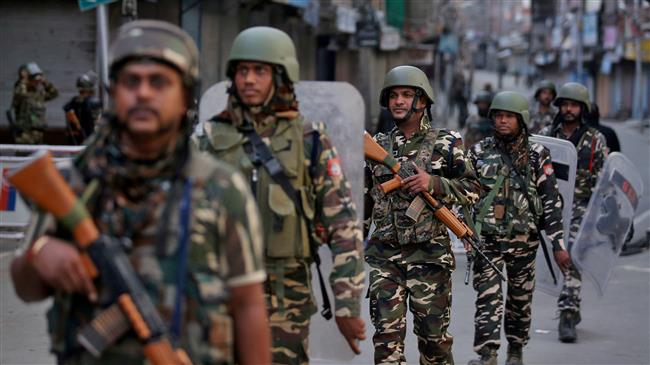
The crippling security and communications lockdown in the Muslim-majority Indian disputed Kashmir region has entered its 200 days. Nearly 900,000 military and paramilitary troops are deployed to prevent mass agitation since August 5 last year when New Delhi revoked Kashmir’s special status and forcibly annexed it into India.
The controversial merger of the disputed territory was in defiance of eleven UN Security Council resolutions which call for a plebiscite to allow Kashmiris to decide on whether they want to stay with India or join Pakistan.
Since then, the top Kashmiri leaders including three former chief ministers have been imprisoned. In their absence, the second tier leaders held press conference in Islamabad to inform the world of what India seeks to hide.
India has banned the entry of independent journalists, human rights activists, observers and even many western politicians from entering into disputed Kashmir region.
Kashmiri leaders believe that the Indian government has been deliberately crippling the economy to create adverse conditions for Kashmiris to force them to sell their properties to Hindu businessmen. This, they say, is aimed at altering the demography of the Muslim-majority state.
WaPo wants a bigger role for ‘elites’ in picking the president, & doesn’t even try to hide why
The “fake the consensus” model

One big happy family © AFP / Rick Odell
By Helen Buyniski | RT | February 19, 2020
“Elites” should get “a bigger say in choosing the president,” a Washington Post oped has declared, describing a system where regular voters just tell elites their pick and go home to let their betters work it all out.
The popular vote has been declared an anachronistic inconvenience in a WaPo oped by Marquette University professor Julie Azari that bemoans the “rocky start” to the Democratic primaries. Vermont Senator Bernie Sanders is leading the popular vote in the first two states, but this doesn’t match the delegate count, which unsurprisingly favors establishment favorite Pete Buttigieg. It’s best, then — according to Azeri — to throw out the whole system.

© screenshot, WaPo
Starting from the relatively uncontroversial principle that the current primary system is overly complex and sometimes coughs up unviable candidates, Azari takes a hard oligarchic turn. She calls for further disenfranchising ordinary voters by making their “vote” merely a suggestion given to an elected “intermediate representative,” who then “bargains” with the other representatives without being bound by the wishes of the voters who put them in place.
If that sounds like the nominating system already in place at the party conventions, you’re not wrong. Azeri, it seems, merely wants to extend the elites’ ability to pull the ripcord on populist drift down a step to make even the state primaries safe for her preferred, predetermined form of “democracy.” And if that sounds unfair — surely, she can’t be suggesting party elites rig the primaries — the whole point, in her mind, is to remove “uncertainty” from the nominating process, then allow a kayfabe (controlled, pro-wrestling-style theatre) version in the general contest:
“Democracy thrives on uncertainty — outcomes that are not known at the beginning of the process. But uncertainty doesn’t help parties strategize for the general election.”
But Azari would be hard-pressed to find any rank-and-file voter who would agree that the problem with American elections is “uncertainty” — or that the solution to the real problem is to give less power to the people. It’s not, after all, like the “elites” are underrepresented in circles of power. No one who has made it to the general election in the last 20 years has done so without an Ivy League pedigree, the ultimate elite signifier, and the journalists who write about them (and sell them to the voters) often move in the same elite social circles. A for-show “preference primary” in which the hoi polloi merely “inform elites about voter preferences,” which those elites are free to disregard, would forever seal off the process to genuine democracy, enshrining the “smoke-filled rooms” Democratic National Committee lawyers defended when they were sued over rigging the 2016 primary into procedure for the foreseeable future. At a time when exclusion mechanisms like superdelegates are less popular than ever, to try to shove this “reform” down voters’ throats is almost guaranteed to backfire.
This is, in a way, the point — both of the headline and of WaPo in general: to gaslight the reader into believing there is a national consensus behind the odious ideas it publishes, which are in reality the views of a moneyed oligarchy that feels only disdain for not only “flyover country,” but for the working-class denizens of the cities its members inhabit who keep the lights on and the shelves stocked. If the reader believes “superdelegates for primaries” are a done deal, they’re less likely to take to the streets and start breaking things.
If the response on social media was any indication, Azari’s “fake the consensus” model isn’t doing so hot these days — though it did inspire a bizarre consensus of its own between pro-Trump conservatives, #Resistance liberals, and progressives:
It’s still over a month until April Fool’s Day, and Azari at no point breaks character, so the reader can only assume the piece is meant in full seriousness.
Helen Buyniski is an American journalist and political commentator at RT. Follow her on Twitter @velocirapture23
Featured Video

or go to
Aletho News Archives – Video-Images
Book Review
The Maidan Killings and the False-Flag Case
By Freddie Ponton | 21st Century Wire | September 5, 2026
Before the killings that helped bring down Ukraine’s president in February 2014, American diplomats were discussing who should enter its government. In a leaked telephone call, senior State Department official Victoria Nuland told US ambassador Geoffrey Pyatt, “I think Yats is the guy,” referring to opposition leader Arseniy Yatseniuk. Washington had clear preferences and was working to advance them. Later that month, Yatseniuk became prime minister.
Ivan Katchanovski’s The Maidan Massacre in Ukraine examines the violence that preceded that transfer of power. Drawing on television footage, witness testimony, forensic examinations and Ukrainian court proceedings, he argues that elements of the opposition shot protesters and police in a false-flag operation. His case centres on evidence of protesters being shot from opposition-controlled locations, including Hotel Ukraina, overlooking the killing ground. … continue
Blog Roll
 Aletho News
- US Senator Murphy says Pentagon denied him entry to US base in Qatar
- Israel expands “incitement” charge to target Palestinian education and memory
- How Israel seeks to reshape Arab classrooms
- Paris bans pro-Palestinian demonstration planned for Oct. 7 over ‘risks of public disorder’
- In August Hanning Treason Case – All Signs Point To Tel Aviv.
- France cleared dozens of military sales to Israel between May and September: Report
- France projects nuclear power as Macron pushes arsenal expansion
- The fallacy of US delusions about Iran’s economic collapse
- What changes with Lula or Flávio?
- Britain leads Western media’s demise through ‘fear porn’ narrative
- If Americans Knew
- Soldier testimony sheds light on how Israel wages information war
- CIA Report Warns Israel Could Head Toward Civil War, Total Collapse
- Banker Who Exposed Howard Lutnick’s Ties to Epstein Warned of ‘Retaliation’ and ‘Personal Consequences’ in Last Post Before Suicide
- Israeli Attacks Kill Two Palestinians in Gaza
- Gaza genocide at 3: Israeli-U.S. cruelty and the smart, deep resistance to it are changing the world
- As genocide is about to enter 3rd year, little of Gaza remains– Daily Update
- “We See Our Homes Now From A Satellite, Like Strangers”
- Watch “Gaza: Doctors Under Attack”, originally censored by BBC
- NAZA: Israeli embassies in UK and US promote rival documentary to challenge Gaza genocide allegations
- David Ellison appoints Israeli to lead merged Paramount-Warner studios
- No Tricks Zone
- US September “Heat” Was No Record…Many Records Set Decades Ago
- Latest European Green Energy Debacle; Portugal’s Largest Flagship Solar Park Insolvent!
- Green Energy Debacle: German Expert Professor Fritz Vahrenholt Warns Of Severe Economic And Social Consequences
- Two More Paleo Reconstructions Affirm Meters-Higher Sea Levels Across Ireland, Brazil 7000-6000 Years Ago
- New Study: Earth And Venus Surface Warmth Largely Explained By Convection And Lapse Rate, Not CO2 Or Radiation
- 2025 Nature Paper Claiming Worsening Global Drought Gets RETRACTED …Heavily Flawed
- New Study: ‘Global Drought Shows No Detectable Recent Acceleration Under Climate Warming’
- Economic Masterminds: German Socialists Suggest Taxing Productivity Gains Stemming From Using AI
- The South China Sea Has Not Been Cooperating With The Climate Change Narrative
- Energy Crisis: Germany Enters Heating Season With Historically Low Gas Reserve Fill Levels

