Israel charges Palestinian cleric Sheikh Salah with incitement of terror
Press TV – August 24, 2017
The Tel Aviv regime has indicted Sheikh Raed Salah, a cleric who supported Palestinian protests over Israel’s controversial security measures imposed last month at a holy site in occupied Jerusalem al-Quds.
The Israeli court formally charged Salah on Thursday with incitement of terror over speeches he delivered encouraging Palestinians to protest for the right of holding prayers inside the Haram al-Sharif compound, which is home to the revered al-Aqsa Mosque, the third holiest site in Islam.
Israel had earlier in the week extended Salah’s detention, nearly a week after he was arrested. Prosecutors had demanded the renewed detention, saying they intended to bring charges against the 58-year-old cleric.
Israel’s security measures, which came after the July 14 deadly shooting and killing of two Israeli policemen, sparked some unprecedented protests and sit-in gatherings in occupied East Jerusalem al-Quds as Palestinians refused to accept the restrictions for nearly two weeks.
Israel was later forced to remove metal detectors and cameras installed at the gates and Palestinians ended sit-ins and prayers outside the mosque.
Salah had served for nine months in Israeli jails before he was released in January. He was previously charged with “incitement of violence” and “incitement of racism.” His latest arrest sparked condemnations in the occupied territories as his supporters said it was part of a political witch hunt aimed to silence dissent.
Israelis have also banned Salah’s group, the Islamic Movement in Israel, in 2015 for allegedly stoking violence.
Israeli forces detain Addameer field researcher during overnight raid
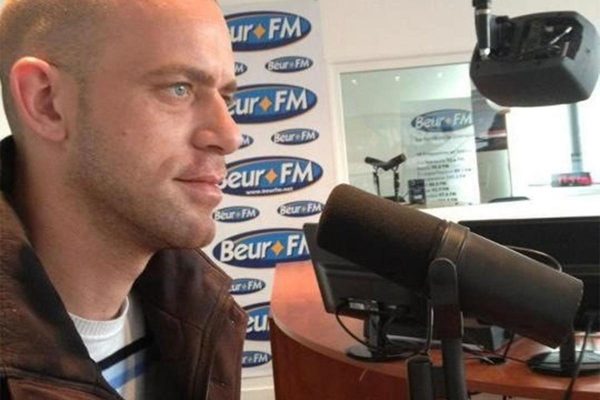
French-Palestinian activist Salah Hamouri. [Photo: twitter.com | salah_hamouri]
Ma’an – August 24, 2017
BETHLEHEM – A field researcher for prisoners’ rights group Addameer was detained during an overnight raid on Wednesday from his home in the occupied East Jerusalem neighborhood of Kufr Aqab, according to the group.
Salah Hammouri, 32, who holds dual Palestinian-French citizenship, was detained and transferred to Israel’s interrogation center at the Russian compound, where his detention was then extended until Sunday.
An Israeli police spokesperson told Ma’an that he was “not familiar” with the case.
According to Addameer, Hammouri was a former prisoner of Israel for seven years, and was released as part of the Wafa al-Ahrar prisoners exchange deal in 2011.
Addameer added that the East Jerusalem resident was banned from entering the occupied West Bank until Sept. 2016, and that his wife is currently banned by Israeli authorities from entering Palestine or Israel.
The group said it considers the detention “an attack against Palestinian civil society organizations and human rights defenders.”
“It also constitutes one arrest in the context of continuous arrest campaigns against Palestinians,” Addameer said, before demanding Hammouri’s release and the release of all Palestinian political prisoners.
Hassan Safadi, a Palestinian activist and media coordinator for Addameer, has also been held in administrative detention — Israel’s controversial policy of imprisonment without charge or trial — for more than a year.
Safadi has been held by Israel since May 1, 2016 after being detained at the Allenby Bridge between the occupied West Bank and Jordan, when he was interrogated by the Israeli army for 40 days.
Israeli authorities later sentenced the 25-year-old Palestinian to six months of administrative detention in June 2016, and has since renewed the administrative detention order twice — once in Dec. and a second time in June this year.
Israel’s widely condemned policy of administrative detention allows internment without charge or trial in maximum six-month long renewable intervals based on undisclosed evidence that even a detainee’s lawyer is barred from viewing.
According to prisoners’ rights group Addameer, 6,128 Palestinians were detained by Israel as of July, 450 of whom were held in administrative detention. The group has estimated that some 40 percent of Palestinian men will be detained by Israel at some point in their lives.
Kuwait Files Cases Against Web Users Criticizing Qatar Blockade
Sputnik – 23.08.2017
The Kuwaiti Attorney General’s office filed criminal cases against several social media users who have been criticizing Arab states and their leadership for the decision to cut ties with Qatar and impose a blockade, Kuwaiti Information Minister Sheikh Mohammad Abdullah Al Sabah said Tuesday.
“We do not tolerate offensive remarks regarding any friendly Arab country, made by both licensed Kuwaiti media and social media users. The Attorney General’s office will deal with all those who offended Persian Gulf states,” Al Sabah said in an interview to Saudi Arabian Okaz newspaper.
He also noted that the names of those users had been already submitted to the Attorney General’s office.
In early June, Saudi Arabia, the United Arab Emirates, Bahrain, Egypt and a number of other countries broke off diplomatic relations with Qatar in early June, accusing it of supporting terrorism and interfering in their internal affairs. The move has been strongly condemned by a number of Kuwaiti journalists and analysts, who have a large number of followers on social media.
Kuwait, acting as a mediator in the crisis, handed over the four Arab states’ ultimatum containing several demands to Doha. The list included requests to sever relations with Iran, close Turkey’s military base on Qatar’s territory, shut down Al Jazeera TV channel and end support for the Muslim Brotherhood, a terrorist organization banned in Russia. Doha has refused to comply with the demands.
Palestinian Authority shows its ‘authoritarian’ face through Cyber Crimes Law
Ma’an – August 22, 2017
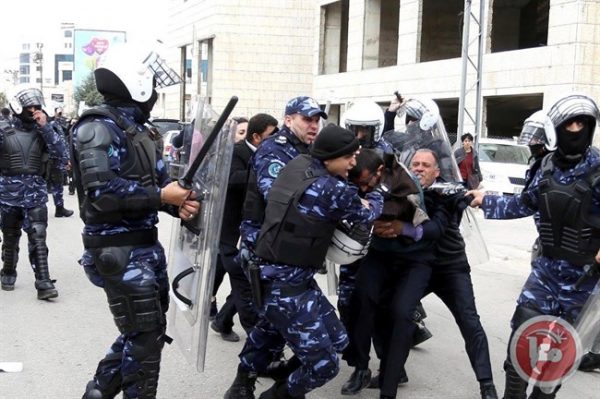
BETHLEHEM – Palestinian prisoners’ rights group Addameer has joined a growing chorus opposition to the Palestinian Authority (PA) — which the NGO described as “an ever increasingly authoritarian regime” — for a new far-reaching law that effectively criminalizes “any form of digital dissent.”
The decree, issued by Palestinian President Mahmoud Abbas on June 24, has been described by rights groups as “draconian” and “the worst law in the PA’s history,” for imposing jail time, hard labor, and fines for creating, publishing, and sharing information deemed dangerous by the PA.
In a statement last last week, the leftist PLO faction the Palestinian Front for the Liberation of Palestinian (PFLP) called the law “a repressive tool” against all who disagree, oppose, and “confront the misdeeds” of the PA.
The PFLP said the law’s passage came as “the (Israeli) occupation is waging a frantic campaign against journalists, including prosecutions, arrests and attacks, sometimes amounting to direct physical targeting leading to the death and injury of dozens of journalists,” and that that PA “is seeking to prosecute and arrest the same journalists.”
In detailed breakdown of the new law published Sunday, Addameer, which provides legal support to Palestinian political prisoners held by Israel and the PA, explained that the vague and far-reaching law could mean prison time, hard labor, and/or hundreds of dollars in fines for journalists, leakers, meme-sharers, and someone “watching Game of Thrones using a VPN.”
“The most troubling aspects of this document are its vague definitions of what constitutes a punishable offence, its extension of punishment to any individual who assists or agrees with what the decree considers a felony, and the clear attacks on dissenters, journalists, and leakers,” the prisoners’ rights group explained.
Addameer slammed the law for using quasi-legitimate restrictions on hacking and internet fraud as legal camouflage for serious curtailments of privacy and freedom of expression.
While the rights group said there was a “kernel of truth” that such a decree was needed to combat hackers and fraudsters, “it by no means represents a ‘necessity’ as stipulated in the Basic Law.”
Palestinian Basic Law says that presidential decrees may only be issued in a “time of necessity, if the situation is urgent enough as to not be able to wait until the next sitting of the Palestinian Legislative Council,” according to Addameer.
Since Hamas won parliamentary elections in 2006, the Palestinian Legislative Council has not convened in Ramallah, meaning that Abbas, who extended his presidency indefinitely in 2009, has been ruling solely by decree for a decade.
Prison time, fines, or both
The law mandates that “any person who…has abused any information technology” can face imprisonment, a fine 200 to 3,000 Jordanian dinars, or both. If the alleged offence affects government data, a minimum sentence of five years of hard labor and a minimum fine of 5,000 Jordanian dinars ($7,070) is called for, Addameer said.
This clause, according to Addameer, is clearly directed at journalists and leakers, though such “abuse” is undefined and open to interpretation.
A person who threatens to commit a felony or an undefined “immoral act” on the internet also faces temporary hard labor.
Anyone who creates or shares content that “infringes on public morals” faces a minimum one-year sentence or a minimum fine of 1,000 Jordanian dinars capped at 5,000 dinars ($7,070), or both.
The greatest threat to press freedoms in the law, Addameer said, is an article that punishes “anyone who creates or manages a website or an information technology platform that aims to publish news that would endanger the integrity of the Palestinian state, the public order or the internal or external security of the State” with a fine between $1,414 and $7,070 or at least a year of jail time, or both.
Anyone who shares such content would also be punished with a maximum one-year prison sentence or fine of between 200 Jordanian dinars ($283) and 1,000 dinars ($1414), or both.
“Something as simple as a share on Facebook could result in a fine, jail time, or both. The decree even goes as far as to criminalize the use of any means to bypass the blocking of certain websites, such as a VPN,” Addameer said.
The decree also demands website providers comply with the PA to block certain websites, enshrines the right for the PA to seize equipment allegedly used in cyber crime felonies, and allows the PA to monitor anyone’s communications and data for a renewable period of 15 days with magistrate’s court approval. Violators of these clauses can expect hard labor or temporary hard labor.
“In essence, besides the infringement on freedom of the press, the PA can now imprison and fine individuals for a Facebook share, watching Game of Thrones using a VPN, making an ‘offensive’ meme, posting a tweet against certain policies, or asserting political allegiances,” Addameer said.
2 known instances of law being used so far
Addameer said that the PA has already used the law to curtail press freedoms and freedom of expression at least twice.
Most recently, five journalists were arrested and accused of “leaking information to hostile entities,” and four others were also questioned. Initial claims said the arrests were not related to the decree, but the prosecutor later cited the law as the reason for their arrest.
The journalists were held for five days and were made to agree to a 1,000 dinar bond, the amount stipulated in the decree. “It is unclear if charges will be further pursued but, at this point, none have been officially issued,” according to Addameer.
The journalists, barring one freelancer, all worked for news outlets that were blocked by the PA in mid-August. The majority of the 30 affected sites were affiliated to PA rivals Hamas and discharged Fatah member Muhammad Dahlan, with a few others being associated with so-called Islamic State.
“The fact that these websites are run by political rivals to the current ruling faction of the PA indicates that that these laws are being and, will continue to be used, to stifle free speech, legitimate decent (sic), and discussions regarding the state of politics in Palestine,” Addameer said.
Despite not being detained under the decree, Addameer also cited the arrest of Palestinian Today journalist Jihad Barakat, as a violation of press freedoms since the law was enacted. He was detained for filming Palestinian Prime Minister Rami Hamdallah being searched by Israeli soldiers at a checkpoint.
Barakat was charged for a range of offenses, including panhandling, for which he will stand trial in the PA court system in September.
Addameer reminded the PA of its obligations under a number of human rights conventions the decree violates regarding freedom of expression, to which the Ramallah-based government has committed.
“Despite the ‘Electronic Crimes Law’ using the language of ‘national security,’ the decree itself is clearly contrary to the spirit of the International Covenant on Civil and Political Rights. The fact that the limits on free speech have been applied to opposition voices, and critical journalists, is more than enough to conclude that the PA is currently in violation of their international commitments,” the prisoners’ rights group affirmed.
“Furthermore, Addameer urges that the Palestinian Authority must abide by the conventions to which it is a party, especially considering the ongoing deteriorating human rights situation in the occupied Palestinian territories.”
TSA facial biometric body scanners and government watchlists being used in train stations
MassPrivatel | August 22, 2017
The TSA is winning the war on Americans minds as commuters are being tricked into giving away their rights without a fight.
The above video warns that facial recognition body scanners are coming to a train station near you…
“Soon you might have to pass through one of these to get to your train or subway.”
Last week, the TSA Los Angeles Metropolitan Transportation Authority ‘voluntarily’ asked commuters to walk through facial recognition body scanners before being allowed to board a train.
If you watched the video you might have noticed that the mass media (CBS) did not interview a single person who was concerned about their privacy. Instead, they quoted passengers who think body scanners are a good thing.
Nothing suspicious about that, right?
CBS warned that if the LA Metro installs the body scanners next year, commuters won’t be able to opt-out.
According to an article in the LA Times, the LA Metro has begun piloting biometric body scanners that send short-wave radio frequencies through commuters bodies to search for bombs and weapons.
A ‘pilot program’ is really a government euphemism for gauging the public’s response to another intrusive police search.
Bill Gates bankrolled high speed body scanners
According to an article in ‘The Guardian’, the start-up company Evolv Technology is pilot testing high speed body scanners at the Los Angeles’s Union Station, Union Station in D.C., and the Denver international airport.
Evolv has taken a page right out of the TSA playbook citing safety concerns and fear of terror to justify their usage.
Corporations are using Americans fears of terror to make huge profits.
Evolv stands to make hundreds of millions of dollars if commuter train stations install their body scanners. A single scanner will cost taxpayers $60,000, while Bill Gates who helped fund Evolv Technoloy makes a nice profit.
Police use our fears of terror to justify losing of our rights
An LA Times article served as a mouthpiece to justify more government spying.
Mr. Wiggins isn’t done scaring the public just yet…
Curiously, the LA Times devoted only one sentence to privacy concerns.
Three months ago, I warned everyone that California Transit Authorities have a history of using corporate spy gear to spy on commuters.
A class action lawsuit in California revealed that Transit Police are using a ‘Bart Watch’ app and Stingray surveillance to allegedly spy on commuters texts and emails.
Let’s make one thing perfectly clear, the war on terror is a for-profit business being led by private corporations and DHS. (The TSA is part of DHS.)
To learn more I recommend checking out Gary Jacobucci’s article that asked if, ‘DHS is a private offshore corporation.‘ Here are two companies that appear to be fronts for DHS: Homeland Security Solutions and Homeland Security Corporation. (Click here & here to find out more.)
Body scanners use government watchlists
Evolve uses ‘Known Wolves’, watchlist software that can identify people of interest or anyone on a government watchlist.
Getting the public to accept facial recognition body scanners at airports and Disney World is only part of a much greater privacy nightmare.
Evolv’s facial recognition body scanners are being used at public area screenings, sporting events, and employee screenings.
Retail stores and conference centers are also using facial biometric cameras and scanners.
Imagine a future where the police use government watchlists, facial biometric scanners, Stingray cellphone surveillance, Bluetooth, and license plate readers to spy on our every movement.
This is our future unless we fight for our privacy rights.

image credit: CryHavok
Will Britain’s crackdown on internet trolls undermine freedom of speech?

RT | August 21, 2017
New measures designed to crack down on hate crime could have a “chilling effect” on freedom of speech, warn civil liberties campaigners.
Fresh guidelines issued on Monday by the Crown Prosecution Service (CPS) would see online abuse treated with the same “robust and proactive” approach used to address offline offending.
However, in this attempt to protect users from abuse, the CPS risks undermining the fundamental right to freedom of expression, according to Open Rights Group Legal Director Myles Jackman.
“Some offenses employ highly subjective terms like ‘grossly offensive’ and ‘obscene’ which could have a severe chilling effect on the more unpalatable but legitimate areas of free speech, if interpreted strictly,” Jackman said.
The new measures, aimed at protecting people from online trolling, come as part of a bid to crack down on the “corrosive effect” of hate crime on British society.
Regional police forces reported a rise in hate crimes of up to 100 percent in the months following the EU referendum last year.
According to figures released by London Mayor Sadiq Khan, the rate increased fivefold in the capital following four terrorist attacks in the UK that killed more than 30 killed and injured many more.
The updated CPS documents state: “Hate crime can be perpetrated online or offline, or there can be a pattern of behavior that includes both.
“The internet and social media in particular have provided new platforms for offending behavior.”
CPS Director Alison Saunders said tackling hate crime has become a priority for prosecutors because of the major impact it has on people’s lives.
“These documents take account of the current breadth and context of offending to provide prosecutors with the best possible chance of achieving justice for victims,” Saunders said.
“They also let victims and witnesses know what they should expect from us.”
She hopes the new guidelines will encourage people to report hate crimes, with the “knowledge they’ll be taken seriously and given the support they need.”
Britain’s Jewish and Muslim communities say a lot of offenses involve the internet.
Fiyaz Mughal, the founder of campaign group Tell MAMA, which monitors Islamophobic abuse, praised the new focus on social media.
“Those who think that street-based hate crimes should have precedent over online ones, should realize there is no competition in getting access to justice,” he said, according to the Independent.
Left, You Have Been Duped
By Richard Hugus | August 20, 2017
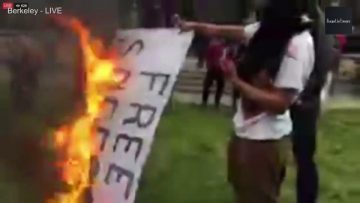
On August 19, a week after a heavily publicized clash over a statue of Robert E. Lee in Charlottesville, Virginia, an estimated 8,000 people converged on Boston Common to protest a speaking event organized by a group calling itself the Boston Free Speech Movement. Who are the Boston Free Speech Movement and what do they stand for? We’ll never know because antifascists, leftists, anti-racists, and progressives of Boston prevented them from even speaking. Some might say this was a good thing — no one wants to hear from bigots (if that’s who they were) — but in fact the left in all its self-righteousness was duped into an assault on the 1st Amendment to the US Constitution, which guarantees the right of free speech, for everyone. The left have been the pawns of much more powerful forces who, if they aren’t organizing these news events and provocations outright, are certainly happy to see precedents set for publicly shutting down free speech by the use of force. First it will be the speech of fascists, then it will be the speech of anybody the authorities don’t like, including leftists.
Suddenly we are being confronted with organizations who claim to know what is or is not appropriate for the rest of us to hear. Now that sides have been established — one which can decide what is and isn’t acceptable speech, and another which is forbidden to speak on pain of attack, all that remains is for the powerful to make sure their narrative is the one that’s allowed. Isn’t this fascism? Aren’t people who claim to be anti-fascist actually doing what classic fascists do?
It’s not a coincidence that just prior to these speaking events being shut down, Google, Inc. asserted its right to decide what is and is not a legitimate news source. At the same time the US Congress is considering legislation that would make it illegal for US citizens to support boycott, divestment, or sanctions against Israel. Not surprisingly, the pro-Israel Anti Defamation League (ADL) has been brought on by Google to advise them on which news sources are legitimate and which are not. Google now has such a monopoly on information on the Internet that it is in a position to bury unapproved news sources forever. The ADL will therefore be able to effectively censor any negative news about what Israel is doing in Palestine and the middle east, just as AIPAC, through its ownership of the US Congress, will be able to censor free speech of American citizens when it comes to, once again, Israel.
In the ‘50s the ADL monitored “pinkos” for the House UnAmerican Activities Committee. In the ‘90s ADL monitored activists working to end apartheid in South Africa, in the 2000s the ADL began monitoring Arab American organizations and mosques. Today the ADL monitors pro-Palestine groups on college campuses. In each case the ADL has gone after “extremism and hate speech” in the US, as defined by Israel.
One wonders, why does Israel, a foreign country, have such a say on what people in the US can and can’t talk about?
There is no way to censor speech without a point of view or agenda. The agenda is usually dictated by whoever has power. Thus censorship serves those in power. When we take part in it, we serve the power.
People are apparently upset about an upsurge of Nazism. Why weren’t they in the streets when neocon Victoria Nuland and the US State Department organized a coup in Ukraine with the overt assistance of neo-Nazis? Why were Nazis okay during Obama’s presidency but not during Trump’s?
Where was the outrage when Hillary Clinton and the US State Department attacked and destroyed Libya? The liberal left considered this a “humanitarian intervention,” just as it did when the US decimated Yugoslavia.
Why is it that after six years of siege and murder committed by US proxy forces in Syria, the only national demonstration that could be mustered in Washington was on the issue of private remarks Trump once made about grabbing women — the famous “pussy hat” demonstration?
Why is it that the liars in the mainstream press could get away with false stories of chemical attacks in Syria being carried out by the Syrian government when it was obvious that the attacks were carried out as false flags by US proxy forces? Why are Syrians still being bombed and killed every day by US “coalition” forces with no protest?
Why is it that Iraq is no longer a concern, after 26 years of genocidal assault by Uncle Sam, with efforts now being made to balkanize Iraq through support for “Kurdistan”? Why are US troops still there? Why are they still in Afghanistan? Where are the masses taking to the streets to shout down the liars making these policies?
Why is it the business of the US to interfere in Venezuela’s internal affairs, even to the point of military intervention? Has Venezuela harmed the US in some way? Has the left swallowed yet again the lie that the US is concerned about human rights in another country?
Why is it that Palestinians have been forgotten, as Israel, the US’s closest ally, transparently conducts genocide against them, year after year, so that today Israel can talk openly of forced transfer of the entire Arab population of Palestine. Isn’t terror also being committed when Israeli settlers routinely ram their cars into Palestinians in the street, or is it just terror when this happens in Europe?
Why is it that the US supports a state for Jewish people only that necessarily discriminates again non-Jewish Christians and Muslims? Isn’t discrimination on the basis of religion a hate crime? Isn’t the ADL in a conflict of interests when it claims to be an authority on hate crimes while representing such a state? Has the left ever repudiated its long record of blocking for Israel and Israel’s crimes?
Why is it that the virtuous left has nothing better to do than face off with a few obvious provocateurs with their over-the-top nazi slogans while the US — their country, in their name — is actively supporting Saudi Arabia in its destruction of a practically defenseless Yemen?
Where has the left been in its opposition to US government and media “hate speech” and war-baiting against Russia, China, and Iran? Is World War III not a problem? Did something lead leftists to believe that life on earth was not important right now?
Is the US threat of a nuclear attack on North Korea a side issue — something to be dealt with only after facing off with the Klan?
What about the murder of millions of Arabs and Muslims since 9-11 on the basis of a false story about who did 9-11? Surely there is a case to be made here for discrimination on the basis of religion, if not serial mass murder, based on a pretext which itself was an open crime for all the world to see. Why does the left consider discussion of this crime unimportant and passé?
That the left has mobilized to stomp on a handful of people in Charlottesville and Boston only proves its impotence. It’s like the man who has been frustrated at work all day who comes home and kicks his dog.
The worst of it all is that both the left and right have been suckered into a division which will use up all their energy and get plenty of attention from the press while the real crimes and the real criminals roll steadily along, laughing at the stupidity of everyone involved and the ease with which they were manipulated.
UK to jail pro-Palestinian protesters

Press TV – August 20, 2017
A group of five pro-Palestinian activists in the UK face possible prison sentences after being arrested during protests outside an Israeli-owned weapons manufacturing company.
Charged with a breach of the Trade Union and Labor Relations Act, the protesters face at least six months in prison and a fine of up to £5,000, the media reported Sunday.
They were arrested in July following a protest in the West Midlands town of Shenstone that forced the UAV Engines Ltd plant, a subsidiary of Israeli drone manufacturer Elbit Systems, to shut down all operations for two days.
The demonstration saw activists put small coffins outside the factory and lay down next to them to raise awareness about the Israeli regime’s record of killing Palestinian children over the years-long occupation of the country.
Palestine Action, the organization that helped organize the demonstration, said all of the accused would plead not guilty in the case.
“They [protesters] believe that the factory is complicit in illegal activity and that they were preventing a crime,” the group’s Birmingham and Manchester branches said in a statement.
A lawyer for the protesters said “the lawfulness of [Elbit and UAV Engine’s] activity in its factory” was one of the issues that they were going to discuss in the case.
Based in the northern Israeli city of Haifa, Elbit produces range of military equipment, including drones, aircraft, weapon control systems, and artillery.
The company’s customers include the Israeli army, US Air Force, the British Royal Air Force, and the French Defense Ministry.
A group of European Banks and financial institutions have on several occasions boycotted the company for arming Israeli military forces despite growing criticism from the international community.
The efforts are part of the Boycott, Divestment and Sanctions (BDS) global movement against Israeli companies.
The British government has been under increasing pressure from Israel to put a ban on pro-Palestinian demonstrations.
A number of universities in the UK have already banned their students from holding events in solidarity with the people of Palestine.
Israel to Impose Fines for Commemoration of Nakba
IMEMC News & Agencies – August 17, 2017
Israeli occupation authorities are prepared to impose massive fines on Palestinians who commemorate the Israeli occupation of Palestine, a report revealed on Tuesday.
 An Arab member of the Knesset said, according to Days of Palestine, that occupation authorities have decided to fine institutions which rent out space for events organized by non-Jewish citizens, which the state regards as illegal.
“The Israeli measure is against the simplest basics of democracy and free speech,” explained Jamal Zahalkeh MK. “It is racist because it targets Arab citizens and their institutions.”
On Sunday, the Israeli Culture and Sport Minister, Miri Regev, and Attorney General Avichai Mendelblit met and agreed on how to implement the so-called “Nakba Law” which first surfaced in 2011.
It stipulates that any institution in receipt of government funds will be fined up to three times of the said funds if it rejects Israel as a “Jewish and democratic” state; incites racism, violence or terrorism; supports armed resistance or terrorist acts against Israel; or commemorates Israel’s “independence day” as Palestinian Nakba Day.
Israel Hayom said that Regev asked for the meeting after reports about an event hosted by a Jaffa theatre in honor of former Joint Arab List MK Basel Ghattas, who was indicted for smuggling telephones to Palestinian security prisoners.
Regev and Mendelblit, the newspaper said, agreed that complaints about alleged violations of the Nakba Law, by public institutions, would be passed on to the finance ministry, which would have a week to respond on whether a given incident in fact violates the law.
A De-Putin-Nazification of America Update
By CJ Hopkins | CounterPunch | August 18, 2017
So the de-Putin-Nazification of America couldn’t be going much better at the moment. In terms of emotionally manipulating people (and especially any heretofore wayward members of the American “left”) into forming a mindless, hysterical mob and running around like headless chickens branding anyone who didn’t vote for Hillary Clinton a goose-stepping Nazi, this past week has been a huge success. At this point, if you haven’t yet posted an anti-Nazi loyalty oath on Twitter, Facebook, or some other platform, you’re a potential “Nazi sympathizer” … and you don’t want to be one of those, now do you? No, I didn’t think you did. So, if you haven’t done that, you’d better get on it. Here are few tips to get you started.
Your anti-Nazi loyalty oath should include a clearly-worded statement acknowledging that Donald Trump is Hitler, or at least the leader of the tens of hundreds of imbecilic, neo-Nazi losers who, according to most of the mainstream media, are on the verge of overthrowing the entire American ruling establishment. It should also include a threat to unfollow, de-friend, and otherwise socially ostracize anyone who hasn’t posted such an oath, or who, despite the Charlottesville Kristallnacht, stubbornly continues thinking critically, or maintains any form of historical awareness, or presents any kind of rational arguments challenging the prevailing Nazi hysteria.
It should also include one or more of the following:
(1) If not an outright call for the First Amendment to be repealed, then at least a demand for a ban on “hate speech,” and the removal of every hate-based statue, flag, painting, book, film, song, joke, or other expression of racism, hatred, religious bigotry, misogyny, extremism, general rudeness (and any other forms of speech or expression that you don’t like) from public view. Don’t worry about the ramifications of this ban. It will never, ever, be used against you, or anyone that you agree with, or against any authors or artists that you like. It’ll be a ban on “hate-speech,” after all, and it’s not like that term is completely subjective, or subject to the whims of those in power, or anything like that.
(2) A demand that the already overly-broad definition of “terrorism” now be expanded even further, to include the fascist who drove his car into a crowd of counterprotesters in Charlottesville, killing one and wounding many others. Never mind that this murderous idiot seems to have done this on the spur of the moment (or, if it was a planned attack, that he’s even more of an idiot than he seems, which, judging from his mug shot, is hard to believe). The important thing is to help the Resistance expand the definition of “terrorism” to the point where they can slap it onto anyone. Again, don’t worry about the ramifications. The “terrorist” label will never, ever, be used against groups that you approve of, or innocent people in faraway countries that some future president wants to murder with drones. The Resistance would never, ever, do that. They know who is and who isn’t a terrorist. And if they don’t, they can always check with Obama.
(3) A reference (either veiled or direct) to someone who may be a Nazi-sympathizer. This is crucial in terms of motivating others to post their loyalty oaths, and fostering an atmosphere of paranoia, which is always so helpful at times like this. Surely, you know of someone who has said, tweeted, published, or posted something that could be interpreted as “Nazi-friendly.” Don’t bother with the Trump supporters. The corporate-owned media will take care of them. You want to go after other leftists, specifically leftists who have been reluctant to call Trump Hitler, or a Putinist agent, or who disagree with you about Syria, or, you know, just people who get on your nerves. This is a golden opportunity to pore through their tweets and Facebook posts, find something you can use against them, and then accuse them of harboring Nazi sympathies. Given the current level of hysteria, few people are going to check your facts. This is one you can really have fun with. See how far you can push the paranoia. Make up elaborate conspiracy theories. If you’re not quite sure how to go about that, check The New York Times or The Washington Post … they’re masters of that kind of thing.
Your anti-Nazi loyalty oath should definitely not include any of the following:
(1) Any mention of the Ukrainian Nazis that Obama, Clinton, and the rest of the Resistance (before it was the Resistance, of course) helped regime-change the Ukrainian government when it wouldn’t play ball with the EU and NATO. Mentioning the Resistance’s support of these Nazis would only confuse those reading your oath, who might not understand that there are good Nazis and bad Nazis, and who have probably forgotten how the US government smuggled a number of actual Nazis (i.e., members of the NSDAP) into America after WWII … or how, since the end of that war, the United States has mass murdered countless millions of people all over the planet (but, technically, not in a genocidal fashion, so that doesn’t make us the same as Nazis).
(2) Actual membership figures on neo-Nazi and white supremacist groups, because those figures are pathetically small. Doing this would make your loyalty oath (not to mention the whole Nazi hysteria thing, generally) seem, if not paranoid, then at least absurd, or like part of some manufactured effort to whip up support for a ruling class coup by waving Nazis in front of everyone’s faces. This would be extremely counterproductive. Remember, one of the primary goals of the De-Putin-Nazification program is to convince the public that Richard Spencer (and the handful of other insignificant idiots that the corporate media is showering with publicity) is about to lead an overwhelming force of tiki torch-bearing neo-Nazis into the streets of American cities to battle the hyper-militarized police, the national guard, and the US military, or some other preposterous scenario like that.
(3) Any reference whatsoever to the corporatocracy that runs the country, and that normally decides who can run for president, and which is currently making an example of Trump in order to dissuade any future billionaires from having the audacity to fuck with them. You’ll be better off avoiding this subject entirely, as it only reminds folks how screwed they are, and how, odds are, they’re probably all worked up about something the corporate-owned media wanted to get them all worked up about, neo-Nazis, Russian hackers, nuclear war with North Korea, Syrian gas attacks, lone wolf terrorists, weapons of mass destruction, or whatever. Take it from someone who’s worked in show business. No one likes being made aware of how they are being manipulated … or provided with a binary set of officially acceptable contextual parameters within which they can think and speak.
But don’t worry too much about that binary stuff. There’ll be plenty of time to get into all that after we rid the world of these Nazis, and these racists, and all these Confederate statues. And Trump, of course. That’s the main thing … getting rid of Donald Trump, and getting a Democrat back in office. Oh, yeah … and the books. We need to look at the books. God knows how many Confederate books are still out there in the public libraries, and in people’s homes, where children can read them. We’ll need to get to the books eventually.
In the meantime, focus on Priority One. Go hard on the Nazi hysteria, at least throughout the rest of the weekend, after which they’ll probably need to switch us back to the Russia hysteria, or possibly the North Korea hysteria, or … damn, see? Here I go with that contextual parameter stuff again. I’ve really got to stop doing that. The last thing I need is to get myself accused of being some kind of Nazi sympathizer, or Confederate apologist, or Russian propagandist, or extremist, or terrorist, or, you know … whatever.
 C. J. Hopkins is an award-winning American playwright, novelist and satirist based in Berlin. His plays are published by Bloomsbury Publishing (UK) and Broadway Play Publishing (USA). His debut novel, ZONE 23, is published by Snoggsworthy, Swaine & Cormorant. He can reached at cjhopkins.com or consentfactory.org.
Featured Video
The Search for Truth: Charlie Kirk’s Assassination One Year Later
or go to
Aletho News Archives – Video-Images
From the Archives
The 9/11 “Double-Cross” Conspiracy Theory
BY LAURENT GUYÉNOT • UNZ REVIEW • SEPTEMBER 6, 2022
Is it true that “9/11 was an inside job”? Yes, insofar as Israel is “inside” the U.S. But for the 9/11 truthers who have identified Israel as the main perpetrators, “9/11 was an inside job” is at best a half-truth, and at worst an integral part of the Zionist operation, like a secondary flag sewn as a lining under the false flag of Islamism. Victor Thorn (1963-2017) wrote in his book 9/11 made in Israel: The Plot Against America (2011): “In essence, the ‘9-11 truth movement’ was created prior to Sept. 11, 2001 as a means of suppressing news relating to Israeli complicity. . . . The slogan ‘9-11 was an inside job’ was quite possibly the greatest example of Israeli propaganda ever devised.” In milder terms, it is “controlled opposition”.
A genuine truth movement would have pointed to Israel as the prime suspect from the start. From day one, it was obvious who would benefit. … continue
Blog Roll
 Aletho News
- Hormuz and the Looming Economic Catastrophe
- Dhubab offensive, media blitz and the rapid unraveling of Saudi-backed coalition’s new gambit
- Putin Conveys to Trump Iran’s Vision on Possible Conflict Resolution – Kremlin
- The Search for Truth: Charlie Kirk’s Assassination One Year Later
- ‘Harsh reality’: Iran says France seeks monopoly on power and intimidation, not peace for all
- When Will This White House Madness End?
- Huckabee aide goes to ‘unusual lengths’ to portray ‘Israel’ positively
- Trump Announces Diesel Supply Deal With Putin Following Phone Call
- MEP blasts ‘Euro-Gestapo’ for lecturing Russia on democracy
- Syria May Send Troops to Saudi Arabia Amid War with Ansar Allah
- If Americans Knew
- Israeli forces kill another child in Gaza – Daily Update
- Gaza ceasefire exists in name only, say more than 100 organizations
- Nearly 2 Million in Gaza Need Urgent Shelter Assistance as Winter Looms: IOM Chief Warns
- Suppressing Palestinian resistance: US charity under fire for AI monitoring of Gaza classrooms
- Thousands Are Held in Israeli Torture Camps. This Is What Happens Inside
- Israel puts Gaza’s sick, injured, newborn in peril – Daily Update
- Report claimed Mark Levin used by Israeli government to influence Trump
- Over 2,000 Gazans have died awaiting medical evacuation amid Israel’s continued siege
- How a U.S. Diplomat Suppressed and Altered Reports Critical of Israel
- 5 Palestinians Die from Israeli Strikes in Gaza as Relentless Attacks Continue
- No Tricks Zone
- New Study: 50 Years Of The Most Aggressive ‘Net Zero’ Policies Can Only Affect The Global Climate By 0.03°C
- US September “Heat” Was No Record…Many Records Set Decades Ago
- Latest European Green Energy Debacle; Portugal’s Largest Flagship Solar Park Insolvent!
- Green Energy Debacle: German Expert Professor Fritz Vahrenholt Warns Of Severe Economic And Social Consequences
- Two More Paleo Reconstructions Affirm Meters-Higher Sea Levels Across Ireland, Brazil 7000-6000 Years Ago
- New Study: Earth And Venus Surface Warmth Largely Explained By Convection And Lapse Rate, Not CO2 Or Radiation
- 2025 Nature Paper Claiming Worsening Global Drought Gets RETRACTED …Heavily Flawed
- New Study: ‘Global Drought Shows No Detectable Recent Acceleration Under Climate Warming’
- Economic Masterminds: German Socialists Suggest Taxing Productivity Gains Stemming From Using AI
- The South China Sea Has Not Been Cooperating With The Climate Change Narrative

