United Nations human rights experts have expressed concern about new counter-terrorism measures adopted in France against the backdrop of the deadly 2015 Paris attacks, calling on the French government to protect fundamental freedoms in its anti-terror battle.
In a statement released on Tuesday, a group of four UN rights specialists said the current state of emergency in France and surveillance laws impose “excessive and disproportionate restrictions” on the basic rights of people.
The statement said the main concerns center on “the lack of clarity and precision of several provisions of the … laws, related to the nature and scope of restrictions to the legitimate exercise of right to freedom of expression, freedom of peaceful assembly and association and the right to privacy.”
On November 13, 2015, assailants struck at least six different venues in and around Paris. The terrorist attacks left 130 people dead and over 350 others wounded. France introduced the state of emergency following the horrendous assaults, which were claimed by the Takfiri Daesh terrorist group.
The exceptional measures adopted under the state of emergency empower the French police to keep people in their homes without trial, searching houses without judicial approval and blocking suspicious websites. The new measures also include a ban on public demonstrations and allow authorities to dissolve groups inciting any acts that seriously affect public order in France.
The UN rights specialists also called on the French government not to extend the state of emergency beyond February 2016 and ensure protection against any abuse of power while combating terror.
Yasser Louati, a spokesman for the Collective against Islamophobia in France, an anti-racist group, said last month that the state of emergency has unfairly targeted Muslims in France.
January 19, 2016
Posted by aletho |
Civil Liberties, Full Spectrum Dominance | France, Human rights, United Nations |
Leave a comment
The only way to solve a refugee problem is to stop generating refugees. Since arriving in Germany 3 ½ months ago, I’ve made this point over and over. Most Germans, though, are only focused on the issue of accepting or rejecting refugees, not on the root cause of it, which is America and Israel’s deliberate destabilization of much of the Middle East and parts of North Africa. Wrecking one Muslim country after another, this evil alliance is also sowing chaos in Europe. To save themselves, Europeans must decouple from these two rogue states.
Germany, though, merely does what it’s told by Uncle Sam, and the German left is too busy attacking “fascists”—that is, everyone they disagree with—to even notice that it is the United States that’s thrown their country into turmoil, but then again, being internationalist, most of these leftists don’t even recognize the concept of nationhood. They’re aiming for an uprising of a mythical international brotherhood.
There are thousands of tribes and hundreds of nations, with even people speaking the same language and sharing the same cultural heritage often disagreeing very violently with each other. Nations exist so nominally like-minded people can set up their society the way they see fit. Even an Austrian does not want to live a German, much less an Afghan. When people defend borders, then, they’re fighting for their way of life, and though men everywhere have done this throughout history, progressives think this imperative can somehow be outgrown by everyone on this earth, all but the evil 1%.
“No man is illegal,” chant progressives, and of course this is true, as well as meaningless. A man’s crossing into another nation’s territory without permission is equivalent to breaking into someone’s home. Desperate enough, millions are doing just that, but even those who aren’t will barge in if the doors are flung wide open, with welcome signs and streamers. A radical progressive might say, “I don’t believe in private property either,” but try to reach for his wallet and see if he’s not a hypocrite.
I just got back from three days in Poland, and though $3 plates of pierogi and $1 pints of beer appeal to me mightily, does that mean I can just move there tomorrow? Invaded by Germany and Russia not that long ago, Poles know the pains of having one’s borders violated. Most people around the world do.
Though you’ve no doubt read many commentaries on the sexual crimes on New Year’s Eve in Cologne, I offer you further insights from a German friend in Frankfurt:
“The incidents have had a considerable impact on the German psyche. What happened in Cologne (and several other cities like Hamburg or Bielefeld) on New Year’s Eve had a new character to them.
For the first time, rather huge groups of foreigners were sexually harassing young women and girls. Cologne alone has over 650 incidents—that is much more than usual. Also, the nature of these acts was new, in that women were treated as meat or toys. Not that this could not happen with German men, but—at least to my humble knowledge—this behavior has never been shown by large groups of German men. You could say that there is a normal cultural barrier and Germans would not step over it.
If, on the other hand, you see women as toys or infidel women as sluts, the behavior makes sense.
Yes, it is a big issue, but I suppose it will fade from focus soon. It will stay in the collective mind, however. As I write this, questions like ‘how to buy a gun illegally’ are flourishing on the German net as do the sale of pepper sprays and self-defense courses.
So the reaction of the German public is mostly disgust and anger, though the media and a large minority try to show these incidents as aberrations which should not be attached to the refugees. This, in turn, makes other Germans angry.
A funny side note: The official media and people who usually complain about women’s rights here have a rather hard time avoiding racism by denouncing these crimes. Therefore, really absurd explanations have been floated, as in Cologne was nothing special or that some of the harassed women must have been racists who used these incidents to make false accusations against immigrants.
The head of the police in Cologne had to resign, but the Minister of the Interior for the Federal Region Nordrhein-Westfalen stays—and he is the one who is really responsible.
So the political reactions are twofold—verbally, everybody condemns these acts, while practically nothing is done to stop the influx of refugees coming here.
It has to be added that, as usually in such cases, the Cologne incidents have been used as an excuse by state officials to call for stricter laws and for more surveillance (as if we didn’t have both already).
The official line could be still summed up as something like this: Immigration is good and necessary and criticism on migrants or refugees is a sign of hate and of being a Nazi. This is still the official mantra in the media. The media didn’t report on Cologne for three days, but then they had to bring it up because it was causing such a storm in the alternative media. Nothing much will change—though I am sure, the state will increase its control mechanisms on the population.
A rather intelligent conspiracy theory muses about the possibility that these acts were ‘staged’ (which I do not share as an explanation) and that they will be used together with similar incidents to one day declare a state of emergency and deprive us of our civil rights, so that in the face of financial armageddon (the big financial crisis looming in the background), the state may rob us of all our savings and our rights with as little resistance as possible (because we need to be protected from nasty migrants and terrorists).
Though I find this theory rather interesting, I don’t think these acts were staged. We do live in an age of ‘scripted reality,’ however, so I believe that—just like in France, where they had introduced a state of emergency after the Paris terrorist attacks, and it is still in place—our government already has the plans on what to do to achieve the goal of creating a police state in Germany, where we can be constantly surveilled 24/7 and have our rights taken away without us fighting against it.
Also, the alternative and official media have been awash since the start of the refugee crisis with reports about refugees who misbehaved in the public (squatting or urinating in gardens of Germans, sexually assaulting women in public swimming pools, starting fights in discotheques, rapes, etc.).
These incidents are somewhat expected because the majority of these refugees are young men without wives or women, and they come from backgrounds where the position of women in society is rather different than in ours.
So some of these young men will misbehave, and since they are not punished—for to send them back to their countries would be racist and, in some cases the country is not known, because quite a few refugees threw away their passports before entering Germany—they are encouraged to continue what they do.
I have personal knowledge from a policeman in Gießen (a town in the middle of Hesse), where there is a huge camp for refugees. He told me of frequent rapes in this camp among the refugees, even of children, but they are not prosecuted by the police (on order from above), because it might create fear in the local population. There were reports about these incidents from a German Women’s Protection Group (Landesfrauenrat Hessen) in August last year—they even wrote an official letter to the Hessian parliament to complain about prostitution and organized rapes in the camp—and guess what happened?
The letter (and the issue) just disappeared—because it might have fuelled anti-refugee sentiments and helped Nazis! THIS is the official German policy—it is ideologically driven and full of cowardice. While on a visit in Gießen, I spoke to some female students living in a student hostel near the camp. They told me that they don’t go out alone anymore, because they were always treated in a way which scared them by some of the refugees.
So Cologne was bound to happen sooner or later, and it will be the first of a long list of unpleasant and nasty and fear- and hate-inducing incidents.
I also expect the rift between migrants and Germans, already big, will increase in size, sadly enough.
It is sad, because it is divide and rule at its best. We are allowed to hate each other so that we may not unite against the real enemy—those who created the situation we are in.
I certainly don’t like my country being flooded with foreigners, but they are just tools in an inhuman and vicious plan, and I hope that more people will come to realize this in time.
So all in all, the signs for the near future are rather bleak. I would think that we will soon see further incidents like those in Cologne and then suddenly a backlash in parts of the German population, followed by (one day, after a terrorist attack) a declaration of a state of emergency—and from this it will only get worse.
The good thing—it will take us some years to get to the bottom.
And as we all know, the only way from the bottom is up.”
Yes, it’s getting grimmer by the second, but those who think Germany is spinning out of control underestimate the shrewdness of Angela Merkel. After all, one isn’t named TIME person of the year for being a dummy. Yes, there was another riot last week in Leipzig, with the right doing most of the vandalism this time. Bars and a kebab shop were trashed. Germans seem ready to kill each other, and the street violence promises to spread to other cities.
Her highness, however, has a solution. By diktat, Merkel has just instituted a draft, not of military-age males, but German females from 18 to 22. Those chosen through a weekly, nationally televised lottery will serve just six months as comfort women for war refugees and economic migrants. This will prevent all incidents of public groping or rape. Social harmony will be restored.
Merkel, “Just as the refugees have been maltreated by fate, us Germans will have a taste of that ourselves, though to a much lesser degree. The nation will forever be grateful to each comfort woman for her smallish sacrifice.”
Upon news of this, the German left celebrate by burning down every currywurst stand across Deutschland. Birthed during the American occupation, that yucky mess deserves its turbulent exit. Thanks to the always tactful mainstream media, the right’s response is unknown. TV news anchors calmly predict that a billion newcomers will arrive next year to be comforted. The left further exude by hurling Molotov cocktails at everyone in a uniform, including garbagemen and fast food wage slaves. Class traitors who have enriched multinational corporations, they deserve to be fried.
Forward!
January 19, 2016
Posted by aletho |
Civil Liberties, Ethnic Cleansing, Racism, Zionism, Timeless or most popular | European Union, Germany, Human rights, United States |
Leave a comment
Attorneys for Turkish President Tayyip Erdogan have filed a lawsuit against a major opposition leader for stating that Erdogan is a dictator, presidential sources and the opposition party told Reuters. The president is reportedly seeking $32,000 in damages.
Republican People’s Party (CHP) leader Kemal Kilicdaroglu made the controversial comment on Saturday, just one day after Erdogan urged prosecutors to investigate academics who signed a declaration criticizing military action in the country’s mainly Kurdish southeast. Twenty-seven of the signatories were briefly detained.
“Academics who express their opinions have been detained one by one on instructions given by a so-called dictator,” he said during a speech to his party’s 35th General Congress in Ankara, referring to those who have signed petitions opposing the military crackdown on the outlawed Kurdistan Workers’ Party (PKK) and urging an end to curfews.
“You may not agree with the content of the declaration. We also have issues with it, we also have our disagreements. But why limit freedom of speech?” Kilicdaroglu added.
Erdogan’s lawyers are seeking 100,000 lira (US$32,000) in damages, according to Turkish media.
A petition presented to the public prosecutor’s office also asked for a civil lawsuit to be launched against the CHP, Turkey’s Anadolu agency reported. The biggest opposition party in Turkey, with 134 seats in the 550-member Turkish parliament, the CHP, has been led by Kilicdaroglu since May 2010.
In addition to the lawsuit, an attorney from the Ankara prosecutor’s office has also launched an investigation into Kilicdaroglu’s comments on charges of “openly insulting the president,” local media reported.
In Turkey, insulting the president is a crime punishable by up to four years in jail. Although Kilicdaroglu has immunity from prosecution because he is a lawmaker, parliament could vote by a simple majority to remove that protection.
It’s not the first time that Erdogan and Kilicdaroglu have clashed. In June 2015, Erdogan filed a 100,000 lira ($32,000) lawsuit against the CHP leader for “mental anguish” following a public spat over claims that there were golden toilet seats installed in the presidential palace.
January 18, 2016
Posted by aletho |
Civil Liberties, Full Spectrum Dominance | Erdogan, Human rights, Turkiye |
Leave a comment
New York, NY – In the wake of growing controversy surrounding police violence, more police departments are equipping their officers with body cameras. However, while police-worn body cameras can bring extra evidence into cases on both sides, they are far from a fix for police brutality. The main obstacle with these cameras is the fact that the footage is still entirely controlled by police departments.
The officer in the field has an opportunity to turn the camera on and off at their discretion. The cops in the office then have a second opportunity to edit the footage or redact parts that might make the officer look bad or incriminate them. Additionally, police departments are often guilty of withholding body camera footage from victim’s families and news organizations.
In one recent case, the NYPD charged a TV news network $36,000 for body camera footage, stating that it would cost them that much to prepare the footage for the network. The network is now suing the police department, stating that the high price undermines the transparency that body cameras have been promised to bring. Charging obnoxious prices for the release of body camera footage is just another trick that the police use to keep their activities from going public.
According to the lawsuit, filed by Time Warner Cable News NY1:
“[NYPD] denied NY1’s request for unedited footage without specifying what material it plans to redact, how much material will be excluded from disclosure, or how the redaction will be performed. Instead, Respondents suggested that they may provide NY1 with edited footage, but only on the condition that NY1 remit $36,000.00, the alleged cost to the NYPD of performing its unidentified redactions.”
The lawsuit also stated that the NYPD’s policy was “counter to both the public policy of openness underlying FOIL (Freedom of Information Law), as well as the purported transparency supposedly fostered by the BWC (body worn camera) program itself.”
The police department claims that their fee is “reasonable” considering the time and effort required to edit the footage.
In a response to NY1, the NYPD sent a letter explaining their costs.
The letter stated that:
“The RAO’s estimate of the cost of processing a copy of the BWC footage was reasonable based on an estimate that the total time of footage recorded during the five weeks specified in the FOIL request was approximately 190 hours, and in addition to the 190 hours required to view the recordings in real time, an additional 60% (or 114 hours) will be required to copy the BWC footage in a manner that will redact the exempt portions of the BWC footage, for a total of approximately 304 hours. The lowest paid NYPD employee with the skills required to prepare a redacted copy of the recordings is in the rank of police officer, and the costs of compensating a police officer is $120 per hour. Multiplying $120 by 304 hours equals $34,480 which closely approximates the amount estimated by the RAO. This approximate cost does not include the time required to locate and collate the recordings, for which no charge is made, as that time is a part of the search for responsive records, and not a part of the time required for copying. In sum, the copying cost, as estimated by the RAO, is reasonable and commensurate with the breadth of the FOIL request.”
Even if their claims are true, which they most likely are not, having the police handle body camera footage “in house” is obviously not the best option for transparency or cost, considering the inflated budgets that police officers enjoy.
Many advocates for police accountability suggest that body camera footage should be open source, and in the hands of the people and not the police. This could likely be handled by teams of volunteers and donors who could keep the project running without a large budget.
When there is a project that has enough support, it will usually receive sufficient donations from individuals, businesses and charity organizations to keep the program operating. We saw this in the U.S. a few years back, when the government pulled the plug on funding for the SETI space program. This was a program that many people still wanted despite the government’s decision to cut funding. In fact, they wanted it around so badly that over 2,400 different donations were received in a single week, easily surpassing their goal of $200,000.
If put in the hands of the public, police body camera footage could work in the same way, but this option has been unanimously rejected by police departments across the country.
January 18, 2016
Posted by aletho |
Civil Liberties, Deception, Full Spectrum Dominance | Human rights, NYPD, United States |
Leave a comment
It took decades of protests and petitioning the government, but after being continuously ignored, African American activists took over a federal wildlife refuge.
While sites are drawn up in the debate over who is right or wrong in the Bundy militia stand off in Oregon today, it is worth noting that this group of activists did the same thing, decades ago, in a protest against what they considered an unjust land grab by the U.S. government.
The armed protesters today occupying the Malheur National Wildlife Refuge in Burns was not the first of its kind, but it has had a very different response from law enforcement when compared to the very similar standoff 39 years ago in Harris Neck, Georgia.
The Harris Neck protesters were mostly displaced descendants of West African slaves. The FBI described them as “squatters” – even though they stated from the outset that their intentions were very much political in nature.
The group was called the People Organized for Equal Rights. They set up camp much like the Occupy Wall Street movement later would.
The encampment was on a patch of land stolen by the federal government south of Savannah, back on April 30, 1979.
The group of prominent civil rights leaders, and other activists brought concrete blocks and bags of mortar to build new homes, but they were unarmed.
The Oregonian summarizes that “following the Civil War, a white plantation owner deeded the land on the Georgia coast to a former slave. In the decades that followed, the descendants of slaves moved to Harris Neck to build houses, factories and boats. They fished, hunted for oysters and grazed cattle.”
In time, “Harris Neck evolved into a thriving community. Its members were recognized as a culturally unique group of African Americans called Gullah.”
Finally, in 1942, the U.S. military told Harris Neck residents that they had only three weeks to vacate the land. They cited eminent domain laws, and ordered residents to leave their property so they “could construct an airbase for training pilots and conducting anti-submarine flights.”
African American residents were given an insulting $26.90 per acre. Caucasian residents were given $37.31 for the same amount of land.
“Residents were paid only for the unimproved value of their land, receiving nothing more for houses, barns, or crops in the field, all of which were bulldozed or burned,” The New American reported in 2010.
After World War II, the government held onto the land – never giving it back. They eventually turned it into the 2,762-acre Harris Neck National Wildlife Refuge.
Federal law enforcement eventually got a court order to remove the Harris Neck protesters. They ignored their historical claims to the land, and after only a day of protests, they threatened to violently remove everyone if they did not leave of their own accord.
Edgar Timmons, Jr., Hercules Anderson, Christopher McIntosh and the Rev. Ted Clark stayed and faced the threat head on.
According to the Oregonian, on May 2, 1979, U.S. deputy marshals “forcibly removed” the men. “‘Their bodies taut and motionless,’ the men were dragged out of their tent, handcuffed and hoisted into a waiting van.”
The men were all sentenced to jail, and two years later, in 1981, “a fire destroyed county records with details on the original home sites.”
What do you think accounts for the difference between how both groups were treated when they took over federal wildlife sanctuaries? Is it racism? Or was the fact that the 1979 activists were unarmed the deciding factor law enforcement standing down?
January 17, 2016
Posted by aletho |
Civil Liberties, Economics, Ethnic Cleansing, Racism, Zionism, Malthusian Ideology, Phony Scarcity, Timeless or most popular | FBI, Harris Neck, Human rights, United States |
Leave a comment
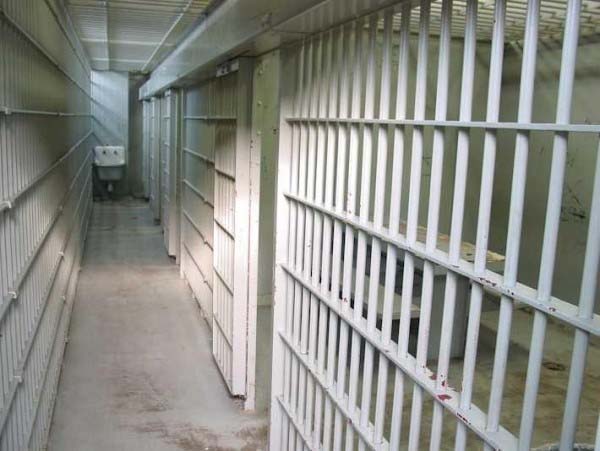
Instead of fulfilling his promises to improve the country’s deteriorating economy, provide new job opportunities for thousands of unemployed youth and build at least one million housing units to accommodate young couples, Egypt’s President, Abdel Fatah Al-Sisi has only managed to build more prisons and detention centres to accommodate the growing number of opposition activists.
Less than two months after his election in June 2013, Al-Sisi opened the first maximum security prison in the Dakahlia Governorate.
As many as five new prisons have been constructed since 2013.
Yesterday, the president issued a decree to allocate a plot of state-owned land that spreads over more 103.22 acres to construct a new central prison in Giza.
With the new prison, Egypt will have 42 prisons as well as 382 detention centres in police stations.
A report by the Arab Organisation for Human Rights revealed that the cost of building Gamasa prison was 750 million Egyptian pounds ($95.8 million), adding that the interior ministry did not publish the costs incurred during the construction of the other prisons because they probably cost billions of Egyptian pounds.
According to the organisation, Egypt does not need to build more detention centres to solve a capacity crisis; the problem is imprisoning tens of thousands of innocent people without justification.
Authorities have increased arbitrary arrests because of political opinion and the number of detainees has reached more than 41,000 prisoners, the human rights group said.
January 14, 2016
Posted by aletho |
Civil Liberties, Full Spectrum Dominance, Subjugation - Torture | Egypt, Human rights |
Leave a comment
A Nigerian Shia group says more than 700 of its members are still unaccounted for a month after the deadly attacks by Nigerian forces against Shia Muslims in the northern city of Zaria.
In a statement released on Thursday, Ibrahim Musa, the spokesman for the Islamic Movement of Nigeria (IMN), whose leader Sheikh Ibrahim al-Zakzaky is in police custody, said about 730 people have gone missing since December 12, 2015.
“These missing people were either killed by the army or are in detention” but their “whereabouts are still unknown and undisclosed,” Musa said.
He further noted that some 220 IMN members were in a prison, located in the city of Kaduna, the capital of the state with the same name, while others were in military custody elsewhere across the African state.
On December 12 last year, Nigerian soldiers attacked Shia Muslims attending a ceremony at a religious center in the northern city of Zaria, accusing them of blocking the convoy of the army’s chief of staff and attempting to assassinate him. The Shias have categorically denied the allegations.
The following day, Nigerian forces also raided Zakzaky’s home and arrested him after reportedly killing those attempting to protect him, including one of the IMN’s senior leaders and its spokesman.
Both incidents led to the deaths of hundreds of members of the religious community, including three of Zakzaky’s sons. There has been no official death toll in the violence, but rights activists have put the number at over 1,000.
Musa said no Nigerian family had received a body for burial in the weeks since the Zaria violence.
The Shia cleric is said to have been charged with “criminal conspiracy and inciting public disturbances.”
The IMN has called for Zakzaky’s unconditional release and for Abuja to respond to the “unjustifiable atrocities committed by the army.”
January 14, 2016
Posted by aletho |
Civil Liberties, Ethnic Cleansing, Racism, Zionism, Subjugation - Torture | Africa, Human rights, Islamic Movement of Nigeria, Nigeria |
Leave a comment
U.S. Alliance for Prosperity plan aims to stem Central American migration, but critics say the plan falls far short of addressing underlying causes
The United States’ plan to more than double its aid package to Central America in the name of increasing security and boosting development is likely to open up the region to U.S. corporate interests without tackling underlying problems of poverty and inequality, CISPES Executive Director Alexis Stoumbelis told teleSUR on Wednesday.
U.S. Congress approved over US$750 million at the end of December to roll out President Barack Obama’s strategy for Central America. The package supports the controversial Alliance for Prosperity, a plan touted as a strategy to stem the massive wave of undocumented migrants from the Northern Triangle of Honduras, Guatemala, and El Salvador, but slammed by critics for exacerbating key drivers of the crisis.
According to Stoumbelis, the new increased funding plan continues the same development model based on White House priorities of free trade and foreign direct investment that the U.S. has long promoted in the region.
“The U.S. has had an aggressive neoliberal agenda in Central America for the last 20 years, so this doesn’t really come as a surprise,” Stoumbelis told teleSUR by phone, citing the Central America Free Trade Agreement as an example of the U.S.-backed free trade model that has proven to worsen insecurity and inequality in Central American countries.
“The plan continues to push an agenda much more in line with neoliberal economics than programs proven to improve quality of life,” said Stoumbelis.
While the new aid package has been promoted as a bid to address longstanding issues of poverty, insecurity, and violence, the main pillars of the plan pave the way for increased foreign investment, natural resource extraction, privatization, and militarization while raising serious concerns about human rights and inequality, Stoumbelis added.
“The funding provides backing for governments that have proven time and time against putting human rights at the top of the agenda,” said Stoumbelis, adding that the plan ignores calls from many social movements and advocacy groups to cut security aid to the region instead of rewarding human rights-abusing administrations with more funding.
Although the U.S. funding for Central America includes conditions aimed at addressing human rights concerns raised by social movements and advocates, many remain skeptical that the measures will do enough to counteract dismal human rights records and rampant corruption, especially in Honduras and Guatemala.
“It was a victory to condition the aid … and to convince (U.S.) Congress that its support for human rights-abusing governments needs to be addressed,” said Stoumbelis. He went on to say that even if the aid is subject to human rights guarantees, it is ultimately up to the State Department to sign off on whether Central American countries fulfill the conditions.
Many expect that the new plan will uphold the State Department’s historically inadequate standard on human rights, which in the past has seen human rights approval issued despite evidence of systematic and chronic human rights abuses on the ground in Central America.
The US$750-million aid package will spike funding levels from US$120 million to US$300 million for development, from US$160 million to US$405 million for security, and from US$33 million to over US$66 million for the war on drugs. Funds will be administered by the State Department and by USAID, which have proven to support privatization and the interests of U.S. corporations in the region.
The security funding includes doubling the budget for the Central American Security Initiative, a regional plan that has dramatically increased militarization of security forces in the region and in turn raised concerns about increasing human rights abuses, impunity, and corruption without fulfilling its state’s objectives of tackling insecurity.
According to Stoumbelis, militarization in the name of the war on drugs has largely been a “war on the people,” as poor people are the most vulnerable in the face of insecurity and have largely been the victims of rising levels of violence under CARSI and the security initiative for Mexico, Plan Merida.
The plan is expected to pave the way for increased militarization in the name of “stabilization” and border security, which critics fear will result in increased human rights violations and exacerbate the problems underlying social and economic inequality.
Militarization also tends to result in criminalization of protest movements against neoliberal mega-projects that displace communities, rob indigenous peoples of land, destroy the environment, and undermine food security—a development strategy only set to ramp up under the new regional aid plan.
Despite the challenges, Stoumbelis predicts that such resistance movements will redouble their fight against the model the U.S. aid package proposes to push harder.
“There has been a tremendous challenge to the model,” said Stoumbelis, emphasizing the role of cross-border resistance in the region and the importance of international solidarity.
For Stoumbelis, in the face of increased U.S. aid, solidarity with Central American movements is now more than ever key to resisting the “U.S.-backed corporate onslaught in the region.”
January 14, 2016
Posted by aletho |
Civil Liberties, Corruption, Economics, Ethnic Cleansing, Racism, Zionism, Timeless or most popular | Alliance for Prosperity, Central America, El Salvador, Guatemala, Honduras, Human rights, Latin America, Mexico, United States, USAID |
Leave a comment
The Washington Post Monday had a piece about the use of “threat scores” by law enforcement in Fresno, California. This story follows release of information about this predictive-policing program obtained through an open-records request by my colleagues at the ACLU of Northern California.
The scores are generated by software called “Beware,” made by a company called Intrado. According to a promotional pamphlet obtained by the NorCal ACLU, the software’s purpose is “searching, sorting and scoring billions of commercial records” about individuals. It scours the internet for social media posts and web site hits and combines it with other information such as public records and “key data elements from commercial providers.” Intrado claims that its product is “based on significant amounts of historical work in mathematical science, decisioning science and link analysis,” and “uses a comprehensive set of patent-pending algorithms that search, sort and score vast amounts of commercial records from the largest and most reputable data mining companies in the industry.”
Intrado boasts that its software can target an address, a person, a caller, or a vehicle. If there’s a disturbance in your neighborhood and you have to call 911, the company would have the police use a product called “Beware Caller” to “create an information brief” about you. Police can also target an area: a product called “Beware Nearby” “searches, sorts and scores potential threats within a specified proximity of a specific location in order to create an information profile about surrounding addresses.” So the police may be generating a score on you under this system not only if you call the police but if one of your neighbors calls the police.
The prospect of a democratic government making unregulated, data-driven judgments about its own citizens outside the protections of the justice system raises some fundamental and profound questions about the relationship between the individual and the state. Citizens in a democratic society need to be able to monitor their government, and make judgments about how it is performing. Is it healthy for the government to begin to do the same to its citizens? At what point does that begin to resemble China’s incipient “citizen scoring” system, which threatens to draw on social media postings and include “political compliance” in its credit-score-like measurements?
The governmental scoring of citizens is an imperative we have seen before, not just in the context of policing—for example in Chicago’s “Heat List”— but in other security contexts as well. The TSA, for example, pushed hard under President Bush for a program known as CAPPS II, under which the government would have tapped into commercial data sources to perform background checks on the 100 million Americans who fly each year, and build a profile of those individuals in order to determine their “risk” to airline safety. As with this Beware software, it was originally envisioned as giving a red, yellow, or green light to each subject. CAPPS II was highly controversial from the start, and after a battle that lasted approximately five years the government abandoned the concept (though it does threaten to come creeping back).
There are numerous problems with this or any system for generating “threat scores” on citizens:
- Scoring Americans in secret. Like the TSA before it, Intrado says that its methods for generating risk assessments will be secret. This is a cutting-edge technology being used for a novel and highly sensitive purpose. Given the vast uncertainties that surround the making of automated predictive judgments about individuals, especially in a law enforcement context, public transparency is vital so that we as a society can begin to evaluate such approaches. We are a democracy after all, and the highly fraught value judgments about what if any uses of “big data” to make in policing must be made publicly.
- Inaccurate data. We do know that the source data used for such judgments is likely to include many errors and inaccuracies. Anyone who has looked at their credit report knows how frequently those reports get basic facts wrong, confuse different individuals with similar names, etc. The contracts among commercial data brokers and their clients “include few provisions regarding the accuracy of their products,” the FTC has found. For private data companies, accuracy levels beyond a certain point are simply not worth the cost. But the FBI too felt compelled to exempt its primary criminal database from a legal requirement that the agency maintain its records with sufficient accuracy to “assure fairness to the individual” — and damage to people’s lives has been the predictable result. With the Beware software’s scoring formula kept secret, there will be little check against such errors.
- Questionable effectiveness. Without public scrutiny, the public will not know what data sources are used to generate the scores, how reliable that source data is, how the different variables are weighed and interpreted, and how valid the assumptions behind the inclusion and relative weight of each variable are. Those are highly methodologically and sociologically complex questions, and robust, valid, broadly acceptable answers are unlikely to emerge from the corporate suite of a small company that sells software to police, no matter how much “mathematical science” it brings to the task. Even if the project of rating citizens were acceptable, it could never be done properly without the broad public and expert scrutiny that transparency to “a million eyeballs” brings. Another effectiveness problem comes from the limited ability of key word-based evaluation systems to understand human communications. Scary-sounding language used in private almost always consists of sarcasm, irony, hyperbole, jokey boasting, quotations of others, references to works of fiction, or other innocuous things. Despite many advances, computers are still far away from understanding human social life with enough sophistication to tease out such contexts.
- Unfairness and bias. Without transparency a major question about secret risk scores is whether and to what extent they will have intentional or unintentional racial, ethnic, religious, or other biases, or whether they include elements that are just downright unfair (such as guilt-by-association credit ratings that penalize people for shopping at stores where other customers have bad credit). There is nothing magical about taking a lot of data and creating a score; the algorithm by which that is done will do no more than reflect its creators’ understanding of the world and how it works (at least if it is not based on machine learning—which I doubt this system is, and which in any case has other problems of its own). Ultimately the danger is that existing societal prejudices and biases will be institutionalized within algorithmic processes, which just hide, harden, and amplify the effects of those biases.
- Potentially dangerous results. The consequences of inaccurate and biased data may be dangerous and even deadly if it leads police officers, many of whom are already far too prone to use force, to come into an encounter already frightened and predisposed to believe that a subject is dangerous. And officers who do use unnecessary force will inevitably cite the scores as evidence that their actions were subjectively reasonable.
- An unjustified government intrusion. These risk assessments are being built out of two sources of data that we should not want our government to access: citizens’ social media conversations, and the dossiers that the data broker industry is compiling on virtually all Americans. While public social media postings, unlike private online conversations, are not protected by the Fourth Amendment, as a policy matter we do not want our law enforcement troweling through our online conversations. This would largely waste the time of the public officials we are paying to keep us safe, and create chilling effects on our raucous online discourse. We don’t want secret police in America, or their computerized equivalent, circulating among law abiding citizens as they exercise their constitutional rights—online or off—just to monitor what they are doing. We don’t want Americans to have to pause before they speak to ask, “will this be misinterpreted by a computer?” Nor should the authorities be buying information, directly or indirectly, from the privacy-invading data broker industry, which builds dossiers on virtually all Americans without their consent. While it does this for commercial reasons, the result is nonetheless comparable to what we’ve seen in totalitarian states. The questionable benefits of these invasions of privacy are not worth the chilling effects and danger of abuse they bring.
- First Amendment questions. Other First Amendment problems stem from the fact that our law enforcement unfortunately has a long history of antagonism toward even peaceful political activists and protesters seeking to make the world a better place—a history that has continued right up to the present. This alone provides ample reason to worry that a ratings system will hurt and chill political activists. The problem is only confirmed by the inclusion (as my colleague Matt Cagle describes) of hashtags such as #Blacklivesmatter, #Mikebrown, #Weorganize, and #wewantjustice on a police social media monitoring list of key words touted as “extremely effective in pro-active policing.” A timid citizen considering tweeting about a political protest could be seriously chilled from expressing himself by the prospect that doing so might make him a “yellow light” in the eyes of the authorities.
- Mission creep. If this system is sold, snuck, or forced into American policing, it will, once entrenched, inevitably expand. First, in the data that it draws upon as companies and agencies seek ever-more data in a futile quest to improve their inevitably crude assessments of individuals’ risk. Second, the purposes for which it is used may expand as police departments go beyond using them for individual police calls to other uses (force deployment decisions, perhaps, and who-knows-what-else). Risk assessments may be created not just on an individual basis for police calls, but on a wholesale basis for entire populations. And of course the scores may be shared with and adopted by other agencies for use in a wide variety of governmental purposes. They may also spread to the private sector—starting with corporate security forces, perhaps, which often work very closely with police and might use them for anti-union activities, the vetting of customers, or any other corporate goals. In general the danger is that these assessments, once brought into being, could come to reverberate through individuals’ lives in many ways.
Overall there is a lot more easily accessible data floating around about everybody in today’s society. How should the police make use of all that data? How much should be fed to officers in different situations, and in what form? The data revolution raises complex questions for policing that we as a society are going to have to work through—but any law enforcement use of big data needs to be approached carefully and thoughtfully, and hashed out publicly and democratically. That means total transparency. And the risk scoring of individuals should have no part in it.
January 13, 2016
Posted by aletho |
Civil Liberties, Full Spectrum Dominance, Timeless or most popular | Human rights, United States |
Leave a comment
In what appears to be an ongoing security crackdown on media personnel, four journalists were sentenced to three years in prison by the Sayeda Zeinab Criminal Court on Sunday. They were convicted of disseminating false information and belonging to a banned organization.
 Electronic Media Syndicate chairperson Abu Bakr Khallaf was the only defendant present in the courtroom for the sentencing — the three other journalists were tried in absentia.
Khallaf allegedly made his LE1,200 bail on Monday, defense lawyer Hany al-Sadeq told the local rights group Journalists Against Torture Observatory, but it is unclear whether he has yet been released from detention. The first hearing in his appeal has been scheduled for March 17.
Khallaf was arrested on July 21 after the state-run Egyptian Trade Union Federation summoned him to their headquarters for interrogation on charges of operating the Electronic Media Syndicate (which was established in 2011) without a license. He was also accused of affiliation with the Muslim Brotherhood.
The other journalists in the case — Mohamed Adly of the privately owned Al-Tahrir newspaper, Hamdy Mokhtar of the privately owned Al-Shaab newspaper and videographer Sherif Ashraf — were arrested while reporting outside the Zeinhom morgue on July 1. The journalists say they were there to report on the deaths of nine Muslim Brotherhood leaders fatally shot by police forces in a 6th of October City apartment on that day.
Rights organizations including the New York-based Human Rights Watch have questioned whether police claims of a “shootout” with the nine men were covering up a case of “extrajudicial execution.”
The Journalists Syndicate’s Liberties Committee will hold a session on Tuesday to discuss the three prison sentences issued in absentia, according to a statement posted to the syndicate’s official website. In that meeting, the committee also plans to discuss the referral of six journalists — including three chief editors — to judicial hearings at the request of Justice Minister Ahmed al-Zend.
The committee will seek to resolve these cases in favor of the journalists, as well as five other lawsuits that have been filed against media workers, the syndicate said.
On Monday, the prosecutor general ordered investigations into charges that high-profile journalist and editor Ibrahim Eissa and his colleague Ahmed Samer insulted the judiciary. The investigations were ordered after a lawsuit was filed against the two men for defamation.
Samer was targeted for his article, “The state that spurns itself,” published in the privately owned Al-Maqal newspaper, which is edited by Eissa. The article discussed the recent prison sentence levied against reformist preacher Islam al-Beheiry for religious commentary on his talk show.
As of last month, at least 32 journalists were in detention across Egypt, the Liberties Committee said, of whom 18 were arrested while reporting in public space.
January 13, 2016
Posted by aletho |
Civil Liberties, Full Spectrum Dominance | Abu Bakr Khallaf, Egypt, Human rights |
Leave a comment
Turkey’s top higher education authority vowed to take measures against academics who signed a letter calling to stop military operations against Kurdish militants, local media reported Wednesday.
Turkish President Recep Tayyip Erdogan has sharply criticized the so-called Academicians for Peace group, accusing them of undermining Turkey’s national security after their declaration was read at press conferences in Istanbul and Ankara on Monday.
After an urgent meeting, Turkey’s Higher Education Board issued a statement saying that the institution would do whatever it took regarding the academics, Today’s Zaman newspaper reported. The body does not have the authority to directly punish the academics, but could pressure university administrations to do so, according to the paper.
Over 1,000 academics from 89 Turkish universities have signed a declaration urging to end the ongoing fighting between Ankara forces and the Kurdistan Workers’ Party (PKK) militants.
The declaration calls on the government to restore a peace process with the PKK that was abandoned in July 2015.
The Kurds, Turkey’s largest ethnic minority, have been striving to gain independence from Turkey. The PKK, founded in the late 1970s to promote the self-determination for the Kurdish community, is designated as a terrorist group by Ankara.
Severe clashes between Ankara forces and PKK militants have been arising sporadically since a July terror attack in the city of Suruc, which killed over 30 people, most of them Kurds. As Kurds killed two Turkish policemen in what has been said to be a retaliation strike, Ankara launched a military campaign against the group.
January 13, 2016
Posted by aletho |
Civil Liberties | Erdogan, Human rights, PKK, Turkiye |
Leave a comment

In a recent article for independent German magazine Zeiten Schrift, contributor Klaus Faissner reflected on the US president’s journey from an electrifying candidate with a savior-like quality to a tired leader tarnished by drone strikes, mass surveillance, and a relationship with the media reminiscent of the worst days of the Nixon administration.
In his article, republished and translated by foreign media translation service WhatTheySayAboutUSA.com, Faissner recalled that in the run-up to his presidency, while he was still a candidate, Barack Obama “was presented as the savior of the world – almost a Messiah.”
“He was rapturously greeted by a crowd of over 200,000 in Berlin in 2008 – even before he had been officially crowned as President of the USA. “Yes, We Can!” was the campaign slogan that electrified the crowd, even before he began speaking. The American presidential candidate gathered bigger crowds in Germany than even the Pope, rock stars, or a football game with the national team. He promised to liquidate nuclear arms, reestablish good relations with Russia, pull American troops out of Iraq and Afghanistan – and to close the US’s nefarious concentration camp at Guantanamo Bay.”
“As the US’s first black president,” Faissner reflected, “Barack Obama ought to have become the antithesis of everything that George ‘Dubya’ Bush had stood for – a president whose wars had run through the world like cancer, whilst clamping down on basic freedoms for his own people. This was the way the media presented the incoming President Obama – and the world believed the simulacrum they’d been given.”
Unfortunately, the journalist recalled, “what the press wasn’t reporting, however, was that [by the end of his first term], Obama signed more orders for drone assaults than Bush Jr. had done in the entire eight years of his presidency. These were drone strikes which caused catastrophic levels of non-combatant casualties, which America simply wrote-off under the euphemism of ‘collateral damage.'””Like his predecessor, Obama threw all his weight behind GMO agriculture; he didn’t give the slightest thought to his promises to close Gitmo; he showed no interest whatsoever in improving relations with Russia, and he worked actively on destabilizing the situation in the Middle East.”
A ‘Tense’ Relationship With Journalists
“In 2009,” Faissner recalled, “the incoming president declared his intentions for a previously unprecedented level of transparency in government and the apparatus of national administration. ‘Openness will strengthen our democracy,’ as he stressed in subsequent legislation.”
However, “now that Obama has been at the helm for nearly seven years, it’s clear that all these promises were empty piffle. No president after Richard Nixon has been so aggressively opposed to the media, as was highlighted in a piece written by the former Washington Post chief editor Leonard Downie, published in 2013 – about freedom of speech in the United States. Downie suggested the Obama administration was operating a misinformation policy, used electronic snooping on journalists, and was behind a ratcheted-up campaign of persecution against whistleblowers and journalists involved in investigation.”
“An atmosphere of fear pervaded the work of journalists, Downie wrote, with their investigations permanently occluded in secret observation by the state. Despite the administration’s promises to end the ‘unreasonable secrecy’ that typified the Bush era, Obama has in fact continued to expand it. Often entirely irrelevant documents are systematically classified ‘top secret’ to deny reporters access to them.””On top of this,” Faissner laments, “Obama administration staffers frequently take personal offense to articles criticizing government policy. To ward off the increasing frequency of such articles, the Obama administration is increasingly reaching out for the 1917 Espionage Act. Although it had only been employed three times in the first 90 years of its existence, over the period between 2009 to 2013… eight different government officials were arraigned with it, charged with passing governmental information to journalists, putting out a powerful resonance on Capitol Hill. One of those thus charged was Edward Snowden, who blew the whistle on government snooping on the whole world’s population by the National Security Agency. Bob Woodward, who broke the news of the Watergate scandal in the Nixon era, warns that any fight against critical journalists only leads in the long term to weaken the nation’s national security.”
A Unique and Powerful Surveillance System
“In reality,” Faissner warned, “Obama has set up a unique system of surveillance. It was done in such a way that people around the world have no idea that Obama’s policies are a continuation, or even a worsening of those of George W Bush. Since October 2011 government staffers in every branch of the administration have been encouraged to snitch on their colleagues. Staff in Federal departments have been obliged since 2012 to report all their contacts with the media, and moreover to report on suspicious colleagues. Michael Hayden, the former head of the CIA, said the program had been incepted to ‘block all contact.’ Even staffers of new agencies who are remote from revolutionary activities, such as Associated Press or Fox News have come under the crosshairs of the Obama administration.”
“One such journalist has been James Rosen of the Fox News television channel, who came under observation from the Justice Department, for using information he had received from a highly-placed government official. The information referred to the international community ratcheting up sanctions against Pyongyang over new nuclear weapons testing by North Korea. The Washington Post notes that the FBI monitored Rosen’s phone calls, and even screened his private email correspondence.”Moreover, Faissner suggests, “the situation worsened drastically in 2015. In a document entitled ‘Law on War’ [a set of instructions on the legitimate warfare practices approved by the US military], the Pentagon stated that journalists could be treated as ‘unprivileged belligerents,’ a status which, according to a representative from the Committee for the Protection of Journalists, ‘gives U.S. military commanders across all services the purported right to at least detain journalists without charge, and without any apparent need to show evidence or bring a suspect to trial.'”
“If the Pentagon is putting spying in the same basket as journalism, the New York Times noted, then this is a step in the same direction as totalitarian regimes. It’s hardly surprising that in the World Press Freedom Index for 2015, the USA is rated at 49 place – on a par with El Salvador, Burkina Faso and the Republic of Niger.”
January 13, 2016
Posted by aletho |
Civil Liberties, Full Spectrum Dominance, Militarism, Progressive Hypocrite, War Crimes | Human rights, Obama, United States |
Leave a comment

 Aletho News
