Former Qwest CEO says refusal to comply with NSA spying landed him in jail
RT | October 1, 2013
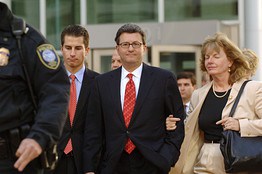 Former Qwest CEO Joseph Nacchio, who spent over four years in prison for insider trading, now says his conviction was based on his company’s refusal to cooperate with NSA requests to spy on its customers.
Nacchio says he feels “vindicated” by ongoing revelations provided by former NSA contractor Edward Snowden that the NSA does, in fact, access massive amounts of metadata and communications information of both foreigners and Americans.
Nacchio told The Wall Street Journal that the NSA set up a meeting with him in February 2001 wherein he believed they would discuss potential government contracts. But he says the NSA instead asked him for permission to surveil Qwest customers.
He says he refused to cooperate based on advice from his lawyers that such an action would be illegal, as the NSA would not go through the normal process of asking the Foreign Intelligence Surveillance Court for a subpoena. About this time, he says the company’s ability to win unrelated government contracts – something it did not have trouble with before the NSA meeting – slowed significantly.
It took until 2007 before Nacchio was convicted of insider trading. Prosecutors claim he was guilty of selling off Qwest stock in early 2001, not long before the company went through financial ills. Nevertheless, he claimed in court documents that he was still confident in the firm’s ability to win government contracts.
Nacchio believes his conviction was in retaliation for his refusal to play ball with legally dubious NSA spying requests.
“I never broke the law, and I never will,” Nacchio told the WSJ.
His version of events matches reporting by USA Today in 2006, in which the paper noted that Qwest was the lone holdout from the government’s warrantless surveillance operations and that defiance “might affect its ability to get future classified work with the government.”
Yet despite his efforts, Nacchio was barred from using any evidence of potential retaliation in his defense, given that the material was considered classified, and his judge refused requests to allow the evidence in trial. Reports from The Washington Post on evidence that has been made public on his case since that time seem consistent with the CEO’s claims.
As a result of his likely hobbled defense, Nacchio was indicted by federal prosecutors and served four-and-a half years in federal prisons before being released in late September.
The NSA has declined to comment on Nacchio, according to the WSJ and The Washington Post.
While spying operations disclosed by Snowden have had some level of legal backing, President George W. Bush’s wiretapping program did not. Thus, telecom companies that cooperated with the program were eventually given immunity for their compliance in 2008.
Related articles
- Don’t Refuse the Nsa or You’ll Sleep With the Fishes (theburningplatform.com)
- Telco exec who resisted NSA Joe Nacchio released after four years in jail (blacklistednews.com)
No Surprise: NSA Stores All Metadata It Collects For At Least A Year, Even If It Has Nothing To Do With Anything
By Mike Masnick | Techdirt | September 30, 2013
The latest revelation from the Snowden docs published by The Guardian is that the NSA’s MARINA metadata system for internet data stores the information it gets for up to a year.
“The Marina metadata application tracks a user’s browser experience, gathers contact information/content and develops summaries of target,” the analysts’ guide explains. “This tool offers the ability to export the data in a variety of formats, as well as create various charts to assist in pattern-of-life development.”
The guide goes on to explain Marina’s unique capability: “Of the more distinguishing features, Marina has the ability to look back on the last 365 days’ worth of DNI metadata seen by the Sigint collection system, regardless whether or not it was tasked for collection.” [Emphasis in original.]
Note that this is different than the phone metadata that people have been talking about. This is “internet” metadata — so browser history, contacts, etc. In other words, the kind of stuff that Dianne Feinstein accidentally admitted the US is scooping up by the boatloads by tapping the internet’s backbone with help from US telcos.
The fact that they can look through it even if it hasn’t been “tasked for collection” is pretty big. It again shows how the NSA keeps saying one thing (such as claiming they only keep data on people they’re “targeting”) is simply false. The NSA continues to redefine things. Information isn’t “collected” until it’s searched. And it’s apparently not “stored” until it’s moved into a different database than this one.
How does anyone take these guys seriously?
Feinstein’s Senate Committee Defends NSA Phone Surveillance, Pushes Bill to Retain It
By Noel Brinkerhoff | AllGov | September 28, 2013

Senator Dianne Feinstein
Members of the Senate Intelligence Committee made it clear this week that they see no reason to halt the National Security Agency’s controversial program that collects records of Americans’ phone calls.
Led by the panel’s chair, Senator Dianne Feinstein (D-California), a majority of the committee indicated during a hearing on Thursday that they want the NSA to keep using the once-secret program, but under certain conditions.
Feinstein and the committee’s top Republican, Senator Saxby Chambliss of Georgia, plan to draft new legislation by next week that would require the NSA to file public reports on the calling log database.
The bill would also mandate that the agency reduce the number of years that it stores the database’s contents. Currently, the NSA says that it stores the records for five years.
In addition, Feinstein wants the Senate to have confirmation authority over new NSA directors.
At the same time, the Democratic lawmaker is willing to broaden the agency’s power to wiretap without court approval a foreigner’s cellphone for at least one week when that person travels to the United States.
Another provision would demand that the NSA send lists of the phone numbers it searches, along with explanations for doing so, to the Foreign Intelligence Surveillance Court for review.
Critics of the NSA’s domestic surveillance have called for ending the phone-records program altogether. These advocates include two members of the Senate Intelligence Committee, Democrats Ron Wyden of Oregon and Mark Udall of Colorado, who have introduced a tougher reform bill.
But it appears unlikely Wyden’s bill will get past Feinstein’s committee, since Feinstein says the call log program is legal and “necessary for our nation’s security,” according to The New York Times.
To Learn More:
Senators Push to Preserve N.S.A. Phone Surveillance (by Charlie Savage, New York Times)
Feinstein Outlines NSA Changes (by Brendan Sasso and Kate Tummarello, The Hill)
“Independent Experts” Reviewing NSA Spying Have Ties to Intelligence Community (by Noel Brinkerhoff and Danny Biederman, AllGov)
Left and Right Unite to Sue NSA over Telephone Records Surveillance (by Matt Bewig, AllGov)
Related articles
- Political Moves: How Dianne Feinstein Cut Off One Of The Few Attempts At Actual Oversight By Senate Intelligence Committee (alethonews.wordpress.com)
- Feinstein’s NSA ‘reform’ bill would expand snooping powers (EndtheLie.com)
- Dianne Feinstein Accidentally Confirms That NSA Tapped The Internet Backbone (blacklistednews.com)
Bahrain Regime Jails 50 Opposition Protesters up to 15 Years
Al-Manar | September 29, 2013
A Bahraini court on Sunday sentenced 50 people to up to 15 years in jail, including a prominent Iraqi cleric, for forming an opposition group, a judicial source said.
Sixteen defendants were handed 15-year terms, while four others were jailed for 10 years and the other 30 sentenced to five years behind bars, the source said.
The defendants, including Iraqi cleric Hadi al-Mudaressi who was sentenced in absentia, were charged with forming the February 14 Revolution Youth Coalition, which Bahraini authorities accuse of ‘terrorism’.
Several defendants were sentenced in absentia, including Saeed al-Shahabi, a key London-based Bahraini opposition figure who faces an earlier life sentence for his role in the 2011 uprising.
The interior ministry in June named 11 suspects who were arrested in the case, in addition to 13 people who live abroad.
At least 89 people have been killed by the Bahraini authorities since peaceful protests erupted In February 2011, according to the International Federation for Human Rights.
Related article
Tone Deaf Dianne Feinstein Thinks Now Is A Good Time To Revive CISPA
By Mike Masnick | Techdirt | September 25, 2013
We had believed, along with a number of others, that the Snowden leaks showing how the NSA was spying on pretty much everyone would likely kill CISPA dead. After all, the key component to CISPA was basically a method for encouraging companies to have total immunity from sharing information with the NSA. And while CISPA supporters pretended this was to help protect those companies and others from online attacks, the Snowden leaks have reinforced the idea (that many of us had been pointing out from the beginning) that it was really about making it easier for the NSA to rope in companies to help them spy on people.
Also, if you don’t remember, while CISPA had passed the House, the Senate had shown little appetite for it. Last year, the Senate had approved a very different cybersecurity bill, and had expressed very little interest in taking up that fight again this year. Except now, in an unexpected move, Senate Intelligence Committee boss, and chief NSA defender because of reasons that are top secret, has now announced that she’s been writing a Senate counterpart to CISPA and is prepared to “move it forward.”
Yes, it seems that even though the NSA gleefully hid the evidence of widespread abuses from Feinstein’s oversight committee, she’s playing the co-dependent role yet again. Yes, there’s a chance that this new version of the bill will actually take into account privacy and civil liberties, but I doubt many people would take a bet on that being likely.
Right now what the public is concerned about are not “cyberattacks” from foreigners — they’re concerned about our own government undermining the security and privacy of Americans themselves. Giving those responsible for that destruction of privacy and trust more power to abuse the privacy of Americans is not what people are looking for. Quite the opposite.
“Independent Experts” Reviewing NSA Spying Have Ties to Intelligence Community
By Noel Brinkerhoff and Danny Biederman | AllGov | September 25, 2013
President Barack Obama’s special panel of “independent” experts charged with reviewing the National Security Agency’s (NSA) domestic spying programs is actually lacking in independence.
For starters, the panel assembled to determine if the NSA has violated Americans’ civil liberties consists of five members—four of whom have previously worked for Democratic administrations.
One member is Michael Morell, who served in the Central Intelligence Agency under Obama as deputy director, and twice served as acting director.
The other three with Democratic ties are Peter Swire, former Office of Management and Budget privacy director under President Bill Clinton; Richard Clarke, former counterterrorism coordinator under Clinton and later for President George W. Bush; and Cass Sunstein, Obama’s former regulatory czar.
The fifth panel member is Geoffrey Stone of the University of Chicago, who was an informal adviser to Obama’s 2008 presidential campaign and is now helping develop Obama’s presidential library. Stone previously went on record as saying that the NSA’s collection of Americans’ phone records is constitutional.
“No one can look at this group and say it’s completely independent,” Sascha Meinrath, director of the Open Technology Institute and vice president at the New America Foundation, told the Associated Press after attending one of the panel’s meetings.
Michelle Richardson, an ACLU legislative counsel who attended one meeting for civil liberties groups, said her organization “would have liked a more diverse group” for the panel.
Another sign that the group lacks independence is in its name—“Director of National Intelligence Review Group on Intelligence and Communications Technologies.”
The AP’s Stephen Braun noted that “the panel’s official name suggests it’s run by” the Office of the Director of National Intelligence (DNI).
In fact, Obama’s announcement in August that the review group would be established by DNI James Clapper triggered a wave of criticism. Obama tried to quell the outcry by assuring the country that Clapper would neither run the panel nor select its members.
But there is more than the panel’s name that suggests DNI oversight. The panel’s so-called outside experts work inside offices provided by the DNI. And it is the DNI’s press office that coordinates all press statements and interview requests.
Another point of criticism stems from Clapper’s decision to exempt the panel from the U.S. Federal Advisory Committee Act, which requires such committees to conduct open meetings and notify the public about their activities. Indeed, it has been reported that during recent weeks the panel’s meetings have been closed to the public even when no classified material was discussed.
There appears to be no formal directive stating that the panel should operate independently of the Obama administration. In fact, the situation is quite the opposite. An official White House memorandum actually provides the panel with instructions for areas to emphasize in its review: whether U.S. spying programs advance foreign policy, protect national security, and are safe from leaks.
In his August 9th press conference regarding the establishment of this panel, Obama promised that the “outside experts” will “consider how we can…make sure that there absolutely is no abuse in terms of how these surveillance technologies are used.” But nowhere in the White House memo is the panel instructed to investigate surveillance abuses.
The panel’s report is due by December 15. On that date it is not to be made public, nor is it to be delivered to the press. Rather, it will be submitted to the White House for review.
To Learn More:
Close Ties Between White House, NSA Spying Review (by Stephen Braun, Associated Press)
NSA Spying Review Panel Appointed by Obama Set to Whitewash Surveillance Abuses (by Kevin Gosztola, Dissenter)
Surveillance Privacy: Obama Orders Fox to Guard Chicken Coop (by Noel Brinkerhoff, AllGov)
Related articles
- Obama’s NSA ‘Independent’ Review Clearly a Public Relations Move (reason.com)
- NSA Spying Review Panel Appointed by Obama Set to Whitewash Surveillance Abuses (dissenter.firedoglake.com)
Anti-piracy curriculum for elementary schools decried as ‘propaganda’
RT | September 24, 2013
Content-industry giants and internet service providers are teaming up to produce multi-grade elementary school curriculum which will denounce copyright infringement.
The likes of the Motion Picture Association of America (MPAA), the Recording Industry Association of America (RIAA), AT&T, Verizon, Google, Microsoft, Facebook, and Comcast are behind the pilot project which will be tested in California elementary schools later this year.
The curriculum, called “Be a Creator,” is not quite complete, producers say, though Wired was able to obtain the various levels of content – from kindergarten to sixth grade – which aim to communicate that copying is theft.
“This thinly disguised corporate propaganda is inaccurate and inappropriate,” said Mitch Stoltz, an intellectual property attorney with the Electronic Frontier Foundation who reviewed the material.
“It suggests, falsely, that ideas are property and that building on others’ ideas always requires permission,” Stoltz says. “The overriding message of this curriculum is that students’ time should be consumed not in creating but in worrying about their impact on corporate profits.”
The content was made by the California School Library Association and the Internet Keep Safe Coalition. The Center for Copyright Infringement commissioned the material. The center’s board is made up of executives from MPAA, RIAA, Verizon, Comcast, and AT&T.
Each grade’s package includes a short video and a teacher worksheet of talking points.
For example, the sixth grade version urges children to realize that copyright infringement can have worse consequences than cheating on a test, which usually results in a bad grade or suspension from school.
“In the digital world, it’s harder to see the effects of copying, even though the effects can be more serious,” the teacher worksheet says.
The material does not comment on fair use, which allows for the reuse of copyrighted works without permission. Rather, students are told that using without permission is “stealing.”
The Internet Keep Safe Coalition, a non-profit organization partnering with governments and major corporations like Facebook and Google, said that fair use is beyond the comprehension of sixth graders.
The curriculum “is developmentally consistent with what children can learn at specific ages,” the group’s president, Marsali Hancock, told Wired, adding that materials for older children will include the concept.
A video for second graders shows a child taking photos and debating whether to sell, keep, or share them.
“You’re not old enough yet to be selling your pictures online, but pretty soon you will be,” reads the teacher lesson plan. “And you’ll appreciate if the rest of us respect your work by not copying it and doing whatever we want with it.”
The groups involved in the curation of the material stressed that it was in draft form at this point, and that some wording will be changed before the pilot project begins in schools.
“We’ve got some editing to do,” said Glen Warren, vice president of the non-profit California School Library Association.
Warren alluded that the Center for Copyright Information (CCI), a content-industry group, has already had influence on the project.
Hancock said the material has not yet been approved by CCI. The group is best known for working with the government and rights holders to begin an internet monitoring program with large ISPs that punish violators with extrajudicial measures like temporary internet termination and weak connection speeds.
CCI’s executive director, Jill Lesser, has alluded to youth education programs in the past.
“Based on our research, we believe one of the most important audiences for our educational efforts is young people. As a result, we have developed a new copyright curriculum that is being piloted during this academic year in California,” she said last week in a testimony on Capitol Hill.
“The curriculum introduces concepts about creative content in innovative and age-appropriate ways. The curriculum is designed to help children understand that they can be both creators and consumers of artistic content, and that concepts of copyright protection are important in both cases,” Lesser testified.
She said that CCI’s board will likely sign off on the curriculum soon.
“We are just about to post those materials in the next week or two on our web site,” Lesser told Wired.
The first grade lesson plan puts content sharing on par with theft.
“We all love to create new things – art, music, movies, paper creations, structures, even buildings! It’s great to create – as long as we aren’t stealing other people’s work. We show respect for other artists and their work when we get permission before we use their work,” the material says. “This is an important part of copyright. Sharing can be exciting and helpful and nice. But taking something without asking is mean.”
The fifth grade lesson introduces the Creative Commons license, though it distorts the legality of copying copyrighted works.
“If a song or movie is copyrighted, you can’t copy it, download it, or use it in your own work without permission,” the fifth grade worksheet reads. “However, Creative Commons allows artists to tell users how and if their work can be used by others. For example, if a musician is okay with their music being downloaded for free – they will offer it on their website as a ‘Free download.’ An artist can also let you know how you can use their work by using a Creative Commons license.”
Brazil’s Rousseff to UN: US surveillance an ‘affront’
RT | September 24, 2013
Brazilian President Dilma Rousseff lambasted US spying on her country at Tuesday’s UN summit, calling it a “breach of international law.” She further warned that the NSA surveillance, revealed since June, threatened freedom of speech and democracy.
“Meddling in such a manner in the lives and affairs of other countries is a breach of international law and as such it is an affront to the principles that should otherwise govern relations among countries, especially among friendly nations,” Rousseff said.
“Without the right to privacy, there is no real freedom of speech or freedom of opinion,” Rousseff told the gathering of world leaders. “And therefore, there is no actual democracy,” she added, criticizing the fact that Brazil had been targeted by the US.
“A country’s sovereignty can never affirm itself to the detriment of another country’s sovereignty,” she added.
Rousseff went on to propose a multilateral, international governance framework to monitor US surveillance activity. “We must establish multilateral mechanisms for the world wide web,” she said.
Rousseff said that the US’s arguments for spying on Brazil and other UN member states were “untenable”, adding that “Brazil knows how to protect itself” and that the country has been “living in peace with our neighbors for more than 140 years.”
Brazil’s specific targeting in US surveillance practices prompted Rousseff’s government to announce that it intends to adopt both legislation and technology aimed at protecting itself and its businesses from the illegal interception of communications.
A week ago, Rousseff canceled an impending state visit to Washington, scheduled to take place in October, because of indignation over spying revelations. Rousseff has stated she wants an apology from Obama and the United States.
The revelations that the US National Security Agency has been intercepting Rouseff’s own phone calls and e-mails, in addition to those of her aides and officials at state-controlled oil and gas firm Petrobras, have prompted an outcry in Brazil.
Rousseff’s predecessor as Brazilian President, Lula da Silva, said earlier this month that Obama should “personally apologize to the world.” Lula accused the US of “thinking that it can control global communications and ignore the sovereignty of other countries” in an interview with India’s English-language daily The Hindu, published Sept. 10.
Latin America voices widespread indignation at US activities
US relations with all of Latin America have recently soured. In addition to Brazil, Mexico, Bolivia and Venezuela have all voiced anger with the US over the NSA’s surveillance of their countries this year. Bolivia has been especially bitter.
“I would like to announce that we are preparing a lawsuit against Barack Obama to condemn him for crimes against humanity,” President Morales told reporters Friday in the Bolivian city of Santa Cruz. He branded the US president as a “criminal” who had violated international law.
In early July, a plane carrying Morales from Moscow to the Bolivian capital, La Paz, was grounded for 13 hours in Austria after it was banned from European airspace because of US suspicions it was carrying fugitive Edward Snowden, the former NSA contractor who has been responsible for the majority of leaks regarding NSA spying practices since June.
Venezuela wrote to UN Secretary-General Ban Ki-moon at the end of last week, requesting that he take action in response to the apparent denial of US visas to some members of the Venezuelan delegation who were scheduled to attend the UN General Assembly in New York.
President Nicolas Maduro said that the denial seemed intended to “create logistical obstacles to impede” the visit, and further requested that the UN “demand that the government of the US abide by its international obligations” as host of the 68th UN General Assembly.
Tension between Venezuela and the US rose Thursday when Venezuela’s foreign minister, Elias Jaua, told media outlets that the US had denied a plane carrying Maduro entrance into its airspace. The aircraft was en route to China. Washington later granted the approval, stating that Venezuela’s request had not been properly submitted. Jaua denounced the move as “an act of aggression.”
Related article
People stop searched in UK once a minute; blacks bear the brunt
Press TV – September 24, 2013
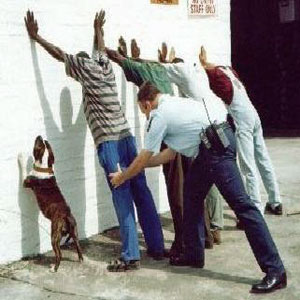 New figures show every 58 seconds one person is stopped and searched by the police in England and Wales for drugs, with blacks bearing the brunt of the practice.
According to findings by the London School of Economics published by the charity Release, minority groups, especially blacks and Asians, are disproportionately targeted by the police for drugs stop searches.
The study found there were over one million stop searches in 2011-2012 with half or more being related to drugs, especially for small amounts of narcotics such as cannabis.
According to the analysis on the figures for 2009-2010, overall search rate across England and Wales was 10 in 1,000 while it was 7 in 1,000 for whites, 18 per 1,000 for Asians and a shocking 45 per 1,000 for blacks, that is blacks were targeted 6.3 times more than white people.
This comes as Release said the rate of blacks using drugs was almost half of whites in 2010 (5.8 percent compared to 10.5 percent).
Release added the police discriminatory behavior toward blacks is also seen in treatment of people in possession of drugs.
The charity said in 2009-2010, 78 percent of black people, caught possessing cocaine, were arrested against 22 percent who received cautions while the rate was 44 percent against 56 percent for white offenders.
The charity said key disparities are also seen in the rate of black people subject to court proceedings for drugs possession and facing prison terms, compared to whites.
“Black people are more likely to get a criminal record than white people, are more likely to be taken to court and are more likely to be fined or imprisoned for drug offences because of the way in which they are policed, rather than because they are more likely to use drugs,” Michael Shiner, co-author of the report, said.
Meanwhile, the analysis showed a stunning 140,000 drugs stop searches were carried out on under-21s in 2009-2010 with 16,900 of them conducted on children aged 15 or below.
Related articles
- Half Ounce of Pot Gets Louisiana Man Twenty Years in Prison (dissidentvoice.org)
The Conservative Canadian Contradiction: Claiming to be for Democracy and Monarchy
By Yves Engler | Dissident Voice | September 20th, 2013
Harper’s Conservatives have a thing for monarchy, the more absolute the better, it seems.
At home they’ve put up portraits of Queen Elizabeth II and added the moniker “royal” to the Canadian Navy and Air Force while in the Middle East they’ve strengthened Canada’s ties to kingdoms from Morocco to Saudi Arabia.
Jordan’s pro-US/pro-Israel King Abdullah II has been the focus of significant attention with the Conservatives signing a free trade and military cooperation agreement with that country last year. Now the Conservatives are strengthening Canada’s ties to a monarchy confronted by an influx of Syrian refugees, volatile regional geopolitics and popular protests. Even the aid the Conservatives are sending to Jordan for Syrian refugees is largely designed to bolster the country’s monarchy.
Over the past year Jordan has become a central staging ground for Syrian rebel groups. Weapons from the Gulf monarchies and the US are flowing through Jordan and the CIA is training Syrian rebels there. According to France’s Le Figaro, Jordan has opened its airspace to armed Israeli drones monitoring Syria while the Financial Times reports that the US has 1,000 troops and a number of F-16 fighter jets in the country.
While Jordanian officials say they will not let their country be used as a launchpad for any Western military intervention against Syria, they recently allowed the US (and others) to conduct war games near that country’s border. And three weeks ago Jordan hosted the military chiefs from the main opponents of Bashar al-Assad — the US, Saudi Arabia, Qatar, Turkey, France, Canada etc. — to discuss the conflict.
Not surprisingly, the Syrian regime is unhappy with its southern neighbour. Syrian officials have said Jordan was “playing with fire” in allowing the US and others to train and arm its opponents, which includes many jihadists who could end up turning on Jordan’s regime. While King Abdullah II likely doesn’t trust the Syrian rebels and is fearful of retaliation from his larger neighbour, Jordan is under significant pressure from Ryadh and Washington to back Syria’s opposition.
As it contributes to instability in Syria, Jordan is also a victim of the conflict. At least 600,000 Syrian refugees have crossed into the country of 6.3 million people. This has added to the pressure on a Jordanian monarchy that’s faced a series of pro-democracy protests over the past two years. Additionally, the US military’s growing presence in the country is not popular.
Worried about the Jordanian monarchy’s ability to survive this volatile political climate, Canada has worked to bolster the regime. Under the guise of helping Syrian refugees, Ottawa (alongside Saudi Arabia, Qatar and the US) has made a series of major aid announcements over the past year. $6.5 million for Syrian refugees in Jordan in August 2012, then another $13 million in March and in June Ottawa announced a three-year $100-million aid package to Jordan.
Buried in Ottawa’s announcements about the Syrian refugee crisis is the fact that much of the money on offer is for “security programming”. Foreign Affairs explains: “Canada is providing equipment and vehicles to the Jordanian Armed Forces (JAF) to assist in their efforts to transport Syrian refugees from the border to registration centres. Canada will also provide equipment and infrastructure support to the Public Security Directorate (PSD), the Gendarmerie Forces (GF) and the Civil Defence Directorate, which provide security and other essential services within new and expanding refugee camps.
“This [$25 million in] support builds upon a previous Canadian contribution … $9.5 million in material support was provided to the JAF to respond to initial transportation needs of Syrian refugees coming across the border, and $2 million in material support was provided to the PSD and the GF in their efforts to manage security within Zaatari refugee camp.”
On top of this $36.5 million in support for Jordan’s security forces, Ottawa is working “to mitigate the threat posed by Syria’s stockpile of weapons of mass destruction”, which will include more “equipment, infrastructure, technology and training to the JAF, the Civil Defence Directorate, the Ministry of Health and other relevant ministries.”
Ottawa isn’t openly admitting that its aid to Jordan for Syrian refugees is designed to prop up the monarchy, but it’s obvious. In June the Globe and Mail’s John Ibbitson noted, “Ottawa is concerned that Syrian violence could infect and endanger neighbouring countries, especially the Hashemite Kingdom [Jordan], with which Canada has good relations.”
But there isn’t equal concern for “neighbouring countries”. For instance, there is a striking incongruence in the amount of aid Ottawa has allotted to Jordan versus Lebanon. Though it hosts 20% more Syrian refugees and is only 65% of Jordan’s population, Lebanon has received much less Canadian aid for Syrian refugees. (It should be noted that Lebanon is wealthier than Jordan, but nonetheless the World Bank is estimating that “Syria’s conflict will cost Lebanon $7.5 billion in cumulative economic losses by the end” of 2014)
Ottawa’s aid to Jordan is part of a series of efforts to back the monarchy. In 2012 the Conservatives voted into law a free-trade accord, which Foreign Affairs noted “shows Canada’s support for Jordan as a moderate Arab state that promotes peace and security in the Middle East.”
In addition to the trade accord, the Jordanian military has benefited from Canadian military support. Canada and Jordan signed a defence co-operation memorandum of understanding in the spring of 2012. At the end of last month the Chief of the Defence Staff, Gen. Tom Lawson, met his Jordanian counterpart and, according to the Jordan Times, “discussed ways to boost cooperation and coordination between the two countries’ armed forces.” This meeting followed on the heels of another meeting between the heads of the two countries militaries in April and Canada’s participation in a military exercise with 17 other “friendly” countries, Eager Lion 2013, hosted by Jordan’s armed forces.
Foreign minister John Baird has visited Jordan three times since last August to discuss “the ongoing turmoil in Syria” among other issues. What Baird and Jordanian officials almost certainly don’t talk about is the country’s pro-democracy struggles, which have flared up over the past two and a half years. The Conservatives were silent when thousands of Jordanians marched against the monarchy and for better social conditions in March and April 2011. A handful of protesters were killed and hundreds arrested in a country that prosecutes individuals for “extending one’s tongue” (having a big mouth) against the King.
A few months after the “Arab Spring” protests Foreign minister Baird claimed: “King Abdullah II in Jordan has really expedited reforms they were already working on.” But Baird’s positive portrayal of Jordan’s reforms doesn’t withstand scrutiny. Labour unions and independent media are heavily restricted while elections mean little. In short, Jordan remains an absolute monarchy with power concentrated in the hands of a ruling clique.
Just the way Harper’s Conservatives like it.
~
Yves Engler is the author of Lester Pearson’s Peacekeeping: The Truth May Hurt. His latest book is The Ugly Canadian: Stephen Harper’s foreign policy.
Wounded Canadian veterans pressed to not criticize military on social media
RT | September 21, 2013
The Canadian Armed Forces requires physically and mentally wounded service members to sign a form agreeing to not criticize senior officers or demoralize other troops on social media sites.
The form is given to wounded soldiers transferred to the Joint Personnel Support Unit (JPSU), which oversees support centers for troops across Canada. The JPSU has received public scrutiny in recent months, as soldiers and staff have been vocal about the lack of resources and dysfunctional support centers.
Service members gave the social media policy form to the Ottawa Citizen, expressing dissatisfaction over what they saw as a threat to their right to voice criticism of the Department of National Defence and Canadian Armed Forces (CAF) for lackluster care.
The JPSU told the Ottawa Citizen that the policy was not made to defer criticism of officials, but rather “to educate our members and personnel on what constitutes the appropriate and inappropriate use of social media and the possible ramifications for a CAF member.”
The “policy on proper comments on social media” forbids posting secret information on websites or forums, but also advises military personnel to avoid disparaging senior officers or CAF members.
In addition, the policy tells service members not to “write anything that might discourage others or make them dissatisfied with their conditions or their employment,” nor to offer “your views on any military subject.”
The policy form indicates that violating the social media rules could damage public trust in the CAF and “destroy team cohesion.”
The form, only six months old, mentions that soldiers in the JPSU can also be held responsible for social media content of friends they have “tagged” on Facebook, Twitter, LinkedIn, blogs and other sites.
While the CAF has a general social media policy for all service members, the Ottawa Citizen said that all personnel they interviewed were never made to sign a form like the one given to JPSU soldiers.
The CAF responded to questions about the form, saying the policy is issued to all JPSU members. However, the spokesperson could not offer specific examples of improper social media use.
“It is important for all CAF members to understand and follow the policies, rules, regulations and standards of conduct that apply to members of the CAF, including the policy on the use of social media,” public affairs officer Navy Lt. Michèle Tremblay wrote to the Ottawa Citizen.
Members of the Canadian military “are encouraged to communicate publicly about their own experiences and expertise, in accordance with the Government of Canada and DND/CAF policy,” Tremblay noted.
If a service member refuses to sign, JPSU staff will note that the individual has been briefed about the unit’s social media policy. Various units have their own way of notifying personnel about CAF protocols, Tremblay said.
“The difference being that the JPSU is asking members to indicate that they have read and understood the policy by signing the form,” she said.
Former CAF officers see the form as a way to intimidate members who were injured for speaking up about substandard treatment.
“It’s not illegal but it’s obviously a threat,” said Ottawa lawyer and former military officer Michel Drapeau, who has represented injured soldiers seeking benefits from the Canadian government. “The criticism about the leadership’s failure to take care of the wounded is obviously hitting home.”
He said that personnel likely feel compelled to sign, and that it would certainly be used against them if they violated the policy.
Retired air force officer Sean Bruyea said the CAF has the right to steer service members’ behavior on social media, but says the JPSU effort goes too far.
“This is right out of something you would see during the Soviet era,” said Bruyea, a critic of how the military and government assists wounded personnel. “This is way over the top.”
Featured Video

Saudi Led Destruction of Yemen’s heritage
or go to
Aletho News Archives – Video-Images
From the Archives
Israel: Strategic Ally or Liability?
By Stephen Sniegoski | My Catbird Seat | June 12, 2010
The claim that Israel serves as a valuable ally for the United States is made by both pro-Zionists and much of the anti-war and anti-Zionist Left that is influenced by Noam Chomsky. As a result of the Gaza flotilla massacre, which has caused a world-wide uproar against Israel, the value of Israel to the United States is being publicly questioned in more mainstream foreign policy forums. … continue
Blog Roll
 Aletho News
- Declassified UK exposes British man who fought for ‘Israel’ in Gaza
- West’s death cult in a theater near you
- How the Yandex ‘Russian bots’ lie fell apart
- Burnham’s ‘Russia did Brexit’ ruse crumbles
- Estonia making movies and games to encourage war against Russia
- Four in five new UK jobs taken by foreigners – report
- Here’s what Trump’s latest U-turn really means for Russia and Ukraine
- The Houthis Are Not an Iranian Proxy
- Europe’s Energy Hypocrisy, Russian LNG Profits and US Dependence
- ICC ignored ‘very well-documented’ NATO crimes – ex-Libyan minister
- If Americans Knew
- Activists Abused By Israel Return to New Freedom Flotilla Mission
- 60 Minutes won’t tell the full truth about Israeli settler violence
- Nearly 50,000 women, girls killed or severely injured in Gaza since October 2023: UN Women
- ADL is working with AI companies to suppress alleged ‘antisemitism’
- Israeli occupation forces using social media surveillance unit to target hundreds of Palestinians in the West Bank
- Israel’s New – and Terrifying – Security Doctrine
- Israeli Attacks Kill Five in Gaza, Including a four-year-old and a woman
- Air Force Major Who Called for Trump’s Impeachment Held in Solitary Confinement
- It’s a Genocide, I’m Into It’: Seinfeld Mocks Protest over Palestinian Children Killed
- Universities fire dozens amid pressure from Zionist billionaires
- No Tricks Zone
- New Study Suggests Large Regions Of The Pacific Ocean Have Been Cooling For The Last 80 Years
- Germany’s Green Energy Debacle: High Energy Costs Force Kahla Porzellan to Close After 182 Years!
- New Study: 50 Years Of The Most Aggressive ‘Net Zero’ Policies Can Only Affect The Global Climate By 0.03°C
- US September “Heat” Was No Record…Many Records Set Decades Ago
- Latest European Green Energy Debacle; Portugal’s Largest Flagship Solar Park Insolvent!
- Green Energy Debacle: German Expert Professor Fritz Vahrenholt Warns Of Severe Economic And Social Consequences
- Two More Paleo Reconstructions Affirm Meters-Higher Sea Levels Across Ireland, Brazil 7000-6000 Years Ago
- New Study: Earth And Venus Surface Warmth Largely Explained By Convection And Lapse Rate, Not CO2 Or Radiation
- 2025 Nature Paper Claiming Worsening Global Drought Gets RETRACTED …Heavily Flawed
- New Study: ‘Global Drought Shows No Detectable Recent Acceleration Under Climate Warming’

