VIDEO: On CNN, Nasser Al-Awlaki Demands “Accountability” for U.S. Drone Strike That Killed His Grandson
By Josh Bell | ACLU | December 5, 2012
Speaking passionately in an interview with CNN’s Christiane Amanpour, Nasser al-Awlaki talked on television for the first time about the drone strike that killed his 16-year-old grandson, Abdulrahman. The teenager, an American citizen born in Denver, was killed by a U.S. missile in 2011.
“I want to know why Abdulrahman was killed,” al-Awlaki said via satellite from Cairo. You can watch the full interview here:
http://amanpour.blogs.cnn.com/2012/12/05/grandfather-grieves-teenage-grandson-killed-by-u-s-drone/
The ACLU and the Center for Constitutional Rights represent Nasser al-Awlaki in a lawsuit challenging the targeted killing of Abdulrahman as well as two other Americans killed by a drone strike two weeks earlier: Abdulrahman’s father Anwar and Samir Khan.
Later in the show, the ACLU’s Hina Shamsi debated Columbia Law School Professor Matthew Waxman, a former Bush administration official.
“There are extraordinary circumstances in which the government may use lethal force in response to an actual, concrete, and imminent threat – and those circumstances were not met in the case of any of the three citizens that we brought the lawsuit regarding,” said Shamsi.
“They are specifically called into question when you look at the case of Abdulrahman al-Awlaki, a 16-year-old boy eating dinner outside. No one has made any allegation that he was engaged in wrongdoing, and his case is representative of either a wrongful targeting or the case of a civilian bystander being killed…the lawsuit is an effort to provide transparency about the vague legal criteria the government is using and the basis on which it is carrying out that program.”
You can watch the full debate here:
http://amanpour.blogs.cnn.com/2012/12/05/grandfather-grieves-teenage-grandson-killed-by-u-s-drone/
Related articles
- Denver Teen’s Death by Drone Remains Shrouded in Secrecy (alhittin.com)
- Obama Adviser Robert Gibbs Blames Denver Teen’s ‘Terrorist’ Father for His Drone Death (dissenter.firedoglake.com)
- How Team Obama Justifies the Killing of a 16-Year-Old American (theatlantic.com)
- Top Obama Adviser: Awlaki’s 16-Year-Old Son “Should Have Had a More Responsible Father” If He Wanted Us Not to Kill Him! (socioecohistory.wordpress.com)
Newly Released Drone Records Reveal Extensive Military Flights in US
By Jennifer Lynch | EFF | December 5, 2012
Today EFF posted several thousand pages of new drone license records and a new map that tracks the location of drone flights across the United States.
These records, received as a result of EFF’s Freedom of Information Act (FOIA) lawsuit against the Federal Aviation Administration (FAA), come from state and local law enforcement agencies, universities and—for the first time—three branches of the U.S. military: the Air Force, Marine Corps, and DARPA (Defense Advanced Research Projects Agency).
Military Drone Flights in the United States
While the U.S. military doesn’t need an FAA license to fly drones over its own military bases (these are considered “restricted airspace”), it does need a license to fly in the national airspace (which is almost everywhere else in the US). And, as we’ve learned from these records, the Air Force and Marine Corps regularly fly both large and small drones in the national airspace all around the country. This is problematic, given a recent New York Times report that the Air Force’s drone operators sometimes practice surveillance missions by tracking civilian cars along the highway adjacent to the base.
The records show that the Air Force has been testing out a bunch of different drone types, from the smaller, hand-launched Raven, Puma and Wasp drones designed by Aerovironment in Southern California, to the much larger Predator and Reaper drones responsible for civilian and foreign military deaths abroad. The Marine Corps is also testing drones, though it chose to redact so much of the text from its records that we still don’t know much about its programs.
The capabilities of these drones can be astounding. According to a recent Gizmodo article, the Puma AE (“All Environment”) drone can land anywhere, “either in tight city streets or onto a water surface if the mission dictates, even after a near-vertical ‘deep stall’ final approach.” Another drone, Insitu’s ScanEagle, which the Air Force has flown near Virginia Beach, sports an “inertial-stabilized camera turret, [that] allows for the tracking of a target of interest for extended periods of time, even when the target is moving and the aircraft nose is seldom pointed at the target.” Boeing’s A160 Hummingbird, which the Air Force has flown near Victorville, California, is capable of staying in the air for 16-24 hours at a time and carries a gigapixel camera and a “Forester foliage-penetration radar” system designed by the Defense Advanced Research Projects Agency (DARPA). (Apparently, the Army has had a bunch of problems with the Hummingbird crashing and may not continue the program.)
Perhaps the scariest is the technology carried by a Reaper drone the Air Force is flying near Lincoln, Nevada and in areas of California and Utah. This drone uses “Gorgon Stare” technology, which Wikipedia defines as “a spherical array of nine cameras attached to an aerial drone . . . capable of capturing motion imagery of an entire city.” This imagery “can then be analyzed by humans or an artificial intelligence, such as the Mind’s Eye project” being developed by DARPA. If true, this technology takes surveillance to a whole new level.
On a possibly lighter note, DARPA’s 2008 drone looks more like a modified flying lawnchair than an advanced piece of technology. As DARPA notes in its application, this drone has been used recreationally, though probably with someone sitting in it.
Law Enforcement Drones—Some Agencies Release Information While Others Arbitrarily Withhold it
Once again, we see in these records that law enforcement agencies want to use drones to support a whole host of police work. However, many of the agencies are most interested in using drones in drug investigations. For example, the Queen Anne County, Maryland Sheriff’s Department, which is partnering with the federal Department of Justice, Department of Homeland Security and the Navy, applied for a drone license to search farm fields for pot, “surveil people of interest” (including “watching open drug market transactions before initiating an arrest”), and to perform “aerial observation of houses when serving warrants.”
The Gadsden Alabama Police Department also wanted to use its drone for drug enforcement purposes like conducting covert surveillance of drug transactions, while Montgomery County, Texas wanted to use the camera and “FLIR systems” (thermal imaging) on its ShadowHawk drone to support SWAT and narcotics operations by providing “real time area surveillance of the target during high risk operations.” Another Texas law enforcement agency—the Arlington Police Department—also wanted to fly its “Leptron Avenger” drone for narcotics and police missions. Interestingly, the Leptron Avenger can be outfitted with LIDAR (Light Detection And Ranging) technology. While LIDAR can be used to create high-resolution images of the earth’s surface, it is also used in high tech police speed guns—begging the question of whether drones will soon be used for minor traffic violations.
More disturbing than these proposed uses is the fact that some law enforcement agencies, like the Orange County, Florida Sheriff’s Department and Mesa County, Colorado Sheriff, have chosen arbitrarily to withhold some or—in Orange County’s case—almost all information about their drone flights—including what type of drone they’re flying, where they’re flying it, and what they want to use it for—claiming that releasing this information would pose a threat to police work. This risk seems extremely far-fetched, given that other agencies mentioned above and in prior posts have been forthcoming and that even the US Air Force feels comfortable releasing information about where it’s flying drones around the country.
Interesting Drone Uses
Universities and state and local agencies are finding new and creative uses for drones. For example, the Washington State Department of Transportation requested a drone license to help with avalanche control, while the U.S. Department of Energy in Wyoming wanted to use a drone to “monitor fugitive methane emissions.” The University of Michigan requested one license for its “Flying Fish” drone—essentially a buoy that floats on open water but that can reposition itself via flight—and another license for its “YellowTail” drone, which is designed to study “persistent solar-powered flight.”
And while some proposed uses seem unequivocally positive—several agencies like the U.S. Forest Service and the California Department of Forestry want to use drones to help in fighting forest fires—other uses raise the problem of mission creep. For example, the University of Colorado (which the FAA said has received over 200 drone licenses) requested a license in 2008, not just to study meteorological conditions but also to aid “in the study of ad hoc wireless networks with [the drone] acting as communication relays.” And Otter Tail County, Minnesota wanted to use its drone, not only for “engineering and mapping” but also “as requested for law enforcement needs such as search warrant and search and rescue.”
Records Show FAA is Still Concerned About Safety but Reinforce Need for Greater Transparency
Luckily, these records show the FAA is still vigilant about safety. The agency denied Otter Tail’s license application because the county couldn’t meet the FAA’s minimum requirements for pilots and observers and presented an “unacceptable risk” to the National Airspace System. The FAA also denied the Georgia Tech Police Department’s application because its drone—the Hornet Micro—was not equipped with an approved sense-and avoid system, even though Georgia Tech wanted to fly it in the middle of a major helicopter flight route.
However, once again, the records do not show that the FAA had any concerns about drone flights’ impact on privacy and civil liberties. This is especially problematic when drone programs like Otter Tail’s appear on first glance to be benign but later turn out to support the same problematic law enforcement uses that EFF has been increasingly concerned about. The FAA recently announced it wants to slow down drone integration into US skies due to privacy concerns. We are hopeful this indicates the agency is finally changing its views.
In the meantime, these records further support the need for full transparency in drone licensing. Before the public can properly assess privacy issues raised by drone flights, it must have access to the FAA’s records as a whole. It’s been over a year and a half since we first filed our FOIA request with the FAA, and we’re still waiting for more than half of the agency’s drone records. This is unacceptable. Also, law enforcement agencies with active drone licenses like the Orange County Sheriff’s Department should not be able to withhold all important information about their drone flights under a specious claim that revealing the information could interfere with a law enforcement investigation. If a huge federal agency like the US Air Force can be up front about when and how it’s using drones, so too should the large and small law enforcement agencies and other public entities around the country. Without this information it’s impossible to fully assess the issues raised by drone surveillance.
To download and review any of the documents, follow this link and click on the “FOIA Documents” tab in the middle of the page.
View EFF’s new Map of Domestic Drone Authorizations.
Related articles
Human rights commission demands urgent investigation into killing of Paraguayan peasant leader
MercoPress | December 5, 2012
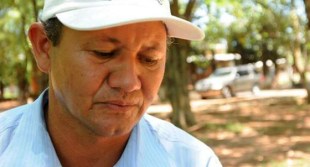 The Inter-American Commission on Human Rights (IACHR) condemns the murder in Paraguay of human rights defender Vidal Vega, leader of the Campesinos sin Tierra movement (Landless Campesinos) and president of the Committee of Relatives of Victims of the Curuguaty Massacre and urges the State of Paraguay to investigate and clear up these crimes, and punish those who perpetrated and masterminded them.
According to IACHR information, on December first, 2012, two individuals arrived aboard a motorcycle at the home of Vidal Vega. Police information quoted in news reports indicates the victim’s spouse, María Cristina Argüello, answered the door: the two unknown men asked for Vidal Vega and shot him with 12-caliber rifles, in the presence of his family.
The information received also indicates that Vidal Vega was a key witness in an investigation into the Curuguaty massacre, which happened on 15 June 2012, and where 11 peasants and 6 policemen died. The massacre took place during a raid on Campos Morombí, Marina Cue, lands in litigation between the State and private parties.
These events led to the impeachment of former Paraguayan President Fernando Lugo, who ended up being removed from office. It was also reported that Vidal Vega was the person responsible for the safekeeping of the documents related to proceedings by the Committee of Relatives of Victims of the Curuguaty Massacre before the National Institute of Rural Development and Land for the adjudication of the “Marina Cue” lands.
The IACHR calls to mind that it is the State’s obligation to proactively investigate acts of this nature and punish those responsible. The Commission also urges the State of Paraguay to immediately and urgently adopt all necessary measures to guarantee the right to life, integrity, and safety of human rights defenders in the country, particularly those who work in the Campesinos sin Tierra movement and on the Committee of Relatives of Victims of the Curuguaty Massacre.
As the Commission has stated previously, the acts of violence and other attacks perpetrated against human rights defenders not only affect the guarantees that belong to every human being, but undermine the fundamental role that human rights defenders play in society and leave all those for whom they fight defenceless.
The IACHR also calls to mind that the work of human rights defenders is essential to the construction of a solid and lasting democratic society, and that they play a leading role in the process of pursuing the full attainment of the rule of law and the strengthening of democracy.
A principal, autonomous body of the Organization of American States (OAS), the IACHR derives its mandate from the OAS Charter and the American Convention on Human Rights. The Inter-American Commission has a mandate to promote respect for human rights in the region and acts as a consultative body to the OAS in this area. The Commission is composed of seven independent members who are elected in an individual capacity by the OAS General Assembly and who do not represent their countries of origin or residence.
Related articles
- Paraguay peasant leader shot dead (bbc.co.uk)
The Feinstein Fumble: Indefinite Detention Remains
By Blake Filippi | Tenth Amendment Center | November 30, 2012
The proposed language in the 2013 NDAA and the recent Feinstein Amendment do not fix the multiple Constitutional infirmities in section 1021 of the 2012 NDAA. Unfortunately, Congress is now poised to reaffirm the President’s ability to prosecute persons within the USA though military tribunals, potentially allow continued indefinite detention without charge or trial, and do nothing to limit the practice of extraordinary rendition.
The most troubling provisions of section 1021 of the 2012 NDAA provide that the all persons within the USA – including U.S. citizens – whom the President unilaterally determines “substantially supported” the Taliban, Al Qaeda or “Associated forces” may be designated as enemy combatants subject to indefinite detention, extraordinary rendition (the transfer to foreign jurisdiction or entities) or military tribunals. Importantly, there is no knowing and willful requirement to one’s “substantial support.”
While the indefinite detention language in the 2012 NDAA purports to allow no Due Process whatsoever, it is tempered – inadequately tempered — by Supreme Court precedent that requires limited Due Process rights for those designated as enemy combatants subject to indefinite detention.
By way of background: in Hamdi v. Rumsfeld, the Supreme Court ruled that Hamdi – a U.S. citizen captured on a foreign battlefield and held indefinitely within U.S. jurisdiction – generally possessed the right to a meaningful opportunity to challenge his enemy combatant status before a neutral military decision-maker.
In Boumediene v. Bush the Court then further defined the due process rights of enemy combatants captured on a foreign battlefield and held within U.S. jurisdiction. They possess Habeas rights in an Article III court to review the neutral decision-marker. However, as a review of a military decision, the Habeas procedures for continued indefinite detention are shockingly lacking and inadequate compared to normal criminal proceedings. There is no 6th Amendment jury right. Hearsay is freely admissible, i.e. the 6th Amendment right to confront right to face accusers is absent. The burden of proof is not beyond a reasonable doubt, not clear and convincing evidence, but a mere preponderance of the evidence. That is more likely than not based on hearsay that someone “substantially supported” a terrorist organization.
Then came the NDAA. The NDAA purports to extend the President’s war powers to the U.S. homeland. All persons within the USA — citizen and non-citizen alike — would now be subject to the Law of War with regards allegations of supporting terrorism, including the same indefinite detention limited Due Process rights articulated in Hamdi and Boumediene, as well as military tribunals and extraordinary rendition.
After the obvious outcry from citizens and States alike, Congress is now poised to pass the 2013 NDAA with what at first blush appear to be fixes to the indefinite detention provisions of the 2012 NDAA. However, the proposed text, and the recent Feinstein Amendment, may do little to restrict the President’s homeland war powers.
The operative language of the 2013 NDAA is contained in Section 1033(a):
“Nothing in the Authorization for Use of Military Force or the National Defense Authorization Act for Fiscal Year 2012 shall be construed to deny the availability of the writ of habeas corpus or to deny any Constitutional rights in a court ordained or established by or under Article III of the Constitution for any person who is lawfully in the United States when detained pursuant to the Authorization for Use of Military Force and who is otherwise entitled to the availability of such writ or such rights.”
First, section 1033 still speaks to ‘detention’ of persons within the USA – as in indefinite detention without charge or trial. And the Constitutional rights purportedly preserved by section 1033 of the 2013 NDAA are likely only the limited protections that are already judicially required under Hamdi and Boumediene for indefinite detention; the right to a limited Habeas reviewin an Article III Court wherein the Constitution does not require numerous procedural safeguards available in normal criminal proceedings. Section 1033 of the 2013 NDAA only appears to be a mere legislative codification of these limited Hamdi and Boumediene indefinite detention procedures. Importantly, the President’s 2012 NDAA authority to dispose of persons captured in the USA — including U.S. citizens – through military tribunal and extraordinary rendition are not curtailed.
Unfortunately, the Feinstein Amendment to the 2013 NDAA may also do little to fix the multitude of problems with the 2012 NDAA, because it 1) may reaffirm the limited indefinite detention Due Process articulated in Hamdi and Boumediene, 2) does not restrict military tribunals with numerous Due Process infirmities for persons within the USA, 3) and it does nothing to limit extrodinary rendition.
The operative language of the Feinstein amendment is as follows:
“(b)(1) An authorization to use military force, a declaration of war, or a similar authority shall not authorize the detention without charges or trial of a citizen or lawful permanent resident of the United States apprehended in United States, unless an Act of Congress expressly authorizes such detention.”
. . . .
“(b)(3) Paragraph (1) shall not be construed to authorize the detention of a citizen of the United States, a lawful permanent resident of United States, or any other person who is apprehended in the United States.”
The initial question is; how does the Feinstein’s amendment actually affect the 2012 NDAA? Feinstein Amendment paragraph (b)(1) still purports to allow indefinite detention upon the express authorization of Congress, and (b)(3) says that the amendment should not be construed to authorize such detention. Yet, section 1021 of the 2012 NDAA, intended to clarify the 2001 Authorization to Use Military Force, specifically authorizes such indefinite detention. Moreover, section 1021 applies broadly to include all persons, including those within the United States (as advocated by the Obama Administration and numerous members of Congress). Thus, section 1021 may still be interpreted as a specific enough authorization under the Feinstein Amendment for indefinite detention of persons within the USA; making the Feinstein Amendment worthless.
Now, let’s suppose the 2012 NDAA does not specify persons within the USA sufficiently to meet the Feinstein Amendment’s specific authorization requirement for indefinite detention; IT LIKELY CHANGES LITTLE.
Here’s why. The Feinstein Amendment does not specify what “charge” or “trial” mean. While this may seem like semantics, it is a very important omission because the judicial forum and attendant Constitutional protections present are not specified.
On one hand, the Feinstein Amendment could be interpreted as requiring the same limited Due Process articulated in Hamdi and Boumediene. Hamdi and Boumediene already require that those subject to indefinite detention are entitled to an opportunity to contest their enemy combatant status before a neutral decision maker, followed by civilian Article III Habeas review (with the extremely limited Due Process articulated above). By requiring charge and trial, the Feinstein Amendment may only legislatively codify the existing Hamdi and Boumediene limited Due Process rights those indefinitely detained under the 2012 NDAA are already entitled to. While this interpretation seems a stretch, we must remember that the Obama Administration has gone so far to declare that the President’s contemplation was sufficient Due Process prior to the drone assassination of U.S. citizens Al Allawaki and son.
On the other hand, it is more likely that the Feinstein Amendment’s “charge and trial” require more than the Hamdi and Boumediene procedures to contest indefinite detention as an enemy combatant (which procedures are not the product of formal charges or trials). We must remember that in addition to indefinite detention without trial or charge, section 1021 of the 2012 NDAA purports to authorize military tribunals. Military tribunals are initiated through formal charges and are deemed trials. Although the 2013 NDAA seeks to preserve Habeas rights and Constitutional protections when in an Article III Court, neither the 2013 NDAA or the Feinstein Amendment require that the actual charge and trial occur in an Article III civilian court (where all the Constitutional protections of normal criminal proceedings are present). The military tribunals authorized in the 2012 NDAA are simply not restricted. Thus, the “charge and trial” specified by the Feinstein Amendment likely refers to a military tribunal; the same tribunals ongoing in Guantanamo Bay.
The Constitutional protections in military tribunals are still woefully inadequate for a civilian arrested within the USA. The right to confront accusers is limited because significant testimonial hearsay can be admissible, the jury is composed of military members instead of peers, an unanimous verdict is not necessary for conviction, Miranda warnings are not applicable and search warrants are not required for admission of evidence. Importantly, Article III, Section III’s requirement that treason be proved by the testimony of two witnesses to the same overt act may not be applicable.
Finally, and perhaps most troubling, is that the 2012 NDAA also authorizes the transfer of alleged enemy combatants to foreign jurisdictions and entities; that’s extraordinary rendition. The 2013 NDAA and the Feinstein Amendment do nothing to curb this horrific practice. The Constitution, laws and courts are completely irrelevant once someone has been transferred outside the jurisdiction of the USA. In this context, an accused’s Constitutional rights (and any rights purportedly preserved under in the 2013 NDAA and Feinstein Amendment) are only enforceable when within the jurisdiction of the courts. Nothing has been done to limit the President’s purported authority in the 2012 NDAA to transfer someone outside of the United States to some foreign country, entity, or military base, where they have no ability to compel a hearing to determine enemy combatant status, seek to be charged or tried, or pursue Habeas relief.
At most, the 2013 NDAA and the Feinstein Amendment require that persons within the USA designated as enemy combatants are at least entitled to military tribunals. Thus, the president retains the authority to prosecute according to the Laws of War. While military tribunals are a slight improvement over the Hamdi and Boumediene indefinite detention procedures, they still provide woefully insufficient civilian Constitutional protections. And nothing has been done about the President’s extraordinary rendition powers. Our Founders certainly did not intend for the president to have such domestic war powers – especially over citizens – without a Congressional declaration of War. Instead, Congress unconstitutionally purported to provide these war powers in the 2012 NDAA multi-hundred-page-appropriation-bill, and has done little to limit them with the ineffectual 2013 NDAA and its Feinstein Amendment.
If Congress intends to uphold the Constitution, it must immediately ban indefinite detention and require charge and trial in Article III civilian courts for persons within the USA – especially for civilians and legal aliens – and strike the President’s purported extraordinary rendition powers. Congress must restore the rule of law! Otherwise, the terrorists have won
Blake Filippi [send him email] is a Legal Analyst for the Tenth Amendment Center. He is also the director of the Rhode Island Liberty Coalition, a constitutional attorney and the initial author of resolutions opposing NDAA detention provisions being introduced around the country. Visit RI Liberty online at www.riliberty.com.
Related articles
- NDAA Detention Powers Remain: Blake Filippi Takes on the Talking Heads (tenthamendmentcenter.com)
- Nothing to Worry About on Indefinite Detention? Guess Again (tenthamendmentcenter.com)
- NDAA Nullification Moves Forward in Michigan (tenthamendmentcenter.com)
- Actually, The Newest Version Of NDAA Makes It EASIER To Detain Citizens Indefinitely (economicpolicyjournal.com)
FARC has ‘always wanted peace’ in Columbia – RT exclusive
RT | December 4, 2012
 Colombian rebel militants FARC seek dialogue and peace with the country’s government, FARC negotiator Tanja Nijmeijer told RT in an exclusive interview. But despite renewed peace talks, government forces killed at least 20 rebels in a recent attack.
Dutch militant Tanja Nijmeijer – who left the Netherlands 10 years ago to join the Revolutionary Armed Forces of Colombia (FARC) and fight for what she calls social justice – spoke with RT, saying that the rebel organization wants to end the country’s 50-year conflict.
“We as an armed organization have always wanted a dialogue, we’ve always wanted peace, we have always asked for peace,” she said.
“We have not taken the arms because we wanted so. We have taken the arms because the Colombian State and the United States imperialism have obliged us to do so,” Nijmeijer said.
Talks between the Colombian government and FARC over fragile peace negotiations are set to resume in Havana, Cuba, on December 7.
At least 20 left-wing rebels were killed in Colombia on Sunday after airstrikes against their camp near the Ecuadorian border, the army said. The attack came after FARC announced a ceasefire until January 1, 2013, for the negotiations.
“People who are in Colombia want to fight for ideas different from neoliberal are killed,” Nijmeijer told RT. “So how is it possible to participate in politics if people who have other ideas are killed. And that’s the reason of arm struggle in Colombia. That’s the reason why we are still fighting.”
Colombian President Juan Manuel Santos has set a deadline of November 2013 for an agreement to be reached in the peace talks with FARC. “This has to be a process of months, rather than years. In other words, this should not last any longer than November next year at the latest,” Santos said.
The president’s statement followed an acknowledgement by FARC that it was holding “prisoners of war” – reportedly soldiers or police captured during combat. FARC stated that the prisoners would be freed in exchange for the release of rebels held by the government.
The Colombian government currently detains around 700 rebel prisoners, according to Sandra Ramirez, one of FARC’s representatives.
The US has been criticized for its role in helping the Colombian government kill members of FARC; Washington’s military assistance to Columbia has been directed primarily towards killing FARC militants.
In nearly a half-century of conflict in Columbia, an estimated 600,000 people have died and another 15,000 gone missing. Some 4 million people have also been internally displaced.
Find out more about FARC and the peace process from RT’s full exclusive interview with Tanja Nijmeijer, airing Wednesday at 18:45 GMT.
Mexico: Peña Nieto Takes Office as Youths Riot
Weekly News Update on the Americas | December 3, 2012
Protests against Mexican president Enrique Peña Nieto during his inauguration on Dec. 1 quickly turned into violent confrontations between police and demonstrators that disrupted much of downtown Mexico City. The protests were called by the National Convention Against the Imposition, a coalition of groups holding that Peña Nieto’s election last July was manipulated, and #YoSoy132 (“I’m number 132”), a student movement that arose in the spring in response to the election campaign [see Update #1130]. But masked youths, many of them wearing black t-shirts with anarchist symbols, quickly became the center of attention at the Dec. 1 demonstration.
The confrontations began around 7 am near the San Lázaro subway and bus stations at the heavily guarded and barricaded Chamber of Deputies, where the inauguration was to take place about three hours later. Determined to break through the metal barriers, the masked youths threw rocks, metal pipes and Molotov cocktails at the federal police, who responded with exceptional violence, using tear gas, pepper spray and water cannons. The media reported that the agents also used rubber bullets; police spokespeople denied the reports. Many #YoSoy132 supporters moved away from the masked youths, as did the famously militant teachers from the southern state of Oaxaca, although both groups organized brigades to assist protesters who were wounded or were overwhelmed by the tear gas.
Dozens of protesters were injured. At around 10 am #YoSoy132 reported that a youth named Carlos Yahir Valdés had been killed by a tear gas canister or a rubber bullet; Adrián Ramírez, president of the Mexican League for the Defense of Human Rights (LIMEDDH), said the victim was named Carlos Valdivia and had been seriously wounded but not killed.
Eventually the youths in black moved west towards the Zócalo plaza and then on to the Palacio de Bellas Artes cultural center and the Alameda park. Along the way they smashed windows, streetlights, phone booths and ATMs; looted stores and gas stations; and battled the Mexico City police. At times passers-by supplied the protesters with bricks to throw at the police, while smiling tourists took pictures. At least one private car was destroyed and one motorcycle was set on fire. (La Jornada (Mexico) 12/2/12)
During his first day in office, President Peña Nieto announced “13 specific decisions” to improve the situation in Mexico, including a universal social security system, life insurance for heads of households, educational reforms, and revival of passenger railroads. He also promised to maintain a zero deficit in the budget while carrying out his programs. (LJ 12/2/12)
Outgoing president Felipe Calderón Hinojosa (2006-2012)–whose militarized fight against drug trafficking set off the violence in which 50,000 Mexicans died, according to critics—is planning to leave Mexico, at least temporarily. On Nov. 28 Harvard University’s John F. Kennedy School of Government in Cambridge, Massachusetts, announced that Calderón will hold a one-year fellowship at the school starting in January. “This fellowship will be a tremendous opportunity for me to reflect upon my six years in office,” Calderón said in a statement.
Calderón received a master’s degree from the Kennedy school in 2000. The Reuters wire service noted that other recent students at the school include Bo Guagua, son of ousted Chinese politician Bo Xilai, and Paula Broadwell, co-author of a book about former US Central Intelligence Agency (CIA) director Gen. David Petraeus, who resigned after acknowledging that he’d had an affair with her. (Reuters 11/28/12) Another former student was the late Guatemalan general Héctor Alejandro Gramajo Morales. At his graduation in June 1991 human rights activists served Gramajo with court papers for a federal civil suit under the Alien Tort Claims Act; nine Guatemalans charged him with acts of torture, abduction and murder during counterinsurgency operations in western Guatemala in 1982, when he was army chief of staff. Gramajo lost that and another human rights suit later in the year by default [see Update #737].
Related articles
- Photos: Protests as Mexico’s President Enrique Pena Nieto takes office (photos.denverpost.com)
Peña’s Promises
By Laura Carlsen – Americas Program – 03/12/2012
Against the sharply contrasting backdrop of violent conflicts in the streets and carefully staged official events, Enrique Peña Nieto took office yesterday. The general outlines of the plan for his six-year term, although still not detailed, reveal proposed changes not unlike the new president–mostly cosmetic and devoted to appearances on the surface.
After taking the oath of office in the Chamber of Deputies at San Lazaro and swearing in his cabinet, the newly inaugurated president appeared before guests at the National Palace in the central plaza to deliver his first speech as Chief Executive.
Peña Nieto began his speech with a rapid pass through Mexican history, citing pre-hispanic and Spanish culture, the liberal and revolutionary currents and “the recent past”. Without mentioning the PRI, he emphasized the orderly change of power since 1934 and “accelerating democracy”, ironically dating from 1968–the year his party massacred hundreds of students in Tlatelolco.
He concluded with what would be the tonic of the speech-that Mexico is “ready to take off” and “everyone agrees that we have an historic opportunity.” His speech centered on the “Mexican Moment”, the idea of a turning point when Mexico would finally enter into a period of peace, prosperity and global recognition.
He did mention the challenges along the way, stating that Mexico is a nation that “grows at two speeds, one of progress and development and the other in backwardness and poverty” and citing the lack of employment and educational opportunities. His speech included a number of specific if not detailed measures that provide fodder for analysis.
Peña Nieto began with the “five strategic points” of his new government:
1. Mexico at peace: Peña offered to “put the citizen at the center of security policy.” He referred to this as a “change in paradigm”, without mentioning the drug war by name or the 60 to 80,000 killed under this model during the Calderon administration. He promised greater coordination between agencies and an effort to combat impunity and concluded, “There can be no security as long as there is no justice.”
2. An inclusive Mexico: Peña Nieto promoted to build an “inclusive” Mexico and close the gap of inequality so all mothers and fathers can support their families. He said Mexico should become a fair, middle-class society.
3. Quality education for all: that educates students to be responsible and committed to their communities.
4. Economic growth: through greater competitiveness, more credit, more investment in infrastructure, strengthening the domestic market and expanding the global market so Mexico can take its place as an emerging economy.
5. Mexico as a responsible global actor: Participation in the world through modern diplomacy, so Mexico becomes a factor of stability in the world and a voice that defends liberty. He also used this point to thank the leaders from abroad present.
Behind the promises
The five points are formulated in vague terms, as is usually the case with presidential promises. However, we can use what was said to anticipate the challenges and possible contradictions they pose, and gauge the political will to carry them out over the next six years.
Security policy. Peña Nieto explicitly referred to “a change in paradigm”. This is notable, since it is what the peace movement and critical analysts (CIP Americas Program among them) have been calling for for years. But there is very little in the strategic point or the “13 decisions” listed afterward to back it up.
A real change in paradigm would require two measures that the Peña government has said it will not take: withdrawing the armed forces from counternarcotics efforts and renegotiating security cooperation with the U.S. government. Peña has proposed a “gendarmery”, which is a militarized police force, or a military force charged with police duties among civilian populations. This is what Mexico already has, as the lines between police and military have been blurred precisely by the drug war. Without a plan for reducing militarization, promises to “rethink” the drug war pale.
The U.S. government has actively promoted and supported the drug war model of enforcement and interdiction through the Merida Initiative and spearheaded the massive expansion of U.S. counternarcotics activities in the country. Although both the US and Mexican governments have privately (in Wikileaks cables) and publicly admitted that the strategy has not worked — they insist it’s just a matter of time–the response is to continue with no major adjustments or real evaluations.
U.S. defense, intelligence and security companies depend on the Mexican drug war to obtain multi-million dollar government contracts. The Pentagon and other U.S. agencies have achieved unprecedented freedom to act and even direct actions on Mexican soil as a result of the Merida Initiative. The hawks in government and the war industry will not give that up easily. Peña Nieto knows that and he also knows that his nation’s economy is highly dependent on its northern neighbor. U.S. politicians worried aloud that his government would attempt to negotiate deals with drug cartels, an option which is practically impossible now due to the changes in structures of organized crime. Peña Nieto has reassured the U.S. that his administration will continue the drug war. That means continued deaths, disappearances and social upheaval. There is no mention of redefining security or human security, although the concept of putting the citizen in the center, rather the state, could be construed as coming closer to that concept.
Referring to the need for justice and eliminating impunity is a politically correct but unsubstantiated move. Impunity underlies government institutions and the corruption of the justice system historically is a PRI construct. Impunity has to be attacked from above, because it has been condoned and even promoted from above for so long. The examples of what has happened to former PRI governors accused of serious crimes against the population such as Ulises Ruiz in Oaxaca and Mario Marín in Puebla and even Peña Nieto himself for his role in the murders and rapes in the community of Atenco are illustrative. Nothing at all has happened to them. The teflon coating of PRI politicians has been carefully preserved, with a few notable exceptions such as ex-governors Tomas Yarrington (charged and on the run) and Mario Villanueva (extradited to the U.S.), who have been prosecuted for drug war crimes at the behest of U.S. authorities.
Economic policy:Making Mexico truly “inclusive” would require some structural changes in economic policy that are not likely to come about in a Peña government. The goal of this strategy is largely contradicted by the formula for economic growth indicated in the fourth point and in other statements by the new president.
He has committed to deepening rather than fixing NAFTA, meaning the countryside will continue to be decimated by unfair competition with subsidized U.S. agricultural imports and the state is barred from basic measures such as favoring national industries in purchases and contracting or protecting vulnerable sectors from oblivion. Strengthening the internal market while expanding the global market sounds great, very balanced, but in reality they require different, and often contradictory, policies.
For example, building a strong domestic market requires supporting national production, which is logical and needed but prohibited under neoliberal trade rules, where Mexico is a world leader in signing draconian free trade agreements. It also requires having a population with purchasing power, while emphasizing foreign investment and being competitive on a global market rigged against workers requires suppressing salaries–something Mexican governments have been doing over the past three decades of PRI and PAN governments.
The laudable goal of investment in infrastructure begs the question of ‘investment for who?’ and leaves open how the administration will deal with controversial infrastructure projects that violate indigenous and human rights. More credit would be a good idea, but up to now what little has been available has gone overwhelmingly to large and powerful producers, further skewing the distribution of income.
Improving education: This requires two major moves–devoting more public resources to education and taking on the entrenched leadership of the corrupt teachers’ union. Several analysts have stated that the appointment of Emilio Chauyfett as Secretary of Education is a blow to Elba Esther Gordillo, the life-long leader of the teachers’ union (SNTE). I am not convinced.
Gordillo is a political operator who climbed to the top by wielding the power of an enormous machine for generating votes and political clientele. This machine was created and sustained by the PRI. Her capacity to exchange favors allows her to call the shots in the nation’s education system. To change that would require democratizing the union. The principle forces to democratize do, and must, come from below. The CNTE, organized to crack open the patronage and corruption of the union, is largely anti-PRI and opposed Peña Nieto. His administration is unlikely to do anything that would strengthen the grassroots union democracy (his party blocked the transparency in union matters part of the labor reform) or permanently alienate the SNTE leadership.
Global affairs: So little of substance was said here that it’s hard to know what the Peña administration will change. The written version speaks of restoring Mexico’s rightful place in the concert of nations” as a “country supportive and committed to the best causes of humanity”. It’s anyone’s guess what that refers to. Peña Nieto told Wolf Blitzer of CNN, who pointedly asked what relations with Castro and Hugo Chavez would be like, that he would be building relations in the south and north. This is a recognition that the PAN governments were early exclusively oriented northward to the U.S. and hostile to center-left governments of the South.

Mexico has at times acted as a U.S. proxy in the region, causing other countries to view it with certain suspicion. The U.S. government has actively used the Mexican government in this sense. As the Obama administration pushes divisions in the region with the Pathways to Prosperity program that allies only nations that agreed to sign free trade agreements with the US and increasing military presence of allied countries under the drug war strategy, it will not be easy for Peña Nieto to trace a neutral or balanced foreign policy within the hemisphere, if that is indeed the objective.
Opposition organizations have vowed to shift their efforts from challenges to the elections to challenges to policies they believe are harmful to the country. The center-left leader and former candidate Andrés Manuel López Obrador refused to recognize the new president and is building a new party. The youth movement now is stunned and angered by the violent response of the police while also calling on its members to reject violent confrontation.
The most commonly heard phrase from analysts following Peña Nieto’s inaugural speech, is “the devil’s in the details”. Although Peña Nieto followed up on these five strategic points with 13 decisions that included more specific actions, he still left much room to speculate.
Political promises are often, if not usually, set aside when the real task of governing begins, and one is left to wonder if they were sincere and not practical, or designed to build an image, not a government. The PRI is well-practiced in the art of simulation, of developing a public discourse and a backroom practice.
In any case, the country and the rest of the world now have more clues as to what the return of the PRI will mean for Mexico, for the United States and for the region.
Laura Carlsen is Director of the CIP Americas Program in Mexico City http://www.cipamericas.org.
Australian surveillance ‘out of control’: 20% increase in 1 year
RT | December 3, 2012
Access to private data has increased by 20 per cent by Australia’s law enforcement and government agencies – and with no warrant. Australians are 26 times more prone to be placed under surveillance than people in other countries, local media report.
In such a way, state structures accessed private information over 300,000 times last year – or 5,800 times every week, figures from the federal Attorney General’s Department showcase.
The data includes phone and internet account information, the details of out and inbound calls, telephone and internet access location data, as well as everything related to the Internet Protocol (IP) addresses visited, the Sydney Morning Herald reports.
Australian media report that every government agency and organization use the gathered telecommunications data, and those include the Australian Crime Commission, the Australian Securities and Investments Commission, the Australian Tax Office, Medicare and Australia Post.
New South Wales (NSW) Police became the biggest users of the private data, with 103,824 access authorizations during the last year – a third of all information accessed by the security forces.
The news triggered massive public outrage, with Australian Greens Senator Scott Ludlam telling Sydney Morning Herald, ‘‘This is the personal data of hundreds of thousands, indeed millions of Australians, and it seems that just about anyone in government can get it.”
He said the move demonstrated the current data access regime was “out of control” and amounted to the framework for a “surveillance state”.
The reports come as the federal government proposes even wider surveillance powers, including a minimum two-year standard for telephone and web providers – a measure causing public controversy.
The president for the local NSW Council for Civil Liberties, Cameron Murphy, told the Australian Financial Review that, according to the statistics, recent proposals to step up police surveillance powers and keep internet and phone data for two years or more was little more than a “fishing expedition”.
“It’s stunning and completely outrageous that so much interception is going on,” Murphy said. “What seems to be happening now is this is being done as a matter of first course and not as a matter of last resort.”
The statistics gathered by the council demonstrate that Australians are 26 times more likely to be placed under surveillance than in comparable countries.
However, a spokesperson for Attorney-General Nicola Roxon indicated that “these new statistics show telephone interception and surveillance powers are playing an even greater role for police so they can successfully pursue kidnappers, murderers and organized criminals.”
Ludlam, on the other hand, detailed what the expansion should be accompanied by.
“It’s incumbent on the parliament’s national security inquiry to recommend some form of warrant authorization be introduced, and that there be a review and reduction of the government agencies that can access the personal communications data of millions of Australians,” he said.
Related articles
- Spying ‘out of control’ (smh.com.au)
- Sharp rise in private data surveillance (theage.com.au)
- Access to private net, phone use up by 20% – without warrants (smh.com.au)
CPJ: Israel must explain targeting of journalists in Gaza
CPJ | December 2, 2012
Dear Prime Minister Netanyahu,
The Committee to Protect Journalists is gravely concerned that Israeli airstrikes targeted individual journalists and media facilities in the Gaza Strip between November 18 and 20. Journalists and media outlets are protected under international law in military conflict.
A series of Israeli airstrikes struck two buildings that house news media, resulting in injuries to nine journalists, while separate missile attacks resulted in the deaths of three journalists, according to news reports and CPJ research. Israeli officials have broadly asserted that the individuals and facilities had connections to terrorist activity but have disclosed no substantiation for these very serious allegations. CPJ has repeatedly sought, by email and phone, supporting details or evidence from the Israel Defense Forces spokesperson’s office. We have yet to receive information from the spokesperson’s office to substantiate its allegations.
On November 18 and 19, airstrikes targeted Al-Shawa and Housari Tower and Al-Shuruq Tower, both of which are well-known for housing numerous international and local news organizations. The attacks damaged the offices of Hamas-run Al-Aqsa TV and Al-Quds TV, Sky News, Russia Today, Al-Arabiya, and the independent Bethlehem-based Ma’an News Agency. Among the nine wounded journalists was Khader al-Zahhar, a cameraman for Al-Quds TV who lost his right leg in the explosion, according to news reports. Several other international and local news organizations, including Reuters, Agence France-Presse, The Associated Press, and CNN, also have offices in the targeted buildings. Israeli spokesman Mark Regev told Al-Jazeera English on November 19 that Al-Aqsa TV is a “Hamas command and control facility” and that “Hamas used communication facilities on top of the buildings.” He did not state whether or how Hamas used the station militarily.
On November 20, Mahmoud al-Kumi and Hussam Salama, cameramen for the Hamas-run Al-Aqsa TV, were driving away from an assignment at Al-Shifaa Hospital when an Israeli missile hit their vehicle, according to Al-Aqsa TV. The car was marked “TV” in neon-colored letters, the Hamas-run station said. The two men were killed.
A third journalist was killed when his car was hit by a missile that same day, AP reported, citing a Gaza health official. Local news reports identified the victim as Mohamed Abu Aisha, director of the private Al-Quds Educational Radio, whose vehicle was hit while he was driving in the Deir al-Balah neighborhood. The reports did not say whether Abu Aisha was engaged in journalistic work at the time, and CPJ continues to investigate the circumstances of his death.
Al-Aqsa TV, the official Hamas-run television channel, provides news and information that overtly reflect the organization’s anti-Israel perspective. Al-Quds Educational Radio is a private radio station geared toward educational programs; it also provides a pro-Hamas perspective.
On November 20, AP cited Lt. Col. Avital Leibovich, an Israeli military spokeswoman, as saying the three individuals were Hamas operatives. “The targets are people who have relevance to terror activity,” AP quotes Leibovich as saying. An unsigned entry posted on the Israel Defense Forces blog that day asserted that an individual named Muhammed Shamalah, whom it referred to as a Hamas military commander, had been targeted in an airstrike that struck a vehicle identified as “TV.” Neither Leibovich nor the IDF blog entry provided any details to support the claims. Leibovich reiterated these unsupported claims in a letter to The New York Times published on November 29.
CPJ has contacted the IDF spokesperson’s office multiple times, beginning on November 20 and then again on November 27, 28, and 29, and we have sent three written requests seeking an explanation for its claims. We were directed to a Maj. Zohar Halevi who has not responded to our requests.
Alarmingly, spokeswoman Leibovich seeks to erase the crucial legal distinction between armed combatants and journalists covering the perspective of an adversary. “Such terrorists, who hold cameras and notebooks in their hands, are no different from their colleagues who fire rockets aimed at Israeli cities and cannot enjoy the rights and protection afforded to legitimate journalists,” Leibovich writes in the letter to The Times.
All journalists, whether local or foreign, regardless of the perspective from which they report, are afforded the same civilian protections under international law. The Israeli government does not have the right to selectively define who is and who is not a journalist based on national identity or media affiliation. International law also places strict limits on military attacks on all civilian sites, including media outlets. Article 51 of Additional Protocol I to the Geneva Conventions prohibits attacks on civilian sites in which potential damage and loss of civilian life “would be excessive in relation to the concrete and direct military advantage anticipated.”
We request your government provide an immediate and detailed explanation for its actions in targeting Mahmoud al-Kumi, Hussam Salama, and Mohamed Abu Aisha and the two media buildings in the Gaza Strip.
We ask that you consider this a matter of urgency.
Sincerely,
Joel Simon
Executive Director, CPJ
Related articles
- Israel’s War on Palestinian Children (alethonews.wordpress.com)
- #GazaUnderAttack | 2 journalists killed in Israeli airstrike on Gaza (occupiedpalestine.wordpress.com)
Gaza man dies after being shot by Israeli troops in Rafah
Ma’an – 01/12/2012
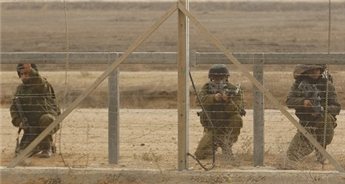
GAZA CITY – A young Palestinian man died late Friday of wounds he sustained hours earlier by Israeli gunfire east of Rafah in the southern Gaza Strip.
Palestinian medics confirmed Saturday that 21-year-old Mahmoud Jaroun was hit by a gunshot to the pelvis Friday evening, and was evacuated to Abu Yousif An-Najjar Hospital in Rafah before medics announced his death around midnight.
On Friday, 11 Palestinians sustained wounds by Israeli fire along the borders between the Gaza Strip and Israel.
Asked about Friday’s shootings, an Israeli military spokeswoman said Palestinians had come up to the fence to vandalize it. Soldiers warned them away, and when that did not deter them, shot at their legs, she said.
Palestinians described the incident as a demonstration, saying that six people were wounded by the Israeli gunfire.
Since a ceasefire in the Gaza Strip was brokered by Egypt, Israeli forces have breached it several times firing at farmers near the border.
Two Palestinians have been shot dead so far and about 40 have been injured.
The Israeli navy has also detained dozens of Gaza fishermen, although Israel agreed to allow Gaza fishermen to go six nautical miles off the coast instead of three.
Related articles
- 15th Violation of truce by #Israel | Israeli gunfire injures 2 in Gaza (occupiedpalestine.wordpress.com)
Long Live The Resistance
By Adam Akkad | Beyond Compromise | November 19, 2012
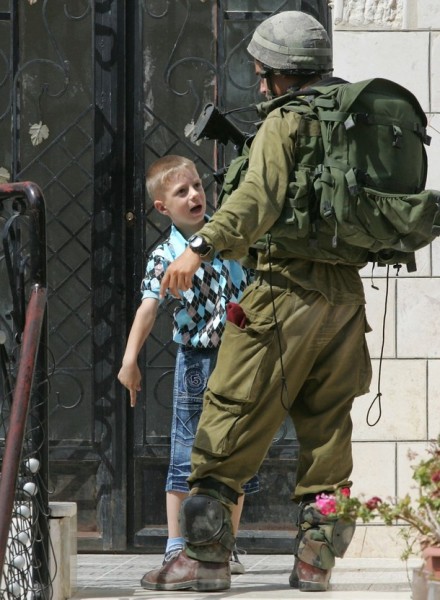
It is rather unfortunate that we Palestinians do not get to set the dynamics of our own resistance. Under the iron boot of occupation, siege and apartheid the means available to us are beyond limited and are, in fact, nonexistent. What is even more unfortunate is the constant humiliation, fear and never ending suffering my people have to endure under the oppressive and discriminatory hand of Zionism. This dynamic places us Palestinians in a tough position, between a rock and a hard place, if you will. How is it exactly that we resist this oppression? How can we compel our oppressor to grant us our freedom and bring about justice?
Behind this keyboard I am typing with and from the comfort of my apartment, it is easy for me to condemn violent resistance, as many so-called solidarity activists choose to do. When bullets and bombs are not whisking past your head threatening not only your life, but the lives of your loved ones, it is all too tempting to take this politically correct stance and avoid any possible friction with so-called comrades. This understanding is not only insufficient and unbecoming of true solidarity, it is intellectually disingenuous.
The dynamic of our resistance is set by our Zionist oppressor, which as it stands, comes from the position of power. Our resistance is defensive and reactionary. The effect, not the cause. In a situation where we find ourselves entirely helpless and defenseless, violent resistance becomes the only means of raising our voices and procuring any and all leverage we can to demand our rights and bring about justice. When the arrogance of the oppressor is shattered and replaced with insecurity, that is a success of the resistance. The point is to make our oppression risky for the oppressor. Without any risk, the oppressor has no reason to cease it’s oppression and actually begins to benefit from it. And as we’ve seen in Palestine, oppression then becomes the status quo.
It is important to consider the causes and effects of the rocket attacks of the Palestinian resistance. Do these attacks put civilians in danger? Yes. But pushing our thoughts a bit further we land upon the key question: Why are these rockets fired in the first place? The answer lies in the decades long horror story that is aptly referred to as the Nakba, or the Catastrophe. The Nakba is the story of the destruction of the Palestine and the Palestinian people; the ethnic cleansing, massacre, aggression and oppression of an entire people. The Nakba didn’t end in 1948 and Israel’s latest aggression on Gaza is a continuation of its diabolical desire to rid historic Palestine of its indigenous population. When we understand that the rockets are a response to Israeli oppression that didn’t start last Wednesday, but over 6 decades ago, it becomes abundantly clear that Israel is responsible for any danger its citizens face. If these civilians truly want to put an end to the danger they may potentially face, then I extend to them an invitation to join us in our struggle to end oppression for all. Help us bring justice to Palestine and let all human beings live with their dignity intact. Any danger these citizens face is a knee jerk reaction to the oppression and suffering their country not only perpetuates, but thrives off of.
It is entirely unnatural to expect anything but resistance, violent or otherwise, from the oppressed.
Related articles
- Palestine: Oppression Will not Work (alethonews.wordpress.com)
- Nakba-denial: whitewashing Zionist crimes ~ by Dr. Tariq Shadid (@doccjazzmusic) (occupiedpalestine.wordpress.com)
- Not black-and-white: The chess game behind the recent Gaza-Israel war (alethonews.wordpress.com)
Featured Video

Why Hamas Really Attacked Israel on Oct. 7
or go to
Aletho News Archives – Video-Images
From the Archives
Confronting the Threat of Ethnic Bioweapons
By Tony Cartalucci – New Eastern Outlook – 29.11.2017
The United States Air Force’s 59th Medical Wing’s molecular biology branch recently was revealed to have been collecting specifically Russian RNA and synovial (connective) tissue samples, prompting fears in Russia of a possible US directed ethnic-specific bioweapons program. … continue
Blog Roll
 Aletho News
- Russia accuses France of ‘piracy’ over tanker seizure
- Why Yemen Is Bombing Saudi Arabia’s Airports: The War Behind the Headlines
- Sally Rooney’s books pulled from UK over support for Palestine Action
- Bombs for Tel Aviv, Promises for Riyadh
- Israeli ad agency conducted vast global espionage campaign using online ads: Report
- Oct. 7 Forever Marks The Big Reveal: ‘We See You, Israel, We Revile You, We Reject You!’
- Meet the US generals and admirals advancing Israeli policy
- Israel’s Straw Widow Protocol: The Kill Zones Where Civilians Were Labelled ‘Terrorists’
- Leading Israeli Think Tank Publishes Psychotic Israeli ‘National Security’ Doctrine
- Are the United States and Israel in Decline-and-Fall Mode?
- If Americans Knew
- Israeli firm used online ads to run vast spy operation, researchers say
- No, the world zionist movement is not an antisemitic conspiracy theory
- Hundreds of IDF investigations into killings still have no public outcome, BBC Verify finds
- After Ashley Moody Epstein Probe, Donors Linked to Him Poured Money Into her Senate Campaign
- Worried about Russian meddling in UK politics? Wait till you see what Israel is up to
- Israeli settlers attack West Bank center for disabled children, church leader calls for int’l action
- Pulling Out Teeth Just to Live: How Israel Has Devastated Dental Care in Gaza
- Gaza’s “ceasefire” death toll passes 1,500 – Daily Update
- Activists Abused By Israel Return to New Freedom Flotilla Mission
- 60 Minutes won’t tell the full truth about Israeli settler violence
- No Tricks Zone
- New Study Suggests Large Regions Of The Pacific Ocean Have Been Cooling For The Last 80 Years
- Germany’s Green Energy Debacle: High Energy Costs Force Kahla Porzellan to Close After 182 Years!
- New Study: 50 Years Of The Most Aggressive ‘Net Zero’ Policies Can Only Affect The Global Climate By 0.03°C
- US September “Heat” Was No Record…Many Records Set Decades Ago
- Latest European Green Energy Debacle; Portugal’s Largest Flagship Solar Park Insolvent!
- Green Energy Debacle: German Expert Professor Fritz Vahrenholt Warns Of Severe Economic And Social Consequences
- Two More Paleo Reconstructions Affirm Meters-Higher Sea Levels Across Ireland, Brazil 7000-6000 Years Ago
- New Study: Earth And Venus Surface Warmth Largely Explained By Convection And Lapse Rate, Not CO2 Or Radiation
- 2025 Nature Paper Claiming Worsening Global Drought Gets RETRACTED …Heavily Flawed
- New Study: ‘Global Drought Shows No Detectable Recent Acceleration Under Climate Warming’

