‘Mad as Hell’ in Madison
By Ralph Nader | February 25, 2011
The large demonstrations at the state Capitol in Madison, Wisconsin are driven by a middle class awakening to the spectre of its destruction by the corporate reactionaries and their toady Governor Scott Walker.
For years the middle class has watched the plutocrats stomp on the poor while listening to the two parties regale the great middle class, but never mentioning the tens of millions of poor Americans. And for years, the middle class was shrinking due significantly to corporate globalization shipping good-paying jobs overseas to repressive dictatorships like China. It took Governor Walker’s legislative proposal to do away with most collective bargaining rights for most public employee unions to jolt people to hit the streets.
Republicans take rigged elections awash in corporatist campaign cash seriously. When they win, they aggressively move their corporate agenda, unlike the wishy-washy Democrats who flutter weakly after a victory. Republicans mean business. A ram rod wins against a straw all the time.
Governor Walker won his election, along with other Republicans in Wisconsin, on mass-media driven Tea Party rhetoric. His platform was deceitful enough to get the endorsement of the police, and firefighters unions, which the latter have now indignantly withdrawn.
These unions should have known better. The Walker Republicans were following the Reagan playbook. The air traffic controllers union endorsed Reagan in 1980. The next year he fired 12,000 of them during a labor dispute. (This made flying unnecessarily dangerous.)
Then Reagan pushed for tax cuts—primarily for the wealthy—which led to larger deficits to turn the screws on programs benefiting the people. Reagan, though years earlier opposed to corporate welfare, not only maintained these taxpayer subsidies but created a government deficit, over eight years, that was double that of all the accumulated deficits from George Washington to Jimmy Carter.
Maybe the unions that endorsed Walker will soon realize that not even being a “Reagan Democrat” will save them from being losers under the boot of the corporate supremacists.
The rumble of the people in Madison illustrates the following:
1. There is an ideological plan driving these corporatists. They create “useful crisis” and then hammer the unorganized people to benefit the wealthy classes. Governor Walker last year gave $140 million in tax breaks to corporations which produced the $137 million deficit for this fiscal year. Note this oft-repeated dynamic. President Obama caved to the Minority party Republicans in Congress last December by going along with the deficit-deepening extension of the huge dollar volume tax cuts for the rich. Now the Republicans want drastic cuts in programs that help the poor.
2. Whatever non-union or private union workers, who are giving ground or losing jobs, think of the sometimes better pay and benefits of unionized public employees, they need to close ranks without giving up their opposition to government waste. For corporate lobbyists and their corporate governments are going after all collective bargaining rights for all workers and they want to further weaken The National Labor Relations Board.
3. Whenever corporations and government want to cut workers’ incomes, the corporate tax abatements, bloated contracts, handouts and bailouts should be pulled into the public debate. What should go first?
4. For the public university students in these rallies, they might ponder their own tuition bills and high interest loans, compared to students in Western Europe, and question why they have to bear the burden of massive corporate welfare payouts—foodstamps for the rich. What should go first?
5. The bigger picture should be part of the more localized dispute. Governor Walker also wants weaker safety and environmental regulations, bargain-basement sell-outs of state public power plants and other taxpayer assets.
6. The mega-billionaire Koch brothers are in the news. They are bankrolling politicians and rump advocacy groups and funding media campaigns in Wisconsin and all over the country. Koch Industries designs and builds facilities for the natural gas industry. Neither the company nor the brothers like the publicity they deserve to get every time their role is exposed. Always put the spotlight on the backroom boys.
7. Focusing on the larger struggle between the people and the plutocracy should be part and parcel of every march, demonstration or any other kind of mass mobilization. The signs at the Madison rallies make the point, to wit—“2/3 of Wisconsin Corporations Pay No Taxes,” “Why Should Public Workers Pay For Wall Street’s Mess?”, “Corporate Greed Did the Deed.”
8. Look how little energy it took for these tens of thousands of people to sound the national alarm for hard-pressed Americans. Just showing up is democracy’s barn raiser. This should persuade people that a big start for a better America can begin with a little effort and a well-attended rally. Imagine what even more civic energy could produce!
Showing up lets people feel their potential power to subordinate corporatism to the sovereignty of the people. After all, the Constitution’s preamble begins with “We the People,” not “We the Corporations.” In fact, the founders never put the word “corporation” or “company” in our constitution which was designed for real people.
As for Governor Walker’s projected two-year $3.6 billion deficit, read what Jon Peacock of the respected nonprofit Wisconsin Budget Project writes at: http://www.wisconsinbudgetproject.org about how to handle the state budget without adopting the draconian measures now before the legislature.
Bahrain and the “Freedom Contagion”
By RANNIE AMIRI | CounterPunch | February 25, 2011
“Saudi Arabia did not build a causeway to Bahrain just so that Saudis could party on weekends. It was designed for moments like this, for keeping Bahrain under control.”
– Dr. Toby Jones, expert on Saudi Arabia at Rutgers University
If Saudi Arabia was rattled by the fall of former Egyptian President Hosni Mubarak, they will be in convulsions should Bahrain’s monarchy collapse. By all indications, the five other member nations of the Gulf Cooperation Council (GCC) (Kuwait, Oman, Qatar, Saudi Arabia and United Arab Emirates) will go to all lengths to prevent it.
The Arab world’s “freedom contagion” is rapidly spreading. Bahrain’s revolt is being spearheaded by the country’s poor, disenfranchised Shia Muslim majority. Although Mubarak was deposed by a nation of 80 million, unrest in the tiny island kingdom of only 530,000 citizens poses a greater ostensible threat to the GCC, particularly Saudi Arabia and its own sizable, restive Shia minority.
While many turned to the Qatar-based Al-Jazeera television network for coverage of the Tunisian, Egyptian—and now Libyan—revolutions, scant coverage was accorded to Bahrain, even when unarmed, peaceful protestors were being gunned down on the streets of the capital just a day after sleeping protestors in Pearl Square were savagely attacked by the regime’s security forces.
Should other Shia, like those in Saudi Arabia’s oil-rich Eastern Province (where they form a majority), become “infected” with the idea of taking to the streets to peacefully demand political reforms and representation, civil rights, and freedom of religion and assembly, other citizens might do likewise.
This explains why King Abdullah, who returned from Morocco on Wednesday after a prolonged 3-month convalescence from back surgery, announced he will lavish $37 billion in benefits on Saudis in the form of pay raises, unemployment benefits, debt forgiveness and housing subsidies.
Among those who first greeted Abdullah upon his arrival was the very one counting on the aging Saudi monarch for the survival of his regime—Bahrain’s king, Sheikh Hamad bin Isa al-Khalifa. In a bid to placate Bahraini Shias, Sheikh Hamad released 100 political prisoners from Manama’s prisons prior to leaving for Riyadh, including the 25 activists charged last year with plotting against the state.
Saudi Arabia has sustained resource-poor Bahrain with a steady cash inflow for years and it wasted no time in issuing a statement saying it would stand by the monarchy “with all capabilities.” It had always justified doing so by framing Bahrain as an alleged bulwark against perceived encroaching Iranian influence, but today it is to help insulate Saudi Arabia from experiencing similar events along its eastern border and beyond. The emir of Kuwait added that “the security of Bahrain is the security of the region.” Last Tuesday, as tanks were rolling into Pearl Square, GCC foreign ministers met in Manama to reaffirm their solidarity with al-Khalifa rule.
Exactly one week later, Bahrain witnessed the largest anti-regime protests to be staged since the revolt began: 100,000 people strong—one-fifth of all nationals—turned out in massive, peaceful demonstrations along the highway leading into Pearl Square.
“This is the first time in the history of Bahrain that the majority of people, of Bahraini people, got together with one message: this regime must fall,” said one.
As the al-Khalifa regime’s brutality escalated, so did protestors’ demands. Initially it was for Khalifa bin Salman al-Khalifa, the king’s uncle and four-decade-old prime minister, to step down. Then came calls for Bahrain to transform itself into a legitimate constitutional monarchy. Now, many say the monarchy itself must be abolished.
So how influential has Bahrain’s uprising been?
Small protests have broken out in Saudi Arabia’s Eastern Province. Saudi troops have already starting heading that way.
~
Rannie Amiri is an independent Middle East commentator.
Iraq: Police Allow Gangs to Attack Protesters
Authorities Obliged to Protect Peaceful Protests
HRW | February 24, 2011
(New York) – Iraqi police allowed dozens of assailants to beat and stab peaceful protesters in Baghdad on February 21, 2011, Human Rights Watch said today. Security forces have an obligation to protect the right to assemble peacefully and to use only the minimum necessary force to protect lives if violence erupts, Human Rights Watch said.
In the early hours of February 21 dozens of men, some wielding knives and clubs, attacked about 50 protesters who had set up two tents in Baghdad’s Tahrir Square. The assailants stabbed and beat at least 20 of the protesters who were intending to camp in the square until February 25, when groups have called for national protests similar to the “Day of Anger” in Egypt. The attack came directly after the police had withdrawn from the square, and witnesses suggested the assailants were in discussion with the police before they attacked.
“Promises by Prime Minister Nuri al-Maliki to allow protests are meaningless when we see vicious attacks like the one on February 21,” said Joe Stork, deputy Middle East director at Human Rights Watch. “Iraqi authorities should hold police who allowed this attack to happen accountable.”
Scores of demonstrations have taken place across the country since early February, mainly focused on the chronic lack of basic services and perceived widespread corruption. Since February 16, security forces have killed at least five protesters and injured more than 100 at demonstrations throughout Iraq. Armed men have also targeted opposition groups and media. In Sulaimaniya, assailants set fire to multiple buildings of the opposition Goran (“change”) party and the headquarters of a newly established TV and radio station that broadcast video of the protests.
Protests in Baghdad
Shortly after 1 a.m. on February 21 police vehicles on duty at Tahrir Square, in the center of Baghdad, suddenly vacated the area, a dozen witnesses told Human Rights Watch. Immediately afterward, four military Humvees parked on a distant side of the square, while several black SUVs pulled up and parked on an adjoining street. A standing curfew bans all civilian vehicular traffic on Baghdad’s roads between midnight and 5 a.m., and vehicles in the Tahrir Square area encounter numerous military checkpoints and patrols.
After the vehicles arrived, streetlights surrounding the square went out, and the people in the Humvees turned on floodlights attached to their vehicles. One protest organizer told Human Right Watch that dozens of men wearing civilian shirts, but all with similar dark-colored military-style pants, quickly approached the sleeping protesters, many brandishing knives, batons, and stun-guns, and fanned out around the tents. One asked the organizer if he had a permit for the demonstration, and began to interrogate him.
Another witness said a surprised policeman from a nearby checkpoint approached the square with his gun drawn, but when one of the armed men whispered something in his ear, the policeman quickly nodded and withdrew. “At that point, one of them gave a signal, and they all started beating us and running into the tents,” said the witness, who asked not to be named for safety reasons. “I heard people screaming in pain, so I yelled out for everyone to run.”
A protester bearing stab wounds, now in hiding, told Human Rights Watch: “I woke up with the pain of the knife sticking in me and everyone yelling. The man who stabbed me told me that I wasn’t supposed to be in the square, and that I had to leave, or he would stab me again. He then hit me in the head. I got up as best as I could, and other protesters helped me run away.”
Another protester with large bruises on his back and a long laceration on the side of his left leg told Human Rights Watch, “They were punching and stabbing us as we were trying to run from them.”
Other witnesses gave consistent accounts of the attack. They said they believed the violence was meant to frighten and disperse the protesters rather than to kill them, although they were all shocked at the brutality of the attack. Various protesters who had encountered police at checkpoints while fleeing into the alleys of the adjoining Betuine neighborhood said the police told them they “were not allowed to intervene.” One protester said a policeman told him they were powerless because the assailants were “from the Office of the Commander-in-Chief of the Armed Forces.”
Human Rights Watch observed lacerations or bruises on seven protesters. Witnesses’ testimony was also consistent with video viewed by Human Rights Watch, shot at the scene in the hours before the attack, and then of wounded protesters the next morning.
At earlier protests in Tahrir Square, Human Rights Watch observed Iraqi security forces intimidating peaceful protesters by filming them and threatening to arrest them, and in one instance saying, “Now, we know who you are.” On February 11 and 13 security forces filmed the faces of participants who were chanting peacefully and told them they would be arrested. On February 23 Human Rights Watch also saw security forces preventing Iraqi journalists from filming or taking photos of the protests.
Protests in Kurdistan
Since February 17, clashes with security forces have killed three demonstrators in Sulaimaniya. Thousands of demonstrators have continued their protest against alleged corruption and the political dominance of the two ruling parties, the Kurdistan Democratic Party (KDP) and the Patriotic Union of Kurdistan (PUK).
A 25-year-old resident of Sulaimaniya told Human Rights Watch that he visited the protest area in that city out of curiosity on February 17. Without warning, he said, KDP guards began firing into the crowd from the building’s roof. “I heard gunshots and started to run when a bullet hit the back of my right shoulder,” he said, adding that he spent three days in the hospital.
A protester who took part in the February 17 demonstration in Sulaimaniya told Human Rights Watch: “We threw some stones at the KDP office, but then they actually opened fire against us. I have never seen such scenes here since the end of the violent war between the KDP and PUK” in the 1990s.
Also on February 17 assailants ransacked or torched offices of the opposition Goran party in the Kurdistan Regional Government-administered cities of Erbil, Dohuk, and Soran. On the same day, Hawlati, an independent bi-weekly newspaper, evacuated its offices after receiving threats from uniformed security forces stationed at a nearby KDP office. On February 19 armed men stormed the headquarters of Nalia Television in Sulaimaniya, shooting up broadcasting equipment, wounding a guard, and burning the building down, according to staff of the station. Nalia Television had begun its first broadcast two days earlier with footage of the protests.
In a February 17 press statement, the president of the Kurdistan Regional Government (KRG), Massoud Barzani, condemned the protesters’ behavior, but not that of the security forces who shot at them. At a news conference the following day, Fazil Mirani, head of the KDP politburo, blamed security forces for not protecting his party’s offices from the protesters’ rock-throwing. “Disrespecting our offices comes with a heavy price, and we will do whatever we can to cut the hands of those who are aggressive toward us.” he said.
“The reaction of the Kurdistan Regional Government’s officials to the protester violence is deplorable,” Stork said. “Instead of threatening protesters, officials need to rein in their security forces to prevent further violence.”
Upcoming Protest
Numerous internet groups have urged Iraqis to take to the streets on February 25, one month after a similar “Day of Anger” in Egypt that ultimately led to the ousting of Hosni Mubarak from the presidency.
On June 25, 2010, in response to thousands of Iraqis who took to the streets to protest a chronic lack of government services, the interior ministry issued regulations with onerous provisions that effectively impeded Iraqis from organizing lawful protests. The regulations required organizers to get “written approval of both the minister of interior and the provincial governor” before submitting an application to the relevant police department, not less than 72 hours before a planned event.
Iraq’s constitution guarantees “freedom of assembly and peaceful demonstration.”As a state party to the International Covenant on Civil and Political Rights, Iraq is obligated to protect the rights to life and security of the person, and the rights to freedom of expression, association, and peaceful assembly. Iraq should also abide by the UN Basic Principles on the Use of Force and Firearms, which state that lethal force may only be used when strictly unavoidable to protect life, and must be exercised with restraint and proportionality. The principles also require governments to “ensure that arbitrary or abusive use of force and firearms by law enforcement officials is punished as a criminal offense under their law.”
Human rights law on the right to life, including Article 6 of the ICCPR, requires an effective and transparent investigation when deaths may have been caused by state officials, leading to the identification and prosecution of the perpetrators of any crimes that took place.
US defends arms flow to Yemen
Press TV – February 25, 2011
US State Department Spokesman Philip Crowley has defended Washington’s military aid to Yemen despite the use of the American weaponry by Sana’a regime in brutal crushing of pro-democracy uprisings.
In response to a question by a Press TV reporter at a Thursday news briefing for the foreign press, Crowley defended continued lethal US military aid to Yemen’s autocratic government as a necessary measure to combat ‘terrorism.’
“That itself justifies the ongoing cooperation that we have,” he said.
Crowley said the US has no plans to sever its military ties to Yemen even though US military aid is being used to suppress the pro-democracy uprising there.
The majority of Yemenis are unhappy with the expanding US military ties with their despotic government, especially in view of its harsh crackdown on protesters in recent days.
This has led to an uneasy alliance between the two governments, facing an uncertain future.
In recent days, thousands of Yemeni protesters have taken to the streets across the country, calling for the ouster of President Abdullah Saleh.
The Yemeni president has described the pro-democracy protesters as “elements of a coup.”
Saleh, in power for 33 years, said that he would leave power after his term expires in 2013. He has also promised not to hand power to his son.
The Yemeni incumbent president has also pledged to raise wages of government employees and to provide 60,000 job opportunities for university graduates.
The Yemeni government crackdown on protesters, inspired by revolutions in Egypt and Tunisia, has so far left at least 24 people dead.
The US also occasionally carries out drone attacks in Yemen. Despite such extraordinary measures, the country has grown increasingly unstable.
Main Street Movement Erupts
Thousands Across US Protest War on the Middle Class
By Zaid Jilani | Think Progress | February 24, 2011
Last week, 14 Wisconsin Senate Democrats inspired the nation when they decided to flee the state rather than allow quorum for a vote on a bill that would have decimated the state’s public employee unions and dealt a crippling blow to the state’s hard-working teachers, sanitation employees, and other middle class union members. Since then, tens of thousands of Wisconsinites have taken to the streets in even greater number than before the walkout in support of the fleeing legislators and in opposition to Gov. Scott Walker’s (R) anti-middle class agenda.
Inspired by the events in Wisconsin, thousands of Americans all over the country are taking action to battle legislation that would attack their labor rights, defund their schools, threaten their health and safety, and decimate the American middle class. Here are just some of the places across the nation that are taking part in this new “Main Street Movement” to defend and rebuild the American middle class:
GEORGIA
Hundreds of workers demonstrated outside the Georgia capitol yesterday, declaring their solidarity with striking Wisconsin workers. Some demonstrators wore “cheesehead” hats, a clear reference to a cultural tradition in Wisconsin.
IDAHO
Hundreds of teachers marched against legislation that would layoff 770 teachers and leave schools severely understaffed.
INDIANA
In Indiana, House Democrats fled the state, preventing a vote on legislation that would enact “right-to-work” laws that would’ve crippled the right to organize. After the House Democrats took off, hundreds of workers and students marched into the capitol building and staged a massive sit-in, pledging not to leave until the radical legislation was withdrawn. Yesterday, Indiana’s Main Street Movement scored its first victory as Republican lawmakers withdrew the anti-union bill. Indiana Democrats are refusing to come back until right-wing legislators withdraw legislation to undermine the state’s public education system.MONTANA: More than a thousand “conservationists, sportsmen, firefighters, teachers, correctional officers and others” descended on the Montana capitol to protest against “unprecedented GOP attacks on public services and education and laws that protect land, air, water and wildlife.” Students carried signs that read “Keep Us In School,” protesting crippling cuts to the state’s education system.
OHIO
In Ohio, thousands of ordinary Americans who rely on the right to organize to earn good, middle class incomes are facing off with Wisconsin-style legislation backed by Gov. John Kasich (R). Nearly 10,000 protesters demonstrated in Columbus, Ohio, gaining the support of former Gov. Ted Strickland (D-OH) and Rep. Dennis Kucinich (D-OH). So many demonstrators showed up that the Ohio Highway Patrol was ordered to lock the doors of the state capitol to stop more demonstrators from getting into the building.
TENNESSEE
Hundreds of Tennesseans gathered to protest a bill that would completely strip Tennesee teachers of collective bargaining rights. “What you have right now is 300 or so of us, standing and asking the state legislature to focus on what the priorities are right now, instead of attacking working people,” said Mary Mancini, executive director of Tennessee Citizen Action. “If they listen to us, well then that’s great. … If not, I can see this thing growing.”
WASHINGTON
2,000 demonstrators in Olympia, Washington, marched against the state’s proposed budget cuts that would harm students and middle class Washingtonians and in solidarity with workers in Wisconsin. “If Scott Walker succeeds in ending worker rights in Wisconsin, the birthplace of public servants’ liberty, it could happen here,” said Federation of State Employees President Carol Dotlich.
Even larger demonstrations are planned this Saturday, as thousands more Main Street Americans plan to take to the streets to protest the ongoing assault against the middle class. Moveon.org is organizing protests at every single state capitol in the country, aiming to “Save the American Dream.” Meanwhile, US Uncut, an activist group inspired by United Kingdom’s UK Uncut, plans to protest against American tax dodgers, asking why the rich in the country have been able to get off easy on their taxes while low- and middle-income Americans continue to be asked to sacrifice.
Knesset debates bill to abolish the status of Arabic as an official language in Israel
Al Quds Al Arabi | February 24, 2011
Israel’s parliament, the Knesset, is looking at a draft bill which proposes the abolition of Arabic as an official language in the Zionist state. This would require the repeal of British Mandatory legislation in Palestine dating from 1922 which adopted Arabic, Hebrew and English as official languages. When the state of Israel was created through the ethnic cleansing of Palestinians in 1948, the Zionists ditched English as an official medium of communication.
The proposed law is one of a number of initiatives designed to undermine the status of Arabic, which is the mother-tongue of more than 1.25 million Palestinian citizens of the state, one-fifth of the population. A draft constitution, for example, supported by a number of Israeli institutions, also proposes the removal of Arabic’s official status.
Human rights specialist Dr. Yousef Jabareen, the head of the Arab Centre of Rights Studies in Nazareth, said that this bill is racist in nature and intent. It is, he claims, part of a series of racist and extremist laws which have indicated Israel’s parliamentary and government obsession in recent years. He cited the law of allegiance to the Jewish and Zionist state and the law to prevent the commemoration of the Nakba as just two which strike at the heart of the status and identity of Palestinian Arab citizens of Israel.
Dr. Jabareen said that the country’s official language is derived from the authenticity of the Palestinians’ claim that they are the original owners of the land, the implications of which gives them collective national rights under international laws and conventions. At the core of these is their right to preserve their language and their national identity and develop it freely.
“In fact, not only has the ruling establishment not respected the official Arabic language, but it has also sought to cover it up and distort it, like other elements of the national and collective identity of Palestinians,” said Dr. Jabareen. “Our national memory and narrative of events has also been attacked.” Nevertheless, he added, the establishment has not yet dared to abolish it formally, in order to avoid international criticism. Dr. Jabareen stressed, “The Palestinian public preservation of their language, in Israel, Arabic, is due to a long and stubborn process of struggle, despite the policies of the state.”
Jabareen, who teaches law at the University of Haifa, pointed out that voting on this bill in the Knesset will be done after the International Mother Language Day. “Organisations such as UNESCO and the European Union should take a clear position against this racist bill and other Israeli measures affecting the collective and historical rights of Palestinian citizens with regards to their identity, language and culture, monuments and holy sites,” he insisted.
Source: MEMO
Murder of Palestinian highlights Israeli judicial discrimination
According to the Israeli law system, if you’re an Arab and you beat a Jew to death, you’re a murderer. But if you’re Jewish and you stab an Arab, that’s manslaughter
February 23 2011 | Yossi Gurvitz
Some 18 months ago, the country was outraged when Leonid Arik Carp, a resident of Ramat Aviv, was attacked by a gang of youth, while he was trying to protest his daughter from their molestation. Carp was savagely beaten, and later dies of his wounds. Three of his assailants were charged with murder (Hebrew); in a highly unusual move, four others were charged with failing to provide Carp with aid. The whole affair had a clear racist tinge, with the media – and the poisonous replies – focusing on the fact that the attackers were a group of Israeli Arabs, accompanied by two Jewish girls, one of whom was an IDF soldier; the story quickly became that of violation of Jewish blood. Many people claimed Carp’s murder was a nationalistic lynch. Carp, it should be remembered, was attacked by blows, slaps and kicks (Hebrew).
About two weeks ago, a gang of four Orthodox Jews, two of them settlers, attacked (Hebrew) Hussam Rwidi, and one of them slashed him to death with a razor. That, at least, is what the police suspects them of; we should keep in mind that the Carp murder suspects have yet to be convicted, and should be suspicious when the police claims it has a confession, in a country where interrogators are prosecuted for torture and where cops caught lying on the witness stand routinely return to duty, unpunished. According to the police, the murder of Rwidi was, at least in part, nationalistically-motivated: Rwidi was chosen as victim since he spoke Arabic, hence identifying himself as a member of the lower race. Palestinians claim – those claims should also be viewed with caution – that the assault began with the cries of “death to Arabs”. Later, says the police, two of the attackers were arrested while trying to dispose of the murder weapon, at the request of the murderer.
And yet, the prosecution will charge the stabber only with manslaughter, not murder (Hebrew). The fact that he began the fight because of his victims’ ethnicity somehow become irrelevant. The fact that unlike the killers of of Arik Carp, he was in possession of a sharp instrument is also considered irrelevant. It is noteworthy that even though the stabber’s friends aided him, and that two of them were involved in an attempt to dispose of the weapon, this does not cause them to be charged with assisting murder, or even in failing to prevent a crime or failing to provide Rwidi with aid.
The police claim the assault began as pre-mediated assault, which devolved into a fight, which ended in a stabbing. This argument would surely apply to Carp’s attackers as well – but in Carp’s case the prosecution made a case for murder, and indicted people who were not involved in the attack itself. I am not a jurist, but common sense indicates that if you pull out a blade during a fight, you should know there’s a chance it’ll end in death – a significantly more reasonable assumption than when you attack someone with fists and kicks. Even so, that’s the decision taken by the prosecution. Selective enforcement? A wink to the right-wing? Evil be to him who evil thinks.
The behavior of the Israeli media is also noteworthy. Carp’s murder was described as a lynching and as a nationalistic attack, even though there’s no good reason to think it was. Rwidi’s murder, on the other hand, was described as a “drunken brawl”, even though it was evidently a terror attack. It disappeared from the media in record time – admittedly, under a gag order and while important international events happened in the background. And yet, no one tried to find out who the girlfriends of the four pogromchiks are, and we’ll probably won’t hear any shocked muttering about them dating such human trash. Ah, the benefits of being a member of the Chosen People.
Yossi Gurvitz is providing an invaluable service in providing translation from the Hebrew press for wider dissemination. – Aletho News
6 Threats to Free and Open Access to the Internet
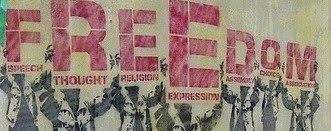
Activist Post | February 23, 2011
Many of us believe the Internet to be open and free for us to explore all known information. Indeed, it is true that we currently can surf to any active website with our browser, and we can start a website or blog on any topic we wish to discuss. And it is quite a profound concept that everyone with a smart phone literally has all of the world’s knowledge in the palm of their hand.
Ben Franklin knew well the importance of free access to information when he founded the first public library in America to share knowledge with those without the means to their own books. Today, he surely would consider the Internet’s unprecedented access to information, and ability to communicate it instantly, as the ultimate level playing field of economic mobility and freedom.
However, this access is now under threat of authoritarian control. First, it is important to note that the gears of the Internet have always been controlled by central authorities, as Douglas Rushkoff recently wrote, “From its Domain Name Servers to its IP addresses, the Internet depends on highly centralized mechanisms to send our packets from one place to another.”
Therefore, the idea that our movements on the Web are even remotely private or untraceable is false. The central “authorities” who control the gears of the machine know exactly where you have been, while Google and the CIA have even developed ways of knowing where you’re going next as well. It’s very creepy to know that our every move is being tracked, traced, and databased, but it has been happening from day one on the Internet, and will likely continue to happen despite the violation of basic rights to our privacy.
Because Internet privacy has never been possible in the current web infrastructure, any proposed “privacy law” would just seem to pay lip service to the idea if it doesn’t address decentralizing the control grid. As Rushkoff pointed out, “I’m not trying to be a downer here, or knock the possibilities for networking. I just want to smash the fiction that the Internet is some sort of uncontrollable, decentralized free-for-all, so that we can get on with the business of creating something else that is.”
The focus here will be on the multitude of threats to our free access to the current Internet. As Ben Franklin understood, information should be free and open to all, not just the select few. Although the books in Franklin’s first library were indeed copyrighted material, they were freely shared. We should think of the Internet as a gigantic open-source public library. A place where information such as news, books, movies, and music should be free to view while we’re visiting the library.
Unfortunately, those who have control over the grid and influence over policymakers do not view the Internet in the same light. It appears that they view it as an economic and propaganda playground — the last one that they don’t fully control. Well, given the blight of proposed Internet control laws and web censorship tactics, it seems there is a calculated effort to control the free flow of information.
Below are 6 threats to our free and open access to the World Wide Web:
Legislation
The Protecting Cybersecurity as a National Asset Act, aka the “Internet Kill Switch” bill, has recently been reintroduced with a new Orwellian name, the Cybersecurity and Internet Freedom Act. This bill would give government the unchecked power to restrict access to the Internet if they declare a “national cyberemergency.” CNET recently reported:
But the revised wording (PDF) continues to alarm civil liberties groups and other critics of the bill, who say the language would allow the government to shut down portions of the Internet or restrict access to certain Web sites or types of content. Even former Egyptian President Hosni Mubarak didn’t actually “shut down” the Internet: at least at first, a trickle of connections continued.
The second piece of legislation that’s being reintroduced this year is the Combating Online Infringement and Counterfeits Act (COICA). This bill, clearly written by the mega-media entertainment cartel, would empower the U.S. Department of Justice to shut down, or block access to, websites found to be illegally sharing copyrighted material. It gives the government the authority to force Internet Service Providers to block access to websites from certain IP addresses, much like how the U.S. recently blocked the Al Jazeera feed during the Egyptian protests. COICA has also been referred to as the “Blacklist” bill because it allows the government to blacklist or seize any domain name suspected of infringement — even if located outside the United States.
DHS Seizures
Who needs there to be laws on the books when the Department of Homeland Security appears to already be above the law. DHS has been on a rampage of arbitrarily seizing websites without due process. In November 2010, they seized over 70 websites suspected of copyright infringement. Just before the Super Bowl, DHS seized another lot of domains for illegally share-streaming sporting events — some merely for linking to copyrighted material. Most recently, DHS erroneously seized 84,000 domains accused of being affiliated with child porn in some way which the DHS later admitted was done by accident.
Clearly, DHS has displayed its technical ability to censor the Internet by removing these websites. And although the domain seizures were technically accompanied by a court order, it seems that the DHS has partnered with large media outlets and sports entertainment to protect their profits. Finally, these court orders are a guilty-until-proven-innocent ruling which can irrevocably damage small businesses and the livelihoods of many people whose path to justice remains unclear.
Civil Lawsuits
Again who needs laws when you can be frivolously sued in civil court over copyright issues and bullied into settling the claim. Copyright infringement trolls like Righthaven are suing blogs and sites, and despite the only court ruling to date being a dismissal of charges due to Fair Use rights, they are still forcing many settlements. In fact, even Internet giant Drudge Report was forced to settle a civil suit involving a copyrighted image and link.
According to Steve Green, who’s been diligently covering these lawsuits for the Las Vegas Sun, claims they are a new type of legal enterprise:
Attorneys say the Righthaven lawsuits are unprecedented in recent memory because, in the past, newspapers dealt with online copyright infringement by simply asking infringing websites to remove the infringing material and to replace it with a link to the source newspaper. Most Righthaven defendants say they were sued without warning.
Not surprisingly, most of the cases are settled out of court. However, this tactic is a very effective intimidation tool against small websites who seek to share information. In some cases the costs and aggravation of combating the lawsuit can force the closure of these website defendants.
Net Neutrality
It would seem that net neutrality should fall under the legislative category. However, it is actually considered more of a “market based” regulation than actual law, yet the taxpayer still funds its enforcement through the FCC. Before identifying the reasoning behind and specific aspects of net neutrality rules, it’s worth noting that Internet futurist, Douglas Roshkoff, views the details as irrelevant because:
The moment the ‘net neutrality’ debate began was the moment the net neutrality debate was lost. For once the fate of a network — its fairness, its rule set, its capacity for social or economic reformation — is in the hands of policymakers and the corporations funding them — that network loses its power to effect change. (source)
The concept behind net neutrality is just what it says; to keep Internet access neutral for all users. But again, it is a very Orwellian term where true supporters of a free an open Internet can be tricked into supporting so-called neutrality rules. Blogger Timothy Karr wrote, “The rule is so riddled with loopholes that it’s become clear that this FCC chairman crafted it with the sole purpose of winning the endorsement of AT&T and cable lobbyists, and not defending the interests of the tens of millions of Internet users.”
What they are, in fact, are rules to allow service providers to charge tiered price levels depending on the amount of broadband used by individual web-surfers or websites. In other words, certain access will be discriminated against through reduced access speeds or additional fees. Besides limiting size of the surfer’s information wave, this tiered approach to the Internet will likely make it very difficult for smaller websites to compete with the big boys who can afford to pay ISPs for unadulterated access.
Technical Censorship
Google, Facebook, Youtube, Twitter and Wikipedia have become the most powerful information sharing tools the world has ever known. Combined, these five websites could literally rewrite history or shape the entire flow of current information if they chose to do so. Indeed, each of these virtual libraries has been repeatedly accused of censorship in many various forms; from blatant removal of content to manipulating the searchable strength of disapproved content.
Google, who seems so powerful that they may actually run the world, recently revealed that they are tweaking their search algorithm to weaken the search engine ranking of information aggregating websites referred to as “content farms.” It seems that Google seeks to reduce websites with little original content to the level of spammer status in their search results. What’s more, Google can wield the power of their Google Page Ranking for individual sites. Their constantly changing algorithm may actually penalize websites for search engine optimization, as with the recent case of JC Penney losing business due to Google penalizing them for SEO.
Taxes
If Congress or local governments elect to tax websites, the level playing field on the Internet is finished. In May 2010, the Federal Trade Commission proposed the “Drudge Tax” which would seek to tax news aggregators as if they are brick and mortar media companies. The FTC report also suggested that news aggregators be forced to pay copyright fees to link to mainstream news sources. And in perfect wealth distribution fashion the report also discusses the “possibility of offering tax exemptions to news organizations, establishing an AmeriCorps for reporters and creating a national fund for local news organizations.”
More recently, some states have proposed taxing online retailers such as Amazon, arguing that it’s not fair for local retailers who must pay taxes for selling the exact same items. In the past, Amazon has terminated its contracts with third-party affiliates in states who have adopted online tax laws. California Congressman, Dan Lungren, introduced the resolution Supporting the Preservation of Internet Entrepreneurs and Small Businesses aimed at preventing states from imposing these new taxes on online retailers.
What’s more, some states and even municipalities are beginning to impose a blogger fee referred to as a “privilege license” as a sort of business license for blogs. Philadelphia has forced bloggers to pay a $50/year, or $300 lifetime, fee for the privilege of expressing ideas online.
Conclusion
It seems clear that the powers-that-be are engaged in an all-out assault the free flow of information on the Internet. Blogs and websites must be prepared to combat the coming onslaught of news laws, regulations, and fees. For those who believe information should be free for all who pay for Internet access, we must fight to maintain this liberty. Stay tuned to the new blog Sites & Blogs for breaking Internet news and legal commentary about online copyright and privacy rights.
Israeli bulldozers bury Bedouin village
Ma’an – 22/02/2011

HEBRON — The five tents giving shelter to some 50 Bedouin residents of Amniyr, a tiny community north of Susiya in the south Hebron hills, were torn down on Monday, their olive trees uprooted and water sources covered over.
An observer with the Christian Peacemaker Teams said Israeli demolition crews arrived before sunrise, at about 5:30 a.m., and began taking down the tents, then filled a well and a water cistern with earth.
“They uprooted several olive trees and buried them under the dirt,” he said.
All that was left of the small herding community was a cave, where residents took shelter during the demolition, and a small bread oven made of stone, the observer said.
Residents had moved back to the area during the winter, saying settler harassment at a second location one kilometer away had driven them out. Years earlier the same harassment had forced them from the location where the tents were demolished.
Residents said they had ownership papers for the land at one point, but according to the observer every week for the past month Israeli officials from the Civil Administration have delivered notices saying the community was living on state land and must evacuate.
“The demolition orders were delivered on 15 February,” the observer said.
Residents say they are planning to rebuild, and will contact the International Red Cross to supply tents.
“We need god’s help,” Hajj Mohammed, a resident of the community told Ma’an, “we don’t know what we are going to do.”
Representatives from Israel’s Civil Administration did not answer calls seeking comment.
On Sunday, UN Resident and Humanitarian Coordinator for the Palestinian territories Maxwell Gaylard condemned a similar demolition targeting a community in the northern West Bank. In Khirbet Tana, residents have had their tent homes destroyed four times since January.
“If the authorities ultimately responsible for these demolitions could see the devastating impact on vulnerable Palestinian communities, they might reflect upon the inhumanity of their actions,” Gaylard said in a statement following the last demolition.
Another protester shot dead in Yemen
Press TV – February 21, 2011
Forces loyal to Yemeni President Ali Abdullah Saleh’s regime have shot dead a pro-democracy protester and injured another in the southern city of Aden.
The incident occurred on Sunday, the tenth day of consecutive protests, as police fired tear gas and bullets to disperse thousands of protesters demanding a change in leadership.
Security in Aden was stepped up on Sunday with tanks and armored vehicles out on main streets.
In the capital city of Sana’a, police fired shots at demonstrators.
Hasan Baoum, the leader of Yemen’s secessionist Southern Movement, was detained in an Aden hospital where he was receiving treatment, his son Fadi Hasan Baoum told Reuters.
Thousands of people have also staged sit-ins in the cities of Ibb and Taiz, demanding the ouster of the US-backed president, who has ruled the country for 33 years.
President Saleh, however, has said he will only step down after his term ends in 2013.
Earlier, Yemen’s parliamentary opposition said it is planning to join the street protests and have rejected a call by Saleh for dialog, slamming the government for using force against demonstrators.
Over a dozen protesters have been killed by the government loyalists across Yemen over the past few days.
Press TV News Analysis-Bahrain Uprising
PressTVGlobalNews | February 18, 2011
This edition of Press TV’s News Analysis is discussing the developments in Bahrain. Friday saw the funerals of those killed in that early morning attack on Pearl Square at 3a.m. on Thursday. The day saw those funerals turn into protests while the army stood by and watched. But as those funeral goers walked silently to the mosque for sunset prayers, everything took a violent turn. The army started firing live ammunition on the crowds, from behind. Many were injured, some are feared dead. We have spoken to eyewitnesses who were scared to give us their names. We have spoken to doctors, human rights activists and MPs on the ground and at the hospital. Emotional telephone cries desperately crying for help, in a state of shock. So what does this second violent day in Bahrain mean for the uprising there?
Part 1
Part 2
Part 3
Anti-government protests continue – February 20, 2011
In Whose Name Are You Speaking? A Response to Dutch Foreign Minister Uri Rosenthal
By Rifat Odeh Kassis | AIC | 20 February 2011
In recent weeks and months, a number of Latin American countries have publicly expressed their recognition of Palestinian statehood. Given that a Palestinian state doesn’t yet exist, this recognition also amounts to supporting the Palestinian right to statehood.

Both to Israel and to defenders of its policies around the world, the “snowball effect” of nations recognizing this right is, unsurprisingly, unnerving.
One such defender is the Dutch Foreign Minister, Uri Rosenthal. In an interview with the Jerusalem Post,[1] Mr. Rosenthal argues why he believes international support for a Palestinian declaration of statehood “does no good.” But what strikes me most about the interview is not the straightforwardness of his opposition. Rather, I am struck by what his opposition barely manages to mask: the hypocrisy of his rhetoric on “negotiations” and “democratic values;” a repressive attitude toward what he characterizes as “inflammatory language regarding Israel” within the EU; and, ultimately, a betrayal both of the Netherlands’ strong record of commitment to international law and of his responsibilities as their representative.
It is important not only for Palestinians and Israelis to know exactly what Mr. Rosenthal is defending (inequality, systematic human rights violations, restrictions of free speech and press, the moral bankruptcy of an apartheid state). It is also important for all citizens of the Netherlands to know what their own Foreign Minister is saying and doing in their name.
With this in mind, I’d like to examine a number of the statements made by Mr. Rosenthal in his interview with the Jerusalem Post, as well as the contextual remarks provided by Herb Keinon, his interviewer.
- Mr. Rosenthal asserts, “on the one hand, steps should be taken” to advance the diplomatic peace process, but international recognition of a Palestinian unilateral declaration of statehood “does not do any good whatsoever” to “bring the Middle East process to a higher level.” According to the article, “Rosenthal’s comments came before an afternoon meeting with Prime Minister Binyamin Netanyahu, during which Netanyahu stressed that a unilateralist track would ‘kill negotiations with the Palestinians.’”
Part of what Mr. Rosenthal clearly opposes is a unilateral declaration of Palestinian statehood. But he doesn’t utter a word of objection to the unilateral steps taken by Israel in the occupied Palestinian territories (oPt), which are internationally recognized as such. Israel has illegally annexed East Jerusalem, confiscated vast amounts of Palestinian land to build its apartheid wall and protect terrain for illegal settlements, built and encouraged people to inhabit those settlements (which have eaten away at more than 40% of the West Bank), practiced brutal detention policies, restricted freedom of movement and other fundamental liberties, tried children in military courts, put the Gaza Strip under a state of permanent siege, and killed over 1,400 Gazans in a total bombardment in late 2008/early 2009 (mostly civilians, including over 300 children). The list of unilateral acts – the list of crimes – goes on and on. Mr. Rosenthal claims to oppose decisions taken by governments without balanced, negotiated political processes. But if this were really true, he would understand the need to bring Israel before the Hague instead of defending it in the Jerusalem Post.
As for the “negotiations with the Palestinians” in danger of being “killed,” according to Netanyahu, they have taken place for twenty years and accomplished virtually nothing. Perhaps it is such negotiations – tired, redundant, increasingly irrelevant as Israel creates more and more facts on the ground – that must die in order for a just peace to come alive in our region.
- The interview informs us that “the Dutch parliament recently passed a resolution calling on the government to work against EU recognition of a Palestinian state….”
Let’s translate. The Dutch government (including Mr. Rosenthal) doesn’t want to take positive steps toward stopping the bloodshed – positive steps in the form of granting Palestinians their inalienable rights as stipulated by numerous UN resolutions and tenets of international law. That would be “unilateral”! That would be wrong. Instead, the Dutch government would rather decide (unilaterally, by the way) to prolong inequality and suffering by prohibiting other nations from taking a positive, proactive, and peaceful stance on ending the conflict altogether.
This is the language of hypocrisy, not of justice.
- The article mentions, “Rosenthal, who is Jewish and married to an Israeli, was characterized recently by Czech Foreign Minister Karl Schwartzenberg as one of the two most active supporters of Israel among EU foreign ministers.” And he defines himself as “among the ones” in the EU who ‘regularly try to warn against unnecessary inflammatory language’ on Israel, and says his government has actively worked against efforts to “bash” and “delegitimize” Israel partly through the use and “disproportionate” application of such “inflammatory” language.
The passages quoted above constitute an exercise in euphemisms. Within the Dutch context, Rosenthal’s role is not simply a “supporter” of Israel, one who tries to “warn” against “unnecessary inflammatory language” that aims to “delegitimize” the Israeli state. Rather, it is the role of a censor, a repressor of criticism, and a political blacklister, supported by and supporting the work of Zionist lobbies like NGO Monitor and CIDI.[2] Mr. Rosenthal’s rhetoric and policies go hand-in-hand with those of such organizations, which terrorize NGOs exposing the truth of the Israeli occupation and bully the Dutch public out of hearing it. For instance, NGO Monitor recently slammed ICCO, a Dutch aid organization, for financing the Electronic Intifada, an independent news source focused on the Palestinian-Israeli conflict. (ICCO is also under fire from CIDI for supporting the Olive Tree Campaign, “Keep Hope Alive,” realized by the YMCA/YWCA JAI.) NGO Monitor vilified the Electronic Intifada and condemned ICCO by association. Rosenthal’s response? “I will look into the matter personally,” he said. If ICCO’s funding proves to be true, “it will have a serious problem with me.”
Is this the really level that Mr. Rosenthal – not to mention the lobbies who share his tactics of finger-pointing, threats, and repression – has stooped to? Persecuting organizations and publications that support human rights and social justice for Palestinians as “delegitimizing” and “anti-Semitic,” publicly smearing them, and seeking to sabotage not only their work but also their rights to free speech and free press? This is an appalling position for any human being to have. It is all the more appalling to see it in a democratic representative, ostensibly part of an apparatus designed to uphold those rights in the first place.
It is important for Mr. Rosenthal to be confronted by Jewish and Israeli human rights organizations and activists, of which there are many; he must be told “not in our name.” It is equally important for these organizations and activists to condemn NGO Monitor, CIDI, and other repressive lobbies: to remind them that their tactics serve only to prolong the damage done to both Israelis and Palestinians, that everyone suffers when rights are denied and governments are given a blank check to inflict harm without monitoring or criticism.
- Mr. Rosenthal says, “We have seen over the last few months some events where some of the EU partners were eager to engage in straightforward initiatives, and I was among those who said ‘Let’s keep a little bit more restrained attitude, and look especially at whether this will be conducive to the Middle East peace process at large.” Later, he denies portrayals of Israel’s image within the EU as “the lowest it has been in decades,” replying, “I think this is an exaggeration. When you look at the conclusions of a series of council of foreign affairs ministers’ meetings, you will see balanced conclusions vis-à-vis the Middle East peace process.”
Mr. Rosenthal advocates being “restrained” in responding to policies that flagrantly violate international law and human rights – a “restraint” that seeks to prohibit other EU countries from taking positive initiatives that might bring the conflict closer to an end. Even worse, he defends these violations through public office, and thus makes his own country a partner in their perpetuation. The Dutch people are well-admired throughout the world as prioritizing human rights and international law; they, then, are being damaged and degraded by Mr. Rosenthal’s audacity. Likewise, his praise for “balanced” views in an utterly imbalanced situation serve to make the EU complicit in Israeli crimes committed against Palestinians. The Dutch people must know that their Foreign Minister is sacrificing the image of the Netherlands for the sake of Israel – that he is working hard to represent Israel’s interests while tarnishing those of his own country – and they should reject this insult, this injury.
- He asserts, “If you take a positive stance toward Israel you might expect from Israel something in return. I’m happy to say that in the last few months Israel has taken an open attitude toward the requests made by the Dutch government to be more lenient on exports and goods from Gaza. That is a subtle game.”
It is not subtle, and it is not a game. Economic “leniency,” the mere relaxation of commercial restrictions imposed on Palestinians, solves nothing. The last 43 years have proven to Palestinians that economic band-aids will only prolong our occupation, will only intensify the destructive dependency of the Palestinian economy on the Israeli one, will distract the international community into thinking Israel is taking concrete steps toward meaningful change – when in reality it allows Israel to get away with taking none at all.
As we have read, Mr. Rosenthal urges taking a “positive stance” toward Israel. But showing a “positive stance” toward Israel should never mean sacrificing one’s own principles of justice and dignity, nor should it involve sacrificing Palestinians’ human rights. I urge Mr. Rosenthal to adopt a “positive stance” toward Israel that respects these values – because Israel certainly has not adopted one of its own. The Israeli state is responsible for the deaths of 352 Palestinian children during its 2008/2009 attack on Gaza; between 26 March 2010 and 18 January 2011, its military shot 24 children while collecting gravel near the border between Gaza and Israel; it has demolished Al-Araqib, a Bedouin village in the Naqab (Negev) Desert, 18 times in the past several months; the state continues to build illegal settlements on confiscated land in the oPt, including East Jerusalem. Is this openness? Is this positive? This is devastation; this is violence; these are policies that seek to crush, control, and erase. The only truly “positive stance” toward Israel is one that insists that these crimes must end.
- “Rosenthal also dismissed reports that the US was interested in the EU taking a tough stand on Israel, since domestic political constraints prevented Washington from doing so itself – a kind of good cop/bad cop arrangement. ‘I hear that story over and over again,’ he said. ‘I would not like to be placed in the position of the bad cop; I don’t think Europeans like to be placed in the position of bad cops.’”
Mr. Rosenthal may not like to be placed in the position of the bad cop, but he is undeniably putting both the Netherlands and the EU in the position of the bad friend – to Israel. Israel needs good friends to remind her that its treatment of Palestinians, its behavior at home and on the international stage, cannot go on forever. To really understand this, we need only to look toward Egypt: the Mubarak regime, a dictatorship supported by the US and many European countries for the past 30 years, was brought down in a mere 18 days by the nation’s youth and peaceful means. The young people of Egypt managed to do, in 18 days and with tremendous integrity and clarity, what three decades of “positive engagement” by the US and the EU (trying to “convince the regime” of taking democratic steps while continuing to fund its dictator) failed to do. We Palestinians are going to do the same against our occupation – with the support of the EU or without it.
- “Rosenthal diplomatically declined to weigh in on the debate whether it was ‘undemocratic’ for the Knesset to establish a committee to investigate where certain NGOs were getting their funds, saying this was ‘for the Knesset to decide.’” With respect to the Knesset panel, he added, “There is no reason to hide anything. I am in favor of transparency,” and “a vivid and lively civil society, where NGOs are a part of it, is very important.”
The contradictions continue. Is it not the role of the Dutch Parliament to also investigate the funding sources of, say, CIDI? How can Rosenthal claim to support transparency, not to mention the vividness and liveliness of civil society, while only acting repressively against groups and individuals he disagrees with? How can he say, free of irony, that the presence of NGOs in civil society is “very important,” when he supports a smear campaign against NGOs in his own civil society? And how can he praise the ideals of civil society in the first place while simultaneously practicing another campaign – silence – when it comes to Israel’s repression of the NGOs whose existence he finds so valuable in abstract?
FM Rosenthal’s pronouncements on the Israeli government are so blind, so brazen, hypocritical, and so unjust that I am sometimes surprised he can utter them comfortably in his own name. But when we consider his vocal and prominent role in the parliament of his own country, and in the political arena of others’, it is especially important for all communities and individuals he attempts to represent (Jewish, Israeli, Dutch, European, etc.) to say, loud and clear:
“Not in ours.”
Rifat Odeh Kassis is the President of Defence of Children-International, the Director of Defence of Children – Palestine Section and a Board Member of the Alternative Information Center (AIC).
[1] Keinon, Herb. “Dutch FM: Recognition of Palestinian state does no good,” http://www.jpost.com/DiplomacyAndPolitics/Article.aspx?id=207384. 08/02/11
[2] It is worth mentioning that a CIDI board member, Mr. Doron Livnat, is the director of the Riwal, a European company that produces access equipment and large-scale cranes for construction sites, and which has assisted in building the separation wall and illegal settlements within the oPt. Riwal’s headquarters in Dordrecht, the Netherlands, was raided and searched by the Dutch National Crime Squad after Al-Haq, a Palestinian human rights group, levied criminal complaints against its activities.
Featured Video

Trump asks Iran not to retaliate after he strikes Pickaxe Mountain
or go to
Aletho News Archives – Video-Images
Book Review
‘Why Fauci Must Rot in Prison’: A Tale of Two Diaries
By Jill Erzen | The Defender | October 13, 2026
Dr. Anthony Fauci’s private diary reveals a “mind-numbing” contradiction between what the former top U.S. infectious disease official knew about COVID-19 and what he told the public, senior White House adviser Peter Navarro, Ph.D., said last week on “American Thought Leaders.”
In his new book, “Why Fauci Must Rot in Prison,” due out Oct. 20, Navarro compares Fauci’s private entries to his own pandemic-era diary, and uses what he calls “a tale of two diaries” to argue that Fauci should face criminal prosecution.
“I show, actually, how a prosecution can and should happen … at the state level, most likely,” Navarro said. “He should wind up in prison, and we’ve got the receipts in this book to put him there.”
Navarro said Fauci repeatedly acknowledged important facts in private, then publicly pursued policies that contradicted those facts — with devastating consequences.
“What he says many times privately in his diary is so at odds with both his public behavior and public statements that it’s mind-numbing,” Navarro said.
Navarro examines the lasting damage caused by lockdowns and other pandemic policies, and the ongoing toll of long COVID.
His book also addresses questions about vaccine safety, including why healthy young people faced COVID-19 vaccination mandates despite concerns about myocarditis, and why women were not warned about miscarriage risks linked to the shots. … continue
Blog Roll
 Aletho News
- Yemen denounces international community’s silence on Saudi aggression, siege
- UAE and Saudi Arabia move toward renewed coordination against Sanaa
- How Iran’s two-week retaliatory strikes exposed cracks in US military architecture in Persian Gulf
- The mother of all propaganda: Why the hype over US MOAB strike against Iran is nothing but theater
- Iran says it possesses technology behind US 14-ton GBU bunker-buster
- Trump asks Iran not to retaliate after he strikes Pickaxe Mountain – w/ Prof. Marandi
- Vice President J.D. Vance’s Deceptive ‘Antiwar’ Campaign Speech
- Iran: Palestinians’ rights must not be compromised in Gaza’s future; US, Israel to blame for Hormuz situation
- Ongoing tales of Syrian chemical weapons
- Moscow blasts UN for ignoring torture of Russian POWs
- If Americans Knew
- Israeli rabbi permits occupiers to steal Palestinian olive harvest in West Bank
- Netanyahu’s spin on latest settler attack is laughable – Daily Update
- Israeli soldiers debunk Israel’s talking points
- In West Bank, Israeli settlers are totally out of control – Daily Update
- NPR investigation finds evidence of widespread fraud at mall kiosks tied to Israeli skincare brand
- Tucker Carlson exposes Israeli Lies about the Oct 7th attack, Charlie Kirk, and the U.S.
- Israel has detained thousands of Palestinian children since Oct 7th – over half spent time in solitary, many uncharged
- Israeli Analysis: Is Netanyahu Planning an ‘October Surprise’ Attack Before Israel’s Election?
- Israeli settlers brutally attack Palestinians and Washington Post female photographer, 65
- Words Have Changed, Occupation Continues: The Reality of the Gaza Ceasefire
- No Tricks Zone
- Predictions Made By Renowned Climate Proifessor Over Past Decades Have Been Proven To Be Poor
- New Study Suggests Large Regions Of The Pacific Ocean Have Been Cooling For The Last 80 Years
- Germany’s Green Energy Debacle: High Energy Costs Force Kahla Porzellan to Close After 182 Years!
- New Study: 50 Years Of The Most Aggressive ‘Net Zero’ Policies Can Only Affect The Global Climate By 0.03°C
- US September “Heat” Was No Record…Many Records Set Decades Ago
- Latest European Green Energy Debacle; Portugal’s Largest Flagship Solar Park Insolvent!
- Green Energy Debacle: German Expert Professor Fritz Vahrenholt Warns Of Severe Economic And Social Consequences
- Two More Paleo Reconstructions Affirm Meters-Higher Sea Levels Across Ireland, Brazil 7000-6000 Years Ago
- New Study: Earth And Venus Surface Warmth Largely Explained By Convection And Lapse Rate, Not CO2 Or Radiation
- 2025 Nature Paper Claiming Worsening Global Drought Gets RETRACTED …Heavily Flawed

