Is Sweden complicit in Saudi war on Yemen?
Press TV – February 21, 2018
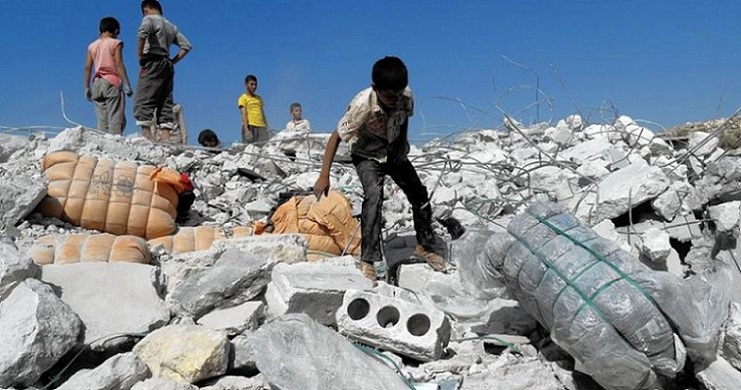
Last year, Swedish Foreign Minister Margot Wallström told a conference that the unfolding humanitarian crisis in Yemen was one that “has far too long been neglected and forgotten by the global community” and what Yemeni people were going through was “difficult to imagine.”
It is such statements that, besides leading various international peace efforts to help resolve major conflicts across the globe, including Saudi Arabia’s deadly war on Yemen, have helped Sweden establish the image of a peace-loving country that cares for others.
However, a steady rise in the Scandinavian country’s weapons business over the past years, including its major dealings with repressive Arab regimes in the Persian Gulf region, has cast doubt on Stockholm’s true intentions.
In fact the rise has been so fast that according to official data by the US government, Sweden is now the world’s third largest weapons producer per capita, closely following Russia and Switzerland while overtaking France, Britain and the US.
At the heart of Sweden’s weapons industry is Saab, a company that sold over $2.7 billion worth of weapons in 2016 alone, making its way into the world’s top 30 arms producing companies according to the Stockholm International Peace Research Institute (SIPRI).
Over the recent years, Saudi Arabia and the United Arab Emirates (UAE) have become some of the main customers for Swedish-made weapons.
Svenska Freds, a 135-years-old Swedish anti-militarization group, charges that Stockholm has been providing Riyadh with weapons since 1998, with a brief suspension in 2015 following a diplomatic row between the two countries.
The larger chunk of the trade has taken over in the past eight years. According to Svenska Freds, the arms sales to Saudi Arabia reportedly approached six billion Swedish kronor ($741mn) between 2010 and 2016.
That means the arms deals between the two sides have continued throughout Saudi Arabia’s deadly war on Yemen, which began in March 2015 and has killed nearly 14,000 Yemeni civilians.
The UAE, another Saudi ally in the bloody war, was able to secure a larger deal in 2016, when the Swedish administrative authority, the National Inspectorate of Strategic Products, authorized 11 billion Swedish kronor ($1.3bn) in arms sales to the Arab country.
Before that, the country had sold 2.1 billion kronor ($272mn) in weapons sales to the UAE.
In a move that further proved Sweden’s desire to expand military ties with repressive Arab regimes, Saab opened a new office in the UAE capital Abu Dhabi in late 2017.
Lawmakers in the Swedish parliament have time and again criticized the government’s arms deals with the Saudi-led coalition.
While Foreign Minister Margot Walltröm has pledged to introduce measures that would limit the exports later this year, there are no signs that Stockholm is willing to end the profitable business anytime soon.
The Egypt-Israel gas deal is scandalous and shameless
Dr Amira Abo el-Fetouh | MEMO | February 21, 2018
After Al-Sisi opened the very large Zohr gas field about two weeks ago the newspapers celebrated and announced the news that Egypt will achieve gas self-sufficiency this year by means of the Zohr, North Alexandria, Nawras, and Atoll gas fields. The Egyptian citizens lived this dream until they awoke to a nightmare where Netanyahu is announcing that Israel is celebrating after signing a historical agreement with Egypt that stipulates Egypt will import gas from Israel for 10 years. The imported gas agreement is worth $15 billion and these billions will be added to the Israeli treasury in order to be spent on education, health services, and welfare for Israeli citizens.
Of course it was no coincidence that Netanyahu announced this great news to the Israeli people on the anniversary of President Anwar Sadat’s visit to Jerusalem, as such an agreement poses a new victory for Israel, no less significant than its victory in 1967 and the signing of the peace treaty. In my opinion, they are crowning their victories with this latest victory, as a result of which they control energy in Egypt and the key to the energy tap is placed in their hands. They can turn it off whenever they please. Whoever controls the energy can suffocate the states that live under its mercy and can control the decisions of these states.
This is a major crime committed against Egypt as a state and against its people. This gas is actually Egyptian gas that was seized by Israel either without the ruling government’s knowledge or in collusion with it. Instead of admitting to this crime and being ashamed of it, the government’s mouthpieces and corrupt media came up with justifications and excuses more criminal and shameless than the act itself. Some examples include but are not limited to the claims that the government has nothing to do with the Israeli gas import deal, overlooking the fact that the government facilitated the deal and prepared a draft bill allowing the private sector to import gas from abroad and sell it in the local market. Of course, the corrupt parliament, which does as the government desires and was formed under its watchful eye, approved the bill. It is foolish to make such claims when everyone knows that no private company can import anything without first obtaining government approval. Moreover, where would an unnamed company that has never operated in this field before, come up with $15 billion from to pay the Israelis?
Another justification included claims that economic interests dictate relations between countries and that there is no problem importing gas, even from an enemy, as long as it serves Egypt’s interests. However, those making these claims forgot that a country’s interests cannot be served by their enemy, and that from a purely national security standpoint, it is a strategic mistake to link Egypt’s energy security to Israel, which can stop exporting gas to Egypt if any conflict between the two countries arises.
The most absurd justification is the claim that Egypt is seeking to turn into a regional centre for energy and that the gas market has become available and open to any private company. No one bothered to mention what happened to the natural gas self-sufficiency claims made two weeks ago and ask why Egypt is importing gas when it has one of the largest gas fields, the Zohr gas field, in addition to the fields discovered in Egyptian regional waters and in the western and eastern deserts.
These mouthpieces also failed to mention why Egypt is importing gas specifically from Israel, especially since there are several alternatives, such as Algerian, Iraqi or Russian gas.
However, what is most astounding is the strange silence of the Egyptian government regarding this suspicious agreement, compared to the historical celebrations in Tel Aviv. Of course these celebrations are completely understandable given the financial, strategic, and moral benefits the agreement will grant Israel. Israel never dreamt of such benefits, even during the rule of Hosni Mubarak, their strategic treasure. What we cannot understand or accept is the fact that the corrupt Egyptian media is celebrating this agreement, despite the fact that such an agreement is the most prominent manifestation of betrayal and treachery, and the secret to the link between Egypt’s energy security and Israel’s gas.
Bear scare! Why the US Democrats desperately need a Russian bogeyman
By Robert Bridge | RT | February 20, 2018
Even before Donald Trump set foot in the White House, loveless liberals were busy pushing the narrative that Russia meddled in the elections. But could this claim be – just maybe – a dastardly ploy to hide some unsavory truths?
Pass the popcorn, the theater of the political absurd known as ‘Russiagate’ continues playing to disappointed audiences without so much as an intermission. And with the latest episode featuring an indictment against 13 Russian nationals without rhyme or reason, perhaps it’s a good time to pause and reflect on the question the mainstream media conspicuously ignores: was the real meddlesome actor in the 2016 presidential election not the perennial bogeyman known as ‘Putin’s Russia’, but the Democratic Party itself?
Indeed, some highly questionable moves on the part of the Democrats before, during and after the elections go far in exonerating the Russian fall guy from any and all charges. You be the judge.
The FISA fail
In a memo declassified by the White House and released to great fanfare by the House Intelligence Committee on February 2, it was alleged that on October 21, 2016, the FBI and the Department of Justice (DOJ) – armed with the notorious Trump dossier – secured a Foreign Intelligence Surveillance Act (FISA) warrant to conduct surveillance on Carter Page, a Trump campaign adviser.
But something looks rotten in Denmark. As it turned out, the explosive Trump dossier, compiled by former MI6 spy Christopher Steele, was bought and paid for by the Democratic National Committee (DNC) and the Clinton campaign. In other words, this represents – at the very least – a very big conflict of interest.
At the same time, in the their application for the FISA warrant, the FBI and DOJ “cited extensively” a Yahoo News article by one Michael Isikoff, which discusses Page’s July 2016 trip to Moscow.
As it turned out, however, there were serious problems with that article. As the Nunes memo states, Isikoff’s article “does not corroborate the Steele dossier because it is derived from information leaked by Steele himself…”
Indeed, Steele admitted that he met with Yahoo News “at the direction of Fusion GPS,” the firm that organized the dossier, in September 2016. Meanwhile, the mainstream media has largely played down these glaring violations of FISA protocol, as it continues to heap scorn on Russia.
“Putin’s KGB-inspired maneuvering of the United States via Donald Trump and the Republican Congress has all the earmarks of a carefully planned, professionally executed war game in which Trump, congressional Republicans and some in right wing media are his comrades,”wrote Cheri Jacobus in USA Today.
The specter of the Russian bogeyman is truly the gift that keeps giving.
Clinton’s email scandal
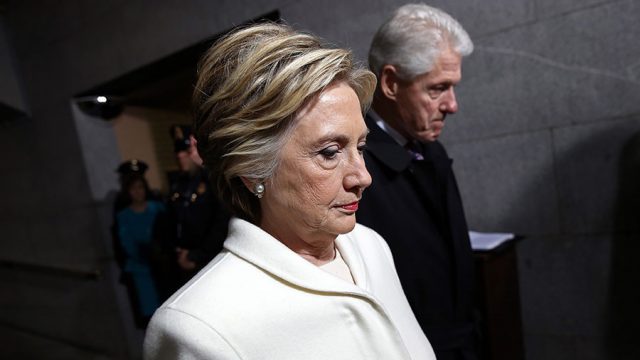
In March 2015, the news broke that Hillary Clinton, while serving as secretary of state, had used her home computer while handling classified government documents. An assortment of experts and politicians accused Clinton of violating State Department protocol.
On July 5, 2016, following an investigation, FBI Director James Comey said Clinton had been “extremely careless” in handling her email correspondences. He added that “no reasonable prosecutor would bring such a case.”
That statement did little to calm the critics, however, as Clinton was haunted by the ghosts of emails past right up to the eve of the elections.
On October 28, 2016, the FBI said it was reopening its investigation into Clinton’s private email server after messages were discovered on the computer of top aide Huma Abedin’s husband, Anthony Weiner, who was then embroiled in a sexting scandal. Comey announced just before the elections that nothing had changed in the Clinton case, which had been closed four months earlier without criminal charges.
However, the email saga refuses to go away as the DOJ once again reopened its investigation into Clinton’s email server in January.
To this day, Hillary Clinton has been able to divert attention away from the very serious charge of handling classified government emails over her private server thanks to a giant smokescreen known as Russia, the bogeyman that conveniently explains every transgression and setback by the Democratic Party.
Operation Sink Sanders
In July 2016, the DNC suffered a broadside after WikiLeaks released a batch of emails purporting to show that Debbie Wasserman Schultz, the chairwoman of the body, was actively conspiring against the campaign of Senator Bernie Sanders. Naturally, this news had a way of upsetting those donors who contributed funds to the Sanders campaign. Wasserman Schultz resigned in disgrace following the revelations.
Despite there being a deliberate effort to undermine the Sanders campaign, that disturbing news was sidelined by the conspiracy theory that a Russian army of apparatchiks hacked the DNC computers, turning over the information to Julian Assange. To this day, no evidence has been provided to support that claim.
Meanwhile, Wasserman Schultz was eventually cleared of rigging the Democratic primary in favor of Hillary Clinton, while Russia continues to suffer from mainstream media mudslinging.
Clinton cheated in debates
One of the most shocking revelations to come from the leaked/hacked DNC emails was the claim that Donna Brazile, interim chairperson of the DNC who once worked at CNN, used her inside connections to feed Hillary Clinton the questions to several of her public debates against Donald Trump.
Following the DNC debacle, Brazile hoped to cash in on the scandal by publishing a tell-all book entitled, ‘Hacks: The Inside Story of the Break-ins and Breakdowns that Put Donald Trump in the White House.’
In one particularly candid part, Brazile said she was secretly concerned about Clinton’s health as Election Day drew closer. This comment did not sit well with Brazile’s former colleagues. Clinton’s staffers published an open letter in response to the book, saying, “It is particularly troubling and puzzling that she would seemingly buy into false Russian-fueled propaganda, spread by both the Russians and our opponent, about our candidate’s health.”
Once again, Russia was used and abused as the convenient 11-time-zone Band-Aid that can cover any political wound, whatever the size. What is the most surprising about this tactic is that anybody still falls for it.
Regime change
Given Hillary Clinton’s past track record for advocating on behalf of military adventures, most memorably in Iraq and Libya, the tall tale of Trump-Russia collusion appears to have been a desperate effort on the part of the establishment to get their candidate into office and the military industrial complex into another war.
According to the Center for Public Integrity’s review of Federal Election Commission data, over a 14-month period (January 2015 through February 2016), Clinton and Sanders jointly received at least $765,049 from employees of major defense contractors – more than twice the $357,775 sum received by the Republican Party presidential candidates.
To prove the liberal media’s (and by extension, the establishment’s) apparent desire for military conflict, consider how it lavished praise on Trump after he attacked Syria’s Shayrat Airbase on April 7, 2017, America’s first unilateral military act aimed at the Syrian government forces (not the terrorists).
CNN analyst Fareed Zakaria waxed poetically, “I think Donald Trump became president of the United States,” he said dreamily. “I think this was actually a big moment.” On MSNBC, Nicholas Kristof, a regular Trump critic, said the Republican leader “did the right thing.” Elliott Abrams could barely contain his newfound enthusiasm for Trump: “… the Trump administration can truly be said to have started only now. The president has been chief executive since January 20, but this week he acted also as Commander in Chief. And more: He finally accepted the role of Leader of the Free World.”
Judging by such comments, had Trump continued bombing Syria, and thereby pacifying the hawks in Washington, there is a very good chance that Russiagate would have been quietly swept under the media’s carpet.
Impeach Trump
It would be difficult to name another US president who has suffered the slings and arrows of media scorn more than Donald J. Trump. And he’s only been in office for just over one year. Indeed, no sooner had his Inauguration finished there were already calls for him to be impeached. In fact, the subject has become so popular among the Democrats that there is even a special Wikipedia page dedicated to the relentless campaign.
Although the clamor to impeach the Republican leader has subsided of late, when the idea does raise its head, the empty claim that Russia influenced the elections ranks high among the reasons.
Clinton Foundation ‘pay to play’
Another reason why the Democrats would need to push the anti-Russia narrative is to protect the Clinton family from allegations that they personally profited from donations to the Clinton Foundation.
In January 2017, it was reported that the FBI opened an investigation into whether the Clinton Foundation accepted donations in exchange for political favors while Hillary Clinton served as secretary of state in the Obama administration, the Los Angeles Time reported, citing two anonymous sources.
“Critics have accused the Clinton family of using the foundation to enrich themselves and give donors special access to the State Department when Hillary Clinton was its head,” the article said.
The LA Times said that the Democrats have rejected the claims, saying that “Trump is trying to steer attention away from investigations examining…Russian attempts to influence the 2016 election.”
Nunes Memo, Part 2
If anybody thought the Trump administration would just release the Nunes memo and drop it, think again. In fact, Trump’s legal team backs the idea of a second special counsel to investigate the FBI and Justice Department
White House Deputy Press Secretary Raj Shah told reporters on Air Force One Monday that Trump’s attorneys have given the green light to starting the process of appointing a second special counsel to investigate the FBI and Justice Department’s behavior during the 2016 presidential campaign, according to a report by Axios.
In other words, expect a lot more anti-Russia outbursts from the Democrats in the days and weeks to come.
Read more:
Nunes: FBI and DOJ Perps Could Be Put on Trial
By Ray McGovern | Consortium News | February 19, 2018
Throwing down the gauntlet on alleged abuse of the Foreign Intelligence Surveillance Act (FISA) by the Department of Justice and the FBI, House Intelligence Committee Chair Devin Nunes (R-Calif.) stated that there could be legal consequences for officials who may have misled the FISA court. “If they need to be put on trial, we will put them on trial,” he said. “The reason Congress exists is to oversee these agencies that we created.”

Devin Nunes interview with Sharyl Attkisson
Nunes took this highly unusual, no-holds-barred stance during an interview with Emmy-award winning investigative journalist Sharyl Attkisson, which aired on Sunday.
Attkisson said she had invited both Nunes and House Intelligence Committee Ranking Member Adam Schiff (D-Calif.) but that only Nunes agreed. She asked him about Schiff’s charge that Nunes’ goal was “to put the FBI and DOJ on trial.” What followed was very atypical bluntness — candor normally considered quite unacceptable in polite circles of the Washington Establishment.
Rather than play the diplomat and disavow what Schiff contended was Nunes’ goal, Nunes said, in effect, let the chips fall where they may. He unapologetically averred that, yes, a criminal trial might well be the outcome. “DOJ and FBI are not above the law,” he stated emphatically. “If they are committing abuse before a secret court getting warrants on American citizens, you’re darn right that we’re going to put them on trial.”
Die Is Cast
The stakes are very high. Current and former senior officials — and not only from DOJ and FBI, but from other agencies like the CIA and NSA, whom documents and testimony show were involved in providing faulty information to justify a FISA warrant to monitor former Trump campaign official Carter Page — may suddenly find themselves in considerable legal jeopardy. Like, felony territory.
This was not supposed to happen. Mrs. Clinton was a shoo-in, remember? Back when the FISA surveillance warrant of Page was obtained, just weeks before the November 2016 election, there seemed to be no need to hide tracks, because, even if these extracurricular activities were discovered, the perps would have looked forward to award certificates rather than legal problems under a Trump presidency.
Thus, the knives will be coming out. Mostly because the mainstream media will make a major effort – together with Schiff-mates in the Democratic Party – to marginalize Nunes, those who find themselves in jeopardy can be expected to push back strongly.
If past is precedent, they will be confident that, with their powerful allies within the FBI/DOJ/CIA “Deep State” they will be able to counter Nunes and show him and the other congressional investigation committee chairs, where the power lies. The conventional wisdom is that Nunes and the others have bit off far more than they can chew. And the odds do not favor folks, including oversight committee chairs, who buck the system.
Staying Power
On the other hand, the presumptive perps have not run into a chairman like Nunes in four decades, since Congressmen Lucien Nedzi (D-Mich.), Otis Pike (D-NY), and Sen. Frank Church (D-Idaho) ran tough, explosive hearings on the abuses of a previous generation deep state, including massive domestic spying revealed by quintessential investigative reporter Seymour Hersh in December 1974. (Actually, this is largely why the congressional intelligence oversight committees were later established, and why the FISA law was passed in 1978.)
At this point, one is tempted to say plus ça change, plus c’est la même chose – or the more things change, the more they stay the same – but that would be only half correct in this context. Yes, scoundrels will always take liberties with the law to spy on others. But the huge difference today is that mainstream media have no room for those who uncover government crimes and abuse. And this will be a major impediment to efforts by Nunes and other committee chairs to inform the public.
One glaring sign of the media’s unwillingness to displease corporate masters and Official Washington is the harsh reality that Hersh’s most recent explosive investigations, using his large array of government sources to explore front-burner issues, have not been able to find a home in any English-speaking newspaper or journal. In a sense, this provides what might be called a “confidence-building” factor, giving some assurance to deep-state perps that they will be able to ride this out, and that congressional committee chairs will once again learn to know their (subservient) place.
Much will depend on whether top DOJ and FBI officials can bring themselves to reverse course and give priority to the oath they took to support and defend the Constitution of the United States against all enemies foreign and domestic. This should not be too much to hope for, but it will require uncommon courage in facing up honestly to the major misdeeds appear to have occurred — and letting the chips fall where they may. Besides, it would be the right thing to do.
Nunes is projecting calm confidence that once he and Trey Gowdey (R-Tenn.), chair of the House Oversight Committee, release documentary evidence showing what their investigations have turned up, it will be hard for DOJ and FBI officials to dissimulate.
In Other News …
In the interview with Attkisson, Nunes covered a number of other significant issues:
- The committee is closing down its investigation into possible collusion between Moscow and the Trump campaign; no evidence of collusion was found.
- The apparently widespread practice of “unmasking” the identities of Americans under surveillance. On this point, Nunes said, “In the last administration they were unmasking hundreds, and hundreds, and hundreds of Americans’ names. They were unmasking for what I would say, for lack of a better definition, were for political purposes.”
- Asked about Schiff’s criticism that Nunes behaved improperly on what he called the “midnight run to the White House,” Nunes responded that the stories were untrue. “Well, most of the time I ignore political nonsense in this town,” he said. “What I will say is that all of those stories were totally fake from the beginning.”
Not since Watergate has there been so high a degree of political tension here in Washington but the stakes for our Republic are even higher this time. Assuming abuse of FISA court procedures is documented and those responsible for playing fast and loose with the required justification for legal warrants are not held to account, the division of powers enshrined in the Constitution will be in peril.
A denouement of some kind can be expected in the coming months. Stay tuned.
Ray McGovern works with Tell the Word, a publishing arm of the ecumenical Church of the Savior in inner-city Washington. He was a CIA analyst for 27 years and is co-founder of Veteran Intelligence Professionals for Sanity (VIPS).
China gives dressing-down to Maldives’ Nasheed
By M K Bhadrakumar | Indian Punchline | February 18, 2018
The mystery of the Supreme Court judges in Male promoting democracy in their beloved country is deepening. One of the three judges who gave the ruling to destabilize the political situation had unaccounted money to the tune of $220000 in his possession and a second judge in the troika had a big amount of $2.4 million transferred to him by “a private firm.” Evidently, democracy doesn’t come cheap.
We do not know who is spending all that money to promote democracy in the Maldives – at least, not yet. But Maldives is such a small country that nothing remains secret for long. All we know for the present is that “the investigation is not limited to Maldives.” Put differently, there has been the ubiquitous “foreign hand” pushing the regime change agenda in Maldives.
Male has approached unspecified foreign governments for assistance in conducting the enquiry. Hopefully, India is not one of them. It seems India – along with Sri Lanka, Malaysia, the Netherlands and the UK – is one of the countries the two debonair judges involved in the scam had visited in the past one-year period. (Gulf Today )
There is obviously more – much more – to the events in Maldives than meets the eye. The Xinhua news agency carried an extraordinary commentary last Thursday attacking by name the former Maldives President Mohamed Nasheed (who is spearheading the democracy campaign from his locations in Sri Lanka and India) for spreading canards about the Chinese “presence” in Sri Lanka. Nasheed recently told the Hindu newspaper, “Without firing a single shot, China has grabbed more land than what the East India company had, at the height of the colonial era. They have weaponised foreign direct investments.”
Evidently, the Chinese found it an outrageous remark even by Nasheed’s yardstick. Xinhua tore into him. The commentary disclosed, inter alia, that Nasheed himself was once an enthusiastic promoter of Maldives’ relations with China when he was president, and, in fact, the commentary drops a bombshell saying, “However, as a former Maldivian president, who has also experienced the benefits from the fruitful cooperation between the Maldives and China, Nasheed this time chose to turn a blind eye to the fact.”
The Counselor in the Chinese embassy in Male Yang Yin told Xinhua, “Why did Nasheed support this normal economic and trade cooperation during his tenure and now turns to oppose it? Let alone fabricating statistics to tarnish the normal bilateral cooperation between the two countries? These doubts remain in the mind of the Chinese side.”
Hmmm. This Nasheed fellow is turning out to be quite a guy. He always seemed a bit of a maverick. (He once made the immaculate decision on the opening of the Chinese embassy in Male to coincide with the arrival of the then PM Manmohan Singh in the Maldives on official visit in November 2011.) Indeed, it now appears that he has dark secrets that only he and the Chinese could be privy to. But, Yang has asked a good question: Why did Nasheed become a turncoat? Conceivably, some people made an offer to him in recent years that he couldn’t refuse.
To my mind, however, the fascinating thing about the Xinhua commentary is the snippet of information it shared in regard of the scale of the “Chinese presence” in the Maldives. Of course, there have been dark rumors circulating in the Indian press for months on this topic, making it out that the Chinese are building a military base in the Maldives. Well, it seems the plain truth is that the “Chinese presence” in the Maldives actually adds up to seven resort hotels that Chinese companies are constructing on seven islands (out of the country’s total 100 islands) for foreign tourists. To be sure, enterprising Chinese business people see that with the big influx of Chinese tourists into the Maldives, there is good money to be made.
According to Forbes magazine, Maldives figures 7th among the first ten eco-tourist hot spots that Chinese jet setters are choosing. The number of Chinese tourists visiting the Maldives tripled from 1 lakh in 2010 to 3.6 lakhs in 2014, accounting for nearly one-third of the entire tourist traffic to the island, representing the single biggest source market for Maldives. Tourism is the main source of income for Maldives and Male is smart enough to know that China already accounts for more than a fifth of the money spent by outbound tourists worldwide, twice as much as the next-biggest spender, the US (according to the United Nations World Tourism Organization.)
Read the Xinhua commentary here – Spotlight: Former Maldivian president’s statement on China “grabbing land” false, irresponsible.
Is it curtains for Israel’s Netanyahu?
By M K Bhadrakumar | Indian Punchline | February 15, 2018
The corruption charges against Israeli Prime Minister Benjamin Netanyahu – and wife Sarah and son Yair – seem serious. RT carried a resume on the charges against him. Netanyahu’s fortunes hang by a thread now. The attorney general Avichai Mandelblit will now take a view on the Police report indicting Netanyahu. His will be the last word. If his opinion is negative, it will be sudden death for Netanyahu’s political career. Meanwhile, he is clinging on to power, hoping against hope.
But Netanyahu has become a lame duck. And Israeli politics is savage. Over two-thirds of party members in the Likud want him to resign from prime ministership. That is also the majority opinion in the country, according to polls. There have been big public demonstrations demanding that he should quit.
However, Netanyahu is a first-rate street fighter gifted with the hide of a hippopotamus. Besides, he knows that the game is over once he loses control over power. There is already some speculation that the recent Israeli air attack on the Syrian base was a diversionary tactic by the besieged prime minister. But then, it boomeranged when the Syrians shot down an Israeli F-16. The Israelis tried to ratchet up tensions. But there were no takers. (In another incident today, the Syrian air defence system chased away the Israeli reconnaissance aircraft.)
It is interesting that after the F-16 incident, Netanyahu couldn’t get through to the White House and had to be content with a conversation with Secretary of State Rex Tillerson. The incident didn’t prompt Tillerson to include Israel in his current regional tour, either. Perhaps, the Americans saw through Netanyahu’s game plan to distract attention away from his corruption scandals. Conceivably, the Trump administration may even have drawn the conclusion that Netanyahu won’t be around for long in the Middle East politics.
The big question is what happens if and when Netanyahu quits or is forced to quit. Will the Middle East peace process be revived? Will a new government be any better? Netanyahu has been a notorious rabble-rouser and demagogue. He was power hungry, for sure. But as a statesman he has no achievements to show. He was a rejectionist and never a creator. In the final analysis, he was a most empty man, stuffed with straw and nothing else. Israel deserved an enlightened leader to cut the furrow to lead it out of what seems to be an increasingly uncertain future ahead. Significantly, when President Trump telephoned President Putin on February 11, they discussed the Middle East settlement process.
We must keep our fingers crossed that the corruption scandals surrounding Netanyahu do not come to implicate any Indian or Indian agency. Netanyahu’s acolytes in the Indian media have gone silent when the reports appeared that the Israeli Police nailed him for corruption. In retrospect, Prime Minister Modi did the smart thing by scheduling a quick visit to the West Bank (and he fervently hugged Mahmoud Abbas as well), which somewhat took the stink out of his bonhomie with Netanyahu.
Modi went overboard by embracing Netanyahu, but he must have had some compelling reason for it. Frankly, Modi may have had the last laugh. Indeed, Netanyahu got lavish hospitality — and a fabulous week-long holiday — away from the hurlyburly of Israeli politics. But at the end of it all, he left India empty-handed. Modi gave away nothing.
Big Pharma spent $10mn promoting opioid drug use to patients
RT | February 13, 2018
Drug companies spent nearly $10 million promoting opioid drug use to patient advocacy groups and other nonprofit organisations between 2012 and 2017. More than 42,000 Americans died from opioid overdoses in 2016.
Physicians affiliated with patient advocacy groups accepted more than $1.6 million in payments from five manufacturers between 2013 and 2018, according to a new report released Monday by a Senator Claire McCaskill (D-Missouri), top Democrat on the Homeland Security and Governmental Affairs Committee.
The report exposes financial connections between opioid manufacturers and advocacy groups, and points to close alignment between “medical culture and industry goals,” regarding narcotic painkiller distribution.
“The fact that these same manufacturers provided millions of dollars to the groups described below suggests, at the very least, a direct link between corporate donations and the advancement of opioids-friendly messaging”, the report states.
The report centres on the expenditure of five drug companies: Purdue Pharma L.P., Janssen Pharmaceuticals, Inc., Mylan N.V., Depomed, Inc. and Insys Therapeutics, Inc., as well as 14 patient advocacy groups “working on chronic pain and other opioid-related issues.”
Purdue Pharma, a manufacturer of the leading drug OxyContin, made the largest donations, with $4.15 million given to 12 groups.
“We have restructured and significantly reduced our commercial operation and our sales representatives will no longer promote opioids to prescribers,” said Purdue Pharma L.P in a statement issued on Tuesday, a day after the release of the report.
McCaskill said she will draft legislation requiring greater disclosure of the financial links between drug companies and medical groups. “The public has a right to know. Doctors have a right to know what is behind these organizations, who is paying the bills,” she said in an interview.
The report also highlights the role played by lobbyists seeking to prevent the tightening of laws on opioids on behalf of advocacy groups. “Advocacy groups have engaged in extensive lobbying efforts to either defeat legislation restricting opioid prescribing or promote laws encouraging opioid treatment for pain”, the report states.
The majority of the groups referred to in the report also were hostile to the US Centers for Disease Control and Prevention (CDC) guidelines issued in 2016. These federal guidelines aimed to limit prescriptions of opioids for chronic pain. Because the groups expressed opposition to the guidelines while still pocketing donations from drug companies, this raises the question “of a direct link between corporate donations and the advancement of opioids-friendly messaging”, states the report.
In January, it was announced that New York City is suing eight companies that make or distribute prescription opioids for their role in the opioid epidemic. The suits aim to recover $500 million for current and future costs combating the crisis.
Read more:
Featured Video
Integrity Initiative: UK-funded network framed dissent as Russian disinformation for years
or go to
Aletho News Archives – Video-Images
From the Archives
Why Saudi Ties to 9/11 Mean U.S. Ties to 9/11
By Kevin Ryan | Dig Within | September 27, 2015
Media interest in Saudi Arabian connections to the crimes of 9/11 has centered on calls for the release of the 28 missing pages from the Joint Congressional Inquiry’s report. However, those calls focus on the question of hijacker financing and omit the most interesting links between the 9/11 attacks and Saudi Arabia—links that implicate powerful people in the United States. Here are twenty examples. … continue
Blog Roll
 Aletho News
- ‘A Big Victory’ – Palestine Chronicle Wins Two-Year Legal Battle
- IAEA inspectors cannot return to Iran amid US threats: Russia
- Senate Rejects Iran War Powers Resolution Passed By House
- ‘We did not attack Pakistan with drones’: Afghan sources
- Iraqi Resistance faction links arms to sovereignty, questions US exit
- Cannon fodder no more… South Korea rejects Trump’s pressure to join his criminal war on Iran
- Neria Leiter Was A Legitimate Military Target
- Integrity Initiative: UK-funded network framed dissent as Russian disinformation for years
- ‘We don’t seek permission to defend our country’: Snippets from President Pezeshkian’s UNGA address
- NATO chief wants Europeans to fight American wars [for Israel]
- If Americans Knew
- In UN Speech, Iran’s President Displays Pictures of Children Killed by US, Brings Attention to Israel’s Nuclear Arsenal
- Israel displaces hundreds of Palestinians amid wave of demolitions in West Bank
- Aid, reconstruction, and Israel’s history of obstruction in Gaza
- Trump administration digs an ever-deeper hole of complicity in genocide – Daily Update
- US-Israel $2.8 Billion Arms Deal, 40,000-Bomb Supply Faces New Gaza Complicity Accusations
- Caught on Tape: AIPAC CEO Boasted of Controlling Trump’s National Security Officials
- Why Hamas Attacked Israel in October 2023 – Israeli professor Ilan Pappé
- They see them, then kill them: Israeli quadcopters track, deliberately target civilians in Gaza
- Winter could turn Gaza’s treacherous, war-damaged buildings into deathtraps
- Majority of Democratic Voters Want to Prosecute Both Biden and Trump Administration Officials Over Gaza
- No Tricks Zone
- New Study: Earth And Venus Surface Warmth Largely Explained By Convection And Lapse Rate, Not CO2 Or Radiation
- 2025 Nature Paper Claiming Worsening Global Drought Gets RETRACTED …Heavily Flawed
- New Study: ‘Global Drought Shows No Detectable Recent Acceleration Under Climate Warming’
- Economic Masterminds: German Socialists Suggest Taxing Productivity Gains Stemming From Using AI
- The South China Sea Has Not Been Cooperating With The Climate Change Narrative
- Energy Crisis: Germany Enters Heating Season With Historically Low Gas Reserve Fill Levels
- New Study: The Antarctic Ice Sheet Gained Mass From 2020-2024 Due To Staggering Snow And Ice Accumulation
- Study: Ocean Heating Rates From Thousands Of Years Ago ‘Dwarf’ Modern Ocean Heating Rates
- Climate Extremists Target, Attack Large-Scale Power Grid Infrastructure In Germany!
- New Study: Antarctic Ice Melt Has Contributed Less Than 1 Centimeter To Sea Level Rise In The Last 30 Years

