The Vaccine Story told through a New Blockbuster Movie

If you thought the documentary about Ivermectin suppression and Dr. Pierre Kory was eye-opening, perhaps you will find Dr. Wakefield’s newly released movie, Protocol 7, a drama starring Eric Roberts, even more astonishing. Life truly imitates art, and sometimes the two are indistinguishable, especially when it comes to Big Pharma’s protection of profitable vaccines at all costs.
Dr. Andrew Wakefield has been the lightning rod for vaccine injury since he published his 1998 Lancet study concerning the connection between autism and the MMR vaccine.
Dr. Tess Lawrie recently interviewed Dr. Wakefield’s mother in Bath, United Kingdom, and she told Wakefield’s story using facts from his childhood, early adulthood, and medical career. She tells the story of a high achiever who set records at his private school regarding leadership, character, and academics, the son of two physicians who grew up a stone’s throw away from where Tess Lawrie lives. She described his research that touched such a sensitive Big Pharma nerve.
“In 1998 Dr Andrew Wakefield, a Fellow of the Royal College of Surgeons and a senior researcher in the University Departments of Medicine and Histopathology at the Royal Free Hospital and School of Medicine published a paper in the Lancet with his colleagues entitled: Ileal-lymphoid-nodular hyperplasia, non-specific colitis, and pervasive developmental disorder in children.
Dr Wakefield’s special interest was inflammatory bowel disease and this paper reported a case series of 12 children with developmental disorders whose mothers also described a constellation of bowel symptoms appearing shortly after their child’s vaccination.”
However, the mainstream media prefers not to deal with facts that are troublesome to their argument. Instead, they use the more effective technique of name-calling.
The MSM used Wikipedia, Anderson Cooper, and Brian Deer to character assassinate Wakefield. Cooper, the son of Gloria Vanderbilt, is the broadcast journalist, embraced by mainstream media, who graduated from Yale University in 1989. He also served two internships at the CIA. Cooper’s interview with Wakefield was punctuated with this cheap phrase, “But, sir, if you’re lying, then your book is also a lie. If your study is a lie, your book is a lie.” Here is the transcript.
Wakefield’s prolonged vilification and lifelong persecution by Big Pharma make Pierre Kory’s battle look like a cakewalk.
However, like Pierre Kory, Wakefield relied on facts rather than name-calling and emerged stronger than ever. He now reaches his audience through what can only be termed America’s most effective medium, the Big Screen.
Journalist Johnathon Leake viewed the movie with Director Wakefield at a screening in Austin, Texas, and summarized the plot.
“Protocol 7 is a medico-legal thriller based on the true story of two Merck lab scientists who, in 2010, blew the whistle on the company’s fraudulent manipulation of lab data to support the company’s efficacy claim about the mumps component of its MMR vaccine. The case has been tied up in courts ever since.
Rachel Whittle plays a small-town attorney and mother of an autistic child. British star Matthew Marsden plays a doctor with a history of being a lone voice in the wilderness about MMR vaccines and autism. Another British actor, Harrison Tipping, delivers what struck me as the film’s best performance —that of a Merck lab scientist who is a willing participant in the fraud, but also one who is tormented by his recognition that he is debasing his work and talent in the service of an ugly lie. Eric Roberts elegantly plays Dr. Errani, the head of Merck’s MMR division, who demands that the lab team figure out a way to support the company’s efficacy claim by whatever means necessary.”
Sound familiar?
Here is the Official Trailer to Protocol 7, and the film’s SHOWING SCHEDULE. This limited showing is selling out fast. Book your tickets now!
June 18, 2024
Posted by aletho |
Corruption, Deception, Film Review, Science and Pseudo-Science |
Leave a comment
If it looks like a duck… and in particular, quacks like a duck, it’s highly likely a duck. And so, even though the Stanford Internet Observatory is reportedly getting dissolved, the University of Washington’s Center for an Informed Public (CIP) continues its activities. But that’s not all.
CIP headed the pro-censorship coalitions the Election Integrity Partnership (EIP) and the Virality Project with the Stanford Internet Observatory, while the Stanford outfit was set up shortly before the 2020 vote with the goal of “researching misinformation.”
The groups led by both universities would publish their findings in real-time, no doubt, for maximum and immediate impact on voters. For some, what that impact may have been, or was meant to be, requires research and a study of its own. Many, on the other hand, are sure it targeted them.
So much so that the US House Judiciary Committee’s Weaponization Select Subcommittee established that EIP collaborated with federal officials and social platforms, in violation of free speech protections.
What has also been revealed is that CIP co-founder and leader is one Kate Starbird – who, as it turned out from ongoing censorship and speech-based legal cases, was once a secret adviser to Big Tech regarding “content moderation policies.”
Considering how that “moderation” was carried out, namely, how it morphed into unprecedented censorship, anyone involved should be considered discredited enough not to try the same this November.
However, even as SIO is shutting down, reports say those associated with its ideas intend to continue tackling what Starbird calls online rumors and disinformation. Moreover, she claims that this work has been ongoing “for over a decade” – apparently implying that these activities are not related to the two past, and one upcoming hotly contested elections.
And yet – “We are currently conducting and plan to continue our ‘rapid’ research — working to identify and rapidly communicate about emergent rumors — during the 2024 election,” Starbird is quoted as stating in an email.
Not only is Starbird not ready to stand down in her crusade against online speech, but reports don’t seem to be able to confirm that the Stanford group is actually getting disbanded, with some referring to the goings on as SIO “effectively” shutting down.
What might be happening is the Stanford Internet Observatory (CIP) becoming a part of Stanford’s Cyber Policy Center. Could the duck just be covering its tracks?
June 17, 2024
Posted by aletho |
Civil Liberties, Deception, Full Spectrum Dominance | Human rights, United States |
Leave a comment

A Texas political candidate for county commissioner has been charged with faking an online harassment campaign after he spent months sending racist messages to himself on Facebook.
“Whether Republican or Democrat, such tactics should be unequivocally condemned by all who value integrity and accountability in politics,” said local Republican Party chair Bobby Eberle.
Taral Patel, a Democratic Party candidate running in the third precinct of Fort Bend county, was arrested and charged with one third-degree felony count of online impersonation and a Class A misdemeanor charge of misrepresentation of identity after an investigation by the county district attorney’s office revealed he was responsible for a string of online hateful and derogatory comments purportedly directed at himself.
“As your Democratic candidate for County Commissioner, I am always open to criticism of my policy positions and stances on issues,” Patel said in an online post in September, posting a collage of the alleged harassing comments. “However, when my Republican opponents supporters’ [sic] decide to hurl racist, anti-immigrant, Hinduphobic, or otherwise disgusting insults at my family, faith community, colleagues, and me – that crosses a line.”
Patel’s Republican Party opponent incumbent Commissioner Andy Meyers requested an investigation of the comments after recognizing one of the partially-concealed usernames as an account that had previously launched attacks at himself.
The investigation revealed Patel had used an image of an actual local resident as the profile photo for one of the accounts, leading to the online impersonation charge.
Patel paid a total of $22,500 bond to leave county jail Thursday, with his court date scheduled for July 22.
June 17, 2024
Posted by aletho |
Deception | United States |
Leave a comment

The word “democracy” is bandied about rhetorically by politicians on a regular basis to rationalize whatever it is that they want to do. This tendency has increased markedly in recent times as so-called wars of democracy and campaigns to save or preserve democracy are cast as the most pressing priorities of the day.
In the U.S. presidential election campaign currently underway, both members of the War Party duopoly claim to be the champions of democracy, while depicting their adversaries as loose cannon authoritarians. President Joe “Our Patience is Wearing Thin” Biden attempted in 2021 to force free people to submit to an experimental pharmaceutical treatment which many of them did not need. The Biden administration also oversaw what was one of the most assiduous assaults on free speech in the history of Western civilization. Social media platforms were infiltrated by agents of the federal government with the aim of squelching criticism of regime narratives, even, remarkably, facts recast by censors as malinformation for their potential to sow skepticism about the new mRNA shots never before tested on human beings.
Biden & Co. nonetheless insist that voters must reelect him, because his rival is a dictator in waiting à la Hitler or Mussolini. This despite the fact that Donald Trump already served as president for four years, and never imposed martial law, not even at the height of the highly chaotic and destructive George Floyd and Black Lives Matters protests. Ignoring such conflicting evidence, Joe Biden and his supporters relentlessly proclaim that a Trump victory in November 2024 would usher in the likely end of democracy.
After the conviction of Trump on felony charges crafted through novel procedures and using legalistic epicycles in entirely unprecedented ways, obviously tailored to convict one and only one person, with the aim specifically of preventing his election as the president of the United States, Democratic party operatives and Deep State bureaucrats alike have voiced concern that, if Trump is elected in November, he will go after those responsible for what fully half the country views as his persecution. Given the manifold conflicts of interest involved in the case, in which he was found guilty of all thirty-four charges, it seems likely that, as in the Colorado Supreme Court’s ruling to remove Trump’s name from the ballot in that state, the creative felony convictions of Trump will not stand on appeal. One thing is clear: the crime of “miscategorizing hush money payments” has arguably been committed by every member of Congress for whom taxpayer money was used to dispense “undisclosed” payments in suppressing allegations of sexual harassment and other forms of malfeasance. (Thanks to Representative Thomas Massie for sharing on Twitter/X that $17 million dollars were paid to settle 268 such lawsuits from 1997 to 2017.)
Meanwhile, the Russiagate narrative which dominated the mainstream media for the entirety of Trump’s presidency, and continues to this day to color people’s views of the Russian government—thus buoying support for the war in Ukraine—has already been thoroughly debunked for the Hillary Clinton campaign product that it was. The Clinton campaign and the DNC (Democratic National Committee) were fined by the Federal Election Commission for their use of campaign funds miscategorized as legal fees to conduct opposition research which found its way into the Steele dossier on which angry denunciations of Trump’s supposedly treasonous behavior were based. To this day, none of the individuals involved have been indicted for what endures in many minds as the fanciful idea that “Trump is inside Putin’s pocket!” as a man I met in rural New Zealand in 2017 so vividly put it. (I assume he watches CNN.)
Since Trump’s recent conviction for the erroneous classification on his tax form of a hush money payment as a legal fee, he has been busy making lemonade out of lemons, using his new, improved tough-guy “gangster” image to wheel in voters and financial supporters who relate more than ever to his plight, having themselves either been or known victims of the not-so-evenhanded U.S. justice system. To Trump and his supporters, of course, going after those who went after him would be tit-for-tat retribution, just the sort of sweet revenge which persons wronged may crave. But to the many Trump haters (and there is no other way to describe them at this point in history), any attempt to retaliate by using the legal system to press charges against individuals who used the legal system for diaphanously political aims would constitute a grave injustice and threat to democracy.
The situation differs in degree, not in kind, in Europe, where the results of the recent elections have inspired heartfelt exclamations by the usual suspects (European Union Commission president Ursula von der Leyden, et al.) that “democracy” is endangered by the right-wing political groups now in ascendance. Pointing out that those groups were voted in by the people (demo-) to rule (-cracy) does nothing to quell the hysterics, who are somehow oblivious of the fact that when new parties are voted into power, this is precisely because of the electorate’s dissatisfaction with their current government officials. Voting is the only way people have of ousting the villains currently holding elected positions, along with the bureaucrats appointed by them.
In Europe, many working people are disturbed by not only the immigration situation and the specter of totalitarian “wokeism” but also the insistence of their current leaders on provoking and prolonging a war with Russia. It does not seem to be a matter of sheer coincidence, for example, that French president Emmanuel Macron suffered a resounding electoral blow after having expressed the intention to escalate the war between Ukraine and Russia, thus directly endangering the people of France. Macron was also assiduous in excluding swaths of his population, who protested in the streets for months on end, from participation in civil society for what he decreed to be their crime of declining to submit to the experimental mRNA treatment during the height of the Coronapocalypse.
Protests tend not to have any effect on the reigning elites, primarily because the mainstream media no longer covers them to any significant degree, but when politicians are removed from office by the electorate, and replaced by persons who share the concerns of the populace, then change does become possible, at least in principle. Unfortunately, most viable candidates today are card-carrying members of the War Party, whatever divergent opinions they may hold about domestic issues such as whether persons in possession of Y-chromosomes should be considered biological males or whether non-citizens should be permitted to vote.
It would be nice to be able to believe, as some of Trump’s libertarian-leaning supporters apparently do, that his populist appeal reflects a genuine interest in preserving freedom and democracy. This notion is however impugned by the fact that it was under Trump’s administration that the active pursuit of Wikileaks founder Julian Assange commenced, when he was wrenched from the Ecuadorian embassy in London and thrown into Belmarsh prison, where he continues to languish today. It was also under Trump that Assange’s internet access was taken away, which already represented an assault on free speech. But by allowing then-CIA director Mike Pompeo to “mastermind” the eternal silencing of Assange, for the supposed crime of exposing U.S. war crimes (recast as serial violations of the Espionage Act of 1917), Trump betrayed his own commitment to the now octopoid MIC (military-industrial-congressional-media-academic-pharmaceutical-logistics-banking complex), notwithstanding his occasional moments of seeming lucidity with regard to reining in the endless wars. Among other examples, there is not much daylight between the platforms of Biden and Trump regarding Israel. President Biden and Secretary of State Blinken occasionally pay lip service to the innocent Palestinians being traumatized, wounded, and killed, but they nonetheless have furnished Prime Minister Benjamin Netanyahu with the means to do just that.
In reality, highly seductive, albeit fraudulent, claims to be defending democracy have been the primary basis for waging, funding, and prolonging wars which have resulted in the deaths of millions of human beings in this century alone. For two decades, the war in Afghanistan was rationalized by appeal to the need to democratize that land, which is currently ruled by the manifestly authoritarian Islamic Emirate of Afghanistan (formerly known as the Taliban), just as it was in 2001. Indeed, every country targeted by the U.S. military behemoth is claimed to be the beneficiary of what are the twenty-first-century equivalent of the missions civilisatrices of centuries past. Today, brutal bombing campaigns, invasions and occupations are invariably sustained through the rhetoric of democracy. Since every U.S.-instigated or funded war is said to support “democracy” (by definition!), this rhetorical strategy succeeds in garnering the support of politicians who know that their constituents know, if nothing else, that murder is evil, and democracy is good.
That wars imposed on people against their will—and in which they themselves are annihilated—serve democracy is a preposterous conceit, and yet it becomes ever more frequent as leaders continue to point to World War II as proof that sometimes people must die if freedom and liberty—and, of course, democracy—are to survive. Whoever is running Joe Biden’s Twitter/X account posted a suite of recycled versions of this fallacious notion not long after Memorial Day:
“American democracy asks the hardest of things: To believe we’re part of something bigger than ourselves. Democracy begins with each of us. It begins when one person decides their country matters more than they do.”
“Democracy is never guaranteed. Every generation must preserve it, defend it, and fight for it.”
“History tells us that freedom is not free. If you want to know the price of freedom, come here to Normandy, or other cemeteries where our fallen heroes rest. The price of unchecked tyranny is the blood of the young and the brave.”
Any sober examination of the historical record reveals that vacuous claims to be supporting “democracy” in wars abroad—the literal weaponization of that term—have as their primary result that the people being slaughtered lose not only their political voice, but also their very life, usually against their own will. War represents, in this way, the very antithesis of democracy.
The conflation of defense and offense codified in 2002 by the George W. Bush administration in its notorious National Security Strategy of the United States of America was made public in a pithy phrase: “Our best defense is a good offense.” This perverse rebranding of state aggression as somehow honorable has given rise to a global military system in which wars are funded by the U.S. government under the assumption that they are everywhere and always a matter of protecting post-World War II democracies. But if people are killed in these wars against their will, often because they are forbidden from leaving their country, and therefore subjected to a greatly increased risk of death through bombing, as was the case in Iraq and Afghanistan (and elsewhere throughout the Global War on Terror), and is currently the case in both Ukraine and Israel, then there is no sense in which the military missions which culminate in the deaths of those people constitute defenses of democracy. Instead, the prolongation of such wars ensures only that there will be fewer people voting than before.
Such flagrant assaults on democracy (rule by the people) in the name of democracy do not, however, end with the depletion of the civilians sacrificed by leaders for the lofty aims of securing the freedom of future, as-of-yet unborn persons. Notably, the idea that already existent young persons should be coerced to fight and die in such wars is often supported by the warmongers as well. The current British prime minister, Rishi Sunak, recently proposed that mandatory national service be reinstated, a clear sign of only one thing: that the British public has grown weary and wary of the endless regime-change wars waged and/or funded by the U.S. government and unerringly supported by its number one poodle ally, the United Kingdom. As a result of the willingness of the British government to deploy its military to serve the dubious purposes of the U.S. hegemon, the number of voluntary enlistees is naturally in decline.
Conscription, the use of coercive means to increase the number of persons to fight in wars, directly contradicts the very foundations of democracy. If democracy is rule by the people, then in order for a war to have any democratic legitimacy whatsoever (ignoring, as if it were somehow irrelevant, the “collateral damage” on the other side), it would have to be fought not only for but also by persons who support it. If it is not to be a contradiction in terms, a democratic war would involve only persons who freely agreed to sacrifice their own lives for a cause which they themselves deemed worth dying for. The fact that coercive threats of imprisonment or even death are used to enlist new soldiers shows that at least those persons, a clearly demarcated segment of the society, do not agree with what they are being ordered to do. A war does not become democratic because a majority of the persons too old to fight in it support sending their young compatriots to commit homicide and die in their stead.
This is the sense in which antiwar activists who exhort chicken hawks such as Senator Lindsey Graham and former Vice President Dick Cheney to go fight their own bloody wars are right. For in any conflict purported to be a “war of democracy,” only persons who freely choose to fight, kill and possibly die in it would be donning uniforms. By this criterion, neither World War I nor World War II were wars of democracy. All of the draft dodgers imprisoned or executed for evading military service were horribly wronged wherever and whenever this occurred.
Conscription is always floating about as a topic of debate in so-called democratic nations because of the list of wars capriciously waged with abstract and dubious aims, and incompetently executed, such as the series of state-inflicted mass homicides constitutive of the Global War on Terror. The prospect of active conscription is always looming in the background wherever more and more leaders, under the corrupting influence of military industry lobbyists, and seduced by “just war” rhetoric, exhibit a willingness to embroil their nations in war. Young persons understandably exhibit an increasing reluctance to serve in what since 1945 have proven to be their self-proclaimed democratic leaders’ nugatory and unnecessary wars.
Mandatory national service is a condition for citizenship in some countries, such as Israel, where at least some persons (the Israelis) can freely choose to leave or to substitute a form of civil service rather than agreeing to kill other human beings at the behest of their sanguinary leaders. In wars in progress, such as that in Ukraine, conscription is used in more of an ad hoc way, as it becomes clear that the forces are dwindling and must be replenished, if the war is to carry on. But the very fact that conscription has come to seem necessary to the leaders prosecuting a war itself belies their claims that what is at stake is democracy itself.
This antidemocratic dynamic is currently on display in Ukraine, where President Volodomyr Zelensky recently remained in power, effectively appointing himself monarch, after canceling the elections which would have given the people the opportunity to oust him, specifically on the grounds that they oppose his meatgrinder war with no end in sight—barring either negotiation or nuclear holocaust. In a true democracy, the people themselves would be able to debate and reject the government’s wars, but in a nation such as Ukraine, the president decides, based on “guidance” provided to him by the leaders of powerful and wealthier nations, above all, the United States and its sidekick, the United Kingdom, to carry out a war for so long as he is furnished with the matériel needed to keep the war machine up and running.
The problem for Zelensky is that no matter how many bombs, missiles, and planes are furnished to the government of Ukraine to bolster the purported defense of democracy, there will always be the need for personnel on the ground to deploy those means. When the voluntary members of the army are injured, exhausted, or dead, then the government, rather than taking a seat at the negotiation table, opts to create an artificial pool of soldiers by coercing able-bodied persons who are ill-inclined to participate, having already had the opportunity to volunteer to serve but declined to do so.
The primary support of both the war in Ukraine and the Israeli government’s assault on Gaza is based on a curtailed, amnesiac view of history, conjoined with the fiction that the states currently in existence are somehow eternal and sacred plots of land the borders of which may never be changed. In reality, states are artifacts, the perimeters of which were established by small committees of (usually) men who negotiated among themselves at some point to permit distinct states to exist. In order for a border war to be in any sense democratic, it would have to take into account the interests of all of the persons likely to be affected, not only the young people enlisted to fight, but also the hapless civilians forbidden from relocating, as in Gaza, and then summarily slaughtered by the government as it pursues its own agenda. The frequently recited refrain that it is necessary to continue to fund the commission of mass homicide in Ukraine and Israel in order to preserve democracy is self-contradictory and delusional, both a sham and a scam.
Laurie Calhoun is a Senior Fellow for The Libertarian Institute. She is the author of Questioning the COVID Company Line: Critical Thinking in Hysterical Times,We Kill Because We Can: From Soldiering to Assassination in the Drone Age, War and Delusion: A Critical Examination, Theodicy: A Metaphilosophical Investigation, You Can Leave, Laminated Souls, and Philosophy Unmasked: A Skeptic’s Critique.
June 17, 2024
Posted by aletho |
Civil Liberties, Deception, Militarism, Progressive Hypocrite, Russophobia | COVID-19 Vaccine, European Union, Hillary Clinton, Human rights, Ukraine, United States |
Leave a comment
Hollywood star George Clooney headlined the Biden campaign’s June 15 fundraiser alongside other celebrities, helping Joe Biden collect over $30 million. Clooney has long been in the vanguard of the Democratic party machine, including through his charity the Clooney Foundation for Justice (CFJ).
The ‘justice’ foundation set up by actor George Clooney and his human rights lawyer wife Amal is just a political slush-fund for globalist causes, Charles Ortel, Wall Street investigator, revealed to Sputnik.
Anna Neistat, the CFJ’s Docket Project legal director, told the US state-controlled Voice of America on May 30 that the organization was asking European countries to launch criminal proceedings against Russian journalists covering the Ukraine conflict.
Neistat said the NGO was deliberately not disclosing the names of targeted Russian reporters because it wanted them “to travel to other countries and be arrested there.”
However, Hollywood actor George Clooney, who founded the CFJ together with his wife Amal, denied on June 3 that his NGO was going after journalists. But the foundation’s apparent intent to suppress freedom of speech has already raised questions.
What is CFJ’s Agenda and Who is Behind It?
“Like the Clinton Foundation, this entity is a ‘public charity’,” Wall Street analyst and charity fraud expert Charles Ortel told Sputnik. “As such, it may not be controlled by one family and its board must be broadly representative of the public at large.”
Ortel noted that the foundation’s board was led by George and Amal Clooney as ‘co-presidents’.
“While substantial amounts are paid for ‘management’ to third parties, I suspect this is actually led primarily by Amal with George along for star power and fundraising,” he said.
“The Docket initiative does not provide details on revenues and expenses which are required,” continued Ortel. “The entity uses ‘cash’ accounting rather than required ‘accrual’ accounting — given its size — which is sloppy and more likely to create conditions prone to fraud.”
Ortel has previously run a private investigation into the Clinton Foundation’s alleged fraud — and sees similarities between the Clooneys’ and the Clintons’ charities.
The NGO’s major backers include the Bill and Melinda Gates Foundation, Co-Impact and the Ford Foundation. They promote a globalist liberal agenda and often cooperate with the Rockefeller Foundation and George Soros’ Open Society Foundations. According to Influence Watch, the Clooneys also collaborate with the Obama Foundation.
Ranked first in the CFJ’s list of donors, the Gates Foundation has repeatedly drawn criticism over failed agricultural projects in Africa, Bill Gates’ ties with billionaire pedophile Jeffrey Epstein, participation in the Clinton Foundation’s supposed pay-to-play schemes, and the Gates-funded biotechnology company Oxitec’s apparent involvement in the Pentagon bioweapon program — as exposed by Russia’s Radiological, Chemical and Biological Defense (RCB) Troops in July 2023.
Clooney and Co Go After Conservatives
The CFJ and its founders have earned their membership of the club of liberal charities. During Donald Trump’s presidency, Clooney and other Hollywood celebrities were vocal in their criticism of the Republican and US conservatives in general.
In August 2017, the Clooney Foundation gave $1 million to the Southern Poverty Law Center (SPLC), known for attacking US conservative PACs as “hate groups.”
In March 2018, the SPLC went even so far as to accuse a left-wing Radio Sputnik podcast of pandering to white supremacists, but later retracted its claim and apologized.
Clooney wrote an op-ed for the Daily Beast in June 2020 in support of the controversial and highly-politicized Black Lives Matter (BLM) movement, as part of what appeared to be a concerted effort by liberal Democrats and progressives prior to the November 2020 elections.
The same year, Clooney attacked conservative Hungarian Prime Minister Viktor Orban while defending Hungarian-born US billionaire George Soros from criticisms from his home country.
The actor vehemently denied any connection to Soros or his son Alexander, claiming he had met the tycoon only once at a UN meeting and had bumped into the heir to his international NGO network at an event in Davos.
Coordinated Infowar in Ukraine
When the Ukraine conflict erupted, Hollywood celebrities including actor Sean Penn flocked to Ukraine to portray the Kiev regime and its leader Volodymyr Zelensky as Winston Churchill-style patriots and freedom fighters.
George Eliason, a US investigative journalist who lived and worked in Donbass at that time, told Sputnik then that the flocking of celebrities to Kiev was nothing short of a “coordinated infowar operation” on the part of the West.
The Clooney Foundation’s Docket Project has been gathering “evidence” of alleged “war crimes” by the Russian military in Ukraine since the beginning of the conflict.
But the NGO has overlooked the Kiev regime’s eight-year-long war against the civilian population of the Donbass and the secret torture chambers run by the Security Service of Ukraine (SBU), neo-Nazi Mirotvorets website’s kill list targeting Russian and foreign journalists, politicians and children, and many other abuses human rights and media freedom of speech by Ukrainian authorities.
In October 2023, the Hollywood Reporter revealed that HiddenLight Productions, co-founded by Hillary Clinton, Sam Branson and Chelsea Clinton, was working with the Clooneys on their effort to investigate Russian war crimes in Ukraine.
The series, with the working title “The Swallows Will Return”, will follow Neistat in her search for stories of how Russians “murdered”, “raped” and “tortured” Ukrainian civilians and their families in a bid to smear and de-humanize Russians as was done the ‘Bucha massacre” hoax.
The Bucha provocation in early April 2022 was used as a pretext to tear up the peace deal struck between Russia and Ukraine in Istanbul. In December 2023, Russian Foreign Minister Sergey Lavrov highlighted that no list of alleged victims in the town near Kiev had yet been published, and the incident had not been thoroughly investigated despite intensive media coverage in the spring of 2022.
The OSCE Office for Democratic Institutions and Human Rights (ODIHR) said in response to a request from Sputnik that it is not in contact with the Ukrainian authorities on the issue of the list of ‘Bucha victims’.
The lack of interest from international organizations shows that the incident was a staged provocation carried out by the hands of the Kiev regime, a Russian Foreign Ministry source told Sputnik, comparing it to Nazi Germany’s attempt to blame its massacre of civilians at Nemmersdorf in late 1944 on the advancing Red Army.
June 17, 2024
Posted by aletho |
Deception, Progressive Hypocrite, Russophobia | Hillary Clinton, Ukraine |
Leave a comment
Xi Jinping has said that the US tried to provoke the Chinese military into attacking Taiwan but that Beijing did not take the bait, the Financial Times reported on Saturday, citing sources.
According to people allegedly familiar with the matter, Xi made the remarks during a private meeting with European Commission President Ursula von der Leyen in April 2023. The Chinese president also reportedly relayed concerns about Washington’s alleged attempts to trick Beijing into invading the self-governed island to his officials.
Beijing considers Taiwan to be sovereign Chinese territory under its One-China policy. The island has been self-governing since 1949 when nationalists fled the mainland with US help after losing the Chinese Civil War to the communists.
Financial Times described Xi’s reported remarks to von der Leyen as the first known time he told a foreign leader that the US was trying to goad Beijing into invading Taiwan. The Chinese president also reportedly explained that a conflict with the US would be detrimental to China and derail its plans for a “great rejuvenation” by 2049. The project, also known as the ‘Chinese Dream’, aims at creating a “modern socialist country that is prosperous, strong, democratic, civilized, and harmonious.”
China has long accused the US of fomenting tensions over Taiwan and has denounced Washington’s arms sales to Taipei. Beijing has also protested visits by top US officials to the island, including former House Speaker Nancy Pelosi, claiming it violates China’s sovereignty. Against this backdrop, China regularly conducts military exercises in the Taiwan Strait.
In 2022, Xi said that while Beijing seeks peaceful reunification with the island, it is “not committed to abandoning the use of force” to accomplish that goal. In March, the head of the US Indo-Pacific Command, Admiral John Aquilino, suggested that the Chinese military would be prepared to invade Taiwan by 2027. Officials in Beijing have denied having any near-term plans to use force against the island, accusing the US of “hyping up the China-threat narrative.”
US President Joe Biden has said that Washington would defend Taiwan if it were attacked by China, although he later conceded that the exact response would “depend on the circumstances.”
June 16, 2024
Posted by aletho |
Deception, Timeless or most popular | China, United States |
Leave a comment
Unlike COVID, the bird flu has one distinctly different feature that is threatening American food security. As nearly 100 million birds and counting have been culled, will governments use this tragic opportunity to push net zero goals?
June 14, 2024
Posted by aletho |
Deception, Video | Human rights, United States |
Leave a comment
© MANDEL NGAN
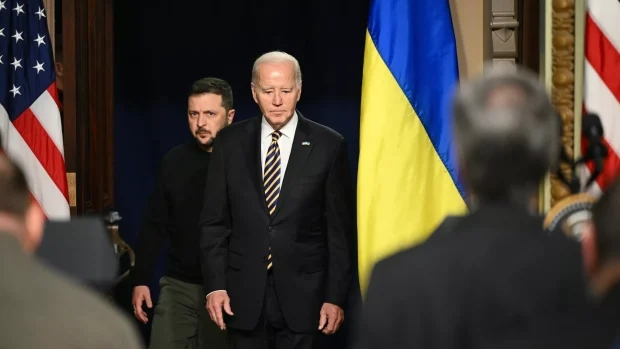
NATO has sought to turn Ukraine into a staging ground and has done everything it could to pit nation against nation, Russian President Vladimir Putin said.
“There have been five, now six, rounds of NATO expansion. They tried to turn Ukraine into their staging ground, to make it anti-Russia. To achieve these goals, they invested money, resources, bought politicians and entire parties, rewrote history and educational programs, nurtured and cultivated neo-Nazi and radical groups. They did everything to undermine our state ties, to divide and pit our peoples against each other,” Putin said at a meeting at Russia’s Foreign Ministry in Moscow.
He emphasized that the Ukrainian crisis is not a conflict between two nations but a result of the West’s aggressive policy.
“Let me say this right off the bat, the crisis regarding Ukraine is not a conflict between two states, much less two peoples, caused by some problems between them… The matter is different, though. The roots of the conflict are not in bilateral relations. The events unfolding in Ukraine are a direct consequence of global and European developments at the end of the 20th and beginning of the 21st century. It’s the West’s aggressive, unscrupulous, and absolutely reckless policy that has been pursued for all these years, long before the start of the special operation,” he explained.
Putin pointed out that if the conflict had been solely about disputes between Russia and Ukraine, then the mutual history, culture, spiritual values, and the millions of familial ties that both peoples share would have facilitated a fair resolution.
Russia had initially sought a peaceful resolution to the Ukrainian crisis, but all proposals put forth were ultimately rejected.
“We took the Minsk agreements seriously, hoping to resolve the situation through a peaceful process and international law,” he said. Moscow expected this would address the legitimate interests and demands of Donbass and secure the constitutional status of these regions, along with the fundamental rights of the people living there. However, he added, “But everything was ultimately rejected.”
Russia, in spite of seeking to resolve the Ukrainian crisis, was, nonetheless, deceived and misled.
“The ex-German Chancellor and former French President, essentially co-authors and, as it were, the guarantors of the Minsk agreements, later admitted that they never intended to fulfill them. They just needed to buy time to build up the Ukrainian armed forces, and to supply them with weapons and equipment. They simply deceived us once again,” Putin remarked.
Putin highlighted that that Russia did not start the war in Ukraine, rather, it was Kiev that launched military assaults against its own citizens who declared independence.
The Russian leader declared that those who assisted Ukraine in its punitive operation against Donbass are the aggressors.
“Russia did not initiate the conflict [with Ukraine]. That was the Kiev regime. After the residents from a part of Ukraine, in line with international law, had declared their independence, they [the Kiev regime] launched military operations and have kept them going ever since. This is an act of aggression, given that the right of these territories to declare independence has been recognized. Those who have supported the Kiev regime’s military machine all these years are accomplices of the aggressor,” he clarified.
June 14, 2024
Posted by aletho |
Deception | France, Germany, NATO, Russia, Ukraine |
Leave a comment
The organisations operating under the banner of “human rights non-governmental organisations” (NGOs) have become key actors in disseminating war propaganda, intimidating academics, and corrupting civil society. The NGOs act as gatekeepers determining which voices should be elevated and which should be censored and cancelled.
Civil society is imperative to balance the power of the state, yet the state is increasingly seeking to hijack the representation of civil society through NGOs. The NGOs can be problematic on their own as they can enable a loud minority to override a silent majority. Yet, the Reagan doctrine exacerbated the problem as these “human rights NGOs” were financed by the government and staffed by people with ties to intelligence agencies to ensure civil society does not deviate significantly from government policies.
The ability of academics to speak openly and honestly is restricted by these gatekeepers. Case in point, the NGOs limit dissent in academic debates about the great power rivalry in Ukraine. Well-documented and proven facts that are imperative to understanding the conflict are simply not reported in the media, and any efforts to address these facts are confronted with vague accusations of being “controversial” or “pro-Russian”, a transgression that must be punished with intimidation, censorship, and cancellation.
I will outline here first my personal experiences with one of these NGOs, and second how the NGOs are hijacking civil society.
My Encounter with the Norwegian Helsinki Committee
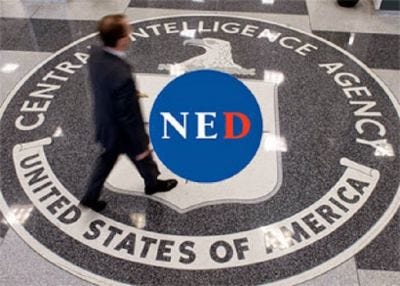
The Norwegian Helsinki Committee is one of these “NGOs” financed by the government and the CIA-cutout National Endowment for Democracy (NED). They regularly publish hit pieces about me and rarely miss their weekly tweets that label me a propagandist for Russia. It is always name-calling and smearing rather than anything that can be considered a coherent argument.
The standard formula for cancellation is to shame my university in every article and tweet for allowing academic freedom, with the implicit offer of redemption by terminating my employment as a professor. Peak absurdity occurred with a 7-page article in a newspaper in which it was argued I violated international law by spreading war propaganda. They grudgingly had to admit that I have opposed the war from day one, although for a professor in Russian politics to engage with Russian media allegedly made me complicit in spreading war propaganda.
Every single time I am invited to give a speech at any event, this NGO will appear to publicly shame and pressure the organisers to cancel my invitation. The NGO also openly attempt to incite academics to rally against me to strengthen their case for censorship in a trial of public opinion. Besides whipping up hatred in the media by labelling me a propagandist for Russia, they incite online troll armies such as NAFO to cancel me online and in the real world. After subsequent intimidations through social media, emails, SMS and phone calls, the police advised me to remove my home address and phone number from public access. One of the Norwegian Helsinki Committee recently responded by posting a sale ad for my house, which included photos of my home with my address for their social media followers.
The Norwegian Helsinki Committee also infiltrates and corrupts other institutions. One of the more eager Helsinki Committee employees is also a board member at the Norwegian organisation for non-fictional authors and translators (NFFO) and used his position there to cancel the organisation’s co-hosting of an event as I had been invited to speak. The Norwegian Helsinki Committee is also overrepresented in the Nobel Committee to ensure the right candidates are picked.
Why would a humanitarian NGO act like modern Brownshirts by limiting academic freedom? One could similarly ask why a human rights NGO spends more effort to demonise Julian Assange rather than exploring the human rights abuses he exposed.
This “human rights NGO” is devoted primarily to addressing human rights abuses in the East. Subsequently, all great power politics is framed as a competition between good values versus bad values. Constructing stereotypes for the in-group versus the out-groups as a conflict between good and evil is a key component of political propaganda. The complexity of security competition between the great powers is dumbed down and propagandised as a mere struggle between liberal democracy versus authoritarianism. Furthermore, they rest on the source credibility of being “non-governmental” and merely devoted to human rights, which increases the effectiveness of their messaging.
By framing the world as a conflict between good and evil, mutual understanding and compromise are tantamount to appeasement while peace is achieved by defeating enemies. Thus, these “human rights NGOs” call for confrontation and escalation against whoever is the most recent reincarnation of Hitler, while the people calling for diplomacy are denounced and censored as traitors.
NGOs Hijacking Civil Society
After the Second World War, American intelligence agencies took on a profound role in manipulating civil society in Europe. The intelligence agencies were embarrassed when they were caught, and the solution was to hide in plain sight.
The Reagan Doctrine entailed setting up NGOs that would openly interfere in the civil society of other states under the guise of supporting human rights. The well-documented objective was to conceal influence operations by US intelligence as work on democracy and human rights. The “non-governmental” aspect of the NGOs is fraudulent as they are almost completely funded by the government and staffed with people connected to the intelligence community. Case in point, during Ukraine’s “Orange Revolution” in 2004, an anti-corruption protest was transformed into a pro-NATO/anti-Russian government. The head of the influential NGO Freedom House in Ukraine was the former Director of the CIA.
Reagan himself gave the inauguration speech when he established the National Endowment for Democracy (NED) in 1983. The Washington Post wrote that NED has been the “sugar daddy of overt operations” and “what used to be called ‘propaganda’ and can now simply be called ‘information'”.[1] Documents released reveal that NED cooperated closely with CIA propaganda initiatives. Allen Weinstein, a cofounder of NED, acknowledged: “a lot of what we do today was done covertly 25 years ago by the CIA”.[2] Philip Agee, a CIA whistle-blower, explained that NED was established as a “propaganda and inducement program” to subvert foreign nations and style it as a democracy promotion initiative. NED also finances the Norwegian Helsinki Committee.
The NGOs enable a loud Western-backed minority to marginalise a silent majority, and then sell it as “democracy”. Protests can therefore legitimise the overthrow of elected governments. The Guardian referred to the Ukrainian Orange Revolution in 2004 as “an American creation, a sophisticated and brilliantly conceived exercise in Western branding and mass marketing” for the purpose of “winning other people’s elections”.[3] Another article by the Guardian labelled the Orange Revolution as a “postmodern coup d’état” and a “CIA-sponsored third world uprising of cold war days, adapted to post-Soviet conditions”.[4] A similar regime change operation was repeated in Ukraine in 2014 to mobilise Ukrainian civil society against their government, resulting in overthrowing the democratically elected government against the will of the majority of Ukrainians. The NGOs branded it a “democratic revolution” and was followed by Washington asserting its dominance over key levers of power in Kiev.
Similar NGO operations were also launched against Georgia. The NGOs staged Georgia’s “Rose Revolution” in 2003 which eventually resulted in war with Russia after the new authorities in Georgia attacked South Ossetia. Recently, the Prime Minister of Georgia cautioned that the US was yet again using NGOs in an effort to topple the government to use his country as a second front against Russia.[5] Georgia’s democratically elected parliament passed a law with an overwhelming majority (83 in favour vs 23 against), for greater transparency over the funding of NGOs. Unsurprisingly, the Western NGOs decided that transparency over funding of NGOs was undemocratic, and it was labelled a “Russian law”. The Western public was fed footage of protests for democratic credibility, and they were reassured that the Georgian Prime Minister was merely a Russian puppet. The US and EU subsequently responded by threatening Georgia with sanctions in the name of “supporting” Georgia’s civil society.
Civil Society Corrupted
Society rests on three legs – the government, the market and civil society. Initially, the free market was seen as the main instrument to elevate the freedom of the individual from government. Yet, as immense power concentrated in large industries in the late 19th century, some liberals looked to the government as an ally to limit the power of large businesses. The challenge of our time is that government and corporate interests go increasingly hand-in-hand, which only intensifies with the rise of the tech giants. This makes it much more difficult for civil society to operate independently. The universities should be a bastion of freedom and not policed by fake NGOs.
[1] D. Ignatius, ‘Innocence Abroad: The New World of Spyless Coups’, Washington Post, 22 September 1991.
[2] Ibid.
[3] I. Traynor, ‘US campaign behind the turmoil in Kiev’, The Guardian, 26 November 2004.
[4] J. Steele, ‘Ukraine’s postmodern coup d’état’, The Guardian, 26 November 2004.
[5] L Kelly, ‘Georgian prime minister accuses US of fueling ‘revolution attempts’’, The Hill, 3 May 2024.
June 14, 2024
Posted by aletho |
Civil Liberties, Corruption, Deception, Full Spectrum Dominance, Progressive Hypocrite, Russophobia | CIA, NED, United States |
Leave a comment
Stanford’s Internet Observatory was a surveillance-censorship operation (discussed previously) that spit on the First Amendment, worked closely with fed intelligence agents and trained students to break the law. God only knows what techniques were developed here in the heart of Silicon Valley to mind control the citizenry.
And they were so brazen! The spooks pretended they were academics doing “research.” But where are their advanced degrees? Where are their courses? Why isn’t Renee DiResta listed in the faculty directory?
The Observatory’s main figurehead, Renee DiResta, “ex” CIA asset, just published a book about her wondrous exploits saving the world from TRUTH.

And Stanford itself was so brazen, it filed an amicus brief to the Supreme Court to complain about how it was unjustly cited for its criminal collusion with the USG to censor political, intellectual, scientific, medical etc. opponents in the Missouri v Biden censorship case. It was just “research.”

Finally, Stanford could not stand the heat, and is getting out of the kitchen. Bye-bye.


June 13, 2024
Posted by aletho |
Civil Liberties, Deception, Full Spectrum Dominance | CIA, United States |
Leave a comment
For nearly nine years Anthony Fauci’s institute concealed plans to engineer a pandemic capable mpox virus with a case fatality rate of up to 15 percent, congressional investigators revealed in a new report Tuesday.
In June 2015, a scientist at the National Institute of Allergy and Infectious Diseases received formal approval from the National Institutes of Health’s Institutional Review Board for experiments expected to engineer an mpox virus with high transmissibility and moderate mortality.
NIAID — the institute Fauci oversaw for nearly four decades and which underwrites most federally funded gain-of-function research — concealed the project’s approval from investigators with the House Committee on Energy and Commerce over the course of a 17 month-long investigation.
A new interim report describes the obstruction and secrecy around the mpox proposal as a case study in how the institute “oversees and accounts for the monitoring of potentially dangerous gain-of-function research of concern.”
The revelations land amid global concerns about whether coronavirus gain-of-function research — research that might generate pathogens with increased pathogenicity or transmissibility — may have contributed to the worst pandemic in a century.
The committee, in conjunction with the House Committee on Oversight and Reform, is also investigating coronavirus gain-of-function research underwritten by NIAID at the Wuhan Institute of Virology, and faces similar stonewalling in that investigation, a committee aide said.
NIAID’s lack of transparency surrounding the proposed mpox experiment for nearly a decade undermines Fauci’s assurances at a congressional hearing last week that any biosecurity breach at the Wuhan lab could not have any connection to his former institute. Investigators continue to pursue documentation from EcoHealth Alliance, an NIAID contractor whose funding was recently suspended for failing to properly oversee coronavirus experiments exported to Wuhan.
Mpox, formerly known as monkeypox, caused a public health emergency in the U.S. from August 2022 to February 2023. It is endemic in Africa. The more deadly clade circulates in Central Africa (clade I) while the more transmissible clade circulates in West Africa (clade II). Mpox has infected more than 20,000 people and caused more than 1,000 deaths in the Democratic Republic of Congo, where clade I predominates, according to the Centers for Disease Control and Prevention — though some experts believe that is an undercount of true cases. A strain of the clade II virus drove the American outbreak.
The mpox experiment first came to light in a September 2022 article in Science.
The gain-of-function project proposed by NIAID virologist Bernard Moss would splice genes conferring high pathogenicity from the clade I virus into the more transmissible clade II virus. The new “chimeric” (combined) virus could have retained up to a 15 percent fatality rate and a 2.4 reproductive number, a measure of transmissibility indicating every sick person could infect up to 2.4 people on average, giving it pandemic potential.
The committee’s attempts to learn more about the experiment were met with stonewalling.
NIAID maintains the experiment was never conducted, but has never provided any contemporaneous documents to support that claim such as emails or lab notebooks, according to the committee’s report.
The lack of engagement from NIAID, the National Institutes of Health and the Department of Health and Human Services does not comport with the idea the experiment was never conducted and that there is nothing to hide, according to the committee.
HHS and NIH misled congressional investigators for nearly a year and a half, falsely denying that Moss had obtained formal approval for this gain-of-function experiment.
The committee launched its investigation in October 2022 but was only permitted to view key documents in camera in March 2024, which confirmed NIH’s formal approval of the experiment.
The committee lays blame with officials at NIAID, who fund most federally underwritten gain-of-function research, have the subject matter expertise, and may have misled their bosses at HHS and NIH.
For months NIAID and Moss had reported to the committee that the mpox experiment had not moved forward and that Moss had simply been spitballing with the Science reporter in 2022 without serious intention.
However amid the committee’s investigation in May 2023 an approval from the Federal Select Agent Program for a chimera involving both clade I and clade II of the mpox virus was revoked.
NIAID also misled Science and STAT News in saying the gain-of-function mpox experiment was never approved, according to the committee.
Committee aides say they will continue to press for full accountability and transparency, and hope for a culture change at NIAID away from secrecy under new leadership.
Fauci retired after 38 years as the head of NIAID in December 2022; Jeanne M. Marrazzo now serves as director of the institute. Former NIH Director Francis Collins retired in December 2021; Monica Bertagnolli now serves as director of the NIH.
The revelations also come amid a debate about the future of gain-of-function research regulation.
New policy unveiled last month by the White House Office and Science and Technology Policy maintains a largely self-regulatory framework, vesting the responsibility for initiating increased regulation with the researchers and funding agencies such as NIAID.
The vast majority of gain-of-function research that could generate epidemic and pandemic capable viruses is likely to be exempted from more rigorous scrutiny under the new protocols, according to the committee.
Many of the world’s most public virologists have dismissed the theory that the COVID-19 pandemic may have resulted from a lab accident as a conspiracy theory and have chafed at the idea that the work should be regulated by an outside agency, subject to public input or not pursued at all.
That culture extends to NIAID, too, according to the committee’s investigators, who have also uncovered that top administrators may have illegally evaded federal record retention and transparency law.
Concerns were raised by a committee aide that NIAID exerted undue influence at OSTP to preserve the laissez-faire status quo.
“The new OSTP policy continues to give funding agencies, like NIAID, primary responsibility for oversight of GOFROC and DURC experiments involving potentially dangerous pathogens,” the committee’s report reads. “In almost any other scientific field or industry, this arrangement would be immediately recognized as a conflict of interest, necessitating independent review and oversight.”
Policy improvements suggested by the committee’s report include codifying public input through a community oversight board, which already exist for high-containment biosafety level four laboratories, as well as moving final approval for gain-of-function research out of NIAID.
According to the National Academies of Sciences, Engineering and Medicine, the number of labs capable of growing orthopoxviruses like mpox and smallpox from scratch currently stands at less than 100, but could increase significantly as DNA synthesis and engineering techniques improve and become cheaper.
June 12, 2024
Posted by aletho |
Deception, Militarism | NIAID, United States |
Leave a comment
A 59-year-old man unfortunately died in Mexico in late April. Having been bed-bound for weeks and suffering from type-2 diabetes and chronic renal failure, he was at high risk from respiratory virus infection.
It became newsworthy, and the World Health Organization thousands of miles distant even released a media statement, because recent advances in genetic sequencing allowed the presence of Type A (H5N2) influenza virus – a type of bird flu – to be reported in a single clinical sample a month later. Refuting the WHO’s distant bureaucrats attributing mortality to the virus, Mexico’s health secretary is reported as noting that it was chronic illness that caused the death.
Irrespective of cause, deaths are a tragedy for family and friends. This one made global news purely because of advances in diagnostic technology. The WHO, the media, and a growing pandemic industry had been waiting for this inevitable event, testing and screening, as it is critical to perhaps the largest business scheme in human history. There are hundreds of billions on the table, and the will and means to take it. We all need to understand why, and what is supposed to happen next.
Covid and the Resetting of Public Health
Covid-19 has proven the business case for gain-of-function research. It looks increasingly likely that some genetic fiddling really did succeed in moving a bat coronavirus into humans, where it is more amenable to monetization (there is no profit in sick bats, or fear of them). Importantly, despite the broad economic and health catastrophe that followed, those behind the program are continuing much the same work, and not being held to account. There is vast profit with little or no real risk.
However, what the Covid episode really demonstrated is the financial and political gains that can be achieved irrespective of outbreak severity. As Klaus Schwab and Thierry Malleret pointed out in mid-2020 in their book Covid-19: The Great Reset, Covid-19 can be used to subvert post-World War II concepts of democracy and human rights and return society to a corporate authoritarian model (“Stakeholder Capitalism”), even though the illness is usually mild.
What is needed is a shared narrative among those who stand to benefit; media, governments, and the corporate world. While the term “Great Reset” seems to have been discarded as unpopular, the World Economic Forum’s (WEF’s) stated intent to penetrate governments and change society to the benefit of their members is clearly undiminished.
Devastating mortality is not needed to drive societal change; just the fear of it. You need a test, visuals such as masks and circles on the pavement, a dependent media, and a research and health establishment whose career opportunities are dependent on compliance. The ramping up of surveillance for the vast sea of viral variants that is nature has just been officially confirmed through the adoption of amendments to the 2005 International Health Regulations at the World Health Assembly (WHA) in Geneva. Irrespective of the reality of risk or the massively disproportionate public funding required, the world is going to find a lot more potential threats, and is building a whole industry that will ensure they translate into corporate profit.
The Opportunity of Influenza
Avian influenza, or bird flu, has been around perhaps as long as birds (so was likely a dinosaur malady in Cretaceous times). Humans must have lived alongside it for over 200,000 years, and our primate ancestors far longer. Bird flu viruses are part of a range of variants of the influenza virus family that undergo regular mutation and recombination (even mixing genome from viruses that normally infect different species) that makes them appear relatively new to our immune system. This makes them more harmful and results in a new influenza outbreak almost every year, as our immunity from the last one (or from a prior influenza vaccine) only partially addresses the next.
Sometimes, recombination allows an influenza virus that is mostly confined to other animals, such as birds, to undergo a wider shift that allows it to infect other species, such as humans. This is similar to what scientists sometimes try to simulate in the lab through ‘gain-of-function’ research, such as modifying bat coronaviruses to become pathogenic to humans.
Humans have always lived in very close proximity with, and eaten, animals that harbor influenza viruses. The last major ‘spillover’ of influenza from birds to humans was the Spanish flu pandemic in 1918-19. It killed perhaps 20 to 40 million people, most probably due to secondary bacterial pneumonia as there were no modern antibiotics. In the century since, an event of this nature has not recurred, and with modern antibiotics and medical care, the mortality of the Spanish flu should now be far lower.
So, why are we seeing the current hysteria regarding bird flu, and why is the media promoting narratives such as potential mortality massively greater than the Spanish flu or any influenza outbreak in human history? The answer, presumably, lies earlier in this article. A very wealthy corporate and financial sector that is influential over governments and media that knows, and has demonstrated, that wealth can be concentrated to the tune of hundreds of billions of dollars through fear of a virus.
There is now a rapidly expanding army of virologists, ‘virus hunters,’ public health bureaucrats, and modelers whose sole reason for receiving funding is to find and publicize new variants of viruses. We have international public-private partnerships devoted to developing and distributing vaccines for such events, supported by taxpayer funding. We also have a draft pandemic treaty that has just been deferred by the WHA, intended to further increase public funding for this private good. From an industry viewpoint, its rapid passage in the coming months would benefit from fear and urgency.
Making Bird Flu Work
Declaration of a bird flu pandemic therefore looks almost inevitable, whether facilitated by ongoing gain-of-function research and a lab leak, or through a natural passage to humans. This inevitability is not so much because it is a real and existential threat, but rather because the industry – the financial-Pharma-media-public health complex that has arisen before and through Covid, needs it. The virus is real. The threat can also be made to appear existential. It is likely to proceed with something like the scenario below.
Traces of genome and even whole viruses can be found in raw agricultural produce. Testing these, and human sewage (contaminated with virus from birds or humans), is already underway and will demonstrate this. Genome has already been found in milk, probably because we looked for it – this has probably also happened often, undetected, before.
Extensive testing of workers on chicken farms and on farms where other infected animals are housed (e.g. dairy herds) will find people who test positive for the virus. Biology is highly variable and some people will establish short-lived mild infections. A few will become severely ill and die due to some immune deficiency or factors such as a very high infective dose. Once listed as a rare pneumonia of unknown cause, such infections can now be definitively pinned as bird flu and used very effectively by media to increase viewership. Within the public health community, these occurrences promote salary and research funding and are extremely important.
Mass killing (culling) at chicken farms. This won’t halt spread, as spread mainly occurs through wild bird species. It could theoretically protect workers from the low (but not zero) risk they face. Importantly, it makes news and promotes a perception that something really bad is afoot. Those who order culls do not suffer from them, and industrial chicken producers are compensated by taxpayers, who will also pay more for eggs and chicken meat. Left unchecked, many chickens would have died in an outbreak, while some would have survived.
Mass killing of secondary hosts such as cattle. Again, a low risk to humans. It is also relatively easy to quarantine cattle herds until an outbreak has run its course. However, culling creates publicity and the impression of a dynamic, desperate response, important in creating a sense of a public health sector scrambling to save the public. It also supports a movement claiming that farming for meat should be replaced by highly processed factory-derived alternative foods, an alternative that is struggling for market share. The fake meat industry is supported by some of the same major investors as Pharma, who are very vocal in the pandemic agenda.
Modeling to demonstrate potential mass death within the population. The major modeling groups (e.g. Imperial College London, University of Washington, Gates Foundation) are funded by entities who are invested in Pharma and gained greatly from Covid-19. Modelers understand outcomes that benefit sponsors, which may have influenced the emphasis on worst-case and highly unrealistic outcomes during Covid-19.
Requirement for mass vaccination (or killing) of backyard chickens to keep the community safe. The concept of ‘greater good’ is the most popular of the concepts that underpin fascism, and can be used to ensure broad compliance, with vilification of non-compliers being the penalty. This was used widely by pro-corporate politicians such as Justin Trudeau to isolate and denigrate those who wanted to weigh harms against the benefits of Covid vaccines or supported the concept of bodily autonomy. The UK and Ireland recently introduced a requirement to register all backyard chickens, to facilitate this process.
Requirement for vaccination of chicken owners – owners of every farm or backyard hen. This will be sold as further protecting their neighbors and communities. Those refusing will be portrayed as ‘putting their entire communities at risk, especially ‘the most vulnerable.’ This message, however distanced from context and reality, is very powerful and the media demonstrated during Covid how willing they are to exploit such division and scapegoating.
Lockdowns, school closures, closure of smaller workplaces. As during Covid, this will involve mainly those lacking influence at WEF and similar forums. There will be some deaths in the community, and even busy ICUs from influenza or other causes. The busy ICUs will be highlighted as unusual (which, of course, they are not) to promote a need to ‘all pull together’ and overcome the threat. This is a difficult message to counter, as on a superficial level such fascistic greater good claims make support for individual choice, fundamental to free societies, difficult.
Population-wide mass vaccination. Mass vaccination can be promoted as inconvenient but necessary as an all-in community safety issue. Although people may be more resistant as harms from Covid vaccination become more widely acknowledged, bird flu is already being portrayed as potentially far worse. The vaccine will be pitched as a way to get freedoms back, a form of coercion once anathema in public health but now mainstream. With hundreds of billions in Pharma sales at stake, it is an extremely hard train to stop. Billions spent on advertising, political sponsorship, and propaganda are literally minor business expenses.
The order of the above steps, and the emphasis, may change. None of the steps will stop bird flu. It spreads through wild bird species and will continue to do so. Occasionally, it will spill over into humans. Very occasionally these will cause a significant outbreak. The Spanish flu was a bad example, but life rapidly went back to normal.
Managing Perceptions
In the century since the Spanish flu, influenza outbreaks have continued to resolve naturally with little change in human behavior, but steadily building alarm. The Hong Kong flu of 1968-69 had been shrugged off as an annoyance and didn’t even stop Woodstock. The SARS outbreak in 2003 (a coronavirus, not influenza) promoted widespread fear, yet killed in total the same as die every 8 hours from tuberculosis. The Swine flu outbreak of 2009, which killed less than normal seasonal influenza, precipitated an international crisis. Pandemics, though real, are mostly about perceptions. So is the response.
The pandemic industry has become far better, and more systematic, at managing perceptions. This is the whole basis on which the behavioral psychology of government ‘nudge units’ was based during Covid. The aim was not a calculated overall public good, but to promote a particular set of public behaviors to address a narrowly defined threat. This is now underway for bird flu. A large part of the populace will comply with increasingly strict measures, not because they have been presented accurate information in context upon which they can make rational choices, but because they are fooled, or coerced, into behaviors they would not normally follow. They will accept restrictions and interventions that they would normally resist.
Unless wider society regains control of the agenda, the Pharma industry and its investors are set to make a killing through bird flu. It will be at least as big as Covid. It will also serve an important role in further building the pandemic industry, justifying the finalization of the postponed WHO Pandemic Agreement (treaty). It is a vital cog in the Great Reset.
Outbreaks do occur and we should monitor and prepare for them. However, we have allowed the development of a system where outbreaks are almost all that matter. Perceptions of risk, and resultant funding, have become grossly disproportionate to reality. The perverse incentives driving this are obvious, as are the harms. The world will be increasingly unequal and impoverished, and sick, building on the outcomes of the Covid response. Fear promotes profit better than calmness and context. It is on us to remain calm and continually educate ourselves regarding context. No one will sell these to us.
David Bell, Senior Scholar at Brownstone Institute, is a public health physician and biotech consultant in global health. He is a former medical officer and scientist at the World Health Organization (WHO), Programme Head for malaria and febrile diseases at the Foundation for Innovative New Diagnostics (FIND) in Geneva, Switzerland, and Director of Global Health Technologies at Intellectual Ventures Global Good Fund in Bellevue, WA, USA.
June 10, 2024
Posted by aletho |
Corruption, Deception, Science and Pseudo-Science, Timeless or most popular | Covid-19, COVID-19 Vaccine |
Leave a comment


 Aletho News