Twitter hires ‘alarming number’ of ex-spies – investigation
Samizdat | June 24, 2022
Twitter is hiring “an alarming number” of ex-FBI agents and other former “feds and spies,” independent outlet MintPress News is reporting, after conducting an analysis of employment and recruitment websites.
According to the research, in recent years the company employed “dozens of individuals from the national security state to work in the fields of security, trust, safety and content.”
“Chief amongst these is the Federal Bureau of Investigation. The FBI is generally known as a domestic security and intelligence force. However, it has recently expanded its remit into cyberspace,” MintPress wrote.
It provides several examples of such appointments. FBI veteran Karen Walsh who, according to her Twitter profile, served as a special agent for 21 years, has become a director of corporate resilience at the Silicon Valley-based company. Mark Jaroszewski, Twitter director of corporate security and risk, joined the Twitter team after 20+ years at the FBI.
Central Intelligence Agency and NATO think-tank Atlantic Council have also been named by MintPress as key incubators of personnel for Twitter.
“Twitter also directly employs active army officers. In 2019, Gordon Macmillan, the head of editorial for the entire Europe, Middle East and Africa region was revealed to be an officer in the British Army’s notorious 77th Brigade – a unit dedicated to online warfare and psychological operations. This bombshell news was steadfastly ignored across the media,” the outlet stressed.
RT has checked open-access social media accounts of Twitter’s top managers and also discovered some former employees of the security services among them – in addition to the ones mentioned in the MintPress investigation.
MintPress News stresses that while Twitter’s HR policy might appear logical – the company hires specialists in the areas it needs – it creates some serious problems, not only for the company, but also for the security agencies and organizations. According to former FBI agent and whistleblower Coleen Rowley, who is quoted by MintPress, many agents have one eye on post-retirement jobs.
“The truth is that at the FBI 50% of all the normal conversations that people had were about how you were going to make money after retirement,” Rowley said.
MintPress claimed that the fact that Twitter recruits largely from the US national security organizations undermines the company’s claims about its neutrality, as the US government “is the source of some of the largest and most extensive influence operations in the world.”
Another risk is that “the company will start to view every problem in the same manner as the U.S. government does – and act accordingly,” the outlet states. To prove this claim, the website analyzed a list – compiled by Twitter – of the countries allegedly conducting disinformation campaigns.
“One cannot help noticing that this list correlates quite closely to a hit list of U.S. government adversaries. All countries carry out disinfo campaigns to a certain extent. But these ‘former’ spooks and feds are unlikely to point the finger at their former colleagues or sister organizations or investigate their operations,” MintPress explained.
Twitter adds warning messages to the tweets and accounts of the state-affiliated media of Russia, China, Iran and Cuba, thus mirroring “US hostility” towards these countries, but does not add any warnings to the pages of state-affiliated media of US and its allies, the outlet highlighted.
Ultimately, MintPress found that Twitter is not the only social media platform that’s “cultivating such an intimate relationship with the FBI and other groups belonging to the secret state.”
“Facebook, for example, has entered into a formal partnership with the Atlantic Council’s Digital Forensics Research Lab, whereby the latter holds significant influence over 2.9 billion users’ news feeds, helping to decide what content to promote and what content to suppress,” it said, adding that the company has also employed former NATO Press Secretary Ben Nimmo as its head of intelligence.
TikTok, according to the outlet, has been “filling its organization with alumni of the Atlantic Council, NATO, the CIA and the State Department.”
Reddit and various media, including Thomson Reuters and multiple US TV channels have also been actively employing former spies, MintPress News claims.
“One of media’s primary functions is to serve as a fourth estate; a force that works to hold the government and its agencies to account. Yet instead of doing that, increasingly it is collaborating with them. Such are these increasing interlocking connections that it is becoming increasingly difficult to see where big government ends and big media begins,” it pointed out.
Iran Dismisses ‘Ridiculous’ Allegations of Planned Attacks on Israelis in Turkey
Al-Manar – June 24, 2022
Iran dismissed Israeli accusations that it is allegedly plotting to target Israelis in Turkey as “ridiculous” on Friday.
In a tweet from Iran’s Foreign Ministry, spokesperson Saeed Khatibzadeh said that Lapid’s “baseless accusations” about such Iranian activity are “ridiculous” and part of a “pre-designed scenario to destroy relations between the two Muslim countries.”
“It is expected from Turkey not to remain silent in the face of these divisive allegations,” he said.
Khatibzadeh also stressed that Iran would respond forcefully to “assassinations and acts of sabotage by the Zionist regime” but “without threatening the security of civilians and the security of other countries.”
Media, health officials should ‘just tell the truth’ about COVID shots for kids, says Vinay Prasad, M.D.
By Susan C. Olmstead | The Defender | June 23, 2022
Vinay Prasad, M.D., MPH, this week addressed misleading information about kids and COVID-19 vaccines coming from four sources: The New York Times, former Biden COVID-19 response advisor Andy Slavitt, head of COVID-19 response Dr. Ashish Jha, and the Brown University School of Public Health.
Prasad made the comments in his videotaped response to news coverage of the June 15 decision to recommend Pfizer and Moderna’s COVID-19 vaccines for infants and young children.
Prasad had a message for the “experts” hoping to convince parents to have their young children vaccinated against COVID-19: “You’re not persuading anybody.”
“You’re laying it on a little thick and you’re not being honest about it, and in the process you’re discrediting yourself,” Prasad said.
Prasad, a hematologist-oncologist and associate professor in the department of epidemiology and biostatistics at the University of California, San Francisco, has been critical of COVID-19 vaccines — and especially their use in children — since the vaccines’ introduction.
He cited a New York Times article that stated:
“Some parents may be uninterested [in the vaccines] because their children were among the 75 percent thought to have already been infected.
“But vaccination provides more powerful and consistent protection even if a child has already been infected, [Centers for Disease Control and Prevention] scientists noted on Saturday.”
“The truth is … they don’t know that to be true,” Prasad said. “If a child has already had COVID, [and] recovered from COVID, we do not know that they have a further reduction in MIS-C [Multisystem Inflammatory Syndrome in Children], death, hospitalization, etc., from a potential reinfection.”
“It’s a lie,” he added. “The best they could say is that although some people speculate that to be the case, we currently have no large-scale randomized evidence to support that claim. We don’t even have observational data to support that claim in this age group.”
Prasad then addressed a tweet from Slavitt:
Now polls say only 20% of parents will vaccinate their < 5 year olds.
I will address that in a second, but the most important point for parents is that anyone who wants to can do it. And that is a game changer.
We know it protects against serious illness & long COVID. 9/
“Well, actually, you don’t know that, Andy,” said Prasad, addressing Slavitt’s claim that the vaccine protects against serious illness and “long COVID.”
In fact, “People should report this to Twitter for misinformation,” he said.
Vaccine trials in young children were too small to lead to any comment about serious illness, he said.
“Severe disease is [so] infrequent that no one can say anything about that, and you certainly don’t know about long COVID — that wasn’t even a measured endpoint in these studies.”
“And … what’s even the definition of long COVID in kids?” he asked. “We’ll have to sort that out first.”
“It’s a lie, it’s an exaggeration, it’s trying to get somebody to do something but it’s not being perfectly honest.”
Prasad also examined a statement Jha made Monday on “Good Morning America”: “The evidence is really clear that vaccinations prevent hospitalizations and serious illness, including in kids.”
This was in response to host George Stephanopoulos asking if a child younger than 5 who has already had COVID-19 and recovered should get a COVID-19 vaccine.
This answer is factually incorrect and an exaggeration to achieve a policy goal, said Prasad. “The real answer is we don’t know.”
“We do not have any evidence that would support that claim,” he said. “We do not have evidence that vaccination improves any health outcome for [children], and we certainly don’t have the evidence that it prevents hospitalization serious illness in those kids.”
Prasad then tackled a Brown University School of Public Health “tip sheet” titled “Talking About Covid-19 Vaccines for Children Six Months to Four Years Old.”
The tip sheet was produced “in an effort to provide timely knowledge and evidence-based talking points for public health professionals, healthcare workers and others” on COVID-19 vaccines for children as young as 6 months.
Prasad called the tip sheet “the opinions of a few people who are self-anointed experts masquerading as evidence.”
The authors of the sheet claim: “We know from vaccinations in 5- 17-year-olds that hospitalization, critical illness and deaths are all more common among kids and teens who are not vaccinated than kids and teens who are vaccinated and boosted.”
Prasad disagreed. Due to poor study design, he said, “We really don’t know, especially in kids 5 to 11, if [vaccination] actually lowers hospitalization or MIS-C.”
“I haven’t yet seen a good study to persuade me, particularly in kids who’ve had COVID,” he said.
The tip sheet also says that in studies conducted by Pfizer and Moderna, vaccines “reduced the rate of ANY infection by between 37-80%. Although the overall number of cases were low, both vaccines are expected to decrease hospitalizations and ICU stays, as well.”
Prasad responded, “You may expect that to be the case, but some of us want data, not expectations by people who have a certain point of view.”
“That claim that these vaccines have been found to be 37% to 80% effective is a lie. It’s untrue,” he added.
Prasad summed up the treatment of people with concerns about the vaccine with a tweet from Eric Weinstein:
I was listening to NPR just the other day. It was phrased in something like the following way as I remember it: “Good news for parents, the long wait for vaccines for their young children is finally over.”
Completely dissing parents with concerns about vaccinating low risk kids.
The way I hear it: we assume the argument that all good parents agree:
“COVID vaccines = Clear Pure Good. Slam dunk. Costless & Riskless. No Brainer. Science.”
“Vaccine concerns = Right Wing / AltRight, anti-science mental illness. Fox Newsesque. MAGA Adjacent. Anti-American.”
“I think Eric Weinstein is right,” said Prasad. “Nobody likes the feeling of somebody selling you something. Everyone can tell the evidence is sparse.”
“People are just proselytizing and exaggerating on TV and there’s not really a dialogue about what’s known or not known.”
If health experts had just presented the public with both known and unknown information about the vaccines, he said — if they had admitted that most likely, both the risks and the benefits of the vaccine are “probably pretty low” — we would have more trust in their guidance.
“Just tell the truth,” Prasad urged.
Instead, health authorities “are exaggerating and lying and distorting the truth.”
Susan C. Olmstead is the assistant editor of The Defender.
© 2022 Children’s Health Defense, Inc. This work is reproduced and distributed with the permission of Children’s Health Defense, Inc. Want to learn more from Children’s Health Defense? Sign up for free news and updates from Robert F. Kennedy, Jr. and the Children’s Health Defense. Your donation will help to support us in our efforts.
Pfizer Classified Almost All Severe Adverse Events During COVID Vaccine Trials ‘Not Related to Shots’
By Michael Nevradakis, Ph.D. | The Defender | June 22, 2022
The latest release by the U.S. Food and Drug Administration (FDA) of Pfizer-BioNTech COVID-19 vaccine documents reveals numerous instances of participants who sustained severe adverse events during Phase 3 trials. Some of these participants withdrew from the trials, some were dropped and some died.
The 80,000-page document cache includes an extensive set of Case Report Forms (CRFs) from Pfizer Phase 3 trials conducted at various locations in the U.S., in addition to other documentation pertaining to participants in Pfizer-BioNTech vaccine trials in the U.S. and worldwide.
The FDA on June 1 released the documents, which pertain to the Emergency Use Authorization (EUA) of the vaccine, as part of a court-ordered disclosure schedule stemming from an expedited Freedom of Information Act (FOIA) request filed in August 2021.
Public Health and Medical Professionals for Transparency (PHMPT), a group of doctors and public health professionals, submitted the FOIA request.
CRFs show deaths, severe reactions to the vaccines during Phase 3 trials
The CRFs included in this month’s documents contain often vague explanations of the specific symptoms experienced by the trial participants.
They also reveal a trend of classifying almost all adverse events — and in particular severe adverse events (SAEs) — as being “not related” to the vaccine.
For example:
- A female in her early 50s (randomization number 86545) who participated in the trial at the Sterling Research Group in Cincinnati, Ohio, died of an apparent myocardial infarction on Nov. 4, 2020. She had received two doses of the vaccine, on Sept. 10 and Sept. 29, 2020.
The patient had a medical history of chronic obstructive pulmonary disease, hypertension, hypothyroidism, osteoarthritis of the knees and attention deficit disorder. Her death was listed as “not related” to the vaccine, and was instead attributed to “hypertensive cardiovascular disease.”
- A female in her late 50s (randomization number 220496), who participated in the trial at Cincinnati Children’s Hospital Medical Center, died of cardiac arrest on Oct. 21, 2020. Her death, however, was indicated as “not related” to her vaccinations (which occurred on July 30, 2020, and Aug. 20, 2020) as it “occurred 2 months after last receipt of study agent,” according to her CRF.
The participant’s medical history included obesity, placement of a gastric sleeve, gastroesophageal reflux, sleep apnea, supraventricular tachycardia, hypothyroidism, depression and asthma.
- A male in his mid-60s (randomization number 221076) who participated in the trial operated by the Texas-based Ventavia Research Group died of an apparent myocardial infarction on Nov. 28, 2020. He had received the two doses of the vaccine on July 31, 2020, and Aug. 19, 2020.
The participant had a medical history that included a previous myocardial infarction, high blood pressure, high cholesterol, anxiety, bilateral hip pain, type 2 diabetes, fluid retention, angina (intermittent), restless leg syndrome, Vitamin D deficiency, tobacco dependency and the placement of a coronary arterial stent in 2017.
According to the CRF, he sustained the myocardial infarction on Oct. 27, 2020, and was diagnosed with pneumonia the following day. While both diagnoses were classified as “serious” in his CRF, they were both listed as “not related” to the vaccination, with his myocardial infection attributed to a “failed cardiac stent” and the pneumonia simply attributed to “infection.”
- A female in her teens (randomization number 104650) was diagnosed with right lower extremity deep vein thrombosis on Nov. 15, 2020, which was still ongoing as of Mar. 29, 2021, the date of the CRF. She was hospitalized and her condition was classified as “serious,” but it was indicated as “not related” to the vaccine, instead attributed to a “fracture” occurring prior to her vaccination on Sept. 11, 2020.
The patient had a medical history including asthma, attention deficit hyperactivity disorder, Charcot-Marie-Tooth disease and obesity.
- A male in his mid-70s (randomization number 227629) participating in the trial at Clinical Neuroscience Solutions Inc. (operating in Florida and Tennessee) sustained a series of adverse events following his vaccinations on Aug. 13 and Oct. 7, 2020.
He was diagnosed with COVID-19 on Aug. 30, 2020, which coincided with several other diagnoses classified as “serious,” including abdominal adhesions (Aug. 29, 2020), altered mental status (Aug. 29, 2020, lasting through Sept. 16, 2020), and acute hypoxic respiratory failure (Aug. 30, 2020). These diagnoses required his hospitalization.
He was also listed as having suffered from congestive heart failure on Aug. 30, 2020, but this diagnosis was listed as “not serious” and as “not related” to the vaccine, but to “prior surgery,” with no further details given. Similarly, his other serious adverse events were listed as being related to “prior” or “previous” surgery, or to “concomitant non-drug treatment.”
Other “non-serious” adverse events listed in this patient’s CRF include hypokalemia, anemia, acute renal failure, sepsis, hyponatremia, leukopenia, small bowel obstruction, aspiration pneumonia, mild concentric left ventricular hypertrophy (symptoms of which were still ongoing as of the CRF date of Mar. 29, 2021) and urinary tract infection.
The patient had a medical history encompassing ongoing hypertension, hypercholesterolemia, gastroesophageal reflux disease, constipation, hiatal hernia and previous diagnoses of small bowel resection, small bowel perforation, inguinal hernia, osteoarthritis in both knees and knee replacement (both knees).
- A male in his mid-70s (randomization number 266982) participating in the trial at Boston Medical Center suffered a series of adverse events following vaccination, including pneumonia and peripheral edema. He had received two doses of the vaccine, on Oct. 2, 2020, and Oct. 27, 2020.
The patient was hospitalized for pneumonia on Jan. 20, 2021, in an event classified as “serious” but also as “not related” to the vaccine. However, the cause of his pneumonia was listed in the CRF simply as “un-related to vaccine,” while his peripheral edema diagnosis was attributed to “existing neuropathy.”
During his hospitalization with pneumonia, his blood pressure was measured as high as 179/72, with a heart rate reaching 105 beats per minute and an oxygen saturation level that fell to 92.0. In total, he had three emergency room visits during the observation period.
The patient had a medical history that included type 2 diabetes, alcoholic cirrhosis, hypothyroidism, asthma, sleep apnea, hypertension, diabetic neuropathy, congestive heart failure, generalized anxiety disorder, depression, insomnia, excessive urination, chronic obstructive pulmonary disease and HIV-positive status.
A protocol deviation also occurred involving this patient, as his diary was not activated following administration of the first dose of the vaccine.
- A male in his early 40s (randomization number 68489) who participated in the trial at Cincinnati Children’s Hospital Medical Center sustained chronic myelogenous leukemia on Sept. 24, 2020, with the condition ongoing as of the date of the CRF on Mar. 29, 2021.
This was classified as a “serious” and “life-threatening” adverse event, albeit one that did not require hospitalization, but it was listed as “not related” to the vaccination but instead to a “genetic change in stem cells.”
The patient had been vaccinated on Aug. 26, 2020, and Sept. 17, 2020, and had a medical history of asthma and seasonal allergies. Other “non-serious” adverse events he sustained included leukocytosis and thrombocytosis.
- A female in her mid-40s (randomization number 49018) who participated in the trial at Clinical Neuroscience Solutions Inc. was diagnosed with kidney stones on Jan. 4, 2021.
This was classified as a “serious” adverse event that required hospitalization, but was listed as “not related” to the vaccine, instead being related, again, to “kidney stone” (sic). She had received the two doses of the vaccine on Aug. 17, 2020, and Sept. 8, 2020.
The patient was diagnosed with COVID-19 on Jan. 27, 2021. Her prior medical history included migraine headaches, hypercholesterolemia and a Tarlov cyst.
- A female approximately 30 years old (randomization number 53307) participating in the trial at Boston Medical Center, with nothing to report in her medical history, sustained a shoulder injury related to vaccine administration (SIRVA) on Sept. 9, 2020, with symptoms continuing until Feb. 8, 2021.
This injury was listed as being related to the second dose of the vaccine, which she received on Sept. 9, 2020 (she had previously received her first dose on Aug. 17, 2020).
- A female in her late 50s (randomization number 260125) participating in the trial at Clinical Neuroscience Solutions Inc., suffered from acute exacerbation of asthma. The symptoms appeared in mid-December 2020, following her vaccination on Sept. 16, 2020, and Oct. 5, 2020.
Her symptoms were classified as serious but not life-threatening, and she was hospitalized. However, her asthma symptoms were listed as “not related” to the vaccine, instead being related to “asthma” with no further explanation provided. On Jan. 12, 2021, her blood pressure was recorded as 183/130, with a heart rate of 98 beats per minute.
Other less serious adverse events sustained by the patient included injection site pain, body pain, chills and a low-grade fever.
Her medical history included cholecystitis (and a cholecystectomy), herniated disc, total abdominal hysterectomy, bilateral oophorectomy, bilateral salpingectomy, endometriosis, hypertension, hypercholesterolemia, rheumatoid arthritis in remission, asthma, seasonal allergies, irritable bowel syndrome and obesity.
- A male in his late 20s (randomization number 48413) who participated in the trial at Clinical Neuroscience Solutions Inc., sustained a bilateral pulmonary embolism on Dec. 14, 2020, with symptoms still ongoing as of the CRF date of Mar. 29, 2021.
This was listed as a “serious” adverse event that required hospitalization, but was attributed to the patient’s habit of vaping and his “sedentary lifestyle.” He had received the two doses of the vaccine on Aug. 13, 2020, and Sept. 2, 2020.
Other post-vaccination symptoms listed for the patient included fever, fatigue, headache, chills, vomiting, diarrhea, new/worsened muscle pain, new/worsened joint pain and swelling.
The patient had a medical history that included elevated triglycerides, genital herpes and seasonal allergies, in addition to a vaping habit.
The many serious adverse events – and several deaths – recorded during the Phase 3 trials are also apparent in a separate, massive document, exceeding 2,500 pages, cataloging such adverse events.
This document lists a wide range of adverse events suffered by trial participants classified as toxicity level 4 — the highest and most serious such level.
However, not one of the level 4 (most severe) adverse events listed in this particular document is classified as being related to the vaccination.
Level 4 adverse events listed in the document include but are not limited to the following, many of which occurred in multiple patients:
- Acute cholecystitis
- Acute respiratory failure
- Adrenal carcinoma
- Anaphylactic shock
- Aortic valve incompetence
- Appendicitis
- Arrhythmia, supraventricular
- Arteriosclerosis
- Brain abscess
- Cardiac arrest
- Chronic myeloid leukemia
- Complicated appendicitis/acute appendicitis with necrosis
- Congenital heart disease/heart anomaly
- Coronary artery occlusion
- COVID-19 illness
- Deep vein thrombosis
- Diverticulitis
- Hemiplegic migraine
- Hemorrhagic stroke
- Interstitial lung disease
- Myocardial infarction
- Orthostatic hypotension/possible postural hypotension
- Osteoarthritis
- Pericolic abscess
- Peritoneal abscess
- Renal colic
- Ruptured diverticulum
- Small bowel obstruction/small intestinal obstruction
- Spontaneous coronary artery dissection
- Subarachnoid hemorrhage
- Suicidal ideation (and suicidal ideation with attempt)
- Syncope
- Type 2 diabetes
- Worsening of abdominal pain
- An “unevaluable event/“unknown of unknown origin”
Similarly, only a small number of toxicity level 3 adverse events were indicated as having been “related” to vaccination. Such adverse events included but are not limited to the following, some of which occurred in multiple trial participants:
- Arthralgia
- Blood glucose increase/glucose spike
- Deafness/hearing loss
- Dyspepsia
- Hypotension
- Lymph node pain
- Lymphadenopathy/lymph node swelling
- Musculoskeletal chest pain (non-cardiac)
- Neutropenia
- Pain in fingers/bilateral hands
- Pruritus
- Pyrexia/febrile syndrome
- Severe headache
- Shoulder injury related to vaccine administration
- Sleep disorder/sleep disturbance
- Tachycardia
- Urticaria
- Ventricular arrhythmia
- Vertigo
Page 2,525 of the document in question also lists six trial participant deaths, with causes of death including arteriosclerosis, cardiac arrest, hemorrhagic stroke and myocardial infarction.
The small number of adverse events listed as being connected to the vaccine follows a trend noted in the previous tranche of Pfizer-BioNTech documents, released in May.
An additional document released in this month’s tranche catalogs patients who discontinued their participation in the Phase 3 trial, or whose participation was discontinued by physicians or other medical professionals.
While many patients were discontinued because they could not be located, because of a physician’s orders, because they moved to another region or for other personal reasons, numerous patients ended their participation due to adverse events, including but not limited to the following symptoms:
- Acute myocardial infarction
- Amnesia
- Anorexia
- Atrial fibrillation
- Cerebral infarction
- Congestive cardiac failure
- Coronary artery disease
- Deafness (unilateral)
- Depression
- Diabetic foot
- Diverticular perforation
- Exposure during pregnancy
- Eye pain
- Gait instability
- Gastric adenocarcinoma
- Gastrointestinal hemorrhage
- Hypertension
- Irregular heart rate
- Loss of taste and smell
- Myalgia
- Paraparesis
- Parkinsonism
- Presyncope
- Pulmonary embolism
- Pyrexia
- Swelling face
- Tachycardia
- Transient ischaemic attack
- Urticaria
- Vaccine allergy
- Vertigo
In other instances, subjects withdrew because of fears connected to safety concerns related to the vaccine, or discomfort in receiving the second dose.
Clinical review document glosses over adverse events during trials
Also included in June’s FDA document dump was a 334-page “clinical review” document, which appears to have been approved by the FDA on Apr. 30, 2021, and which presents “pivotal data” from Phase 1/2/3 Study C4591001, conducted in the U.S., along with “supporting” Phase 1/2 data from Study BNT162-01, performed in Germany.
This document refers to both Pfizer-BioNTech vaccine, which received an EUA from the FDA, and the Pfizer Comirnaty vaccine, which received full FDA approval but is reportedly almost impossible to find at vaccination locations in the U.S.
As previously reported by The Defender, a federal judge found the Pfizer-BioNTech and Pfizer Comirnaty vaccines are legally distinct.
The clinical review document states:
“BNT162b2 has received temporary authorizations for emergency supply in 28 countries and conditional marketing authorizations in 39 countries globally.
“The name of the product supplied under emergency/temporary use authorization for all applicable regions is Pfizer-BioNTech COVID-19 Vaccine.
“The name of the product supplied under conditional marketing authorization for all applicable regions is COMIRNATY [COVID-19 mRNA Vaccine (nucleoside modified)].”
The document states that trial participants were administered one of two candidate vaccines, labeled BNT162b1 and BNT162b2 (the latter of which ultimately received an EUA from the FDA), or a placebo. A variety of dosage levels were also tested, ranging from 10 μg to 100 μg for BNT162b1, and 10 μg to 30 μg for BNT162b2.
In Phase 1 of Study BNT162-01, the clinical review reports that “40% to 45% of participants who received BNT162b1 and BNT162b2 across age groups and across dose levels reported one or more AEs [adverse events] from Dose 1 through 28 days (i.e., 1 month) after Dose 2.”
In what will turn out to be a general pattern throughout the clinical review, we are told that “most AEs were considered by the investigator as not related to study intervention and mild to moderate in severity, and all AEs were reported as resolved.”
Some specific adverse events highlighted in this part of the clinical review include:
“Among BNT162b1 recipients, 1 younger participant in the 10 μg group discontinued the study due to a moderate AE of malaise (considered as not related to study intervention) after Dose 1 and 1 younger participant in the 60 μg group discontinued due to a dose-limiting toxicity of pyrexia after Dose 1.
“One older participant in the 20 μg group had an SAE of severe syncope (considered as not related to study intervention) after Dose 1 and study treatment was withdrawn.
“Among BNT162b2 recipients, 1 younger participant in the 10 μg group discontinued the study due to a moderate AE of nasopharyngitis (considered as not related to study intervention) after Dose 1.
“One older participant in the 20 μg group had an SAE of ankle fracture (considered as not related to study intervention) after receiving both doses, was listed as recovering, and remains in follow-up.”
The clinical review also states “no deaths occurred in the Phase 1 part of Study BNT162-01.”
The review adds that “from Dose 1 of BNT162b2 30 μg to the unblinding date, 6 (50.0%) participants in the younger age group and 3 (25.0%) participants in the older age group reported at least 1 AE.”
Specifically, in this portion of the study, “two (16.7%) participants in the BNT162b2 30 μg younger age group and 1 (8.3%) participant in the BNT162b2 30 μg older age group reported at least 1 severe AE,” and “in the BNT162b2 30 μg younger age group, 3 (25.0%) participants reported at least 1 related AE and 1 (8.3%) participant reported 1 severe SAE.”
These specific adverse events, according to the review, were reported in “the system organ class (SOC) of nervous system disorders (3 [25.0%] participants in the younger age group and 1 [8.3%] participant in the older age group), followed by musculoskeletal and connective tissue disorders (1 [8.3%] participant in each age group). All AEs by preferred term (PT) were reported by no more than 1 participant.”
The review adds, “from Dose 1 to the unblinding date, 1 participant in the BNT162b2 30 μg younger age group reported a severe SAE (neuritis) that was assessed by the investigator as not related to study intervention,” and “there were no Phase 1 participants randomized to BNT162b2 30 μg or corresponding placebo who died through the data cutoff date of 13 March 2021.”
Review of results from Study C4591001
While “incidences in the BNT162b2 and placebo were similar within the age groups for younger (9.1% vs 11.1%) and older (4.3% vs 8.9%) participants, among those who received BNT162b2 instead of the placebo, “two severe events of myalgia and gastric adenocarcinoma (which was also an SAE) were reported for 2 participants in the … younger age group, both assessed by the investigator as not related to study intervention.”
It is further mentioned that “the only discontinuation due to an AE during this time was the participant in the BNT162b2 younger age group who reported an SAE of gastric adenocarcinoma (discontinued from the study on Day 23 after Dose 1 of BNT162b2).”
Ultimately, from dose 1 to 1 month after dose 2 for participants during the blinded safety follow-up of study C4591001, “the numbers of overall participants who reported at least 1 AE and at least 1 related AE were higher in the BNT162b2 group (30.2% and 23.9%, respectively) as compared with the placebo group (13.9% and 6.0%, respectively).”
Specifically, “severe AEs were reported by 1.2% and 0.7% in in the BNT162b2 and placebo groups respectively, and life-threatening AEs were similar (0.1% in both groups),” and “SAEs and “AEs leading to withdrawal were reported by ≤0.6% and ≤0.2%, respectively, in both groups,” while “discontinuations due to related AEs were reported in 13 participants in the BNT162b2 group and 11 participants in the placebo group (0.1% in both groups).”
Overall, as reported for this part of the study, “in the younger age group, the number of participants who reported at least 1 AE from Dose 1 to 1 month after Dose 2 was 4233 (32.6%) and 1871 (14.4%) in the BNT162b2 and placebo groups, respectively. In the older age group, the number of participants who reported at least 1 AE from Dose 1 to 1 month after Dose 2 was 2384 (26.7%) and 1177 (13.2%) in the BNT162b2 and placebo groups, respectively.”
The review specifies that “the most frequently reported AEs in the BNT162b2 group … were injection site pain (2915 [13.3%]), pyrexia (1517 [6.9%]), fatigue (1463 [6.7%]), chills (1365 [6.2%]), headache (1339 [6.1%]), and myalgia (1239 [5.7%]),” however, some more serious adverse events that were reported during this stage of the trial included facial paralysis, cardiac disorders, hepatic cirrhosis, cholecystitis/cholecystitis acute, biliary colic, bile duct stone, biliary dyskinesia, lymphadenopathy, appendicitis, optic neuritis and hypersensitivity/anaphylaxis.
Overall, according to the review, “from Dose 1 to 1 month after Dose 2, severe AEs reported during the blinded follow-up period were low in frequency, reported in 1.2% of BNT162b2 recipients and 0.7% of placebo recipients.”
During the “open-label follow-up period,” referring to the period when the initial trial has been completed but participants are invited to continue taking the study drug for an additional period, the review states “three participants originally randomized to BNT162b2 died during open-label follow-up.”
While one of these deaths was reportedly due to a road accident, the other two were attributed to lung metastases and myocardial infarction. However, none of these deaths “were assessed by the investigator as related to study intervention.”
Furthermore, according to the report, during this period “there were 12,006 participants who had at least 6 months of follow-up. Among these, 3,454 participants (28.8%) reported at least 1 AE and 2245 participants (18.7%) reported at least 1 related AE. Severe AEs and SAEs were reported by 2.1% and 1.6%, respectively.”
The review provides data for participants from dose 3 (first dose of BNT162b2) to the data cutoff date. The severe adverse event incidence rate (IR) was 6.0 per 100 PY (patient-years), with specific conditions reported including pulmonary embolisms, thrombosis, urticaria, a cerebrovascular accident and COVID-19 pneumonia.
Here, the review adds that the IR for original placebo participants who had at least 1 life-threatening AE from Dose 3 to the data cutoff date was 0.5 per 100 PY. Only one such life-threatening event, an instance of anaphylactoid reaction, was considered to be related to the vaccination. Other life-threatening, serious adverse events included cardio-respiratory arrest, gastrointestinal necrosis, deep vein thrombosis and pulmonary embolism.
The report also notes, “There were 15 deaths in the BNT162b2 group and 14 deaths in the placebo group from Dose 1 to the unblinding date during the blinded placebo-controlled follow-up period.”
However, the report does not appear to go into detail about the causes of death for either group, other than to state, “None of these deaths were assessed by the investigator as related to study intervention.”
In the “Blinded Follow-Up Period from Dose 1 Through 1 Month After Dose 2,” in the BNT162b2 group, “SAE [serious adverse events] was similar in the BNT162b2 group (0.6%) and in the placebo group (0.5%),” with three SAEs in the non-placebo group deemed to be related to the vaccine. These included ventricular arrhythmia, lymphadenopathy and SIRVA.
During the “open-label follow-up period” for “original BNT162b2 participants,” the report states “one younger participant with no past medical history had a life-threatening SAE of myocardial infarction 71 days after Dose 2 that was assessed by the investigator as related to study intervention.”
However, despite its life-threatening nature, this condition “lasted 1 day and resolved the same day.”
Overall, “from Dose 1 to 6 months after Dose 2, during the blinded and open-label follow-up periods, 190 (1.6%) participants in the BNT162b2 group reported at least 1 SAE,” and “the number of participants who reported at least 1 SAE was 73 (1.1%) and 117 (2.2%) in the younger and older age groups, respectively.”
These SAEs were categorized as neoplasms, infections and infestations, gastrointestinal disorders, hepatobiliary disorders, respiratory/thoracic/mediastinal disorders and injury/poisoning/procedural complications.
An original placebo participant who received BNT162b2 for Dose 3 experienced a severe adverse event that “was assessed by the investigator as related to study intervention; specifically, “an anaphylactoid reaction 2 days post Dose 3” leading to the participant’s withdrawal from the study, despite a reported resolution.
A separate subsection in the report specifically addressed cases of Bell’s palsy and facial paralysis among trial participants. Specifically, “during the blinded placebo-controlled follow-up period, 6 participants developed one-sided facial paralysis (Bell’s palsy): 4 were randomized to BNT162b2 (all male) and 2 were randomized to placebo (1 male; 1 female),” according to the review.
Regarding the four vaccinated trial participants, their ages ranged from 40 to 70, with symptoms appearing three to 48 days after their last dose. Their symptoms were recorded as “mild to moderate in severity,” with duration ranging “from 3 to 68 days,” and with two of these cases “considered by the investigator to be related to study intervention.”
Moreover, “during the open-label follow-up period, 3 participants who received BNT162b2 as Dose 3 or Dose 4 (after originally being randomized to placebo) experienced facial paralysis,” according to the review. These patients were all female, with an age range between 19 and 34. Events were recorded as beginning two to eight days after administration of the third dose, and “were mild to severe.” One case had a duration of 12 days, while the other two cases were ongoing as of the cutoff date of the trial.
Notably, according to the review, “all these events of facial paralysis were considered by the investigator as related to study intervention.”
The review adds, “during the open-label follow-up period for participants originally randomized to BNT162b2, a male participant 51 years of age developed Bell’s Palsy 154 days after receiving Dose 2.” No indication is given as to whether this was deemed to be related to the vaccination or not.
From dose 1 to the unblinding date, heart-related adverse events included “6 acute myocardial infarctions, 4 myocardial infarctions group, and 1 acute coronary syndrome” in the BNT162b2 group.
According to the review, “most of these events had onset distant (ie, >30 days following) to receipt of vaccine or placebo. None of these events were assessed by the investigator as related to study intervention.”
Moreover, “there was 1 participant in the older BNT162b2 age group with pericarditis. The event had an onset of 28 days after Dose 2, was ongoing at the data cutoff date, and was assessed by the investigator as not related to the study intervention.”
Additionally, “there were 8 cases of pulmonary embolism in the BNT162b2 group,” in addition to four hemorrhagic strokes and “2 ischemic strokes, 4 cerebral vascular accidents, 2 transient ischemic attacks” in this group, plus “1 case of thrombocytopenia and 1 case of platelet count decreased.”
Furthermore, “there were 9 thrombotic events in the BNT162b2 group,” including seven instances of deep vein thrombosis, one case of coagulopathy and one case of ophthalmic vein thrombosis.
Regarding autoimmune issues in the BNT162b2 group, the review states “there were 10 autoimmune disease cases identified,” with one case each of “autoimmune thyroiditis, ulcerative colitis, Crohn’s disease, reactive arthritis, fibromyalgia, systemic lupus erythematosus, alopecia areata, psoriasis,” and two cases of psoriatic arthropathy.
Pregnancies were largely glossed over in the review, which states:
“At the time of the data cutoff date (13 March 2021), a total of 50 participants who had received BNT162b2 had reported pregnancies, including 42 participants originally randomized to the BNT162b2 group and 8 participants originally randomized to the placebo group who then received BNT162b2.”
“In total, 12 participants (n=6 each in the randomized BNT162b2 and placebo groups) withdrew from the blinded placebo-controlled vaccination period of the study due to pregnancy, and 4 participants originally randomized to placebo who then received BNT162b2 withdrew from the open-label vaccination period due to pregnancy.
“These participants continue to be followed for pregnancy outcomes. No births have been reported from individuals who have become pregnant in Study C4591001 as of the time of this submission.
“All pregnancies have a risk of birth defect, loss, or other adverse outcomes. Available data on BNT162b2 administered to pregnant women are insufficient to inform vaccine-associated risks in pregnancy.”
Pfizer concludes vaccines are ‘safe and well-tolerated’
Overall, despite the incidence of severe adverse events — some of which were admitted to be related to the vaccine — and deaths, as well as an admitted lack of data regarding outcomes for pregnant women who participated in the trial, the “safety conclusions” of the review indicate the following:
“Based on Phase 1 data from the FIH Study BNT162-01, BNT162b1 and BNT162b2 were safe and well-tolerated in healthy adults 18 to 55 years of age, with no unanticipated safety findings … and the AE profile and clinical laboratory results did not suggest any safety concerns.
“Based on Phase 1 data from Study C4591001 and Study BNT162-01, BNT162b1 and BNT162b2 were safe and well-tolerated in younger healthy adults 18 to 85 years of age, with no unanticipated safety findings … and the AE profile did not suggest any safety concerns, including up to approximately 6 months after Dose 2 for BNT162b2 30 μg groups.
“Based on Phase 2/3 data from approximately 44,000 participants ≥16 years of age with up to at least 6 months of follow-up after Dose 2 in Study C4591001, BNT162b2 at 30 μg was safe and well-tolerated across age groups … and the AE profile did not suggest any serious safety concerns. The incidence of SAEs and deaths were low in the context of the number of participants enrolled and comparable in BNT162b2 and placebo. The incidence of discontinuations due to AEs was also generally low and similar between BNT162b2 and placebo groups.
“Cumulative safety follow-up to at least 6 months after Dose 2 for approximately 12,000 Phase 2/3 participants originally randomized to BNT162b2, comprising the combined blinded and open-label periods, showed no new safety signals or suggested [any] new safety concerns arising from this period of follow-up.
“Similarly, open-label follow-up of participants originally randomized to placebo from the time of unblinding to receive BNT162b2 until the data cutoff date showed no new safety signals or concerns.
“The AE profile among approximately 44,000 participants ≥16 years of age enrolled to date as of the most recent safety cutoff date (13 March 2021), was mostly reflective of reactogenicity events with low incidences of severe and/or related events. The incidence of SAEs was low and similar in the vaccine and placebo groups. Few participants withdrew from the study due to AEs. Few deaths occurred overall in both the vaccine and placebo groups with no imbalance.
“For participants randomized to placebo and then unblinded to receive BNT162b2 vaccination, open-label data from the time of unblinding to the data cutoff date (13 March 2021) showed no new safety findings or signals.
“Taken together, efficacy and immunogenicity data suggest the BNT162b2 (30 μg) 2-dose regimen induces a strong immune response and provides durable protection from COVID-19 across a spectrum of individuals representative of the population at large for individuals ≥16 years of age: those with or without prior exposure to SARS-CoV-2 and those in higher-risk categories based on age, race, ethnicity, and/or comorbidity.”
As a result, and based on the above data, the review makes a case for the approval of BNT162b2:
“A vaccine program must be implemented expediently and rapidly expanded to have a significant impact on the pandemic course. Licensure of BNT162b2 is likely to enhance vaccine uptake by facilitating supply of vaccine from Pfizer/BioNTech directly to pharmacies and healthcare providers/facilities.
“The greatest impact of BNT162b2 licensure may be direct supply to healthcare providers who serve vulnerable populations such as elderly patients and those who live in rural and underserved communities (i.e., individuals who might be unable to navigate the challenges of securing vaccine access using the systems in place for EUA).
“Expansion of vaccine via licensure would ultimately improve the prospect of achieving population herd immunity to bring the pandemic under control.
“Overall, the potential risks and benefits, as assessed by the safety profile and the efficacy and immunogenicity of BNT162b2 (30 μg), are balanced in favor of the potential benefits to prevent COVID-19 in immunized individuals.
“Likewise, the BNT162b2 30 μg benefit and risk profile support further development in pediatric, maternal, and other at-risk populations.”
Michael Nevradakis, Ph.D., is an independent journalist and researcher based in Athens, Greece.
© 2022 Children’s Health Defense, Inc. This work is reproduced and distributed with the permission of Children’s Health Defense, Inc. Want to learn more from Children’s Health Defense? Sign up for free news and updates from Robert F. Kennedy, Jr. and the Children’s Health Defense. Your donation will help to support us in our efforts.
Ivermectin Study’s Negative Conclusion is at Odds With Its Findings of Significant Clinical Benefit
BY WILL JONES | THE DAILY SCEPTIC | JUNE 21, 2022
A new study on cheap, repurposed Covid treatment ivermectin has concluded that its findings “do not support the use of ivermectin to treat mild to severe forms of COVID-19”. However, this conclusion is at odds with its findings.
The study, “Non-effectiveness of Ivermectin on Inpatients and Outpatients With COVID-19; Results of Two Randomised, Double-Blinded, Placebo-Controlled Clinical Trials”, is published in Frontiers in Medicine. It includes among its authors Dr. Andrew Hill, who last year appeared to suggest to Dr. Tess Lawrie that pressure had been applied to him not to find in support of ivermectin in an earlier paper. He told her, “I’m in a very sensitive position here”, and “I don’t really want to get into” revealing who from Gates-funded charity Unitaid, which funded the study, really wrote the conclusion of the paper downplaying the benefits of the treatment.
The new study gives a helpful introduction to the drug.
Ivermectin is a low-cost established drug with clinical benefits and minimal safety concerns, which has been shown to inhibit SARS-CoV-2 in vitro in studies. Ivermectin has rapid oral absorption, with high lipid solubility is widely circulated in the body, metabolised in the liver, and excreted in faeces. The adequate concentration of ivermectin inhibiting SARS-CoV-2 in the in vitro experiment is higher than the approved dose of ivermectin concentration in plasma and the lungs of humans. However, a meta-analysis demonstrated that the administration of a standard FDA-approved dose shows a positive clinical response in COVID-19 patients.
The study is a follow-up to an earlier, smaller study which showed promise. However, the promise has not, the authors say, been borne out.
Despite our previous more favourable results from a multicentre, randomised clinical trial in 69 COVID-19 patients at the beginning of the pandemic which noted the effectiveness of ivermectin in recovery and decreasing duration of hospital stay, the current results of this extensive study on 609 admitted patients with moderate to severe form of COVID-19 and 549 outpatients with a mild form of COVID-19, did not show adequate support for the effectiveness of this drug.
Despite this downbeat assessment, the new study did actually find a significant 32% improvement in ivermectin hospital patients achieving complete recovery, with 37% of ivermectin patients vs 28% of placebo patients achieving the outcome [95% CI, 1.04–1.66].
A number of the other key outcomes, including ICU admission and death, were also better in the ivermectin group, though the study was underpowered (not large enough) for these results to be statistically significant (i.e., we can’t be sure they weren’t coincidence). These were:
- ICU admission: 28 ivermectin vs 32 placebo patients; 9% vs 11%; 16% improvement [95% CI, 0.52–1.36].
- Invasive mechanical ventilation: 3% ivermectin vs 6% placebo; 50% improvement [95% CI, 0.24 –1.07].
- Supplemental oxygen by non-invasive ventilation: 244 ivermectin vs 252 placebo; 78% vs 85%; 7% improvement [95% CI, 0.86–1.00].
- Death: 13 ivermectin vs 18 placebo; 4% vs 6%; 33% improvement [95% CI, 0.35–1.39].
The fact that all these outcomes showed an improvement, and mechanical ventilation and death considerably so, is a signal that the benefit is unlikely to be solely due to chance. Thus the conclusion should really have been that a larger study is needed to see if the promising results can achieve statistical significance.
For outpatients, there were also some significant clinical benefits:
- Fever duration: 2.02 (± 0.11) days ivermectin vs 2.41 (± 0.13) days placebo; 16% improvement.
- On the day seventh of treatment, fever, cough and weakness were significantly higher in the placebo group compared to the ivermectin group.
A few results went the other way, though none of these were statistically significant. For inpatients:
- Length of hospital stay: 7.98 (± 4.4) days ivermectin vs 7.16 (± 3.2) days placebo; 20% worse [95% CI, 0.15–1.45]. The study claims this finding is “significant”, but the wide confidence interval going through 1.0 indicates not. The authors write that “delays in discharging patients to other facilities such as rehabilitation centres… might be the reason for more extended hospital stay other than treatment for COVID-19”.
- Mean oxygen saturation at day seven: 92.01 (Range: 72–99) ivermectin vs 93 (Range: 48–99) placebo; 1% worse [95% CI, –2.89 to 0.91].
- Relative recovery (where some symptoms persist on discharge): 53% ivermectin vs 60% placebo; 13% worse [95% CI, 0.76–1.00].
- Persistent dry cough (until seventh day): 5 ivermectin vs 10 placebo; 3% vs 9%; 36% worse [95% CI, 0.13–1.03].
For outpatients:
- Hospitalisation: 7% ivermectin vs 5% placebo; 36% worse [95% CI, 0.65–2.84].
- PCR negative on day five after treatment: 26% ivermectin vs 32% placebo; 19% worse [95% CI, 0.60–1.09].
The authors write that “no evidence was found to support the prescription of ivermectin on recovery, reduced hospitalisation and increased negative RT-PCR assay for SARS-CoV-2 five days after treatment in outpatients”. However, it’s important to note that this was for ivermectin given more than a week after symptoms began. Proponents of ivermectin often argue that treatment should be given within five days of exposure, i.e., as soon as possible.
The paper does mention this issue, though in a strange sentence with typographical errors perhaps indicative of a late addition: “Ivermectin may be going to be effective if it is given at the earliest possible time that clinical symptoms appear whiles [sic] the mean duration of symptoms before randomisation was 7.36 ± 3.43 days in the ivermectin group and 6.98 ± 3.63 days in the placebo group.” Typographical errors aside, the point is correct; an outpatient study really needs to start the treatment sooner.
There may also be a dosage issue. While the trial gave a dose of 0.4 mg per kg per day over a duration of three days, some have suggested a higher dose is required. The paper nods at this where it says: “Krolewiecki et al. assessed antiviral activity and safety of a five-day regimen of high dose ivermectin, comparing the control group in 45 patients with COVID-19. The findings support the hypothesis that ivermectin has a concentration-dependent antiviral activity against SARS-CoV-2.”
A further potential problem with the study, which was conducted in Iran where ivermectin has been popular as a Covid treatment, is the question of how many of the placebo group were also secretly taking ivermectin anyway. In the limitations the authors note that “after the allocation of ivermectin or placebo, a significant number of patients declined to be participants”, which may be because they realised they wanted to be sure they were taking the drug. Taking an antiviral medication was an exclusion criterion for outpatients – 18 admitted to it, but how many continued with the trial (for which they were presumably paid) but took such drugs anyway? Furthermore, previously taking an antiviral does not appear to have been an exclusion criterion for inpatients, so it is unknown how many placebo-arm inpatients had taken ivermectin or another medication prior to hospitalisation. Once in hospital, I imagine they would not have been able to continue taking any medication secretly, and perhaps that explains why nearly a third of the inpatient participants were lost to follow up, most due to voluntary withdrawal or “incomplete intervention” (31.6%, 282 of 891; 136 ivermectin and 146 placebo).
Overall, I find the conclusion baffling given the findings. There were statistically significant benefits of ivermectin for complete recovery, shorter duration of fever and quicker clearing up of cough and weakness. There were also large but not-statistically-significant benefits for mechanical ventilation and death. The negative findings were mostly small and none were statistically significant. This is for a study which didn’t start the treatment until over a week into symptoms, and may have been confounded by people in the placebo arm also taking the drug.
Perhaps we will never get to the bottom of exactly how effective ivermectin is against COVID-19. But since it’s a safe drug (to quote U.K. Chief Medical Officer Chris Whitty, “Ivermectin has proven to be safe. Doses up to 10 times the approved limit are well tolerated by healthy volunteers”) and this study shows once again that it gives some benefit – other studies show much greater benefit – why not be honest about that, allow medics to include it in their treatment protocol, and stop making such a fuss about stopping them?
State Department ‘Illegally Obstructing’ Afghanistan Probes, Watchdog Says
By Kyle Anzalone and Will Porter | The Libertarian Institute | June 23, 2022
The US government’s top oversight official for Afghanistan has accused the State Department and the US Agency for International Development (USAID) of stonewalling ongoing investigations, saying they have refused interviews with staff and even failed to provide “basic information” to assist the probes.
In a letter obtained by Politico this week, Special Inspector General for Afghanistan Reconstruction (SIGAR) John Sopko outlined a series of complaints against State and USAID, claiming the agencies are obstructing audits looking into the final months of the war in Afghanistan, the fall of the US-built Afghan government and the transfer of billions in aid.
“The coordinated efforts by State and USAID officials to deny SIGAR access to information and assistance are unprecedented,” Sopko wrote in the letter, which was addressed to Secretary of State Antony Blinken and USAID chief Samantha Power.
He demanded the two officials “cease their illegal obstruction of SIGAR’s oversight work,” insisting that “The billions of US taxpayer dollars that have been spent and continue to be spent in support of the Afghan government and the Afghan people warrant independent oversight, and the law requires it.”
Though Sopko said the two agencies have “historically… supported SIGAR’s mission” and worked with his office willingly, “inexplicably, this long track record of cooperation seems to have abruptly ended. Agency officials now appear to have adopted a premeditated position of obstruction.”
The IG described several examples of obstruction, including the State Department’s refusal to make staffers available for interviews to discuss Afghan refugees and the conditions they endured after fleeing their home country. Most concerning for Sopko, however, was the agencies’ reluctance to provide even “basic information” on American aid programs meant to support Afghans, as SIGAR is conducting an audit to ensure tax dollars aren’t flowing to the Taliban – which now rules Afghanistan – or other militant groups.
The two agencies have pushed back on Sopko’s allegations, arguing that they have cooperated with SIGAR’s probes, though suggested the IG has acted outside the jurisdiction of his office in some cases.
“State and USAID are committed to assisting SIGAR with its important auditing and oversight role,” a department spokesperson said in a separate letter obtained by Politico, adding “We have had concerns about how some of SIGAR’s requests for information relate to their statutory jurisdiction.”
However, while the officials claimed humanitarian aid programs “do not pertain to reconstruction” and therefore fall beyond the scope of SIGAR’s mandate, Sopko said his office has audited such programs for more than a decade without any objections from the government.
“State and USAID legal counsels’ claim that SIGAR’s jurisdiction does not include such matters is not only contrary to the law, but a gross deviation from over 14 years of precedent set by three prior administrations,” the IG wrote.
CDC Admits It Never Monitored VAERS for COVID Vaccine Safety Signals
By Josh Guetzkow, Ph.D. | The Defender | June 21, 2022
In a stunning development, the Centers for Disease Control and Prevention (CDC) last week admitted — despite assurances to the contrary — the agency never analyzed the Vaccine Adverse Event Reporting System (VAERS) for safety signals for COVID-19 vaccines.
The admission was revealed in response to a Freedom of Information Act (FOIA) request submitted by Children’s Health Defense (CHD).
In September 2021, I published an article in The Defender in which I used the CDC’s published methodology to analyze VAERS for safety signals from COVID-19 vaccines.
The signals were loud and clear, leading me to wonder “why is nobody listening?”
Instead, I should have asked, “Is anybody even looking for them?”
After that article was published, I urged CHD’s legal team to submit a FOIA request to the CDC about its VAERS monitoring activities.
Since CDC officials stated publicly that “COVID-19 vaccine safety monitoring is the most robust in U.S. history,” I had assumed that at the very least, CDC officials were monitoring VAERS using the methods they described in a briefing document posted on the CDC website in January 2021 (and updated in February 2022, with minor changes).
I was wrong.
The lynchpin of their safety monitoring was to mine VAERS data for safety signals by calculating what are known as proportional reporting ratios (PRR’s).
This is a method of comparing the proportion of different types of adverse events reported for a new vaccine to the proportion of those events reported for an older, established vaccine.
If the new vaccine shows a significantly higher reporting rate of a particular adverse event relative to the old one, it counts as a safety signal that should then trigger a more thorough investigation.
The briefing document states, “CDC will perform PRR data mining on a weekly basis or as needed.”
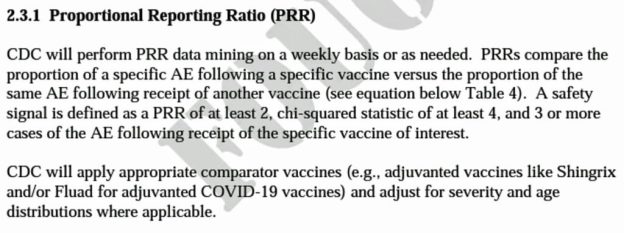
And yet, in the agency’s response to the FOIA request, it wrote that “no PRRs were conducted by CDC. Furthermore, data mining is outside of the agency’s purview.”
The agency suggested contacting the U.S. Food and Drug Administration (FDA), which was supposed to perform a different type of data mining, according to the briefing document.

CDC officials repeatedly claimed they have not seen safety signals in VAERS.

For example, on April 27, 2021, CDC Director Dr. Rochelle Walensky stated the CDC did not see any signals related to heart inflammation.
But a PRR calculation I did using the number of myo/pericarditis reports listed in the first table produced by the CDC obtained via the FOIA request reveals clear and unambiguous safety signals relative to the comparator vaccines mentioned in the briefing document (i.e., flu vaccines, FLUAD and Shingrix).
The table is dated April 2, 2021, almost four weeks before she made those remarks.
In fact, among the 15 adverse events for adults included in that week’s tabulations, PRRs I calculated also show loud-and-clear safety signals for acute myocardial infarction, anaphylaxis, appendicitis, Bell’s palsy, coagulopathy, multisystem inflammatory syndrome in adults (MIS-A), stroke and death.
The actual monitoring the CDC did diverges from the one promised in the briefing document in other ways.
For example, the CDC never created tables of the top 25 adverse events reported in the previous week, tables comparing different vaccine manufacturers, or tables of auto-immune diseases.
And it only began monitoring in early April 2021, even though reports from COVID-19 vaccines had been flooding VAERS since mid-December of the previous year.
To be clear, VAERS is not the only database the CDC uses to monitor COVID-19 vaccine safety.
For example, the CDC sponsored several studies of COVID-19 safety using the Vaccine Safety Datalink (VSD), which is comprised of millions of medical records from HMO’s across several states.
Those studies do not raise many safety concerns. However, they make many questionable methodological choices.
To give one example, a major safety study based on VSD data published in September 2021, in “JAMA,” compares adverse event rates that occur within 1-21 days of vaccination to the rate of occurrence from 22 to 42 days after vaccination.
It makes no comparison between vaccinated and unvaccinated individuals, or before vaccination versus after in the same individuals.
Moreover, the VSD is far from infallible, having failed initially to detect the increase in myocarditis rates.
In contrast, although calculating PRR’s is a blunt pharmacovigilance tool and far from perfect, it nevertheless has the advantage of being straightforward and difficult to manipulate with statistical sleight of hand.
PRRs are one of the oldest, most basic and most well-established tools of pharmacovigilance. The calculations are so straightforward that the CDC automated it several years ago, so it could have been done at the press of a button.
It simply beggars belief that the CDC failed to do this simple calculation. Even now, a paper published by CDC staff in March on the safety of the mRNA COVID-19 vaccines remains purely descriptive with no PRR calculation.
Meanwhile, a study published by a researcher not affiliated with the CDC in February in “Frontiers in Public Health” analyzes VAERS and EudraVigilance data using a method similar to PRRs, revealing clear and concerning safety signals.
And while it is true that VAERS is not the only database the CDC can use to monitor COVID-19 vaccine safety, it is of critical importance because it can reveal signals much faster than any other method — if anybody cares to look for them.
It remains to be seen if the FDA was properly monitoring VAERS. That will be the subject of a future FOIA request.
But even if it was, it doesn’t change the fact that the CDC completely failed in its promise to monitor VAERS for safety signals.
© 2022 Children’s Health Defense, Inc. This work is reproduced and distributed with the permission of Children’s Health Defense, Inc. Want to learn more from Children’s Health Defense? Sign up for free news and updates from Robert F. Kennedy, Jr. and the Children’s Health Defense. Your donation will help to support us in our efforts.
Biden predicts ‘second pandemic’
Samizdat – June 22, 2022
The US needs more money to plan for “the second pandemic,” President Joe Biden said during a press briefing on Tuesday, as he praised his government’s efforts to ensure children under five can get Covid-19 vaccines.
Biden also hailed as “a very historic milestone” that the US has become the first country in the world to offer “safe and effective” Covid-19 vaccines for children as young as six months old.
When asked about how long the administration could keep up the new vaccine campaign, Biden suggested that the current budget would be enough to “get through at least this year” but stressed that “we do need more money.”
He went on to insist that he needed even more money for an unspecified “second pandemic.” “We need more money to plan for the second pandemic. There’s going to be another pandemic,” the president warned, without going into detail about what this new wave might entail.
Biden also took the opportunity to take a swipe at his predecessor, implying that Donald Trump’s lack of preparation increased the impact of the Covid pandemic. “We have to think ahead. That’s not something the last outfit did very well and that’s something we’ve been doing fairly well. That’s why we need the money,” surmised Biden.
Some health experts and agencies such as the World Health Organization have also warned of the likelihood of future pandemics. The WHO had previously announced that it plans to confirm a global pandemic treaty at the 2024 World Health Assembly, which it hopes will help “set out the objectives and fundamental principles in order to structure the necessary collective action to fight pandemics.”
The agreement, which heavily focuses on increased surveillance, vaccinations and “restoring trust in the international health system,” would legally bind its members under international law, superseding regulations of individual countries in an effort to get all nations to act as one in the face of a future outbreak.
Dr. Clare Craig from the HART group explains the clinical trial used to justify vaccinating kids
Steve Kirsch | June 19, 2022
The HART group is a group of highly respected independent doctors and scientists. My friend, Professor Norman Fenton, is a member of this group.
In this 4 minute video, Dr. Clare Craig, co-chair of the HART group, explains the clinical trial that was used to justify vaccinating our kids. She was appalled.
The only conclusion you can draw after watching this video is that the people running the FDA, CDC and the members of the outside committees approving these vaccines are either completely incompetent or totally bought off.
Everyone should watch this video. It should be required viewing for any parent who is considering vaccinating their child.
Here is the report Pfizer submitted to the FDA referenced in her video. You can see the numbers on page 39 (look in the column headings for the N= numbers).
Pfizer vaccine effects on total motile count in sperm donors
israeli study shows persistent effects
by el gato malo – bad cattitude – june 19, 2022
one of the great early misapprehensions about mRNA vaccines is that they would not have widespread, systematic effects, instead remaining relatively localized. this was rapidly debunked and early studies showed widespread penetration of organs with a particular and perhaps unfortunate preference for concentration in ovaries and testes. (this was discovered early in japan, then denied vehemently by armies of “fact checkers” only to wind up proven in pfizer’s own documents gained through FOIA and lawsuit.)
these mRNA drugs are broadly systemic and concentrate in (amongst others) reproductive organs and effects on menstrual cycles are widely documented.
in light of this quite worrying fact (especially with a compound carrying high CG enrichment relative to high virus and the attendant risks thereof) it has been surprising to me that there have not been more studies on this topic.
but a few are starting to emerge. this israeli study was published 2 days ago:
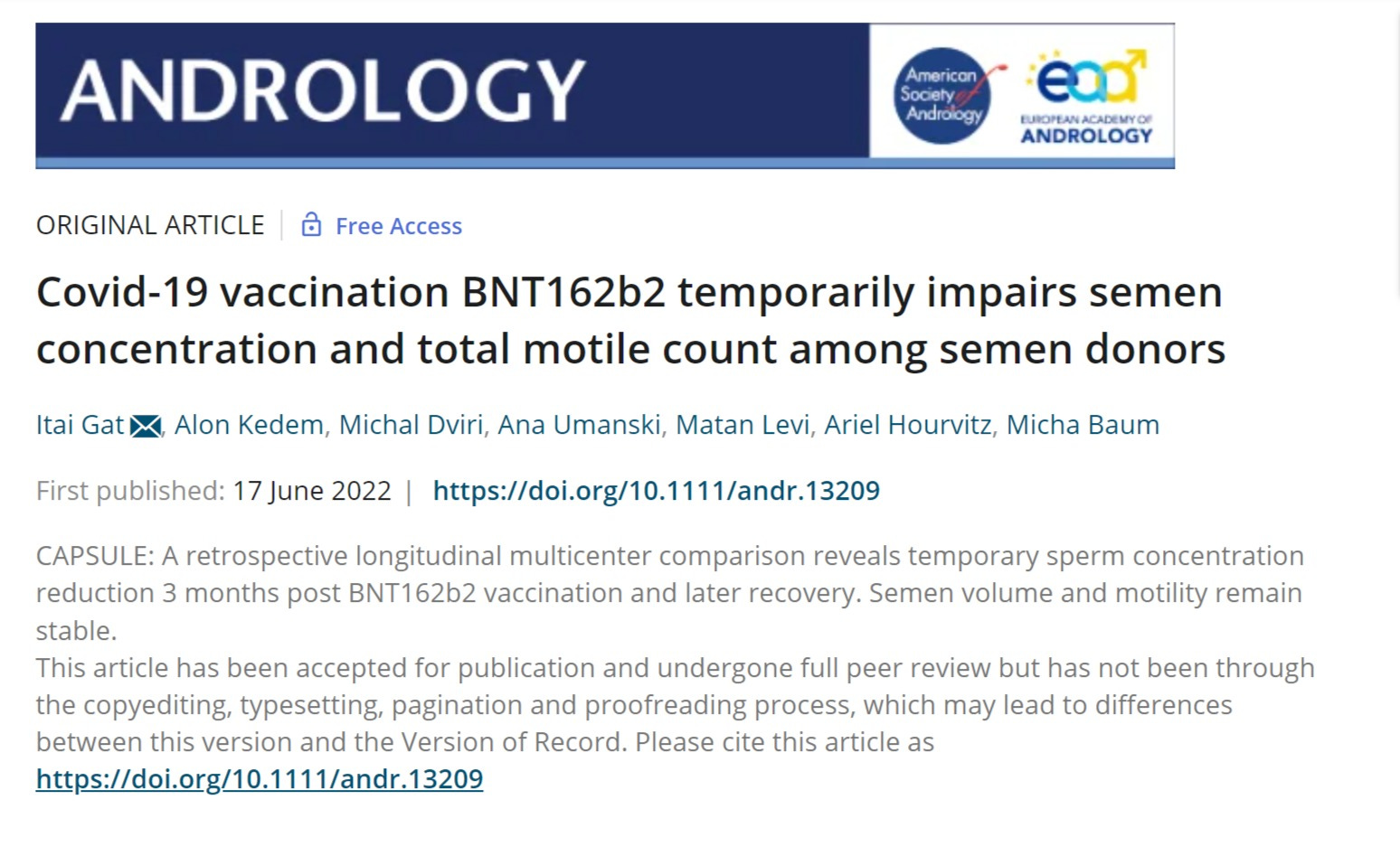
and the results are, well, nuts. (sorry)
there was strong a priori reason to suspect effects, especially in light of the higher and more persistent prevalence of vaccine induced S proteins vs natural infection and the CG enrichment issued mentioned above.
Over the first pandemic months, there was insufficient data regarding the possible impact of Covid-19 on human reproduction. Yet, it was clear it employs the Angiotensin-Converting Enzyme 2 (ACE2) receptor for cellular entry 3, 4. Various testicular cells including Leydig, Sertoli, spermatogonia and spermatozoa express ACE2 and related proteases resulting with viral fusion 5, 6. Cytokine storm-induced dysfunction, autophagy regulation and damaged blood-testis barrier were also suggested as possible pathogenic mechanism for testicular damage 7. Clinical reports of orchitis, supported by histological findings, further emphasized testicular involvement 8, 9. Therefore, detrimental impact on both spermatogenesis and testosterone production 10 seem an obvious outcome they evaluated donors from 3 sperm banks over a longitudinal period commencing before pfizer vaccine and following up after.
the study was performed and followed up according to the following timeline around vaccination.
- T0 = pre vaxx baseline
- T1 = 15-45 days post
- T2 = 75-120 days post
- T3 = 150+ days post
and from this, substantial effects on sperm concentration and overall motile count were discovered.
the authors draw a set of conclusions from this:
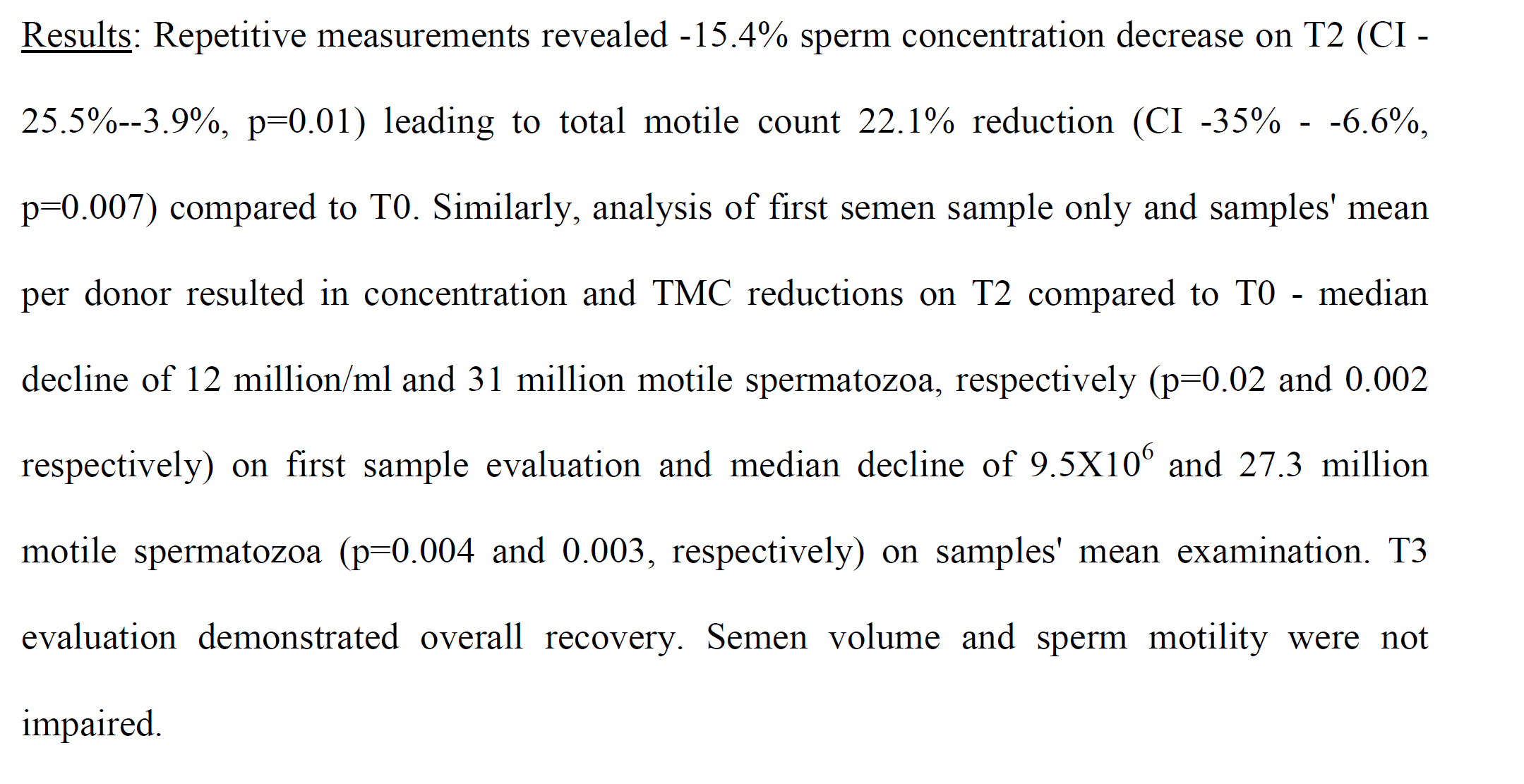
and from this state:
Conclusions: Systemic immune response after BNT162b2 vaccine is a reasonable cause for transient semen concentration and TMC decline. Long-term prognosis remains good
but i am left wondering about these claims and fear they may provide an example of the sort of “nerf or refute your own findings in the abstract so that we can publish this without massive controversy” behavior that has become all too common in medical and scientific journals who withhold peer review from those whose findings look too worrying if stated plainly. (but that will often let such data out if buried deep in supplements and appendixes)
this is why you should always read these data repositories. because they often tell quite a different tale than the abstract.
here’s table two from this same study. notice anything?
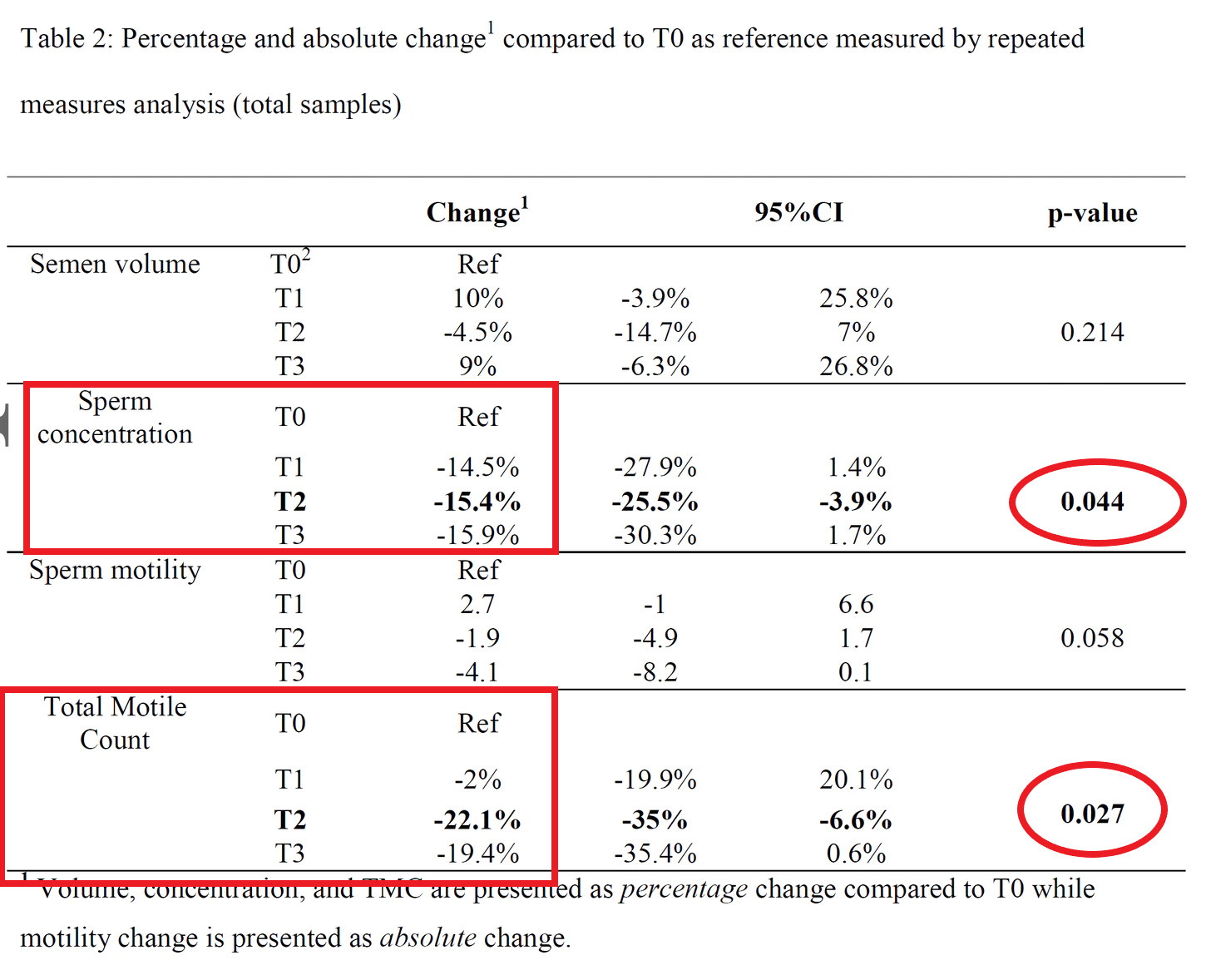
i’m struggling to see how one could call this “recovery.”
post day 150, sperm concentration was -15.9% vs baseline, lower even than in the 75-120 day period. average time post vaxx for T3 collection was 174 +/- 26.8 days so we’re talking about 6 months post vaxx with NO recovery in sperm concentration.
total motile count was slightly recovered from T2, but was still down 19.4% vs baseline, seeming to make up somewhat in volume what is lost in concentration.
both results were statistically significant at a 95% confidence interval.
there is a greater than 97% chance that the TMC figure is real and not random.
those are not odds you want to buck.
this raises some serious concerns for a number of reasons:
- obviously, this is a significant and unforeseen impact not only missed in the rush-job drug trials, but that the drug makers assured us was basically impossible and spent the better part of a year vehemently denying.
- this effect looks durable to at least 6 months and from this data, we really do not know when or even if (or to what extent) it will attenuate.
- the role of boosters here is not known, but there is every reason to expect they will have similar effects and either extend or possibly worsen this effect. that seems like a study that should be being performed immediately.
- even if this condition does moderate and TMC return to prior levels over time, that timescale looks quite long. it’s certainly more than 6 months. this would seem to imply low motile counts could be near constant in a regimen of annual or bi-annual boosters.
when you rush vaccines to market, especially vaccines using an entirely new and poorly understood modality that has never before been approved or even used in humans, you’re going to get all manner of nasty surprises and this looks to be yet another.
and clearly, it was missed. this was not even mentioned as a possibility in any FDA proceedings of which i am aware.
and THAT is why vaccine development generally takes place over 5-10 years, not 5-7 months.
best i can tell, we cannot even yet rule out that these effects are permanent.
and, of course, we have zero idea what they might do to pre-adolescents and possible impacts on their healthy sexual development and ultimate fertility.
and yet the US is bucking the trend in most of europe and approving this drugs for not just the young and healthy but for kids from 6mo-5 yr. this feels reckless.
we have little idea what this may be doing to ovaries and eggs either as these are much more difficult and invasive to study (and will likely need to be assessed by autopsy). this is another analysis that desperately needs to take place because unlike sperm, eggs to not replenish, so if you damage them, that’s that.
add to this effects on normal development and it could take decades to see what happened.
people have historically trusted vaccines because they underwent serious, long term testing before being pushed wide. assessment was measured in decades, not months and even a tiny number of adverse events would pull them off the market.
to trade upon that trust while abandoning all the safeguards that enabled it is bad science and worse public health policy.
how many more examples of unforeseen outcomes must we endure before this simple truth is accepted?
January 6: The show trial, the movie… and Liz Cheney’s dyspepsia
By Michael Lesher | OffGuardian | June 19, 2022
Not every piece of political theater openly presents itself as political theater. But these aren’t ordinary times, heaven knows – and the show trial that goes under the popular name “the January 6 Committee” has been nothing if not consistently over the top.
So it was appalling, but not really a shock, to note that when the committee’s ringmasters got down to serious public business on June 9, the first thing they did was to premiere their own movie.
And what a movie!
Perfectly timed to monopolize mainstream media for the evening, the committee’s production turned out to be…
an expertly curated multimedia experience unlike any Congressional hearing in history. With revelatory clips from the committee’s interviews with Jared Kushner, Ivanka Trump and Bill Barr; never-before-seen and brilliantly edited footage of the rioters; and a wrenching live interview with a Capitol police officer injured in the melee.”
I’m quoting, word for word, from Jodi Rudoren, who used to recycle Israeli propaganda for the New York Times and is now (poetic justice?) reduced to gushing about a “multimedia experience” that – if offered at a genuine inquest, not a show trial aimed at stifling political dissent – could only have been reported as the national disgrace it actually was.
But grab your popcorn, folks! A movie is a movie; when has Trump-baiting ever been hampered by rules of evidence? Who needs facts when you can watch doctored testimony on a big screen?
Why ask about the legal definition of “insurrection” (a question that makes nonsense out of the committee’s putative mission) when you can sit back and enjoy “brilliantly edited footage” of the first “coup” that had to be synthesized in a cutting room?
And why even think about the only violent death that occurred during all the trouble – that of Ashli Babbitt, a slight, unarmed protester shot dead by a cop for no apparent reason – when you can hang on every word of that “wrenching interview” with a different police officer who was prepared to say exactly what the committee (and Rudoren) wanted to hear?
So much for the June 9 teleplay.
And yet, the worst part – for me, anyway – was that none of it was really a surprise. If anything had remained of the committee’s bona fides after it wasted ten months on procedural ballyhoo (who’s getting the next subpoena?… will he appear?… let’s make some headlines!), the last vestige of its credibility was trashed by the committee members themselves as they stormed TV political talk shows three days after airing their feature film to deliver their prearranged verdict against the former President.
According to Rep. Jamie Raskin, Trump was guilty because he said he had won the election when he should have known he hadn’t. “He had to have known he was spreading a ‘Big Lie,’” Raskin solemnly informed CNN’s “State of the Union” on June 12.
By that standard, I guess, you’d also have to bracket Al Gore with Hitler if it turned out that some campaign-trail bigwig whispered in his ear (Gore’s, not Hitler’s) that he probably didn’t get enough votes to carry Florida in 2000.
And Rutherford B. Hayes, who actually managed to reverse the results of the presidential election of 1876 on the basis of claims every bit as dubious as Trump’s – was he a traitor, too?
Or have I missed something?
But why quibble about logic? While Raskin was declaring bad political sportsmanship a federal crime, Rep. Adam Schiff was concocting an even bolder guilt-by-association theory on ABC, where he claimed that the committee’s hearings would demonstrate “connections” between “people in Trump’s orbit and white nationalist groups that participated in the attacks [sic].”
Asked how he could prove this, the Congressman sniffed, “You’ll just have to wait until we get to that point of our hearings.”
Schiff’s committee is supposed to have interviewed more than 1,000 people since last July, but of course it’s way too early to have any evidence to back up inflammatory accusations – though not too early to air them on national television.
Plus ça change, plus c’est la même chose.
Almost a year ago, I underlined how popular media had already fabricated the myth of the January 6 “coup attempt.” Within days of the protest at the Capitol, its participants had been demonized as – take your pick – “fascists” (PBS), “white supremacists” (CNN), or a violent “mob” bent on paralyzing the United States government (USA Today).
And everyone seemed to accept the dogma that the demonstrators, collectively, had staged an armed “insurrection” that only just failed to turn the United States into a right-wing dictatorship.
Indeed, typical of the early propaganda was New York Magazine’s accusation that the “goal” of the “mob” was “threatening or killing officials” of the U.S. government; The New Republic went so far as to insist that the protesters sought “the mass execution of Democratic politicians and prominent liberals” – although, of course, not a single politician was attacked on January 6, let alone “executed.”
For anyone who remembers what really happened, that distinction belongs to Ashli Babbitt – whose name is never mentioned by the January 6 committee or by the popular media breathlessly reporting its every pronouncement.
Judging from its opening night, the committee still expects us to believe that the protesters who entered the Capitol on January 6 fully intended to make corpses and to extinguish American democracy. It doesn’t seem to matter that only a handful of them have been accused of possessing “weapons” of any kind (most of which seem to have been flagpoles).
In fact, a grand total of one of those “terrorists” even thought to bring a gun to the “coup.” (And never drew it, according to police.)
Not to mention that if one riot at the Capitol amounted to an attempted overthrow of the government, you’d probably have to say the same thing about the violent protests that erupted after Donald Trump’s election victory in 2016.
And what about the Democratic members of Congress who tried to prevent the certification of that election by the Electoral College the following January? Needless to say, such questions aren’t being posed by the committee or in the liberal press.
But after all, the ringmasters have never relied much on facts; they prefer to ply their audience with emotional images and wait for it to salivate like Pavlov’s dogs.
Thus, nobody on opening night mentioned the old lie about Capitol Police officer Brian Sicknick being clubbed over the head with a fire extinguisher by one of the “insurrectionists.”
Instead, the committee flashed onto a viewing screen a momentary freeze-frame of a policeman, supposedly Sicknick, holding a hand over his face while a “witness” gave a description of events that didn’t match the picture but insisted on Sicknick being “as white as this sheet of paper” as he held “his face in his hands.”
Did the poignant image we saw match the story the committee wanted us to believe?
It was awfully hard to tell from the ringmasters’ own video. And the whole thing was irrelevant in any case: there’s no evidence connecting Sicknick’s death the next day (from natural causes) with anything that happened at the protest. But who cared? The concatenation of images – Sicknick’s name, a covered face, the words “white as paper” – rendered truth irrelevant; it worked directly on the emotions of the estimated 19 million viewers for whom the histrionics were designed in the first place.
And that was just the beginning. The high point of Thursday night’s emotional blitz was that “wrenching live interview” with Caroline Edwards – the police “witness” whose testimony so moved Jodi Rudoren. And who, we may ask, is Caroline Edwards?
According to the committee’s program notes, Edwards – a Capitol Police officer who looks like an actress and whose background just happens to be “a career in public relations” – was “the first law enforcement officer injured by rioters” on January 6.
She also claims to have been an eyewitness to a gruesome “war scene” as the protest intensified outside the Capitol.
Which certainly made for some popcorn-munching theater on June 9. But one might have expected a former New York Times bureau chief (which Rudoren is) to notice at least a few gaps in Edwards’ performance.
For one thing, why did the committee choose a witness who admittedly saw nothing that happened inside the Capitol – where any actual “coup attempt” would necessarily have taken place? Why wasn’t Edwards mentioned by any of the four law enforcement officers trotted out by that same committee as its star witnesses to anti-police violence during the protest at its first hearing back in July 2021?
(At the time, one of those cops insisted he had been “tortured” by a crowd that tried to “kill him with his own gun” – claims the committee has not even attempted to substantiate since then.)
And why didn’t the committee’s video document the “carnage” and “chaos” in which Edwards said she was “catching people as they fell” and “slipping in people’s blood”?
But given the priorities of Hollywood – the ones that counted, apparently – that blurry apocalypse was more than enough to make the committee’s point. In fact, according to Rudoren, another set of images at the hearing upstaged even pretty Ms. Edwards. And since you probably can’t guess what they were, I’ll quote Rudoren once again:
[I]n some ways the most powerful images of the night were the expressions on [Rep. Liz] Cheney’s face…. Cheney wore a look of profound disappointment and deep distaste.”
The emphasis is mine; otherwise I have quoted Ms. Rudoren verbatim. And her message could hardly have been clearer. Forget the truth, folks. Forget about what really happened to whom. Forget even about that “multimedia presentation” the committee spent so much time fabricating. Just look at Liz Cheney’s face while the Wyoming congresswoman does all the looking for you.
After all, it’s entirely too passé to think for yourselves. Today we keep our mouths shut and take our cues from a politician’s facial expressions. Goodbye, democratic government; hello, Liz Cheney’s dyspeptic grimaces!
Which brings me to the real point of the January 6 committee proceedings. The partisan aspect of this show trial is too obvious to need emphasis here. But there’s a lot more to the theater than an attempt to disqualify Donald Trump from seeking political office – though, of course, that’s part of the mix.
At bottom, these hearings are a kind of morality play – a public ritual that both invokes Divine Justice and adumbrates where its verdict will fall. The show-trial-cum-exorcism that commenced on June 9, laden with symbols of threatened virtue and guilt by association, is designed to dramatize in miniature a totalitarian religion that divides Absolute Good (center-liberal government) from Absolute Evil (grassroots dissent).
The Biden administration has already made a point of defining its critics as nonpersons: white supremacists, enemies of democracy, the awful “unvaccinated.” Now hoi polloi are to be purged altogether of any temptation to challenge the machinations of the ruling class. The ultimate crime of the January 6 protesters was not, in the end, that some of them trespassed on government property, or that an even smaller number scuffled with police.
No, the protesters’ unpardonable offense was to cry, “This is our house!” as they surrounded the Capitol. And that’s why they have to be demonized: because, right or wrong in their protest’s specific objective, they believed all too sincerely in what Abraham Lincoln said at Gettysburg about “government of the people, by the people, for the people.” They were traitors – because they declared their faith in democracy.
That’s why the committee’s ringmasters are scapegoating every single man and woman who disputed the outcome of the 2020 presidential election as a racist or a proto-Nazi, even though only a small fraction of the January 6 protesters had any connection to the Proud Boys, Oath Keepers, Aryan Nations or Three Percenters.
That’s why the committee is pinning all the blame for the fracas on the few hundred protesters who entered the Capitol, while not even trying to challenge federal officials who allowed a disorganized bunch of unarmed demonstrators inside what is supposed to be one of the most zealously guarded buildings in the United States.
And this, mind you, despite the fact that General Mark Milley, chairman of the Joint Chiefs of Staff – whose consent would have been required for the deployment of National Guard or military personnel to the Capitol on January 6 – told his aides (according to a newly-published book) that Trump reminded him of Hitler and that he was determined to see Joe Biden installed as President “come hell or high water.”
Bear in mind that Time Magazine (yes, Time Magazine), less than a month after the protest, could already report that a “conspiracy” between “left-wing activists and business titans” had managed to ensure that the Trump supporters who converged on the Capitol on January 6 “were met by virtually no counterdemonstrators” who might otherwise have had to share the blame for “any mayhem.”
Is it too much to ask of a committee supposedly dedicated to investigating the events of January 6 to hope it might inquire into whether General Milley, and some of colleagues, had anything to do with that “conspiracy” and whether they deliberately let the protest get just far enough out of hand to publicly discredit Trump and establish a pretext for demonizing all such protests in the future? The committee’s refusal to ask such questions only underscores its anti-democratic objectives.
And please don’t be fooled by the absence of any reference to COVID19 during the committee’s opening act. The COVID coup may not be in the foreground now, but it lurks just behind every surface.
The show trial we’re watching now was, and is, the culmination of a process that began in March 2020 when we were told the First Amendment’s right to assemble was a suicide pact.
It gathered strength when the governors of some forty states turned themselves into quasi-dictators, and neither the courts, the press, nor the political opposition did anything to stop them.
It took its inspiration from a series of high-profile frauds, from public muzzling to arbitrary confinements to “vaccine passports,” that for over two years have swindled citizens of basic freedoms under the false flag of “safety.”
Its systematic unscrupulousness mirrors the rights-busting propaganda blitz that has made social media off limits to unwelcome truth-telling and continues to demand that we dose ourselves, and our children, with untested drugs whose safety our government specifically refuses to ensure.
And once the January 6 protest is officially pronounced the work of Satan – as it will be when the committee’s work is done – the next steps will almost certainly take aim at the future of dissent.
Justin Trudeau has already given us a taste of that future with the police-state tactics he deployed to crush the truckers’ protest in Ottowa: scrapping civil rights protections by declaring an “emergency,” imposing outlandish fines on peaceful protesters, and “freezing” the bank accounts of anyone who contributed to the demonstrations or who even attended a protest.
That’s what you need to remember whenever you happen to watch a rerun of the January 6 committee’s “multimedia experience”: this process isn’t over. It has only begun. And it isn’t just about some unruly Trump supporters.
It’s about you.
This time, people who milled around in the Capitol lobby on January 6 got locked up without bail and slapped with federal felony charges. Tomorrow – who knows? Once Big Brother finds out that you once sent $25 to the wrong political cause, you might be the one behind the eight ball, condemned without a trial, unable to buy food or pay the rent.
And Washington’s next movie might end up featuring you among the enemies of the State.
Political theater, meet Theater of the Absurd.
No – ritual virtue-signaling, meet the short road to dictatorship.
Featured Video
Death Spikes & Rising Cancer In Our Youth Explained
or go to
Aletho News Archives – Video-Images
From the Archives
Politicians lie
By Mazin Qumsiyeh | Popular Resistance | August 18, 2013
There is no way to say this truth nicely: Politicians lie. That includes Japanese, American, Egyptian, Israeli, and Palestinian politicians! Is there something more common sense than that? Yet, so many citizens around the world believe their own politicians or wistfully acknowledge lies but think it is part of the job needed to run things. They believe even when politicians contradict themselves blatantly. This phenomenon is rather remarkable. It is a dissonance and disconnect from reality that many seem oblivious to. It is very dangerous because it can lead to accepting rationales for going to war. These can be deadly wars that lead to millions of lives lost as happened in what was called World War 1 and WW2. Even when incredible and declassified evidence abound, politicians continue to lie and old mythologies refuse to die. Here are just a few of the countless lies told to us over the past few decades… continue
Blog Roll
 Aletho News
- Iraqi resistance group vows to stage airport sit-ins over Iran aerial blockade
- Turkish parliament to review Saudi-Pakistan defense pact next month
- DEATH SPIKES & RISING CANCER IN OUR YOUTH EXPLAINED
- Iran offers Trump deal before US election
- Merz regime wants ‘secret police’ – opposition
- Israeli settlers terrorize West Bank Palestinians with state-provided drones: Report
- They see them, then kill them: Israeli quadcopters track, deliberately target civilians in Gaza
- Debunked: Trump’s egregious UNGA claims on war against Iran crumble under scrutiny
- Europe was part of the infrastructure of US aggression against Iran: Deputy FM
- New evidence on the Bucha Massacre
- If Americans Knew
- Trump betrayed voters with his campaign lies and prioritized a foreign country once he took office
- Netanyahu calls Israel’s war in Gaza ‘opposite of genocide’ in UN speech to near-empty hall
- Settler Kidnappings: Torture, Sexual Abuse and Terrorisation of Palestinian Abductees as Israel Deepens Annexation of West Bank
- Gaza winter nears as 162,000 tents become unusable, raising fears of humanitarian crisis
- Netanyahu says, “It’s the opposite of genocide”; UN says Gaza economy is world’s ‘most severe crisis on record’ – Daily Update
- Israel’s US-Backed Assault on Gaza Has Created the ‘World’s Most Severe Economic Crisis on Record’: UN
- ‘Protecting U.S. Citizens’… From Israel
- ‘This is where I live now, the back of a truck’: a day in the life of a grandmother in Gaza
- In UN Speech, Iran’s President Displays Pictures of Children Killed by US, Brings Attention to Israel’s Nuclear Arsenal
- Israel displaces hundreds of Palestinians amid wave of demolitions in West Bank
- No Tricks Zone
- New Study: Earth And Venus Surface Warmth Largely Explained By Convection And Lapse Rate, Not CO2 Or Radiation
- 2025 Nature Paper Claiming Worsening Global Drought Gets RETRACTED …Heavily Flawed
- New Study: ‘Global Drought Shows No Detectable Recent Acceleration Under Climate Warming’
- Economic Masterminds: German Socialists Suggest Taxing Productivity Gains Stemming From Using AI
- The South China Sea Has Not Been Cooperating With The Climate Change Narrative
- Energy Crisis: Germany Enters Heating Season With Historically Low Gas Reserve Fill Levels
- New Study: The Antarctic Ice Sheet Gained Mass From 2020-2024 Due To Staggering Snow And Ice Accumulation
- Study: Ocean Heating Rates From Thousands Of Years Ago ‘Dwarf’ Modern Ocean Heating Rates
- Climate Extremists Target, Attack Large-Scale Power Grid Infrastructure In Germany!
- New Study: Antarctic Ice Melt Has Contributed Less Than 1 Centimeter To Sea Level Rise In The Last 30 Years

