Banker Behind Biggest Malaysian Corruption Scandal Indicted For Donation To Obama Campaign
By Tyler Durden – Zero Hedge – 05/10/2019
Pras Michel, the Fugees rapper who once included a cameo appearance from a pre-Apprentice Donald Trump on his hit solo album “Ghetto Supastar”, has been indicted alongside the Malaysian banker and alleged mastermind of the $4.5 billion 1MDB fraud for funneling money stolen from the doomed sovereign wealth fund to benefit President Obama’s reelection campaign.
Yes, you read that right.
The rapper, who has largely faded into obscurity until he appeared in several stories about Malaysian financier Jho Low’s lavish Vegas parties, was identified as a close friend of Low, and allegedly helped open bank accounts in the US that were used to disguise the source of Low’s money, which was donated to PACs working to support Obama’s reelection bid.
Michel and Low were indicted Friday afternoon in the same indictment, which – for those who have been keeping track of the sprawling 1MDB probe – ties the 1MDB scandal – one of the biggest financial frauds in history – and former Malaysian Prime Minister Najib Razak to political organizations that supported Obama’s reelection campaign. And where did this money come from initially? Why, it was raised by Goldman Sachs!
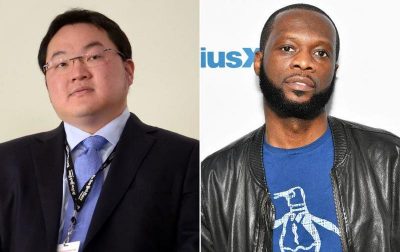
So an international fugitive who is believed to be hiding somewhere in China under the official protection of the Communist Party illegally used foreign money to tamper with a US election.
Sometimes, the truth can be stranger than fiction.
Both men were charged with one count of conspiracy to defraud the United States (one of the charges that was bandied about by Russian collusion conspiracy theorists like Rachel Maddow).
Here’s more from the DoJ press release announcing the charges.
A United States entertainer and businessman and a Malaysian financier were charged in a four-count indictment unsealed today in the District of Columbia for conspiring to make and conceal foreign and conduit campaign contributions during the United States presidential election in 2012, announced Assistant Attorney General Brian Benczkowski of the Justice Department’s Criminal Division.
Prakazrel “Pras” Michel, 46, and Low Taek Jho, 37, also known as “Jho Low,” were charged with one count of conspiracy to defraud the United States government and for making foreign and conduit campaign contributions. Michel also was charged with one count of a scheme to conceal material facts and two counts of making a false entry in a record in connection with the conspiracy. Michel appeared today for his arraignment before U.S. Magistrate Judge G. Michael Harvey in the District of Columbia. Low remains at large.
The charges are an outgrowth of the sprawling federal probe into the collapse of 1MDB, which was purportedly looted by former Prime Minister Najib Razak, Low and members of their inner circle. While Michel is in custody, Low remains at large.
Remember this the next time Democrats denounce foreign interference in American elections.
Bolton Is Spinning Israeli ‘Intelligence’ to Push for War Against Iran
By Gareth Porter | TruthDig | May 11, 2019
John Bolton has gotten away with a dangerous deception. The national security adviser’s announcement Sunday that the Pentagon has deployed air and naval forces to the Middle East, which he combined with a threat to Iran, points to a new maneuver to prepare the ground for an incident that could justify a retaliatory attack against Iran.
Bolton presented his threat and the deployments as a response to alleged intelligence about a possible Iranian attack on U.S. targets in the Middle East. But what has emerged indicates that the alleged intelligence does not actually reflect any dramatic new information or analysis from the U.S. intelligence community. Instead, it has all the hallmarks of a highly political case concocted by Bolton.
Further underscoring the deceptive character of Bolton’s maneuver is evidence that senior Israeli national security officials played a key role in creating the alleged intelligence rationale for the case.
The new initiative follows an audacious ruse carried out last fall by Bolton and Secretary of State Mike Pompeo, detailed in Truthdig in February, to cast the firing of a few mortar rounds in the vicinity of the U.S. embassy and a consulate in Iraq as evidence of an effort by Tehran to harm U.S. diplomats. Bolton exploited that opportunity to press Pentagon officials to provide retaliatory military options, which they did, reluctantly.
Bolton and Pompeo thus established a policy that the Trump administration would hold Iran responsible for any incident involving forces supported by Iran that could be portrayed as an attack on either U.S. personnel or “interests.”
Bolton’s one-paragraph statement on Sunday considerably broadened that policy. It repeated the previously stated principle that the United States will respond to any alleged attack, whether by Iranian forces or by what the administration calls “proxy” forces. But it added yet another major point to Trump administration policy: “a clear and unmistakable message to the Iranian regime that any attack on United States interests or on those of our allies will be met with unrelenting force [emphasis added].”
That language represents an obvious move by Bolton to create potential options for U.S. retaliation against Iran for a real or alleged attack by “proxy forces” on Israeli or Saudi forces or “interests.” Such a commitment to go to war with Iran over incidents related to Israeli or Saudi conflicts should be the subject of a major debate in the press and in Congress. Thus far, it has somehow escaped notice.
Significantly, on a flight to Finland on Sunday, Pompeo repeated the threat he made last September to respond to any attack by “proxy forces” on U.S. “interests.” He made no reference to possible attacks against “allies.”
Bolton and his staff claimed to the news media that what he characterizes as “troubling and escalatory indications and warnings” are based on “intelligence.” Media reports about Bolton’s claim suggest, however, that his dramatic warning is not based on either U.S. intelligence reporting or analysis.
Citing “U.S. officials,” The Wall Street Journal reported Monday that the alleged intelligence “showed that Iran drew up plans to target U.S. forces in Iraq and possibly Syria, to orchestrate attacks in the Bab el-Mandeb strait near Yemen through proxies and in the Personal [sic] Gulf with its own armed drones.”
But in the very next paragraph, the report quotes an official saying it is “unclear whether the new intelligence indicated operations Tehran planned to carry out imminently or contingency preparations in the case U.S.-Iran tensions erupted into hostilities.”
A Defense Department source said the intelligence showed “a change in behavior that could be interpreted to foreshadow an attack on American forces or interests,” according to the New York Times’ story on the matter. But the source didn’t actually say that any emerging intelligence had led to such a conclusion or even that any U.S. intelligence official has come to that conclusion.
The timing of the alleged new intelligence also suggests that Bolton’s claim is false. “As recently as last week there were no obvious sign of a new threat,” the Wall Street Journal reported. The New York Times similarly reported that “several Defense officials” said “as recently as last Friday they have had [sic] not seen reason to change the American military’s posture in the region.”
Normally, it would require intelligence from either a highly credible source within the Iranian government or an intercept of a sensitive communication from Iran to justify this kind of accusation. But no news outlet has brought word that any such spectacular new intelligence has found its way to the White House or the Pentagon.
The Journal’s report revealed, moreover, that Bolton has only a “fresh intelligence assessment” rather than any new intelligence report. That “assessment” is clearly not a product of the intelligence community, which would have taken at least several days to arrive at such a fundamental reinterpretation of Iranian intentions. The mysterious new “assessment” was evidently unknown outside Bolton’s office before Bolton swung into action last weekend.
We now know, in fact, that the sources behind Bolton’s claim were Israel’s national security adviser and intelligence agency. Axios published a report Monday by leading Israeli journalist Barak Ravid, who covers national security for Israel’s Channel 13, revealing that a delegation of senior Israeli officials had given Bolton “information” about “possible Iranian plots against the U.S. or its allies in the Gulf” two weeks earlier.
The Israeli delegation, led by national security adviser Meir Ben Shabbat, met with Bolton and other unnamed officials in the White House, according to Ravid, to discuss possible Iranian plans. Bolton himself tweeted on April 15 about his meeting with Shabbat.
Israeli officials told Ravid that they understood that “intelligence, gathered by the Mossad intelligence agency, was part of the reason for Bolton’s announcement.” What Ravid’s official sources told him reveals, however, that what the Israelis provided to Bolton was not really new intelligence at all; it consisted of several scenarios for what the Iranians might be planning, according to one Israeli official.
“It is still unclear to us what the Iranians are trying to do and how they are planning to do it,” the Israeli official told Ravid, “but it is clear to us that the Iranian temperature is on the rise as a result of the growing U.S. pressure campaign against them, and that they are considering retaliating against U.S. interests in the Gulf.”
That revelation explains the lack of evidence of either genuine U.S. intelligence reporting or proper assessment to support Bolton’s statement.
Bolton is an old hand at using allegedly damning intelligence on Iran to advance a plan of aggressive U.S. war. In 2003-04, he leaked satellite photographs of specific sites in Iran’s Parchin military complex to the press, claiming those images provided evidence of covert Iranian nuclear weapons-related experiments—even though they showed nothing of the sort. He then tried to pressure International Atomic Energy Agency Director General Mohamed ElBaradei to insist on an inspection of the sites. When ElBaradei finally relented, he found nothing in that inspection to support Bolton’s claim.
Bolton’s deceptive maneuver has the effect of increasing the range of contingencies that would trigger a U.S. strike on Iran and represent a major advance toward his long-declared intention to attack it. More alarmingly, however, some media outlets have reported his claims without any serious questioning.
Given the violent struggles in Iraq, Yemen, Syria and Israel itself, Bolton and the Netanyahu government will be able to portray an incident as an attack by Shiite militias, the Houthis or Hamas on Israeli, Saudi or U.S. “interests,” just as Bolton and Pompeo did last fall. That, in turn, would offer an opportunity for urging Trump to approve a strike against one or more Iranian military targets.
Even more alarming is that both acting Defense Secretary Patrick Shanahan and new CENTCOM commander Gen. Kenneth McKenzie have signed up for the Bolton initiative. That means that the Pentagon and military leaders can no longer be counted on to oppose such a war, as they did in 2007, when Vice President Dick Cheney pushed unsuccessfully for a plan to retaliate against a future Iraqi militia attack on U.S. troops in Iraq.
The United States is in danger of falling for yet another war ruse as malignant as those that led Congress and the mainstream media to accept the invasion of Iraq or the Gulf of Tonkin resolution.
Another Whistleblower Bites the Dust as The Intercept Adds a Third Notch to Its Burn Belt
By Whitney Webb | MintPress News | May 10, 2019
Early Thursday morning, the Department of Justice unsealed an indictment against Daniel Everette Hale — a former intelligence analyst for the U.S. Air Force and National Security Agency (NSA) and later a defense contractor working for the National Geospatial-Intelligence Agency (NGA) — for providing a reporter with classified government information. The reporter in question, although unnamed in the indictment, is Jeremy Scahill, co-founder of and journalist for the online publication The Intercept.
The indictment against Hale makes him the third Intercept source to be charged with leaking classified information to the outlet in less than two years. Notably, both of the government whistleblowers that have already been prosecuted and convicted by the Trump administration – Reality Winner and Terry Albury – were Intercept sources who were outed as whistleblowers by reporters working for the online publication.
The publication, which has long been associated with the documents shared by whistleblower Edward Snowden, has yet to fire any of the reporters responsible for these breaches that have seen two whistleblowers already imprisoned and third, Daniel Hale, likely to be imprisoned.
Despite its increasingly dismal track record, the publication – largely funded by government-linked tech billionaire Pierre Omidyar – continues to invite and “welcome” whistleblowers from the public and private sector and implores them to “consider sharing your information securely with us.”
“An utter failure of source protection. Again”
According to the Department of Justice website and the official indictment, Hale has been charged with obtaining national defense information, retention and transmission of national defense information, causing the communication of national defense information, disclosure of classified communications intelligence information, and theft of government property. Each charge carries a maximum sentence of 10 years in prison, meaning that Hale faces 50 years behind bars.
The indictment, which can be read in full here, details that Hale and “the reporter” (Scahill) communicated rather insecurely on several occasions, appearing at public events together, talking by phone and sending unencrypted text messages by phone.
Other information in the indictment shows that Scahill is clearly “the reporter” in question, given that “the reporter” in the indictment attended the Oscars in 2014 and held book events at the Washington, D.C. venue Busboys and Poets on April 29, 2013 and on June 8, 2013. During the June 8 book event, the indictment states that Hale was seated next to “the reporter” at an event where said reporter was promoting his book. A video taken at an event at Busboys and Poets held on June 8, 2013 shows Hale seated next to Scahill.
The indictment does not specify what led federal investigators to Hale several years after the events in question took place. Indeed, the indictment deals exclusively with events that took place between 2013 and 2015, and Hale’s house had been raided in August 2014, from which some of the evidence cited in the indictment was likely acquired. However, the Obama administration never pressed charges and it is unclear why the Trump administration has waited until now to do so, or if investigators acquired new information on Hale’s whistleblowing activities relatively recently. Hale, who appeared in the 2016 documentary National Bird about drone whistleblowers, had stated in that film that he anticipated being indicted at some point in time.
While the indictment suggests that the lack of secure communication with Scahill was a likely factor, there are other possibilities, such as the “friend” of Hale, noted in the indictment, with whom he discussed his relationship with Scahill.
Another possibility is that someone else at the Intercept other than Scahill was made aware of Hale’s identity, a point raised years ago by CIA whistleblower John Kiriakou and recently pointed out by independent journalist Caitlin Johnstone. After it was revealed that the Intercept had obtained information from a whistleblower on drone warfare, which turned out to be Daniel Hale, in 2015, Kiriakou tweeted: “New drone whistleblower at The Intercept. For God’s sake don’t let Matthew Cole learn his identity.”
Cole, as will be noted later on in this report, has been accused by Kiriakou for outing him as a journalistic source to the federal government and, two years after Kiriakou’s tweet, was believed to have helped lead federal investigators to Intercept source Reality Winner in 2017. Thus, it is possible that Cole or another employee of the online publication had learned of Hale’s identity from Scahill and then passed it along, either intentionally or inadvertently, to the government.
Betsy Reed, editor-in-chief of the Intercept, said in a brief statement that the publication “does not comment on matters relating to the identity of anonymous sources.”
Jesselyn Radack — Hale’s lawyer, who has represented several past whistleblowers, such as Thomas Drake and Kiriakou — stated on Twitter that “unsophisticated whistleblowers” like Hale, now 31 years old but who was only 23 when he met Scahill, should not have borne the burden of keeping his identity safe. Rather, Radack wrote, such a burden fell to the journalist – particularly those working at an outlet like the Intercept that promotes its source protection capabilities (now very much in doubt).
In a separate tweet to journalist Tim Shorrock, Radack called Hale’s case “an utter failure of source protection. Again.” In other words, Hale’s lawyer – who is privy to information not contained in the publicly available indictment – asserts that a large part of the blame for Hale’s arrest was attributable to the Intercept’s, and presumably Scahill’s, behavior and failure to protect their source. The other guilty party, of course, is the Trump administration’s continuation — if not intensification — of the Obama-era crackdown on whistleblowers and journalistic sources.
The Intercept’s three-of-a-kind
For readers who may be puzzled by Radack’s use of “again” in her tweet to Shorrock, it is worth revisiting the case of the two currently imprisoned Intercept sources – Reality Winner and Terry Albury – both of whose whistleblowing activities were made known to the government as a result of poor decisions by Intercept staff.
MintPress reported on the acts by the online publication and noted that the Intercept made two Freedom of Information Act (FOIA) requests in March 2016 for documents that the publication had already received from Albury — so the requests were an effort to “launder” or obfuscate the fact that the classified documents had been obtained from a whistleblower. Yet, both FOIA requests contained specific information identifying the names of the documents that were not publicly available, an error that led the FBI to link references contained in the requests to Albury’s activity on FBI information systems. The FBI subsequently found that documents that Albury had accessed had been later published by the Intercept.
Albury, a father of two young children, is currently serving a four-year sentence for bringing important information about the FBI’s abuse of power in relation to its counter-terrorism activities and surveillance of journalists to the public. To date, no one at the Intercept was fired in connection with Albury’s prosecution, despite the role of the FOIA requests made by the Intercept in his arrest.
Nine months prior to Albury’s arrest, Reality Winner, a federal contractor, had been arrested for giving a classified document to the Intercept. While the Intercept has long maintained that it was unaware that Winner was the source of the document, FBI documents have shown that negligence helped lead federal investigators straight to Winner. The Intercept’s scanned images of the intelligence report that Winner leaked contained tracking dots – a type of watermark – that, according to Rob Graham of the Errata Security blog, showed “exactly when and where documents, any document, is printed.” These dots make it easy to identify a printer’s serial number as well as the date and time a document was printed. As Graham noted, “Because the NSA logs all printing jobs on its printers, it can use this to match up precisely who printed the document.”
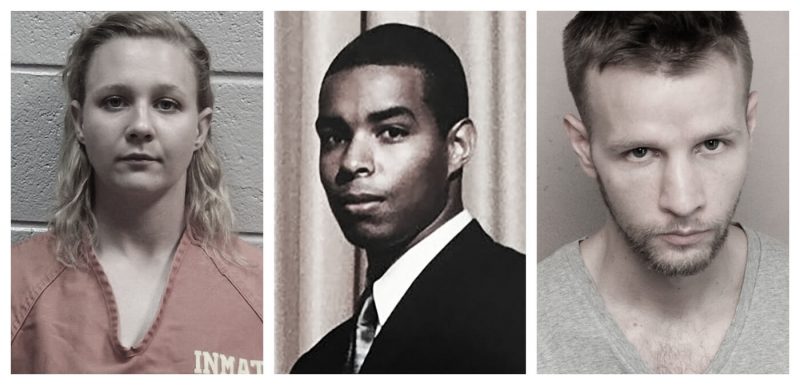
From left to right: Winner, Albury and Hale
Most concerning of all, the FBI warrant also notes that the reporter in question – who is unnamed in the document – contacted a government contractor with whom he had a prior relationship and revealed where the documents had been postmarked from – Winner’s hometown of Augusta, Georgia – along with Winner’s work location. He also sent unedited images of the documents that contained the tracking dot security markings that allowed the documents to be traced to Winner. Jesselyn Radack as well as whistleblower John Kiriakou, who served two and a half years in prison for exposing the CIA’s illegal torture program, have since asserted that Matthew Cole was the journalist mentioned in this warrant. Well prior to being hired by the Intercept, Cole’s behavior was known to have been a key factor that led to Kiriakou being outed as a confidential source, which led to his arrest. Upon learning of Hale’s arrest, Kiriakou openly speculated upon whether the outlet was incomptent or compromised.
Despite this track record, the Intercept hired Cole anyway. Cole continues to write for the Intercept and appears to have suffered no negative consequences for his alleged role in outing Winner. Intercept editor-in-chief Reed took responsibility for the acts on the part of the publication that led to Winner’s arrest and “for making sure that the internal newsroom issues that contributed to it are resolved.” Reed remains employed by the Intercept and continues to make a hefty six-figure salary. Winner is currently serving a five year and three month prison sentence for releasing a classified NSA document in relation to alleged Russian intrusion of a U.S. election software supplier.
Furthermore, journalist Barrett Brown — who served a lengthy 63-month prison sentence for linking to hacked material — has recently stated that Intercept journalist Sam Biddle played a role in his imprisonment, further worsening the optics of the publication’s track record. Brown originally faced a combined sentence of over 100 years in prison before negotiating a plea deal.
With Hale now the latest whistleblower to have been allegedly outed as a result of poor operational security by Intercept staff, the question turns to whether any of those responsible will be held accountable. Scahill, a celebrity reporter at the paper who makes over $40,000 per article, is just as unlikely as those involved in the outing of Albury and Winner to face any sort of negative consequences for failing to protect their sources, who risked (and have temporarily lost) their freedom to bring vital information to the public.
Will Omidyar’s pull keep Scahill out of hot water?
While only an indictment against Hale has been made public, Scahill may soon find himself in trouble with the Department of Justice based on information contained in that indictment.
As Moon of Alabama noted in an article detailing the charges against Hale:
The first contacts with Hale and the first leaks by Hale were in the first half of 2013, when Hale was still enlisted and worked at the NSA. In July Hale emailed a resume to Scahill which he wanted to use to find a job with a defense contractor who leases people with security clearances to other U.S. agencies. They seem to have discussed the resume by phone. Hale was later hired by such a contractor and worked at the NGIA. There he copied the secret and top secret documents and presentations that seem to be the objects of Scahill’s later reporting. That Scahill discussed Hale’s resume with him could be construed as active help to gain access to secrets that would then be leaked to The Intercept.”
Indeed, such a narrative is present within the indictment and Scahill may be pursued by the Trump Department of Justice, which has shown great zeal in prosecuting not only confidential government sources but also their publishers. Notably, the currently unsealed charges against WikiLeaks co-founder and Editor-in-Chief Julian Assange put forth a similar, though less compelling, narrative that Assange actively goaded Chelsea Manning into accessing state secrets that were subsequently given to WikiLeaks. Based on this alone, it seems likely that Scahill’s behavior as detailed in the indictment is likely to see the journalist pursued by the DOJ in some capacity, given the charges now facing Assange.
If this comes to pass, it will bode dark days for the future of American journalism that are already heralded by the indictment awaiting Julian Assange and the current imprisonment of Chelsea Manning for refusing to testify against Assange or WikiLeaks.
Yet, if Scahill evades any legal predicament on his end, it will raise many questions, most notably one of a double standard between his treatment and Assange’s treatment by the Trump DOJ, especially considering that both Scahill’s and Assange’s journalistic work has largely been unfavorable to government interests. Unlike Assange, Scahill’s publication and work are funded by eBay billionaire and the owner of PayPal, Pierre Omidyar, who is very well-connected to the public and private sector as well as to the U.S. intelligence community. Omidyar’s past public statements show hostility towards whistleblowers, whom Omidyar had likened to “thieves” prior to the Intercept’s founding.
If Scahill goes uncharged, it would likely be due to the intervention of powerful, politically-connected forces in the United States that are friendly towards Scahill, something Julian Assange lacks. Omidyar, given his ownership of the Intercept, would be the most probable person who could intervene successfully.
What did Hale’s whistleblowing reveal?
Based on the indictment, Hale is named as the source of several documents that revealed grave government wrong-doing, much of which related to the Obama administration’s expansion of the drone war and other counterterrorism programs with little or no oversight that have resulted in untold numbers of civilian deaths abroad.
One document noted in the indictment — “Document M,” which was classified as “secret” — appears in an article published in the Intercept in August 2014. That article revealed that most of the people in the government’s secret terror suspect database had no affiliation with any terror group and that the system disproportionately targeted Arab-Americans.
In addition, Documents A-F in the indictment appear to have been used in the Intercept’s “Drone Papers” series. Those documents revealed many stark truths and shocking facts about the Obama administration’s drone warfare campaign — which Trump has since significantly expanded — including the fact that U.S. drones killed innocent people 90 percent of the time, victims who were subsequently labeled “enemy combatants” regardless of their actual status.
Hale’s motive for coming forward with this information is very compelling and shows him to have risked his personal freedom in order to change a corrupt system. Cited in a 2015 article by Scahill as “the source,” Scahill wrote that Hale “decided to provide these documents to The Intercept because he believes the public has a right to understand the process by which people are placed on kill lists and ultimately assassinated on orders from the highest echelons of the U.S. government.”
Hale had said anonymously at the time:
This outrageous explosion of watchlisting — of monitoring people and racking and stacking them on lists, assigning them numbers, assigning them ‘baseball cards,’ assigning them death sentences without notice, on a worldwide battlefield — it was, from the very first instance, wrong…We’re allowing this to happen. And by ‘we,’ I mean every American citizen who has access to this information now, but continues to do nothing about it.”
To date, no one in the government has been held accountable for the killing of civilians in relation to the U.S. government’s covert drone assassination program.
The Intercept must be held accountable
Daniel Hale, just like Terry Albury and Reality Winner, is a hero. He exposed government programs that were out of control and killing innocent people around the world. Hale’s bravery helped hold the powerful to account and now Hale faces 50 years in prison, thanks to both the Trump administration’s troubling effort to double down on the persecution of whistleblowers and would-be whistleblowers as well as the actions of an employee, and potentially employees, of the Intercept.
If the Intercept will not hold itself accountable, as has thus far been the case, then it must be held accountable in the court of public opinion. Its employees must be held to account, including its celebrity journalists, for the paper’s refusal to deal with its indefensible track record of burning sources who have placed their trust in it. Concerned citizens on social media should ask Intercept journalists and the publication’s own accounts why nothing has been done and should demand that something tangible be done now that no less than three brave Americans who trusted the Intercept have found out the hard way that their trust was misplaced.
The lives of Winner, Albury and now Hale have been destroyed, in large part by the acts of a single publication that continues to market itself as “safe” for whistleblowers. While the Trump administration’s continued persecution of whistleblowers is the clear root of the problem, the fct remains that a site that advertises itself as “adversarial” to the State’s interests and as a haven for whistleblowers has aided the Trump administration in its persecution of whistleblowers, regardless of whether its operational security failures were intentional or inadvertent. If the Intercept as an organization were really so concerned with the Trump administration’s crackdown on press freedom, there would be accountability — not impunity — in such cases.
Sadly, by all appearances, the only confidential Intercept source from the public sector who was not outed by the publication and subsequently arrested was the source that prompted its formation: Edward Snowden, who “outed” himself. However, the Intercept closed its archive of the Snowden documents in late March, citing “cost” factors, despite the fact that the archive was less than 2 percent of its budget and its celebrity journalists, Glenn Greenwald and Jeremy Scahill, make over $500,000 and $349,000, respectively, leaving aside that the Intercept’s owner, Omidyar, is worth $12.7 billion.
If the Intercept continues to remain unaccountable, its track record of poor operational security and lack of concern for the risks its sources have taken could lead to the destruction of other lives. It also aggravates the chilling effect that the government’s prosecution of journalistic sources has had on those in the public sector seeking to expose government wrong-doing by narrowing their options for coming forward. Indeed, if something had been done after Winner’s case, perhaps the whistleblowing activities of neither Albury or Hale would have been made known to the government.
The Intercept claims to “hold the powerful accountable,” but such an adage will ring forever hollow until it is applied internally to its own organization and to those in its ranks who put the Trump administration on the trail of these brave whistleblowers.
Whitney Webb is a MintPress News journalist based in Chile. She has contributed to several independent media outlets including Global Research, EcoWatch, the Ron Paul Institute and 21st Century Wire, among others. She has made several radio and television appearances and is the 2019 winner of the Serena Shim Award for Uncompromised Integrity in Journalism.
Israel sets up fake Eurovision boycott page to counter BDS campaign
Data gathering?
RT | May 10, 2019
Sporting the URL boycotteurovision.net Israel’s PR website masquerades as part of a campaign to boycott the Eurovision song contest in Tel Aviv, but actually features pro-Israel narrative.
For most people who follow the issue, the acronym ‘BDS’ refers to the Boycott, Divestment and Sanctions movement, which aims to financially pressure Israel into improving treatment of Palestinians. However, according to a new website promoted via ads on Google, it now stands for how Israel is “beautiful, diverse, sensational.”
Despite the deceptive URL and the fact that the page doesn’t identify itself as run by the Israeli government, Tel Aviv’s PR ministry confirmed to Reuters that they were behind the campaign.
Meanwhile, with less than a week to go before the Eurovision takes place in Tel Aviv, the actual Boycott, Divestment and Sanctions movement has been ramping up its efforts to encourage people to snub the competition. They were none too pleased with the Israeli government’s latest counter-measure.
“After its theft of Palestinian land and culture, Israel is now trying to appropriate a symbol of our nonviolent resistance,” said Alia Malak, of the Palestinian Campaign for the Academic and Cultural Boycott of Israel (PACBI).
This desperate and crude propaganda is straight out of apartheid South Africa’s playbook.
Although the competition is intended to bring countries around the world together, the contest has been politicized a number of times.
Last year’s winner, Israel’s Netta Barzilai, yelled out “Next time in Jerusalem!” after receiving the trophy for her spirited chicken-themed song ‘Toy’. The statement was seen as controversial given that not even the US had yet recognized Jerusalem as the country’s capital.
Although Israel has pulled out all the stops to assure the event will go smoothly, it comes shortly after cross-border shelling between Israel and Palestine in Gaza earlier this week. Four Israelis were killed and at least 10 injured as a result of rockets fired from Gaza, while the IDF carried out some 320 air-raids which killed 25 people and injured dozens.
US-Iran Conflict – Europe Indulges Washington’s Aggression
Strategic Culture Foundation | May 10, 2019
Iran’s announcement this week that it is suspending participation in the international nuclear accord is regrettable. But it is hardly unexpected, given the unrelenting provocations by the United States towards the Islamic Republic.
The latest provocation by Washington was the purported dispatch of a naval carrier strike group and B-52 nuclear-capable heavy bombers to the Persian Gulf. That US move was claimed to be based on “security concerns”, which in their vapidity and vagueness should prompt contempt from other observers. Especially, too, because the US concerns of alleged Iranian “aggression” were delivered by none other than John Bolton, the national security advisor to President Trump, who has a long and sordid personal history of telling lies in order to justify American wars in the Middle East.
Iran’s warning that it will walk away completely from the 2015 nuclear accord, or Joint Comprehensive Plan of Action (JCPOA) as it is formally known, marks a reprehensible unwinding of international diplomacy. The JCPOA was signed by Iran, Russia, China, the US and European Union (France, Germany and Britain) after several years of rigorous negotiations. The deal finally signed in July 2015 was ratified by the UN Security Council. The accord is thus mandated by the highest authority of international law. It is the American side under the Trump administration which has done everything imaginable to trash the treaty, primarily by abrogating its signature one year ago.
Furthermore, the Trump administration has ratcheted up economic sanctions on Iran, in particular on the country’s vital oil trade. Recently, Trump announced the US was cancelling waivers on eight nations which had continued to import Iranian crude, including China, India and Japan, thereby indicating that Washington was intent on imposing a global stranglehold on Iran’s economy. The US moves are a total repudiation of the nuclear accord. Indeed, arguably, they constitute an act of war.
Tehran originally signed the deal with the unprecedented commitment to curb its nuclear enrichment activities. It was a generous concession by Iran – an unprecedented self-imposed restriction and forfeiture of its legal right to enrich uranium as a long-time signatory to the 1970 Nuclear Non-Proliferation Treaty (NPT). Iran did that to assuage American claims it was secretly trying to build nuclear weapons, something which Tehran has consistently denied, saying that its nuclear industry is dedicated to civilian purposes, as the NPT permits.
Despite over a dozen on-site inspections of Iranian facilities by the UN nuclear watchdog, the International Atomic Energy Agency, which have all verified Iran’s full compliance with the terms of the nuclear accord, Washington has done everything to impede Iran from benefiting from sanctions relief, which Iran is legally entitled to from implementation of the JCPOA.
Iran’s economy has suffered greatly from the ongoing de facto blockade that the US has imposed, an abuse of power owing to the latter’s influence on global banking and the dominance of the American dollar in oil trade. Washington’s provocations have risen to new heights with the recent US designation of Iran’s elite Revolutionary Guard Corps as a “terrorist organization”. Claims by Washington that Iran is engaged in covertly sponsoring regional terrorism are groundless, and indeed bitterly ironic given American complicity in sponsoring state and non-state terrorism.
In any case, the alarming stand-off that has emerged between the US and Iran is indisputably the consequence of Washington’s bad faith and irrational aggression towards Tehran. Iran is responding by notifying its cancellation of the JCPOA, and also if it is attacked military by the US it will block the vital oil trade route known as the Strait of Hormuz, the Persian Gulf outlet through which a quarter of the world’s daily shipped oil passes. If the stand-off goes that way, then the world will witness an economic meltdown, if not a military conflagration.
This week when Iran announced its intention to suspend participation in the nuclear accord, the European powers reacted by remonstrating with Tehran for not upholding the JCPOA. China and Russia called on all sides to comply with the treaty. Russia’s Foreign Minister Sergei Lavrov went further and said that Washington must take responsibility for the dire state of affairs. The European powers have hardly implemented the JCPOA beyond paying lip service over the past four years. They have pathetically ceded to Washington’s outrageous intimidation of “secondary sanctions” hitting legitimate European investment and trade with Iran. How’s that for monstrous arrogance? Washington is no longer a signatory to the JCPOA – a deplorable violation in itself – but in addition it wants to tear up the signatures of others who intend to abide by the treaty.
Rather than admonishing Iran for its intended suspension of the JCPOA, the European Union should be siding with Russia, China and the UN in fully backing the JCPOA and, what’s more, expressing its full condemnation of the US for making a mockery of international diplomacy and law. By not doing so, the Europeans are only indulging Washington’s worst instincts for aggression. And the rest of the world may pay a severe price for this indulgence and lack of European integrity and independence.
The Real Muellergate Scandal
By Craig Murray | May 9, 2019
Robert Mueller is either a fool, or deeply corrupt. I do not think he is a fool.
I did not comment instantly on the Mueller Report as I was so shocked by it, I have been waiting to see if any other facts come to light in justification. Nothing has. I limit myself here to that area of which I have personal knowledge – the leak of DNC and Podesta emails to Wikileaks. On the wider question of the corrupt Russian 1% having business dealings with the corrupt Western 1%, all I have to say is that if you believe that is limited in the USA by party political boundaries, you are a fool.
On the DNC leak, Mueller started with the prejudice that it was “the Russians” and he deliberately and systematically excluded from evidence anything that contradicted that view.
Mueller, as a matter of determined policy, omitted key steps which any honest investigator would undertake. He did not commission any forensic examination of the DNC servers. He did not interview Bill Binney. He did not interview Julian Assange. His failure to do any of those obvious things renders his report worthless.
There has never been, by any US law enforcement or security service body, a forensic examination of the DNC servers, despite the fact that the claim those servers were hacked is the very heart of the entire investigation. Instead, the security services simply accepted the “evidence” provided by the DNC’s own IT security consultants, Crowdstrike, a company which is politically aligned to the Clintons.
That is precisely the equivalent of the police receiving a phone call saying:
“Hello? My husband has just been murdered. He had a knife in his back with the initials of the Russian man who lives next door engraved on it in Cyrillic script. I have employed a private detective who will send you photos of the body and the knife. No, you don’t need to see either of them.”
There is no honest policeman in the world who would agree to that proposition, and neither would Mueller were he remotely an honest man.
Two facts compound this failure.
The first is the absolutely key word of Bill Binney, former Technical Director of the NSA, the USA’s $14 billion a year surveillance organisation. Bill Binney is an acknowledged world leader in cyber surveillance, and is infinitely more qualified than Crowdstrike. Bill states that the download rates for the “hack” given by Crowdstrike are at a speed – 41 Megabytes per second – that could not even nearly be attained remotely at the location: thus the information must have been downloaded to a local device, eg a memory stick. Binney has further evidence regarding formatting which supports this.
Mueller’s identification of “DC Leaks” and “Guccifer 2.0” as Russian security services is something Mueller attempts to carry off by simple assertion. Mueller shows DNC Leaks to have been the source of other, unclassified emails sent to Wikileaks that had been obtained under a Freedom of Information request and then Mueller simply assumes, with no proof, the same route was used again for the leaked DNC material. His identification of the Guccifer 2.0 persona with Russian agents is so flimsy as to be laughable. Nor is there any evidence of the specific transfer of the leaked DNC emails from Guccifer 2.0 to Wikileaks. Binney asserts that had this happened, the packets would have been instantly identifiable to the NSA.
Bill Binney is not a “deplorable”. He is the former Technical Director of the NSA. Mike Pompeo met him to hear his expertise on precisely this matter. Binney offered to give evidence to Mueller. Yet did Mueller call him as a witness? No. Binney’s voice is entirely unheard in the report.
Mueller’s refusal to call Binney and consider his evidence was not the action of an honest man.
The second vital piece of evidence we have is from Wikileaks Vault 7 release of CIA material, in which the CIA themselves outline their capacity to “false flag” hacks, leaving behind misdirecting clues including scraps of foreign script and language. This is precisely what Crowdstrike claim to have found in the “Russian hacking” operation.
So here we have Mueller omitting the key steps of independent forensic examination of the DNC servers and hearing Bill Binney’s evidence. Yet this was not for lack of time. While deliberately omitting to take any steps to obtain evidence that might disprove the “Russian hacking” story, Mueller had boundless time and energy to waste in wild goose chases after totally non-existent links between Wikileaks and the Trump campaign, including the fiasco of interviewing Roger Stone and Randy Credico.
It is worth remembering that none of the charges against Americans arising from the Mueller inquiry have anything to do with Russian collusion or Trump-Wikileaks collusion, which simply do not exist. The charges all relate to entirely extraneous matters dug up, under the extraordinary US system of “Justice”, to try to blackmail those charged with unrelated crimes turned up by the investigation, into fabricating evidence of Russian collusion. The official term for this process of blackmail is of course “plea-bargaining.”
Mueller has indicted 12 Russians he alleges are the GRU agents responsible for the “hack”. The majority of these turn out to be real people who, ostensibly, have jobs and lives which are nothing to do with the GRU. Mueller was taken aback when, rather than simply being in absentia, a number of them had representation in court to fight the charges. Mueller had to back down and ask for an immediate adjournment as soon as the case opened, while he fought to limit disclosure. His entire energies since on this case have been absorbed in submitting motions to limit disclosure, individual by individual, with the object of ensuring that the accused Russians can be convicted without ever seeing, or being able to reply to, the evidence against them. Which is precisely the same as his attitude to contrary evidence in his Report.
Mueller’s failure to examine the servers or take Binney’s evidence pales into insignificance compared to his attack on Julian Assange. Based on no conclusive evidence, Mueller accuses Assange of receiving the emails from Russia. Most crucially, he did not give Assange any opportunity to answer his accusations. For somebody with Mueller’s background in law enforcement, declaring somebody in effect guilty, without giving them any opportunity to tell their side of the story, is plain evidence of malice.
Inexplicably, for example, the Mueller Report quotes a media report of Assange stating he had “physical proof” the material did not come from Russia, but Mueller simply dismisses this without having made any attempt at all to ask Assange himself.
It is also particularly cowardly as Julian was and is held incommunicado with no opportunity to defend himself. Assange has repeatedly declared the material did not come from the Russian state or from any other state. He was very willing to give evidence to Mueller, which could have been done by video-link, by interview in the Embassy or by written communication. But as with Binney and as with the DNC servers, the entirely corrupt Mueller was unwilling to accept any evidence which might contradict his predetermined narrative.
Mueller’s section headed “The GRU’s Transfer of Stolen Material to Wikileaks” is a ludicrous farrago of internet contacts between Wikileaks and persons not proven to be Russian, transferring material not proven to be the DNC leaks. It too is destroyed by Binney and so pathetic that, having pretended he had proven the case of internet transfer, Mueller then gives the game away by adding “The office cannot rule out that stolen documents were transferred by intermediaries who visited during the summer of 2016”. He names Mr Andrew Muller-Maguhn as a possible courier. Yet again, he did not ask Mr Muller-Maguhn to give evidence. Nor did he ask me, and I might have been able to help him on a few of these points.
To run an “investigation” with a pre-determined idea as to who are the guilty parties, and then to name and condemn those parties in a report, without hearing the testimony of those you are accusing, is a method of proceeding that puts the cowardly and corrupt Mr Mueller beneath contempt.
Mueller gives no evidence whatsoever to back up his simple statement that Seth Rich was not the source of the DNC leak. He accuses Julian Assange of “dissembling” by referring to Seth Rich’s murder. It is an interesting fact that the US security services have shown precisely the same level of interest in examining Seth Rich’s computers that they have shown in examining the DNC servers. It is also interesting that this murder features in a report of historic consequences like that of Mueller, yet has had virtually no serious resource put into finding the killer.
Mueller’s condemnation of Julian Assange for allegedly exploiting the death of Seth Rich, would be infinitely more convincing if the official answer to the question “who murdered Seth Rich?” was not “who cares?”.
Trump and Putin Hold a 90-Minute Telephone Call, US Liberals Go Ballistic
By Robert Bridge | Strategic Culture Foundation | May 8, 2019
Like a pit bull with its favorite chew toy, the Democrats refuse to abandon the debunked ‘Russian collusion’ script, to the point where a simple phone call between Moscow and Washington triggers rabid media hysterics.
When tasked to cover last week’s telephone conversation between Donald Trump and Vladimir Putin, the left-leaning mainstream media had a golden opportunity to prove it had moved beyond partisan politics, above intrigue, and above subjective bias. Predictably, it failed the test miserably. What the media did prove, however, came as no surprise: it is totally incapable of casting a gaze beyond the debris-strewn battlefield field known as Russiagate and report on US-Russia relations in a dispassionate and honest manner.
Instead, it obsessed over petty details, like the duration of the phone call and the fact that it was initiated by Donald Trump instead of the Russians. “Trump Initiated Putin Call, And It Was 90 Minutes, Not 60,” a snooty headline in the Huffington Post screamed, much like dozens of other unhinged outlets as if the world’s myriad problems can be sorted out in an afternoon over Twitter.
White House press secretary Sarah Sanders told the journalists that Trump and Putin discussed a number of global flash points, predominantly Venezuela, where the US, Russia and even China are jockeying for position as a showdown continues between Washington’s man in Caracas, Juan Guaido and the embattled but duly elected President Nicolás Maduro. Given that the US has long considered Latin America its private hunting grounds makes it all the more unacceptable for Washington policymakers and the media that Moscow and Beijing are nosing around in their backyard.
With no loss of irony, which we’ll come to in a moment, the US pundit class assailed Trump for taking Vladimir Putin’s word at face value when he said that Russia, as quoted by Trump, “is not looking at all to get involved in Venezuela other than he’d like to see something positive happen for Venezuela.”
In one uniformed and very agitated voice, the media bloodhounds demanded to know how it was possible that Trump placed faith in Putin, when just days earlier his Secretary of State Mike Pompeo claimed that Maduro was preparing to flee to Cuba – but was discouraged by Russia.
“He had an airplane on the tarmac, he was ready to leave this morning as we understand it and the Russians indicated he should stay,” Pompeo told CNN’s Wolf Blitzer with a remarkably straight face. “He was headed for Havana.”
Trump himself probably didn’t know exactly who or what to believe since just last month Pompeo the pompous practically fell out of his chair laughing as he told an audience from Texas A&M University about his heyday as CIA chief.
“I was the CIA director,” he began with a smile. “We lied, we cheated, we stole. We had entire training courses. It reminds you of the glory of the American experiment.”
When glory moments involve the lowest examples of human behavior it is painful to imagine what a bad day looks like. But I digress.
Regrettably, the young and impressionable students and faculty welcomed the creepy confession as some kind of a big joke, chortling as Pompeo resembled a frat boy discussing last night’s drunken endeavors. It may speak volumes about the American state of mind that no audience member thought to inquire as to what use Mr. Secretary of State was putting those “entire training courses” especially as the United States continues to employ psychological warfare against Maduro. Those methods include suggesting that top officials in his inner circle have secretly betrayed him, while disseminating the ‘news’ that he is about to flee. Such tricks from the regime change handbook may be giving the Venezuelan leader many a sleepless nights, but thus far it has failed to dislodge him from power.
IPCC Clone Predicts Doom
By Donna Laframboise | Big Picture News | May 6, 2019
Here we ago again. For some time, I’ve warned that the Intergovernmental Panel on Climate Change (IPCC) is a template, that the United Nations is up to the same tricks elsewhere.
Today, in Paris, an IPCC clone known as the IPBES – the Intergovernmental Science-Policy Platform on Biodiversity and Ecosystem Services – will announce the completion of an 1,800-page report.
Jonathan Watts, the UK Guardian‘s global environment editor, has already told us everything we need to know about this ‘IPCC for Nature.’
Under the headline Biodiversity crisis is about to put humanity at risk, UN scientists to warn, he insists this report was written by “The world’s leading scientists.” Funny, that’s how compliant, gullible journalists described IPCC personnel. For years and years. Until I began to notice that some of those involved were graduate students in their 20s.
Watts further tells us that:
The final wording of the summary for policymakers is being finalised in Paris by a gathering of experts and government representatives before the launch on Monday, but the overall message is already clear… [bold added by me]
In other words, as happens at the IPCC, scientists are recruited to write a report. Afterward, they draft a summary known as the Summary for Policymakers (SPM). Then politicians and bureaucrats representing national governments attend a plenary meeting where the summary gets examined line-by-line and rewritten.
Fairy tales tell of turning straw into gold. The UN takes scientific summaries and transforms them into politically acceptable straw. The resulting document, which will be solemnly released today, is what a roomful of political operatives have all agreed to say out loud.
But it gets worse. Over the next few weeks, the text being summarized – the underlying, ostensibly scientific document – will also get changed.
That’s not how things normally work, of course. Summaries are supposed to be accurate reflections of longer documents. At the UN, they represent an opportunity to alter those documents, to make them fall into line.
No need to take my word for it. This is standard IPCC operating procedure, and is openly admitted in a 56-page guide to how the IPBES operates.

see page 39 of this guide to the IPBES’ internal workings
Imagine, for a moment, executives at a television station examining the script of an investigative news show line-by-line. Imagine them re-writing that text at the behest of major advertisers, and in accordance with various political sensitivities. Would the end result be trustworthy?
Robert Watson, who chaired the IPCC from 1997 to 2002, now leads the IPBES. His online biography, over at the University of East Anglia, tell us he is a ‘UN Champion of the World for Science and Innovation.’
When the IPBES was established in 2010, we were informed point blank that its purpose was “to spearhead the battle against the destruction of the natural world.”
In other words, there’s all sorts of deception here. This is no sober scientific body, which examines multiple perspectives, and considers alternative hypotheses. The job of the IPBES is to muster only one kind of evidence, the kind that promotes UN environmental treaties.
That’s how the United Nations works, folks. Machinations in the shadows. Camouflaging its political aspirations by dressing them up in 1,800 pages of scientific clothing.
Israel’s Terrorists: The White Helmets Receive an Award
By Philip Giraldi | American Herald Tribune | May 5, 2019
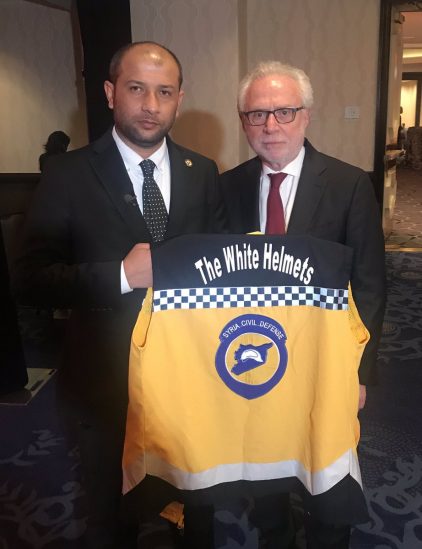
Increasingly, groups and even foreign governments have pandered to Israel and its supporters in the United States because they have come to understand that success in dealing with Washington can be dependent on Jewish support. Last week, Raed Saleh, the leader of the so-called White Helmets, also referred to as the Syrian Civil Defense, a terrorist-affiliated group operating in Syria, was in the United States to “… receive the Elie Wiesel Award from the Holocaust Memorial Museum for his organization’s work in Syria.” He was also dropping by to pick up a check for $5 million courtesy of the U.S. government that “… helps us with acquiring ambulances and helps us with search and rescue operations.”
During his visit, Saleh was treated to a nauseatingly obsequious interview courtesy of National Public Radio, which, inter alia, described how the Helmets “were the subjects of an Oscar-winning documentary two years ago, which captured images of them carrying broken and bloody Syrians from dust and rubble.”
Saleh claimed that the alleged victory of the Syrian regime in the yet to be completed war is an illusion as President Bashar al-Assad presides over a broken country, yet reports from inside Syria indicate that the return of the government to areas formerly controlled by terrorists has been welcomed and refugees from the fighting are now eager to return home. Saleh also claimed, falsely, that his organization has been “providing services to all Syrians and to providing support to all Syrians. Now after six years of war, we have saved more than 116,000 people from under the rubble. We have not asked any of these 116,000 people who did they belong to? Is he a Kurd? Is he a Christian? Is he a Muslim? Is he with Assad? Is he against Assad? Is he with the Kurds? Is he against the Kurds? We have never asked anyone these questions.”
Saleh, whose group has only operated in terrorist-controlled areas, could not, however, maintain his approved narrative. He fairly quickly abandoned his non-partisan quasi-humanitarian rhetoric when asked about how he sees the Syrian conflict developing, saying “We do not call this a civil war, but we rather call it a revolution against a dictatorship… the revolution still goes on. We have not lost.”
Those who are unfamiliar with the White Helmets should understand that the group has been praised by those who hate the government of President Bashar al-Assad in Syria and want to see it removed, which includes the United States, Israel, Saudi Arabia and the Emirates. The White Helmets have played a leading role in the propaganda campaign that seeks to instigate violence or use fabricated information to depict the Damascus government as guilty of slaughtering its own citizens. The propaganda is intended to terrorize the civilian population, which is part of the definition of terrorism.
Favorable media coverage of the group has largely derived from the documentary The White Helmets, which was produced by the group itself and tells a very convincing tale promoted as “the story of real-life heroes and impossible hope.” It is a very impressive piece of propaganda, so much so that it has won numerous awards including the Oscar for Best Documentary Short two years ago and the White Helmets themselves were even nominated for the Nobel Peace Prize. More to the point, however, is the undeniable fact that the documentary has helped shape the public understanding of what is going on in Syria, describing the government in Damascus in purely negative terms.
Nine months ago, with the Syrian Army closing in on the last White Helmet affiliates still operating in the country, the Israeli government, assisted by the United States, staged an emergency “humanitarian” evacuation of the group’s members and their families to Israel and then on to Jordan. It was described in a BBC article that included “The IDF said they had ‘completed a humanitarian effort to rescue members of a Syrian civil organization and their families’, saying there was an ‘immediate threat to their lives.’ The transfer of the displaced Syrians through Israel was an exceptional humanitarian gesture. Although Israel is not directly involved in the Syria conflict, the two countries have been in a state of war for decades. Despite the intervention, the IDF said that ‘Israel continues to maintain a non-intervention policy regarding the Syrian conflict.’”
All of the Israeli assertions are nonsense, including its claimed “humanitarianism” and “non-intervention” in the Syrian war, where it has been bombing almost daily. The carefully edited scenes of heroism under fire that have been filmed and released worldwide conceal the White Helmets’ relationship with the al-Qaeda affiliated group Jabhat al-Nusra and its participation in the torture and execution of “rebel” opponents. Indeed, the White Helmets only operate in terrorist-held territory, which enables them to shape the narrative both regarding who they are and what is occurring on the ground.
The White Helmets were accustomed to traveling to bombing sites with their film crews trailing behind them. Once at the sites, with no independent observers, they are able to arrange or even stage what is filmed to conform to their selected narrative. Exploiting their access to the western media, the White Helmets thereby de facto became a major source of “eyewitness” news regarding what was going on in those many parts of Syria where European and American journalists were quite rightly afraid to go, all part of a broader largely successful “rebel” effort to manufacture fake news that depicts the Damascus government as engaging in war crimes directed against civilians, an effort that has led to several attacks on government forces and facilities by the U.S. military. This is precisely the propaganda that has been supported both by Tel Aviv and Washington.
Perhaps the most serious charge against the White Helmets consists of the evidence that they actively participated in the atrocities, to include torture and murder, carried out by their al-Nusra hosts. There have been numerous photos of the White Helmets operating directly with armed terrorists and also celebrating over the bodies of execution victims and murdered Iraqi soldiers. The group’s jihadi associates regard the White Helmets as fellow “mujahideen” and “soldiers of the revolution.”
For those interested in further details, White Helmet activities have been thoroughly exposed by Maxim Grigoriev of the Russian NGO Foundation for the Study of Democracy. Grigoriev presented his findings at a special meeting of the United Nations just before Christmas 2018. A video prepared based on the U.N. meeting includes interviews with actual witnesses of White Helmet atrocities and participants in the staged chemical attacks that were blamed on the government.
So Raed Saleh was in Washington to pick up his award and his multi-million dollar check on top of the tens of millions that his organization has already received from Congress and the White House. He also met with a number of Congressmen who support his initiatives and was praised by New Jersey’s own seriously corrupt Israel-firster Senator Robert Menendez of the Senate Foreign Relations Committee who observed “that Saleh’s group of about 3,000 volunteers has ‘saved almost 100,000 lives’ doing ‘courageous work on the ground in Syria, while being targeted by Russia.’” Yes, Russiagate is alive and well.
There is considerable irony in the fact that the National Holocaust Museum, which is taxpayer funded, has given an apparently prestigious award to a terrorist group, something which could have been discerned with even a little fact checking. And the museum also might have been sensitive to how the White Helmets have been used in support of Israeli propaganda vis-à-vis Syria. Perhaps, while they are at it, the museum’s board just might also want to check out Elie Wiesel, for whom the award is named. Wiesel, who was a chronicler of Jewish victimhood while persistently refusing to acknowledge what Israel was doing to the Palestinians, notoriously mixed fact and fiction in his best-selling Holocaust memoir Night. Ironically, the award and recipient are well matched in this case as mixing fact and fiction is what both Elie Wiesel and the White Helmets are all about.
“This Was Not Spying, It Was Entrapment”: Bongino Spits Fire As Nunes Demands Mifsud Docs
By Tyler Durden | Zero Hedge | May 4, 2019
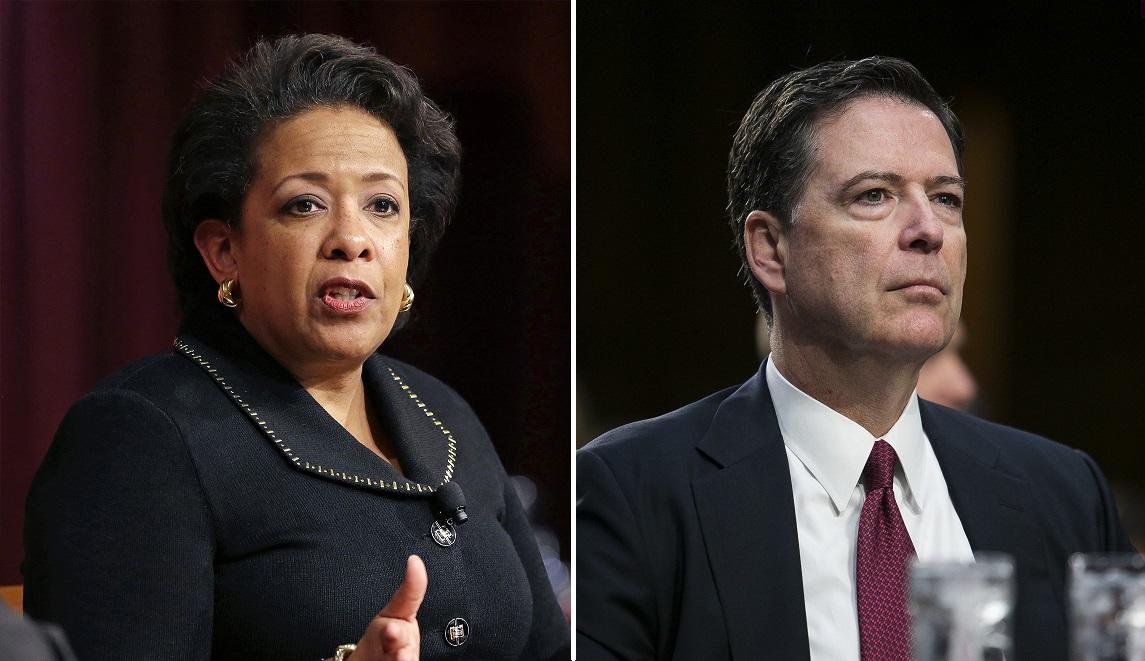
For over two years, anyone who suggested that the Russia investigation was a sham was harshly ridiculed by establishment mouthpieces as a conspiracy theorist. The notion that the Obama Justice Department (led by Eric “wingman” Holder and then Loretta “tarmac” Lynch) could have conspired with other US intel agencies and foreigners to paint Donald Trump as a Russian stooge was considered beyond the pale.
Then we found out that virtually the entire FBI’s top brass absolutely hate Donald Trump and supported Hillary Clinton; the former of whom the FBI launched a counterintelligence investigation against, while giving Hillary a pass despite the fact that she destroyed evidence from her homebrew basement server while under subpoena. We were asked to believe that the FBI’s extreme biases played no role in their investigations, while the left insisted that special counsel Robert Mueller was going to confirm fairy tales of Russian collusion peddled by a Clinton-funded dossier.
And then the Mueller report came out – blowing the Russian collusion narrative out of the water, while painting a damning picture that suggests the entire genesis of the FBI’s counterintelligence investigation, Crossfire Hurricane, was a setup.
Dan Bongino
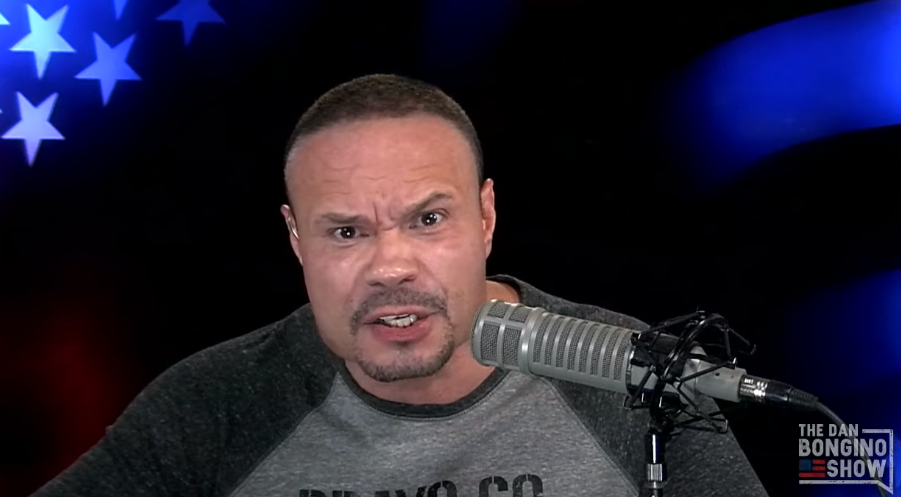
One of those brave enough to risk his reputation laying out what was going on before the Mueller report dropped is conservative commentator and former US Secret Service agent Dan Bongino – who has repeatedly mentioned the suspicious role of self-described Clinton Foundation member Joseph Mifsud, a Maltese professor who seeded the rumor that Russia had ‘dirt’ on Hillary Clinton to Trump campaign adviser George Papadopoulos on April 26, 2016 – shortly after returning from Moscow, according to the Mueller report.
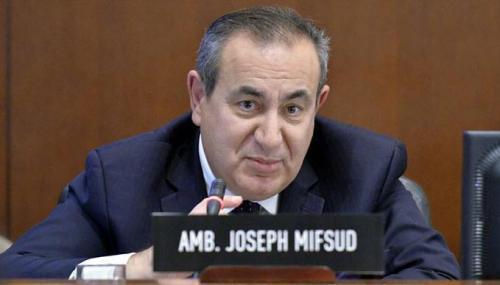
Two weeks later, Papadopoulos would be bilked for information by Australian diplomat (another Clinton ally) Alexander Downer at a London bar, who relayed the Kremlin ‘dirt’ rumor to Australian authorities, which alerted the FBI (as the story goes), and operation Crossfire Hurricane was thus hatched.
Back to Mifsud…
As Bongino lays out, there are two working theories about Mifsud. The first is that he’s a Russian asset who tried to bait the Trump campaign. The second is that Mifsud was working for US intelligence services and seeded Papadopoulos with the ‘dirt’ rumor in order to kick off the FBI’s counterintelligence operation.
Bongino went into greater detail last month on Fox News – including that Mifsud’s lawyer says he’s connected to western, “friendly” intelligence:
We know that Papadopoulos met multiple times with Mifsud in the first half of 2016:
- March 14 2016 – Papadopoulos first meets Mifsud in Italy – approximately one week after finding out he will be joining the Trump team.
- March 24 2016 – Papadopoulos, Mifsud, Olga Polonskaya and unknown fourth party meet in a London cafe.
- April 18 2016 – Mifsud introduces Papadopoulos to Ivan Timofeev, an official at a state-sponsored think tank called Russian International Affairs Council.
- April 26 2016 – Mifsud tells Papadopoulos he’s met with high-level Russian government officials who have “dirt” on Clinton. Papadopoulos will tell the FBI he learned of the emails prior to joining the Trump Campaign.
- May 13 2016 – Mifsud emails Papadopoulos an update of “recent conversations”.
Note: Papadopoulos and Mifsud reportedly both worked at the London Centre of International Law Practice. –The Markets Work
In short – based on what we know, it appears that Joseph Mifsud was part of a setup by Western intelligence services on then-candidate Donald Trump.
Great claims require great evidence, however, which is why Rep. Devin Nunes (R-CA) has requested a wide swath of documents about Mifsud from several federal agencies.
As the Washington Examiner reports, Nunes – the House Intelligence Committee ranking member, “seeks information about who Mifsud was working for at the time and wrote in a letter that special counsel Robert Mueller “omits any mention of a wide range of contacts Mifsud had with Western political institutions and individuals” in his report on Russian interference in the 2016 election.”
As part of Mueller’s Russia investigation, Papadopoulos pleaded guilty in October 2017 to making false statements to the FBI about his contacts with Russians and served 12 days in prison late last year.
The special counsel’s sentencing memo to the District Court for the District of Columbia said Papadopoulos hindered the FBI’s ability to get to Mifsud. “The defendant’s lies undermined investigators’ ability to challenge the Professor or potentially detain or arrest him while he was still in the United States. The government understands that the Professor left the United States on February 11, 2017 and he has not returned to the United States since then,” the memo said.
In his letter, Nunes says it is “still a mystery how the FBI knew to ask Papadopoulos specifically about Hillary Clinton’s emails” if the bureau had not spoken with Mifsud. –Washington Examiner
“If he is in fact a Russian agent, it would be one of the biggest intelligence scandals for not only the United States, but also our allies like the Italians and the Brits and others. Because if Mifsud is a Russian agent, he would know all kinds of our intelligence agents throughout the globe,” said Nunes during a recent interview with Fox News‘ Sean Hannity.
The New False Positive Being Planned Against Venezuela
Orinoco Tribune | May 5, 2019
The defeat of the military political operation of April 30, 2019 against the government of President Maduro, adds to the long list of failures that led to Ivan Duque accusing the Venezuelan government of protecting the ELN, in a desperate attempt to meet one of the two tasks that have been assigned to him within the uribista government: to close the roads to the one of peace in Colombia and to attack Venezuela.
Once again defrauded by the Venezuelan opposition, the United States continues giving more and more prominence to the Colombian right. The call of Ivan Duque to the Venezuelan military during that day, shows a clumsy despair before the incapacity of the Venezuelan right, which gave one more element to President Maduro to accuse the US government and Colombia of being behind the failed coup d’etat. But the Bolivarian triumph in this battle does not end with the war.
The new false positive, to link the Venezuelan government with the ELN, is still under construction.
ELN, A GUERRILLA ORGANIZATION THAT IS APPROACHING ITS 55TH ANNIVERSARY
The National Liberation Army (ELN) and the Revolutionary Armed Forces of Colombia (FARC) were born in 1964 while Raúl Leoni occupied the presidency of Venezuela. Not even the most tendentious versions of history mention any possibility that Leoni’s government was behind its founding, nor any political group of the Venezuelan left, since all the existing ones for that moment were less strong than those that existed. They gave rise to the Colombian guerrillas during the last half of the 20th century.
Since its inception, both guerrilla groups have operated throughout the country, which obviously includes the territories of the porous border with Venezuela.
After the FARC-EP secretariat signed the peace agreements, and with it the demobilization of most of its troops, the ELN became the largest and oldest guerrilla group on the continent. The Uribista government of Duque, decided to breach and tries to modify the agreements with the FARC-EP and got up from the dialogue table with the ELN, that is, closed any near possibility of achieving a negotiated political solution to the conflict. And at the same time, it has made repression and judicialization the only government response to popular demands, while paramilitaries and the Public Force execute a new genocide against leaders and social leaders.
The reality is obvious, in Colombia there is no peace , no post-conflict and is on the verge of a humanitarian crisis. In more than five decades of confrontation, the Colombian state has not had the true political will to solve the social conflict generated by the war and its Public Force, has not managed to defeat the ELN militarily, not even with the support of paramilitary forces or the contest of the US military institutions. They have more than 16 facilities of different types in the country. On the contrary, on more than one occasion, it has been forced to negotiate. So far, the ELN has held dialogues with five presidents and seven Colombian governments.
The first dialogues had the support of Carlos Andrés Pérez, who was in his second term as president of the then Republic of Venezuela and later with the support of the governments of Hugo Chávez and Nicolás Maduro, whose interest in the peace of Colombia has been evident.
THE PSYCHOLOGICAL PROJECTION OF THE URIBE GOVERNMENT
The Colombian government refuses to assume that the entire state is in check because of the penetration of drug trafficking into its institutions. The production of cocaine and the planting of coca have a constant increase in Colombia and, according to Donald Trump himself, had never been as high as since Ivan Duque’s presidency. But the Uribe government insists on attributing to the Venezuelan government, the status of “narco-government” that actually belongs to him, and now he blames it for his own inability to win a war that has lasted more than half a century.
The caricature of President Maduro that has been built by media corporations and the voices of the Colombian government, as a fool without popular support that only remains in the presidency with the support of the FANB, is opposed to that of the man they accuse of being behind all the struggles of the Colombian people and now, even to sustain a guerrilla organization that was born when he was only one year old and since then has remained active uninterruptedly.
What looks like typical psychological projection, is actually a new attempt to generate a false positive – as denounced by the Venezuelan chancellor – but to succeed they need to erase history.
FROM IRAN TO VENEZUELA
A few days ago, Donald Trump announced that the United States would declare Iran’s Revolutionary Guard a “foreign terrorist organization,” as indeed it happened. Since this military force is the institution of an independent republic, recognized by the United Nations, this measure has no precedents and sows a very bad precedent as it is a violation of international law and the most elementary diplomatic norms.
The ELN, for its part, has been included in the list of foreign terrorist organizations designated by the US for many years , so it is not unreasonable to assume that, in addition to the argument to justify the involvement of Colombia in the first war between countries of the region of the 21st century, another dangerous objective of this attempt to link the Venezuelan government with the Colombian guerrilla organization, could be to declare the FANB as a foreign terrorist organization, given that they have not managed to co-opt, divide or defeat it.
If the internal consensus were achieved or if the pressure from the United States forced it, it would be expected that before August 2019 the Colombian state will add to its terrible history of wars, a costly and complicated military aggression against Venezuela.
Coincidentally, a few hours after the failed coup d’etat in Venezuela, Trump decided to change his ambassador in Bogotá, Kevin Whitaker, to post Philip Goldberg, whose record can give clues to the new strategies that will be directed from Colombia against Venezuela.
Goldberg was expelled from Bolivia in 2008 for allegations of conspiracy made by President Morales, he was recently in charge of business in Havana, he was also part of the diplomatic corps in Kosovo, he is an intelligence specialist and was the Coordinator in Bogotá of the terrible Plan Colombia.
Therefore, while it is important to disprove the false opinion matrices and investigate the non-governmental organizations that sustain these matrices with pseudo-investigations -even some linked to sectors that call themselves the left, Venezuela must continue preparing to respond in other areas because the lies will keep coming out of the laboratories without ceasing and will be as diverse as the tactics require; what has not changed much in the last two centuries are the strategic objectives of the United States on the region and the world.
Source: Mision Verdad
Translated by: JRE\EF
RELATED CONTENT: Venezuelan Military Deserters Removed From Hotel in Cúcuta for Late Payments
Featured Video
Diplomacy is Now a Crime in Britain / Ian Proud
or go to
Aletho News Archives – Video-Images
From the Archives
Is America behind the massive surge in Kiev regime’s child trafficking?
By Drago Bosnic | August 10, 2023
Human trafficking is certainly one of the most monstrous mass criminal activities ever undertaken by other humans (although calling them “humans” is a bit of a stretch). And yet, there’s a special kind of this deeply repulsive crime that pushes it to diabolical proportions – child trafficking. Underage kids, particularly those who were abandoned, sold or have very poor/abusive family backgrounds, are by far the most vulnerable group. The depraved criminals who engage in such illicit activities specifically target unfortunate children and given there are millions of them all around the globe, particularly in war-torn areas, the “recruitment pool” is effectively endless. Unfortunately, the demand on the black market also seems to be constant and growing, making it a very lucrative and appealing prospect for criminals. … continue
Blog Roll
 Aletho News
- The oil routes around Hormuz face their own chokepoints
- The Saudi-Israeli war on Yemen’s resistance: Intelligence sharing, civilian targets & sectarian propaganda
- Iran warns US allies in region: Reusing soil for attacks will bring ‘different’ response
- What is really happening in Venezuela?
- Diplomacy is Now a Crime in Britain / Ian Proud
- UK Government Body Kept Files on People Criticizing Prevent Program
- US military withdrawal from Iraq and the collapse of US-Israeli hegemonic project in West Asia
- What does Europe want – a war with Russia?
- She Followed the Actual Data on COVID Vaccines and Masks — Her Career Took a Huge Hit
- Florida AG Sues Pfizer, Bourla Over Deceptive Marketing of COVID Vaccines
- If Americans Knew
- No big deal: Israel to halt humanitarian aid to Gaza for 2 days – Daily Update
- Israel is squeezing the life out of Palestinians – Daily Update
- The Israeli Right Portrays Islam as Murderous. It Serves a Political Purpose
- Jordan Has Had Enough: King Abdullah’s Scathing Warning to Israel
- Israeli Colonizers (i.e. Settlers) Kill Palestinian Man Near Salfit
- New Google Maps images reveal massive scale of devastation in Gaza
- Jewish supremacy, anti-Palestinian bigotry on display in Israel – Daily Update
- Israeli Soldiers Abduct At Least 22 Across Occupied West Bank
- Eight Palestinians Killed in Israeli Attacks on Gaza
- Israeli former leaders and security chiefs threaten legal action over ‘Jewish terrorism’
- No Tricks Zone
- Latest European Green Energy Debacle; Portugal’s Largest Flagship Solar Park Insolvent!
- Green Energy Debacle: German Expert Professor Fritz Vahrenholt Warns Of Severe Economic And Social Consequences
- Two More Paleo Reconstructions Affirm Meters-Higher Sea Levels Across Ireland, Brazil 7000-6000 Years Ago
- New Study: Earth And Venus Surface Warmth Largely Explained By Convection And Lapse Rate, Not CO2 Or Radiation
- 2025 Nature Paper Claiming Worsening Global Drought Gets RETRACTED …Heavily Flawed
- New Study: ‘Global Drought Shows No Detectable Recent Acceleration Under Climate Warming’
- Economic Masterminds: German Socialists Suggest Taxing Productivity Gains Stemming From Using AI
- The South China Sea Has Not Been Cooperating With The Climate Change Narrative
- Energy Crisis: Germany Enters Heating Season With Historically Low Gas Reserve Fill Levels
- New Study: The Antarctic Ice Sheet Gained Mass From 2020-2024 Due To Staggering Snow And Ice Accumulation

