Is Canada Really Warming?
By Tom Harris | American Thinker | January 30, 2026
Is Canada really warming at double the global average rate, as the Canadian government says it is? A new report says no, because the data Environment and Climate Change Canada (ECCC) uses are apparently corrupted by fundamental mistakes, mistakes so severe that when corrected, all the supposed warming of the past six or seven decades vanishes.
Given that Canada represents a large fraction of global land surface area, one naturally wonders if the world is warming at anything like we are told it is.
This discovery should have generated mainstream media headlines across Canada. After all, the mistakes in the Canadian temperature data were discovered over four years ago by Dr. Joseph Hickey, a highly qualified Canadian data scientist, and the group I lead, the International Climate Science Coalition – Canada, has been publicizing the story for the past month.
But don’t expect mainstream media in the Great White North to say anything about this. Most of Canada’s press are heavily subsidized by the federal and provincial governments, which would probably not appreciate the story being covered. Dr. Dave Snow, Associate professor in political science at the University of Guelph, writes:
“Canada has created a bevy of policies, ranging from subsidies to tax breaks to mandated contributions from foreign tech companies, that undoubtedly constitute a major portion of news outlets’ revenue and journalists’ salaries — potentially upwards of 50 percent.”
Publicly questioning government narratives on something as significant as climate change is a risky proposition for any editor when doing so leaves their paymasters with egg on their faces.
Here’s what governments in Canada — and the media outlets reliant on their largess — would rather you never heard. On December 23, the report “Artificial stepwise increases in homogenized surface air temperature data invalidate published climate warming claims for Canada” was released by Dr. Joseph Hickey, a data scientist with a PhD in Physics. The report was published by CORRELATION Research in the Public Interest regarding a significant error in Canada’s temperature data.
Using the data from ECCC for hundreds of stations across the country, scientists had previously calculated that the surface air temperature has increased 1-2 degrees Celsius over the past six to seven decades in Canada. Yet in 1998, the exact year in which 72 Canadian reference climatological stations were first added to the Global Climate Observing System, a sudden stepwise increase of approximately 1 degree Celsius occurred at most stations across the country.
Numerous studies in scientific literature assert that sudden temperature jumps like this are not due to real climactic change but instead are caused by temperature measurement artifacts corrupting the data. They contend that this data should therefore be removed from the record. Even though one of the studies explaining this was authored by Dr. Lucie A. Vincent, the senior Environment Canada Research Climatologist, the temperature jump was left in ECCC’s data and is still there to this day. Hickey concludes, “The reported climate warming of Canada appears to be entirely from a temperature measurement artifact.”
Hickey first discovered this in 2021 when he was as an analyst for the Bank of Canada and so was barred from sharing his findings with the public. After leaving the bank, he secured his communications with Environment Canada via an access to information, which is why we know what happened next.
In that year Hickey alerted Environment Canada to the problem and explained in detail to Vincent that the sharpness of the temperature increase, and its magnitude, indicate that it is not due to real climactic change. He also laid out a thorough analysis of potential sources of the artifact, which could include land use changes and instrumentation changes. Both of these could easily cause a one-degree shift in the temperature data. Moreover, he explained, “there are no other similar large and geographically widespread discontinuities in the AHCCD dataset [Environment Canada’s flagship temperature dataset] at other years.” This increase could be responsible for almost all the claimed warming calculated for Canada over the past six or seven decades.
Vincent essentially brushed him off, did not provide an explanation for the step increase, and said that the shift “is probably due to climate variability only.”
So, Canada is spending hundreds of billions of dollars to fight climate change largely based on data that the government scientist most involved in its generation can only say is “probably” indicative of warming.
Hickey was not the only Bank of Canada employee to find fault with ECCC’s temperature data. In his December report, he writes:
“On December 7, 2020, Bank of Canada Economist Julien McDonald-Guimond sent an email to Environment Canada researchers with an inquiry about the … daily temperature records, noting he had found some cases in which the daily minimum temperature was greater than the daily maximum temperature for the same day and for the same AHCCD station.”
In fact, there were more than 10,000 instances of days for which the daily minimum temperature was greater than the daily maximum temperature.
Environment Canada Climate Data Analyst Megan Hartwell replied to McDonald-Guimon, saying that “We were quite surprised by the frequency of the issue you reported, and have taken some time to go through the data carefully.”
That ECCC were surprised by McDonald-Guimond’s finding is cause enough to worry. But the fact that they now “have taken some time to go through the data carefully” begs the question: didn’t they go through the data carefully before releasing it the first time?
Environment and Climate Change Canada have yet to respond to Hickey’s December report. They have some explaining to do.
Tom Harris is Executive Director of International Climate Science Coalition – Canada.
‘Fact-checking’ as a disinformation scheme: The Brazilian case of Agência Lupa
By Raphael Machado | Strategic Culture Foundation | February 7, 2026
Since the term “fake news” emerged in the world of political journalism, we have been confronted with a new angle through which the establishment attempts to reinforce its hegemony in the intellectual and informational sphere: by simulating ideology as science, data, or fact.
A fundamental aspect of hegemonic liberalism in the “rival-less” post-Cold War world is the transition of ideology into the diffuse realm of pure facticity. What decades earlier was clearly identified as belief comes to be taken as “data,” that is, as indisputable, not open for debate. This is the case, for example, with the myth of “democracy,” the myth of “human rights,” the myth of “progress,” and the myth of the “free market.” And today, we could extend this to the dictates of “gender ideology” and a series of other beliefs of ideological foundation, which are nevertheless taken as scientific facts.
“Fact-checking” has thus become one of the many mechanisms used by the establishment to reinforce systemic “consensus” in the face of the emergence of alternative perspectives following the popularization of the internet and independent journalism. The “authoritative” distinction made by a self-declared “independent” and “respectable” agency between what would be “fact” and what would be “fake news” has become a new source of truth.
Some liberal-democratic governments, like the USA, have gone so far as to create special departments dedicated to “combating fake news,” thus acting as authentic “Ministries of Truth” of Orwellian memory.
However, even within the “independent” sphere, we rarely encounter genuine independence. On the contrary, in fact, Western “fact-checking agencies” tend to be well-integrated into the constellation of NGOs, foundations, and associations of the non-profit industrial complex, which, in turn, is permeated by the money of large corporations and the interests of liberal-democratic governments. Even their staff tend to be revolving doors for figures coming from the NGO world, mainstream journalism, and state bureaucracy.
Although the phenomenon is of Western origin, Brazil is not exempt from it. “Fact-checking agencies” also operate here — most of them engaged in the same types of disinformation operations as the governments, newspapers, and NGOs that sponsor them.
A typical example is Agência Lupa.
Founded in 2015, its founder Cristina Tardáguila previously worked for another disinformation apparatus disguised as “fact-checking,” Preto no Branco, funded by Grupo Globo (founded and owned by the Marinho family, members of which are mentioned in the Epstein Files). Lupa was financially boosted by João Moreira Salles, from the billionaire banker family Moreira Salles (of Itaú Unibanco).
Despite claiming independence from the editorial control of Revista Piauí, also controlled by the Moreira Salles family, Agência Lupa continues to be virtually hosted by Piauí’s resources, where Tardáguila worked as a journalist from 2006 to 2011. Furthermore, she also received support from the Instituto Serrapilheira, also from the Moreira Salles family, during the health crisis to act as a mechanism for imposing the pandemic consensus in what was one of the largest social experiments in human history.
In parallel, it is relevant to mention that the same João Moreira Salles was involved decades ago in a scandal after it was revealed that he had financed “Marcinho VP,” one of the leaders of the drug trafficking organization Comando Vermelho. Moreira Salles made a deal with the justice system to avoid being held accountable for this involvement.
Tardáguila was also the deputy director of the International Fact-Checking Network, an absolutely “independent” “fake news combat” network, yet funded by institutions such as the Open Society, the Bill & Melinda Gates Foundation, Google, Meta, the Omidyar Network, and the US State Department, through the National Endowment for Democracy.
Today Tardáguila no longer runs Lupa, but her “profile” on the official page of the National Endowment for Democracy (notorious funder of color revolutions and disinformation operations around the world) states that she is quite active at the Equis Institute, which counts among its funders the abortion organization Planned Parenthood, and aims to conduct social engineering against “Latino” populations.
Lupa is currently headed by Natália Leal. Contrary to the narrative of “independence,” the reality is that she has worked for several Brazilian mass media outlets, such as Poder360, Diário Catarinense, and Zero Hora, in addition to also writing for Revista Piauí, from the same Moreira Salles. Leal is less “internationally connected” than Tardáguila, but she was “graced” with an award from the International Center for Journalists, an association of “independent journalists” that, in fact, is also funded by the US State Department’s National Endowment for Democracy, the Bill & Melinda Gates Foundation, Meta, Google, CNN, the Washington Post, USAID, and the Serrapilheira Institute itself, also from Moreira Salles.
Quite clearly, it is somewhat difficult to take seriously the notion that Lupa would have sufficient autonomy and independence to act as an impartial arbiter of all narratives spread on social networks when it and its key figures themselves have these international connections, including at a governmental level.
But even on a practical level, it is difficult to take seriously the self-attributed role of confronting “fake news.” Returning to the pandemic period, for example, the differentiated treatment given by the company to the Russian Sputnik vaccine and the Pfizer vaccine is noteworthy. The former is treated with suspicion in articles written in August and September 2020, both authored by Jaqueline Sordi (who is also on the staff of the Serrapilheira Institute and a dozen other NGOs funded by Open Society), the latter is defended tooth and nail in dozens of articles by various authors, ranging from insisting that Pfizer’s vaccines are 100% safe for children, to stating that Bill Gates never advocated for reducing the world population.
On this matter, by the way, it is important to emphasize that Itaú coordinates investment portfolios that include Pfizer, therefore, there are business interests that bring the Moreira Salles family and the pharmaceutical giant closer.
But beyond disinformation about Big Pharma, as well as about other places around the world, such as Venezuela, regarding which Lupa claims that María Corina Machado has the popular support of 72% of the Venezuelan population (based on a survey by an institute that is not even Venezuelan, ClearPath Strategies), Lupa seems to have a particular obsession with Russia and, curiously, Lupa’s alignment with the dominant narratives in Western media is absolute.
Lupa argues, for example, that the Bucha Massacre was perpetrated by Russia, using the New York Times as its sole source. Regarding Mariupol, it insists on the narrative of the Russian attack on the maternity hospital and other civilian targets, even mentioning Mariana Vishegirskaya, who now lives in Moscow, has admitted to being a paid actress in a staging organized by the Ukrainian government, and now works in the Social Initiatives Committee of the “Rodina” Foundation. It also denies the attempted genocide in Donbass and the practice of organ trafficking in Ukraine.
An article written by founder Cristina Tardáguila herself relies on the Atlantic Council as a source to accuse Russia of spreading disinformation, one of which would be that Ukraine is a failed state subservient to Europe — two pieces of information that any average geopolitical analyst would calmly confirm.
A particular object of Lupa’s obsession is the Global Fact-Checking Network — of which, by the way, I am a part. It is one of the few international organizations dedicated to fact-checking in a manner independent of ideological constraints, counting among its members a team that is, certainly, much more diverse and multifaceted than the typical “revolving door” of fact-checking agencies in the Atlantic circuit, where everyone studied more or less in the same places, worked in mass media, and were, at some point, funded or received grants from Open Society, the Bill & Melinda Gates Foundation, and/or the US State Department.
Lupa’s criterion for attacking the GFCN is… precisely obedience or not to Western mass media sources, in a circular reasoning that cannot go beyond the argument from authority.
This specific case helps to expose a bit the functioning of these disinformation apparatuses typical of hybrid warfare, which disguise themselves in the cloak of journalistic neutrality to engage in informational warfare in defense of the liberal West.
FBI document: Epstein trained as spy under Ehud Barak and worked for Mossad
MEMO | February 5, 2026
Jeffrey Epstein “was close to the former Prime Minister of Israel, Ehud Barak, and trained as a spy under him,” according to a 2020 FBI document based on direct reporting from a confidential human source (CHS). The revelation adds further weight to long-circulating allegations that Epstein, a convicted child sex trafficker, was compiling Kompromat on behalf of Mossad.
The document, dated 19 October 2020, details conversations in which the source, who had personal contact with figures in Epstein’s circle, outlines how Epstein was involved in intelligence activity coordinated with Mossad.
The CHS recounts multiple phone calls between Alan Dershowitz — Epstein’s lawyer and Harvard law professor — and Epstein. Following these calls, the document states, Mossad would call Dershowitz to debrief. The source “took notes” during these conversations and concluded that the debriefing process was part of a coordinated intelligence operation.
Dershowitz himself is quoted as having said he would have joined Mossad if he were younger. The CHS believed Dershowitz was “co-opted” by Mossad and “subscribed to their mission.”
In totality, the document presents Epstein as a co-opted Mossad agent, a view the source reinforces explicitly. The CHS stated they were “convinced that Epstein was a Mossad agent” and that his relationship with Barak and his handling by Dershowitz served this broader intelligence role.
These assertions, backed by contemporaneous notes and phone call observations, now represent some of the clearest direct testimony placing Epstein within an organised foreign intelligence apparatus, rather than as a lone criminal figure.
Coordinated Media Messaging Is Prepping for Iran War
By Thomas Karat | The Libertarian Institute | February 5, 2026
Between January 27 and January 29, 2026, something carefully orchestrated unfolded across Western capitals. Within this forty-eight hour window, the USS Abraham Lincoln carrier group arrived in the Persian Gulf, President Donald Trump declared “time is running out,” the European Union unanimously designated Iran’s Revolutionary Guard as terrorists, German Chancellor Friedrich Merz announced “Iran’s days are numbered,” and oil surged 5%. This was not a spontaneous crisis but methodical preparation for military action.
Analysis of 235 news headlines from eleven countries1 reveals a coordinated information operation mirroring Iraq and Libya’s preparatory phases. The pattern: synchronized political statements, expanding legal justifications, managed market reactions, and systematic absence of dissenting voices. What emerges is not diplomacy exhausted but deliberately sidelined.
Forty-seven headlines—twenty percent of the dataset spanning back to 2021—appeared within those two days. This clustering is inconsistent with organic news flow. News organizations covering genuine crises do not synchronize attention with such precision across multiple countries unless events themselves were coordinated to generate exactly this response. The headlines did not drive events; events were staged to generate headlines.
Military deployments require weeks of planning. Carrier groups do not sail on presidential whim. The Abraham Lincoln‘s Gulf presence represented logistical preparation that necessarily preceded public rhetoric by considerable time. Yet political messaging was timed to coincide with arrival, creating the impression of responsive crisis management when reality was long-planned positioning. Iranian protests provided convenient moral framing for plans already in motion.
The European Union’s unanimous Revolutionary Guard terror designation demonstrates similar coordination. Achieving consensus among twenty-seven member states typically requires months of negotiation. Yet this designation moved with remarkable speed, arriving at unanimous approval precisely when it would provide maximum legal cover for military action. International legal frameworks precede military operations in the modern interventionist playbook. The terror designation creates legal architecture for strikes against Revolutionary Guard targets anywhere, transforming acts of war into counterterrorism operations under existing agreements.
Chancellor Merz’s “Iran’s days are numbered” represents an unprecedented declaration from a German leader on Middle East military matters. That Merz made this pronouncement within hours of the EU designation and Trump’s escalating rhetoric points to coordinated messaging at the highest levels. When pressed about advocating military action, Merz offered calculated non-denial: “I am describing reality.” The phrasing reveals purpose—presumes outcome while disclaiming responsibility for advocating it.
Meanwhile, according to multiple reports, Israeli military intelligence officials were sharing targeting data with Pentagon planners. This intelligence sharing represents not consultation among allies but active participation in operational planning. Israeli defense analysts have identified approximately three hundred sites linked to the Revolutionary Guard’s command structure and weapons programs. The message conveyed through these leaks is transparent: if American strikes occur, Israel is already integrated into the campaign. The question is not whether Israel will be involved but whether the United States will join an operation in which Israeli interests are clearly paramount.
Yet behind this public coordination lies a revealing contradiction. According to University of Chicago political scientist John Mearsheimer and multiple Israeli sources, Israeli Prime Minister Benjamin Netanyahu privately asked Donald Trump around January 14 not to launch strikes against Iran because Israeli air defenses were insufficiently prepared to handle the inevitable counterattack. After absorbing approximately eight hundred Iranian ballistic missiles throughout 2024 and 2025, along with hundreds more from Hezbollah and Houthi forces, Israel’s Arrow interceptor stockpiles had been severely depleted. The Jerusalem Post confirmed that despite reducing Iran’s pre-war missile arsenal by roughly half, Netanyahu feared the Islamic Republic retained enough firepower to overwhelm Israeli defenses in their current degraded state. The public posture of coordinated operational planning contradicted the private reality of Israeli vulnerability.
This creates an impossible position for the Trump administration. Carrier strike groups cannot maintain forward deployment indefinitely—the logistical burden and operational costs make extended positioning unsustainable without clear objectives. Yet backing down after deploying what Trump himself called a “massive armada” risks appearing weak, undermining American credibility precisely when the administration seeks to project strength. The machinery of escalation, once assembled and publicly announced, develops its own momentum. Political costs of retreat can exceed strategic costs of engagement, even when engagement serves no clear national interest.
The situation grew more complex in late January as Iran responded to American military positioning with its own demonstrations of capability. On January 30 and 31, the Revolutionary Guard conducted live-fire naval exercises in the Strait of Hormuz, prompting sharp warnings from U.S. Central Command about “unsafe and unprofessional behavior” near American forces. Iran’s military spokesman reminded audiences that “numerous U.S. military assets in the Gulf region are within range of our medium-range missiles”—a statement of fact rather than mere bluster given Iranian capabilities demonstrated repeatedly over the previous year.
Regional powers, meanwhile, moved to constrain American options. Saudi Arabia’s Crown Prince Mohammed bin Salman and UAE officials both announced their territories and airspace would not be available for strikes against Iran. Turkey offered to serve as mediator between Washington and Tehran. Egypt engaged in intensive diplomatic consultations with Iranian, Turkish, Omani, and American officials. The architecture of constraint was being constructed even as military assets concentrated. By January 31, both American and Iranian officials were signaling that talks might commence, though with contradictory preconditions: Trump demanding Iran abandon nuclear weapons [no nuclear program, no ballistic missile program, and no support to armed proxy groups] development entirely, Iranian Foreign Minister Abbas Araghchi insisting defense capabilities remain off the table. Trump told reporters Iran was “seriously talking to us,” while Ali Larijani, head of Iran’s Supreme National Security Council, acknowledged that “structural arrangements for negotiations are progressing.”
The question is whether these diplomatic signals represent genuine off-ramps or merely tactical pauses in an escalation that has acquired its own logic. Netanyahu’s private request that Trump delay strikes suggests even the most hawkish regional actor recognizes the costs of actually executing the plans being prepared. Yet the very existence of those plans, the deployment of assets, the public threats, and the coordinated messaging create pressures that constrain diplomatic flexibility. Leaders who threaten military action and then negotiate without delivering on threats risk domestic political consequences. The machinery assembled for coercion can become difficult to dismantle without appearing to capitulate.
The multiplication of justifications over seven days reveals strategic hedging rather than clarifying purpose. Nuclear negotiations, humanitarian intervention for protesters, counterterrorism via the EU designation, and finally explicit regime change language—four distinct rationales in one week. This pattern has precedent. The George W. Bush administration cycled through weapons of mass destruction, democracy promotion, and humanitarian intervention as rationales for Iraq. Paul Wolfowitz later acknowledged that WMDs were selected not because evidence was strongest but because “it was the one reason everyone could agree on”—a marketing decision, not an intelligence assessment.
When governments offer multiple expanding rationales, it indicates the decision to strike preceded the search for justification. A principled case for intervention would stand on a single foundation. The proliferation reveals a predetermined conclusion seeking retrospective legitimization. Each rationale serves a distinct constituency, constructing a coalition no single justification could achieve.
What remains absent from the 235 headlines reveals as much as what appears. Chinese state media produced zero articles captured in Western aggregation despite China’s strategic partnership with Iran and opposition to American intervention. Russian media produced only four headlines—less than 2%—despite Moscow’s regional involvement. Turkish, Saudi, and Arab League perspectives were similarly absent, despite these nations facing direct consequences from regional war. The Iranian perspective itself was reduced to threatening rhetoric with no diplomatic proposals or policy statements beyond deterrence. Western audiences encounter an information environment that presents military action as responding to Iranian aggression rather than initiating it.
This selective amplification follows established patterns. Before Iraq, weapons inspector Scott Ritter’s detailed assessments that Iraq had been disarmed received minimal coverage while administration officials making evidence-free claims dominated news cycles. Millions protesting the war globally in February 2003 generated less coverage than Secretary of State Colin Powell’s fabricated United Nations presentation. The pattern is refined through repetition.
Financial markets, often more honest in their assessments than political rhetoric, sent contradictory signals that warrant attention. Oil prices surged as expected when supply disruption from the Strait of Hormuz closure became possible—20-30% of global oil supply transits this waterway, and Iran possesses the anti-ship missiles and naval mine capability to close it for extended periods. Yet gold, the traditional safe-haven asset that rallies sharply during genuine geopolitical crisis, fell 10% during the same period. Institutional traders with billions of dollars at stake and access to the same intelligence briefings as government officials apparently viewed the escalation as a pressure campaign rather than certain prelude to war. The gold crash suggests sophisticated market participants believe the military posturing serves primarily coercive diplomatic purposes, not inevitable preparation for strikes.
This market divergence creates an interpretive dilemma. Either traders are badly misreading signals—unlikely given the sophistication of institutional risk assessment—or the public escalation deliberately overstates the probability of military action to maximize pressure on Tehran. Yet history demonstrates that pressure campaigns can transform into actual wars when escalation momentum becomes impossible to reverse without political cost. The machinery assembled for coercive purposes can be activated for actual strikes if diplomatic face-saving becomes impossible or if domestic political calculations shift. The invasion of Iraq began as a pressure campaign to force weapons inspections and compliance; it became regime change when backing down appeared politically untenable.
The costs of military action against Iran dwarf previous Middle Eastern interventions yet receive minimal discussion. Iran fields ballistic missiles capable of striking American bases and Israeli cities, anti-ship missiles threatening carrier groups, and proxy forces across Lebanon, Syria, Iraq, and Yemen. Hezbollah alone possesses 150,000 rockets—enough to overwhelm Israeli defenses. This is not Iraq 2003 with degraded capabilities.
The financial burden would exceed the six trillion dollars already spent on Iraq and Afghanistan. Iran’s population is three times Iraq’s, its military more capable, its geographic position more strategic. Regional destabilization would be immediate. Strait of Hormuz closure for two weeks would drive oil above $150 per barrel, triggering global recession. Every Gulf nation would face impossible choices. Humanitarian consequences measured in hundreds of thousands.
The blowback from intervention would generate more terrorism. The CIA’s own assessments confirm military action creates enemies faster than it eliminates them. The Islamic Republic’s proxy network exists precisely to impose costs on adversaries with conventional superiority. Strike Iran, face attacks throughout the region for years. The presumption that Tehran would absorb strikes without major retaliation contradicts both Iranian doctrine and rational assessment of their capabilities.
What is being assembled is not simply military capability but political momentum. The forty-eight hour window represented orchestrated escalation designed to create facts—legal, political, military, psychological—that constrain future options. Each element reinforces others: assets positioned, consensus constructed, frameworks established, markets reacting, attention concentrated. The machinery operates through accumulation of decisions that individually appear reasonable but collectively narrow space for alternatives.
This is how wars begin in the twenty-first century—not through sudden attacks but through gradual construction of inevitability. Diplomatic options are not explored and exhausted; they are marginalized. Intelligence is curated to support predetermined conclusions. Public opinion is manufactured through coordinated messaging and selective information. And when bombs fall, the question asked is not whether war was necessary but only whether it can be prosecuted successfully.
The next seven to fourteen days will reveal whether coordination produces strikes or sustained coercion. Carrier positioning, intelligence preparation timelines, and rhetorical escalation pace suggest decision point approaching. But whether the outcome is strikes or coercion, the pattern revealed in these 235 headlines demonstrates how consent is manufactured—not through lies alone but through timing, framing, omission, and construction of false consensus that makes dissent appear isolated. Understanding these patterns is essential not merely for analyzing this crisis but for recognizing how power operates when information warfare precedes military action.
Russia doubts ‘bright future’ for US economic ties – Lavrov
RT | February 5, 2026
The actions of US President Donald Trump’s administration contradict its claims that it is willing to restore economic cooperation with Russia, Foreign Minister Sergey Lavrov has said.
Since returning to the White House more than a year ago, Trump has repeatedly said he wants to do business with Moscow. After a phone call with Russian President Vladimir Putin last March, the White House teased “enormous economic deals” between the two countries once the Ukraine conflict is settled.
Moscow doubts the sincerity of those claims by Washington, Lavrov said in an interview with RT’s Rick Sanchez on Thursday, ahead of Diplomatic Workers’ Day on February 10.
Not only the economic restrictions that had been slapped on Moscow under the previous administration of US President Joe Biden “all remain in place,” but “very harsh sanctions have been imposed against our largest oil companies, Lukoil and Rosneft, for the first time,” he said.
Washington’s move “surprised” Putin, the foreign minister recalled, coming just weeks after his face-to-face meeting with Trump in Anchorage, Alaska, in August, during which Moscow “supported the US proposal for a comprehensive settlement of the Ukrainian crisis.”
According to Lavrov, the Americans are now “openly trying to push Russian companies from Venezuela.” This follows a January raid by US commandos on the Venezuelan capital, Caracas, during which President Nicolas Maduro and his wife were abducted.
“India is being banned from buying Russian oil. At least, that is what was announced,” the Russian diplomat added.
Last month, Washington also said that “a state of emergency is being declared due to the threat Cuba poses to US interests in the Caribbean, including due to Russia’s hostile and malicious policies,” the minister noted.
The US is looking to introduce “a worldwide ban” on Russian oil and gas supplies, saying that they should be replaced by American oil and liquefied natural gas, Lavrov stressed.
“Well, the bright future of our economic and investment cooperation doesn’t really square with that,” he noted.
Iran riots 2026: How the Erfan Soltani “execution” story went viral – and fell apart
By Yousef Ramazani | Press TV | February 3, 2026
The release on bail of Erfan Soltani, an Iranian national detained during recent riots in the country, on Sunday did more than conclude a domestic legal episode.
It also dismantled a carefully constructed and extremely flawed international narrative that, for weeks, had weaponized misinformation to portray his “execution” as an imminent certainty.
In mid-January 2026, a wave of alarming headlines rippled across global media, claiming without evidence that Iran was preparing to execute a young man named Erfan Soltani.
Major outlets – including the BBC, Euronews, The Guardian, and Sky News – reported his supposed “sentence” as fact, citing scandalous Western-based “human rights groups,” and triggering diplomatic warnings and an avalanche of political reactions.
“Iran set to execute protester days after arrest as Tehran speeds up death sentences,” declared Euronews. ABC News ran with: “Relative speaks out on plight of arrested Iranian protester Erfan Soltani, who had faced execution.” The Hill asked: “Who is Erfan Soltani, Iranian protester Trump mentioned facing execution?”
As the initial fog of propaganda began to lift, the narrative quietly shifted. The Guardian, which had earlier warned of Soltani’s “imminent execution,” later revised its framing: “Execution of condemned Iranian protester postponed, family told.” The BBC followed suit with: “Who is Erfan Soltani, Iranian protester who reportedly had execution postponed?”
The storyline consistently casts Iran’s judiciary as carrying out summary executions – a familiar script deployed in previous cycles of engineered unrest.
Yet on February 1, Soltani was released on bail. His case remains open, but without any death sentence outcome, Iranian judicial authorities had already signaled weeks earlier.
For charges against him, the provision of execution does not exist; they had made it clear.
The stark gap between the initial global coverage and the eventual reality revealed more than a routine correction. It exposed a complex ecosystem in which unverified activist claims, geopolitical pressure, and coordinated digital disinformation converged to shape a predetermined narrative against the Islamic Republic.
This investigation traces how the story was constructed, amplified, and sustained amid foreign-backed riots across Iran. It focuses in particular on the systematic manipulation of Wikipedia by a network of accounts linked to the exiled Mujahedin-e Khalq (MKO) cult, designated as a terrorist organization.
It also shows how contemporary information warfare is waged not only through headlines and breaking news, but through the quiet, strategic curation of what is presented as the world’s most trusted knowledge repository.
How a legal case became a global human rights flashpoint
The international narrative surrounding Soltani ignited with striking speed and uniformity in the second week of January 2026, while riots and terrorism were at their peak across Iran.
The initial spark did not originate in mainstream newsrooms, but rather from organizations operating outside Iran. Among the first to circulate claims were the Norway-based, Kurdish-focused Hengaw Organization for Human Rights and the Iran Human Rights (IHR) group.
Both organizations reported that Soltani had been arrested, tried, and sentenced to death within an extraordinarily compressed timeframe – allegedly in a matter of days. These assertions were disseminated through their own platforms and amplified across social media.
Hengaw and IHR have a documented record of promoting anti-Iranian narratives and of repeatedly circulating unverified or later-debunked claims in high-profile cases, including those of Armita Geravand and Mahsa Amini.
Their statements contained severe allegations: that Soltani had been denied access to legal counsel, informed of a death sentence almost immediately after his arrest, and was facing imminent execution.
These claims were framed within a broader warning that Iran was embarking on a new wave of summary executions aimed at suppressing the “protest movement.”
The framing was particularly effective from their standpoint. It cast Soltani not as an individual defendant in an ongoing legal process, but as an early signal of an escalated phase of state repression.
Presented under the moral authority of human rights reporting, the narrative offered international media outlets a ready-made, emotionally charged storyline – one that aligned seamlessly with prevailing coverage of unrest and political tension in Iran.
Western media machine and the rush to judgment
Major Western media outlets swiftly amplified these unsubstantiated claims, often with little independent verification of the underlying judicial details.
Headlines quickly shifted from cautious phrasing to declarative assertions presented as fact. The Independent, for example, ran a story titled, “Iran set to execute first protester after ‘no trial and no due process’,” unequivocally treating the allegations as established reality.
The Guardian’s live coverage included an entry stating, “Execution of condemned Iranian protester postponed, family told,” reinforcing the impression that an execution date had already been set and merely delayed.
Broadcast and digital video platforms adopted even more sensational framing. On YouTube, outlets such as NewsX Live ran segments headlined: “Iran Protests Day 17: Iran Set to Execute Protester Erfan Soltani (26) After Fast-Tracked Trial.”
Across media outlets, the narrative structure was remarkably uniform: an innocent protester, a sham judicial process, and an impending state-sanctioned killing.
This coverage was frequently interwoven with statements from Western politicians, most notably reports that US President Donald Trump had warned his administration would take “strong action” should such executions proceed.
The result was a self-reinforcing feedback loop. Media reports appeared to justify political pressure, while political statements in turn validated and amplified the media’s gravest framing.
On social media, the story rapidly achieved viral status under hashtags such as #ErfanSoltani, where it was often stripped of nuance and circulated as categorical proof of Iranian “barbarity.”
At this stage, the narrative’s momentum became self-sustaining. The sheer volume of coverage by respected international outlets lent it an air of inevitability, crowding out a critical component: the perspective of Iran’s judiciary and state institutions.
Iranian counterpoint: Legal clarifications and a different frame
At the same time, from the earliest moments of the international media surge around this particular case, Iranian officials issued firm and detailed denials, grounded in logic.
The Judiciary Media Center described the reports as a coordinated rumor campaign driven by what it termed “media supporters of street terrorists.” Beyond dismissing the allegations, authorities sought to ground their response in legal specifics.
Officials stated that Soltani was arrested on January 10, 2026, during the deadly foreign-backed riots on Bahar Street in Karaj, and charged with “gathering and colluding against the country’s internal security” and “propaganda activities against the state.”
Crucially, they emphasized that these charges – under Iran’s Islamic Penal Code – carry penalties of imprisonment, not execution.
Authorities further stated unequivocally that no death sentence had been issued and that no final verdict had been reached in Soltani’s case, dismissing the media trial.
Some international wire services, including Agence France-Presse (AFP), as well as outlets such as Euronews and CBS News, did report these denials, resulting in a fragmented media landscape of competing claims.
However, these reports often appeared as secondary updates or were framed with distancing language – “Iran claims” or “Iran denies” – subtly casting doubt on the official statements while preserving the primacy of the original allegations.
As a result, the Iranian position struggled to gain equal footing. It was presented less as a substantive legal clarification and more as a predictable rebuttal from an accused state.
This imbalance allowed the execution narrative to remain the dominant global understanding of the case for weeks, despite the absence of any confirmed death sentence.
Digital battleground: Wikipedia’s vulnerability to coordinated influence
While the media storm raged with a familiar viciousness, a more subtle and insidious battle unfolded on Wikipedia – a platform whose content shapes the work of most Western journalists, researchers, and public perception.
Wikipedia’s open-editing model, a cornerstone of its success, also makes it uniquely vulnerable to coordinated influence campaigns orchestrated by well-resourced political actors.
The case of Soltani did not arise in isolation on the platform; rather, it was planted into a digital landscape already carefully cultivated by partisan forces.
For years, Wikipedia administrators have waged a silent war against a network of user accounts dedicated to advancing the agenda of the Mujahedin-e-Khalq (MKO) terror cult.
This cult, which fought alongside Saddam Hussein during the Holy Defense War in the 1980s and is designated a terrorist group by Iran, has long sought international legitimacy and crafted a narrative of popular resistance against the Iranian government.
Its digital strategy includes systematic infiltration of Wikipedia to whitewash its own controversial history and amplify content critical of the Islamic Republic.
From whitewashing to newsjacking: Soltani case as a target
The emergence in early January 2026 of a new Wikipedia user, PatriceON, exemplifies how this disinformation apparatus exploits breaking news to shape and distort narratives.
Created in July 2025, the account initially gained credibility through minor, low-profile edits before dramatically ramping up activity at the exact moment the Soltani story broke internationally.
PatriceON focused intensively on creating and editing biographies of individuals portrayed as “victims” of unrest, applying a formulaic narrative that emphasized their innocence and state brutality. The account’s sources consistently included exile media outlets and the same human rights groups driving the Soltani narrative.
When the Soltani story erupted, accounts like PatriceON were ready to embed it into Wikipedia’s permanent record with a dual purpose: to frame Soltani’s case through the now-debunked execution narrative, thereby enshrining it as historical fact, and to connect this content within a broader web of articles depicting systemic state violence.
This activity produces a self-referential information loop. For example, an article on “Human rights in Iran” cites the Soltani case, which in turn relies on sources from the very same partisan entities. This cycle creates an illusion of independent verification, effectively “source-washing” activist claims into encyclopedic knowledge.
Unmasking the network: A persistent playbook of deception
The tactics employed by PatriceON were far from novel, following a well-established playbook honed by a network of earlier accounts linked to MKO advocacy.
Wikipedia’s volunteer administrators have repeatedly documented this exact modus operandi across accounts such as Stefka Bulgaria, ParadaJulio, and TheDreamBoat – created between late 2016 and 2017 and eventually exposed and blocked in 2023.
Each account began with a “gnoming” phase, making hundreds of benign edits to non-controversial topics to build edit counts, avoid suspicion, and gain editorial privileges.
Once legitimacy was established, they abruptly pivoted to intense editing of articles on Iranian politics – whitewashing the MKO and promoting opposition biographies.
The sophistication and coordination of this network were revealed through behavioral forensics, including distinctive technical quirks like consistent template misuse that acted as a digital fingerprint. In one telling incident, a user accidentally pasted part of an external email containing instructions, exposing off-platform direction.
The MKO link was further confirmed when the Stefka Bulgaria account petitioned to remove Wikimedia Commons photos of paid non-Iranian (African) protesters at an MKO rally in Paris, an effort documented by journalists as crowd manipulation.
Wikipedia officials concluded these accounts were part of a “complex and multi-person operation” designed to subvert editorial guidelines and promote a singular viewpoint.
The campaign exhibited persistence; blocking one account was quickly followed by the emergence of another, indicating an organized, long-term strategy rather than sporadic activism.
How Wikipedia and media fuel each other
The interplay between covert Wikipedia editing and mainstream media is symbiotic, often indirect but mutually reinforcing.
Journalists working under tight deadlines frequently rely on Wikipedia for quick background. Articles citing reports from organizations like Hengaw or IHR, framed around an alleged impending execution—reinforce the story’s perceived legitimacy.
Conversely, after major outlets like the BBC or The Guardian publish stories, Wikipedia editors, including those linked to influence networks, swiftly cite these articles as “reliable sources,” leveraging mainstream media’s authority to legitimize the narrative within the encyclopedia.
This creates a closed informational loop: activist claims → media amplification → Wikipedia codification → further media citation.
Though initial sourcing traces back to a handful of partisan actors, the journey through respected media intermediaries obscures this provenance.
In the Soltani case, this feedback loop operated with remarkable speed, cementing the execution narrative as accepted fact well before judicial clarifications could surface.
Unraveling: Bail and the narrative’s collapse
The factual cornerstone of the entire international narrative collapsed on February 1, 2026, when Soltani was released from Karaj Central Penitentiary on bail of two billion tomans.
His lawyer, Musa Khani, publicly confirmed the release, and Iranian media reported the news straightforwardly. This outcome was irreconcilable with the widely circulated story of a man on death row facing imminent execution.
Some Western outlets, such as Sky News, acknowledged the release but continued to frame it with headlines like “Iranian protester Erfan Soltani released after death sentence threat,” perpetuating the discredited execution claim as a foundational part of the story.
The contrast was stark: a judiciary accused of summary executions had, in reality, processed a bail application and released the defendant pending trial, standard procedure in legal systems worldwide.
Soltani’s own mother revealed she first learned of the alleged death sentence not from Iranian authorities, but from the BBC, underscoring how the family became collateral in the international media battle.
Aftermath and lingering damage
Despite the resolution, the damage to accurate public understanding was profound. The initial false narrative had already reached global saturation, and diplomatic capital had been expended.
The hashtag #ErfanSoltani remained indelibly linked to “state execution” within the digital ecosystem of social media. On Wikipedia, correcting the record became a difficult and contested process.
Editors seeking to update Soltani’s entry to reflect the bail release faced resistance from those invested in maintaining the earlier narrative. The MKO-linked networks, despite periodic disruptions, showed resilience, the blocking of PatriceON in January 2026 being merely one episode in an ongoing campaign.
Their strategy is long-term and systemic. It does not hinge on winning a single edit battle over Soltani’s case but on persistently shaping hundreds of articles to construct an overarching meta-narrative of Iranian illegitimacy and oppression, into which individual cases like Soltani’s are seamlessly woven as examples.
The protest article as a propaganda platform
The systemic nature of this influence campaign is perhaps most starkly revealed in the ongoing manipulation of Wikipedia’s main article covering the 2025-2026 Iranian protests-turned-riots.
Far from serving as a neutral encyclopedic record, this entry functions as a curated propaganda platform, actively shaped by a coalition of interest groups – including MKO advocates, monarchist partisans, and pro-Israeli editors.
Its foundation is critically compromised by heavy reliance on sources such as the Saudi-funded, Israeli-linked outlet Iran International – a propaganda channel widely documented as a disinformation platform. Yet, its own Wikipedia article is systematically whitewashed by the very same network of editors who promote its narratives.
The result is a narrative rife with blatant falsehoods presented as fact: the article claims an unverified figure of “5 million protesters,” despite independent analysis indicating that, at the peak of the unrest on January 8 and 9, fewer than 20,000 people were on the streets.
It elevates the Israeli-aligned Reza Pahlavi as a principal leader of the “protests” and inflates casualty counts by an order of magnitude, attributing all deaths solely to state forces.
This curated version deliberately omits documented counter-evidence, including forensic proof of terrorist infiltration and shootings, video footage of armed violence against police, extensive damage to infrastructure, and the scale of pro-government counter-demonstrations.
Instead of portraying the complex on-the-ground reality, the article foregrounds imagery from diaspora monarchist rallies in Western capitals, effectively substituting actual events with an externally manufactured political narrative.
This distortion epitomizes the ultimate goal of the coordinated campaign: to entrench a partisan version of history within the world’s most trusted knowledge repository.
British journalism hits rock bottom with latest shocking revelations
By Martin Jay | Strategic Culture Foundation | February 2, 2026
From the truth about who really killed Diana to the depraved world of government officials sexually abusing children and the subsequent cover-up, it is now clear that nearly all major stories are either blocked from publication or rewritten by Soviet-style propaganda agents working for the British deep state.
Virtually nothing you read in British newspapers about security, defense, and wars is honest journalism. Instead, it is propaganda crafted by a new secret UK military department tasked with rewriting journalists’ copy or, in some cases, simply ensuring their articles never see the light of day.
That is the shocking conclusion of a new investigation by The Grayzone, which obtained secret documents exchanged between the UK and Australian governments over Canberra’s plans to adopt Britain’s “off-the-shelf” operation and incorporate it into its own government practice for handling journalists.
The impressive reporting by Kit Klarenberg and William Evans reveals, in short, that the UK military has created its own censorship department. It either blocks journalists from exposing major stories of public interest or, more commonly, redrafts the thrust of journalists’ pieces to present a different version to the gullible public.
A trove of secret communications reveals how the secretive Defence and Security Media Advisory (DSMA) Committee censors the output of British journalists while categorizing independent media as “extremist” for publishing “embarrassing” stories. What sounds like an account of secret police operations in Eastern Europe during the Soviet era, the documents show that this army intelligence department regularly blocks journalists from continuing to investigate a subject through a formal system called “D Notices” – which, remarkably, journalists almost always respect.
“The DSMA imposes what are known as D-Notices, gag-orders systematically suppressing information available to the public,” The Grayzone report states.
The files provide the clearest view to date of this underground committee’s inner workings, exposing which news items the state has sought to shape or keep from public view over the years. These include “the 2010 death of a GCHQ codebreaker, MI6 and British special forces activity in the Middle East and Africa, the sexual abuse of children by government officials, and the death of Princess Diana,” the report reveals.
British media, it seems, is in a crisis it never anticipated. Its journalists are, in reality, no longer working as journalists but as propaganda agents of the state. Under this system, which nearly all journalists sign up to, when a reporter wants to pursue a story, they must consult this department, which then effectively controls both the journalist and the story from that point forward. The absurd practice of ‘copy approval’ – where journalists send their final draft before submitting for publication – is routinely enforced.
This practice, a milestone in the death of British journalism, comes as no surprise to me. For decades, I have sent questions to the UK’s Foreign Office and Ministry of Defence, only to become a victim of the comical, if not pathetic, game that follows. A spokesperson asks for your deadline and then, mysteriously, 30 minutes before that time, you receive a “response” meant to serve as a quote from a senior official. It not only looks computer-generated but is often irrelevant to the subject. This is Britain – a country once seen by the whole world as a beacon of freedom and democracy, now operating like a cheap West African dictatorship, pumping out lies and manufacturing consent on an industrial scale.
That such a secret censorship department exists and flourishes should shock no one. In 2023, my own investigation discovered that UK and US weapons were being resold on the dark web. It wasn’t exactly a great scoop, but the hard work lay in substantiating the story with expert opinions and forensic analysis of photos and website postings. I was amazed as weeks passed while I badgered the Daily Mail’s absurdly young Defense Editor to run the story. He played every trick in the book to avoid it until finally he and others agreed to publish – but watered it down so much, removing all the top quotes from hardcore military and political experts that supported the story’s thrust. Clearly, he and others were under the control of these DSMA censor agents, who could not allow a piece alleging that shoulder-mounted rocket systems used by both the US and UK armies were being openly sold on the black market.
A second, much more detailed investigation – which supported the belief that barely a third of all UK military kit was actually reaching frontline Ukrainian soldiers – I didn’t bother sending to the Daily Mail but published on Patreon. One of its chief findings was that a senior Conservative MP admitted to me in a WhatsApp exchange that the UK had, in fact, installed tracking devices in some of the more expensive equipment, like Armoured Personnel Carriers (APCs), but at a certain point these devices were simply switched off and disappeared from the screens. It also revealed the bombastic stupidity of the then–UK Defence Minister, Ben Wallace, who conveniently chose to ignore a UN report identifying the influx of cheap Western-made assault rifles into the Libyan arms bazaar as a main reason for the spike in terrorism in the Sahel region – while insulting the Nigerian president who had made the claims, saying he “probably watches RT television.” When I suggested to Mr. Wallace that a simple way to verify these claims would be to send agents to Libya to conduct their own surveillance, his reply was, “Why don’t you do that?” before blocking me.
Wallace’s extraordinary rudeness shocked me at the time. But it was clear he was used to a much more servile, sycophantic manner from UK journalists who didn’t ask difficult questions – and that I was obviously breaking from tradition. Clearly, the DSMA department controls all those Westminster-based hacks, their stories, and even their story ideas, so it’s understandable that his rage boiled over.
The Grayzone’s findings make for depressing reading for anyone old enough to remember when British journalism was the finest in the world. But they also raise other questions, chiefly: Who is actually behind British titles? Or more specifically, who is funding them? Most UK newspapers don’t make any money, so it’s understandable that a new relationship with the deep state might help them remain relevant – especially now that the news is being baked for them, ready to be served. This has changed the role of the British journalist: no longer the baker, but relegated to the delivery boy on the moped.
Yet where the big titles get their revenue to stay in business remains a mystery. Is part of the same deal on censorship and copy control that the state funds them through surreptitious, murky channels – perhaps via companies with close links to the heart of power? Follow the money.
The Attack on Pearl Harbor Was No Surprise (Part V)
Tales of the American Empire | January 29, 2026
Tales of the American Empire produced several tales about the Japanese attack on Pearl Harbor. They detail evidence that American President Franklin Roosevelt knew a Japanese carrier force was sailing east to attack Hawaii in late 1941, and he allowed it to happen by not alerting commanders in Hawaii. Few Americans know about this shocking fact because their government controls informational sources. Tales of the American Empire has a playlist of ten videos about this event that is linked in the description. I have stumbled upon even more proof of this crime.
_______________________________________________
Related Tales: “The Attack on Pearl Harbor”;  • The Attack on Pearl Harbor
“A Century of U.S. Naval Intelligence”; Captain Wyman H. Packard, USN (Retired); Office of Naval Intelligence and the Naval Historical Center; Department of the Navy; 1996; Pearl Harbor starts on Page 19; https://ncisahistory.org/wp-content/u…
“The Big Secret of Pearl Harbor”; Admiral Robert Theobald; Devin-Adair; March 1954; https://thehiddenmystery.com/wp-conte…
Hamas rejects Israeli accusations as “lies meant to justify its massacres in Gaza”
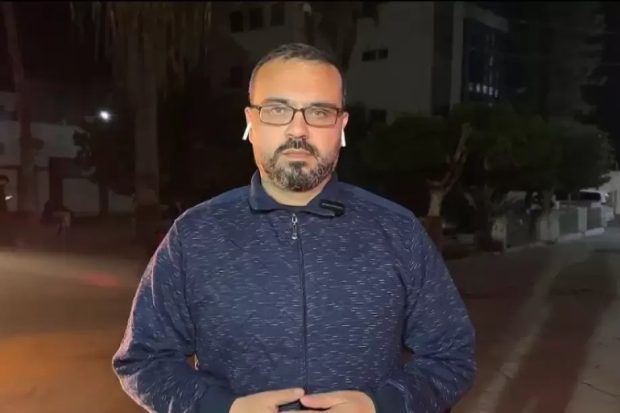
Palestinian Information Center – January 31, 2026
GAZA – The Hamas Movement has condemned Israeli claims that it violated the ceasefire agreement as “lies” and “intended to justify the massacres committed against civilians in the Gaza Strip.”
In a statement on Saturday, Hamas spokesman Hazem Qasem dismissed the Israeli accusations against his Movement as “baseless and unfounded,” saying they reflect Israel’s disregard for ceasefire mediators, sponsoring countries, and all the parties involved in the so‑called “Board of Peace.”
The spokesman called on the international community, the UN, and human rights organizations to “clearly condemn Israel’s massacres in Gaza, take practical steps to stop them, hold Israeli leaders accountable for their crimes, and end the policy of impunity, which encourages further killing and destruction.”
UK Health Officials Covered Up Reports of Heart Damage Linked to AstraZeneca Vaccine
By Michael Nevradakis, Ph.D. | The Defender | January 29, 2026
Newly released U.K. public health data show that in 2021 and 2022, thousands of people filed cardiac-related adverse event reports after receiving the AstraZeneca COVID-19 vaccine.
The data confirm the findings of a study by Children’s Health Defense (CHD) researchers. The study was published on Preprints.org.
GB News last week reported on the data, obtained from the U.K.’s Medicines and Healthcare products Regulatory Agency (MHRA). The data showed that in 2021 alone, the MHRA received 48,472 reports of cardiac-related adverse events linked to the AstraZeneca vaccine.
Of these, 23,914 cardiovascular events had already been reported by late March 2021 — which means the reports were filed within the first three months after the COVID-19 vaccines were rolled out to the public.
A total of 6,175 reports of blood-clotting events were reported during the same period, according to MHRA data.
The adverse event reports were being filed even as U.K. public health authorities told the public that the AstraZeneca vaccine — a non-mRNA vaccine developed in conjunction with Oxford University and licensed under the name Vaxzevria — was safe and effective.
Oxford researchers, Drs. Tom Jefferson and Carl Heneghan obtained the data through a freedom of information request submitted to the MHRA in October 2025. The request sought information on cardiovascular and thromboembolic (blood-clotting) events connected to the AstraZeneca shot between February 2021 and January 2024.
MHRA responded to the request a month later, providing the researchers with data, which Jefferson and Heneghan analyzed and published in a series of Substack posts.
“To the best of our knowledge, this is the first time anyone (outside the powerful) has seen the reports submitted to the MHRA regarding serious potential harms during the first period of the rollout,” the researchers wrote in a Substack post.
CHD Senior Research Scientist Karl Jablonowski said the MHRA “used non-public data from one of the best medical record systems in the world” to craft “a narrative opposite to what the data reflect.”
“Instead of showing the cardiovascular catastrophe that unfolded in those injected with the Oxford-AstraZeneca COVID-19 vaccine, health officials instead wrote that the results of their analysis offer ‘reassurance regarding the cardiovascular safety of COVID-19 vaccines.’ … The word ‘fraud’ may actually be too kind,” Jablonowski said.
Informed consent ‘compromised’
The MHRA contained discrepancies. According to GB News, MHRA dismissed its own figures after the researchers published them on Substack. Instead, they said the number of heart conditions linked to the AstraZeneca shot during the period in question was 13,010 — nearly four times lower than the original figure.
An MHRA spokesperson told GB News that the agency is “currently reviewing previously released figures in more detail to identify any potential discrepancies.”
In its analysis of the MHRA data, TrialSite News suggested that such significant data discrepancies call the MHRA’s credibility into question.
“While adverse-event reporting systems are designed to detect signals rather than prove causation, large unexplained gaps weaken confidence in risk communication,” TrialSite News wrote.
The researchers also asked the MHRA to provide data on the number of AstraZeneca shots administered in the U.K. The UK Health Security Agency initially refused, explaining that the information was “commercially sensitive” and that releasing it “would not be in the public interest.”
The agency later released the data after the researchers appealed. According to the researchers, the data showed a strong correlation between doses administered and adverse events reported. However, even after the AstraZeneca vaccine was withdrawn, adverse event reports were still being filed, suggesting “a long-term dose effect.”
TrialSite News founder and CEO Daniel O’Connor told The Defender that “the MHRA disclosures highlight a core failure of pandemic-era regulation: safety signals were managed rather than transparently communicated.”
“The issue is not only the adverse events themselves, but why their full scale emerged only through freedom of information requests,” O’Connor said. “When critical risk information reaches the public years late, informed consent is compromised and trust in the regulatory system is inevitably eroded.”
CHD study found evidence linking AstraZeneca shot to heart conditions
The data in the MHRA documents support the findings of a preprint study published by CHD and Brownstone Institute scientists last year.
The researchers reanalyzed data used in earlier studies that concluded the COVID-19 vaccines were safe. By comparing relative risks from different vaccines — which the original studies failed to do — the new research revealed evidence linking the Pfizer and AstraZeneca COVID-19 vaccines to significant health dangers.
The study also found that the risks for cardiovascular disease and death from the AstraZeneca vaccine were significantly higher than those of the Pfizer vaccine.
The preprint, which is undergoing review, also suggested that some earlier COVID-19 vaccine safety studies were “biased by design.”
Brian Hooker, Ph.D., CHD chief scientific officer, drew parallels with similar findings that he and Jablonowski discovered about safety signals connected to the Pfizer-BioNTech COVID-19 vaccine and a subsequent cover-up of those signals by U.S. public health agencies.
Hooker said:
“The Pfizer vaccine was released on Dec. 11, 2020, and by January 2021, there were 23 reports of military service personnel with diagnoses of myocarditis following receiving the shot. At this point, less than 5% of U.S. adults had received the jab.
“The evidence regarding the Pfizer shot and myocarditis very quickly unfolded in front of these agencies, but no warning was given until May 27, 2021, when the CDC [Centers for Disease Control and Prevention] trotted out a website that indicated there might be an issue with myocarditis and pericarditis due to VAERS reports. At that point, over 50% of those eligible in the U.S. had received the jab.
“The point was clear: lie and hide until we can get lots of shots in arms.”
UK continued to recommend AstraZeneca shot despite safety signals
According to GB News, at the same time that the MHRA data were showing evidence of cardiac conditions and blood clots linked to the AstraZeneca vaccine, “internal discussions were taking place” about how to manage public messaging about the shot’s safety.
GB News cited minutes from a U.K. government task force on COVID-19 vaccine risks. The minutes, published in 2024, showed that concerns about the link between the AstraZeneca shot and blood clots were discussed as early as April 2021, and that safety issues were known by March 2021.
Throughout 2021, stories about people who died of blood clots after getting the AstraZeneca shot began appearing in the media.
Yet, the task force minutes recorded discussions of “concerns that public alarm over the vaccine could make it harder to vaccinate the population by increasing ‘vaccine hesitancy,’” GB News reported.
During this period, the mainstream press in the U.K. continued to promote the AstraZeneca shot as safe and effective. A March 2021 report by The Guardian claimed, “There’s no proof the Oxford vaccine causes blood clots.”
In April 2021, the U.K.’s Joint Committee on Vaccination and Immunisation advised that adults under 30 should be offered an alternative COVID-19 vaccine. The European Medicines Agency issued similar guidance that month.
Yet, by March 2021, several European countries had withdrawn the AstraZeneca shot, citing the risk of blood clots. Research published that month also found a link between the shot and blood clots.
The AstraZeneca shot was never authorized or licensed in the U.S., but clinical trials for the vaccine were conducted in the U.S. with American participants. TrialSite News cited the case of Brianne Dressen, “who developed severe, long-term neurological symptoms after participating in the U.S. trial.”
AstraZeneca contractually agreed to provide medical care to trial participants for research-related injuries. However, in an ongoing federal lawsuit, Dressen alleges that the company reneged on that promise. AstraZeneca argued it is immune from legal prosecution.
In 2021, Dressen founded React19, an advocacy group for the vaccine-injured.
“These events underscore that even vaccines halted before approval can produce lasting human consequences — and unresolved accountability questions,” TrialSite News wrote.
‘A move to quiet the public, to pacify would-be critics’
AstraZeneca withdrew its COVID-19 vaccine from the market in 2024, citing “commercial reasons.” However, the company admitted in 2024 U.K. court documents that its shot could, in “very rare cases,” cause blood clots.
“This admission is now central to a growing class action lawsuit brought by individuals who say they suffered life-changing injuries,” GB News reported.
“The timing of events is interesting. AstraZeneca requested the withdrawal of the vaccine from EU markets in March 2024. It was effective May 2024. The study decrying its ‘cardiovascular safety’ was published in July 2024,” Jablonowski said.
According to Jablonowski, this suggests that these actions were “not for the betterment of public health nor vaccine uptake, since the vaccine was no longer available,” but were instead “a move to quiet the public, to pacify would-be critics.”
GB News reported that a U.K. parliamentary inquiry into the MHRA’s handling of vaccine safety issues is “very likely” to occur.
“These agencies, both in the U.S. and the U.K., need to be held to account for their felonious lies and those individuals who were harmed need to be compensated,” Hooker said.
This article was originally published by The Defender — Children’s Health Defense’s News & Views Website under Creative Commons license CC BY-NC-ND 4.0. Please consider subscribing to The Defender or donating to Children’s Health Defense.
Featured Video
Theodore Postol: Iran’s Missiles & Drones Were Underestimated
or go to
Aletho News Archives – Video-Images
From the Archives
What is the Israeli Lobby in Australia Doing in Interfaith Dialogue?
By Ali Kazak | Dissident Voice | October 11, 2015
For years Israel and its lobby around the world have been trying to normalise their relations with Arabs and Muslims without solving the Palestine Question.
One of the methods they resorted to in the last few years is using human rights and community organizations such as interfaith dialogue and Multiculturalism to achieve this objective and to: isolate the Palestinians, marginalise the Palestine question, end Israel’s isolation, and prevent criticism of Israel, knowing that these organisations will be the first to stand against Israel’s violations, racial and religious discrimination.
The group responsible for this task in Australia is The Australia/Israel & Jewish Affairs Council (AIJAC); its Director of International & Community Affairs, Jeremy Jones is in charge of lobbying religious community organizations, specifically Muslims and Christians. Consequently he convened the Faith Communities for Reconciliation, founding participant in the Australian Partnership of Religious Organisations and the Australian National Dialogue of Christians, Muslims & Jews.
AIJAC is a private political propaganda group. It is recognised as the main Israeli lobby in Australia. It coordinates its activities and works intimately with the Israeli embassy in Canberra and different institutions in Israel. It is privately funded by some Jewish businessmen. It monitors closely Australian politicians, the media, ethnic and religious groups, (especially Arabs and Muslims), unions and academics on their stands towards Israel and the Palestine question. … continue
Blog Roll
 Aletho News
- The killing of three Indonesian soldiers in Lebanon should remind Jakarta that Israel does not want peace
- Defeated and delusional: Netanyahu’s remarks reveal $80bn war failure, says analyst
- Iran’s friends are about to make life much more difficult for Israel and the US
- The war of liberation of the Arab and Islamic peoples expands across the Gulf
- Envoy warns UN on Trump’s threat to ‘obliterate’ Iran’s civilian infrastructure
- The Larak Corridor: Iran’s Rial Gate With No US, No Israel, and No Way Around
- ‘Economic terrorism’: Steel facilities hit again in US-Israeli strike
- ‘War Crime’: Iran condemns attacks on Arak, Ardakan nuclear sites
- Two-thirds of Americans want quick end to Iran war even if goals unmet
- Trump to Give “Important Update on Iran” Wednesday in Prime-Time Speech
- If Americans Knew
- Israel wants US to bomb more of Iran’s civilian structures (113,000 is not enough) – Not a ceasefire Day 173
- Ann Coulter Rips Into Fox News for Iran War Coverage
- Joe Kent Urges Americans To Call White House and Congress To Object To Sending Troops Into Iran
- DNC Resolution to Reject AIPAC Funding Puts Democratic Leaders in the Hot Seat
- Swedish foundation to build 400 schools as over 650,000 Gaza children remain without education for 2 years
- Israeli army admits photshopping image of slain Lebanese journalist
- This is how Israel is systematically killing health workers under the cover of war in Lebanon
- Carrying life under fire: Israeli invasion of Lebanon leaves pregnant women facing deadly risks
- Champagne all around for the new death penalty (for Palestinians) law – Not a ceasefire Day 172
- Why are Palestinian books struggling to be seen on Amazon?
- No Tricks Zone
- New Study Finds Warming Saves Lives…Cold Temperatures 12 Times More Deadly Than Excess Heat
- German Science Blog Accuses PIK Climate Institute Of Hallucinating Climate Tipping Points
- Devastating Assessment Of Comirnaty Vaccine By Former Senior Pfizer Europe Toxicologist
- New Study: CO2 Is ‘Effectively Negligible’ As An Explanatory Climate Change Factor Since 2000
- Former Pfizer Toxicologist Dr. Helmut Sterz Tells Bundestag Hearing Pfizer Vaccine Should Have Never Been Approved
- Energy Expert: Germany’s Nuclear Phaseout Was A “500 Billion Euro Mistake”
- New Research: South Australia’s Mid-Holocene Sea Surface Temperatures Were 4°C Warmer Than Today
- Storing Green Energy To Last Germany 10 Days Would Require A 60-Million Tonne Battery
- New Studies: UK Sea Levels Were 4 Meters Higher Than Today During The Mid-Holocene
- Destructive Green New Deal: German Energy And Metal Group Warns Of Drastic Crisis
 Aletho News