The West is Winning the Information War While Russia Prevails on the Battlefield
By Larry C. Johnson | SONAR21 | August 5, 2026
I stumbled across something pretty bizarre today when I queried one of the AI-search engines about Russia’s capture of territory in Ukraine in 2026. Here is what the Chinese KIMI claimed:
The evidence from multiple sources — including Ukrainian official claims, Western think tanks, and Ukrainian independent trackers — suggests that Ukraine recaptured substantially more territory than Russia captured during the first half of 2026, driven by the southern counteroffensive. However, the pace of Ukrainian gains has slowed since spring, and Russia has made small net gains in recent months (June–July). The overall net for the full year so far appears to still favor Ukraine, but the margin and the exact numbers depend heavily on whose methodology you use.
There you have it… Ukraine is winning the war on the ground according to AI. Let me emphasize that you will find this same propaganda on GROK or Claude. The Western propaganda effort is paying dividends on the information operation side of the house. Even the Chinese-coders who created KIMI are pushing Western propaganda.
So let me give you the actual rundown for 2026. Russia started 2026 with Gerasimov’s report to Putin announcing the liberation of Pokrovsk (Krasnoarmeysk) — the Donetsk logistics hub under siege for nearly two years — and of Vovchansk in Kharkiv. Through November of 2025 the MoD had reported a steady run of captures, including Petrovskoye in the DPR and Tikhoye and Otradnoye in Dnepropetrovsk.
Moving into the spring of 2026, TASS reported that Russian forces liberated 63 settlements from March through May 2026 — 20 in March, 16 in April, and 27 in May, the strongest month. The regional breakdown was 21 in Kharkiv Region, 19 in the DPR, 14 in Sumy, six in Zaporozhye, and three in Dnepropetrovsk. The Sumy and Kharkiv gains are framed by Moscow as building a “security zone” along the Russian border.
By early summer (June), Gerasimov reported that Russian forces were continuing the liberation of “Donbass and Novorossiya,” advancing on all fronts. The 3rd Army was advancing toward Slavyansk and Kramatorsk — liberating Piskunovka, reaching the outskirts of Nikolayevka, and reported to be less than 5 km from the eastern edge of Kramatorsk, with the capture of Krasny Liman (Lyman) said to be due soon.
Battlegroup West advanced on a broad front; in the Kupyansk area, having repelled Ukrainian attempts to break through to western Kupyansk, with assault units pushing west toward Shevchenkovo. In the Dobropolye area north of Krasnoarmeysk, fighting in Dobropolye and Annovka, with Lenina (Ukrainian name Mirnoye) taken and Shevchenko, Krasnoyarskoye, and Svetloye reported as liberated.
In July TASS counted 32 settlements liberated, with 22 of them — over 68 percent — in Kharkiv Region and the DPR. By battlegroup: North took ten, Center eight, West six, East five, and South three, and the month’s most significant developments were the liberation of Konstantinovka in the DPR by Battlegroup East and the capture of Belitskoye by Battlegroup Center. Konstantinovka is one of the four Donetsk fortress belt cities.
At present the Russians are driving on the last major Ukrainian-held Donetsk agglomeration — the Konstantinovka–Druzhkovka–Kramatorsk–Slavyansk belt — alongside the Sumy/Kharkiv border zone and consolidation in Zaporozhye and Dnepropetrovsk.
Along with the ground operations in eastern Ukraine, Russia has ended Ukraine’s ability to conduct maritime and trade operations from Odessa and Nikolaev since July 22nd. Ukrainian farmers will not be able to export products via the Black Sea ports and western supplies, which once flowed freely through Odessa. Ukraine’s maritime lifeline is severed and will not be in operation until after the war with Ukraine is over.
Finally, there is the daily Russian missile and drone attacks on Kiev and other key Ukrainian logistics and military hubs. The destruction of factories and warehouses is effectively bleeding Ukraine dry. The West persists in painting the war in Ukraine as a crusade that sits on the threshold of victory, but the realities on the ground tell a dramatically different, grim story… Ukraine is losing.
Did Israel have a hand in Morocco’s Ceuta stunt?
By Martin Jay | Strategic Culture Foundation | August 4, 2026
There are a great deal of conspiracy theories floating around since the extraordinary events in recent days in northern Morocco, where an estimated 50,000 of its citizens attempted to place themselves in the Spanish enclave of Ceuta. In a country where the press are heavily controlled and free-spirited citizen journalism is assiduously discouraged, it’s hardly surprising there is speculation – given how in the dark the government operates most of the time. Yet few, if any Moroccans, believe the government narrative that the entire thing developed an energy of its own on social media platforms and that the state itself was taken by surprise. True, a lot of how quickly the information spread was due to social media platforms, but there are too many oddities which can’t be ignored that point the finger at the government – or whoever is running Morocco – for organising the huge mobilisation. Firstly, the number of trucks full to the brim of young men who drove all the way to the border and were directed by police and gendarmerie; secondly, the more recent scenes of hundreds of these young men at bus and train stations all over the country on their way home, where clearly their transportation has been paid for by someone; and of course, lastly but not least, the fact that Moroccan police on the Moroccan side of the border made no effort at all – not even a token effort – to stop people from going around the fence or into the water. In fact, many of those who made the journey have already told media that they were actually directed and encouraged to “go to Spain” by those same police officers.
Moroccans know only too well what is happening. They remember the few times before when thousands of African migrants also magically all turned up at the border with Ceuta and Melilla and also remarkably found on that particular day no Moroccan police officers and so scaled the fence. On at least two occasions in recent years, this stunt has been used by Rabat to indicate to Madrid how angry and displeased it is about Spain’s actions over Algeria, Western Sahara or other regional policies.
But those days were before 2022, when relations with Spain were far from ideal. These days, since Madrid backed Morocco’s sovereignty bid for Western Sahara, relations – until just the other day – were as best as they could get. Almost.
It’s important to remember how easily good relations with Spain could turn sour, and that in recent weeks Madrid’s rapprochement with Algeria and moves afoot in the Spanish parliament to give the indigenous people of Western Sahara Spanish passports could ruin everything that has been achieved overnight. Why would Rabat throw away a relationship so important to it, unless there is something else at play which analysts and journalists alike are missing? Is there another dimension to the Ceuta story which we are entirely missing?
According to the Iranians, Israel had a hand in what happened. Tehran believes that the Moroccans have been led down the garden path by primarily Israel and then Trump, and some recent events suggest there could be some truth in their assertion.
There is an obvious question here to be asked, which no Western journalists have so far identified. Trump and Netanyahu both have Spain in their crosshairs and desperately want to make the country a pariah state, cutting off U.S. aid and even having Madrid ousted as a NATO member. Of course, some of this is unrealistic and far-fetched, but it is rare that Trump and Bibi see eye to eye on the Iran war – when it comes to Spain and Morocco, there is clarity. It is clear that Israel and the U.S. are trying to stir trouble up, and the only real way to do that quickly and effectively, they see, is to destroy this relationship between Rabat and Madrid. Bringing Algeria in from the cold, for Spain, might have blown a fuse in Rabat with the country’s ruling elite called the Makhzen, which could explain quite a few things. Add to that $40 million USD which the Trump administration is reported to have put aside for Rabat, while we begin to see Melilla and Ceuta becoming Moroccan territory in Congress reports (the most recent one being a State Department budget report just signed off by the House), and a picture emerges which puts the entire Ceuta story into context. The geopolitics starts to make sense. “When two neighbouring countries fight each other, just know the USA visited one,” Nelson Mandela once said, and this is the story now of Morocco and Spain.
The Ceuta “invasion”, many believe, was merely a stunt to derail the good relations which both countries have enjoyed until now. And it will probably work. If Madrid believes that the U.S. and Israel are goading Rabat on, then clearly Sanchez and his closest advisors will tone down the relationship with Morocco – which in fact is already happening, when one Spanish minister told a journalist “it is clear what is happening”, hinting that Madrid knows who is behind the move and what the objectives were. If Israel has bedazzled the palace in Rabat with the dream of these enclaves becoming Moroccan, then the biggest winners by far are Israel – which is how analysts should frame their take. If relations turn sour between Rabat and Madrid and tensions start to mount over these enclaves, could the U.S. and Israel send warships there to blockade them, as part of a security measure to support its ally, Morocco? Could that even be the basis to send in Moroccan troops to take them over completely? Sounds far-fetched, but there are similarities with what happened after 1975, when the Spanish abandoned Western Sahara and the Moroccan king at that time sent in thousands of Moroccans into the territory to legitimise its claim, assisted with military aid – we shouldn’t forget – from the U.S. The ‘Green March’ is celebrated each year with its own anniversary. In those days, U.S. involvement only enhanced America’s military spending but didn’t really offer the U.S. anything beyond that. Today, for Morocco to make moves on Melilla and Ceuta comes with a huge payback for Israel and the Trump administration, in that it would give the victors a massive annexation of international waters around the Straits of Gibraltar – effectively handing over the straits to Morocco, Israel, the U.S. and UK (Gibraltar). Under such a scenario, Trump would feel emboldened, as he and Bibi could decide which countries enter the Mediterranean and who pays what tariffs, etc. This new arrangement would give Trump exactly what he needs right now – leverage – while presenting on a plate to Israel a decisive blow which it can claim credit for by dealing with the so-called threat from Spain. It would effectively set up Israel as a regional player and breathe new life into the ‘Greater Israel’ project, while giving the King of Morocco the prize of his father’s dream: sovereignty over these two colonial anachronisms. Everyone’s a winner. Trump and Bibi have so much to gain by destroying Rabat’s good relations with Madrid that it’s hardly surprising the Ceuta “invasion” didn’t come earlier. And isn’t it funny that the frequency of how many times Trump announces his undivided support for Rabat’s claim over Western Sahara seems to be increasing? It’s childish thinking, but is he doing this to try to draw attention to other EU “partners” who haven’t done so for a while?
If you think it’s a conspiracy theory that Israel and the U.S. had a hand in the Ceuta stunt, then you probably think Israel had nothing to do with 9/11, or the assassination of JFK. It’s entirely possible that Israel organised the entire thing without even the knowledge of the King, who is distancing himself more and more recently from public duties. Conspiracy theories, remarkably, often have a habit of turning out to be true – but the idea that Ceuta was not organised and just came about randomly and organically is preposterous. Watch Madrid’s next move and how Rabat reacts.
Claims of Iran agreeing to reopen Hormuz Strait are false: Report
Press TV – August 2, 2026
Media reports claiming that the Islamic Republic of Iran has agreed to a plan to reopen the Strait of Hormuz are false, and no change has been made to the country’s policy regarding the strategic waterway, according to a report.
Foreign media outlets, citing Israeli journalist Barak Ravid, have claimed earlier that Iran had accepted a proposal under which ships would enter the Persian Gulf through Iranian territorial waters and leave through Omani territorial waters.
Fars News Agency, citing a source close to Iran’s nuclear negotiating team, rejected those claims, with the source saying, “The Islamic Republic of Iran has reached no agreement on reopening the Strait of Hormuz, and the reports published in this regard are false.”
According to Fars, a military source also dismissed the claims, saying they were entirely unfounded.
“As long as the hostile actions and acts of malice by the United States continue, the Strait of Hormuz will remain closed,” the military source was quoted as saying.
“Passage will only be possible through the designated route, in coordination with the Islamic Revolution Guards Corps Navy and after obtaining permission to transit the Strait of Hormuz. Otherwise, other routes are unsafe, and vessels attempting to use them will certainly encounter incidents.”
The source further emphasized that reports claiming that Iran had agreed to any plan to reopen the Strait of Hormuz were “baseless” and that no decision or policy change had been made regarding the strategic waterway.
It came after US President Donald Trump said he had canceled declared attacks on Iran, following warnings from Tehran that any new US or Israeli aggression would face strong retaliation.
In a post on Truth Social on Saturday, Trump claimed that the US was “locked and loaded” and prepared to launch a military assault against Iran, describing the potential aggression as involving levels of military power “not seen since World War II.”
The latest round of war against Iran began on February 28, when US and Israeli forces launched large-scale strikes on Iranian territory.
Iran responded with daily waves of missiles and drones targeting US and Israeli assets across the region, while closing the Strait of Hormuz.
Iran and the US later signed the Islamabad Memorandum of Understanding (MoU) on June 17 in an effort to end the war across all fronts.
However, renewed US military aggression against Iran in recent weeks has prompted Tehran to resume missile and drone strikes against US assets in the region and close the Strait of Hormuz once again.
BIRX POINTS THE FINGER AT FAUCI, DENIES LOCKDOWN BLAME
The HighWire with Del Bigtree| July 30, 2026
Deborah Birx got a hero’s welcome on News Nation, claiming she never understood how the country went from slowing the spread to a full shutdown, and pointing to Fauci’s private calls with governors and mayors as the cause. Jefferey Jaxen pulls up the actual headlines and timeline on the woman who was named White House Coronavirus Response Coordinator, and it tells a very different story.
With Karim Khan’s dismissal, the elimination of the war crimes court is near-complete

By Jonathan Cook | July 30, 2026
The most important question we should be asking after Karim Khan’s dismissal last week as chief prosecutor of the ICC – the international war crimes court in The Hague – is not whether he is guilty of “sexual misconduct” against another staff member, identified as “Sarah”.
That can only be decided through a legal process – one, let us note, that has already taken place. A fact-finding body carried out a lengthy investigation of Sarah’s allegations over more than a year; its thousands of pages of evidence were then evaluated in detail by three senior judges.
Though you would not know it from the media coverage, they concluded that there was no evidence to suggest any kind of misconduct by Khan, sexual or otherwise.
Strangely, that determination was largely confirmed by an extraordinarily deferential “exclusive” CNN interview with Sarah, aired earlier this month.
She declined to give any meaningful details of what Khan had allegedly subjected her to, and celebrity interviewer Christiane Amanpour delicately avoided pressing her for any clarification.
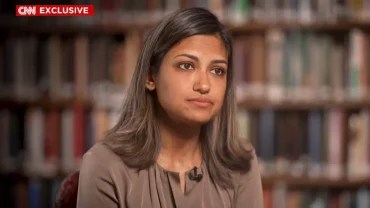
No matter. The purpose of the CNN interview was never about excavating facts. It was designed to offer face-saving cover as an entirely political body called the Assembly of States Parties, comprising diplomatic representatives of the 125 states signed up to the ICC, entirely ignored the legal findings and dismissed Khan.
Paradoxically, it was the Assembly of States Parties that appointed the judges who had concluded that there was no evidence of misconduct or breach of duty by Khan. That inconvenient judgment was simply reversed, despite the Assembly members being in no position to weigh the evidence themselves.
We should not forget that many of these states have an investment in weakening the only international court that can bring their own senior officials to trial for war crimes.
In May 2024 – shortly before Sarah made her allegations – the ICC demonstrated that it was finally ready to prosecute western leaders for war crimes, not just those from the Global South or from the West’s official enemies, such as Russia’s Vladimir Putin.
Khan issued an arrest warrant for Israeli prime minister Benjamin Netanyahu and his former defence minister Yoav Gallant. Both are accused of crimes against humanity for starving the people of Gaza through a prolonged blockade of food, water and power.
Were Netanyahu ever to face trial – and found guilty, as he almost certainly would be – a lot of other leaders would have good reason to fear they might be found culpable next, not least for their complicity in Israel’s mass slaughter of Palestinians in Gaza.
The question that needs answering now is not whether Khan is guilty of misconduct – that has been decided at a political level, not a legal one. No, we need an answer to an equally political, and far more troubling, question.
“Cui bono?” Or “Who benefits?”
The evidence is hiding in plain sight. The evidence is revealed both in the deeply politicised process that led to Khan’s downfall, and in what that process means for the future of the court.
Covert war
Khan is not the first ICC chief prosecutor to face extreme pressures – and, as with Khan, those pressures surfaced at the very moment Khan’s predecessor tried to take on Israel over its war crimes.
Fatou Bensouda faced a “covert war” waged against her by Israel for the best part of a decade, according to an investigation by the Guardian in May 2024, just as Khan issued his arrest warrant for Netanyahu.
The Guardian’s report, published nearly three years after Bensouda had completed her nine-year term at the ICC, revealed that, during that time, she had faced threats to herself and her family, the monitoring of her communications, and an intimidating visit to her home.
More recently, Bensouda has confirmed these accounts in an interview with Al Jazeera. Bensouda notes that she repeatedly reported Israel’s campaign of intimidation to the Dutch authorities, but they did nothing to investigate the threats or protect her.
She also says certain “authorities” – she does not name them – warned her that she was going too far in investigating Israeli crimes and that “you could be harmed or you could be killed, or family members could be harmed in some way.”
The campaign of threats – instigated by Yossi Cohen, then the director of Israel’s spy agency, Mossad – intensified as Bensouda considered whether to open a formal investigation into Israeli war crimes and crimes against humanity in the illegally occupied Palestinian territories.
Israel’s crimes against the Palestinian people, we should remember, predate – by decades – Hamas’ attack on 7 October 2023. In fact, though no one is supposed to mention it, Israel’s sustained crimes of occupation are the self-evident cause of that Hamas attack.
An Israeli source told the Guardian that “the Mossad’s objective was to compromise the prosecutor or enlist her as someone who would cooperate with Israel’s demands”– that is, scrap the ICC’s investigation into Israeli crimes. Another source admitted that Cohen was acting on Netanyahu’s instructions.
During one contact, Cohen reportedly issued a Mafia-style threat to Bensouda: “You don’t want to be getting into things that could compromise your security or that of your family.”
The Guardian reported that the Mossad “took a keen interest in Bensouda’s family members and obtained transcripts of secret recordings of her husband, according to two sources with direct knowledge of the situation. Israeli officials then attempted to use the material to discredit the prosecutor”.
The paper also noted that there were fears among senior ICC officials that “Israel had cultivated sources within the court’s prosecution division” – the division Khan would inherit from Bensouda.
Cohen was described as “stalking” Bensouda, and personally “ambushed” her in a hotel room in New York in 2018. Afterwards he repeatedly phoned her, in a threatening manner that was said to have escalated over time. When Bensouda asked Cohen how he had obtained her phone number, he reportedly replied: “Did you forget what I do for a living?”
According to the Guardian :
On one occasion, Cohen is said to have shown Bensouda copies of photographs of her husband, which were taken covertly when the couple were visiting London. On another, according to sources, Cohen suggested to the prosecutor that a decision to open a full investigation would be detrimental to her career.
Between 2019 and 2020, the Mossad had been actively seeking compromising information on the prosecutor and took an interest in her family members.
The spy agency obtained a cache of material, including transcripts of an apparent sting operation against her husband.
Israel used the materials to mount a “smear campaign” against her, but one that ultimately proved unsuccessful.
Concerted backlash
When Khan took up the role of ICC chief prosecutor in June 2021, he proved reluctant to pick up where Bensouda had left off on the Palestine case. Presumably, he was only too aware of the retaliation from Israel against her.
Bensouda had announced in December 2019 that she had grounds to open a full criminal investigation into allegations of war crimes in Gaza, the West Bank and East Jerusalem.
However, in the face of a concerted backlash from western states, she delayed opening the investigation. She first sought a ruling from a pre-trial chamber of ICC judges – presumably in the hope it would serve as some kind of insurance policy – on whether the court had jurisdiction over the occupied Palestinian territories.
By February 2021 the judges confirmed what was already self-evident. The court did have such jurisdiction because Palestine had been signed up to the court since 2015.
Bensouda stepped down a few months later.
The door was now open for Khan to prosecute Israeli officials for war crimes. However, the new chief prosecutor gave every appearance – perhaps understandably – of preferring to sit on his hands.
It was not just Israel that had been fearsomely opposed to its officials being tried for war crimes. Washington was equally incensed at the prospect – sometimes, it seemed, more so than over the possibility that US officials might also face arrest warrants for crimes committed by the US military in Afghanistan and Iraq.
Between 2019 and 2020, during Trump’s first presidency, the US imposed severe visa restrictions and financial sanctions on Bensouda. Mike Pompeo, then US secretary of state, linked the sanctions to the Palestine case: “It’s clear the ICC is only putting Israel in [its] crosshairs for nakedly political purposes.”
Khan might well have avoided pursuing Israel indefinitely had it not been for the events that followed 7 October 2023.
Israel’s mass slaughter of Palestinian civilians in Gaza, its devastation of the enclave’s homes and infrastructure, and its starvation of the entire population were actions so criminally abhorrent that UN agencies, major human rights groups and Holocaust scholars were soon all in agreement that they amounted to genocide.
In May 2024, Khan announced arrest warrants against Netanyahu and Gallant, as well as three Hamas leaders subsequently killed by Israel.
Tsunami of threats
Shortly before Khan made that announcement, 12 senior US Senators had sent a threatening letter to the ICC: “Target Israel and we will target you.” The letter ended: “You have been warned.”
Describing Israeli and US sovereignty as inseparable, the senators reminded Khan that Washington had demonstrated “the lengths to which we will go to protect [our] sovereignty.”
A 2002 law, popularly known as “The Hague Invasion Act”, authorises the US president “to use all means necessary and appropriate” to bring about the release US persons and any allies imprisoned or detained by the ICC. Those allies, it goes without saying, include Israeli leaders.
Such threats, it should be noted, are a violation of Article 70 of the Rome Statute.
Following the issuing of the arrest warrants, there followed a tsunami of similar threats – and presumably more that have yet to become public – against Khan and the ICC.
A British-Israeli lawyer within the ICC – one known to have ties to Netanyahu’s legal adviser – warned Khan “they will destroy you and they will destroy the court” if the warrants were not rescinded. He urged Khan to “climb down the tree” and drop the case.
The UK’s foreign secretary of the time, David Cameron, phoned Khan to tell him Britain would defund the court and withdraw from the Rome Statute that founded the ICC if Khan did not back down.
Cameron warned Khan that he was “on the brink of making a huge mistake” and urged him to “take a step back and consider things”. He added that applying for arrest warrants for Israeli officials was tantamount to “dropping a hydrogen bomb”.
Meanwhile, Trump issued an executive order imposing aggressive financial sanctions against Khan and other ICC officials, including several of its judges.
Khan himself received warnings that Israel’s Mossad was continuing its operations in The Hague, where the ICC is located, to monitor and compromise the court’s investigators as they compiled evidence on Israel – just as it had done earlier under Bensouda.
Khan publicly stated that retaliatory threats and intimidation were explicitly targeting members of his own family.
Untouchable criminals
What conclusions should we draw from all of this?
Quite aside from the matter of whether Sarah’s allegations of “sexual misconduct” are true or not, it is clear that Israel and the US have been digging for dirt – and apparently ready to fabricate such dirt – on any chief prosecutor who tries to hold them to account for their crimes.
Both have indicated that they are ready to manipulate legal and political processes to ensure the outcome they desire: that they remain untouchable.
We have a template for how this plays out. Julian Assange, founder of the whistle-blowing site Wikileaks, published details in 2010 of US and British war crimes in Afghanistan and Iraq. Almost immediately he found himself entangled in accusations of sexual misdemeanours – in his case in Sweden – that were similarly amplified by an uncritical western media.
Assange faced years in various forms of confinement while the US and UK pressured Sweden to keep alive an investigation against him Swedish prosecutors at least twice sought to drop for lack of credible evidence.
In fact, the US and UK never wanted the evidence tested – they were quite happy with a permanent, unresolved “investigation” – precisely because they knew it would have been unlikely to withstand judicial scrutiny.
The point was simply to generate constant headlines about “rape”, turning Assange into a pariah, justifying his effective disappearance from public life, severely weakening Wikileaks as a whistleblowing platform, deflecting attention from the all-too-real crimes committed by the US and Britain, and paving the way to a political show trial to extradite him to the US on entirely confected “espionage” charges.
This has been repeated in the case of Khan and the ICC. In Khan’s case, the evidence was tested and found inadequate. So the legal process has been replaced by a flagrantly political one.
Khan has been turned into a legal pariah, even stripped of his right to work as a lawyer in the UK by the British Bar Association.
The ICC has been further weakened, just as Israel and the US have expressly stated they wanted it to be. Marco Rubio, Trump’s secretary of state, has recently launched an official campaign to dismantle the ICC “brick by brick”.
He says: “Now they [the ICC] are going to see the consequences”. Consequences of what? Of seeking to enforce international law against a key US client state.
Meanwhile, accountability for the all-too-real crimes being committed by Israel in Gaza, Lebanon and the West Bank – and actively supported by western states like the US, Germany and Britain – recedes yet further into the background
As each brick protecting the ICC is dismantled, a brick is added to the wall of protection around Netanyahu and Israel’s genocidal war machine.
Israel, meanwhile, is barely concealing that it has been masterminding the effort to destroy the ICC.
According to Guy Azriel, the diplomatic correspondent for i24 News, Israeli foreign Minister Gideon Sa’ar “oversaw a dedicated task force and employed intensive diplomatic efforts aimed at securing Khan’s removal from office”.
Hillel Neuer, director of the Israel apologist group United Nations Watch, cheered what he called “our campaign to remove” Khan, and warned Francesca Albanese, the UN’s legal expert on the occupied Palestinian territories, “you’re next”.
Like Khan, Albanese has been searching for practical, legal ways – not just rhetoric – to hold Israel and its western allies to account for the crimes in Gaza.
Predatory states
The ICC claims its work will not be affected by Khan’s removal and that the arrest warrants against Netanyahu and Gallant will still be pursued under new stewardship. That seems doubtful.
Israel and the US are cranking up the intimidation of the ICC, which has no tools – beyond the support of members states – to enforce its rulings or protect itself from the hostility of a rogue superpower.
Currently the court appears paralysed, allowing Israel to muddy the waters with interminable, and vexatious, appeals against the arrest warrants.
Any lawyer who takes up the post of ICC chief prosecutor will be only too aware of the fate that befell Khan and the campaign of intimidation against Bensouda as soon as each tried to enforce accountability on Israel and its western patrons.
It will take a very brave individual indeed to renew that task. Khan’s successor will understand that, in any further confrontation with Israel and Washington, the US will not hesitate to crush the ICC and, with it, remove the only effective restraint on criminality by powerful states.
More likely, however, the Assembly of States Parties – the political body that ousted Khan – will privately require from his successor reassurances that the new chief prosecutor reliably defer to the principle of Israeli and western impunity. Only someone less willing to ruffle feathers stands any chance of being appointed.
That was the clearest of messages sent by the Assembly when a majority of member states voted to be rid of Khan. The short-lived experiment in creating a mechanism for enforcing international law is over. We are back to the law of the jungle.
Hundred of thousands of people around the world – more likely millions – will now find themselves even more exposed to the criminal actions of predatory states. Unlike Khan’s accuser, they are unlikely to ever get their day in court.
Islamic Jihad says reported deal between Palestinian factions, Israel ‘inaccurate’
MEMO | July 31, 2026
The Palestinian Islamic Jihad movement said Friday that the announced agreement between Palestinian factions and Israel was “inaccurate,” adding that it has reservations over the deal in its current form, Anadolu reports.
In a statement, the movement’s spokesperson said: “What has been announced regarding an agreement between the Palestinian factions and the enemy (Israel) is inaccurate, and we have reservations about it in its currently circulated form.”
The Palestinian group’s statement came after US President Donald Trump announced that an agreement had been reached for the complete disarmament of Hamas and other armed groups in Gaza, with Israeli forces set to withdraw in phases as the process moves forward.
Trump also credited Egypt, Qatar, and Turkiye for helping broker what he described as a “historic breakthrough,” saying the agreement would be implemented gradually, with an International Stabilization Force working alongside a new Palestinian police force to assume responsibility for security in Gaza.
Israel’s genocidal war on Gaza has killed more than 73,000 Palestinians and injured over 174,000 others, most of them women and children, while destroying about 90% of the enclave’s infrastructure.
The ceasefire was brokered under Trump’s 20-point plan for Gaza, which is being overseen by the Board of Peace, which he chairs.
Despite the ceasefire, which took effect on Oct. 10, 2025, Israel has continued daily attacks across Gaza, killing 1,214 Palestinians and injuring 3,977 others, most of them women and children, while causing widespread destruction.
Pfizer Freezes Air Traffic Control Funds Over COVID Vaccine Contract Dispute With Poland, Romania
By Michael Nevradakis, Ph.D. | The Defender | July 30, 2026
A vaccine contract dispute between Pfizer and the European Union (EU) has resulted in Pfizer freezing billions of dollars in funds earmarked for air traffic control in Poland and Romania.
Eurocontrol, an intergovernmental organization that coordinates air traffic control management across Europe, notified Poland and Romania’s air traffic control agencies earlier this month that it was freezing the funds after Pfizer enforced an April court ruling in Brussels.
The April 1 ruling requires Poland and Romania to pay Pfizer about $1.5 billion and $640 million, respectively, plus interest and fees, for additional vaccine doses, per a 2021 contract signed between the European Commission — the EU’s executive branch — and Pfizer.
Poland and Romania refused further COVID-19 vaccine deliveries in 2022, citing falling demand for the shots, according to Bloomberg. Poland also cited financial pressures it was facing after taking in refugees fleeing the conflict in Ukraine.
Brussels Signal reported Poland sold or donated some of its surplus vaccine doses. According to Romanian political scientist Dragos Moldovean, “Romania was among the European countries with the lowest COVID-19 vaccination rates.”
These actions led Pfizer to sue the countries in 2023, resulting in the April 1 ruling.
In a statement provided to The Defender, the Warsaw Enterprise Institute (WEI) said that the case, which is still ongoing pending the two countries’ appeal, is being heard in Belgium because the EU’s contract is governed by Belgian law.
Polish and Romanian authorities have said they will appeal the ruling. Polish public broadcaster TVP World reported that Poland sought a delay in the enforcement of the April 1 ruling pending its appeal, but that the Belgian court rejected this request.
Dutch attorney Meike Terhorst, who is not involved in the lawsuit, called Pfizer’s actions “outrageous and unethical,” arguing that “it could potentially endanger the safety of flights to or from Poland and/or Romania” by depriving those countries’ air traffic control authorities of funding required for their operations.
Łukasz Wojdyga, director of the WEI’s Center for Strategic Studies, took a different view. He said that while Pfizer is exercising its rights under the law, which allow it to freeze the disputed funds even despite the expected appeals, the focus should be on the flaws in the EU’s contract. He said:
“Even if this form of enforcement is allowed under Belgian law, targeting the main source of funding for an institution responsible for air-traffic safety strikes me as disproportionate and irresponsible.
“At the same time, a creditor has the right to enforce a court judgment and protect the interests of its shareholders through any lawful means.
“For that reason, the main focus should not be on blaming Pfizer for pursuing its claim. It should be on how the contract was negotiated, approved, and signed in the first place.”
Some legal and policy experts who spoke with The Defender suggested that Pfizer had other options available to it rather than immediately freezing the two countries’ funds held in Belgium. Other experts suggest that the EU’s contract with Pfizer is, itself, invalid, as it was signed through a dubious and potentially illegal process.
EU hasn’t revealed Pfizer CEO text messages, despite ruling
The EU-Pfizer contract has long faced scrutiny. For Wojdyga, the central question isn’t whether Pfizer is entitled to collect what it is owed. It’s how European and national authorities allowed such a “large, expensive and one-sided agreement to be signed, leaving taxpayers to carry most of the risk.”
According to Brussels Signal, the 35 billion euro ($40 billion) contract between the EU and Pfizer “was one of the largest in EU procurement history.” It was signed amid “claims that the EU may have paid up to fifteen times the production cost per dose, raising concerns that billions in taxpayer funds were overpaid.”
There are also questions about how European Commission President Ursula von der Leyen negotiated the contract with Pfizer CEO Albert Bourla, and about potential conflicts of interest between the two parties.
Last year, the European Court of Justice ruled that the European Commission violated EU law by denying The New York Times’ request to review text messages related to the contract between von der Leyen and Bourla.
The European Commission claimed it didn’t have the text messages. But according to the ruling, the commission did not provide “plausible explanations” to justify “the non-existence or non-possession” of the documents. The commission previously claimed the texts didn’t qualify as documents, according to Politico.
In 2024, the European Court of Justice ruled that the commission’s decision to heavily redact key portions of COVID-19 vaccine contracts with pharmaceutical companies during the pandemic violated transparency rules.
In 2023, the European Parliament blocked an attempt to cross-examine von der Leyen regarding the text messages. The previous year, Bourla refused to testify before the European Parliament about the contract terms.
According to Brussels Signal, “scrutiny has been directed at potential conflicts of interest involving von der Leyen’s family,” as her husband Heiko “is the medical director at Orgenesisi, a biotech company that received EU funds and partnered with Pfizer.”
According to activist Frederic Baldan, CEO of CEBiz:
“Ursula von der Leyen, without any mandate, bypassed the committees and negotiated directly with Albert Bourla via Signal messages programmed to self-destruct. She thus circumvented the anti-corruption safeguards of her own Commission. The price increased in an inexplicable manner and the quantities ordered became insane.”
Wojdyga noted that the commission did not appeal the 2025 ruling in time, “making the ruling final.” Yet, the text messages still haven’t been released. Gheorghe Piperea, a member of the European Parliament, said that “the content of those messages remains secret to this day.”
Documents leaked in 2022 showed that U.S. and EU officials pressured European drug regulators to rush approval of Pfizer-BioNTech’s COVID-19 vaccine despite safety concerns.
According to Romanian political scientist Dragos Moldoveanu, questions remain over how the parties determined the number of doses each country would receive under the contract.
“Romania ordered 120 million doses of the vaccine, based on a ‘strategy adopted at the EU level,’ even though Romania’s population is less than 20 million people,” Moldoveanu said.
For Piperea, the EU-Pfizer contract “ought never to have existed” in the first place, because the EU took on powers it doesn’t have under the treaties of the European Union.
“The Commission violated the principle of subsidiarity that governs the shared competences of the Commission and the member states. Health policy falls within the competence of the member states, not of the Commission. The member states may be supported in these health policies, but they may not be supplanted by the Commission,” Piperea said.
This also means that if Pfizer believed the contract terms were violated, it should have sought damages from the EU, not from individual states like Romania and Poland.
However, suing the EU would have revealed “that the exceedingly narrow circle of persons who conducted the negotiations — von der Leyen … together with two or three anonymous directors from the European Medicines Agency — possessed neither the competence nor the mandate to bind the member states to payments,” Piperea said.
Wojdyga said all 27 EU governments were represented on the steering board, while the joint negotiating team with Pfizer “included the Commission and seven member states, including Poland.”
The member states were responsible for placing orders, making payments and accepting delivery under the terms of the deal.
However, “the decision-making process matters,” Wojdyga said. “Once the terms of an agreement were presented, a member state had only five working days to opt out,” after which its acceptance was considered legally binding.
He added:
“So, governments technically had a choice. In reality, they had only a few days to assess complex, multiyear financial commitments in the middle of a pandemic, under intense political pressure and amid fears of vaccine shortages. That put national governments under considerable time pressure and limited their ability to carry out a full legal, financial, and public health review.”
Baldan, who initiated a 2023 criminal case against Pfizer challenging the contract, said that in closed session, lawyers for Hungary and Poland confirmed they had “never given any negotiating mandate to von der Leyen” and that the vaccine orders were placed at the EU level and were “inexplicable” to them.
Baldan said the case resulted in a 1,000-page report by the Belgian Federal Police’s anti-corruption unit, finding that “there are sufficient elements to establish the offenses.”
However, the Belgian police handed over the investigation to the European Public Prosecutor’s Office, which moved to have it annulled.
“This is what allowed Pfizer to resume its civil proceedings and obtain judgments against the member states that refused to pay,” Baldan said.
Has Pfizer endangered air traffic and public safety in Poland and Romania?
Questions remain over whether Pfizer’s freezing of Poland and Romania’s air traffic control funds held by Eurocontrol will put air travel and public safety in question.
According to TVP World, the frozen funds “are critical” because they make up more than 80% of the revenue of the country’s air traffic control agency, Polish Air Navigation Services Agency (PANSA, or PAZP).
Without the funds, the agency “could quickly lose financial liquidity, making it impossible to pay hundreds of air traffic controllers, whose work is essential for every passenger aircraft taking off, landing or safely flying through Polish airspace,” Brussels Signal reported.
PANSA could also lose the ability to maintain critical infrastructure, including radar installations and communication systems. “For ordinary citizens, this could mean cancelled flights and even the closure of Poland’s airspace,” Brussels Signal reported.
Romania Insider reported that the frozen funds equate to 0.2% of its GDP, posing “a significant burden at a time when the government is attempting to reduce the fiscal deficit.”
Piperea said the April ruling “arrived at a most inopportune moment in Romania, in the midst of recession and a major budgetary deficit.”
“Pfizer places the public in danger by leaving without funds the air-traffic control agency ROMATSA, and the state budget, which is already insufficient and cannot meet pensions, allowances, indemnities for persons with disabilities, and the like.”
Wojdyga said Pfizer’s actions are legal — but raise questions.
“I would not automatically equate the freezing of funds owed to Poland’s and Romania’s air navigation agencies with an immediate threat to passenger safety. Both agencies are still operating, and both governments have said they will protect their financial stability and keep services running. Pfizer also has the right to enforce its claims through lawful means.
“That said, targeting the main source of funding for agencies responsible for air traffic safety is bound to raise concerns, especially since neither agency was a party to the vaccine contract.”
“Pfizer is unlikely to close Poland’s airspace. By targeting PAZP’s revenue, however, it has shown how a poorly designed public contract can create problems far beyond the original subject of the agreement,” the WEI wrote.
This article was originally published by The Defender — Children’s Health Defense’s News & Views Website under Creative Commons license CC BY-NC-ND 4.0. Please consider subscribing to The Defender or donating to Children’s Health Defense.
Featured Video
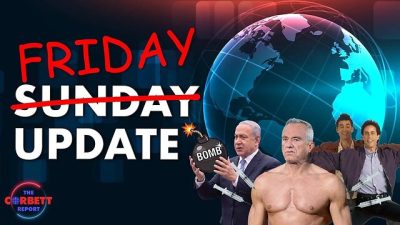
Racist Seinfeld Dances for Joy as Bibi Unveils His New Map
or go to
Aletho News Archives – Video-Images
TV Drama Review
Japanese drama projects Japan’s wartime atrocities onto Chinese characters

Global Times | October 25, 2026
By portraying Chinese characters as perpetrators of ruthless violence while casting Japanese Self-Defense Forces (SDF) intelligence operatives as defenders, the season 2 of the Japanese drama Vivant has recently drawn criticism from Chinese netizens, who argue that its depiction turns historical reality on its head while ignoring Japan’s wartime atrocities.
The TBS drama series – a spy suspense story in which an alleged unofficial intelligence unit of the SDF operates across the globe — has attracted a passionate fanbase. Its currently airing season 2 opened with a household rating of 18.8 percent, the highest for a TV drama this year, according toa commentary article by Japanese media Toyo Keizai.
What draws attention is the portrayal of the enemies in the series, the article noted. Scenes in which the Chinese organization subjects kidnapped members of the SDF unit to brutal torture are repeated with unrelenting intensity.
It is rare for Japanese TV dramas to explicitly portray a real-life country as the enemy, the article noted.
Japanese Prime Minister Sanae Takaichi also made a reference to the drama, saying that she has been recording Vivant and hopes to binge-watch it over the year-end and New Year holidays, according to Japanese media outlets.
China’s CCTV News report on Sunday revealed that the drama features scenes in which Chinese personnel cut off the fingers of and stab Japanese intelligence operatives in the abdomen. Such acts bear striking similarities to the torture inflicted on Chinese nationals by invading Japanese troops during the World War II.
The drama distorts the truth by attributing these atrocities to modern Chinese characters. Beneath the surface, it subtly glorifies Japan’s cross-border overseas operations, blurs the functional boundaries of the SDF and implicitly promotes an expansionist narrative, per CCTV News. … continue
Blog Roll
 Aletho News
- EU facing trillion-euro debt hole while seeking more cash for Kiev
- How US, Europe, Persian Gulf states exhausted missile stockpiles, splurged billions to defend Israel
- Up in arms… Koreans reject U.S. empire’s plan to make South Korea the next Ukraine
- Iran, Turkey, Pakistan, Saudi Arabia could advance region-led security framework in Tehran: FM spox
- Netizens condemn Japanese drama for projecting Japan’s wartime atrocities onto Chinese characters
- Racist Seinfeld Dances for Joy as Bibi Unveils His New Map
- A West Bank War for Netanyahu’s Election Campaign, Could It Backfire?
- Yemen denounces European Parliament’s ‘hypocritical’ push to blacklist Ansarullah
- Qalibaf: UAE’s UN bid aims to ‘clear the runway’ for ‘Greater Israel’, whitewash genocide
- Pakistan reopens Iran border after boosting security: Report
- If Americans Knew
- An error has occurred; the feed is probably down. Try again later.
- No Tricks Zone
- Sudden Stratospheric Warming, Powerful El Niño Combination May Lead To Extreme Europe Cold, Energy Crisis!
- Two New Studies Find Thwaites Glacier Melt Cannot Be Driven By Human Activity Or A Warming Ocean
- E-Cars Reduce CO2 Emissions By Only 41% Compared To Internal Combustion Engine Vehicles
- Predictions Made By Renowned Climate Professor Over Past Decades Have Been Proven To Be Poor
- New Study Suggests Large Regions Of The Pacific Ocean Have Been Cooling For The Last 80 Years
- Germany’s Green Energy Debacle: High Energy Costs Force Kahla Porzellan to Close After 182 Years!
- New Study: 50 Years Of The Most Aggressive ‘Net Zero’ Policies Can Only Affect The Global Climate By 0.03°C
- US September “Heat” Was No Record…Many Records Set Decades Ago
- Latest European Green Energy Debacle; Portugal’s Largest Flagship Solar Park Insolvent!
- Green Energy Debacle: German Expert Professor Fritz Vahrenholt Warns Of Severe Economic And Social Consequences

