US Shelters Venezuelan Fugitive, Criticises Existence of “Drug Kingpins” in Venezuela
By Rachael Boothroyd | Venezuelanalysis | April 19th 2012
Caracas – A Venezuelan judge has fled to the United States after he was dismissed as a Supreme Court Magistrate on March 20th, when an investigation was launched into his links to Venezuelan drug lord Walid Makled. Venezuelan born Makled is currently on trial in the country for crimes including narco-trafficking and murder, after being extradited from Colombia to Venezuela in May last year.
According to the charges levelled at the ex-magistrate, Eladio Aponte, the judge granted a falsified identification document to Makled which named him as a member of the magistrate’s staff, permitting him free passage to anywhere in the country.
In an interview on Wednesday night for US television channel SOiTV, the ex-judge hit out at Venezuelan politicians and high ranking members of the army, accusing them of having intervened and manipulated the Venezuelan judicial system. He also added that he thought Makled to be a “reputable businessman”.
The government has categorically refuted the claims, which they say are an attempt to smear the Chavez administration.
“He is an ex-magistrate being prosecuted for his links to drug trafficking, and who has sold his soul to the devil,” said Venezuelan Foreign Minister, Nicolas Maduro, whilst defending the country’s judicial institutions as independent.
“We can say with total certainty that in the case of Aponte, the decisions taken by our public institutions were in total compliance with the law, demonstrating that there are laws in Venezuela, that here there or no privileges and that no one is protected by narco gangs”. “Aponte is a totally discredited man,” he added.
The minister also went on to criticise the role of the U.S.’s Drug Enforcement Agency (DEA) in engineering Aponte’s escape after it emerged that a DEA plane had transported the fugitive from Costa Rica to the United States.
“The DEA now takes away this man accused of being linked to drugs trafficking mafias to turn him into a spokesman against Venezuela… The United States continues to be a sanctuary for drug traffickers, the corrupt, traitors and terrorists,” he said.
Maduro’s sentiments have been echoed by other members of the Venezuelan government and armed forces, as well as by US- Venezuelan attorney and investigative journalist Eva Golinger, who said that Aponte’s claims were part of a “systematic” campaign by Washington to depict Venezuela as a “narco-state” using whatever means possible.
OFAC Criticises “Worrying Trend”
Aponte’s flight to the U.S. comes as the Director of the United States’ Office of Foreign Assets Control (OFAC), Adam Szubin, criticised a “worrying trend” in Venezuela, relating to the presence of “drugs kingpins” in the country.
In an interview with opposition newspaper El Universal earlier this week, Szubin stated that the organization was particularly concerned with individuals who were in violation of the “Kingpin Act,” which “goes after foreign persons” accused of financially aiding or supporting the international trafficking of narcotics. Several Venezuelan government officials have been controversially added to the organisation’s sanctions list since 2008.
“The designations made over the last two years,” said Szubin, “conform to the Kingpin Act and point towards a worrying trend in Venezuela.”
“Nobody is added to the list by mistake,” he continued, although conceding that 400 individuals had been removed from the list since 2009.
Szubin went on to cite current Venezuelan Defence Minister, Henry Rangel Silva, who was placed on the agency’s sanctions list in 2008 for allegedly attempting to increase cooperation between the Venezuelan government and Colombia’s FARC guerrillas as proof of this trend. To date, no evidence has been presented by the OFAC in support of these allegations.
As a division of the Treasury Department’s “Terrorism and Financial Intelligence” agency, the OFAC is responsible for administering and enforcing sanctions against states, individuals and groups accused of terrorism, such as those currently being enforced against Iran. The agency is described by the Washington Post as being an institution that “U.S. policymakers increasingly rely on to advance national security and foreign policy goals in the post-9/11 era”.
Since 2008, six other members of the Venezuelan government, including former Caracas mayor Freddy Bernal, have also been added to the OFAC sanction list.
Relations between the United States and Venezuela in the fight against the international drugs trade have been strained since the latter expelled the U.S.’s Drug Enforcement Agency (DEA) in 2005 for acts of espionage, with the Venezuelan government charging the agency with maintaining a consistent campaign against the left wing politics of the government, as opposed to focusing on counter-narcotics operations.
Western Journalist: Visa Denied
By Sharmine Narwani | Al Akhbar | 2012-04-21
Item number five on UN Envoy Kofi Annan’s 6-point plan for Syria is the following:
“(5) Ensure freedom of movement throughout the country for journalists and a non-discriminatory visa policy for them.”
At a delicate moment in the hard-fought Syrian conflict that could potentially destabilize the entire Middle East, the United Nations believes getting more journalists into Syria is one of the six most urgent actions to consider?
Why? Are foreign reporters trained in special “observer” skills – with unique truth-detecting abilities bubble-wrapped in bullet and mortar-proof goop? And what will they see that Syrians – who know Syria best – cannot observe for themselves?
What the UN is really demanding – let’s be honest here – is for the Syrian government to open up the country to “Western” journalists. Yet, in all the conflicts covered in recent years, I cannot recall one that has been more badly covered by the mainstream western media than this Syrian crisis.
Almost to a person, western journalists are blaming their substandard coverage on the fact that they have been denied entry into Syria. And also – to a person – they seem to think that the world needs them there to understand what is going on inside the country.
Paul Conroy, the Sunday Times freelance cameraman who was injured by an explosive in Homs in February, tells the BBC’s Hard Talk that Syrians need their events verified by people like himself and his now-deceased colleague, war correspondent Marie Colvin, in order to be believed:
“It is a sad state of affairs that it does need people to go in… and actually be Western and be official journalists to make it real in the public eye.”
Is that like a Western-journalist-verification-stamp of some sort? Does it come with a guarantee – for accuracy in reporting?
Because, right now, I honestly cannot think of a group of people less capable of verifying things in Syria than western journalists. And it is not because they aren’t physically there or can’t string together more than two words in Arabic. It is largely because they feast at the trough of their own governments’ narratives on All Things. Western journalists are heady with a sense of righteousness leached from the oxymoronic “western values” shoved down our collective throats. Those same western values that demand “accountability” and “transparency” from all nations – while offering cover for western governments to hack their way through Muslim and Arab bodies in endless “national security” wars.
Do tell… Which major mainstream western media outlet has ever fundamentally questioned their government’s narratives on these wars? Which major western journalist risked career for truth on affairs related to the Middle East? Give me the name of that brave western network reporter who disrupts press conferences regularly with inconvenient questions on weapons sales to Gulf dictatorships – and has his bosses go to the wall to ensure he remains in the White House press pool. Show me the western reporter at the Washington Post, New York Times, CNN, BBC, France 24 who has made a career of doggedly questioning Israel’s disproportionate use of force against civilian populations – a journalist who sticks a microphone under Sarkozy, Obama or Cameron’s nose and bellows: “What fucking Peace Process are you chaps banging on about?”
No? Not one? Come on!
“No Syrian Visa” is just a convenient excuse for the lazy and sloppy reporting of western media in this Syrian conflict. It is a handy sound bite these days – one that quite deliberately ignores the Arab League Monitors’ January 2012 Report that 147 foreign and Arab media organizations were operating in Syria during their month-long observations.
“No Syrian Visa” tries hard to distract from the reality that most western journalists never actually go out to the front lines of conflict when filing their stories. Increasingly, reporters are sent out in organized pools by host governments – or in the case of recent US-initiated wars in the Middle East – by the invading armies.
“No Syrian Visa” selectively forgets that entering US-foe Syria as a journalist today is no more difficult than waltzing into US-ally Saudi Arabia – or US-ally Bahrain, when Formula One cars are not racing there.
And “No Syrian Visa” will blush hard when recalling that there was no similar collective western media outrage when the government of Israel declared “No Gaza Entry” as it pounded Palestinian populations in 2009.
Glossy Journalists Seek Content Not Facts
No. The problem with western reporters is that they are past their due date – remnants of an industry we once believed brandished standards of objectivity we never actually witnessed.
They are news-as-entertainment professionals – packaging glossy corporate content for maximum distribution and big bucks. The goal is not objective reportage. Their targets are quantifiable and highlighted in a business plan somewhere. Success is based on a simple formula: stay within parameters “understandable” to a wide audience that devours sound bites and familiar storylines on the hour, every hour. Like trained seals whose every desire, instinct and buying pattern has been measured by corporate media’s marketing department for the consumption of its advertisers, the audience demands satisfaction – and western media delivers it.
With the exception of a few proud holdouts, western media has made a beeline for the sexy story in Syria – which is essentially the fairytale of the “Arab Spring” with a little twist: Bad regime, good activists – but kick out this dictator and it’s a three-for-one, with Iran and Hezbollah tossed in as a bonus.
There are only three guiding rules for most western journalists inside or outside of Syria: 1) only quote anti-regime populations, 2) do not seek out independent domestic opposition figures, 3) evidence is unimportant, as long as you loosely “source” it:
They head straight for the Syrian activist, the anti-regime demonstration, the man with the gun in a “hot spot.” These are one side of the Syrian story, for sure. But you will not find mainstream western journalism broadcasting a pro-regime rally of tens of thousands, the national flag painted on the faces of Assad supporters – young and old – waving posters of their president. Pro-regime Syrians, a majority of whom voted in a national referendum in February to adopt constitutional reforms, are never interviewed by these reporters.
You will not find western journalists side-stepping the NATO-friendly Syrian National Council (SNC) “opposition” to interview the dozens of domestic Syrian opposition figures – most who have spent years in regime prisons – but who also unanimously reject the militarization and internationalization of the conflict; i.e., “non-Syrians butt out.”
And most importantly, you will never find mainstream western journalism seeking out “evidence” to support the false narratives of their governments. Who is included in the daily death count reported around the world? Who has killed thousands of Syrian soldiers? Who is killing children in Syria? Who is killing journalists in Syria? Who stands to gain from these deaths? Who stands to gain from this video footage or still photo emailed to my desktop? How do I know that plume of smoke was caused by a regime mortar? Who is the sniper? Why do so many Syrians still support Bashar al-Assad?
Propaganda As a Weapon of War
The “Big Lie” is a propaganda technique used liberally by western governments in the Middle East. The Big Lie refers to “the repeated articulation of a complex of events that justify subsequent action. The descriptions of these events have elements of truth, and the Big Lie generalizations merge and eventually supplant the public’s accurate perception of the underlying events.”
Using Big Lie techniques in the Middle East are particularly easy because western media is so happily complicit in propagating one-dimensional stereotypes of Arabs and Muslims. These assumptions are programmed so deeply, that even after months of watching on our TV screens disparate populations of all backgrounds and political convictions rally to reshape their governing systems… we still see regional events only through the prism of a one-size-fits-all Arab Spring.
The US Military’s Special Forces Unconventional Warfare manual describes ways to overthrow a government outside of a conventional combat format. In a section headlined Will of the Population, the manual explains ways to overcome popular support for the existing national government and alter natural hostility to foreign intervention:
“Information activities that increase dissatisfaction with the hostile regime or occupier and portray the resistance as a viable alternative are important components of the resistance effort. These activities can increase support for the resistance through persuasive messages that generate sympathy among populations.”
The manual expounds on this in another area:
“The USG (US Government) begins to shape the target environment as far in advance as possible. The shaping effort may include operations to increase the legitimacy of U.S. operations and the resistance movement, building internal and external support for the movement, and setting conditions for the introduction of U.S. forces. … The population of a recently occupied country may already be psychologically ready to accept U.S. sponsorship, particularly if the country was a U.S. ally before its occupation. In other cases, psychological preparation may require a protracted period before yielding any favorable results.”
The Syrian crisis is not about reforms any longer – it has become a geopolitical battle for influence in the Middle East, with NATO, the GCC and BRIC nations taking sides. Western media fails to address this larger picture, so glaringly obvious to people in the region. Instead it focuses almost entirely on the “David vs Goliath” or “good vs evil” themes that appeal to a broad audience of dumbed-down media consumers. These populations in turn become perception “leaders” when they back foreign military adventures in opinion polls broadcast back to us by – you guessed it – western media. And in that neat trick, your western government checks off a tick-box called “citizen approval.”
But Syrians have approved no such thing. More than a year after the first anti-government protests – which have never grown into the hundreds of thousands and millions experienced elsewhere in the region – Syrians have not ejected their leader, nor is there any evidence that the majority of Syrians wish to do so. The constitutional referendum in February, which a small majority of Syrians approved in an excellent turnout, should have been some indication for the media that popular sentiment is not necessarily reflected in an unverifiable cellphone image.
The daily casualty statistics coming out of Syria are deliberately misrepresented as regime “kills,” satellite photos of alleged regime shelling contradict the dominant narratives, activists faking events begs the question “why would they need to falsify evidence if the regime is so brutal?” But western media hears and sees nothing that doesn’t suit their formulaic narrative.
There is no better example of how mentally embedded western media has become with the Syrian “opposition” (itself a very broad and mixed bag), than a recent incident with CNN in Homs. Correspondent Arwa Damon and her non-Arab crew were tipped off about a potential pipeline explosion, so they pre-positioned their camera in a window frame facing the exact location of the anticipated bombing. When the pipeline explodes some time later, Damon and her crew look exultant – almost drunk on their success. Scoop? Try complicity in an act of terrorism. Can you imagine them doing this if the target was an American installation in Iraq or a NATO depot in Afghanistan? They would never live it down.
Reality Check
A year after the first small protests in Syria, the Syrian government stands strong, bolstered by its many constituencies, and spared the mass defections experienced by other Arab leaders. It appears that propaganda is not enough to shake the foundations of all Arab states. Now is the time for western media to ask why they got it so wrong. And some are indeed questioning their information, sources and assumptions.
There are western journalists who are doing a more than creditable job of writing about Syria from outside the country – the Independent’s Patrick Cockburn and The Guardian’s Seumas Milne come to mind. Please feel free to list other responsible, professional western journalists in the comments section below – I am sure we all want to celebrate their courage and increase their page views.
As for the others, their arrogance and cowardice is dangerous. False narratives have emboldened Syrians and other regional actors to act incautiously, angrily, even euphorically, when they might have benefited from nuance and calculation. People have died in the spinning of this conflict.
It is clearly time to challenge the dated concept that mainstream western media is impartial, objective or professional in their coverage of Mideast affairs. But we shouldn’t just bemoan this injustice in yet another stream of impotent essays and editorials. We must drag this industry of disinformation into the public arena, and make them accountable throughout the region by acting to affect ratings and readership.
Kofi Annan needs to immediately drop item number 5 on his Syria plan. While freedom of speech is important to uphold – even more so in times of strife – today, mainstream western journalism is nothing more than another face of the “external intervention” he so gravely warns against. Toss those western journos out of Syria unless they can demonstrate independent, objective, responsible reporting of this conflict. False narratives are costing Arab and Muslim lives. And media “combatants” need not apply to practice their craft in this region any longer.
Sharmine Narwani is a commentary writer and political analyst covering the Middle East. You can follow Sharmine on twitter @snarwani.
Related articles
- Foolishly Ignoring the Arab League Report on Syria (alethonews.wordpress.com)
- Syrian opposition leader, in unprecedented interview with Israel Radio, says Syrians want peace with Israel (timesofisrael.com)
- UN ‘aid’ program to be used in establishing NATO ‘humanitarian corridors’ (activistpost.com)
Proposed Amendments to #CISPA Don’t Protect Privacy
By Michelle Richardson | ACLU | April 19, 2012
Yesterday, the House Intelligence Committee released proposed changes to the Cyber Intelligence Sharing and Protection Act of 2011, also known as CISPA that, according to its sponsors, represent “huge progress” towards addressing the privacy and internet freedom community’s concerns.
But, many privacy advocates, including the ACLU, and groups including the Center for Democracy and Technology, Free Press, the Electronic Frontier Foundation and the Constitution Project still maintain their opposition. The changes are so underwhelming that even the Obama administration issued a statement yesterday that their privacy concerns persist.
Here are some of the main problems with CISPA:
1. CISPA still allows companies to share lots of sensitive and private information about our internet use with the government. The proposal amended the definition of what could be shared by taking out its explicit reference to stealing “intellectual property.” But it still allows the sharing of Internet use records or the content of emails for “cybersecurity purposes” and unlike proposals drafted by Sens. Joe Lieberman and Dianne Feinstein or the Obama administration, CISPA does not require companies to even make an effort to remove information that could be tied to a specific individual.
2. CISPA still lets military agencies such as the National Security Agency directly collect the Internet records of American citizens who use the public, domestic, civilian Internet. The proposed changes state that the Department of Homeland Security should be cc’d when companies share our private details with the military and others, but this is no substitute for ensuring that a civilian agency is put in charge of collecting Americans’ information.
3. CISPA still lets the government use the private information it collects about us for any purpose it deems fit outside of regulation. For four months, the draft bill has remained the same: the government can use information collected under this broad new program for “any lawful purpose” so long as a “significant purpose” of its use is a cybersecurity or national security one. But as former federal and FISA court judge James Robertson said at a congressional briefing this week, this “significant purpose” limitation is meaningless. The Patriot Act inserted this language into our foreign intelligence surveillance laws, and since then, in Judge Robertson’s words, they’ve had a “hole you could drive a truck through.”
Hard to see the progress here.
CISPA is still expected to hit the House floor for “Cybersecurity Week” next week. You can find out more about the bills in this memo, and more importantly, help us spread the word on Twitter and write to your Member of Congress today. Let Congress know that in spite of the minor changes floated by the House Intelligence Committee, you still oppose CISPA.
Related articles
- The Disturbing Privacy Dangers in CISPA (alethonews.wordpress.com)
- Worse than SOPA? CISPA to censor Web in name of cybersecurity (alethonews.wordpress.com)
- 5 Reasons the CISPA Cybersecurity Bill Should Be Tossed (techland.time.com)
- CISPA Lacks Protections for Individual Rights (usnews.com)
- Week of Action Against CISPA Begins, But Don’t Expect Web Blackouts (mashable.com)
A Slick Trick on the NDAA and Indefinite Detention; Don’t Be Fooled!
By Chris Anders | ACLU | April 19, 2012
It looks like there is slick little trick brewing in Congress. Supporters of locking people up without charge or trial are getting ready to play yet another trick on the American people.
Late yesterday, Congressman Scott Rigell and 26 other members of Congress introduced a bill, H.R. 4388, which he is trying to sell to the American people as a “fix” for the National Defense Authorization Act. But in fact, it is a useless bill that might actually end up causing harm.
That’s right. The plan in the House of Representatives seems to be to try to fool Americans into thinking that they are fixing the indefinite detention problems with the NDAA and the Authorization for the Use of Military Force, when in fact, they are doing nothing good.
Don’t be fooled!
Here’s how they hope their trick will work. H.R. 4388, which was sneakily mistitled as the “Right to Habeas Corpus Act,” states that no one in the United States will lose their habeas rights under the NDAA. That might sound like something good, but it’s meaningless.
The question with the NDAA was never whether habeas rights are lost. Instead, the question is whether and when any president can order the military to imprison a person without charge or trial. The NDAA did not take away habeas rights from anyone, but it did codify a dangerous indefinite detention without charge or trial scheme. And nothing in the proposed bill by Rigell would change it. The Rigell bill won’t stop any president from ordering the military lockup of civilians without charge or trial.
And there’s more. Not only is it a useless bill, but it could end up causing harm too. It doesn’t accurately and fully list who is entitled to habeas (for example, it doesn’t even mention American citizens traveling outside the country), which could end up causing confusion.
They are hoping you will fall for their trick and waste all your time and energy on something meaningless — and not fight for legislation that actually protects people from indefinite detention without charge or trial.
They are hoping you will ignore the bills that actually are first steps towards fixing the NDAA. Congressman Adam Smith and Sen. Mark Udall introduced H.R. 4192/S. 2175, which codifies a ban on the military imprisoning civilians without charge or trial or trying persons before military commissions within the United States, as well as repeals section 1022 of last year’s NDAA. Also, Congressman Ron Paul has sponsored H.R. 3785, which repeals section 1021 of the NDAA. Both are meaningful first steps towards fixing a problem.
Supporters of last year’s NDAA indefinite detention provisions hope you will fall for their trick. They want you to spend your time pushing for the Rigell bill, instead of working on something meaningful. For more information about our opposition to the bill, you can read the letter that we sent to congressional offices earlier this week. Retweet our tweet to Rigell to tell him to stop playing games with indefinite detention without charge or trial.
Related articles
- Letter to my Congressman About the NDAA (occupycentral.wordpress.com)
US creates Afghan insecurity to keep military presence: Iran lawmaker
Press TV – April 19, 2012
A senior Iranian lawmaker says the US creates instability in Afghanistan to depict the war-torn country as insecure, thereby paving the ground for maintaining its military presence there.
The US orchestrates the explosions in Afghanistan in order to instill this idea in the minds of the Afghans that Afghanistan will experience insecurity and tension once more without the US presence, Chairman of Iran’s Majlis Committee on National Security and Foreign Policy Alaeddin Boroujerdi said.
Washington seeks to make the Afghans believe that only the US can provide security for their country, he noted, adding that, however, “experience has shown the US presence has not brought about security but has in fact led to conflicts, bombings, and numerous other security problems in the Asian country.”
He said the US has long been after signing a strategic treaty with the Afghan government in order to make its military presence official and lawful.
Under the US Constitution, Washington cannot deploy forces to a country without obtaining judiciary immunity for its forces in that country, Boroujerdi said, adding that “signing a strategic treaty with the Afghan government will give the US judiciary immunity and permission to maintain its military presence.”
The US has been seeking to sign a strategic partnership agreement with the Afghan government, which would set the framework for the US presence in Afghanistan after international combat troops leave the country in 2014.
There are increasing doubts as to whether Washington and Kabul will be able to reach a long-term deal as US-Afghanistan relations have been heavily strained in recent weeks.
Related articles
No Justice for Muslims under Obama
By Margaret Kimberley | Black Agenda Report | April 18, 2012
 The FBI and the Justice Department are still up to their old tricks. Not only do they continue to entrap Muslims in terror cases that wouldn’t exist without FBI involvement, but now they silence anyone who complains, charging them with trumped up offenses and insuring that the assault on law continues.
Khalifa al-Kalili is an American Muslim from Pittsburgh, Pennsylvania. Beginning in January of this year he was stalked by a man calling himself Muhammad but who has now been identified as Shahed Hussain. Hussain was on the verge of being convicted of a felony when he became an FBI informant in 2002. It was Hussain who entrapped four African American men from Newburgh, New York, into a phony plot to bomb synagogues in the Bronx.
Al-Kalili was rightly suspicious when Hussain and another informant befriended him and spoke of the need for jihad. Al-Kalili was not as naïve as the Newburgh Four or the dozens of other people who were charged and convicted of committing terror acts which were created solely by the government.
Al-Kalili voiced his concerns very publicly, to the Albany Times Union newspaper and posted his fears on his Facebook page. He used Google to identify the cell phone number of the man who was stalking him and discovered that he was in fact Shahed Hussain. Al-Kalili’s attempts to protect himself were of no avail. After he scheduled a press conference to announce his plans to sue the FBI, he was suddenly arrested for a firearm violation and remains held behind bars without bail.
This case is one of many in which the American government has created a separate and decidedly unequal system of justice for Muslims. Shahed Hussain is now well known and notorious for tricking people into committing crimes. He is so brazen that he felt no need to hide or to even get a new cell phone number. Obviously he knows that the FBI is his protector and that he need not take any precaution to avoid detection. Even when his victims use legal means to avoid being ensnared, they go to jail anyway.
These entrapment tactics began during the Bush administration, but as in other instances, the Obama administration is nothing more than Bush part two. The president of the United States, the attorney general and the FBI director are all complicit in violating not only the protections granted to Americans in the constitution, but in establishing a system of separate and unequal justice for Muslims in this country. Once again, the value of having a former constitutional law professor sitting behind the desk in the oval office is less than negligible and an insult to anyone who cares about justice.
The story of Khalifa al-Kalili is an example of the rot which permeates the American political and judicial systems. Mass incarceration, selective prosecution, prosecutorial misconduct and police brutality all make a mockery of the claim that there is equal justice under American law. There have always been groups who were subject to brutality and injustice and now the first black president has proven that the system cannot be changed from within. It must be uprooted by people who first are willing to call the evil by its name and who are willing to dedicate themselves to eradicating it once and for all.
There are a multitude of reasons not to vote for Barack Obama, but his decision to continue a wholesale subversion of what is left of the justice system is one of the most important. How does anyone claim that the Democrats are our saviors and the Republicans are the evil doers, when all evidence points to criminality on both sides?
Neither Democrats nor Republicans are fit to govern this country. It is useless to continue revealing the injustices suffered by al-Kalili and others if the end result is a continuation of the status quo. Good journalism brought this case to light, but if must go further. A laundry list of people who have been turned into criminals by our government is useless unless a call to action comes along with it.
What will the call to action be for al-Kalili? Will people who excoriate Obama because of the injustice perpetrated by his Justice Department still make the case for his re-election? If so, they need not have bothered with al-Kalili at all. They should have swept his case under the rug and forgotten him. Voting for Obama and the Democratic party is tantamount to doing that anyway.
Margaret Kimberley lives in New York City, and can be reached via e-Mail at Margaret.Kimberley(at)BlackAgendaReport.com.
Related articles
- US Muslim claims detention and torture by FBI (rt.com)
- Entrapment blues: Documents provide rare insight into FBI’s terrorism stings! (truthaholics.wordpress.com)
- Trouble follows some (miscellany101.wordpress.com)
- Interview: Infiltrator who spied on Muslims reveals FBI techniques (alhittin.com)
Progress or Promises? Free Trade and Labor Rights in Colombia
By James Bargent | Upside Down World | April 16, 2012
Rodolfo Vecino has a death sentence on his head. He has been told he will be kidnapped, tortured and his family will be murdered. Already this year one of Vecino’s colleagues has been killed – in January, Mauricio Arrendondo and his wife Janeth were gunned down in front of their children.
Vecino is the president of Colombian oil workers union (USO), which was last year declared a “military target” by right-wing paramilitaries for its campaigns against what the union says are the abusive labor practices of Canadian oil giant Pacific Rubiales. The union’s campaign began last summer; just two months after Colombia signed a Labor Action Plan (LAP) with the U.S. pledging to tackle the very practices used by Rubiales and the type of anti-union violence that USO has suffered. The signing of the pact unblocked negotiations over the Free Trade Agreement (FTA) between the countries, which had stalled over Colombia’s abysmal labor rights record.
A year on, and at last weekend’s Summit of the Americas, the U.S. declared it was satisfied that Colombia had complied with the LAP and was enacting the reforms called for. The decision opens the way for full implementation of the FTA in May, even as unions and human rights groups in both countries continue to accuse the U.S. of “rewarding promises not actions”. Meanwhile, USO’s campaign against Rubiales continues and it is far from an isolated case. Unions across Colombia maintain they face the same problems of violence, worker abuse and anti-union practices, all committed with seeming impunity.
Disposable labor
Protests against Rubiales began after workers at the company’s Puerto Gaitan site contacted USO and described how 12,000 sub-contracted workers – the overwhelming majority of the workforce – were enduring low pay, appalling conditions and instability while being denied the right to bargain collectively and associate freely.
Ending the abusive sub-contracting system commonly used in Colombia was one of the principal aims of the LAP. The practice began in the late 70s, when businesses began to take advantage of the fact that many of Colombia’s labor regulations did not apply to worker cooperatives. Companies fired their entire workforce then forced workers to sign on with contractors calling themselves cooperatives. As the workers were then classified as temporary employees and could be laid off without cause, the cooperatives forced them to accept whatever pay and conditions were on the table. It was also a useful tool for preventing unionization as any worker who began organizing or agitating could be immediately fired. “They lost their rights, they lost money [and] they lost their working stability,” said Andres Sanchez from Colombia’s National Union School (ENS). The practice continues today, utilizing Colombia’s army of the unemployed and underemployed as ready replacements for sacked workers.
The LAP called for Colombia to enforce pre-existing but widely ignored legislation banning the cooperatives. However, as the Rubiales workers testified, in many sectors little has changed. Because the cooperatives are now banned, most of the contractors have simply changed names and become Simplified Stock Companies or Temporary Service Companies. “The phenomenon continues the same,” said Sanchez. “It is the same dynamic, they do the same things, workers [still] can’t demand that they benefit from their labor and not the third party,” he added. According to Sanchez, over 2 million workers in Colombia are still employed through these sub-contractors.
In Puerto Gaitan, the sub-contracted Rubiales’ workers have been forced to accept what Rodolfo Vecino called, “truly humiliating and poverty stricken” conditions. “They don’t have the conditions of a dignified life, they don’t have dignified salaries, they don’t have contracts that genuinely give the workers respectable levels of stability,” he said.
The workers have also testified to being pressured and threatened because of their association with the union and being told they would not be employed again while they were still members. “Although I am aware of my rights,” said one worker in a letter to USO, “in this case my need to survive and stay in work is more important.”
The ENS and USO both say they have persistently informed the government of the continued use of the cooperative style sub-contracting but little action has been taken despite the harsh penalties now demanded by law. So far, one company has been hit with a $6.5 million dollar fine over its use of contractors in the African palm sector. However, the fine was only imposed after a 107-day strike and came a week before Colombia’s labor minister traveled to the U.S. to discuss progress on labor rights. According to Sanchez, several months later and the fine has yet to be paid.
The paramilitary right and anti-union violence
After five months of strikes, blockades, occupations and violent clashes between riot police and protesters in USO’s confrontation with Pacific Rubiales, Rodolfo Vecino announced he had been threatened by four men claiming to be from the Auto-defensas (Self-defense forces). According to Vecino, the men told him he had been “sentenced” because USO’s confrontation with Pacific Rubiales made him an “obstacle to development.”
The term Auto-Defensas refers to the United Self-Defense Forces of Colombia (AUC), an umbrella group for Colombia’s right-wing paramilitary movement that controlled vast criminal networks and infiltrated the core of Colombia’s political and economic systems. Its stated mission was to combat Colombia’s leftist guerrilla groups, something it did in part by waging a dirty war against “guerrilla collaborators” – members of leftist political parties, community organizers, human rights workers and unionists. From 1986–2011, nearly 3000 unionists were murdered, and although most of the cases remain unsolved, in Colombia there is little doubt that paramilitary groups such as the AUC were responsible for the overwhelming majority of the killings.
The AUC officially demobilized in 2006 after negotiations with the government of Alvaro Uribe. However, the much criticized process gave rise to a new wave of illegal armed groups. These new organizations mostly consist of former mid-level AUC commanders and foot-soldiers that either never demobilized or simply re-enlisted after demobilization. For the most part they no longer fight the guerrillas – in some cases they even collaborate with them – but instead concentrate on drug trafficking and maintaining the AUC’s criminal networks and commercial interests. However, the end of the ideological war between the paramilitaries and the guerrillas did not lead to a significant drop in anti-union violence and Colombia remains by far and away the most dangerous place in the world for unionists.
According to Vecino, three of these groups operate in the same areas as USO – the Rastrojos, the Urabeños and the Popular Revolutionary Anti-terrorist Army of Colombia (ERPAC). He believes the continuing violence against unions is because of the links between businesses and the paramilitaries. “We believe there are links in the zone,” he said. “Today there are no political lines of definition of these groups but interests around drug trafficking [and] they sell themselves to the highest bidder,” he said. “If [the company] gives them money it wouldn’t be the first time multinationals have associated with paramilitaries or common criminals to strike against the union sector.” Vecino also claimed that some of the cooperatives have ties to armed groups and are used to launder drug money.
Pacific Rubiales has adamantly denied any contact with paramilitary groups. Jorge Rodriguez, the company’s head of corporate affairs, told news website Colombia Reports: “We are very sorry for the USO union. We reject any type of threat, any type of intimidation, not only to trade unionists but to anyone in the country.”
Andres Sanchez agrees with the theory that the new groups continue to act as the armed wing for powerful commercial interests, pointing to how Chiquita bananas and Coca Cola have been implicated in the murder of unionists. “It is a culture where some businesses have used violence as a way of solving labor relation problems,” he said. “In Colombia, the links between paramilitaries and business have not yet been uncovered.”
For most American politicians and unionists, anti-union violence was the biggest obstacle to the passing of the FTA with Colombia and curbing that violence the LAP’s greatest promise. In the first year of the plan, 27 unionists were murdered and 2 disappeared, according to the ENS. While that remains the highest murder rate for unionists in the world by some distance, it does represent a significant reduction; in 2010, 51 unionists were murdered and 7 disappeared. However, Andres Sanchez believes the drop in homicides does not tell the whole story. “The situation with the violence has shown changes in its logic,” he said. “Now, it is not necessary to murder a unionist to successfully freeze a union. We have seen that threats, injuries and displacement have increased … homicides have gone down a bit [but] the situation persists.”
In the LAP, the Colombian government pledged to increase protection for unionists by broadening the coverage of its protection program, clearing the backlog of applicants for the program and speeding up the application process. According to the U.S. government this is exactly what it has done. However, while the unions acknowledge there have been some improvements, they remain critical. “They say ‘no one in the program has been killed,’” said Sanchez. “So we say the program is badly designed, because they kill the unionists who aren’t in the program.”
The unions complain that the protection program excludes too many people and that the Colombian authorities have cleared the backlog and sped up the process partly by rejecting more people more quickly. According to Sanchez, this has involved turning down unionists who have received death threats. “They say that if they threaten someone it is a salvation because generally, the ones who are murdered have not been threatened, [and] the threat is to silence someone so it is not necessary to take measures after,” he said.
The approach has had a serious impact on USO leaders. Last August, USO received a letter informing them that protection programs for 23 leaders and a number of regional offices would either be terminated immediately or only extended temporarily. Three of those leaders were involved in organizing in Puerto Gaitan.
The LAP also pledged to tackle the impunity enjoyed by those responsible for the anti-union threats and violence. Less than 10% of the more than 3000 cases of murdered unionists have resulted in convictions. Many of those convictions came not from successful investigations but from confessions by paramilitary killers and, while the perpetrators of the crimes identified themselves, the intellectual authors remained hidden.
In 2007, the Attorney General’s Office set up a specialist sub-unit dedicated to anti-union violence. However, of the 195 murders that took place between the start of the sub-unit’s operations and May 2011, only 6 resulted in convictions. The unit did not obtain a single conviction for the 60 homicide attempts, 1,500 threats and 420 forced displacements in the same period.
The prosecutor’s office’s shortcomings in investigating anti-union violence were supposed to be addressed by 15 measures in the LAP, ranging from assigning more full time investigators to the unit to establishing victims assistance centers. As Congress approved the FTA in October, American union AFL-CIO reported that all but three of the obligations had either not been met, had been met insufficiently or there was no evidence of progress.
Progress for labor or for free trade?
Although he believes the LAP has failed to significantly improve the labor rights situation in Colombia, Andres Sanchez says the plan was an important step. “Yes, [the LAP] was to facilitate the unfreezing of the FTA,” said Sanchez, “but it was also a serious attempt.” However, he thinks the LAP will not be effective unless the government does more to involve unions in the process. “They are important measures,” he said, “expensive measures that could be effective but with this great vacuum of not taking into account the unions, they are measures that could fail.”
In the U.S, the implementation of the LAP has been monitored by the AFL-CIO, which has been critical of the government for using it to push through the FTA. “We don’t think the plan was sufficient to accomplish the goals but we do think it was a step in the right direction, a step towards meaningful change,” said the AFL-CIO’s Celeste Drake. “Unfortunately, with the continued violence against unionists and too little progress on cooperatives and other practices like collective pacts [worker agreements used to sideline unions], it is far too soon for the US government to declare victory on the LAP and move ahead on the FTA. Colombian workers will lose whatever leverage they have to make real progress if the US moves too quickly.”
On the front line of the struggle against the violence and abuse suffered by Colombian workers and unionists, Rodolfo Vecino says he has seen very little change since the LAP came into force. “At the moment it is innocuous,” he said. “It doesn’t matter what is written there, they are dead words, they don’t have life because there isn’t anyone who is putting it into place.”
James Bargent is a freelance journalist based in Colombia. See jamesbargent.com
Related articles
- Colombia: Obama’s Bloodiest Betrayal? (alethonews.wordpress.com)
- Small-Scale Miners Face Crackdown as Foreign Companies Set Sights on Colombia (alethonews.wordpress.com)
- Trade deal to be implemented (politico.com)
The History and Resurgence of Death Squads in Central America
By Annie Bird | Upside Down World | April 17, 2012

On March 24, in the Public Health Workers neighborhood in Guatemala City, community leaders and neighbors chatted in a regular gathering place in front of a local store. The relaxed Saturday night was broken up by gunfire, a massacre that killed health care union leader Ovidio Ortiz, along with Bildave Santos Barco, Fredy Leonel Estrada and Oscar Alexander Rodriguez.
Public health workers unions are a strong force in defense of public services and natural resources, and among the most outspoken critics of the abuses of transnational corporations in Guatemala.
Ovidio Ortiz, a life-long health union leader, community organizer and political activist, was apparently the main target in the massacre; he received 8 bullets.
U.S. Assistant Secretary of State’s Visit to Central America and the Return of Repressive States in Central America
The next day, Assistant Secretary of State for International Narcotics and Law Enforcement William Brownfield arrived in Central America on a two day trip, visiting Honduras and Guatemala. Brownfield’s trip is to promote the US’s “drug war” in the Central America, in close coordination with a government born of a military coup in Honduras, and in Guatemala, a government led since January 7, 2012 by President Otto Perez Molina, a former general accused of participation in genocide.
Politically motivated killings apparently by death squads have been growing over the past few years in Central America, and concern in Guatemala is heightened as the new administration has brought back to public office many of the same individuals directly implicated in the State repression and genocide of the 1980s.
Ex-General, now President Perez Molina is no stranger to death squads. According to declassified State Department and CIA documents, in 1994 while head of Military Intelligence, Perez Molina ran a secret torture center with over 300 political prisoners rounded up by military intelligence. An investigative journalist reported that Perez Molina was a CIA asset at the time.
Human rights activists reflect that the Public Health Workers neighborhood massacre appears to be one in a series of incidents indicating the return to the repressive State, what one Guatemala sociologist describes as the return of the three rights, the neoliberal right, the anti-communist right and the counterinsurgency right.
Criminal Network Death Squads Re-enter Politics
Like the death squads in the 1960s-70s, recent crimes in Guatemala appear to employ criminal networks, drug trafficking network hit men, to carry out violence against unions and communities organizing against abuses by transnational corporations, with the collusion or support of the military and police.
The return of the repressive state in Guatemala is part of a regional process that mixes drug war, anti-terrorism and anti-communist rhetoric and partners US security experts and agencies with repressive States, States made up of many of the same individuals responsible for crimes against humanity carried out just one generation ago with the assistance of US military advisors.
In Honduras, death squads targeting anti-coup activists have been operating across the country since the June 2009 military coup; human rights activists denounce over 300 politically motivated killings. In the Bajo Aguan region, since January 2010 death squad killings have been spearheaded by private security forces working for transnational palm oil corporations with the collaboration of police and the same Honduran military units that have received ongoing training from US military forces. As a result over 60 campesinos and journalists have been killed.
Killing Ovidio, Killing Democracy: Counterinsurgency Violence without the Violence
On September 2, 1993 Ovidio Ortiz helped lead public health workers in recovering a tract of land that the then-militarized Health Ministry had purchased in 1982. Though ostensibly purchased to build a hospital, years passed and public health workers worried the property would fall into the hands of military linked businesses, as has happened with other public lands purchased under military governments, such as a now cement mine on the South side of the city. So, they occupied the land and the union negotiated with the Health Ministry to facilitate access to housing lots for health workers.
Ever since Ovidio was elected either president or vice president of the neighborhood development committee; he was vice president when he was killed. He was also a member of the Executive Committee of the National Union of Health Care Workers of Guatemala, and the Conflict Resolution Secretary of the National Front for Struggle in Defense of Public Services and Natural Resources (FNL), an alliance of public health unions and community organizations. And, he was a political activist with the URNG party born from the URNG revolutionary movement.
Over the past decade, health workers have been the most outspoken defenders of public services, with a strong and public political identification with the Latin American “left,” emphasizing the importance of sovereignty, an end to North American hegemony in the region, and popular struggle.
Ovidio was killed just two days after the National Union of Health Workers signed a hard-fought collective agreement with the Health Ministry. The March 22, 2012 agreement was the product of difficult negotiations that involved months of work stops, protests and road blockades. Though most of the struggle took place during the previous presidential administration, on February 24, 2012 the FNL, comprised in large part of the health workers unions, froze the nation for five hours blocking the eight major highway intersections. Public health workers showed their strength, leaving no doubt they are a force to be reckoned with.
Shooting Sprees in Working Class Neighborhoods Spread Fear
Guatemalan human rights organizations observe that the Public Health Neighborhood massacre is also part of a trend of shooting sprees in meeting places like corner stores that began occurring in working class neighborhoods.
On January 15, 2012, in Zone 6 of Guatemala City, young people were reportedly kidnapped by a military patrol. A similar action is reported to have occurred again two weeks later in the El Mezquital settlement, when men dressed in black with ski masks again kidnapped young people.
Six days after the March 24, 2012 Public Health Workers Neighborhood massacre, on March 30, 2012, a passing car sprayed bullets on residents gathered in front of a neighborhood store in Zone 18 in northern Guatemala City, injuring 8.
8 FNL Energy Nationalization Movement Leaders Killed in 6 Months
The National Front for Struggle (FNL), an organization where Ovidio Ortiz held a leadership position, is among the most outspoken opponents of the abuses of transnational corporations in Guatemala, and has been a target of death squad killings. The FNL has led a struggle for the nationalization of electrical services in Guatemala, privatized in 1999, while denouncing illegal surcharges and other abuses by Union Fenosa, a Spanish distribution company that benefitted from the privatization.
Communities organized with the FNL in the Department of San Marcos were part of a movement to withhold payment for electrical services in protest of abuses, including non-compliance with court mandated refunds to clients.
Murders of FNL Members
- On October 24, 2009, Victor Galvez, a local leader in opposition to Union Fenosa and member of the Front in Defense of Natural Resources (FERNA), a San Marcos based organization that belongs to the FNL, was shot 32 times as he left his office in Malacatan, San Marcos.
- On December 15, 2009, Union Fenosa cut electrical services to entire townships of San Marcos, and a State of Emergency was declared in response to the resulting protests. Over the next few months, during the state of emergency, a further seven FNL activists were killed in San Marcos.
- On January 13, 2010 Evelinda Ramirez was shot and killed in the municipality of Ocos while driving to her home in nearby Chiquirines.
- On January 29, 2010, energy nationalization activist, member of the FNL and the Malacatan municipal workers union Pedro Garcia was shot and killed while driving home.
- On February 17, 2010 Octavio Roberlo, a principal leader of the FNL in San Marcos was shot 16 times from a passing car when he was closing up his store in the bus terminal.
- On March 21, 2010, Carlos Noel Maldonado Barrios, Leandro Maldonado, and Ana María Lorenzo Escobar, three community leaders active in the denouncements against Union Fenosa were brutally killed by gunshots and machete wounds in the municipality of Ocos.
- On March 22, 2011, during protests in reaction to Union Fenosa cutting electrical service to the town of Las Brisas in Ocos, Guatemalan soldiers shot and killed Santiago Gamboa, head of the local committee for the nationalization of energy, while injuring six others.
Drug Hitmen Working for Spanish and US Transnational Businesses?
Ocos and Malacatan in the department of San Marcos are towns renowned to be controlled by drug trafficking networks. Reportedly following the December 15, 2009 massive suspension of electrical services, including to medical centers, Union Fenosa moved their San Marcos offices to a building owned by one of San Marcos’ most infamous drug traffickers, which to local residents appeared to be a signal of an alliance between the Spanish electrical company and traffickers.
The 2009-2010 killings of FNL leaders and supporters in San Marcos were carried out in a way characteristic of drug hit men killings.
The municipality of Morales in Izabal is another area dominated by drug traffickers where unionists are being killed in an apparent alliance between transnational corporations and drug traffickers.
Del Monte Fresh Produce banana workers are organized into the SITRABI union. Del Monte Fresh Produce is charged with hiring some of Guatemala’s most important drug traffickers, including Mario Ponce (extradited to the US on drug charges in January 2012), to kidnap SITRABI leaders in 1999, at the same that Marvin Bush, the brother of Jeb and George Bush, sat on the Florida based Del Monte Fresh Produce board of directors.
Over the past year a new round of hit style killings of SITRABI unionists are terrorizing banana workers: Oscar Humberto Gonzalez Vasquez was killed on April 10, 2011; Idar Joel Hernandez Godoy was killed on May 26, 2011; on September 24, 2011 Henry Anibal Marroquin Orellana was killed; on October 16, 2011 Pablino Yaque Cervantes was killed; and most recently, Miguel Angel Gonzalez Ramirez was shot to death while holding his son.
Death Squad Denounced in Cement Plant Conflict with Swiss Investment
In 2007, indigenous communities denounced the emergence of a death squad in San Juan Sacatepequez, Guatemala, where 12 Kaqchiquel Maya communities are resisting the entry of a cement plant which will decimate their territory, a project promoted by a consortium of the Guatemalan cement monopoly Cementos Progreso, owned by the politically powerful Novella and Torrebiarte families, and by the Swiss cement giant Holchim.
Community activists report that the violent group emerged following the May 13, 2007 community consultation that rejected the cement companies’ presence in the municipality, claiming it is run by former military officers and known as El Escuadron (The Squad). It first began extorting local residents, generating a ‘security crisis’ and then began killing accused “gang members” they claimed were responsible for the extortion.
Community leaders resisting the cement plant were subject to constant threats and violent attacks, and subject to flawed and apparently malicious prosecution for killings apparently carried out by El Escuadron.
1960s-1980s Death Squads Grew from Criminal Networks and US Security Advisors
The United Nations sponsored Truth Commission, published in 1999, reported on atrocities committed during Guatemala’s 36 year civil war (1960-1996). US government documents declassified in the 1990s as a contribution to the Truth Commission demonstrate that in the mid-1960s a U.S. public safety advisor to Guatemala, John Longdon, pressed superiors over the need to set up covert operations centers, a safe house for coordination of security intelligence and the designation of a room in the National Palace, the starting point of the infamous “El Archivo” parallel intelligence center and nerve center for death squads.
In mid-1966, US Southern Command forwarded a request from the Guatemalan government to the US government for assistance in setting up kidnapping squads. A surge of death squad killings that began in 1966 resulted in thousands of deaths.
The UN Truth Commission found that the death squads of Guatemala’s ‘internal’ conflict were initially criminal groups made up of civilians whose actions were tolerated and covered up for by State authorities, which received logistical support from the military, responded to decisions made in the military command structure, and eventually incorporated military personnel.
Death squads that incorporated drug traffickers like Arnoldo Vargas, a member of the infamous 1980s ‘Mano Blanco’ squad and the first Guatemalan extradited to the US on drug charges in 1992, carried out politically motivated killings.
The Truth Commission’s description of the origins of Guatemalan death squads is disturbingly similar to the picture emerging in Guatemala and Honduras today.
Post Peace Process Police Forces and One Alleged CIA Asset
The military intelligence networks were restructured after the 1990s peace processes and have continued as criminal networks. They shied away from political killings, likely due to the strong international presence accompanying the peace processes. But these intelligence / criminal networks continued to infiltrate the States on all levels.
With the partial demobilizations of the militaries and creation of new National Civilian Police forces after the signing of the peace accords in El Salvador and Guatemala, which involved the large scale recycling of soldiers as police officers, a new generation of death squads was created in Central America.
In the early 1980s, Victor Rivera, a Venezuelan national and reported Central Intelligence Agency asset, came to the Ilopango Airforce base in El Salvador to work alongside the infamous Cuban American bomber and alleged former CIA asset Luis Posada Carriles in running Oliver North’s National Security Council covert operations that employed former Nicaraguan National Guardsmen who had been operating as criminal gangs in Guatemala in attacking the Sandinista government of Nicaragua, the “Contra supply operation.”
Rivera went on to become a security advisor to El Salvador’s post peace accord Vice Minister of Security, Hugo Barrera. Rivera assisted in the creation of an unofficial police unit that operated out of the office of a business owned by Barrera. When the “Police Analysis Unit” was implicated in the killing of a medical student, he fled to Guatemala in 1996.
In 1996, the same year as the signing of the peace accords, wealthy Guatemalans became concerned about a rash of kidnappings, and organizations like Madres Angustiadas (Anguished Mothers) and Friends Against Extortion and Kidnapping (FADES) were formed. They welcomed Victor Rivera who set up another special parallel police team, this one in Guatemala.
Adela Torrebiarte, a founder of Madres Angustiadas and member of the Novella-Torrebiarte family which owns Cementos Progreso involved in the mining conflict in San Juan Sacatequez, supported Rivera’s entry into Guatemala. The two reportedly were close over 12 years.
The United Nations peace process verification mission MINUGUA reported that in 1996 a covert anti-kidnapping commando operated out of the Presidential Palace, and was involved in the capture of kidnappers of the elderly Isabel Bonifasi de Botran (brutally murdered in the course of the kidnapping), and in the capture and forced disappearance of a member of the ORPA revolutionary movement involved in the kidnapping of Olga Novella of the Novella-Torrebiarte family.
In 1997, when Victor Rivera’s parallel security teams office was raided by police, Madres Angustiadas jumped to his defense claiming that he had helped them resolve kidnapping cases. On May 4, 2001 Adela Torrebiarte’s nephew, Juan Andres Torrebiarte Novella, was kidnapped, but was rescued on May 24. MINUGUA reported that four of his captors were severely tortured.
Social Cleansing or Organized Crime Violence?
While kidnappings were the topic of concern in the late 1990s, from 2001 to 2005 it was murder, gangs and social cleansing. The murder rate grew 40% from 2001 to 2005. A large number of killings of young people, apparently gang related and murder of street children by police and gangs was widely reported.
Investigations by the UN-backed special prosecutors unit CICIG demonstrated in 2010 that in 2004 a network of officials in the Ministry of Governance and Police used their positions to engage in a range of criminal activities, including murder, robbery and drug trafficking. In 2010, arrest warrants were issued for 18 officials involved, including the Director of the National Police Erwin Sperinsen and the Secretary of Governance Carlos Vielmann.
Though reporting focused on their role in the death squad killings of prison inmates and escapees, the breadth of activities that this network was allegedly involved in leads to the conclusion that the inmate killings were not simply about cleaning up society or “social cleansing” but related to other criminal activities the officials were involved in.
This leads one to question what other motives besides “cleaning up” society may have been behind the crisis of killings of young people in the early 2000s.
Guatemalan Death Squads Reemerge in the Public Eye
In 2006, questions about Veilmann’s, Sperinsen’s and Rivera’s activities began to surface after compromising information surfaced in the press that seemed to link them to questionable conduct related to the 2006 killing of three Central American parliamentarians, and the ensuing investigation of the crime. Two fled to Europe in 2007.
Victor Rivera was also suspected to have been in some way involved in the killings of the Central American Parliamentarians. Rivera visited four police officers detained as the material authors of the Parliamentarians’ murders in prison just hours before they were killed in a suspicious prison massacre, and a video was circulated of the officers threatening to bring down Rivera, essentially that they would not be his scapegoats, when they were first detained, illegally, by Rivera.
Then President Oscar Berger named Adela Torrebiarte, founder of Madres Angustiadas, as the new Secretary of Governance after Vielmann, and she kept Rivera on as an advisor.
However, shortly after Torrebiarte left the Ministry of Governance, Rivera was fired on March 30, 2008 and a week later, on April 7, 2008 he was murdered as he drove in Guatemala City.
CICIG’s investigations of Rivera’s murder identified drug kingpin Jorge “El Gordo” Paredes as a suspect. CICIG’s director described Paredes as a long-time associate of Rivera, and described one of two potential motives for Rivera’s murder as the consequence of a collaboration with Paredes that had gone bad. Parades was also implicated in the killing of the Central American Parliamentarians.
Former Police Director Arrested for 2009 Death Squad Killing
The most recent death squad scandal erupted on March 23, 2012 when Marlene Blanco, Director of the National Civil Police in 2008 and Assistant Secretary of Governance for Community Security in 2009, was arrested on charges of running a death squad that tortured and murdered suspects in the extortion and murder of bus drivers. She has been charged with three 2009 killings and is being held in prison.
A dramatic rash of killings of bus drivers began during the 2007 presidential campaign, won by Alvaro Colom, and continued during his presidency to be so dramatic that they were deemed to be a source of political instability.
Marlene Blanco’s brother, Orlando Blanco, was prominent in Colom’s administration as Secretary of Peace and is currently a congressman for Colom’s UNE party. Marlene Blanco’s arrest is the latest in a series of cases initiated against prominent figures or relatives of prominent figures in the outgoing administration, including a sister of the former First Lady in what seem to some to be a political vendetta by the ruling party against the outgoing UNE party, its stiffest competitor.
While some suspect that the case against Marlene Blanco may be politically motivated and promoted by current functionaries, the case has been investigated by CICIG, which has gained a great deal of legitimacy. The public prosecutor in charge of the case requested that the proceedings be reserved from the public
2012: New Police Forces in Central America – Restructuring Death Squads?
Sweeping police reform and the creation of new police forces is planned as part of the Regional Security Strategy backed by the US State Department.
In February 2012, a proposal for the creation of a tri-national police composed of Guatemala, Honduras and El Salvador emerged, and Brownfield promoted that initiative during his March 2012 tour. The tri-national force would be charged with controlling a 20 mile perimeter around borders of those nations, and would undoubtedly be trained in the Regional Security Strategy’s regional training center in Panama whose focus is training in border security and is run by US and Colombian security forces.
In January 2012, incoming Guatemalan president Otto Perez Molina named Adela Torrebiarte as the special commissioner in charge of police reform. Torrebiarte helped bring Victor Rivera to Guatemala in 1996, the reported CIA asset who had created some of the first parallel networks in the El Salvadoran police, and was suspected to be implicated in 2006 and 2007 death squad scandals.
Torrebiarte’s family business is suspected by indigenous rights activists in San Juan Sacatepequez to be implicated in the creation of death squads to facilitate the entry of a controversial cement plant in their communities.
She will now be in charge of reforming the Guatemalan police, and participate in the creation of a regional police force, with extensive US assistance.
We can expect that death squads will weather the reform, and probably even flourish.
(Annie Bird is co-director of Rights Action, since 1995, and has written extensively about Central American human rights issues, about the historic and on-going role of the USA in the region, and about global business and investors interests in the region. annie@rightsaction.org).
Related articles
- The roots of Bain Capital in El Salvador’s civil war (blacklistednews.com)
India penalizes Israeli military firm over graft
Press TV – April 18, 2012
The Indian government has confiscated the bank guarantees of a blacklisted Israeli military company following an Indian defense ministry probe into the Israeli firm’s “murky” arms deals.
The Indian ministry has penalized the Israeli Military Industries (IMI) by cashing its $70 million bank guarantees for “violating an integrity pact” in a contract to set up a plant to produce bi-modular charge systems, a propellant for 155 mm guns, at Nalanda in Bihar in eastern India.
The IMI signed the contract with the Indian OFB-Ordinance Factory Board to build ordnance factories in Bihar for manufacturing bi-modular charges for the Indian Army’s 155mm howitzers. The $260 million contract contained an “integrity pact” covering a commitment to abstain from “malpractice.”
Delhi says the IMI forfeited its guarantee as it was “involved in the offer of a bribe” to the former director general of OFB in 2010.
The IMI was among six firms banned by the Indian defense ministry over corruption charges.
The Indian defense ministry hopes that the Nalanda plant, crucial for the army, would start functioning by the end of this year.
The project has been jinxed right from the point it was conceived in the 1999.
The first contract was awarded to South African company Denel, which was banned on allegations of corruption.
The contract, which has resulted in cost over-runs, was then awarded to IMI, which again got into trouble.
Related articles
- Indian Defence Ministry Bans Israeli Military Industries (Uzi Manufacturer) For 10 Years For Corruption (therearenosunglasses.wordpress.com)
- Scams that rocked India’s defence since 2007 (indianmilitarynews.wordpress.com)
- Israel stunned by India’s ban on defense contracts (jhaines6.wordpress.com)
Featured Video
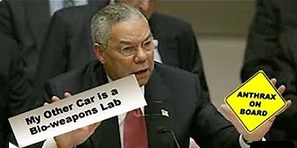
From Anthrax to Iraq
or go to
Aletho News Archives – Video-Images
Book Review
New paperback: Butchered by “Healthcare”
Lies are Unbekoming | October 20, 2026
 Butchered by “Healthcare” is Robert Yoho’s plain-spoken account of how American medicine stopped being a profession and became an industry. 341 pages. Over a thousand references. Thirty-eight chapters.
“Screening Tests Are Useless”, on tests that find diseases that would never have hurt you. “The FDA Protects the Big Drug Companies”, on an agency funded by the companies it regulates. “The Journals’ Sins Are the Editors’ Sins”, on ghostwritten studies and captured peer review. “Opioids and ‘Pain Management’”, on how a generation was prescribed its way into addiction. “Prozac and Relatives” and “Antipsychotics Are Disastrous”, on what psychiatry does to adults and children. “Surgery: Money Before Patients”. “Failed Cancer Treatments”. “Futile CPR and Overprescribing”. “Billing Scams & Specialty Warfare”. “Hospitals Are Sharks”. Each with a Patient Tips section at the end on how to survive it.
If you have ever walked out of a doctor’s office with a prescription you didn’t ask for, or watched a parent put through a treatment that made them worse, this is the book you want on your shelf before the next appointment. … Full review
Butchered by “Healthcare” is available on Lulu now.
Blog Roll
 Aletho News
- EU sending ‘biased’ observers to interfere in Serbian election – president
- White House envoy declares kinetic action against Yemen ‘fruitless’
- Ukraine deployed thousands of microdrones in Iraqi Kurdistan: Tasnim
- Iran calls for emergency UNSC meeting over Trump’s ‘brazen’ bomb talk, Israeli threats
- Iranian sources reveal details of Russia-China Hormuz proposal
- Plan for more US-Israel integration puts our military tech at risk
- Another Round Against Iran Will Break What Is Left of the Gulf
- SVR Report on Ukraine’s Mexican Drug Gang Links Could Pressure Zelensky, Won’t Change US Policy
- British Government Employees Were Fact-Checking the News at the BBC. Nobody Told You.
- Albania on fire: who’s behind the riots?
- If Americans Knew
- Mysterious bot accounts reportedly spread fake ‘man on the street’ videos for Michigan Senate candidate
- Israeli Defense Minister Katz Says Over 60 Lebanon Villages Have Been Destroyed
- Why Is Israel Running TV Ads in Iowa Ahead of the Midterms?
- Hind Rajab’s Alleged Killer Is in the United States. HRF Demands His Arrest.
- US Officials Face Fresh Pressure After Another American ‘Brutalized’ by Israeli Settlers in West Bank
- Israel-Backed Palestinian Militias Terrorize Displaced Families in Gaza
- FBI subpoenas pro-Palestine activists over Israeli weapons plant disruption
- Fourth winter arrives in wartorn Gaza, too early – Daily Update
- More on how Bari Weiss is using CBS on behalf of Israel
- What the UK Is Doing to Pro-Palestine Novelist Sally Rooney Is an Act of Orwellian Villainy
- No Tricks Zone
- Predictions Made By Renowned Climate Proifessor Over Past Decades Have Been Proven To Be Poor
- New Study Suggests Large Regions Of The Pacific Ocean Have Been Cooling For The Last 80 Years
- Germany’s Green Energy Debacle: High Energy Costs Force Kahla Porzellan to Close After 182 Years!
- New Study: 50 Years Of The Most Aggressive ‘Net Zero’ Policies Can Only Affect The Global Climate By 0.03°C
- US September “Heat” Was No Record…Many Records Set Decades Ago
- Latest European Green Energy Debacle; Portugal’s Largest Flagship Solar Park Insolvent!
- Green Energy Debacle: German Expert Professor Fritz Vahrenholt Warns Of Severe Economic And Social Consequences
- Two More Paleo Reconstructions Affirm Meters-Higher Sea Levels Across Ireland, Brazil 7000-6000 Years Ago
- New Study: Earth And Venus Surface Warmth Largely Explained By Convection And Lapse Rate, Not CO2 Or Radiation
- 2025 Nature Paper Claiming Worsening Global Drought Gets RETRACTED …Heavily Flawed

