Arabs: Israel, US Our Main Concern, Not Iran
By Sami Zaatari | Palestine Chronicle | March 10, 2012
The Arab Centre for Research and Policy Studies (ACRPS) has recently published their preliminary report on a major survey they conducted on Arab opinion, over the course of their project they covered 12 Arab countries, and interviewed over 16,000 Arabs on a wide range of subjects to try and gauge the Arab opinion.
The results of the survey were very interesting to say the least, particularly when it came to the question of whom they viewed to be the major threat to the region, America, Israel, or Iran? A total of 73% viewed America and Israel as the major threat to the region, 51% in regards to Israel, 22% in regards to America, and when it came to Iran a meager 5% viewed Iran as the major threat to the region. On any given day of the week, one would not be too surprised by these statistics, but context is important here which is why these results are very important.
For the past few years the American establishment has been creating a massive propaganda effort against Iran, warning that Iran poses a major threat to everyone in the Middle East, especially with their supposed intentions of having a nuclear weapon. America has been doing everything possible to sway Arab opinion, to try and build a joint Arab-American coalition united in combating Iran. This of course perfectly aligns with Israel’s agenda. Israel has been on a war path with Iran, Israeli leaders have constantly likened the current Iranian regime to that of Nazi Germany, calling Iran a major threat to the world, and a major threat to both Arabs and Israelis. Within the media itself there has been a lot of talk about an unthinkable alliance between the Arabs and Israel, two major foes who are now united in the face of an Iranian threat, and this is precisely what the American establishment has been trying to set up. So therefore within this context, the results of this survey are a major blow to the American establishment’s plan of trying to sway Arab opinion towards their own [Zionist] anti-Iranian agenda.
The Arab perception of Israel and America being the major threat to the Middle East is also purely logical and rational, one must only look at the facts on the ground, and look at events through the eyes of the Arabs themselves. Currently it is Israel that occupies Arab lands, Israel occupies Palestinian land, occupies Lebanese land, occupies Syrian land, and for a while even occupied Egyptian land. In the case of the Palestinian occupation, the Israelis not only occupy a land that does not belong to them, they also occupy the inhabitants of the land, Palestinians live under very tight Israeli restrictions, and are virtually a people with no rights thanks to Israel. Israel has also routinely attacked Arab states such as Egypt, Syria, Iraq, Lebanon, and almost routine attacks on the Palestinians. And then to top it off, it is Israel that actually possesses hundreds of nuclear weapons, as well as other deadly chemical and biological weapons within its arsenal. So based on all of these facts, why would the Arabs view Iran as a bigger threat than Israel? The irony is that all the claims that America makes against Iran are actual realities for Israel.
Then when it comes to America itself, is it any wonder that the Arabs view them as the second major threat to the region? America is the country that is firmly behind Israel, and as Obama recently said, America will always have Israel’s back no matter what. On top of this America has also been heavily involved in meddling in Arab affairs for their own interest, and this meddling includes military action as well, such as the invasion of Iraq which tore the country apart and led to major instability throughout the entire Middle East region. So with all the actual realities of what both Israel and America have done in the Middle East, is it any real surprise or wonder that the Arabs view Israel and America as the major threats to the region, and not Iran?
America and Israel’s effort in trying to build an Arab coalition against Iran is all part of a divide and conquer strategy, and many Arabs are fully aware of this. An Arab-Iranian, Sunni-Shia sectarian war would be the greatest calamity for both Arabs and Iranians, and such a conflict would simply benefit both Israel and America. But as this recent report has found, if it is up to the Arab people, no such conflict will ever take place.
– Sami Zaatari is a writer, and a public speaker who has taken part in public events of inter-faith and inter-community discussions. Zaatari also holds an MSc in the field of Middle East Politics.
Related articles
- Haniyeh to Iranian People: You Are Partners in Arab Victories (alethonews.wordpress.com)
Media, Academia Join Forces to Downplay Dangers of Nuclear Power
By Titus North | Dissident Voice | March 10th, 2012
Last April 20 the New England Journal of Medicine (NEJM) published an on-line article entitled “Short-term and Long-term Health Risks of Nuclear-Power-Plant Accidents” by Dr. Eli Glatstein and five other authors. The article was riddled with distortions and misinformation, and overall was very poor research. As the NEJM is a peer reviewed journal and has a significant letters section, I wrote a letter pointing out some of the errors committed by the authors, and a longer piece containing a comprehensive critique.
The NEJM demands that letters to the journal contain material that has not been submitted or published elsewhere, so I had to refrain from submitting my longer piece anywhere until the NEMJ made a decision on my letter. When my letter did not appear after a couple of weeks I inquired, and was told that the article would soon appear in the printed version of the Journal, and that no letters about the article could be published until after the print version came out. The printed version finally appeared on June 16.
However, on July 1,1 was notified by the NEMJ that they would not publish my letter due to “space constraints.” The four letters that they did publish in response to the article were at most only mildly critical and missed the glaring short-comings of the report. In other words, NEMJ sat on my letter and effectively stifled my critique of what can only be described as industry propaganda for almost three months until public attention had moved on to other matters. However, with attention once again focused on the still-out of control Fukushima reactors on the first anniversary of the accident, my expose on how the media and academia have joined together to downplay the dangers of nuclear power is a poignant as ever.
*****
Since the nuclear disaster in Fukushima started in March, the media has been full of misinformation about the dangers posed by the nuclear accidents and the damage caused by past accidents such as those at Chernobyl and Three Mile Island. Whether it is Jay Lehr on Fox News1 or George Monbiot on Democracy Now,2 the story line is the same: there were only dozens of deaths from the Chernobyl and none from TMI, the health consequences for the general population are negligible, and all things considered nuclear power is among the safest forms of energy. In some cases the lines are spoken by industry hacks whose true motive is to protect profits, while other times the spokesperson is a global warming tunnel visionist who has lost sight of the fact that we as humans have ingeniously devised a multitude of ways to mess up our planet, including nuclear wars and disasters.
Lehr and Monbiot both made reference to a 2005 report commissioned by the United Nations that included the participation of the International Atomic Energy Agency (IAEA), the World Health Organization (WHO) and several other UN-linked agencies. Oddly enough, the official press release by the UN announcing publication of the report starts off with the following sentence: “A total of up to four thousand people could eventually die of radiation exposure from the Chernobyl nuclear power plant (NPP) accident nearly 20 years ago, an international team of more than 100 scientists has concluded.”
The reference to 50 deaths pertained to those “directly attributed” to radiation from the disaster. Moreover, this report represents the most conservative of studies from credible sources, with other estimates reaching as high as almost one million Chernobyl deaths.
Lehr works for a public policy think-tank and Monbiot is a journalist. Perhaps we should expect writers from those professions to misleadingly cite sources in order to promote a preset agenda in the hope that no one will check their sources. However, it comes as a shock that medical doctors writing in a prestigious medical journal like the New England Journal of Medicine (NEJM) would resort to the same practice. On April 20 the NEJM published an article by six doctors entitled: “Short-term and Long-term Health Risks of Nuclear-Power-Plant Accidents.” I will not presume to know what the motives of the authors were or what led them to their erroneous conclusions, but I do feel the need to point out the errors that somehow the NEJM’s peer review process failed to notice.
The authors prominently cite two International Atomic Energy Agency (IAEA) studies in downplaying the deaths from Chernobyl. The authors state that “[a]lthough the Three Mile Island accident has not yet led to identifiable health effects, the Chernobyl accident resulted in 28 deaths related to radiation exposure in the year after the accident. The long-term effects of the Chernobyl accident are still being characterized, as we discuss in more detail below.” What is the reader intended to take from this statement? First of all, that the TMI accident in its totality did not cause any health effects that have been identified, which is itself a problematic statement. Secondly, that the total deaths from Chernobyl were the 28 in the first year plus whatever would be discussed later in the paper. As it turns out, the rest of the paper only mentions fatalities one other time, and that is that 11 of 13 plant and emergency workers that underwent bone marrow transplants died, and it is not clear whether or not these eleven are included in the above mentioned 28 fatalities. So the reader is left with the impression that the studies that the NEJM authors are citing conclude that the Chernobyl accident in its totality produced only a few dozen fatalities.
However, just as with Lehr and Monbiot, the NEJM authors start with the most conservative studies and then are misleading in their citations. They ignore the existence of high-profile studies that draw very different conclusions, omit the more damning parts of the studies they do cite, and then quote statements that were not intended to portray the totality of the accidents as if they were bottom line conclusions.
For instance, in making the assertion that Chernobyl caused 28 deaths in the first year, the NEJM authors cited an IAEA report that actually said: “The accident caused the deaths within a few days or weeks of 30 ChNPP employees and firemen (including 28 deaths that were due to radiation exposure).”
Notice that the IAEA statement is limited to power plant employees and fireman, whereas the authors imply the entire population. In fact, that IAEA study focused on the “600 emergency workers who were on the site of the Chernobyl power plant during the night of the accident,” and not the exposed population at large or the hundreds of thousands of “liquidators” who worked to contain the plant over the next couple years. Moreover, the IAEA study did not preclude the possibility that some of the liquidators or general public could have been killed due to radiation exposure in the first year, not to mention subsequent years. While the authors only mention a handful of cancer deaths in subsequent years, the second IAEA study acknowledges that among the one million or so most exposed, several thousand Chernobyl-caused cancer deaths would be “very difficult to detect.” The study states the following:
The projections indicate that, among the most exposed populations (liquidators, evacuees and residents of the so-called ‘strict control zones’) total cancer mortality might increase by up to a few per cent owing to Chernobyl related radiation exposure. Such an increase could mean eventually up to several thousand fatal cancers in addition to perhaps one hundred thousand cancer deaths expected in these populations from all other causes. An increase of this magnitude would be very difficult to detect, even with very careful long term epidemiological studies.
Clearly, the content of these two IAEA studies was not accurately reflected in the NEJM article. Moreover, the IAEA is not necessarily the best source of information. It was never intended to protect the public from the dangers of nuclear power plants. That is not part of its mission. The statute of the IAEA states that:
[t]he Agency shall seek to accelerate and enlarge the contribution of atomic energy to peace, health and prosperity throughout the world. It shall ensure, so far as it is able, that assistance provided by it or at its request or under its supervision or control is not used in such a way as to further any military purpose.
Thus, the IAEA was created to PROMOTE nuclear power (while checking the proliferation of nuclear weapons). It therefore cannot be assumed to be an unbiased or authoritative source of information on the health risks of nuclear power.
The NEJM article is misleading or inaccurate in other instances. For instance, its discussion is weighted too much towards whole body radiation, which is really only relevant to the emergency workers. The article acknowledges that it is not whole body radiation, but rather internal contamination that is “the primary mechanism through which large populations around a reactor accident can be exposed to radiation.” So why emphasize whole body radiation if it is not the mechanism through which populations are endangered?
They then launched into a long discussion about acute radiation sickness, which is largely a red herring since the threat to the general public is mainly from cancer. The NEJM article further obfuscates the issue with a table that compares the effective doses of radiation that a resident near a nuclear accident is exposed to with what someone is exposed to from something mundane like an airplane ride or a chest x-ray. This is like comparing the force of a cool breeze to the force of a knife slicing the jugular. The knife is lethal because it allows a very small amount of force to be concentrated on a vulnerable target. Similarly, the risk to Fukushima residents is not radiation spread out over their entire body, but rather radioisotopes like iodine 131 being concentrated by biological processes into a vulnerable target like the thyroid.
The NEJM authors mislead in other ways. They write “After Chernobyl, approximately 5 million people in the region may have had excess radiation exposure, primarily through internal contamination.” They cite the second IAEA study. The reader is likely to assume that up to 5 million people in the countries in Europe and Asia where the fallout from Chernobyl may have reached could have been exposed to excess radiation (i.e. radiation in excess of normal), and that this is the limit of exposure to internal radiation.
However, the IAEA study is only referring to the contamination region designated by the former USSR (a small area in the corners of Ukraine, Belarus, and Russia) and does not imply that excess radiation exposure (internal or otherwise) was limited to this area. In fact, they do not use the word “excess,” but rather specify a particular level of radioactive cesium. The actual wording of the IAEA report was as follows:
More than five million people live in areas of Belarus, Russia, and Ukraine that are classified as ‘contaminated’ with radionuclides due to the Chernobyl accident (above 37 kBq m-2 of 137Cs).
On the same page, the report also states that “The cloud from the burning reactor spread numerous types of radioactive materials, especially iodine and caesium (sic) radionuclides, over much of Europe.” It added that radioactive cesium-137 “is still measurable in soils and some foods in many parts of Europe.” Thus, there certainly were people outside of this narrow region of 5 million inhabitants who also were exposed to Chernobyl radiation through their environment and food. Indeed, the authors discuss the move by Polish authorities to administer potassium iodide to 10 million Polish children. Obviously Polish officials feared radiation exposure to these people.
Furthermore, there is major omission in the authors’ discussion of radiation. They discuss beta and gamma radiation, but do not mention alpha radiation. They then go on to dismiss the danger of plutonium contamination, which is dangerous precisely because it is an alpha emitter. They state that “Radioisotopes with a … very long half-life (e.g., 24,400 years for plutonium-239) … do not cause substantial internal or external contamination in reactor accidents.” The authors are either lying or ignorant. The danger from plutonium-239 has nothing to do with its half-life (long half-lives indicate slower radioactive decay). Plutonium, if ingested internally, is dangerous because the large and heavy alpha particles it emits are the most damaging to DNA and the most likely to cause cancer. In fact, Plutonium is the most lethal substance known to mankind.
As mentioned above, the IAEA cannot be thought of as an authoritative, unbiased source of health information given its explicit mission of promoting nuclear power. The same can be said for other sources cited by the authors, including the U.S. Nuclear Regulatory Agency and the Nuclear Energy Agency of the Organization for Economic Cooperation and Development. At the same time, the authors ignored prominent studies produced independently of the nuclear industry and affiliated governmental bodies that indicate that there were indeed serious public health consequences from the Chernobyl and Three Mile Island accident.
Significantly, the authors failed to mention the seminal work on the consequences of radiation exposure from Chernobyl done by Yablokov, Nesterenko and Nesterenko of the Russian National Academy of Sciences.3 This team of scientists from Russia and Belarus studied health data, radiological surveys and 5,000 scientific reports from 1986 to 2004, mostly in Slavic languages, and estimated that the Chernobyl accident caused the deaths of 985,000 people worldwide. Given the prominence of this report and the fact that its findings are completely at odds with the conclusions reached by the IAEA and other sources cited by the authors, it was intellectually dishonest not to mention the report if only to dismiss it.
Indeed, the Yablokov et al report is hardly the only major study to contrast starkly with the minimalist portrayal of the health consequences from nuclear accidents. Regarding Three Mile Island, there is the June 1991 Columbia University Health Study (Susser-Hatch) of the health impacts from the TMI accident published its findings in the American Journal of Public Health and subsequent work by Dr. Steven Wing of the University of North Carolina. These studies point to increased incidences of cancer in areas close to the reactor or downwind from it.
Another example of minimizing potential health impacts of a nuclear plant accident is this statement in connection with the accident at Fukushima:
Although the radioactivity in seawater close to the plant may be transiently higher than usual by several orders of magnitude, it diffuses rapidly with distance and decays over time, according to half-life, both before and after ingestion by marine life.
Japan has a massive fishing industry because, along with rice, fish is the staple of the Japanese diet. Any release of radiation into coastal fishing grounds will wind up being concentrated through biological processes as it works its way up the food chain and eventually to the Japanese dinner table. The narrow restrictions on commercial fishing near the Fukushima coast may be obeyed by fisherman, but many of the fish they seek are migratory, and there is no way of preventing these fish or their food sources from passing through contaminated water. Moreover, the claim that the radioactivity “decays over time” glosses over exactly how much time. While some of the radioisotopes being spilled into the ocean have half-lives of days, others have half-lives of years and even millennia. The impact on health from releases into the ocean cannot be so lightly dismissed.
Although it will take some time for the dust (or fallout) to settle, it may well turn out that the Fukushima disaster is the worst nuclear accident of all-time, surpassing Chernobyl. The contamination from the Chernobyl accident led to the establishment of a 30-kilometer wide “zone of alienation” to which people are not allowed to return. The current evacuation zone around the Fukushima plant is of comparable size, and with the Fukushima reactors continuing to release contamination for the foreseeable future, the only question is how large will be Japan’s “zone of alienation.” And while greater Tokyo has so far been largely spared due to the prevailing winds blowing so much of the contamination into the Pacific, winds will be changing with the upcoming monsoon season and the summer typhoons. [Note: countless radioactive “hot spots” have since been detected all over greater Tokyo, particularly in places where rain water accumulates.]
It is this proximity to Tokyo, one of the world’s most densely populated metropolises, that could make Fukushima the worst industrial calamity in history. An increase in cancer mortality even of the “difficult to detect” scale referred to by the IAEA study described above could condemn several tens of thousands of people. And that is far from being the worst case. The NEJM authors and others who propagate myths about the minimal casualties from Chernobyl and other accidents feed into a mindset that is leading to disastrous policy decisions. The only way to correct course is to identify the myths and the mythmakers.
- Jay Lehr said that at Chernobyl “the bottom line was that 50 people died in the explosion from radiation from fire…”
- George Monbiot stated that “so far the death toll from Chernobyl amongst both workers and local people is 43.”
- Alexey V. Yablokov, Vassily B. Nesterenko, Alexey V. Nesterenko, “Chernobyl: Consequences of the Catastrophe for People and the Environment“, 2010, Nature – 400. Also available at: Annals of the New York Academy of Sciences, Vol. 1181
Titus North is an adjunct professor in the University of Pittsburgh’s Political Science department.
Related articles
- No Nuclear Nirvana (alethonews.wordpress.com)
- The Dangerous Myths of Fukushima (alethonews.wordpress.com)
Marching Toward Syria with Eyes Cast Towards Iran
By Ben Schreiner | Dissident Voice | March 7th, 2012
While all the incessant warmongering directed toward Iran at the annual AIPAC policy conference in Washington was grabbing the headlines, the momentum for Western intervention into Syria continued to steadily build. All those neo-con “real men,” it appears, just might prefer to go to Tehran via Damascus.
Taking to the Senate floor on Monday, Arizona Senator John McCain, one of the first supporters of arming the Free Syrian Army, upped the ante by calling for a U.S.-led air campaign against Syrian military targets. McCain deemed such an escalation necessary to establish “humanitarian corridors.”
“The United States should lead an international effort to protect key population centers in Syria, especially in the north, through airstrikes on Assad’s forces,” the intervention-hungry McCain declared.
And as the Washington Post reported in late February, Obama administration officials have made it clear that “additional measures” might still be considered in order to oust Assad. That favored refrain of all options being on the table appears to be in effect in regards to Syria.
Indeed, for according to CNN, the Pentagon has already composed “detailed plans” for military action inside Syria. As the network reported, the Pentagon has especially focused on securing Syrian chemical weapons sites, with one scenario in particular calling “for tens of thousands of troops to potentially be used for guarding the installations.”
Although, according to a December email recently published by Wikileaks from the U.S. global intelligence firm Stratfor (known as a private C.I.A.), special operations forces from the U.S., U.K., France, Jordan, and Turkey are already on the ground in Syria. And as the email states, these forces are actively “training the Free Syrian Army.” Additional measures indeed!
Not wanting to be left behind in any march on Syria, the U.S. corporate media has largely begun to join the ranks of the recently ascendant intervention hawks.
In an editorial on Friday, the New York Times, although ruling out military force, called for providing greater tactical assistance to the Free Syrian Army. As the paper wrote: “The United States and its allies should consider providing the rebels with communications equipment, intelligence and nonlethal training.” Of course, a mission providing such tactical support would ultimately transform into more explicit military involvement.
Meanwhile, the Washington Post also editorialized on Friday for a more credible threat of force against Assad. As the paper wrote:
The Obama administration’s public arguments against the use of force in Syria are simply encouraging a rogue regime to believe it can act with impunity. Until he is faced with a credible threat of force, from the opposition or outsider powers, Mr. Assad’s slaughter will go on.
The Christian Science Monitor has likewise called for the U.S. to help “forcefully” end Assad’s rule.
Of course, the driving force behind such intense Western interest in Syria is Iran. Let there be no doubt, the ouster of Assad is not driven by some great humanitarian impulse, or “responsibility to protect.” Nor does the bloodletting and slaughter inside the country disturb U.S. elites. After all, the U.S. had no qualms with laying siege to Fallujah. Rather, all the contrived moralizing is being utilized in an attempt to garner support for imposing Syrian “regime change,” which would deal a strategic defeat to Tehran. It’s all nothing more than realpolitik. The Syrian people and their revolution are being cynically recruited as means to imperial ends, and thus would be wise to resist all foreign intervention.
For instance, when the Atlantic’s Jeffery Goldberg stated in a recent interview with President Obama, “But it would seem to me that one way to weaken and further isolate Iran is to remove or help remove Iran’s only Arab ally,” the president responded, “Absolutely.”
Similarly, former Mossad chief Efraim Halevy has argued, “The current standoff in Syria presents a rare chance to rid the world of the Iranian menace to international security and well-being.”
It’s target Iran, albeit on a Syrian battlefield. Therefore, that anti-Iran propaganda machine that is the U.S. media revs up.
Writing in the Washington Post, stenographers Joby Warrick and Liz Sly reported over the weekend that:
U.S. officials say they see Iran’s hand in the increasingly brutal crackdown on opposition strongholds in Syria, including evidence of Iranian military and intelligence support for government troops accused of mass executions and other atrocities in the past week.
The Post’s report was, of course, based solely on three anonymous U.S. officials. And as Warrick and Sly even admit in their piece, “such accounts are generally difficult to verify independently.” Thus they don’t.
On Monday, though, a similar piece of propaganda appeared at CNN. Penned by CNN Pentagon correspondent Barbara Starr, it also reports of Iranian infiltration into Syria, although Starr only relies on two anonymous U.S. officials. What hay a seasoned propagandist can make with such limited sources!
Yet amidst this mounting drive for Western intervention into Syria, President Obama spoke on Tuesday in an apparent attempt to tamp down all such notions, going so far as to call military intervention a “mistake.” As the president went on to state, “the notion that the way to solve every one of these problems is to deploy our military, that hasn’t been true in the past and it won’t be true now.”
Such reassurances aside, actions do, as the president himself implored in his AIPAC speech over the weekend, speak louder than words. And so while the president publicly posits that military intervention would be a mistake, his military readies for intervention into Syria, while continuing its larger ongoing build-up in the region.
The march towards Syria with eyes cast towards Iran continues on. For as Albeit Einstein once remarked, “You cannot simultaneously prevent and prepare for war.”
Ben Schreiner is a freelance writer living in Salem, Oregon. He may be reached at: bnschreiner@gmail.com.
Related articles
- Israel’s No.1 asset in the Senate calls for airstrikes against Syria (alethonews.wordpress.com)
CNN fake Syria news busted
“I don’t know how they got it, this is all private, we should have, this has all been deleted, we have to delete all this stuff” – Danny
SyriansWorldwide | March 1, 2012
Video: Classic war propaganda – complete with staged-gunfire off camera and the intrepid actor “Danny” relaxed and joking before getting into character to give a hysterical “casualty report” to his co-star, CNN’s Anderson Cooper – just one of many he regularly gives to Western media networks.
The Syrian Mirage
From the Alawite Fantasy to the Surrealism of the UN
By PIERRE PICCININ | March 06, 2012
More than a year after civil unrest broke out and plunged part of Syria into the chaos of the ‘Arab Spring’, the Baath government remains firmly in control and the majority of the country is calm; almost untouched by an opposition which is scattered and confined to the cities of Homs and Hama, as well as a few towns on the Turkish and Lebanese border. The main reported cases of unrest are linked to regular attacks from Salafist bands which are of an extremely violent nature and more importantly, the Free Syrian Army. The latter counts amid its ranks numerous Qataris and Libyans, all whom have been trained in the art of urban guerilla warfare by the French army in refugee camps, which provide perfect bases from which to operate and orchestrate attacks.
How can one explain the resilience of this regime? A regime which is more or less in complete control despite facing what is usually described as a “revolutionary populist uprising”? One which is determined to overthrow the “Alawite dictatorship” from the political and economic realms of Syrian society, the so-called privilege of the Alawi, a community which accounts for no more than about 10% of the population?
Perhaps it is because the reality does not correspond to this over simplified equation.
Indeed, the communitarian and religious Syrian patchwork is far from closing ranks on the Alawi population. Moreover, this group, do not in fact monopolize the political landscape.
Therefore, even back in the 1980s, when Hafez Al-Assad, father of the incumbent president, Bashir, and author of the “Alawi coup d’état”, succumbed to serious health issues, he had designed a directorate of six members to run the Syrian government – All six were Sunnis.
Furthermore, all the prime ministers who have served in Bashir Al-Assad’s government have been Sunnis. Similarly key positions including the Ministers of Defence, Finance and Oil and the heads of the numerous police corps and the secret service do not depend on the Alawi community. The Druze, Christian, Shiite and Kurd minorities also benefit from governmental representation.
This would explain why the opposition is a fractious minority whose support base lies outside Syria’s borders rather than at the heart of the population.
In these circumstances it is understandable that Russia (and China), treading carefully in order to preserve her last card in the Middle East, resolutely opposes the pressure to sign up to the latest United Nations Security Council resolution. This would undoubtedly lead Syria into a scenario similar to Libya, where tens of thousands of civilians would perish as during the destruction of Sirte (and Russia has asked for there to be a UN commission to investigate these Atlantic war crimes).
The most striking element in this whole situation is that the UN has neither the right nor the objective, to decide the nature of a sovereign government, less still the identity of its head of state; meaning that the text proposed to the Security Council by the Arab league, calling for the departure of President Bashir Al-Assad, a text supported by Qatar with substantial French backing, is directly opposed to the basic principles of international law and completely surreal.
Furthermore, if the Baath regime is dictatorial and brutal, so are numerous factions of the opposition: an opposition which is seriously divided and made up of groups with conflicting objectives, none of which necessarily represent the Syrian population; for on the one hand there are the radical Islamic factions, who massacre their opponents and commit atrocities against the military (kidnappings, mutilations, decapitations…) but also civilians who refuse to support their objectives. This is why Russia has demanded that any UN resolution must be applied not only to the government forces but to all factions resorting to violence, including those supported by foreign states, specifically France and Qatar.
It would therefore seem that from an Alawite fantasy to the surrealism of the United Nations, Syria as depicted by the mass media certainly bears very little resemblance to the reality of the actual situation.
Pierre Piccinin is a professor of political science at the Ecole Européen de Bruxelles I.
Related articles
- Israel’s No.1 asset in the Senate calls for airstrikes against Syria (alethonews.wordpress.com)
Response to Scheindlin: Erasing Palestinian history
By Omar Rahman | +972 | February 28 2012
A response to Dahlia Scheindlin’s piece about Mahmoud Abbas’ comments on ethnic cleansing in Jerusalem.
I am going to have to totally disagree with my colleague Dahlia Scheindlin on her piece, Response to Abbas: we’ll be together in Jerusalem forever. Although I am also ignorant of the speech Abu Mazen gave in Qatar, except for what I read in the papers, Abbas was saying that Israel is instituting a policy of ethnic cleansing in Jerusalem, which the Israeli media framed as an attempt to deny ANY Jewish connection to the holy city.
Dahlia’s contention is that Israelis and Palestinians are fighting on the same side in a war between moderates and extremists, and that no matter what happens we will be in Jerusalem together, forever and ever.
Despite being a comforting sentiment, it is simply not true. ‘Extremist’ and ‘moderate’ alike in Israeli politics have equally perpetrated the crimes of the occupation, and it is often the most leftist among Israelis who refuse to admit that what happened in the post 1948 Israel is in complete continuity with what is taking place in the ‘occupied territories’ today. Indeed, it was the Israeli secular moderates who governed Israel uninterrupted from 1948 until 1977.
It is foolhardy to say that despite efforts at ‘Judaization’ in Jerusalem, there will always be strong Muslim and Christian links to the city. What about the 500 plus villages and towns that were wiped off the map in what is now Israel, and whose memory has been pretty much erased from history? We don’t only want a historical legacy, we want a living memory.

Shepherd Hotel in final stages of demolition. (Photo: Justin Randle)
It is always best to show instead of tell, so I will give an example. A friend of mine, originally from Nazareth, related a story to me a few years back from when she was a college student in the United States studying archaeology. She went home for a summer and was working on a dig in Israel. Her name is one of those ambiguous ones that could superficially pass as Jewish and she said that everyone assumed she was. At one point she was in the office of the head of the dig, who was examining a beautiful piece of Ottoman glasswork that had been dug up the day before. He turned to her and said: “Do you see this? This is not history,” at which point he tossed it over his shoulder into a pile of rubbish.
Today, Palestinian artifacts sit in Israeli museums and private homes. Books taken during the 1948 war are in Israeli libraries, while we have a resurgence of the “there is no such thing as a Palestinian” in public Western discourse. This was something that leftists like Golda Meir, and not right-wingers like Ze’ev Jabotinsky, actively pushed.
Palestine and Palestinians came very close to being wiped off the map and out of history by a deliberate campaign, in which the historical legacy of Palestinians was seen as a threat to the emergence of Israeli and Jewish claims.
As much as it is unpleasant to recognize, the longer this conflict continues the erasure of history, of buildings, of people and of memory are steadily realized and supplanted.
We can say times have changed. That today’s moderates and extremists are different from the past. But this defies reality.
“Let’s cast off the notion of a conflict between Israelis and Palestinians already, which I sometimes feel is a brilliant decoy of the far right.” says my colleague.
What kind of wishful thinking this is? Go tell that to the Palestinians in Nabi Saleh, who have their homes raided in the middle of the night, and their young children taken out of bed to have their identities checked.
This is precisely the problem. There are those Israelis who want to dismiss what is happening as a fantasy, all while the bulldozers are rolling in the background.
Those Israelis don’t like that they are being fought on both sides, from Palestinians and from the right-wingers who are steadily gaining power. So, we Palestinians should stand back, or better yet, cheer you on while you go up against them and lose, all the while our land is confiscated and our history erased. I think its time those Israelis joined the Palestinian side, and not the other way around. Forget the self-aggrandized intellectual discourse that takes place in the cafes of Tel Aviv, and immerse yourself in the reality of what is being done in your name.
Related articles
- Homes Destroyed, Lives Shattered: Criminal Displacement in Occupied Palestine (alethonews.wordpress.com)
Featured Video
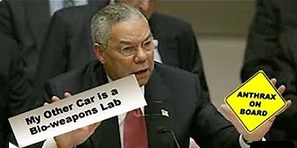
From Anthrax to Iraq
or go to
Aletho News Archives – Video-Images
Book Review
New paperback: Butchered by “Healthcare”
Lies are Unbekoming | October 20, 2026
 Butchered by “Healthcare” is Robert Yoho’s plain-spoken account of how American medicine stopped being a profession and became an industry. 341 pages. Over a thousand references. Thirty-eight chapters.
“Screening Tests Are Useless”, on tests that find diseases that would never have hurt you. “The FDA Protects the Big Drug Companies”, on an agency funded by the companies it regulates. “The Journals’ Sins Are the Editors’ Sins”, on ghostwritten studies and captured peer review. “Opioids and ‘Pain Management’”, on how a generation was prescribed its way into addiction. “Prozac and Relatives” and “Antipsychotics Are Disastrous”, on what psychiatry does to adults and children. “Surgery: Money Before Patients”. “Failed Cancer Treatments”. “Futile CPR and Overprescribing”. “Billing Scams & Specialty Warfare”. “Hospitals Are Sharks”. Each with a Patient Tips section at the end on how to survive it.
If you have ever walked out of a doctor’s office with a prescription you didn’t ask for, or watched a parent put through a treatment that made them worse, this is the book you want on your shelf before the next appointment. … Full review
Butchered by “Healthcare” is available on Lulu now.
Blog Roll
 Aletho News
- Undersea Internet cables could be targeted in retaliation for attacks on Iran: IRGC deputy chief
- EU sending ‘biased’ observers to interfere in Serbian election – president
- White House envoy declares kinetic action against Yemen ‘fruitless’
- Ukraine deployed thousands of microdrones in Iraqi Kurdistan: Tasnim
- Iran calls for emergency UNSC meeting over Trump’s ‘brazen’ bomb talk, Israeli threats
- Iranian sources reveal details of Russia-China Hormuz proposal
- Plan for more US-Israel integration puts our military tech at risk
- Another Round Against Iran Will Break What Is Left of the Gulf
- SVR Report on Ukraine’s Mexican Drug Gang Links Could Pressure Zelensky, Won’t Change US Policy
- British Government Employees Were Fact-Checking the News at the BBC. Nobody Told You.
- If Americans Knew
- Christiane Amanpour exits CNN with a legacy shaped by the debate over Israel
- Israel’s war on Iran is the final move in a decades-old strategy
- Israel Denies Entry to French Journalist, U.S. Researcher Amid Rise in Entry Denials
- Gaza’s hospitals are running out of life-saving fuel – Daily Update
- Mysterious bot accounts reportedly spread fake ‘man on the street’ videos for Michigan Senate candidate
- Israeli Defense Minister Katz Says Over 60 Lebanon Villages Have Been Destroyed
- Why Is Israel Running TV Ads in Iowa Ahead of the Midterms?
- Hind Rajab’s Alleged Killer Is in the United States. HRF Demands His Arrest.
- US Officials Face Fresh Pressure After Another American ‘Brutalized’ by Israeli Settlers in West Bank
- Israel-Backed Palestinian Militias Terrorize Displaced Families in Gaza
- No Tricks Zone
- E-Cars Reduce CO2 Emissions By Only 41% Compared To Internal Combustion Engine Vehicles
- Predictions Made By Renowned Climate Professor Over Past Decades Have Been Proven To Be Poor
- New Study Suggests Large Regions Of The Pacific Ocean Have Been Cooling For The Last 80 Years
- Germany’s Green Energy Debacle: High Energy Costs Force Kahla Porzellan to Close After 182 Years!
- New Study: 50 Years Of The Most Aggressive ‘Net Zero’ Policies Can Only Affect The Global Climate By 0.03°C
- US September “Heat” Was No Record…Many Records Set Decades Ago
- Latest European Green Energy Debacle; Portugal’s Largest Flagship Solar Park Insolvent!
- Green Energy Debacle: German Expert Professor Fritz Vahrenholt Warns Of Severe Economic And Social Consequences
- Two More Paleo Reconstructions Affirm Meters-Higher Sea Levels Across Ireland, Brazil 7000-6000 Years Ago
- New Study: Earth And Venus Surface Warmth Largely Explained By Convection And Lapse Rate, Not CO2 Or Radiation

