Taiwan sinking: Subsidence or Global Warming Induced Sea Level Rise?
By Anthony Watts on May 10, 2010
This news story about Taiwan has been making the rounds with the usual alarming news outlets. My view is clearly on subsidence, caused by poor land use practice. See below the Continue Reading line for the easily found reasons.
Excerpts: from AFP via Yahoo News
Rising sea levels threaten Taiwan
TUNGSHIH, Taiwan (AFP) – When worshippers built a temple for the goddess Matsu in south Taiwan 300 years ago, they chose a spot they thought would be at a safe remove from the ocean. They did not count on global warming.
Now, as the island faces rising sea levels, the Tungshih township is forced to set up a new temple nearby, elevated by three metres (10 feet) compared with the original site.
“Right now, the temple is flooded pretty much every year,” said Tsai Chu-wu, the temple’s chief secretary, explaining why the 63-million-dollar project is necessary.
“Once the new temple is completed, we should be able to avoid floods and the threat of the rising sea, at least for many, many years,” he said.
The temple of Matsu, ironically often described as the Goddess of the Sea, is only one example of how global warming is slowly, almost imperceptibly piling pressure on Taiwan.
…
And unlike the temple, none of these crucial economic establishments can possibly be lifted, leaving them exposed to the elements.
“If the sea levels keep rising, part of Taiwan’s low-lying western part could be submerged,” said Wang Chung-ho, an earth scientist at Taiwan’s top academic body Academia Sinica.
…
Still, environmentalists consider the risk too high to ignore, and they point out that it is compounded by the overpumping of groundwater both for traditional agriculture and for fish farming.
This has caused the groundwater level to fall and land to subside below sea level in some coastal areas, experts warn.
The greatest extent of seawater encroachment has been estimated to be as far as 8.5 kilometres inland with an affected area of about 104 square kilometres (40 square miles) in southern Taiwan’s Pingtung county, according to a study co-written by Wang.
Once low-lying areas are routinely invaded by sea water, it is very hard to turn back the tide, analysts warned.
…
In its 2007 assessment report, the Intergovernmental Panel on Climate Change of the United Nations said that due to the global warming, the world’s sea level is projected to rise by up to 0.59 metres before the end of this century.
However, Wang was more pessimistic, citing recent findings that greenhouse gas emissions are growing faster than previously believed.
Read the rest of the story here: AFP via Yahoo News
###
And where is Pingtung County in Taiwain?

But that is not where the Matsu temple that is the focus of the story is, it is a misdirection. Read on.
Now consider this news story about a hi-speed rail system in Taiwan from China Daily that says:
Safety concerns were raised after according to the Taiwan High-Speed Rail Corp. (THSRC) figures revealed that at its worst, the land at one site along the stretch in Yunlin County has sunk 55 centimeters over the past seven years.
Over-pumping of underground water for irrigation has been blamed for the subsidence, and the Water Resources Agency (WRA) has identified 1,115 wells in the area that need to be sealed to stop the sinking.
Seems pretty clear that subsidence is happening quickly in that county. Here’s a paper studying the Yuanlin area, Changhua County. PDF here. Note the mention of Yunlin County, save that for later.
Using Radar Interferometry to Observe Land Subsidence in Yuanlin area, Changhua County, Taiwan
Abstract: The behavior of land subsidence in Yuanlin area, Changhua County, Taiwan has been monitored by the two-pass method of Differential Interferometric Synthetic Aperture Radar (DInSAR) during the period from 1995 to 2002. Our interferometric result has shown that the subsidence behavior is unusual right before and after the Chi-Chi earthquake. Two-month before the earthquake, the pre-seismic differential interferogram detects a substantial increase in land subsidence with a prominent U-shaped pattern of groundwater level change. Two days after the devastating earthquake, our one-month image-pair shows a five-fold increase in land subsidence and an apparent shift of subsidence center. In this study, we suggest mechanisms that contribute to land subsidence in pre-seismic, co-seismic and post-seismic. We tend to believe that the circular/elongated pattern shown in our interferograms are caused by a point-source deformation. Besides, strain also plays a very important role in accelerating land subsidence shown in the post-seismic differential interferogram. It causes a very sudden, step-like surge in groundwater. The shaking of the earthquake as well as the increase of groundwater trigger the occurrence of soil liquefaction, in return, accelerating land subsidence. We propose there are two center of land subsidence right after the Chi-Chi earthquake though only one subsidence center can be observed in our differential interferogram.
Here’s what the Taipei Times shows happening as a result of land subsidence:

Land subsidence causes damage to a house in Tungan village, Kaohsiung County. PHOTO: HSU PAI-YING, TAIPEI TIMES
Here’s an interesting passage from the Geography Department at NTU titled The Hazards of Taiwan:
The fish-farming industry in western and northeastern Taiwan requires several times more ground water than is needed for irrigation. This kind of over-pumping of ground water results in serious land subsidence or sinking in the coastal areas. According to a recent survey, an area of up to 1,097 square kilometers suffers from subsidence: this is 3% of the island’s total land area and 9% of its flat area. This problem obviously needs an immediate and effective solution.
So even though there is plentiful evidence that local land use abuse resulting in subsidence is the primary cause of seawater incursions, the reporter, Benjamin Yeh, chooses instead to make “global warming” the primary culprit.
His paragraph says it all:
The temple of Matsu, ironically often described as the Goddess of the Sea, is only one example of how global warming is slowly, almost imperceptibly piling pressure on Taiwan.
Religion and global warming, a match made in heaven.
From this Taiwan Government Report on Water Resources we find this paragraph, red emphasis mine:
Land Subsidence
Lured by profits, many farmers in the coastal areas of Yunlin, Changhua, Pingtung, Chiayi, and Ilan have expanded into aquaculture. Aquaculturalists have dug 170,000 illegal wells and pumped excessive amounts of groundwater, because it is cheap and stable in temperature. In addition to being used in aquaculture, groundwater is also pumped for industrial, residential, and standard agricultural uses. Recent data shows that while 5.94 billion cubic meters of groundwater is being pumped annually, only four billion cubic meters is being replaced. This deficit has caused land in many areas to subside, especially along the southwestern coast and on the Ilan Plain. Overall, almost 865 square kilometers of Taiwan’s plains, or a full 8 percent, tend to subside. The most serious subsidence has occurred around Chiatung in Pingtung County, where sites have sunk by as much as 3.06 meters. The average rate of subsidence in the coastal areas is between five and 15 centimeters each year.
The Temple of Matsu is in Yunlin County which is located on this map:

Another study on groundwater and subsidence from the Department of Geomatics, National Cheng Kung University says:
For example, the overall amount of subsidence in Yunlin area in the past 30 years reaches about 2 meters, and the total affected area of subsidence is about 516 km2. Land subsidence has increased the vulnerability in this area, and a large portion of which lies below the mean sea level.
When badly flawed articles like this one from AFP appear, blaming global warming for flooding clearly caused by land subsidence as a result of poor land use practice, we need to complain loudly to editors.
See also:
US angry at French acquittal of Iranian
Press TV – May 8, 2010

Iranian businessman Majid Kakavand
The US Department of Justice has angrily objected to a French court ruling that acquitted Iranian businessman Majid Kakavand of all charges of violating US trade sanctions against Iran.
“Although we’re disappointed by the French court ruling, we will continue to seek justice in this matter,” Justice Department spokesman Dean Boyd said in a statement following Kakavand’s acquittal.
“Efforts to apprehend Kakavand are ongoing and should he come into US custody, he will stand trial for his alleged crimes,” he added, claiming that Washington officials had “provided French authorities with detailed analyses of Kakavand’s conduct, of the applicable US laws and provisions of the treaty that we felt supported his extradition to the United States.”
At the behest of the US government, French authorities arrested Kakavand in March 2009 on charges of illegally exporting military technology to Iran.
The provisional arrest warrant claimed that Kakavand had used his company in Malaysia to order electronic components from American firms and ship them to Iran.
Since then, White House officials have pushed hard for the businessman’s extradition to the United States, but their demands were turned down by French authorities who found that, contrary to US claims, the items Kakavand exported to Iran did not involve dual-use technology applicable to military equipment.
Following the findings, Kakavand was acquitted of all charges and released from jail. The 37-year-old Iranian, who arrived in Tehran early on Saturday, says he will sue the US government for what his lawyers insist to be fabricated documents to support the case for his extradition.
“Given that I have spent fourteen months in jail on false charges, it is my legal right to sue the US authorities as soon as possible,” said Kakavand, who arrived in Tehran early Saturday, IRNA reported.
###
Background:
US ‘fabricated documents’ in pursuit of Iranian engineer
Captured Israeli soldier accused of plagiarism
By Catrina Stewart in Jerusalem | The Independent | 8 May 2010
An Israeli author is suing the family of a soldier being held by Islamic militants in the Gaza Strip, claiming he plagiarised one of her books.
Shelly Elkayam is seeking royalties earned from the sales of When the Shark and the Fish First Met, a story written by Israeli Cpl Gilad Shalit when he was 11 years old and published after his capture four years ago.
“The story that Shalit wrote was written by me,” Ms Elkayam told Israeli army radio. “I have been a literary hostage of the Shalit family for four years.”
Shalit was captured in a cross-border raid by three Islamic groups, including Hamas, in June 2006 and spirited into the Gaza Strip, the tiny coastal territory controlled by Hamas.
His schoolteacher unearthed Cpl Shalit’s childhood story after his capture, and it has since been printed in 17 editions and several different languages. Cpl Shalit’s family have acknowledged that the story was inspired by Elkayam, but claim there are key differences in the text.
Elkayam, however, claims there were only “superficial changes” from her own book When the Snake and the Mouse First Met.
“They continue to steal my book rights, which was a best-seller from the time it was published up until they published Gilad’s book,” Ms Elkayam said. “Just like it’s his right to be free, it’s my right that my rights will be protected.”
Cpl Shalit’s father, Noam Shalit, said that the family was aware of the allegations but was not personally involved in the publication of the book, Israel’s News1 website reported.
In Cpl Shalit’s 350-word-long story, a fish and a shark become friendly over a game of hide and seek, but are warned by their parents to stay away from each other. Nevertheless, they overcome their natural enmity to become friends and live in peace.
Cpl Shalit’s parents, tireless campaigners for his release, have used the story to keep Shalit’s plight alive among the Israeli public, and all the proceeds are directed into the campaign for his release.
Elkayam’s suit is unlikely to endear her to many Israelis, who have been transfixed by Cpl Shalit’s fate. Many support his release at any price, placing Israeli administrations under huge domestic pressure to secure his freedom.
Hamas is seeking to swap him for 1,000 Palestinian prisoners held in Israeli jails.
Stunning pictures of Al Gore’s new $9 million mansion that the media totally ignored
By Noel Sheppard – NewsBusters.org – 05/03/2010
Nobel Laureate Al Gore purchased a $9 million mansion in the luxurious hills of Montecito, California, recently, and with the exception of the Los Angeles Times and Fox News, America’s media couldn’t care less.
You think it might be because the Gore-loving press wouldn’t want people to consider the possibility that all of his global warming hysteria was really about lining his wallet and not saving the planet?
Formulate a response to that question as you look at what all that money the former Vice President is making off of spreading this myth can buy [1]):
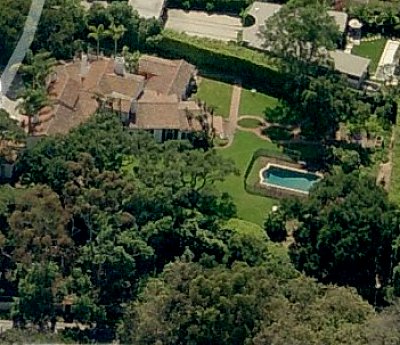
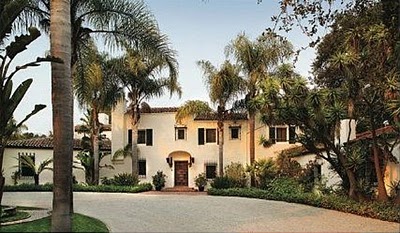

Sweet, wouldn’t you say? (Readers are encouraged to view more pictures of this fabulous estate here [2].)
Certainly not bad for a guy who supposedly [3] was worth between one and two million dollars in 2000.
Were the “Always Fascinated by the Lifestyles of the Rich and Famous” press interested?
Heck no.
According to LexisNexis, apart from the Los Angeles Times that broke [4] this story last Wednesday, and Fox News’s Sean Hannity who spoke about this on consecutive nights last week, America’s media were totally mum.
Why might that be?
You think Gore’s adoring press don’t want folks to know how much money he’s making off this scam?
Before you answer THAT question, consider what the Nobel Laureate told [4] Congress last year as the House was deliberating cap-and-trade legislation:
AL GORE: Every penny that I have made, I have put right into a non-profit deal, Alliance For Climate Protection, to spread awareness of why we have to take on this challenge. And Congresswomen, if your, if, if you believe that the reason I have been working on this issue for 30 years is because of greed, you do not know me.
Now, imagine for a moment there were actually journalists still in America and not advocates pretending to be journalists.
A former Vice President who last year told a House committee he was putting all of his earnings into a non-profit company to “spread awareness of why we have to take on” global warming a year later buys a $9 million mansion with six fireplaces, five bedrooms, and nine bathrooms for him and his wife.
Don’t you think SOMEBODY should have reported it other than Fox News, the LA Times, and conservative bloggers?
Where’d the money come from? Was this purchased by his non-profit corporation, and if so, how does he get away with that?
Did he sell some of his Google or Apple stock?
And how about some questions about how green the house is? Are there solar panels and windmills to power this facility? If not, what are their plans?
Forgetting all of that, if the Clintons, Bushes, or Cheneys bought such a place, do you think the media would cover it, at least as a human interest story?
For over three years, Gore’s adoring press have followed virtually every move he’s made since becoming the voice of global warming.
He buys a STUNNING villa as the unemployment rate stands at almost 10 percent and Americans are struggling to regain their footing after 2008’s financial crisis, and the media are suddenly disinterested in him?
On exactly which planet, be it cooling or warming, does THAT make any sense?
More reading concerning Gore’s investments:
- Media Ignore Al Gore’s Financial Ties To Global Warming [4]
- Al Gore Getting Rich Selling Global Warming Hysteria With Media’s Help [4]
- Gore Admits Financial ‘Stake’ In Advancing Global Warming Hysteria [4]
- Investment Group Puts Millions In Green Companies Gore Has Stake In [4]
Links:
[1] http://directorblue.blogspot.com/2010/05/exclusive-estimate-carbon-footprint-of.html
[2] http://directorblue.blogspot.com/2010/05/exclusive-estimate-carbon-footprint-of.html
[3] http://www.fastcompany.com/magazine/117/features-gore.html
[4] http://articles.latimes.com/2010/apr/28/home/la-hm-hotprop-gore-20100428
Related video
Peoples’ Destinies at the Mercy of False Reports
By Dr. Bouthaina Shaaban | May 3, 2010
The rumors spread by Israeli president Shimon Peres in his statement to Mossad-linked media outlets about a Syrian role in providing Hezbollah with Scud missiles and the official American reaction to these rumors bring to mind the spectacle of Colin Powell, who served under both war makers, Bush senior and Bush junior, in the UN Security Council in 2003. He held a small glass container and claimed in front of the whole world that biological weapons the size of that container would endanger the lives of millions, that there was no doubt that Iraq was deceiving international inspectors and that the United States’ patience with Iraq was over.
I recall Security Council meetings in February 2003, when the then French Foreign Minister, Dominique de Villepin made his famous speech in defense of extending the mandate of international inspectors. When former international U.N. weapons inspector Hans Blix asked for six more months to complete inspections and provide the final findings to the Security Council. He gave evidence that Iraq was cooperating fully in facilitating inspections and affirmed that the mission was capable of completing its work in six months.
I remember how a number of European foreign ministers said, without the slightest sense of responsibility, that the system was no longer acceptable, even for days, that Saddam has been deceiving them for over twelve years and that the international community should put an end to that deception. I was in the Security Council hall hosting those historic meetings, looking at their faces and knowing that they were absolutely certain that they were mouthing lies and that they were using legitimate fear of nuclear weapons as a pretext to launch war on Iraq, destroy it and return it to the Middle Ages, as James Baker told Iraqi Foreign Minister Tareq Aziz in January 1991.
Here we are, more than seven years after those Security Council meetings, and after a devastating war in which Bush and his clique of neo-conservatives were responsible for killing over a million unarmed civilians in Iraq. Now that Powell has left the public stage and became capable of telling the truth about what he knew and believed then, he acknowledges that what he told the Security Council was not true. Some people see in this ‘a virtue’ indicating the greatness of democracy instead of bringing to account those responsible for fabricating those lies.
Now, days after Shimon Peres unleashed his lie, one of his ministers hastened to repeat Baker’s threats about Israeli attacks to destroy Syria’s bridges, roads, power generation plants and “returning it to the stone age”. The media also caught the lie and promoted it during the Nuclear Security Summit in Washington two weeks ago. The statement is a stark lie, and merits derision rather than a response. Scud missiles are tens of meters long; and every missile needs a huge truck to carry it. Moreover, a small country like Lebanon in whose airspace reconnaissance drones fly on a daily basis, cannot hide them. Moreover, technical experts know that launching a Scud needs time and effort and collective work which is not compatible with the type of battles in which Hezbollah engages in its defense of Lebanon against Israeli attacks.
The mere circulation of this lie raises doubts about its objectives. Without bothering to ask Israel to provide any evidence of its allegations, Assistant Secretary of State Geffrey Feltman said it would be an “incendiary, provocative action” if it turned out to be true; and that the United States has a “full range of tools” available to make Syria reverse any delivery of ballistic missiles to Hezbollah.
Two American representatives put forward a draft resolution to tighten sanctions against Syria. Representatives Eliot Engel, D-N.Y., and Mark Kirk, R-Il, known for their extreme hostility to Arabs, said in a statement that providing Hezbollah with these missiles “destabilizes the Middle East and is an existential threat to Israel and the independence of Lebanon”.
Secretary of State Hillary Clinton said the U.S expressed deep concern about reports of certain missiles being transferred to Syria and the possibility of then transferring them to Hezbollah. She saw in sending an ambassador to Syria “a tool that we believe can give us extra leverage, added insight, analysis, information with respect to Syria’s actions and intentions”. She pointed out Washington’s “long list of areas that we have discussed with the Syrians, and we intend to continue pushing our concerns” which include hosting Palestinian radicals and feeding the violence in Iraq. The statements of Clinton, Feltman and the two representatives are parrot repetitions of statements made by Netanyahu and other Israeli extremists about Syria without bothering about the possibility that these lies will be blown off in the future.
It is clear that the Scud lie and the parrot statements came to cover for the failure of the Obama administration to face the intransigent Netanyahu government which rejected all American calls to stop settlement or move towards just and comprehensive peace. At this particular time the Scud lie was fabricated in order to divert attention from the truth which has become abundantly clear: Israel is the only obstacle to peace in the Middle East. It also came to undermine the positive developments achieved in the Syrian American relations under the Obama administration. Sine Obama became president, and whenever he made a real and sincere effort to improve relations with the Muslim world through normalizing relations with Syria and defending justice in Palestine, the Israelis come out with a story either of ‘allowing terrorists to enter Iraq’ or ‘feeding Palestinian extremism’ or arming Hezbollah, in order to put an end to any real development of these relations.
The world realizes now that Israel is the enemy of peace in the Middle East. It promotes barbaric wars against the Arabs and prevents achieving any stability in the relations between the United States and the Arab and Muslim worlds. Extremist Israelis and their allies in the United States invent lies which lead to war and human suffering. They are responsible for tarnishing the image of the United States, shedding the blood of its soldiers and wasting its money on wars against the Muslim world. They are responsible for harming both the American people and the peoples of our region by promoting such naked lies.
Dr. Bouthaina Shaaban is the Presidential Advisor for Political and Media Affairs with the Rank of Minister in Syria. She has been a writer and professor at Damascus University since 1985. Before assuming her current ministerial position, Dr. Shaaban occupied the post of Director of the Press Office at the Ministry of Foreign Affairs in Syria. She received her PhD in English Literature from Warwick University in the UK in 1982 and joined the Ministry of Foreign Affairs as an advisor in 1988. Since then, she has represented Syria as a spokeswoman on the international level. In 2005, Dr. Shaaban was nominated for the Nobel Peace Prize, and in the same year, was presented with the ‘Most Distinguished Woman in a Governmental Position Award’ by the Arab League. Dr. Shaaban has published four books, and contributed to numerous others.
Al-Qaeda Terror Tape Proven Fraudulent Once Again
Paul Joseph Watson | Prison Planet | May 3, 2010
The announcement by New York authorities that there is no evidence to support an apparent claim of responsibility for Saturday’s attempted car bombing by a Pakistani based Taliban group underscores once again how Pentagon front groups are releasing fake and misleading “Al-Qaeda videotapes” in crass PR stunts to justify the expansion of the “war on terror” under Obama.
As soon as Fox News reported that “the Pakistani Taliban has claimed responsibility for the bomb plot,” we smelled a rat, especially as the so-called video claiming complicity was released by the Pentagon front group SITE, founded by the daughter of an Israeli Mossad spy.
“A text in gold letters on a black background at the start of the video congratulates Muslims for the “jaw-breaking blow to Satan’s USA.” As the speaker recites the message, images of the slain militants referred to flash across the screen. English subtitles are provided at the bottom of the screen,” stated the report.
“If you were a real terrorist group who wanted to appear fearsome and mighty, would you really release a statement claiming responsibility for an “attack” that amounted to little more than a car full of fireworks that killed nobody, injured nobody, and was an abject failure?” we asked on Sunday. “This claim of responsibility holds about as much credibility as if Barney the Purple Dinosaur had made a video saying he did it.”
Indeed, the original Fox News story has now been significantly watered down after New York police, as well as Mayor Bloomberg, publicly dismissed foreign complicity in the botched bombing.
“Although a Taliban bomb maker has claimed on the Internet… we have no evidence to support this claim,” Police Commissioner Raymond Kelly said.
“There is no evidence that this is tied in with Al-Qaeda or any other big terrorist organization,” Bloomberg told reporters at a press conference held in Times Square.
How were we able to predict that the credibility of the videotape would soon crumble? Because for the last four years we have documented how groups like SITE and the closely affiliated IntelCenter have been caught red-handed releasing old, re-hashed, and even outright fraudulent “terrorist confession tapes” and claiming them to be both genuine and new.
SITE is nothing more than a contractor for the U.S. government, receiving some $500,000 a year annually from Uncle Sam, the majority of which is paid for by U.S. taxpayers. The group was founded by Rita Katz, the daughter of an executed Israeli spy. Katz has worked closely with the Department of Justice, Department of the Treasury, and the Department of Homeland Security.
SITE’s website content was found to be largely copied from the U.S. State Department. “SITE’s “Terrorism Library, on cursory investigation, looks to be a straight data scrape from the U.S. Department of State’s Patterns of Global Terrorism – 2003, Appendix B,” notes SourceWatch.
Everything about SITE indicates that it is nothing more than a dummy organization being used by the military-industrial complex to release staged Al-Qaeda videotapes as part of the ongoing propaganda offensive to justify the brutal, pointless and manufactured war on terror.
SITE miraculously were able to obtain the highly suspicious September 2007 Bin Laden video tape before it was released by the so-called Al-Qaeda group who had made it. A month before the release of this tape, SITE’s sister organization IntelCenter was caught adding its logo to a tape at the same time as Al-Qaeda’s so-called media arm As-Sahab added its logo, proving the two organizations were one and the same.
SITE has been positively endorsed by Blackwater USA, the infamous military contractor co-founded by former Navy Seal Erik Prince that was found to have been involved in several massacres of innocent Iraqi civilians.
SITE’s continued existence relies on fleecing the American taxpayer by way of contracts with the U.S. government and constantly invoking and hyping the hugely exaggerated threat of alleged Al-Qaeda groups in the Middle East.
Having been caught once again releasing a suspicious video in which Middle Eastern terrorists claim responsibility for something that investigators say they had no involvement in, Americans really need to start asking hard questions about why their tax dollars are being thrown at such a dubious outfit, not to mention how investigations into acts of terror are being confused and hampered by frivolous claims of responsibility that turn out to be baseless.
The fact that the corporate media still treats such videotapes with presumed authenticity, despite the fact that they have been proven fraudulent on almost every occasion, tells you everything you need to know about the role of the establishment press in propping up the mirage of the war on terror.
Of course, now that foreign involvement has been dismissed, it’s almost guaranteed that the amateurish botched bombing attempt in Times Square will now be blamed on “homegrown extremists” and used to increase the purge of any and all dissent against big government, bolstering efforts to censor and silence passionate but peaceful criticism on talk radio and the Internet, a move being heartily cheered by liberals who cried foul when they were called traitors for criticizing the invasion of Iraq under Bush.
The Biomass Incineration Plant Next Door
Clearing the Air — How a working-class neighborhood fought a dirty industry and won.
By Rusty Middleton | April 22, 2010
Aaron Hartsfield already knew his signature had been forged on the document submitted to the Texas Commission on Environmental Quality. There was no way he had withdrawn his opposition to a biomass energy plant near his neighborhood in Lufkin. Nevertheless, he exploded in anger when the document arrived in the mail. So he marched over to a community meeting held by the plant’s owner, Aspen Power.
“I was hot. I went over to the community meeting and asked them who signed my name to something I didn’t want,” he says.
No one ’fessed up. But afterward, the alleged forgery and the stubborn determination of Hartsfield and other neighborhood activists succeeded in forcing Aspen Power to spend an additional $10 million dollars on air pollution controls at its plant. And it might lead to tougher emission standards for similar plants in Texas.
The battle between Aspen Power and low-income residents in Lufkin exemplifies the problems with renewable energy. Despite some activists touting these projects as solutions to global warming, and politicians promoting them as the key to economic prosperity, renewable energy projects tend to have their own sets of problems for local residents—probably none more so than biomass incineration.
There is no universally agreed-upon definition for biomass. Most often these projects mean burning organic material, usually waste wood, to create steam, which then turns power-producing turbines. Biomass incineration is considered to be a green alternative to coal because it produces fewer deadly gases, but because it still involves combustion, it remains controversial among environmentalists. And even if you agree that burning wood is better than burning coal, you don’t necessarily want a biomass plant next door. Hartsfield certainly didn’t, and he spent years fighting it in a case that dredged up accusations of racism, corruption and cronyism.
In 2007, the Lufkin Planning and Zoning Commission proposed to allow Aspen Power to construct a biomass incineration plant next to Hartsfield’s African-American neighborhood in north Lufkin. The plant would become the latest in a long string of forestry-related facilities in the same area. In an oversight of either towering arrogance or mind-numbing stupidity, the city failed to notify the people of north Lufkin about the plan.
It didn’t take long, though, for word to get around the mostly working-class neighborhood. Hartsfield and his neighbors got angry. They started a petition opposing the plant and sent it to TCEQ, the state agency that grants air quality permits. The neighbors began attending city council meetings and protesting. “There was a lot of people at those meetings and they were upset,” says Hartsfield. Residents accused the city of environmental racism. They raised fears about more pollution in a neighborhood that had for decades been filled with industrial fumes and noise.
Then a man named Eric Jones, an outsider, began organizing community meetings and talking to people about the benefits of the plant. He said it would bring good-paying jobs with a minimum wage of $15 an hour. Jones said he was there to educate people and insisted he was not on Aspen Power’s payroll. That turned out to be a lie. Jones was the point man of Aspen Power’s public relations strategy designed to win over the community, he would later say in a legal deposition.
Dr. Dallas Pierre, a neighborhood dentist, suspects Jones was only one element of a covert PR campaign run by Aspen Power owner Danny Vines. Pierre says he believes that Vines made donations to local churches to win support, but can’t prove it. Vines did sponsor a trip to Minnesota for neighbors and civic leaders to view a biomass plant in St Paul. Hartsfield and Pierre refused to go.
Trying to deflate concerns about pollution, Vines told the Lufkin Daily News that his plant was “capable of releasing no particulate matter into the atmosphere” when burning wood. But when called to testify, Bill Powers, a court-recognized air quality expert and consulting engineer opposed to the plant, explained that it is neither technically nor economically feasible to remove all particulate matter. In fact, the plant, as originally planned, would have produced so much pollution that it would have been “in violation of the Clean Air Act” according to Kelly Haragan, an environmental law professor at The University of Texas at Austin.
Nevertheless, the PR blitz paid off. The claims about pollution-free clean energy and the promise of good-paying jobs began to displace concerns about pollution, noise and truck traffic. In the Lufkin Daily News, letters of complaint were joined by letters of support. The community meetings got larger and turned more favorable toward the plant. Pierre complained publicly about “people, blacks and whites, from areas other than the immediate area of the proposed plant emerging from the woodwork attempting to dissuade North Lufkinites from opposing the industrial complex.”
The mood in the community turned toxic. Plant opponents were harassed. Pierre had his north Lufkin dental office picketed. “My office was vandalized,” Pierre says. “And I lost business.”
The city council, emboldened by shifting public opinion, passed the zoning change in August 2007. And happily for Vines, right wing state Rep. Wayne Christian had sweetened the deal by quietly passing House Bill 1090, which included a $20-a-ton state subsidy for waste wood fuel. Burning wood was probably going to be even more profitable. Now all Vines needed was an air quality permit from TCEQ.
Vines’ history of environmental compliance has been less than stellar. He and his family have been involved in two Superfund clean-ups at businesses they owned. Five years after entering into a TCEQ Voluntary Compliance Program, one of the sites, Lufkin Creosoting, has still not completed remediation.
So Vines didn’t want any more trouble from protesters. He got a copy of the original petition sent to TCEQ complaining about pollution issues. “Everyone who signed got a visit,” Hartsfield says. Some would get repeated visits from company representatives or proponents of the plant. “They came by my house a number of times,” Hartsfield says. Proponents also visited an elderly neighbor who also says that her signature was forged on the letter that withdrew the earlier objections to the plant.
If TCEQ ever considered denying the permit, it certainly didn’t show it. The agency granted Aspen Power permission to begin construction while the permit worked its way through the bureaucracy, something forbidden under EPA rules. When local residents alerted the EPA, they ordered construction stopped.
Aspen Power didn’t have to stop for long, though. The air quality permit came through in July 2008. Aspen Power got the green light to build a plant that would spew out as much particulate pollution as some coal-fired power plants. But there were still those pesky hardcore opponents in north Lufkin who weren’t giving up.
Hartsfield, a slender, intense man who works the 3 p.m.-11 p.m. shift at the post office, was—and remains—one of the plant’s most steadfast opponents. He never signed a withdrawal letter. “It was a forgery,” Hartsfield says. He went to the District Attorney.
“At first they didn’t know what to do. They finally sent me to the police and after I didn’t hear anything from them for few weeks I went back, and they told me it was a state violation. That’s when I went to the Texas Ranger.” The ranger initiated a criminal investigation of Aspen Power. A case is under consideration by a grand jury.
The protesters also enlisted help from environmentalists who know the ropes at TCEQ. Nine in all, they headed for Austin and a showdown with the state agency.
The group wanted TCEQ commissioners to withdraw the air quality permit. The commissioners dismissed the appeals of those who complained about pollution and quality-of-life issues. But they could not ignore Aaron Hartsfield’s allegation that TCEQ relied on forged documents when granting the permit. In November 2008 Aspen Power’s air quality permit was withdrawn, and Hartsfield’s case was referred to the State Office of Administrative Hearings (SOAH). Administrative Judge Sarah Ramos stunned many by recommending denial of the air quality permit.
“Unfortunately SOAH decisions are not binding; they can only make recommendations,” says Enrique Valdivia, an attorney for Texas RioGrande Legal Aid who helped the protesters. “I’ve been before the TCEQ a lot over the years, and this is the worst set of commissioners we’ve ever had. And that’s saying something. They were probably going to grant the permit anyway.”
Valdivia’s low opinion of the TCEQ commissioners is shared by the EPA, which is now threatening to withdraw the agency’s authority to grant air quality permits. As a result, the commissioners—all appointed by Gov. Rick Perry—are now under tremendous pressure from the EPA to impose tougher standards. Aspen Power also found itself in legal limbo, and every day of uncertainty was costing it money.
The working-class protesters were also growing weary. They couldn’t keep disrupting their lives with expensive and time-consuming trips. Plus they were running the risk that the commissioners would grant a permit that would barely just manage to satisfy the EPA and would still expose them to pollution.
It was in everyone’s interest to settle.
Aspen Power attorney Robin Morse explains, “We made a business decision to settle. There was pressure from investors to move forward.”
In November 2009 Aspen Power agreed to what are “probably the most stringent air quality standards in the nation,” says air quality expert Bill Powers. “It’s going to cost them around $10 million to install state-of-the-art equipment that will cut pollution to about one quarter of what would be allowed under the old permit.”
“We got virtually everything we wanted,” he says.
The protesters’ attorney, Kelly Haragan, director of The Environmental Clinic at the University of Texas School of Law, was also happy with the settlement, at least on the environmental issues. “The Aspen case highlights the importance of public participation,” she says. “Without Mr. Hartsfield’s and the other protestants’ willingness to stand up for what they knew was right, in the face of serious opposition, the plant would have been allowed to emit excessive pollution, and the Lufkin community would be breathing much dirtier air in the years to come.”
Sierra Club’s Neil Carmen, who used to be an inspector for TCEQ’s air quality section, says that new biomass plants will be required to use the best available pollution-control technology. “The Lufkin plant will have that technology and other biomass plants will have to follow suit,” he says. “This settlement has set the bar much higher.”
But while the plant’s emissions should be cleaner, the people of north Lufkin will still have to live with a large, noisy, brightly lit industrial complex right next door to their homes and elementary schools.
“None of us were really satisfied,” Pierre says. They wondered if a notoriously slack TCEQ would effectively enforce the new standards—and what happens if it doesn’t? The protesters have the option of going back to the administrative judge if emissions are too high, but that could mean more court battles, lawyers and travel to Austin. “Aspen Power could get away with a lot by stalling their way through a new round of court battles,” he says.
The battle over the Lufkin biomass plant may be only the beginning of a larger environmental war in other parts of the state. The biomass industry is growing in Texas, especially in the forested east. Some mainstream environmental organizations, such as the Pineywoods Group of Sierra Club, have reservations. “Carbon dioxide output will be in the hundreds of thousands of pounds per year,” Powers says. That would add to the already-heavy load of CO2 that Texas is pumping into the atmosphere. Plus there is widespread concern that the demand for waste wood will actually hurt forests by removing the nutrients normally left behind as logging debris, which is the principal biomass fuel.
Environmental activist Dian Avriett, who lives near Austin Energy’s Sacul biomass plant, which is now under construction, fears that the plant will demand more than just logging debris and eventually start consuming forests. Avriett also worries the plants will start burning other waste such as railroad ties. “In fact there is really not much in the way of credible oversight of these plants,” he says.
In its rush to meet its goal of 30 percent renewable energy by 2020, Austin Energy is the only customer of the biomass plant. Even though biomass is often touted as “green energy,” it is unclear what standards Sacul will have to meet. The owner, Southern Company in Atlanta, has not responded to inquiries. Austin Energy has little say about the operation of the plant.
So unless TCEQ is forced to raise air quality standards, these plants may not be so green.
For the Philadelphia-based Energy Justice Network, which fights environmental racism, the larger question is whether biomass incineration is truly a better alternative to other forms of energy. Will it reduce pollution or simply create another dimension of the problem?
The network and some other environmental groups are flatly opposed to incinerating anything, and they are especially outraged that biomass incineration is so widely accepted as a clean alternative to fossil fuels. Some biomass fuels contain chlorine or other halogens and would create dioxins when burned, the group says. Another issue is the governmental rush to adopt alternative green energy sources based on political imperatives while not looking closely at how that energy is created. Definitions of biomass vary widely from state to state, as do regulations about what can be burned. In some places old tires and sewage sludge are considered potential fuels.
Another company with a new Texas biomass plant at Woodville, 50 miles north of Beaumont, is now seeking an air quality permit. Construction will probably start late in 2010. At least three other similar plants around East Texas are in the planning stage. The Lufkin plant will be the first to go into operation sometime in late 2010.
Rusty Middleton is a freelance writer living in Wimberley.
The Next 9/11: Made in Israel?
By Maidhc Ó Cathail | May 1, 2010
Citing the possibility of a terrorist organization getting hold of a nuclear weapon as the greatest threat to U.S. security, Barack Obama persuaded 46 other countries at the recent Nuclear Security Summit to agree to secure the world’s loose nuclear material. Those leaders who came to Washington might have done more to avert a nuclear attack, however, if they had asked the U.S. President to account for America’s own loose nukes.
Of course, President Obama may not even be aware of the egregious failure of the United States to secure its nuclear materials and know-how from the predation of its alleged “closest ally.” But since Obama is unwilling to even “speculate” about which country in the Middle East has nuclear weapons, he could hardly be expected to acknowledge how it got them.
In a recent article aptly titled “Loose Nukes in Israel,” Grant F. Smith, director of the Institute for Research: Middle Eastern Policy (IRMEP) and author of Spy Trade: How Israel’s Lobby Undermines America’s Economy, shows how “the U.S is a sieve for Israeli nuclear espionage.”
The massive arms smuggling network set up by David Ben-Gurion in the United States in the 1940s had acquired a nuclear branch within a decade, according to Smith. The 1955 purchase of the Apollo Steel Company plant in Pennsylvania was financed by David Lowenthal, a close friend of Israel’s first prime minister and a former member of the Haganah, the precursor to the Israeli army. The following year, Dr. Zalman Shapiro, head of a local Zionist Organization of America chapter, incorporated the Nuclear Materials and Equipment Corporation (NUMEC) at Apollo. Before long, NUMEC was receiving large quantities of highly enriched uranium and plutonium from Westinghouse and the U.S. Navy for nuclear reprocessing.
By the 1960s, the Atomic Energy Commission (AEC) became suspicious of security lapses at NUMEC, and even considered suspending its “classified weapons work.” A 1965 AEC audit discovered that 220 pounds of highly enriched uranium were unaccounted for. The following year, the FBI launched its own investigation, codenamed Project Divert, to monitor NUMEC’s management and its frequent Israeli visitors. Nevertheless, the diversion of nuclear material to Israel continued unabated. After a September 10, 1968 visit by four Israelis, including Mossad agent Rafi Eitan, a further 587 pounds of highly enriched uranium went missing.
Israel’s nuclear espionage against the United States didn’t end with its accession to the nuclear club in the late 1960s, however. As former FBI translator Sibel Edmonds revealed, its smuggling network received crucial assistance from three high-ranking officials in the George W. Bush administration. All three have close ties to Israel’s military-industrial complex.
According to the FBI whistleblower, Richard Perle and Douglas Feith provided Marc Grossman, the third highest-ranking official in the State Department, with a list of Department of Defense employees with access to sensitive data, including nuclear technology. The list also included highly sensitive personal details, such as sexual preference, problems with gambling or alcoholism, and how much they owed on their mortgages. Grossman then passed on the information to Israeli and Turkish agents, who used it to “hook” those Pentagon officials. In addition, as Edmonds testified in an Ohio court case, the foreign operatives had recruited people “on almost every major nuclear facility in the United States.”
After Israel and Turkey took what they wanted from the pilfered secrets, their agents offered what was left to the highest bidder. As Edmonds has told the Sunday Times, American Conservative and Military.com, nuclear information was sold on the black market, where anyone-even al-Qaeda-could buy it.
So then, it would seem that those who shout loudest about the threat of terrorists-namely, neoconservatives like Perle, Feith and Grossman and their Israeli counterparts-are the very ones who are aiding them, at least indirectly, to acquire those much touted weapons of mass destruction.
But why, one might reasonably ask, would Israeli agents help their supposed enemies get hold of the bomb?
Well, what would be the likely outcome if Obama’s worst fears of a nuclear attack on the United States-or one of its allies-are realized?
Regardless of the facts, some Islamic country- most likely, Iran or Pakistan-would be blamed for aiding the terrorists. And it doesn’t require an advanced degree in game theory to predict what America’s reaction would be. The retaliation would be so swift and devastating that the designated evildoers might envy the fate of post-invasion Iraqis-also victims of an Israeli misdirection.
If, as Benjamin Netanyahu admitted, 9/11 was “very good” for Israel, a nuclear 9/11 might be even better. As the spellbinding effects of that traumatic event nine years ago have begun to wear off, and with Americans increasingly questioning the costs of a one-sided alliance, it may even be considered necessary.
Testing the Limits of Freedom of Speech: Ernst Zundel Speaks Out
An exclusive interview with one of Europe’s most well-known political prisoners
By Kourosh Ziabari | Foreign Policy Journal | April 30, 2010
Ernst Zundel is a German author and historian who has spent seven years of his life behind bars as a result of expressing his controversial viewpoints and opinions. He is a revisionist who has denied the Holocaust as described by most historians. He has been one of the most prominent political prisoners in Europe and has been jailed in three countries on two continents.
After his arrest in the U.S. in 2003, he was deported to Canada, where he was kept in prison as “a threat to the national security” for two years. After deportation to Germany in March 2005, he was convicted and sentenced in 2007 to five additional years of imprisonment on charges of holocaust denial. He was finally released on March 1, 2010.
This is the first interview Ernst Zundel has given since his release.
Firstly, I would like to extend my congratulations on your recent release. Were you ever mistreated or subject to any type of mental or physical punishment in breach of international conventions?
My entire treatment these past seven years by those arresting me, trying and convicting me, and keeping me in prison has been in brutal breach of international conventions. I was arrested in broad daylight on American soil by officials of the U.S. government who acted as hit squads for a nefarious lobby. There was no arrest warrant. I was not read my rights. I was whisked away in handcuffs without being allowed to get my wallet, to call my attorney, to be allowed to make my case before an American Immigration Judge or even hug my wife goodbye.
I was incarcerated in six different prisons on two continents in three countries—the USA, Canada, and Germany—without relief of any kind. In effect, I have had 10 percent of my life stolen from me – and for what “crime”? For having “overstayed my U.S. visa”?
Throughout my imprisonment, basic human rights principles were trampled underfoot repeatedly and with impunity. The worst prisons were the Canadian detention centers at Thorold, Ontario and at Toronto West, where I was held for two long years in isolation cells, ice-cold in the winter, no shoes or socks allowed. The electric light in these cells, bright enough to be able to read, was kept on 24 hours a day. Through a glass slot in the door I was checked every 20 minutes, and my activities were meticulously noted by the guards: one sheet for every day. No dignity, no privacy. My toothbrush was kept in a plastic bin in a hall. I was not allowed to speak to other prisoners. Bed sheets were changed only after three months. No pillows. No chairs. When I wrote to my wife or to my attorneys, I had to sit on a makeshift pile of my court transcripts. No radio, no television, not even an electrical outlet to sharpen my pencils. No ball point pens, only pencil stubs, cut in half with a saw. No spoons, forks, or knives were permitted; only a white plastic spoon with a fork called a “spork” that had to be returned every time at the end of the meal. With very few exceptions when furtive guards showed me some kindness away from the surveillance cameras, I was treated as though I was the worst of criminals. That’s Canada for you, where I have lived and worked without a criminal record for more than 40 years.
It was somewhat better, but not much, in the United States. In Germany, it was quite a bit better in terms of the basic necessities, but personal mail was routinely withheld – 1,700 letters for up to five years – even after I forced a court to order that it be given to me. My so-called trial in Mannheim was a political show trial in the Stalinist mode in that my guilt was a foregone conclusion. I requested that exculpatory exhibits be allowed as validation for what I believed and had written and said. No meaningful defense was allowed. I could not put on record any forensic evidence, any historical documents, or even expert witnesses, That very request to be allowed to offer evidence was held to be a new offense of criminal behavior and could have resulted in new criminal charges – as were, in fact, lodged against my lawyers during that very trial who tried to overcome these restrictions.
Along with the rest of EU members, Germany regularly criticizes other countries for violations of free speech and human rights. However, your case demonstrated the emptiness of such claims within Europe. What’s your take on that? Is Europe really a utopia of liberty and freedom of speech?
Most European countries have only selected free speech for officially approved and sanctioned views on history. Almost all EU countries have laws in place that restrict freedom of speech under the guise of one fig leaf or other, such as the prevention of racist or neo-Nazi activities. The state decides selectively who is and what is racist. These laws are hypocritical, in Germany’s case superseding even their own Basic Law.
Dissidents are allowed very little opportunity to be read or heard in the mainstream corporate media channels of the West. The control mechanisms of the press are many, often subtle but widely understood and obeyed – fear of loss of jobs, diminished circulation, the withholding of government advertisements etc. There is no longer unrestricted freedom in any Western country, not even in the U.S. with its wonderful Constitution and Amendments such as the Bill of Rights.
Allow me here to point out to your readers the outline of a censorship practice known by its neutral term “rendition”, but more honestly defined as political kidnappings to force the silencing of dissident speech or alternate thoughts. Renditions in the West are ever more frequently practiced not only against alleged “terrorist suspects” but against ordinary political activists and writers whose viewpoints are frowned upon by such outfits as AIPAC and similar Zionist lobby and interest groups, B’nai Brith, the Canadian Jewish Congress etc.
In order to spell out what I can only describe to you in broad strokes, I’d like to briefly shed light on the period preceding my arrest in the U.S. and Canada, the conniving and the similarity in other cases like mine, where an innocuous or alleged infraction is used as a fig leaf to silence a political opponent.
Viet Dinh, a Georgetown University law professor and director of their Asian Law and Policy Studies Program who helped craft the Patriot Act, put it succinctly, as reported in an American publication called Wired that deals with freedom of speech on the net. That interview reads:
Wired News: An estimated 5,000 people have been subjected to detention since 9/11. Of those, only five — three non-citizens and two citizens — were charged with terrorism-related crimes and one was convicted. How do we justify such broad-sweeping legislation that has resulted in very few terrorist-related convictions?
Dinh: I’ve heard the 5,000 number. The official numbers released from the Department of Justice indicate approximately 500 persons have been charged with immigration violations and have been deported who have been of interest to the 9/11 investigation.
It may well be that a number of citizens were not charged with terrorism-related crimes, but they need not be. Where the department has suspected people of terrorism, it will prosecute those persons for other violations of law, rather than wait for a terrorist conspiracy to fully develop and risk the potential that that conspiracy will be missed and thereby sacrificing innocent American lives in the process.
This is exactly what happened to me. The initial reason given was an alleged immigration infraction – namely a “visa overstay”. I was no terrorist; I was a dissident writer. My political detractors knew perfectly well that I was in America legally, awaiting adjustment of status due to my marriage to an American citizen. I was in Immigration Adjustment of Status proceedings, meticulously following all the prerequisite steps. I was living openly in a rural area in Tennessee and was listed by address in the local telephone book. The U.S. government had given me a Social Security number, a work permit, a document that allowed me to leave the country and return unmolested. I had undergone and passed an FBI check and a health clearance. The only last step missing was a personal interview by an immigration official to ascertain a valid marriage to my American citizen wife.
We had been notified in writing that this interview could take as long as three years, and that no status report would be given. We were patiently waiting for that last step, a routine interview with an immigration official. Our immigration attorney had requested such an interview in writing – twice! Under oath, he testified that he had written those letters. These letters have mysteriously disappeared from our immigration file. When I was arrested, it was claimed that I had negligently “missed a hearing” which gave them grounds for an arrest due to a visa overstay. In other words, a simple bureaucratic loophole was found or fabricated that has cost me seven years of my life.
What happened to me in the context of a deliberate state policy of deception has also happened to others. Similar ruses via false accusations were used in cases like Germar Rudolf, likewise married to an American citizen, El Masri of Germany, Maher Arar of Canada, Gerd Honsik of Spain, Siegfried Verbeke of Belgium, David Irving, and now Bishop Williamson of England, to name only a few individuals who were caught between the grind stones of a criminal policy possible only under the Patriot Act in the U.S. and similar legal instruments in other countries. Embedded in that background of a widespread covert policy and practice to force political conformity, my case makes eminent sense. We are no longer dealing with an aberration. These extrajudicial renditions give 9/11 and the Patriot Act a new light as a global policy instrument of brutal censorship of unpopular thinkers and writers.
The thrust of a prestigious publication such as yours would normally deal with the policies of foreign governments, renditions, kidnappings, and incarcerations not only of foreign enemies but, as in the case of Vanunu, an Israeli-born- and-raised atomic scientist. He was no neo-Nazi, no racist, no Holocaust Denier, yet he was relentlessly pursued by the Mossad and ultimately kidnapped and jailed for 18 years.
The patterns of the breaking of international law and conventions, the use of false identities, and the brazen practice of breaking and entering by spy and intelligence agencies, etc. – these criminal activities are daily in the news. This sets the stage and makes my case a logical progression of an old, established policy, with this one difference: we are no longer talking about hunting and kidnapping alleged “Nazi war criminals” like Eichmann or stone-throwing Palestinians or even “Arab terrorists”, but instead the targeting of writers and other political dissidents in Western countries calling themselves “democracies”.
My story does not even end there. In my case, my “Holocaust Denier” profile was convenient, but passé. It was not even, as is so commonly and falsely claimed, “Denial of the Holocaust” or even more bizarre, my “visa overstay”! I was told what actually happened by a friend of ours with high-level UN connections. In his own words: “It was the Blue Booklet that did it! That’s when it was decided at the very highest level to take you out for good!”
Here is what happened, briefly: In the early months post-9/11 my wife, an avid Internetter, discovered a compelling research document entitled Stranger than Fiction: An Independent Investigation of 9/11 and the War on Terrorism by Anonymous, 11-11-2. She gave it to me over breakfast. I read it, found it interesting, and ran a few copies off on my printer for people on my mailing list. I did not write that lavishly footnoted paper. I did not research it. I merely copied it. Somebody must have concluded that I, with my background of thorough forensic investigations in other areas, showed more than ordinary interest in 9/11 as a potential political false flag common in intelligence agency operations!
During my trial in Mannheim, ostensibly for “Holocaust Denial”, portions of my monthly newsletter, where I mentioned this booklet and the 9/11 topic, were referenced by the prosecution as criminal offenses. Only after it became clear that I welcomed the opportunity to have my attorneys present forensic evidence of a potential 9/11 cover-up were those portions of the accusation against me hastily dropped, and my trial became a “Holocaust Denial” show trial in the traditional Stalinist mode, “… accuse wildly but don’t allow a defense!”
As we later found out through various freedom of information requests in various countries, there was in place for years a deliberate, convoluted plan to arrest and detain me under false pretenses so as to take me out and put me behind bars.
I mention this only as an overarching, logical example as to how diabolically clever my political opponents are in using the accusation of “Holocaust Denial” and persecution of Holocaust Revisionists as arrows in their arsenal of weaponry to shore up, consolidate, and protect their deceptively acquired power and influence.
What’s the reality behind Holocaust? Didn’t it happen at all? What about people such as Elie Wiesel, Thomas Blatt, Wladyslaw Bartoszewski and Leopold Engleitner who are Holocaust survivors and describe their own accounts of those painful days, when they personally witnessed the heart-rending demise of their parents in concentration camps and bone-crushing machines. How should we resolve these contradictions?
I will not answer this question. I would risk five more years in jail if I answered these questions honestly and truthfully. However, in the age of the Internet, others less known than I am find ways to simplify a painful, multifaceted problem, as the cartoon below makes plain:
Many people of other countries have come to the categorical conclusion that the Western world is a beacon of liberty and unrestricted freedom of speech. But it sometimes seems that the reality is something else, and that people can be easily prosecuted merely for publishing views that are disliked. The booklet you published, Did Six Million Really Die?, is an example. What do you think?
Here is just one more example of what I already outlined above: We have faxes and other documents that prove on official embassy letterhead that the much vaunted and propagandized U.S. Judiciary has run interference for these kidnappers and renditioners via behind-the-scenes ex parte communication, thus engaging in a cover-up and whitewash worse than the ones practiced by those the U.S. government always blames for human rights violations in their hypocritical press campaigns, like against China in Tibet, Lukashenko in Belarus, Putin in Moscow and, of course, Iran during the recent so-called Green Revolution.
Many Zionist websites have introduced you as a white supremacist. Is that a fair characterization?
This claim is a convenient character assassination technique. I have never been a white supremacist and have stated so for decades, publicly, in countless interviews, newsletters, speeches, broadcasts, etc. It is my opponents’ modus operandi to broad-brush complex issues by politically expedient demonization.
You’re opposed to the regime of Israel because of its discriminatory and atrocious approach against the nation of Palestine. You consider yourself a pacifist who advocates stability and peace; aren’t these beliefs incompatible with your viewpoint regarding Hitler, who is internationally considered to be a notorious dictator and relentless killer? How can your peace-seeking stance come together with your approval of Hitler?
I cannot answer this question due to legal restraints. An honest and complete answer would land me in jail as a re-offender very quickly. Implicit in your question is the toxic image of me that my detractors would like you to have. To be called a Nazi is worse than being called a leper. For decades I have been on the receiving end of just such a targeted character assassination campaign. I have been jailed many times not for advocating an ideology but for expressing a dissident, alternative viewpoint on many topics, including Adolf Hitler’s role in history. Revisionism is not an ideology. It is merely a scientific method of re-examining historical events and of trying to understand the movers and shakers who made history a footnote to their personalities.
Let me answer your question this way: I have always abhorred any kind of violence in the pursuit of political goals. By anyone! Politically, I was and am a pacifist, much in the Gandhi style. I advocate a sober, neutral look at history, including the period known as the Third Reich. The peoples of the world, regardless of what system of government they live under, owe it to themselves to emancipate themselves of the simplistic images of propaganda and deceit posing as history.
On May 1995, your Toronto residence was the target of an arson attack which resulted in $400,000 worth of damage. A few days later, some of your extremist opponents were caught trying to break into your property. Again a few days later, you received a parcel bomb which the Toronto police detonated. Have you ever tried to lodge a complaint against them? Have they ever been lawfully sentenced?
This is the flip side of some of the questions above. While I have never advocated or engaged in violence, egregious acts of violence have been repeatedly practiced on me, of which the political kidnapping in 2003 was merely the latest. As to the fire and the bomb, no, nothing was ever resolved. The police apprehended the bomb builders and senders, but the charges laid were stayed. There seems to have been no political will at the highest levels of the Canadian government. There was no political coin to be garnered by prosecuting Jewish arsonists, who even confessed to the deed.
Do you differentiate between the Zionists and Jews as the followers of a divine, monotheistic religion?
Yes, the two are totally different. Some Orthodox Jews who are united against Zionism, such as the Neturei Karta, believe that also. They know the godfathers of Communism and Zionism followed identical policies. The guiding spirit behind the two systems is the same. Neturei Karta rabbis attended the 2006 Teheran Conference sponsored by your President in an attempt to distance themselves from what they consider to be a dangerous atheist clique in the pursuit of illegal politics of conquest of which they want no part.
The mainstream corporate media, while having already vilified you, remained silent about your release. What do you think about this? Are you going to continue your ideological path or would you prefer to keep a low profile and forget about the intellectual activities?
Ironically, that was exactly what I intended to do when I moved to Tennessee and married Ingrid; keeping a low profile and turning to private endeavors such as my love for art and music. I felt that my revisionist outreach was finished, concluded to my inner satisfaction. Let others read both sides and then judge for themselves. All the arguments, all the information needed on the Holocaust is out there, on the Internet, in tens of thousands of websites, all for the taking. How often do you have to dig up an archeological site to find yet one more bone, yet one more implicating shard? My wife likes to say that you don’t have to eat a camel to know what a cutlet tastes like. I was quite ready to retire and satisfy my creative needs and desires. I could leave the political mopping-up activities for others to complete. But could my political opponents bring themselves, as rational people might have, to likewise call it quits? No; that is simply not in their nature.
As you point out so cogently, a powerful vilification campaign is still going full blast. It keeps my name in the media for people to decide for themselves who I am. Upon my release, my wife has collected thousands and thousands of letters from readers, only three of which were negative! Not a bad record, of the millions of dollars spent and millions of words dispersed in an attempt to paint me as as a devil with horns.
Let me ask you – would your prestigious publication have cared to interview me if you thought that I deserved the label of Evil Incarnate?
[Editor’s note: The views and beliefs of Ernst Zundel are his own, and not those of Foreign Policy Journal. It is the policy of FPJ to uphold the principle of freedom of speech, which means freedom to say things that others may find despicable. It is otherwise a meaningless principle. It is also the position of FPJ that both sides to a story deserve to be heard. It’s up to readers to draw their own conclusions and make their own judgments.]
Kourosh Ziabari is an Iranian media correspondent, freelance journalist and the author of Book 7+1. He is a contributing writer for websites and magazines in the Netherlands, Canada, Italy, Hong Kong, Bulgaria, South Korea, Belgium, Germany, the U.K. and the U.S. He is a member of Stony Brook University Publications’ editorial team and Media Left magazine’s board of editors, as well as a contributing editor for Finland’s Award-winning Ovi Magazine. As a young Iranian journalist, he has been interviewed and quoted by several mainstream mediums, including BBC World Service, PBS Media Shift, the Media Line network, Deutsch Financial Times, L.A. Times and Sky News. He is a contributing writer of Tehran Times newspaper. His articles and interviews have been translated into numerous languages, including Spanish, Italian, German and Arabic. Contact him at kourosh@foreignpolicyjournal.com. Read more articles by Kourosh Ziabari.
France implicated in Hariri murder case
Press TV – May 1, 2010
A witness who gave false testimony in the case of the murder of the former Lebanese premier says France had provided him with a forged passport to help him get away with perjury.
A report by the Volatairenet website said that France had provided Mohammed Zuhair Siddiq — the key witness in the case of Rafiq Hariri’s murder — with a forged passport to grant him immunity from prosecution.
The report came amid accusations by the US and Israel against Syria and Hezbollah, claiming that traces of their involvement were found in Hariri’s assassination in 2005.
According to the report, a UN probe committee headed by German prosecutor Detlev Mehlis had relied on the testimony given by Siddiq, who claimed to be a former senior Syrian intelligence official.
In his testimony, Siddiq had accused the Syrian and Lebanese presidents of masterminding the murder. He also accused seven Syrian and four Lebanese generals of organizing the assassination.
After presenting his testimony, Siddiq took refuge in the Spanish property of Rifaat al-Assad, who is the pro-US uncle of incumbent Syrian President Bashar al-Assad.
Siddiq was then offered support by the French General Directorate for External Security (DGSE).
While being under the protection of DGSE, the French police department eavesdropped on his telephone calls and found out that Siddiq had lied to the tribunal tasked with probing Hariri’s murder case that he was a senior Syrian official.
It was later reported in Lebanese media that Prime Minister Saad Hariri and Lebanon’s Druze leader Walid Jumblatt had paid him to commit perjury.
In their defense, Hariri and Jumblatt denied paying for perjury, but admitted to having encouraged Siddiq to testify, believing he was sincere.
Siddiq was then arrested in France under an international arrest warrant issued by the Lebanese judiciary but was later released with Paris refusing to extradite him to Lebanon.
He was living in Paris for a while but later vanished into thin air in March 2008. The French government did not provide any explanation on the issue.
Siddiq was then traced in the UAE, where he was arrested and sentenced to six months in prison for carrying a forged Czech passport.
After being released from prison in the UAE, Siddiq told reporters that he received his passport from the office of French President Nicolas Sarkozy to escape Lebanese justice.
Hariri was Lebanon’s most prominent politician since the end of the 1975-1990 civil war. He was killed in a massive truck bombing that set off a spiral of political turmoil in Lebanon.
Electronic Intifada and the mudkicker
By M. Idrees | Pulse Media | May 1, 2010
The Electronic Intifada has on its front page a ludicrous, factually challenged and logically flawed attack on John Mearsheimer and Stephen Walt’s work — work that has been pivotal in shifting the debate on US Middle East policy. It is not clear to me what EI was hoping to achieve with this self-defeating move. But I don’t blame the author of the article — the fellow is clueless, he has cobbled together his screed from arguments and quotes randomly lifted from Noam Chomsky’s writings — I blame EI’s political and editorial judgment. At a time when Israeli colonization is intensifying, with the land in the grip of a neo-Fascist government, one’s priorities must be seriously upside down to spend precious time impugning the invaluable work of allies. It appears for some supporters of Palestine the need to feel self-righteous takes precedence over the imperative to be effective. Now, it is beneath me to respond to someone who freely purloins others’ work, misuses sources, and constructs a slipshod argument. But I’ll give two illustrative examples of the kind of deliberate distortions that keep resurfacing in these ideological assaults on M & W (in both cases the specific claims have been ‘borrowed’ from Chomsky):
Chomsky has long maintained that the war in Iraq was for oil. He always produces the same evidence to support his case. A state department document from 1945, a quote from Zbigniew Brzezinski and another from George Kennan. Chomsky argues that Middle East oil is ‘a stupendous source of strategic power, and one of the greatest material prizes in world history’ (State Department), and anyone who controls Iraq’s vast oil reserves gains ‘critical leverage’ (Brzezinski), indeed ‘veto power’ (Kennan), over competitors. All of this is indisputable: the United States would no doubt like to control Iraqi oil; it recognizes the ‘critical leverage’ the control affords it; and the critical leverage no doubt would grant it ‘veto power’. Now here is the problem: The State department document Chomsky cites is about Saudi Arabia, not Iraq. And it recommends that, precisely because Saudi oil is so important, US must always maintain friendly relations with the kingdom. Also, it does not follow that regime change is the only means to achieve these goals. Indeed, all of these claims have been just as true the past half century, but they did not necessitate war. The US has long preferred shoring up authoritarian regimes which could ensure its dominance and maintain a stable flow of oil.
Secondly, The Iraqi government was not withholding its oil; it was the US-led sanctions that were preventing it from reaching the markets. There is no evidence that Iraq was unwilling to cede control of its oil to the United States. Indeed, in the months leading up to war Saddam Hussein’s government made several attempts to stave off war by offering the United States exclusive concessions to its oil reserves. If oil was indeed the motivation, then one would expect plentiful evidence of oil interests influencing policy, or at least in selling the war. Chomsky offers none. Nor does he inform readers that Zbigniew Brzezinski, the man whose words he cites as evidence of Iraq as a ‘resource war’, was one of its most vocal opponents. Bzrezinski has called the war ‘a historic, strategic, and moral calamity…driven by Manichean impulses and imperial hubris’.
In his peculiar reading of Brzezinski, Chomsky ascribes him a view that is an inversion of what he actually says. Brzezinski, who saw the invasion as an unnecessary war by the pro-Israel neoconservatives, avers:
American and Israeli interests in the region are not entirely congruent. America has major strategic and economic interests in the Middle East that are dictated by the region’s vast energy supplies. Not only does America benefit economically from the relatively low costs of Middle Eastern oil, but America’s security role in the region gives it indirect but politically critical leverage on the European and Asian economies that are also dependent on energy exports from the region. Hence good relations with Saudi Arabia and the United Arab Emirates… is in the U.S. national interest. From Israel’s standpoint, however, the resulting American-Arab ties are disadvantageous: they not only limit the degree to which the United States is prepared to back Israel’s territorial aspirations, they also stimulate American sensitivity to Arab grievances against Israel. (my emphasis)
Since the EI scrivener reproduces Chomsky’s exact interpretation of the ‘critical leverage’ quote along with Kennan’s on ‘veto power’, it is clear that he hasn’t even bothered reading the original sources. The same is true of his other comment about Israel serving as an offshore base for the US (which he mistakenly attributes to Chomsky, who is in fact quoting Alexander Haig). What this fellow doesn’t know is that the comment was uttered in a certain context: i.e., Haig’s bureaucratic struggle against Reagan (whom he saw as an intellectual inferior) in which he was keen to enlist Israel lobby support. (For more on this, see Patrick Tyler’s excellent A World of Trouble or my review of it). So long as the de-contextualized quotes fit preconceived notions, who cares what was actually said or done?
The French sociologist Emile Durkheim called this the ‘ideological method’: the use of ‘notions to govern the collation of facts, rather than deriving notions from them’. In the a-historical writings of these analysts-on-the-cheap, one frequently finds that two and two add up to yield twenty-two. If US support for Israel and its interests in the region’s oil have remained constant over the years, it must mean the two are complementary. They aren’t. As I explained elsewhere:
United States Middle East policy has been defined since World War II by the tension between two competing concerns: the strategic interests which require good relations with Arab-Muslim states, and domestic political imperatives which demand unquestioning allegiance to Israel. That the US interest in the region’s energy resources has remained consistent, as well as its support for Israel, leads some to conclude that somehow the two are complementary. They aren’t. US President Harry S. Truman recognized the state of Israel the day of its founding over the strenuous objections of his State Department in order to court the Jewish vote and, more significantly, Jewish money for his re-election campaign. Every president since — with the exception of Lyndon Johnson and George W. Bush, who saw no cause to feign balance — has sought to address this tension with attempts to resolve the Arab-Israeli conflict. All these efforts have so far foundered. A study of US policy in the region over the decades, then, is inevitably a study of the causes of these failures [among which the Israel lobby looms largest].
It is not clear to me why The Electronic Intifada would undermine years of valuable work by giving platform to this discreditable piece of charlatanry. It has certainly made me reconsider any future association with the publication. We are at a juncture that calls for political maturity, to make the most of the openings recently created. This type of reactionary posturing and myopic absolutism merely serves as an alibi for inaction.
Related article
- Chomsky Acknowledges the Neocons as the Dominant Force in Pushing for Iraq War (alethonews.wordpress.com)
The Israel Lobby and the Left: Uneasy Questions
By Jeff Blankfort
Kevin Barrett’s interview with Jeff Blankfort
Who Makes up the Lobby?
It is important to note that the Israel lobby is much more than AIPAC (American-Israel Public Affairs Committee), which primarily focuses on Congress and directs funding from Jewish PACs and individuals to those politicians it considers to be deserving. Its other more visible components are the biggest Jewish organizations, the Anti-Defamation League, the American Jewish Committee, and the American Jewish Congress, but there are also a number of others, not the least of which is the extreme right wing Zionist Organization of America, which at the moment is extremely influential in Washington.
All of these organizations form part of the Council (www.conferenceofpresidents.org) Presidents of Major Jewish American Organizations, whose current president is Mortimer Zuckerman, owner of the NY Daily News and US News and World Report. Its job is to lobby the President. At the grass-roots you have hundreds of local Jewish federations and councils that cultivate the support of city councilors and supervisors and select the more promising among them to run for Congress, assured that they will be solid votes for Israel.
While not officially part of the lobby, since the establishment of Israel in 1948, the AFL-CIO has been one of its most solid cornerstones. It has provided millions of dollars for pro-Israel Democrats; it has blocked all international efforts to punish Israel for its exploitation and abuse of Palestinian workers, and it has encouraged its member unions to invest millions of dollars of their pension funds in State of Israel Bonds, thereby linking their members’ retirement to the health of the Israeli economy. Over the past year, the lobby has cemented ties with the Christian evangelical right, which gives it clout in states where there are few Jews and access to hundreds of thousands of new donors to Israel cause. – Jeff Blankfort
—
It was 1991 and Noam Chomsky had just finished a lecture in Berkeley on the Israeli-Palestinian conflict and was taking questions from the audience. An Arab-American asked him to explain his position regarding the influence of America’s Israel lobby.
Chomsky replied that its reputation was generally exaggerated and, like other lobbies, it only appears to be powerful when its position lines up with that of the “elites” who determine policy in Washington. Earlier in the evening, he had asserted that Israel received support from the United States as a reward for the services it provides as the US’s “cop-on-the-beat” in the Middle East.
Chomsky’s response drew a warm round of applause from members of the audience who were no doubt pleased to have American Jews absolved from any blame for Israel’s oppression of the Palestinians, then in the fourth year of their first Intifada.
What is noteworthy is that Chomsky’s explanation for the financial and political support that the U.S. has provided Israel over the years is shared by what is generically known as the Israel lobby, and almost no one else.
Well, not quite “almost no one.” Among the exceptions are the overwhelming majority of both houses of Congress and the mainstream media and, what is equally noteworthy, virtually the entire American Left, both ideological and idealistic, including the organizations ostensibly in the forefront of the fight for Palestinian rights.
That there is a meeting of the minds on this issue between supporters of Israel and the Left may help explain why the Palestine support movement within the United States has been an utter failure.
Chomsky’s position on the lobby had been established well before that Berkeley evening. In The Fateful Triangle, published in 1983, he assigned it little weight:
The “special relationship” is often attributed to domestic political pressures, in particular the effectiveness of the American Jewish community in political life and in influencing opinion. While there is some truth to this it underestimates the scope of the “support for Israel,” and it overestimates the role of political pressure groups in decision making. (p.13) 1
A year earlier, Congress had applauded Israel’s devastating invasion of Lebanon, and then appropriated millions in additional aid to pay for the shells the Israeli military had expended. How much of this support was due to the legislators’ “support for Israel” and how much was due to pressures from the Israel lobby? It was a question that should have been examined by the left at the time, but wasn’t. Twenty years later, Chomsky’s view is still the “conventional wisdom.”
In 2001, in the midst of the second intifada, he went further, arguing that “it is improper — particularly in the United States — to condemn Israeli atrocities,” and that the “US/Israel-Palestine conflict” is the more correct term, comparable with placing the proper responsibility for “Russian-backed crimes in Eastern Europe [and] US-backed crimes in Central America.” And, to emphasize the point, he wrote, “IDF helicopters are US helicopters with Israeli pilots.”2
Prof. Stephen Zunes, who might be described as a Chomsky acolyte, would not only relieve Israeli Jews from any responsibility for their actions, he would have us believe they are the victims.
In Tinderbox, his widely praised (by Chomsky and others) new book on the Middle East, Zunes faults the Arabs for “blaming Israel, Zionism, or the Jews for their problems.” According to Zunes, the Israelis have been forced to assume a role similar to that assigned to members of the Jewish ghettos of Eastern Europe who performed services, mainly tax collection, as middlemen between the feudal lords and the serfs in earlier times. In fact, writes Zunes, “US policy today corresponds with this historic anti-Semitism.” 3 Anyone comparing the relative power of the Jewish community in centuries past with what we find in the US today will find that statement absurd.
Jewish power has, in fact, been trumpeted by a number of Jewish writers, including one, J. J. Goldberg, editor of the Jewish weekly Forward, who wrote a book by that name in 1996.4 Any attempt, however, to explore the issue from a critical standpoint, inevitably leads to accusations of anti-Semitism, as Bill and Kathleen Christison pointed out in their article on the role of right-wing Jewish neo-cons in orchestrating US Middle East policy, in Counterpunch (1/25/03):
Anyone who has the temerity to suggest any Israeli instigation of, or even involvement in, Bush administration war planning is inevitably labeled somewhere along the way as an anti-Semite. Just whisper the word “domination” anywhere in the vicinity of the word “Israel,” as in “U.S.-Israeli domination of the Middle East” or “the U.S. drive to assure global domination and guarantee security for Israel,” and some leftist, who otherwise opposes going to war against Iraq, will trot out charges of promoting the Protocols of the Elders of Zion, the old czarist forgery that asserted a Jewish plan for world domination.5
Presumably, this is what Zunes would call an example of the “latent anti-Semitism which has come to the fore with wildly exaggerated claims of Jewish economic and political power.”6 And that it “is a naive asumption to believe that foreign policy decision-making in the US is pluralistic enough so that any one lobbying group can have so much influence.”7
This is hardly the first time that Jews have been in the upper echelons of power, as Benjamin Ginsberg points out in The Fatal Embrace: Jews and the State; but there has never been a situation anything like the present. This was how Ginzberg began his book:
Since the 1960s, Jews have come to wield considerable influence in American economic, cultural, intellectual and political life. Jews played a central role in American finance during the 1980s, and they were among the chief beneficiaries of that decade’s corporate mergers and reorganizations. Today, though barely 2 % of the nation’s population is Jewish, close to half its billionaires are Jews. The chief executive officers of the three major television networks and the four largest film studios are Jews, as are the owners of the nation’s largest newspaper chain and the most influential single newspaper, the New York Times.8
That was written in 1993. Today, ten years later, ardently pro-Israel American Jews are in positions of unprecedented influence within the United States and have assumed or been given decision-making positions over virtually every segment of our culture and body politic. This is no secret conspiracy. Regular readers of the New York Times business section, which reports the comings and goings of the media tycoons, are certainly aware of it. Does this mean that each and every one is a pro-Israel zealot? Not necessarily, but when one compares the US media with its European counterparts in their respective coverage of the Israel-Palestine conflict, the extreme bias in favor of Israel on the part of the US media is immediately apparent.
This might explain Eric Alterman’s discovery that “Europeans and Americans differ profoundly in their views of the Israel/Palestine issue at both the elite and popular levels, with Americans being far more sympathetic to Israel and the Europeans to the Palestinian cause”9
An additonal component of Chomsky’s analysis is his insistence that it is the US, more than Israel, that is the “rejectionist state,” implying that were it not for the US, Israel might long ago have abandoned the West Bank and Gaza to the Palestinians for a mini-state.
Essential to his analysis is the notion that every US administration since that of Eisenhower has attempted to advance Israel’s interests in line with America’s global and regional agenda. This is a far more complex issue than Chomsky leads us to believe. Knowledgeable insiders, both critical and supportive of Israel, have described in detail major conflicts that have taken place between US and Israeli administrations over the years in which Israel, thanks to the diligence of its domestic lobby, has usually prevailed.
In particular, Chomsky ignores or misinterprets the efforts made by every US president, beginning with Richard Nixon, to curb Israel’s expansionism, to halt its settlement building and to obtain its withdrawal from the Occupied Territories.10
“What happened to all those nice plans?” asked Israeli journalist and peace activist Uri Avnery. “Israel’s governments mobilized the collective power of US Jewry — which dominates Congress and the media to a large degree — against them. Faced by this vigorous opposition, all the presidents; great and small, football players and movie stars — folded, one after another.”11
Gerald Ford, angered that Israel had been reluctant to leave the Sinai following the 1973 war and backed by Secretary of State Henry Kissinger, not only suspended aid for six months in 1975, but in March of that year made a speech calling for a “reassessment” of the US-Israel relationship. Within weeks, AIPAC (American-Israel Public Affairs Committee), Israel’s Washington lobby, secured a letter signed by 76 senators “confirming their support for Israel, and suggesting that the White House see fit to do the same. The language was tough, the tone almost bullying.” Ford backed down.12
We need to only look at the current Bush presidency to see that this phenomenon is still the rule. In 1991, the same year as Chomsky’s talk, Israeli Prime Minister Yitzhak Shamir asked the first Bush administartion for $10 billion in loan guarantees in order, he said, to provide for the resettlement of Russian Jews. Bush Sr. had earlier balked at a request from Congress to appropriate an additional $650 million dollars to compensate Israel for sitting out the Gulf War, but gave in when he realized that his veto would be overridden. But now he told Shamir that Israel could only have the guarantees if it freezes settlement building and promised that no Russian Jews would be resettled in the West Bank.
An angry Shamir refused and called on AIPAC to mobilize Congress and the organized American Jewish community in support of the loans guarantees. A letter, drafted by AIPAC was signed by more than 240 members of the House demanding that Bush approve them, and 77 senators signed on to supporting legislation.
On September 12, 1991, Jewish lobbyists descended on Washington in such numbers that Bush felt obliged to call a televised press conference in which he complained that “1000 Jewish lobbyists are on Capitol Hill against little old me.” It would prove to be his epitaph. Chomsky pointed to Bush’s statement, at the time, as proof that the vaunted Israel lobby was nothing more than “a paper tiger. It took scarcely more than a raised eyebrow for the lobby to collapse,” he told readers of Z Magazine. He could not have been further from the truth.13
The next day, Tom Dine, AIPAC’s Executive Director, declared that “September 12, 1991 is a day that will live in infamy.” Similar comments were uttered by Jewish leaders, who accused Bush of provoking anti-Semitism. What was more important, his friends in the mainstream media, like William Safire, George Will, and Charles Krauthammer, not only criticized him; they began to find fault with the economy and how he was running the country. It was all downhill from there. Bush’s Jewish vote, which has been estimated at 38% in 1988, dropped down to no more than 12%, with some estimates as low as 8%.14]
Bush’s opposition to the loan guarantees was the last straw for the Israel lobby. When he made disparaging comments about Jewish settlements in East Jerusalem in March, 1990, AIPAC had begun the attack (briefly halted during the the Gulf War). Dine wrote a critical op-ed in the New York Times and followed that with a vigorous speech to the United Jewish Appeal’s Young Leaders Conference. “Brothers and sisters,” he told them as they prepared to go out and lobby Congress on the issue, “remember that Israel’s friends in this city reside on Capitol Hill.”15 Months later, the loan guarantees were approved, but by then Bush was dead meat.
Now, jump ahead to last Spring, when Bush Jr. forthrightly demanded that Israeli Prime Minister Ariel Sharon withdraw his marauding troops from Jenin, saying “Enough is enough!” It made headlines all over the world, as did his backing down when Sharon refused. What happened? Harsh criticism boomed from within his own party in Congress and from his daddy’s old friends in the media. George Will associated Dubya with Yasser Arafat and accused Bush of having lost his “moral clarity.”1617 Junior got the message and, within a week, declared Sharon to be “a man of peace.”18 The next day, Safire suggested that Bush was “being pushed into a minefield of mistakes”and that he had “become a wavering ally as Israel fights for suvival.” Since then, as journalist Robert Fisk and others have noted, Sharon seems to be writing Bush’s speeches.
There are some who believe that Bush Jr. and Presidents before him made statements critical of Israel for appearances only, to convince the world, and the Arab countries in particular, that the US can be an “honest broker” between the Israelis and the Palestinians. But it is difficult to make a case that any of them would put themselves in a position to be humiliated simply as a cover for US policy.
A better explanation was provided by Stephen Green, whose Taking Sides, America’s Secret Relations with Militant Israel, was the first examination of State Department archives concerning US-Israel relations. Since the Eisenhower administration, wrote Green in 1984, “Israel, and friends of Israel in America, have determined the broad outlines of US policy in the region. It has been left to American Presidents to implement that policy, with varying degrees of enthusiasm, and to deal with the tactical issues.”19
A slight exaggeration, perhaps, but former US Senator James Abourezk (D-South Dakota) echoed Green’s words in a speech before the American-Arab Anti-Discrimination Committee last June:
That is the state of American politics today. The Israeli lobby has put together so much money power that we are daily witnessing US senators and representatives bowing down low to Israel and its US lobby.
Make no mistake. The votes and bows have nothing to do with the legislators’ love for Israel. They have everything to do with the money that is fed into their campaigns by members of the Israeli lobby. My estimate is that at least $6 billion flows from the American Treasury to Israel each year. That money, plus the political support the US gives Israel at the United Nations, is what allows Israel to conduct criminal operations in Palestine with impunity.20
That is a reality that has been repeated many times in many forms by ex-members of Congress, usually speaking off the record. It is the reality that Chomsky and the left prefer to ignore. The problem is not so much that Chomsky has been wrong. He has, after all, been right on many other things, particularly in describing the ways in which the media manipulates the public consciousness to serve the interests of the state.21 However, by explaining US support for Israel simply as a component of those interests, and ignoring the influence of the Israel lobby in determining that component, he appears to have made a major error that has had measurable consequences. By accepting Chomsky’s analysis, the Palestinian solidarity movement has failed to take the only political step that might have weakened the hold of Israel on Congress and the American electorate, namely, by challenging the billions of dollars in aid and tax breaks that the US provides Israel on an annual basis.
The questions that beg asking are why his argument has been so eagerly accepted by the movement and why the contrary position put forth by people of considerable stature such as Edward Said, Ed Herman, Uri Avnery and, more recently, Alexander Cockburn, has been ignored. There appear to be several reasons.
The people who make up the movement, Jews and non-Jews alike, have embraced Chomsky’s position because it is the message they want to hear; not feeling obligated to “blame the Jews” is reassuring. The fear of either provoking anti-Semitism or being called an anti-Semite (or a self- hating Jew), has become so ingrained into our culture and body politic that no one, including Chomsky or Zunes, is immune. This is reinforced by constant reminders of the Jewish Holocaust that, by no accident, appear in the movies and in major news media on a regular basis. Chomsky, in particular, has been heavily criticized by the Jewish establishment for decades for his criticism of Israeli policies, even to the point of being “excommunicated,” a distinction he shares with the late Hannah Arendt. It may be fair to assume that at some level this history influences Chomsky’s analysis. But the problems of the movement go beyond the fear of invoking anti-Semitism, as Chomsky is aware and correctly noted in The Fateful Triangle.:
[T]he American left and pacificist groups, apart from fringe elements, have quite generally been extremely supportive of Israel (contrary to many baseless allegations), some passionately so, and have turned a blind eye to practices that they would be quick to denounce elsewhere.22
The issue of US aid to Israel provides a clear example. During the Reagan era, there was a major effort launched by the anti-intervention movement to block a $15 million annual appropriation destined for the Nicaraguan contras. People across the country were urged to call their Congressional representatives and get them to vote against the measure. That effort was not only successful, it forced the administration to engage in what became known as Contragate.
At the time, Israel was receiving the equivalent of that much money on a daily basis, without a whimper from the movement. Now, that amount “officially” is about $10 million a day and yet no major campaign has ever been launched to stem that flow or even call the public’s attention to it. When attempts were made they were stymied by the opposition of such key players (at the time) as the American Friends Service Committee, which was anxious, apparently, not to alienate major Jewish contributors. (Recent efforts initiated on the internet to “suspend”military aid – but not economic – until Israel ends the occupation have gone nowhere.)
The slogans that have been advanced by various sectors of the Palestinian solidarity movement, such as “End the Occupation,” “End Israeli Apartheid,” “Zionism Equals Racism,” or “Two States for Two Peoples,” while addressing key issues of the conflict, assume a level of awareness on the part of the American people for which no evidence exists. Concern for where their tax dollars are going, particularly at a time of massive cutbacks in social programs, certainly would have greater resonance among voters. Initiating a serious campaign to halt aid, however, would require focusing on the role of Congress and recognition of the power of the Israel lobby.
Chomsky’s evaluation of Israel’s position in the Middle East admittedly contains elements of truth, but nothing sufficient to explain what former Undersecretary of State George Ball described as America’s “passionate attachment” to the Jewish state.23 However, his attempt to portray the US-Israel relationship as mirroring that of Washington’s relations to its client regimes in El Salvador, Guatemala, and Nicaragua, has no basis in reality.
US involvement in Central America was fairly simple. Arms and training were supplied to military dictatorships in order for their armies and their death squads to suppress the desires of their own citizens for land, civil rights and economic justice, all of which would undermine US corporate interests. This was quite transparent. Does Israel fit into that category? Obviously not. Whatever one may say about Israel, its Jewish majority, at least, enjoys democratic rights.
Also, there were no Salvadoran, Nicaraguan or Guatemalan lobbies of any consequence in Washington to lavish millions of dollars wooing or intimidating members of Congress; no one in the House or Senate from any of those client countries with possible dual- loyalties approving multi-billion dollar appropriations on an annual basis; none owning major television networks, radio stations, newspapers or movie studios, and no trade unions or state pension funds investing billions of dollars in their respective economies. The closest thing in the category of national lobbies is that of Miami’s Cuban exiles, whose existence and power the left is willing to acknowledge, even though its political clout is miniscule compared to that of Israel’s supporters.
What about Chomsky’s assertion that Israel is America’s cop-on-the-beat in the Middle East? There is, as yet, no record of a single Israeli soldier shedding a drop of blood in behalf of US interests, and there is little likelihood one will be asked to do so in the future. When US presidents have believed that a cop was necessary in the region, US troops were ordered to do the job.
When President Eisenhower believed that US interests were threatened in Lebanon in 1958, he sent in the Marines. In 1991, as mentioned, President Bush not only told Israel to sit on the sidelines, he further angered its military by refusing to allow then Defense Sectretary Dick Cheney to give the Israeli air force the coordinates it demanded in order to take to the air in response to Iraq’s Scud attacks. This left the Israeli pilots literally sitting in their planes, waiting for information that never came.24
What Chomsky offers as proof of Israel’s role as a US gendarme was the warning that Israel gave Syria not to intervene in King Hussein’s war on the Palestinian Liberation Organization in Jordan in September 1970.
Clearly, this was done primarily to protect Israel’s interests. That it also served Washington’s agenda was a secondary consideration. For Chomsky, it was “another important service” for the US.25 What Chomsky may not be aware of is another reason that Syria failed to come to the rescue of the Palestinians at the time:
The commander of the Syrian air force, Hafez Al-Assad, had shown little sympathy with the Palestinian cause and was critical of the friendly relations that the PLO enjoyed with the Syrian government under President Atassi. When King Hussein launched his attack, Assad kept his planes on the ground.
Three months later, he staged a coup and installed himself as president. Among his first acts was the imprisonment of hundreds of Palestinians and their Syrian supporters. He then proceeded to gut the Syrian sponsored militia, Al-Saika, and eliminate the funds that Syria had been sending to Palestinian militia groups. In the ensuing years, Assad allowed groups opposed to Yasser Arafat to maintain offices and a radio station in Damascus, but little else. A year after Israel’s invasion of Lebanon, he sponsored a short, but bloody intra-Palestinian civil war in Northern Lebanon. This is history that has fallen through the cracks.
How much the presence of Israel has intimidated its weaker Arab neighbors from endangering US interests is at best a matter of conjecture. Clearly, Israel’s presence has been used by these reactionary regimes, most of them US allies, as an excuse for suppressing internal opposition movements. (One might argue that the CIA’s involvement in the overthrow of Mossadegh in Iran in 1953, and Abdel Karim Kassem in Iraq in 1963, had more of an impact on crushing progressive movement in the region.)
What Israel has provided for the US to their mutual benefit have been a number of joint weapons programs, largely financed by US taxpayers and the use by the US of military equipment developed by Israeli technicians — not the least of which were the “plows” that were used to bury alive fleeing Iraqi soldiers in the first Gulf War. Since high levels of US aid preceded these weapons programs, it is hard to argue that they form the basis of US support.
Another argument advanced by Chomsky has been Israel’s willingness to serve the US by taking on tasks which past US administrations were unable or unwilling to undertake due to specific US laws or public opinion, such as selling arms to unsavory regimes or training death squads.
That Israel did this at the request of the US is an open question. A comment by Israeli minister Yakov Meridor’s comment in Ha’aretz, at the time, makes it unlikely:
We shall say to the Americans: Don’t compete with us in Taiwan, don’t compete with us in South Africa, don’t compete with us in the Caribbean area, or in other areas in which we can sell weapons directly and where you can’t operate in the open. Give us the opportunity to do this and trust us with the sales of ammunition and hardware. 26
In fact, there was no time that the US stopped training death squads in Latin America, or providing arms, with the exception of Guatemala, where Carter halted US assistance because of its massive human rights violations, something that presented no problem for an Israeli military already steeped in such violations. In one situation we saw the reverse situation. Israel provided more than 80% of El Salvador’s weapons before the US moved in.
As for Israel’s trade and joint arms projects, including the development of nuclear weaponry, with South Africa, that was a natural alliance: two societies that had usurped someone else’s land and saw themselves in the same position, “a civilized people surrounded by threatening savages.” The relationship became so close that South Africa’s Sun City became the resort of choice for vacationing Israelis.
The reason that Israeli officials gave for selling these weapons, when questioned, was that it was the only way that Israel could keep its own arms industry functioning. Israel’s sales of sophisticated weaponry to China has drawn criticism from several administrations, but this has been tempered by Congressional pressure.
What Israel did benefit from was a blanket of silence from the US anti-intervention movement and anti-apartheid movements, whose leadership was more comfortable criticizing US policies than those of Israel’s. Whether their behavior was due to their willingness to put Israel’s interests first, or whether they were concerned about provoking anti-Semitism, the result was the same.
A protest that I organized in 1985 against Israel’s ties to apartheid South Africa, and its role as a US surrogate in Central America, provides a clear example of the problem.
When I approached board members of the Nicaraguan Information Center (NIC) in San Francisco and asked for the group’s endorsement of the protest, I received no support. NIC was the main group in solidarity with the Sandinistas and, despite Israel’s long and ugly history, first in aiding Somoza and, at the time of the protest, the contras, the board voted well, they couldn’t vote not to endorse, so they voted to make “no more endorsements,” a position they reversed soon after our rally. NIC’s board was almost entirely Jewish.
I fared better with GNIB, the Guatemalan News and Information Bureau, but only after a considerable struggle. At the time, Israel was supplying 98% of the weaponry and all of the training to one of the most murderous regimes in modern times. One would think that an organization that claimed to be working in solidarity with the people of Guatemala would not only endorse the rally but be eager to participate.
Apparently, the GNIB board was deeply divided on the issue. Unwilling to accept another refusal, I harassed the board with phone calls until it voted to endorse. Oakland CISPES (Committee in Solidarity with the People of El Salvador) endorsed. The San Francisco chapter declined. (A year earlier, when I had been quoted in the San Francisco Weekly criticizing the influence of the Israel lobby on the Democratic Party, officials from the chapter wrote a letter to the editor claiming that I was provoking “anti-Semitism.”) The leading anti-apartheid organizations endorsed the protest but, again, after lengthy internal debate.
The protest had been organized in response to the refusal of the San Francisco-based Mobilization for Peace, Jobs and Justice, (Mobe), a coalition of movement organizations, to include any mention of the Middle East among the demands that it was issuing for a march opposing South African apartheid and US intervention in Central America.
At an organizing meeting for the event, a handful of us asked that a plank calling for “No US Intervention in the Middle East” be added to the demands that had previously been decided. The vote was overwhelmingly against it. A Jewish trade unionist told us that “we could do more for the Palestinians by not mentioning them, than by mentioning them,” a strange response which mirrored what President Reagan was then saying about ending apartheid in South Africa. I was privately told later that if the Middle East was mentioned, “the unions would walk,” recognition of the strong support for Israel that exists among the labor bureaucracy, as well as the willingness of the movement to defer to it.
The timing of the Mobe’s refusal was significant. Two and a half years earlier, Israel had invaded Lebanon and its troops still remained there as we met that evening. And yet, the leaders of the Mobe would not let Tina Naccache, a programmer for Berkeley’s KPFA, the only Lebanese in the large union hall, speak on behalf of the demand.
Three years later, the Mobe scheduled another mass march. The Palestinians were in the first full year of their intifada, and it seemed appropriate that a statement calling for an end to Israeli occupation be added to the demands. The organizers, the same ones from 1985, had already decided on what they would be behind closed doors: “No US Intervention in Central America or the Caribbean; End US Support for South African Apartheid; Freeze and Reverse the Nuclear Arms Race; Jobs and Justice, Not War.”
This time the Mobe took no chances and canceled a public meeting where our demand could be debated and voted on. An Emergency Coalition for Palestinian Rights was formed in response. A petition was drawn up and circulated supporting the demand. Close to 3,000 people signed it, including hundreds from the Palestinian community. The Mobe leadership finally agreed to one concession. On the back of its official flyer, where it would be invisible when posted on a wall or tree, was the following sentence:
Give peace a chance everywhere: The plight of the Palestinian people, as shown by the recent events in the West Bank and Gaza, remind us that we must support human rights everywhere. Let the nations of our world turn from building armies and death machines to spending their energy and resources on improving the quality of life — Peace, Jobs and Justice.
There was no mention of Israel or the atrocities its soldiers were committing. The flyer put out by the unions ignored the subject completely.
Fast forward to February, 2002, when a new and smaller version of the Mobe met to plan a march and rally to oppose the US war on Afghanistan. There was a different cast of characters, but they produced the same result. The argument was that what was needed was a “broad” coalition, and raising the issue of Palestine would prevent that from happening.
The national movement to oppose the extension of the Iraq war has been no different. As in 1991, at the time of the Gulf War, there were competing large marches, separately organized but with overlapping participants. Despite their other political differences, what the organizers of both marches agreed on was that there would be no mention of the Israel-Palestine conflict in any of the protest literature, even though its connections to the situation in Iraq were being made at virtually every other demonstration taking place throughout the world. The movement’s fear of alienating American Jews still takes precedence over defending the rights of Palestinians.
Last September, the slogan of “No War on Iraq – Justice for Palestine!” drew close to a half-million protesters to Trafalgar Square. The difference had been presciently expressed by a Native American leader during the first Intifada. “The problem with the movement,” he told me, “is that there are too many liberal Zionists.”
If there is one event that exposed their influence over of the movement, it is what occurred in the streets of New York on June 12, 1982, when 800,000 people gathered in front of the United Nations to call for a ban on nuclear weapons. Six days earlier, on June 6th, Israel had launched a devastating invasion of Lebanon. Its goal was to destroy the Palestine Liberation Organization, then based in that country. Eighty thousand soldiers, backed by massive bombing from the air and from the sea were creating a level of death and destruction that dwarfed what Iraq would later do in Kuwait. Within a year there would be 20,000 Palestinians and Lebanese dead and tens of thousands more wounded.
And what was the response that day in New York? In recognition of the suffering then taking place in his homeland, a Lebanese man was allowed to sit on the stage, but he would not be introduced; not allowed to say a word. Nor was the subject mentioned by any of the speakers. Israel and its lobby couldn’t have asked for anything more.
Twenty-one years later, Ariel Sharon, the architect of that invasion, is Israel’s Prime Minister, having been elected for the second time. As I write these lines, pro-Israel zealots within the Bush administration are about to savor their greatest triumph. After all, they have been the driving force for a war which they envision as the first stage in “redrawing the map of the Middle East,” with the US-Israel alliance at its fore. 27
And the Left? Rabbi Arthur Waskow, a long-time activist with impeccable credentials, assured the Jewish weekly, Forward, that United for Peace and Justice, organizers of the February 15th anti-war rally in New York, “has done a great deal to make clear it is not involved in anti-Israel rhetoric. From the beginning there was nothing in United for Peace’s statements that dealt at all with the Israel-Palestine issue.”28
Editors Note: A version of this article was first published in Left Curve Issue 27, May 2003, and recently re-published in IfAmericansKnew.org
Jeffrey Blankfort was raised in a Jewish non-Zionist family. He produces a radio program on KZYX, the public radio station for Mendocino County in Northern California and has written extensively on the Middle East. He was formerly the editor of the Middle East Labor Bulletin and co-founder of the Labor Committee of the Middle East. His photographs of the Anti-Vietnam War and Black Panthers Movements have appeared in numerous books and magazines. “In February 2002, he won a lawsuit against the Anti-Defamation League (ADL), which was found to have had a vast spying operation directed against American citizens opposed to Israel’s policies in the Occupied West Bank and Gaza and to the apartheid policies of the government of South Africa and passing on information to both governments.” –IfAmericansKnew.org
Endnotes
- Noam Chomsky, The Fateful Triangle: The United States, Israel and the Palestinians, South End Press, 1983, p. 13.
- Roane Carey, Ed., The New Intifada, Verso, 2001, p. 6.
- Stephen Zunes, Tinderbox, Common Courage Press, 2003, p. 163.
- J. J. Goldberg, Jewish Power, Addison-Wesley, 1996.
- Bill and Kathleen Christison, “Too Many Smoking Guns to Ignore: Israel, American Jews, and the War on Iraq,” CounterPunch (online). http://www.counterpunch.org/christison01252003.html
- J. J. Goldberg, ibid., p. 158.
- ibid., p. 159.
- University of Chicago, 1993, p. 1.
- Footnote, The Nation, Feb. 10, 2003, p.13.
- The Rogers Plan, introduced by Nixon’s Secretary of State William Rogers was accepted by Egyptian President Gamal Nasser but turned down by Israel and the PLO, since at the time the Palestinians had dreams of returning to the entirety of what had been Palestine. Under the plan, the West Bank would have been returned to Jordan and Gaza to Egypt.
- Ha’aretz, March 6, 1981.
- Edward Tivnan, The Lobby, Jewish Political Power and American Foreign Policy, Simon & Schuster, 1988.
- Z Magzine, December 1991.
- Goldberg, op. cit.
- Washington Jewish Week, March 22, 1990.
- Washington Post, April 11, 2002.
- New York Times, April 12, 2002.
- International Herald Tribune, April 19, 2002.
- Stephen Green, Taking Sides, America’s Secret Relations with Militant Israel, William Morrow, 1984.
- Al-Ahram, June 20-27, 2002. 21. Edward S. Herman and Noam Chomsky, Manufacturing Consent, Pantheon Books, 1988.
- Chomsky, op. cit., p. 14.
- George W. Ball and Douglas B. Ball, The Passionate Attachment, America’s Involvement with Israel, 1947 to the Present, Norton, 1992.
- Moshe Arens, Broken Covenant, Simon and Shuster, 1995, p. 162-175.
- The New Intifada, p. 9.
- Los Angeles Times and Financial Times, August 18, 1981.
- Bill and Kathy Christison, op. cit.; Robert G. Kaiser, “Bush and Sharon Nearly Identical On Mideast Policy,” Washington Post, Feb. 9, 2003; p. A01
- Forward, February 14, 2003
Featured Video

Iran FM Araghchi: “Hormuz Will No Longer Be the Same”
or go to
Aletho News Archives – Video-Images
From the Archives
Sam Husseini: The entire US establishment helped lie their way into the Iraq war
By Slava Zilber | American Herald Tribune | October 14, 2019
Sam Husseini is a senior analyst with the Institute for Public Accuracy, independent journalist and contributor to The Nation and FAIR.
Slava Zilber: Sam, three years ago, you appeared on Talk Nation Radio with David Swanson and spoke about the case of the GCHQ whistleblower Katharine Gun. You pointed out that the people involved in the spying on the UN and the people authorizing the Iraq War were not held accountable:
“Virtually everybody who went along with the war, whether it is Kerry or Clinton, of course, the Bush administration themselves has falsified their own records in terms of why, what they did, when they did, why they did it, to the extent that they’ve been scrutinised at all.”
You also address it in a recent article. And recently, Joe Biden has been lying about his position on the Iraq War. How can such an important issue escape meaningful scrutiny? … continue
Blog Roll
 Aletho News
- The Mecca Pact Courts Iran: Containment Comes Full Circle
- Oman FM: Persian Gulf states, Iran, Iraq should form security pact excluding US
- Trump peddles fresh falsehoods, claims Iran ‘started the war’ as US aggression drags on
- Ukraine quagmire? Yes, but it’s for NATO, not Russia
- US intelligence hypes Chinese, Russian space threats while accelerating its own military buildup in orbit
- Iran FM Araghchi: “Hormuz Will No Longer Be the Same”
- EU facing trillion-euro debt hole while seeking more cash for Kiev
- How US, Europe, Persian Gulf states exhausted missile stockpiles, splurged billions to defend Israel
- Up in arms… Koreans reject U.S. empire’s plan to make South Korea the next Ukraine
- Iran, Turkey, Pakistan, Saudi Arabia could advance region-led security framework in Tehran: FM spox
- If Americans Knew
- ‘There are no dreams here’: How Israel’s outgoing gov’t remade the West Bank
- Netanyahu, Katz Blocked IDF Plan to End Hebron Raids, Allow Locals to Return
- Mamdani’s NYPD is poised to sign a three-year, $750,500 no-bid contract with Israeli surveillance firm
- Israel Votes Today: What the Election Means for Americans and How Netanyahu’s Rivals Differ
- DAILY UPDATE: Latest essential news on Palestine, Israel, & region
- Israeli media analysis: 2 Paths to War With Iran Loom Over Israel’s Election
- Diaspora Jewish leaders stress Israel ties — no matter the outcome of tomorrow’s elections
- Israeli forces kill 14 in Gaza as UN commission says genocide continues
- The Israeli elections have become a fight over October 7, but only Zionist opinions are allowed
- 9 Things You May Not Know About Israel’s Election
- No Tricks Zone
- Sudden Stratospheric Warming, Powerful El Niño Combination May Lead To Extreme Europe Cold, Energy Crisis!
- Two New Studies Find Thwaites Glacier Melt Cannot Be Driven By Human Activity Or A Warming Ocean
- E-Cars Reduce CO2 Emissions By Only 41% Compared To Internal Combustion Engine Vehicles
- Predictions Made By Renowned Climate Professor Over Past Decades Have Been Proven To Be Poor
- New Study Suggests Large Regions Of The Pacific Ocean Have Been Cooling For The Last 80 Years
- Germany’s Green Energy Debacle: High Energy Costs Force Kahla Porzellan to Close After 182 Years!
- New Study: 50 Years Of The Most Aggressive ‘Net Zero’ Policies Can Only Affect The Global Climate By 0.03°C
- US September “Heat” Was No Record…Many Records Set Decades Ago
- Latest European Green Energy Debacle; Portugal’s Largest Flagship Solar Park Insolvent!
- Green Energy Debacle: German Expert Professor Fritz Vahrenholt Warns Of Severe Economic And Social Consequences

