For 55 Percent Of Americans, 2020 Has Been “A Personal Financial Disaster”
By Michael Snyder | Activist Post | December 24, 2020
One of the big reasons why so many Americans are angry about the size of the “stimulus payments” in the COVID relief bill that Congress just passed is because this year has truly been a “financial disaster” for millions upon millions of people.
More Americans than ever before are just barely scraping by from month to month, and $600 is just not going to go very far. In 2020, small businesses have been getting slaughtered by the thousands, millions of Americans are in imminent danger of being evicted from their homes, and more than 70 million new claims for unemployment benefits have been filed since the COVID pandemic first started. The U.S. has plunged into a brutal economic depression, and most of the country is desperately hoping that the federal government will do more to bail them out.
Of course the truth is that we can’t actually afford another 900 billion dollar “stimulus package” on top of all the other “stimulus packages” that were already passed this year.
We are already 27.5 trillion dollars in debt, and all of this reckless spending is putting us on a highway to hyperinflation.
But most Americans don’t really care that we are literally destroying our national finances. Most people are in desperate need of money, and the vast majority of them want checks from the government as soon as possible.
A OnePoll survey that was just released asked Americans about the current state of their finances, and that survey discovered that a whopping 55 percent of us consider this year to be “a personal financial disaster”…
While there is no question 2020 has been an unparalleled health challenge, many are not losing sight of how devastating the year was for their wallets as well. A new survey finds over half of Americans (55%) consider 2020 a personal financial disaster.
That is over half the country!
And for those that are employed, that same survey found that 62 percent are planning to take on a second job in 2021 in an attempt to make ends meet…
Among employed respondents (59% in total), seven in 10 say they need a raise at their job in order to make ends meet. Sixty-two percent plan on taking on a second job in 2021 to meet their financial goals next year.
That number can’t possibly be correct, can it?
Of course there aren’t that many jobs to go around. Already, there are millions upon millions of Americans that can’t find a “first job”. As I discussed the other day, we have got unemployed workers sleeping in lawn chairs or sleeping in their own vehicles because that is all they can afford at this point.
We haven’t seen anything like this since the Great Depression of the 1930s, and this latest wave of lockdowns is making things even worse.
With so many Americans financially hurting, it shouldn’t be a surprise that millions of households are getting behind on their rent and mortgage payments…
One-in-seven renters with family incomes from $35,000 to $100,000 were not current on their rent in November. The overwhelming majority of these renters – 79.9% — expected to face eviction within two months. Similarly, 9.6% of homeowners with a mortgage were not current on their mortgage in November. And 56.1% of those homeowners expected they will be foreclosed on in the subsequent two months.
Congress keeps extending moratoriums on rent and mortgage payments, and that has been financially devastating landlords and mortgage holders.
At some point the moratoriums must end, and when that happens we are going to see a tsunami of evictions that will be absolutely unprecedented in U.S. history.
Meanwhile, many Americans are going very deep into debt in a desperate attempt to keep themselves afloat financially…
More than one-third of households with incomes between $35,000 and $100,000 borrowed from credit cards, other loans as well as from friends and family to pay for their current expenses in November. Soon, debt payments will come due, burdening families that still suffer from long-term unemployment and added health care costs. This could mean rising credit default rates as well as spillovers of economic pain to other households, from who people borrowed to pay their bills.
If economic conditions were to “return to normal” in 2021, most Americans would be able to weather this financial storm just like they did in 2008 and 2009.
But things are not going to return to normal next year.
Instead, this new wave of lockdowns is going to cause thousands of more businesses to close and will force millions more Americans on to the unemployment rolls.
What we are doing to our small businesses is absolutely criminal. At this point, small business revenues are down more than 32 percent nationwide since the month of January…
Small business revenues have also taken a hit nationwide. The national average is a decrease of 32.1 percent in small business revenue since January. Washington D.C. had the worst loss in the nation at 61.6 percent. Oregon small businesses lost 16.3 percent. Illinois small businesses saw 39.2 percent decline in revenue since January.
Every day, more small businesses are closing up shop permanently.
Millions of hopes and dreams have been brutally crushed, and there is nothing that our politicians can say or do that will bring those businesses back to life.
If you have lost a business or a job this year, then that would definitely qualify as one of the “personal financial disasters” of 2020.
And as you have seen in this article, you are far from alone.
Most of the nation is deeply hurting, and the road ahead is only going to get more challenging.
In the short term, “stimulus payments” from the federal government will definitely help tens of millions of suffering Americans.
But of course every additional dollar that our government borrows and spends just makes our long-term problems even worse.
A national economic meltdown has begun, and our politicians will try lots of things to mitigate the damage, but all of their “solutions” will only help temporarily.
This is going to be an exceedingly dark chapter for America, but most Americans still do not understand the true nature of the crisis that is now unfolding all around us.
Michael’s new book entitled “Lost Prophecies Of The Future Of America” is now available in paperback and for the Kindle on Amazon.
Climate Lockdowns Are Coming: Part II
What About the Roads | October 16, 2020
In this three-part series we will exam the transformation from COVID lockdowns to climate lockdowns. In Part I we established a timeline of the dark side of the environmental movement and now we’ll be looking into the specifics of what a climate lockdown really means, and what impact current lockdown measures have had on the environment. In Part III we will see how it fits into the bigger picture of sustainable development as described by international organizations such as the United Nations and what can be done to derail this agenda.

As we saw in Part I of this series, the environmental movement has a dark streak running through it. Many of the architects of the movement hold a Malthusian, eugenics-obsessed view of the world and their fingerprints are all over the growing call for a global climate lockdown. A movement based on the best of intentions is once again being hijacked to centralize power and eviscerate human rights.
With that established it is time to closely examine what exactly Mariana Mazzucato is proposing when she threatens a climate lockdown. In her view, and those on whose behalf she writes, humanity must be willing to undergo a total restructuring of society at the hands of the elite in order to save the planet or continue to live in lockdown. The brave new world she envisions is a sort-of technocracy, a government based on the management of society by unelected technical experts. Ultimately, this vision is less about driving electric cars and switching to a plant-based diet and more about a hostile takeover of the world’s resources.
The Calls for A Climate Lockdown Begin
With Mazzucato’s questionable climate science already addressed it’s time to move on to investigating her criticisms of society as we know it. But first we need to understand where this message is coming from. Mazzucato’s story comes to us from Project Syndicate, a news organization which distributes “high-quality commentaries to a global audience.” The publishing of these commentaries is made possible by funding from George Soros’ Open Society Foundation, The Bill & Melinda Gates Foundation, the Mastercard Foundation, and the Google Digital News Initiative among others. Let’s just say her view doesn’t exactly represent the disenfranchised or any grassroots movement.
Mazzucato’s opinion piece is more of a threat than anything else. She believes we are living through a series of crises during the “disease of the Anthropocene,” an anti-human echo from her environmental forefathers, that center around the climate, economic and social inequality, and public health. Neither government nor the private sector are capable of addressing such catastrophic situations in her estimation so we must undergo a “green economic transformation” or else be locked down like prisoners until the problem is resolved.
What she has to say on what would happen during a climate lockdown itself is actually quite brief:
Under a “climate lockdown,” governments would limit private-vehicle use, ban consumption of red meat, and impose extreme energy-saving measures, while fossil-fuel companies would have to stop drilling. To avoid such a scenario, we must overhaul our economic structures and do capitalism differently.
The brevity of this proclamation is curious as these propositions for reducing carbon emissions and “going green” are nothing new. Environmentalists have been advocating for these changes for decades now, though notably without the need for literally confining people to their homes. The bulk of the article is dedicated to the overhaul of the economy, revealing her true message to the masses.
The Future In Her Eyes
This transformation entails building whatever an “inclusive, sustainable” economy is and requires that government assistance to the private sector be reigned in. Not by stopping the public-private revolving door, upholding justice through the legal system, enabling a free market, or simply ending taxpayer bailouts, but continuing all of these practices so long as the government attaches strict conditions to how that money is used. Governments should also add new taxes on raw materials and legislate “job guarantees” into existence somehow. Under this system the political and economical elite still siphon off money from the lower classes, but by dictating that “firms need to listen to trade unions and workers’ collectives, community groups, consumer advocates, and others” this fascist system will solve the problem of inclusivity.
The state must also continue to steer the course of finance through investments. When the financial crisis hit in 2008 it wasn’t the cozy relationship between Washington and Wall Street that kept money circulating through the financial sector rather than entering the larger economy, but “bad investments” on the government’s part. Bad because they didn’t invest long term in eco-friendly energy like wind power or support green infrastructure projects according to her. She gives no explanation as to how these investments would allow money to flow into Main Street.
When looking for positive examples of state investments she cites New Zealand’s “Wellbeing Budget” and the Scottish National Investment Bank (SNIB). The Wellbeing Budget is the name given to the New Zealand federal government’s fiscal budget for the year 2019 and represented a shift away from making monetary decisions based on GDP and towards spending based on “wellbeing”. It made for an excellent public relations move which portrayed a government concerned about the wellness of its people but in reality transferred many budgetary decisions to experts and bureaucrats rather than elected officials, a hallmark of a technocratic society. New Zealand has enacted one of the world’s harshest lockdowns in the name of the coronavirus which may be why it gets a nod here.
The SNIB is set to launch by the end of 2020 and while she doesn’t mention it in her article, Mazzacuto has played a key role in developing this institution. This state-owned institution will offer grants, soft loans, credit guarantees and co-investments to companies in pursuit of certain missions. These missions are still being finalized but aim to mimic the United Nations Sustainable Development Goals which center around climate change, shifting demographics, and economic inclusion. Like New Zealand’s Wellbeing Budget, the SNIB framework ultimately takes power out of the hands of the public and into the hands of a technocratic elite. The figures who will run the SNIB and direct it’s funds will be unelected and unaccountable to the public but will use taxpayer funds to steer the direction of the economy nonetheless.
These examples are the blueprints all nations should be using according to Mazzucato. In a follow-up interview with the Irish Times, she makes it unambiguously clear that central economic planning is the proper role of government:
This crisis, and the recovery we need, give us an opportunity to understand and explore how to do capitalism differently. This requires a rethink of what governments are for: rather than simply fixing market failures when they arise, they should move towards actively shaping and creating markets to take on society’s most pressing challenges… This will secure the direction of travel we want – green, sustainable, and equitable.
Given her connections to some of the world’s most powerful people it is highly unlikely that “we” refers to the common man. It seems clear that she is speaking on the behalf of the elite behind the scenes.
Mazzucato’s final claim, dropped out of nowhere and without citation or follow-up, is that an economy centered around renewable energy is the antidote to our otherwise disastrous future. She then menacingly reminds the reader that “radical change is inevitable,” so either go along with their plan, or face climate lockdowns while they do it anyway.
How Have Lockdowns Impacted The Climate So Far?
With much of the world under house arrest, carbon dioxide emissions declined in the first half of 2020 as one would expect. Correspondingly, air pollution dropped off in many industrialized areas. This was touted as a victory for the climate, especially when photos of the Himalayas, free of their usual smog in India, went viral. This was a relatively short-lived victory however as numbers began rising again in the second half of the year.
While air pollution dropped more plastic waste has ended up in our oceans than ever before. Disposable face masks have been worn, and disposed of, in the billions this year and are contributing to environmental degradation, littering in public places, and increasing the levels of microplastics in the oceans. Takeout dining has been a staple for many during lockdown which has meant single-use plastics have become more prevalent and sadly ended up in in the sea in increased numbers as well.
More studies and information will surely come out in the months and years ahead but as of now this is the picture we have of the climate in a locked down world and it isn’t very convincing that by continuing these practices the world will be free of man’s impact on it. The desire for clear skies, clean air, and habitable oceans are all noble and improvements can and will be made but the idea that in order to achieve these things we need society reshaped at the hands of a shadowy elite is still insane and speaks to a larger agenda at play.
The Big Picture
When looking into the environmental impact of lockdowns there is a chilling refrain in the mainstream media. The initial decrease in emissions is cheered on but the rebound is seen as a sign that while the current lockdowns are doing some good it just isn’t enough (see here, here, here, here, here, and here to see that message repeated).
What is needed according to these writers and groups is a reengineering of society. This Great Reset will come at the expense of the many, to the benefit of the few. In the final installment of this series we will see how climate lockdowns and the reconfiguration of society fits perfectly into the big picture that the elite have in mind.
Washington vetoes aid to Sri Lanka and paves the way for Chinese expansion
By Lucas Leiroz | December 22, 2020
Sri Lanka has become the scene of a new battle in the trade war between China and the US. The growth of the Chinese presence in the country has led Washington to a strong concern, materialized in Mike Pompeo’s visit to Colombo in October. But even the strong American pressure was not enough to prevent the advance of Chinese investments and this is taking the American government to a drastic measure: to cancel the development aid that it had promised to Sri Lanka.
The official statement about the end of the aid program came through the US Embassy in Colombo on Thursday, December 17. The Embassy confirmed that the Millennium Challenge Corporation (MCC) fund that had been approved for aid to Sri Lanka will now be redirected to other strategic partners. According to Washington, Sri Lanka showed a lack of involvement and interest in the alliance – which is due to the fact that it continued to cooperate economically with China, in parallel with the US.
This agreement was part of a cooperation program between the US and Sri Lanka established during the previous government of Ranil Wickremesinghe in the last year of his term. At the time, Wickremesinghe faced strong resistance at the congress due to the lack of transparency about the nature of the agreement. Its critics say the terms are unclear and claim that the program could simply be an excuse to guarantee American military advance in the region. The MCC, however, says it is a cooperation program whose sole purpose is to help reduce poverty in the Asian country, without any political or military interest related to it. Currently, MCC has partnerships of this type with approximately 30 countries in different regions of the planet, totaling more than 13 billion dollars invested in these programs. In the case of Sri Lanka, the agreement provided for an investment of 480 million dollars.
Although Washington denies the political nature of the agreement, it is clear that it is a financial aid in exchange for political support and international alignment. The very end of the agreement proves this: simply because Sri Lanka has ties with China, Washington canceled the agreement. As we can see, the interest in “alleviating poverty” seems quite secondary to the interest in isolating China economically in the global trade war.
Relations between the US and Sri Lanka have deteriorated greatly over the past few months. Gotabaya Rajapaksa’s government has been characterized by a moderately pro-Chinese stance, which was enough to irritate Americans. The Trump Administration went to the extreme of banning the entry of Sri Lankan Army Chief, General Shavendra Silva, into American territory. Shavendra Silva is considered a national hero in his country but has entered the Washington blacklist due to alleged human rights violations that would have been committed on the battlefield during the civil war. Obviously, it is fair to punish someone for violating human rights, but strangely this denunciation by Washington only appeared after the beginning of the deterioration of relations between the two countries.
The definitive point of tensions occurred in October, when Washington tried to “recover” Sri Lanka by sending Secretary of State Mike Pompeo to Colombo. During a 12-hour visit, Pompeo met with local authorities and made several public statements attacking China, saying that the only way for Sri Lanka to become a strong and sovereign country is through strategic cooperation with the US. On the same occasion, Pompeo said that Chinese behavior is “predatory”.
Also in October, US Principal Deputy Assistant Secretary Dean Thompson said that Sri Lanka needs to make some choices that would be necessary, albeit difficult – and said that such choices would be the only way to guarantee the country’s economic development. In other words, Thompson said that Sri Lanka needs to abdicate from relations with China in order to develop, which is absolutely unrelated to reality. China has already invested nearly 8 billion dollars in infrastructure projects in Sri Lanka. Colombo Port City and Hambantota Port are Chinese developments. Still, Beijing has been providing billionaire loans to Sri Lanka since 2005, with long repayment terms and even forgiving some debts. This is not the typical “predatory” behavior, much less seems that Sri Lanka’s abdication from ties with Beijing is a condition for development.
What happens, however, is that Washington continues to act with a war mentality. Sri Lanka accepts cooperation agreements with Washington and Beijing simply because it is a sovereign country with its own interests and does not want to take part in a trade conflict that does not concern it. Sri Lanka’s stance is sovereign and not aligned and the country will continue to make deals with any power that helps to deal with its main social problems. Washington will certainly put Sri Lanka on its blacklist from now on and impose sanctions and blockades, but it is the Americans who have the most to lose from it. Without American help, Colombo will seek even more Chinese support and Beijing will have a geographically strategic ally on its side, further reducing the American presence in Asia.
Lucas Leiroz is a research fellow in international law at the Federal University of Rio de Janeiro.
Utopia, Coming to a World Near You

Utopia 2013 (Kudos; Channel 4) — Created by Denis Kelly; Produced by Rebekah Wray-Rogers
By Patrick Corbett | OffGuardian | December 21, 2020
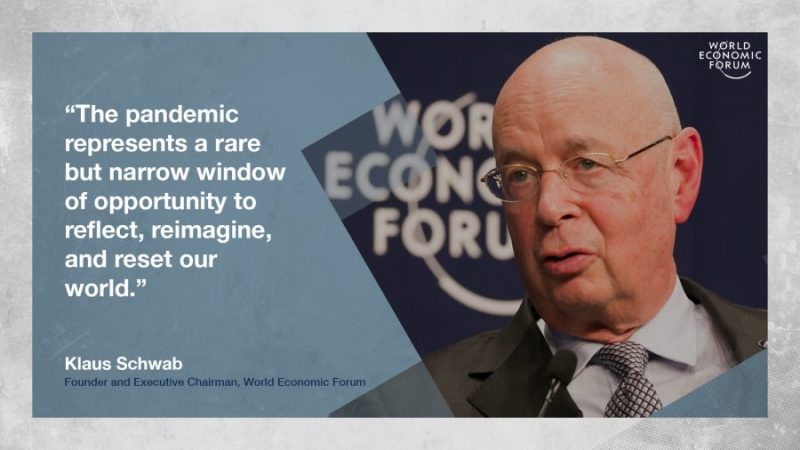
We’ve been told by the promoters of the pandemic, Klaus Schwab, Bill Gates, and others that it’s ushering in an opportunity for a Great Reset and that Covid 19 is the doorway to it.
Independent reporters like Cory Morningstar and Whitney Web have told a similar story without the glossy optimism.
The WEF has been running ads showing attractive young people having a great time and saying…
It’s 2030, I don’t own anything and I’ve never been happier.
They don’t go into just who will own everything but as they haven’t proposed eliminating capitalism it isn’t hard to guess.
According to the consortium of capitalists and their organizations such as the World Economic Forum, World Bank and even the UN we have a technocratic revolution led by AI, robotics and nanotechnology to look forward to. There will be a huge reduction in the need for workers. Scenarios are proposed which anticipate some form of UBI for the unfortunate masses.
From that majority position it looks like a very gray dystopian future. And maybe that’s what they want the people who are wise to the Covid deception to be thinking as the worst case scenario. Because there’s something far more sinister embedded within the Great Reset. And that is depopulation.
And by depopulation I mean on a grand scale; perhaps taking the planet’s roster of humans down to around a billion.
When I previously thought of this idea, the image that came to mind was of an horrific blood spattered massacre not unlike a scene from The Walking Dead. Now I don’t think they plan actual physical mayhem, although god knows they don’t shy away from that sort of thing .
I suspect they’ve come up with something diabolically clever and, as often is the case, it’s hiding in plain sight.
Are they planning on using their mandatory vaccines they’ve hyped so relentlessly to vaccinate virtually the entire world’s population? And will the vaccine be programmed to sterilize 60% or more of the women in the world? At this point I think most people would have to sit with that for a while, if not outright snort their coffee out their nose.
And I am not a lone nut in considering this or contemplating the possibility. Dr. Mike Yeadon and Dr. Wolfgang Wodarg both warn that the Pfizer vaccine will likely impair our ability to procreate.
The vaccine* contains a spike protein… called syncytin-1, vital for the formation of human placenta in women. If the vaccine works so that we form an immune response AGAINST the spike protein, we are also training the female body to attack syncytin-1, which could lead to infertility in women of an unspecified duration.
* This link no longer takes you to the above quote as WordPress has since suspended Health and Money News for violation of “Terms of Service.”
Dr. Mike Yeadon and Dr. Wolfgang Wodarg are not some fringe medics with pet theories forged in fevered imaginations.
Dr. Yeadon was former Head of Research and vice-president at Pfizer and Dr. Wodarg is an MD, PhD, epidemiologist, lung specialist and former Chairman of the Health Committee of the Council of Europe.
Professor Sir John Bell, top UK Covid advisor and member of SAGE, startled his interviewer when he said:
these vaccines are unlikely to completely sterilize a population… say 60-70%.
Of course they wouldn’t include their own billionaire class. They, along with the Royals, seem to be extremely fertile as well as long lived. And they would need a cohort of people to serve them, both in high level positions and low. Below them (in economic class) are their political operatives, presidents on down, professionals, scientists, and the few specialized workers they still need.
And vaccines being used for birth control is not a new idea. They have been studied for some time for their efficacy towards that goal.
Here’s a worrisome quote from an August 1994 article in the FASEB Journal (Federation of American Societies for Experimental Biology), (“highly cited and consistently ranks among the top biology journals” ):
The authors conclude that their “findings provide insights to possible endocrinological effects of an hCG 3CTP-based WHO promoted birth control vaccine on which a phase I clinical trial has already been completed” and that “might not reliably fulfil major expectations with respect to safety and efficacy?’ We submit that the authors provided only a repetition of old information and biased speculation, which could be damaging to progress in this field.
The article is defending the WHO against claims of some researchers about the safety of their birth control vaccine 26 years ago.
Just imagine how neat that is for their plans. While they have the majority of people terrified they vaccinate them. Then, as easily as they ramped up their Potemkin pandemic, they wind it down. People, the great mass anyway, are kept perpetually on the back foot by bizarre policy shifts always in the interest of biosafety, of course. The sterilization plan takes some time for people to catch on. When it becomes apparent there are far fewer children being born they will have a plan to explain it. It was the Cvd; it was something.
It was at this point in writing this I became aware of a streaming television series (late to the game I was here). UTOPIA. Great title, rhymes with Dystopia.
Spoiler alert: I am going to reveal plot lines and incidents in what I consider an extremely well done dramatic series. Whether it was created with a purpose or was just a product of the zeitgeist, I don’t know. It could easily be classified as “predictive.”
It was initially a 2 season series 2013/14 in the UK followed in 2018 by an American version produced by Amazon and released this past September on Amazon Prime (more below).
The plot of both is the same in its essence. A thumbnail off the top of my head: A plucky band of misfits who share an obsession with a graphic novel entitled Utopia discover that a sequel has been produced and they set out to find it. But it seems some very deep state type forces also want it and will maim, kill and steal to get it.

Utopia 2020 (Endemol Shine North America, Kudos, Trallume Productions, Picrow, Amazon Studios; Prime Video) Created by Gillian Flynn; Produced by Huey M. Park
The novel was apparently the work of a somewhat unhinged genius who saw the world as far too populous and wanted to do something about it. The resulting dramas were (imo) very well done, compelling, fast paced frightening with obligatory plot twists and denouements. It was first shown on Channel 4 in the UK. The plot in broad strokes was that a frightening flu pandemic — the Russian flu — is let loose on the world resulting in widespread panic. (Starting to sound familiar?)
In the Amazon version: A mysterious “Mr. Rabbit” (billionaire?) has let loose a deadly pandemic which kills children with a case fatality rate Dr. Fauci would envy. And the billionaire owner of a pharmaceutical company (played by John Cusak) has a vaccine which offers a cure. Pretty soon the population is marching in the streets demanding to get the vaccine. Our ragtag gang of heroes deduces that the vaccine is meant to kill and maim people. That is until the character played by John Cusack tells them that the beauty of the vaccine is that it is not designed to kill, only to sterilize people.
He says (paraphrasing) “Imagine a world of only a billion people. Plenty to go around for everybody and they’ll be free to screw up as much as they want without destroying the planet.”
He is not a ranter like Hitler or even Klaus Schwab, he’s more like, well … Bill Gates. Only John Cusack doesn’t quite reach the level of creepy that Gates is able to convey.
In the UK version there is an oblique reference to the Georgia Guidestones at one point where one of the characters says that the optimal population of the world is 500 million, roughly 7% of what it is now. And another character says that they didn’t need to have a deadly pandemic, only one that people believed was one, to frighten them into taking a vaccine.
In 2014 HBO planned an American version of Utopia but dropped it over budget concerns. Amazon picked it up in 2018 and the American version starring John Cusak was released just months ago, September 2020. The American version keeps the same basic plot and in the beginning is almost identical to it’s British sire. It does diverge somewhere past the mid-point although the core of the plot remains.
Amazon Prime has now cancelled the series although the first season is still online as apparently is the UK version seasons 1 and 2.
Some of the press are saying it was cancelled because it…
failed to connect with an audience.
That is pure bullshit. It was a hit.
The very liberal online magazine, SLATE, vehemently argues that Utopia should never have been shown so they must be at least happy that it was cancelled. I would wager from their point of view far too many people already saw it. SLATE : said:
the results [ of broadcasting Utopia] are catastrophic —
Really? Are we not capable of discerning fiction and reality and if fiction is reality don’t we need to know that too?
This is what SLATE has to say is the problem with showing Utopia (my emphasis, bold and italics):
We are in the middle of an actual pandemic, a staggering number of Americans sincerely believe that that pandemic is a politically motivated hoax, and an equally staggering number believed vaccines were harmful years before COVID-19 emerged. It’s not the filmmakers’ fault we’re in this mess; it’s not their fault so much of the public is superstitious and gullible; and it won’t be their fault if Utopia gives some dumbass the confidence they need to quit wearing a mask and infect and kill you or the people you care about.
It will probably not be a revelation to you that SLATE is totally on board with the Covid narrative and thinks we who aren’t are dumbasses, superstitious, gullible and, without masks, loaded guns ready to kill people.
But even with the hyperbole above SLATE isn’t finished, they have to bring President Trump in via the back door, ie. QAnon (bold emphasis mine):
Even if everyone who sees Utopia is capable of distinguishing fact from fantasy — and that’s vanishingly unlikely in a nation that is sending QAnon followers to Congress — it’s impossible to enjoy a story where the heroes convince themselves that shadowy forces have manufactured a phony pandemic to trick people into taking a dangerous vaccine when those exact beliefs are helping to kill hundreds of thousands of Americans.
Although it’s interesting to speculate, I don’t think it’s vitally important to know the intention of a drama that, sans the action movie veneer, is playing out in real time as we speak.
Leaving fiction aside for the time being, I am one of those “staggering numbers” who believe the novel coronavirus pandemic to be a gross exaggeration and was deployed as a controlled demolition of our lives as we have been living them.
So the question is do they plan a Great Reset of the current population (to 1804’s 1 billion) as well as all of their modern 4th Industrial Revolution wet dreams?
I’m seriously contemplating the prospect that, just as portrayed in Utopia, the vaccine they are clearly desperate for us to take — or else why would they need to force us — will not actually kill people. Or at least that will not be its principal target. It will be to sterilize us.
If that is the case it is genocide on a scale never seen before. Cusak in his role presents it as a benign solution to the intractability of overpopulation. But family is the beating heart of most of our lives. To rob people of the chance to create their own families is to take everything. It will make zombies of the people left.
But, of course, the people left will be too weak and demoralized to do much of anything. They may be offered distractions to live out their years, which will no doubt be shortened by those very same vaccines and the withholding of healthcare. But throughout there will be very little actual state killing. Just the drip drip turning into a tide of unborn children until their Utopia arrives: the world cleansed of the useless eaters. Billionaires can then enjoy their Neverland Ranch of a planet without those unwashed crowds of homo sapiens stinking the place up.
Do I think this is what they’re planning? I don’t know for sure but it’s my primary suspicion. It all fits once you can get your mind around the immense evil of it. They have never had much use for us. Railroad magnate Jay Gould famously said, “I can hire half the working class to kill the other half.”
His musing bespeaks a horrific fantasy of elimination.
We, the working class, were at best only to be tolerated for what use we could be to them. Now that we’re no longer that, it’s sayonara.
There’s one thing that puzzles me greatly though and that’s the role of China and Russia. The Great Reset seems to be run out of Klaus Schwab’s Fuhrer Bunker at the WEF and we can be certain that the globalist billionaire class, aka the ruling class Americans, Europeans and that gang of suckhole countries, the rest of The Five Eyes, are all on board.
Russia and China both seem to be getting along without the need of population reduction. And why would they mind if the West crashes their population? It would actually seem to be a benefit to them, unless the West is planning to be the Sparta of the future. And conversely wouldn’t the prospect of depopulation of their people just seem like an attempt to dupe them? I mean why would Russia and China go along with it when it would probably be seen as an attempt by the West to weaken them?
However I have a sneaking feeling that the Great Reset gang missed something somewhere that is going to backfire on them. I honestly have no idea except that when they destroy what it means to be human in the way that we are and they aren’t, they will have destroyed their own humanity and the result will be a painful implosion of their own selfhood. But maybe that’s just wishful thinking. And if they get that far there won’t be anything left of us either.
Imagine the dinosaurs lived for hundreds of millions of years. We know that because in our great hubris we studied them learning more than we know about ourselves. In comparison our time here will have been a very brief but spectacular strut across the stage.
Patrick Corbett is a retired writer, producer, director and editor who’s worked for every major network in Canada and the US except for Fox. His journalistic credits include Dateline NBC, CTV’s W-5 and the CTV documentary unit where he wrote and directed ‘Children’s Hospital’, the first Canadian production to be nominated for an International Emmy. You can follow Patrick on Twitter.
Government, Not Coronavirus, Is Killing Small Businesses
By Ron Paul | December 21, 2020
A video of a confrontation between Ventura County, California health officials and restaurant owner Anton Van Happen has gone viral. The health officials were ordering Mr. Van Happen to close his business because he allegedly violated California’s ban on outdoor dining. Mr. Van Happen asked the health officials if the government will pay his employees and his rent while his business is indefinitely closed.
Mr. Van Happen is hardly the only small business owner worried about how to pay bills during the lockdowns. Many small businesses operate on a narrow profit margin, so being forced to “temporarily” shut down or limit the number of customers they can serve is a virtual death sentence.
The lockdowns have already caused as many as 200,000 small businesses to permanently close. Lockdowns, by shrinking the number of employers, lead to long-term unemployment or lower wages for many workers.
While governments have terrorized small businesses, they have typically deemed the big chain stores “essential businesses” so they can remain open. The lockdowns are thus another government policy that gives big businesses a competitive advantage over their smaller competitors.
The benefits big businesses get from the lockdowns — including fewer competitors, more customers, and a job market with more workers competing for fewer jobs — may explain why many big businesses are not fighting the lockdowns. Instead, most big retail chains are requiring their workers and customers to wear masks. Many big businesses may soon deny service to those who refuse to receive a Covid vaccine.
One would think that progressives who claim to oppose policies that benefit big corporations like WalMart, Target, and Amazon would oppose the lockdowns. Sadly, even many progressives are unquestioningly parroting the Covid propaganda and demonizing those who dissent.
By slowing down the development of herd immunity among the population, the lockdowns could put those truly at risk in greater danger. Lockdowns have also had negative effects such as increases in drug and alcohol abuse and increases in domestic violence. Meanwhile, many schoolchildren are deprived of the opportunity to interact with their teachers and their peers. Instead, these children are subjected to the fraud of “virtual learning.”
Resistance to Covid tyranny is growing as more people figure out that lockdowns and mandates are both unnecessary and harmful. This resistance was largely started by small business owners faced with a choice between obeying the government or making sure they, and their employees, can feed their families. Small business owners have been leaders in recent anti-lockdown protests across America.
Eventually the resistance will grow to the point where the politicians will be forced to either double down on authoritarianism or admit the lockdowns were a mistake. Either way, those of us who know the truth must resist the Covid tyranny until government officials no longer terrorize small businesses for the crime of serving willing consumers.
Copyright © 2020 by RonPaul Institute.
Iran, Pakistan open 2nd border crossing for trade surge
Press TV | December 19, 2020
Iran and Pakistan have inaugurated the second official border crossing for the transfer of goods and passengers.
The border point opened during a ceremony on Saturday, with Iran’s Minister of Roads and Urban Development Mohammad Eslami and the Pakistani Minister for Defense Production Zubaida Jalal attending the event.
The gateway connects Rimadan, located in Dashtyari country of Iran’s southeastern Sistan and Baluchestan Province, with Pakistan’s Gabd.
The Rimadan border crossing has a capacity for exporting and importing goods and transporting Pakistani pilgrims and tourists.
The border’s 70-kilometer distance with Gwadar port also enables Pakistani citizens to reach Iran’s strategic Chabahar port, from where they can travel by plane or train to Iran’s religious cities and tourist sites.
The connection of the Rimadan border with Pakistan’s Karachi port would pave the way for linking China and Southeast Asian countries to Eastern Europe.
In an interview with IRNA news agency, Iran’s Ambassador to Pakistan Mohammad Ali Hosseini said there was only one crossing, Mirjaveh-Taftan, on the 900-kilometer border between the two neighboring states.
So, he added, Iranian and Pakistani officials decided to open two more border gateways, Rimadan-Gabd and Pishin-Mand.
The envoy also stressed that the inauguration of Rimdan-Gabd border point will increase economic and trade cooperation between Tehran and Islamabad, reduce smuggling and improve the livelihood of border residents as well as the security situation along the common frontier.
Billionaires’ Net Worth Grows to $10.2 Trillion During Pandemic
teleSUR | December 19, 2020
A report from Swiss bank UBS revealed that billionaires did “extremely well” during the COVID-19 pandemic, increasing their wealth more than a quarter to $10.2 trillion at the height of the crisis.
As millions of people lost their jobs and struggled to get by on government schemes, billionaires surpassed their previous peak net worth of $8.9 trillion at the end of 2017, while also increasing their ranks to 2,189 from 2,158 over the past three years.
The world’s super-rich currently hold the greatest concentration of wealth since the US Gilded Age at the turn of the 20th century, when families like the Vanderbilts, Rockefellers, and Carnegies controlled vast fortunes.
The wealthiest person on the planet, Amazon founder and CEO Jeff Bezos, saw his wealth increase $74 billion so far this year, reaching $189 billion. Elon Musk, the founder of Tesla, has seen his wealth rise $76 billion this year, totaling $103 billion.
While the UBS report noted that 209 billionaires had publicly committed to donating $7.2 billion in COVID-19 disaster relief, the figures represent just .07% of all billionaire wealth, with less than one in ten billionaires committing to contribute anything at all.
Luke Hilyard, executive director of the High Pay Centre, which researches excessive pay, said the “extreme wealth concentration is an ugly phenomenon from a moral perspective, but it’s also economically and socially destructive. Anyone accumulating riches on this scale could easily afford to raise the pay of the employees who generate their wealth, or contribute a great deal more in taxes to support vital public services while remaining very well rewarded for whatever successes they’ve achieved.”
Josef Stradler, head of UBS’ global family office department that directly deals with the world’s wealthiest individuals, said that the fact that billionaire wealth had increased so much while hundreds of millions of people worldwide are struggling could lead to public and political anger, having previously warned that the inequality gap between rich and poor could potentially lead to a “strike back.”
Strategic Victory For China? US Drops Key Project Amid Sri Lanka’s Unrelenting Security Concerns
By Rishikesh Kumar – Sputnik – 17.12.2020
US Secretary of State Mike Pompeo paid a visit to Sri Lanka in October to coax the Gotabaya Rajapksa government to sign the Millennium Challenge Cooperation Agreement. A controversy erupted ahead of Pompeo’s visit, as the US called upon Colombo “to make difficult but necessary decisions” to pick sides between Beijing and Washington.
In a major setback amid the growing Chinese presence in the Indian Ocean Region, the US has decided to discontinue a proposed $480 million development assistance programme in Sri Lanka due to “lack of partner country engagement”.
The US Embassy in Colombo on Thursday informed through a press statement that the Millennium Challenge Corporation (MCC) board has decided that the approved fund for Sri Lanka will now be made available to other eligible partner countries.
The Millennium Challenge Cooperation Agreement was approved by the previous government of Ranil Wickremesinghe in the last year of his tenure, but he was unable to get approval from parliament, evoking widespread resistance among people who believed it compromised the nation’s sovereignty and national security.
Nevertheless, the US has once again reiterated that the programme, also facing resistance in another South Asian nation, Nepal, is transparent in nature.
“Country ownership, transparency, and accountability for grant results are fundamental to MCC’s development model”, the statement reads.The MCC has been dubbed a “development project aimed at poverty alleviation” by the US, but many people in Sri Lanka consider it a tool to expand military outreach in the Indian Ocean.
The MCC has partnered with nearly 30 countries worldwide on 38 grant agreements, totalling nearly $13.5 billion.
Ties between the two countries soured under the Gotabaya Rajapaksa government as the Trump administration considered it biased in favour of China. The Trump administration also introduced a ban on the entry of Sri Lanka’s Army Chief Lt. Gen. Shavendra Silva – who is considered a war hero in the 30-year battle against Tamil militancy – into the United States on charges of human rights violations.
In October this year, US Principal Deputy Assistant Secretary Dean Thompson urged Sri Lanka to make “difficult but necessary choices” to secure its economic independence instead of choosing opaque practices in an apparent reference to China deepening its relations with the South Asian country. Beijing reacted to the remark and asked the US to shun a “Cold War” mentality. China has invested nearly $8 billion in infrastructure projects in Sri Lanka, with Colombo Port City and the Hambantota Port Projects being the two major ones.
Pakistan returns $1 bln of Saudi Arabia’s loan over Kashmir dispute
MEMO | December 16, 2020
Pakistan has returned $1 billion to Saudi Arabia as a second installment of a $3 billion soft loan, as Islamabad reaches out to Beijing for a commercial loan to help it offset pressure to repay another $1 billion to Riyadh next month, officials said on Wednesday according to a report by Reuters.
Analysts say it is unusual for Riyadh to press for the return of money. But relations have been strained lately between Pakistan and Saudi Arabia, historically close friends.
Saudi Arabia gave Pakistan a $3 billion loan and a $3.2 billion oil credit facility in late 2018. After Islamabad sought Riyadh’s support over alleged human rights violations by India in the disputed territory of Kashmir, Saudi Arabia has pushed Pakistan to repay the loan.
With the $1 billion flowing out, Pakistan – which has $13.3 billion in central bank foreign reserves – could face a balance of payments issue after clearing the next Saudi installment.
“China has come to our rescue,” a foreign ministry official told Reuters. A finance ministry official said Pakistan’s central bank was already in talks with Chinese commercial banks.
“We’ve sent $1 billion to Saudi Arabia,” he said. Another $1 billion will be repaid to Riyadh next month, he said. Islamabad had returned $1 billion in July.
Although a $1.2 billion surplus in its current account balance and a record $11.77 billion in remittances in the past five months have helped support the Pakistani economy, having to return the Saudi money is still a setback.
Pakistani army chief General Qamar Javed Bajwa, who visited Riyadh in August to ease the tensions, met the Saudi ambassador in Islamabad on Tuesday.
World Bank approves $250m loan to Morocco
MEMO | December 16, 2020
The World Bank has agreed to grant Morocco $250 million to support local agricultural, as part of a joint operation with the French Development Agency.
This came in a statement issued by the World Bank on Wednesday, after its executive board approved the loan on Tuesday.
The loan aims to support the Generation Green programme, a government strategy for developing agriculture.
The statement announced: “The funding will also support the country’s economic response to the coronavirus pandemic.”
The loan will finance entrepreneurship and training programmes for villages’ youth, with a view to attracting private investments into the agricultural food products sector, and removing regulatory and financing obstacles to stimulate the creation of job opportunities.
According to official statistics, the agricultural sector contributes about 14 per cent of the gross domestic product (GDP). It presents an important source of employment for 75 per cent of the country’s villagers.
Featured Video

Trita Parsi: Middle East Unraveling — Are We on the Path to World War?
or go to
Aletho News Archives – Video-Images
New Book
Trans agenda is ‘normalization of sadism’ – US author

RT | September 23, 2026
The US Democratic Party has embraced a transgender agenda that amounts to “the normalization of sadism,” author A.J. Rice has said, warning that radical trans policies would return if the party is allowed to regain power.
Speaking to RT’s America First host Scotty Nell Hughes about his new book, ‘The Curse of the Bearded Lady: How the Trans Mafia Whacked American Sanity’, Rice argued that activists have gained significant influence in schools, medicine, and corporate America while people who questioned the agenda have faced pressure to stay silent.
The author described the “trans mafia” as the sprawling network of people and institutions that have helped the movement gain influence. He singled out parts of academia, wealthy backers, and corporations, and stated that providers of transition-related treatment also have a financial incentive to keep young people in their care indefinitely.
Rice argued that the consequences of these policies ultimately fall on children who are being drawn toward gender-affirming medical treatments and on girls who are expected to share locker rooms or compete in sports with biological males.
He noted that while voters rejected the Democrats’ approach to gender in 2024, the party, which has been “captured by madness,” has since only doubled down and is seeking what is effectively “the normalization of sadism.” … Full report
Blog Roll
 Aletho News
- Integrity Initiative: UK-funded network framed dissent as Russian disinformation for years
- ‘We don’t seek permission to defend our country’: Snippets from President Pezeshkian’s UNGA address
- NATO chief wants Europeans to fight American wars [for Israel]
- German chemicals giant reveals details of downsizing
- Refaat Al-Areer Was The Canary In The Coal Mine In Israel’s War On The Truth
- Israeli election committee bars candidate from Knesset race over Gaza war opposition
- French-Lebanese man files war crimes complaint over Israeli attacks
- Mahan Air Flight Lands in China Despite US Threat against Iranian Airlines
- US eyes $10bn fund to rebuild war-battered Gulf infrastructure
- Trump meets Rodríguez near Maduro’s prison as Venezuela’s oil flows to US
- If Americans Knew
- Caught on Tape: AIPAC CEO Boasted of Controlling Trump’s National Security Officials
- Why Hamas Attacked Israel in October 2023 – Israeli professor Ilan Pappé
- They see them, then kill them: Israeli quadcopters track, deliberately target civilians in Gaza
- Winter could turn Gaza’s treacherous, war-damaged buildings into deathtraps
- Majority of Democratic Voters Want to Prosecute Both Biden and Trump Administration Officials Over Gaza
- As Gaza languishes, world leaders gather at the UN – Daily Update
- Sanctions are collective punishment: immoral and self-defeating
- Phosphorus Munitions Fired by Israel Burn Groves, Orchards in Southern Lebanon
- Israel Carries Out New Ceasefire Violations Across Gaza
- AI – Emphasis on the ‘I’: Israel Is Funding AI Chatbot Propaganda
- No Tricks Zone
- New Study: Earth And Venus Surface Warmth Largely Explained By Convection And Lapse Rate, Not CO2 Or Radiation
- 2025 Nature Paper Claiming Worsening Global Drought Gets RETRACTED …Heavily Flawed
- New Study: ‘Global Drought Shows No Detectable Recent Acceleration Under Climate Warming’
- Economic Masterminds: German Socialists Suggest Taxing Productivity Gains Stemming From Using AI
- The South China Sea Has Not Been Cooperating With The Climate Change Narrative
- Energy Crisis: Germany Enters Heating Season With Historically Low Gas Reserve Fill Levels
- New Study: The Antarctic Ice Sheet Gained Mass From 2020-2024 Due To Staggering Snow And Ice Accumulation
- Study: Ocean Heating Rates From Thousands Of Years Ago ‘Dwarf’ Modern Ocean Heating Rates
- Climate Extremists Target, Attack Large-Scale Power Grid Infrastructure In Germany!
- New Study: Antarctic Ice Melt Has Contributed Less Than 1 Centimeter To Sea Level Rise In The Last 30 Years

