Aletho News

ΑΛΗΘΩΣ

King’s Legacy Betrayed

By Margaret Kimberley | Consortium News | April 4, 2018

Dr. Martin Luther King, Jr. was the preeminent leader of the black liberation movement in the 1950s and 1960s. Millions of people engaged in the struggle against America’s shameful apartheid system but King was the most influential. His actions are remembered, his words are quoted by activists, politicians, and pundits. His birthday is a national holiday. Only the worst and most retrograde racists dare to speak ill of King.

But the lionizing is mostly a sham. In fact there are very few people who remember the importance of what King said, what he did or why and how they should replicate his work. His legacy has been subverted and is now understood only by the most conscious students of history.

Nothing illustrated this state of affairs more clearly than the use of King’s words in a Ram truck commercial broadcast during the 2018 Super Bowl football championship. Viewers were told that Ram trucks are “built to serve.”

The voice over is provided by King himself speaking exactly 50 years earlier, on February 4, 1968. The Drum Major Instinct sermon was a call to reject the ego driven desire for attention in favor of working for more altruistic pursuits. “If you want to say that I was a drum major say that I was a drum major for justice.”

The commercial’s creators deliberately ignored the portion of the sermon in which King derided the influence of advertising. He even mentioned vehicle advertising specifically. He warned that “gentleman of massive verbal persuasion” can influence people to act against their own interests. “In order to make your neighbors envious you must drive this type of car.”

A Nation Going Backwards

Corporate interests are not alone in pretending to honor King while actually attacking him. King’s legacy is severely diminished because it has been used by cynical individuals for corrupt purposes. As we commemorate the 50th anniversary of his assassination we see a nation that has moved backwards on nearly every front. Legalized discrimination was eliminated but powerful forces undermined progress and America in 2018 is devoid of the change that King fought to make real.

Much of the blame lies at the feet of the Democratic Party, who have an undeserved reputation for enacting progressive policies. In reality, Democrats actively targeted black people for joblessness, poverty, imprisonment and disenfranchisement. Democrats became the party of corporate interests and aligned themselves with every neoliberal initiative. They forsook the union movement, working hand in hand with finance capitalists to take living wage jobs out of the country. Bill Clinton oversaw the end of public assistance as a right, destroying what Franklin Roosevelt enacted 60 years earlier. He built on the work of Ronald Reagan and massively increased the prison population.

Barack Obama offered a “grand bargain” of austerity to Republicans and continued the George W. Bush policy of tax cuts for the wealthiest. The banks which created the 2008 financial collapse were rewarded with huge bailouts of public funds. Black people ended up losing the small bit of wealth they held before the crash and now lead only in the negative measurements of quality of life.

Democrats destroy public education through charter schools and refuse to raise the minimum wage even when they control Congress and have the power to act. They were never the party of peace and they are now most outspoken in encouraging an anti-Russian resumption of the Cold War and supporting imperialist interventions.

After the legislative victories of the 1960s black Americans were ignored, subjugated or co-opted. It is true that there are thousands of black elected officials, when in King’s day there were hardly any. But this political class is a traitorous one and works for its own benefit, its patrons in corporate America and the civil rights organizations that are subsidiaries of the Democratic Party. The black political class went along with every sordid deal that Jimmy Carter, Bill Clinton and Barack Obama pursued. Their positions are secure but the rest of black America is anything but.

Prison Population Explodes

A glaring example is the enormous increase in incarceration rates. When Martin Luther King was alive there were only 300,000 incarcerated Americans. There are now more than 2 million. The exponential increase is not coincidental. Mass incarceration was a direct reaction to the freedom movement. Segregation put black people under physical control and the system devised new ways to secure the same result when it ended.

Black men became the face of drug dealing, or deadbeat fatherhood or anything else that the press and politicians told white Americans to fear and hate. The ripple effect is terrible and damages family life, the ability to earn a living and even to vote. In 48 states felons either lose the franchise permanently or are prevented from voting until all supervision is lifted. In Florida alone 1.5 million people cannot vote because of past convictions. A recent court case declared this rule unconstitutional and if a November 2018 ballot measure passes they may have their voting rights restored. That will be a happy result but there are 5 million more Americans, disproportionately black, who elsewhere lose the ability to vote due to criminal convictions.

Until incarceration becomes a mass movement, political issue, the Voting Rights Act amounts to very little. Actually the act already amounts to little because the Supreme Court nullified its most important provisions requiring southern states to seek permission before changing voting rules. The Democrats are less concerned with getting out the vote than in making their wealthy patrons happy and protecting the Senate majority and federal judiciary they claim is so important.

Of course the Democrats are in a bind. They don’t want to get out the vote because that would mean fighting for the issues that the masses need addressed. The wishes of wealthy, corporate America don’t dovetail with those of working people. Fat cat funders don’t want an increased minimum wage. Getting out the vote would mean biting the hand that feeds. So the people be damned.

King’s Challenge to Militarism Defied

King began his fight for the particular needs of black people in a uniquely oppressive system. As years went by he also opposed the economic system itself and the war in Vietnam. In 2017 the Democrats, including most Congressional Black Caucus members, went along with Donald Trump’s request for a 10% increase of an already huge military budget. They will go through the pretense of complaining when that increase inevitably restricts federal spending for social needs, but they are connivers who hope we miss their charade.

Martin Luther King Jr. with President Johnson in 1966

The liberation movement succeeded against great odds. Most black people then as now lived in the southern states and could not vote. Yet their coordinated mass action won them the franchise anyway. That lesson must not be forgotten as the juggernaut of neoliberal plots threatens everyone.

Every major American city is undergoing an onslaught of gentrification which displaces millions of black people at the whim of finance capital. The politicians who will speak in praise of King today do nothing to stop them. In fact they depend upon their largesse to stay in office.

They do nothing to stop the continued terror of billionaire rule. Instead they assist the richest in grabbing more and more. Amazon CEO Jeff Bezos this year became the richest person on the planet. His plans for a new Amazon HQ could be funded entirely by his corporation. Instead cities across the country scramble to give away property and tax dollars to help fund the race to the bottom for workers.

Hollow Admiration

Dr. Martin Luther King, Jr. should be remembered for his tremendous courage in speaking out against the power of money and the military industrial complex. The poseurs who go along to get along should be silent today. The past 50 years have been so tragic because the hard won victories were deliberately destroyed.

King inspired the people to fight for their needs. He did so when the New York Times and Washington Post vilified him. He spoke against the Vietnam war when his compatriots feared angering Lyndon Johnson. The mass action movement that he led forced LBJ to act when he didn’t want to. If politicians act on behalf of the people it is never because they have the right motives.

That is what we must remember about King. The admiration is hollow unless we do as he and millions of others did and commit ourselves to challenging the system. That will mean openly and loudly denouncing the people committed to destroying what they worked and died to achieve. The worst traitors are the most prominent and well respected. But the respect is undeserved and quite dangerous. The night before he was killed King spoke of getting to the promised land. That won’t happen until the scoundrels are named and opposed. Honoring King’s legacy demands that we do just that.

Margaret Kimberley is Editor and Senior Columnist at Black Agenda Report. Ms. Kimberley serves on the Administrative Committee of the United National Antiwar Coalition (UNAC), the Coordinating Committee of Black Alliance for Peace (BAP) and the Advisory Board of ExposeFacts.org. She is writing a book about racism and the American presidency. She is a graduate of Williams College and lives in New York City.

April 4, 2018 Posted by | Civil Liberties, Economics, Ethnic Cleansing, Racism, Zionism, Militarism, Progressive Hypocrite, Timeless or most popular | | Leave a comment

How Big Water Projects Helped Trigger Africa’s Migrant Crisis

By Paul Homewood | Not A Lot Of People Know That | April 1, 2018

Following up the Lake Chad post, this is a highly relevant contribution by science writer, Fred Pearce, in Yale 360 last October:

image

The Hadejia-Nguru wetland was once a large green smudge on the edge of the Sahara in northeast Nigeria. More than 1.5 million people lived by fishing its waters, grazing their cattle on its wet pastures, and irrigating their crops from its complex network of natural channels and lakes. Then, in the 1990s, the Nigerian government completed two dams that together captured 80 percent of the water that flowed into the wetland.

The aim was to provide water for Kano, the biggest city in northern Nigeria. But the two dams dried up four-fifths of the wetland, destroying its natural bounty and the way of life that went with it. Today, many of the people who lost their livelihoods have either headed for Kano, joined the Islamic terrorist group Boko Haram that is terrorizing northeast Nigeria – or paid human-smugglers to take them to Europe.

For the past three years, Europe has been convulsed by a crisis of migrants, some from Syria and the war-torn Middle East, but also hundreds of thousands coming from the arid Sahel region of Africa, including Nigeria, Mali, and Senegal. They are fleeing poverty and social breakdown caused by insurgent groups such as Boko Haram. But environmentalists and others in the region say that behind this social chaos lies serious water mismanagement in the drought-prone region.

Big dams intended to bring economic development to the Sahel are having the opposite effect. By blocking rivers, they are drying out lakes, river floodplains, and wetlands on which many of the poorest in the region depend. The end result has been to push more and more young people to risk their lives to leave the region.

The Manantali Dam is estimated to have caused the loss of 90 percent of fisheries and up to 618,000 acres previously covered by water.

Last year, I traveled with Wetlands International, a Dutch-based environmental NGO, along the valley of the River Senegal, which forms the border between Senegal and Mauritania. Farmers, herders, and fishermen told of their battles against the ecological breakdown that has followed the building of the Manantali Dam, which is located upstream in Mali and was completed in 1987. The dam holds back a large part of the river’s seasonal flood flow to generate hydroelectricity for cities and provide irrigation water for some farmers. But there have been more losers than winners.

Seydou Ibrahima Ly, a teacher in the bankside village of Donaye Taredji in Podor district, said that when he was young, “the river had a flood that watered wetlands where fish grew.” But “now there is no flood because of the dam… Compared to the past, there aren’t many fish. Our grandparents did a lot of fishing, but we don’t.” With their livelihoods gone, more than 100 people had left his village, he said. “In some villages, they are almost all gone.”

“The migrants know the boats [traveling to Europe] are dangerous, but they have a determination to go and find a better life,” said Oumar Cire Ly, deputy chief of neighbouring Donaye village, which has also seen an exodus of its young people.

Farmers once planted their crops in the wet soils as the waters receded. Pastoralists grazed their animals where forests and wildlife flourished. But the dam and its related projects are estimated to have resulted in the loss of 90 percent of the fisheries and up to 618,000 acres of fields that were previously covered by water from the rising river during the wet season, a system of natural irrigation known as flood-recession agriculture.

The Senegal River Basin Development Organization – the intergovernmental agency that is responsible for the dam project and is known by its French acronym, OMVS – conceded in 2014 that eliminating the river’s annual flood “has made flood-recession crops and fishing on the floodplain more precarious, which makes the rural production systems of the middle valley less diversified, and therefore more vulnerable.”

This is clearly at odds with the organization’s mandate to “ensure food security for all people within the river basin and region.” But Amadou Lamine Ndiaye, the OMVS’s director of environment and sustainable development, told me his agency regarded wetlands such as river floodplains primarily as a source of revenue for tourists, rather than as a lifeline for rural communities.

As many as a million Nigerians have lost livelihoods because of dams that once fed a wetland that flowed into Lake Chad.

Worse still is the crisis affecting the region around Lake Chad, which until half a century ago was Africa’s fourth largest lake, straddling the border between Nigeria, Niger, Chad, and Cameroon. The lake has lost more than 90 percent of its surface area since then. Initially, this was largely due to persistent droughts in the Sahel that often dried up the rivers supplying it with water. Since 2002, rainfall has improved markedly, but Lake Chad has not recovered.

That is because of dams on the rivers flowing into the lake from the wetter south, mainly in Cameroon and Nigeria. The Maga Dam in Cameroon has diverted 70 percent of the flow of the Logone river to rice farms. This has both dried up part of the floodplain pastures that once supported 130,000 people, and dramatically reduced inflow to Lake Chad.

In northern Nigeria, up to 1 million people have lost livelihoods because of dams on the River Yobe that once fed the Hadejia-Nguru wetland and flowed on into Lake Chad. In both cases, says Edward Barbier, an environmental economist at Colorado State University, the dams have had an overall negative effect on local economies, as losses to fishermen, pastoralists, and others exceeded gains from irrigation agriculture.

The major wetlands and water basins of the Sahel region in Africa. Wetlands International

https://e360.yale.edu/assets/site/SahelWetlands_WetlandsInternational.jpg

The poverty is driving social breakdown and conflict all around the lake. Mana Boukary, an official of the Lake Chad Basin Commission, an intergovernmental body, told Duetsche Welle two years ago: “Youths in the Lake Chad Basin are joining Boko Haram because of lack of jobs and difficult economic conditions resulting from the drying up of the lake.”

The UN humanitarian coordinator for the Sahel region, Toby Lanzer, told a European Union-Africa summit that it was also fueling migration: “Asylum seeking, the refugee crisis, the environmental crisis, the instability that extremists sow — all of those issues converge in the Lake Chad basin.”

A Nigerian government audit of the lake basin in 2015 agreed. It concluded that “uncoordinated upstream water impounding and withdrawal” were among factors that had “created high competition for scarce water, resulting into [sic] conflicts and forced migration.” More than 2.6 million people have left the Lake Chad region since mid-2013, according to the International Organization for Migration.

At their greatest extent, wetlands cover one-tenth of the Sahel, the arid region stretching for 3,400 miles across northern Africa, immediately south of the Sahara desert. They are wildlife havens, especially notable for their birdlife. The Inner Niger Delta in Mali, for instance, is one of the world’s most important seasonal stops for migrating birds, hosting about 4 million waterbirds from Europe each winter. In addition, these wetlands are a source of sustenance for the region’s poor and the main sources of the region’s economic productivity outside the short wet season from June to September.

Dried-up wetlands are often blamed on climate change when the real cause often is more human interference in river flows.

Yet the decline of the wetlands and the resulting social and economic consequences remains a largely untold story. That is partly because dried-up wetlands are routinely, and often incorrectly, blamed on climate change, when the real cause is often more direct human interference in river flows. It is also partly because many development agencies still mostly think of dams as infrastructure development that furthers economic activity and wealth – and partly because many environmental groups concentrate on the ecological impacts of dried wetlands, while ignoring the human consequences.

In this climate of ignorance, more wetlands are under threat. The next victim is likely to be the Inner Niger Delta, a wetland in northern Mali that covers an area the size of Belgium. The delta forms where West Africa’s largest river, the Niger, spreads out across flat desert near the ancient city of Timbuktu.

The delta is a magnet for migrating European waterbirds. It is also currently one of the most productive areas in one of the world’s poorest countries. It provides 80 percent of Mali’s fish and pasture for 60 percent of the country’s cattle, and it delivers 8 percent of Mali’s GDP and sustains 2 million people, 14 percent of the population, says Dutch hydrologist Leo Zwarts. Its fish are exported across West Africa from Mopti, a market town on the shores of the delta.

In recent years the Mali government has been diverting water from the River Niger at the Markala barrage just upstream of the delta, to irrigate desert fields of thirsty crops such as rice and cotton. These diversions have cut the area of delta flooded annually by up to 7 percent, says Zwarts, causing declines in forests, fisheries, and grazing grasses. Some people have left the delta as a result, though it is unclear whether they have been among the Malians regularly reported to be in migrant boats heading from Libya to Italy.

The Markala Barrage in Mali, which diverts water from the River Niger for irrigating crops such as rice and cotton.  Fred Pearce/Yale e360

But this trickle of people from the delta could soon become a flood. In July this year, Mali’s upstream neighbour, Guinea, announced the go-ahead for Chinese firms to build a giant new hydroelectric dam, the Fomi Dam, in the river’s headwaters. Construction could begin as soon as December.

The Fomi Dam’s operation will replace the annual flood pulse that sustains the wetland’s fecundity with a more regular flow that the Mali government intends to tap for a long-planned tripling of its irrigation along the river. Wetlands International estimates that the combined impact of the dam and irrigation schemes could cut fish catches and pastures in the delta by 30 percent.

“Less water flowing into the delta means a lower flood level and a smaller flood extent”, says Karounga Keïta of Wetlands International in Mali. “This will have a direct impact on food production, including fish, livestock, and floating rice.” He fears that the inevitable outcome will be further human migrations from the wetland.

The links in the chain from water management through wetland health to social breakdown and international migration are complex. Wetland loss is certainly not the only reason for the human exodus from the Sahel. And migration is a long-standing coping strategy for people living in a region of extreme climate variability.

But the parlous state of the wetlands of the Sahel is changing the region. In the past, wetlands were refuges in times of drought or conflict. They were safe, and the water persisted even in the worst droughts. But today, with their waters diminished, these wetlands have become sources of outmigration. Now, migrations that were once temporary and local are becoming permanent and intercontinental.

https://e360.yale.edu/features/how-africas-big-water-projects-helped-trigger-the-migrant-crisis

Note his comment that “dried-up wetlands are often blamed on climate change when the real cause often is more human interference in river flows. “.

And that “since 2002, rainfall has improved markedly, but Lake Chad has not recovered.”

I have every sympathy for countries like Nigeria and Cameroon. They are between the proverbial rock and hard place,

They have growing populations, with ever growing expectations. For this they need, among other things, food and water supplies. On the other hand, these very things impact on the environment which ultimately sustains them.

There are no easy answers.

But blaming it all on climate change does nobody any favours.

April 1, 2018 Posted by | Economics, Science and Pseudo-Science, Timeless or most popular | , , , , | Leave a comment

15 Years of War: To Whose Benefit?

By Charles Hugh-Smith | Of Two Minds | March 28, 2018

As for Iraq, the implicit gain was supposed to be access to Iraqi oil.

Setting aside the 12 years of “no fly zone” air combat operations above Iraq from 1991 to 2003, the U.S. has been at war for almost 17 years in Afghanistan and 15 years in Iraq. (If the word “war” is too upsetting, then substitute “continuing combat operations”.)

Since the burdens and costs of these combat operations are borne solely by the volunteers of the U.S. Armed Forces, the American populace pays little to no attention to the wars unless a household has a family member in uniform who is in theatre.

Permanent combat operations are now a barely audible background noise in America, something we’ve habituated to: the human costs are invisible to the vast majority of residents, and the financial costs are buried in the ever-expanding mountain of national debt. What’s another borrowed trillion dollars on top of the $21 trillion pile?

But a nation continually waging war should ask: to whose benefit? (cui bono) As near as I can make out, the nation has received near-zero benefit from combat operations in Afghanistan, one of the most corrupt nations on Earth where most of the billions of dollars “invested” have been squandered or stolen by the kleptocrats the U.S. has supported.

What did the nation gain for the tragic loss of lives and crippling wounds suffered by our personnel and Afghan civilians?

As for Iraq, the implicit gain was supposed to be access to Iraqi oil. As near as I can make out, the U.S. imports about 600,000 barrels of oil per day from Iraq, a relatively modest percentage of our total oil consumption of 19.7 million barrels a day.

(Note that the U.S. was importing around 700,000 barrels a day from Iraq before Operation Iraqi Freedom was launched in March 2003–and imports from Iraq declined as a result of the war. So what was the energy-security gain from launching the war?)

Meanwhile, Iraq exports over 2 million barrels a day to China and India, where the presumed benefit to the U.S. is that U.S. corporations can continue to produce shoddy goods using low-cost Asian labor that are exported to U.S. consumers, thereby enabling U.S. corporations to reap $2.3 trillion in profits every year.

(Before China joined the World Trade Organization (WTO), U.S. corporate profits were around $700 billion–less than one-third the current gargantuan sum. Isn’t this suggestive of the immense profits gained by offshoring production to Asia and reducing the quality of the goods being manufactured?)

Since “energy security”, i.e. access to oil, was the implicit reason for going to war, let’s ask: were all the sacrifices of lives and limbs and the direct costs of roughly $1 trillion worth the roughly $200 billion in oil that the U.S. has imported from Iraq– and if history is any guide, could have imported without going to war at all?

It’s far easier to blunder into war than it is to blunder out of war. But hey, it’s certainly been profitable for a few at the top of the financial heap.

March 28, 2018 Posted by | Economics, Militarism | , | Leave a comment

Russian gas pipeline gets green light from Germany as US tries to kill project

RT | March 27, 2018

Germany has issued a permit for the construction and operation of an offshore section of the Nord Stream 2 pipeline in the Exclusive Economic Zone (EEZ) of Germany in the Baltic Sea.

“The BSH [Federal Maritime and Hydrographic Agency of Germany] issued the permit for this approximately 30-kilometres-long route section in accordance with the Federal Mining Act,” the company in charge of the project, Nord Stream 2 AG, said on its website.

According to the company, all necessary permits have been obtained. In January, the Stralsund Mining Authority approved the construction and operation in German territorial waters and the landfall area.

“We are pleased that all necessary permits are now in place for the German route section, which has an overall length of 85 kilometers,” Permitting Manager Germany at Nord Stream 2 AG Jens Lange said.

Authorization from regulators in Russia, Finland, Sweden, and Denmark, through territories of which the pipeline is set to run as well, are due to be obtained in the coming month, according to the operator. Scheduled construction works will reportedly be carried out this year as planned.

The Nord Stream 2 pipeline is projected to run from Russia to Germany under the Baltic Sea. It will double the existing pipeline’s capacity of 55 billion cubic meters per year. According to the operator, the pipeline is the most efficient way, both economically and ecologically, to transport gas from the world’s largest reserves to European consumers.

The project has been strongly opposed by several members of the European Union, including Poland, Latvia, Lithuania, Romania and Hungary, as well as Ukraine. The latter vigorously opposes Nord Stream 2, as the future pipeline will bypass the country and deprive Ukraine’s budget of transit fees.

At the same time, the US has threatened to sanction companies that cooperate with Russia to implement the project. Earlier, the US announced plans to become a major energy exporter and has begun liquefied natural gas (LNG) deliveries to Europe.

March 27, 2018 Posted by | Economics | , , , | Leave a comment

Police complicit in blacklisting of trade unionists by construction firms, Met admits

RT | March 23, 2018

Police colluded in stripping trade unionists of work by passing on their information to a blacklisting operation ran by construction firms. The Metropolitan police made the admission after a six-year investigation.

Following an internal probe, the Met said allegations of police sharing the information of workers with some of the UK’s biggest construction firms are “proven.” The information included details of workers’ political activity and of their personal relationships.

The scandal came to light in 2009 following a raid by an information commissioner on an organization called the Consulting Association, which uncovered a list of more than 3,000 workers. It is understood that more than 700 workers shared £75m in settlement compensation – with many others having earlier settled for smaller amounts.

In a letter to the workers’ lawyers, Deputy Assistant Commissioner Richard Martin states that findings were “completed two years ago and so sensitive they had been sent straight to the then-commissioner.” The letter read: “Allegation: Police, including Special Branches, supplied information that appeared on the Blacklist, funded by the country’s major construction firms.”

“The report concludes that, on the balance of probabilities, the allegation that the police or Special Branches supplied information is ‘proven.’ Material revealed a potentially improper flow of information from Special Branch to external organizations, which ultimately appeared on the blacklist.”

Eight firms who used the list were sued by workers; they include Carillion, Balfour Beatty, Costain, Kier, Laing O’Rourke, Sir Robert McAlpine, Skanska UK and Vinci. All firms apologized unreservedly.

In a statement, Scotland Yard said it was sorry for the delay in releasing the outcome of its investigation. “Allegations about police involvement with the ‘Blacklist’ will be fully explored during the Undercover Policing Public Inquiry,” it said. “At this stage the MPS will await the conclusions of the UCPI before considering what steps should be taken next.”

Dave Smith, of the Blacklist Support Group which represents the trade unionists, said: “We have waited six years for this. When we first talked about police collusion in blacklisting, people looked at us as if we were conspiracy theorists. We were told things like that don’t happen here. With this admission from the Met Police, our quest for the truth has been vindicated.”

March 24, 2018 Posted by | Civil Liberties, Economics, Timeless or most popular | , | Leave a comment

European Union Wages Cold War Against Russia – Marine Le Pen

© Sputnik/ Ramil Sitdikov
Sputnik – 23.03.2018

President of the National Front French political party Marine Le Pen has commented on the development of the situation around the poisoning of ex-Russia spy Sergei Skripal during a speech on the Franceinfo radio station.

“I think that something bigger is behind these actions — a strategy aimed at building a wall between the EU and Russia. Judging by my experience of working in the European Parliament, I know that the EU is waging a cold war against Russia, Le Pen, president of the National Front party, said.

Le Pen’s statement comes after a source told Sputnik that a number of European countries were considering expelling Russian diplomats or recalling their ambassadors from Moscow.

The move was prompted by UK Prime Minister Theresa May’s accusations against Russia of poisoning former intelligence officer Sergei Skripal and the expulsion of 23 Russian diplomats as a punitive measure.

Russia has strongly rejected the accusations and offered assistance in the investigation. However, Moscow’s request for samples of the chemical substance used to poison Skripal was denied. Moscow has also expelled UK diplomats and ordered the British Council to stop its activities in Russia in response to the UK expulsion of Russian diplomats.

Skripal and his daughter have been in hospital in a critical condition since March 4 and are being treated for exposure to what the UK experts believe to be the A234 nerve agent. The UK side claimed that this substance was related to the Novichok class nerve agents developed in the Soviet Union.

March 23, 2018 Posted by | Deception, Economics, Fake News, Mainstream Media, Warmongering, Russophobia | , , , , | Leave a comment

UN seeks rare labor probe against Venezuela

Press TV – March 21, 2018

The UN’s labor body on Wednesday set up an investigation into alleged violations in Venezuela, following a request by a private-sector group long opposed to the Caracas government.

The United Nations’ International Labor Organization rarely creates this type of probe, known as a Commission of Inquiry. The last case was launched against Zimbabwe in 2008.

The entrepreneurial association, Fedecamaras, took its complaint to the Geneva-based ILO, alleging it was the victim of multiple violations committed by President Nicolas Maduro’s socialist government.

Those included breaching freedom of association rights of unions and trade groups seen as opposed to the government; and raising minimum wages without consulting employers — a violation of ILO rules.

In a statement, the ILO said its governing body “has discussed this complaint six times since 2015.”

It asked Caracas “to take measures to put an end to the alleged interference, aggression and stigmatization directed against Fedecamaras, its affiliated organizations and its leaders,” the statement said.

The ILO also noted that it had to cancel a high-level trip to the country scheduled for last year after the government objected to the mission.

“A Commission of Inquiry is generally set up when a member State is alleged to have committed persistent and serious violations of ratified International Labor Conventions, which are binding international treaties, and has repeatedly refused to address them,” the statement further said.

The ILO has only set up 12 such inquiries in its 100-year history.

Venezuela’s crushing economic and political crisis has caused widespread shortages of basic goods, in addition to hyperinflation.

Maduro’s government has at times portrayed certain private-sector groups as enemies and agents of foreign powers hostile to Venezuela’s interests.

March 22, 2018 Posted by | Economics | , | Leave a comment

Why the UK, the EU and the US Gang-Up on Russia

By James Petras :: 03.20.2018

Introduction: For the greater part of a decade the US, the UK and the EU have been carrying out a campaign to undermine and overthrow the Russia government and in particular to oust President Putin. Fundamental issues are at stake including the real possibility of a nuclear war.
The most recent western propaganda campaign and one of the most virulent is the charge launched by the UK regime of Prime Minister Theresa May. The Brits have claimed that Russian secret agents conspired to poison a former Russian double-agent and his daughter in England, threatening the sovereignty and safety of the British people. No evidence has ever been presented. Instead the UK expelled Russian diplomats and demands harsher sanctions, to increase tensions. The UK and its US and EU patrons are moving toward a break in relations and a military build-up.

A number of fundamental questions arise regarding the origins and growing intensity of this anti-Russian animus.

Why do the Western regimes now feel Russia is a greater threat then in the past? Do they believe Russia is more vulnerable to Western threats or attacks? Why do the Western military leaders seek to undermine Russia’s defenses? Do the US economic elites believe it is possible to provoke an economic crisis and the demise of President Putin’s government? What is the strategic goal of Western policymakers? Why has the UK regime taken the lead in the anti-Russian crusade via the fake toxin accusations at this time?

This paper is directed at providing key elements to address these questions.

The Historical Context for Western Aggression

Several fundamental historical factors dating back to the 1990’s account for the current surge in Western hostility to Russia.

First and foremost, during the 1990’s the US degraded Russia, reducing it to a vassal state, and imposing itself as a unipolar state.

Secondly, Western elites pillaged the Russian economy, seizing and laundering hundreds of billions of dollars. Wall Street and City of London banks and overseas tax havens were the main beneficiaries

Thirdly, the US seized and took control of the Russian electoral process, and secured the fraudulent “election” of Yeltsin.

Fourthly, the West degraded Russia’s military and scientific institutions and advanced their armed forces to Russia’s borders.

Fifthly, the West insured that Russia was unable to support its allies and independent governments throughout Europe, Asia, Africa and Latin America. Russia was unable to aid its allies in the Ukraine, Cuba, North Korea, Libya etc.

With the collapse of the Yeltsin regime and the election of President Putin, Russia regained its sovereignty, its economy recovered, its armed forces and scientific institutes were rebuilt and strengthened. Poverty was sharply reduced and Western backed gangster capitalists were constrained, jailed or fled mostly to the UK and the US.

Russia’s historic recovery under President Putin and its gradual international influence shattered US pretense to rule over a unipolar world. Russia’s recovery and control of its economic resources lessened US dominance, especially of its oil and gas fields.

As Russia consolidated its sovereignty and advanced economically, socially, politically and militarily, the West increased its hostility in an effort to roll-back Russia to the Dark Ages of the 1990’s.

The US launched numerous coups and military intervention and fraudulent elections to surround and isolate Russia. The Ukraine, Iraq, Syria, Libya, Yemen and Russian allies in Central Asia were targeted. NATO military bases proliferated.

Russia’s economy was targeted: sanctions were directed at its imports and exports. President Putin was subject to a virulent Western media propaganda campaign. US NGO’s funded opposition parties and politicians.

The US-EU rollback campaign failed.

The encirclement campaign failed.

The Ukraine fragmented – Russia allies took control of the East; Crimean voted for unification with Russia. Syria joined with Russia to defeat armed US vassals. Russia turned to China’s multi-lateral trade, transport and financial networks.

As the entire US unipolar fantasy dissolved it provoked deep resentment, animosity and a systematic counter-attack. The US’s costly and failed war on terror became a dress rehearsal for the economic and ideological war against the Kremlin. Russia’s historical recovery and defeat of Western rollback intensified the ideological and economic war.

The UK poison plot was concocted to heighten economic tensions and prepare the western public for heightened military confrontations.

Russia is not a threat to the West: it is recovering its sovereignty in order to further a multi-polar world. President Putin is not an “aggressor” but he refuses to allow Russia to return to vassalage.

President Putin is immensely popular in Russia and hated by the US precisely because he is the opposition of Yeltsin – he has created a flourishing economy; he resists sanctions and defends Russia’s borders and allies.

Conclusion

In a summary response to the opening questions.

1) The Western regimes recognize that Russia is a threat to their global dominance; they know that Russia is no threat to invade the EU, North America or their vassals.

2) Western regimes believe they can topple Russia via economic warfare including sanctions. In fact Russia has become more self-reliant and has diversified its trading partners, especially China, and even includes Saudi Arabia and other Western allies.

The Western propaganda campaign has failed to turn Russian voters against Putin. In the March 19, 2018 Presidential election voter participation increased to 67%. Vladimir Putin secured a record 77% majority. President Putin is politically stronger than ever.

Russia’s display of advanced nuclear and other advanced weaponry has had a major deterrent effect especially among US military leaders, making it clear that Russia is not vulnerable to attack.

The UK has attempted to unify and gain importance with the EU and the US via the launch of its anti-Russia toxic conspiracy. Prime Minister May has failed. Brexit will force the UK to break with the EU.

President Trump will not replace the EU as a substitute trading partner. While the EU and Washington may back the UK crusade against Russia they will pursue their own trade agenda; which does not include the UK.

In a word, the UK, the EU and the US are ganging-up on Russia, for diverse historic and contemporary reasons. The UK exploitation of the anti-Russian conspiracy is a temporary ploy to join the gang but will not change its inevitable global decline and the break-up of the UK.

Russia will remain a global power. It will continue under the leadership of President Putin. The Western powers will divide and bugger their neighbors – and decide it is their better judgment to accept and work within a multi-polar world.

March 21, 2018 Posted by | Economics, Fake News, Mainstream Media, Warmongering, Militarism, Russophobia, Timeless or most popular | , , , , | Leave a comment

Attack Against Nord Stream 2 Renewed with Vigor: Whose Interests Does It Meet?

By Alex GORKA | Strategic Culture Foundation | 20.03.2018

Economics dictate national interests. Foreign policy is the tool used to advance it. Moscow has to fight back on all fronts, but the truth is that Washington does not care much about chemical attacks in Eastern Ghouta, the Salisbury poisoning, election meddling, or so many other fairy tales used to justify its anti-Russia policy. These are just pretexts to promote US economic interests abroad.

Gas exports to Europe present exciting opportunities but supplies from Russia are cheaper and more reliable. So the US needs to get rid of the obstacle in its way — the Nord Stream 2 (NS2) pipeline, which will carry natural gas from Russia to Germany. Washington will do anything to achieve this cherished goal.

On March 15, a bipartisan group of 39 senators led by John Barrasso (R-WY) sent a letter to the Treasury Department. They oppose NS2 and are calling on the administration to bury it. Why? They don’t want Russia to be in a position to influence Europe, which would be “detrimental,” as they put it. Their preferred tool to implement this obstructionist policy is the use of sanctions. Thirty-nine out of 100 is a number no president can ignore. Powerful pressure is being put on the administration. Even before the senators wrote their letter, Kurt Volker, the US envoy to Ukraine, had claimed that NS2 was a purely political, not commercial, project. No doubt other steps to ratchet up the pressure will follow.

Their loyal friends in Europe chimed in almost simultaneously with the US lawmakers. Polish Foreign Minister Mateusz Morawiecki has proven himself to be a master at telling horror stories about the scariest things that might happen once the pipeline is up and running. On March 2, the speakers of parliament in Ukraine and Moldova signed a letter addressed to the chairs of the parliaments of the EU countries, warning about the repercussions. This is “a destabilizing factor” that will weaken Europe, they exclaim. Of course it is. Paying more for gas brought in on ships that can change course to head for a new destination if the price of gas elsewhere becomes more alluring will naturally make Europe stronger. Good reasoning!

On March 11, the leaders of the parliaments of Poland, Latvia, and Lithuania signed another open letter to the parliaments of the EU states to warn them against the construction of NS2. It’s not a commercial project, they say, it’ll make you dependent on Russia. “Gazprom … is not a gas company but a platform for Russian coercionaffirms Anders Fogh Rasmussen, a former head of NATO who now works as a consultant for Ukraine. Estonia has also joined the choir as one of the strongest critics of Nord Stream. The European Commission opposes the project too, but lacks the legal grounds to prevent private investment from flowing in.

Europe needs this commodity and Russia sells it. What makes this “not a commercial deal”? Dependence? From this perspective, any customer who makes a choice then becomes “dependent” on the vendor. Who is keeping them from getting gas from other sources? The sea lanes are all open, if they need to use them. Poland and Lithuania have already built terminals for liquefied gas. But it’s more expensive and the prices in the Asia Pacific region make that market more attractive. To woo US shale-gas exporters Europeans will have to pay more. Don’t they have the right to choose what suits them best?

As practice shows, writing letters is not enough. There are “stubborn” leaders at the helms of some European states who dare to put their national interests first. Just think about it! If “America First” is fine as a slogan, then what’s wrong with an “Austria First” policy? One daring young man who is protecting the interests of his country is Austrian Chancellor Sebastian Kurz. He openly supports the Nord Stream 2 project. And he is not alone. Germany continues to back it despite the pressure. Chancellor Angela Merkel believes that the NS2 project “poses no danger to diversification.” The German-based think tank ewi Energy Research & Scenarios has estimated that the project “has a price decreasing and welfare enhancing effect in the EU-28 overall.”

But Washington could not care less about its allies, which is clear from its opposition to this project. Its interests are self-centered. The US is not only promoting its liquefied gas supplies in Europe but is also trying to make it easier to pay for its plan to keep Ukraine in its orbit to use as a springboard right on the Russian border. Nord Stream 2 will make the gas-transit route via Ukraine redundant, depriving that country of much of the €1.8 billion (nearly 2% of its GDP) it earns annually in transit fees. The blow to the Ukrainian economy would undercut the US and EU’s financial support for Kiev. In addition, the revenue from NS2 would mean profits for Russia, thus softening the impact of the West’s sanctions. The European countries that vehemently oppose NS2 also want the US military based on their soil. And even if that presence is already there, they want more of it.

Europe is split over a lot of issues, but in the EU, NATO, and the Council of Europe there is a pro-American camp ready to dance to the US tune. And Poland and the Baltic States are happy campers. Whatever happens, they’ll snap to attention, click their heels, salute, and do as they’re told by Washington. As a result, their taxpayers will pay for US weapons although less costly and more efficient systems could be acquired elsewhere. And it is the ordinary people who’ll have to shell out for US shale gas shipped by sea instead of the much cheaper supplies coming from Russia. It’s just as simple as that. European taxpayers will have to pay for this “America First” policy unless the governments of such European states as Germany and Austria stand tall and refuse to bow to pressure.

March 21, 2018 Posted by | Economics, Russophobia | , , | Leave a comment

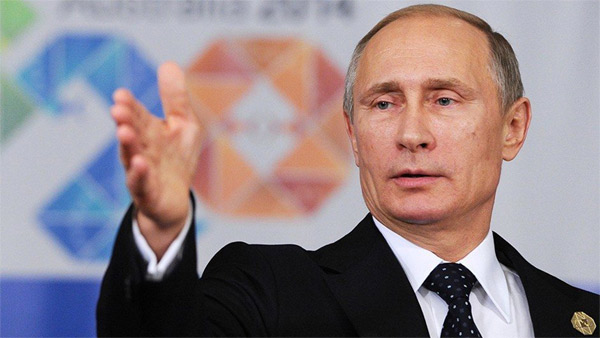
Putin says Russia will decrease military spending

Press TV – March 19, 2018

Russian President Vladimir Putin says he will reduce its military spending during his new term as the leader of the country, a day after he was re-elected in a presidential election with a landslide.

“We have plans to decrease our defense spending both this year and next. But this will not lead to any decline in the country’s defense capacity,” said Putin during a meeting with other presidential candidates in capital Moscow on Monday.

He added that “We will not allow for any sort of arms race.”

Putin’s comments come as ties between Moscow and Washington have plummeted to levels not seen since the Cold War due to the two countries’ disputes over the crises in Ukraine and Syria and after US officials accused Russia of meddling in the 2016 US presidential election.

Since September 2015, Russia has been carrying out airstrikes in support of Syria’s ground troops and has helped them recapture swathes of territory from Takfiri terrorists.

In his best election performance ever, Putin, 65, secured nearly 77 percent of the ballots cast in Sunday’s presidential election, according to the official results released earlier today.

Putin, whose new election win will extend his total time in office to nearly a quarter of a century, until 2024, said elsewhere in his remarks that he aims to focus his new term on “domestic policy issues” and strengthening the country’s “defense capabilities.”

“The main thing that we are going to do is of course, first of all the internal agenda, it is first of all ensuring the growth of the Russian Federation economy, and making it innovative, this is development in the sphere of healthcare, education, industrial output and as I’ve said before of infrastructure and other areas crucial for moving the country forward and lifting the standard of living for our citizens” the Russian leader further said.

March 19, 2018 Posted by | Economics, Militarism | , | Leave a comment

Acceptable Bigotry and Scapegoating of Russia

By Natylie Baldwin | Consortium News | March 15, 2018

Over the last year and a half, Americans have been bombarded with the Gish Gallop claims of Russiagate. In that time, the most reckless comments have been made against the Russians in service of using that country as a scapegoat for problems in the United States that were coming to a head, which were the real reasons for Donald Trump’s upset victory in 2016.  It has even gotten to the point where irrational hatred against Russia is becoming normalized, with the usual organizations that like to warn of the pernicious consequences of bigotry silent.

The first time I realized how low things would likely get was when Ruth Marcus, deputy editor of the Washington Post, sent out the following tweet in March of 2017, squealing with delight at the thought of a new Cold War with the world’s other nuclear superpower: “So excited to be watching The Americans, throwback to a simpler time when everyone considered Russia the enemy. Even the president.”

Not only did Marcus’s comment imply that it was great for the U.S. to have an enemy, but it specifically implied that there was something particularly great about that enemy being Russia.

Since then, the public discourse has only gotten nastier. Former Director of National Intelligence James Clapper – who notoriously perjured himself before Congress about warrantless spying on Americans – stated on Meet the Press last May that Russians were uniquely and “genetically” predisposed toward manipulative political activities.  If Clapper or anyone else in the public eye had made such a statement about Muslims, Arabs, Iranians, Jews, Israelis, Chinese or just about any other group, there would have been some push-back about the prejudice that it reflected and how it didn’t correspond with enlightened liberal values. But Clapper’s comment passed with hardly a peep of protest.

More recently, John Sipher, a retired CIA station chief who reportedly spent years in Russia – although at what point in time is unclear – was interviewed in Jane Mayer’s recent New Yorker piece trying to spin the Steele Dossier as somehow legitimate. On March 6, Sipher took to Twitter with the following comment: “How can one not be a Russophobe? Russia soft power is political warfare. Hard power is invading neighbors, hiding the death of civilians with chemical weapons and threatening with doomsday nuclear weapons. And they kill the opposition at home. Name something positive.”

In fairness to Sipher, he did backpedal somewhat after being challenged; however, the fact that his unfiltered blabbering reveals such a deep antipathy toward Russians (“How can one not be a Russophobe?”) and an initial assumption that he could get away with saying it publicly is troubling.

Glenn Greenwald re-tweeted with a comment asking if Russians would soon acceptably be referred to as “rats and roaches.” Another person replied with: “Because they are rats and roaches. What’s the problem?”

This is just a small sampling of the anti-Russian comments and attitudes that pass, largely unremarked upon, in our media landscape.

There are, of course, the larger institutional influencers of culture doing their part to push anti-Russian bigotry in this already contentious atmosphere. Red Sparrow, both the book and the movie, detail the escapades of a female Russian spy. The story propagates the continued fetishization of Russian women based on the stereotype that they’re all hot and frisky. Furthermore, all those who work in Russian intelligence are evil and backwards rather than possibly being motivated by some kind of patriotism, while all the American intel agents are paragons of virtue and seem like they just stepped out of an ad for Nick at Nite’s How to be Swell.

The recent Academy Awards continued their politically motivated trend of awarding Oscars for best documentary to films on topics that just happen to coalesce nicely with Washington’s latest adversarial policy. Last year it was the White Helmets film to support the regime change meme in Syria. This year it’s Icarus about the doping scandal in Russia.

Similarly, Loveless, the new film by Russian director Andrey Zvyagintsev (director of Leviathan) is being reviewed – as Catherine Brown points out – by writers from the mainstream American media in a predictably biased fashion. The film focuses on the disintegration of a married Moscow couple’s relationship and the complicated web of factors involved which have tragic ramifications for the couple’s 12-year old son.

American reviewers manage to paint the factors detailed in the film that are prevalent in most modern capitalist cities (e.g. being self-centered, materialistic and preoccupied with technological gadgets) as somehow uniquely Russian sins. They also ignore a prominent character in the film that defies their negativity about modern Russia – a character that represents altruism and the growth of civil society in the country.

A common theme in all this is that Russia is a bad country and Russians can’t help but be a bunch of good-for-nothings at best and dangerous deviants at worst. Indeed, according to media depictions, sometimes they manage to be both at the same time. But what they don’t manage to be is positive, constructive or even complicated. Sipher knows that the average American has been deluged with this anti-Russian prejudice, as reflected in his challenge at the end of his initial tweet about the largest country, geographically at least, in the world: Name something positive.

Countering the Negative

Most people know, at least in the abstract, that few individuals or groups are purely good or bad. Most are a complex combination of both. But many – including those who normally consider themselves to be open-minded liberals – have allowed their lizard brains to be triggered by the constant demonization of Russia in the hopes of taking down Trump whom they deem to be a disproportionate threat to everything they hold dear. So as a counterweight to all the negative constantly pumped out about Russia and to take Sipher up on his challenge, I will list some positive things about Russia and the contribution of the country and its people to the world.

Contemporary Russia’s Domestic Policy

Russia has one of the most educated populations in the world, universal health care for its people, a home ownership rate of 84%, strong gun control laws, no death penalty, 140 days of guaranteed maternity leave for women at 100% salary, and Moscow was just voted the 4th safest megacity in the world for women.

And, despite claims that are often repeated in corporate media and even by many in the alternative press, Russia has independent and critical voices in the print media. Even on television, which is heavily influenced by the Kremlin, the Western position is often given airtime by either pro-Western Russian critics or Westerners themselves. During both of my visits to Russia (in 2015 and 2017) I interviewed a cross-section of Russians who all confirmed that they had access to Western media through both satellite and the internet. Furthermore, while violence against journalists is a concern, according to the Committee to Protect Journalists, journalist murders have decreased significantly under Putin compared to the era of Boris Yeltsin in the 1990s.

Am I saying that Russia is a utopia without any problems? No. Like most countries, it has plenty. Most Russians, including Putin, admit this. These problems include still significant poverty rates, comparatively low productivity and life expectancy, and corruption. But it is important to note the direction of trends, which are mostly positive since Putin took over. Under his leadership, poverty rates have been cut in half, life expectancy has increased by several years – especially among men who had suffered the worst mortality crisis since WWII, crime has dropped, pensions have increased and are paid regularly, the unemployment rate has been around 5% for years, great investments in infrastructure and agriculture have been seen along with development throughout the country.

And that development has not just been seen in Moscow and St. Petersburg – the latter city which, by the way, culturally and architecturally rivals those in France and Italy.

There are plenty of medium-sized cities throughout Russia that are becoming well-developed and culturally engaging. As one example, during my 2015 trip, I visited Krasnodar, located in the Black Sea region. The rate of civic construction in the city during 2014 surpassed even Moscow. As a consequence of the challenges of this rapid development, the public felt that decisions were not being made with sufficient feedback from residents, several of whom got together and created a group called the Public Council which eventually found ways to get city authorities to listen to their concerns.

The group had received significant media attention, networked with youth groups and infrastructure specialists, and received foreign experts in urban planning, public arts, transportation and city marketing. They have also organized periodic clean-up and renovation days, which are sponsored by local businesses that donate use of equipment. Currently, they are working on the creation of protected green zones, including one that connects all of the city’s hiking paths and another to connect its 16 lakes. They have received no opposition from the Russian government and have elicited the interest of other cities who want to model their approach to local issues.

While in Krasnodar I met a dozen or more professionals, from lawyers to engineers and doctors, who lived in the city and were part of another civic group engaged in charitable, conservation and youth programs. At one point, I took a walking tour of the city. In terms of architecture, I saw the old and the new side by side, including a large shopping center that was built around a large tower that had been there for generations that local residents saved from destruction by the mall planners, a square with controversial fountains, and a main thoroughfare that was closed to auto traffic, allowing pedestrians free reign. Couples – including some of mixed race, parents pushing baby strollers, and bicyclists – all wound their way through the streets as both Russian and American music was piped in and building walls on one side of the street for a stretch displayed delicate illustrations of Russian history.

Fifteen hundred miles away in the Ural mountain region, the city of Yekaterinburg – named after Catherine I – has the infamous distinction of being the place where Czar Nicholas II and his family were massacred by the Bolsheviks in 1918. On the site where the family’s bodies were exhumed, a magnificent Russian Orthodox Church has been erected and dedicated to the last royal family. Nearby is the Yeltsin Library, denoting the Russian Federation’s first President, although his legacy is not popular in Russia today.

Yekaterinburg

The city is also home to a wide variety of precious metals and gems, along with a thriving economy. According to Sharon Tennison, an independent program coordinator who has traveled there numerous times over the past 15 years, hundreds of new apartment blocks can be seen on the outskirts of the city to accommodate the recent economic and population growth.

Yekaterinburg has a bustling cultural life that includes an opera house, a ballet, numerous theaters and museums, as well as dozens of libraries. In this respect, the city has continued its preoccupation with the classical arts as in Catherine’s period.  At the same time, many modern Russian rock bands with a distinctive sound have formed there (known as Ural rock).

The city also has a low rate of violence and crime.

As the New York Times and NPR like to point out and generalize out from, there are some rural and industrial areas in Russia that still need attention and investment. However, there are other towns in the countryside that are doing well.

Russia’s Contributions to the World

Russia has made many cultural and humanitarian contributions to the world. In the 18th and 19th centuries, imperial Russia produced some of the most renowned figures in the world of arts. These include writers, such as Tolstoy and Dostoevsky, whose works are often cited by American readers as among the greatest of all time; great composers include Tchaikovsky, Stravinsky and Rachmaninoff.

The country also has a rich history of pre-Soviet philosophers who debated questions of politics, history, spirituality and meaning. One of the most famous is Vladimir Solovyev, classified as belonging to the Slavophile school but distinguished from his fellow Slavophiles by his openness to and integration of several lines of thought.

He acknowledged the intuitive as well as the rational. He was friends with Dostoyevsky but had disagreements over Orthodoxy since Solovyev was an advocate of ecumenism and healing the schism between Orthodoxy and Catholicism. Furthermore, he is credited with influencing Nicolai Berdyaev, Rudolf Steiner and the Russian Symbolists, among others. He admired the Greek goddess Sophia who he characterized as the “merciful unifying feminine wisdom of God.” Solovyev was adept at integrating several spiritual strands, such as Greek philosophy, Buddhism, Kabbalah, and Christian Gnosticism.

Solovyev was famous for his debates with Slavophile contemporary, Nicolai Fedorov. In these and other writings, questions about morality and technological progress, how much humans should control nature, and prioritizing which problems to invest man’s resources in solving were all given great consideration by Solovyev and are still relevant today, in both Russian society and the larger world.

It is interesting to note that, of all the early Slavophile philosophers, Putin chose Solovyev, the one who was the least strident and most open to the synthesis of differing values and viewpoints, as part of his assignment of books for Russia’s regional governors to read a few years back. Of course, that didn’t stop several western pundits – who showed they knew virtually nothing of Solovyev but perhaps some cherry-picked and out-of-context tidbits they’d found online – from distorting his writings, which naturally had to be horrible because Putin recommended them.

Moving on to the 20th century, it should not be forgotten that the Soviet Union bore the brunt of defeating the Nazis during WWII, losing 27 million people, and saw a third of their country destroyed in the process.

In the 21st century, Russia provided significant aid to Americans in the aftermath of Hurricane Katrina and Hurricane Sandy. They also provided safe transport to Yemeni-Americans out of that devastated country after the U.S. State Department effectively abandoned them in 2015. Russia provided medical aid to 60,000 people affected by the Ebola epidemic in West Africa in 2014. Last September, Russia provided 35 tons of aid to earthquake victims in Mexico.

For someone who spent years in Russia as a professional expert working for the U.S. intelligence community, John Sipher is either not well-informed on his subject or is intentionally being disingenuous when it comes to the suggestion that Russia has done nothing positive, whether under Putin’s governance or before.

The Purpose of Scapegoating Russia

In early 2017, journalists Jonathan Allen and Amie Parnes published a book called Shattered: Inside Hillary Clinton’s Doomed Campaign. Largely based on interviews with insiders from Hillary Clinton’s failed 2016 presidential campaign, the book was an attempt to analyze why she lost. The insiders agreed that Clinton had trouble providing a plausible explanation to voters as to why she was running other than that she simply wanted to be president. They also noted her trouble connecting with average Americans and her failure to campaign in certain rust belt areas that Trump ultimately got support in. The book also states that within 24 hours of Clinton’s loss, members of her campaign had decided to home in on the excuse of “Russian interference” to explain away her humiliating defeat.

In addition to a bloc of Clinton’s supporters continuing to push this excuse for her loss and the ratings motive that channels like CNN and MSNBC have in continuing to milk the scandal, there is also Robert Mueller’s investigation which has dragged on for over a year.

The most notable thing about the Mueller investigation to anyone who takes a sober look at it is its constantly evolving purpose. First, the purpose of the investigation was to find any evidence to support the allegation that Russia had hacked into the DNC’s emails. When no substantial evidence could be found to support that allegation, the purpose evolved into collusion between Trump and Russia to steal the election on behalf of Trump.

When no substantial evidence could be found to support that allegation, the purpose evolved yet again into Russia influencing the election on behalf of Trump, possibly without his knowledge or participation. When no substantial evidence could be found to support that allegation and all that could be found was a paltry number of social media ad buys – many of which were purchased after the election or advocated conflicting positions or didn’t even have anything to do with the election, the purpose became “sowing discord.”

After all of this, we have an indictment against 13 private individuals who worked for a “troll farm” that had been exposed several years ago and is run by a caterer with no proven orchestration by Putin or the Kremlin. Mueller also knows that this indictment will never be legally tested because the 13 individuals will never be extradited and stand trial.

After all the shrieking and howling 24/7 for close to a year and a half that Trump was an illegitimate president installed by the Kremlin, this is the best Mueller and the mainstream Democrats can come up with. It’s pretty obvious by now that this investigation has simply been feeding into the media and Democratic Party circus mentioned above rather than uncovering anything substantive with which to impeach Trump.

The 2016 election showed that the Democrats faced a sleeping giant that had been awakened – one that the Democratic Party had helped to create for decades by enabling lower living standards, outsourcing of good-paying jobs, the proliferation of low-wage jobs, unaffordable education, lack of health care coverage, public health problems, and decrepit infrastructure.

Consequently, there was a demand for meaningful policies that would help average Americans, policies that polls show they want. But mainstream Democrats will not deliver on such policies, like $15/hour minimum wage, Medicare for All, and pulling out of our wars and investing the money saved in jobs and infrastructure. They won’t deliver on these things for the same reason that Republicans won’t deliver on them: because their donors don’t want them to. But they are not going to admit that to the American people who were going to keep demanding, so they needed a scapegoat and a diversion.

It’s a cheap trick that the political elite is using to appeal to the basest instincts of their fellow Americans while shoring up support for their most reckless tendencies in the area of foreign policy.


Natylie Baldwin is co-author of Ukraine: Zbig’s Grand Chessboard & How the West Was Checkmated, available from Tayen Lane Publishing. Since October of 2015, she has traveled to six cities in the Russian Federation and has written several articles based on her conversations and interviews with a cross-section of Russians. Her fiction and nonfiction have appeared in various publications including Consortium News, The New York Journal of Books, The Common Line, and the Lakeshore.  She is currently submitting her first novel to agents and finishing a second. She blogs at natyliesbaldwin.com.

March 16, 2018 Posted by | Economics, Mainstream Media, Warmongering, Russophobia, Timeless or most popular | , , | Leave a comment

Iran to Open $3Bln Credit Line to Iraq for Post-War Reconstruction

Sputnik – 11.03.2018

Tehran will loan $3 billion to help Baghdad with the restoration of its infrastructure after the defeat of the Daesh terrorist group in the country, Iranian First Vice-President Eshaq Jahangiri said on Sunday.

“Iran is ready to provide Iraq with a credit line of $3 billion in order to increase the presence of Iran’s private sector in the restoration of Iraq,” Jahangiri said, as quoted by the Tasnim news agency.

Both Iran and Iraq aim to further strengthen their bilateral political and economic ties, according to the official.

Jahangiri also said that it is necessary to connect the railway systems of both countries and the sides are planning to construct a bridge and a 30-kilometer section of the railway.

“By doing this, Iraq will be able to get access to Central Asia and China, and the Iranian railways will reach the Mediterranean [region],” the first vice-president added, as quoted by the agency.

Jahangiri is currently on a visit to Baghdad to hold talks with the country’s officials.

In December, Iraqi Prime Minister Haider Abadi declared an end of the country’s fight against Daesh as Iraqi troops re-established complete control over the country’s Syrian border. This came after years of violent fighting, that brought significant damage to the country’s infrastructure.

The Kuwait International Conference of Iraq Reconstruction and Development, which was held in February, managed to raise $30 billion in direct aid, loans and investments for the post-war reconstruction of Iraq’s economy, according to Kuwaiti Foreign Minister Sabah Al Salim Sabah.

March 11, 2018 Posted by | Economics | , , | Leave a comment