Canada court ruling violates international law: Iran
Press TV – February 19, 2017
Tehran has rejected a recent ruling issued by Canada’s Ontario Superior Court of Justice against Iran, saying the verdict violates international law.
“This ruling contravenes the basic principles of the legal impunity of governments and their assets, and is unacceptable,” Foreign Ministry spokesman Bahram Qassemi said on Sunday.
Justice Glenn Hainey ruled on February 8 that the Islamic Republic had to pay $300,000 in legal costs to those who claim to be victims of Iranian support for resistance groups.
The plaintiffs had sought compensation in the Ontario court under Canada’s Justice for Victims of Terrorism Act. The verdict has given Iran 30 days to pay the sum.
Qassemi said the Islamic Republic has already conveyed its expression of formal protest to the Canadian government and reserved the right to take political and legal measures in that regard.
In June 2016, the same court ordered $13 million in non-diplomatic Iranian assets to be given to three groups of plaintiffs.
The decision was similar to US Supreme Court’s ruling in April 2016 to hand over $2 billion in Iran’s frozen assets to American families of those killed in the 1983 bombing of US Marine Corps barracks in Beirut and other attacks.
Iran’s President Hassan Rouhani announced at that time that the country had filed a lawsuit against the US with the International Court of Justice (ICJ) – the principal judicial organ of the United Nations.
Earlier this month, Iran’s Presidential Office said in a statement that the lawsuit had been officially put in motion.
Washington’s seizure of Iran’s assets is against the Treaty of Amity, Economic Relations, and Consular Rights which was signed by the two countries in August 1955 – referred to as the 1955 Treaty – and is “still effective,” the statement added.
US Lawmakers Want North Korea Back on Terrorism Sponsor List
Sputnik – 19.02.2017
A group of US lawmakers is seeking to return North Korea to the list of states that sponsor terrorism and give it once again the less-than-honorable title of terrorist state. US President George W. Bush took North Korea off the list some nine years ago in order to support talks about North Korea’s nuclear program and to offer sanctions relief in exchange for North Korean concessions.
Now, according to the lawmakers, the alleged assassination of Kim Jong Nam shows that North Korea is practicing state terrorism. The lawmakers are not short on aggressive rhetoric.
“The murder once again highlights the treachery of North Korea,” said Senator Cory Gardner of Colorado, who also chairs a Senate panel on Asia.
“We should never have taken North Korea off the state sponsor of terrorism list,” Democratic Representative Brad Sherman of California told a Congressional hearing Thursday.
“It is time to put little Kim back on that list because he is a world terrorist and a threat to world peace,” said the bill’s Republican sponsor, Representative Ted Poe of Texas.
So far, no official conclusions have been made by the investigation as to who really killed Kim Jong Nam, or why. Experts say until the investigation is complete, making allegations would be “irresponsible.”
According to military.com, North Korea was first put on the list of terrorist states back in 1987, after a bomb explosion destroyed the South Korean Boeing 747 known as Korean Air Flight 858. The US State Department treated the incident as a state-sponsored act of terrorism.
North Korea was removed from the list by US President George W. Bush in 2008, “to smooth the way for aid-for-disarmament negotiations,” the website reads.
If the hawkish lawmakers are to put the country back on the list, they will have to provide solid evidence that the country’s government “repeatedly” supported international acts of terrorism.
However, that is going to prove quite a challenge, since back in 2016 the US State Department officially declared that North Korea “is not known to have sponsored any terrorist acts” since the plane attack 30 years ago. This statement came as a response to another attempt to relist North Korea as a terrorist state in June 2016.
But the lawmakers insist that North Korea’s record be reviewed again. According to Gardner, there is evidence of North Korean “actions and relationships that would meet the criteria of state sponsor of terror.”
It should be noted that US officials repeatedly claimed that there was “evidence” of alleged Russian meddling with US presidential elections in 2016, though it has presented precious little to the public.
North Korea is one of the most sanctioned countries in the world. Its aspiration to secure nuclear weapons in conjunction with its official status as a communist state has caused the United States and the UN to impose numerous sanctions, which severely reduce the country’s trade options. However, each round of sanctions also erodes the space for diplomacy.
Sanctions so far have not prevented North Korea from obtaining nuclear weapons, but they do affect the standard of living of the common people in the country.
Is Trump Killing Israel With Kindness?
By Gearóid Ó Colmáin | February 17, 2017
We wrote a few months ago that the only good thing one could say about Trump was that he was unpredictable. Just a month in the Oval Office, President Trump is living up to his reputation. His meeting with Israeli Prime Minister Benjamin Netanyahu on the 16th of February was not particularly well received in Israel. In contrast to President Obama, Trump’s body language and rhetoric strongly suggested he, and not Netanyahu, was in charge.
Trump was questioned about recent accusations that he was a ‘holocaust denier’. The American president imperiously ignored the question. Then, he dropped a bomb: The president indicated that he would be happy with a one-state solution in Palestine. I have argued for years that the creation of one democratic state encompassing Palestinians and Jews is the only option for long-term peace and stability. Zionists, however, do not even want any talk of that possibility; they understand that a one state solution will ultimately bring an end to Jewish supremacy – both in Israel and throughout the world.
The demographic statistics in Palestine show that the Arab population is growing rapidly. A one-state scenario would enable the millions of Palestinian refugees to return to their lands, thus swelling the Arab population. Moreover, power-sharing in the Knesset (or whatever a future assembly would be called) would change the domestic and foreign policy of the formerly ‘Jewish State’ entirely. The Israeli liberal press is worried about Trump. Yet Trump is arguably the most pro-Israeli President in history; his daughter ‘converted’ to Judaism and his son-in-law Jared Kushner has been financing Jewish settlements in Palestine. But the danger of the Trump regime for the Jewish supremacists is Steve Bannon, Trump’s Chief Strategist.
Steve Bannon has been accused of anti-semitism in the past for criticising the lack of American patriotism among international financiers who happen to be Jewish. But Bannon’s reactionary Breitbart News is staunchly Zionist. There is no contradiction between being Zionist and ‘anti-semitic’. In 1933, National Socialist Germany signed the Haavara Accord with international Zionists, whereby Germany would facilitate Jewish emigration to Palestine. After the Second World War, the USSR showed captured German films to soviet cinema goers. Some of the films such as Harlan’s Jud Süß were banned due to their Zionist content.
Steve Bannon calls himself a “Leninist” who wants to ” destroy the state”. Trump’s shadowy éminence grise, Bannon is believed to be the brains of the Trump administration. He certainly seems to understand dialectical materialism. But how could this dialectical conundrum play out?
During his election campaign, Donald Trump threatened to ban Muslims from entering the United States. His comments provoked international outrage. Benjamin Netanyahu was among the leaders who publicly denounced Trump’s xenophobic statements. We all know that far-right Zionist Netanyahu doesn’t care a farthing about Muslims. So, why would he make such a statement? We might say that, Netanyahu was attempting to present himself as a friend of the Arabs and all Muslims. But there is another aspect to the policy of borders: it is a policy which threatens the New World Order. Open borders and mass immigration are a key agenda of globalisation. We have shown that globalisation is being driven by liberal leftism. The most powerful institutions of the ‘Youth Industry’, ‘Colour Revolutions’, and ‘world-without-borders’ ideology are overwhelmingly Jewish-led. The same can be said for much of the liberal leftist ‘alternative’ media.
A state without borders
Israel has no official borders because they are constantly in expansion. Israel and its agents in the international media and academia unceasingly promote multiculturalism, immigration and open borders for all states – except Israel.
The Trump regime could render Israel’s espionage and intelligence penetration of the United States problematic. Dozens of Israelis were arrested after the 9/11 attacks on suspicion of terrorism. Some had been caught with explosives. They were all released due to the intervention of Homeland Security chief Micheal Chertoff, an Israeli-American. When Israeli Mossad agents were spotted celebrating the 9/11 terrorist attacks, they were described as ‘Middle Eastern-looking’.
Mohammed Atta, the chief terrorist suspect in the 9/11 attacks was, according to French intelligence, a Mossad agent. The Israelis have always used Islamist patsies and dupes for false flag attacks against civilian populations. Israeli security companies such as ICTS have repeatedly allowed terrorists to enter the United States and other countries. Is it possible that Netanyahu understood the significance of Trump’s xenophobic border policies? Impossible to tell.
But it is important to consider the fact that the real source of Jewish power in the world is the liberal ‘left’ media. Trump is currently at war with that establishment. Takfiri terrorism is and always has been a tool of Zionism. From the King David Hotel bombing of 1946, the Lavon Affair of 1954, to 9/11, the ‘war on terrorism’ has been about the recruitment, training and funding of Jihadi forces to be used as false-flag terror patsies and to fight proxy wars on behalf of Zionism.
The Takfiri and Wahhabi ideology is promoted by Israel’s ugly sister Saudi Arabia. If global Islam is taken over by Wahhabism – including in Gaza – Israel begins to look good, while genuine Muslims suffer. If Trump were to genuinely fight Takfiri terrorism in the Middle East, allying with President Assad, Israel’s ‘New Middle East’ project would fail. By putting a US embassy in Jerusalem, Trump is saying that a one-state option is back on the table. An Assad victory in Syria and a one-state solution, involving a burgeoning Palestinian population, would be the beginning of the end for Zionist world domination.
Left liberalism’s ‘Fisk-al deficit’
One only has to read what left liberal disinformation agents are actually saying to see the significance of all this. Take Robert Fisk’s latest piece: ‘ Why Israel is in for a rough ride under Trump’. Fisk believes that Trump and Bannon’s anti-Iran rhetoric is a threat to Israel. But he ignores the fact that it has been Israel, far more than the United States, who has been calling for war on Iran. Fisk is trying to imply that Israel wants peace with Iran. That is clearly not the case. Israel’s ‘left liberals’ and Mr Fisk have been backing the war against Syria to the hilt. As the Jewish-owned Brooking’s Institution makes clear in their 2009 Analysis Paper: ‘Which Path to Persia’, the destruction of Syria is the first stage of the war against Iran. Robert Fisk is right to be worried about Israel; his entire career of lies and disinformation about the Middle East may be undermined by Bannon’s methodological madness – at least at the level of discourse.
In many respects, Adam Curtis is correct to point out that Steve Bannon seems to be playing a similar role to Vladislav Surkov in Russia. Surkov, an advisor to President Vladimir Putin, developed the ideology of sovereign democracy, which Curtis claims led to a bewildering social state of “destabilised perception.”
Bannon and Surkov are the grand strategists of a new abstract art of disinformation designed to defend the interests of the national bourgeoisie against degenerate cosmopolitan elites and the working class. However, it is only by seeing this contradiction and taking control of its fallout that working class interests can be advanced. The White nationalist and violent ‘leftist’ hoodie-utionaries ultimately serve the same class interests. Workers should not be influenced by the reactionary ideology of either.
They are, in many respects, two sides of a Surkovian psyops ruthlessly conceived to maintain class domination.
Time to play Chess
In the Nineteenth century British imperial policy in Ireland consisted of co-opting the Irish to British power by granting them privileges and protection. The policy became known as ‘Killing home-rule with kindness’. The United States cannot afford to wage another catastrophic war of destruction against an emerging regional power like Iran.
Israel’s ‘rough ride’ under Trump will be a good thing if the Islamic Republic of Iran is sufficiently creative in its negotiations with Washington. Iran will need to tighten its alliance with Russia and China and correct serious foreign policy errors such as support for Zionist/Wahhabi agendas in South East Asia.
Iran should look towards strengthening its relationship with countries such as Hungary. Relations at present between Hungary and the Islamic republic of Iran are good. A Hungarian delegation recently visited Tehran and said that they hoped to make Budapest into Iran’s portal in Europe. Strengthening its diplomatic ties with nationalist countries in Europe and Russia, as well as constructive engagement with the Trump administration could contribute to the weakening of Zionism, the phoney war on terrorism and the Talmudic New World Order. Such policies will not bring the contradictions of capitalism to an end, but rather accelerate them. For those contradictions are systemic to the capitalist mode of production itself. But there is the possibility of a realignment of forces away from total war and destruction towards constructive change.
Toshiba boss quits over massive losses in nuclear power projects
RT | February 14, 2017
The chairman of Japanese multinational Toshiba, Shigenori Shiga resigned on Tuesday, taking responsibility for the company’s multi-billion dollar losses in the troubled US nuclear power business.
He will step down from the board but will remain a Toshiba executive.
According to Associated Press, Toshiba announced it is on track to report a net loss of $3.4 billion (390 billion yen) in the current fiscal year that ends in March 2017. It also warned the estimated loss may change “by a wide margin,” projecting a $6.3 billion (712.5 billion yen) loss for its nuclear business. That was related to the acquisition of a nuclear construction firm by its Westinghouse unit.
Toshiba stock tumbled eight percent in Tokyo trading after the announcement.
In December, Toshiba said it might write down billions of dollars in losses following Westinghouse’s announcement that costs had significantly surpassed estimates.
According to the Japanese company’s president Satoshi Tsunakawa, Toshiba won’t take on new projects to construct nuclear plants. He said the company was looking for potential partners to acquire a stake in Westinghouse.
Toshiba said it hopes to fix the situation by selling its flash memory business and other assets.
The Japanese conglomerate has been grappling with an accounting scandal in which it admitted doctoring financial results to meet unrealistic profit targets.
“It is so unfortunate that this has happened,” a company director Ryoji Sato told reporters about the company’s promises to come clean. “We must keep trying to do better.”
Founded in 1875, Toshiba employs almost 200,000 people. Its business includes household appliances, railways, hydrogen energy and elevator systems.
The Problem with Transparency International’s Corruption Perceptions Index
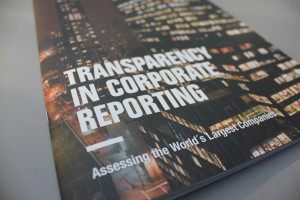
By Joseph Thomas – New Eastern Outlook – 13.02.2017
Transparency International puts out what it calls the “Corruption Perceptions Index.” It is an annual index it claims “has been widely credited with putting the issue of corruption on the international policy agenda.”
These carefully selected words, taken at face value appear benign, even progressive. But upon digging deeper into this organisation’s background it becomes clear that these “perceptions” are politically motivated, and the “international policy agenda” clearly favours a very specific region of the globe, particularly that region occupied by Washington, London and Brussels.
Transparency International claims upon its “Who We Are” page of its website that (our emphasis):
From villages in rural India to the corridors of power in Brussels, Transparency International gives voice to the victims and witnesses of corruption. We work together with governments, businesses and citizens to stop the abuse of power, bribery and secret deals. As a global movement with one vision, we want a world free of corruption. Through chapters in more than 100 countries and an international secretariat in Berlin, we are leading the fight against corruption to turn this vision into reality.
Before moving onto the organisation’s funding and financials, one would assume that above and beyond any other organisation in the world, Transparency International would carefully and diligently avoid any perceptions of conflicts of interest on its own part. Yet, not surprisingly, that isn’t the case.
An Anti-Corruption Org Swimming in Conflicts of Interest
Upon their page, “Who Supports Us,” Transparency International admits that it receives funding from government agencies including:
- The United Kingdom’s Department for International Development (DFID);
- Federal Foreign Office, Germany and;
- The US State Department.
Transparency International not only receives funding from the very governments it is tasked to investigate, hold accountable and “index” annually, constituting a major conflict of interest, it also receives money from the following:
- The National Endowment for Democracy;
- Open Society Institute Foundation and;
- Shell Oil.
Open Society in turn, is the sociopolitical fund employed by convicted financial criminal George Soros. The New York Times in its article, “French court upholds Soros conviction,” reported that:
The conviction of George Soros, the billionaire investor and former fund manager, on insider trading charges was upheld on Thursday by a French appeals court, which rejected his argument that his investment in a French bank in 1988 was not based on confidential information.
Soros, 74, now retired from money management but active as a philanthropist and author, was ordered to pay a fine of €2.2 million, or $2.9 million, representing the money made by funds he managed from an investment in Société Générale. He said the purchase had been part of a strategy to invest in a group of companies that had been privatized by the French government.
Were it not for the very serious impact Transparency International’s false perception globally as a reputable corruption watchdog has on nations targeted by its CPI reports, it would be almost comical that this so-called anti-corruption organisation is funded by not only the very governments it is supposed to be objectively detached from, but also funded by convicted criminals like Soros and organisations like the National Endowment for Democracy well known for their use of “democracy promotion” as cover in pursuit of their own self-serving interests.
Thus it is clear, that even at face value, Transparency International likewise serves as just such cover, but instead of hiding behind “democracy promotion” to advance what is a very specific, political agenda, it is hiding behind “fighting corruption.”
And even if impropriety wasn’t so blatant, Transparency International’s lack of better judgement regarding its funding and conflicts of interest discredit it as a legitimate corruption watchdog.
For nations around the world pressured by Transparency International and its CPI reports, dismissing them with this evidence in hand, as well as devising domestic (and credible) anti-corruption watchdogs as alternatives would be particularly useful.
Special interests using Transparency International to target and undermine nations and governments they seek to influence or coerce is not limited only to this organisation, but is a pattern repeated over and over again, from the National Endowment for Democracy’s Freedom House “Freedom in the World” index, to reports published by Human Rights Watch and Amnesty International, US-European special interests have honed this craft of using just causes as cover for corruption and coercion into a fine art.
Europe’s United Market is a ‘Project for the Business Establishment’
Sputnik – February 11, 2017
The euro currency is a major factor accelerating the process of economic and political disintegration within the European Union, according to Belgian left politician Peter Mertens.
The European Union is now “disintegrating,” Paul Magnette, Minister-President of the Belgian French-speaking region of Wallonia, said in a recent interview with L’Echo.
“We are nearing a process of political disintegration, with some countries becoming ungovernable,” the politician said.
Magnette also criticized the euro currency as poorly thought-out, which accelerated “social and financial deregulation.”
Magnette has been known as a vocal critic of the Comprehensive Economic and Trade Agreement (CETA), a free trade deal between the EU and Canada. In the interview, he also spoke out for withdrawal from the bloc of such countries as Romania, Bulgaria, Poland and Hungary, following the Brexit example.
Magnette’s remarks are especially surprising, taking into account the fact that such criticism came from a left-wing and pro-European politician.
Peter Mertens, the leader of the Workers’ Party of Belgium, underscored that in Belgium criticism of the current state of European integration comes from left-wing political forces, not from the right, like in France or in the Netherlands.
“From the very beginning, the euro has been a problem. The currency was designed to serve the interests of Germany, Europe’s strongest economy. It was clear that the European united market was not people’s will. It was a project for the business establishment,” Mertens said in an interview with Sputnik French.
The politician shared Magnette’s suggestion that the eastward expansion of the European Union was not conducted properly.
“In 2007-2008, several Eastern European countries joined the EU. The main reason was that German companies were looking for a cheap labor force. At the same time, it was clear that such countries as Bulgaria and Romania were not as economically developed as Central Europe. As a result, now there are two polarities in the EU, between the north and the south and between the west and the east,” Mertens pointed out.
He also agreed with Magnette that the introduction of the euro only deepened the social and economic divisions within the EU.
“In my opinion, the euro currency system was built under Germany’s surveillance. And I think that to a certain extent the current EU is autocratic and authoritarian,” he said.
Nevertheless, Mertens warned that a withdrawal of Eastern European countries from the EU would not resolve the crisis.
“We should not forget that we need to protect those countries. Now, some political forces call for cooperation only with economically developed countries. But we should continue our cooperation with Poland and other Eastern European countries,” he said.
Mertens also said that criticism of the European Union should not be monopolized by right-wing political movements.
“These concerns [about the crisis in the EU] can be expressed in many ways. For example, criticism can be expressed by the nationalists or the far-rights, like in France and the Netherlands. But it can also come from the left, like in Spain or Wallonia. The common idea is that the current political elites do not represent their people anymore,” Mertens concluded.
Brazil’s Olympic Legacy Far from Fulfilled at Idle Game Venues
teleSUR | February 9, 2017
A lack of activity and upkeep is plaguing facilities including the site of swimming competitions, where craters from disassembled pools collect stagnant water.
Less than six months after Rio de Janeiro hosted the first-ever Olympics in South America, game venues sit idle and already in disrepair, raising questions about a legacy that organizers promised would benefit the Brazilian city and its residents.
A lack of activity and upkeep is plaguing facilities including the site of swimming competitions, where craters from disassembled pools collect stagnant water, and Rio’s famed Maracanã stadium, site of the opening and closing ceremonies.
The field there, one of the most iconic soccer pitches in the world, is giving way to dirt and scrub. Electricity was cut recently because of a financial spat between local officials and the contractor hired to manage the stadium.
Before the games, organizers touted the venues as facilities that could easily be repurposed in sports-crazed Rio. But little more than one beach volleyball tournament has been played at any of the venues — and even that drew criticism because it involved throwing sand on the Olympic tennis court.
Federal, state and local governments, along with private partners, paid more than US$12.8 billion to host the Olympics, about US$7 billion of which was for game venues and related facilities.
Featured Video

AIDS Inc. by Gary Null (2007)
or go to
Aletho News Archives – Video-Images
From the Archives
Clash of Civilization, Iran Part II
By Jamal Kanj – Intifada-Palestine.com – January 14, 2011
Israel’s survival kit is: perpetuate conflict, insecurity to rationalize collective hate and finally playing victim.
Devoid of conflict, Israel implodes internally; without hate, Zionism loses its justification; and playing eternal victim to continue blackmailing the West. Absence of this holy trinity, Israel ceases to exist.
From its inception, the house of Zion has mastered exploiting adversarial powers to advance Israel’s cause. For instance, their influence over the Democratic Party in the US began with President Truman’s bid for 2nd term election in 1948.
Responding to strong opposition from Secretary of State General George Marshall and Department experts urging against recognition of Israel, President Truman replied: “I’m sorry gentlemen but I have to answer to hundreds of thousands [Jewish voters] who are anxious for the success of Zionism. I do not have hundreds of thousands of [voting] Arabs among my constituents”
Zionists influence over liberal American politics was matched with the doctrinal school of Conservative theoreticians aligning the Republican Party’s platform with Israel’s objectives. The Neoconservative Zionists, coined Zioncons, invented the “Clash of Civilization” concept to fight Israel’s wars. … continue
Blog Roll
 Aletho News
- Merck Virologists Admitted to Falsely Certifying Vaccine Efficacy
- Mandatory Folic Acid for every man, woman & child
- Pro-Palestine protesters arrested outside UK’s ruling Labour Conference in Liverpool
- Mauritius denies landing permit to flight from Israel, forcing cancellation: Tour operator
- Israeli finance minister calls for genocidal war on West Bank, annexation of south Lebanon
- 12 Things Your Psychiatrist Was Trained Not to Tell You
- From Unipolar Universalism to Multipolar Civilizational Distinctiveness
- RSF military group defects, joins Sudanese army: State media
- Ireland goalkeeper refuses to play ‘Israel’ as squad weighs boycott
- China pushes back against US on Cuba, Iran
- If Americans Knew
- Israel forces Gazans to live in constant peril – Daily Update
- Deconstructing Netanyahu’s pants-on-fire UN rant – Daily Update
- Trump betrayed voters with his campaign lies and prioritized a foreign country once he took office
- Netanyahu calls Israel’s war in Gaza ‘opposite of genocide’ in UN speech to near-empty hall
- Settler Kidnappings: Torture, Sexual Abuse and Terrorisation of Palestinian Abductees as Israel Deepens Annexation of West Bank
- Gaza winter nears as 162,000 tents become unusable, raising fears of humanitarian crisis
- Netanyahu says, “It’s the opposite of genocide”; UN says Gaza economy is world’s ‘most severe crisis on record’ – Daily Update
- Israel’s US-Backed Assault on Gaza Has Created the ‘World’s Most Severe Economic Crisis on Record’: UN
- ‘Protecting U.S. Citizens’… From Israel
- ‘This is where I live now, the back of a truck’: a day in the life of a grandmother in Gaza
- No Tricks Zone
- New Study: Earth And Venus Surface Warmth Largely Explained By Convection And Lapse Rate, Not CO2 Or Radiation
- 2025 Nature Paper Claiming Worsening Global Drought Gets RETRACTED …Heavily Flawed
- New Study: ‘Global Drought Shows No Detectable Recent Acceleration Under Climate Warming’
- Economic Masterminds: German Socialists Suggest Taxing Productivity Gains Stemming From Using AI
- The South China Sea Has Not Been Cooperating With The Climate Change Narrative
- Energy Crisis: Germany Enters Heating Season With Historically Low Gas Reserve Fill Levels
- New Study: The Antarctic Ice Sheet Gained Mass From 2020-2024 Due To Staggering Snow And Ice Accumulation
- Study: Ocean Heating Rates From Thousands Of Years Ago ‘Dwarf’ Modern Ocean Heating Rates
- Climate Extremists Target, Attack Large-Scale Power Grid Infrastructure In Germany!
- New Study: Antarctic Ice Melt Has Contributed Less Than 1 Centimeter To Sea Level Rise In The Last 30 Years

