The World Economic Forum (WEF) annual meeting recently kicked off in the Swiss resort city of Davos. This year’s forum took place amid rare transatlantic tensions triggered by the US intention to acquire Greenland. The focus of European leaders’ speeches pivoted noticeably from global economic issues to geopolitics, reflecting Europe’s deepening strategic anxiety amid structural contradictions with the US.
French President Emmanuel Macron said the EU should not bend to “the law of the strongest,” while Belgium’s Prime Minister Bart De Wever said the bloc was “at a crossroads” where it must decide on how to get out of a “very bad position” after trying to appease Trump. Even European Commission President Ursula von der Leyen highlighted the “geopolitical shocks” and “a dangerous downward spiral” brought by the US.
“The forum sends a clear political signal of Europe’s growing strategic awakening,” Zhao Junjie, a senior research fellow at the Institute of European Studies at the Chinese Academy of Social Sciences, told the Global Times on Wednesday.
The maximum pressure exerted by the US on the Greenland issue has shaken the long-standing value consensus between Europe and the US. Its unilateral and bullying actions have triggered strong fear and anxiety across Europe, which is a key reason for the heightened emotions and intense reactions toward the US among European representatives at this year’s forum.
The statements made by European leaders at the forum appear to have demonstrated Europe’s resolve to stand firm to the world. Yet it remains to be seen whether such firm commitments can be translated into practical, unified, and effective actions. As senior bankers and corporate executives at Davos noted, they believe the current responses of European leaders to the US are more emotional than pragmatic. Moreover, due to long-standing structural constraints – its deep entanglement with the US in security, energy, and economic affairs – Europe’s response is weak and constrained. Zhao further noted that Europe still lacks systematic measures to effectively counter American unilateralism, with current efforts largely limited to soft multilateral mechanisms.
Europe’s response to US unilateral pressures has been sluggish and lacking in internal coordination. The EU countries have not reached a consensus on the activation of Anti-Coercion Instrument. Meanwhile, Europe continues to grapple with “double standards” in its multilateral engagements. Despite the leaders’ calls for trade diversification, restrictive market-access policies toward certain foreign products have fueled ongoing trade tensions. This contradiction is illustrated by Macron’s appeal for Chinese investment in key sectors, even as the EU moves to phase out components and equipment from tech suppliers such as Huawei in some sectors – a policy that inevitably raises questions about Europe’s consistency and sincerity in pursuing cooperative partnerships.
Canada has already taken action. Prime Minister Mark Carney stated that middle powers are not “powerless” facing “a rupture in the world order.” He called for “honesty about the world as it is” and for building “something bigger, better, stronger, and more just.” Recently, Canada established strategic partnerships with China and Qatar to promote the diversification of its foreign relations. Such strategic sobriety may offer some inspiration for Europe.
Ursula von der Leyen declared in her special address that “Europe will always choose the world, and the world is ready to choose Europe.” Yet Europe must now answer a more pressing question: what path will it choose for itself in the changing global order?
The statements at Davos have sent a clear political signal of Europe’s awakening. Moving forward, Europe must consolidate its strength through unity, steer its own course with greater autonomy, and expand its strategic space through diversification. Confronted with external pressures, only by reinforcing internal solidarity, advancing pragmatic actions, and broadening multilateral cooperation can Europe truly safeguard its own interests and uphold the international multilateral order. Only in this way can Europe genuinely protect its interests amid profound changes. History does not wait for the hesitant – it is time for Europe to act.
Max Otte discusses how Germany began to ignore and undermine its own national interests after the Cold War. Max Otte is an entrepreneur, political economist, investment manager, philanthropist and political activist. With 141 votes, he was the runner-up for the election of the President of the Federal Republic of Germany on 13 February 2022.
The latest Substack from Sy Hersh is a doozy because it is rife with false claims and propaganda. I have known Sy for 45 years and consider him a dear friend. His latest article is an abomination and, in my opinion, represents a stain on his legacy. I feel like I’m watching a basketball legend who is still trying to play the game, but he can no longer run or shoot the basketball. To continue the basketball metaphor, this latest article from Sy is an air ball shot from the free throw line… It does not even hit the rim.
The article is titled, PUTIN’S LONG WAR, and it is an unwitting indictment of the US intelligence community’s analytical competence. The opening paragraph sets the tone for the piece:
Despair and anger are growing in some parts of the US intelligence community about Vladimir Putin’s refusal to consider ending the war with Ukraine. The Russian president is facing devastating economic problems at home and is ignoring his restless senior military command—in pursuit of what?
Despair and anger? What the hell!!! Why despair? Is this an admission that the CIA’s plans to defeat Russia are in ruins? Is the CIA, or some other component of the intelligence community, agonizingly frustrated because Vladimir Putin won’t perform as a dancing organ grinder’s monkey? Ditto for the anger bit.
But it is the last sentence that is a stunner because the official (or officials) talking to Trump apparently genuinely believe that Russia faces devastating economic problems and that Putin — who has made at least three visits to the front lines in the last two months — is ignoring the Russian General Staff. Nonsense!
Here is the next whopper of a lie in this article:
Businesses are reeling and shops are closing—in part due to international sanctions—in Moscow and throughout Russia.
More Male Bovine Excrement… I’ve been to Moscow twice in the last four months and saw nothing of the sort. Businesses were thriving, not closing up shop. The latest Levada poll (independent, non governmental) just recently released reports Putin’s current approval ratings at a whopping 85%!!! If the economy was collapsing there is no way that he could be so popular!
Sy’s next paragraph reveals the lack of critical thinking on the part of his source:
One experienced US official, who has been involved in Russian issues for decades, remains both mystified and frustrated by Putin’s refusal last fall to accept an American offer, approved by President Donald Trump but bitterly resented by Ukraine. . . “As of January,” he told me, “Russia’s war with Ukraine will have lasted longer than their war with Germany. In 1945, they were in Berlin. In 2026 they won’t even control Donetsk,” an eastern Ukrainian province with a large Russian-speaking population that shares a border with Russia.
Yeah, Russia’s military really sucks. They are fighting a NATO-proxy army that has the full backing of NATO, which includes advanced weaponry and sophisticated intelligence, and are advancing all along the line of contact… Just not as fast as this clown in Washington, who is gibbering away to Sy, believes that Russia should move. So if Russia’s slow pace is an indictment of its military competence, what does that say about the US military, which spent 21 years fighting in Afghanistan against lightly-armed insurgents — who had no foreign backing — and fled the country in August 2021, leaving behind $7.1–7.2 billion worth of US-funded military equipment. Trump officials who live in big glass houses should not be throwing rocks at a brick house.
Next, Sy regurgitates a demonstrably false claim provided by his source:
“Putin knows the ghost in the Kremlin closet,” he said, “is revolution.” The official quoted General Valery Gerasimov, the Russian chief of staff: “I no longer have an army. My tanks and armored vehicles are junk, my artillery barrels worn out. My supplies intermittent. My sergeants and mid-grade officers dead, and my rank and file ex-convicts.”
This official is lying. Let’s examine recent public comments from Gerasimov (and they are on video) about the condition of the army that he leads:
In late December briefings (e.g., December 29 meeting with Putin and commanders), Gerasimov reported that Russian forces had liberated 334 settlements and over 6,400 square kilometers throughout 2025 overall, framing the army as steadily pushing deeper into Ukrainian defenses with consistent momentum.
On December 31, 2025, during an inspection of the Sever (North) Grouping of Forces command post, Gerasimov stated that Russian troops were “confidently advancing deep into enemy defenses” and that December 2025 saw the highest rates of offensive operations by the Russian army. He highlighted the liberation of over 700 square kilometers of territory in a month, the expansion of a “security zone” near the Russian border (in Sumy and Kharkiv regions), and the occupation of seven settlements. He described these as record paces and tied them to fulfilling objectives set by President Putin for border security in Belgorod and Kursk regions.
On January 15, 2026, while inspecting the Tsentr (Center) Grouping of Forces in the Donetsk direction, Gerasimov praised the group’s advances in liberating parts of the Donetsk People’s Republic (DPR). He claimed Russian forces were advancing “in virtually all directions” on the front, that Ukrainian attempts to halt them were unsuccessful, and that over 300 square kilometers had been seized in the first two weeks of January alone. He also reiterated ongoing successes in areas like Kupyansk (claiming final stages of control) and emphasized high operational tempo.
I can understand why this unnamed offical would lie, but I don’t understand why Sy is so gullible. He is allowing himself to be used as a propaganda mouthpiece. The next paragraph belongs in an episode of the Twilight Zone:
“The West reached the same stalemate conclusions and seeks to undermine Putin’s internal resolve. Not by military attack but with economic sanctions which affect the elites as well as the population as a whole. It is working—the standard of living is dropping rapidly as taxes, isolation, and casualties grow. Disillusionment and resentment are increasing. Last weekend Russia shut down all cell phone use and mobile internet service nationwide.”
Let’s start with the big lie… i.e., Last weekend Russia shut down all cell phone use and mobile internet service nationwide.” I exchanged messages with a number of people in Russia — three of them Americans — over the weekend. They all had functioning cell phones and mobile internet service. I asked one of my friends (he is a retired US Army officer who attended West Point, and now is a permanent resident of Russia) about life in Moscow. Here is what he told me via a cell phone text message that is supposedly not working:
There have been some internet access problems. Whatsapp is becoming less usable, but most people switch to Telegram or something else. The internal messenger service, Max, still has some glitches, especially for people with older iPhones like my wife and me. I read someplace that it will only work in iPhone 15 or newer models. If that’s so, it’s definitely a screwup or glitch. However, most people have Chinese made Android smart phones, and our kids’ Androids were easily able to upload Max on them.
I just bought two boxes of eggs on Tuesday afternoon. My wife asked me to get a particular brand found at one of the nearby supermarket chains, two of which are within very close walking range (2 blocks!).
Eggs are sold here mostly by the metric dozen: 10 eggs.
At the time I bought them, the exchange rate was 77.78 rubles = $1.00 USD.
One metric dozen cost me 54.99 rubles! That’s 10 eggs for 71 cents ($0.71)! That’s 7.1 cents per egg, and is the equivalent of $0.85 for 12 eggs!
This is one of the most basic high quality and high protein staples, non-GMO!
Studies have shown that most salaries have actually gone up! Of course, it also all depends on what business or line of work people are in. Sure, inflation is still present, and taxes have gone up somewhat. But isn’t that happening all over the world? I dare say that these economic effects are a lot better than in many other countries in the West.
Electricity, home internet and mobile phone bills are so cheap compared to when we lived in the US that it is laughable!
Medical bills are zilch! as one can pay if one wants to. But my wife and I have both had major (cutting open) and minor surgical procedures, all absolutely free! Kids, too, of course. We had to pay for my son’s braces, but that was also a pittance compared to what they charge in the States.
As an official retiree/pensioner, I can have orthopedic dental work now done for free! I need another implant, as I had to have a tooth extracted several months ago. They told me that after 6 months, that they can give me a new implant there.
If I order a Swiss implant, it would cost me 55 000 rubles ($708 USD). What the heck do I care? I’ll have a Russian made implant for free. Heck, I turn 74 next month. Who needs a fancy Swiss implant?
I also have free public transportation now. And because our daughter is handicapped, she and my wife also have free public transportation. (Not long distance trains, but for almost anywhere within both Moscow and the Moscow oblast.)
Let me remind you, this is the testimony of a retired US Special Forces officer. If this official who is talking to Sy Hersh is also briefing Donald Trump then we cannot blame Trump for failing to understand the actual situation on the ground in Ukraine… He is being fed monstrous lies.
One final point about the alleged economic distress in Russia. The official told Sy:
“The army is losing respect, national oil and gas income is down 22 percent and with no ability to borrow from abroad to finance the war with Ukraine.
While it is true that oil and gas revenues are down, the official apparently forgot to mention that the oil and gas sector (including production, not just budget taxes) was 9.67% of GDP in 2021, according to the World Bank. Statista/Rosstat data show the oil and gas industry’s share in GDP hovering around 10–15% in recent quarters (through mid-2024; 2025 figures not fully updated but consistent with downward pressure).
With respect to finances, Russia’s deficit widened to 2.6% of GDP in 2025 (highest since 2020), partly due to this revenue shortfall. But that is half of the financial challenges confronting the US… For Fiscal Year 2025 (ended September 30, 2025): The deficit was 5.9% of GDP, according to the Congressional Budget Office (CBO) final Monthly Budget Review and Treasury data. This reflects a total deficit of $1.8 trillion (down slightly from $1.84 trillion or 6.3% in FY 2024).
When we look at the comparative debt-to-GDP ratios for Russia and the United States, we get a clearer picture of which country is facing financial disaster. Russia has a debt-to GDP ratio of 16–20% while the United States‘ ratio is a gargantuan 118–125% (gross federal debt), which is more than 6 times Russia’s level. The US ratio is among the highest for advanced economies, driven by persistent large deficits (5.9% of GDP in FY 2025), pandemic-era spending, and structural issues like entitlement growth. Russia’s debt burden is far lighter relative to its economy, giving it more fiscal flexibility despite sanctions and defense spending. By contrast, the US faces greater long-term challenges from interest costs and entitlement pressures.
I do not know if Sy’s source genuinely believes the pack of lies he fed to Sy, or if he is engaged in some sort of misinformation operation designed to keep the American public in the dark. Either way, Sy got played.
Here are my latest podcasts. The first is an abbreviated conversation with Danny Davis. The second is my session, recorded last Friday, with Pascual Lottaz of Neutrality Studies. The last video comes courtesy of Marcello, who is temporarily in Brazil:
The European Parliament has voted to refer a trade agreement with the South American bloc Mercosur to the EU Court of Justice (CJEU). The move comes amid criticism of Commission President Ursula von der Leyen for bypassing normal EU procedures and widespread protests from farmers across the bloc.
On Saturday, the EU signed a trade pact with Mercosur members Argentina, Brazil, Paraguay, and Uruguay. The agreement that was projected to create the world’s biggest free trade zone still requires approval before it can take effect.
On Wednesday, the EU Parliament voted 334 in favor to 324 against, with 11 abstentions, to ask the CJEU to determine whether the deal is compatible with the bloc’s rules. The move now significantly delays the pact that had been negotiated for 25 years, and could potentially derail final approval.
The vote took place against the backdrop of criticism of von der Leyen for handling the Mercosur deal in a non-transparent way, splitting it into separate agreements to bypass national parliaments and reduce the European Parliament’s role to a formal opinion.
The deal has also faced widespread resistance from the agricultural sector, with farmers across the bloc staging mass protests over concerns that cheap imports could undercut their livelihoods. The latest rally began on Tuesday outside the European Parliament in Strasbourg and drew support from some lawmakers, continued overnight, and ended on Wednesday.
Von der Leyen had pushed the deal, describing it as a “clear and deliberate choice,” highlighting that the EU opts for “fair trade over tariffs” and “a productive long-term partnership over isolation.” The pact came just six months after she signed an agreement with US President Donald Trump that imposed a 15% tariff on most EU exports. The EC president faced strong pushback over the US deal from current and former EU officials and heads of member states.
The EU is Mercosur’s second-largest trading partner, accounting for nearly 17% of the bloc’s total trade in 2024, at €111 billion.
Russia has benefited from a surge in gold prices since the escalation of the Ukraine conflict, earning windfall gains comparable to the value of the country’s sovereign reserves frozen in the West, Bloomberg reported on Tuesday.
The Bank of Russia’s gold holdings have gained over $216 billion since February 2022, calculations show.
Western countries froze about $300 billion in Russian central bank assets as part of Ukraine-related sanctions. The majority of the funds are held at Belgium-based depository Euroclear. The EU has been debating using the funds as collateral for a so-called ‘reparations loan’ for Kiev, and in December extended the freeze with a long-term measure that would keep the assets blocked indefinitely.
The rise in the value of Russia’s gold holdings restores much of the country’s lost financial capacity, even if blocked reserves remain inaccessible, the outlet said. Unlike securities and cash frozen in Europe, the metal can still be sold or used as collateral if needed.
The value of Russia’s gold reserves more than doubled from February 2022 through end-2025, while holdings of foreign currencies and assets fell by about 14%, central bank data show. Gold now comprises 43% of total reserves, up from 21% prior to the Ukraine conflict.
Total international reserves stood at $754.8 billion as of January 1, data showed, with monetary gold accounting for $326.5 billion. The bank’s gold holdings were valued at $141 billion on February 1, 2022.
Gold prices have surged over the past four years, jumping by 60% in 2025 alone, driven by robust demand from central banks, persistent inflation concerns, and heightened geopolitical tensions.
Precious metal futures surged to a record high on Tuesday, surpassing $4,720 per ounce and marking a 2.71% gain, exchange data showed. Analysts linked the rally to increased geopolitical risks, including US President Donald Trump’s renewed tariff threats against European countries opposed to his Greenland takeover plan.
The Russian Finance Ministry expects gold prices to continue to climb towards $5,000 per ounce and beyond.
Deputy Finance Minister Aleksey Moiseev said in December that the current rally stems from eroding confidence in global reserve currencies, adding that attempts to expropriate Russian assets are further bolstering demand.
Israeli agricultural exports are collapsing under the weight of an expanding international boycott of “Israel”, driven largely by backlash over its war on Gaza, Jonathan Ofir writes for Mondoweiss. Reports aired by Kan 11 reveal a sharp decline in demand for Israeli mangos and citrus fruits, with settlers warning of imminent financial “collapse.”
In interviews, exporters say that Israeli fruit exports are being rejected by European buyers who now only consider purchasing Israeli produce when no alternatives are available. One farmer stated plainly, “They don’t want our mangos.”
Compounding the crisis was Ansar Allah’s Red Sea blockade, which disrupted shipping routes to Asian markets, pushing logistics costs up and delaying deliveries by months. Settlers say the new routes compromise fruit quality and profitability.
European markets withdraw as genocide condemnation grows
While no single factor has caused the breakdown of “Israel’s” fruit export market, the most consistent thread cited in Kan 11’s reporting is global outrage over the Gaza genocide. A widespread perception of Israeli impunity, underscored by public polling showing most Israelis believe there are “no innocents in Gaza,” has intensified calls to avoid Israeli products.
The economic consequences are already being felt in key agricultural hubs like Kibbutz Givat Haim Ichud and Kibbutz Ein Hahoresh, where settlers describe export losses as unsustainable. “Israeli fruit, despite its high quality, is currently less desired in Europe,” one settler admits.
Even Russia, a state under sanctions itself, is for now one of “Israel’s” few remaining markets. “We are now in the alliance of the boycotted,” says one settler.
Citrus and mango growers warn of industry collapse
The mango and citrus crisis has taken a visible toll. Settlers report rotting fruit, empty warehouses, and significant financial losses. Mango grower and retired general Moti Almoz says he’s left 25% of his crop unharvested, “I couldn’t do anything with them… people can’t just eat mango.”
In the north, out of 1,200 tons of mangoes, 700 are expected to rot on the ground. Smaller farms are attempting direct-to-customer sales, but say it won’t be enough to remain viable. “It’s a crisis the likes of which we haven’t ever experienced,” says another farmer.
The situation has escalated to the point that settlers are calling for state intervention. Without it, many warn that “Israel” may soon lose its entire export agriculture sector.
Hatred, denial, and the price of genocide
Despite the mounting crisis, some farmers refuse to sell to Palestinians, even if it would ease their losses. Almoz, whose produce once reached Gaza, says bluntly, “I’m done with them… If there’s a chance that I lose money because this [mango] turns into a Hamas interest, then I need to lose money.”
Such positions reflect how Israeli nationalism and denial of wrongdoing intersect with the economic consequences of genocide. Even as tears are shed over rotting fruit, there is little acknowledgment of the reason behind the boycott, the destruction of Gaza and its people.
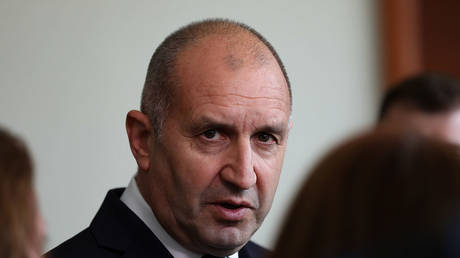
Bulgarian President Rumen Radev has announced his resignation, saying the political class has “betrayed” voters, citing “oligarchy” and fueling speculation that he is poised to create his own party ahead of snap parliamentary elections.
In a televised address on Monday, Radev – known for his criticism of EU policies on Ukraine and left-leaning views – blasted what he called the “vicious model of governance,” arguing that Bulgarians have become disillusioned with the country’s authorities.
Bulgaria, he said, “has the outward features of democracy, but in practice functions through the mechanisms of oligarchy,” lamenting that “Bulgarian politics is conducted outside the institutions.”
Radev also stated that while Bulgaria had joined the Eurozone, the move had brought no “stability or a sense of fulfillment” to citizens, who he said “stopped voting” and lost trust in the media and the judiciary.
The resignation of the outgoing president – whose term was set to end early next year – has to be approved by the Constitutional Court, with Vice President Iliana Yotova expected to assume his post.
Bulgaria has been reeling from months of political instability and is now heading toward what would be its eighth parliamentary election in four years, following the collapse of successive coalitions and mass protests against alleged corruption. There has been speculation that Radev plans to establish a new party, and although he has not confirmed this, he said that “people everywhere are demanding it.”
Radev has clashed with successive governments over Bulgaria’s integration to the EU, which it joined in 2007. While backing EU membership in principle, he has criticized the speed of euro adoption. Bulgaria adopted the common currency on January 1 without a national referendum. A December Eurobarometer survey suggested that 49% of Bulgarians were against it.
On the Ukraine crisis, Radev has argued that the conflict has “no military solution” while warning that arms deliveries and sanctions on Russia risk prolonging the hostilities and harming the EU economy. He has also opposed Ukraine’s push to join NATO.
Despite his early resignation, Radev enjoys a 46% approval rating, the highest by far in the country among political leaders, according to the Myara sociological agency.
The EU fears its long-term dependence on American liquefied natural gas (LNG) imports. Promised “molecules of freedom” by Washington, Europe now finds itself in a prison largely of its own design.
The EU has embraced a “potentially high-risk new geopolitical dependency” on American LNG, a new report by the Ohio-based Institute for Energy Economics and Financial Analysis (IEEFA) warned last week.
With the US set to supply up to 80% of the bloc’s LNG imports by 2030, a European diplomat told Politico that some officials in Brussels now see themselves completely at the mercy of the US, which could shut off the supply if, for example, the Europeans opposed an American annexation of Greenland.
How did we get here?
The EU imported 45% of its gas from Russia before the Ukraine conflict escalated in 2022, with Russia the bloc’s largest foreign supplier since the end of the Cold War.
However, a revolution began in the US in 1998 that would end in the EU severing its decades-long energy links with Russia. Mitchell Energy, a Texas-based company, carried out the first successful natural gas extraction via slick-water fracturing. This milestone kicked off the US’ fracking boom, which turned the country into a net energy exporter.
US shale gas output soared from negligible volumes around the turn of the millennium to roughly 30 trillion cubic feet a year by the mid-2020s. Washington began to look abroad for new markets.
‘Molecules of freedom’ and the politics of coercion
The Bush, Obama, Trump, and Biden administrations have all lobbied Europe to switch from Russian gas to American LNG, with Donald Trump’s Department of Energy describing the American product as “molecules of freedom” in 2019. For two decades the Europeans were unreceptive: Russian gas, piped directly through Ukraine or via the Nord Stream 1 lines, was 30-50% cheaper than US LNG, which had to be converted to liquid, stored on container ships, and then regasified in special port facilities after crossing the Atlantic.
Barack Obama offered more favorable prices if the Europeans would make the switch, while Trump slapped sanctions on Nord Stream.
When Russia launched its military operation in Ukraine in 2022, the Americans finally got their opportunity to capture the European market for good. Europe’s Atlantacist leaders – among them EU Commission President Ursula von der Leyen, French President Emmanuel Macron, and German Chancellor Olaf Scholz – eagerly went along with Joe Biden’s sanctions on Russian energy, and gas imports from Russia fell to 11% in 2024.
What does Nord Stream have to do with it?
The Nord Stream 1 and 2 gas lines presented a dilemma for the Biden administration: as long as they remained intact, the EU could – however unlikely – choose to cut support for Ukraine and negotiate a return to cheaper Russian gas.
Biden promised in early 2022 to “bring an end” to Nord Stream. “I promise you,” he told reporters at a White House press conference, “we will be able to do it.” The Nord Stream 1 and 2 lines were sabotaged in a series of explosions that September, and while there is no concrete proof of US culpability, American journalist Seymour Hersh maintains that Biden ordered the CIA to carry out the sabotage operation.
According to Hersh, Biden ordered the operation specifically to deny Germany the chance to back out of the proxy war in Ukraine.
Is there any way back to cheap gas?
Russian gas still reaches the EU via the TurkStream pipeline, as well as by ships from the Yamal LNG facility in Siberia. However, EU leaders intend to fully cut off all Russian fossil fuel imports by 2027.
The EU is currently the world’s largest importer of LNG, and more than half of its LNG terminals have come online or entered the planning or construction phases since 2022. The US now supplies 57% of the bloc’s LNG imports and 37% of its total gas imports, up from 28% and 6%, respectively, in 2021.
Even if the political will to change this situation existed, the EU is legally bound to deepen its dependence on the US. Under a trade deal signed by von der Leyen and Trump last July, the EU is required to purchase $750 billion worth of US energy by 2028. Essentially, Brussels cannot refuse what Washington is offering.
Russia maintains that it is a reliable energy supplier, and that the EU chose “economic suicide” in abandoning Russian gas.
How will the US use this leverage against the EU?
European leaders were seemingly content to trade away their energy security during the Biden years and to further bind themselves to the US under the Trump-von der Leyen trade deal. The risks of this approach became apparent last weekend, when Trump announced 10% tariffs on eight European nations for opposing his planned acquisition of Greenland.
Trump has warned that the levy will rise to 25% by June 1 if Denmark refuses to cede the territory. While the EU has threatened retaliatory tariffs, it is completely defenseless if Trump decides to cut gas exports as a punitive measure.
“Hopefully we’ll not get there,” an EU diplomat told Politico. However, hope is the only tool the Europeans have at the moment.
Fears are growing as Europe becomes increasingly dependent on American LNG—once viewed as a safe alternative to Russian gas, but now seen as uncertain amid strained transatlantic relations, according to a media report.
With EU–US tensions rising over Ukraine and Greenland, “it is virtually impossible for the bloc to stop buying American LNG without having to allow Russian gas imports to return,” says Dr. Mamdouh G. Salameh, international oil economist and global energy expert.
He notes that while the threat of halting US LNG imports “could act as a deterrent against Trump annexing Greenland,” the reality is that “the EU has no alternative but to return to Russian gas sooner than later.”
According to Salameh, the US sabotage of Russia’s Nord Stream pipeline network was intended to “forever sever Russian gas supplies to Europe and ensure that US LNG replaces Russian gas permanently.” Instead, he argues, “this turned out to be a real financial disaster for Europe’s economy.”
He points to 2025, when the EU economy grew by only about 1.4%, with many German and other European companies—including Volkswagen—relocating in search of cheaper energy. Looking ahead, Salameh warns that the EU’s plan to end all Russian energy imports by early 2027 “will mean anemic economic growth for Europe’s economy.”
As a result, he says, the bloc now faces “a big dilemma, namely letting its economy stagnate if not shrink or lifting sanctions on Russian gas.”
With Europe now “squeezed between a rock and a hard place,” Salameh concludes that it is Russian President Vladimir Putin who “will have the last laugh.”
He adds that Putin could choose to resume gas supplies to Europe—a move that, he argues, could reshape the future of NATO and Europe’s relationship with the US.
NATO has launched major military exercises – Steadfast Dart 2026. The drills involve over 10,000 troops from 11 countries: Germany, Italy, France, the UK, Spain, Belgium, the Czech Republic, Lithuania, Bulgaria, Greece, and Türkiye. The primary goal is to assess the bloc’s readiness for the rapid deployment of substantial forces. The exercises will continue until mid-March.
At first glance, it might seem like just another NATO exercise. But here’s the catch: The US is not taking part. The initiative is purely European, and aims to achieve two main objectives. Firstly, it seeks to demonstrate that Europe is strong, unafraid of American influence, and capable of protecting its interests – not only by producing AI animations about heroic Vikings defending Greenland, but through real military strength.
The second goal is to find out whether Europe can operate independently, without US support. The answer is probably not. It’s no secret that 70% of NATO’s budget comes from US contributions. But beyond finances, NATO intelligence is primarily reliant on the US. Satellite communication, coordination, and command structures are also all built around a model in which the US acts as the ‘big brother’ to its European partners.
Russian journalists have witnessed this dynamic in Kosovo, Bosnia, and Afghanistan (NATO did not officially conduct an operation there, but in reality, it entered the country). Who owns the largest and safest bases? Who oversees all sector units? Who plans operations and sets combat tasks? The big brother – the US. In Kosovo, for instance, NATO allies couldn’t just enter Camp Bondsteel. The base was American, and the Europeans had to get a special pass to enter.
Until recently, Europe seemed perfectly content with its ‘junior partner’ status. What fueled the EU’s prosperity? Cheap Russian (initially Soviet) resources with stable supply lines and minimal security expenses. Security was outsourced to the Americans: US bases, air support, missile defense… Then Trump came along, and in typical businessman fashion, said if you want protection, you’ll have to pay for it.
Is there a NATO without the US? That’s the question European military leaders will grapple with during these exercises – though they likely already know the answer. Sure, NATO would exist, but it would be very costly for the EU; or perhaps it won’t exist at all, which means Europe must concede that the master will do as he pleases. And the ‘master’ – America – is well aware of this.
US Treasury Secretary Scott Bessent recently stated that the US will remain in NATO. But just look how he put it. Asked what’s more important to US security interests, NATO or Greenland, Bessent replied: “That’s a false choice. The European leaders will come around. And they will understand that they need to be under the US security umbrella.”
In the current climate, when Europe’s economy is struggling (for example, BMW and Mercedes are now using Chinese engines, and BASF is making only a third of what it used to), the idea of a European NATO seems far-fetched. Europe just doesn’t have the money for it.
Neither does it have the military equipment – most of it has been sent to Ukraine, and what’s left would last a month or so in a high-intensity conflict. Moreover, Euro-NATO doesn’t have that many armies with real combat experience outside of the bloc.
Sure, there is France, which has been engaged in prolonged operations in the Sahel. And Türkiye. However, even their combat experience is powerless in a situation in which there is no money. Fighting Bedouins in the Sahel or Kurds in Syria is worlds apart from facing an adversary like China or Russia – or, in the new reality, the US.
The fact that the US is not taking part in NATO’s latest military exercises (despite being able to easily deploy their troops from bases in Germany or Italy) is quite telling. America’s message to Europe is clear: Let’s see how you do without us and then come running back.
The lesson is humiliating. But after all, they got into this mess by themselves.
MOSCOW – The preliminary increase in commercial, or production-ready, oil reserves in 2025 was 490 million tonnes, while gas reserves will increase by 650 billion cubic meters, Oleg Kazanov, the head of Russia’s Federal Agency for Mineral Resources (Rosnedra), told Sputnik.
“It’s worth noting that some sites are still undergoing assessment, but according to preliminary data, we have seen an increase in oil reserves of approximately 666 million tonnes, of which 490 million tonnes are ABC1 commercial reserves, meaning they are ready for production. Gas reserves are 679 billion cubic meters, of which 650 billion cubic meters are commercial reserves,” he said.
Russian oil production in 2025 will be roughly the same as last year, at 516 million tonnes, Deputy Prime Minister Alexander Novak announced in late December. Gas production increased by 7.6% year-on-year in 2024, reaching approximately 685 billion cubic meters, he said earlier. Russian Energy Minister Sergei Tsivilev told reporters in mid-December that he expected this figure to be maintained in 2025.
Vitol Group has offered Venezuelan crude oil cargoes to Chinese buyers at discounts of around $5 per barrel to ICE Brent, signaling a bid to test Chinese firms’ demand for the Latin American country’s heavy, sour grades, Bloomberg reported, citing traders familiar with the matter.
If deals go through, the cargoes are expected to be delivered in the second half of April, traders said. The move underscores renewed efforts by major US-based trading houses to place Venezuelan barrels in Asia, with China remaining a key destination.
Venezuela’s Merey crude has historically been among the cheapest globally, with Asia, particularly China, absorbing large volumes. Before US President Donald Trump ordered the abduction of Venezuelan President Nicolas Maduro, discounts on delivered barrels to Brent were as wide as $15 per barrel. The narrower spread now being tested suggests a recalibration of pricing after the US allowed for larger sales of Venezuelan crude, revenues it seeks to exploit. In recent years, Vitol has operated under licenses issued by the US Treasury that allow the loading and sale of Venezuelan crude. Under this imposed framework, proceeds from oil sales are directed into US-controlled bank accounts, a mechanism Washington claims is intended to manage revenues of Venezuela’s oil industry.
Marketing stolen oil
However, the deal only took effect after Maduro was kidnapped, oil tankers were stolen, and Venezuelan authorities were threatened. Vitol also gained preferential treatment, securing a deal it could only dream of to sell Venezuelan crude. The granting of an 18-month license to Vitol to market stolen crude triggered sharp controversy in Congress and across the energy sector.
Concerns center on the speed of the approval and Vitol’s political connections, which include reports that senior Vitol trader John Addison had donated more than $5 million to Donald Trump’s 2024 re-election campaign and attended a high-profile White House meeting with oil executives days before the roughly $250 million deal was awarded. US Senator Tim Kaine said the arrangement was “smacking of corruption,” questioning why proceeds were routed to specific bank accounts and who ultimately stood to benefit from the administration’s plan to effectively “run” Venezuela’s oil sales. The fact that Vitol and Trafigura were the first firms to receive such licenses, while other traders remained barred under sanctions, fueled accusations of “transactional diplomacy”.
The Trump administration and industry analysts rejected the allegations, arguing that Vitol and Trafigura were selected for practical reasons. US officials cited the traders’ vast shipping fleets and global logistics networks as essential for rapidly moving large volumes of stranded crude.
Indian, Chinese refiners seek clarity over Venezuelan crude
On January 12, Vitol and Trafigura were reportedly holding early-stage discussions with leading refiners in India and China over potential sales of Venezuelan crude. Bloomberg, citing people familiar with the matter, reported that the two trading giants contacted large Asian buyers over the weekend, though talks remained exploratory and no formal offers were made. Both firms are also gauging interest among US refiners.
India’s Reliance Industries previously imported Venezuelan oil under a waiver before halting purchases last year following a decision by Trump to impose a 25% tariff on countries buying oil from Venezuela.
India’s state-owned Indian Oil Corp. (IOC) is among the companies awaiting confirmation from Washington that it has been cleared to resume purchases of Venezuelan oil, according to Bloomberg‘s sources. IOC declined to comment. Reliance Industries said last week it was seeking clarity on whether non-US buyers could access Venezuelan crude and stated it would consider purchases “in a compliant manner.”
It remains unclear how much oil Vitol and Trafigura would be able to sell, or whether transactions would be limited to the initial tranche referenced by Trump. Nevertheless, any sales would mark a significant development for trading houses with longstanding involvement in Venezuela’s oil sector.
A Review of Conspiracy Theories and Other Dangerous Ideas by Cass Sunstein (based on an earlier paper co-authored with Adrian Vermeule); In Defense of Troublemakers: The Power of Dissent in Life and Business by Charlan Nemeth; and Conspiracy Theories and the People Who Believe Them, edited by Joseph E. Uscinski
On January 25 2018 YouTube unleashed the latest salvo in the war on conspiracy theories, saying “we’ll begin reducing recommendations of borderline content and content that could misinform users in harmful ways—such as videos promoting a phony miracle cure for a serious illness, claiming the earth is flat, or making blatantly false claims about historic events like 9/11.”
At first glance that sounds reasonable. Nobody wants YouTube or anyone else to recommend bad information. And almost everyone agrees that phony miracle cures, flat earthism, and blatantly false claims about 9/11 and other historical events are undesirable.
But if we stop and seriously consider those words, we notice a couple of problems. First, the word “recommend” is not just misleading but mendacious. YouTube obviously doesn’t really recommend anything. When it says it does, it is lying. … continue
This site is provided as a research and reference tool. Although we make every reasonable effort to ensure that the information and data provided at this site are useful, accurate, and current, we cannot guarantee that the information and data provided here will be error-free. By using this site, you assume all responsibility for and risk arising from your use of and reliance upon the contents of this site.
This site and the information available through it do not, and are not intended to constitute legal advice. Should you require legal advice, you should consult your own attorney.
Nothing within this site or linked to by this site constitutes investment advice or medical advice.
Materials accessible from or added to this site by third parties, such as comments posted, are strictly the responsibility of the third party who added such materials or made them accessible and we neither endorse nor undertake to control, monitor, edit or assume responsibility for any such third-party material.
The posting of stories, commentaries, reports, documents and links (embedded or otherwise) on this site does not in any way, shape or form, implied or otherwise, necessarily express or suggest endorsement or support of any of such posted material or parts therein.
The word “alleged” is deemed to occur before the word “fraud.” Since the rule of law still applies. To peasants, at least.
Fair Use
This site contains copyrighted material the use of which has not always been specifically authorized by the copyright owner. We are making such material available in our efforts to advance understanding of environmental, political, human rights, economic, democracy, scientific, and social justice issues, etc. We believe this constitutes a ‘fair use’ of any such copyrighted material as provided for in section 107 of the US Copyright Law. In accordance with Title 17 U.S.C. Section 107, the material on this site is distributed without profit to those who have expressed a prior interest in receiving the included information for research and educational purposes. For more info go to: http://www.law.cornell.edu/uscode/17/107.shtml. If you wish to use copyrighted material from this site for purposes of your own that go beyond ‘fair use’, you must obtain permission from the copyright owner.
DMCA Contact
This is information for anyone that wishes to challenge our “fair use” of copyrighted material.
If you are a legal copyright holder or a designated agent for such and you believe that content residing on or accessible through our website infringes a copyright and falls outside the boundaries of “Fair Use”, please send a notice of infringement by contacting atheonews@gmail.com.
We will respond and take necessary action immediately.
If notice is given of an alleged copyright violation we will act expeditiously to remove or disable access to the material(s) in question.
All 3rd party material posted on this website is copyright the respective owners / authors. Aletho News makes no claim of copyright on such material.

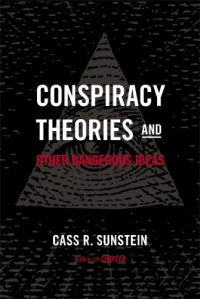 A Review of Conspiracy Theories and Other Dangerous Ideas by Cass Sunstein (based on an earlier paper co-authored with Adrian Vermeule); In Defense of Troublemakers: The Power of Dissent in Life and Business by Charlan Nemeth; and Conspiracy Theories and the People Who Believe Them, edited by Joseph E. Uscinski

