U.S. President Donald Trump has announced that he will impose 25 percent tariffs on foreign steel and aluminum, as well as additional tariffs on several countries.
Polish newspaper Rzeczpospolita writes about nervous movements in Brussels, which is preparing for a response if President Trump decides to go to a trade war with the EU.
“The Polish presidency organized an urgent teleconference of EU ministers on Wednesday afternoon regarding the American announcements of a trade war. No decision has come into effect yet, so there can be no counter-decision from the EU, but in the face of increasingly decisive threats from the U.S. directed by President Trump, Europe must show unity,” one source told Rzeczpospolita.
American tariffs would be a serious blow to EU countries. The EU as a whole exports around €6 billion of steel and aluminum to the US annually, €3 billion for each of these raw materials.
Furthermore, when it comes to automobiles, the EU’s import duties are clearly unfair, with the EU hitting the U.S. with 10 percent duties on U.S.-made cars, while the U.S. rate is only 2.5 percent. Trump has long pointed to this imbalance. In addition, the EU charges VAT, which Washington treats as an additional fee.
The EU is arguing it cannot reduce its tariffs on the U.S. to 2.5 percent because then it would automatically (in accordance with the rules of the most favored nation clause) also have to reduce tariffs on car imports from other member states of the World Trade Organization (WTO), including China. And it is already in serious dispute with them when it comes to electric cars subsidized by Beijing.
With vehicles, the stakes are incredible for the EU compared, as the auto industry accounts for €65 billion in exports to the U.S., with 74 percent of the 920,000 cars sold in the U.S. produced by the three biggest German car manufacturers, Volkswagen, BMW and Mercedes. Car sales have fallen in Europe and sales are also shrinking in China, which means that the German car manufacturers cannot afford to lose the U.S. market either. Behind the scenes, there is heavy lobbying from the U.S. to avoid a trade war.
“We are deeply concerned about the possible imposition of tariffs by the United States. Instead of tit-for-tat tariffs, the EU and the U.S. should work together to reach a grand agreement to avoid a potential trade conflict,” said Sigrid de Vries, secretary general of ACEA, the EU’s automotive industry federation.
Brussels argues that starting a trade war is not in the interests of the U.S.
“The EU sees no justification for imposing tariffs on our exports, which are counterproductive. Tariffs are taxes, bad for businesses, even worse for consumers and harmful to the global trading system,” said Maros Sefcovic, EU trade commissioner.
The EU indicates that it will reduce the trade deficit with the U.S. by boosting purchases of liquified natural gas (LNG), which the EU needs anyway, and American weapons.
However, in the event that Trump slaps the EU with tariffs, there are countermeasures being prepared, including retaliatory tariffs. This already occurred during the previous trade war with Europe under the previous Trump administration, including products produced in states where Trump had substantial support, such as bourbon from Kentucky, Harley Davidson motorcycles from Wisconsin, and orange juice from Florida.
Since the last trade skirmish with Trump, the EU has also gained other ways to harass American producers. Since December 2023, it has had an instrument against economic coercion (ACI), which allows it to impose tariffs, restrictions on trade in services and trade-related aspects of intellectual property rights, as well as restrictions on access to foreign direct investment or public procurement. It can also attack technology companies that are dear to Trump’s heart. The EU’s Digital Markets Act (DMA) and Digital Services Act (DSA) contain a wide range of measures to influence large internet platforms, which could hit companies like Google, Amazon, and Meta.
At the same time, there are worries that a trade war could quickly spiral, which could wreak economic havoc on both sides of the Atlantic.
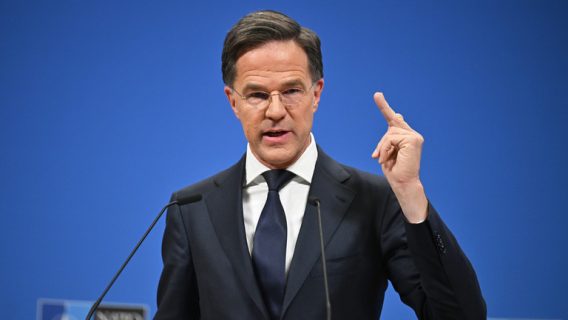
NATO Secretary-General Mark Rutte warned Russian President Vladimir Putin on Wednesday that the US-led military bloc would deal a crushing blow to Moscow if it attacks any of its member states.
In recent years, senior officials from European NATO member states, including Rutte, have alleged that Russia is harboring aggressive plans toward the military bloc. Putin has repeatedly dismissed this speculation, calling it “nonsense” and a ruse to justify increased military spending.
Answering reporters’ questions at a press conference in Brussels on Wednesday, Rutte said, “At the moment, if Putin would attack NATO, the reaction will be devastating. He will lose. So, let him not try it, and he knows this. The deterrence and defense is very strong.” However, NATO needs to spend more on defense to be able to defend itself four or five years from now, he added.
Rutte urged member states to make “some difficult decisions this year about… defense spending, doing much, much more than the 2% we pledged.” He went on to say that while the West has “fantastic” arms manufacturers, “they are not producing enough,” which needs to be urgently addressed.
The question regarding supposed Russian aggression was prompted by a report issued by Denmark’s Defense Intelligence Service on Tuesday. According to the document, within five years of ending or freezing the Ukraine conflict, Moscow would be ready to conduct a large-scale onslaught on Europe, based on the assumption that NATO’s defense spending remains at the current level.
“Russia is likely to be more willing to use military force … if it perceives NATO as militarily weakened or politically divided,” the intelligence agency claimed, adding that “this is particularly true if Russia assesses that the US cannot or will not support the European NATO countries in a war.”
Last month, Rutte similarly urged NATO member states to “shift to a wartime mindset” to “prevent war.”
Those who refuse to spend more on defense might as well “get out your Russian language courses or go to New Zealand,” the NATO secretary-general warned at the time.
In December, Rutte suggested that European member states should redirect some of the funds they currently spend on welfare toward their militaries.
On Tuesday, Russia’s Foreign Intelligence Service (SVR) claimed that the Ukrainian special services, with Western support, were preparing a false-flag provocation in the Baltic Sea involving Russian-made naval mines, in the hope of dragging NATO into a direct military confrontation with Moscow.
As a brand new Congress and administration settles in, the groundwork is being laid for a historic increase in military spending that could lead to catastrophic implications for the federal budget.
Senator Roger Wicker (R-MS), the new head of the Senate Armed Services Committee, is calling for a $120 billion hike over the next two years, and other key Republicans are calling for an increase of up to $200 billion. This follows a rise of some $160 billion over the four years of the Biden Administration.
But the accounting of annual dollar figures amid the technicalities of the budget reconciliation process today is perhaps less important than the conceptual and practical sea change in the long term approach to military budgeting being planned. Sen. Wicker is advocating setting a new floor for military spending at 5% of the national economy – a scheme apparently endorsed by President Donald Trump at Davos yesterday when he called for “all NATO nations” (presumably including the United States) to spend at least 5% of GDP on defense.
The implications of spending at least 5% of the entire national economy on the military each year are striking. The first is the sheer dollar figures involved. In 2024, a 5% floor would have led to approximately $1.45 trillion in military spending as opposed to the actual level of $886 billion — a difference of over $550 billion or some 60%.
That level of spending won’t happen overnight. The scale of the increase implied by a 5% floor is such that it can’t be accommodated in one or even two to three years. The additional funds are so great that the entire U.S. military-industrial complex would need to be scaled up to absorb them. But the long-run budgetary implications of such an increase are extremely concerning.
In recent work for the Quincy Institute, Steve Kosiak, a former senior White House defense budget official, projects that by 2034 a 5% of GDP floor on military spending would lead to an almost 90% increase in real (inflation adjusted) spending as compared to the current path for Pentagon spending.
A sustained expansion in military spending of this size would have a tremendous impact on the ability of the government to pursue other national priorities. This is especially true since the Trump Administration also appears committed to a major tax cut (far larger than any new revenues brought in by potential tariffs).
As Kosiak’s work documents, the combination of a massive boost in Pentagon spending and tax breaks would require either major cuts in central entitlement programs like social security or health care, or a long-term explosion in the Federal debt to levels two to three times the highest levels ever previously recorded. While it’s become fashionable to claim that “deficits don’t matter,” expanding the Federal debt to such unprecedented levels carries significant risks to economic growth.
Besides the implications for spending and deficits, a commitment to spend at least 5% of national economic production on the military would change the essential nature of military budgeting. Instead of setting the budget by assessing actual concrete needs for national defense — a process that already leads to a significant degree of waste and abuse— a spending floor would require spending to mechanically increase as the size of the economy grows, regardless of documented military needs.
The effect would be like a “military tax” on the U.S. economy, requiring a nickel of each additional dollar of production to go to the Pentagon.
The policy would also have significant effects globally, as it would tend to hard-wire an arms race dynamic into the world economy. With the U.S. and close allies increasing military spending each year as their economies grew, U.S. rivals would also feel pressure to spend more in order to keep up. Global military expenditures, already at the highest levels ever recorded, would likely spiral upward. This in turn would feed the U.S. justification for continuing to increase military spending.
While rivals that are significantly poorer than we are, such as Russia, Iran, or North Korea, would certainly feel stress to their economy in trying to keep up with our spending, a wealthier manufacturing power like China has a great deal of ability to boost military spending in response to a U.S. buildup. Estimates of Chinese military spendingvary, but are generally at around 2% of GDP, leaving substantial room for growth.
At various times, when the economy was much smaller, the U.S. has certainly spent more than 5% of GDP on the military. But today, this would represent a much higher absolute level of military expenditure. More importantly, it is not necessary to actually defend the American public or secure vital national interests.
Sen. Wicker’s defense spending plan claims that the U.S. confronts “the most dangerous threat environment since WW2” due to facing an “axis of aggressors” that includes China, Russia, Iran, and North Korea. It claims that America needs to budget for fighting at least two active and protracted wars simultaneously, one to defeat China and another to defeat a second aggressor in another part of the world, while maintaining additional military forces in reserve to intimidate other potential aggressors.
Further, it insists that during such a conflict we must assume that America could not rely on effective military assistance from its alliance network.
Rather than assuming that it is necessary to prepare for this terrifying and extreme scenario of an isolated America fighting a two-front global war against multiple nuclear powers, we should ask whether it can be averted by less risky and expensive means than almost doubling our military budget over the next decade.
The decision to prepare for a “nuclear WW3” scenario would require major economic sacrifices for the entire American population. Unfortunately, it appears that many in Washington wish to take us in this direction.
Marcus Stanley is the Director of Studies at the Quincy Institute for Responsible Statecraft. Prior to joining the Quincy Institute, he spent a decade at Americans for Financial Reform. He has a PhD in public policy from Harvard, with a focus on economics.
Iran’s Oil Minister Mohsen Paknejad has said that the United States will never achieve its dream of cutting Iran’s oil exports to zero as touted by its new president Donald Trump.
“Blocking Iran’s oil exports is an unattainable dream,” said Paknejad on Sunday while reacting to Trump’s recent signing of an executive order to impose maximum pressure on Iran’s oil industry.
He insisted that Iran will always come up with solutions to circumvent US bans on its oil exports.
“The more the restrictions increase, the more complicated our solutions will be,” said the minister, adding that the experts and staff working in the Iranian petroleum industry have the capacities to deal with problems caused by US sanctions to the country’s production and exports of oil.
He said the US once experienced the futility of its maximum pressure policy on Iran during Trump’s first term in office in 2016-2020.
“They want to test it one more time and they will fail again,” said the minister.
The comments came several days after Trump announced he would use Washington’s unilateral regime of sanctions to disrupt Iran’s oil flows to markets in Asia and elsewhere.
Trump enacted a first round of sanctions on Iran’s oil exports in 2018, causing the country’s oil exports to drop for a brief period in late 2019 and in early 2020.
However, Iranian oil exports have gradually returned to pre-sanctions levels in recent years with estimates suggesting that the country is shipping more than 1.8 million barrels per day (bpd) of oil, mostly to customers in China.
That comes as Iran’s oil exports had reached as low as 0.3 million bpd in 2019 when Trump removed sanction waivers granted to major Iranian oil customers.
The decision of Baltic nations to disconnect themselves from the unified energy system with Russia and Belarus will only worsen the economic prospects for the EU, the Russian Mission to the bloc has said, stressing that the move is politically motivated.
Estonia, Latvia, and Lithuania, which are all members of NATO and the EU, began the two-day process of unplugging from the BRELL Energy Ring on Saturday. They will then join the alternative European power grid, known as ENTSO-E. The step is part of EU nations’ effort to cut long-standing energy links with Russia.
“Disconnecting from the BRELL is a politically motivated move that will drive up regional electricity prices, make power grids less reliable, and further erode the EU’s economic competitiveness,” the mission said on Telegram on Saturday, emphasizing that European households and businesses, primarily in the Baltic countries, will bear the costs.
The mission stressed that the EU economy demonstrated “meager” growth of only 0.8% last year, and highlighted that the continued drive to break energy ties with Moscow would only worsen its prospects.
The three ex-Soviet republics decided to disconnect from BRELL and join ENTSO-E back in 2018. This month they plan to test their power grids in isolation before connecting to the EU energy system via Poland.
Built on the existing interconnected Soviet-era power systems, the BRELL energy ring was established on 7 February 2001. It synchronized the power systems of Belarus, Russia, Estonia, Latvia, and Lithuania under Moscow’s central dispatch. Initially, the Baltics depended on Russia for grid stability, while Russia relied on them to power its exclave of Kaliningrad. Russia has since upgraded energy infrastructure in Kaliningrad, reducing its reliance on the Baltic grid.
Authorities in the three states have repeatedly claimed that reliance on the network controlled by Russia jeopardizes their energy security, believing that Moscow could weaponize the electricity supply and sever them from the network on a unilateral basis. Such fears have never materialized.
Controlled by the state, Russian electricity prices are currently among the lowest in the world, averaging around $0.055 per kWh for consumers in 2024. Power prices in the EU vary from nation to nation, with Germany having the highest price per kWh last year at €0.3951 ($0.40).
China’s newly unveiled DeepSeek AI model rivals US-made ChatGPT in efficiency but at a much lower cost.
This is just one example of China’s more cost-effective technological solutions compared to US analogs.
Space: China’s Chang’e 6 successfully retrieved the first-ever samples from the Moon’s far side while the US struggles to bring two astronauts back from the ISS.
Quantum computers: In 2020, China’s Jiuzhang became the first photonic quantum computer to achieve quantum supremacy. With Jiuzhang 2.0 and Zuchongzhi 2.1, China remains a top player in the field.
Quantum communications: China launched the world’s first quantum communication satellite, Micius, in 2016. In 2024, Chinese and Russian scientists tested quantum communication over 3,800 km.
Robots: China’s Unitree Go2 quadruped and G1 humanoid robots push global robotics leadership, offering cheaper alternatives to Boston Dynamics.
Telecommunications: ZTE and Huawei made China a 5G leader. As the US imposes sanctions instead of competing on quality, China eyes 6G by 2030.
High-speed trains: With over 40,000 km of high-speed rail, China has the world’s longest network, while the US rail system remains in disrepair.
Drones: Chinese firms like DJI dominate the UAV market with affordable drones spreading worldwide, unlike pricier US alternatives.
Iran has strongly condemned new sanctions slapped by the administration of US President Donald Trump on the country’s oil industry, saying they run contrary to international rules and standards.
Foreign Ministry spokesman Esmaeil Baghaei denounced the bans as “completely unjustified” on Friday.
The remarks came a day after the US Treasury Department targeted more than a dozen individuals and companies, as well as vessels, claiming that they are facilitating the shipment of millions of barrels of Iranian oil to China.
The sanctions were the first on Iran after Trump restored his so-called “maximum pressure” campaign on the country.
“The decision of the new US administration to put pressure on the Iranian nation by preventing Iran’s legitimate trade with its economic partners is an illegitimate, illegal and wrongful act, whose responsibility lies on the US government,” Baghaei added.
“The Islamic Republic holds the US accountable for the consequences of such unilateral and bullying measures.”
On Tuesday, Trump signed the presidential memorandum reimposing a tough anti-Iran policy, which he practiced in his first presidential term after unilaterally withdrawing Washington from the historic 2015 nuclear deal.
In an X post, Iranian Foreign Minister Abbas Araghchi called Trump’s measure a failed experience.
He said the decision to restore maximum pressure policy will only compel “maximum resistance” on the part of Iran again, adding, “Smart people ought to choose ‘Maximum Wisdom’ instead.”
During his campaign trail for a second term, Trump had stated at an event in New York in September that, if re-elected, he would minimize the use of sanctions. He argued that employing sanctions excessively “kills your dollar and it kills everything the dollar represents.”
“Look, you’re losing Iran. You’re losing Russia. China is out there trying to get their currency to be the dominant currency, as you know better than anybody,” Trump remarked.
On Tuesday, The New York Times said Trump had also implemented a strategy of maximum pressure in 2018, following his decision to withdraw the US from the nuclear accord with Iran that had been established under the Obama administration three years earlier.
“Mr. Trump still claims that was a major victory, but most outside analysts say it backfired,” the newspaper wrote.
Trump’s actions in the international system are defined by the aims to remake US foreign policy, and the tendency to make noise that keeps him in the headlines. A key challenge for analysts is therefore to distinguish between the strategy and the noise. Some of Trump’s messaging has a deliberate purpose while at other times he is seemingly improvising.
US Secretary of State Marco Rubio dropped a bombshell by arguing that the unipolar world order is over and the natural condition is multipolarity. Does this represent Trump’s decision to retire the “hegemonic peace” in Europe through NATO expansion (that triggered a war in Ukraine), or was it simply an independent commentary by Rubio? Trump wants peace with Russia and recognises that NATO provoked the war, but he also attempts to threaten Russia to accept US terms. Trump wants to end the wars in the Middle East, but he also sends 2000-pound bombs to Israel and casually suggests ethnic cleansing of the Palestinians from Gaza. Trump wants to get along with China, but also to end China’s technological leadership. What is foreign policy and what is noise?
Foreign Minister Abbas Araghchi has asserted that another round of deployment of the “maximum pressure” policy on the part of the United States against Iran will only lead to another defeat.
“The policy of maximum pressure has already proven to be a failure, and any attempt to revive it will only lead to another defeat,” the top diplomat told reporters on the sidelines of a cabinet meeting on Wednesday.
Araghchi was referring to the policy that the US adopted during Donald Trump’s former tenure, as part of which Washington quit a 2015 nuclear deal with Iran and world powers, returned the sanctions that the agreement had lifted, and piled up even more illegal and unilateral bans against the Islamic Republic.
Retaliating against the measures, Iran took legitimate nuclear steps that have featured its operationalizing advanced centrifuges among other things.
The country also explored various means to skirt the sanctions and boost its economy by fostering foreign trade and enhancing domestic production, causing Washington to suffer “maximum defeat” in adoption of such policy.
On Tuesday, Trump promoted new “tough” measures aimed at, what Washington has called, “deterring” Iran from obtaining a “nuclear weapon.”
Trump also signed a presidential memorandum, authorizing stricter illegal actions against Iran, while saying, “They can’t have a nuclear weapon, we’d be very tough if they insist on doing that.”
Washington’s adversarial stance comes despite Tehran’s repeated assurances that its nuclear activities remain in full compliance with international regulations, and the International Atomic Energy Agency (IAEA)’s invariable verification of the peaceful nature of the Islamic Republic’s nuclear energy program.
Reacting to Trump’s remarks, Araghchi said, “If the main issue is that Iran should not pursue nuclear weapons, this is achievable and not a difficult matter.”
“Iran’s stance is clear, and it is a member of the NPT (Nuclear Non-Proliferation Treaty), and there is also the fatwa (religious decree) of the Leader, which has clarified the matter for us,” he added.
Leader of the Islamic Revolution Ayatollah Seyyed Ali Khamenei’s has prohibited pursuance, attainment, and storage of such non-conventional arms through an official decree as per religious and moral grounds.
“The Leader’s fatwa has made Iran’s position crystal clear,” Araghchi concluded.
‘Iran has never had, will never have nuclear weapons program’
Also on Wednesday, Mohammad Eslami, head of the Atomic Energy Organization of Iran (AEOI), likewise reacted to Trump’s remarks, saying, “Iran has never had, does not have, and will not have a nuclear weapons program. Iran’s approach in this regard is absolutely clear.”
He added, “Iran’s peaceful nuclear program is being implemented within the framework of Safeguards [Agreement] and the NPT.”
German MP Sahra Wagenknecht, who leads the self-proclaimed BSW party, urged a referendum on migration in an interview. Referendums on migration are not unprecedented in Europe, the first was held in Hungary in 2016, and the second in Poland in 2023,
“A migration policy that is supported by the majority of the population requires a referendum that gives the federal government a fundamental direction,” Wagenknecht told AFP over the weekend, as reported in Die Welt.
She believes a referendum with a clear result would counter the polarization of society and could take the wind out of the sails of the increasingly popular Alternative for Germany (AfD) party.
Wagenknecht further accused the German government of a failure in its migration policy.
“For 10 years, they have allowed a loss of control over migration, which the majority of people in Germany, including most well-integrated immigrants, do not want,” she said.
There is currently no legal basis for a federal referendum in Germany, although smaller states, such as Berlin, offer non-binding referendum votes on local issues. It is also unclear what the exact wording of Wagenknecht’s proposal would be. Many polls show that a majority of Germans want reductions in migrant numbers and say that migrants bring more disadvantages than benefits.
In the wake of soaring crime, terror attacks, and massive burdens on public service, Germans are now saying that migration is the “most important problem.” That is according to the research group Wahlen, which showed 41 percent of men and women listed this, in equal numbers, as the most important issue heading into national elections. That beats out the economy and concerns about the Alternative for Germany party (AfD).
In addition, a majority of Germans are in favor of permanent border controls and rejecting asylum seekers without documentation, according to Wahlen.
“Germans are divided on the question of whether the Union should accept votes from the AfD when’voting on a stricter migration policy: 48 percent of those surveyed think this is “not a good thing,’ 47 percent think it is ‘good.’ At the same time, a clear majority of those surveyed, 63 and 56 percent respectively, are in favor of rejecting asylum seekers without documents and of permanent border controls,” writes NZZ about the Wahlen research polling.
Other countries have utilized referendums, such as Hungary and Poland.
Hungary held a referendum on resettlement quotas in 2016, in which 98.36 percent of valid voters rejected the possibility of the European Union requiring the resettlement of migrants to Hungary, even bypassing Hungarian legislation.
In 2023, Poland held a referendum, with Jaroslaw Kaczynski, Poland’s deputy prime minister at the time, saying that it “will decide the fate of Poland and Poles, whether they can live in a safe, peaceful country.”
Claims by public health agencies and in top medical journals that childhood vaccination prevents millions of deaths annually are based on flawed epidemiological models, according to a paper published today by Correlation, a Canadian nonprofit research organization.
The author, all-cause mortality expert Denis Rancourt, Ph.D., argues these claims are based on “tentative and untethered models of epidemiological forecasting” that produce “unlikely results.”
The models depend entirely on invalid estimates of vaccine efficacy and disease prevalence and virulence, none of which are based on real-world data concerning actual deaths, according to Rancourt.
They also fail to account for other complex factors contributing to child mortality — particularly in low-income countries, where most of these millions of infant lives are purportedly saved. These factors include nutritional deficiency, toxic exposures and poverty.
Rancourt also found that, contrary to public health claims, there are no examples in all-cause mortality data of a drop in infant or child mortality temporally associated with the rollout of a childhood vaccination program.
In the paper, Rancourt develops an alternative model using yearly all-cause infant mortality. He estimates that childhood vaccination campaigns since 1974 may have been associated with approximately 100 million vaccine-related deaths.
However, he emphasizes that any true estimate of mortality would also have to account for other factors, such as the shifting political and economic dynamics that drive poverty and its associated health problems.
Children’s Health Defense Senior Research Scientist Karl Jablonowski said, ”Rancourt points out serious flaws in mainstream debates over childhood vaccination that are premised on errors in generalization and lead to childlike black-and-white thinking when it comes to vaccine safety.”
Jablonowski said the paper clearly demonstrates that claims vaccines have saved millions of lives globally, “hang on a few impossible assumptions.” Those include:
That no human can die from a vaccine (directly or indirectly).
That children who die from a “vaccine-preventable” pathogen were otherwise perfectly healthy.
That we understand how diseases spread in all contexts.
That all children have the same health, diet, exercise habits, access to clean water, toxin and environmental exposures, genetic disposition, etc., as the clinical trial participants.
That clinical trials accurately represent the risks and benefits of the vaccine.
That once a vaccine is developed, all other medical interventions suddenly stop working.
Rancourt said he began writing the paper to demonstrate the “ludicrous theoretical modelling exercises” behind the spectacular claims of reduced infant mortality from mass vaccination programs.
“But what I discovered is that the longstanding industry of administering vaccination programmes to save infants in low-income countries from death is scientifically baseless and a fraudulent enterprise that removes resources and attention away from urgently needed development to correct ongoing mass neocolonial exploitation,” he said.
‘Garbage in, garbage out’
Many top researchers have raised public concerns about epidemic modeling, particularly in research that serves the pharmaceutical industry.
Dr. John Ioannidis has pointed out that “epidemic forecasting has a dubious track record,” which became particularly evident during the COVID-19 period. Models can easily be compromised or skewed if they use poor data, incorrect assumptions, lack epidemiological information or fail to consider all dimensions of a given problem.
This, combined with the fact — highlighted by former editors of both The Lancet and The BMJ — that medical journals have become “an extension of the marketing arm of pharmaceutical companies” has led to the proliferation of forecasting models that don’t meet even the most basic standards for modeling, Rancourt said.
In recent years, epidemiologic modelers have published many papers claiming to estimate mortality averted through childhood vaccination.
Rancourt argued these models share two fatal flaws: They are based on unreliable assumptions of vaccine efficacy and they “guesstimate” deaths avoided using disease models not anchored in real-world data.
The safety and efficacy numbers for these models always come from clinical trials, which he says are “systemically unreliable” in assessing efficacy and fail to evaluate safety.
The trials are, “overwhelmingly controlled by an industry making large profits from the vaccines, and this industry has amply, historically, consistently and repeatedly demonstrated its willingness to act fraudulently at the expense of endangering the public,” Rancourt wrote.
Also, the trials themselves introduce several biases. For example, trials are conducted with healthy children, but vaccines are administered to children with multiple vulnerabilities, particularly in low-income countries.
The trials also don’t test the vaccines against true placebos, don’t monitor children long-term for safety issues, and don’t test against disease prevention or safety in the real world.
Second, they rely on “guesstimates” of deaths averted — estimating how many children didn’t die because they got the vaccine — based on isolated models for disease contagion that aren’t validated by real-world research.
Most importantly, they fail to account for the fact that childhood mortality rates are affected by a wide range of factors — including underlying health conditions, poor nutrition and access to care — beyond simply whether a child is vaccinated or not.
“I argue that the proverbial computing term ‘garbage in, garbage out’ pre-eminently applies in these circumstances,” Rancourt said.
Breaking down claims that vaccination has saved 154 million lives since 1974
To illustrate his points, Rancourt analyzed a recent study funded by the World Health Organization (WHO) and published in The Lancet by Andrew J. Shattock, Ph.D., and colleagues.
The study concluded that “Since 1974, vaccination has averted 154 million deaths, including 146 million among children younger than 5 years of whom 101 million were infants younger than 1 year.”
Rancourt calculated this would be the equivalent of 5.7% of global deaths annually, or a 20% reduction in global infant mortality.
Rancourt said it would be a “fantastic” medical achievement. “Some might reasonably call it unbelievable.”
In addition to the WHO funding, the Vaccine Impact Modelling Consortium — funded by the Bill & Melinda Gates Foundation and the Gates-backed Gavi, the Vaccine Alliance — provided the models. Members of the research team also receive funding from the Centers for Disease Control and Prevention, the Wellcome Trust and other organizations with financial and political interests in promoting mass vaccination.
For The Lancet study, Shattock estimated deaths avoided by vaccination using only theoretical models for how disease spreads — with no attention to context. And then used efficacy rates from vaccine clinical trials to estimate how many children who would have gotten sick and died don’t because vaccines are present.
The study repeats that model for each of the nine vaccines it considered to arrive at the number of lives saved.
The study also estimated the numbers based on the assumption that, otherwise, infant mortality would have remained constant between 1974 and 2024. However, in reality, infant mortality had been dropping before that, which the model should have accounted for.
The study “collapses on examination of its premises,” Rancourt wrote.
The problem of poverty
Perhaps the most glaring issue, Rancourt said, is that models touting high numbers of lives saved by vaccines fail to account for the reality that child mortality is influenced by many complex factors, particularly in low-income countries.
For example, the WHO states that the measles vaccine has the greatest impact on infant mortality, accounting for most lives saved from all vaccines. However, deaths from measles are typically related to malnutrition. Mortality and morbidity rates from infectious diseases like measles decline with improved living standards.
Malnutrition also makes children more vulnerable to environmental toxins — including vaccines, Rancourt noted.
In other words, malnutrition, including of the mother, makes a child highly vulnerable to death from a wide range of infections that don’t occur or aren’t fatal in well-nourished children living in healthy environments.
Low-income countries not only lack funding for public health, Rancourt said, but vaccination campaigns divert resources away from other health priorities like clean water and basic health services.
Vaccination programs increase infant and child mortality
Contrary to repeated claims that vaccines save millions of lives, Rancourt’s analysis of the relationship between vaccine rollouts and infant mortality rates suggests the opposite — that these programs have contributed to increased infant and child mortality.
Rancourt correlated changes in the global infant mortality rate with major vaccine rollouts between 1980-1999 and 1999-2015. During those periods, global infant mortality rates were declining, but the rate of decline slowed after the vaccine rollouts.
The deceleration became more marked in about 1992, when the hepatitis B and pneumococcal conjugate vaccines were introduced, even in low-income countries.
Had the decline in infant mortality continued at the same rate from the period before vaccine rollouts, there would have been 100 million fewer infant deaths. Instead, the rate of decline in mortality slowed precisely when the rollouts happened.
All researchers modeling the benefits of vaccination missed or disregarded this evident temporal correlation, Rancourt said.
Rancourt’s findings corroborate observational studies, including those showing the introduction of the diphtheria-tetanus-pertussis vaccine in low-income countries led to a spike in infant mortality among vaccinated babies.
However, Rancourt cautioned that he was presenting the simplest possible model. A true estimate would have to adjust for the benefits of improving living conditions. It would also have to account for the impacts of “aggressive so-called globalization” in the 80s and 90s that facilitated the global expansion of industry, global vaccination campaigns and industrial agriculture, which all had varied and significant impacts on low- and middle-income countries.
Rancourt concluded the overwhelming cause of high infant mortality is extreme poverty associated with severe malnutrition and exposure to toxic living environments.
DeepSeek, a Chinese AI startup, has sent a shockwave through the US tech industry and Wall Street in the last week.
Its LLM R1, trained under $6 million and 2 months, has outperformed the latest offerings from OpenAI, Meta, Google and Microsoft, who have spent tens of billions and years on their models.
The DeepSeek AI app has topped download charts in the US and China, replacing ChatGPT as the No. 1 AI productivity tool.
Due to its breakthrough technology that shows powerful AI can be developed with very limited investment in compute, DeepSeek’s emergency has sent Nvidia stock reeling, losing as much as 17% on Monday and wiping out $600 billion in market cap.
Interestingly, as we speak, barely a few days after the shockwave on Wall Street, DeepSeek is experiencing a massive denial of service (DoS) attacks from the US on its servers, affecting new registrations.
The US government, including the US Navy, has banned the use of DeepSeek for its personnel. And the congress is already discussing ways to slow down and disrupt DeepSeek.
This episode is eerily reminiscent of the Huawei ban, the TikTok ban, the chip ban, and the EV tariffs. The US regime has fully adopted the Tonya Harding school of how to win by breaking the leg of her competitor. Ask Nancy Kerrigan about it.
As thoughtful people put all these panic-ridden actions in context, the most obvious conclusion emerges – the US regime is not acting from any position of strength. It is behaving like a chicken little who cannot compete, win honestly, and is running scared.
The list of anti-China activities out of successive US regimes is long and varied –
– Trump started to impose 60% tariff on Chinese imports since 2017, a policy the Biden regime continued.
– The Biden regime imposed 100% tax on Chinese EVs, which have not yet even entered the US market. But the competitiveness of Chinese EVs is enough to get Biden to enact pre-emptive tariffs.
– Biden regime imposed dozens of export controls on China, often using coercion against its own “allies” to follow suit such as Holland’s ASML and South Korea’s Hynix and Samsung.
– Biden regime put thousands of Chinese companies on the US entity list with all sorts of made-up justifications in hope of disrupting these companies’ operations.
– Trump is again making noises to impose 100% tariffs on Chinese imports. He is going further to threaten invading Panama and Greenland to contain China.
– The FBI launched the infamous China Initiative to prosecute Chinese scientists working in the US, yielding zero prosecutable case after ruining the lives of numerous scholars and scientists.
McCarthyism is alive and well in the “land of the free”. J Edgar Hoover, the cross dresser, would be proud of the viciousness of the criminal organization he founded.
– The US regime has also harassed the hundreds of thousands Chinese students in the US, who are contributing $150 billion a year to the US economy. It is attempting to prevent Chinese students from studying in advanced technical fields. Anyone studying the defunct neoliberal economics or neoconservative politics and faux democracy is welcome.
– The congress passed a $1.6 billion smear fund in a so-called “anti-CCP propaganda” campaign. The best to counter other’s so-called propaganda is of course to launch a bigger one of your own.
– Every political appointee, as well as elected official, must espouse a fervent anti-China rhetoric in confirmation hearings, TV interviews, and corporate media op-eds. If you are not a China hawk, you have no place in the US power elite.
– Every Pentagon official and military industrial complex funded “think tanker” is expected to sound tough about the coming China US war. They come up with frightening concepts like the “unmanned Hellscape” strategy in the Taiwan Strait, seemingly unaware that China is years ahead in drone tech and production.
– The US has tried to mobilize its vassals from Japan, South Korea, the Philippines, Australia, and India into anti-China military alliances. It has formed fearsome-sounding acronyms like AUKUS and QUAD, which are looked upon in awe only by itself.
The “most powerful country in the history of the world” (as self-claimed by multiple US regimes) seems unconfident to take on China on its own.
On the other hand, China is playing its own game. There is no political figure or “expert” jumping up and down on national or local TV to shout against the US. There is little attention paid to the theatrics in Washington and its client states.
China is focused on overcoming the difficulties posed by the aggressive US actions, reducing dependencies, and developing its indigenous capabilities.
– China has diversified its trades. Trading with emerging markets now account for more than 50% of China’s total trade. Trade with the US is less than 3% of its GDP as of 2024.
– Huawei has revived its mobile business and dethroned Apple to return to market leadership in China. Its leadership is more entrenched in the core telecom technology area. It is more vertically integrated with its own chip design and manufacturing supply chain.
Huawei has expanded its product offerings to include mobile operating systems (Harmony OS NEXT), electric vehicles, streaming services, and autonomous driving.
– In AI, Chinese companies are making rapid progress. In addition to DeepSeek, ByteDance, Baidu, Alibaba, 01.ai have all developed sophisticated LLM models.
– China leads in industrial AI applications from robotics, drones to autonomous driving. Companies such as Unitree, DJI, BYD, Xiaomi are integrating AI technologies into multiple areas of practical applications beyond generative AI.
China is also translating its industrial, technological and economic power into military power.
It has recently launched the world’s first 6th generation fighter prototypes (not one but two at the same time), the world’s first drone-carrier, the first hypersonic stealth unmanned airplanes for strike and reconnaissance, the first stealth unmanned warship, and the most powerful long-range air defence systems.
It is progressing rapidly in directed energy weapons, military 5G, atomic timing, and space warfare systems.
All these military technological breakthroughs were unveiled in the last 3 months.
While US politicians and military figures seem to conflate theatrics with reality, China is quietly amassing the capability to overwhelm its opponent in raw military might, industrial might and economic might.
As we watch with amusement the clownish performance of the US elite, the stinking odor of fear reeks so much you can smell it from across the Pacific.
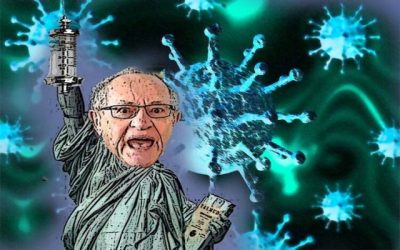
Americans may be surprised to learn from Alan Dershowitz that their constitution is far more intrusive and oppressive than what they and their forefathers have believed for generations. The law ‘scholar’ declared yesterday that “you have no (constitutional) right to not be vaccinated.” … continue
This site is provided as a research and reference tool. Although we make every reasonable effort to ensure that the information and data provided at this site are useful, accurate, and current, we cannot guarantee that the information and data provided here will be error-free. By using this site, you assume all responsibility for and risk arising from your use of and reliance upon the contents of this site.
This site and the information available through it do not, and are not intended to constitute legal advice. Should you require legal advice, you should consult your own attorney.
Nothing within this site or linked to by this site constitutes investment advice or medical advice.
Materials accessible from or added to this site by third parties, such as comments posted, are strictly the responsibility of the third party who added such materials or made them accessible and we neither endorse nor undertake to control, monitor, edit or assume responsibility for any such third-party material.
The posting of stories, commentaries, reports, documents and links (embedded or otherwise) on this site does not in any way, shape or form, implied or otherwise, necessarily express or suggest endorsement or support of any of such posted material or parts therein.
The word “alleged” is deemed to occur before the word “fraud.” Since the rule of law still applies. To peasants, at least.
Fair Use
This site contains copyrighted material the use of which has not always been specifically authorized by the copyright owner. We are making such material available in our efforts to advance understanding of environmental, political, human rights, economic, democracy, scientific, and social justice issues, etc. We believe this constitutes a ‘fair use’ of any such copyrighted material as provided for in section 107 of the US Copyright Law. In accordance with Title 17 U.S.C. Section 107, the material on this site is distributed without profit to those who have expressed a prior interest in receiving the included information for research and educational purposes. For more info go to: http://www.law.cornell.edu/uscode/17/107.shtml. If you wish to use copyrighted material from this site for purposes of your own that go beyond ‘fair use’, you must obtain permission from the copyright owner.
DMCA Contact
This is information for anyone that wishes to challenge our “fair use” of copyrighted material.
If you are a legal copyright holder or a designated agent for such and you believe that content residing on or accessible through our website infringes a copyright and falls outside the boundaries of “Fair Use”, please send a notice of infringement by contacting atheonews@gmail.com.
We will respond and take necessary action immediately.
If notice is given of an alleged copyright violation we will act expeditiously to remove or disable access to the material(s) in question.
All 3rd party material posted on this website is copyright the respective owners / authors. Aletho News makes no claim of copyright on such material.





 Aletho News