‘Nonsense’: Norway PM lashes out at NATO spending goals
RT | June 29, 2015
The prime minister of Norway, Erna Solberg has described NATO’s defense spending plans as “nonsense.” The alliance wants members to spend two percent of their GDP on defense, but Oslo, one of the world’s richest countries, says it won’t meet the target.
“If I am allowed to speak, I think the percentage goal is nonsense,” she said in an interview with the Norwegian Armed Forces’ Forum Magazine, as cited by the Local. “The aim of the NATO countries must be the greatest possible defense capability, not a percentage goal in itself,” she added.
Solberg added that while meeting the two percent target may be easier for countries enjoying strong economic growth, it would be harder for those within the alliance whose economies are shrinking.
Norway’s Defense Minister Ine Eriksen Soreide said in April that for Oslo to spend 2 percent of its GDP on defense would be “very challenging” in the short term. The Scandinavian country has already said it will increase its spending this year, but this will only bring it to around 1.6 percent and short of the target that was set at the NATO summit in Cardiff, the United Kingdom, last year.
NATO’s General Secretary Jens Stoltenberg, who was also Solberg’s predecessor as Norway’s PM, said that the country could easily meet the target.
“If there is a political will, there is economic space. But it must be given priority,” he said in a visit to Norway in June. “Compared with other major initiatives we have implemented in Norway, reaching two percent is quite possible.”
Aside from the United States, traditional NATO allies have found meeting the target a taxing affair. Germany allocates 1.2 percent of its GDP, the Netherlands 1.3 percent and Spain less than 1 percent. France is the only Western European country that is boosting defense spending. However, some Eastern European nations are increasing their military expenses citing what they call Russian aggression. Lithuania, for instance, wants to allocate twice as much on defense as it did last year.
READ MORE: NATO defense spending a ‘red line’ – US Air Force Secretary
“Sewer Socialist” Bernie Sanders’ Anti-Russian Propaganda
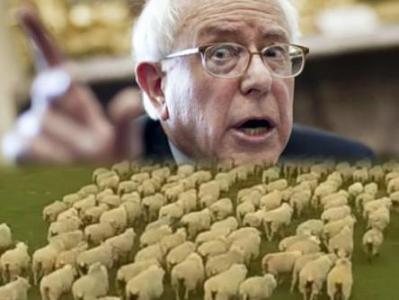
By Caleb Maupin – New Eastern Outlook – 28.06.2015
The presidential campaign of Bernie Sanders — an anti-Russia, Israel-supporting politician from Vermont — revives an archaic feud among leftists. The old debate about “sewer socialism” is back.
In the early part of the 20th century, there was a broad movement of people in the United States who advocated the overthrow of capitalism. Among them were many revolutionaries like Eugene Debs, William Z. Foster, Lucy Parsons, and Paul Robeson.
However, there was another current of people who called themselves “socialists” but had no interest in revolution. They were called “sewer socialists.” The term originated in reference to Victor L. Berger, a “socialist” who ran on a platform of improving the city’s sewer system and eventually became the mayor of Milwaukee. The sewer socialists did not want to overthrow capitalism, but simply to be elected to local public office and improve government policy. They wanted to make a global system built on exploitation of people all over the world a little more comfortable for those living within the western economic centers.
The battle between these two poles of the left movement – with the revolutionary and anti-imperialist wing of socialism on the one hand and the “sewer socialist” wing on the other — played out on a global level. Commenting on the debate, Russian socialist revolutionary Vladimir Lenin described the trend this way: “The bourgeoisie of an imperialist ‘Great’ Power can economically bribe the upper strata of ‘its’ workers by spending on this a hundred million or so francs a year, for its superprofits most likely amount to about a thousand million… this little sop is divided among the labour ministers, ‘labour representatives’… labour members of War Industries Committees… labour officials, workers belonging to the narrow craft unions…”
In the modern United States, it isn’t sewer socialism but “Vermont socialism” that plays the role of the ‘Labor Ministers.’ US Senator Bernie Sanders is running for president, and openly describes himself as a “socialist.” Despite using this word to describe himself, with many well intentioned anti-capitalist activists supporting him, Sanders’ platform in reality articulates a strategy for strengthening global monopoly capitalism and its expanding militarism.
Big Oil’s Campaign Against Russia
Currently, Wall Street is doing all it can to suppress Russia, a rising competitor on the global markets. US oil and natural gas corporations in particular want to attack and isolate the Russian Federation, as hydraulic fracking floods the market and drives down oil prices and profits. As Russia stabilizes and expands, continuing to export more and more natural gas, big business desperately needs to purge the country’s oil from the global market.
In service of the western oil and natural gas cartels, US agents overthrew the democratically elected government of Ukraine. The orgy of street violence in Kiev that deposed Yanukovich was conducted with the direction of the CIA and billions of dollars in US funding. In Ukraine, the intervention of the United States has pushed a formerly peaceful country into civil war and installed a fanatically anti-Russian government. Russia now faces a hostile, US-aligned regime directly on its doorstep. Civil war is unfolding as the peoples of eastern Ukraine have taken up arms against it.
US-funded terrorists are waging a campaign of death and destruction in Syria, another Russian-aligned country. Hundreds of thousands have already been killed. The US and its allies in Turkey, Saudi Arabia, and Jordan continue to pour money into the so-called “Free Syrian Army” — a group that openly tortures, kidnaps, and beheads innocent people, and has a history of collaborating with ISIS.
Despite giving demagogic anti-corporate speeches, Sanders brags that he is even more in line with big oil’s anti-Russia campaign than President Obama. “The entire world has got to stand up to Putin. We’ve got to deal with sanctions, we’ve got to deal with freezing assets,” he declared in a TV interview with FOX news host Bill O’Reilly.
In the same interview, he declared: “You’ve got to totally isolate them politically. You’ve got to totally isolate them economically… You freeze assets that the Russian government has all over the world… International corporations have huge investments in Russia, you could pull them out…”
A “Socialist” who Loves War and Israel
Sanders is very much a friend of the military industrial complex. In his home state of Vermont, Sanders “rarely misses a photo opportunity with Vermont National Guard troops when they are being deployed to Afghanistan or Iraq.” While criticizing Bush’s invasion of Iraq, Sanders consistently votes for the massive US military budget. In fact, Sanders is vocally very supportive of Obama’s drone strikes program, and has worked to bring US military research corporations into his home state to set up facilities.
As a highly rated ally of the American-Israeli Public Affairs Committee, Sanders has consistently voted and spoken out in support of Israel. When criticized for it, he often replies with standard Israel lobby talking points, saying things like, “Hamas is sending missiles into Israel… some of those missiles are coming to populated areas…” Other than vaguely saying that Israel may have “overreacted,” he blatantly supports and defends Israeli military policy.
Sanders openly believes that the Palestinian resistance to Israeli occupation is “terrorism,” and that the existence of a “Jewish state” on Palestinian land is somehow ethical. In his 2013 interview with Playboy, he declared: “The Palestinians must fulfill their responsibilities to end terrorism against Israel and recognize Israel’s right to exist.”
A Friend of the Rising Police State
As a loyal ally of military corporations, he not only supports their war against people in Ukraine, Syria, and Palestine, but also their profitable activities at home. Big business is making huge profits from a prison industrial complex as well as the rapid expansion of the role of police in US society. As police patrol the halls of elementary schools, and “stop and frisk” people on the streets without probable cause, it is young African-Americans who are their primary targets.
Sanders has never been an opponent of the prison industrial complex or the rising incidents of police violence. In Michael Moore’s 2009 film “Capitalism: A Love Story,” Moore interviewed Sanders and asked him to explain what it meant to be a socialist. Sanders responded with a vague, populist rant in which he portrayed the police as victims: “We’ve become very religious in worshipping greed. We put on the front pages of magazines guys who have made millions of dollars, we ignore the cops… who every day are doing so much in improving the lives of people.”
More recently, in response to the massive uprising against police brutality and mass incarceration in the United States, Sanders has declared: “Look, the issue here is…. I was a mayor for eight years, and being a cop is a very, very difficult job. But the word has got to get out that when police act inappropriately, and of course in this case there has to be a thorough investigation.” Sanders gives standard, Obama-style talking points on the issue, saying he supports “body cameras” and wants more community cooperation and involvement with police departments.
Inevitably, whenever the issue of police brutality is raised, Sanders changes the subject to economics. In response to the Baltimore uprising after the killing of Freddie Grey, Sanders declared, without ever even mentioning Grey’s name: “In the neighborhood where this gentleman lives, as I understand it, the unemployment rate is over 50 percent, over 50 percent. What we have got to do as a nation is understand that we have got to create millions of jobs, to put people back to work, to make sure that kids are in schools, and not in jails…. so they’re not hanging out on street corners.”
No one can deny that unemployment is a huge problem, especially for Black and Brown communities in the United States. However, Eric Garner wasn’t choked to death by a bill collector. The direct issue at hand is the fact that police officers have essentially been given a “license to kill” by the courts, and routinely face no penalty after blatantly and intentionally killing people of color.
By diverting the conversation to economics and not calling out the police in harsh terms, and then using racially loaded phrases like “hanging out on street corners,” Sanders is essentially saying: “If only Black people had more economic opportunities, they wouldn’t be worthless, low-life criminals who the police have to kill.”
A Bigger Slice of Empire?
Often Bernie Sanders is asked what it means to be a socialist. He does not respond with a call for public management of the economy, “workers’ control of the means of production,” a workers and farmer’s government, or any of the definitions of “socialism” used by socialists historically. Instead, he talks about Norway, Sweden, and other US-aligned imperialist countries. He emphasizes that these countries have a national health service, and provide free university education. […]
Sanders’ political viewpoint, based on his experience of decades in governing his home state — where only 1.2% of the population is Black — has been: “If we give white middle class Americans a bigger slice of the pie, they will be far more willing to line up with Wall Street against Russia, China, Iran, and the Palestinians.”
Lenin accurately described leaders like Sanders as “opportunists and social-chauvinists,” saying, “They are defending the temporary privileges of a minority of the workers…” Back in 1916, Lenin urged his followers to “go down lower and deeper, to the real masses… teach the masses to appreciate their true political interests, to fight for socialism and for the revolution.”
The following year, Lenin and the Bolsheviks were victorious. Capitalism, along with its mischievous and demagogic defenders like Bernie Sanders, was overthrown in Russia. That was nearly 100 years ago. How this battle will play out among 21st-century leftists remains to be seen.
Caleb Maupin is a political analyst and activist based in New York. He studied political science at Baldwin-Wallace College and was inspired and involved in the Occupy Wall Street movement.
Argentine court orders seizure of Falklands/Malvinas ‘illegal’ oil drillers’ assets
RT | June 28, 2015
Argentina has ordered the seizure of assets belonging to foreign drilling companies operating in the vicinity of Falklands / Malvinas Islands, saying they have failed to obtain the necessary permissions from Buenos Aires to conduct exploration.
A federal judge in Tierra del Fuego, Lilian Herraez, has ordered authorities to seize the assets of five companies drilling for oil in the Falklands worth $156 mn. The measure was ordered following a request of a prosecutor from the Office of Economic Crime and Money Laundering (PROCELAC).
According to the prosecution, the order to seize assets was issued for “illegal activities of exploration, search and eventual extraction of hydrocarbons in proximity to the Falkland Islands” because the companies in question failed to obtain permits issued by “the competent authority in Argentina.”
According to a legal brief, the order involves halting the activities of the semi-submersible “Eirik Raude” rig and the floating dock“Noble Frontier”. Herraez also ordered the seizure of all vessels.
The five companies mentioned are: Premier Oil Plc, Rockhopper Exploration Plc, Falkland Oil and Gas Ltd, Noble Energy Inc and Edison International Spa. Three of them are UK based, one is American and the fifth is French-owned, based in Italy.
It remains unclear how these companies’ assets are supposed to be appropriated from territory officially under the jurisdiction and sovereignty of the United Kingdom. The companies in question do not generally hold any assets in Argentina or use Argentine waters, a source told Reuters.
However, the Argentine prosecutor’s office said it “had identified the assets of the foreign companies and discovered that one of them, the US firm Noble Energy, has a local office registered in Argentina.” Authorities will move to freeze those assets, it said.
“The foreign ministry will be notified of the court order so that by diplomatic means and in compliance with international treaties it can be carried out,” the prosecutor’s office said in a statement.
In April, a group of British exploration companies found oil and gas in an area north of the Falkland Islands. The oil was discovered by the Eirik Raude floating drilling rig as part of an eight month exploration campaign. Argentina has predictably not been happy about the exploration activity, which is bound to further inflame tensions over the island’s disputed ownership.
In Argentina, the Falkland Islands are known as the ‘Islas Malvinas.’ The dispute between the UK and Argentina over the sovereignty of the islands has reemerged in recent years under President Cristina Fernandez de Kirchner.
IMF and USA set to ruin Ghana
By Craig Murray | June 27, 2015
Just ten years ago, Ghana had the most reliable electricity supply in all of Africa and the highest percentage of households connected to the grid in all of Africa – including South Africa. The Volta River Authority, the power producer and distributor was, in my very considerable experience, the best run and most efficient public utility in all of Africa. Indeed it was truly world class, and Ghana was proud of it.
Obviously the sight of truly successful public owned and run enterprise was too much of a threat to the neo-liberal ideologues of the IMF and World Bank. When Ghana needed some temporary financial assistance (against a generally healthy background) the IMF insisted that VRA be broken up. Right wing neoliberal dogma was applied to the Ghanaian electricity market. Electricity was separated between production and distribution, and private sector Independent Power Producers introduced.
The result is disaster. There are more power cuts in Ghana than ever in its entire history as an independent state. Today Ghana is actually, at this moment, producing just 900 MW of electricity – half what it could produce ten years ago. This is not the fault of the NDC or the NPP. It is the fault of the IMF.
Those private sector Independent Power Producers actually provide less than 20% of electricity generation into the grid – yet scoop up over 60% of the revenues! The electricity bills of Ghana’s people go to provide profits to fat cat foreign corporations and of course the western banks who finance them.
Indeed in thirty years close experience the net result of all IMF activity in Africa is to channel economic resources to westerners – and not to ordinary western people, but to the wealthiest corporations and especially to western bankers.
Not content with the devastation they have already caused, the IMF and the USA are now insisting on the privatisation of ECG, the state utility body which provides electricity to the consumer and bills them. The rationale is that a privatised ECG will be more efficient and ruthless in collecting revenue from the poor and from hospitals, clinics, schools and other state institutions.
Doubtless it will be. It will of course be more efficient in channelling still more profits to very rich businessmen and bankers. I suspect that is the real point. That privatised utilities bring better service and cheaper prices to the consumer has been conclusively and forever disproven in the UK. What it does bring is huge profits to the rich and misery to the poor. To unleash this on Ghana is acutely morally reprehensible.
Ghana has a political culture in which the two main parties, NDC and NPP, heatedly blame each other for their country’s problems. But if they only can see it, in truth the electricity sector has been ruined by their common enemy – the IMF and World Bank. I pray that one day the country will escape the grip of these bloodsucking institutions.
Iran gives Venezuela $500 million credit line
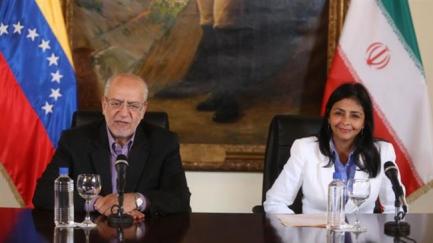
Iran’s Minister of Industry Mohammad Reza Nematzadeh and Minister for Foreign Affairs of Venezuela Delcy Rodriguez talk to reporters in Caracas
Press TV – June 27, 2015
Iran has agreed to a $500 million credit line for Venezuela to finance joint investments there, President Nicolas Maduro has announced.
He made the announcement after meeting Iranian Minister of Industry, Mine and Trade Mohammad Reza Nematzadeh in Caracas where the two sides signed six agreements to expand financial, economic, industrial and technological cooperation.
Among the agreements, there are plans for joint production of commodity goods, including detergents and other hygiene materials in Venezuela and Iran’s sales of medical drugs and surgical equipment to the country.
Maduro said the two countries had also agreed to a “comprehensive plan” to develop a joint program in nanotechnology in which Iran is among the top seven countries.
He said the deals would ensure a higher level of cooperation and deepen the bonds between the two nations.
Moreover, Iran agreed to transfer its expertise to Venezuela in combating an “economic war” on the Latin American country, Maduro said, apparently referring to Iran’s experience in facing years of US-led sanctions.
“We are facing an economic war of monumental proportions; a brutal war (but) we are here attending to our people,” Maduro said as he invoked the vision of the late President Hugo Chavez for “the government’s union with the people and struggle against imperialism”.
The Venezuelan head of state also hailed relations with Iran as “an example of alliance between two brother nations”.
“Today we have mutual trust in our relations and we work together with results. Working with Iran has gone well and our cooperation has been a great success since Hugo Chavez began a strategic alliance and brotherhood with Iran,” Maduro said.
Relations between Iran and Venezuela — both critics of US policies — have expanded in recent years. Iran is involved in a series of joint ventures worth several billion dollars in energy, agriculture, housing, and infrastructure sectors in Venezuela.
Iran’s main industrial projects in Venezuela include a car assembly plant, a tractor manufacturing complex and a cement factory.
The Islamic Republic has also built more than 3,000 residential housing units for less privileged citizens in Venezuela, with 7,000 more to be completed.
Both countries are hugely rich in resources. Venezuela possesses the world’s biggest oil deposit while Iran owns the fourth largest oil and first largest gas reserves of the world.
Maduro has announced his intention to visit Tehran to attend a summit of Gas Exporting Countries Forum planned for Nov. 23.
Latin American Revolutions Under Attack
By ANDRE VLTCHEK | CounterPunch | June 26, 2015
Do not take the Latin American revolutions for granted.
They inspired the entire Planet. They brought hope to every corner of our scarred Earth. But now they are themselves in need of our support.
If left alone, they would thrive for decades and centuries. But the Empire is once again on the offensive. It is shaking with fury. It is ready to invade, to smash, burn to ashes all the hopes, all that which had been achieved.
Don’t believe in the “common wisdom” which proclaims that the rulers of the world simply “closed their eyes” more than a decade ago; that George W. Bush was “too busy” ravishing the Middle East, therefore “allowing” most of the Latin American countries to “sneak away” from the iron grip of the Empire.
Such “analyses” are as patronizing as they are false. The Empire never sleeps! What Latin America now has was built on its daring, its sweat, its genius and its blood – it fought against the Empire, courageously, for decades, losing its best sons and daughters. It fought for freedom, for justice and socialism.
The Empire was not “looking the other way”. It was looking straight south, in fury, but for some time it was too confused, too astounded, too shocked at what it was witnessing. Its “slaves” had risen and taken power back into their own hands. They showed to the entire world what freedom really is.
For some time, the Empire was paralyzed by rage and unable to act.
The Empire’s undeniable property, Latin America, inhabited by “un-people” born only in order to supply cheap labor and raw materials to the rich part of the world, was suddenly, proudly and publicly, breaking its shackles, declaring itself free, demanding respect. Its natural resources were now used to feed its own people, to build social housing, create public transportation systems, construct hospitals, schools and public parks.
But after the first wave of panic, the Empire began to do what it does the best – it began the killings.
It attempted to overthrow Venezuelan government in 2002, but it failed. The Venezuelan people rose, and so did the Venezuelan military, defending then President Hugo Chavez. The Empire tried again and again, and it is trying until now. Trying and failing!
“We are at war”, I was told by one of the editors of Caracas-based television network, TeleSUR, for which I made several documentary films. “We are literally working under the barrel of cannon”.
***
Ms. Tamara Pearson, an Australian revolutionary journalist and activist, who recently moved from Venezuela to Ecuador, explained the difficult situation in Venezuela, a country that is under constant attack from both the US, and the local comprador elites:
“People are suffering a lot. Basic food prices are high, much medicine is unavailable, and various services aren’t working. On one level, people are used to this – the business owners would cause shortages and blame the government before each of the many elections. But usually it’s less intense and lasts just a few months. But this has been going on and getting worse, since Chavez died – over two years now. There is no doubt that the US, and more so, Venezuelan and Colombian elites and business owners are a huge or even the main factor…”
All of revolutionary Latin America is “screaming”.
As I described in two of my recent books, “Exposing Lies Of The Empire” and “Fighting Against Western Imperialism”, the Empire is using similar destabilization strategy against all countries that are resisting its deadly embrace.
Its propaganda is mighty and omnipresent. CNN and FOX TV are beamed into almost all major hotels and airports of Latin America, even in some revolutionary countries like Ecuador. Almost all major newspapers of the continent, including those in Venezuela, Ecuador, Chile and Argentina, are controlled by the right wing business elites. Almost all of the foreign news coverage comes from European and North American sources, making the Latin American public totally confused about Islam, China, Russia, South Africa, Iran, even about their own neighbors.
The local elites continue to serve foreign interests, their loyalties firmly with North America and Europe.
Every left wing Latin American government has been facing bizarre protests and subversion actions conducted by the elites. Destabilization tactics have been clearly designed in far away capitals. They were mass-produced and therefore almost identical to those the West has been using against China, Russia, South Africa, and other “rebellious” nations.
Propaganda, disinformation and spreading of confusion have been some of the mightiest tools of the fascist right wing.
“Economic uncertainty” is an extremely powerful weapon. It was used first in Chile, in the 1973 coup against socialist President Salvador Allende. Pro-Western Chilean elites and businessmen created food shortages, and then blamed it on the socialist government, using El Mercurio and other daily newspapers as their propaganda tools.
Peter Koenig, former World Bank economist and now prominent dissident and critic of the world neoliberal regime, wrote for this essay:
Today Madame Bachelet, the socialist President of Chile has a hard time fighting against the Mercurio inspired Chilean oligarchs. They will not let go. Recently they invited the World Bank to assess the school reform package proposed by Bachelet, basically to return universities to the public sector. Of course, the ‘upper class’ of Chileans knew that the World Bank would come up with nothing less than predicting an economic disaster if the reform is approved. As a result, Bachelet made concessions – which on the other hand are not accepted by professors and teachers. It’s the first step towards chaos – and chaos is what the empire attempts to implant in every country where they strive for ‘regime change’.
But one of the “dirtiest” of their weapons is the accusation of corruption. Corrupt pro-Western politicians and individuals who misused tens, even hundreds of millions of dollars of the peoples money and destroyed the economies of their countries by taking unserviceable loans that kept disappearing into their deep pockets, are now pointing their soiled fingers at relatively clean governments, in countries like Chile and Argentina. Everything in “Southern Cone” and in Brazil is now under scrutiny.
Peter Koenig (who co-authored a book “The World Order and Revolution!: Essays from the Resistance” with leading Canadian international lawyer Christopher Black and me) shows how important it is, for the Empire, destabilization of Brazil, one of the key members of BRICS:
Brazil being a member of the BRICS is particularly in the crosshairs of the empire – as the BRICS have to be destabilized, divided – they are becoming an economic threat to Washington. Brazil is key for the non-Asian part of the BRICS. A fall of Brazil would be a major blow to the cohesion of the BRICS.
There are totally different standards for pro-Western fascist politicians and for those from the Left. The Left can get away with nothing, while the Right has been getting away literally with mass murder and with the disappearance of tens of billions of dollars.
It is, of course, the common strategy in all the client states of the West. For instance, one of the most corrupt countries on earth, Indonesia, tolerates absolute sleaze and graft from former generals, but when progressive socialist Muslim leader, Abdurrahman Wahid, became the President, he was smeared and removed in a short time, on “corruption” charges.
After centuries of the Monroe Doctrine, after mass murder committed in “Latin” America first by Europeans and then by North Americans and their rich local butlers, it will take long decades to fully eradicate the corruption, because corruption comes with the moral collapse of the colonial powers and the local elites. Financial greed is only its byproduct.
The great pre-colonial cultures of what are now Peru, Ecuador and Bolivia did not have corruption. Corruption was injected by Western colonialism.
And now, corruption under left wing, revolutionary governments still exists, since it is difficult to root out all the rats at once, but it is incomparably smaller than under the previous fascist right wing cliques!
***
The rich in Latin America are heartless, servile (to the Empire) and greedy in the extreme. Latin America has still the most unequal distribution of wealth on earth. True, it is much richer (and even its poor are richer, with some exceptions of Central America, Peru or Paraguay) than Africa or even in Southeast Asia, but this cannot be used as an excuse.
Even the most progressive socialist governments now in power would ever dare to touch, to slap the private enterprises too hard. From this angle, China with its central planning and controlled economy is much more socialist than Ecuador or Bolivia.
A few days ago, as I was flying from Ecuador to Peru, I read that the number of multimillionaires in Latin America was actually increasing, and so is the social gap between the rich and the rest of the societies. The article was using some anecdotal evidence, saying that, for instance, in Chile alone, now, more Porsche sports cars are sold than in the entirety of Latin America few years ago. As if confirming it, I noticed a Porsche auto dealership next to my hotel in Asuncion, the capital of the second poorest country in South America. I asked for numbers, but the Porsche manager refused to supply them, still proudly claiming that his company was “doing very well”.
So what do they – the “elites” – really want? They have money, plenty of money. They have luxury cars, estates in their own countries, and condominiums abroad. What more?
As in Thailand, Philippines, Indonesia or Kenya, and all over the West, they want power. They want to feel unique. They want to be admired.
The Socialist governments allow them to stay rich. But they force them to share their wealth and above all, they shame them. They are also trying to minimize the gap – through education, free medical care and countless social projects.
That is, of course, unacceptable to the elites. They want it all, as they always had it. And to have it all, they are ready to murder, to side with the darkest foreign interests, even to commit treason.
***
Increasingly, the interests of the local elites are very closely linked to foreign interests – those of the Empire and those of the private sector.
As I was told in Ecuador, by Ms. Paola Pabón, Assembly Member representing Pichincha area:
Behind the involvement of the US, are some ex-bankers such as Isaiah brothers, who lost power here, escaped courts and went to live in the United States, but there are also huge economic powers such as Chevron. It means that there are not only political interests of the US, but also private, economic ones.
Predominantly, the local elites are using their countries as milking cows, with very little or zero interest in the well being of their people.
That is why their protests against Latin American revolutions are thoroughly hypocritical. They are not fighting for improvements in their countries, but for their own, selfish personal interests. Those shouts and the pathetic hunger strikes of the “opposition” in Venezuela may appear patriotic, but only thanks to propaganda abilities to the Western mass media.
The elites would do anything to make all revolutions, all over Latin America, fail and collapse. They are even spending their own money to make it happen.
They know that if they manage to remove progressive forces from power, they could rule once again, totally unopposed, as their counterparts do in all other client states of the West – in the Middle East, Africa, South and Southeast Asia, and Oceania.
The temptation is tremendous. Most of the elites in Latin America still remember well, how it feels, how it tastes – to control their countries unopposed, and with full support from the West.
***
Eduardo Galeano, the great Uruguayan writer and revolutionary thinker, once told me: “I keep repeating to all those new leaders of Latin America: “Comrades, do not play with poor people’s hopes! Hope is all they have.”
It appears that hope has finally been takes seriously, in Bolivia, Uruguay, Venezuela, Ecuador, Chile, Argentina, Brazil, Nicaragua and elsewhere.
It was also taken seriously in Honduras, but hope was crushed by the US-orchestrated coup. In Paraguay, under a semi-progressive priest who preached liberation theology, hope was taken semi-seriously, but even that was too much in the country that had been ruled, for decades, by fascist cliques. In 2012, a constitutional coup followed by an appalling massacre of predominantly indigenous people, and fascism returned.
After these two setbacks, Latin America shook, but kept moving forward. Hugo Chavez died, or was murdered by the North, depending which theory you subscribe to. His demise was a tremendous blow to the entire continent, but still, the continent kept moving. “Here, nobody surrenders!” Chavez shouted, dying, but proud.
“President Correa of Ecuador is one of very few leaders of the “original project””, said Paola Pabón. “Lula in Brazil will not be able to stand for reelection, anymore, mainly due to corruption scandals. Mujica is not in power, anymore, and Cristina Fernandez will be retiring. Evo Morales does not have regional influence, and even Maduro does not have… For this reason, Ecuador is so important, strategically. If ‘they’ hit us, if there is a successful coup, it would be tremendous victory for them, to destroy a President with regional importance; who speaks for the region… and also, because Ecuador is one country where the government actually functions well.”
Walter Bustos, who used to work for this government, is alarmed by developments in Ecuador and the entirety of Latin America. Both he and Paula Pabón realize how fragile the Latin American revolutions are. While driving with me to an indigenous area of Riobamba, Walter lamented:
In case there is a military coup in Ecuador, the difference between here and Venezuela would be enormous: while in Venezuela, Chavez incorporated the military into his revolution, in case of citizens revolution in Ecuador, we have no security; we cannot count on support of the military in case there is some armed, political or economic attack against us.
Hugo Chavez was not only a great revolutionary, but also a tremendous strategist. He knew that any great revolution has to be fought, won, and then defended. Winning the battle is never enough. One has to consolidate forces, and uphold the victory. Chavez was first thinker, and then soldier.
Correa, Morales, Fernandez go forward, brave, proud but unprotected. Under their governments, the lives of ordinary people improve tremendously. That is what matters to them. They are decent and honest beings, unwilling to dirty themselves with intrigues, speculations and conspiracy theories.
But their great success will not gain them any recognition from the Empire, or from their own elites. The success of socialism is the worst nightmare for rulers of the world and their local butlers.
This is how President Salvador Allende died in 1973. He dismissed all rumors, and then all warnings that the coup was coming. “I am not going to arrest people just because of some suspicion that they may do something”, he used to say. After the coup took place, he died proudly, a true hero, committing suicide by marching towards the helicopter gunships and fighter jets that were bombarding the Presidential Palace of La Moneda. But he was not the only victim. As a result of the coup, thousands of Chilean people died, and tens of thousands were savagely tortured and raped. Chile did not die, but went into a horrific coma, from which it only recently manages to recover.
Henry Kissinger summarized the moral corruption/collapse of his country’s regime when he uttered his memorable phrase:
I don’t see why we need to stand by and watch a country go communist due to the irresponsibility of its people. The issues are much too important for the Chilean voters to be left to decide for themselves.
Despite his great intentions, President Salvador Allende failed his people. He underestimated the bestiality of the Empire, and the result were millions of broken lives.
Since then, the Empire’s selfishness and brutality only evolved. The more successful leaders like Correa become, the more real is the danger of a coup – of a devastating, deadly attack from the North, and subversion from within.
The fragility of Latin American revolutions is obvious. The elites cannot be trusted. They showed on many occasions how far they are willing to go, committing treason, collaborating with the West against their own nations: in Chile, Peru, Colombia, Mexico, Honduras, Venezuela, Paraguay and Bolivia, to name just a few cases.
Appeasing both the elites and the Empire, while fighting for social justice and true independence, is impossible. The elites want to have full control of their countries, while the Empire demands full submission. No compromise could be reached. The history speaks clearly about that. And the Empire demonstrated on countless occasions that Latin American democracy would be respected only if the people vote the way that suits Washington.
Latin America has to learn how to defend itself, for the sake of its people.
Its closer and closer cooperation with China and Russia is essential. A coherent regional defense agreement should follow.
The next few years will be crucial. The revolutions have to be institutionalized; they cannot depend only on charisma of its leaders.
Constant sabotages and coup attempts, like those in Venezuela, should not be tolerated. They lead to chaos and to uncertainty. They break countries economically and socially.
It is clear what the Empire and its servants are doing: they are trying to push Latin American revolutionary countries against the wall, as they pushed, in the past, North Korea. They are trying to make them “react”, so they could say: “You see, this is true socialism, this defensive, hermitic and paranoid system.”
The path will not be easy. It will be dangerous and long.
Latin America can only survive through international cooperation and solidarity. It would also have to fight legally, at home and abroad. Those who are committing treason and those who are interrupting development of the country should face justice.
The left wing governments that are ruling South American countries won democratic elections: much more democratic than those in Europe and the United States. If the individuals and groups act against the expressed will of their own people, they should be taken to courts.
If a powerful country tortures other countries and shows total spite for their people, it should face an international legal system. The United States demonstrated, countless times, that it considers itself well above the law. It even forced several government in Latin America and elsewhere, to give its military personnel immunity. One of these countries is Paraguay, historically flooded with CIA, DEA and FBI agents.
In order to legally restrain the Empire, huge international pressure would have to be built. Like in the case of Managua, which legally sued the US for many acts of terror committed against Nicaragua. The Empire will most likely refuse to accept any guilty verdict. But the pressure has to be on!
All this would be meaningless without dedicated, constant coverage of the events by independent or opposition media, be they huge new state-funded networks like RT, TeleSur, CCTV or Press TV, of progressive independent media like Counterpunch, VNN, or ICH. It is essential that Latin Americans demand information from these sources, instead of consuming the toxic lies spread through CNN en Español, FOX, EFE and other right wing Western sources.
The battle for the Latin American people and for their freedom is on. Do not get fooled, it has been on for quite some time, and it is very tough fight.
Latin America is one of the fronts of the integrated fight for the survival of our Planet.
People who admire this part of the world, all those who have been inspired by Latin American revolutions, should participate in the struggle.
The best sons and daughters of this continent are now fighting in their own, quixotic way, as they always did: frontally, with exposed heart, totally unprotected. But their fight is just, and they are in this battle in order to defend the people.
Their opponents are rich, deceitful and brutal. But they are also selfish and they fight only for their own interests. They are not loved by their nations. If they lose, Latin America will win!
Those countries defending themselves against the Empire should unite, before it’s too late. Now as Latin America is rising from its knees, it becomes clear who are its foes and who are real friends, real brothers and sisters!
This scarred but stunning continent of courageous poets, of dreamers and revolutionaries should not be allowed to fall. In Caracas, Quito and La Paz, they are fighting for entire humanity.
Andre Vltchek is a philosopher, novelist, filmmaker and investigative journalist. He covered wars and conflicts in dozens of countries. His latest books are: “Exposing Lies Of The Empire” and “Fighting Against Western Imperialism”.
Food Security: a Hostage to Wall Street
By COLIN TODHUNTER | CounterPunch | June 26, 2015
In October of last year, World Food Day celebrated ‘Family Farming: Feeding the world, caring for the earth’. According to the UN Food and Agriculture Organization’s website, the family farming theme was chosen to raise the profile of family farming and smallholder farmers. The aim was to focus world attention on the significant role of family farming in eradicating hunger and poverty, providing food security and nutrition, improving livelihoods, managing natural resources, protecting the environment, and achieving sustainable development, especially in rural areas.
Family farming should indeed be celebrated because it really does feed the world. This claim is supported by a 2014 report by GRAIN, which revealed that small farms produce most of the world’s food.
Around 56% of Russia ‘s agricultural output comes from family farms which occupy less than 9% of arable land. These farms produce 90% of the country’s potatoes, 83% of its vegetables, 55% of its of milk, 39% of its meat and 22% of its cereals (Russian Federation Federal State Statistics Services figures for 2011).
In Brazil, 84% of farms are small and control 24% of the land, yet they produce: 87% of cassava, 69% of beans, 67% of goat milk, 59% of pork, 58% of cow milk, 50% of chickens, 46% of maize, 38% of coffee, 33.8% of rice and 30% of cattle.
In Cuba, with 27% of the land, small farmers produce: 98% of fruits, 95% of beans, 80% of maize, 75% of pork, 65% of vegetables, 55% of cow milk, 55% of cattle and 35% of rice (Braulio Machin et al, ANAP-Via Campesina, “Revolucion agroecologica, resumen ejectivo”).
In Ukraine, small farmers operate 16% of agricultural land, but provide 55% of agricultural output, including: 97% of potatoes, 97% of honey, 88% of vegetables, 83% of fruits and berries and 80% of milk (State Statistics Service of Ukraine. “Main agricultural characteristics of households in rural areas in 2011″).
Similar impressive figures are available for Chile, Hungary, Belarus, Romania, Kenya, El Salvador and many other countries.
The evidence shows that small peasant/family farms are the bedrock of global food production. The bad news is that they are being squeezed onto less than a quarter of the world’s farmland and such land is under threat. The world is fast losing farms and farmers through the concentration of land into the hands of rich and powerful speculators and corporations.
The report by GRAIN also revealed that small farmers are often much more productive than large corporate farms, despite the latter’s access to various expensive technologies. For example, if all of Kenya’s farms matched the output of its small farms, the nation’s agricultural productivity would double. In Central America, it would nearly triple. In Russia, it would be six fold.
Yet in many places, small farmers are being criminalised, taken to court and even made to disappear when it comes to the struggle for land. They are constantly exposed to systematic expulsion from their land by foreign corporations, some of which are fronted by fraudulent individuals who specialise in corrupt deals and practices to rake in enormous profits to the detriment of small farmers and food production.
Imagine what small farmers could achieve if they had access to more land and could work in a supportive policy environment, rather than under the siege conditions they too often face. For example, the vast majority of farms in Zimbabwe belong to smallholders and their average farm size has increased as a result of the Fast Track Land Reform Programme. Small farmers in the country now produce over 90% of diverse agricultural food crops, while they only provided 60 to 70% of the national food before land redistribution.
Throughout much of the world, however, agricultural land is being taken over by large corporations. GRAIN concludes that, in the last 50 years, 140 million hectares – well more than all the farmland in China – have been taken over for soybean, oil palm, rapeseed and sugar cane alone.
By definition, peasant agriculture prioritises food production for local and national markets as well as for farmers’ own families. Big agritech corporations take over scarce fertile land and prioritise commodities or export crops for profit and markets far away that cater for the needs of the affluent. This process impoverishes local communities and brings about food insecurity. The concentration of fertile agricultural land in fewer and fewer hands is directly related to the increasing number of people going hungry every day and is undermining global food security.
The issue of land ownership was also picked up on by another report last year. A report by the Oakland Institute stated that the first years of the 21st century will be remembered for a global land rush of nearly unprecedented scale. An estimated 500 million acres, an area eight times the size of Britain, was reported bought or leased across the developing world between 2000 and 2011, often at the expense of local food security and land rights.
A new generation of institutional investors, including hedge funds, private equity, pension funds and university endowments, is eager to capitalise on global farmland as a new and highly desirable asset class. Financial returns, not food security, are what matter. In the US, for instance, with rising interest from investors and surging land prices, giant pension funds are committing billions to buy agricultural land.
The Oakland Institute argues that the US could experience an unprecedented crisis of retiring farmers over the next 20 years, leading to ample opportunities for these actors to expand their holdings as an estimated 400 million acres changes generational hands.
The corporate consolidation of agriculture is happening as much in Iowa and California as it is in the Philippines,Mozambique and not least in Ukraine.
Imperialism and the control of agriculture
Ukraine’s small farms are delivering impressive outputs, despite being squeezed onto just 16% of arable land. But the US-backed toppling of that country’s government may change all that. Indeed, part of the reason behind destabilizing Ukraine and installing a puppet regime was for US agritech concerns like Monsanto to gain access to its agriculture sector, which is what we are now witnessing.
Current ‘aid’ packages, contingent on the plundering of the economy under the guise of ‘austerity reforms’, will have a devastating impact on Ukrainians’ standard of living and increase poverty in the country.
Reforms mandated by the EU-backed loan include agricultural deregulation that is intended to benefit agribusiness corporations. Natural resource and land policy shifts are intended to facilitate the foreign corporate takeover of enormous tracts of land. The EU Association Agreement includes a clause requiring both parties to cooperate to extend the use of biotechnology. Frederic Mousseau, Policy Director of the Oakland Institute states:
“Their (World Bank and IMF) intent is blatant: to open up foreign markets to Western corporations… The high stakes around control of Ukraine’s vast agricultural sector, the world’s third largest exporter of corn and fifth largest exporter of wheat, constitute an oft-overlooked critical factor. In recent years, foreign corporations have acquired more than 1.6 million hectares of Ukrainian land.”
Chemical-industrial agriculture and the original ‘green revolution’ has proved extremely lucrative for the oil and chemical industry and has served to maintain and promote US hegemony, not least via the uprooting of indigenous farming practices in favour of cash crop/export-oriented policies, dam building to cater for what became a highly water intensive industry, loans, indebtedness, dependency on the dollar and the corporate control of seeds, etc.
Whether through ‘free trade’ agreements, commodity market price manipulations, loan packages, the co-optation of political leaders or the hijack of strategic policy-making bodies, corporate profits are being secured and food sovereignty surrendered to the US, which has always used agriculture as a tool with which to control countries.
(The GMO issue has to be regarded within such a geopolitical framework too: it has less to do with ‘feeding the world’ and more about controlling it (see this and this)
While celebrating of the role of the family farm in feeding the world, rich speculators and powerful US agritech corporations continue to colonise agriculture and undermine the existence of small farms and global food security.
Choosing to ignore the research, however, much mainstream thinking rests on the fallacious assumption that uprooting small farms and displacing rural populations is a good thing. This assumption stems from an ethnocentric mindset that legitimises the plunder we are witnessing across the globe.
Environmentalist Vandana Shiva sums it up as follows:
“People are perceived as ‘poor’ if they eat food they have grown rather than commercially distributed junk foods sold by global agri-business. They are seen as poor if they live in self-built housing made from ecologically well-adapted materials like bamboo and mud rather than in cinder block or cement houses. They are seen as poor if they wear garments manufactured from handmade natural fibres rather than synthetics.”
This is an ideology that fuels the myth that the ‘poor’ are poor due to their own fault and must be lifted up by the West and its corporations and billionaire ‘philanthropists’. It is the ideology that attempts to legitimise imperialism and economic colonialism, which causes economic devastation and ecological destruction in the first place. From Africa to India and beyond, the disease is being offered as the cure.
Black Earth and the Struggle for Ukraine’s Future
By Andrey Panevin | Slavyangrad | June 25, 2015
The Ukrainian crisis can be viewed as being composed of several interconnected factors, from the civil war to rampant corruption, and the wider geopolitical ramifications of American confrontation with Russia. Another—relatively overlooked—factor is the ongoing conflict over Ukraine’s natural resources. Of particular interest to transnational corporations and their puppet local oligarchs is the ‘black earth’ of Ukraine. Black earth or ‘Chernozem’ is found in two major zones on earth, one of which encompasses sections of Moldova, Russia and Ukraine. Black earth is characterized by its very high fertility and, consequently, its capacity for producing a high agricultural output.
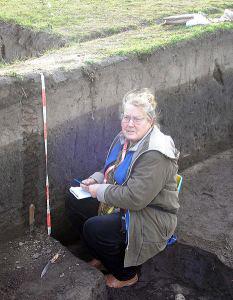
A scientist examines ‘chernozerm’ in Nikolaev, Ukraine.
(image: Saghnol, wikimedia commons)
International corporations have long been utilizing loopholes and political lobbying in order to overturn a Ukrainian moratorium on land sales to foreigners. By leasing numerous parcels of land these companies anticipate both the Ukrainian government’s desperation for money and the EU obligations to force open a goldmine of agricultural exploitation. The role of the ‘big players’—Monsanto, Cargill and Dupont—has been explored previously. The focus now is on agro-holding companies and individual oligarchs who seek to buy up and sell out Ukrainian land and livelihood.
One of the largest agro-holding companies operating in Ukraine is AgroGeneration. AgroGeneration seeks to “transform the land it works and today outperforms Ukrainian average yields. The company follows a traditional crop rotation and puts money into first-class fertilizers, seeds, and agricultural chemicals for the purpose of achieving profitability per crop.” The company has amassed 120,000 hectares of arable land, with 70,000 hectares being located in Kharkov oblast, whose eponymous capital is a city of great political and military importance in Ukraine. Kharkov has a large ethnic Russian and Russian-speaking population that has been actively repressed by the Kiev authorities, and it remains a region of dissent against the Kiev regime.
Michael Bleyzer, the Kharkov-born chairman of AgroGeneration, and founder of its sibling companies Sigma-Bleyzer and the Bleyzer Foundation, recognizes the importance of the city and has actively spoken about the need to maintain political and military order within it. In an op-ed for the KyivPost, Bleyzer writes of Kharkov as the most critical region, in need of being made “a very high priority. A large segment of the population in Kharkiv oblast is so discouraged by events and by the constant bombardment of Russian propaganda that they could be supportive of a Russian invasion or an attempt to establish a so-called People’s Republic.” Bleyzer further advocates a ‘Social Stabilization Fund’ for Kharkov, Dnepropetrovsk, Zaporozhia, Kherson, Nikolaev and Odessa. It is worth noting that these regions all contain either chernozerm or, as in the case of Odessa, ports through with which agricultural products transit.

The vast tracts of agricultural land controlled by AgroGeneration alone. (www.agrogeneration.com)
Michael Bleyzer’s role as a mouthpiece for the Kiev regime’s ‘war’ against Russia extends past his personal business interests and falls in line with the broader neoliberal, capitalist takeover of Ukraine. AgroGeneration and Sigma-Bleyzer (a private equity firm also owned by Bleyzer) seek to take advantage of the current regime’s plea to the West to ‘buy Ukraine’. These corporations and others are not only taking control of Ukraine’s farm land, they are doing it with European and American government assistance. In 2005, Sigma-Bleyzer received financing for a project worth up to 250 million euros from the European Bank for Reconstruction and Development (EBRD). In 2011, the EBRD gave AgroGeneration ten million dollars to double its ownership of Ukrainian land. In 2012 the Overseas Private Investment Corporation (OPIC)—an American government financial institution—gave Sigma-Bleyzer fifty million dollars for its ‘Eastern Europe fund.’
While these international corporations receive vast sums of money for their expansion in Ukraine, ‘access to credit remains a major problem for Ukraine’s small and medium farmers’. This interconnected system of funding from government finance institutions to private corporations has spelled doom for Ukraine’s agricultural sector, opening it up to exploitation and eventual ruin from the inside out.

Bleyzer (left) with US presidential candidate Ted Cruz on Maidan Square in Kiev. (Source: Secure America Now)
Connections between government and private corporations are at the core of this exploitation, with both entities seeking to employ what Bleyzer himself refers to as a system of “quasi-private equity funds managed by money managers from the private sector whenever possible.” Bleyzer’s attitude to the financial invasion of countries was well honed during the US-led invasion and occupation of Iraq, where he actively encouraged the US government to “create and implement the policy measures that will make an attractive investment climate in Iraq. This public-private partnership could play a critical role in making possible dramatic social and economic changes in Iraq and other countries in the region.” The goal of the corporate annexation of sovereign policy-reform has served Bleyzer and countless other oligarchs well from Iraq to Ukraine. In the context of this corrupt, financially imperialist environment it is no wonder that in a May 2015 economic report by Sigma-Bleyzer, it is casually written (in reference to the Ukrainian civil war) that “a frozen conflict could still provide the opportunity for the rest of the country to restart investments and economic growth.”
Ukraine’s precious black earth is being steadily annexed by international corporations and joins the list of resources and national sectors being outsourced to private investors. Agricultural corporations such as AgroGeneration find great corporate solidarity on the board of members of the US-Ukraine Business Council, which includes (among others) Sigma-Bleyzer, Monsanto, Dupont, Cargill, Exxon, Raytheon and the Bleyzer Foundation. These corporations share the common goal of pressuring the Ukrainian government to institute political ‘reforms’ in their favour. For agricultural corporations in particular, the goal is to pressure the government to “think about privatization. They need to prepare everything to allow for farmland sales (to foreign and domestic investors) in three to four years,” as stated by Heinz Strubenhoff, the agribusiness investment manager for the World Bank in Ukraine.
Ukraine is at a national crossroads and if the example of its increasing corporate annexation is anything to go by, it will have neither the money nor the resources to rebuild itself in the face of its political and cultural self-destruction. The West-supported preoccupation with ‘Russian invaders’ has left the oligarchy free to sell Ukraine’s political processes and natural resources to the highest bidder.
How much did renewable electricity grow in China last year?
By Robert Wilson | Carbon Counter | June 25, 2015
Last year global renewable electricity – i.e. hydro, wind and solar – consumption grew by 193.7 TWh. This represented 55% of the total growth in global electricity consumption.
And China, where renewable electricity consumption grew by 174.9 TWh, made up a large part of the increase. A renewables revolution is clearly unfolding. Or maybe not.
Careful readers will have noted the word order in my first sentence – hydro, wind and solar. If you follow debates on energy closely you will regularly be astonished by how often commentators act as if wind and solar dominate renewable energy. The fact that bioenergy has grown by more in this century than wind and solar combined is not something you will ever be told.
The same is true for hydro-electricity.
A representative image of renewables in China is not this:
 or this:
 Instead it is this:
 Big hydroelectric dams, such as The Three Gorges shown above, dominate Chinese renewables. In fact, they dominate China’s total low carbon energy supply.
China gets five times more electricity from its hydroelectric plants than from wind and solar combined. Total hydroelectricity supply in 2014 was 1064.3 TWh, while wind was 158.4 TWh and solar was 29.1 TWh.
Most of these hydroelectric plants have been built this century. Total hydroelectric generation in 2000 was 222.4 TWh, one fifth of what it is today.
Last year China’s hydroelectric output increased by 144 TWh, but wind and solar increased by 30.8 TWh. Put together this made up roughly three quarters of the rise in China’s electricity generation.
So are renewables or, more accurately big hydro, taking over electricity generation?
Probably not.
First, growth in China’s electricity generation is slowing because its economy is having problems. In the decade before last year China’s electricity generation increased by an average of 350 TWh each year. If China’s economy returns to the growth levels the Communist Party believes is necessary to stop the risks of another Tiananmen, we aren’t likely to see such low growth continuing.
Second, hydroelectric output was artificially high due to the weather.
Hydroelectric dams operate on a simple principle. Flowing water is converted into electricity. More flowing water equals more power. So, roughly speaking, if it is wetter dams will produce more electricity.
And this is what happened in China last year. Official data shows that the capacity factors of China’s hydroelectric dams increased by 8.7% last year. In other words, had the climatic conditions been the same as in 2013, China’s hydroelectric output would only have grown by 48 TWh, and not 144 TWh.
The increase in China’s total renewable electricity generation was therefore double what it would have been had it not been for the wetter conditions.
So, not only does hydroelectricity dominate Chinese renewables, but we have to be incredibly careful interpreting year to year changes in production caused by rain conditions.
The same holds at the global level. If China’s hydroelectric output had stayed still last year, global hydroelectric output would have actually fallen by 67 TWh last year. Again, this was due to climatic conditions, not a decrease in hydroelectric capacity.
This fall in non-China hydroelectricity was greater than the increase in global generation from either wind or solar. Clearly lumping hydro, wind, and solar generation into one figure can lead to erroneous conclusions.
Note on data
Generation data taken from the latest BP Statistical Review of World Energy.
Revolting Acts in an Age of Crisis
By COLIN TODHUNTER | CounterPunch | June 25, 2015
In Britain, the welfare system is under sustained attack and rights are being stripped away. At the same time in ‘austerity Britain’, however, there’s always enough taxpayers’ money to pour into the black hole of imperialist wars and the pockets of the profiteers that live off them, courtesy of David Cameron’s government of millionaire ministers. Capitalism is moribund. It has reached its inevitable increasingly totalitarian dead end. In the 1980s, Britain outsourced much of its manufacturing to cheap labour economies in order to boost profits. To provide a further edge, trade unions and welfare were attacked. As wages stagnated or decreased in absolute terms and unemployment increased, the market for goods was under threat. The answer lay in lending people money and creating a debt ridden consumer society.
Of course, this resulted in new opportunities for investors in finance and all kinds of dubious financial products were created, sold to the public and packaged and shifted around the banking system. Toxic debt bubbles were created then burst and public money bailouts for billionaire bankers and austerity for the masses followed. It’s been the same story across much of the western world, managing capitalism’s crises for the last few decades in the manner of ever-decreasing circles.
The top 1,000 wealthiest people in Britain had an aggregate wealth of £333 billion ($500 billion) in 2009. The national debt was half that. In 2009, they increased their wealth by a third. It doesn’t take a genius to see how the debt could be addressed. But the government says there is no point in pretending that there is some magic wand that could be waved to make the whole country feel richer than it actually is.
And so massive cuts to welfare will continue and the wholly corrupt system instituted by the rich will continue under the lie of ‘democracy’. Rising food poverty will continue, while the five richest families in Britain are worth more than the poorest 20% and one third of the population lives in poverty. Almost 18 million people cannot afford adequate housing conditions, 12 million are too poor to engage in common social activities, one in three cannot afford to heat their homes adequately in winter and four million children and adults are not properly fed (see this). Welfare cuts have pushed hundreds of thousands below the poverty line since 2012, including more than 300,000 children.
If there ever was a time for revolution, surely it is now. While a heavily weakened labour and trade union movement is seeking to resist the austerity agenda and with many other groups in Britain protesting, the distinct impression is that an effective widespread revolt against capitalism itself remains a distant hope.
For a large section of the population, the ‘Wills and Kate’ royal reality show, retail therapy, bogus terror threats and blood-drenched imperialism under the lie of ‘our soldier heroes’ killing to ‘save life’ in far-away lands continue to distract and divert attention from the failing system itself.
Thanks to this, the revolution is on hold. Take a Sunday morning stroll through England’s green and pleasant land to appreciate this. Stale pools of last night’s beer-vomit clog the gutters. Sunday morning booze-soaked hangovers fuzz memories of the previous night’s deeds done and actions best forgotten. Every Saturday night is a full-fledged grim reality show on the streets of downtown Britain.
A million wannabe young women wishing they were not themselves, wishing they were Jenny Lopez or Victoria Beckham. From minimum wage beautician to footballer’s wife in an X-Factor instant. Vodka fuelled dreams in this, England’s not so green and pleasant land.
Save me from my life of low pay and even lower aspiration, Vicky. I wanna be like you, I wanna be you. Sex sells, but who’s buying? Some coked-up drug dealer might do but preferably David Beckham. I could be the next ‘Posh’, if I give you what you want, what you really, really want.
Glammed up, spiced up and sexed up, believing they have ‘x’ factor or whatever it takes to be free, free from the mundane, free from being ordinary in a fake fantasy culture of ‘girl power’, fame and celebrity.
But this is aspirant Britain. While tens of thousands recently took to the streets of London to participate in an ‘anti-austrity’ rally, at the same time comatose Britain sleeps to the sounds and visions of media-produced plastic role models and celebrity product endorsement and believes the media spoon-fed lie that austerity is necessary. For these people, it’s not about overthrowing the system, it’s about being made blind to it. It’s not about rejecting it, it’s about accepting it as normal. Who reads Karl Marx when Cosmo says empowerment lies in lipstick? Who needs Lenin when you can watch English Premier League multi-millionaire footballers whose only revolting duty is to endorse the very products that bind the fan to the lies and logos of a narcissistic, self-incarcerating consumerism?
Who wants revolution when you can turn on and tune in to self-styled messiah Simon Cowell, as he rules over his empire of franchised TV shows, celebrities and wannabes. Acquire immediate salvation from the mundane with Cowell – the giver, the creator, the destroyer – the ultimate godhead for those seeking to enter the promised land of fame and riches and acquire their unique place in the pantheon of celebritydom. For those not already doped out on spymaster-sanctioned heroin on Britain’s housing estates, this form of opiate will do just as fine.
It is a damning indictment of society, where people accept the faith that this is how life should be lived, as they pray before the never ending conveyor belt of disposable commodities and heroes to be fetishised, consumed then spat out when they pass their very short sell by dates. It’s the secular theology of the age, built on flotsam and jetsam products, celebrities and fads that ebb and flow with the vagaries of mass titillation and the machinations of corporate greed.
And do not expect Britain’s Labour Party to galvanise or organise the masses any time soon. As with the current Conservative regime, the Labour Party by and large promotes the corporate-backed lie that all of this is liberating. Yes, people are actually free! Free to be monitored and surveyed by the state like no other country in Western Europe, free to be cynically targeted by the market, free to pick up the tab for the failings of financial capital and free to build up the greatest amount of personal debt and misery in Europe.
‘Freedom’ within the confines of what increasingly resembles an open prison isn’t much to celebrate. The actual reality in Britain is economic meltdown and social crisis.
Harold Macmillan, the Tory Prime Minister in the 1950s, once told the Brits that they’d never had it so good due to rising post-war affluence. Maybe now it’s a case of they have never had it so bad as people drown in their Saturday night vomit with eyes wide shut.
Foreign investments in Israel cut by half in 2014
Palestine Information Center – June 25, 2015
NAZARETH – Foreign direct investment (FDI) in Israel dropped by nearly 50% in 2014 compared to 2013, a report by the United Nations Conference on Trade and Development (UNCTAD) reveals.
The report tracks a sharp decrease in percentages of foreign investments in Israel. In 2014 $6.4 billion were invested in Israel, whereas in 2013 $11.8 billion were invested – a decline of about 46%.
Moreover, Israeli FDI investments abroad also decreased from $4.67 billion in 2013 to $3.97 billion, a decrease of 15%. These figures are significantly lower than the corresponding figures from 2007 to 2005, before the outbreak of the financial crisis in 2008.
“We believe that what led to the drop in investment in Israel are Operation Protective Edge [in reference to Israel’s military aggression on blockaded Gaza] and the boycotts Israel is facing,” Roni Manos of the College of Management and one of the authors of the report’s summary told Ynet.
According to Manos, there is another reason for the decline.
“In the past there were large transactions such as Waze and ISCAR Metalworking which boosted investment, but over the past year there were not enough such deals.”
According to the UN report, world FDI investments during the past year amounted to only $1.23 trillion, a 16% drop compared to 2013 ($1.47 trillion dollars).
The main reason for this, according to the report’s authors, is weak global economic growth and uncertainty regarding economic and business policy in many countries, which deterred many investors. Among others, the uncertainty due to the rate of quantitative easing in the US and Europe, the Greek debt crisis and its impact on stability in the Eurozone, and the pace of economic growth in China.
Other factors influencing the decline in global FDI were geopolitical risks such as the conflict in Ukraine, which has calmed down in recent months, the worsening of relations between the West and Russia, and revolutions and regime changes in several countries in the Middle East.
Featured Video
The American Retreat from Vietnam
or go to
Aletho News Archives – Video-Images
From the Archives
Secret document reveals plans for civil war in Lebanon, Israeli false flags, and invasion
By Randi Nord | Geopolitics Alert | April 5, 2019
Beirut – During his visit with US Secretary of State, Mike Pompeo, Lebanese President Michael Aoun reportedly received a US-Israeli document detailing plans for creating a civil war in Lebanon with covert false flag operations and possible Israeli invasion.
Although the source of the document is Israeli and created in partnership with Washington, no one knows who presented it to Aoun. The Lebanese TV station, Al-Jadeed, initially reported the document on Lebanese TV and a video on its website. Geopolitics Alert translated the report for this article. … continue
Blog Roll
 Aletho News
- EU Council Advances Chat Control 2.0 Scanning Proposal
- Ex-Greek MEP files complaint against Israeli spyware firm over alleged Pegasus surveillance
- Troubling ideas throughout the Torah, Talmud, Mishneh Torah and Tanya
- ‘Grave, alarming’: Iran mission on Trump’s UNGA ‘annihilation’ threats
- Najaf airport to reopen to Iranian flights within 24 hours: Ambassador
- From ‘How Will This End For Iran’ to ‘When America Walks Away’: A tale of two Economist covers
- Tehran blasts ‘baseless’ speculation linking Iran to alleged bomb plot at UK air base
- The Rise And… Rise Of ‘Color Revolutions’
- The Coming GOP Bloodbath?
- Arctic Scare Stories Melt Away
- If Americans Knew
- Netanyahu Asked UAE Leader to Deny Report on Oct. 7 Warning in Secret Visit, Sources Say
- CNN Chief Int’l Correspondent Clarissa Ward on Journalists in Gaza
- Democratic Party Consultants Surround Troy Jackson with Pro-Israel Donors
- Christian Leader Responds To Netanyahu’s Claims Regarding Palestinian Christians
- In Gaza, ‘Whoever Survives the Bombing Won’t Survive the Rubble’
- Israel kills more Palestinians, amid push to resettle Gaza – Daily Update
- Israel forces Gazans to live in constant peril – Daily Update
- Deconstructing Netanyahu’s pants-on-fire UN rant – Daily Update
- Trump betrayed voters with his campaign lies and prioritized a foreign country once he took office
- Netanyahu calls Israel’s war in Gaza ‘opposite of genocide’ in UN speech to near-empty hall
- No Tricks Zone
- New Study: Earth And Venus Surface Warmth Largely Explained By Convection And Lapse Rate, Not CO2 Or Radiation
- 2025 Nature Paper Claiming Worsening Global Drought Gets RETRACTED …Heavily Flawed
- New Study: ‘Global Drought Shows No Detectable Recent Acceleration Under Climate Warming’
- Economic Masterminds: German Socialists Suggest Taxing Productivity Gains Stemming From Using AI
- The South China Sea Has Not Been Cooperating With The Climate Change Narrative
- Energy Crisis: Germany Enters Heating Season With Historically Low Gas Reserve Fill Levels
- New Study: The Antarctic Ice Sheet Gained Mass From 2020-2024 Due To Staggering Snow And Ice Accumulation
- Study: Ocean Heating Rates From Thousands Of Years Ago ‘Dwarf’ Modern Ocean Heating Rates
- Climate Extremists Target, Attack Large-Scale Power Grid Infrastructure In Germany!
- New Study: Antarctic Ice Melt Has Contributed Less Than 1 Centimeter To Sea Level Rise In The Last 30 Years

