Weapons makers cash in on Trump’s Iran war
Big Pentagon contractors like Lockheed Martin and Northrop Grumman saw billions added to their market value
By Ben Freeman and Janet Abou-Elias | Responsible Statecraft | March 3, 2026
The economic costs of the U.S. and Israel’s decision to start a war with Iran have already reverberated throughout the international economy. Oil prices rose, the stock market fell, and U.S. mortgage rates jumped sharply, raising the cost to buy a home for Americans. Unsurprisingly, public opinion polls have found that Americans are resoundingly opposed to Trump’s Iran war.
Yet, one sector has profited massively from the devastating conflict: Pentagon contractors. Arms supplier stocks as a whole rose 1.5% on Monday, but the largest Pentagon contractors and the contractors with the greatest stake in the conflict saw their share prices rise even more.
Lockheed Martin — the largest Pentagon contractor, which regularly receives more taxpayer dollars than the entire State Department — saw its stock price rise 3.4% Monday. Since the beginning of 2026, Lockheed’s stock price has increased nearly 40%, as tensions between the U.S. and Iran grew. Lockheed makes the THAAD system which has been used to intercept Iranian missiles. In January, Lockheed Martin signed a deal with the Pentagon to quadruple production of the THAAD interceptors — which each cost $12.77 million — from 96 to 400 per year.
RTX (previously Raytheon) stock rose 4.7% in the first day of trading since the Iran war began. RTX makes the Patriot radar and ground systems (Lockheed makes the $4 million Patriot missiles the system fires) that have been widely used in the conflict, which cost as little as $250,000. Multiple Patriot missiles are sometimes used to intercept every Iranian missile. In one case, for example, 11 Patriot missiles were reportedly used to intercept just one Iranian missile.
Of all the major Pentagon contractors, Boeing saw its share price rise the least on Monday, inching up just 1%. This relatively limited, though still sizable, gain is at least partially explained by the firm being the only major Pentagon contractor that does not derive a majority of its revenue from the Defense Department. The firm does, however, make the F-15 EX fighter jet, three of which crashed after being accidentally attacked by Kuwait’s air defense system. The cost of those three jets alone was around $300 million.
The biggest winner on Wall Street yesterday was Northrop Grumman, whose share price rose a remarkable 6%, increasing the company’s market value by billions of dollars in just one day of trading. Northrop’s B-2 Stealth Bombers were used in the recent Iran strikes, as well as in the strikes on Iran six months ago. The B-2s cost taxpayers around $2 billion to buy and more than $150,000 per hour to fly.
For investors and stock analysts, this was all to be expected. After all, the ticker for the global defense sector ETF is literally “War”.
As Jonathan Siegmann, a market analyst at the firm Stifel, succinctly explained to clients Monday, “Defense spending was already set to surge in 2026 and a protracted war with Iran will make the spending more urgent and less controversial.” As Marketwatch summed up the financial markets’ zeal for firms that will profit from the Iran war: “war can be good for business.”
The greatest threat to investors in these firms? Peace. When peace talks begin during prolonged conflicts, investors in defense firms tend to sell, as they did late last year when Russia, Ukraine, and the U.S. were in peace talks. But investment analysts are confident there’s no imminent threat of peace breaking out soon in the current Iran conflict. “Given the U.S. has assembled the largest set of military assets since the 2003 invasion of Iraq, we anticipate this conflict will be unfortunately more extended and violent than we have seen in recent years,” Siegmann said Monday.
In short, while more than 100 children were murdered in a strike on an Iranian school and the number of U.S. service members killed in the conflict continues to climb, war profiteering has a bright future ahead.
Ben Freeman is Director of the Democratizing Foreign Policy program at the Quincy Institute and the author of “The Trillion Dollar War Machine: How Runaway Military Spending Drives America into Foreign Wars and Bankrupts Us at Home” (2025).
IRGC says regional energy sites linked to US will be reduced to ashes
Press TV – March 18, 2026
The Islamic Revolution Guards Corps (IRGC) says regional energy production facilities linked to the United States will be reduced to ashes as the elite force prepares to respond to attacks on Iran’s natural gas production sites.
Spokesman of the IRGC’s Khatam al-Anbiya Central Headquarters Lieutenant Colonel Ebrahim Zolfaqari said on Wednesday that Iran’s attacks will target countries whose territories were used to launch airstrikes on Iran’s gas facilities earlier in the day.
“Fuel, energy and natural gas infrastructure of the source of the invasion will be set ablaze and reduced to ashes at the earliest opportunity,” the spokesman said in a televised statement.
Earlier on Wednesday, the IRGC issued a warning note to people living near five major energy production facilities in Saudi Arabia, the United Arab Emirates (UAE) and Qatar, to immediately evacuate to protect their lives from Iran’s reprisal attacks.
The warning came right after Iran’s Oil Ministry said four refining facilities in Asaluyeh, a Persian Gulf coastal town home to Iran’s gas processing installations, had suffered damage as a result of US-Israeli airstrikes.
Meanwhile, commander of the IRGC Navy Rear Admiral Alireza Tangsiri said in a post on his X account that the force had updated its bank of targets to include “oil installations related to the US.”
Tangsiri said the IRGC will open fire on those installations forcefully and with full strength.
“We warn citizens and workers to keep away from these installations,” said his post.
Iran has been carrying out reprisal attacks against US military bases and other assets in regional countries since the start of the US-Israeli aggression on February 28.
However, oil and gas infrastructure was spared to prevent major disruption to regional and international energy supplies.
Iranian authorities had warned that those facilities would also come under attack if corresponding sites in Iran were hit.
The Wednesday attacks and Iran’s planned response are expected to cause a major surge in international energy prices, with analysts warning that they could well exceed $150 a barrel, up nearly three times compared to before the aggression on Iran.
Qatar condemns ‘dangerous’ Israeli attack on gas field
RT – March 18, 2026
The Qatari Foreign Ministry has condemned Israel’s attack on Iran’s South Pars gas field, which is jointly operated by Iran and Qatar. The ministry said that strikes on Pars constitute “a threat to global energy security.”
Gas processing facilities on the Iranian side of the field were damaged in strikes on Wednesday. While Israel has not taken responsibility for the strikes, Axios reported that they were carried out by Israeli forces in coordination with the US.
In a post on X, Qatari Foreign Ministry spokesman Majed al-Ansari blamed the destruction on Israel.
“The Israeli targeting of facilities linked to Iran’s South Pars field, an extension of Qatar’s North Field, is a dangerous and irresponsible step amid the current military escalation in the region,” he wrote. “Targeting energy infrastructure constitutes a threat to global energy security, as well as to the peoples of the region and its environment.”
Al-Ansari called on all parties involved in the conflict to “exercise restraint” and avoid “the targeting of vital facilities.”
South Pars/North Field is the world’s largest natural gas field. Holding an estimated 1,800 trillion cubic feet of natural gas, its recoverable reserves are believed to be almost as large those of every other gas field on earth combined. Qatar depends on oil and gas for 80% of its revenues, with almost all of its gas extracted from this field.
Iran has threatened to retaliate to the attack in kind. “As previously warned, if the fuel, energy, gas, and economic infrastructures of our country is attacked by the American-Zionist enemy, in addition to a powerful counterattack against the enemy, we will severely strike the origin of that aggression as well,” the country’s military said in a statement to Iranian media.
“We consider targeting the fuel, energy, and gas infrastructures of the countries of origin legitimate and will retaliate strongly at the earliest opportunity,” the statement continued.
In the hours after the attack on South Pars, loud explosions were heard in the Saudi capital of Riyadh, while QatarEnergy announced that missiles had hit the Ras Laffan LNG hub, causing “significant damage.” Qatar’s civil defense agency blamed the attack on Iran.
Russia Strongly Condemns Actions Aimed at Harming Health of Iranian Leadership – Kremlin
Sputnik – 18.03.2026
MOSCOW – Russia strongly condemns any actions aimed at harming the health or murder of representatives of the Iranian leadership, Kremlin spokesman Dmitry Peskov said on Wednesday.
“Actions aimed at harming health or even killing and eliminating representatives of the leadership of sovereign Iran, sovereign and independent Iran, as well as other countries. We condemn such actions,” Peskov told reporters.
On Tuesday, the office of the Secretary of Iran’s Supreme National Security Council said that Ali Larijani died.
Moscow has not received any signals from the Europeans that they want to engage in dialogue within the framework of energy cooperation, Peskov said.
“There have been no signals from the Europeans that they want to at least have a dialogue,” Peskov told reporters.
Putin is always open to discussing most pressing issues, the official said, adding that it is not too late for Europeans to signal their readiness for energy cooperation.
“As for the president’s instruction to consider the possibility of early withdrawal from European gas markets, this topic is under consideration. A fairly in-depth analysis is required,” Peskov said.
The energy market is experiencing an upheaval due to the conflict over Iran, which makes it difficult to predict the development of the market, the spokesman added.
Earlier this month, Russian President Vladimir Putin said he would instruct the government, together with Russian companies, to work out the issue of natural gas supplies from Russia to promising markets. Putin said that it might be more profitable for Russia to stop supplies to the European market now, before EU restrictions take effect, and to enter new markets and gain a foothold there.
Russia does not consider it appropriate for European countries to participate in the negotiation process on Ukraine, Peskov said.
“You know that there have been signals from the Europeans that they want to take their place at the negotiating table on the Ukrainian settlement, which we do not consider necessary and expedient,” Peskov told reporters.
US representatives said that they had no information about Russia’s support for Iran, Dmitry Peskov said.
“There were comments on this issue from representatives, official representatives of the United States, who themselves said that they had no information on this matter,” Peskov told reporters.
The vast majority of media reports related to the Iranian conflict are not true, Peskov added.
Earlier in March, media reported, citing US officials and a former Russian intelligence officer, that Russia allegedly shares with Iran satellite images of US facilities in the Middle East and UAV production technologies.
Iranian model of warfare bleeds US dry while Persian Gulf states watch and learn: Analyst
Press TV | March 16, 2026
Sixteen days into the American-Israeli war on Iran, the battlefield tells a story that Pentagon planners had not anticipated. Tehran’s streets remain filled with defiant crowds, the Strait of Hormuz remains closed for US-linked ships, and the US military bases in the region smolder.
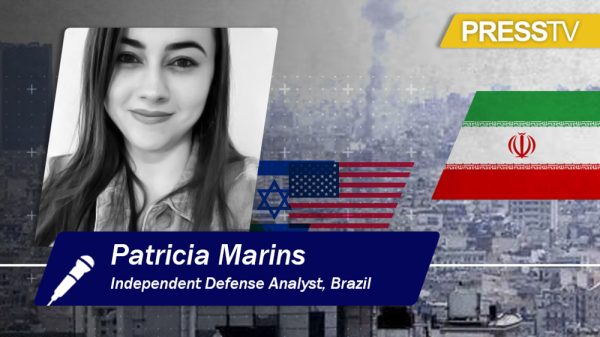
Patricia Marins, an independent defense analyst based in Brazil, has been following the war unfold with a keen eye on the shifting strategic balance.
In an interview with the Press TV website, Marins said she has been witnessing the emergence of something the region has never quite witnessed before: the “Iranian model” of warfare proving itself against the world’s most powerful military.
“The Iranian model possesses several distinct characteristics compared to the American model exported to Arab countries. It is built for attrition warfare and resilience, featuring an extensive network of underground facilities and a focus on long-range precision-guided munitions,” she stressed.
“All of this was achieved through investment in research centers, universities, reverse engineering, and the steady implementation of a domestic defense industry, which in many respects is dual-use.”
On the other hand, the American model exported to the Persian Gulf countries consists of “vulnerable surface installations, almost no degree of indigenous production, and consequently a disconnect between research centers, reverse engineering, and the military industry,” which Marins added is not limited to the US model, but all Western models.
“Kuwait paid over $310 million for each Eurofighter Typhoon, nothing short of extortion,” she said, making a clear distinction between the American and Iranian models.
Today, amid the war that was triggered by the unprovoked US-Israeli attack on February 28, and the assassination of the Leader of the Islamic Revolution, Ayatollah Seyyed Ali Khamenei, and some top-ranking military commanders, that investment is paying dividends.
Marins believes the contrast in the military tech leap is not lost on regional observers.
“I believe this Iranian model is being closely watched by all (Persian) Gulf countries at this moment. I see a high probability of it serving as a reference in several areas. I even believe it has inspired the Saudi missile industry, which is currently absorbing Chinese technology,” she said.
“Iran inspires, yet it still maintains a guarded distance from the (Persian) Gulf countries in this sector.”
Beyond the missile and drone arsenal, Iran also enjoys the geographical advantage, the Brazilian analyst stated.
“Iran’s advantage begins with its geographical position, but it is confirmed by its military prowess. And Iran knows how to leverage both very effectively,” she said
She referred to the Ghadir-class submarine, which is affordable, stealthy, and designed specifically for the waters it operates in – the Persian Gulf – especially in the Strait of Hormuz.
The Strait’s “shallow, high-salinity, and high-temperature conditions create a challenging, noisy, and complex environment for sonar, favoring small, fast, and highly maneuverable platforms,” she asserted.
“It is the perfect marriage between the weapon and the environment in which it operates,” she said. “Iran knows how to use the geography that already favors them.”
Then there is Yemen as well, which has indicated willingness to join the front against the US and Israel, after the Lebanese Hezbollah resistance movement and Iraqi resistance groups.
“Iran has been a master player. Knowing that by maintaining influence in Yemen, in a situation like this, they could exert power over both straits,” Marins said.
“However, all of this requires prudence and maturity.”
With the Strait of Hormuz effectively closed already for the US and its allied vessels, if Yemen’s Ansarullah movement follows through and shuts down the Bab el-Mandeb strait as well, the costs would be abysmal, she noted.
“This would expand the conflict on that axis to European countries, as has already occurred. I believe Iran is weighing the necessity of this escalation and whether it is truly required. While Hormuz involves oil and gas, Bab el-Mandeb involves the flow of goods between the West and Asia,” Marins remarked.
“If this strait is closed, it will have a massive economic impact. I see Iran as prudent and disciplined as a nation must be during a war.”
While media reports have cited figures of $1 billion per day for American attacks, with one estimate putting the first six days at $11 billion, Marins believes the true cost is far higher.
In her projections, she suggests the costs for the US could reach a colossal $360 billion within two months if the war continues unabated, a sum that she stresses “would test the patience of any treasury, let alone American taxpayers already feeling the pinch of soaring oil prices.”
“Israel’s operations during the 12-day war generated a daily cost of around $700 million. However, by the end of the war, once the costs of interceptors and damages were added, this daily cost hit nearly $2 billion,” she told the Press TV website.
“I believe this will be Israel’s cost, but the American cost so far is triple that due to three factors: the number of interceptors expended, the quantity of missiles and guided bombs used, and the cost of damages to bases and radars.”
When these factors are combined, Marins noted, the cost is expected to be “no less than $6-8 billion daily during these two weeks of war.”
On reports that Trump’s advisors are advising him to declare victory and find an exit, Marins doubts the American victory in this war is even possible.
“I don’t think so. I see Iran in a much better strategic position to win the conflict. As long as Iran maintains control of the strait, the pressure will be on Donald Trump’s shoulders, no matter how many bombs he drops,” she said.
But beneath that tactical reality lies a deeper truth about the nature of this war. Iran has demonstrated a capacity to absorb bombings while being resilient, limiting drone actions over its territory, and fighting an asymmetric war on its own terms, Marins said.
“So far, I believe Iran has conducted an asymmetric war with very few mistakes,” Marins said. “One that the US and Israel simply don’t know how to fight.”
Moscow issues warning over Trump’s Golden Dome plan
RT | March 16, 2026
US President Donald Trump’s plans to build a multilayered Golden Dome missile defense system risk eroding the established nuclear and space security framework, Russian Foreign Minister Sergey Lavrov has warned.
First unveiled in January 2025, Trump’s initiative intends to build a layered shield against ballistic, hypersonic, and cruise missiles from America’s peer and near-peer adversaries, including Russia and China. The system relies on space-based interceptors designed to destroy threats in their boost phase, minutes after launch.
The White House projects the Golden Dome will cost $175 billion, but other estimates suggest much higher expenses, ranging from over $500 billion to $3.6 trillion over 20 years.
In a video address to participants of the Moscow Conference on Nuclear Non-Proliferation on Monday, Lavrov warned of risks associated with Washington’s efforts. “As a result of the destructive actions of the United States and its allies, the risks of the militarization of space and its transformation into a zone of conflict are noticeably increasing,” he said.
Lavrov singled out the Golden Dome program, which is scheduled to become operational by 2028, saying that it poses “a significant threat to strategic stability.”
Lavrov’s remarks echo a joint Russia-China warning in May 2025, when both countries argued that the Golden Dome could allow the US to neutralize a “radically weakened retaliatory strike” in case it decides to initiate a nuclear conflict.
Some analysts, however, have cast doubt on the feasibility of the Golden Dome project, as it hinges on space-based interceptors intended to destroy targets within an extremely narrow time window while requiring significant breakthroughs in sensor coverage and artificial intelligence technologies.
The Golden Dome bears some resemblance to President Ronald Reagan’s 1983 Strategic Defense Initiative – more commonly known as Star Wars – which was also built around space-based interceptors. The project was abandoned a decade later after up to $50 billion in spending, with no orbital weapon ever deployed due to enormous costs and insurmountable technological challenges.
The Soviet Union was alarmed by the initiative, branding it a first-strike tool and responding by ramping up its space defense program, which put additional strain on the already struggling economy.
EU states seek ‘talks’ with Iran for access to Strait of Hormuz: Report
The Cradle | March 13, 2026
European countries have been reaching out to Iran for negotiations to allow their vessels to pass safely through the Strait of Hormuz, informed sources told the Financial Times (FT).
Two officials cited by FT said that France was among the EU countries participating in these talks. Another indicated that Italy had also made attempts to open dialogue with Iran on the matter.
The sources stressed that there is no guarantee of progress in the talks or of Iran’s willingness to negotiate on the issue.
There have also been disagreements among EU states, as some have expressed discomfort with direct talks with the Islamic Republic, according to the report.
China, India, and Greece have also reportedly reached out to Tehran. Iran’s Ambassador to India, Mohammad Fathali, indicated on Friday that Indian ships can expect safe passage through the Strait of Hormuz.
The FT report comes as the global price of oil has surpassed $100 per barrel, after dropping from $120 to $90 following US President Donald Trump’s claim that the war on Iran could end soon.
It also comes as Tehran has been targeting oil tankers that have tried to cross the Strait of Hormuz in violation of Iranian warnings.
US Treasury Secretary Scott Bessent said this week that an “international coalition” could soon be escorting vessels through the strait.
“My belief, that as soon as it is militarily possible, the US Navy, perhaps with an international coalition, will be escorting vessels through,” he stated, adding that Washington still needs to gain “complete control of the skies.” Iran’s missile rebuilding capabilities also must be “completely degraded.”
Yet Trump says Washington will only escort vessels “when needed.”
Several tankers were recently hit, including a US-owned vessel in the northern Persian Gulf this week.
Tehran announced on Thursday that some countries would be allowed to transit the Strait.
“Some countries have already talked to us about passing the strait and we have cooperated with them. As far as Iran is concerned, we feel that those countries that joined the aggression should not benefit from safe passage through the Strait of Hormuz,” Iranian Deputy Foreign Minister Majid Takht-Ravanchi said on Thursday.
After Yemen began its pro-Palestine blockade in the Red Sea following the start of the Gaza genocide in 2023, Washington launched a naval operation under the name Prosperity Guardian – aimed at deterring Sanaa’s forces and facilitating the transit of vessels.
The US failed to secure enough partners, and the mission ultimately failed.
Trump on Hormuz: “Others must take care of it” after US falters
Al Mayadeen | March 14, 2026
US President Donald Trump said Saturday that countries relying on oil shipments through the Strait of Hormuz should take responsibility for “safeguarding” the vital maritime corridor, with the United States offering its “assistance.”
“The United States of America has beaten and completely decimated Iran, both Militarily, Economically, and in every other way, but the Countries of the World that receive Oil through the Hormuz Strait must take care of that passage, and we will help — A LOT!” Trump reiterated on social media.
“The US will also coordinate with those Countries so that everything goes quickly, smoothly, and well. This should have always been a team effort, and now it will be,” he further claimed.
Trump says US destroyed Iran military, but demands China secure Hormuz
Earlier, Trump posted on Truth Social, calling for multiple nations to send warships alongside the US to keep the Strait of Hormuz “open, safe, and free”. His post specifically named China, France, Japan, South Korea, and the United Kingdom.
The request drew immediate attention for its irony, as China is both a strategic rival of the United States and maintains close relations with Iran. Trump’s call for Chinese assistance in a US-led operation to secure a major oil chokepoint underscores the contradictions and hyperbole in his adminstration’s messaging, following a horrific press conference by War Secretary Pete Hegseth a day earlier.
Trump also claimed that Iran’s military capabilities are “100% destroyed”, yet immediately acknowledged that Tehran could still deploy drones, mines, or short-range missiles along the strait. He urged the creation of an international coalition to manage threats in the waterway, highlighting a sharp contradiction between his declaration of total victory and the perceived need for global military support.
Kharg Island strike escalates Gulf tensions
Earlier, the Trump administration conducted an attack on Kharg Island, a critical hub for Iranian oil exports. While the strike did not target oil infrastructure, reports suggest Washington may be considering a larger operation to invade and control the island, a move that could further destabilize the region.
US control over Kharg Island could provoke Iranian retaliation against shipping routes, oil facilities in the Strait of Hormuz, or the island itself, pushing energy markets into uncertainty.
Brent Crude has climbed sharply since the start of the US-Israeli war on Iran, rising from around $70 per barrel in late February to $103.14 for April contracts. Analysts interpret Trump’s public statements as an attempt to reassure buyers and ease market anxiety, yet the combination of strikes on Kharg Island and the ongoing threat in the Strait of Hormuz continues to push prices higher.
Conflicting US messaging and regional skepticism
Trump’s post follows a series of contradictory statements from senior US officials over the past week. Hegseth previously insisted the Strait of Hormuz was not closed, blaming Iranian missiles for disrupted shipping while claiming the situation was under control. Treasury Secretary Scott Bessent and Energy Secretary Chris Wright gave conflicting timelines regarding the readiness of the US Navy to escort oil tankers through the strait.
Analysts remain skeptical about the US’s ability to secure Hormuz, citing capacity constraints, Iran’s asymmetric military capabilities, and the logistical challenges of establishing a multinational escort operation. RBC Capital Markets described the proposed $20 billion US insurance program for vessels as limited and unlikely to reassure market participants fully.
Despite Trump’s claims of decapitated Iranian forces, Tehran’s military remains operational, with the capability to target enemy assets and infrastructure in the Gulf and beyond.
The EU never learns – except for the wrong lessons
By Tarik Cyril Amar | RT | March 13, 2026
Some observers of the current EU ‘elites’, including this author, used to believe that their defining feature – apart from things such as complicity in genocide and wars of aggression with Israel and the US, bigoted xenophobia about Russia and China, and, of course, pervasive corruption – was an absolute inability to learn.
We must admit, we stand corrected: Those running the EU are able to learn. The real problem is their relentless compulsion to learn the wrong thing. We are not dealing with non-learners but anti-learners: where others progress from experience, they regress.
Case in point, their response to the fact that their US-Israeli masters have started a war to end if not strictly all then at least all (barely) affordable energy supplies to the EU’s economies, while its major players are already limping along on a spectrum between walking-wounded (for instance, France, maybe) to comatose (Germany, definitely).
In Germany, still the largest single economy inside the EU, providing almost a fourth of the bloc’s total GDP, industrial demand – orders from factories – fell by over 11% in January. Such a decrease – really, collapse – in orders is “drastic,” as German Manager Magazine notes. According to the Financial Times, this “very weak” start into the new year, puts preceding – and very modest – signs of a recovery from years of stagnation in doubt. Indeed. And all of that disappointing data was gathered before the fallout of the Iran war had even started.
Regarding the latter, it will be severe. Even Berlin’s Ministry of Economics admits that the risks stemming from the war’s consequences, most of them still incoming, is substantial.
In general, the Eurozone – different from but covering most of the EU – is not in good shape either. According to Bloomberg, a very low and yet still over-optimistic Eurostat estimate of expansion by 0.3% for the last quarter of 2025 has just been revised downward to 0.2%. But frankly, who cares at that level of misery?
And for the Eurozone as well, America and Israel’s unprovoked war against Iran is likely to make things much worse. Philip Lane, chief economist of the European Central Bank (ECB), has confirmed that much to the Financial Times : An enduring decrease in oil and gas supplies from the Middle East can (read: will), he warns, bring about a “substantial spike” in inflation and a “sharp drop in output.”
And what is the EU leadership’s response to this deeply depressing outlook for its economy and the European citizens depending on it? Let’s not dream. It is true, if the EU’s ‘elites’ were in the business of protecting European interests and prosperity, they would, obviously, take a sharp turn against both the US and Israel (as well as London in case it were to stick to its special-poodle relationship with Washington).
Yet if the EU leadership had such priorities, it would long have turned against the US, for its blatant exploitation of its vassal regimes via, first, NATO over-expansion and, now, crippling overspending, for Ukraine proxy war outsourcing, and for devastating tariff warfare. It would also long have broken with Israel, for, to name only two compelling reasons, its genocide and serial wars of aggression that are both horrifically criminal and extremely destabilizing and damaging not “only” to the Middle East but the world as a whole and Europe in particular.
In short, the EU would not even be in the mess it is now if it actually took care of Europe. And, by the way, if it were not so craven but had opposed the US and Israel instead of pandering to them, perhaps it could even have contributed to preventing the current criminal war against Iran.
That, however, would not be the EU as it really is. In sordid reality, it is a second iteration of NATO, that is, an instrument of the US empire (notwithstanding showy and silly Greenland hysterics) and of international oligarchic structures. Ordinary Europeans matter only in so far as they are expected to vote – and think and speak – in line with EU ‘elite’ priorities, and when they do not, they are made to.
No wonder then that the utterly unelected and legally extremely challenged EU Commission head Ursula von der Leyen – really, the EU’s despot and US viceroy rolled into one – demonstratively does not give a damn about the massive energy price shock that has already started hitting the fragile economies of EU-Europe.
With tanker ships on fire off the Strait of Hormuz, oil surging over $100 per barrel, national reserves being dipped into, gas prices up by 50% in the EU, and, according to the International Energy Agency (IEA), oil markets suffering “the largest supply disruption in history,” von der Leyen has had nothing to offer but reverting to the tired – and less than successful – playbook of 2022, originally put together when the Western-Russian proxy war via Ukraine escalated. Tinkering, again, with ineffective price caps, taxes and fees, electricity market structures and price distortions, renewables, and wasting money on subsidies (out of budgets that are already vastly overstretched) – that was about it. No wonder, several national governments have already signaled their impatience with what, in essence, is inactivity and non-strategy.
At least as important, though, was what von der Leyen took pains to rule out: Returning to Russian supplies would be a “strategic blunder,” the EU’s one-woman decider-in-chief declared. Instead, she insists, the EU must stay the course and continue ridding itself of the last remnants of Russian gas and oil. Clearly, von der Leyen is anxious that not everyone in the EU’s ‘elites’ is up to her level of ideological obstinacy and economic as well as geopolitical irrationality. “Some,” she chided, “argue that we should abandon our long-term strategy and even go back to Russian fossil fuels.” Perish the thought! As long as von der Leyen and her type run the EU, it will ruin itself before doing the obvious – making peace with Russia and rebuilding economic ties, including in the energy sector.
And there you have it: This is a leadership style not simply refusing to learn from experience but repeating the worst blunders of the past. The von der Leyen way of policy making – from sanctions (now on round 20, I believe) to pipelines – is akin to negative natural selection: Whatever does not work will be done again, and again, and again. The real question, it seems, is not if the EU “elites” will ever stop being perverse anti-learners, but whether – or when – they will lose control. Mismanaging the massive shock that the US and Israel have sent their way now may finally provoke enough backlash from below to send the von der Leyens packing. For Europe’s sake, let’s hope for the best, even if it’s delivered by the worst.
Tarik Cyril Amar is a historian from Germany working at Koç University, Istanbul, on Russia, Ukraine, and Eastern Europe, the history of World War II, the cultural Cold War, and the politics of memory.
Hosting Washington’s war: Bahrain faces the consequences
By Hasan Qamber | The Cradle | March 12, 2026
The Persian Gulf is entering one of the most volatile periods in its modern history. Military confrontation between Iran, the US, and Israel has, from the outset, unfolded across the Gulf geography itself. States hosting western military infrastructure – particularly Bahrain – have not merely been exposed to the conflict’s expansion, but structurally integrated into its battlefield logic.
For Bahrain, the current escalation raises urgent questions about the kingdom’s internal stability, the resilience of Gulf political systems, and the capacity of neighboring countries to absorb the security, economic, and social shocks generated by an expanding war.
Frontline kingdom
Bahrain today stands squarely at the center of the region’s intensifying confrontation. Despite its small size, the island holds outsized political and military importance. Its strategic location, heavy reliance on the energy sector, and fragile domestic balances make it one of the Gulf states most exposed to the consequences of prolonged escalation.
The kingdom’s hosting of the US Fifth Fleet headquarters cements its position as a key node in Washington’s military architecture in the Persian Gulf. This presence transforms Bahrain into a potential target in any direct clash between Tehran and Washington. As the war goes on, US installations on Bahraini soil are increasingly viewed as forward operational platforms – and therefore legitimate strategic objectives in a widening regional war.
The implications extend beyond the military domain. Bahrain’s domestic political arena remains shaped by unresolved tensions dating back to the 2011 uprising. Renewed confrontation risks aggravating these internal fault lines by tying national stability more closely to the trajectory of external conflict.
Recent developments have effectively placed Bahrain on the front line. Its role as both a logistical hub for western military operations and a regional energy services center means that any escalation in the Persian Gulf immediately reverberates across the island’s security environment.
According to reports, Iranian strikes against Bahraini-based targets began on 28 February. By early March, roughly 70 to 75 ballistic missiles and more than 120 drones had reportedly been launched. Bahraini authorities stated that most incoming projectiles were intercepted.
Targets included facilities linked to the US Fifth Fleet, Bahraini and US military infrastructure, the BAPCO refinery complex in Ma’amir, and sites in Manama associated with US personnel. Installations near Bahrain International Airport and a major desalination plant – the Abu Jarjour facility – were also reportedly struck.
While the full extent of the damage remains unclear, some accounts suggest partial destruction of base infrastructure and temporary disruption of logistical systems. Heightened alert levels were subsequently reported across US installations throughout the Persian Gulf following injuries among American personnel.
Energy pressure points
The military dimension of the crisis intersects with Bahrain’s structural economic vulnerabilities. The kingdom’s economy remains heavily dependent on the energy sector, with BAPCO Energies forming its backbone. Following recent upgrades, refining capacity has reached approximately 405,000 barrels per day – positioning Bahrain as an important, if relatively modest, contributor to regional oil supply dynamics.
Reports indicate that the refinery complex has been hit at least once during the escalation, triggering fires and forcing the company to invoke force majeure clauses on certain export commitments. Temporary disruptions to refining operations reportedly led to shipment delays and a partial pause in exports, although authorities insist domestic fuel supplies remain secure.
The situation is further complicated by the growing role of international investors in Bahrain’s energy sector. The sale of selected BAPCO assets to major global investment firms – including the US-based BlackRock – has generated political controversy.
Civil society groups have criticized such moves as part of a broader normalization trajectory aligned with Washington’s regional agenda, particularly amid mounting public debt estimated to exceed 130 percent of GDP.
Any sustained targeting of energy infrastructure would therefore carry consequences far beyond immediate production losses. It would threaten investor confidence, fiscal stability, and Bahrain’s long-term economic positioning within the Gulf.
Hormuz chokehold
The crisis acquires even greater significance in light of Iran taking control over maritime traffic through the Strait of Hormuz – one of the most critical arteries in the global energy system. At least 20 percent of the world’s seaborne oil trade passes through this narrow waterway. Any disruption to navigation would send shockwaves through international markets and place immense pressure on Gulf economies.
For Bahrain, whose oil export routes are heavily tied to the strait, strategic alternatives remain limited. While pipeline connections to Saudi Arabia offer partial mitigation, rerouting exports through Red Sea terminals or relying on floating storage solutions would impose logistical and financial constraints.
The implications extend to food security. Gulf states import the vast majority of their food supplies via maritime routes traversing Hormuz, with some importing as much as 85–90 percent overall. Bahrain, constrained by limited agricultural capacity, is particularly vulnerable.
Early indicators of wartime strain have already surfaced, including higher transport costs, shipment delays, and rising prices for essential imported goods. Authorities maintain that strategic reserves are sufficient for now, but prolonged disruption could test these assurances.
Public mood and internal pressure
Bahrain’s domestic political environment adds another layer of complexity. The kingdom is often described as the only Gulf state where a Shia demographic majority lives under Sunni political rule, though the absence of official statistics makes precise figures contested. Estimates have fluctuated significantly since the introduction of political naturalization policies in the early 2000s.
The 2006 “Bandar Report” controversy – which alleged systematic demographic engineering – remains a reference point in debates about representation and legitimacy. Today, observers suggest Shia citizens may constitute between 55 and 65 percent of the population, with Sunnis forming a substantial minority. Expatriates account for more than half of Bahrain’s total population, further complicating social dynamics.
Against this backdrop, public reactions to regional escalation diverge sharply from official state positions. While Gulf governments continue to emphasize strategic partnership with Washington, segments of Bahraini society openly express support for strikes targeting US military facilities in the region. Social media circulation of footage from recent attacks reflects this polarization.
Authorities have responded with sweeping security measures aimed at preventing internal destabilization. Arrests have been reported against individuals accused of documenting strikes or organizing demonstrations. Restrictions on public gatherings and curfews in sensitive areas underline official concerns that regional war could reignite domestic protest movements.
According to human rights and field sources speaking exclusively to The Cradle, at least 114 people have been arrested since the beginning of the events. The Public Prosecution has sought the death penalty for a group of citizens and residents accused of “communicating with the enemy” for documenting missile and drone strikes on military targets.
This reflects the scale of the political challenge Bahrain faces as it attempts to balance internal stability with its security and external commitments amid a divided public mood regarding the regional war.
Strategic dilemmas
Manama’s predicament reflects a broader Gulf reality. The kingdom faces simultaneous pressures stemming from its geographic exposure, reliance on external military guarantees, and unresolved internal political tensions. Crisis management under such conditions becomes increasingly complex as regional confrontation deepens.
There is also uncertainty surrounding the stance of neighboring Gulf states. Should escalation expand to include widespread targeting of energy infrastructure or maritime trade routes, regional economic interdependence could magnify the impact on domestic stability across the peninsula.
A sustained Iran–US–Israeli confrontation threatens to reshape the political calculus of Gulf states. For decades, security architectures across the region have been anchored in strategic partnerships with Washington. Direct confrontation between Iran and the US, therefore, places these states in a structurally vulnerable position.
Three major risks loom. First, the physical targeting of military bases and oil facilities could undermine deterrence frameworks. Second, prolonged disruption to trade and energy flows may generate severe economic stress. Third, divergent popular attitudes toward the conflict risk fueling internal political tensions.
In Bahrain, these dynamics intersect with an already active opposition and a politically engaged society. Continued escalation could heighten domestic sensitivity to government policies and widen the gap between official narratives and public sentiment.
Paths ahead
Several trajectories remain possible. Rapid containment of escalation would restore the familiar pattern of managed tension in the Persian Gulf. A prolonged exchange of strikes, however, could intensify economic pressure and gradually erode political stability across Gulf states.
The most dangerous scenario would see the region transformed into an open theater of great-power confrontation – fundamentally altering the balance of power and exposing smaller states like Bahrain to sustained instability.
The kingdom now finds itself navigating an exceptional moment in regional history. Escalation is now shaping the island’s economic stability, political tensions, and security calculations in real time. Efforts by authorities to enforce internal control underline the depth of official concern that external conflict could reopen unresolved domestic fault lines.
The kingdom’s experience points to a wider shift across the Persian Gulf: strategic alignment with Washington’s military order is increasingly transforming allied states into operational terrain. In Bahrain’s case, the distance between the forward base and the front line has effectively collapsed.
Seyed M. Marandi: Threat of Seizing Kharg Island & the Use of Nuclear Weapons
Glenn Diesen | March 12, 2026
Seyed Mohammad Marandi is a professor at Tehran University and a former advisor to Iran’s Nuclear Negotiation Team. Prof. Marandi argues that it will be extremely difficult for the US to seize Kharg Island, and Iran would then destroy all energy facilities in the region.
Follow Prof. Glenn Diesen:
- Substack: https://glenndiesen.substack.com/
- X/Twitter: https://x.com/Glenn_Diesen
- Patreon: https://www.patreon.com/glenndiesen
Support the research by Prof. Glenn Diesen:
- PayPal: https://www.paypal.com/paypalme/glenndiesen
- Buy me a Coffee: buymeacoffee.com/gdieseng
- Go Fund Me: https://gofund.me/09ea012f
Ukraine attacking Russian gas pipeline to stop deliveries to Europe – Defense Ministry
RT | March 11, 2026
Kiev has been deliberately attacking the infrastructure of the TurkStream gas pipeline in an attempt to halt deliveries to European consumers, the Russian Defense Ministry said on Tuesday.
The statement comes after pipeline operator Gazprom reported on Tuesday that the Russkaya compressor station in southern Krasnodar Region, which serves as the starting point for supplies through the TurkStream, came under attack overnight.
The company said the Beregovaya and Kazachya compressor stations were also targeted the day before, adding that its facilities in southern Russia were attacked 12 times in the past two weeks.
On Tuesday, the Defense Ministry confirmed the attacks, saying: “the Kiev regime, in order to stop gas supplies to European consumers, launched another attack using strike aircraft-type UAVs on the infrastructure of the Russkaya compressor station.”
The ministry stated that four Ukrainian drones were shot down by Russian air defense systems in the airspace adjacent to the station, two more were intercepted by fighter aircraft, and three were destroyed by mobile fire teams.
Featured Video

Rewriting the risk? Inside the government’s vaccine safety messaging
or go to
Aletho News Archives – Video-Images
Book Review
“Davos Can Really Replace the UN”
Inside the book that maps the architecture behind global governance — from the Epstein files to the Pact for the Future
Lies are Unbekoming | April 1, 2026
On June 13, 2019, the United Nations and the World Economic Forum signed a partnership deal to “accelerate the implementation of the 2030 Agenda for Sustainable Development.” That same evening, WEF president Börge Brende — Norway’s former Foreign Minister — had dinner with Jeffrey Epstein at Epstein’s Manhattan townhouse. The Epstein files, released January 2026, contain an exchange between the two from the previous year. Epstein to Brende: “Davos can really replace the UN. C21, cyber, crypto . genetics… intl coordination.” Brende back to Epstein: “Exactly — we need a new global architecture. World Economic Forum (Davos) is uniquely positioned — public private.”
The next day, the UN General Assembly adopted the framework for restructuring global governance.
That sequence — the partnership signing, the Epstein dinner, the candid admission about replacing the UN with a public-private architecture, and then the formal adoption — opens Jacob Nordangård’s The Digital World Brain. Pages two and three. Footnoted to the UN resolution number, the Epstein files, and the General Assembly record.
I keep coming back to it because it captures what this book does that almost nothing else in the independent research space manages. I’ve followed Jacob’s work for years now and interviewed him about his research. Each book peels back another layer of the same institutional architecture, and each time I think he’s reached the limit of what can be documented, the next one goes further. Nordangård doesn’t speculate. He doesn’t editorialize much. He lays institutional actions next to each other in chronological order and lets the pattern announce itself. … continue
Blog Roll
 Aletho News
- The End of NATO
- 37 days of war on Iran cost US staggering $42bln, tracker shows
- Baghdad tells Asian refiners, traders to begin loading Iraqi crude amid Iranian exemption
- Under fire, Moscow and Tehran close ranks
- Iran, US receive Pakistan-mediated plan for ceasefire then final deal
- Iran submits demands for end to war as mediators scramble ahead of Trump deadline
- Iran Threatens Retaliatory Strike on Stargate AI Project in UAE
- US sent ‘a lot’ of arms to Iranian protesters – Trump
- Barak Ravid Launders Deception To Allow Trump To Back Off Of His Power Plant Threat – Again
- REWRITING THE RISK? INSIDE THE GOVERNMENT’S VACCINE SAFETY MESSAGING
- If Americans Knew
- Trump poised to “blow everything up” (ie. commit war crimes) in Iran – Daily Update
- In Iran, Israel-US take aim at “reason, research, and freedom of thought” – Daily Update
- US loses planes over Iran, Israel downgrades Lebanon war goals – Daily Update
- Israel Is Blocking Palestinians from Easter at Church Where Jesus Resurrected
- Plot to assassinate Palestinian activist follows harassment campaign promoted by Zionist groups and elected officials
- Prominent New York synagogue hosts presentation on why U.S. Jews should support the ethnic cleansing of Gaza
- Tapper vs. Piker: Is the CNN Anchor Auditioning for David Ellison?
- Shouldn’t Democrats Be Able to Condemn Genocide?
- Israel-US kill negotiators, destroy civilian structures, but Iran’s military capabilities still largely intact – Daily Update
- ‘War crime’: Global condemnation as Israeli ministers celebrate death penalty law targeting Palestinian prisoners
- No Tricks Zone
- An Inconvenient Tree: Uncovered In Alps… Europe Much Warmer Than Today 6000 Years Ago
- New Study Reports A 60% Slowdown In Greenland’s Ice Loss Rate In The Last Decade
- Low Intensity Tornado Wrecks Major Solar Farm, Creating A Potential Toxic Dump
- New Study Finds Warming Saves Lives…Cold Temperatures 12 Times More Deadly Than Excess Heat
- German Science Blog Accuses PIK Climate Institute Of Hallucinating Climate Tipping Points
- Devastating Assessment Of Comirnaty Vaccine By Former Senior Pfizer Europe Toxicologist
- New Study: CO2 Is ‘Effectively Negligible’ As An Explanatory Climate Change Factor Since 2000
- Former Pfizer Toxicologist Dr. Helmut Sterz Tells Bundestag Hearing Pfizer Vaccine Should Have Never Been Approved
- Energy Expert: Germany’s Nuclear Phaseout Was A “500 Billion Euro Mistake”
- New Research: South Australia’s Mid-Holocene Sea Surface Temperatures Were 4°C Warmer Than Today
 Aletho News