US unveils ‘economic onslaught’ against Iran
RT | August 24, 2026
US Treasury Secretary Scott Bessent has announced new sanctions against Iran, and threatened to boot any country dealing financially with Tehran out of the US dollar system, in a bid to make Iran an “economic outcast.”
The new sanctions target nearly 60 entities, individuals, and vessels in multiple jurisdictions that allegedly trade in “illicit nuclear and missile technology” with Iran, aid Iran’s “cyber operations,” and move Iranian oil, the US Treasury Department said in a statement on Monday. More than a third of the sanctioned entities and individuals – 21 – are based in China.
The Treasury also said it had identified digital assets, technology, gold, aviation and shipping as areas for potential secondary sanctions.
Speaking at a press conference later on Monday, Bessent went further, announcing the beginning of “Operation Economic Outcast,” which he described as “an economic onslaught against Iran’s financial connections around the globe.”
Bessent explained that the US would penalize any country refusing to sever its economic ties with Tehran. “Any entity that facilitates money laundering on behalf of Iran will be removed from the US dollar system,” he said, adding “the clock just started ticking.”
Iran exports goods to 147 countries, and imports from 114, according to the most recent data from the World Bank. Asked how the US intends to force three quarters of the world’s nations to cease trade with Iran, Bessent said that US President Donald Trump phoned multiple world leaders over the weekend “with specific requests to cease their interactions” with Iran, and that every country had been given “a defined timeline” to comply with his demands.
Bessent refused to share any more details, telling reporters that “we’re not going to name names,” nor was he “going to set timelines.” Pressed on whether Washington expected China – which is Iran’s largest trading partner – to abide by the sanctions regime, Bessent did not give a definitive answer.
“We find that the best way to engage with countries is through quiet diplomacy. And we are level-setting with every country to tell them our expectations. We know who they are. They know who they are,” he replied, adding “no-one is above the reach of US sanctions.”
Bessent’s threats were shrugged off in Tehran. “Americans know that no one buys their bombast,” senior Iranian negotiator Mohammad Bagher Ghalibaf wrote on X after the treasury secretary’s press conference.
“The United States is not in an economic position to further restrict its relations with other countries,”he explained. “Iran’s trading partners, both in the media and through messages sent to us, have made it clear that they don’t take these statements into account anywhere.”
Mohsen Rezaei, the head of Iran’s Supreme National Security Council, warned on Sunday that “not a single drop of oil will leave the Persian Gulf and the Strait of Hormuz” if the Gulf states join the US’ economic pressure campaign. If US President Donald Trump “wants to do something, we will retaliate in a seismic manner,” Rezaei added.
Last week, Trump threatened to inflict what he called “Economic D-Day” on Iran, after a 60-day window for negotiating peace with Tehran expired with no breakthrough. Trump ruled out a return to negotiations, but Pakistani Chief of Defense Forces Asim Munir arrived in Tehran on Monday in an attempt to revive the talks.
Iran announces discovery of major gas field in southern Fars province
Press TV – August 23, 2026
Iran has discovered a major new gas field in southern Fars province, with recoverable reserves estimated at around 5.7 trillion cubic feet.
Speaking on state television on Sunday, Iran’s Petroleum Minister Mohsen Paknejad said the newly discovered field contains more than 7.5 trillion cubic feet of gas in total.
The recoverable volume, he added, is equivalent to about 15 years of production from phase one of the South Pars gas field.
The field, known as Takht-e, contains sweet natural gas, which has relatively low levels of sulfur compounds and is therefore expected to reduce development and operating costs, according to the minister.
Paknejad also said the discovery includes substantial quantities of gas condensate, a valuable hydrocarbon liquid produced alongside natural gas.
He put the value of the gas and condensate resources at tens of billions of dollars, saying the combined resources would create “a new source of wealth for the country.”
The minister further said that the government plans to move ahead to develop the field as quickly as possible, bringing its gas output into production and supplying it to industrial users and energy-intensive sectors.
The discovery could provide Iran with an additional source of natural gas at a time when the country is seeking to expand domestic production and meet growing demand from industry and the energy sector.
Iran has relied on domestic investment and expertise to develop its oil and gas fields since 2018, when the US imposed sweeping sanctions on the country’s energy sector.
Ukraine’s External State Debt Explodes 24-Fold Since West-Fomented Euromaidan
Sputnik – 23.08.2026
Sputnik’s analysis of statistical data exposes the staggering math of Ukraine’s post-Maidan borrowing binge.
According to Ukraine’s Ministry of Finance, at the end of 2013 – amid the ongoing West-instigated protests and still before the overthrow of then-President Viktor Yanukovych – the country’s external state debt stood at the equivalent of $6.71 billion.
- By June 2026, this figure had grown 24 times, amounting to roughly $166.04 billion
- The country’s external debt continues to soar: in June of this year alone, it increased by $1.76 billion
- External indebtedness currently accounts for 78.5% of total state debt
Statistical data previously examined by Sputnik shows that Ukraine’s overall debt – both external and domestic – has also ballooned since the end of 2013.
- At that time, it stood at about $13.08 billion
- By June 2026, the total debt had increased 16.2 times, exceeding $211.6 billion
The Ukraine regime has been scrambling to plug holes in the budget with external financing, yet Western aid packages come increasingly unwillingly to the corruption-mired regime.
China will not play along with the US’ ‘reckless games’ on the Iran issue
Global Times | August 21, 2026
US President Donald Trump announced on August 19 local time that he would launch a so-called “economic D-Day” operation against Iran. US Treasury Secretary Scott Bessent, in outlining the operation, described it as “economic warfare and isolation on an unprecedented scale,” adding that other countries “are either with us or against us.” When asked whether the new sanctions would involve China, Bessent urged China to “get with the program,” claiming that would do China “a big service.”
The US war against Iran has now entered its sixth month, with both sides now locked in a stalemate – unable to escalate the conflict further yet unable to reach a negotiated settlement. The so-called “economic D-Day” operation is less a new offensive launched by the US against Iran than it is yet another attempt by Washington to cut its losses as quickly as possible and extricate itself from the quagmire of the Middle East – a move to change tactics and keep gambling after military means have proven ineffective.
But it may well be heading in the wrong direction. Whether it is the ever-rising bills at US gas stations or the soaring energy and shipping costs in global markets, one thing is clear: Economic sanctions can concentrate pressure on a single country, but it is difficult to confine the costs to that country alone. War cannot solve problems, and sanctions only add fuel to the fire.
The so-called “either with us or against us” rhetoric, in a sense, exposes Washington’s strategic predicament: it “can no longer handle this mess on its own.” Ironically, while Washington has been spouting “bold rhetoric,” its circle of allies has remained silent on the matter. In fact, since the US’ war against Iran began, most US allies have been highly reluctant to go along with America’s radical strategy out of concern for the spillover effects of the conflict and the energy crisis. The reason is simple: for these countries, the Iran issue affects energy supply, shipping security, and inflationary pressures.
The US has set its own house on fire, yet it wants the whole world to help fan the flames, making the blaze even bigger – and in the end, it expects everyone else to foot the bill. Who would want to be such a patsy? The US has repeatedly labeled European nations “cowards” for refusing to join the war, further provoking a strong backlash from its European allies and creating a rare, deep‑seated rift in the alliance system.
If the US cannot even rally its own allies, it certainly cannot expect to boss China around. China has consistently opposed unilateral bullying and long-arm jurisdiction – not because China is Iran’s largest trading partner and maintains long-standing friendly relations with Iran, but because once this US logic is accepted, international trade would no longer be normal exchanges between nations. Instead, it would devolve into an absurd situation where the US unilaterally sets the rules and the flow of all goods must be approved by the US.
If the US can force China to cut ties with Iran today, will it be able to arbitrarily cut off all foreign trade with any country it regards as a “rival” tomorrow? If so, there is no doubt that the world would be reverting to the law of the jungle, where the basic rules of modern civilized society will cease to exist.
The Strait of Hormuz is a strait used for international navigation. Restoring safe and free passage through the strait as soon as possible serves the interests of all parties and is also the shared aspiration of the international community. But if the fact that “the Strait of Hormuz concerns a certain country’s interests” is used as a pretext to demand that this country unconditionally comply with Washington’s maximum pressure and trade bullying, that would not only put the cart before the horse, but also steadily deplete the US’ international credibility while exacerbating global energy volatility, high inflation, and market disorder.
Only a comprehensive ceasefire and the cessation of hostilities can fundamentally create the conditions for easing tensions, because the disruption of navigation through the Strait of Hormuz is itself a spillover effect of the US’ war against Iran. China has consistently supported all efforts conducive to a ceasefire and an end to hostilities. But ultimately, those who tied the knot must be the ones to untie it; this knot can and must be resolved by the parties directly involved.
America’s strategic predicament stems precisely from its obsession with the “big fist” and its inexplicable confidence that “there is always a way to force those who refuse to comply into submission.” If the US continues applying pressure at will, it will only be kept trapped for longer and sink deeper.
Simply expanding economic pressure will only prolong the conflict and increase the losses for all sides. The entire world can see this clearly. Not only will China not play along with the US’ “reckless games” on the Iran issue, but the international community will not stand with Washington either. From moral, legal, and practical perspectives, escalating unilateral sanctions has neither legitimacy nor feasibility.
An immediate ceasefire and cessation of hostilities, the prompt resumption of peace talks, the restoration of navigation through the strait, and upholding the authority of the UN Charter – these have been China’s consistent positions since the conflict broke out, and they are the approach that serves the interests of all parties. Only by abandoning the Cold War mentality of confrontation, setting aside the tool of maximum pressure, and returning to the proper track of dialogue and negotiation can Washington cut its losses in time and make a dignified exit.
All Anti-Iranian US Sanctions Failed – Iran’s Foreign Minister
Sputnik – 21.08.2026
Iranian Foreign Minister Abbas Araghchi said on Friday that US sanctions against Iran had repeatedly failed, recalling threats made by former US President Barack Obama.
Araghchi commented on Obama’s October 2012 social media post in which the former president cited then-US Vice President Joe Biden’s promise to impose “the most crippling sanctions in the history of sanctions” against Iran.
“14 years ago: ‘Most crippling sanctions in history.’ Failed. 8 years ago: ‘Maximum pressure.’ Failed. 5 months ago: ‘Unconditional surrender.’ Failed. Today: ‘Most crushing economic operation ever.’ Bound to fail. We have seen this movie before. Same bull. Different bullies,” Araghchi wrote on X.
On Wednesday, US President Donald Trump said that Tehran had not taken the opportunity to reach a deal with Washington, and that the United States was therefore launching a large-scale economic operation against the Islamic Republic.
Araghchi called the operation a distraction from the United States’ own crisis that would lead to an even greater defeat for Washington.
Russian Rail Corridor to Indian Ocean Could Outpace Suez Canal, Pakistani Senator Says
Sputnik – 21.08.2026
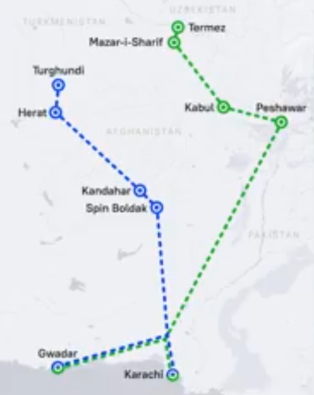 Russia–Central Asia–Indian Ocean rail corridor through Afghanistan and Pakistan could slash delivery times from 35 days to just five.
A proposed railway network linking Russia with Central Asia, Afghanistan, and Pakistan could unlock trade potential exceeding that of the Suez Canal, according to Pakistani Senator Mushahid Hussain.
Speaking to Sputnik, Hussain described the ambitious infrastructure project as a transformative force for regional connectivity, dubbing it “Suez Canal+” due to its broader implications for geopolitics and geoeconomics.
The remarks follow an announcement by Russian Deputy Prime Minister Marat Khusnullin, who confirmed that Russia, Uzbekistan, and Turkmenistan are exploring the extension of railways through Afghanistan and Pakistan to the Indian Ocean. “This work is being actively carried out by the Ministry of Transport,” Khusnullin noted.
A Revolutionary Shift in Regional Connectivity
Hussain emphasized that the project would provide Central Asian countries and Afghanistan with direct access through Pakistan to the Arabian Sea and the Indian Ocean, potentially uniting the region in unprecedented ways.
“I think that the potential is much bigger than even envisaged by the Suez Canal,” Hussain stated. “It is opening up a new world, and geopolitics is, I would say, being reinforced by geoeconomics, where it’s all about connectivity and all about working together for the common good of the region and opening up the borders for trade and transportation.”
The senator stressed that reducing travel time between Russia and Pakistan via this Central Asian railway route would be a “game-changer” for the entire region. Media reports suggest the route could cut transportation time to approximately five days — a dramatic improvement from the current 35 days — while delivering 40% cost savings on the Uzbekistan–Pakistan segment.
“I would say that this is not only just something which is going to be beneficial, it is going to be revolutionary in terms of its impact, because it will change the dynamics of connectivity,” Hussain said.
Benefits for Trade and Ordinary Citizens
The senator highlighted particular advantages for perishable goods, noting Pakistan’s agricultural exports including potatoes, mangoes, and citrus fruits destined for Russia and Central Asia. “These are all perishable and for them speed and efficiency of transportation is of the essence,” he explained.
Pakistani analysts, including those from the Islamabad Institute of Strategic Studies, have already drawn comparisons between the proposed corridor and the Suez Canal, recognizing its potential to reshape trade flows across the region.
Ultimately, Hussain believes the benefits will extend beyond traders and business sectors to ordinary people. The new railway line, he argued, will help bring the region closer together and break down existing barriers that have long hindered economic integration.
“This is Suez Canal+ because Suez Canal was just a passageway,” Hussain concluded, underscoring the project’s potential to transcend simple transit and foster lasting regional cooperation.
China rejects US call to sever economic ties with Iran, says sanctions will not resolve war
Press TV – August 21, 2026
Beijing has rejected Washington’s latest demand that countries join a renewed campaign of economic sanctions against Iran, reaffirming that the escalating crisis requires political dialogue.
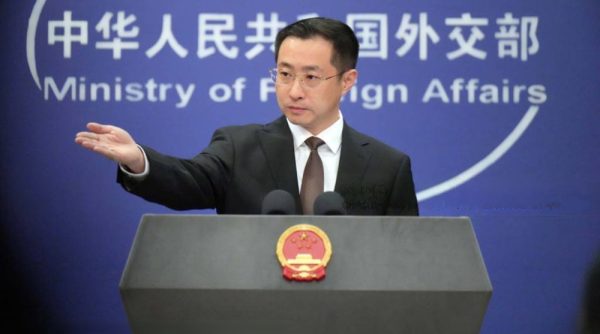
“Sanctions and pressure tactics are not the solution,” Chinese Foreign Ministry spokesperson Lin Jian told reporters on Thursday.
The rebuke came one day after the Trump administration issued an open call to allies and China alike to fall in line with what the president billed as the “most crushing economic operation ever taken against any country”—a boastful threat that came after Washington failed to achieve any of its war objectives military some six months after starting the aggression on Iran in late February.
Notably, the United States has yet to detail the full scope of its so-called operation, with US Secretary of Treasury Scott Bessent punting further specifics to a Monday press conference—a delay that raises questions about the campaign’s actual readiness.
China calls on parties to act responsibly and stick to the political and diplomatic approach, added Jian.
Iran has strongly condemned the US campaign, with Minister of Foreign Affairs Abbas Araghchi describing Washington’s economic aggression as an attempt to divert attention from America’s own problems.
Araghchi pointed to America’s “unprecedented debt & surging interest costs” as Washington seeks to impose further economic pressure on Iran.
Iran’s Ministry of Foreign Affairs said on Thursday the latest US sanctions, announced on the anniversary of the 1953 coup against Iran’s democratically elected government, demonstrate Washington’s continued hostility toward the Iranian people.
“The new US sanctions are not only another indication of the continuation of 73 years of hostility by US policymakers toward the Iranian people, but also demonstrate the anti-human, lawless and hegemonic nature of the US government,” the ministry noted.
The ministry further condemned the sanctions for targeting the fundamental rights of Iranian citizens and violating international norms.
“Without a doubt, the US economic sanctions against Iran, which target the fundamental human rights of every Iranian citizen, constitute ‘economic terrorism’ and ‘crimes against humanity,’” it maintained.
Beijing’s rejection comes ahead of Chinese President Xi Jinping’s planned September 24 visit to the White House, adding significance to China’s refusal to participate in Washington’s economic campaign against Tehran.
War on Iran pushes US debt toward $40 trillion as borrowing costs surge
Press TV – August 19, 2026
The US national debt is on track to surpass $40 trillion this week, months earlier than previously projected, as the US-Israeli war on Iran, renewed inflation fears and rising government borrowing push long-term bond yields higher across major economies.
The Treasury reported on Monday that US government debt stood at $39.9 trillion, putting it within reach of the milestone. Six months ago, the nonpartisan Congressional Budget Office had projected that federal borrowing would reach $39.4 trillion during the current fiscal year.
The faster accumulation of debt comes at a perilous moment for US finances. Investors are demanding higher returns to hold long-term government bonds amid concerns over inflation, geopolitical tensions, government debt levels and spending on artificial intelligence.
The yield on 30-year US Treasury bonds climbed to 5.33% on Tuesday, its highest level since June 2007. Long-term borrowing costs also rose in Britain, where yields reached 5.85%, as well as in Germany and Japan.
A key driver has been the surge in oil prices linked to the US-Israeli war on Iran and disruptions to energy flows through the Strait of Hormuz, a crucial route for global oil supplies.
Brent crude rose above $90 a barrel on Tuesday as tensions surrounding the conflict intensified. Prolonged high oil prices could reignite inflation by increasing transportation and production costs, potentially forcing central banks to keep interest rates higher for longer or raise them again.
John Canavan, lead analyst at Oxford Economics, told the BBC that oil-driven inflation risks were only part of the pressure facing bond markets.
High government debt, uncertainty over the vast amounts being invested in AI and questions about when those investments will generate returns are also contributing to higher borrowing costs, he said.
The US debt outlook is worsening as federal revenue falls and spending rises. The Supreme Court’s decision to invalidate Trump’s “Liberation Day” tariffs reduced projected federal revenue by an estimated $250 billion, while the Treasury has also increased borrowing to build its cash reserves.
The federal deficit was already expected to approach $2 trillion this year. Annual interest payments on the debt are projected to exceed $1 trillion, roughly equivalent to the Pentagon’s budget.
Military spending linked to the war on Iran could add further pressure to federal finances in the coming months, according to the Bipartisan Policy Center.
The growing debt burden could also bring the next US debt-ceiling confrontation forward. Congress set the borrowing limit at $41.1 trillion last year, but preliminary projections by the Bipartisan Policy Center suggest Washington could reach that threshold between late winter and midsummer 2027.
The broader pressure is not confined to the United States. Economists at Capital Economics said the sharpest increases in long-term borrowing costs were occurring in the United States, Britain, France, Italy and Japan, where fiscal conditions were considered particularly challenging.
They said the moves did not amount to a bond-market crisis, but investors had rational reasons to demand higher returns given greater geopolitical and inflation uncertainty, questions over US monetary policy and concerns about the sustainability of government finances.
For consumers, higher government bond yields can eventually translate into more expensive mortgages, car loans and other forms of credit, while companies may face higher financing costs and pass those increases on to customers.
Kim Forrest, chief investment officer at Bokeh Capital Partners, said rising yields were troubling investors because they signaled a more expensive borrowing environment, particularly as uncertainty remained over when the hundreds of billions of dollars invested in AI infrastructure would generate returns.
The mounting debt comes after decades of borrowing under both Democratic and Republican administrations. Trump pledged during his first presidential campaign to eliminate the debt within eight years, but it has instead doubled since he first took office.
Washington has repeatedly raised or suspended the debt limit when it has been reached, often after contentious political battles. Such confrontations have rattled financial markets and contributed to downgrades of U.S. government debt by major credit-rating agencies.
Senior Iranian MP warns France over ‘constant betrayals’ after Tehran expels diplomats
Press TV – August 19, 2026
Senior Iranian lawmaker Ebrahim Azizi has condemned France’s “constant betrayals” against the Islamic Republic, warning that Paris’s continued anti-Iranian measures will only further complicate its ties with Tehran.
“The Iranian people will never forget France’s constant betrayals over issues such as contaminated blood, INSTEX and snapback,” Azizi, chairman of the Iranian Parliament’s National Security and Foreign Policy Committee, wrote on X on Wednesday.
“Continuing this course and anti-Iranian actions will only make conditions more difficult for it,” he added.
Azizi’s reference to the INSTEX (Instrument in Support of Trade Exchanges) and snapback comes against the backdrop of longstanding disagreements between Iran and the E3 — France, Germany and the UK- over Tehran’s peaceful nuclear program.
The three countries shut down the INSTEX mechanism in 2023. Established in 2019, the INSTEX was designed to facilitate trade between European companies and Iran, bypassing the US sanctions.
The E3 also moved to trigger the UN Security Council’s “snapback” mechanism under the 2015 Iran nuclear deal last year, despite Tehran’s commitment to diplomacy and transparency regarding its nuclear program.
Azizi’s remarks came after Iran’s Foreign Ministry declared two French diplomats working at the French Embassy in Tehran persona non grata over activities that violated international law and the 1961 Vienna Convention on Diplomatic Relations.
In a statement on Tuesday, the ministry said the two French officials had engaged in activities contrary to international law, particularly provisions of the Vienna Convention.
The ministry said that, despite several weeks having passed since the misconduct was uncovered, France had taken no steps to address the diplomats’ actions or provide assurances against similar incidents, prompting Tehran to bar the two from entering the country.
The move follows a diplomatic dispute between Tehran and Paris that escalated in July, when the diplomats were briefly detained in Tehran after Iranian forces discovered them at a secret meeting site while carrying out a judicial order to arrest two suspects in a major case involving foreign infiltration and interference.
Iran’s Ministry of Intelligence said the two diplomats had “extensive records of violations and conduct contrary to domestic laws and diplomatic obligations.”
Azizi also referred to the issue of HIV-contaminated blood products supplied by France in the 1980s, another longstanding grievance in Tehran’s relations with Paris.
In 1985, French pharmaceutical company Institut Mérieux supplied blood-clotting products contaminated with HIV to several countries, including Iran. The products were administered to hemophilia and thalassemia patients, many of whom contracted the virus and later died.
Iran recorded its first HIV infections among patients who had received the contaminated French blood products.
Europe’s Looming Winter Preparations Just Got 1.5X Costlier
Sputnik – 18.08.2026
European gas prices during preparations for the heating season in 2026 were 52% higher than the average over the past three years, Sputnik found on Tuesday after analyzing trading data.
Calculations show that from April 1 to August 14, the average settlement price of gas futures based on the TTF index, Europe’s largest hub located in the Netherlands, amounted to $585.3 per thousand cubic meters. This is 41.2% higher than during the same period last year and 52% higher than the average for 2023-2025.
However, in 2022, amid the gas crisis, prices averaged $1,373.7 per thousand cubic meters.
The conflict in the Middle East led to a significant increase in gas prices in Europe. Average exchange prices in March ultimately rose by almost 60% compared with February, exceeding $600 per thousand cubic meters. Prices have remained volatile throughout these months. In July, settlement prices jumped by almost 20% month-on-month, averaging $637.5 per thousand cubic meters.
To prepare for the heating season, Europe is injecting gas into underground storage facilities (UGS). According to the European Commission, UGS facilities play a key role in ensuring the reliability of gas supplies in Europe, allowing the region to cover up to one-third of its needs during winter. However, storage facilities are currently only slightly above 60% full, their lowest level on record.
Against the backdrop of the crisis surrounding the Strait of Hormuz and concerns about disruptions to fuel supplies, the EU decided to lower the required level of gas storage in member states by the beginning of the winter season from 90% to 80%, European Commission representative Anna-Kaisa Itkonen told Sputnik in June. However, Russia’s Gazprom had previously forecast that UGS levels would be below 75% by October 1 if injections continued at the current pace.
Latvia wants EU billions for its anti-Russia policies
RT | August 17, 2026
Latvia wants Brussels to provide billions in additional funding as lost trade with Russia and soaring military spending put growing pressure on the Baltic state’s finances, Politico reported on Monday.
Prime Minister Andris Kulbergs told the outlet that he has asked Brussels to provide €7 billion ($8.2 billion) under the EU’s next seven-year budget, on top of other funding already earmarked for Latvia.
The sum would cover almost half of Riga’s projected €15.1 billion ($17.3 billion) military spending bill for 2028-2034.
Kulbergs said that Latvia is taking on debt to finance what its government views as security spending benefiting the rest of Europe. “We are getting our budget deficit to the maximum,” he told Politico, saying Latvia is borrowing to pay for “the defense of the whole of Europe.”
Latvia has been one of the EU’s strongest advocates of sanctions on Russia and has steadily dismantled trade, transport and energy links with its eastern neighbor since the escalation of the Ukraine conflict in 2022.
The policies, however, have led to a significant economic decline across the region. Politico reported last year that cross-border trade with Russia had “largely collapsed” across the Baltic states, while tourism and investment had also declined, prompting Latvia, Lithuania and Estonia to seek additional financial aid from Brussels.
The costs of Riga’s anti-Russian policies have since become a major campaign issue ahead of Latvia’s October 3 parliamentary election. Opposition politician Ainars Slesers has insisted that Riga should demand compensation in return for backing further EU sanctions.
“We are losing money … we are talking about how to support Ukraine, but we are a victim,” he told Politico, adding that economic ties with Russia should eventually be restored.
Despite seeking billions from Brussels to offset the fallout, Kulbergs has called for even tougher measures against Moscow, including a total EU visa ban for Russian citizens and renewed attempts to use frozen Russian sovereign assets for Ukraine.
Russia has long argued that the Baltic states have devastated their own economies by dismantling previously profitable ties while sharply increasing military spending over what their governments describe as a potential threat from Russia.
Moscow has repeatedly denied having plans to attack the Baltic states or other NATO members, dismissing such claims as “nonsense” and Russophobic fearmongering intended to justify inflated military budgets to taxpayers, while warning that European nations are preparing for a full-scale war against Russia.
Israel Rejects 15-Point Gaza Deal, Insists on War, Genocide, and Economic Armageddon
By Kevin Barrett | American Free Press | August 15, 2026
No-one has ever accused President Donald Trump of being anti-Israel. Trump has supported Israeli extremism far more than any other US president. In 2017 he moved the US embassy to Occupied Jerusalem, an extreme violation of US policy, international consensus, and international law. He strong-armed regional nations to establish “normal” relations with genocidal Israel, against the wishes of more than 95% of their populations. And he has waged relentless war on Iran on behalf of Israel, setting the stage for the current countdown to global economic catastrophe.
But all of that isn’t enough for Israeli Prime Minister Netanyahu, who fancies himself Trump’s boss. On August 9, Netanyahu arrogantly rejected Trump’s 15-point Gaza peace plan, thumbing his nose at Trump himself and the Board of Peace that Trump chairs.
Since the Trump-brokered “ceasefire” of October 10, 2025, Israel has killed 1,258 people in Gaza. Trump has remained silent. But now, the stakes are higher. To end his disastrous war on Iran, Trump needs to comply with the first term of the Memorandum of Understanding that he signed, mandating “permanent termination of military operations on all fronts” by both parties and their allies.
In other words, Israel must cease firing at Palestinians and Lebanese people, or Iran will continue to throttle global supply chains via the Strait of Hormuz and the Bab al-Mandab. If the Americans want to stop the bleeding, they must force Israel to withdraw from Gaza and South Lebanon and stop attacking Palestinians in the Occupied West Bank.
To prevent economic Armageddon, Trump needs to compel Israel to withdraw from Gaza in accordance with his 15-point plan. That plan is laid out in stages, with Israeli withdrawal and Hamas disarmament happening simultaneously and in parallel. Hamas will relinquish its heavy equipment and weapons during Israel’s withdrawal, but it is not required to give up the small guns it needs to ensure that its people are not exterminated by ISIS terrorists in the pay of Israel.
Hamas accepted Trump’s peace agreement even though it had to give up its only leverage, its Israeli hostages. But Israel refuses to implement the deal. It continues committing genocide, deliberately slaughtering hundreds of women and children while destroying infrastructure and preventing humanitarian aid from entering.
Before August 9, Israel had pretended to accept Trump’s deal, while muttering curses under its breath. But now it is openly refusing. Israel is telling Trump, and the world economy, to go get stuffed. Retired Maj. Gen. Giora Eiland, a former head of Israel’s National Security Council, explains: “Israel has no interest in Gaza being rebuilt, it is better for us that it be destroyed for generations to come.”
Trump’s Board of Peace Roadmap document states: “Israel shall fully complete, without delay, all remaining commitments.” The Board’s original language, which is still in effect, required Israel’s “full withdrawal” from Gaza, but last week it changed the wording to mere “withdrawal” under pressure from Netanyahu.
But small changes in wording won’t alter the underlying reality. Israel needs to get out of Gaza—and stop killing Palestinian and Lebanese people—or Iran will strangle the world’s economy, maximizing damage to the US and its allies.
Given the stakes, Netanyahu’s willingness to raise his middle finger at the US president is bizarre. Israel is a small country. It is immensely vulnerable to American economic, diplomatic, and military pressure. American taxpayers have been keeping it afloat ever since it metastasized in 1948. It is universally reviled in West Asia, and despised by ever-growing majorities everywhere else.
Netanyahu’s paradise for pedophiles and dog rapists wouldn’t last five days without American taxpayer support. Yet it is prepared to destroy the world economy, and with it the Trump Administration, so it can continue committing genocide and waging wars of aggression.
Trump should exit the Iran war smoothly and painlessly by transferring the pain to Israel. What Iran wants is a new regional order that will prevent further aggression against it. Trump could achieve that, and avoid the humiliation of a complete US withdrawal from the region, by making Israel, not the US, the loser of the war Israel started. How? Simple. Just put all of America’s economic, diplomatic, and (if necessary) military power behind a draconian ultimatum to Tel Aviv: “Withdraw to your pre-1967 borders within the next two weeks, declare those as your permanent borders, and disavow the Greater Israel Project, or face complete obliteration.” A roundup of the Israeli agents who currently infest America’s media and financial sectors, authorized by an executive order declaring Israel’s occupation of the US a national emergency, would drive the point home.
Can Trump force Netanyahu to toe the line? Or will the Israeli prime minister show that he is America’s real boss?
Subscribe to the digital and print editions of American Free Press. You’ll get early access to articles like this, and exclusive access to many others!
Stripe is Substack’s only processor and they debanked me, so you can no longer pay me through Substack. Now I am posting everything on Substack free and asking people to sign up for recurring donations at my Paypal donation page…or better yet, the free speech platform SPdonate. Alternately you can Paypal or Zelle to truthjihad[at]gmail(dot)com. Note that Zelle, unlike other methods, doesn’t charge any fees.
Featured Video

Iran’s Next Strike May Not Explode. It Could Shut You Down
or go to
Aletho News Archives – Video-Images
From the Archive
Zionism’s Violent Legacy
By Donald Neff | Washington Report On Middle East Affairs | January 1996
On January 4, 1948, Jewish terrorists drove a truck loaded with explosives into the center of the all Arab city of Jaffa and detonated it, killing 26 and wounding around 100 Palestinian men, women and children.[1] The attack was the work of the Irgun Zvai Leumi – the “National Military Organization,” also known by the Hebrew letters Etzel – the largest Jewish terrorist group in Palestine. The Irgun was headed by Revisionist Zionist Menachem Begin and had been killing and maiming Arabs, Britons and even Jews for the previous ten years in its efforts to establish a Jewish state.
This terror campaign meant that at the core of Revisionist Zionism there existed a philosophical embrace of violence. … continue
Blog Roll
 Aletho News
- Trump’s Iran war is on an Israeli leash
- Saudi oil boss issues global supply warning
- Riyadh Says Its Oil System Is Intact. The Numbers Say Otherwise.
- Trump and Netanyahu Want to “Finish the Job” on Iran
- US ‘one-sided dictation’ not Iran’s beliefs makes rational talks impossible: Baghaei
- Iran’s Next Strike May Not Explode. It Could Shut You Down /Col Doug Macgregor
- Iran: US political targets legitimate if assassinations return
- Iraq shuts key border crossing with Iran under US pressure: Report
- Undersea Internet cables could be targeted in retaliation for attacks on Iran: IRGC deputy chief
- EU sending ‘biased’ observers to interfere in Serbian election – president
- If Americans Knew
- The Israel Lobby’s Changing Fortunes
- AIPAC has become such a political liability that it’s shifting to a more “nimble” approach to buying politicians
- At least 160 Israeli settler attacks in 2 weeks
- Will Gaza’s Ancient Christian Community Disappear Forever?
- Israel’s vision of regional security rests on keeping Arab states weak
- Heidi Levine recounts how Palestinian youths helped save her in settler attack
- DAILY UPDATE: Latest essential news on Palestine, Israel, & region
- Trump’s Intensifying Sabotage of the ICC, for Israel’s Sake
- Israeli military detain US and UK volunteers in West Bank including Democratic NY politician Brad Lander
- Americans at National Conservatism Conference held in Israel this year criticize Israel
- No Tricks Zone
- E-Cars Reduce CO2 Emissions By Only 41% Compared To Internal Combustion Engine Vehicles
- Predictions Made By Renowned Climate Professor Over Past Decades Have Been Proven To Be Poor
- New Study Suggests Large Regions Of The Pacific Ocean Have Been Cooling For The Last 80 Years
- Germany’s Green Energy Debacle: High Energy Costs Force Kahla Porzellan to Close After 182 Years!
- New Study: 50 Years Of The Most Aggressive ‘Net Zero’ Policies Can Only Affect The Global Climate By 0.03°C
- US September “Heat” Was No Record…Many Records Set Decades Ago
- Latest European Green Energy Debacle; Portugal’s Largest Flagship Solar Park Insolvent!
- Green Energy Debacle: German Expert Professor Fritz Vahrenholt Warns Of Severe Economic And Social Consequences
- Two More Paleo Reconstructions Affirm Meters-Higher Sea Levels Across Ireland, Brazil 7000-6000 Years Ago
- New Study: Earth And Venus Surface Warmth Largely Explained By Convection And Lapse Rate, Not CO2 Or Radiation

