Climate Lockdowns Are Coming: Part I
What About the Roads? | October 9, 2020
In this three-part series we will exam the transformation from COVID lockdowns to climate lockdowns. In Part I we will establish a timeline of the dark side of the environmental movement. In Part II we’ll be looking into the specifics of what a climate lockdown really means and what impact current lockdown measures have had on the environment. In Part III we will see how it fits into the bigger picture of sustainable development as described by international organizations such as the United Nations and what can be done to derail this agenda.

While much of the world remains held hostage by their governments there are impending signs of both hope and doom for the future. Across the United States the courts are overturning emergency orders enacted by governors, in Europe crowds continue to gather in huge numbers in protest of lockdown measures, while others reopen with “pre-covid” standards. Simultaneously, shocking levels of cruelty on behalf of the government continue to pour out of Melbourne and in parts of Quebec all forms of private social gatherings are now forbidden.
These terrifying trends are now being coupled with calls for what are being dubbed “climate lockdowns” to avert further destruction. In her article, professor Mariana Mazzucato calls for a total and radical overhaul of society molded by the hands of the government because of climate change. We’ll address the science she uses to justify these measures later. Nowhere does the article mention that the professor receives funding from the Rockefeller Foundation, Ford Foundation, and the Open Society Institutes or explain how that may have swayed her conclusions.
This comes as more and more data disrupts the narrative that COVID-19 requires pandemic status. Since March we’ve learned that PCR tests are unreliable, that the science behind masks is doubtful at best, that the virus still hasn’t been isolated, and that places that didn’t lockdown (Sweden, South Dakota, Nicaragua, etc) are faring just fine. The rise in protests and condemnations of lockdown policies makes complete sense in this context but a more alarming question still remains: why are so many governments stubbornly refusing to end lockdowns or even doubling down on these policies?
Perhaps it is because these measure were never about protecting the public’s health. The narrative of COVID-19 as a tool of control is very well-documented at this point but with climate lockdowns emerging as part of the story it’s worth focusing in on the environmental movement and seeing what tools of control have been deployed here as well. The idea that humans should be good stewards of the planet is not being questioned but the origins and evolution of environmentalism, and some of the key players involved, require close scrutiny as there is a dark side of this movement that can’t be ignored.
The Apocalyptic Origins of Environmentalism
Modern environmentalism can be traced back to the 1960s and 1970s as scientific communities, grassroots organizations, NGOs, think tanks, and eventually governments became more engrossed in man’s relationship with the planet. On the plus side there was more attention placed on cherishing the natural world, respecting animal life, and reversing environmental degradation but there also emerged an apocalyptical view of the future where mankind would destroy the planet.
In 1968 Paul Ehrlich’s The Population Bomb was released and warned of the impending death of hundred of millions in the coming decades due to resource depletion and food shortages brought on by overpopulation. This was his take on mankind’s growth:
A cancer is an uncontrolled multiplication of cells; the population explosion is an uncontrolled multiplication of people….We must shift our efforts from the treatment of the symptoms to the cutting out of the cancer. The operation will demand many apparently brutal and heartless decisions.
Some of these decisions included eugenics-based solutions like forced sterilization and gene-editing. Though the theories in this book are now largely discredited it went on to become a best-seller and planted eugenics-based solutions in the public consciousness.
That same year the Club of Rome was founded. A group of industrialists, politicians, scientists, and academics met in Italy with dreams of ushering in a new global order. In 1972 they further popularized theories of a human-driven ecological collapse in The Limits of Growth which has been translated into dozens of languages and sold tens of millions of copies worldwide. The book echoed Ehrlich’s vision of a world of depleted resources, environmental destruction, and rampant food shortages in and around 2020 due to overpopulation. Their proposed solution was to have an elite group direct society through a “controlled, orderly transition” into a new vision of the world by means of population control.
Subsequent publications would expand on the organization’s dismal view of humanity’s potential and echo Ehrlich’s mankind-as-cancer metaphor. In 1975’s Mankind at the Turning Point they open their work with a lovely epigraph from a Rockefeller-funded scientist named Alan Gregg who believes, “The Earth has cancer and the cancer is Man.”
Almost two decades later in 1991 The Club of Rome published another report, The First Global Revolution which proposed a plan for navigating the 21st century. The authors believed that humanity was on the verge of global societal change largely brought on by anthropogenic climate change and that current forms of government were not suited to find resolutions. Instead they proposed that a global system of interlocking non-governmental institutions above the nation state level be created. In order to convince the public that surrendering much of their sovereignty was worth it they needed to create a common enemy to work in unison against. This is what they came up:
In searching for a common enemy against whom we can unite, we came up with the idea that pollution, the threat of global warming, water shortages, famine and the like, would fit the bill. In their totality and their interactions these phenomena do constitute a common threat which must be confronted by everyone together. But in designating these dangers as the enemy, we fall into the trap, which we have already warned readers about, namely mistaking symptoms for causes. All these dangers are caused by human intervention in natural processes and it is only through changed attitudes and behaviour that they can be overcome. The real enemy then is humanity itself.
It’s easy to dismiss these passages as the reflections from a small group of people from a different time. However, this isn’t just a fringe activist group; the men and women of The Club of Rome have shaped the 20th and 21st centuries. Members have included David Rockefeller, Henry Kissinger, Bill Gates, Maurice Strong, Kofi Annan, Anne Ehrlich, Al Gore, Bill Clinton, Queen Beatrix of the Netherlands, and Mikhail Gorbachev among others. The influence these members carry extends into the United Nations, halls of government around the world, major philanthropic organizations and environmentalist NGOs, prestigious universities, and other prominent think tanks such as the Council on Foreign Relations and the Trilateral Commission.
There is truth in this line of thinking. Time and time again governments have failed to do what is right in the name of the environment but this is the result of corruption, collusion, and incompetence which does not necessitate even more centralization and unaccountability from a supranational bureaucracy. The names and institutions mentioned above are the same ones supporting the tyrannical handling the current so-called pandemic, when they begin issuing demands for climate lockdowns will we really believe it’s because they have a strong desire to save the planet?
Environmentalism As Religion
In the last 40 years environmentalism has taken on many elements of a religion. Fewer and fewer people identify as traditionally religious in the western world but there is speculation that the human brain is hardwired for faith so it follows that in the absence of conventional religious devotion the mind would grasp for something else to believe in. This is of course not true of everyone who wants the earth to be habitable for future generations but for many devotees the parallels are uncanny.
An environmental priest class has emerged whereby climate edicts from Greta Thunberg, Bill Nye, and Prince Charles mean as much to the environmentalist as religious edicts from imams do to Muslims. Religious imagery from the Book of Genesis like the Garden of Eden are evoked by climate activists when they envision a paradisiacal future where humanity acts in harmony with the planet once again. Should we fail to live up to this destiny divine retribution will come for modern man like it came for the sinners in Sodom and Gomorrah. The findings in reports from the Intergovernmental Panel on Climate Change are used in green sermons, much like passages in the Bible, Koran, or Torah are in houses of worship. Holy sites like Jerusalem and Mecca are for religious pilgrims what Antarctica and Glacier National Park are for the environmentalists claiming they wish to see climate change in action.
When it comes to religion we already know what happens when dogmatic thinking goes too far. The religious wars and inquisitions of history are looked back upon as blights on the story of humanity’s progress through the ages. The environmental movement is relatively new but, as has already been seen in extreme cases, it can be hijacked by orthodoxy and blinded by apocalyptic visions. It is this sort of emotional thinking that allows for proponents of climate lockdowns to propose an inhumane agenda of extreme isolation, economic destruction, and centralization of power.
We’ve Reached The Tipping Point
Climate change goes by many names. In the past it was global cooling and then global warming before it became climate change. Ad executives are working on rebranding the phenomenon and it may soon be known as The Great Collapse or Climate Collapse. It turns out almost all observable natural phenomenon can be attributed to climate change as well. Droughts, floods, hotter temperatures, cooler temperatures, the extinction of one species, the abundance of another, hurricanes, earthquakes, and fires have all been cited as the result of climate change. Weirdly the sun’s impact on the climate is often left out in favor of blaming man.
The convenience of all of this does much to remove the veneer of global warming climate change being an infallible scientific doctrine, free from the subjectivity of man’s own desires. It’s what makes it possible for Mariana Mazzucato to casually drop “Shifting Arctic ice, raging wildfires in western US states and elsewhere, and methane leaks in the North Sea” as proof we have arrived at the “tipping point” on climate change without any citation or context. Depending on who you ask we have seen many so-called tipping points come and go for decades now so they need to be taken with a grain of salt, as do the uncited claims she makes.
First let’s head north into the Arctic. When she says that the ice is shifting she presumably means that the climate itself is shifting which is resulting in less ice. Yes, ice in parts of the Arctic have been on a downward trend (noted in the link above) over the past couple of decades but this trend is only correct if you stop looking at data from before 1979. There is no context given by Mazzucato here and when we find for example that the Greenland Ice Sheet is between 5,000 and 10,000 feet thick and the melt has only been 10 feet in the past 30 years we have to be careful of jumping to conclusions that this constitutes whatever a tipping point is.
The wildfires in the western U.S. and Australia are unpleasant to watch and tragic for those who live in those parts of the world. But, it’s worth stressing wildfires in these areas are absolutely natural phenomenon that have been going on long before the advent of climate change. It’s true that man has played a role in these situations but this has more to do with mismanagement than anthropogenic climate change. In Australia government policies have done much to prevent prescribed burns and other wildfire management techniques from happening which bona fied scientific researcher Jo Nova sees as the catalyst for the disaster of 2020. In the United States, California’s mismanagement of their forests is equally at fault while in Oregon arson is suspected as the cause of several fires.
In August, Greenpeace released a report on two methane leaks found off the coast of England, the result of Exxon Mobil and Sweden’s Stena Drilling Company drilling for oil in 1990. While this isn’t good news Greenpeace’s own report explains that, “The leaking borehole has been returned by Exxon Mobil to the British state who in 2000 determined that further monitoring was not required, believing that the reservoir would soon be depleted. But 30 years later the greenhouse gas keeps escaping into the atmosphere.” Their own findings show that government incompetence, and potentially collusion with Exxon, allowed this problem to continue on unabated for three decades and yet, Mazzucato believes this justifies climate lockdowns for all of humanity as retribution.
Once again, the attempt here is not to throw the baby out with the bath water and denounce the environmentalist movement outright. Absolutely nobody denies that the climate changes and yes, the world is absolutely impacted by human presence and sometimes quite negatively. The way forward should be with open science, transparent dialogue, and accountability at all levels of society because otherwise it will be left to the elite to call the shots for the rest of mankind and we know that doesn’t usually go in mankind’s favor. Do we really trust that people like Mariana Mazzucato and her ilk at places like the Rockefeller Foundation, the same people calling mankind the enemy of the planet, have what’s best for humankind in mind when they call for climate lockdowns?
Climate Lockdowns and A Brave New World
In Part II we will take a closer look at Mazzucato’s proposals for climate lockdowns and see what impact the current lockdowns have had on the environment. Is locking down society as simple as confining people to their homes while the planet takes a break or is there something more to this call for tyranny?
Bolivians Face Major Post-Coup Struggles As Luis Arce Seeks Justice, Economic Reforms, Activist Says
By Demond Cureton – Sputnik – 17.11.2020
Bolivians are tasked with numerous challenges after successfully voting out the former Jeanine Anez coup government, who seized control last year in elections contested by opposition forces. The nation has entered a period of restructuring and healing following major political crises in recent months.
Miriam Amancay Colque, spokeswoman for the Bartolina Sisa Resistance movement in London, spoke to Sputnik about events in Bolivia following President Luis Arce and Vice-president David Choquehuanca’s victory in national elections.
SPUTNIK: Can you tell us about the current mood in Bolivia? How are people feeling after Luis Arce’s electoral victory?
Miriam Amancay Colque: The Bolivian people have regained their hope or, as we call it, their Ajayu, or their ‘soul’.
The victories of President Arce and Vice-president Choquehuanca mark those of the Bolivian people that, despite intimidation, persecution and massacres, defended democracy against racist, genocidal Jeanine Anez dictatorship.
Bolivians, in particular indigenous people, feel that their dignity and identity has been restored and are now placing faith in their new leadership.
Former president Evo Morales has also returned from exile in Argentina, back to his roots in Bolivia. Nearly 1m people welcomed him in El Chapare, and we are sure he will work positively with the new government.
SPUTNIK: How was the swearing in ceremony and how did people react?
Miriam Amancay Colque: The swearing-in ceremony for the President and Vice-President was inspiring. It took place on 8 November and was attended by global delegates and Bolivians. Social movements from across the country joined the parade to show support for the two officials, and the event was celebrated with music and dances for over eight hours.
There was widespread jubilation, with several thousands taking part in the event. A small opposition group protested the event but failed to dampen the celebrations.
Bolivians have shown the world that a humble but dignified and courageous people were able to break the chains of the former Anez dictatorship to reclaim their democracy.
SPUTNIK: What has become of the previous coup administration?
Miriam Amancay Colque: The former regime strongman who launched massacres across the country, Arturo Murillo Prijic, was the first to flee the country. Jeanine Anez is also believed to have fled Bolivia, and her collaborators have either renounced or left their posts.
Most of them will face justice for numerous crimes, including massacres, torture, imprisonment, corruption and others.
SPUTNIK: Have they accepted defeat or do you think they will attempt further coups in the country?
Miriam Amancay Colque: The opposition will always be on the lookout, but as long as Bolivians remain united and mobilised, it will be very difficult for them to violate the rule of law and its institutions again.
Those most affected by the attacks from the right-wing groups were always indigenous people who, after over 500 years, continue to struggle against oppressors and will continue to defend their rights.
Dignified and sovereign people rebelled and empowered themselves by speaking out against the Anez regime and emerged victorious.
But it should be known that the opposition never works alone. US organisations such as the National Endowment for Democracy (NED) funded the right-wing opposition with millions to destabilise left-wing governments.
Groups such as Rios de Pie (Standing Rivers) were camouflaged as an environmental non-governmental organisation (NGO) lead by Jhanisse Vaca Daza, a US-backed operative with experience in toppling progressive governments.
Daza also holds racist views and is now campaigning against President Arce in an attempt to divide Bolivians again.
SPUTNIK: How will the incoming administration deal with those responsible for crimes against humanity?
Miriam Amancay Colque: To bring peace we need justice, and all people involved in crimes against humanity must be tried and punished. Massacres took place against mostly indigenous people, leading to over 30 people killed and hundreds injured, and cannot go unpunished.
Judicial authorities in Bolivia will need to investigate and restore justice and peace to affected families, and President Arce has met with families in Senkata to listen to their testimonies.
We remembered the victims killed and injured in Ovejuyo, Pedregal, Rosales and Chasquipampa in southern La Paz City on 11 November, and victims of the Huayllani, Sabaca massacre last year were remembered on the 15th.
Many of them have been unable to seek justice, and our organisation sends our heartfelt solidarity to all those affected.
Despite the pain and trauma, it is important to seek justice for all victims and their relatives subjected to threats and mistreatment by security forces, including police and paramilitary groups as well as health professionals refusing to provide medical care to victims because they ‘looked like Masistas’, or indigenous people.
SPUTNIK: According to Reuters, Arce promises “moderate” Socialism for the Bolivian people. What precisely does he mean by this and how would it work compared to socialism under Evo Morales?
Miriam Amancay Colque: Neoliberal policies have been imposed on Bolivia, leading to major poverty, unemployment and inequality, among others.
Capitalism is not the answer for these people there is a need to move to a system that works for the people rather than exploiting them, and that supports the majority rather than a few by redistributing wealth to the poorest and marginalised.
Arce’s socialist views were formed when he was a member of the Socialist Party 1 (PS1) in the 80s. His party leader, Marcelo Quiroga Santa Cruz, was tortured, killed and disappeared by military dictator Luis Garcia Mesa in July 1980.
We also recognise that Morales is an undisputed and charismatic indigenous leader with a major place in history, and Arce is, after all, the architect of the miraculous economic policies that transformed Bolivia under Morales.
Arce’s policies halved extreme poverty from 38 percent to 17 percent, reduced national debt and increased wealth by 5 percent each year. It is thanks to Arce that Bolivia has made such progress prior to the US backed coup. He is also a more pragmatic person and is well-qualified to rescue the nation from economic collapse and bring people together.
SPUTNIK: What are the most important challenges for the Arce administration?
Miriam Amancay Colque: President Arce has inherited a real challenge after the coup government left the country economically destroyed with state companies privatised and bankrupt, along with a -11 percent recession rate and unemployment tripled.
Jeanine Anez took power only to embezzle public funds with her collaborators, who never offered support to Bolivians left to their own devices in the COVID-19 pandemic.
Dead victims were found in the streets, in houses and other places, without medical assistance and abandoned by the state.
President Arce’s top priority will be to tackle COVID-19 by providing full assistance to Bolivians. He recently stated he would rebuild the economy, boost domestic consumption and pledge financial support, and announced on 12 November a further Bonus Against Hunger to be paid in December to unemployed people over 18 years old.
The most pressing problems in the country will be economic and health issues. President Arce has said he would need to implement measures to boost the economy.
Personally, I think there should be no payments of foreign debt to the International Monetary Fund (IMF) until the economy is back on track and COVID-19 is suppressed.
The government should also continue industrialising national gas, lithium and other resources, and further advancements in social services should be implemented to inspire young, new leaders in the future.
SPUTNIK: What issues will they need to reverse from the former Anez coup government?
Miriam Amancay Colque: Measures will need to be implemented to reverse the damage of the Anez coup government, including boosting internal demand, renationalising strategic companies from foreign companies and backing state firms.
Education will need to be restored after the coup government shuttered schools for the year, leaving thousands of children without access to education.
The Arce government has reestablished the Culture and Decolonisation Ministry to continue to support the Bolivian people.
The Bolivian people are beginning to decide their own future for themselves.
Israeli occupation forces steal herd of camels in Bethlehem
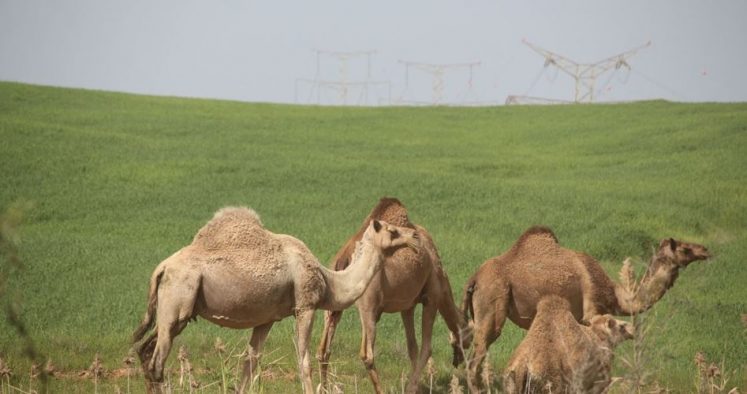
Palestine Information Center | November 12, 2020
BETHLEHEM – Israeli occupation forces (IOF) on Wednesday confiscated a herd of camels, belonging to Palestinian citizens, from the eastern slopes of Bethlehem province.
Chief of al-Rashayida village Fawwaz al-Rashayida reported that the IOF chased a number of camels in the area and seized nine of them belonging to two local residents called Salama Yunus and Mohamed Mustafa.
Rashayida also said that the IOF held the camels in al-Jiftlik village in Jericho province and justified the confiscation measure by claiming the animals were grazing in an area classified by Israel as a nature reserve.
He added that the IOF also demanded the owners of the camels to pay financial penalties if they wanted to get back their animals.
Montenegro’s farmers & environmental protesters ruin army’s plans for mortar shelling exercises
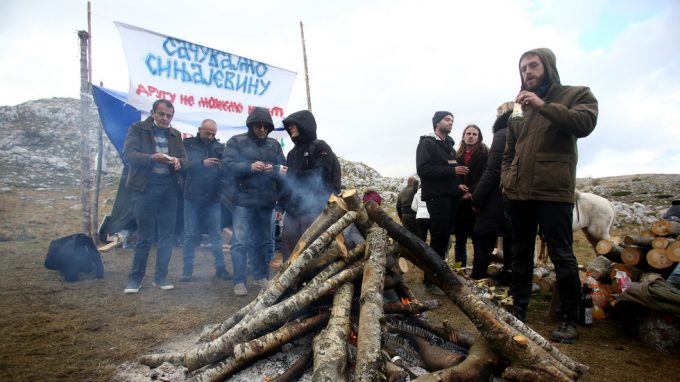
Activists and farmers camp in protest on the mountain Sinjajevina where the army planned a live-fire exercise on October 18, 2020 in Krnja Jela, Montenegro. © Getty Images / Filip Filipovic
RT | October 21, 2020
Montenegro’s Defense Ministry has postponed military training exercises after local shepherds and activists staged a protest over environmental concerns.
The mountain region of Sinjajevina was selected to host military drills including mortar shelling by the Montenegro army. However, the plan didn’t sit well with local farmers and environmental activists, who set up camps in the area and staged non-stop protests to oppose the drills.
The exercise was scheduled for this week, but the army had to retreat. Colonel Aleksandar Pantović, the Chief of Staff of the General Staff, announced that the drills have to be delayed. “We conducted a reconnaissance… the conditions for shooting were not met and that this is not possible,” Pantović told local media. “When all the conditions are met, we will continue with the realization of the exercise.”
A local MP from the URA party supporting the protest, Dritan Abazovic, called the decision a “significant victory” for Montenegro’s citizens and ecology.
The region in question, Mount Sinjajevina, consists of the largest stretch of grassland in the Balkans and makes up part of a location designated a UNESCO biosphere reserve. It was chosen as a place for a military polygon last year – something that triggered public discontent. Farmers and activists argued that explosives risk damaging the delicate environment and would contaminate the water supply.
“We will certainly not clash with the citizens,” the country’s Defense Minister Predrag Boskovic said in an interview. However, he noted that it is impossible to have an army unable to train on its own territory.
Montenegro is a NATO member state currently possessing an armed force of 2,400 active duty soldiers.
Israeli occupation authority seizes vast West Bank areas after declaring them nature reserves
Palestine Information Center – October 19, 2020
RAMALLAH – The Palestinian Environment Quality Authority has said that the Israeli occupation authority (IOA) has imposed its control over 36 areas in the West Bank under the pretext of nature reserves.
Senior official of the authority Issa Mousa told Voice of Palestine radio that there are many West Bank areas that had been declared nature reserves by the IOA with the aim of using them as military posts or Jewish settlements.
Mousa affirmed that the IOA recently announced its decision to seize 11,000 dunums of Palestinian land in the West Bank to turn them into nature reserves, adding that those seized areas are actually fertile agricultural lands in Jericho, southern Jiftlik, Deir Hijleh and eastern Tayasir in Tubas.
He pointed out that the conversion of lands into nature reserves cannot be done by military decisions but rather through field studies, and there are special criteria and conditions for taking such measure according to the International Union for Conservation of Nature.
The Palestinian official said that the Palestinian Environment Quality Authority documented all the Israeli violations in those areas as a prelude to submitting them to the UN General Assembly.
An Environmental Nakba: The Palestinian Environment Under Israeli Colonization

Artwork by Andrea Settimo
By Mazin B. Qumsiyeh and Mohammed A. Abusarhan | Volume 23, number 1, Science Under Occupation
Prior to the 1948 war and even the Zionist Congress of 1897, Palestine had some thirteen hundred villages and towns, each with a small and manageable population living sustainably with nature. The land was owned or worked by the Palestinian people, who were 85 percent Muslim, 9.2 percent Christian, and 5.3 percent Jewish.1 This structure changed radically when mostly European Jews mobilized for massive migration to Palestine and began to assume colonial control over the land. In its long recorded history, Palestine has indeed undergone significant environmental and demographic changes, but it is really only in the past century that these changes took on a colonial dimension. The best-known of these changes is the forcible removal of the indigenous population, which reached its peak between 1948 and 1950. During those years, five hundred villages and towns were destroyed by Zionist militias, resulting in the largest wave of refugees after the Second World War.2 But the environmental dimensions of the catastrophe, or Nakba, is little talked about.3 In 1967 Israel occupied the remaining 22 percent of historic Palestine, namely Gaza and the West Bank, and built settlements throughout these occupied territories in contravention of to international law (the Fourth Geneva Convention).4 These dramatic transformations were detrimental to the people and nature of Palestine. Here, we focus on the environment and sustainability in Palestine, an often overlooked casualty of the colonial occupation.
Colonial Impact on the Environment
Once Israel was declared a Jewish state in May 1948, native trees (such as oaks, carobs, and hawthorns) and agricultural crops (olives, figs, and almonds) were systematically uprooted and replaced by European pine trees. These planted pines reduced biodiversity and harmed the local environment.5 Pines shed leaves that are acidic and prevent the growth of underbrush plants. These trees are also very susceptible to fire because of their resins. Indeed, fires are now a common occurrence in the areas in which they were planted. Trees, however, were not the only targets of Israel’s colonial practices. Natural resources, primarily water aquifers, have also been confiscated from the Palestinians. This often happened by deliberately building Israeli colonies on hilltops to ensure effective access to these resources and to maintain surveillance over the Palestinians.6 Environmental sustainability was never a priority for Israel, whose practices detrimentally affected the landscape, resulting in the destruction of diverse habitats and water runoff.7
The occupation of the West Bank and Gaza in 1967 opened opportunities for Israeli industries. Many of the highest polluting companies moved to the West Bank and were provided with tax incentives to do so.8 There the companies only faced the opposition of the Palestinians who had no way to stop them. For example, pesticide and fertilizer manufacturer Geshuri, which faced significant court setbacks in its original plant in Kfar Saba, was moved to an area adjacent to Tulkarm inside the West Bank in 1987. Significant pollution caused by Geshuri and other companies in this area has damaged citrus trees and vineyards.9 Moreover, research on genotoxicity in the Occupied Territories shows the significant impact of the Barkan industrial settlement on the Palestinians of Burqeen village.10 As DNA and chromosomes are damaged, there are increasing cases of miscarriage, cancer, and congenital birth defects. Air and water pollution has also caused diseases ranging from respiratory illness to gastrointestinal failures. Other health-related problems have resulted from the Israeli practice of sending trash, including electronic debris, across the Green Line.11 This debris is often recycled by destitute Palestinians in environmentally harmful ways, such as using fire to remove plastic from useful metals. This practice releases substances that cause serious ailments, including cancer and lung diseases.
Israel has also built an extensive network of roads and other infrastructure serving settlers. Trees and any buildings within seventy-five meters of these roads are bulldozed and declared closed military zones to the Palestinians. The total area used in the West Bank for settler roads was 51.2 km2 in 2000 and has doubled since. Added to the 150.5 km2 of built settlement-colonies, this is a huge area that was previously used by Palestinians for agriculture, pasture, or leisure.12 The disparity between settlers and natives in land control and standard of living is compounded by disparity in access to other natural resources, especially water.13 Israeli officials have deliberately ignored facts and selectively presented falsified or inaccurate data to serve their political interests in the Jordan River while catastrophically impacting Palestinian access to water. For example, 91 percent of the total water of the West Bank is expropriated for Israeli settler use.14
The Israeli occupation has resulted in considerable loss of biodiversity in the Palestinian territories. This began many years ago when Israel diverted the waters of the Jordan Valley, and when trees surrounding destroyed Palestinian villages were replaced by monoculture crops. More recently the apartheid wall in the West Bank obstructs human activities and animal movement, causing a loss of both human and animal biodiversity.15 Humans and nature have been intertwined in Palestine for thousands of years, and the continuing loss of biodiversity irreversibly damages Palestine’s cultural and natural heritage, threatens endangered species, and harms agriculture and environmental sustainability.16
There are many other practices through which the occupation has undermined sustainable development and protection of the environment. These include refusal to issue building permits in most of the West Bank and destruction of any “unauthorized” structures, even including cisterns and solar panels.17 Another example is the policy of Israel to absorb the Palestinian tourism sector, including ecotourism.18
One of the major threats to the Palestinian landscape is the confiscation of land for settlements, sometimes with temporary false excuses of preventing damage to nature.19 For example, the Palestinian village of Ras Imweis and six adjacent areas were initially confiscated under such an excuse then turned into the settlement of Nahal Shilo. In many other instances, the Israeli occupation authorities prevented Palestinian sustainable development by claiming certain stretches of land as “green areas,” then turning them into Jewish settlements within the span of two to three years. Such exploitation was also obvious in the Bethlehem district, where Abu Ghuneim Mountain, one of the largest forests in the Bethlehem district, was turned into the Har Homa settlement in 1997. This is how Israel is “green-washing” the occupation.20
International Failure
Israel’s colonial settlements have had a devastating impact on the Palestinian environment and on indigenous Palestinian lives. This raises significant questions about the possibility of sustainable development under occupation.21 Indeed, there are ample grounds, backed by solid scientific and legal research, to bring claims of environmental injustice to local, national, and international forums.
Article 49 of the Fourth Geneva Convention (which Israel ratified) states that “the Occupying Power shall not deport or transfer parts of its own civilian population into the territory it occupies,” adding that life in military occupied areas must be allowed to proceed as normally as possible. UN Security Council Resolution 465 of 1980 reads in part that “all measures taken by Israel to change the physical character, demographic composition, institutional structure or status of the Palestinian and other Arab territories occupied since 1967, including Jerusalem, or any part thereof have no legal validity and that Israel’s policy and practices of settling parts of its population and new immigrants in those territories constitute a flagrant violation of the Fourth Geneva Convention.”
Israel has largely ignored international law. This impunity is enabled by the international community. For example, a 2003 United Nations Environment Program report identified key effects of the occupation on the environment and made over one hundred recommendations but failed to prioritize them or set target dates. This failure of the international legal system to hold Israel accountable is not just related to environmental issues, but extends across many other areas including Israel’s abuse of prisoners and destruction of civilian life.22 Israel’s aggressive political lobby has also influenced many governments and shapes decisions at the UN, where the United States has veto power. [Mazin B. Qumsiyeh, Sharing the Land of Canaan: Human Rights and the Israeli-Palestinian Struggle (London: Pluto Press, 2004).] The international failure to hold Israel accountable has left the issue—like in South Africa under apartheid—up to organizers and activists on the ground.23
Grassroots Organizing for Environmental Justice
In situations where international law fails, civil society often intervenes, as we have seen in the movements for boycott, divestment, and sanctions (BDS) in South Africa and in Palestine against the respective apartheid regimes. The BDS movement and other forms of civil or popular resistance do make a difference.24 That we have not yet reached the post-apartheid era like South Africa is due to the fact that the settler-colonial occupation of Palestine has been strengthened by international complicity and by agreements, such as the Balfour Declaration and resolutions by the League of Nations and the UN, that exclude the Palestinians. The international community has long abrogated its responsibilities and has thus given Israel a green light to engage in significant violations of human rights (including environmental rights). Civil society must increase pressure on international leaders to assume their responsibility to return dignity and sovereignty to the Palestinian people. International bodies must enforce law and implement sanctions against Israel to rectify the rampant environmental injustices that disproportionately harm the indigenous Palestinian population. Palestinians have no recourse to domestic laws since what laws are available are those of an apartheid settler-colonial state.25 There is recent scholarly and activist interest in using international law to buttress environmental justice claims, especially in developing countries, but as Noura Erekat pointed out, this is undermined by the imbalance of power and influence of the Zionist movement around the world.26 Although we are witnessing the growth of the BDS movement, we need much more pressure and mobilization to enforce recognition of Palestinian rights.27
Nevertheless, a significant movement for environmental justice and sustainability is growing even under the very difficult conditions of occupation and colonization. People are working at the grassroots level to build popular institutions that enhance and promote sustainable natural and human communities in the context of a larger anti-colonial struggle.28 Educating new generations of Palestinians in their culture and history can also help address some of the challenges Palestinians are facing.29 Because colonizers work to separate the colonized from their land and destroy their culture and history, strengthening the connection between the indigenous people and their land will help new generations understand the value of nature beyond the exploitative framework imposed by colonialism.30 Environmental struggles are an integral part of the struggle for freedom and justice in Palestine as elsewhere.
Acknowledgement: We thank the Darwin Initiative (UKaid) and the European Union for their support of some of our work at PMNH/PIBS/Bethlehem University.
About the Authors
Mazin B. Qumsiyeh is a professor and researcher at Bethlehem and Birzeit Universities. He previously served on the faculties of the University of Tennessee, Duke University, and Yale University. He and his wife returned to Palestine in 2008 to start a number of institutions and projects, including the Palestine Institute for Biodiversity and Sustainability (PIBS) at Bethlehem University. He, his wife, and volunteers and staff at PIBS have “joyful participation in the sorrows of this world” and make a difference for sustainability of nature and human communities.
Mohammed A. Abusarhan is a masters student in biotechnology at Bethlehem University and Palestine Polytechnic University. He earned a degree in Biology from Bethlehem University. Since 2017, he has worked at the Palestine Museum of Natural History as a Museum Biologist conducting animal collecting, taxidermy, and identification. His research interests are focused on conservation, museum digitization, biodiversity databases, and bat echolocation. He has published several research articles and spent the summer of 2019 in Germany in a prestigious laboratory as an exchange researcher.
References
- “Demographics of Historic Palestine prior to 1948,” Canadians for Justice and Peace in the Middle East CJPME, July, 2004, https://www.cjpme.org/fs_007.
- Ilan Pappe, The Ethnic Cleansing of Palestine (Oxford: Oneworld Publication, 2006).
- Mazin B. Qumsiyeh, “The Coming Environmental Nakba” in The Third Palestinian Environmental Awareness and Education Conference. EEC (Bethlehem, 2013), 57–59.
- Nur Masalha, Expulsion of the Palestinians: The Concept of “Transfer” in Zionist Political Thought, 1882–1948 (Institute for Palestine Studies, 1992). See also Mazin B. Qumsiyeh, Sharing the Land of Canaan: Human Rights and the Israeli-Palestinian Struggle (London: Pluto Press, 2004).
- Pappe, The Ethnic Cleansing of Palestine.
- Meron Benvenisti, Sacred Landscape: The Buried History of the Holy Land since 1948 (Berkeley: University of California Press, 2002). See also Eyal Weizman, Hollow Land: Israel’s Architecture of Occupation (Brooklyn: Verso Books, 2012).
- ARIJ, Status of Environment in OPT (Applied Research Institute – Jerusalem, 2015).
- United Nations Conference on Trade and Development, “The Economic Costs of the Israeli Occupation of the Palestine People: The Unrealized Oil and Gas Potential,” United Nations, 2019 Report.
- ARIJ, Status of Environment in OPT.
- Khloud M. Hammad and Mazin B. Qumsiyeh, “Genotoxic Effects of Israeli Industrial Pollutants on Residents of Bruqeen Village (Salfit District, Palestine),” International Journal of Environmental Studies 70, no. 4 (2013): 655–62.
- Nadia Khlaif and Mazin B. Qumsiyeh, “Genotoxicity of Recycling Electronic Waste in Idhna, Hebron District, Palestine,” International Journal of Environmental Studies 74, no. 1 (2017): 66–74.
- ARIJ, Status of Environment in OPT.
- Neve Gordon, “From Colonization to Separation: Exploring the Structure of Israel’s Occupation,” Third World Quarterly 29, no. 1 (2008): 25–44. See also Weizman, Hollow Land: Israel’s Architecture of Occupation.
- Clemens Messerschmid and Jan Selby, “Misrepresenting the Jordan River Basin,” Water Alternatives 8, no. 2 (2015): 258–79.
- Qumsiyeh, Mazin B. Unpublished data.
- Alon Tal, Pollution in a promised land: An environmental history of Israel (Berkeley, Calif:Univ. of California Press, 2002); International Union for Conservation of Nature – Regional Office for West Asia (IUCN – ROWA), State of Palestine Fifth National Report to the Convention on Biodiversity. Amman, Jordan 2015; Abdallah T, Swaileh K. “Effects of the Israeli Segregation Wall on biodiversity and environmental sustainable development in the West Bank, Palestine,” International Journal of Environmental Studies 68: 543-555 (2011).
- MOPAD, “State of Palestine National Development Plan 2014-2016’” (Ministry of Planning and Administrative Development, 2014).
- Talia Shay, “The Ethnocracy of the Palestinian Urban Space and the Indigenous Approach: Praxis and Theory,” Archaeologies 12 (2016): 73–90. See also Rami Isaac, C. Michael Hall, and Freya Higgins-Desbiolles, eds., The Politics and Power of Tourism in Palestine (London: Routledge, 2015).
- Dror Etkes and Hagit Ofran, “Construction of Settlements and Outposts on Nature Reserves in West Bank,” Peace Now, February 13, 2007, https://peacenow.org.il/en/nature-reserve.
- Sara Hughes, “‘Greenwashing’ the Occupation: The Role of Environmental Governance and the Discourse of Sustainability in Sustaining the Israeli Occupation of Palestine,” in The Annual Meeting of the American Association of Geographers, 2018.
- Jad Isaac, Khaldoun Rishmawi, and Abeer Safar, “The Impact of Israel’s Unilateral Actions on the Palestinian Environment,” (Applied Research Institute-Jerusalem, 2004).
- Susan M Akram et al., eds., International Law and the Israeli-Palestinian Conflict: A Rights-Based Approach to Middle East Peace (London: Routledge, 2010). See also Noura Erakat, Justice for Some: Law and the Question of Palestine (Stanford, California: Stanford University Press, 2019).
- Mazin B. Qumsiyeh, Popular Resistance in Palestine: A History of Hope and Empowerment (London: Pluto Press, 2012).
- Qumsiyeh, Popular Resistance in Palestine.
- “Environmental Injustice in Occupied Palestinian Territory: Problems and Prospects,” Al-Haq, August 4, 2015.
- Ruchi Anand, International Environmental Justice: A North-South Dimension (London: Routledge, 2017); Erakat, Justice for Some.
- Mazin B. Qumsiyeh, “A Critical and Historical Assessment of Boycott, Divestment, and Sanctions (BDS) in Palestine,” in Conflict Transformation and the Palestinians (Routledge, 2016), 114–29.
- Mazin B. Qumsiyeh, “Nature Museums and Botanical Gardens for Environmental Conservation in Developing Countries” BioScience 67, no. 7 (2017): 589–90. See also Mazin B. Qumsiyeh et al., “Role of Museums and Botanical Gardens in Ecosystem Services in Developing Countries: Case Study and Outlook,” International Journal of Environmental Studies 74, no. 2 (2017): 340–50, https://doi.org/10.1080/00207233.2017.1284383.
- Mazin. B. Qumsiyeh, “Ethnoecology of Palestine: Preserving Culture Heritage of Palestine’s Natural History,” presented at the 4th Hyperheritage International Seminar Proceedings (International Conference): Smart Heritage, 2018.
- Michael R Dove, “Indigenous People and Environmental Politics,” The Annual Review of Anthropology, 35 (2006): 191–208.
Japan to release Fukushima contaminated water into sea: Reports
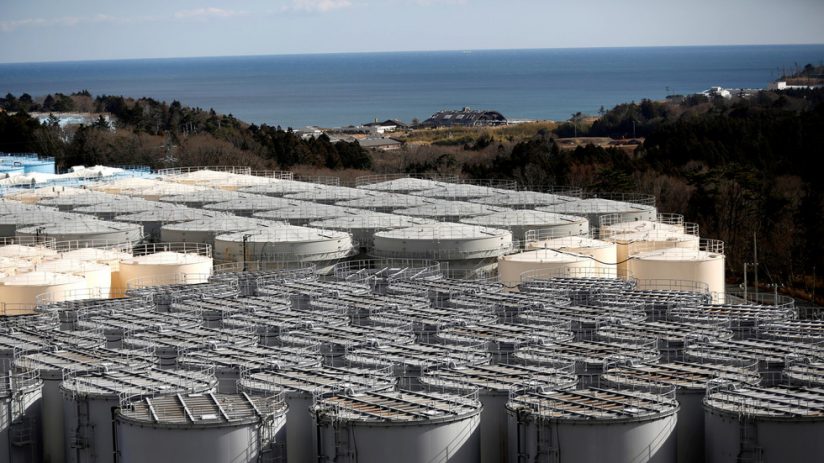
Storage tanks for radioactive water at TEPCO’s tsunami-crippled Fukushima Daiichi nuclear power plant in Okuma town, Fukushima prefecture, Japan. (Photo by Reuters)
Press TV | October 16, 2020
Nearly a decade after the Fukushima nuclear disaster, Japan’s government has decided to release contaminated water from the destroyed plant into the sea, media reports said on Friday, with a formal announcement expected to be made later this month.
The decision is expected to rankle neighboring countries like South Korea, which has already stepped up radiation tests of food from Japan, and further devastate the fishing industry in Fukushima that has battled against such a move for years.
The disposal of contaminated water at the Fukushima Daiichi plant has been a long-standing problem for Japan as it proceeds with a decades-long decommissioning project. More than one million tonnes of contaminated water are currently stored in huge tanks at the facility.
The plant, run by Tokyo Electric Power Company Holdings Inc., suffered multiple nuclear meltdowns after a 2011 earthquake and tsunami.
On Friday, Japan’s industry minister Hiroshi Kajiyama said no decision had been made on the disposal of the water yet, but the government aims to make one quickly.
“To prevent any delays in the decommissioning process, we need to make a decision quickly,” he told a news conference.
He did not give any further details, including a time-frame.
The Asahi newspaper reported that any such release is expected to take at least two years to prepare, as the site’s irradiated water first needs to pass through a filtration process before it can be further diluted with seawater and finally released into the ocean.
In 2018, Tokyo Electric apologized after admitting its filtration systems had not removed all dangerous material from the water, collected from the cooling pipes used to keep fuel cores from melting when the plant was crippled.
It has said it plans to remove all radioactive particles from the water except tritium, an isotope of hydrogen that is hard to separate and is considered to be relatively harmless.
Last week, Japanese fish industry representatives urged the government not to allow the release of contaminated water from the Fukushima plant into the sea, saying it would undo years of work to restore their reputation.
South Korea has retained a ban on imports of seafood from the Fukushima region that was imposed after the nuclear disaster and summoned a senior Japanese embassy official last year to explain how Tokyo planned to deal with the Fukushima water problem.
During Tokyo’s bid to host the Olympic Games in 2013, then-Prime minister Shinzo Abe told members of the International Olympic Committee that the Fukushima facility was “under control”.
The Games have been delayed to 2021 because of the pandemic and some events are due to be held as close as 60 km (35 miles) from the wrecked plant.
‘Poisoning the Pacific’ details US military’s secret dumping of poison into Far East
Press TV – October 11, 2020
A new book has revealed that the US military has contaminated the Pacific Ocean with radioactive waste and weapons-grade chemicals for decades.
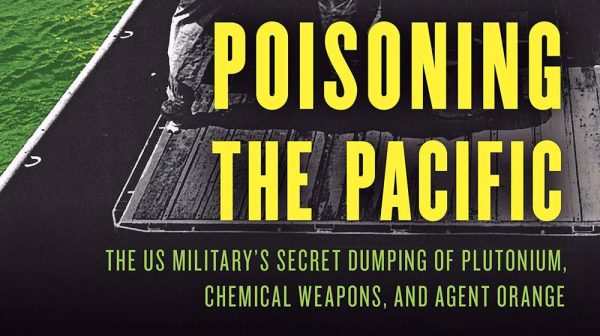
The new book titled Poisoning the Pacific, written by British journalist Jon Mitchell, details how the US military has been disposing toxic substances, including plutonium, dioxin, and VX nerve agent at the Pacific.
Based on more than 12,000 pages of US government documents, Poisoning the Pacific narrates the story of soldiers, their families, and residents who have been exposed to poisonous substances.
The documents have been obtained under the US Freedom of Information Act (FOIA) and through interviews with local residents, military veterans and researchers.
The US government, however, has covered up the extent of the damage and refused to help the victims.
In one case, Leroy Foster – a US Air Force master sergeant who was assigned to the Anderson Air Force Base in Guam in 1968 – was ordered to mix “diesel fuel with Agent Orange” and spray “it by truck all over the base to kill the jungle overgrowth.”
Soon after, Foster suffered serious skin complaints and eventually fell sick with Parkinson’s and ischemic heart disease. Later, his teenage daughter had cancer, and his grandchild was born with 12 fingers, 12 toes, and a heart murmur. Foster died in 2018.
“My reporting has helped these sick men and women to receive compensation from the US government. Investigative journalism is ultimately a job that ought to help people suffering from mistreatment to receive the justice they deserve,” Mitchell says in his book.
The voices of the suffering indigenous groups in the Pacific region, however, consistently go unheard, said Mitchell, who in 2015 was awarded Japan’s Freedom of the Press Lifetime Achievement Award for his work about the environmental impact and damage caused by US military presence in Okinawa.
Researchers report that villages where herbicides were believed to have been sprayed by the US suffered higher rates of infant deaths from birth defects.
The US government was split over claims of herbicide use on Guam following an investigation in 2017. The Department of Defense reported that tests on soil did not contain herbicides, but the Environmental Protection Agency reported the opposite.
The health and environmental impacts on Guam mirror those that have happened to local residents and US soldiers based in Okinawa, Japan, where the US has maintained a base for decades.
Featured Video
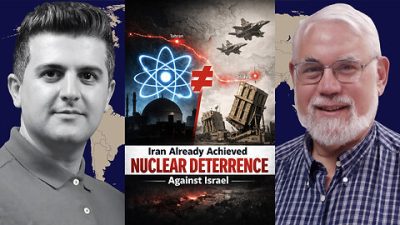
Prof. Ted Postol: Iran Already Achieved Nuclear Deterrence Against Israel
or go to
Aletho News Archives – Video-Images
From the Archives
How the occupied mentality syndrome works
Saudi Arabia on the American chessboard – Part 3
By B. J. Sabri | American Herald Tribune | June 27, 2016
Read part 2: “The occupied mentality Syndrome“
Previously I argued whether Saudi Arabia’s repeated involvements in U.S. interventions and wars stem from free national will or in response to a specific condition. For starters, in Saudi Arabia there is no national will. In Saudi Arabia, the national will is the will of the Al Saud clan. Still, when a major Arab state allies itself with a superpower that committed unspeakable crimes against humanity in almost every Arab country, then something is wrong. This fact alone should compel us to examine the U.S.-Saudi relation for one exceptional reason. As a result of the U.S.-Saudi wars, hundreds of thousands of people in Afghanistan, Iraq, Iran, Libya, Syria, Yemen, and Somalia have lost their lives. Millions became displaced in their own homelands. And millions more rendered refugees.
Attributing the Saudi policies to the bonds of “partnership” with the U.S. is frivolous. There are no bonds between these two thugs except those of business, military deals, secret plots, and wars. Proving this point, bonds such as these have no space for the American and Saudi peoples to share significant cultural or societal exchanges. If partnership is not the reason for the Saudi contribution to the U.S. strategy of empire and imperialism, then another reason must exist.
This leads to three possibilities. … continue
Blog Roll
 Aletho News
- NIAID/NIH and USDA Fund Bioengineered Chimeric Influenza Viruses Built Using Pandemic H1N1 Components: Journal ‘Science Advances’
- Hezbollah hits Israeli warship off Lebanon’s coast, sets it aflame
- Iran slams US strikes on B1 bridge, Mahshahr petrochemical plants as ‘blatant acts of state terrorism’
- In letter to UN chief, Araghchi warns of dire consequences of US-Israeli attacks on Iran’s nuclear facilities
- Why the CIA conspiracy to invade Iran with Kurdish militias failed
- Why Are Upbeat US Claims About Mission to Rescue Pilot ‘Highly Questionable’?
- Aircraft destroyed during US ‘rescue’ of downed F-15 pilot cost more than $100 million each
- Washington University removes professor who condemned US-Israeli war on Iran
- Russia Warns of Retaliation as UK Authorizes Seizure of Vessels
- Serbia thwarts plot to bomb Russia-Hungary gas pipeline – Vucic
- If Americans Knew
- In Iran, Israel-US take aim at “reason, research, and freedom of thought” – Daily Update
- US loses planes over Iran, Israel downgrades Lebanon war goals – Daily Update
- Israel Is Blocking Palestinians from Easter at Church Where Jesus Resurrected
- Plot to assassinate Palestinian activist follows harassment campaign promoted by Zionist groups and elected officials
- Prominent New York synagogue hosts presentation on why U.S. Jews should support the ethnic cleansing of Gaza
- Tapper vs. Piker: Is the CNN Anchor Auditioning for David Ellison?
- Shouldn’t Democrats Be Able to Condemn Genocide?
- Israel-US kill negotiators, destroy civilian structures, but Iran’s military capabilities still largely intact – Daily Update
- ‘War crime’: Global condemnation as Israeli ministers celebrate death penalty law targeting Palestinian prisoners
- 7 Ways Israel Is Turning Lebanon Into Gaza
- No Tricks Zone
- An Inconvenient Tree: Uncovered In Alps… Europe Much Warmer Than Today 6000 Years Ago
- New Study Reports A 60% Slowdown In Greenland’s Ice Loss Rate In The Last Decade
- Low Intensity Tornado Wrecks Major Solar Farm, Creating A Potential Toxic Dump
- New Study Finds Warming Saves Lives…Cold Temperatures 12 Times More Deadly Than Excess Heat
- German Science Blog Accuses PIK Climate Institute Of Hallucinating Climate Tipping Points
- Devastating Assessment Of Comirnaty Vaccine By Former Senior Pfizer Europe Toxicologist
- New Study: CO2 Is ‘Effectively Negligible’ As An Explanatory Climate Change Factor Since 2000
- Former Pfizer Toxicologist Dr. Helmut Sterz Tells Bundestag Hearing Pfizer Vaccine Should Have Never Been Approved
- Energy Expert: Germany’s Nuclear Phaseout Was A “500 Billion Euro Mistake”
- New Research: South Australia’s Mid-Holocene Sea Surface Temperatures Were 4°C Warmer Than Today
 Aletho News