U.S. Abandons Toxic Burn Pits as it Withdraws from Iraq and Afghanistan
By Matthew J. Nasuti | Kabul Press | December 10, 2011

U.S. service members and their Iraqi and Afghan allies have a common enemy. It is not Iran, the Taliban or al-Qaeda, but the Pentagon which operated hundreds of toxic burn pits in Iraq and Afghanistan.
As the U.S. completes its withdrawal from Iraq and begins to draw down in Afghanistan, the American military, pursuant to its “pollute and run” policy, is abandoning millions of kilograms of toxic and potentially radioactive waste. Everything is being buried and covered over, just as it did in Vietnam and in the Philippines when the U.S. withdrew from Clark Air Base and the Subic Bay naval installation.
The Pentagon seems to hope that all the health problems of U.S. troops can likewise be buried and covered over.
The (U.S.) Air Force Times ran an editorial on March 1, 2010 that read: “Stamp Out Burn Pits” We reprint the first portion of that editorial:
“A growing number of military medical professionals believe burn pits are causing a wave of respiratory and other illnesses among troops returning from Iraq and Afghanistan. Found on almost all U.S. bases in the war zones, these open-air trash sites operate 24 hours a day, incinerating trash of all forms — including plastic bottles, paint, petroleum products, unexploded ordinance, hazardous materials, even amputated limbs and medical waste. Their smoke plumes belch dioxin, carbon monoxide and other toxins skyward, producing a toxic fog that hangs over living and working areas.”
On April 12, 2010, the Richmond Times-Dispatch carried an article by David Zucchino who investigated the American burn pits in Iraq. He interviewed Army Sgt. 1st Class Francis Jaeger who hauled military waste to the Balad burn. Jaeger told Zucchino:
“We were told to burn everything – electronics, bloody gauze, the medics’ biohazard bags, surgical gloves, cardboard. It all went up in smoke.”
According to a website called the “Burn Pits Action Center” large numbers of American veterans who came in contact with burn pit smoke have been diagnosed with cancer, neurological diseases, cardiovascular diseases, breathing and sleeping problems and various skin rashes.
On October 28, 2009, President George W. Bush, signed into law H.R. 2647, which included the provisions of “The Military Personnel War Zone Toxic Exposure Prevention Act.” The Act was sponsored by Congressman Tim Bishop of New York and supported by the Veterans of Foreign Wars, the National Guard Association of the United States, and the Military Officers Association banned the use of burn pits unless they were specifically deemed essential by the Secretary of Defense. Despite the law, burn pit use continued in Iraq and reportedly continues today in Afghanistan.
The impetus for H.R. 2647 was Lieutenant Colonel Darrin L. Curtis, Ph.D., who was a Bioenvironmental Engineering Flight Commander at Balad Air Base in Iraq in 2006. Lt. Col. Curtis wrote a December 20, 2006, report on the environmental and health impacts of the Balad burn pit. He stated that the burn pit was “the worst environmental site” he had seen in seventeen years of environmental work in the United States. He characterized the smoke released by the military as: “an acute health hazard” to everyone who has been deployed or will be deployed to Balad. Lt. Col. Curtis’ report was reviewed and endorsed by Lieutenant Colonel James R. Elliott, Chief of Aeromedical Services. The Pentagon ultimately ignored the report just as it had ignored the Fall 2004 study in (U.S. Army) “Engineer – The Professional Bulletin” which found that by 2002, Kandahar Airfield was facing “a growing human health and environmental threat” from the uncontrolled burning of hazardous waste.
In June 2008, the U.S. Army Center of Health (USACHPPM) issued a “Fact Sheet” that downplayed any health problems associated with the burn pits. It stated that the safety of the burn pits had been independently validated by the Defense Health Board (DHB). It went on to claim that:
“The DHB is an independent board comprised of experts from private industry and recognized universities.”
Research into the DHB reveals otherwise. The Board is primarily composed of retired Generals, Admirals and Colonels, along with political appointees from prior Administrations and civilian consultants currently under contract to the Pentagon and other government agencies. There is nothing independent about the Board. The Senate Democratic Policy Committee took testimony from Dr. Anthony Szema, an Assistant Professor of Medicine at SUNY and a physician with the Department of Veterans Affairs. He provided a detailed refutation of the DHB’s flawed findings regarding the burn pits. His testimony is available on the Internet under the phrase: “Are Burn Pits Making Our Soldiers Sick?”
On October 3, 2008, the Military Times published a damning report by Kelly Kennedy entitled “Army Making Toxic Mess in War Zones.” The article was prompted by the release in September 2008, of a Rand Corporation study that detailed a horrific series of environmental spills, releases and disposals in Iraq and Afghanistan. Bruce Travis of the U.S. Army Engineering School told the Times that no environmental rules were complied with in Iraq from 2003-2008 (this would presumably apply to Afghanistan also). He went on to state that an estimated 11 million pounds of hazardous waste were disposed of in Iraq up to 2008. This practice did not end in 2008. A U.S. Government Accountability Report in 2010, detailed inspections in 2009/2010 of four American bases in Afghanistan and none were found to be compliant with environmental standards.
Most American military waste falls into one of the following twelve (12) categories. They are called the “dirty dozen:”
1. Paints, asbestos, solvents, grease, cleaning solutions.
2. Building materials that contain formaldehyde, copper, arsenic and hydrogen cyanide.
3. Hydraulic fluids (hazardous), aircraft de-icing fluids (toxic), antifreeze (poisonous) and used oil (cancer-causing).
4. Jet fuel, gasoline and diesel fuel.
5. Pesticides and various neuro-toxic poisons resulting from attempts to control flies, mosquitoes, ants, fleas and rodents. The military refers to such practices as “vector control.”
6. Lead, nickel, zinc and cadmium battery waste and acids (toxic/corrosive).
7. Electronic waste (or E-waste). This includes computers, printers, faxes, screens, televisions, radios, refrigerators, communications gear and test equipment. They contain cancer-causing chemicals such as the flame retardant PBDE (polybrominated diphenyl ethers), PCDD (polychlorinated dioxins), barium, copper, lead, zinc, cadmium oxides and cadmium sulphides and trivalent antimony.
8. Light bulbs containing hazardous levels of mercury. Disposal of these light bulbs in ordinary landfills is prohibited in the United States.
9. Plastics. When burned, many plastics release a deadly mix of chemicals including dioxins, furans, benzene, di 2-ethylhexyl phthalates (DEHP), hydrochloric acid, benzo(a)pyrene (BAP) and various acids and chlorine gas (which is a neurotoxin).
10. Medical/Infectious Disease waste and Biohazard Materials.
11. Ammunition waste. Lead, brass and other metals from ammunition along with all the constituents of the propellants, including trinitrotoluene, picric acid, diphenylamine, nitrocellulose, nitroglycerin, potassium nitrate, barium nitrate, tetracene, diazodintrophenol, phosphorus, peroxides, thiocarbamide, potassium chlorate, vinyl fluoride, vinyl chloride, sodium fluoride and sodium sulfate.
12. Radioactive waste. The American military routinely uses a large number of devices and equipment that contain radioactive elements or radioluminescent elements. These materials are referred to as “Radioactive Commodities” by the military. The primary radioactive materials are: Uranium, Tritium, Radium 226, Americium 241, Thorium, Cesium 137 and Plutonium 239. A partial list of radioactive equipment that may have been disposed of in burn pits or buried in Iraqi and Afghan landfills includes: night vision devices, calibration sets, engine components, weapon sights, compasses, fire control devices, level gauges, collimators, sensors, test equipment, vehicle dials, radios, chemical agent monitors and communication equipment, along with laboratory and hospital machines. In addition to these commodities, the military also uses 120mm depleted uranium (DU) warheads and 20mm DU ammunition along with DU armor plating.
The Pentagon admits operating 84 “official” burn pits in Iraq and Afghanistan, yet Adam Levine from CNN reported on October 15, 2010, that at least 221 burn pits were operated in Afghanistan alone. That number is believed to be only half of the actual burn pits operated in Afghanistan. On February 10, 2010, CBS News published a report by Nick Turse entitled: “the 700 military bases of Afghanistan.” CBS claims that about 400 bases, posts and camps belong to Coalition forces, most of which are American. Each of these facilities may have one or more burn pits, landfills, or disposal pits. The number of U.S. military bases in Iraq may be double this. Each needs to be excavated, sampled and analyzed.
The latest and perhaps the most disturbing burn pit information was published last month on Wired.Com. Written by Katie Drummond, it was entitled: “Congressman: The Military’s Burn Pit Screwed Our Soldiers.” The Congressman is Todd Akin from Missouri. The outrage was over a press release issued on October 31, 2011 by the Institute of Medicine, which is the health arm of the National Academy of Sciences. It was unable to complete its report on the burn pits, a report that had been commissioned by the U.S. Department of Veterans Affairs. The Institute of Medicine found 53 toxins in the air above the Balad air base in Iraq but could not determine the sources for each due to a lack of assistance by the Pentagon. The Institute was unable to obtain information from the Pentagon as to what it burned and buried. The Pentagon claims it kept no records and has no scientific data,. The reason is that it apparently never sampled and analyzed the material in any of its Iraq or Afghan burn pits. The U.S. military is now simply covering them all over with dirt as the U.S. prepares to withdraw from Iraq and begins to draw down in Afghanistan.
In summary, there has been no competent assessment of the long-term environmental harm to the people of Iraq and Afghanistan from the abandonment of such a massive volume of toxic waste. The Pentagon has likewise abandoned its own solders, sailors, marines and airmen whom it poisoned and injured. Until all the burn pits are excavated and sampled, there is no way to determine the full makeup of the toxic soup of pollutants that U.S. military personnel were exposed to.
This “pollute and run” policy should not be permitted. If invading countries had to clean up and restore the countrysides they invaded and damaged, and if they had to treat and care for all those they injured, perhaps they might in the future think twice before launching such wars.
Sources for Further Reading:
Houston Chronicle – February 7, 2010 – “GIs tell of horror from burn pits”
Los Angeles Times – February 18, 2010 – “Veterans speak out against burn pits”
Salem News – March 29, 2010 – “Sick Veterans Sue KBR Over Iraq and Afghanistan Burn Pits”
Kabul Press – April 25, 2010 – “EXCLUSIVE REPORT: American Military Creating an Environmental Disaster in Afghan Countryside” (Part 1 of 3)
Kabul Press – May 2, 2010 – EXCLUSIVE REPORT: American Military Burn Pits Pollute Afghan Countryside (Part 2 of 3)
Kabul Press – May 4, 2010 – EXCLUSIVE REPORT: American Military Burn Pits Pose Risk to Future Generations of Afghans (Part 3 of 3).
Israeli SodaStream: Maybe Green, Definitely Not Clean
By Theresa Wolfwood | Palestine Chronicle | December 10, 2011
It seems like a great idea – to buy a counter top device that converts tap water into sparkling fizzy water. Add a line of 100 flavours of sweet syrups; in the words of the sales clerk I spoke to, ‘it’s a fun thing.’
SodaStream (sometimes marketed as Soda Club) is sold around the world including in my city, often by big chain stores like Costco, Kmart and Amazon (USA); Sears, The Bay, and Home Outfitters (Canada); Tesco, Asda and Argos (UK); Migros (a large coop network in Switzerland); Carrefour (France & other countries); Edeka, Adler, and Karstadt, (in Germany where it is distributed by Brita, the international water filter company. Brita products are sold in Israel by SodaStream.)
The world’s largest producer of home carbonation systems, sold in 41 countries, SodaStream claims to be environmentally friendly because it uses its own reusable bottles, saving the production and transport of millions of disposable plastic containers and saving money and time for consumers. As some of the syrups use natural products, while others use sugar and artificial sweeteners, it is promoted also as “healthy” in natural food, eco-friendly, green and biological shops.
It sounds too good to be true – and so it is.
These products are labelled “Made in Israel”, the company claims to have factories elsewhere including China. An examination of the corporate annual report reveals that only some parts are made in China. (SodaStream International Ltd.; Annual report,” 30 June 2011).
SodaStream is owned by Soda-Club, an Israeli company founded in 1991 by Peter Wiseburgh and publicly traded on NASDAQ as SodaStream International under the symbol SODA with 2009 revenues of USA$ 142,842,000.
However, the products are not made in Israel at all.
SodaStream is manufactured in Mishor Adumin, (also known as Mishor Edomin) one of 171 illegal settlements within Palestine. Mishor Adumin is about 20 kilometres east of Jerusalem in a strategic area of illegal settlements designed to cut off Palestinians’ right of free movement between the northern and southern areas of the West Bank. Syrups are produced in another settlement, Ashkelon. (The device uses disposable carbon dioxide cartridges which are made in Germany and other countries.)
“These products are fraudulently labelled as “Made in Israel”, but are in fact produced in illegal settlements under the conditions of the military occupation in the West Bank, outside the internationally-recognized borders of Israel.” http://www.bdsmovement.net/2011
Environmentally-friendly? Think of the Palestinian residents and farmers of Mishor Adumin whose homes, fields, orchards and forests were destroyed to create this industrial settlement and the neighbouring residential settlement of Ma’aleh Adumim which today ranks third in population of all Israeli settlements in the West Bank. Over 1.5 million trees have been destroyed in Palestine by the occupiers as they insinuate their homes and factories into Palestinian land. More than 300,000 Palestinians are homeless as a result of home demolitions in Palestine.
The environmental destruction continues. When I was in Palestine I witnessed fields, orchards and homes being bulldozed and leveled, preparing for the continuation of the wall and the construction of an Israeli-only super highway linking all the settlements around Jerusalem, including Ma’aleh Adumim and Mishor Adumin.
So how can SodaStream be green?
There is nothing clean about the production of this ‘fun’ product, either. Many of the workers in SodaStream factory are Palestinians, desperate for any kind of job. Independent research has revealed that workers are poorly paid, sometimes below the minimum wage, are threatened with job loss (in any Israeli-owned facility) if they complain about bad working condition, job insecurity or low wages. They are the occupied subjects of military rule, lacking legal rights, including the right to organize. (For more details, see here)
SodaStream has also been accused of fraud. The European Union grants certain tax benefits to Israeli goods imported into Europe, but that does not include goods produced in occupied territories. In 2010 the European Court of Justice ruled that its products manufactured in Israeli-occupied territories were not subject to the preferential import duty treatment as goods manufactured within Israel. In Germany shipments of these products have been stopped by customs because they are not labelled truthfully.
Resolutions #242 & #338 of the UN Security Council include statements that prohibit permanent settlement of occupied lands for domestic or commercial purposes; Israel continues to rob Palestine of land, resources and access. Article 49 of the Fourth Geneva Convention of 1949 also states that, “The Occupying Power shall not deport or transfer parts of its own civilian population into the territory it occupies.”
The Boycott, Divestment and Sanctions Movement, founded by 180 civil organizations in Palestine, has spread around the world. Solidarity groups everywhere are chalking up successes in consumer products and institutional investments, including national pension plans. (See: BDS: BOYCOTT, DIVESTMENT, SANCTIONS: The Global Struggle for Palestinian Rights. 2011. Haymarket Books, USA by Omar Barghouti)
Meanwhile SodaStream claims with much publicity to have sold one million of its devices in socially-responsible Sweden. But in July, 2011 the Coop (Cooperative Stores Network) announced it would stop selling SodaStream products because they are made in occupied territory and their sale was in conflict with Coop’s own ethical standard as well as Global Compact, the UN ethical guidelines for businesses. In Belgium as well as other European countries BDS campaigners actively protest against the sale of SodaStream.
USA and Canada both have a Free Trade Agreement with Israel. That means, as in the European Union, certain taxes are not levied on partners. By allowing SodaStream to sell its fraudulently labelled “Made in Israel” products, illegally produced under military occupation, as free trade products, the company receives financial concessions under Free Trade agreements.
Boycotts are powerful tools for our international campaigns for human rights. Ahava Cosmetic Products are also made in an illegal settlement, Mitzpe Shalem, near the Dead Sea; they are no longer sold in major outlets in Canada and USA after boycott actions. As law respecting citizens we have a responsibility to stop the illegal sale of another luxury product with dubious health or environmental benefits, made under conditions that violate the human rights of workers and all Palestinians.
Boycott SodaStream!
– Theresa Wolfwood is a writer and activist in Victoria, BC, Canada. She visited Palestine in 2010 and Belgium in 2011.
The Worst of the One Percent?
Meet Wal-Mart’s Rob Walton
By DAN BACHER | CounterPunch | November 30, 2011
Brave New Films, the film studio that produced the ground-breaking documentary, “Wal-Mart: The High Cost of Low Price,” is holding an online vote to pick the “worst of the 1%.” They’re looking for the person who is doing the most with their wealth to exploit the rest of the country – and to privatize public services and public trust resources.
Walmart Watch is urging people to vote for Rob Walton, chairman of Walmart and an heir to the Walton’s family fortune, as the worst of the one percenters. Walmart Watch is an organization that “seeks to hold Walmart fully accountable for its impact on communities, the American workforce, the retail sector, the environment and the nation’s economy.”
I also strongly urge everybody to vote for Rob Walton as “worst of the 1%” for his efforts to crush labor and human rights and drive local “mom and pop” operations out of business, as well for funding corporate environmental NGO efforts to privatize the oceans by promoting “catch shares” programs and Arnold Schwarzenegger’s privately funded Marine Life Protection Act (MLPA) Initiative.
To vote, go to: http://www.bravenewfoundation.org/dirty-thirty/all/rob-walton.
“When it comes to the 1%, Rob Walton and the Walton family are it,” according to Walmart Watch. “The Walton family has amassed more than $93 billion in wealth, making them the richest family in the country.”
“The Waltons inherited that wealth, much of it was created by paying many workers at poverty-level wages, offering poor benefits, and lowering conditions in the supply chain by demanding ever-lower prices. Walmart’s trade deficit with China alone eliminated hundreds of thousands of US manufacturing jobs,” the group ntoed.
Rob Walton himself has an overall estimated worth of $21 billion running the world’s largest private employer. It is estimated now that 1.4 million people work for Walmart or 1 out of every 222 people in the U.S.
“The dividends of the Walmart stock the Waltons own alone could go a long way toward making Walmart jobs good, living wage jobs. Instead he chooses to keep the average employee below the family poverty line and cut health benefits for hundreds of thousands employees,” the group added.
The Waltons have used the Walton Family Foundation to advance an extreme anti-worker and anti-human rights agenda. In the last five years, the Walton Family Foundation (where Rob sits on the board) has given money to the Heritage Foundation, the National Right to Work Foundation and other groups that advance the agenda of Wall Street banksters and other corporate operatives who have looted the economy.
Walmart Watch stated, “In 2010, the Walton Family Foundation spent more than $157 million to support the so-called school choice movement. This movement generally seeks to divert money from public schools to private schools through policies such as vouchers and charter schools. These donations make the Walton Family Foundation one of the largest funders of efforts to undermine public education.”
Wal-Mart gives $36 million to ocean privatization efforts
In addition to anti-worker and school privatization campaigns, the corporate giant also dumps millions into “environmental” programs to greenwash the privatization of public trust resources.
The Recreational Fishing Alliance (RFA), a national grassroots recreational fishing organization, in August slammed the Walton Family Foundation’s contribution of $36 million to ocean privatization efforts through “catch shares” programs and the creation of so-called “marine protected areas.”
“Wal-Mart announced this week its efforts to help fund the demise of both the recreational and commercial fishing industry while also working to ensure that the next generation of sportsmen will have less access to coastal fish stocks than at any point in U.S. history,” according to a news release from RFA.
In a August 16th news release from Wal-Mart corporate headquarters in Bentonville, Arkansas, the Walton Family Foundation announced “investments” totaling more than $71.8 million awarded to various “environmental” initiatives in 2010. The foundation handed over $36 million alone to Marine Conservation grantees including Ocean Conservancy, Conservation International Foundation, Marine Stewardship Council, World Wildlife Fund and Environmental Defense Fund (EDF).
The five top grantees were: Conservation International, $18,640,917; the Nature Conservancy,$9,305,449; Environmental Defense Fund $7,086,054; the Marine Stewardship Council, $4,500,000; and the Ocean Conservancy, $3,757,768.
Critics of Wal-Mart, the largest retailer in the world, have blasted the company for decades for being able to sell its products at cheap prices only by employing sweatshops, undercutting competitors, wielding its market power to cripple both competitors and suppliers, and flouting national and international health, safety, labor, and environmental standards. Anti-corporate globalization opponents have long regarded Wal-Mart as a virtual “Darth Vader” of retailers, as documented in the film, “The High Price of Low Cost.”
Greenwashing Wal-Mart’s Image
However, in 2006 the retail giant hired Adam Werbach former Sierra Club president to “polish” its image. This latest Wal-Mart release is apparently part of a carefully orchestrated campaign to greenwash its image – and extend control over public trust resources.
According to the release, the Walton Family Foundation “focuses on globally important marine areas and works with grantees and other partners to create networks of effectively managed protected areas that conserve key biological features, and ensure the sustainable utilization of marine resources – especially fisheries – in a way that benefits both nature and people.”
“We focus our work in the United States’ primary river systems and in some of the world’s most ecologically significant marine areas,” said Scott Burns, director of the foundation’s Environment Focus Area and the former director of marine conservation at the World Wildlife Fund. “It’s important to us to protect and conserve natural resources while also recognizing the roles these waters play in the livelihoods of those who live nearby.”
The RFA countered that these specially managed areas of coastal waters are also referred to as “marine protected areas” or “marine reserves,” and the end result is denied angler access, of little or no benefit to the very people whom Wal-Mart claims to benefit.
Marine protected areas without real protection
“A quick visit to the Ocean Conservancy website should be telling enough for anglers interested in learning where Wal-Mart’s profits are being spent,” said RFA executive director Jim Donofrio. “These folks are pushing hard to complete California’s network of exclusionary zones throughout the entire length of coastline, and they’ve made it very clear that they would like to see the West Coast version of the Marine Life Protection Act (MLPA) extended into other coastal U.S. waters.”
Grassroots environmentalists, fishermen, members of Indian Tribes, civil liberties activists and environmental justice advocates have criticized Governor Arnold Schwarzenegger’s Marine Life Protection Act (MLPA) Initiative, privately funded by the shadowy Resources Legacy Fund Foundation, for its numerous conflicts of interest and the violation of numerous state, federal and international laws.
The so-called “marine protected areas” established under the MLPA Initiative fail to protect the ocean from oil drilling and spills, water pollution, wave and wind energy projects, military testing, corporate aquaculture, habitat destruction and all other human impacts upon the ocean other than fishing and gathering. In an extreme case of corporate greenwashing, Catherine Reheis-Boyd, the president of the Western States Petroleum Association, served as chair of the MLPA Blue Ribbon Task Force that created these questionable “marine protected areas” on the Southern California coast. She also served on the task forces for the North Central and North Central Coasts.
When not chairing or serving on these rigged panels, Reheis-Boyd has been busy lobbying for new oil drillling off the California coast, tar sands drillling in Canada, and for the weakening of environmental regulations throughout the West.
The Walton Family Foundation release also said that so-called “marine protected areas” being promoted with the foundation’s money include those in Indonesia, Colombia, Costa Rica, Ecuador, Panama, the Gulf of California and the Gulf of Mexico.
“Here’s an organization which has publicly opposed creation of artificial reefs used by Wal-Mart’s tackle buyers, in some cases openly advocating for their removal, yet the Walton family is handing over tons of money for support,” Donofrio said of Ocean Conservancy in particular.
Jack Sobel, a senior scientist for the Ocean Conservancy, has said “There’s little evidence that artificial reefs have a net benefit,” citing concerns such as toxicity, damage to ecosystems and concentrating fish into one place (worsening overfishing).
Wal-Mart boycott follows Safeway boycott
“Shopping for fishing equipment at Wal-Mart is contributing directly to the demise of our sport, it’s supporting lost fishing opportunities and decreased coastal access for all Americans,” Donofrio said. “I hope all RFA members across the country will remember that when it’s time to gear up, but I would also wonder if perhaps our industry can help spread the message and support our local tackle shops by also pulling product off Wal-Mart’s shelves.”
RFA in April 2011 announced its support of a national boycott of the Safeway Supermarket chain, including Genuardi’s in New Jersey, Pennsylvania and Delaware, because of that corporation’s support for California’s widely-contested MLPA initiative.
“Apparently Safeway has gotten some bad advice from the people in the ocean protection racket, a community to which the California-based mega-corporation is now donating profits,” said Jim Martin, West Coast Regional Director of the RFA. “Safeway says it is supporting groups that make a difference like the Food Marketing Institute’s Sustainable Seafood Working Group, the Conservation Alliance for Seafood Solutions and the World Wildlife Fund’s Aquaculture Dialogues, but it’s little more than corporate greenwashing.”
RFA believes it’s time that Wal-Mart was added to the angler boycott list as well.
“The Walton family created this huge corporate entity which has threatened the vibrancy of our local retail outlets, and now they’re essentially doing the same thing with our fishing communities,” Donofrio said.
“Much like Safeway has done with their financial investment in the environmental business community, Wal-Mart apparently prefers customers buy farm-raised fish and seafood caught by foreign countries outside of U.S. waters, while denying individual anglers the ability to head down to the ocean to score a few fish for their own table,” noted Donofrio.
Wal-Mart pushes catch shares program
The Walton Family Foundation is also working “to create economic incentives for ocean conservation,” while candidly pledging their support for “projects that reverse the incentives to fish unsustainably that exist in ‘open access fisheries’ by creating catch share programs,” according to the official news release.
A broad coalition of commercial and recreational fishing, consumer and environmental groups is opposing the catch shares programs being pushed by NOAA Administrator Jane Lubchenco, a former vice-chair of the Board of Directors of Environmental Defense, because these programs amount to the privatization of public trust resources by concentrating fisheries in the hands of a few corporate hands. Wherever catch shares have been introduced, local fishing communities, fish populations and the environment have been devastated.
“A catch share, also known as an individual fishing quota, is a transferable voucher that gives individuals or businesses the ability to access a fixed percentage of the total authorized catch of a particular species,” according to Food and Water Watch. “Fishery management systems based on catch shares turn a public resource into private property and have lead to socioeconomic and environmental problems. Contrary to arguments by catch share proponents – namely large commercial fishing interests – this management system has exacerbated unsustainable fishing practices.”
Donofrio emphasized, “Our local outfitters and tackle shops along the coast have had to face an immense challenge by going up against Wal-Mart’s purchasing power during the last decade, but now that the Walton family is so up front about their opposition to open access fisheries, it’s hard for me to believe that any sportsmen would ever be interested in shopping there again.”
“California anglers have been outraged to learn that money they spend at a Safeway grocery store might end up in the hands of anti-fishing groups like the EDF and the Ocean Conservancy, so I hope more anglers will join the national boycott by sending a message to Wal-Mart as well as Safeway,” Martin added.
Sam and Helen Walton launched their “modest retail business in 1962″ with guiding principle of helping “increase opportunity and improve the lives of others along the way,” according to the Walton Family Foundation website. It is that principle the foundation says, that makes them “more focused than ever on sustaining the Walton’s timeless small-town values and deep commitment to making life better for individuals and communities alike.”
RFA said grassroots efforts to combat the corporate anti-fishing, pro-privatization agenda are more than just an uphill climb.
“The EDF catch share coffers are already filled to the top, while Pew Charitable Trusts has billions in reserve,” Donofrio said. “The individual anglers and local business owners are being denied opportunity, and I hope the federal trade representatives are willing to get onboard with their support of real small-town values.” He emphasized that the Ocean Conservancy and EDF combined received more than $10 million in Walton Family Foundation grants in 2010.
EDF: RFA’s contention is ‘just wrong’
The EDF public relations department was quick to respond in defense of their $7,086,054 Walton Family Foundation donation.
Tom Lalley, communications director for the Oceans Program of the Environmental Defense Fund, claimed, “RFA’s contention that the contribution in question was made by Wal-Mart is just wrong.”
“The contribution was made by the Walton Family Fund and not Wal-Mart,” Lalley told http://www.fishnewseu.com. “These are two different entities. There is no connection between the two other than the fact that the fund’s money comes from private holdings of the same Waltons who started and managed Wal-Mart, but none of the money comes from the existing company. So it was the family, and specifically the family’s foundation, that made a contribution for sustainable fishing and ocean conservation, and not the store.”
According to RFA managing director Jim Hutchinson, Jr., the marketing executives at EDF are “some of the best in the ‘astroturfing’ business,” but he calls Lalley’s claims “almost comical.”
“So I leave you a $1,000 bill in the cereal aisle at Wal-Mart, tucked under a box of sugar coated corn flakes, does that mean that Wal-Mart actually gave you the $1,000, or maybe EDF would argue it was really a contribution from Tony the Tiger himself,” Hutchinson laughed.
“The heirs to the corporate fortune have spent two decades successfully building back their stake in this publicly held company to the point they now own over 50% of the Wal-Mart operation. The Walton Family Foundation is Wal-Mart, and the Walton family itself is making billions in our local communities, so to say that the two are separate entities is simply ridiculous. Actually expecting us to believe that statement is borderline insanity,” Hutchinson emphasized.
Commercial fishermen join recreational anglers in denouncing Wal-Mart’s support of privatization
Zeke Grader, executive director of the Pacific Coast Federation of Fishermen’s Associations (PCFFA), praised the RFA for criticizing Wal-Mart’s contributions to ocean privatization efforts and welcomed the organization’s call for a Wal-Mart boycott.
“Wa-Mart is wrong on this issue, just as it has been in the past on labor and community issues,” said Grader. “The privatization of public trust resources is the antithesis of conservation.”
“I’ve been boycotting Wal-Mart for decades and it’s absolutely great that recreational and commercial fishermen are together on this,” noted Grader.
It is worth noting that Conservation International and the Nature Conservancy, the two top recipients of Walton Family Foundation funds, are known throughout the world for their top-down “environmental” programs that run roughshod over local communities to achieve their corporate greenwashing goals.
Corporate environmental NGO ‘leaders’ support peripheral canal
The Nature Conservancy in California is a strong backer of state and federal plans to build a peripheral canal or tunnel to export more Sacramento-San Joaquin River Delta water to corporate agribusiness and southern California water agencies. Peripheral canal opponents, including recreational anglers, commercial fishermen, Delta residents, family farmers and California Indian Tribes, believe the construction of the canal would result in the extinction of Central Valley steelhead, Sacramento River chinook salmon, Delta smelt, longfin smelt and other imperiled fish populations.
The Walton Family Foundation’s contribution to Conservation International is no surprise, since Rob Walton is chairman of the executive committee of Conservation International’s Board of Directors (http://www.conservation.org/about/team/bod).
Also serving on the Board of Conservation International is Stewart A. Resnick, Chairman of the Board of Roll International Corporation, who is the largest tree fruit grower in the world and one of the biggest recipients of subsidized water from the imperiled California Delta. While making a tidy profit from selling his subsidized water back to the public, Resnick has waged a relentless campaign to divert more water from the Delta through the peripheral canal and has done everything in his power to eviscerate Endangered Species Act protections for Central Valley steelhead, Sacramento River chinook salmon, Delta smelt and other listed species.
Resnick’s Coalition for a Sustainable Delta, an agribusiness “Astroturf” group, has also spent a great deal of effort in litigation attempting to eradicate striped bass from the Bay-Delta Estuary by falsely claiming that “striped bass,” rather than water exports, are the cause of Delta smelt and salmon declines.
MLPA Initiative Background:
The Marine Life Protection Act (MLPA) is a law, signed by Governor Gray Davis in 1999, designed to create a network of marine protected areas off the California Coast. However, Governor Arnold Schwarzenegger in 2004 created the privately-funded MLPA “Initiative” to “implement” the law, effectively eviscerating the MLPA.
The “marine protected areas” created under the MLPA Initiative fail to protect the ocean from oil spills and drilling, water pollution, military testing, wave and wind energy projects, corporate aquaculture and all other uses of the ocean other than fishing and gathering.
The MLPA Blue Ribbon Task Forces that oversaw the implementation of “marine protected areas” included a big oil lobbyist, marina developer, real estate executive and other individuals with numerous conflicts of interest. Catherine Reheis Boyd, the president of the Western States Petroleum Association who is pushing for new oil drilling off the California coast, served as the chair of the MLPA Blue Ribbon Task Force for the South Coast.
The MLPA Initiative operates through a controversial private/public “partnership funded by the shadowy Resources Legacy Fund Foundation. The Schwarzenegger administration authorized the implementation of marine protected areas under the initiative through a Memorandum of Understanding (MOU) between the foundation and the California Department of Fish and Game (DFG).
Dan Bacher can be reached at: Danielbacher@fishsniffer.com
Nuclear waste train brought to a stop
Morning Star | 24 November 2011
Militant anti-nuclear activists forced French authorities to halt a trainload of reprocessed nuclear waste near the German border today.
The train, en route from a nuclear waste processing site on the English Channel to a storage site in northern Germany, ground to a halt at Remilly junction.
Nuclear privateer Areva, French state rail firm SNCF and police are now deciding how to get the radioactive waste to its destination, given that thousands of activists are expected to try to stop it once it crosses the border.
The train loaded with uranium has been harassed by hundreds of activists since it set off from a depot in Valognes on Wednesday.
Riot police confronted 300 protesters in fields in Lieusaint village outside Valognes and fired tear gas at people waving banners reading: “Stop this radioactive train.”
It was not immediately clear if there were injuries.
The new land grab in Africa
By Agazit Abate | PAMBAZUKA NEWS | 03 November 2011
The recent phenomenon of land grab, as outlined in the extensive research of the Oakland Institute, has resulted in the sale of enormous portions of land throughout Africa. In 2009 alone, nearly 60 million hectares of land were purchased or leased throughout the continent for the production and export of food, cut flowers and agrofuel crops.
Land grab was in part spurred by the food and financial crisis of 2008 when international bodies, corporations, investment funds, wealthy individuals, and governments began to re-focus their attention on agriculture and food as a profitable commodity. As outlined in the reports, the consequences of land grab include increased food insecurity, environmental degradation, community repression and displacement, and increased reliance on aid.
MEET THE INVESTORS
While media coverage has focused on the role of countries like India and China in land deals, the Oakland Institute’s investigation reveals the role of Western firms, wealthy US and European individuals, and investment funds with ties to major banks such as Goldman Sachs and JP Morgan. Investors include alternative investment firms like the London-based Emergent that works to attract speculators, and various universities like Harvard, Spelman and Vanderbilt.
Several Texas-based interests are associated with a major 600,000 hectares South Sudan deal which involves Kinyeti Development LLC, an Austin, Texas-based ‘global business development partnership and holding company’ managed by Howard Eugene Douglas, a former United States Ambassador at Large and Coordinator for Refugee Affairs. A key player in the largest land deal in Tanzania is Iowa agribusiness entrepreneur and Republican Party stalwart, Bruce Rastetter.
US companies are often below the radar, using subsidiaries registered in other countries, like Petrotech-ffn Agro Mali which is a subsidiary of Petrotech-ffn USA. Many European countries are also involved, often with support provided by their governments and embassies in African countries. For instance, Swedish and German firms have interests in the production of biofuels in Tanzanian. Addax Bioenergy from Switzerland and Quifel International Holdings (QIH) from Portugal are major investors in Sierra Leone. Sierra Leone Agriculture (SLA) is actually a subsidiary of the UK based Crad-1 (CAPARO Renewable Agriculture Developments Ltd.), associated with the Tony Blair African Governance Initiative.
As the media has reported, Indian firms are involved in land grab with relation to Ethiopia in particular. Food insecure nations like those of the gulf region are also participating in these land deals for the purpose of food production for their home countries.
ECONOMIC DEVELOPMENT?
A major argument by governments and investors is that these investments will lead to economic development for the home countries. The Oakland Institute reports reveal, however, that the land transactions are either for free (in the case of Mali) or very cheap (in the cases of Ethiopia and Sierra Leone). These transactions are largely unregulated with no stipulation or guarantees that they will help the local populations or create infrastructure. While land grab actors focus their rhetoric on foreign direct investment, there is no evidence to show that foreign direct investment will come into the countries in any substantial amount.
Most of these deals come with huge tax breaks and other investment incentives which is a great deal for the investors, but means less money coming into the country that could possibly go to infrastructure or social services. For instance, Sierra Leone allows 100 percent foreign ownership; there are no restrictions on foreign exchange, full repatriation of profits, dividends and royalties and no limits on expatriate employees.
Another justification for the land deals includes the idea that they will increase employment in the areas involved. Again, the lack of stipulation and on-the-ground research reveals that this is overstated at best and completely untrue at worst. The Emvest Matuba investment project summary and staff at Emergent and Emvest promise job creation with majority employment from the local community. A recent head count provided by Emergent reveals that currently only 17 permanent positions are in security (36 staff). In Mali, the area targeted by recent large land deals which could easily sustain 112,537 farm families (over half a million people, 686,478) is instead in the hands of 22 investors and will create at best a few thousand jobs.
To make matters worse, the limited employment created by these land deals is low wage, seasonal and primarily benefits the investors with cheap labour to compliment cheap land.
COMMUNITY DISPLACEMENT
While those involved firmly contend that communities are not being forcibly removed from their lands and those that are asked to move are being compensated, the opposite proves true. Ethiopian government officials, for instance, have stated that the lands being leased are unused or abandoned. Meanwhile, there is a villagisation process that has relocated 700,000 indigenous people who lived in a land that was targeted for investment.
In 2010 in Samana Dugu, Mali, bulldozers came in to clear the land and when the community protested, they were met by police forces who beat and arrested them. In Tanzania, the land investments of AgriSol Energy are focused on Katumba and Mishamo refugee settlements. The MOU between AgriSol Energy and the local government stipulates that these settlements, which house 162,000 refugees that fled Burundi in 1972 and have been farming the land for 40 years, have to be closed. In June 2009, Amnesty International reported refugees being pressured to leave camps. Some of them lost their homes to a fire set by individuals acting under the instructions of the Tanzanian authorities to get them to vacate the camp. Refugee leaders who have attempted to organize affected refugees have been arrested and detained.
Investment sites in various African countries visited by the Oakland Institute revealed a loss of local farmland where the lands held a variety of different uses and social/ecological value. Some of the lands that are claimed to be unused are those where the communities practice shifting cultivation (where plots of land are left idle after periods of cultivation in order to re-vegetate), pastoralism, and those considered communally used areas.
Forests and national reserves that are home to vital animal, fish and plant species and are a place where communities have found alternative sustenance in times of food scarcity have been burned and cleared out. These lands are being destroyed without an understanding of their significance and without assessments to determine how this will affect local communities.
Many of the communities interviewed stated that there was no prior notification of the land investments. They only realized what was happening when the bulldozers arrived in their communities.
FOOD INSECURITY
While most of the countries and regions targeted suffer from food insecurity, these land deals focus on producing export commodities, including food, biofuels and cut flowers for foreign consumption. In Mali, half of the investors with large land holdings in the Office du Niger intend to grow plants used to produce agrofuels such as sugarcane, jatropha or other oleaginous crops. In Mozambique, most of the investments concern timber industry and agrofuels rather than food crops. Food crops represented only 32,000 hectares of the 433,000 hectares that were approved for agricultural investments between 2007 and 2009.
In Ethiopia, much of large scale land deals have focused on food production for a foreign market. Because land grab throughout Ethiopia has led to the clearing of communal lands and plots used for shifting cultivation as well as forests, the communities’ primary source of sustenance along with their buffer systems are threatened. Additionally, commercial farming on these lands will affect fish habitats and other wildlife hunted in times of food scarcity and the loss and degradation of grazing lands will further increase food insecurity.
Water is of a particular concern as runoff from commercial farms will lead to the contamination and reduction of water supplies. Dam construction in investment site areas like the proposed Alwero River dam spark additional concern of the consequential uncertainty of access to water for local and downstream communities. No clause has been found in the lease agreements that discusses water use and there is no evidence that water use from commercial agriculture is managed, monitored or regulated.
In Ethiopia, not only is there no clause in any of the lease agreements that require investors to improve local food security conditions or make food available for the local populations, the federal government has actually provided incentives for those investors that grow cash crops for a foreign market. Abera Deressa, federal minister for agriculture stated that, ‘If we get money we can buy food anywhere. Then we can solve the food problem.’ A major concern of the communities interviewed is that they believe the government is intentionally creating a situation where communities must rely solely on the government for their food, in an attempt to marginalize and disempower them.
THE ENVIRONMENTAL FACTOR
Environmental degradation is a major concern in these land deals that have limited transparency and regulations in terms of their environmental impact. Forests have many uses for the local communities including as food, medicine, fuel wood and building materials. Forests also retain cultural and historical significance. Expected outcomes of clearing the lands and forests include loss and degradation of wetlands, decrease in wildlife populations and habitat, proliferation of invasive species and loss of biodiversity.
These environmental concerns are exemplified in Ethiopia’s Gambela National Park where the Ethiopian Wildlife Conservation Authority (EWCA) estimates that 438,000 hectares of land have been leased in the vicinity of the park. While the park boundaries are not set, lands that the local population considers a part of the park have been cleared by large-scale investors, including Karuturi and Saudi Star. Wetlands have been altered and forests have been cleared. According to recent surveys, the Gambela National Park is home to 69 mammal species, valuable wetland habitat, hundreds of bird species and 92 fish species.
To compound matters, the practice of industrial agriculture will lead to increased toxicity, disruption of nature’s system of pest control, creation of new weeds or virus strains, loss of biodiversity, and the spread of genetically-engineered genes to indigenous plants. […]
Instead of supporting small farmers, these land deals support industrial agriculture while displacing and disempowering the very people that have the ability to shift their communities from insecure to sustainable populations and environments. Land grab puts these countries on a path that will surely lead to increased food insecurity, environmental degradation, increased reliance on aid and the marginalisation of farming and pastoralist communities. With regards to food, the issue at stake is not only one of increased food insecurity, but an attack on food sovereignty or peoples’ right to produce their own food.
Land grab is irrational at best and violent at worst. It’s a violent act to take away peoples’ right to food, access to their ancestral land, their social and historical ties, and their overall right for human dignity. It’s a violent act to strip them of their future and the land of its fertility.
While land deals are going on behind closed doors, communities are resisting. The 2008 food uprisings, the revolt in Madagascar against land grab, and the recent protests in Guinea, all show communities who are standing up for their right for food sovereignty. In fact, in all of the countries visited, the land deals were met by community organising. Knowing what we know, resisting these land deals on all fronts and working towards investments in sustainable agriculture and empowering local populations points to the only rational and humane way forward.
Carbon credits tarnished by human rights ‘disgrace’
EurActiv | 03 October 2011
The reported killing of 23 Honduran farmers in a dispute with the owners of UN-accredited palm oil plantations in Honduras is forcing the Clean Development Mechanism (CDM) executive board to reconsider its stakeholder consultation processes.
In Brussels, the Green MEP Bas Eickhout called the alleged human rights abuses “a disgrace”, and told EurActiv he would be pushing the European Commission to bar carbon credits from the plantations from being traded under the EU’s Emissions Trading Scheme (ETS).
Several members of the CDM board have been “personally distressed” by the events in Bajo Aguán, northern Honduras, according to the board’s chairman, Martin Hession, who said they had “caused us great difficulties.”
“Plainly, the events that have been described are deplorable,” he told EurActiv. “There is no excuse for them.”
But because they took place after the CDM’s stakeholder consultations had been held, and fell outside the board’s primary remit to investigate emissions reductions and environmental impacts, it had been powerless to block project registrations.
Another board member told EurActiv that Aguán was a “hot potato,” which struck at the heart of the emissions trading scheme’s integrity. “We all regret the situation extremely,” he said.
Human rights abuses
At issue are the reported murders of 23 local farmers who tried to recover land, which they say was illegally sold to big palm oil plantations, such as Grupo Dinant, in a country scarred by widespread human rights abuses.
In July, a report by an International Fact Finding Mission was presented to the European Parliament’s Human Rights Sub-committee, alleging that 23 peasants, one journalist and his partner, had all been murdered in the Bajo Aguán region, between January 2010 and March 2011.
The deaths were facilitated by the “direct involvement of private security guards from some of the local companies who are complicit with police and military officials,” the report said.
In some cases it cited “feigned accidents” in which peasants were run over by security guards working for two named palm oil businessmen. In other cases, the farmers were simply shot, or “disappeared”.
The Inter-American Commission on Human Rights will be holding a hearing into the report on 24 October, and a delegation of MEPs will be visiting the region between 31 October and 4 November.
But because of a three-year gap between the stakeholder consultation process and the biogas project approvals, the CDM board recently ruled that the project had met the criteria of its mandate.
“We are not investigators of crimes,” a board member told EurActiv. “We had to take judgements within our rules – however regretful that may be – and there was not much scope for us to refuse the project. All the consultation procedures precisely had been obeyed.”
Last week, Hession submitted proposals to a CDM board meeting in Quito, Ecuador, addressing the time-lag between project consultations and registrations.
The CDM secretariat is also preparing an analysis report for a UN meeting next year, and a report on the CDM’s integrity is expected to be published later this month.
But carbon credits from the plantations can still be freely traded on the EU ETS, which allows polluters to offset their carbon emissions by nominally clean energy investments.
Charities like the Lutheran World Federation are particularly concerned, as they say the situation in Bajo Aguán is deteriorating.
“There are worrying signs that the Honduran government is moving 1200 police officers and military personnel into the area,” Toni Sandell a rights worker with Aprodev, a coalition of Christian NGO’s told EurActiv. “That has previously been a source of conflict.”
Other human rights workers in the region claim linkages between Honduran state forces and the landowner’s militias they protect, which are said to have connections to local narco-traffickers.
EU urged to act
Green MEPs have been moved to demand that Climate Commissioner Connie Hedegaard act now against carbon credits from the Honduran palm oil plantations.
“As a big buyer [of carbon credits], as an EU, we can say that these kind of human rights allegations are so fundamental that we will not allow them to be bought,” the Green MEP Bas Eickhout told EurActiv.
“We should throw these Honduran projects out of the system,” he added, “as we did with the HFC 23s.”
Martin Hession said that he felt “extreme sympathy” for Eickhout’s suggestion but was concerned that the EU might not have optimal resources to effectively investigate rights violations.
“Ideally human rights problems need to be dealt with through the appropriate channels of the UN,” he told EurActiv. “But there may well be structures in the EU which could deal with the issue,” he said.
Eickhout held a meeting on integrity in the carbon market at the European Parliament last week, which he described as a “launch pad” for putting Aguán on the Parliament’s agenda and “building up pressure on the Commission to come forward with new proposals”.
An official with the European Commission’s directorate-general for Energy told EurActiv that including human rights in the criteria for assessing CDM projects would be “very difficult”.
“You can say that ‘human rights’ means the UN’s Universal Declaration of Human Rights and check every project for compliance, but I think that takes us very far and the practicalities of it would be very difficult,” he said.
For now, business continues as usual in Aguán and the world’s carbon markets, despite the “systemic and grave human rights violations” noted by the International Fact Finding Mission.
“If this is really a direct consequence of Europe’s climate policies then I would like to send my sincere apologies to the people of Honduras,” Bas Eickhout said.
“The CDM is supposed to be offering environmental benefits and sustainable development but these kinds of stories are really terrible. I don’t want to hear them anymore.”
- 24 Oct.: The Inter-American Commission on Human Rights will hold a hearing into the International Fact Finding report
- 31 Oct.- 4 Nov.: A delegation of European MEP’s will visit the region
- October: EU report on CDM integrity to be published
Myanmar shelves major dam project
Press TV – October 1, 2011
The Myanmar government has suspended a $3.6 billion Chinese-led hydropower project in an apparent concession to public opinion.
President Thein Sein said on Friday that his government had to act “according to the desire of the people,” Reuters reported.
Sein made the remarks after weeks of rare public outrage against the Myitsone dam, which is the largest hydropower project in the country.
Officials said the construction of the Myitsone dam has been shelved for the entire five-year term of the president.
Meanwhile, Aung San Suu Kyi, the leader of the National League for Democracy (NLD) opposition movement, welcomed the government’s decision, saying, “It’s very good of them to listen to the voice of the people.”
She had previously warned that the project would require 12,000 people from 63 villages to be moved to make way for the dam, which would also threaten the flow of the powerful Irrawaddy River.
Aung Zaw, the editor of Irrawaddy magazine, said, “It is a bold decision with the underlying message that we cannot kowtow to whatever China wants.”
“This could be another turning point for which direction Burma (Myanmar) goes in the next decade,” he added.
The military junta in Myanmar made the proposal for the Myitsone dam project in 2006 and signed a contract in 2009 with the Myanmar military-backed Asia World Company and China Power Investment Corp to build it.
The dam would have been built where the Mali and Nmai rivers form to become the Irrawaddy, which flows from northern Kachin state through half of the length of the country to the Andaman Sea and is a national symbol and lifeline for millions of people.
Reply to Avaaz re ‘Bolivia: Stop the crackdown’
By Derrick O’Keefe | September 28, 2011
To the Avaaz team,
I too am concerned by the violence of the Bolivian police in this incident and the lack of consultation of local indigenous peoples. I support the call for dialogue, consultation and debate within Bolivia to resolve this situation, and hope that such a resolution will respect the local ecology and indigenous rights.
However, I feel your petition call-out is irresponsible for failing to mention the long-standing and ongoing pressure, interference and threats against Bolivia’s government and process of social change by the governments of the United States, Canada and Europe — the very countries to whose citizens you are appealing to sign this petition.
Your call-out also elides important context and complexities; most importantly the fact that other mass social movement organizations (which include other indigenous peoples) have pushed for the highway’s construction and were planning to block the march before police intervened. The tensions between so-called ‘development’ and the preservation of forests and indigenous rights are more challenging given hundreds of years of colonial and neo-colonial domination of this small, poor and landlocked country.
Failing to provide this context leaves your members and supporters without any motivation to pursue their most important political task: challenging their own government’s policies that unequivocally back their multi-national corporations and pursue alliances with the most anti-democratic, anti-environment political elements in Bolivia.
Finally, I must say that I have noted in the past that your group — for its many laudable efforts — does have a tendency to promote rather soft or easy causes. I have written you in the past encouraging you to organize a campaign against the NATO occupation of Afghanistan and its corrupt, puppet government, but I never heard a response. With the upcoming 10th anniversary of this brutal, disastrous war, this would be a perfect time for Avaaz to launch an appeal to oppose the US, Canadian and other NATO governments’ policy of endless war.
Sincerely,
Derrick O’Keefe
Vancouver, Canada
Link for ‘Bolivia: Stop the crackdown’
~
Bolivia Rising notes:
Avaaz is a member of The Climate Group.
The Climate Group is pushing REDD: http://www.theclimategroup.org/_assets/files/Reducing-Emissions-from-Deforestation.pdf
The Rockefeller Brothers Fund also acts as an incubator for in-house projects that later evolve into free-standing institutions – a case in point being The Climate Group, launched in London in 2004. The Climate Group coalition includes more than 50 of the world’s largest corporations and sub-national governments, including big polluters such as energy giants BP and Duke Energy, as well as several partner organizations, such as NGO Avaaz. The Climate Group are advocates of unproven carbon capture and storage technology (CCS), nuclear power and biomass as crucial technologies for a low-carbon economy. The Climate Group works closely with other business lobby groups, including the International Emissions Trading Association (IETA), which works consistently to sabotage climate action. The Climate Group also works on other initiatives, such as the Voluntary Carbon Standard, a new global standard for voluntary offset projects. One marketing strategist company labeled the Climate Group’s campaign “Together” as “the best inoculation against greenwash.” The Climate Group has operations in Australia, China, Europe, India, and North America. It was a partner to the Copenhagen Climate Council.
http://www.theclimategroup.org/about-us/our-partners/
The U.S. backed Avaaz NGO (Soros funding) has never endorsed the People’s Agreement of Cochabamba. Neither has any other corporate green group.
The environmental movement? It’s a movement, all right. A movement to protect the world’s wealthiest families and corporations who fund the movement via tax-exempt foundations.
Financial Times betrays Thomas Friedman
By Belén Fernández | Pulse Media | September 5, 2011
Today marks the release of yet another book by Thomas Friedman, the New York Times’ prolific foreign affairs columnist whose articles over the years have exposed such trends as the “collective madness” of Palestinians and the progress in Mexican baby namesto more NAFTA-friendly alternatives than Juan, such as Alexander and Kevin.
Friedman’s latest book, endearingly titled That Used to Be Us: How America Fell Behind in the World It Invented and How We Can Come Back, is coauthored by Friedman’s “intellectual soulmate”, the foreign policy expert Michael Mandelbaum—a longtime staple of Friedman columns and a purveyor of such predictable notions as that “The real threat to world stability is not too much American power. It is too little American power”.
Despite having admitted to an audience in Istanbul that his two previous bestsellers—The World Is Flat and Hot, Flat, and Crowded, marketed as wakeup calls concerning globalization and clean energy, respectively—really “have nothing to do with technology or environment at heart” and are instead “basically cries of the heart to get my country focused on fixing itself”, Friedman managed to advertise That Used to Be Us as “the first book I’ve really written about America” during an interview with Fox’s Don Imus earlier this year.
Slightly more surprising than Friedman’s continuing habit of self-contradiction is a recent less-than-favorable review of the new book on the website of the Financial Times, the institution that in 2005 partnered with Goldman Sachs to bestow upon Friedman the first annual £30,000 Financial Times and Goldman Sachs Business Book of the Year Award for The World Is Flat. Friedman responded to the honor by referring to the pair as “two such classy organizations”, before finally conceding two years after the 2008 financial crisis that Goldman Sachs is perhaps in fact “utterly selfish”.
The FT.com review notes that the phrase “that used to be us” was appropriated from a statement by Barack Obama, in which the president lamented that “it makes no sense for China to have better rail systems than us, and Singapore having better airports than us”. FT.com refrains from pointing out that Obama’s complaints in this case are themselves presumably appropriated from Friedman’s own experiences with Chinese trains and Singaporean airports, given the columnist’s de facto position as presidential adviser.
Friedman’s incestuous relationship with centers of capitalist power does not, however, prevent him from being portrayed in the FT.com review as essentially defying reality with his new book by “reinforc[ing] the illusions of [American] exceptionalism” and immunity from historical patterns, and by promoting the “idea that a third-party movement could somehow enable America to avoid the decline that eventually overtakes every great power”.
Friedman will likely remain undeterred in his eternal quest to restore US glory and global domination. However, he may desire a more creative title for his next book than, for example, That Really Used to Be Us: How America Has Fallen Even Further Behind in the World It Invented and How We Can Come Back.
He might thus consider issuing an anthology of previously published excerpts entitled Thomas Friedman Recycled—which would additionally underscore his unwavering commitment to environmentalism and the notion that reform in the Arab world can be achieved by combining a “geo-green” strategy with the neoconservative strategy of contaminating the earth with depleted uranium munitions.
My book The Imperial Messenger: Thomas Friedman at Work will be released by Verso on Nov. 1.
Featured Video
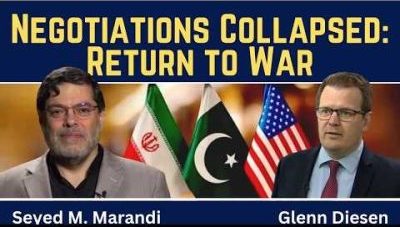
Seyed M. Marandi: Negotiations Collapsed – Return to War
or go to
Aletho News Archives – Video-Images
From the Archives
Wartime internment camps in Australia
National Archives of Australia
World War I
During World War I, for security reasons the Australian Government pursued a comprehensive internment policy against enemy aliens living in Australia.
Initially only those born in countries at war with Australia were classed as enemy aliens, but later this was expanded to include people of enemy nations who were naturalised British subjects, Australian-born descendants of migrants born in enemy nations and others who were thought to pose a threat to Australia’s security.
Australia interned almost 7,000 people during World War I, of whom about 4,500 were enemy aliens and British nationals of German ancestry already resident in Australia.
Records of World War I internment camps
World War II
During World War II, Australian authorities established internment camps for three reasons – to prevent residents from assisting Australia’s enemies, to appease public opinion and to house overseas internees sent to Australia for the duration of the war.
Unlike World War I, the initial aim of internment during the later conflict was to identify and intern those who posed a particular threat to the safety or defence of the country. As the war progressed, however, this policy changed and Japanese residents were interned en masse. In the later years of the war, Germans and Italians were also interned on the basis of nationality, particularly those living in the north of Australia. In all, just over 20 per cent of all Italians resident in Australia were interned. … continue
Blog Roll
 Aletho News
- Seyed M. Marandi: Negotiations Collapsed – Return to War
- Tomorrow’s naval blockade showdown
- ‘Israel’ attacks civilians to hide its embarrassing military failures & out of pure sadism
- Any Foreign Military Vessel Approaching Hormuz Under Any Pretext ‘Will Be Dealt With Severely’: IRGC
- Diplomats slam US negotiators’ performance in Iran talks
- Trump Refuses Exit Ramp, War with Iran will Continue
- Trump Says US Naval Blockade in Strait of Hormuz Will Begin Shortly
- US, Iran end 21-hour talks without agreement
- US IRAN TALKS: Who Are the Crazy Ones Here? /Lt Col Daniel Davis
- Talks with the US end without a deal over excessive US demands: Iran
- If Americans Knew
- US-Iran ceasefire negotiations make zero progress – Daily Update
- Pro-Israel ‘Thinktanks’ and Individuals who Influence U.S. Foreign Policy
- Mearsheimer reveals how Israel dictates US policies on Iran, Gaza – video
- After killing 350+, Israel still has a “score to settle” with Lebanon before ceasefire – Daily Update
- Military aid to Israel emerges as the latest political litmus test for Democrats
- The only Palestinian children’s rights organization closes following years-long Israeli campaign against it
- ‘I Can’t Forget the Smell’: Lebanese Reel After Israel Kills Over 300 in Single Day
- DNC Shoots Down Resolutions Calling Out AIPAC and Limiting Arms to Israel
- TCN: Is Israel Blackmailing President Trump?
- Israel killed at least 303 Lebanese yesterday – who were they? Daily Update
- No Tricks Zone
- German Expert: Heat Dome Led To Record Temps In Western USA…Warmer In 1934, 1936
- New Study: No Linear Warming Or Glacier Retreat Along Northern Antarctic Peninsula Since 1980s
- An Inconvenient Tree: Uncovered In Alps… Europe Much Warmer Than Today 6000 Years Ago
- New Study Reports A 60% Slowdown In Greenland’s Ice Loss Rate In The Last Decade
- Low Intensity Tornado Wrecks Major Solar Farm, Creating A Potential Toxic Dump
- New Study Finds Warming Saves Lives…Cold Temperatures 12 Times More Deadly Than Excess Heat
- German Science Blog Accuses PIK Climate Institute Of Hallucinating Climate Tipping Points
- Devastating Assessment Of Comirnaty Vaccine By Former Senior Pfizer Europe Toxicologist
- New Study: CO2 Is ‘Effectively Negligible’ As An Explanatory Climate Change Factor Since 2000
- Former Pfizer Toxicologist Dr. Helmut Sterz Tells Bundestag Hearing Pfizer Vaccine Should Have Never Been Approved
 Aletho News