Israel’s twisted logic makes the murder of Palestinian children a matter of state policy
By Ramzy Baroud | MEMO | September 5, 2023
Israel murders Palestinian children as a matter of state policy. This claim can be demonstrated easily and is supported by the latest findings of a Human Rights Watch report. The question is: why?
When the police or army shoot a child anywhere in the world, it can usually be argued, at least in theory, that the killing was an unfortunate and tragic mistake. But when thousands of children are killed and wounded in a systematic, “routine” and comparable method within a relatively short period of time, there has to be something very deliberate about it.
In a recent report — “West Bank: Spike in Israeli Killings of Palestinian Children” — HRW reaches a strong conclusion based on an exhaustive examination of medical data, eyewitness accounts, video footage and field research, the latter pertaining to four specific cases.
One is the case of Mahmoud Al-Sadi, a 17-year-old Palestinian boy from the Jenin Refugee Camp. He was killed last November, 320 metres away from fighting between invading Israeli forces and Jenin resistance fighters. Mahmoud was on his way to school and carried nothing that could be seen, from the soldiers’ point of view, as threatening or suspicious.
The story of the Jenin boy is typical and is repeated often throughout the occupied West Bank, sometimes daily. The predictable outcome, as HRW puts it, is that these killings are followed with “virtually no recourse for accountability”.
As of 22 August, 34 Palestinian children in the West Bank have been killed in 2023, adding yet more tragic numbers to a foreboding year that promises to be the most violent since 2005. This year “already surpasses 2022 annual figures, and the highest figure since 2005,” in terms of casualties, reported Tor Wennesland, the UN Special Coordinator for the Middle East, during a UN briefing on 21 August.
These statistics, among other factors — including the expansion of illegal Israeli Jewish settlements in the West Bank — “threatens to worsen the plight of the most vulnerable Palestinians,” according to Wennesland.
Those “most vulnerable Palestinians”, however, exist beyond the realm of statistics. When Israeli soldiers killed 2-year-old toddler Mohammed Tamimi on 5 June, the little boy’s name was added to an ever-expanding roll call of shame. The memory of the infant, however, like the memory of all other Palestinian children, is etched into the collective consciousness of all Palestinians. It deepens their pain, but also compels their struggle and their resistance.
For Palestinians, the killing of their children is not a random act of a military that lacks discipline and fears no repercussions. Palestinians know that the Israeli war on children is an intrinsic component of the larger Israeli war on every single one of them.
Of course, Israel does not declare officially that it is targeting Palestinian children on purpose. That would be a public relations disaster. Some Israeli officials in the past, however, have let their guard down, offering a strange and troubling logic.
Palestinian children are “little snakes”, wrote Israeli politician Ayelet Shaked in 2015. In a Facebook post, published in the Washington Post, Shaked called for the killing of “the mothers of the [Palestinian] martyrs.” In doing so, she declared war on all Palestinians. “They should follow their sons,” she wrote, “nothing could be more just.” Shortly afterwards, Shaked rather ironically became Israel’s justice minister.
But not all Israeli officials are candid about the killing of Palestinian children, and even their mothers. Data collected by international rights groups, however, leaves no doubt that the nature of the killings is part of a comprehensive strategy developed by the Israeli military. “In all cases,” recently investigated by HRW, “Israeli forces shot the children’s upper bodies.” This was done without the “issuing of warnings or using common, less lethal measures.”
Specifically, the killing of Palestinian children is a centralised and deliberate Israeli military strategy. The same twisted logic, now applied to the West Bank, has already been used in the besieged Gaza Strip. UN figures show that, in the Israeli war against the Palestinians in Gaza in 2008-9, 333 Palestinian children were killed; other estimates put the figure at 410. In the 2012 Israeli offensive against Gaza, 47 children were killed; in 2014, there were 578 killed; in 2021 it was 66; and in 2022 17 children were killed in the besieged territory by Israeli soldiers.
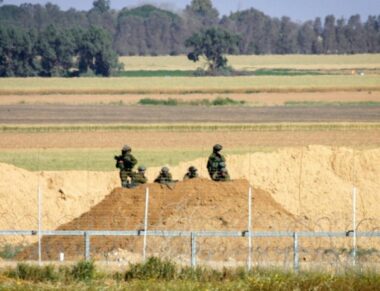
Between 2018 and 2020, 59 Palestinian children were killed in what was known as the “March of Return” protests that took place at the fence separating Israel from the Gaza Strip. All the children were killed from a distance by Israeli snipers.
When the numbers of dead and wounded children are tallied, they are in the thousands. According to the UN, there were precisely 8,700 Palestinian child casualties between 2015 and 2022.
Even the callous and often dehumanising term “collateral damage” cannot justify such statistics. And although the war on Palestinian children is clearly intentional, protracted and ongoing, not a single Israeli military or government official has ever been held accountable in an international court. Moreover, the UN “List of Shame for Killing Children” has never branded Israel, although other countries have been “named and shamed” for far fewer crimes against children.
As the killing of children is perceived — according to the twisted logic of the likes of Shaked — to be functional for Israel, given the absence of any accountability, the occupation state finds no reason or urgency to end its war on Palestinian children. And with the constant loosening of the rules of military engagement in Israel, and the terrifyingly genocidal language used by its extreme far-right ministers and their massive constituency, more Palestinian children are likely to lose their lives in the near future.
Despite this, the most that UN officials and rights groups seem to be able to do now is to count the alarming number of child casualties. Alas, no number is large enough to dissuade Israel from killing Palestinians, including children.
The problem for Palestinians is not just that of Israel’s violence, but also the lack of international will to hold Israel accountable. Accountability requires unity, decisiveness of will and action. This task should be a priority for all countries that genuinely care about Palestinians and universal human rights. Without such collective action, Palestinian children will continue to be killed in large numbers and in the most brutal ways, a tragedy that will continue to pain, in fact, shame, us all.
Israel confiscates Palestinian schoolbooks in Jerusalem
MEMO | September 1, 2023
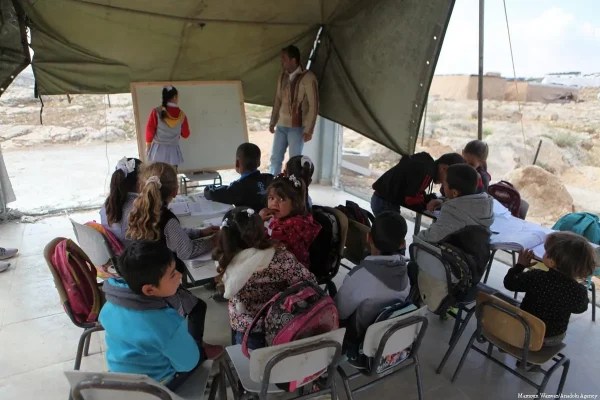
Israeli occupation authorities yesterday confiscated school textbooks printed according to the Palestinian curriculum in the occupied city of Jerusalem.
The Palestinian Jerusalem Governorate said Israeli intelligence officers seized the textbooks from inside a car that was delivering them to one of the private schools that teaches the Palestinian curriculum in the Old City of Jerusalem. The officers detained the driver and a school staff member.
For years, Israel has been trying to prevent Palestinian children in Jerusalem from following the Palestinian curriculum, claiming they must follow the Israeli curriculum, which provides a distorted view of Israel’s illegal occupation of their land.
The Jerusalem Governorate slammed the measure as an attack on the rights of Palestinian people to education, calling on the international community and human rights organisations to confront these racist crimes.
It also called on the Palestinian people, especially in Jerusalem, to confront these crimes against students and the Palestinian national curriculum and to refuse the Israeli “forged, fake and distorted” curriculum.
US Middle East ‘normalization’ plan rejects reality
By Robert Inlakesh | RT | August 31, 2023
From the disastrous Afghanistan withdrawal to Chinese-brokered peace between Saudi Arabia and Iran, the US administration of President Joe Biden has been overseeing an era of declining American power across West Asia. In the midst of this fall from grace as the Middle East’s hegemon, Washington’s obsession with achieving a Saudi-Israeli normalization deal demonstrates a disconnect from reality and proves that optics are more important than tangible policy positions.
US National Security Advisor Jake Sulivan made it publicly clear last Tuesday that a normalization deal between Saudi Arabia and Israel, which Washington is currently working on, is still far from being achieved. This announcement followed speculation in American media that such a deal could be imminent. For those who have been paying attention to the region’s politics, however, it couldn’t be more clear how arduous a task achieving such a deal would be.
Looking at the deal through an American lens, it is clear what a diplomatic achievement of this nature would mean for the legacy of a US president’s administration. It would go down as a significant victory for the head of state, Joe Biden. It would also provide a great photo-op in the event that it happens; one that could be used to demonstrate the government’s strength in the 2024 elections. It could be calculated by the Democratic Party administration that prioritizing such a deal could make up for the president’s previous failures regarding the American role in the Middle East.
However, objectively speaking, achieving Saudi-Israeli rapprochement will mean overcoming countless hurdles on all sides and may end up doing more harm than good regionally. This is despite the Biden administration’s promises that it would boost regional security and stability. Yet with the recent announcement that the BRICS bloc will be adding Iran and Saudi Arabia as members come January 2024, after Tehran and Riyadh re-established ties under Beijing’s auspices, such a deal could open new regional wounds and run contrary to the vision set forth by Saudi Crown Prince Mohammed Bin Salman.
When the Trump administration managed to rope Bahrain, Sudan and Morocco into a normalization agreement between the United Arab Emirates (UAE) and Israel (the Abraham Accords), the initiative came from the UAE itself, at a time when Abu Dhabi had clearly decided to go ahead with the move. There was no real struggle to convince the UAE to go ahead with normalizing ties with the Israelis. In fact, in the cases of Morocco and Sudan, the Emiratis helped place pressure on those nations to accept normalization deals.
Saudi Arabia, despite having maintained close ties with the Trump administration – the first foreign visit of US President Donald Trump was to Riyadh – shied away from signing onto the normalization deal with the Israelis, likely because such a move would be more challenging for a country like Saudi Arabia domestically than for the likes of neighboring Bahrain or the UAE.
As of now, Saudi-US relations under the Biden administrations have been far from cordial, and when the American president made his first trip to the Saudi kingdom last year, he was made to appear as an afterthought. When Joe Biden confronted Mohammed Bin Salman over the infamous killing of Saudi journalist Jamal Khashoggi, the Crown Prince allegedly fired back by bringing up the lack of action taken over the killing of American veteran journalist, Shireen Abu Akleh, by an Israeli soldier. Mohammed Bin Salman even told The Atlantic monthly that he didn’t care if Biden misunderstood him. Saudi Arabia has also ignored calls from the US to alter oil production.
If the Biden administration is to convince Saudi Arabia to sign onto a normalization deal, concessions must first be granted. Riyadh reportedly seeks a civil nuclear program and a US security pact that could drag Washington into war in the event that the kingdom comes under attack. Such preconditions present a litany of hurdles for the American government.
Then there is Israel, which under any other government than the current far-right coalition of Prime Minister Benjamin Netanyahu would easily be able to get away with signing such a deal. However, Netanyahu has reportedly been requested to make some kind of concession towards the Palestinians in order to make the UAE deal go ahead. The government that Benjamin Netanyahu now heads is entirely different to the one he led in 2019, and his coalition depends on the support of the extremist Religious Zionism (RZ) alliance. RZ even pushes back against the idea of security coordination with the Palestinian Authority (PA), based in Ramallah, despite the fact that this policy benefits Israeli security. RZ stated clearly, from the time of the 2022 national election, that one of its goals was to annex the West Bank and the most likely concession that the US will ask of Tel Aviv is to again promise that it will steer away from doing so.
When it comes to the Palestinians, there is also the uncontrollable factor of a major escalation between the Palestinian armed factions and the Israeli military, over Israeli provocations at Al-Aqsa Mosque. Saleh Al-Arouri, the deputy head of the political bureau of Hamas, recently told al-Mayadeen that in the event of any senior leader being targeted, there will be regional war. This is at a time when pressure is growing on the Israeli government to carry out an attack on Hamas leaders in response to numerous attacks against Israeli settlers and soldiers in the West Bank. This, on top of the recent tensions at the Lebanese border with Hezbollah, all make for a potentially explosive situation, under which a Saudi-Israeli deal would look awful for Mohammed Bin Salman.
There is additionally the issue of what a Saudi-Israeli deal may do to Iranian-Saudi relations and their recent re-establishment of ties. As Saudi Arabia includes within it two of the holiest sites in the Islamic faith, Mecca and Medina, its decision to normalize ties with Israel will carry massive significance throughout the Muslim world. Such a move would prove it impossible for Tehran to remain neutral on the issue and it is very likely that the Iranians would reverse their decision to maintain ties with the Saudis. This means that if the Saudis are to sign a normalization deal with Israel, they have to know that this will undermine China’s diplomatic breakthrough and could end up presenting greater security concerns if they again find themselves competing so heavily for influence regionally with Iran. There is also cause for concern when it comes to Jordan’s reaction, which may see such a deal as a threat to its custodianship over the Holy sites in the Old City of Jerusalem, and feel that Saudi Arabia is encroaching upon its territory.
If the US administration had a serious approach to its Middle East policy, it would realize the dramatic shift that has occurred regionally and that its traditional allies have agendas that are no longer congruent with the old American status quo approach. It would seem, from observing the rhetoric and actions of Washington, that the current US government is in denial and cannot grasp that the days when it could boss around every country in West Asia are long gone. It will take pragmatic thinking to revive the US position in the long run, and one thing is for sure, a Saudi-Israeli normalization deal doesn’t make sense for any country at this time.
Robert Inlakesh is a political analyst, journalist and documentary filmmaker currently based in London, UK. He has reported from and lived in the Palestinian territories and currently works with Quds News. Director of ‘Steal of the Century: Trump’s Palestine-Israel Catastrophe’.
A ‘terrorist onslaught’? This is why Netanyahu, Gallant blame Iran for West Bank violence
By Ramzy Baroud | MEMO | August 30, 2023
Despite their complicated and often uneasy relationship, Israeli Prime Minister, Benjamin Netanyahu, and his Defence Minister, Yoav Gallant, agree on one thing: Iran is behind Israel’s security problem.
The socio-economic polarization in Israel, the country’s political and judicial crises, the ongoing settlers’ pogroms in the West Bank, the repeated calls for religious war by Tel Aviv’s far-right ministers – all of these myriad problems are suddenly negligible. The problem is Iran.
Though Iran, as a common enemy, often unites all major Israeli political parties, the supposed Iranian threat this time around, is quite different.
“We are in the midst of a terrorist onslaught that is being encouraged, directed and financed by Iran and its proxies,” said Netanyahu of a Palestinian attack that killed a settler and wounded another near the occupied Palestinian city of Al-Khalil (Hebron) on 21 August.
The attack came only two days after another, which killed two Israeli settlers near the town of Huwwara, near Nablus, in the northern West Bank.
Huwwara, a small town of 5,500 people, was the site of an outright pogrom by large mobs of armed Israeli Jewish settlers on 26 February.
Amnesty International described what occurred in the town as follows: “On the night of Sunday 26 February, hundreds of state-backed Israeli settlers carried out a spree of attacks against Palestinians (in Huwwara) … Settlers torched dozens of Palestinian cars, homes and orchards and physically assaulted Palestinians, including with metal bars and rocks.”
Typically, every Palestinian attack on Israeli soldiers, armed settlers or even civilians is preceded by a multitude of deadly Israeli army raids or settler attacks on Palestinian communities.
Not a day passes without Israeli violence in occupied Palestine. Reports by the United Nations, Palestinian, Israeli and international rights groups indicate that this year is the most violent in the West Bank in nearly two decades.
More than 200 Palestinians have been killed and nearly 30 Israelis since January 2023, according to a statement to the UN Security Council by UN Middle East envoy, Tor Wennesland, on 21 August.
Wennesland described the violence as a “concerning trend”, attributing it to a “growing sense of despair about the future,” UN News reported.
The UN humanitarian agency, OCHA, had similar findings. It said that nearly 600 settler-related ‘incidents’ were reported in the Occupied Territories in the first six months of 2023. Settler attacks have resulted in “Palestinian casualties, property damage or both.”
Neither Wennesland nor OCHA mentioned Iran in their statements, nor did the constant stream of reports on Israel’s ongoing violence, incitement or, at times, outright calls for genocide by settlers and their leaders in Netanyahu’s government.
As for the reason behind the “sense of despair” mentioned in Wennesland’s UN briefing, the Israeli anti-settlement organisation, Peace Now, may have an answer.
In a statement issued on 17 August, the Israeli group said that Netanyahu’s government is advancing a plan for ‘unprecedented investment’ of nearly $200 million in illegal Jewish settlements in the West Bank.
“There are clauses that have not yet determined the allocation amounts, so the total amount is expected to increase significantly,” Peace Now said on its website.
Since a large sum of the funds is described as ‘undefined’ grants, the illegal settlements are allowed “to use the money for almost any purpose.”
This can only mean expansion of the illegal settlements, construction of new outposts, ethnically cleansing Palestinians and paving the way for full, de jure annexation of the West Bank.
The term ‘ethnic cleansing’ is not being used lightly here.
Aside from the ‘incremental genocide’ happening daily throughout the Occupied Territories, at times large communities are being expelled, en masse.
The Norwegian Refugee Council recently reported on the eviction of nearly 500 Palestinians from seven communities in the West Bank in a matter of 20 months, many of them from the Ras At-Tin Bedouin community, north of Ramallah.
“Entire Palestinian communities being wiped off the map, a shameful legacy of unrelenting violence, intimidation and harassment perpetrated by Israeli settlers and, in some cases, encouraged by Israeli authorities,” Ana Povrzenic, NRC’s Country Director for Palestine commented on the findings.
The list is endless, and nothing suggests that Iran is relevant to any part of this discussion.
The direct link between the Israeli occupation and Palestinian relations cannot be denied by any honest observer.
But neither Netanyahu nor Gallant is expected to be honest in their depiction of what is occurring in Palestine now.
As if reading from the same script, Gallant agreed with his boss on the alleged Iranian threat. “The most significant change on the ground is related to Iranian financing and intent,” Gallant said, declaring that “Iran is looking for any way to harm the citizens of Israel.”
The irony is that the Netanyahu-Gallant political conflict since March has fuelled the greatest political crisis, arguably, in the history of the Israeli state. The crisis is enduring.
Yet, now both are emerging as the stalwarts of Israeli security against a supposed Iranian threat. But why would the two agree on anything? And why Iran, in particular? And why now?
Both Netanyahu and Gallant stand to gain from diverting attention from the reasons behind the ongoing rebellion in Palestine.
For Netanyahu, blaming Iran allows him to stoke the fire of instability in the Middle East, unite all Israelis behind their supposed defender and avoid any accountability for the ongoing human rights violations in Palestine.
As for Gallant, blaming Iran elevates the military and all branches of intelligence services; instead of being seen as failing to stop home-grown Palestinian struggle, he wants to paint an alternative image of a heroic army fighting an ‘existential threat’ hatched elsewhere.
This is not a simple case of lacking self-awareness, but a deliberate diversion of the actual problem: the Israeli occupation and apartheid.
Throughout the years, Israel has insisted that Palestinians are not political actors capable of making their own collective decisions, and that some bogeymen elsewhere – the Arabs, the Iranians, the communists, the Islamists, and so on … are to blame.
But Tel Aviv is wrong. For Israel to understand the reasons behind the growing Palestinian resistance in all of its forms, it needs to look at the devastated refugee camps of Jenin, Balata and Nur Shams – not Tehran – for the answers.
Latvia’s Planned Expulsion of Russian Nationals ‘Grossly Contradicts’ UN, EU Norms
By Oleg Burunov – Sputnik – 29.08.2023
Russian human rights activists have condemned Latvia’s decision to expel about 6,000 Russian residents, who had lived in Latvia with a residence permit and did not pass the Latvian language exam. The process of expulsion will start as of September 1, 2023.
The members of the Commission for International Cooperation with the Council for the Development of Civil Society and Human Rights under the Russian President have sent a letter to the United Nations (UN), the Council of Europe and the Organization for Security and Cooperation in Europe (OSCE) in connection with the “threat of forced eviction of Russian-speaking residents of Latvia.”
One of the Commission’s members is Kirill Vyshinsky, executive director of the Rossiya Segodnya International Information Agency, a parent company of the Sputnik News Agency.
The Commission’s message was delivered to UN High Commissioner for Human Rights Volker Turk, the Council of Europe Commissioner for Human Rights Dunja Mijatovic, and OSCE High Commissioner on National Minorities Kairat Abdrakhmanov.
“We draw your attention to the gross violation of the rights of Russian-speaking residents of Latvia who have Russian citizenship and live on Latvian territory on the basis of a residence permit (RP) issued by the country’s authorities,” the letter reads.
The members of the Russian presidential human rights commission recalled that more than 6,000 such residents “are threatened with expulsion from Latvia as of September 1, 2023 due to last year’s changes in the country’s legislation and under the pretext that they did not pass the mandatory Latvian language exam.”
“They are mainly people of advanced retirement age who came to Latvia before the collapse of the Soviet Union. Their long-standing work added to creating the economic basis of Latvia and until the autumn of last year, Latvian legislation did not oblige them to take any language tests so that they can live with Russian citizenship in the country. Moreover, the very fact that these people lived in Latvia for many years proved that their knowledge of Latvian language was enough to organize their own daily life,” according to the letter.
The Russian rights activists stressed that “especially cynical in relation to these people is Latvian authorities’ requirement to not only pass the language exam, but also fill out questionnaires indicating their attitude to Russia’s foreign policy.”
“In fact, these people are required to not only take language tests, but also reveal their political views and give documented condemnation of Russia’s actions,” the letter points out.
“We believe that such actions by Latvian authorities grossly contradict the International Covenant on Civil and Political Rights of the UN and the European Convention on Human Rights. We urge you to intervene in the situation and prevent the forced eviction of those who have Russian citizenship and residence permits issued by Latvian authorities,” the document concludes.
The letter comes after Ingmars Lidaka, head of Latvia’s Parliamentary Commission for Citizenship, Migration and Public Mobilization, said that between 5,000 and 6,000 Russian citizens, who have a residence permit and have not passed the Latvian language exam, will receive official notifications to leave the country “within three months.”
He added that the decision is in line with Latvia’s legislation and that its implementation will be enforced by the country’s Office of Citizenship and Migration Affairs.
In September 2022, Latvia’s parliament passed a bill on the transition of all education to the Latvian language within three years, a document stipulating that the Russian can now only be studied as a “minority language”.
About 40 percent of Latvia’s 1.8 million population are Russian native speakers. The country’s state language is Latvian, while the Russian has the status of a foreign language.
Vivek Caves on Plan to Cut Aid to Israel: ‘We Would Never Cut Off Aid to Israel Until Israel Told Us They Were Ready’
By Chris Menahan | Information Liberation | August 27, 2023
GOP presidential candidate Vivek Ramaswamy ran away from his proposal to cut aid to Israel by 2028 on Saturday, instead promising that he would provide endless US aid to Israel “until Israel told us they were ready for it” to be cut off.
“To be clear, we would never cut off aid to Israel unless Israel told us they were ready for it,” Ramaswamy told an Israeli news outlet in an interview he shared to his own Twitter page.
“The US-Israel relationship will be stronger by the end of my first term than it has ever been in US history and than it ever will be under any of those other administrations if anybody else is elected,” he said.
The idea Israel would ever ask the US to stop giving them billions of US taxpayer dollars for free is just comical. As I noted earlier this week, Israel regularly uses the billions we give them to buy US treasuries — effectively lending us back our own aid money and charging us interest. The US Treasury’s latest numbers showed Israel is currently holding $46 billion in US treasuries.
Ramaswamy also pledged that he wants to expand the Abraham Accords — a scam worked out by the Israel lobby which consists of bribing Arab kings to normalize relations with Israel by offering them billions of US taxpayer dollars and high-tech weaponry which can be used to oppress their own populations — with the “Abraham Accords 2.0.”
He said his “2.0” plan would bring “Saudi Arabia, Oman, Qatar [and] Indonesia” into the pact (aka bribery scheme).
“The other area where I think the US-Israel partnership is critical is staying strong with respect to making sure Iran never ever ever becomes a nuclear power — even has basic nuclear capabilities — we will never allow that to happen on our watch,” Ramaswamy said.
Fellow GOP presidential contender Nimrata “Nikki Haley” Randhawa called Ramaswamy out during the debate on Wednesday for wanting “to go and defund Israel.”
“You want to cut the aid off!” Randhawa said. “Let me tell you, it’s not that Israel needs America, America needs Israel!”
It only took Ramaswamy three days to not only abandon but completely reverse his “America First” policy.
UK slammed for opposing ICJ ruling on Israel Occupation of Palestine
MEMO | August 26, 2023
The UK has come under scrutiny for reportedly attempting to hinder the International Court of Justice (ICJ) from issuing a legal opinion on Israel’s occupation of Palestine. The UK’s alleged move came to light through a 43-page legal opinion submitted to the ICJ, which is currently in the fact-finding stage before an expected advisory opinion from the Court on the legal consequences of the “occupation, settlement and annexation” of Palestinian land.
The UK’s objection submitted in the “amicus brief” has been met with dismay as it not only seeks to derail the work of the ICJ, it also goes against the grain of other member states and non-governmental organisations by opposing the hearing of the case entirely.
Critics argue that the UK’s stance ignores the entrenched nature of Israel’s occupation and the deteriorating situation on the ground. Palestinian diplomats and international humanitarian law experts have expressed dismay at the UK’s submission. The ICJ, based in The Hague, is the top United Nations Court for resolving disputes between nations; its decisions are binding, although it lacks enforcement powers.
“[Assuming that the document is authentic] … this is a rather weak and uninformed document that portrays Israel’s longstanding occupation of the West Bank and Gaza, and its annexation of East Jerusalem, as a bilateral dispute between two states,” Dr Victor Kattan, an assistant professor in public international law at the University of Nottingham is reported saying in the Guardian.
Kattan stressed that the ICJ can issue an opinion on any legal question arising from the work of the UN, and the General Assembly does not need Israel’s consent to refer a request to the Court. The ICJ’s 2004 opinion on “The Legal Consequences of the Construction of a Wall in the Occupied Palestinian Territory”, for example, was issued without the consent of the occupation state. The UN Court found that the barrier violates international law and should be torn down. The vote of the justices was 14 to 1.
The latest attempt to obtain an ICJ opinion holds significance for Israel and the Palestinians, as it addresses the legality of Israel’s occupation – a matter that has not been conclusively judged in the 56 years of its existence. Legal experts have judged the occupation to be illegal due to its length and also because of Israel’s de-facto annexation, which has made occupation a permanent reality.
The UK’s position contrasts with the UN General Assembly resolution, which sought an advisory opinion from the ICJ on the “legal consequences arising from the policies and practices of Israel in the Occupied Palestinian Territory.” The UK, along with Israel and other Western states, voted against the resolution.
The ICJ’s deliberations on this matter are anticipated to last at least a year, and the question of whether the occupation is still temporary will be a central point of discussion. The ICJ’s potential findings could influence recognition, aid and obligations related to the occupation. Israel has criticised the referral to the ICJ, with its envoy to the UN describing the General Assembly vote as delegitimising, a term that is often used to label critics of the occupation state as anti-Semitic.
Members have until 25 October to make comments on statements to the ICJ submitted by others. If the Court accepts the request for an advisory opinion, as is expected, deliberations will last at least a year.
West Bank: Jewish settlers vandalise Palestinian school threatened with demolition

Ras al-Tin, a Palestinian Bedouin school located east of the occupied West Bank city of Ramallah, following an attack by Israeli settlers, on August 13, 2023. (Wafa news agency)
MEMO | August 14, 2023
Jewish settlers stormed a Palestinian school in the central occupied West Bank on Sunday, breaking windows and vandalising fixtures and fittings, Wafa has reported. Ras Al-Tin School to the east of Ramallah is threatened with demolition by the Israeli occupation army.
The school is located in a Palestinian Bedouin community on land belonging to the villages of Kafr Malik, Khirbet Abu Falah and Al-Mughayer. It was built in 2020, and is part of the Palestinian Tahaddi School Group.
According to Wafa, in October 2020 the Israeli authorities decided to demolish the school, on the pretext that it is located in an area under full Israeli control, and construction is prohibited for any reason, even for education purposes.
Jewish settlers also stormed the Tahaddi school in the Wadi Al-Siq Bedouin community on Sunday. They too smashed its windows and vandalised its contents.
There are currently 18 Tahaddi schools in the occupied West Bank built by the Palestinian Colonisation and Wall Resistance Commission with international support. They are in so-called Area C, in which Israel prevents construction on the pretext of a lack of building permits, which are almost impossible to obtain.
The Palestinian Ministry of Foreign Affairs condemned the settler attacks on the two schools. It described them as part of the “serious escalation of settler attacks and their targeting of Palestinian educational institutions, especially those located in areas classified as ‘C’ that are threatened with seizure. These attacks fall within the framework of the occupation state’s attempts to isolate, Judaise and annex the West Bank, and to fight all forms of the Palestinian national and humanitarian presence in those areas targeted by settlement.”
The ministry said that it holds the Israeli government fully responsible for the results of the settler attacks. “We call upon the US administration, the international community and the relevant UN organisations, particularly UNESCO, to shoulder their responsibilities in providing protection for educational institutions.”
Israel threatens to strike ‘every meter’ of Lebanon
The Cradle | August 8, 2023
Israel’s Defense Minister, Yoav Gallant, said on 8 August in a message addressed to both Hezbollah and the Lebanese government, that Tel Aviv is prepared to strike “every meter” of the country.
“Do not make a mistake, we do not want war, but we are ready to defend our citizens, our soldiers, and our sovereignty,” the minister said.
“We will not hesitate to employ all of our power and to attack every meter of Hezbollah and of Lebanon … and return Lebanon to the stone age,” he added.
Gallant said that Hezbollah “might mistakenly think that they can test Israel” due to the deep internal crisis it is facing, and the vow made by many of its army reservists to boycott military service protests against the government’s judicial reform program.
He affirmed, however, that Israel would not be divided in the event that Hezbollah threatened it with war.
Gallant’s threats came just hours after the Lebanese army mobilized its naval forces in response to Israeli boats that violated Lebanese sovereignty on 8 August.
Al-Mayadeen news outlet observed the Israeli boats entering Lebanon’s territorial waters via a camera located in the Naqoura area while the Lebanese army was escorting a tour of dozens of journalists to the southern borders.
Recently, there has been a series of Lebanese responses to ongoing Israeli violations of the country’s sovereignty. These violations include excavations on Lebanon’s side of the border, which serve as the basis for an Israeli plan to build a defensive wall.
Most recently, in early July, Israel annexed the northernmost part of the already occupied southern border village of Ghajar – which is internationally recognized Lebanese territory. The move drew widespread condemnation and has exacerbated the existing tensions on the border.
As a result of constant Israeli incursions, the Lebanese and Israeli militaries came close to facing off on the border last month. The tensions also relate to an outpost erected by Hezbollah earlier this year in the Israeli-occupied Shebaa Farms area – which has been under occupation since 1967.
Despite Israeli threats, complaints to the UN, and pressure from Washington, the Hezbollah outpost remains in place.
Last week, Israeli National Security Adviser Tzachi Hanegbi said that there is a “weakening in the policy of self-restraint” by Hezbollah on the border.
Israel greenlights settler attacks on Palestinians: Army official
The Cradle | August 6, 2023
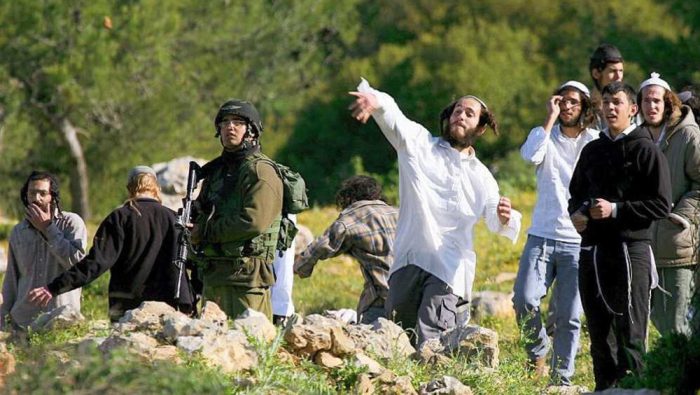
Israeli military official, Reserve Colonel Kobi Merom, said on 5 August that settler attacks against Palestinians in the occupied West Bank are greenlit by the government and its ministers, according to Hebrew media.
“What we have seen in recent weeks are dozens of terrorist operations [by settlers] against Palestinian villages, without resulting in arrests,” the general said.
These attacks are “greenlit” and supported by government ministers, Merom added, including Finance Minister Bezalel Smotrich and others.
“Minister Smotrich allows the establishment of illegal outposts. Amid the state of collapse that we are spiraling down toward … I am not surprised by the armed incident that took place yesterday in Burqa.”
The colonel was referring to the killing of a 19-year-old Palestinian, Qusai Jamal Matan, by extremist settlers east of Ramallah on 4 August.
Armed Israeli settlers had stormed the village of Burqa that day, sparking clashes with residents of the area. Matan was “shot dead by settlers” during the clashes. That same day, an 18-year-old Palestinian was killed by Israeli troops in a military raid on a camp east of Tulkarem.
In response to the settler killing of Matan, Palestinian resistance fighter Kamel Abu Bakr shot and killed an Israeli policeman in Tel Aviv on 5 August, before being killed himself.
“If the prime minister … does not stop this matter and put his foot down at the cabinet table, we are heading toward complete chaos on the ground,” the Israeli colonel warned.
According to the UN, around 600 settler attacks against Palestinians have been recorded since the start of 2023.
Settler violence has always been common in the occupied West Bank, but has surged significantly since Israel’s current government came to power.
Following a resistance operation in February, which killed two Israelis, settlers launched a massive assault on Nablus’ village of Huwara – laying waste to the town and resulting in numerous casualties.
Following the attack, Smotrich called for the village of Huwara to be “wiped out.”
Later in June, another shooting in the Eli settlement prompted settlers to launch a five-day rampage across the West Bank. The rampage occurred with the approval of the Israeli military.
NATO Instructors Trained Neo-Nazi Azov Battalion Soldiers in 2021
Sputnik – 06.08.2023
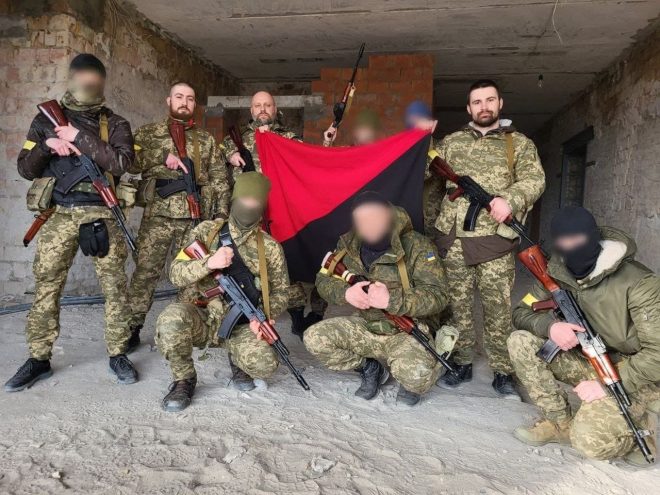
NATO military instructors from Denmark and the United Kingdom trained Ukrainian soldiers at a base of the nationalist Azov battalion, despite Azov’s exclusion from US military funding due to its radicalism, according to documents from the Danish embassy in Kiev seen by Sputnik on Sunday.
A note from the Danish embassy dated May 21, 2021, informed the Ukrainian Defense Ministry of the arrival of six instructors for the 56-th Ukrainian army brigade in Berdyansk and Urzuf, where Azov’s main base was located.
“These sites were previously investigated by Russian law enforcement officers, and the materials found there directly point to intensive training of mobilized Ukrainian citizens by Western officers, using criminal methods of warfare, which the Azovs were fluent in,” a law enforcement officer told Sputnik.
The instructors of the UK’s OP ORBITAL training team had already been present in Ukraine before, the document showed.
“Operation ORBITAL is the code name of a UK program to train Ukrainian army servicepeople from the mobilization reserve. I note that these officers, as stated in the text of the document, have access to classified information, which indicates that Ukraine has provided access to information constituting state secrets, including mobilization planning documents,” the officer said.
Despite the fact that the Azov battalion has been recognized by the United States as a neo-Nazi organization, NATO forces were directly involved in training of nationalist armed formations, they noted.
“This is evidence of Kiev’s intensive preparations for active combat operations under NATO’s supervision,” the law enforcement officer concluded.
In August 2022, the Russian Supreme Court designated Azov as a terrorist organization. The Russian Prosecutor General’s Office said that Azov militants use prohibited means and methods of warfare and are complicit in the torture of civilians and the killing of children.
Featured Video

New positive ivermectin evidence
or go to
Aletho News Archives – Video-Images
From the Archives
Fanatical Followers of the Covid Regime: A Jim Jones-Style Cult?
By Professor Roger Watson and Dr. Niall McCrae | The Daily Sceptic | November 15, 2021
As scholars at leading British universities over recent decades, we witnessed the replacement of critical thinking and debate by narrative: facts are discrimination and scientific method is imperialism; truth, instead, is derived from ‘progressive’ values. This educational trend may be a major contributory factor to the ease in which society has been inculcated to the Covid ‘new normal’ of masking, testing, and repeated doses of vaccines for a disease of similar risk to severe influenza.
One doesn’t need much critical reasoning to observe the flawed logic of some vaccination enthusiasts, such as people who respond to experiencing any side effects, however debilitating, by saying “at least I know it’s working”, or, after contracting the disease despite their promised inoculation (over 90% effective, according to initial drug company claims), “I’d have been worse off without the jab.” … continue
Blog Roll
 Aletho News
- EU Council Advances Chat Control 2.0 Scanning Proposal
- Ex-Greek MEP files complaint against Israeli spyware firm over alleged Pegasus surveillance
- Troubling ideas throughout the Torah, Talmud, Mishneh Torah and Tanya
- ‘Grave, alarming’: Iran mission on Trump’s UNGA ‘annihilation’ threats
- Najaf airport to reopen to Iranian flights within 24 hours: Ambassador
- From ‘How Will This End For Iran’ to ‘When America Walks Away’: A tale of two Economist covers
- Tehran blasts ‘baseless’ speculation linking Iran to alleged bomb plot at UK air base
- The Rise And… Rise Of ‘Color Revolutions’
- The Coming GOP Bloodbath?
- Arctic Scare Stories Melt Away
- If Americans Knew
- Netanyahu Asked UAE Leader to Deny Report on Oct. 7 Warning in Secret Visit, Sources Say
- CNN Chief Int’l Correspondent Clarissa Ward on Journalists in Gaza
- Democratic Party Consultants Surround Troy Jackson with Pro-Israel Donors
- Christian Leader Responds To Netanyahu’s Claims Regarding Palestinian Christians
- In Gaza, ‘Whoever Survives the Bombing Won’t Survive the Rubble’
- Israel kills more Palestinians, amid push to resettle Gaza – Daily Update
- Israel forces Gazans to live in constant peril – Daily Update
- Deconstructing Netanyahu’s pants-on-fire UN rant – Daily Update
- Trump betrayed voters with his campaign lies and prioritized a foreign country once he took office
- Netanyahu calls Israel’s war in Gaza ‘opposite of genocide’ in UN speech to near-empty hall
- No Tricks Zone
- New Study: Earth And Venus Surface Warmth Largely Explained By Convection And Lapse Rate, Not CO2 Or Radiation
- 2025 Nature Paper Claiming Worsening Global Drought Gets RETRACTED …Heavily Flawed
- New Study: ‘Global Drought Shows No Detectable Recent Acceleration Under Climate Warming’
- Economic Masterminds: German Socialists Suggest Taxing Productivity Gains Stemming From Using AI
- The South China Sea Has Not Been Cooperating With The Climate Change Narrative
- Energy Crisis: Germany Enters Heating Season With Historically Low Gas Reserve Fill Levels
- New Study: The Antarctic Ice Sheet Gained Mass From 2020-2024 Due To Staggering Snow And Ice Accumulation
- Study: Ocean Heating Rates From Thousands Of Years Ago ‘Dwarf’ Modern Ocean Heating Rates
- Climate Extremists Target, Attack Large-Scale Power Grid Infrastructure In Germany!
- New Study: Antarctic Ice Melt Has Contributed Less Than 1 Centimeter To Sea Level Rise In The Last 30 Years

