Jacobin Magazine Is Funded by Zionist Money; Stiffs Authors
By Eric Striker • National Justice • April 25, 2020
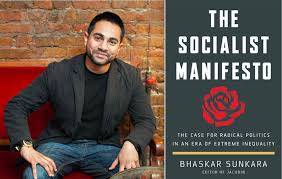 Jacobin Magazine is today the premier magazine of the “Bernie Left” and the Democratic Socialists of America.
Since 2017, they have come under attack for purging many of the original writers who captured the essence of left-wing populism — defending white working people, pushing back against identity politics — and trading them in for liberal interventionists, embrace of “antifa” and anarchist voices, open borders activists, and “sex worker” advocacy.
Research into the 990 forms of the Jacobin Foundation Ltd and some of the organizations giving them grants may provide clues explaining the abrupt change in Bhaskar Sunkara’s editorial line.
According to a 2017 990 form uncovered by National Justice, the Annenberg Foundation gave the Jacobin $100,000. The organization writes checks to numerous Jewish and Zionist causes, as well as a wide variety of pro-immigration and gay lobbies and legal groups.
Walter Annenberg, the foundation’s namesake, was a Wall Street speculator turned media mogul. He used his money to aid Israel’s war effort during the ’67 conflict and was known for backing various ethnocentric endeavors. A six figure check from the Annenbergs to an ostensibly socialist, anti-Zionist publication raises eyebrows, to say the least.
Another significant Jacobin donor, the Jewish Communal Fund, cut the magazine a $70,000 check alongside an infinite list of pro-Israel causes..
While Jacobin reported a total revenue of $1.5 million in 2018 mostly from program services, these two organizations provided a substantial amount of their grants and contributions. The Annenberg Foundation provided almost half of Jacobin’s grant money in 2016 ($219,861), while in 2017 the JCF’s money provided almost 70% of the free cash in this column ($107,301). Not bad!
According to sources who spoke to National Justice on condition of anonymity, the editor’s promise to pay them $50 dollars for their articles never materialized.
Political magazines are rarely profitable and not all can afford to pay their writers, but the Jacobin does not appear to have money problems. According to their latest IRS filings, they have set aside $576,019 in bonds, equities, and ETFs so that they can play the stock market.
In the same year, Jacobin’s Sunkara had the money to purchase the British Tribune, which George Orwell once worked for as an editor. Sunkara immediately fired all of its loyal employees with a pitiful severance package that compensated them for only 70% of their wages.
The prestige-purchase is a mirror image of Will Chamberlain’s costly take over of Ronald Reagan’s favorite magazine Human Events, which Chamberlain then proceeded to turn into a crappy gamergate blog.
Sunkara’s latest venture is to employ The Young Turks’ Ana Kasparian and Majority Report’s Michael Brooks for a weekend podcast. It’s unlikely either of these two liberal figures are cheap. The description for the show sounds like more “liberals vs conservatives” partisanship interchangeable with the crap on MSNBC.
Bhaskar’s pivot from anti-capitalist advocacy to profitable liberalism is as obvious as the Soviet flag is red.
Palestinians hunker down for Ramadan, facing a virus that doesn’t discriminate but an occupier that does
By Jonathan Cook | Palestine DeepDive | April 25, 2020
As the holy fasting month of Ramadan begins, the coronavirus outbreak in Israel and the Palestinian territories is proving how inevitably intertwined the two populations’ lives are, while also underlining the extreme differentials of power between them.
While 15,000 Israelis have tested positive for Covid-19 so far, the numbers infected in the occupied territories are still measured in the hundreds – though that, in part, reflects the difficulties for Palestinians of getting tested. The Palestinian Authority is desperately short of equipment, including testing kits, to deal with the virus.
Research suggests that most infections of Palestinians have originated in contacts with Israelis. Israel is much further advanced along the contagion curve because of its population’s access to international travel, the country’s greater exposure to tourism and its integration into the global economy.
Israel’s tight restrictions over Palestinians’ freedom of movement – from the complete blockade on Gaza to the walling-in of the West Bank – as well as its colonial-style control of the Palestinian economy have ensured the late arrival of Covid-19 to the occupied territories.
But it has also guaranteed that the Palestinian leaderships – both Hamas in Gaza and the Palestinian Authority in the West Bank – will be weakly positioned to cope when contagion kicks in more forcefully.
And just such a major outbreak is all but inevitable in the West Bank. Ramadan may well provide the trigger.
In recent years about 80,000 Palestinians – from a West Bank population of nearly 3 million – have received permits to work either in Israel or in Israeli settlements, with a few tens of thousands more entering “illegally” through missing sections of the wall. For most families, such work is the only hope they have of earning a living.
The Palestinian economy is entirely dependent on Israel. Palestinians cannot leave the West Bank without permission from Israel, which is often hard to get.
Israel imposes costly and lengthy bureaucratic controls on Palestinian exports, making it nigh-impossible for Palestinian firms to compete in the global market-place.
And World Bank studies show that Israel has plundered most of the West Bank’s key resources, making it impossible for Palestinians themselves to exploit those resources. Israel even controls the flow of tourists into Palestinian areas.
But Palestinian workers’ dependence on Israel is now placing them in harm’s way. Although many are likely to catch the virus in Israel while working, Israel is refusing to take responsibility for their welfare.
The Palestinian Authority (PA) is able to do little itself because many of the workers are from Area C, the two-thirds of the West Bank that Israel fully controls under the long-expired Oslo Accords. The PA has no access to these areas.
Difficult choice
The Ramadan holiday is likely to severely exacerbate the problem of the virus spreading in the occupied territories.
Last month, as Israel intensified its lockdown to prevent contagion in the run-up to its week-long Passover holiday in the second week of April, Palestinian workers were given a choice. Either they committed to continue working in Israel for several more weeks, often in jobs defined as “essential”, such as food production, or they had to stop work and return to the West Bank until the lockdown ended.
Many chose to keep working and stayed in Israel, while many more worked off-radar, without permits, by sneaking in and out through one of the many gaps in the wall.
This latter group, among the poorest members of Palestinian society, is posing a particular problem for West Bank officials. These workers are at high risk of catching the virus, and can spread it without the PA knowing.
For this reason, groups of Palestinians are reported to be patrolling the missing sections of wall to stop such workers entering Israel. Paradoxically, there are even cases of them trying to patch up breaks in the wall on Israel’s behalf.
The Israeli government has supposedly put in place regulations to keep the Palestinian workers safe: firms must take their temperatures daily, ensure social distancing is maintained on production sites, properly house workers and make sure no more than four sleep to a room.
But the government is leaving it to the firms to comply. There are no inspectors. Media investigations show that the rules are being widely flouted, leading to the rapid spread of the virus among Palestinian workers.
Any who try to leave Israel to avoid catching Covid-19 are being threatened by their employers that their work permits will be revoked, leaving them without work long term.
And now many are heading home to the West Bank to spend Ramadan with their families. Israel has refused to conduct any testing, so a proportion will be bringing – unknown to them – the virus home.
But these workers and their families are not just facing an imminent health crisis that Palestinian medical services are in no shape to withstand. They are also being hit harshly in the pocket by Israel’s lockdown policies.
Palestinians who work in Israel are often the only breadwinner, providing for an extended family that lives close to the poverty line. For the forseeable future there will be no income for the tens of thousands of workers who joined the lockdown in the West Bank before Passover, for those who caught the virus in Israel and were forced home, and for those returning for Ramadan.
Israel is also taking no responsibility for their welfare, even though many have worked for years in Israel and have had to pay a substantial proportion of their wages each month into a sick fund run by the Israeli government.
The fund amounts to more than $140 million, and has grown so large because Israel makes it almost impossible for Palestinians to make a claim.
Israeli human rights groups have pressed Israel to release the funds to Palestinians who are not able to work to help them through this health and economic emergency. So far the Israeli government has done nothing.
Trying to fill the void
The Palestinians under Israeli rule in occupied East Jerusalem face their own set of problems.
Despite claiming that all of Jerusalem – including the Palestinian parts of the city – are Israel’s “united capital”, Israeli officials have continued an apartheid-like approach in the city that treats Palestinians, who are classified by Israel simply as “residents”, very differently from Jews, who are Israeli “citizens”.
The numbers of Palestinians who have officially tested positive so far in Jerusalem is still low, at several dozen, but that probably reflects the fact that until recently there were almost no clinics carrying out testing in Palestinian neighbourhoods.
Many Palestinian areas have not been sanitised by cleaning crews, as Jewish areas have been, nor has there been significant enforcement by Israeli police of lockdown measures or mask-wearing regulations – a surprise given that Israeli police are usually very diligent in patrolling Palestinian areas and making arrests.
Israeli authorities have also been slow to put out information in Arabic about the virus and on safety measures – either for 330,000 Palestinians in Jerusalem or for the 1.8 million Palestinians who live inside Israel and have a very degraded form of Israeli citizenship.
Experts say the lack of an awareness-raising campaign in Palestinian areas will likely lead to a rapid rise in cases over Ramadan, if extended families follow traditional practice and spend more time together.
Palestinian officials in Jerusalem have tried to fill the void by disseminating information, organising sanitisation operations and helping to set up a testing clinic. Israel has cracked down on any such activities, including by violently arresting the Palestinian governor of Jerusalem and the PA’s Jerusalem affairs minister.
Instead Palestinian charities and non-governmental organisations (NGOs) have formed into a “Jerusalem Alliance” to try to pick up the slack left by Israel.
Palestinians in East Jerusalem are likely to be especially vulnerable to disease. Three-quarters live below the poverty line, and less than half are formally connected to the water network. Planning restrictions mean there is widespread overcrowding.
East Jerusalem’s three Palestinian hospitals are also in poor shape, bedevilled by large debts courtesy of Donald Trump, who cut $25 million in financial aid in 2018.
The Israeli health ministry has also failed to provide protective equipment and funds to these hospitals to deal with the coronavirus crisis. They have found an unusual ally in Jerusalem’s mayor, Moshe Leon. He has berated the Israeli government, apparently fearful that West Jerusalem hospitals will be overwhelmed if Palestinians cannot get help from their own hospitals.
More precarious still is the situation of Palestinian neighbourhoods, like Kfar Aqab, that were effectively split off from East Jerusalem after Israel built a wall putting them on the West Bank side. That has made city services difficult to access for some 100,000 Jerusalem residents.
Israel has been progressively abandoning responsibility for these areas – in an effort to raise the Jewish majority in the rest of Jerusalem.
Nonetheless, it has been reluctant to allow the PA to fill the void. The Covid-19 crisis is gradually revealing Israel’s intention towards these “outside” neighbourhoods of Jerusalem. On Thursday, Israel sent in the army to pull down coronavirus information notices that had been put up by the PA.
The Israel army has no role in Jerusalem, but does operate in the West Bank. The new action suggests Israel is preparing to formally reclassify areas like Kfar Aqab as no longer part of Jerusalem.
Apartheid wins out
Things are only slightly better for the fifth of Israel’s population who belong to its Palestinian minority. These 1.8 million second-class citizens are descended from Palestinians who managed to avoid Israel’s ethnic cleansing operations in 1948, when Israel was established on the Palestinians’ homeland.
Israel has created a strange hybrid apartheid system, in which Jewish citizens live almost entirely separate from Palestinian citizens. The two populations are educated separately, and many areas of the economy are segregated too.
But one area where Palestinian and Jewish citizens are highly integrated – coming into regular contact – is in the health sector.
In fact, Palestinian citizens are over-represented in the medical professions, in large part because it is one of the few significant areas of the economy that is not defined in security terms and is therefore relatively open to the Palestinian minority.
One in five doctors in Israel is a Palestinian citizen, a quarter of nurses are, and a half of all pharmacists.
But despite the strong showing of Palestinian citizens in health services, the Israeli government’s apartheid instincts have won out.
In February Israel established an emergency team to handle the pandemic. It devised a national strategy for testing, quarantines, hospitalisations, awareness-raising and the lockdown policy.
However, not one expert from the Palestinian minority – or from the occupied territories – was included on the committee, leaving it entirely ignorant of the special conditions relevant to Palestinian society, in either Israel or the occupied territories.
The Israeli health ministry also refused to meet with the minority’s own national health committee, established by Palestinian doctors and researchers in Israel to help tackle the virus in the Palestinian community.
These failures explain the long delay in Israel producing any information on the virus in Arabic, and the similar delay in setting up testing stations in Palestinian communities. Limited action came only after concerted protests from Palestinian legislators in the parliament.
After a very low initial rate of infection, Palestinian citizens are now the fastest growing group in Israel testing positive for the virus – and that despite continuing low levels of testing.
Ramadan is expected to exacerbate that upward trend dramatically as families shop for food and eat meals with extended families. Mosques are already closed, and Muslim leaders have told worshippers to pray at home. In a last-minute effort to avert a new epidemic, the Israeli government has banned shops and businesses opening during the hours of darkness, as would normally occur during Ramadan.
As in the West Bank and Jerusalem, Palestinians in Israel are vulnerable. Two-thirds of families live below the poverty line – more than three times the rate of Jewish families. There is massive overcrowding in Palestinian communities, after decades in which Israel has refused new building permits for Palestinians.
And health services are poor or non-existent in many Palestinian communities, especially in dozens of Bedouin villages Israel has refused to recognise. In these communities, Bedouin are also denied water and electricity.
Further, Israel’s main ambulance service, Magen David Adom, rarely operates in Palestinian communities, though its staff alone have training to deal with coronavirus. It is unclear how the private companies serving Palestinian communities will cope if there is a major outbreak.
And as is the case in other Palestinian communities, Palestinian families in Israel are also particularly exposed to the economic consequences of lockdown. Many work as casual labourers, and have lost their work during the past weeks.
The coronavirus outbreak was a test of Israel’s ability to put aside its security and demographic obsessions and deal with the Palestinians not just as fellow human beings but also as allies in a struggle for the health of both peoples. In that test, Israel has failed dismally.
Israel and World Jewry
By Evan Jones | American Herald Tribune | April 24, 2020
The Covid-19 pandemic hits the world. Undeterred, the Israeli forces of Occupation (including the settlers) escalate the rampage and the outrages. Murders, harassment and arrests, home demolitions, destruction and/or theft of virus aid equipment and food and brutalizing of aid workers, Gaza crop poisoning on a grand scale, West Bank crop destruction, etc. Spitting on Palestinians is now de rigueur. Business as usual. Sadism on a grand scale. Whence the motivation? And the collective psychological reward? The Jewish God is a militant deity.
Israel is a pariah state. It is an apartheid state in its construction, [1] from its inception as an ethnocracy, not one for which the label ‘apartheid’ is merely a dangerous prospect on the horizon with a completely colonized West Bank.
How does Israel survive as such, given that apartheid South Africa has disappeared into history. It survives essentially because of support from the institutionalized structures of establishment world Jewry. Period.
Don’t talk Christian Zionists, as they are a side issue, crazies succoured to dilute the central causal lineage.
The US umbrella is tangibly of enormous importance. But behind the White House compliance is the Zionist lobby, from Truman onward (albeit with occasional wobbles). The Zionist lobby owns Congress; those members they don’t own they simply extrude (starting with William Fulbright in 1974, Paul Findley, Pete McCloskey, Cynthia McKinney, etc.). The massive role of the US in supporting Israel is a product of institutionalized American Jewry – now centred on the peak body AIPAC.[2] The argument that US support of Israel is an instrumental means of projecting US power in the Middle East is diversionary; the posited hierarchy of master and proxy won’t wash. Cui bono?
The Zionist lobby only recently destroyed what was left of the integrity of the British Labour Party, installing a functionary at its head. The British state is Zionist-occupied territory; ditto that of France, Germany (hobbled by the Jewish holocaust), Canada and Australia.
Israel, as a racist state, is engaged in criminality sui generis. It was a guaranteed outcome known from the start. Theodore Herzl noted (1896):
‘An infiltration [of Jewish migrants to Palestine] is bound to end badly. It continues to the inevitable moment when the native population feels itself threatened … Immigration is consequently futile unless based on an assured supremacy’. Violence was implicit in Zionism from the outset.[3]
The native population felt itself threatened immediately, but the Zionist movement found solace and then salvation in the arrival of World War, the Balfour Declaration and subsequently the British Mandate over Palestine. Until the Zionists could muster the firepower to create its ‘promised land’ unilaterally by terrorism. That firepower was acquired from British training en masse, just prior to World War II (to quell the Arab rebellion) and during the War itself.
As David Hirst notes, regarding the massacres and bombings by Jewish forces in response to the MacDonald White Paper of May 1939: [4]
‘The ideological roots of ‘gun Zionism reach back to Theodor Herzl himself. It was inevitable, as he foresaw, that armed force would eventually come into its own as the principal instrument of a movement which, in its earlier and weaker phase, could only rely on the protection of an imperial sponsor. That phase was now drawing to a close.’
Israeli criminality must be sheeted home to the personnel within the institutions of the Israeli state – politicians, the military and intelligence services, the judiciary, etc. They are crimes of individuals, groupings, institutionalized, the personnel being uniformly Jewish.
Isn’t this criminality bad for world Jewry and what it means to be Jewish? Apparently not. Establishment Jewish institutions, with one voice, sign up for Israel’s crimes. More, support of Israel is their raison d’être – all while simultaneously shedding crocodile tears about anti-Semitism. The global Jewish community, whether Jewish individuals like it or not, is implicated in Israeli criminality by the dominant Jewish organizations who claim to speak for national Jewish communities.
The Wikipedia entry of the Australia/Israel & Jewish Affairs Council (AIJAC), clearly sanctioned by its subject, notes: ‘The Australia/Israel & Jewish Affairs Council, represents the interests of the Australian Jewish community to …’. Here’s a representative conflation of the interests of the state of Israel and of a national Jewish community in its entirety.
John Lyons was Middle East correspondent for The Australian newspaper during 2009-15. His Balcony Over Jerusalem [5] is notable for the attention paid to the lobby. Like all budding Middle East correspondents, Lyons was inevitably the subject of attempted seduction and, failing that, subsequently the subject of escalating attacks for his endeavour to fulfil his role as independent reporter. A senior Israeli military officer observed to Lyons: ‘The Israel lobby in Australia is the most powerful lobby in the world in terms of impact it has within its own country’.

The nation-based lobby works to ensure that its own government (whichever Party is in power) remains complacent, acquiescent, if not blood red in support. It also works tirelessly to control the information flow. Because Israel stinks, disinformation (lies, counter-narratives, fairy stories) and censorship have to be an integral part of the lobby’s activities. Lyons recounts how, in particular, AIJAC’s Colin Rubenstein constantly pressured senior management at The Australian to close down his reporting. (Senior management of the Murdoch-owned paper supported Lyons, in spite of the attempted scuttling by a middle level editor).
The other major Australian media chain, Fairfax (now Nine Entertainment), owner of the major Sydney, Melbourne and Canberra dailies, has faced the same pressure. Ditto the publicly-owned television stations ABC & SBS. Fairfax/Nine has persistently caved in, granting privileged access to the opinion and letters pages to pro-Israel apologists. An ex-Fairfax journalist, friend, confirms that the pressure of the lobby on management was relentless and intolerable.
In early January, in the Sydney Morning Herald and Melbourne Age we have Rubenstein glorifying the assassination of Qasem Soleimani as ‘arch-terrorist’, presiding over a claimed multi-tentacled terrorist expansionist reach of Iran in the Middle East, destabilising everything in its wake. Rubenstein even has Iran behind the assassination of Lebanon’s Rafiq Hariri in 2005. Surprisingly, the online comments editor allowed multiple responses from ‘woke’ readers to Rubenstein as an Israel front man, whereas editors scrupulously deny such feedback in the print version of the newspaper. In the same issue of the papers we have an AIPAC flunkey claiming on cue that the essential issue behind US-Iran escalating tension is ‘the pressing need to prevent Iran from building nuclear weapons’, bizarrely accusing Iran of undermining the 2015 JCPOA nuclear deal.

Rubenstein was in the Herald again in late January, claiming that plenipotentiary Jared Kushner’s ‘Middle East Peace Plan (sic)’, in the formulation of which no Palestinian authorities were invited, is the greatest thing since sliced bread. Thus are Australians fed the regular odious drip, very rarely opposed in print, of the innate necessity and justice of Israel’s criminality.
Rather than the association between Israel and its global Jewish community support being severed as the daily brutality of the Israeli forces of Occupation accumulates, the association has recently been reinforced. The notable vehicle for this reinforcement has been the International Holocaust Remembrance Alliance and its ‘working definition’ of anti-Semitism. The Definition skirts over ‘Holocaust Remembrance’ but pays majority attention to the treatment of Israel.
Thus we find that rational criticism, driven by conventional humanitarian principles, of Israel’s criminality is labelled anti-Semitic. More, IHRA personnel and Jewish organizations flog this definition, pressuring, pressuring national governments into submission to accept the definition and to act as repressive agents against free-thinking citizens of those countries.
And to those who object? The issue is concisely contained in a recent skirmish in faraway New Zealand. The brief report on stuff.nz deserves quoting at length. It turns out that the Wellington Jewish Council had requested New Zealand’s capital city to adopt the IHRA’s definition of anti-Semitism. But the Wellington Progressive Synagogue objected, claiming that the definition ‘had the potential to conflate antisemitism with anti-Zionism (opposition to the state of Israel), as it had already done overseas’. Too kind – not ‘potential’, as the point of the definition is precisely to conflate anti-Zionism with anti-Semitism.
Said Progressive Synagogue spokespersons: ‘Its new effect is to regulate the speech of people like ourselves: law-abiding non-Zionists who call for the unexceptional application of law and human rights in Israel/Palestine; Jews and non-Jews alike’. Quite.
The NZ Jewish Council responded that ‘the IHRA definition explicitly stated criticism of Israel could not be regarded as antisemitic’. A dishonest retort. The text includes the sentence ‘… criticism of Israel similar to that leveled against any other country cannot be regarded as antisemitic’. But this is transparently a ruse to deflect from the substance of the definition’s text for which the sentence is an aberration. And the meaning of ‘similar to that levelled against any other country’? Criticisms of Israel are aimed precisely at structures and practices that set it apart from other countries, including some countries that are utterly on the nose. The IHRA mob mean – we will be the arbiters of what is acceptable criticism. But, in truth, what is ‘acceptable’ criticism is an empty set.
But here’s the clincher. The Jewish Council continues: ‘The writers of the opinion piece were “fringe” and did not have a mandate to speak on behalf of the Jewish community – unlike the Jewish Council’.
‘Fringe’? ‘Mandate’? This is it in a nutshell. If you don’t support Israel 100 per cent, you aren’t a real Jew. And on what basis does the Jewish Council’s presumed ‘mandate’ rest?
Michelle Weinroth, author and member of Independent Jewish Voices Canada, nails the fraud and duplicity behind the IHRA push:
‘If the IHRA definition turns a blind eye to the veritable culprits of heinous racism, it nonetheless targets the anti-racist defenders of Palestinian human rights, many of whom are conscientious Jews. … it masquerades as an innocuous, educational, and preventative measure while acting as a penal code that aggresses the advocates of human rights, silencing them with veiled threats. … At its heart sits a false equation between the state of Israel and Jews more generally.’
A false equation between Israel and Jews ‘more generally’. Here’s another one. Recently brought to light, an earlier tussle took place in September 1991 when Israel demanded a $10 billion loan guarantee, which President George H Bush viewed as a means of undermining the forthcoming Madrid peace conference (Blankfort, fn.2). Bush Sr threatened to deny Israel the loan guarantees if the large contingent of migrants from the Soviet Union were to be directed into West Bank settlements. Philip Weiss reports:
‘The Israel lobby group the American Jewish Committee (AJC) decided to support the Israeli government against the White House in 1991 over illegal Israeli settlements on the West Bank, even though many officials at the organization privately backed the president. The AJC reasoned that a leading Jewish organization in Washington had a “primary responsibility” to stand up for Israel because the country represents the “collective will” of the Jewish people, an AJC official says.’
Israel represents the collective will of the Jewish people? Were ‘the Jewish people’ consulted?
One of the more remarkable attempts to associate Israel with the ‘collective will’ of the Jewish people, via the conflation of anti-Zionism with anti-Semitism, is a statement by one Robert Wistrich to the UN Commission on Human Rights, published on 10 September 2004.[6] Wistrich’s parents’ lives were blighted by anti-Semitism, and his subsequent stellar academic career was devoted to this very subject. Yet this statement is a wretched mishmash, devoid of logic and history, and conveniently oblivious to Israeli criminality. And this during the Prime Ministership of noted humanist Ariel Sharon. Wistrich claims:
‘Much of the mobilizing power of “anti-Zionism” derives from its link to the Palestinian cause. Since the 1960s, the [Palestine Liberation Organization] has worked hard to totally delegitimize Zionism and the policy has largely succeeded: this anti-Zionism involves a total negation of Jewish nationhood and legitimate Jewish sovereignty in Eretz Israel …’
Legitimate sovereignty in Eretz Israel? Sure. Wistrich’s tribalism has overridden his rigorous academic training. Curious, there are no Jewish dissenters in his grab bag of mad dog anti-Semites in a pragmatic coalition all aimed at the destruction of Israel.
Wistrich couldn’t really avoid this elephant in the room, so he grabbed the bull by the horns in a 2014 issue of Commentary (preaching to the converted). [7] Well-known Jewish intellectuals who don’t toe the Party line are accused of having been mentally and morally captured by infantile Marxism, etc., and/or anti-Americanism, their left-wing blinkered obsessions then finding its next object of abuse post-Vietnam in Israel. Noam Chomsky, Richard Falk, Howard Zinn (‘Hatred for America, the West, and Israel thrives beneath the cloak of human rights and social justice’), Eric Hobsbawm, Shlomo Sand, Ilan Pappé – all are excoriated for their sins.
In particular, Wistrich couldn’t have ignored Shlomo Sand, whose cannon volleys in The Invention of the Jewish People (2009) and The Invention of the Land of Israel (2012) blasted Wistrich’s self-assured self-righteousness to shreds. Wistrich dismisses Sand (‘his pseudoscientific delegitimization of Israel’) as merely having ‘revived long-discredited theories – such as Arthur Koestler’s deranged notion that Ashkenazi Jews sprang from Khazars who converted in the 10th century C.E.’. Wistrich ignored that Sand, in genuine scholarly fashion, put Koestler’s The Thirteenth Tribe (1976) into context with a considerable literature on the same theme.
The rhetoric of these contemptible lefties, claims Wistrich, ‘divorced from historical truth and geopolitical reality, negates any possibility of reform or redress concerning genuine grievances’. Genuine grievances? A chink in the armour? How could there be grievances against Israel that were genuine (the ‘empty set’ again), and who would decide? Evidently not the Palestinian victims or their Jewish sympathizers.
We have a comparable affair when French elder statesman Robert Badinter addressed UNESCO in December 2016,[8] appropriating Holocaust remembrance to plug Israel as synonymous with Jewry per se. Badinter played the same card as Wistrich:
‘What is certain is that in the context of the Israeli-Palestinian conflict, anti-Semitism has once again spread widely under the name of anti-Zionism. We must have the lucidity to recognize that under this label that refers to Zionism, it is indeed the Jews, and Jews everywhere, who are targeted. And I would say that anti-Zionism under the surface is nothing but the contemporary expression of anti-Semitism, namely, hatred of the Jews.’
The ‘not in my name’ communities, declining to join wholeheartedly the cause of Israel über alles, have been written out of the story. Einstein, Freud, Arendt, camp survivors like Hajo Meyer; individual authors, bloggers and/or activists; non-compliant Jewish organizations; Israeli human rights organizations; etc. It’s the Spinoza syndrome – ignored if too famous; otherwise excommunicated because ‘self-hating’ Jews, ‘fringe’ elements, etc.
When Hannah Arendt published Eichmann in Jerusalem,[9] highlighting the bureaucrat over the monster, even her fame didn’t save her from damnation. Daniel Maier-Katkin highlights the ongoing character assassination and its character:[10]
‘[A] campaign against the memory of Hannah Arendt continues, and the ideology that rationalizes and justifies ad hominem attacks and menacing gestures against Jews who dare to criticize Israel persists. As Rabbi [Michael] Lerner and Justice [Richard] Goldstone have learned, a Jew who fears that Israel is on a path that leads to destruction, or who is skeptical of a “divine mission to possess the land,” or concerned about the legality or morality of unrelenting military strategies to secure regional domination, will be attacked as self-hating and anti-Semitic.
‘To hate oneself is ipso facto pathological, and this, it is asserted, leads to irrational hatred of Israel, which is seen as the embodiment of the Jewish people. Thus, defenders of Israeli policies aim to exclude Jewish critics from public discourse by defining them as crazy persons, driven to anti-Semitism by self-loathing. In this way Lerner’s criticism of Israel, or Goldstone’s, or Arendt’s is dismissed as arising from psychological or spiritual disturbance rather than reasoned argument or an ethical posture. Calumny, an old-fashioned blend of slander, distortion, and innuendo, has been a recurring instrument of intimidation in post-Holocaust Jewish politics.’
In sum, Israeli state and settler criminality persist because it is supported uniformly by dominant national Jewish bodies, with de facto support and/or passivity from sections of the Jewish population. This institutionalized structure never fails to claim that it acts for Jewry in its entirety. Dissidents from the demand for unqualified support are cast aside from the tribe.
Is it not then possible, indeed probable, that some cool-headed people will reason that it is appropriate to become an anti-Semite? A stance rooted not in a time-worn shibboleth, but on the seeming support of the vast majority of world Jewry for Israeli criminality and inhumanity? Ersatz anti-Semitism (criticism of Israel), manufactured by the Zionist lobby as cover-up, thus potentially fosters substantive anti-Semitism. The real thing.
The Canadian (Jewish) philosopher Michael Neumann earlier nailed the implications:[11]
‘Inflating the meaning of ‘anti-Semitism’ to include anything politically damaging to Israel is a double-edged sword. … The more things get to count as anti-Semitic, the less awful anti-Semitism is going to sound. …
‘Since we are obliged to oppose the settlements, we are obliged to be anti-Semitic. Through definitional inflation, some form of anti-Semitism becomes morally obligatory. It gets worse if anti-Zionism is labelled anti-Semitic… The more anti-Semitism expands to include opposition to Israeli policies, the better it looks.
‘Given the crimes to be laid at the feet of Zionism, there is another simple syllogism: anti-Zionism is a moral obligation, so, if anti-Zionism is anti-Semitism, anti-Semitism is a moral obligation.’
The ‘not in my name’ communities, in their myriad dimensions and considerable expenditure of energy, have made not a jot of difference to Israel’s project. Why?
Gideon Levy, long-time Haaretz journalist providing a window into Israel’s soul, has honed in on the denial, conscious amongst its leaders, subliminal amongst the bulk of the populace, that accompanies Israel’s ongoing criminality. And behind it? Here is Levy in March 2018 (he said the same in an Australian lecture tour in November 2017):
‘There are three core values of Israeli culture that enforce the totalitarian discourse.
‘The first value: we are the chosen people. Secular and religious will claim it. Even if they don’t admit it they feel it. If we are the chosen people, who are you to tell us what to do. The second very deeply rooted value: we are the victims, not only the biggest victims, but the only victims around…. I don’t recall one occupation in which the occupier present himself as the victim. Not only the victim– the only victim….
‘There is a third very deep rooted value. This is the very deep belief again everyone will deny it but if you scratch under the skin of almost any Israeli you will find it there, the Palestinians are not equal human beings like us. They don’t love their children like us. They don’t love life like us. They were born to kill, they are cruel, they are sadists, they have no values, no manners… This is very, very deep rooted in Israeli society. And maybe that’s the key issue. As long as this continues, nothing will move. We are so much better than them, so much more developed than them, more human than them.’
One of Sydney’s Jewish schools, Moriah College, has as its ‘core values’ (not atypical):
‘We strive to foster critical thought, cultural interests, tolerance, social responsibility and self-discipline. … Moriah not only aspires to achieve excellence in academic standards, but maintains and promotes among its students an awareness of and a feeling for Jewish traditions and ethics, an understanding of and a positive commitment to Orthodox Judaism and identification with and love for Israel.’
Critical thought, tolerance, social responsibility, and identification with and love for Israel? Take your pick. You can’t have both.
Endnotes
[1] vide Uri Davis’ Apartheid Israel, 2004; itisapartheid.org.
[2] Jeffrey Blankfort has meticulously documented the rise of AIPAC from the 1950s to its current status as the key determining force in US Middle East foreign policy. ‘Rendering unto AIPAC’, Counterpunch magazine, January 2014.
[3] David Hirst, The Gun and the Olive Branch, 1977, third edn., p.140.
[4] Hirst, p.221.
[5] John Lyons, Balcony Over Jerusalem: A Middle East Memoir, with Sylvie Le Clezio, 2017.
[6] The Statement is reproduced in the Jewish Political Studies Review, Fall 2004, and made available online.
[7] Wistrich, ‘Judeophobia and Marxism’, Commentary, December 2014.
[8] Robert Badinter, ‘Antisémitisme: tirer les enseignements de l’histoire’, UNESCO, 6 December 2016, reproduced to mark the International Holocaust Remembrance Day, 27 January. The speech in English, ‘Anti-Semitism: Learning the lessons of history’, is reproduced here.
[9] Hannah Arendt, Eichmann in Jerusalem: A Report on the Banality of Evil, 1963.
[10] Daniel Maier-Katkin, ‘How Hannah Arendt Was Labeled an “Enemy of Israel”’, Tikkun, Nov/Dec 2010.
[11] Michael Neumann, ‘What is Anti-Semitism?’, in Cockburn & St.Clair (eds.), The Politics of Anti-Semitism, 2003.
Israel to Seize Ibrahimi Mosque Land in Hebron
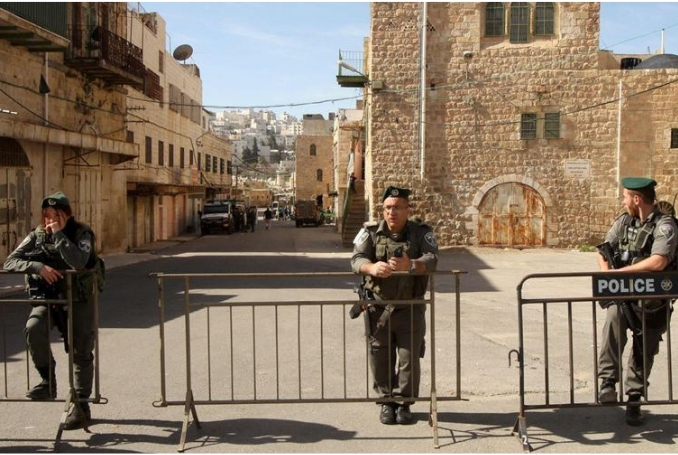
Ibrahimi Mosque in the occupied West Bank city of Hebron
Palestine Chronicle | April 22, 2020
Israeli government’s Attorney General Avichai Mandelblit yesterday approved the expropriation of Palestinian land adjacent to the Ibrahimi Mosque in occupied West Bank city of Hebron (Al-Khalil).
According to Arab48, after Mandelblit’s approval, the Palestinian land will be under the control of Defence Minister Naftali Bennett.
The land belongs to the Islamic charitable trust in the Palestinian city, which oversees the Ibrahimi Mosque.
The occupation will use the land to allow disabled visitors to access a synagogue near the mosque.
Israeli media reported the Israeli Ministry of Justice saying in a statement that the decision was made in collaboration with the Civil Administration.
The statement said that this land would be used to build an elevator and ramp to allow people with disabilities, including tourists and Jewish worshippers, to access a synagogue.
Commenting on this step, the Palestinian Authority’s Ministry of Waqf and Religious Affairs said: “The decision is an assault on the Muslims’ ownership of the Ibrahimi Mosque and the endowments that surround it, which are numerous in the city of Hebron.”
Renouncing Israel on Principle
How to answer the question, “Do you affirm Israel’s right to exist?”

By Steven Salaita | December 9, 2019
When anti-Zionists discuss the Middle East, the topic of Israel’s existence rarely arises. It’s almost exclusively a pro-Israel talking point. We’re focused on national liberation, on surviving repression, on strategies of resistance, on recovering subjugated histories, on the complex (and sometimes touchy) relationships among an Indigenous population disaggregated by decades of aggression. That a colonial state—or any state, really—possesses no ontological rights is an unspoken assumption.
“Do you recognize Israel’s right to exist?” pretends to honor the downtrodden, but it is an altogether different proposition, transforming sophisticated ideas of liberation into a crude test of political respectability. Prioritizing the state as worthy of relief, as something to which we automatically owe deference, subsumes life to the imperatives of capital.
The fundamental goal of the question is to attribute a sinister position to dissidents. It accomplishes that goal even when the dissidents haven’t promoted destruction. Mere defense of Palestinian life is enough to evoke the settler’s existential fear. For people socialized into orthodoxy, Israel is synonymous with progress, technology, and production. Affirming its existence is an endorsement of the status quo; no matter how ludicrous as a moral premise, in capitalist spaces it is a perfectly sensible demand.
There are plenty of reasons to eschew the demand. The first reason is practical: we don’t advocate for the destruction of human communities, but of ideologies conducive to racism and inequality. It’s both insidious and unethical to conflate Jewish people (of any national origin) with the existence of a violent, rapacious polity. That sort of conflation is a grave disservice to activists and intellectuals devoted to a better world—and to the communities for whom a better world is a necessity of survival. Nobody has ever asked me to affirm another nation-state’s existence, a demand I would likewise decline. Zionists constantly single out Israel for special treatment.
Moreover, it is remarkably impudent for champions of a state founded on the destruction of Palestine and now in its eighth decade of ethnic cleansing to ask the victims of its malevolence for recognition. Even worse, recognition is only the tip of the demand. We’re also being asked to legitimize apartheid and ignore the routine commission of war crimes. The upshot is to validate Israel as a militarized object of Western imperialism—in other words, to affirm the existence of a deeply antihuman entity.
Let’s consider the demand in context of North America, where it’s most frequently issued. Those of us operating in this geography haven’t the authority to abdicate nearly 80 (and arguably 100) percent of historical Palestine. It’s not any Westerner’s prerogative to relinquish Palestine under the pressure of a spuriously humanistic insistence by Zionists that their perfidy be excused because it will somehow make us more responsible citizens.
I am happy, eager even, to affirm the right of Jewish people to live in peace and security, wherever that may be, a right all humans deserve in no particular order of worthiness. But I won’t ratify Israel’s bloody founding or its devotion to racial supremacy. Ultimately, when Zionists demand that you affirm Israel’s right to exist, what they really seek is affirmation of Palestinian nonexistence.
Beyond these philosophical, political, and practical factors, there’s a worthy psychological reason to refuse the demand. Zionists are the bully in this supposed conflict and enjoy nearly universal support in centers of political and economic power. They have more funds, access to corporate media, and the backing of the US military. Palestinians, however, hold one form of power that doesn’t require money, platforms, or weaponry: the ability to withhold legitimacy from Israel. It is a small power, without a material apparatus, but it is power, nevertheless, one that only a fool or opportunist would relinquish. When an oppressor makes submission the basis of civic responsibility, insolence is the only dignified response.
A Postmortem on Bernie Sanders and Palestine
Now that the Sanders campaign has ended, Palestinian Americans should reflect on why our organizations so readily abandoned anti-imperialism.

By Steven Salaita | April 15, 2020
Let me start with a story about the Democratic primary. Now, I’m no operative, so this story has nothing to do with voting choices or electability. It’s about how Palestine disappears in US electoral discourses, even when people who identify as Palestinian purport to make it visible.
Sometime ago, I was added to an online group of Palestinian Americans organizing for Bernie Sanders’ campaign. The specific identity of the group is immaterial. Many such groups existed and as far as I can see the outcome of their work fit a standard template: we’re Palestinian (and thus purport to speak for all Palestinians from within the United States); Bernie’s not perfect (but he really is kinda perfect); Bernie’s by far the best on Palestine (trust us); this isn’t merely about Palestine (Palestine is merely the pretext); we’ll be sure to hold him accountable (even though we just finished giving him unqualified support). I don’t want to put Palestinians on the spot; all statements supporting presidential candidates look more or less the same. Let’s call it a limitation of the genre and leave it at that.
So, members of this group were working on a statement explaining why Palestinians should support Sanders. Somebody put up a shared document with various points exaggerating Sanders’ record as an advocate for Palestinian rights and some fantasizing about Palestine’s future under a Sanders presidency. Again, pretty typical stuff, which is to say a whole lot of bullshit.
In the margin of the document, a user asked, “Is Sanders a Zionist?,” to which another person replied, “Yes he is.” No discussion ensued. The question and answer hung in silence until the document went public, at which point any consideration of Sanders’ Zionism had been scrubbed.
I’m less interested in the question of Sanders’ Zionism than I am in the reasons for scrubbing Zionism from the conversation about Sanders. Sanders doesn’t call himself a Zionist, and the label can flatten a pretty wide range of thought, but if we examine Sanders’ positions against what the Palestine solidarity movement understands to be Zionism, then Sanders unambiguously fits the description. He constantly affirms Israel’s right to exist as a Jewish state. He opposes right of return. He treats Netanyahu as the aberration from a humanistic norm. Yeah, he’s a Zionist. This fact wasn’t lost on his Palestinian American champions. It just didn’t seem to bother them very much.
But let’s leave the question of Sanders’ Zionism to the side, for it has proved effective at putting colleagues at loggerheads. Whatever Sanders or any other politician thinks about Palestine should have no influence on how Palestinians think about Palestine. In fact, according to the mythography of electoralism, it’s the community’s duty to educate the politician. In order to accomplish that goal, the community needs to convey principles it considers nonnegotiable. For Palestinians, those principles would include right of return and full equality in all of historic Palestine.
That’s not what happened in the various statements of support. Instead, their authors instrumentalized Palestine as an abstract commitment—an idea mobilized through performances of ethnic verisimilitude—in order to boost a campaign extraneous to the actual work of decolonization. Rather than pressuring the politician, they made demands of the audience and assured people opposed to Zionism that voting for someone pledging to uphold Israel’s “Jewish character” wasn’t a pragmatic concession, but an act of virtue, a feat of devotion to Palestine.
What does it mean that groups visibly and proudly identifying as Palestinian felt it necessary to scrub Zionism in order to boost a politician jockeying to supervise US Empire? By what moral calculus did those groups take vital demands off the table? Did they have the consent of refugees for whom right of return is sacrosanct? Of rank-and-file Palestinians in the United States? Or was it an exercise in unilateral leadership by the diasporic professional class?
I know what the response is: we didn’t mythologize anyone; we regularly pointed out his weaknesses. Well, not really. (I didn’t see you pointing out that Sanders is a Zionist, for example.) Exerting tremendous energy to conceptualize Sanders as a benevolent uncle figure and then occasionally saying “he needs more work on this issue” or “we need to keep pushing him” was a cardinal feature of mythologization, as was running interference with points of view more palatable to the mainstream when fellow anti-Zionists dissented from the consensus. Saying “he’s the best on Palestine even though he’s not perfect” was the rankest kind of mythmaking. It confused “being better than a terrible field” with “being good.”
I saw in these statements a yearning to matter, a desire to at long last be taken seriously after decades of abuse and disregard. It’s a normal response to subordination, to the pain of continuous betrayal, but no amount of high-minded talk about an electoral revolution will compel sites of power to care about Palestinian Americans. They shouldn’t be our audience, anyway. Palestinians are admired by people around the world who value justice and resilience and dignity. Let’s not forgot our place, which isn’t among consultants and technocrats, but with the ignominious, the surplus, the unbeloved.
During the primary, and during the 2016 election cycle, whenever I expressed skepticism about deploying Palestine in service of a presidential campaign, other Palestinian Americans quickly intervened: “Well, I mean Steve’s making an, ahem, important point, but, here, let me butt in and do it, you know, more responsibly.” I found it to be a pathetic move. The idea was to keep radicalism in check, or to snuff it out. Decolonization, however, is inherently radical in the metropole. The interventions were thus a form of ostracism: we don’t want disreputable elements of our community running a bus over this good foot we’re trying to put forward. The limits of US electoralism came to define the parameters of Palestinian liberation.
Electioneering requires compromise, but compromise isn’t a neutral practice. The people are made to sacrifice for the affluent. That’s how compromise works under capitalism. Every time, every single time, it’s some aspect of Palestinian freedom that must be compromised. Never the candidate’s position. Never the system’s inherent conservatism. Never the ongoing march of settler colonization. We’re volunteering to be captured by the settler’s notion of common sense.
And what would have happened if your guy won? You already gave up right of return. A one-state solution. Anti-imperialism. Nobody was talking about general strikes until the pandemic. And nobody ever talks about armed struggle. How did you plan to get these things back on the table after having surrendered them to a person whose first, second, and third priority is appeasing power? You gave up something Palestinians have struggled and died for over the course of decades, and for what? Just to make the apocryphal and frankly useless point that this politician is a more tolerable Zionist than the other ones?
And when your guy loses? This is the question of the moment, isn’t it? You gave up all that leverage for nothing (except for individual benefits). What happens next? God knows I can’t answer that question. I’m not saying don’t participate, don’t vote, don’t be interested in a candidate. That’s not the point. I dislike coercive forms of persuasion. I’m simply trying to convince you not to give up the idea of freedom as it’s articulated by the downtrodden. Not for any reason. Certainly not for a goddamn politician.
There’s a question you ought to ask as necessary (which is to say constantly): what happens to Palestine? When we humor a system calibrated to exclude us, when we pretend that liberation is possible on the margins of a hostile polity, when we imagine liberal Zionism as a prelude to freedom, then what happens to Palestine?
Raising this kind of skepticism is a good way to get branded a hater. (Treating the recalcitrant as irrational is a central feature of electoral discipline.) I hate this sensibility precisely because I’m not a hater, because I recognize that defiance is a priceless asset in conditions of loss and dispossession. Let’s please abandon this smug idea that skepticism ruins the party for sensible people. It’s an ugly form of internal colonization. Recalcitrance can be a deep, abiding act of love, in this case a devotion to life realized in the form of a simple question: what happens to Palestine?
The system you deign to reform ranks nothing above ruling class accumulation—the system, in other words, is designed to betray, and performs its mandate with brutal efficiency. And so the answer to that timeless question never changes: Palestine goes away. Any group that doesn’t facilitate a flow of capital into the imperial core is fit for disappearance. Our mandate, in turn, isn’t to seek the approval of our oppressor, but to earn his contempt.
Instrumentalizing the persecuted is a critical feature of electoralism. Promoting a Zionist presidential candidate and remaining faithful to the core tenets of anti-Zionism? Forget it. It’s not happening. It can’t happen. Electoralism is salted against insurgency. It’s not a space for ideas, for creativity, for the simple decency of not asking the least powerful among us to defer their freedom; it’s hostile to anything that impedes the reproduction of orthodoxy. Liberation has always required tremendous imagination. That’s not on offer when David Sirota is authoring the narrative.
You have no cause to be angry with Sanders. Not now. He hasn’t broken a single pledge. He never hid his intentions. There was plenty of reason for concern when he kept repeating liberal Zionist platitudes. It was you, not Sanders, who folded Palestine into a campaign that always promised to maintain the status quo. The outcome was easy to predict because it has many decades of precedent. Palestinians, victim of a million betrayals, should know this better than anyone. We also know that struggle has no easy trajectory. Mass movements predicated on voting make for attractive sources of relief. Then they go up in smoke and you’re left to find the next shiny figure to exploit, the next fount of excitement and pageantry and social capital. This isn’t a serious politics. It’s terminal naivete, or industrial self-promotion.
And now what? You disposed of the most radical members of our community, systematically excluding so many brethren from the life-sustaining pleasure of shared resistance, in order to assuage a bunch of faceless assholes waiting for the first opportunity to dispose of you, all that love sacrificed for no reward beyond some retweets and an evanescent sense of importance, your moment of being accepted by the polity now replaced by angry regret for having again succumbed to the gravitational pull of authority, of the state and its functionaries, of the very institutions that maintain our dispossession. But our nation, Palestine, is neither temporary nor ephemeral. Our politics should match the condition.
Despite coronavirus-caused cutbacks, Israel expects to get full $3.8 billion
By Alison Weir | If Americans Knew | April 14, 2020
Israel’s Jerusalem Post newspaper reports that “nearly all the experts” it consulted believe that Israel will get at least $3.8 billion from the U.S. in the coming year despite economic devastation to the U.S. economy caused by the coronavirus pandemic.
JP notes that the aid is expected even though “American economic activity has declined in recent weeks at a rate not seen since the Great Depression.” Barron’s similarly reports that the entire U.S. economy “has been brutalized” by the coronavirus pandemic.
“Whatever happens next, the events of the past six weeks will scar the U.S. economy well into the 2030s, if not beyond,” Barron’s predicts. “Tens of millions of Americans are already paying the price, and they will continue to do so for a long time.”
Nevertheless, the Jerusalem Post reports, a “Trump administration source” said that Israel would not need to worry about getting the money “even if there is a depression” in the U.S.
For decades Israel has received more U.S. tax money than any other country – on average, about 7,000 times more per capita than to others around the world.
$38 billion package
The current aid to Israel is part of a package promised by the Obama administration in 2016 under which Israel would get $38 billion over the next 10 years – the largest such package in U.S. history.
The aid package works out to $7,230 per minute to Israel, and equals about $23,000 per each Jewish Israeli family of four.
Under the Obama-Netanyahu Memorandum of Understanding (MOU), the $3.8 billion per year was to be a ‘ceiling’ – the agreement was that Israel would not ask for more money on top of this annual disbursement.
However, an MOU is a non-binding agreement and can be changed. Therefore, Israel partisans in Congress have introduced legislation that would make it into law – and the legislation before Congress makes the terms even more beneficial to Israel than the MOU.
Under the current bill before Congress, the $38 billion would be a ‘floor’ rather than a ‘ceiling,’ meaning that aid could increase, as it almost always has in the past.
JP reports, however, that some former Israeli diplomats, concerned that Americans suffering under COVID-19 might object, recommend that this year Israel avoid its usual request for more money.
Aid to Israel hurts U.S.
Israel and its partisans claim that U.S. aid to Israel is supposedly good for the U.S. because Israel spends most of the aid money on U.S. weaponry. (All other nations that receive U.S. military aid are required to spend 100 percent of it on U.S. equipment.).
However, if the U.S. wishes to subsidize U.S. companies, the Pentagon and/or other U.S. agencies could simply buy more equipment themselves, and let Israelis use their own money to purchase weaponry.
Similarly, Israel and its advocates often claim that Israel is America’s “aircraft carrier” in the Middle East. However, it is actually American soldiers who have fought and died for Israel through the years.
Aid to Israel is also problematic for other reasons. Israel has a long record of human rights violations, as documented by Human Rights Watch, the Red Cross, Christian Aid, Amnesty International, Oxfam, and numerous other humanitarian agencies.
Israel has also used U.S. aid in ways that violate U.S. laws.
For these reasons, providing Israel with massive amounts of money and weaponry is antithetical to most Americans’ moral and ethical principles.
In addition, such aid creates dangerous hostility to the U.S. Bin Laden, for example, listed U.S. support for Israeli crimes as one of the major reasons for his opposition to the United States.
Trump was going to be ‘neutral’ on Israel-Palestine
Aid to Israel is largely driven by the powerful and pervasive pro-Israel lobby in the U.S., which influences both major parties.
In 2016, presidential candidate Hillary Clinton attacked opponent Donald Trump for being insufficiently pro-Israel. The New York Times reported on March 21, 2016:
Mr. Trump has said in recent weeks that he would be “neutral” when it came to negotiating a peace accord between Israelis and Palestinians… his blunt language rattled some Israelis, who worry that it might mean a less supportive United States.
Mrs. Clinton wasted no time in seizing on those fears. Her speech was a thunderous affirmation of American solidarity with Israel, with promises to buttress Israel’s military, combat anti-Semitism, police Iran on its nuclear program, crack down on Iranian proxies like Hezbollah, and thwart efforts to boycott Israeli products.”
On September 8, 2016, the New York Times reported:
Hillary Clinton suggested in a television interview in Israel, broadcast on Thursday, that the Islamic State is “rooting for Donald Trump’s victory” and that terrorists are praying, “Please, Allah, make Trump president of America.”
As Trump came under increasing attack through the years from the Democratic establishment, his policies eventually changed. Today, megadonor Sheldon Adelson is widely credited with driving Trump’s Mideast policies. (Adelson once said that he regretted serving in the U.S. Army instead of the Israeli military.)
The Clintons’ policies were similarly influenced by Israeli megadonor Haim Saban.
Israeli companies to get coronavirus grants
Israeli media report that there is an additional way that Israelis will likely obtain money from the U.S. during the COVID-19 crisis. Israel’s leading financial daily reports: “Israeli Companies Can Cash In On $10 Million Check from Trump.”
According to the Israeli website, CTech, Israeli companies are eligible for money from the U.S. business aid program: “Any company that has operations in the U.S. and employs workers there can apply under the $2 trillion CARES Business Assistance Program that was passed at the end of March. The company does not have to be registered as an American company but only has to have a U.S. subsidiary that pays salaries to U.S. employees.”
The loans, based on U.S. government collateral, are given at a 1% interest rate and don’t have to be repaid for two years, with a six month grace period – if the companies are even required to pay them back. There is a strong chance that many of the loans will turn into grants.
Will U.S. media report on this?
At a time when more and more Americans are out of work, and almost everyone else is facing cutbacks, giving Israel its full $3.8 billion package may cause concern.
However, given that U.S. media often fail to report on U.S. aid to Israel, the money may sneak through, once again, with most Americans having no idea how much of their tax money was just given away.
Alison Weir is executive director of If Americans Knew, president of the Council for the National Interest, and author of Against Our Better Judgment: The Hidden History of How the U.S. Was Used to Create Israel.
Trump’s Cyprus Signalling Is More against Turkey than Russia
By Paul Antonopoulos | April 15, 2020
The Al-Monitor portal has left many extremely surprised with news that was not expected in the middle of the coronavirus pandemic. With over 600,000 cases and 25,000 deaths in the U.S., President Donald Trump has made a bold geopolitical move and instructed Secretary of State Mike Pompeo to determine whether Cyprus should have the arms embargo against it lifted, according to Al-Monitor’s congressional correspondent, Bryant Harris.
“Trump tasked Pompeo with the decision [yesterday] via a presidential memorandum after signing two separate bills to lift the embargo in December — legislation that Turkey had unsuccessfully sought to forestall,” explained Harris.
In 1987, the U.S. embargoed arms sales to Cyprus under the pretext of preventing an arms build-up on the island. However, this was not a problem for Cyprus as Russia became one of the biggest weapon suppliers instead. If the U.S. were trying to have balance on Cyprus, it certainly did not achieve this as the country only became closer with Russia and to this day they still have close ties.
In 1974, Turkey invaded the northern parts of the island to prevent Cyprus from uniting with Greece and to this day continues an illegal occupation. The occupation is to maintain the quasi “Turkish Republic of Northern Cyprus” that is recognized by no other state in the world bar Turkey and is recognized by United Nations Security Council Resolution 541 and UN Security Council Resolution 550 as illegal.
The U.S. has never taken an interest in protecting Cypriot interests despite the illegalities of the occupation of northern Cyprus – up until recent times. Turkish President Recep Tayyip Erdoğan going rogue against U.S. and NATO interests by strengthening relations with Russian President Vladimir Putin, including the sale of the S-400 missile defense system that are not compatible with NATO doctrine.
The irony is that Turkey bought the S-400 system despite the fact that in 1997 Cyprus bought the S-300 air defense missiles from Russia, but had to trade it with Greece for other weapons under a Turkish threat of blockade and/or war. The S-300 is now located on the Greek island of Crete. As Greece in recent years has been a loyal subject of NATO without much independent foreign policy, Washington is now willing to give the country more concessions. In previous years, Washington would only appease Turkey as it controlled the Bosporus Straits that connects Russia’s Black Sea Fleet to the rest of the world.
However, these concessions and attempts to strengthen relations between Cyprus and the U.S. come at a price. Harris explains that the U.S. Congress laid out specific criteria that Cyprus needs to fulfill before it is allowed to procure arms from the U.S., if it ever choose to.
“Specifically, the law requires Cyprus to deny Russian military vessels to its ports despite a 2015 agreement with Moscow to do so. It also requires Cyprus — a financial haven for wealthy Russians to evade US sanctions — to comply with anti-money laundering regulations,” he said.
It is very unlikely that Cyprus will meet these demands made as it is not a NATO member, nor does it have the incentive to abandon a partner that supplied it weapons when the U.S. turned its back. Knowing this fact, Harris explained that “even if Cyprus fails to comply with these conditions, the law gives Pompeo the freedom to lift the embargo anyway via a national security waiver.”
This therefore means that the true target of this arms embargo lift is not necessarily Russia, but rather Turkey. It is effectively in Cypriot hands on whether they want to take on these U.S. conditions. Cyprus is being ‘rewarded’ by Washington as in recent years it has formed a strategic partnership with Israel in the economic, energy and military sector. Because of this, pro-Israel groups in the U.S. lobbied to lift the arms embargo last year, especially as Erdoğan frequently antagonizes Tel Aviv.
Although it is in Pompeo’s hands to decide whether to lift the embargo or not, it is more likely he will choose to do this even if Cyprus decides not to conform to the anti-Russian measures demanded. Not only are Trump and Pompeo receiving pressure from the Israeli lobby, but they are also receiving pressure from extremely influential think-tanks.
In an article from June 2019, titled “Lift the Arms Embargo on Cyprus,” that was first published by The Center for the National Interest, and then republished by the CATO Institute, the author explains “The current arms embargo on Cyprus is unbalanced and unfair. Favoring Turkey never was likely to help keep the peace. Today, given Erdogan’s transformation into a frenemy of America at best, and confrontational policy toward Cyprus and Greece, the embargo rewards an essentially rogue government. The United States should see Turkey plain and stop tolerating the latter’s unfriendly conduct.”
However, there is no guarantee that just because Cyprus is now being noticed and recognized by Washington that it will quickly abandon Russia, especially because of decades of limited relations and the important role the U.S. played in supporting the Turkish invasion of northern Cyprus. Rather, the lifting of the arms embargo is just one small gesture that Washington might make to antagonize a rogue Erdoğan, and if this is the aim, it will certainly work as the Turkish president believes the island to be a part of his domain.
Paul Antonopoulos is a Research Fellow at the Center for Syncretic Studies.
Mossad False Flag Attacks on Jews
Is anti-Semitism really increasing?
By Philip Giraldi • Unz Review • April 14, 2020
Even though distracted by the havoc resulting from the coronavirus, the United States and much of Europe is engaged in a frenzied search for anti-Semitism and anti-Semites so that what the media and chattering class are regarding as the greatest of all crimes and criminals can finally be extirpated completely. To be sure, there have recently been some horrific instances of ethnically or religiously motivated attacks on synagogues and individual Jews, but, as is often the case, however, quite a lot of the story is either pure spin or politically motivated. A Jewish student walking on a college campus who walks by protesters objecting to Israel’s behavior can claim to feel threatened and the incident is recorded as anti-Semitism, for example, and slurs written on the sides of buildings or grave stones, not necessarily the work of Jew-haters, are similarly categorized. In one case in Israel in 2017, the two street swastika artists were Jews.
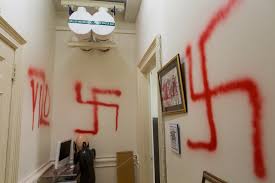 Weaponizing one point of view inevitably limits the ability of contrary views to be heard. The downside is, of course, that the frenzy that has resulted in the criminalization of free expression relating in any but a positive way to the activity of Jewish groups. It has also included the acceptance of the dishonest definition that any criticism of Israel is ipso facto anti-Semitism, giving that nation a carte blanche in terms of its brutal treatment of its neighbors and even of its non-Jewish citizens.
Jewish dominated Hollywood and the entertainment media have helped to create the anti-Semitism frenzy and continue to give the public regular doses of the holocaust story. Currently there are a number of television shows that depict in one form or another the persecution of Jews. Hunters on Amazon is about Jewish Americans tracking and killing suspected former Nazis living in New York City in the 1970s. The Plot to Destroy America on HBO is a retro history tale about how a Charles Lindbergh/Henry Ford regime installs a fascist government in the 1930s. One critic describes the televisual revenge feast “as one paranoid Jewish fantasy after another advocating murder as the solution to what they perceive as the problem of anti-Semitism.”
But, as always, nothing is quite so simple as such a black and white portrayal where there are evil Nazis and Jewish victims who are always justified when they seek revenge. First of all, as has been demonstrated, many recent so-called anti-Semitic attacks on Jews involve easily recognizable Hasidic Jews and are actually based on community tensions as established neighborhoods are experiencing dramatic changes with the newcomers using pressure tactics to force out existing residents. And after the Hasidim take over a town or neighborhood, they defund local schools to support their own private academies and frequently engage in large scale welfare and other social services fraud to permit them to spend all their days studying the Talmud, which, inter alia teaches that gentiles are no better than beasts fit only to serve Jews.
The recent concentration of coronavirus in Orthodox neighborhoods in New York as well as the eruption of measles cases last year have been attributed to the unwillingness of some conservative Jews to submit to vaccinations and normal hygienic practices. They also have persisted in illegal large gatherings at weddings and religious ceremonies, spreading the coronavirus within their own communities and also to outsiders with whom they have contact.
Regularly exposing anti-Semitism is regarded as a good thing by many Jewish groups because the state of perpetual victimization that it supports enables them to obtain special benefits that might otherwise be considered excessive in a pluralistic democracy. Holocaust education in schools is now mandatory in many jurisdictions and more than 90% of discretionary Department of Homeland Security funding goes to Jewish organizations. Jewish organizations are now lining up to get what they choose to believe is their share of Coronavirus emergency funding.
Claims of increasing anti-Semitism, and the citation of the so-called holocaust, are like having a perpetual money machine that regularly disgorges reparations from the Europeans as well as billions of dollars per year from the U.S. Treasury. Holocaust and anti-Semitism manufactured guilt are undoubtedly contributing factors to the subservient relationship that the United States enjoys with the state of Israel, most recently manifested in the U.S. Department of Defense’s gift of one million surgical masks to the Israel Defense Force in spite of there being a shortage of the masks in the United States (note how the story was edited after it first appeared by the Jerusalem Post to conceal the U.S. role but it still has the original email address and the photo cites the Department of Defense).
And then there is the issue of Jewish power, which is discussed regularly by Jews themselves but is verboten to gentiles. Jews wield hugely disproportionate power in all the Anglophone states as well as in France and parts of Eastern Europe and even in Latin America. If anti-Semitism is as rampant as has often been claimed it is odd that there are so many Jews prominent in politics and the professions, most especially financial services and the media. Either anti-Semitism is not really “surging” or the actual anti-Semities have proven to be particularly incompetent in making their case.
Further muddying the waters, there have been a number of instances in which Jews have themselves been responsible for what have been claimed to be anti-Semitic incidents. There has also been credible speculation that some of the incidents have been false flags staged by the Israeli government itself, presumably acting through its intelligence services. The objective would be to create sympathy among the public in Europe and the U.S. for Israel and to encourage diaspora emigration to the Jewish state. The recent tale of Israeli-American Michael Kadar, who has been credited with many of early 2017’s nearly two thousand bomb scares targeting Jewish community centers and synagogues worldwide, is illustrative.
Kadar, who holds both Israeli and American nationality, was arrested in Ashkelon Israel on March 2017 by Israeli police in response to the investigation carried out by the Federal Bureau of Investigation. Kadar’s American address was in New Lenox Illinois but he actually resided in Israel. Kadar’s defense was that he had a brain tumor that caused autism and was not responsible for his actions, but he was found to be fit for trial and was sentenced to 10 years in prison in June 2017. He was apparently subsequently quietly released from prison and returned to Illinois in mid-2018. In August 2019 he was arrested for violation of parole on a firearms and drugs offense.
The court in Tel Aviv convicted Kadar on counts including “extortion, disseminating hoaxes in order to spread panic, money laundering and computer hacking over bomb and shooting threats against community centers, schools, shopping malls, police stations, airlines, and airports in North America, Britain, Australia, New Zealand, Norway and Denmark.” It claimed that “As a result of 142 telephone calls to airports and airlines, in which he said bombs had been planted in passenger planes or they would come under attack, aircraft were forced to make emergency landings and fighter planes were scrambled.”
It was also claimed by the court that Kadar had gotten involved with the so-called restricted access “dark web” to make threats for money. He reportedly earned $240,000 equivalent worth of the digital currency Bitcoin. Kadar has reportedly refused to reveal the password to his Bitcoin wallet and its value is believed to have increased to more than $1 million.
The tale borders on the bizarre and right from the beginning there were many inconsistencies in both the Department of Justice case and in terms of Kadar’s biography and vital statistics. After his arrest and conviction, many of his public, private and social networking records were either deleted or changed, suggesting that a high-level cover-up was underway.
Most significant, the criminal complaint against Kadar included details of the phone calls that were not at all consistent with the case that he had acted alone. The threats were made using what is referred to as spoofing telephone services, used by marketers to hide the caller’s true number and identify, but the three cell phone numbers identified by the Department of Justice to make the spoofed calls were all U.S.-based and one of them was linked to a Jewish Chabad religious leader and one to the Church of Scientology’s counter-intelligence chief in California. In addition, some of the calls were made when Kadar was in transit between Illinois and Israel, suggesting that he had not initiated the calls.
DOJ’s criminal complaint also included information that the threat caller was a woman who had “a distinct speech impediment.” Michael Kadar’s mother has a distinct speech impediment. Oddly enough she has not been identified in any public documents and the Israelis claimed that Michael was disguising his voice, but she is believed to be Dr. Tamar Kadar, who resided in Ashkelon at the same address as Michael. Dr. Kadar is a chemical weapons researcher at the Mossad-linked Israel Institute for Biological Research (“IIBR”).
Michael appears to have U.S. birthright citizenship because he was born in Bethesda in 1990 while his mother was a visiting researcher at the U.S. Army Military Research Institute of Infectious Diseases (USAMRIID). While Dr. Kadar was at USAMRIID, anthrax went missing from the Army’s lab and may have been subsequently used in the 2001 anthrax letter attacks inside the U.S., which resulted in the deaths of five people. The FBI subsequently accused two USAMRIID researchers of the theft, but one was exonerated and the other committed suicide, closing the investigation.
So, there are some interesting issues raised by the Michael Kadar case. First of all, he appears to have been the fall guy for what may have been a Mossad directed false-flag operation actually run by his mother, who is herself an expert on biological weapons and works at an Israeli intelligence lab. Second, the objective of the operation may have been to create an impression that anti-Semitism is dramatically increasing, which ipso facto generates a positive perception of Israel and encourages foreign Jews to emigrate to the Jewish state. And third, there appears to have been a cover-up orchestrated by the Israeli and U.S. governments, evident in the disappearance of both official and non-official records, while Michael has been quietly released from prison and is enjoying his payoff of one million dollars in bitcoins. As always, whenever something involves promoting the interests of the state of Israel, the deeper one digs the more sordid the tale becomes.
Philip M. Giraldi, Ph.D., is Executive Director of the Council for the National Interest, a 501(c)3 tax deductible educational foundation (Federal ID Number #52-1739023) that seeks a more interests-based U.S. foreign policy in the Middle East. Website is councilforthenationalinterest.org, address is P.O. Box 2157, Purcellville VA 20134 and its email is inform@cnionline.org.
If Coronavirus Overwhelms Gaza, Israel Alone will be to Blame
What is already a crisis in the territory barely needs a nudge from Covid-19 in order to be tipped into a health disaster
By Jonathan Cook | The National | April 14, 2020
The Palestinians of Gaza know all about lockdowns. For the past 13 years, some two million of them have endured a closure by Israel more extreme than anything experienced by almost any other society – including even now, as the world hunkers down to try to contain the Covid-19 pandemic.
Israel has been carrying out an unprecedented experiment in Gaza, using the latest military hardware and surveillance technology to blockade this tiny coastal enclave by land, air and sea.
Nothing moves in or out without Israel’s say-so – until three weeks ago, when the virus smuggled itself into Gaza inside two Palestinians returning from Pakistan. It is known to have spread to more than a dozen people so far, though doctors have no idea of the true extent. Testing equipment ran out days ago.
Unless Gaza enjoys a miraculous escape, an epidemic is only a matter of time. The consequences hardly bear contemplating.
Countries around the world are wondering what to do with their prison populations, aware that, once it takes hold, Covid-19 is certain to spread rapidly in crowded, enclosed spaces, leaving havoc in its wake.
Gaza is often compared to an open-air prison. But even this analogy is not quite right. This is a prison that the United Nations has warned is on the brink of being “uninhabitable”.
In the prison of Gaza, many inmates are undernourished, and physically and emotionally scarred by a decade of military assaults. They lack essentials such as clean water and electricity after repeated Israeli attacks on basic infrastructure. And the 13-year blockade means there is only rudimentary medical care if they get sick.
Social distancing is impossible in one of the most crowded places on earth. In Jabaliya, one of eight refugee camps in the enclave, there are 115,000 people packed together in little more than a square kilometre. Comparable population density nearby in Israel is typically measured in the hundreds.
There are few clinics and hospitals to cope. According to human rights groups, Gaza has approximately 60 ventilators – most of them already in use. Israel has 15 times as many ventilators per head of population.
There is little in the way of protective gear. And medicines are already in short supply or unavailable, even before the virus hits. Gaza’s infant mortality – an important measure of medical and social conditions – is more than seven times higher than Israel’s. Life expectancy is 10 years lower.
Unlike a normal prison, Gaza’s warden – Israel – denies responsibility for the inmates’ welfare. Since it carried out a so-called “disengagement” 15 years ago, dismantling illegal settlements there, Israel has argued – against all evidence – that it is no longer the occupying power.
That should have been proved an obvious lie when Palestinians, choking on their isolation and deprivation, began rallying in protest two years ago at the perimeter fence that acts as a cage locking them in. Demonstrators were greeted with live fire from Israeli snipers.
Around 200 people were killed, and many thousands left with horrific injuries, mostly to their legs. Medical services are still overwhelmed by the need for long-term surgery, amputations and rehabilitation for the disabled protesters.
What is already a crisis barely needs a nudge from the coronavirus to be tipped into a health disaster.
And with most of the population already below the poverty line, after Israel’s blockade destroyed Gaza’s textile, construction and agricultural industries, the economy is no shape to withstand an epidemic either.
Most governments, including Israel’s, maintain a degree of control even in the face of this most unexpected emergency. They could prepare for it, even if many were slow to do so. They can marshall factories to produce ventilators and protective equipment. And they have the resources to rebuild their health services and economies afterwards.
If they fail in these tasks, it will be their failure.
But Gaza is entirely dependent on Israel and an international community preoccupied with its own troubles. Even if health authorities can secure ventilators and protective equipment in the current, highly competitive global market, Israel will decide whether to let them in. Equally, it could choose to seize them for its own use, in order to placate growing domestic criticism that it is short of vital equipment.
The blame for Gaza’s plight – now and in the future – lands squarely at Israel’s door.
Israel should be helping Gaza, but it is doing the precise opposite. Last week, Israeli planes sprayed herbicide to destroy the crops of Gaza’s farmers – part of a policy to keep clear sight-lines for Israeli military forces.
Moreover, in this time of crisis, Gaza’s food insecurity is only set to deepen. For the past year, Israel has been starving both Gaza and the rival Palestinian Authority in the West Bank of the taxes and duties it collects on their behalf and that rightfully belong to the Palestinian people. Many families have no money for food.
The US has aggravated this financial crisis by cutting funds to the United Nations refugee agency, UNRWA, which cares for many of Gaza’s families expelled by Israel from their homes decades ago and forcibly crowded into the enclave.
The little influence retained by Hamas relates to the thousands of Palestinian political prisoners held illegally in Israel. Hamas wants them out, especially the most vulnerable, aware of the danger the virus poses to them in Israel, where the contagion is more advanced.
It is reported to be trying to negotiate a release of prisoners, offering to return the corpses of two soldiers it seized during Israel’s infamous attack on Gaza in 2014 that killed more than 500 Palestinian children.
If Israel refuses to trade, as seems likely, or denies entry to much-needed medical supplies, Gaza’s only other practical leverage will be to fire missiles into Israel, as Hamas leader Yahya Sinwar has threatened. That is the one time western states can be expected to notice Gaza and voice their condemnation – though not of Israel.
But if plague does overwhelm Gaza, the truth about who is really responsible will be hard to conceal.
Modelling the horrifying conditions in Gaza, Israeli experts warned last year of an epidemic like cholera sweeping the enclave. They predicted hundreds of thousands of Palestinians storming the fence to escape contagion and death.
It is the Israeli army’s nightmare scenario. It admits it has no response other than – as with the fence protests – to gun down those pleading for help.
For decades Israel has pursued a policy of treating Palestinians as less than human. It has minutely controlled their lives while denying any meaningful responsibility for their welfare. That deeply unethical and inhumane stance could soon face the ultimate test.
Featured Video
10K More U.S. Troops Deploy as Trump Weighs New Iran Strikes
or go to
Aletho News Archives – Video-Images
From the Archives
Genetic baloney in thick slices
MAYBE COULD BE INC.
By Jon Rappoport | No More Fake News | July 8, 2021
Gene research companies tend to come and go. They start out banging and popping like fireworks in the sky, and then they fade out—selling themselves to larger outfits who’ve hired better liars…
Once upon a time, it sounded easy. Start with a disease, find the gene responsible for the disease, and correct the problem.
Then, researchers wondered, was disease the result of one gene or a group of genes acting together?
Either way, the proof would be in devising cures for diseases using gene therapy. “Not yet, but soon…”
And regardless, the major need was: money. Lots and lots of money.
This need required good PR people. “We have to pump up the idea that we’re on the edge of tremendous breakthroughs. We’re always on that edge…”
This hype also needed to obscure the fact that there wasn’t (and isn’t) ANY gene cure for ANY disease. … continue
Blog Roll
 Aletho News
- She Followed the Actual Data on COVID Vaccines and Masks — Her Career Took a Huge Hit
- Florida AG Sues Pfizer, Bourla Over Deceptive Marketing of COVID Vaccines
- Von der Leyen gifts her spin doctor a job for life
- 10K More U.S. Troops Deploy as Trump Weighs New Iran Strikes /Suliaman Ahmed
- Iranian crew declared Dena training vessel ‘unarmed’ to US warship before deadly torpedo strike: Report
- Iran’s NPT debate moves beyond parliament
- Houthis condemn Saudi claims of attack on Medina
- Fatuous False Flags
- Are Europe’s Smallest Nations Dragging the Continent into War?
- EU draws up contingency plans for possible Merz exit
- If Americans Knew
- The Israeli Right Portrays Islam as Murderous. It Serves a Political Purpose
- Jordan Has Had Enough: King Abdullah’s Scathing Warning to Israel
- Israeli Colonizers (i.e. Settlers) Kill Palestinian Man Near Salfit
- New Google Maps images reveal massive scale of devastation in Gaza
- Jewish supremacy, anti-Palestinian bigotry on display in Israel – Daily Update
- Israeli Soldiers Abduct At Least 22 Across Occupied West Bank
- Eight Palestinians Killed in Israeli Attacks on Gaza
- Israeli former leaders and security chiefs threaten legal action over ‘Jewish terrorism’
- Israel map in LA Times ad includes all land from the river to the sea
- Inside Lebanon’s 200-page dossier on Israeli war crimes
- No Tricks Zone
- Green Energy Debacle: German Expert Professor Fritz Vahrenholt Warns Of Severe Economic And Social Consequences
- Two More Paleo Reconstructions Affirm Meters-Higher Sea Levels Across Ireland, Brazil 7000-6000 Years Ago
- New Study: Earth And Venus Surface Warmth Largely Explained By Convection And Lapse Rate, Not CO2 Or Radiation
- 2025 Nature Paper Claiming Worsening Global Drought Gets RETRACTED …Heavily Flawed
- New Study: ‘Global Drought Shows No Detectable Recent Acceleration Under Climate Warming’
- Economic Masterminds: German Socialists Suggest Taxing Productivity Gains Stemming From Using AI
- The South China Sea Has Not Been Cooperating With The Climate Change Narrative
- Energy Crisis: Germany Enters Heating Season With Historically Low Gas Reserve Fill Levels
- New Study: The Antarctic Ice Sheet Gained Mass From 2020-2024 Due To Staggering Snow And Ice Accumulation
- Study: Ocean Heating Rates From Thousands Of Years Ago ‘Dwarf’ Modern Ocean Heating Rates

