Did Israel Just Lie About a Car Ramming to Kill Two Palestinian Teens?
By Robert Inlakesh | 21st Century Wire | March 5, 2019
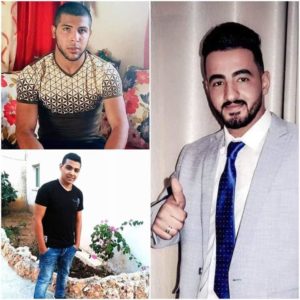 On Sunday, two Palestinian teenagers were shot dead by Israeli soldiers following, what the Israeli military called, an attempted car ramming ‘terrorist’ attack in the West Bank village of Kufr N’ima.
The Israeli, as well as Western press that covered it, framed the incident as if it was a closed case terrorist attack. The two soldiers injured during the collision of a civilian car and Israeli military vehicle, were described as heroes and their recovery was welcomed. Israeli PM, Benjamin Netanyahu, even weighed in on the incident, calling for the immediate demolitions of the homes of the “terrorists”.
But what really happened and was this a complete cover up, simply justifying the murder of innocent Palestinians?
Firstly we have to establish as clearly as possible what actually transpired, out of the details available.
The incident occurred late on Sunday night, during/following illegal Israeli military raids on civilian villages. The weather was reportedly bad and caused for dangerous driving conditions, especially on the underdeveloped roads of West Bank villages.Three boys, Amir Darraj, Yousef Anqawi and Haitham Alqam were driving and approached a quick corner turn, before colliding with the soldiers.
According to eyewitnesses, the Israeli jeep had no lights on and was not identifiable, a very typical thing for the soldiers to do during late night raids.
The corner was a slippery surface in the rain according to witnesses. I can also personally testify, as someone who has been in cars that have almost lost control at this very spot, to the validity of this claim. However we will never see an investigation as the Israeli occupation soldiers destroyed cameras, refuses to release its own videos and quickly took away the vehicles involved.
The Israeli claim is that they acted quickly and killed the “terrorists”, however, eye witnesses claim that there was a 5 minute gap between the crash and the shooting, this would mean that arrests could have been resorted to instead of executions. Israeli troops also refused to allow medical assistance to the teens they shot, firing tear gas at those that attempted to approach them.
A point made by a local journalist and photographer from the nearby village of Bil’in, Hamde Abu Rahmah, was that the three boys – two of which he knew very well – were not from Kufr N’ima and most likely would have had no idea that the soldiers were there. Hamde Abu Rahmah also verified in a Facebook post yesterday, that the two boys have no direct connection to any political groups or resistance factions.
Another point made by Hamde Abu Rahmah, was that car rammings almost never involve more than one operative, let alone three. Hamas and Islamic Jihad would normally announce instantly their involvement in these acts, but didn’t.
An article published in the Israeli newspaper ‘Haaretz’, repeated the Israeli claim of the boys possessing molotov cocktails, despite the fact that Israel has provided no evidence of this. Any journalist who covers the West Bank is familiar with Israel displaying all evidence it claims to have immediately, so why not in this case?
Let’s take a deeper look at this argument of the molotov cocktails. Would this be the rational weapon of choice following a car ramming? If they did have them in the car, as the Israeli military claims, but didn’t attempt to use them, does this justify the usage of live ammunition against the teens? The Israelis don’t claim the molotov cocktails were used against them following the car collision and couldn’t possibly have discovered them until after the incident occurred, so why does the media include the molotov cocktails in their accounts of what happened?
Then we have the other issue of international law and who was in the wrong. According to the 4th Geneva convention and more specifically UNGA Resolution 37/43, Palestinians have the full legal right, under international law, to armed resistance. The only legal right those Israeli soldiers had during this Sunday nights incident, was to pack up and leave.
Even if this was somehow a car ramming attack on Occupation Soldiers, the attack is not classed as terrorism under international law. If you are arguing that Israeli soldiers, illegally raiding villages, on illegally occupied territory are in the right for shooting dead two teenagers and believe this to be a terrorist attack, you are quite literally on the side of the Israelis over International Law.
The result of all this, is that Amir Darraj and Yousef Anqawi were both shot dead, their bodies have been taken by Israel’s soldiers and now the Israeli policy of collective punishment, demolishing “terrorist” homes, will now be enforced.
So not only will the families of these two dead teenagers mourn, but will mourn on the ruins of their demolished homes and will be seen all over the world as the family members of terrorists.
Author Robert Inlakesh is a special contributor to 21WIRE and European correspondent for Press TV. He has reported from on the ground in occupied Palestine. See more of his work here.
From Qana to Gaza, Israel issues denials and smears investigations of its crimes
By Professor Kamel Hawwash | MEMO | March 5, 2019
I wrote recently about an EU report on the growth of illegal Israeli settlements and argued that the EU was diligent in documenting Israel’s-breaches of international law but that it has singularly failed to bring it to account, even when it has demolished EU-funded projects.
A more recent report commissioned by the UN Human Rights Council (UNHRC) investigated the actions of the Israel Defence Forces (IDF) at the nominal border with Gaza since 30 March last year, which marked the beginning of the Great March of Return protests. For almost 50 weeks, Israeli snipers have gunned down, with deliberate, chilling precision, Palestinian men, women and children.
The “Report of the independent international commission of inquiry on the protests in the Occupied Palestinian Territory – A/HRC/40/74” acknowledges that the peaceful protests “were civilian in nature, with clearly stated political aims.” The protesters asked to be allowed to return to the homes from which they have been expelled from 1948 onwards, and for a lifting of the siege on Gaza. Instead of meeting their peaceful and legitimate demands from the outset, Israel has killed over 200 Palestinians, including journalists and medics, and maimed dozens of young men, who now have to face life as amputees, rather than sportsmen.
![An injured Palestinian kid is carried away after Israeli forces' clashed with protestors during a "Great March of Return" demonstration near Israel-Gaza border, in Khan Yunis, Gaza on March 01, 2019 [Mustafa Hassona / Anadolu Agency]](https://i0.wp.com/www.middleeastmonitor.com/wp-content/uploads/2019/03/20190301_2_35206126_42166513.jpg?quality=75&strip=all&ssl=1 "KHAN YUNIS, GAZA - MARCH 01: An injured Palestinian kid is carried away after Israeli forces' intervention during \"Great March of Return\" demonstration near Israel-Gaza border, in Khan Yunis, Gaza on March 01, 2019. ( Mustafa Hassona - Anadolu Agency )")
![Mohammad Jasser Barbakh, not yet 14 years old, was shot on 26 October by an Israeli sniper while taking part in the Great March of Return protests [File photo]](https://i1.wp.com/www.middleeastmonitor.com/wp-content/uploads/2018/11/Kid-Gaza.jpg?quality=75&strip=all&ssl=1 "Kid Gaza")
The irony here is that Israel complained about Malaysia’s decision to ban the Israeli Paralympics team from competing in the country, while the IDF was making its own sickening contribution to future Palestinian Paralympics teams.
The UNHRC’s report makes for gruesome reading. Israeli soldiers are accused of “intentionally firing on civilians, who were neither directly participating in hostilities, nor posing an imminent threat.” The report warns that, “These serious human rights and humanitarian law violations may constitute war crimes or crimes against humanity.”
Israel’s reaction was predictable and follows a long line of denial and smearing of any report which accuses it of wrongdoing. According to a Foreign Ministry spokesman, “This report was born in sin, in a politically biased, one-sided resolution that determined the outcome before the investigation even started.” He went on to lay the blame on Hamas: “[Hamas] has declared war on Israel and calls to kill Jews. Hamas is orchestrating the attacks and using civilians in Gaza as human weapons to assault Israel and Israeli civilians. Hamas exploits the civilians in Gaza as human shields for terrorists.” As usual when such allegations are made, no evidence is produced to back them up, nor is the legitimate right to resist military occupation ever mentioned.
The spokesman went on to smear the UNHRC and the report’s three authors: “The HRC becomes an accomplice of a terrorist organisation, supporting Hamas’s aggression against Israel and the oppression of the people of Gaza.” The three individuals, he alleged, lack any understanding in security matters, without a relevant professional background.
Israel’s apologists came out in force to condemn the report, including US President Donald Trump’s Special Envoy Jason Greenblatt. “This COI report is another manifestation of the UNHRC’s clear bias against Israel,” he tweeted, “which remains the only country that the Council dedicates an entire standing agenda item to targeting.”
Such condemnation of investigations into Israel’s crimes and smearing of investigation teams and the bodies that form them is not new. The UNHRC set up an investigation into Israel’s 2014 military offensive against the Gaza Strip which lasted for 50 days, resulting in over 2,000 Palestinians being killed and causing extensive destruction.
The Report of the Independent Commission of Inquiry on the 2014 Gaza Conflict – A/HRC/29/52 accused both Hamas and Israel of committing war crimes. “Israel does not commit war crimes,” claimed Prime Minister Benjamin Netanyahu as he rejected the report. “Israel defends itself against a terrorist organisation that calls for its destruction and carries out many war crimes.” He accused the commission of being “notoriously biased” against Israel.
Following an escalation of violence in November 2012, a UN report criticised armed Palestinian groups and the IDF. The latter, it insisted, “did not consistently uphold the basic principles of conduct of hostilities, namely, the principles of distinction, proportionality and precautions.” The report documented a number of cases, including one which took place on 18 November, in which an Israeli air strike targeted without prior warning a three-storey house belonging to the Al-Dalou family in Al-Nasser neighbourhood, in central Gaza City. The strike killed 12 people, including five children and four women. Again, Israel brushed aside criticism and no individual Israeli was held accountable.
Following the 2008/9 Israeli military offensive on Gaza, the UN published the Goldstone Report on the devastating events which took place between 27 December 2008 and 17 January 2009 and which resulted in over 1,300 Palestinians being killed. The report accused both Israel and Palestinian armed groups of war crimes and crimes against humanity.
Israel’s reaction was predictable. The Foreign Ministry said that, “Israel rejects the one-sided resolution adopted in Geneva by the UN human rights council and calls upon all responsible states to reject it as well… [The resolution] provides encouragement for terrorist organisations worldwide and undermines global peace.” It also accused the UNHRC of anti-Israel bias.
Israel’s siege and attack on the Jenin refugee camp in April 2002, which lasted for 10 days and killed dozens if not hundreds of Palestinians (the figures are disputed) again brought accusations of war crimes against Israel. The Israeli government refused to allow a UN team to carry out a field investigation, resulting in the UN producing a report based on available evidence. “In sum, the Israeli occupying forces have, without a doubt, committed serious violations of international humanitarian law,” the report concluded. “Also, without a doubt, war crimes, including grave breaches of the Fourth Geneva Convention, have been committed by Israel, the occupying Power, in several Palestinian cities, including in the Jenin refugee camp.” However, the report disputed the Palestinian claim of a massacre, a decision which was welcomed by the Israeli government. Furthermore, the report was judged as “seriously flawed” by human rights organisations and Britain’s Independent newspaper, which were able to corroborate many of the allegations against the occupation state. No Israeli has ever been held accountable for any violations.
It is possible to go back further in time to another Israeli atrocity to demonstrate the lack of accountability for crimes committed by the IDF. On 18 April 1996, Israeli forces shelled a UN compound in Qana, in Southern Lebanon, where 800 Lebanese civilians had taken refuge; 106 people were killed in the attack. Israel claimed that this was due to technical issues rather than deliberate targeting of a UN facility. However, the subsequent UN investigation concluded, “While the possibility cannot be ruled out completely, it is unlikely that the shelling of the United Nations compound was the result of gross technical and/or procedural errors.” The UN also found that “Contrary to repeated denials, two Israeli helicopters and a remotely piloted vehicle were present in the Qana area at the time of the shelling.” Amnesty International called for an independent investigation arguing, “It is not enough that the Israeli army investigates themselves. Israel has a history of either not investigating civilian deaths, or conducting similarly flawed inquiries.”
Now here we are, 23 years on and the UN’s most recent report again calls on Israel to investigate its own crimes, even though everyone knows that Israel never finds its own people guilty; always dismisses reports carried out by independent investigators as biased and one-sided; denies entry to the investigation teams; and refuses to cooperate. It claims to apply the highest standards of self-regulation but no one has ever been held fully accountable for any crimes, despite the thousands of deaths, the tens of thousands of injuries and the tens of thousands of homes that have been destroyed by Israelis since Qana, never mind the other massacres which have occurred since 1948.
It is time for Israel to be held to account for its actions, for the sake of those who have suffered at its hands. If international law is to have any credibility at all, we need to ensure that all UN member states pay due respect to human rights and the quest for justice through due legal process.
The merger of the US consulate and embassy in Jerusalem completes the humiliation of the Palestinians
By Motasem A Dalloul | MEMO | March 5, 2019
The US State Department announced on Tuesday that it is going to merge the American consulate general in East Jerusalem with the American embassy in West Jerusalem. A statement published on the embassy website in Israel said that, “We will continue to conduct all of the diplomatic and consular functions previously performed by the US Consulate in Jerusalem.”
This move was celebrated by the Israeli occupation authorities, although it has angered the Palestinians The Palestinian Authority suspended its relationship with the US administration when US President Donald Trump recognised Jerusalem as the capital of of Israel in December 2017 and relocated the US embassy from Tel Aviv to the holy city in May last year.
Saeb Erekat, the general secretary of the PLO’s Executive Committee, described the merger as “the final nail in the coffin” of the US administration as a sponsor of the peace process, which has in any case been moribund since 2014. According to a senior member of the PLO’s Central Committee, Hanan Ashrawi, “The Trump administration is intent on leaving no room for doubt about its hostility towards the Palestinian people and their inalienable rights, as well as its abject disregard for international law and its obligations under the law.”
Ashrawi insisted that the merger of the US consulate in Jerusalem with the US embassy to Israel, which is now located illegally in Jerusalem, is not an administrative decision. “It is a political assault on Palestinian rights and identity and a negation of the consulate’s historic status and function, dating back nearly 200 years.” She reiterated that this move “precludes any possible positive role for the current US administration in seeking peace and stability.”
State Department spokesman Robert Palladino, however, claimed that the decision was driven by Washington’s global efforts to increase the efficiency and effectiveness of its diplomatic engagements and operations. “It does not signal a change of US policy on Jerusalem, the West Bank, or the Gaza Strip.”
Speaking to MEMO, Professor of Political Sciences at Al-Najah University in the occupied West Bank Abdul Sattar Qasim described the merger as a “humiliation” for the Palestinians. “The US premise is that the Palestinian Authority did not accept the relocation of the US embassy to Jerusalem so that it decided to oblige the PA and the Palestinians to go to the embassy [for consular services] on their own two feet.”
“After this move, nothing remains hidden about the American intentions regarding the Palestinian cause,” added Dr Hanna Issa, an expert in diplomatic affairs. “The US has been undermining the Palestinians from penetrating any international body through its support for Israel, vetoes and stick. Now, it has cancelled any possible future recognition of a Palestinian state because it has cut its last diplomatic channel with the Palestinians by closing its consulate in East Jerusalem.”
The consulate-general in Jerusalem was established in 1844, Dr Issa pointed out. ”In moving it, the US has declared openly that there is no difference between East and West Jerusalem and both are parts of the same ‘Israeli’ city. In addition, the merger means that there is no need to have two separate representatives for the same country – Israel.”
Although Palladino stressed that Washington “remains fully committed to efforts to achieve a lasting and comprehensive peace that offers a brighter future to Israel and the Palestinians,” Prof. Qasim insists that this is not true. “The merger is not an innocent move. It is a fulfilment of Israeli promises [that Palestine is the Jewish State of Israel] and implementation of Israeli laws.” he said, “It is the prelude to US recognition of the illegal Jewish settlements in the occupied Palestinian territories.”
The US Ambassador to Israel, David Friedman, is a vociferous supporter of Israeli colonial-settlements, Qasim has no doubt that he will carry out this mission. The US consulate used to prepare reports about settlements for the US State Department; this will now be the mission of the embassy which is overseen by Friedman, so we can guess that they will be very favourable.
America’s moves on the ground give the lie to Palladino’s claim that the Trump administration is still committed to peace in the interests of both Israelis and Palestinians. It looks more like a brighter future for Israel and yet more gloom for the Palestinians. Not only has Washington doubled its support for Israel, but it has also cut more than $500 million from donations to the UN Relief and Works Agency for Palestine Refugees (UNRWA) and other aid programmes.
The Americans, explained Qasim, have been working hard to undermine the PA’s status as an autonomous entity which serves Palestinian interests. “The PA will lose its prestigious status after this move,” he said. “The Palestinian people will now see that the PA does not deserve any diplomatic representation from a long-standing ally which was regarded for decades as the country which would fulfil Palestinian dreams.”
In response, he suggested that the Palestinians should begin a popular protest campaign against the US and Israeli measures. Optimistically, Prof. Qasim added that this should not be stopped by the PA, although he does not expect the Ramallah-based authority to allow such a campaign to get off the ground.
Hanna Issa accused the Americans of “racial discrimination” against the Palestinians by closing the consulate. “What else does it mean given that the US has official representation offices for every nation, but the mission which was established 200 years ago in Palestine has been ended?” Nevertheless, he does not expect the PA or any Arab state to raise any complaints, because they have basically given the Israelis and Americans the green light to do what they want. The PA might be a loser in all of this, but it still does what it is told by the occupation authorities and their allies. “We have no hope in the PA or the Arab regimes,” Dr Issa concluded. “If the PA is serious about stopping the unilateral measures on the ground, it should unite the Palestinians, rearrange the Palestinian home and agree on a resistance programme.”
The merger of the US consulate and embassy in Jerusalem really does complete the abject humiliation of the people of Palestine. What will the Palestinian Authority do about it? Nothing whatsoever is my guess. And that is what is truly humiliating.
The Lobby USA – Abridged

If Americans Knew | Mar 4, 2019
1 hour, abridged version of censored Al Jazeera documentary exposing the Israel lobby in the U.S.
The documentary was never broadcast by Al Jazeera due to pressure from some Jewish groups and individuals. It was eventually leaked to a few groups, which posted some short clips. On November 2nd the first two parts finally became available to the public.
For more information see https://bit.ly/2PCKgF0
For information on pro-Israel influence on U.S. Congressional candidates see https://bit.ly/2Qiq2NN
For a full list of the Israel lobby in the U.S see https://bit.ly/2QhxskD
More information and additional documentaries on the Israel lobby can be seen at https://bit.ly/2SJgcGj
___________________________________________
This abridged version has been shortened to just over an hour.
View a playlist with the intros removed here: https://youtu.be/xcnSDsUkEVw
All four parts in one video here: https://youtu.be/MnzRsfMqOqI
And the original, unedited versions here: https://youtu.be/6CNspeQYplk
The PA refusal to participate in the Warsaw Summit doesn’t change its penchant for compromise
By Ramona Wadi | MEMO | March 4, 2019
The Palestinian Authority described last week’s Warsaw Summit as a US-Israeli conspiracy; US Secretary of State Mike Pompeo claimed that the Palestinians are “worse off” because of their absence. This prompted the Secretary General of the Palestine Liberation Organisation to ask if anyone could explain how the people of Palestine are “worse off” by not going to Warsaw.
“Can someone explain this to me?” asked Saed Erekat. “Is the art of negotiations to put the other side in a position where they have nothing to lose?”
Meanwhile, in an opinion piece published yesterday, Erekat penned some notable falsehoods, including this: “Despite the imperialist fantasies of the Trump team, the whole of Palestine remains close in the heart of every Arab, and is not going to fade away.”
The normalisation of relations between Arab countries and Israel was, of course, implicit in the summit and clear for all to see. Did the veteran PLO official not notice that? Why is he squandering Palestine away by stressing its importance to external actors rather than to the Palestinians themselves?
It is not possible to describe the summit as a US-Israeli conspiracy while excluding those countries which did participate — Arab states amongst them — from criticism and scrutiny simply so that you can write an opinion piece replete with statements that do not reflect the politics of the Palestinian Authority. Erekat has claimed that Arab countries will continue to prioritise Palestine, yet there is nothing to substantiate his argument. The Arab Peace Initiative actually includes normalising relations with Israel if the two-state compromise is achieved. It does not demand an end to the colonisation of Palestine; hence, its implementation holds more prospects for Israel than it does for the Palestinians.
The PA’s decision to refrain from participating in Warsaw was not a principled stance but a retaliatory action after the Trump administration implemented measures that exposed its inherent limitations. It is only now that it finds itself verging on political non-existence that the PA is attempting to connect its rhetoric to Palestinian collective memory. However, it is doing so from a compromised existence and framework that jeopardises Palestinian lives. The PA’s decisions which led to further loss of territory and displacement will not be cancelled out just because it is now important, in order to safeguard itself, for it to display a facade of being at one with the Palestinians it has tortured, imprisoned and exploited, while collaborating with the international community over the elusive two-state paradigm.
Refusing to partake in compromise due to not having any other option does not eliminate the PA’s compromised existence. PA leader Mahmoud Abbas stated recently that he will continue security coordination with Israel as it is a “joint agreement to fight terrorism.” If that obligation is eliminated, he insisted, “nothing will remain.” In upholding Israel’s security narrative against legitimate Palestinian resistance, Abbas is extending his “sacred” compromise with Israel and the US.
The PA has no foundation upon which it can differentiate between one compromise and another. Palestinians have not “lost” anything with the PA’s decision to boycott Warsaw. However, this is just one conference that stands out due to US President Donald Trump’s overt support for Israel, as well as Israeli Prime Minister Benjamin Netanyahu’s apparently welcome overtures to Arab states. The damage created by Oslo unravelled any possibilities for Palestinian autonomy and the PA’s insistence on seeking international support while lacking consensus among Palestinians due to marginalising the people from the political process must be counted as a loss, though, and one which the PA is not willing to even attempt to rectify.
Israel pushing for Africa foothold with military training: Report
Press TV – March 4, 2019
A report says Israeli commandos are training local forces in more than a dozen African nations where Israeli arms exporters are already accused of being complicit in war crimes.
Israel’s Channel 13 on Sunday showed footage of Israeli officers coaching Tanzanian troops in hand-to-hand krav maga, hostage operations and urban combat, saying there is a dramatic rise in Tel Aviv’s military activities in Africa.
Prime Minister Benjamin Netanyahu has made inroads into Africa a key part of his agenda, becoming the first Israeli leader to visit the continent in 50 years in 2016.
“I’ve been in Africa four times in the last two years, that’s gotta tell you something,” Netanyahu said in a speech at an event in February.
Over the past two years, he has traveled to several African states in a bid to convince them to stop voting against the Israeli regime at the United Nations.
Israel is also said to be seeking to take advantage of insurgency and Takfiri militancy gripping parts of Africa to sell advanced military equipment to conflict-ridden states in the continent.
Tel Aviv’s policy to spice up ties with Africa, the report said, also features combined efforts by Israeli foreign ministry, military, Mossad spy agency and the regime’s so-called security agency, Shin Bet.
The report named Ethiopia, Rwanda, Kenya, Tanzania, Malawi , Zambia, South Africa, Angola, Nigeria, Cameroon, Togo, Ivory Coast and Ghana as among the African countries that Israel was seeking to stake out a niche.
Israel’s military cooperation with the African states possibly emanated from the fact that many of those nations take part in peacekeeping missions on the border between the occupied territories, Syria and Lebanon, it said.
It would be advantageous to Israel if these forces were led by Israeli-trained soldiers, said the report.
An Israeli delegation has reportedly been traveling to countries in Africa and “carefully” weighing requests for further military collaboration.
The delegation is taking into account how likely Israeli military expertise could be used in committing mass atrocities in the continent, the report said.
Israeli media reported in November that Tel Aviv was actively working to establish diplomatic ties with Sudan, as part of wider efforts to upgrade relations with central African countries.
The Israeli TV channel also reported that Israel’s ministry of military affairs recently summoned retired Maj. Gen. Israel Ziv for a hearing after the US accused him of selling $150 million in weapons to both sides of the civil war in South Sudan.
Israeli weapons which ended up in South Sudan extended the duration of the deadly civil war there, the Jerusalem Post newspaper has reported.
Last year, the US Treasury Department placed sanctions on the Israeli businessman for his role in the civil war in South Sudan.
A recent report by the London-based Middle East Eye said the head of Mossad met his Sudanese counterpart in Germany last month as part of a secret plan by Saudi Arabia, Egypt and the UAE to oust President Omar al-Bashir.
In January, Bashir was quoted to have lamented that he had been advised to normalize ties with Israel because a normalization would help stabilize growing unrest sweeping Sudan.
US Deploys THAAD Missile System to Israel
Sputnik – 04.03.2019
WASHINGTON – The United States military deployed a Terminal High Altitude Area Defense (THAAD) anti-ballistic missile battery to Israel, European Command (EUCOM) said in a statement on Monday.
“At the direction of the Secretary of Defense, US European Command deployed a THAAD system to Israel in early March,” the statement said.
The move is intended to demonstrate the United States’ ongoing commitment to Israel’s security, the statement added.
As part of the deployment, US service members will work in different locations in Israel to help local military forces align their existing air and missile defence architecture with the THAAD system.
The exercise will allow the US military to incorporate key capabilities stationed in the country and Europe with its partners in the Israeli military, EUCOM said.
The THAAD system, considered one of the most advanced in the world, will be added to the existing Israeli air defence. The latter currently includes the Iron Dome, designed to shoot down short-range rockets and the Arrow system.
Commenting on the exercise, IDF Spokesperson Brig.-Gen. Ronen Manelis specified the US anti-ballistic missile battery would be deployed in the south of the country and that about 200 American servicemen would participate in the drills.
Sayyed Houthi: Arab Media Campaigns against Hezbollah Result of Normalization with ‘Israel’
Al-Manar | March 3, 2019
The leader of the Houthi Ansarullah revolutionary movement, Sayyed Abdul Malik al- Houthi, on Sunday stressed that the Warsaw conference was a mere announcement of normalizing ties between some Arab regimes and the Zionist entity at the expense of the Palestinian cause.
Sayyed Houthi stressed rejection of this normalization, considering that the Zionist occupation in any Arab area targets the entire Umma.
The Zion-American schemes aim at creating a new enemy for the Arabs he said, adding that media campaigns launched by some Arab regimes against Hezbollah and the Palestinian resistance is the direct result of normalizing ties with the Israeli entity.
Stressing that the Zionist entity is directly involved in the aggression on Yemen, Sayyed Al-Houthi reiterated the Yemeni’s support to the major causes of the Umma.
Yemen has been since March 25, 2015 under aggression by the Saudi-led coalition, which also includes UAE, Bahrain, Egypt, Morocco, Jordan, Sudan and Kuwait, in a bid to restore power to fugitive former president Abdrabbuh Mansour Hadi.
Tens of thousands of Yemenis have been injured and martyred in Saudi-led strikes, with the vast majority of them being civilians.
However, the allied forces of the Yemeni Army and popular committees established by Ansarullah revolutionaries have been heroically confronting the aggression with all means.
Palestine: the Middle Eastern Equation with Many Unknowns
By Veniamin Popov – New Eastern Outlook – 03.03.2019
In the middle of February 2019, one of the main Israeli newspapers, Haaretz, published an article, which reported that, according to official Israeli statistics, 6.7 million Jews and 6.7 million Arabs lived in Israeli territories (including the occupied Palestinians lands) at the beginning of 2019.
In the eyes of the opposition forces in Israel, these numbers yet again highlight the intensity of the Arab-Israeli conflict, and underscore the need to resolve this issue as quickly as possible using a two-State solution, described in numerous UN documents. It is worth noting at this point that the nation state of Israel itself was born of the decision made by the United Nations Organization, which over the past 70 years has adopted more than 3,000 resolutions on creating two states, an Arab one and a Jewish one in the former Palestinian territory.
Leftist forces in Israel have consistently supported the idea of demography being a key factor, which should compel the Israeli government to find such means of resolving the conflict that will be acceptable to the Palestinian population. Otherwise Israel will embark on a path towards establishing a system of apartheid to control those who live in the Israeli-occupied territories in Palestine.
Another common argument is that birth rates among Palestinians are higher than those in Israel, hence it will become difficult to maintain a Jewish majority in the state in the future.
The situation in Israel ahead of its upcoming legislative elections is far from simple. For instance, Benjamin Netanyahu was even forced to reschedule his visit to Moscow since his political opponents were making serious efforts to ally together in order to weaken his position. But, at the very beginning of the year it seemed that Netanyahu’s victory was assured.
Accordingly, there has been a lot of talk about the so-called deal of the century, meant to resolve the Middle East situation, that the U.S. President Donald Trump promised to publicize in the next few months.
Based on the already available leaks, Palestinians have already, by and large, rejected this plan, as it does not include any mention of East Jerusalem being the capital of the potential Palestinian state, and it almost completely ignores the refugee problem. According to Palestinian sources, Americans would only like to discuss the issue of approximately 40,000 refugees, who have survived the war in 1948, and do not plan on taking into account the fact that the overall number of refugees has increased to 5 million over these years.
It is common knowledge that Donald Trump’s recognition of Jerusalem as the capital of Israel, and the transfer of the American Embassy to this city have caused outrage in the Muslim world.
In light of these developments, on 14 February 2019, the Jerusalem Post reported that the Al-Aqsa Mosque and the Old City of Jerusalem were “too symbolic, holy and sacred for Muslims to allow their leaders to agree to allow Israel to receive legitimization for their control.”
The world today is becoming more and more interdependent and is widely recognized as multi-focal. Although the United States has a prominent place in the international community, it cannot enforce many of its decisions. Paradoxically, Washington’s allies, even if often not very consistently, yet more and more actively, are attempting to defend their own interests and follow their own policies.
The stance taken by a number of nations towards the UN Relief and Works Agency for Palestine Refugees (UNRWA) is noteworthy in this regard. When Americans refused to make a contribution to support the work of this organization, some Asian and European nations compensated for the lacking funds on request from Palestinians.
However, the USA is still striving to marginalize the Palestinian issue to the sidelines of history, by announcing that the key problem facing the Middle East is the fight against Iran. But, the fact that an attempt to unite Israel and several other Arab nations into an alliance against Tehran at the Middle East conference in Warsaw failed makes it reminiscent of an endeavor to portray wishful thinking as reality as, according to our literary giant, “You cannot hitch a trembling doe and horse up to a single carriage”.
Veniamin Popov, Director of the Center for Partnership of Civilizations at MGIMO (Moscow State Institute of International Relations) of the Russian Ministry of Foreign Affairs, Ambassador Extraordinary and Plenipotentiary.
UK’s Political Freak-Show Set to Run and Run
MPs on all sides are intent on derailing Brexit while the Zionist wrecking-crew continue gunning for Corbyn
By Stuart Littlewood | American Herald Tribune | March 2, 2019
The EU referendum question did not ask political parties, big business, the banks, Parliament or the media for their opinion. It asked ordinary citizens across the UK. Parliament got its instructions: leave.
To say that Saint Theresa and her Government have gone about it the wrong way is putting it mildly. The EU bureaucrats never wanted to hand us a deal – why would they, it’s not in their nature. It might have been better to just walk away after first agreeing on terms with European industry and commerce for continuing trade, and letting the Europeans argue the toss with their ‘crats in Brussels? Similarly our collaboration on the environment, security, and science.
Twenty-five years of EU membership have left us half-crippled and malfunctioning. We’ll have to re-learn many things including the lost art of export selling. We should have been doing that these last 2 years. The Institute of Export has been there to help.
Tangled with the shambles of Brexit is the continuing witchhunt by the Zionist Inquisition which stalks our marbled corridors and menaces politicians in their smoke-filled rooms, especially Labour. Indeed, a 62-minute documentary film with the title WitchHunt was due to be screened at the House of Commons next week but has been ‘pulled’ after an outcry from the very people it exposes. They, of course, haven’t yet seen it.
Within hours of invitations being sent to Labour MPs and journalists, there were calls for the expulsion from the Labour Party of Chris Williamson MP whose office had booked a room for the film show. Williamson was later suspended from the party for saying Labour had “given too much ground” in the face of criticism over anti-Semitism. Unbelievable, eh?
Incidentally, the film has been praised by directors Peter Kosminsky, Mike Leigh and Ken Loach (Kosminsky and Leigh are both Jewish).
Kosminsky: “[WitchHunt] packs a powerful punch, telling a story we just aren’t hearing at the moment.”
Leigh: “This impeccably-executed film exposes with chilling accuracy the terrifying threat that now confronts democracy, and the depressing intractability of the Israel-Palestine situation.”
Loach: “The case of Jackie Walker is important. This film asks whether her lengthy suspension from the Labour Party and attempts to expel her are fair, or an injustice which should be challenged. She is not the only one in this position. See the film and make up your own mind.”
The film is due for online release on 17 March after touring a number of UK cities with its director Jon Pullman. The press briefing describes it thus:
“In 2015, while the far right was gaining ground around the world, socialist MP Jeremy Corbyn was elected as leader of the UK Labour Party in a landslide victory. Accusations of antisemitism within the party immediately began to circulate. Well-known anti-racists and left-wing Jews, such as Jackie Walker, were amongst the chief targets. WitchHunt sets out to investigate the stories and the people behind the headlines, examining the nature of the accusations. Is this a witchhunt, as some claim? If so, who is behind it, and what is the political purpose of such a campaign?
“Has the media failed in its duty to fairness and accuracy in reporting on such serious allegations? Through a series of interviews, analysis and witness testimony, WitchHunt explores the connections between the attacks on Labour, the ongoing tragedy of Palestine and the wider struggle against race-based oppression.”
And this week the BBC continued to stoke the anti-Semitism ruckus by wheeling in TWO Friends of Israel MPs (the unbearably bombastic Zahawi and the tediously pedantic Gardiner) as panelists on their flagship political debate programme Question Time. Both spoke on anti-Semitism without declaring their interest. Chairperson Fiona Bruce should have tipped off the audience but didn’t.
It’s true that the Labour Party is swamped by complaints of anti-Semitism, many of them absurd or vexatious, and is struggling to deal with them in a reasonable time. But that’s no excuse for Tom Watson, the party’s deputy leader and no particular friend of Corbyn, to barge in and email all Labour parliamentarians asking them to send him complaints about anti-Semitism for monitoring. This would, of course, undermine and compromise the official process now managed by the party’s new General Secretary Jennie Formby.
Watson describes himself as “a proud and long-standing supporter of Labour Friends of Israel” and is a recipient of considerable funds from Jewish sources. He calls the BDS movement “morally wrong” and says those who campaign for it “seek to demonize and delegitimize the world’s only Jewish state”.
With his leanings, he represents an ever-present knife in Corbyn’s back. All things considered, perhaps Watson himself should be suspended.
Meanwhile, our Israel-adoring Home Secretary, Sajid Javid, was busy arranging for the political wing of Hezbollah to join its military wing on the list of proscribed terror organizations. This is not a very good idea since, in Lebanon, Hezbollah is seen as a political movement and a provider of social services as well as a militia. As such it forms an important part of the Lebanese government and Javid’s move could cause obstacles for the UK in the rehabilitation of the region and when providing humanitarian help to refugees pouring into Lebanon to escape the horrors of Syria. But Javid insists: “Hezbollah has identified as one of its biggest targets the state of Israel and its people….. This Government have continued to call on Hezbollah to end its armed status; it has not listened …. it is evident that Hezbollah has got more involved in and drawn into the Syrian conflict, and is responsible for the death and injury of countless innocent civilians. …..”
Javid, a merchant banker in the literal and rhyming sense, might just as well call on Israel to disarm. He conveniently overlooks the fact that Hezbollah was formed to counter Israel’s invasion and occupation of South Lebanon in 1982. Hezbollah is funded by Iran, a bitter foe of Israel, and is, therefore, by crazy logic, an enemy of Israel’s chums like the stupid wing of the UK’s Conservative Party. But let’s not leave out Labour. A big noise in Labour Friends of Israel, Louise Ellman MP, congratulated Javid on “bringing this much-needed measure before the House….. Hezbollah is not our friend, and today was a good opportunity to say so….. Hezbollah specifically targets Jewish people and Jewish organizations.”
Hezbollah, it seems, hasn’t been forgiven in some quarters for doing rather well against Israel’s mighty military in the 2006 war.
Featured Video
or go to
Aletho News Archives – Video-Images
Book Review
The Maidan Killings and the False-Flag Case
By Freddie Ponton | 21st Century Wire | September 5, 2026
Before the killings that helped bring down Ukraine’s president in February 2014, American diplomats were discussing who should enter its government. In a leaked telephone call, senior State Department official Victoria Nuland told US ambassador Geoffrey Pyatt, “I think Yats is the guy,” referring to opposition leader Arseniy Yatseniuk. Washington had clear preferences and was working to advance them. Later that month, Yatseniuk became prime minister.
Ivan Katchanovski’s The Maidan Massacre in Ukraine examines the violence that preceded that transfer of power. Drawing on television footage, witness testimony, forensic examinations and Ukrainian court proceedings, he argues that elements of the opposition shot protesters and police in a false-flag operation. His case centres on evidence of protesters being shot from opposition-controlled locations, including Hotel Ukraina, overlooking the killing ground. … continue
Blog Roll
 Aletho News
- The Maidan Killings and the False-Flag Case
- Georgia’s Largest Healthcare System Will Fire Employees Who Refuse Flu Vaccine
- The Five-Year Fuel Crisis: Why the World Economy Is Paying for a War It Thinks Is Ending
- Trump’s Big Bluff on Iran
- Swiss scammed out of millions by Ukraine-linked call centers – media
- Germany facing potential ‘violent conflict’ with Russia – spy chief
- Ukraine’s EU neighbors reject new plea from Kiev – Politico
- British Transport Police Facial Recognition Trial Scanned 926,912 People With Zero Arrests
- House Bill Would Ban Federal Use of Flock ALPR Data
- Can a Spice Rival a Drug? 10 Head-to-Head Trials Put It to the Test.
- If Americans Knew
- “We See Our Homes Now From A Satellite, Like Strangers”
- Watch “Gaza: Doctors Under Attack”, originally censored by BBC
- NAZA: Israeli embassies in UK and US promote rival documentary to challenge Gaza genocide allegations
- David Ellison appoints Israeli to lead merged Paramount-Warner studios
- Turkish Red Crescent helps elderly Gaza man walk again after Israel confiscates his prosthetic limb
- Four Palestinians Killed in Israeli Attacks in Gaza
- Two Palestinian youths killed and village razed as Israeli attacks on West Bank continue
- Two more Christian women victims of Israeli raids on Gaza
- Cruelty, Deprivation, Indignity: A Journalist’s 22 Months in Israeli Prison
- New IDF Website Frames Slain Gaza Journalists as Terrorists
- No Tricks Zone
- Latest European Green Energy Debacle; Portugal’s Largest Flagship Solar Park Insolvent!
- Green Energy Debacle: German Expert Professor Fritz Vahrenholt Warns Of Severe Economic And Social Consequences
- Two More Paleo Reconstructions Affirm Meters-Higher Sea Levels Across Ireland, Brazil 7000-6000 Years Ago
- New Study: Earth And Venus Surface Warmth Largely Explained By Convection And Lapse Rate, Not CO2 Or Radiation
- 2025 Nature Paper Claiming Worsening Global Drought Gets RETRACTED …Heavily Flawed
- New Study: ‘Global Drought Shows No Detectable Recent Acceleration Under Climate Warming’
- Economic Masterminds: German Socialists Suggest Taxing Productivity Gains Stemming From Using AI
- The South China Sea Has Not Been Cooperating With The Climate Change Narrative
- Energy Crisis: Germany Enters Heating Season With Historically Low Gas Reserve Fill Levels
- New Study: The Antarctic Ice Sheet Gained Mass From 2020-2024 Due To Staggering Snow And Ice Accumulation

