Canadian Doctors Are Being Censored
By Ethan Yang | AIER | May 13, 2021
On April 30th, 2021 the College of Physicians and Surgeons of Ontario put out a highly controversial statement regarding what it considers to be Covid misinformation. The CPSO is a regional regulatory body empowered by statutory law to exercise licensing and disciplinary authority over the practice of medicine in Ontario. Think of it as the equivalent of a State Bar Association for American lawyers except for Canadian doctors. The statement from the CPSO goes as follows,
The College is aware and concerned about the increase of misinformation circulating on social media and other platforms regarding physicians who are publicly contradicting public health orders and recommendations. Physicians hold a unique position of trust with the public and have a professional responsibility to not communicate anti-vaccine, anti-masking, anti-distancing and anti-lockdown statements and/or promoting unsupported, unproven treatments for COVID-19. Physicians must not make comments or provide advice that encourages the public to act contrary to public health orders and recommendations. Physicians who put the public at risk may face an investigation by the CPSO and disciplinary action, when warranted. When offering opinions, physicians must be guided by the law, regulatory standards, and the code of ethics and professional conduct. The information shared must not be misleading or deceptive and must be supported by available evidence and science.
The CPSO justifies its statement with the following rationale,
“There have been isolated incidents of physicians using social media to spread blatant misinformation and undermine public health measures meant to protect all of us.”
This development is nothing short of horrifying. Although there are certainly concerns about the spread of falsehoods and conspiracy theories in the age of Covid-19, this sort of broad censorship of speech from practicing medical professionals is not only an ethical sham but anti-science. The practice of science is premised on the rigorous application of the scientific method which among other things requires falsifiability and debate. The move to silence doctors also flies in the face of liberal democracy – something that has been deteriorating around the world as both the public and private sector move to silence dissent.
The fact that the CPSO, a licensing body wielding the power of the state, has taken such an aggressive move to silence dissent even on lockdown policies is especially disturbing given that they are preventing doctors from voicing their expertise on such important matters. The Toronto Sun comments on the incident by writing,
“Right now, restrictions are severe in Canada. The public health orders concerning, for example, the closure of basketball courts and golf courses in Ontario have been widely condemned by many physicians.
Why should physicians not speak out against restrictions that they feel are harmful to the health of their patients?
“Despite undeniable suffering due to lockdowns, the CPSO wants Ontario doctors to stay quiet,” wrote Dr. Shawn Whatley, a former president of the Ontario Medical Association, in a guest column in the Sun.”
It Doesn’t Stop In Ontario
One may think that the policy adopted by the CPSO may be an extreme aberration unique to Ontario. According to the Toronto Star this practice is seeing more adoption, not less. It writes,
“Doctors in British Columbia are being warned they could face investigation or penalties from their regulatory body if they contradict public health orders or guidance about COVID-19.
The warning is contained in a joint statement from the College of Physicians and Surgeons of B.C. and the First Nations Health Authority.”
One doesn’t even need to have a strong opinion on this matter to understand that censoring doctors and mandating conformity to state policy is not only immoral but a direct attack on scientific freedom.
The Declaration of Canadian Physicians for Science and Truth
In response to the CPSO’s order, there has rightly been pushback from the Canadian medical community in the form of the Declaration of Canadian Physicians for Science and Truth. The Declaration’s website features a petition that has been signed by over 4,700 physicians and concerned citizens at the time of this writing.
The declaration lays out three basic complaints with the CPSO’s order.
- Denial of the Scientific Method itself:
- Violation of our Pledge to use Evidence-Based Medicine for our patients:
- Violation of Duty of Informed Consent
More elaboration and information can be found on the Declaration’s website.
Closing Thoughts
To paraphrase the great human rights activist and Soviet dissident Natan Sharansky, what it meant to be a loyal Soviet citizen was to say what you’re supposed to say, to read what you’re permitted to read, and to vote the way you’re supposed to vote, and to know it was all a lie.
It doesn’t take a background in medicine to know that the censorship of medical professionals during a pandemic is the last thing that should be happening. There is no better time for rigorous debate on the efficacy of public health measures than now with unprecedented and unproven lockdown policies being forced on populations worldwide.
Some may say that we can trust that freedom of speech will be restored and that censorship is necessary to expedite the end of the pandemic. This is abundantly flawed for two reasons. The first being the idea that Canadian doctors must conform to the vision of the state and not question it. This is not only a violation of their duty as medical practitioners and scientists but deeply crippling to a sound public health response. Finally, this move is fundamentally opposed to the values of liberal democracy which have now been jeopardized on a global scale. With the lights of an enlightened and modern civilization going out across the world, it would be fair to ask, will they ever be turned back on in our lifetime?
Ethan Yang joined AIER in 2020 as an Editorial Assistant and is a graduate of Trinity College. He received a BA in Political Science alongside a minor in Legal Studies and Formal Organizations.
He currently serves as Local Coordinator at Students for Liberty and the Director of the Mark Twain Center for the Study of Human Freedom at Trinity College.
Government’s ‘Online Safety’ Bill Will Limit Free Speech, Lead To Massive ‘State-backed Censorship’ Warn Watchdogs
“A frightening and historic attack on freedom of speech”
By Steve Watson | Summit News | May 13, 2021
Free speech activists in the UK have warned that new government legislation aimed at social media companies is set to decimate free speech and bring in ‘state-backed censorship’ on an unprecedented scale.
The ‘Online Safety’ Bill is being introduced with the justification of forcing big tech to be more accountable for ‘harmful’ content on their websites.
However, activists have noted that it will be used to remove any opinions and content that big tech or the state do not agree with, and could lead to more publishers being permanently banned from platforms.
The legislation gives the government Office of Communications the power to issue fines of up to £18million or 10 per cent of their annual global turnover if that is higher, and to completely block access to platforms.
Privacy campaign group Big Brother Watch has labelled the legislation “state-backed censorship and monitoring on a scale never seen before in a liberal democracy.”
Another activist group. The Free Speech Union noted that the draft legislation effectively brings media created content on social networks “within scope of a state regulator.”
Another group, The Adam Smith Institute labelled the move “a frightening and historic attack on freedom of speech.”
“The Government should not have the power to instruct private firms to remove legal speech in a free society,” commented Matthew Lesh of the Institute.
‘The scope of these proposals is practically limitless, encompassing everything from ‘trolling’ to ‘fraud’ and ‘misinformation’,” he added.
Lesh further warned that “The vagueness of the legislation means there will be nothing to stop Ofcom and a future government including any additional measures in future.”
Jim Killock, Executive Director of Open Rights Group also weighed in, urging that ‘Treating online speech as inherently dangerous and demanding that risks are eliminated under the threat of massive fines is only going to end up in over-reaction and content removal.”
The legislation is set to be reviewed by a joint committee of MPs, and then brought to Parliament.
The move is yet another example of government using the broad definition of ‘hate speech’ to put into place tools that can be used to silence dissent or opinions it does not want in the public realm.
The legislation was drafted and announced following a sustained campaign involving celebrities and sports personalities who demanded that big tech companies should be held more accountable for instances of racism and bullying on its platforms.
Emails show US Justice Dept Threatened MIT researchers who refuted voter fraud claims in Bolivian election
RT | May 11, 2021
An email exchange in which a US Justice Department (DOJ) lawyer threatens to subpoena academics who refuted voter fraud allegations in Bolivia’s 2019 presidential election has been leaked, fueling speculation of US involvement.
Between October 2020 and January 2021, Angela George – a trial attorney at the DOJ’s Office of International Affairs – repeatedly mailed a group of analysts at Massachusetts Institute of Technology (MIT) to obtain their research – eventually threatening to compel them to do so, according to an email chain released by The Intercept news outlet.
In their study for the Center for Economic and Policy Research (CEPR), MIT analysts Jack Williams and John Curiel refuted allegations of election-rigging by incumbent Bolivian President Evo Morales and his Movement Toward Socialism (MAS) party.
After Morales was voted back into power for a fourth term in the October 2019 election, opposition parties immediately leveled charges of voter fraud – which were amplified by an election audit conducted by the influential Washington-based regional cooperation body Organization of American States (OAS).
The Trump administration’s top diplomat for Latin America, Michael Kozak, weighed in and promised to “hold accountable anyone who undermines Bolivia’s democratic institutions.” After three weeks of unrest, the opposition installed Jeanine Áñez as president, in a coup.
The CEPR study, whose findings were published in February 2020, conducted a statistical analysis of the data and did not find “quantitative evidence” of irregularities as “claimed by the OAS” – and as had been reported by several major US publications, including the New York Times.
Following more protests and unrest, the Áñez government was forced to hold a new election, held on October 18, 2020. The first mail from Angela George came on October 15, just three days before the polls. In the initial email, the DOJ lawyer said the study data had been “formally requested” by the Bolivian government for a “criminal investigation” it had opened.
When in subsequent emails, Williams responded that the research had drawn on public information, George wrote, “I am simply trying to find out if the report… includes your research and is an authentic copy of the report that was produced” before raising the prospect of “a subpoena being served on you and the [MIT Election] lab” should it be required.
Speaking to The Intercept on condition of anonymity, a source familiar with the investigation said the “Justice Department inquiry frightened election researchers in the academic community and may have had a chilling effect on subsequent research.”
According to a former DOJ trial attorney who has also worked at the Department’s Office of International Affairs (OIA), the email exchange was “unusual.” That person, who also requested anonymity, noted that it signaled this was not a regular criminal investigation.
“This particular request is not your run-of-the-mill criminal investigation, so you can be fairly sure that it received very high-level exposure,” they said.
“Generally, OIA would enlist the FBI or other investigative agency to execute an incoming MLA (Mutual Legal Assistance) request such as a voluntary witness interview or inquiry like this one. It’s unusual for an OIA attorney to handle it,” the former trial attorney told the outlet.
A DOJ spokesperson declined to comment about the email exchanges, according to The Intercept.
Although Morales was in exile during the 2020 election, MAS won in a landslide. He has since returned. Áñez, who had dropped out of contention a month before the new election, is facing terrorism, sedition, and conspiracy charges.
DECLARATION OF CANADIAN PHYSICIANS FOR SCIENCE AND TRUTH
The Declaration
We are a broad and diverse group of Canadian physicians from across Canada who are sending out this urgent declaration to the Colleges of Physicians and Surgeons of our various Provinces and Territories and to the Public at large, whom we serve.
On April 30, 2021, Ontario’s physician licensing body, the College of Physicians and Surgeons of Ontario (CPSO), issued a statement forbidding physicians from questioning or debating any or all of the official measures imposed in response to COVID-19. 1
The CPSO then went on to threaten physicians with punishment – investigations and disciplinary action.
We regard this recent statement of the CPSO to be unethical, anti-science and deeply disturbing.
As physicians, our primary duty of care is not to the CPSO or any other authority, but to our patients.
When we became physicians, we pledged to put our patients first and that our ethical and professional duty is always first toward our patients. The CPSO statement orders us to violate our duty and pledge to our patients in the following ways:
1. Denial of the Scientific Method itself: The CPSO is ordering physicians to put aside the scientific method and to not debate the processes and conclusions of science.
We physicians know and continue to believe that throughout history, opposing views, vigorous debate and openness to new ideas have been the bedrock of scientific progress. Any major advance in science has been arrived at by practitioners vigorously questioning “official” narratives and following a different path in the pursuit of truth.
2. Violation of our Pledge to use Evidence-Based Medicine for our patients: By ordering us not to debate and not to question, the CPSO is also asking us to violate our pledge to our patients that we will always seek the best, evidence-based scientific methods for them and advocate vigorously on their behalf.
The CPSO statement orders physicians for example, not to discuss or communicate with the public about “lockdown” measures. Lockdown measures are the subject of lively debate by world-renown and widely respected experts and there are widely divergent views on this subject. The explicitly anti-lockdown Great Barrington Declaration – https://gbdeclaration.org – was written by experts from Harvard, Stanford and Oxford Universities and more than 40,000 physicians from all over the world have signed this declaration. Several international experts including Martin Kuldorf (Harvard), David Katz (Yale), Jay Bhattacharya (Stanford) and Sunetra Gupta (Oxford) continue to strongly oppose lockdowns.
The CPSO is ordering physicians to express only pro-lockdown views, or else face investigation and discipline. This tyrannical, anti-science CPSO directive is regarded by thousands of Canadian physicians and scientists as unsupported by science and as violating the first duty of care to our patients.
3. Violation of Duty of Informed Consent: The CPSO is also ordering physicians to violate the sacred duty of informed consent – which is the process by which the patient/public is fully informed of the risks, benefits and any alternatives to the treatment or intervention, before consent is given.
The Nuremberg Code, drafted in the aftermath of the atrocities perpetrated within the Nazi concentration camps – where horrific medical experiments were performed on inmates without consent – expressly forbids the imposition of any kind of intervention without informed consent.
In the case of the lockdown intervention for example, physicians have a fiduciary duty to point out to the public that lockdowns impose their own costs on society, including in greatly increased depression and suicide rates, delayed investigation and treatment of cancer (including delayed surgery, chemotherapy and radiation therapy), ballooning surgical waiting lists (with attendant greatly increased patient suffering) and increased rates of child and domestic abuse.
We physicians believe that with the CPSO statement of 30 April 2021, a watershed moment in the assault on free speech and scientific inquiry has been reached.
By ordering physicians to be silent and follow only one narrative, or else face discipline and censure, the CPSO is asking us to violate our conscience, our professional ethics, the Nuremberg code and the scientific pursuit of truth.
We will never comply and will always put our patients first.
The CPSO must immediately withdraw and rescind its statement of 30 April 2021.
We also give notice to other Canadian and international licensing authorities for physicians and allied professions that the stifling of scientific inquiry and any order to violate our conscience and professional pledge to our patients, itself may constitute a crime against humanity.
1 College of Physicians and Surgeons of Ontario Statement on Public Health Misinformation (4/30/21). https://twitter.com/cpso_ca/status/1388211577770348544
The College is aware and concerned about the increase of misinformation circulating on social media and other platforms regarding physicians who are publicly contradicting public health orders and recommendations. Physicians hold a unique position of trust with the public and have a professional responsibility to not communicate anti-vaccine, anti-masking, anti-distancing and anti-lockdown statements and/or promoting unsupported, unproven treatments for COVID-19. Physicians must not make comments or provide advice that encourages the public to act contrary to public health orders and recommendations. Physicians who put the public at risk may face an investigation by the CPSO and disciplinary action, when warranted. When offering opinions, physicians must be guided by the law, regulatory standards, and the code of ethics and professional conduct. The information shared must not be misleading or deceptive and must be supported by available evidence and science.
Signatures
- Anne Shannon
- Andrea Roy
- Adam Salt
- Alexandre Guay
- Andrea Zaretsky
- Andrew Mahon
- annkwist@rogers.com Kwist
- Antonio Coffa
- Deno Gettas
- Beata G
- Bernard de Souza
- Beth Lindhorst
- Karen Mackey
- Bruce McKay
- Ron Bublitz
- Carla Dancey
- Deb Mair
- ROBERT PAQUETTE
- Christine Pohanka
- Cindy Create
- Claire Gosselin
- Corinne Mackenzie
- Barbara & David Schmidt
- Judith Robinson
- Donna Cuomo
- Deborah Kay
- Julia McLaren
- Dwayne Vann
- Emma Sattar
- Dave Thompson
- Elizabeth Romanowska-Konsik
- Darlene Elias
- Elizabeth Balcar
- Erin Beckman
- Richard Caviedes
- Chris Filby
- Pat Brown
- Rachel Vlietstra
- Greg Schmalz
- Gerard Lamontagne
- Freya Godard
- Ken Roberson
- Blaine Goodine
- Grazyna Sanchez
- Mary Hale
- Anja Reich
- Silvia engels
- Helke Ferrie
- Vicki Samson
- Laura Peterson
- Michelle Greenwell
- Jackie Beninato
- Jake Hoheisel
- Jan Fiss
- Jeff Graham
- Jennifer LONERGAN
- Judy Symington
- Janine Jalbert
- Jordyn Kaye
- Jeremy McKee
- Julie Montpetit
- Kathleen Perry
- Kathy Braun
- Katia Rodrigues
- Keith Baxter
- Cheryl Leite
- Larissa Flanagan
- Laurie Fetherstonhaugh
- Lauren Annez
- Sharon Leonard
- Lorraine Struyk
- larry hachey
- Linda Winger
- Luciano Perna
- Madeleine Menard
- Marissa Secord
- Marlena Murray
- Marnee Stern
- Lori McKay
- Michael Germain
- Michele Mihalik
- Michelle Losier
- Marlee Moore
- Nancy Chown
- Nikki Pulla
- Norma Ford
- Nicoline Lentze
- Nigel Bell
- Melodie VanderWal
- Colleen Roberts
- Pamela Velos
- Rick Hayter
- Rochagné Kilian
- Dale & Roeli Lutz
- ronald beaulieu
- Sarah MacInnis
- Sarah Pollard
- Sara Pahlevan
- Sabina SARGEANT
- Stephanie Cheung
- Sebastian Rozdzynski
- Sherry Lee
- Jacinthe Phillips
- Sophie Hawkins
- Steve Foget
- Sue Timmermans
- sydney felker
- Taron Puri
- Christine Simpson
- Tibor Finesz
- Lara Doucette
- Thomas J Tassé
- Thomas Russell
- Erica Tratch
- Summer Hanes
- Uwe Grunert
- Valerie Debicki
- Vladikir Gagachev
- Verna Hutchinson
- Roger Baird
Who needs a totalitarian state when zealous, woke workers ensure that books with ‘invalid opinions’ never get an airing?
By Frank Furedi | RT | May 10, 2021
The publishing industry is encouraging grass roots censorship and increasingly giving in to employees who demand that certain views should never be able to be expressed – especially those involving trans issues.
It looks like publishing is fast becoming a career choice for ambitious would-be censors. The most aspiring and aggressive wing of the grass-roots censorship movement is the lobby policing publications dealing with trans-related issues. Recently a group of individuals from across the publishing industry associated with this lobby wrote a letter to The Bookseller demanding the censoring of books that it deems unfavourable to its cause.
The main point of the letter is to claim that trans culture cannot be a subject of debate and that publishers should prevent opinions that run counter to it from being published. It states:
“Transphobia is still perfectly acceptable in the British book industry. Our industry excuses it, says that to view transgender individuals as having less than full human rights is OK and an opinion as valid as others. Our industry is still very comfortable about giving this form of prejudice a powerful platform. We need to step away from the paradigm that all opinions are equally valid.”
The demand to reject the paradigm that all opinions are valid is a roundabout way of saying that ‘invalid’ opinions can be legitimately censored and authors who hold such views should be cancelled and silenced.
Calls for censorship by freelance inquisitors working in publishing have also been busy in the United States. Employees at Simon & Schuster recently filed a petition insisting that the publisher sever its ties with writers associated with the Trump administration. The petition, signed by 216 employees, gained the support of over 3,500 external supporters, including well-known black writers such as the two-time winner of the National Book Award for Fiction, Jesmyn Ward.
When well-known writers join the queue of enthusiastic censors, it becomes evident that American literary culture is in trouble.
One of the targets of the Simon & Schuster inquisitors is a two-book deal that the company signed with former Vice-President Mike Pence. Since they believe that Pence’s opinions are not as valid as theirs, shutting down one of the leading voices of the Republican Party is a public service to society.
One of the most disturbing features of the inquisitorial movement in the publishing industry is the casual manner with which it seeks to corrupt the ideals of tolerance and free speech.
It is worth noting that the letter sent to The Bookseller is titled ‘The Paradox of Tolerance’. Since it rejects tolerance for views with which it disagrees – it states, “it is clearly not appropriate to say simply ‘everyone is entitled to their opinion’” – it should be titled ‘The Case for Intolerance’!
The hypocrisy of the supporters of censorship in publishing was highlighted in June 2020, by a group called Pride in Publishing. It wrote a circular, ‘Let’s clarify what free speech is and is not: An open letter to the industry from Pride in Publishing’. The aim of this letter was to support employees at Hachette Children’s Books who objected to working on JK Rowling’s latest book. Rowling – the author of the Harry Potter series – had in these employees’ opinion committed the unpardonable sin of refusing to accept the definition of sex and gender promoted by trans activists.
The letter stated: “Let’s clarify what free speech is and is not. Free speech does not entitle an author to a publishing contract. But it does protect the right of a worker to raise the alarm when they’re asked to participate in something that can cause them or someone else harm or trauma. Transphobic authors are not a protected group. Trans and non-binary people are.”
In British law, those using words that express hostility towards so-called protected groups with protected characteristics – such as race, religion, sexual orientation, transgender status and disability – can be charged with a hate crime. The implication of Pride in Publishing’s statement is that the right to exercise free speech is qualified in circumstances when it is directed at a protected group. This letter also highlights what has become one of the most distinctive features of 21st century linguistic policing – the diseasing of free speech.
In effect, the implication of the Pride in Publishing statement is that Rowling’s book represents a threat to the safety and mental health of the trans and non-binary people working at Hachette. It states that “employees should never have to work on content which is detrimental to their mental health or which causes them unnecessary turmoil.” This sentiment echoes the widely held view which insists that verbal and published communications are a potential hazard to people’s well-being and therefore need to be regulated to protect certain groups from offense, psychological trauma, and mental health problems.
This medicalisation of free speech, leading to its diseasing, has become one of the most effective arguments used for undermining freedom of expression.
Activists have, in effect, reinforced their call for censorship by claiming that the publication of invalid opinions by authors who offend them causes them psychological distress and trauma.
The publishing industry has recognised that its new generation of employees do not expect to work with material that upsets them. David Shelley, the CEO of Hachette, and Clare Alexander, a literary agent, recently told a Lords Committee that new recruits into the publishing industry must be warned that they may have to work on books by people they don’t agree with!
That publishers need to warn employees that they may have to work with authors whose views they dislike highlights the precarious position of free expression and tolerance in this industry.
Once upon a time, publishers were worried about the threat posed by state censorship and feared provoking the wrath of authoritarian censors from above. Today the publishing industry has become complicit in acquiescing to cancel culture, and the pressure to police what the public gets to read comes from below, from a new generation of intolerant employees.
Who needs a totalitarian state when zealous, fragile, and woke workers are determined to ensure that ‘invalid opinions’ never get an airing?
Frank Furedi is an author and social commentator. He is an emeritus professor of sociology at the University of Kent in Canterbury. Author of How Fear Works: The Culture of Fear in the 21st Century.
The American Cyber Stasi Will Suppress All Digital Dissent In Biden’s Dystopia
By Andrew Korybko | One World | May 7, 2021
The dystopian hellhole that I predicted would become a fait accompli following Joe Biden’s confirmation as President by the Electoral College is quickly becoming a reality after CNN’s recent report that the US’ security services are considering contracting the services of so-called “researchers” as a legal workaround for spying on average Americans. According to the outlet, these ostensibly independent contractors would be charged with infiltrating the social media circles of white supremacists and other supposedly terrorist-inclined domestic forces within the country. The report claims that the intent is to “help provide a broad picture of who was perpetuating the ‘narratives’ of concern”, after which “the FBI could theoretically use that pool of information to focus on specific individuals if there is enough evidence of a potential crime to legally do so”.
In other words, the US’ security services essentially want to establish a “Cyber Stasi” of “fellow” citizens who spy on one another and produce purported “evidence” of “potential crimes” for “justifying” the FBI’s “legal” investigations. CNN quoted an unnamed senior intelligence official who asked, “What do you do about ideology that’s leading to violence? Do you have to wait until it leads to violence?”, thereby hinting that this initiative might likely be exploited to stop so-called “pre-crime”, or crimes before they occur. Put another way, even those average Americans who practice their constitutionally enshrined right to the freedom of speech to peacefully dissent against the Democrats’ consolidation of their de facto one-party rule of the country might find themselves targeted by the security services depending on how the contracted “researchers” spin their words.
It should be remembered that even Americans’ constitutionally enshrined right to the freedom of assembly is nowadays under scrutiny depending on the stated reason behind their planned peaceful protests if they dare to propose gathering in opposition to last year’s alleged voter fraud for example. The events of 6 January were exploited as a game-changer by the security services in order to restrict Americans’ freedoms. It’s neither here nor there whether one sincerely believes that the election was stolen since the purpose in pointing these double standards out is to prove that average Americans are being politically discriminated against with the implied threat of legal intimidation when it comes to exercising their constitutional rights about “politically incorrect” issues of concern to them.
Although the reported purpose of the “Cyber Stasi” is to preemptively thwart emerging domestic terrorist plots, it can’t be discounted that the combination of political Russophobia and “mission creep” will combine to create additional objectives such as stopping the spread of so-called “Russian disinformation” throughout society. That phrase is actually just a euphemism for “politically incorrect” facts and interpretations thereof that contradict the Democrats’ official narrative of events, being intentionally vague enough to function as an umbrella under which to cover practically every alternative understanding possible. With this in mind, those average Americans who dare to share something “politically incorrect” – even in private chats amidst the presence of “deep state” infiltrators (“researchers” employed as “Cyber Stasi”) – might be targeted by the FBI.
The end effect is that the US’ security services might succeed in suppressing most expressions of digital dissent in the coming future. They’re inspired to do so by the ruling administration which wants to impose a syncretic system of economic leftism and social fascism onto the country. It’s not “communist” in the sense that the economic vision is more akin to state capitalism than traditional Marxism, but the social impact will certainly mirror that of East Germany during its darkest days of Stasi rule, though that’s precisely why many critics casually describe it as “communist” despite that not being economically correct (at least not yet). The US’ “researcher”-contracted “Cyber Stasi” will have a chilling effect how Americans interact with one another from here on out, all in order for Biden’s dystopian hellhole to avoid the fate of its predecessor, East Germany.
Facebook Has Deleted The Richie Allen Show Page
By Richie Allen | May 8, 2021
Facebook deleted The Richie Allen Show page overnight. There was no warning. The page had been managed by a friend of mine as I haven’t had a personal Facebook account for a few years.
I had my pals login details, so I could go in and post the recording of each day’s radio show. Rodge (my mate) rarely posted. When he did, it was to remind you that the show was about to start, or when I was on holiday, to remind you why I was away.
I’ve only ever posted the show on there and recently, articles from this website. Three months ago, Facebook emailed Rodge to say that the visibility of the page would be severely restricted, because the page was posting fake news. This was nonsense, but I didn’t care.
In the radio show, I interview academics and journalists who have been effectively banned from the media. In the articles, I report what these people are saying. The fake news claim is pathetic. I am a journalist and I hold myself to the highest standard.
I make it crystal clear when I am offering an opinion. “That’s conjecture,” I say. When stating a fact, I offer empirical evidence to support the claim.
I couldn’t care less that Facebook has banned the page. I was going to close the page several years ago when I deleted my personal page. I despise Facebook, but Rodge compelled me to keep it open. He’s a good lad so I said go ahead.
You know me. I despise megalomaniacal truthers and attention seekers who use information and people as their props. The indy media is filled to the brim with celebrity wannabes. For me, the information has always been the star and a proper presenter should put the guest and the info ahead of him or her. I’m not important. I am a conduit.
So you’ll believe me when I tell you this. They’re coming for The Richie Allen Show and they’re coming fast. Every other week, the show is criticised in a national newspaper, either here or back home, not because of anything I have said or done, but because of some of the people I have hosted. I’m never offered right of reply.
Some weeks ago, Talk Radio presenter James Whale allowed some goon from an organisation called Hope Not Hate, free rein to smear me and my radio show. It went on for ten minutes. Whale, the gormless stooge, never challenged him.
When I politely Tweeted Whale to inquire as to when I’d be given right of reply, he blocked me. Astonishing stuff. I’d have been fired for doing that, in my time on commercial radio.
Three times last week, academics declined to come on the show. This has become more common over the last two years.
They’d all heard of me and two of them said they really appreciated the show, but still they declined. “Richie, I’ll get destroyed if I come on with you,” is a standard reply now.
Why is this happening? It’s all about the numbers. That makes me smile. Ian Collins, on his Talk Radio show, in reply to a listener who told him that he loved the Richie Allen Show, said that “it’s all about the numbers.”
You’re damn right it is Ian. My live show averages 150,000 listeners a night. Read that line again. Ok, so they’re not all in the UK. In the last 30 days, the show has had 248,864 unique listeners in 98 countries.
The Podcast is downloaded or streamed more than two million times a month.
There has never been a show like it. You know me. I ain’t boasting. I’m making a point.
They’re not going to stand for it. I’ve known this for some time, as has my friend and colleague Hayden Hewitt and FAB Radio’s Paul Ripley. We’ve discussed it. They won’t stand for a show with that kind of reach, featuring content that challenges the covid narrative or anything else for that matter.
I’ll keep doing it though. I have a state of the art radio studio and an independent stream. I have my website. I have friends like Paul Ripley, Hayden Hewitt, and you. They’re going to try and make it harder and harder for you to find me. But I’ll always be here.
Have a great weekend. Join me for the most chilled music show in radio tomorrow at 10am.
‘They’re coming to kill us’: Canada’s Rebel News CANCELED by PayPal without notice
RT | May 6, 2021
Rebel News co-founder Ezra Levant announced that payment processor PayPal has canceled their account without an explanation. The Canadian outlet has been critical of the Covid-19 lockdowns and the government of PM Justin Trudeau.
“Look, this isn’t a mistake. It’s a cancel culture attack on the largest independent news agency in Canada. It’s censorship,” Levant announced on Thursday, in a fundraising appeal for legal fees to sue PayPal.
“They’re finally coming to kill us,” the Rebel News account tweeted.
According to Levant, PayPal sent a “form letter” by email last Friday after business hours, informing the outlet that their account – which processed over 150,000 transactions for 8 million Canadian dollars over the past six years – was canceled. The email had no signature, contact information, explanation or way to appeal, Levant said.
“We’re a big client. But with no notice at all, they just breached the contract. They ambushed us,” he wrote. Levant maintains Rebel News never breached PayPal’s terms of service, and that the company has simply ignored multiple letters from his lawyers.
Levant argues this is a coordinated effort, pointing to the fact that Google-owned YouTube handed Rebel News a week-long suspension before PayPal made its move. Moreover, in addition to the Rebel News account, PayPal shuttered Levant’s personal account, as well as that of the For Canada nonprofit, used to fundraise for charity projects.
“That’s why I don’t think this is a mistake. They’re trying to destroy us. And they don’t have the courage to even tell us to our face,” said Levant, who co-founded the outlet in 2015.
While identifying as conservative, Rebel News has been critical of both the Liberal Trudeau government and the conservative provincial leaders such as Jason Kenney in Alberta and Francois Legault in Quebec.
Levant even speculated that PayPal’s action may have been related to the recent Rebel News revelation that Trudeau had funded the Anti-Hate Network – an offshoot of the US-based SPLC – to “lodge malicious complaints against Trudeau’s enemies.”
He says Rebel News has lost about a million dollars as a result of the PayPal and YouTube actions, and wants to raise $150,000 to sue.
While PayPal is yet to comment on the matter, denial of service by banks and payment processors has been a popular way of shutting down unpopular outlets and online platforms over the past several years. Back in March, Gab CEO Andrew Torba revealed that several banks have refused to do business with his company citing bad coverage in the corporate press, urging like-minded Americans to “cancel them all before they cancel us.”
The internet once offered a promise of free speech for everyone; Big Tech has since turned it into a prison
By Nebojsa Malic | RT | May 5, 2021
I once thought the internet would have the same effect on corporate media gatekeepers as the AK-47 had on colonial empires in Africa. That was before Big Tech turned that promise of freedom into the second coming of feudalism.
Wednesday’s decision by Facebook’s “oversight board” – a transparent attempt to outsource responsibility for censorship to an international committee – to extend the ban on 45th US President Donald Trump is just the latest example, but by no means the most egregious. Earlier this week, the banhammer descended on RT’s digital project Redfish over posts criticizing… Italian fascist leader Benito Mussolini and the Holocaust, of all things.
How did it come to this? Years ago, in an argument over media censorship, I had brought up the internet as the modern version of the AK-47. While the European colonial armies were able to conquer Africa in the 19th century, using machine guns and repeating rifles, they became unable to hold it once the Kalashnikov automatic rifle put the peasants in places like Congo, Angola and Vietnam on equal footing with Western armies seeking to keep them down.
Or, if you want a more peaceful metaphor, it was the promise of open pasture extended to people who had previously been treated like cattle, penned up in factory barns and fed slop from a trough.
That was in March 2011. Facebook, YouTube and Twitter were already around, but they were challenging the gatekeepers and offering their platforms to the common people like myself. In 2016, everything changed. That was the year Trump was able to bypass the corporate gatekeepers, using those platforms to speak to the American people directly.
Having consolidated the internet between them, and under pressure from politicians they already supported, the corporations running these platforms began censoring content and users – first gradually, then suddenly. The pretext for this was “Russiagate,” the conspiracy theory pushed by Democrats and their corporate media allies to explain Hillary Clinton’s 2016 fiasco, delegitimize Trump’s presidency, and – as it turns out – justify censorship.
As demonstrated by the recent example of Twitter’s clash with Russia over illegal content, or Facebook’s standoff with Australia over paying for news, these mega-corporations aren’t opposed to censorship or committed to property on principle. Rather, their only “principle” is the Who-Whom reductionism, a world in which they and those they agree with can do no wrong, while anyone else can do no right.
The long march from banning Alex Jones in 2018 to banning the sitting president of the United States in 2021 was completed with surprising alacrity. The collusion within Silicon Valley to ban Trump on the blatantly false pretext of “inciting insurrection” on January 6 may have been the political Rubicon, but Big Tech had begun putting their finger, fist and even elbow on the political scales long before.
Does banning the New York Post over Hunter Biden ring any bells? How about the “pre-bunking” of the 2020 election outcome, arranged by Democrat activists more than a year prior? It’s in the infamous February TIME article, the one about the heroic “fortifiers” of the “proper” election outcome, buried among other bombshells and easy to miss. There was also Facebook CEO Mark Zuckerberg literally donating millions to Democrats in certain key cities and counties, to help collect and count mail-in ballots. The list goes on.
“But my private company!” facetiously proclaims the brigade that literally cheered Barack Obama’s “you didn’t build that” speech just a few short years before. Corporations shouldn’t be people, no one is above the law, Citizens United is bad – except when it helps us get into power, in which case it’s just fine, carry on.
These are the same “experts” on the US Constitution who believe the Second Amendment applies only to muskets, the First only to the government, the Fourth is optional, the Fourteenth trumps all of them, and the Tenth is vestigial and doesn’t apply to anything.
Believing that “American values” ought to apply to businesses incorporated in the US, under protection of US laws – Section 230, looking at you here – and benefiting from US power when muscling governments abroad is downright quaint, considering these companies don’t actually care about that constitutional republic, but back Our Democracy that has replaced it instead.
I still think I was correct in 2011, arguing that the internet had broken the information monopoly of cable channels and newspapers. The plummeting ratings and newspaper revenues have borne that out. Unfortunately, Big Tech figured it out as well – and succumbed to the temptation to turn the promise of open pastures into the very factory farms it was supposed to replace.
Now we’re not just back to eating slop from the corporate trough, but everything we’ve said while believing in freedom has been harvested and can and will be weaponized to “cancel” us at any time. One might call this called techno-feudalism, except the overlords have no obligations and the serfs have no rights.
Way back in 2019, Trump had tweeted a meme: “In reality, they’re not after me, they’re after you. I’m just in the way.” Can you honestly say now that he was wrong?
Hillary wants a ‘global reckoning’ with social media ‘disinformation’ as apparently just banning conservatives isn’t enough

By Zachary Leeman | RT | May 6, 2021
Hillary Clinton continues to act as if she is an authority on ‘disinformation’ and is calling for governments to globally decide “a standard” for social media platforms… in the same week Donald Trump’s Facebook ban was upheld.
In a new interview with The Guardian, Clinton had two targets in her sights: conservatives and Big Tech.
Clinton called for a “global reckoning” over “the disinformation, with the monopolistic power and control, with the lack of accountability that the platforms currently enjoy.”
The former secretary of state takes particular issue with Facebook, which she says “has the worst track record for enabling mistruths, misinformation, extremism, conspiracy.”
It’s not difficult to tell who Clinton thinks is behind this “disinformation” being pushed through social media platforms, as she points her finger to the other side of the political aisle, pretending truth is somehow exclusive to her tribe.
“They’ve got to rid themselves of both-sidesism,” Clinton said when dismissing a middle-of-the-road approach to some on the Right. “It is not the same to say something critical of somebody on the other side of the aisle and to instigate an attack on the Capitol and to vote against certifying the election. Those are not comparable, and it goes back to the problem of the press actually coming to grips with how out of bounds and dangerous the new political philosophy on the right happens to be.”
If Clinton’s problem with social media is that a dangerous “new political philosophy on the right” is being pushed through disinformation, she should probably read a headline or two. They might make her happy. Just before this interview was published, former President Donald Trump had his ban from Facebook upheld after an investigation by the company’s Oversight Board, and a new Twitter account featuring tweets from his “desk” – a bit of a loophole around his ban there – was kicked to the curb.
Trump is often put up as the shining example of a disinformation spreader by Clinton and others, and he can’t seem to find a social media platform that will tolerate him since the Capitol riot on January 6.
News of Trump’s practical expulsion from social media platforms should make Clinton feel like all her wishes are coming true, as she specifically targets Trump for instigating this supposed issue she has with social media.
“Once an American president said that the press was the enemy of the people, that gave permission to all kinds of autocrats to make the same claim,” she said, adding that the former president “did do damage inside our own country, because it fed paranoia, conspiracy theories, partisan differences in our own political system that led many people to claim that the press was the enemy of the people, or at least the enemy of what they believed in.”
 It’s difficult to understand what Clinton’s problem is beyond the fact that she appears to just want more control. From her perspective, it is only one side that is pushing disinformation that is apparently so serious and so impactful beyond fringe groups that the government needs to get involved. That side, however, has faced the brunt of censorship from Big Tech as these companies on one hand claim no responsibility for what’s posted to their platforms, and on the other hand act as key modes of communication, picking and choosing what gets published.
From Alex Jones’ mass ban in 2018 to the “insurrection” toppling Trump’s social media presence earlier this year, Clinton’s “reckoning” has in reality been underway for years now. It’s how a New York Post explosive story on Hunter Biden can get suppressed in the heat of a presidential election. It’s how numerous conservatives have found themselves flagged, suspended, or even banned from social media with little to no explanation.
When Trump releases a statement attacking Big Tech, it’s easy to see why the man’s upset. He communicated directly with supporters through Twitter on a daily basis and was able to be as unhinged as he wanted to be in his messages. He’s suddenly banned from the platform after the “insurrection,” which he also condemned numerous times through social media.
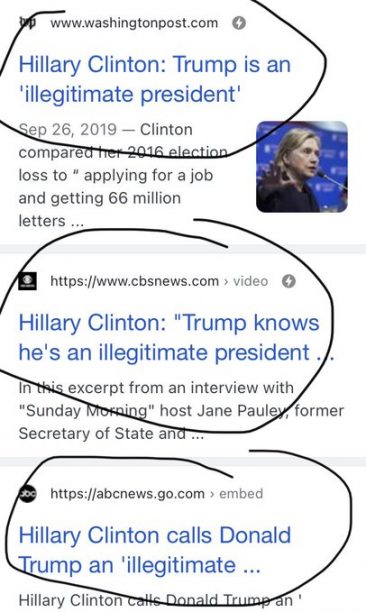
Clinton, meanwhile, has said or insinuated multiple times through social media that the 2016 presidential election was “stolen” from her and Trump was an “illegitimate” president – clear falsehoods that get a free pass because, remember, she’s one of the good guys… despite a laundry list of questionable statements herself (unproven Russian collusion claims being among them) and a past that includes being a key vote for the Iraq War – talk about a disinformation campaign.
Clinton’s “global reckoning” call is little more than gloating at the power Big Tech already seems to have over free speech. The suppression of stories, policing of speech, and outright banning of voices on the Right is somehow not enough for people like Clinton. Things don’t seem to be moving towards full censorship quite fast enough for her leftist taste, but social media platforms already appear to be hard at work on her end goal.
Clinton would rather speed things up and have the government step in to decide what’s disinformation and what’s not in some major “reckoning” event. If the powers that be go by her definition in such a scenario, the only satisfactory ending is a world where dissenting and right-leaning voices are silenced at an even more alarming rate than they are now – all in the name of the ‘righteous’ goal of stopping “disinformation.”
Zachary Leeman is the author of the novel Nigh and journalist who covers art and culture.
COVID Vaccines: Necessity, Efficacy and Safety
Doctors for Covid Ethics | OffGuardian | May 5, 2021
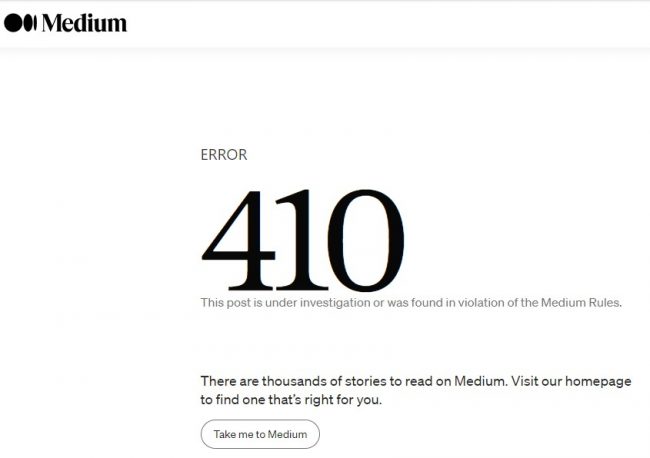
This paper was originally hosted on the Doctors for Covid Ethics Medium account, but the platform censored the expert group and removed the paper, claiming the post was “under investigation”:
An archived version is still available here.
*
Abstract: COVID-19 vaccine manufacturers have been exempted from legal liability for vaccine-induced harm. It is therefore in the interests of all those authorising, enforcing and administering COVID-19 vaccinations to understand the evidence regarding the risks and benefits of these vaccines, since liability for harm will fall on them.
In short, the available evidence and science indicate that COVID-19 vaccines are unnecessary, ineffective and unsafe.
- Necessity: Immunocompetent individuals are protected against SARS-CoV-2 by cellular immunity. Vaccinating low-risk groups is therefore unnecessary. For immunocompromised individuals who do fall ill with COVID-19 there is a range of medical treatments that have been proven safe and effective. Vaccinating the vulnerable is therefore equally unnecessary. Both immunocompetent and vulnerable groups are better protected against variants of SARS-CoV-2 by naturally acquired immunity and by medication than by vaccination.
- Efficacy: Covid-19 vaccines lack a viable mechanism of action against SARS-CoV-2 infection of the airways. Induction of antibodies cannot prevent infection by an agent such as SARS-CoV-2 that invades through the respiratory tract. Moreover, none of the vaccine trials have provided any evidence that vaccination prevents transmission of the infection by vaccinated individuals; urging vaccination to “protect others” therefore has no basis in fact.
- Safety: The vaccines are dangerous to both healthy individuals and those with pre-existing chronic disease, for reasons such as the following: risk of lethal and non-lethal disruptions of blood clotting including bleeding disorders, thrombosis in the brain, stroke and heart attack; autoimmune and allergic reactions; antibody-dependent enhancement of disease; and vaccine impurities due to rushed manufacturing and unregulated production standards.
The risk-benefit calculus is therefore clear: the experimental vaccines are needless, ineffective and dangerous. Actors authorising, coercing or administering experimental COVID-19 vaccination are exposing populations and patients to serious, unnecessary, and unjustified medical risks.
1. THE VACCINES ARE UNNECESSARY
1. Multiple lines of research indicate that immunocompetent people display “robust” and lasting cellular (T cell) immunity to SARS-CoV viruses [1], including SARS-CoV-2 and its variants [2]. T cell protection stems not only from exposure to SARS-CoV-2 itself, but from cross-reactive immunity following previous exposure to common cold and SARS coronaviruses [1,3-10]. Such immunity was detectable after infections up to 17 years prior [1,3]. Therefore, immunocompetent people do not need vaccination against SARS-Cov-2.
2. Natural T-Cell immunity provides stronger and more comprehensive protection against all SARS-CoV-2 strains than vaccines, because naturally primed immunity recognises multiple virus epitopes and costimulatory signals, not merely a single (spike) protein. Thus, immunocompetent people are better protected against SARS-CoV-2 and any variants that may arise by their own immunity than by the current crop of vaccines.
3.The vaccines have been touted as a means to prevent asymptomatic infection [11], and by extension “asymptomatic transmission.” However, “asymptomatic transmission” is an artefact of invalid and unreliable PCR test procedures and interpretations, leading to high false-positive rates[12-15]. Evidence indicates that PCR-positive, asymptomatic people are healthy false-positives, not carriers. A comprehensive study of 9,899,828 people in China found that asymptomatic individuals testing positive for COVID-19 never infected others[16].
In contrast, the papers cited by the Centre for Disease Control[17,18] to justify claims of asymptomatic transmission are based on hypothetical models, not empirical studies; they present assumptions and estimates rather than evidence. Preventing asymptomatic infection is not a viable rationale for promoting vaccination of the general population.
4. In most countries, most people now have immunity to SARS-CoV-2[19]. Depending on their degree of previously acquired cross-immunity, they will have had no symptoms, mild and uncharacteristic symptoms, or more severe symptoms, possibly including anosmia (loss of sense of smell) or other somewhat characteristic signs of the COVID-19 disease. Regardless of disease severity, they will now have sufficient immunity to be protected from severe disease in the event of renewed exposure. This majority of the population will not benefit at all from being vaccinated.
5. Population survival of COVID-19 exceeds 99.8% globally[20-22]. In countries that have been intensely infected over several months, less than 0.2% of the population have died and had their deaths classified as ‘with covid19’. COVID-19 is also typically a mild to moderately severe illness. Therefore, the overwhelming majority of people are not at risk from COVID-19 and do not require vaccination for their own protection.
6. In those susceptible to severe infection, Covid-19 is a treatable illness. A convergence of evidence indicates that early treatment with existing drugs reduces hospitalisation and mortality by ~85% and 75%, respectively[23-27]. These drugs include many tried and true anti-inflammatory, antiviral, and anticoagulant medications, as well as monoclonal antibodies, zinc, and vitamins C and D.
Industry and government decisions to sideline such proven treatments through selective research support[24], regulatory bias, and even outright sanctions against doctors daring to use such treatments on their own initiative, have been out of step with existing laws, standard medical practice, and research; the legal requirement to consider real world evidence has fallen by the wayside[28].
The systematic denial and denigration of these effective therapies has underpinned the spurious justification for the emergency use authorisation of the vaccines, which requires that “no standard acceptable treatment is available”[29]. Plainly stated, vaccines are not necessary to prevent severe disease.
2. THE VACCINES LACK EFFICACY
1. At a mechanistic level, the concept of immunity to COVID-19 via antibody induction, as per COVID-19 vaccination, is medical nonsense. Airborne viruses such as SARS-CoV-2 enter the body via the airways and lungs, where antibody concentrations are too low to prevent infection. Vaccine-induced antibodies primarily circulate in the bloodstream, while concentrations on the mucous membranes of lungs and airways is low.
Given that COVID-19 primarily spreads and causes disease by infecting these mucous membranes, vaccines miss the immunological mark. The documents submitted by the vaccine manufacturers to the various regulatory bodies contain no evidence that vaccination prevents airway infection, which would be crucial for breaking the chain of transmission. Thus, vaccines are immunologically inappropriate for COVID-19.
2. Medium to long-term vaccine efficacy is unknown. Phase 3, medium-term, 24-month trials will not be complete until 2023: There is no medium-term or long term longitudinal data regarding COVID-19 vaccine efficacy.
3. Short term data has not established prevention of severe disease. The European Medicines Agency has noted of the Comirnaty (Pfizer mRNA) vaccine that severe COVID-19 cases “were rare in the study, and statistically certain conclusion cannot be drawn” from it[30]. Similarly, the Pfizer document submitted to the FDA[31] concludes that efficacy against mortality could not be demonstrated. Thus, the vaccines have not been shown to prevent death or severe disease even in the short term.
4. The correlates of protection against COVID-19 are unknown. Researchers have not yet established how to measure protection against COVID-19. As a result, efficacy studies are stabbing around in the dark. After completion of Phase 1 and 2 studies, for instance, a paper in the journal Vaccine noted that “without understanding the correlates of protection, it is impossible to currently address questions regarding vaccine-associated protection, risk of COVID-19 reinfection, herd immunity, and the possibility of elimination of SARS-CoV-2 from the human population”[32]. Thus, Vaccine efficacy cannot be evaluated because we have not yet established how to measure it.
3. THE VACCINES ARE DANGEROUS
1. Just as smoking could be and was predicted to cause lung cancer based on first principles, all gene-based vaccines can be expected to cause blood clotting and bleeding disorders [33], based on their molecular mechanisms of action. Consistent with this, diseases of this kind have been observed across age groups, leading to temporary vaccine suspensions around the world: The vaccines are not safe.
2. Contrary to claims that blood disorders post-vaccination are “rare”, many common vaccine side effects (headaches, nausea, vomiting and haematoma-like “rashes” over the body) may indicate thrombosis and other severe abnormalities. Moreover, vaccine-induced diffuse micro-thromboses in the lungs can mimic pneumonia and may be misdiagnosed as COVID-19. Clotting events currently receiving media attention are likely just the “tip of a huge iceberg”[34]: The vaccines are not safe.
3. Due to immunological priming, risks of clotting, bleeding and other adverse events can be expected to increase with each re-vaccination and each intervening coronavirus exposure. Over time, whether months or years[35], this renders both vaccination and coronaviruses dangerous to young and healthy age groups, for whom without vaccination COVID-19 poses no substantive risk. Since vaccine roll-out, COVID-19 incidence has risen in numerous areas with high vaccination rates[36-38].
Furthermore, multiple series of COVID-19 fatalities have occurred shortly after the onset vaccinations in senior homes[39,40]. These cases may have been due not only to antibody-dependent enhancement but also to a general immunosuppressive effect of the vaccines, which is suggested by the increased occurrence of Herpes zoster in certain patients[41].
Immunosuppression may have caused a previously asymptomatic infection to become clinically manifest. Regardless of the exact mechanism responsible for these reported deaths, we must expect that the vaccines will increase rather than decrease lethality of COVID-19 — the vaccines are not safe.
4. The vaccines are experimental by definition. They will remain in Phase 3 trials until 2023. Recipients are human subjects entitled to free informed consent under Nuremberg and other protections, including the Parliamentary Assembly of the Council of Europe’s resolution 2361[43] and the FDA’s terms of emergency use authorisation[29]. With respect to safety data from Phase 1 and 2 trials, in spite of initially large sample sizes the journal Vaccine reports that, “the vaccination strategy chosen for further development may have only been given to as few as 12 participants”[32].
With such extremely small sample sizes, the journal notes that, “larger Phase 3 studies conducted over longer periods of time will be necessary” to establish safety. The risks that remain to be evaluated in Phase 3 trials into 2023, with entire populations as subjects, include not only thrombosis and bleeding abnormalities, but other autoimmune responses, allergic reactions, unknown tropisms (tissue destinations) of lipid nanoparticles[35], antibody-dependent enhancement [43-46] and the impact of rushed, questionably executed, poorly regulated[47] and reportedly inconsistent manufacturing methods, conferring risks of potentially harmful impurities such as uncontrolled DNA residues[48]. The vaccines are not safe, either for recipients or for those who administer them or authorise their use.
5. Initial experience might suggest that the adenovirus-derived vaccines (AstraZeneca/Johnson & Johnson) cause graver adverse effects than the mRNA (Pfizer/Moderna) vaccines. However, upon repeated injection, the former will soon induce antibodies against the proteins of the adenovirus vector. These antibodies will then neutralize most of the vaccine virus particles and cause their disposal before they can infect any cells, thereby limiting the intensity of tissue damage.
In contrast, in the mRNA vaccines, there is no protein antigen for the antibodies to recognize. Thus, regardless of the existing degree of immunity, the vaccine mRNA is going to reach its target — the body cells. These will then express the spike protein and subsequently suffer the full onslaught of the immune system.
With the mRNA vaccines, the risk of severe adverse events is virtually guaranteed to increase with every successive injection. In the long term, they are therefore even more dangerous than the vector vaccines. Their apparent preferment over the latter is concerning in the highest degree; these vaccines are not safe.
4. ETHICS AND LEGAL POINTS TO CONSIDER
Conflicts of interest abound in the scientific literature and within organisations that recommend and promote vaccines, while demonising alternate strategies (reliance on natural immunity and early treatment). Authorities, doctors and medical personnel need to protect themselves by evaluating the sources of their information for conflicts of interest extremely closely.
Authorities, doctors and medical personnel need to be similarly careful not to ignore the credible and independent literature on vaccine necessity, safety and efficacy, given the foreseeable mass deaths and harms that must be expected unless the vaccination campaign is stopped.
Vaccine manufacturers have exempted themselves from legal liability for adverse events for a reason. When vaccine deaths and harms occur, liability will fall to those responsible for the vaccines’ authorisation, administration and/or coercion via vaccine passports, none of which can be justified on a sober, evidence-based risk-benefit analysis.
All political, regulatory and medical actors involved in COVID-19 vaccination should familiarise themselves with the Nuremberg code and other legal provisions in order to protect themselves.
References:
[1] Le Bert, N.; Tan, A.T.; Kunasegaran, K.; Tham, C.Y.L.; Hafezi, M.; Chia, A.; Chng, M.H.Y.; Lin, M.; Tan, N.; Linster, M.; Chia, W.N.; Chen, M.I.; Wang, L.; Ooi, E.E.; Kalimuddin, S.; Tambyah, P.A.; Low, J.G.; Tan, Y. and Bertoletti, A. (2020) SARS-CoV-2-specific T cell immunity in cases of COVID-19 and SARS, and uninfected controls. Nature 584:457–462. [back]
[2] Tarke, A.; Sidney, J.; Methot, N.; Zhang, Y.; Dan, J.M.; Goodwin, B.; Rubiro, P.; Sutherland, A.; da Silva Antunes, R.; Frazier, A. and al., e. (2021) Negligible impact of SARS-CoV-2 variants on CD4+ and CD8+ T cell reactivity in COVID-19 exposed donors and vaccinees. bioRxiv -:x-x.[back]
[3] Anonymous, (2020) Scientists uncover SARS-CoV-2-specific T cell immunity in recovered COVID-19 and SARS patients. [back]
[4] Beasley, D. (2020) Scientists focus on how immune system T cells fight coronavirus in absence of antibodies. Reuters, 10/07/2020. [back]
[5] Bozkus, C.C. (2020) SARS-CoV-2-specific T cells without antibodies. Nat. Rev. Immunol. 20:463. [back]
[6] Grifoni, A.; Weiskopf, D.; Ramirez, S.I.; Mateus, J.; Dan, J.M.; Moderbacher, C.R.; Rawlings, S.A.; Sutherland, A.; Premkumar, L.; Jadi, R.S. and al., e. (2020) Targets of T Cell Responses to SARS-CoV-2 Coronavirus in Humans with COVID-19 Disease and Unexposed Individuals. Cell 181:1489–1501.e15. [back]
[7] Mateus, J.; Grifoni, A.; Tarke, A.; Sidney, J.; Ramirez, S.I.; Dan, J.M.; Burger, Z.C.; Rawlings, S.A.; Smith, D.M.; Phillips, E. and al., e. (2020) Selective and cross-reactive SARS-CoV-2 T cell epitopes in unexposed humans. [back]Science 370:89–94. [back]
[8] McCurry-Schmidt, M. (2020) Exposure to common cold coronaviruses can teach the immune system to recognize SARS-CoV-2. La Jolla Institute for Immunology. [back]
[9] Palmer, S.; Cunniffe, N. and Donnelly, R. (2021) COVID-19 hospitalization rates rise exponentially with age, inversely proportional to thymic T-cell production. J. R. Soc. Interface 18:20200982. [back]
[10] Sekine, T.; Perez-Potti, A.; Rivera-Ballesteros, O.; Strålin, K.; Gorin, J.; Olsson, A.; Llewellyn-Lacey, S.; Kamal, H.; Bogdanovic, G.; Muschiol, S. and al., e. (2020) Robust T Cell Immunity in Convalescent Individuals with Asymptomatic or Mild COVID-19. Cell 183:158–168.e14. [back]
[11] Drake, J. (2021) Now We Know: Covid-19 Vaccines Prevent Asymptomatic Infection, Too.[back]
[12] Bossuyt, P.M. (2020) Testing COVID-19 tests faces methodological challenges. Journal of clinical epidemiology 126:172–176. [back]
[13] Jefferson, T.; Spencer, E.; Brassey, J. and Heneghan, C. (2020) Viral cultures for COVID-19 infectivity assessment. Systematic review. Clin. Infect. Dis. ciaa1764:x-x. [back]
[14] Borger, P.; Malhotra, R.K.; Yeadon, M.; Craig, C.; McKernan, K.; Steger, K.; McSheehy, P.; Angelova, L.; Franchi, F.; Binder, T.; Ullrich, H.; Ohashi, M.; Scoglio, S.; Doesburg-van Kleffens, M.; Gilbert, D.; Klement, R.J.; Schrüfer, R.; Pieksma, B.W.; Bonte, J.; Dalle Carbonare, B.H.; Corbett, K.P. and Kämmer, U. (2020) External peer review of the RTPCR test to detect SARS-CoV-2 reveals 10 major scientific flaws at the molecular and methodological level: consequences for false-positive results. [back]
[15] Mandavilli, A. (2020) Your Coronavirus Test Is Positive. Maybe It Shouldn’t Be.[back]
[16] Cao, S.; Gan, Y.; Wang, C.; Bachmann, M.; Wei, S.; Gong, J.; Huang, Y.; Wang, T.; Li, L.; Lu, K.; Jiang, H.; Gong, Y.; Xu, H.; Shen, X.; Tian, Q.; Lv, C.; Song, F.; Yin, X. and Lu, Z. (2020) Post-lockdown SARS-CoV-2 nucleic acid screening in nearly ten million residents of Wuhan, China. Nat. Commun. 11:5917.[back]
[17] Moghadas, S.M.; Fitzpatrick, M.C.; Sah, P.; Pandey, A.; Shoukat, A.; Singer, B.H. and Galvani, A.P. (2020) The implications of silent transmission for the control of COVID-19 outbreaks. Proc. Natl. Acad. Sci. U. S. A. 117:17513–17515.[back]
[18] Johansson, M.A.; Quandelacy, T.M.; Kada, S.; Prasad, P.V.; Steele, M.; Brooks, J.T.; Slayton, R.B.; Biggerstaff, M. and Butler, J.C. (2021) SARS-CoV-2 Transmission From People Without COVID-19 Symptoms. JAMA network open 4:e2035057.[back]
[19] Yeadon, M. (2020). What SAGE got wrong. Lockdown Skeptics.[back]
[20] Ioannidis, J.P.A. (2020) Global perspective of COVID‐19 epidemiology for a full‐cycle pandemic. Eur. J. Clin. Invest. 50:x-x. [back]
[21] Ioannidis, J.P.A. (2021) Reconciling estimates of global spread and infection fatality rates of COVID‐19: An overview of systematic evaluations. Eur. J. Clin. Invest. -:x-x. [back]
[22] CDC, (2020) Science Brief: Community Use of Cloth Masks to Control the Spread of SARS-CoV-2. [back]
[23] Orient, J.; McCullough, P. and Vliet, E. (2020) A Guide to Home-Based COVID Treatment. [back]
[24] McCullough, P.A.; Alexander, P.E.; Armstrong, R.; Arvinte, C.; Bain, A.F.; Bartlett, R.P.; Berkowitz, R.L.; Berry, A.C.; Borody, T.J.; Brewer, J.H.; Brufsky, A.M.; Clarke, T.; Derwand, R.; Eck, A.; Eck, J.; Eisner, R.A.; Fareed, G.C.; Farella, A.; Fonseca, S.N.S.; Geyer, C.E.; Gonnering, R.S.; Graves, K.E.; Gross, K.B.V.; Hazan, S.; Held, K.S.; Hight, H.T.; Immanuel, S.; Jacobs, M.M.; Ladapo, J.A.; Lee, L.H.; Littell, J.; Lozano, I.; Mangat, H.S.; Marble, B.; McKinnon, J.E.; Merritt, L.D.; Orient, J.M.; Oskoui, R.; Pompan, D.C.; Procter, B.C.; Prodromos, C.; Rajter, J.C.; Rajter, J.; Ram, C.V.S.; Rios, S.S.; Risch, H.A.; Robb, M.J.A.; Rutherford, M.; Scholz, M.; Singleton, M.M.; Tumlin, J.A.; Tyson, B.M.; Urso, R.G.; Victory, K.; Vliet, E.L.; Wax, C.M.; Wolkoff, A.G.; Wooll, V. and Zelenko, V. (2020) Multifaceted highly targeted sequential multidrug treatment of early ambulatory high-risk SARS-CoV-2 infection (COVID-19). Reviews in cardiovascular medicine 21:517–530. [back][back]
[25] Procter, {.B.C.; {APRN}, {.C.R.{.; {PA}-C, {.V.P.; {PA}-C, {.E.S.; {PA}-C, {.C.H. and McCullough, {.{.P.A. (2021) Early Ambulatory Multidrug Therapy Reduces Hospitalization and Death in High-Risk Patients with SARS-CoV-2 (COVID-19). International journal of innovative research in medical science 6:219–221. [back]
[26] McCullough, P.A.; Kelly, R.J.; Ruocco, G.; Lerma, E.; Tumlin, J.; Wheelan, K.R.; Katz, N.; Lepor, N.E.; Vijay, K.; Carter, H.; Singh, B.; McCullough, S.P.; Bhambi, B.K.; Palazzuoli, A.; De Ferrari, G.M.; Milligan, G.P.; Safder, T.; Tecson, K.M.; Wang, D.D.; McKinnon, J.E.; O’Neill, W.W.; Zervos, M. and Risch, H.A. (2021) Pathophysiological Basis and Rationale for Early Outpatient Treatment of SARS-CoV-2 (COVID-19) Infection. Am. J. Med. 134:16–22. [back]
[27] Anonymous, (2020) Real-time database and meta analysis of 588 COVID-19 studies. [back]
[28] Hirschhorn, J.S. (2021) COVID scandal: Feds ignored 2016 law requiring use of real world evidence.[back]
[29] Anonymous, (1998) Emergency Use of an Investigational Drug or Biologic: Guidance for Institutional Review Boards and Clinical Investigators. [back] [back]
[30] Anonymous, (2021) EMA assessment report: Comirnaty. [back]
[31] Anonymous, (2020) FDA briefing document: Pfizer-BioNTech COVID-19 Vaccine. [back]
[32] Giurgea, L.T. and Memoli, M.J. (2020) Navigating the Quagmire: Comparison and Interpretation of COVID-19 Vaccine Phase 1/2 Clinical Trials. Vaccines 8:746. [back][back]
[33] Bhakdi, S.; Chiesa, M.; Frost, S.; Griesz-Brisson, M.; Haditsch, M.; Hockertz, S.; Johnson, L.; Kämmerer, U.; Palmer, M.; Reiss, K.; Sönnichsen, A.; Wodarg, W. and Yeadon, M. (2021) Urgent Open Letter from Doctors and Scientists to the European Medicines Agency regarding COVID-19 Vaccine Safety Concerns. [back]
[34] Bhakdi, S. (2021) Rebuttal letter to European Medicines Agency from Doctors for Covid Ethics, April 1, 2021. [back]
[35] Ulm, J.W. (2020) Rapid response to: Will covid-19 vaccines save lives? Current trials aren’t designed to tell us. [back][back]
[36] Reimann, N. (2021) Covid Spiking In Over A Dozen States — Most With High Vaccination Rates.[back]
[37] Meredith, S. (2021) Chile has one of the world’s best vaccination rates. Covid is surging there anyway.[back]
[38] Bhuyan, A. (2021) Covid-19: India sees new spike in cases despite vaccine rollout. BMJ 372:n854. [back]
[39] Morrissey, K. (2021) Open letter to Dr. Karina Butler. [back]
[40] Anonymous, (2021) Open Letter from the UK Medical Freedom Alliance: Urgent warning re Covid-19 vaccine-related deaths in the elderly and Care Homes. [back]
[41] Furer, V.; Zisman, D.; Kibari, A.; Rimar, D.; Paran, Y. and Elkayam, O. (2021) Herpes zoster following BNT162b2 mRNA Covid-19 vaccination in patients with autoimmune inflammatory rheumatic diseases: a case series. Rheumatology -:x-x. [back]
[42] Anonymous, (2021) Covid-19 vaccines: ethical, legal and practical considerations. [back]
[43] Tseng, C.; Sbrana, E.; Iwata-Yoshikawa, N.; Newman, P.C.; Garron, T.; Atmar, R.L.; Peters, C.J. and Couch, R.B. (2012) Immunization with SARS coronavirus vaccines leads to pulmonary immunopathology on challenge with the SARS virus. PLoS One 7:e35421. [back]
[44] Bolles, M.; Deming, D.; Long, K.; Agnihothram, S.; Whitmore, A.; Ferris, M.; Funkhouser, W.; Gralinski, L.; Totura, A.; Heise, M. and Baric, R.S. (2011) A double-inactivated severe acute respiratory syndrome coronavirus vaccine provides incomplete protection in mice and induces increased eosinophilic proinflammatory pulmonary response upon challenge. J. Virol. 85:12201–15. [back]
[45] Weingartl, H.; Czub, M.; Czub, S.; Neufeld, J.; Marszal, P.; Gren, J.; Smith, G.; Jones, S.; Proulx, R.; Deschambault, Y.; Grudeski, E.; Andonov, A.; He, R.; Li, Y.; Copps, J.; Grolla, A.; Dick, D.; Berry, J.; Ganske, S.; Manning, L. and Cao, J. (2004) Immunization with modified vaccinia virus Ankara-based recombinant vaccine against severe acute respiratory syndrome is associated with enhanced hepatitis in ferrets. J. Virol. 78:12672–6. [back]
[46]Czub, M.; Weingartl, H.; Czub, S.; He, R. and Cao, J. (2005) Evaluation of modified vaccinia virus Ankara based recombinant SARS vaccine in ferrets. Vaccine 23:2273–9 [back]
[47]Tinari, S. (2021) The EMA covid-19 data leak, and what it tells us about mRNA instability. BMJ 372:n627 [back]
[48] Anonymous, (2021) Interview with Dr. Vanessa Schmidt-Krüger, Hearing #37 of German Corona Extra-Parliamentary Inquiry Committee 30 January, 2021. [back]
Why I’m Removing All Articles Related to Vitamins D, C, Zinc and COVID-19

By Dr. Joseph Mercola | May 4, 2021
Over the past year, I’ve been researching and writing as much as I can to help you take control of your health, as fearmongering media and corrupt politicians have destroyed lives and livelihoods to establish global control of the world’s population, using the COVID-19 pandemic as their justification.
I’ve also kept you informed about billionaire-backed front groups like the Center for Science in the Public Interest (CSPI), a partner of Bill Gates’ Alliance for Science, both of whom have led campaigns aimed at destroying my reputation and censoring the information I share.
Other attackers include HealthGuard, which ranks health sites based on a certain set of “credibility criteria.” It has sought to discredit my website by ensuring warnings appear whenever you search for my articles or enter my website in an internet browser.
Well-Organized Attack Partnerships Have Formed
HealthGuard, a niche service of NewsGuard, is funded by the pharma-funded public relations company Publicis Groupe. Publicis, in turn, is a partner of the World Economic Forum, which is leading the call for a “Great Reset” of the global economy and a complete overhaul of our way of life.
HealthGuard is also partnered with Gates’ Microsoft company, and drug advertising websites like WebMD and Medscape, as well as the Center for Countering Digital Hate (CCDH) — the progressive cancel-culture leader with extensive ties to government and global think tanks that recently labeled people questioning the COVID-19 vaccine as a national security threat.
The CCDH has published a hit list naming me as one of the top 12 individuals responsible for 65% of vaccine “disinformation” on social media, and who therefore must be deplatformed and silenced for the public good. In a March 24, 2021, letter1 to the CEO’s of Twitter and Facebook, 12 state attorneys general called for the removal of our accounts from these platforms, based on the CCDH’s report.
Two of those state attorneys general also published an April 8, 2021, op-ed2 in The Washington Post, calling on Facebook and Twitter to ban the “anti-vaxxers” identified by the CCDH. The lack of acceptance of novel gene therapy technology, they claim, is all because a small group of individuals with a social media presence — myself included — are successfully misleading the public with lies about nonexistent vaccine risks.
“The solution is not complicated. It’s time for Facebook CEO Mark Zuckerberg and Twitter CEO Jack Dorsey to turn off this toxic tap and completely remove the small handful of individuals spreading this fraudulent misinformation,” they wrote.3
Pharma-funded politicians and pharma-captured health agencies have also relentlessly attacked me and pressured tech monopolies to censor and deplatform me, removing my ability to express my opinions and speak freely over the past year.
The CCDH also somehow has been allowed to publish4 in the journal Nature Medicine, calling for the “dismantling” of the “anti-vaccine” industry. In the article, CCDH founder Imran Ahmed repeats the lie that he “attended and recorded a private, three-day meeting of the world’s most prominent anti-vaxxers,” when, in fact, what he’s referring to was a public online conference open to an international audience, all of whom had access to the recordings as part of their attendance fee.
The CCDH is also partnered with another obscure group called Anti-Vax Watch. The picture below is from an Anti-Vax Watch demonstration outside the halls of Congress. Ironically, while the CCDH claims to be anti-extremism, you’d be hard-pressed to find a clearer example of actual extremism than this bizarre duo.5
Gates-Funded Doctor Demands Terrorist Experts to Attack Me
Most recently, Dr. Peter Hotez, president of the Sabin Vaccine Institute,6 which has received tens of millions of dollars from the Bill & Melinda Gates Foundation,7,8,9 — with funds from the foundation most recently being used to create a report called “Meeting the Challenge of Vaccine Hesitancy,”10,11 — also cited the CCDH in a Nature article in which he calls for cyberwarfare experts to be enlisted in the war against vaccine safety advocates and people who are “vaccine hesitant.” He writes:12
“Accurate, targeted counter-messaging from the global health community is important but insufficient, as is public pressure on social-media companies. The United Nations and the highest levels of government must take direct, even confrontational, approaches with Russia, and move to dismantle anti-vaccine groups in the United States.
Efforts must expand into the realm of cyber security, law enforcement, public education and international relations. A high-level inter-agency task force reporting to the UN secretary-general could assess the full impact of anti-vaccine aggression, and propose tough, balanced measures.
The task force should include experts who have tackled complex global threats such as terrorism, cyber attacks and nuclear armament, because anti-science is now approaching similar levels of peril. It is becoming increasingly clear that advancing immunization requires a counteroffensive.”
Why is Hotez calling for the use of warfare tactics on American citizens that have done nothing illegal? In my case, could it be because I’ve written about the theory that SARS-CoV-2 is an engineered virus, created through gain-of-function research, and that its release was anticipated by global elites, as evidenced in Event 201?
It may be. At least those are some of my alleged “sins,” detailed on page 10 of the CCDH report, “Disinformation Dozen: The Sequel.”13 Coincidentally enough, the Nature journal has helped cover up gain-of-function research conducted at the Wuhan Institute of Virology, publishing a shoddy zoonotic origins study relied upon by mainstream media and others, which was riddled with problems.14,15
So, it’s not misinformation they are afraid of. They’re afraid of the truth getting out. They’re all trying to cover for the Chinese military and the dangerous mad scientists conducting gain-of-function work.
You may have noticed our website was recently unavailable; this was due to direct cyber-attacks launched against us. We have several layers of protective mechanisms to secure the website as we’ve anticipated such attacks from malevolent organizations.
What This Means for You
Through these progressively increasing stringent measures, I have refused to succumb to these governmental and pharmaceutical thugs and their relentless attacks. I have been confident and willing to defend myself in the court of law, as I’ve had everything reviewed by some of the best attorneys in the country.
Unfortunately, threats have now become very personal and have intensified to the point I can no longer preserve much of the information and research I’ve provided to you thus far. These threats are not legal in nature, and I have limited ability to defend myself against them. If you can imagine what billionaires and their front groups are capable of, I can assure you they have been creative in deploying their assets to have this content removed.
Sadly, I must also remove my peer reviewed published study16 on the “Evidence Regarding Vitamin D and Risk of COVID-19 and Its Severity.” It will, however, remain in the highly-respected journal Nutrients’ website, where you can still access it for free.
The MATH+ hospital treatment protocol for COVID-19 and the iMASK+ prevention and early outpatient COVID-19 protocol — both of which are based on the use of vitamins C, D, quercetin, zinc and melatonin — are available on the Front Line COVID-19 Critical Care Alliance’s website. I suggest you bookmark these resources for future reference.
It is with a heavy heart that I purge my website of valuable information. As noted by Dr. Peter McCullough during a recent Texas state Senate Health and Human Services Committee hearing, data shows early treatment could have prevented up to 85% (425,000) of COVID-19 deaths.17 Yet early treatments were all heavily censored and suppressed.
McCullough, in addition to being a cardiologist and professor of medicine at the Texas A&M University Health Sciences Center, also has the distinction of having published the most papers of any person in the history of his field, and being an editor of two major medical journals. Despite that, his video, in which he went through a paper he’d published detailing effective early treatments, was summarily banned by YouTube in 2020.
“No wonder we have had 45,000 deaths in Texas. The average person in Texas thinks there’s no treatment!” McCullough told the senate panel.18 Indeed, people are in dire need of more information detailing how they can protect their health, not less. But there’s only so much I can do to protect myself against current attack strategies.
They’ve moved past censorship. Just what do you call people who advocate counteroffensive attacks by terrorism and cyberwarfare experts? You’d think we could have a debate and be protected under free speech but, no, we’re not allowed. These lunatics are dangerously unhinged.
The U.S. federal government is going along with the global Great Reset plan (promoted as “building back better”), but this plan won’t build anything but a technological prison. What we need is a massive campaign to preserve civil rights, and vote out the pawns who are destroying our freedom while concentrating wealth and power.
Sources and References
- 1 AG Letter to Tech CEOs March 24, 2021 (PDF)
- 2, 3 Washington Post April 8, 2021
- 4 Nature March 15, 2021
- 5 Twitter Mercola March 25, 2021
- 6 WHO Peter Hotez
- 7 PND July 1, 2011
- 8 Bill & Melinda Gates Foundation
- 9 Sabin Vaccine Institute February 11, 2019
- 10 Sabin Vaccine Institute June 2, 2020
- 11 Sabin Vaccine Institute May 28, 2020
- 12 Nature April 27, 2021
- 13 CCHD Disinformation Dozen: The Sequel
- 14 Monali Rahalkar Criticism for the Addendum: A pneumonia outbreak associated with a novel coronavirus of probable bat origin (Zhou et al 2020)
- 15 Monali Rahalkar Critique to the Addendum (Zhou et al 2020) and other contradictions in reporting the facts about RaTG13 and its history
- 16 Nutrients October 31, 2020;12, 3361; doi:10.3390/nu12113361
- 17, 18 Lifesitenews.com April 8, 2021
Featured Video
Death Spikes & Rising Cancer In Our Youth Explained
or go to
Aletho News Archives – Video-Images
From the Archives
Politicians lie
By Mazin Qumsiyeh | Popular Resistance | August 18, 2013
There is no way to say this truth nicely: Politicians lie. That includes Japanese, American, Egyptian, Israeli, and Palestinian politicians! Is there something more common sense than that? Yet, so many citizens around the world believe their own politicians or wistfully acknowledge lies but think it is part of the job needed to run things. They believe even when politicians contradict themselves blatantly. This phenomenon is rather remarkable. It is a dissonance and disconnect from reality that many seem oblivious to. It is very dangerous because it can lead to accepting rationales for going to war. These can be deadly wars that lead to millions of lives lost as happened in what was called World War 1 and WW2. Even when incredible and declassified evidence abound, politicians continue to lie and old mythologies refuse to die. Here are just a few of the countless lies told to us over the past few decades… continue
Blog Roll
 Aletho News
- RSF military group defects, joins Sudanese army: State media
- Ireland goalkeeper refuses to play ‘Israel’ as squad weighs boycott
- China pushes back against US on Cuba, Iran
- Ukrainian Soldiers, Potential Mercenaries: Have Gun, Will Travel!
- Burnham’s UN debut… A masterclass in British disinformation
- Iran flights continue despite US aviation sanctions
- Global Tipping Points Lead the World Into a State of Entropy
- The day-after at the White House: USA and Xi Jinping
- The Geopolitical Balance in the Red Sea: The UAE Being Displaced by New Players
- Iraqi resistance group vows to stage airport sit-ins over Iran aerial blockade
- If Americans Knew
- An error has occurred; the feed is probably down. Try again later.
- No Tricks Zone
- New Study: Earth And Venus Surface Warmth Largely Explained By Convection And Lapse Rate, Not CO2 Or Radiation
- 2025 Nature Paper Claiming Worsening Global Drought Gets RETRACTED …Heavily Flawed
- New Study: ‘Global Drought Shows No Detectable Recent Acceleration Under Climate Warming’
- Economic Masterminds: German Socialists Suggest Taxing Productivity Gains Stemming From Using AI
- The South China Sea Has Not Been Cooperating With The Climate Change Narrative
- Energy Crisis: Germany Enters Heating Season With Historically Low Gas Reserve Fill Levels
- New Study: The Antarctic Ice Sheet Gained Mass From 2020-2024 Due To Staggering Snow And Ice Accumulation
- Study: Ocean Heating Rates From Thousands Of Years Ago ‘Dwarf’ Modern Ocean Heating Rates
- Climate Extremists Target, Attack Large-Scale Power Grid Infrastructure In Germany!
- New Study: Antarctic Ice Melt Has Contributed Less Than 1 Centimeter To Sea Level Rise In The Last 30 Years

